Tag: MBA

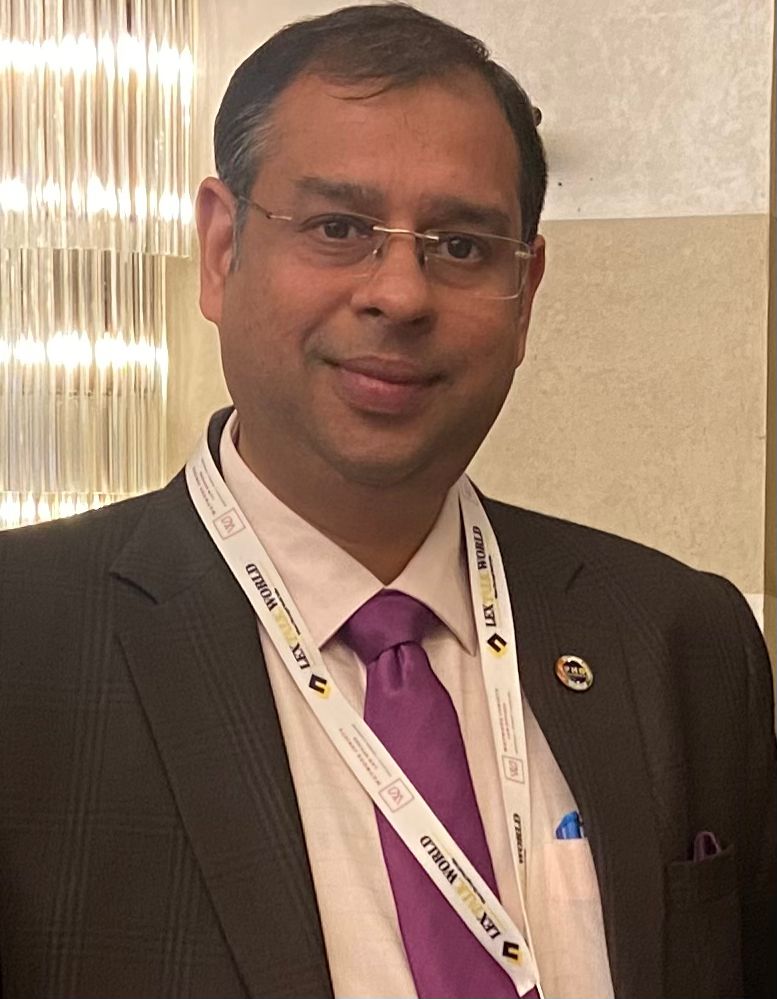
  • Law, Leadership, and Business: Becoming someone that clients trust. – Aditya Singha, Independent Commercial and Transaction Lawyer.

    Law, Leadership, and Business: Becoming someone that clients trust. – Aditya Singha, Independent Commercial and Transaction Lawyer.

    This interview has been published by Anshi Mudgal and The SuperLawyer Team

    I’ll start with a very, very prominent question: how did you decide to become a lawyer, and then how did you decide to pursue an MBA as well? And that too, by scoring a staggering GMAT score of 740. Please enlighten our learners and us as well.

    So, I’ll be very honest, I never even dreamt of doing an MBA when I was setting out to become a lawyer. But luckily for me, I was born in a family where my grandfather was a lawyer, and that too, he wasn’t a lawyer throughout his career. He became a lawyer after he retired from government services. He was a civil lawyer. You would imagine that a lawyer who would take care of disputes, of people who would take care of disputes for companies, would have a lot of people coming into the house.

    So, very early on, from my childhood days, I would see people come to him for advice and assistance, even people who used to stay near our society. I would always see them come with a sense of hope and a sense of gratitude when they would leave, and that feeling, that there’s one person who could give people that hope, that guidance and that comfort that they need at a time which is probably very traumatic or very difficult for them, was something that I took very closely. So, I wanted to become a lawyer from a very early age.

    Secondly, I also enjoyed reading a lot, so that went in my favor because I realized that a lawyer’s job is to constantly update his or her knowledge, constantly keep on reading, and I enjoyed reading. So I felt, okay, this is another avenue where I think I can enhance those aspects about me because I also love to read and I love to learn more.

    So, I really wanted to become a lawyer since I was 10 years old, and I never really took up any law coaching as such. This is going to segue into my GMAT score. I actually studied for the engineering entrance exams. I got a decent rank in the AIEEE and got on the extended merit list in the IIT as well, but I never wanted to become an engineer. Engineering was always, for me, a backup option.

    Once I got a good score in CLAT and then subsequently a score in AILET, which allowed me admission into National Law University, Delhi, I think it was a slam dunk for me because A, it was Delhi, and B, it was led by Professor Dr. Ranbir Singh, who had basically propped up NALSAR to become one of the best law schools in the country. I was genuinely excited about being part of one of the earlier batches of this institution, which thankfully today continues to be one of the best in the country.

    So, for me, law was always a very clear path. I would say corporate law was not really that clear of a path. It was only during my time working with different law firms that I developed a fascination for corporate law, and when I joined my first firm, I realized that there is a lot of excitement I find in helping businesses navigate challenges.

    I would say that is effectively the mantra that I followed. What do I want to be? I want to be someone who helps companies, businesses, entrepreneurs, and founders solve challenges and help them on the path to growth or to avoid risks from harming that business or harming that proposition. So that’s pretty much how my journey started.

    For my MBA, honestly, that’s a whole other answer. I never imagined that I would do an MBA. I never imagined I would go to INSEAD for my MBA, but yeah, I’ll be happy to discuss that once you want me to discuss it.

    We would love to discuss this immediately because, while you had initially prepared for engineering, you ultimately chose to pursue law. How did you adapt your mindset while preparing for the GMAT, given that it requires precision and a completely different approach compared to the way lawyers typically write? How did you unlearn certain habits, relearn new strategies, and successfully achieve this remarkable result?

    So first, the rationale for why I wanted to do an MBA sort of permeated from me setting up my independent practice. Once I set up my practice, I started engaging more with young founders and entrepreneurs. And because my intention was to help founders and entrepreneurs grow, it required me to deep dive into business and operations with them. I had to understand how they run their businesses, so I had to develop an understanding of business models. I needed to understand how they generate revenue and how they spend that money. I needed to develop an understanding of both accounting and corporate finance, and then I needed to understand what their next step would be.

    One example I can give is that I was advising a blockchain company back in 2021, and they wanted to develop a very unique synthetic trading portal on the blockchain. There was nothing similar like that existing either in India or anywhere else that we could find. We needed to create a structure that would comply with whichever laws were applicable in India because there was nothing that uniquely identified how this business would work.

    Helping that founder create a regulatory-compliant business model made me realize that there is a lot more value that lawyers can bring to companies and to founders because of our unique understanding of how regulations work and how they are applied, and because of our understanding of how impact and value can be created, having seen other founders achieve that. We can effectively leverage all of that exposure and bring value to founders not just from a legal perspective but also from a business perspective.

    All of these things combined started making me think about how I could add more value to these founders, to my clients. I realized that yes, I do have some form of knowledge or experience, but that was all secondhand because it was gained through interacting with C-Suite level executives or founders. There was nothing concrete I could rely on to advise these founders. That is when I started researching more about how MBA programs work, the value-add that someone like me could get, and how I could enhance and leverage the experiences I had in my past.

    That effectively started the journey and the momentum toward giving the GMAT, identifying INSEAD as a potential opportunity, applying for INSEAD, and then getting through. So that’s how that trajectory went.

    In terms of preparing specifically for GMAT, I can condense it very quickly. Yes, there is a lot of unlearning that needs to happen. You are absolutely right. There is a lot of effort required to understand how to solve problems. The idea is, as Indian students, many of us have a predictable set path in which we solve problems, whether quantitative or verbal. But the GMAT is one exam where the strategy is to find whatever way works to arrive at the correct answer.

    This is key in a service industry that relies on a lot of data that must be analyzed, synthesized, and then communicated to a client in a manner the client understands. The GMAT is effectively what you learn in an MBA program, condensed, and ensures that you have that knowledge ready so that you are not lagging behind in an MBA.

    So there was a lot of unlearning and a lot of relearning in terms of how to strategically and tactically approach specific questions, and a lot of practice was needed. I think what people forget is that it is not about how much you know for the GMAT but about how much you have practiced in that kind of environment because it is a very intense examination.

    For example, when I was giving the exam, there were COVID regulations for the admission centers. We had to give the exam in a room with our masks on. We could not take our masks off at all, and we did not have access to anything, including water. It was very strenuous because you are stressed about the exam, there is a timer running, you have to manage your time, you have to ensure that you answer every question, and if you skip a question, you cannot go back.

    So there are many permutations and combinations outside of just pure knowledge. It requires a lot of practice simulated in an exam environment. I think what worked for me was that I pushed myself to simulate that exam environment regularly. And of course, I had the benefit that, since it was my own practice, I could identify time slots every day for practice. But I think being disciplined and serious about what you need to do is the simplest way to achieve a good GMAT score.

    Wow! With your independent practice, you also managed to crack this challenging exam. Considering that you pursued your MBA during the COVID-19 period, a time when many perspectives on management evolved, how did this new understanding of management help you build a stronger practice after completing the course compared to the understanding you had before it? You must have done some comparative analysis on this if you don’t mind sharing, what were your key takeaways?

     That’s absolutely the perfect question because that is the one question I ask a lot of potential applicants who are in the legal field who want to do an MBA.

    That’s the one point I ask them to ask yourself, why are you doing this? What do you hope to gain out of this? Because an MBA is very customized, I would say. It’s a very bespoke course.  Because you’ll get a lot of information and a lot of that information is probably available at 100th of the cost. The question is, what do you want to derive out of that experience?  So I can say personally for me, there were a few factors that were very critical, which I feel I can leverage today after having completed. The first and foremost, and this goes well for most international MBAs, is the network. 

    At INSEAD, I think there is a rule that a particular nationality cannot be represented by more than 11 or 12% of the cohort. So it is by rule that you will be interacting with people from a variety of different geographies, different backgrounds, different experiences, and you are forced to be in that situation.

    When I say forced, it’s by nature of the groups that are set, the sections that are created. You are constantly interacting with people whom you probably may not have anything in connection with prima facie. Like in my group, you would not have another Indian and you would not have another lawyer. You would have people from completely different backgrounds, and I think that helps in two ways.

    Number one, after you graduate, your alumni network is probably one of the strongest in the world. So you can basically look at the alumni directory and you’ll find the who’s who of any industry. So you know, if you are stuck somewhere or you need assistance somewhere, you have an alumni base to rely on and it’s one of the strongest components of INSEAD. Second, you also develop an understanding of how different perceptions can approach different problems. Because when you are given a problem as a group,  as an analytical Indian lawyer, I might solve it in path A.  Someone who works in the renewable energy industries who’s only worked on offshore drilling, they look at that in another path. Someone who’s worked in hardcore finance, hedge fund, or investment banking, they look at that same problem maybe in my direction, but a different path.  Someone who’s an army vet, a Marine operator, they will look at it differently. So when you are interacting with so many different people trying to solve a very similar problem.

    You start getting an understanding of how different people think and what their rationale is for them. And when I look back, that helps me also tackle challenges that my clients face in different ways in which I would’ve never thought, because unfortunately, a lot of lawyers are caught in this bubble of thinking in a very pedantic and a very straight cut method.

     That usually doesn’t happen in an MBA because you are dealt with problems that span different industries and therefore you have to rely on different ways of thinking. So the mental models, the thought processes, the approach, I think that also helps you understand problems from different lenses.  And the last, and another important takeaway for me was how do you value the output more than the process? Because ultimately as a service provider, whether you’re a consultant, whether you’re a banker, whether you’re a lawyer, ultimately your goal is to resolve challenges and solve issues for your clients and do it in a way that they can trust you with their work going on. There’s a very important saying that one of the professors said that you know that you’re a good service provider when your client calls you up for help that is outside your core service. For example, if a client calls you up and says, Hey, Aditya, can you tell me the name of a good pediatric surgeon in Delhi?  That means they trust you for things even outside your core competence.  And how do you develop that trust is what we learned. How do you build processes that help you create that engine that gives them what they want? 

    So that was my takeaway, and that’s what’s helping me optimize and make my practice more efficient. More driven towards solutions rather than process, which may become an obstacle for client service

    The kind of trust your clients place in you is truly inspiring. It seems this trust stems not only from your legal expertise but also from your problem-solving approach, even beyond traditional legal boundaries. Is this the same trust that has enabled you to handle multi-million-dollar, high-stakes deals? Could you share a story of a particularly complex transaction or negotiation where your combined understanding of law and management helped you find a solution that others might have struggled with?

     Sure. So I think the first one, in terms of a complex deal.  I think the most complex deal that I did was one of the biggest deals that I did in my independent practice. It was an acquisition of a logistics company from a listed company.

    So we were acting for the acquirers. And safe to say that I had gained the trust of my clients to the extent that they would trust me with almost 150 crore rupee deal. In the listed company space, and what I realized later was this was going to be an uphill challenge because unlike any other deal that I had done even in my law firm career, this one required me to have a strong understanding of not just basics of M&A and transactional law, but also accounting.

    About how business operations in this industry were, because I had to sit with the client and understand the implications of what the negotiations were going to be, because ultimately those were to be reflected in the transaction document. So having that kind of interaction first with business, then with finance, then trying to understand how those interplay with the legal clauses.

    Then, drafting those clauses and then negotiating with a company that has probably a battery of lawyers that are assisting them because they’re a listed company.  So that was very, very challenging, and it was complex transactions, primarily because there were a lot of payment driven issues because it was effectively a carve out of the listed company.

    They were carving out a business and we were acquiring that business. So how do you create that delineation from now this belongs to us and whatever remains is yours. How the accounting for that is going to be done. And even if there is an agreement on how it’s going to be done in practice, ultimately it’s my job to put it on paper.

     So doing that, and this was before my MBA. So I did not even have that kind of a formal understanding of how finance and accounting work.  I had a bare bones understanding back then,  but it forced me to continuously interact with my client and understand what it is that they’re looking for.

    And I think this is the biggest learning I can give to anyone who’s advising clients on M&A.  Understand what your client wants out of this transaction. Because not every deal is the same. People have different expectations from that transaction. And your job as a counsel and an advisor is to understand what that requirement is and then put it on paper to either ensure it happens or to protect so that it doesn’t get taken away.

    So that deal for me was very challenging because I did not have any assistant, I had another senior lawyer who was working with me. But I needed to understand tax, accounting, employment, labor, and transactional work all on my own. So that was challenging, but very rewarding because we ended up having a very successful team.

    To your second point about interesting negotiations,  very interestingly, after my MBA, one of the deals that I had negotiated was against my earlier firm where I negotiated with one of the lawyers who I mentored back in the firm, and having that kind of interaction with him, trying to recall and leverage all the business side elements of what I wanted to protect for my client and interacting with him on that point was a very good learning for me.

    And it was a very, I would say, smooth process because.  I was very proud of the fact that he also came at me with very logical arguments. And this is another very important point because if this is going out to other lawyers who are in this profession, one thing again that you have to realize is please, whatever arguments you’re making in a negotiation, number one, be very well prepared with what you have to say, why you are asking for what you’re asking.

    And anticipate what the counterparty might say, putting yourself in their position.  Because a lot of time, the only argument you’re giving is, this is market standard. This is what we want. Without giving a rationale, then you’re effectively  moving yourself back from the negotiation table and you’re making it break down.

    So another very important aspect that I learned, especially for negotiations, is that you really need to put in a lot of effort, a lot of work to support what you are saying, why you are saying and why it makes sense. Because at the end of the day, your job is to ensure that there is a solution that works for everyone.

    You cannot drum things down on the other side unless of course you have leverage. But most times when parties are on an equal footing, you need to come with solid arguments, but also help the other side understand. Look, this works for me and it also works for you because A, B, C, and what you are suggesting doesn’t work because of D, E, F.

    So when you give rationale, it is very difficult for the human brain to immediately say no. It makes them think. And once you’re making someone think that, that means you’re moving ahead. So that’s a negotiation strategy that I deployed amongst the other things that I learned. But one thing that I felt very happy about was I could see that what I had learned almost entirely was being replicated by someone who  I basically helped and who’s now a very accomplished lawyer in his own right.

    So I think it was a good negotiation, and that’s the reason why I remember it so well.

    Wow! The way you approach challenges using both legal expertise and analytical skills developed through your MBA is fascinating. How has this combination helped you attract clients like startup founders seeking fundraising and structuring advice? Since law itself demands logical thinking, how did you transition from initially not being inclined toward corporate law to strategically building your expertise in this field? What steps did you take to train yourself to handle these challenges analytically and logically?

    I read a lot. The simplest answer is I read a lot. I put myself in situations where I was forced to be the one doing the grunt work. One example I can recall from the first firm I worked at was that we had one of the best corporate law libraries I can think of. There were books on M&A and transactions that I don’t think many law firms in India would have had access to.

    When I had access to that library and to some of the best corporate lawyers in the country, I was as inquisitive as a young lawyer could be. I would always read up on different transactions. I would read about how contracts are framed. I would read about best practices in the United States or the United Kingdom. I would read case laws during my off time. I would review transaction documents signed by the firm 10 or even 15 years ago.

    So, once I became interested in the business of transaction law—or any subject for that matter—it was always about putting myself in a situation where I could learn whatever I wanted to know about it. I would find resources, read, and absorb as much as I could. And now, this has become 10 times easier because all research often requires is a simple prompt. I think research has become easier, but at the end of the day, it’s about reading the full article or the complete chapter of a book and understanding it deeply.

    For me, developing this analytical skillset has always been through reading a lot and talking to a lot of lawyers. Whenever I was on a deal with someone who did things I didn’t understand, I would never hesitate to ask them, “Why did you say that? What was the point you were making in this argument? Why was this so important?” You’d be surprised at how many senior lawyers genuinely appreciate junior lawyers coming up and asking such questions.

    I would urge a lot of lawyers, especially those in law firms, to never hesitate in approaching your senior associate or principal associate and asking, “Why is this happening?” This is also a very important point for potential leaders. Whether you are becoming a senior associate, a principal associate, or a partner, whenever you are delegating work, it is imperative that you explain why you are doing it and what you are expecting from the team. This not only enhances their comprehension of the problem but also ensures that they remain focused on the outcome.

    For me, developing that thought process was both as a learner and as someone who mentored young lawyers and interns. Constantly engaging in that way made it second nature to me. Whenever a problem statement comes before me, I can immediately identify the key aspects—the fact pattern, the trigger points, and the interests that the client needs addressed.

    One of the first things I do when I take on a mandate is to talk to the client and understand what a successful outcome looks like for them. This is something I find many lawyers overlook. Even before my MBA, I always focused on this, but after my MBA, I learned that a successful advisor not only understands what the client needs but also helps the client define what they truly want. Sometimes clients are not equipped to frame their needs clearly. It is your job to guide them—to be like Gandalf for them, mentoring and advising them in a way that helps them discover the most viable solution.

    It’s all about constant interaction, continuous updating of knowledge, and being hungry to understand things. In every form of communication—whether on WhatsApp, email, or in conversations with juniors or seniors—you must have clarity in what you are saying and why you are saying it.

    Over time, it all becomes second nature. At least, that’s what has happened to me.

    Being an avid reader and someone who has never hesitated to question and learn from seniors, how has this curiosity shaped you into an approachable mentor? You’ve guided many aspiring legal professionals, how does it feel to see your mentees succeed, and what key advice or guiding principles do you usually share with them that our learners could benefit from?

    I’m very passionate about this, so I’d love to talk more about this. One, how I started, again, my inquisitive nature always made me question everything. And it was not just in a law firm; it was even at home. Why is this the way? Why is that the way? And because I had a background in science, it was always that questioning of why something happens.

    Unless you understand the why, you’re never going to understand the process itself. So you need to know why something happens. There has to be a reason behind it. And that prompted me to be very inquisitive. Based on that, I spoke to a lot of people. Sometimes I would be shooed away, but a lot of times I would be given a patient ear.

    And also, in a way, because I was instrumental in helping form the internship strategy at one of my firms, it made me interact with a lot of interns. Throughout that journey, I realized that interns also come to a law firm with the expectation of learning. They are not just there as law students who are expected to do a lot of grunt work or research work; they also have an expectation from the law firm. I learned that while interning in some of the best law firms in the country, a couple of them in fact, and there I got a sense of understanding what work goes on in a law firm.

    But there is also that learning that happens from some of the senior lawyers, which is absolutely incomparable because they know how things work in practice. What you are studying in law school is a lot of academic knowledge. So it was my role that because I got that, I had to give it forward, and I enjoyed doing that.

    I enjoyed speaking with interns one-on-one throughout my time in all the law firms that I worked with, and even now. Now the question is, how do I do it? Again, it’s a very similar way to how I work with clients. My first question to a lot of them is, I need to understand why are you here? Why are we talking?

    What is it that you hope to achieve out of this? There are people who come asking me for advice on how to manage toxicity in the workplace, which is unfortunately a very important topic but is very prevalent. A lot of people ask, I want to shift from a law firm to in-house. How do I do that?

    The first question I ask is why? What’s problematic in that law firm? What is it that you have identified that you cannot work for? If someone asks me, okay, I’m a lawyer who’s doing disputes, I want to go do an MBA, my first question is why? Have you asked yourself why you want to do this? Is it the money? Do you want to do law, or do you want to do law with that understanding?

    So the way I talk to students, mentors, and young lawyers is first I ask them what their motivations are. So it’s sort of like helping them drill down in their own mind what it is that they have to speak about when they come to me. And my role is mostly to help them realize what it is that they want and then give them my understanding with a very clear caveat.

    I am not a counselor. I am not a career guide, and I’m not, let’s say, an MBA coach. I can only tell you what worked for me, and there is nothing to say that what worked for me will work for you. So please take what I say with a pinch of salt. But what I can tell you are the principles that I applied; they are very likely to probably be relevant in your field because the principles are very straightforward.

    Have clarity of thought, understand the motivation behind any action, whether it’s speech or whether it’s written. Understand the implications or have an idea of what the implications of those actions would be, and then if you’re okay with the implications, go achieve that outcome in a strategic manner.

    Understand what it is that you want to do and then lay out a plan of action. Don’t just go headfirst into a situation and say, I’ll take things as they come, because that’s inefficient. One thing I keep telling people is law requires you to be efficient because at any point in time, you’re juggling five things.

    So if you’re not efficient, you are bound to drop the ball. And the best way to not drop it is to have some sort of structure, some sort of, I would say in a crude sense, an SOP. If a project comes, then I do A, B, C. If X happens, then Y is the outcome. While it takes time, the moment it gets crystallized, it becomes a very standard operating process for anyone.

    It then just becomes like a program. Once something comes, you know the path that you have to follow. So your brain is then only focused on exactly the substance, not the administrative process around it. And that helps a lot of people realize their own value, their own way of working. Some people work visually, some people work through reading.

    Some are more analytical than others, but then they find what it truly is that they want, and that’s when it’s more of a eureka moment for some of them. Obviously not everyone has that, but that’s my path. It’s not spoon-feeding. It is effectively helping them understand who they are, what it is that they want, and how they can do that.

    I can help you create a path to it, but what you want to do, that’s up to you. And then it applies everywhere, whether it’s professional or personal, whether it’s within the law or outside the law.

    Navigating such a demanding career, how do you maintain a balance between mental and physical health, especially when long hours and tight deadlines are involved? What strategies have worked for you to stay productive without burning out? Additionally, looking ahead, what are your plans for the next few years in terms of your career and practice, especially after transitioning from law to also pursuing an MBA?

    I can speak for hours because that is such an important aspect that I’ve realized. Unfortunately, a bit later in my professional life, but better late than never in my view. So I cannot stress enough how important managing your mental health and physical health is, especially in a career like law.

    I don’t think I need to go into the details of why it’s important. I think it is now an absolute truth that you need to maintain every aspect of your body, whether it’s the physical body or the mental body. You have to, if you want to lead a life that you are content with. There is no question about it.

    And I think that’s pretty much a given. How to do that is a major point. One thing I felt in my own life, even without having maybe the knowledge that I do today, is I could take care of my physical health because I wanted to. Right from the day I started working, in fact, a year before I started working, I made sure that I made it a habit to do some form of physical workout every single week, maybe four to six times continuously. Once it became a habit for me for, let’s say, over a month or two months, if I remember correctly, then it became an indispensable part of my daily routine, and I think that’s what’s most crucial. Once you make something a part of your routine, then it becomes something that you don’t need to think about.

    Yes, there is that initial inertia that prevents you from doing things that you know are important. That’s where actual growth is. If you push yourself through for a short period of time, once it becomes part of the routine, in fact, you feel the other way. There was this period of time when I was undergoing some physical issues where I couldn’t go to the gym, and I genuinely felt that I was missing out on something during the day because it feels that once I work out, once I come back to work, I feel motivated and invigorated. A physical workout of any kind, whether it’s running, walking, yoga, going to the gym, swimming, any form of physical exercise that elevates your heart rate and makes you sweat a little bit, is, I think, very crucial not just for your physical health, but it also has an impact on mental health.

    And when it comes to mental health, there is this saying that everyone should meditate for 20 minutes a day, except when you are really busy and stressed. In that case, you have to meditate for 40 minutes a day. What people don’t realize is the value in that statement is so deep that unless you do it, you will not realize it.

    Meditation doesn’t mean that you have to go to a particular place; if that works for you, great. But meditation is effectively calming your thoughts. It’s not about having no thoughts, but mindful meditation. The one that I follow is just having comfort in knowing that whatever you are thinking is okay, and you let it pass without judgment.

    Simply put, giving yourself 15 to 20 minutes a day, anytime during the day, where there is calm, where you are not worried about the next message, the next meeting, or a call that’s supposed to happen. The impact that that period of calmness has on your day, and if you do it over a period of time in your life in general, really helps you also become a better lawyer.

    I’ll give you an example. There are a lot of times in a lawyer’s life when, during negotiations, things can get very heated, and I have seen lawyers lose their cool in conversations. One thing I felt after I started meditating is that my reaction to a lot of unnecessary verbiage that’s thrown in a negotiation is much lower.

    I don’t react impulsively anymore, and what that does is it not only shows that you are the bigger person when you are keeping your calm while the other person might be shouting, but it also shows your client that you are confident about the path that you’re following. Ultimately, if your client sees that confidence in you, then that means you’re doing something right as his or her advisor.

    So it’s not just about feeling good about yourself. All of these things actually also help you become a better lawyer as well. It helps you deal with the stresses that the life of a lawyer will inevitably throw at you. It is a given that a lawyer’s life will have stress. There is no escaping that.

    Anyone who thinks otherwise is deluded, or they’re probably practicing law in a way I have never seen. But stress is effectively in the nature of the legal career, and the only way is, you don’t wish for stress to go away, you learn to deal with it, and you learn to manage it. One of the best ways to manage it for me turns out to be meditation.

    So I think it is absolutely critical.

    Get in touch with Aditya Singha –

  • “Always consider yourself as a student throughout your lifetime and commit to lifelong learning. Master the fundamentals before branching out into multiple practice areas.” – Nidhi Mathur, Advocate & Managing Partner at Lawgical Associates

    “Always consider yourself as a student throughout your lifetime and commit to lifelong learning. Master the fundamentals before branching out into multiple practice areas.” – Nidhi Mathur, Advocate & Managing Partner at Lawgical Associates

    This interview has been published by Namrata Singh and The SuperLawyer Team

    Reflecting on your journey from college to becoming a Managing Partner at Lawgical Associates, could you share what initially inspired you to pursue a career in law? What experiences or influences shaped your decision to specialize in diverse areas such as labor law, corporate law, and sexual harassment laws?

    From my earliest memories, the legal world was ingrained in my upbringing. I come from a family of lawyers and judges and growing up in such a family where law was not just a profession but a way of life, I was surrounded by discussions about cases, debates over legal principles, and the importance of justice. As I delved deeper into my legal studies, I became fascinated by the complexity and diversity of legal issues. I realized that the law touches every aspect of our lives, from business transactions to workplace dynamics and individual rights. This realization motivated me to explore different areas of law and develop expertise in various specialties. 

    Corporate law appealed to me because of its intersection with business and commerce, offering opportunities to work with diverse clients and navigate complex legal frameworks. Abor and employment law was an extension of my experience as a HR professional. It brings in a human element while engaging with real people be it employer, employee or unions. Labor law has a potential for social impact as you have to handle a diverse range of issues.

    My interest in sexual harassment laws stemmed from a deep commitment to combatting gender-based discrimination and creating safer, more inclusive workplaces. I recognized the importance of addressing workplace harassment and discrimination and saw an opportunity to make a meaningful impact through legal advocacy and representation while holding perpetrators accountable.

    Overall, my decision to pursue a career in law and specialize in diverse areas was shaped by a combination of personal passion, intellectual curiosity, and a desire to contribute to positive social change. As I progressed in my career and eventually became a Managing Partner at Lawgical Associates, I remained committed to these core values and dedicated myself to using my legal expertise to serve clients and advocate for justice in all its forms.

    Your educational journey is quite diverse, starting with a B.Com followed by an MBA before transitioning to law. What motivated this transition?

    My family was very professionally driven and encouraged us to have a professional career of our choice and an identity of our own. I did B.Com and MBA in HR as I wanted to be professionally qualified. Post my MBA I worked in private Organizations including Telco wherein I realised that having a law degree especially working in HR & Labour Law domain was not only an additional advantage but necessity especially while dealing with women, blue collared and white collared employees. It also gives you an advantage to see things from a larger perspective. My journey through different fields of study was driven by a combination of curiosity, passion, and a desire for personal growth. In this diverse journey, I have learned that education isn’t a linear path; it’s a mosaic-each piece contributes to the whole.

    You have achieved lot of credibility and recognition on the area of Sexual harassment matters with clients across industries. Please elaborate your journey in this area.

    Thank you for appreciating and recognising my work in the area of sexual harassment matters. It’s a field that requires both dedication and sensitivity due to the complex and often emotionally charged nature of the cases involved. My journey in this area has been multifaceted, involving both professional development and personal commitment to advocating for justice and equality. It began with a recognition of the pervasive nature of sexual harassment in workplaces across industries and a commitment to addressing this issue head-on. Early on, I sought out opportunities to educate myself on the legal frameworks surrounding sexual harassment, including relevant laws, regulations, and case precedents.

    As I delved deeper into this field, I actively sought out opportunities to work with clients across various industries, offering legal guidance and support in navigating sexual harassment allegations and incidents. This involved providing advice on policies and procedures for preventing and addressing sexual harassment, conducting investigations into allegations and representing clients in legal proceedings when necessary.

    One of the key aspects of my journey has been building strong relationships with clients and earning their trust as a knowledgeable and reliable advisor in this sensitive area. I prioritize open communication, empathy, and a commitment to understanding each client’s unique needs and concerns. Over time, my efforts have been recognized, leading to increased credibility and recognition in the field of sexual harassment matters. This recognition has opened up opportunities to collaborate with diverse industries, including corporate, nonprofit, educational, and governmental sectors. I provide comprehensive legal counsel on developing and implementing effective sexual harassment policies, conducting investigations into complaints, and advising on appropriate disciplinary actions.

    I’ve been actively involved in raising awareness about sexual harassment prevention through speaking engagements, training sessions, and contributing to publications and thought leadership initiatives. By sharing insights, best practices, and practical strategies, I aim to empower organizations to create environments where harassment is not tolerated and where all individuals can thrive. 

    My experience and commitment in this area has led me to be empanelled with the Ministry of Women and Child Development, Government of India.

    Throughout my journey, I remain dedicated to supporting victims of sexual harassment, holding perpetrators accountable, and promoting environments where all individuals feel safe, respected, and valued. My work in this area is driven by a passion for justice, equity, and creating positive change in the workplace and beyond.

    How do you leverage your expertise in consumer laws and medical negligence matters to ensure fair representation for your clients, especially when dealing with sensitive issues like healthcare?

    As an advocate with a focus on consumer laws and medical negligence, my approach is to ensure fair representation for clients with a blend of legal acumen, empathy, and strategic advocacy. I delve deep into consumer protection laws, medical jurisprudence, and precedents. Healthcare issues are always emotionally charged so having empathetic listening is crucial which also allows me to tailor legal strategies to align with their unique circumstances. At the same time, it is my responsibility to demystify the legal complexities to my clients and give them right potential outcomes and available options so that they can make informed decisions.

    Building a strong case is equally important which I do by gathering medical records and taking expert opinions. I collaborate with medical experts, doctors, specialists and forensic professionals. Their testimony provides objective and insight which in result strengthens our case. At the same time, I believe not all cases need to be courtroom battles so I also explore negotiation and mediations. A fair settlement can provide for a quicker relief without prolonged litigation.

    Having advised both Indian and multinational clients on anti-corruption laws, what unique challenges do you encounter in ensuring compliance, and how do you address them effectively?

    Advising clients on anti-corruption laws presents unique challenges that require a delicate balance of legal expertise, cultural awareness and strategic thinking. Operating across borders means navigating diverse cultural norms, business practices, and legal systems. Anti-corruption laws vary globally like FCPA (U.S.), UK Bribery Act, Indian Prevention of Corruption Act, (India). Therefore, I have to be constantly updated on legal developments in different jurisdictions to conduct a thorough due diligence. Multinational companies rely on third parties—suppliers, distributors, agents, etc.-these intermediaries can pose corruption risks. Therefore, implementing a robust due diligence process for such third parties is not only a compliance need but an obligation. Further, to strengthen the systems, I also advise my clients to encourage a whistleblower protection scheme to encourage employees to report corruption without retaliation.

    Further, employees and stakeholders must understand anti-corruption policies for which regular training sessions and workshops have to be conducted to reinforce compliance expectations. For this also I conduct training workshops for my clients. Compliance is an ongoing process so risk assessment and updating of policies including being aware of changing legal landscapes needs to be there. Effective anti-corruption compliance fosters a culture of integrity, accountability, and transparency. 

    Given your involvement in conducting legal audits could you elaborate on the importance of due diligence in today’s legal landscape, especially in cross-border transactions? 

    In today’s complex legal landscape, due diligence plays a pivotal role, especially in cross-border transactions. Given the complexity and potential risks involved in cross-border transactions, conducting thorough due diligence is not just advisable but necessary for ensuring the success and legality of the deal. Different countries have varied laws and regulations governing business operations, contracts, taxation, employment, intellectual property etc. Conducting due diligence helps ensure that the transaction complies with all applicable laws and regulations in each relevant jurisdiction. Cross-border transactions often entail higher levels of risk due to differences in legal systems, cultural norms, political stability, and economic conditions. Due diligence helps identify and assess potential risks associated with the transaction, allowing parties to take appropriate measures to mitigate them.

    Thorough due diligence enables parties to assess the financial health and stability of the target company or assets involved in the transaction. Due diligence helps uncover any issues that could damage the parties’ reputations or lead to negative publicity, allowing them to address these issues proactively. The insights gained from due diligence inform the negotiation process and enable parties to make informed decisions regarding the transaction’s terms, structure, and valuation. Due diligence helps ensure that legal documentation, such as contracts, agreements, and disclosures, accurately reflect the terms and conditions of the transaction and adequately protect the parties’ interests.

    Whether acquiring a foreign company, forming joint ventures, or expanding globally, thorough due diligence maximizes the chances of a mutually beneficial and successful transaction

    As someone who has handled employment and labor law matters extensively, what advice would you give to organizations aiming to foster a harmonious employer-employee relationship while ensuring compliance with labor regulations?

    Fostering a harmonious employer-employee relationship while ensuring compliance with labor regulations is essential for organizational success and stability. A positive employer-employee relationship contributes to productivity, loyalty, and overall organizational success. 

    Having extensive experience in this domain both as a lawyer and a HR professional my advice to Organization would be: firstly, stay updated on labor laws, regulations and compliance requirements relevant to your industry and location. Secondly, encourage open and transparent communication between management and employees. Thirdly, Implement non-discriminatory policies and practices in recruitment, hiring, promotion, compensation, and other employment-related decisions. Fourthly, develop clear and comprehensive policies and procedures that outline employee rights, responsibilities, expectations, and disciplinary processes. Implementing an effective mechanism for resolving conflicts and grievances in the workplace ensures that disputes are addressed promptly and fairly

    Further, invest in training and development programs to enhance employee skills and knowledge. This not only improves job performance but also demonstrates a commitment to employee growth and well-being. Creating a positive work environment also goes a long way in building employer-employee relations. Recognize and reward employee contributions and achievements regularly. Encourage teamwork, collaboration, and mutual respect among colleagues

    With the ever-increasing stress which individuals face these days, it is advisable to recognize the importance of work-life balance and support initiatives that help employees achieve it which may include offering flexible work arrangements wherever feasible.

    When in doubt about compliance with labor laws or handling complex employment related issues, it is advisable to seek guidance from experienced legal professionals specializing in employment and labor law. This would help Organizations in mitigating risks and ensuring adherence to legal requirements.

    With your extensive experience, what advice would you offer to aspiring legal professionals looking to carve a niche in multiple practice areas, similar to your trajectory?

    First and foremost, advice to young professionals is always consider yourself as a student throughout your lifetime and commit to lifelong learning. Explore diverse legal fields during your education and early career. Master the fundamentals before branching out into multiple practice areas.

    Another important aspect is understanding your own strengths and interests and not copying others. Reflect on what aspects of law resonate with you. Gain practical experience in different practice areas through internships, clerkships, or volunteer opportunities. Intern or work in different legal settings be it an individual lawyer, law firms, PSU’S, NGOs or private companies in their corporate legal departments. This hands-on experience will not only help you determine your areas of interest but also develop a versatile skill set.

    Another crucial piece of advice I would like to give to young professionals is to develop effective communication skills. As you move forward in your professional journey, the ability to communicate complex legal concepts clearly and persuasively becomes paramount. Work on your oral advocacy, writing, and presentation skills to effectively convey your expertise to clients, colleagues, and other stakeholders.

    With your demanding schedule and multifaceted legal practice, how do you unwind and recharge outside of work? Could you share some of your hobbies or activities that help you maintain a healthy work-life balance? 

    While my schedule can indeed be demanding, but I carve out time to maintain a healthy work life balance Outside work, some of the activities I really like to do is: Travelling – I like exploring new places and experiencing different cultures and cuisines. It allows me to break away from routine, gain new perspectives, and create lasting memories. Music also helps me to unwind and relax. I Iike listening to all kind of music be it classical or upbeat tunes. I myself have learned sitar and table during my college days. Spending time with family and friends helps me to recharge my energy; whether it’s sharing a meal, engaging in meaningful conversations, or simply enjoying each other’s company, these moments help me to unwind and relax.

    Would you please share a memorable success story or a particularly challenging case you’ve handled, highlighting the lessons learned and the strategies employed to achieve a favorable outcome? 

    It was a sexual harassment case against a very renowned doctor of Delhi with more than 30 years’ experience. The complaint was made by two young nurses working with him. Unfortunately, the hospital was more concerned about the doctor and their own reputation rather than addressing such a serious allegation. It was a challenging situation where the credibility and reputation of a renowned doctor was being weighed against grave allegations of sexual harassment made by those nurses. Even within the ICC (Internal Complaints Committee), there was hesitation and discomfort among members about proceeding with the inquiry and few wanted to resign from the ICC. The reluctance of ICC members to continue stemmed from fear of backlash and disbelief in the allegations. It was understandable that the ICC members had reservations about their involvement in such a sensitive and high-profile case. However, their agreement to participate in the inquiry proceedings was a positive step forward, even if it left much of the responsibility on my shoulders as an external member.

    Additionally, it was vital to create an environment where the complainants would feel safe and supported throughout the process, despite the challenges posed by the doctor’s reputation and the hospital’s stance. Gathering evidence and securing witness cooperation was equally challenging, compounded by the doctor’s over-confidence and references to high-profile contacts, requires careful management. I knew what was my role in this complex case and so I looked into the matter very objectively without getting pressured by external factors.

    Despite the doctor’s challenges and references to high-profile contacts repeatedly, I remain impartial and focused on the facts of the case. I ensured that the inquiry proceeds according to established procedures and protocols, without being swayed by external influences. Though the doctor was very reactive and aggressive, I responded in a calm and professional manner clearly explaining to him the purpose and process of the inquiry, emphasizing the importance of gathering all relevant information to ensure a fair and thorough investigation. I also reassured the witnesses of their confidentiality and protection from any potential repercussions for cooperating with the investigation. I also reminded them that their safety is paramount and their testimony is critical to uncovering the truth. I documented all attempts to influence or obstruct the investigation and this information became relevant for inquiry proceedings. I followed up with witnesses regularly, addressed any concerns they may have, and continued to explore alternative avenues for obtaining information. I conducted a comprehensive investigation into the allegations, interviewing affected employees and reviewing relevant documentation. This helped in uncovering patterns of behavior that supported the claims of sexual harassment. I remained persistent and diligent in my efforts to gather evidence (both direct & corroborative) and secured witness cooperation. Finally, truth prevailed and despite the challenges faced, truth prevailed and appropriate action was taken against the doctor.

    Dealing with challenges and resistance in such cases can be emotionally taxing, but it’s important to remain resilient and committed to upholding justice.

    ********

    Get in touch with Nidhi Mathur-

  • “Becoming an AOR transformed my attitude towards law, underscoring the newfound confidence and passion that drove her career trajectory” – Pallavi Pratap, Advocate-on-Record, at the Supreme Court of India

    “Becoming an AOR transformed my attitude towards law, underscoring the newfound confidence and passion that drove her career trajectory” – Pallavi Pratap, Advocate-on-Record, at the Supreme Court of India

    This interview has been published by Namrata Singh and The SuperLawyer Team

    Hello and welcome everyone to Super Lawyer. Today, we have with us, Ms.Pallavi Pratap, who has been named BW Top 40 Under 40 Lawyer She is a legal influencer. She is a women’s rights activist, health enthusiast, and managing partner of Pratap and company. She is a legacy in herself.

    Ma’am, our first question would be to understand how you enter the legal field. And what made you pursue this path? Then how did you come up with your Pratap and company and make it such a big name in this legal background? What were the challenges? Would you like to share it with us?

    The challenges I think were stupendous, but, how it started, I am an accidental lawyer. It was not that it was something that was planned as a matter of fact. I remember that when people would talk about being a lawyer, at least in my generation. That was for people who had done nothing in their life. So because you’ve not achieved anything. So you become a lawyer. That is how, you know, a lawyer was perceived then. So my law happened because after graduation, I was preparing for UPSC.

    And so I did my law, one year, I think I did then.  Then, because I was not able to crack UPSC, my parents thought that you know, I should go abroad and maybe do an MBA, and back then MBA was like how it is right now, LLB. So everybody was doing MBA, so I went to Australia, and I did my MBA there. Then I did my research in France. I came back and then I started to work in a small investment banking company and, that was going okay. It was all right. By the time I think I was married also. So I had two years of law left. So I had to finish off my law and then pursue my investment banking career.

     It was long, and it was difficult at that moment because I think the dot com bubble had just happened. Subprime mortgages that entire 2008, and 2009 time when the economy was not doing very well. We all had challenges then, especially since. I had done my MBA and I was looking at the corporate side to work in. Then interestingly, what happened was since I was married, my husband and I thought that, it had been some years and that we should go the family way.  And so the job I was doing was not so easy to continue, because, with the kind of pressure that we had on the corporate side, it was not possible.

    So, my father suggested that then, why don’t you pursue law? Because it will be easier. You won’t have to put in so many hours and just take it slowly. So I just started working with an AOR.  And, I remember it was around 2011, 12, something like that, when I started.  Went on for four, or five years, but I was never serious about pursuing law as a career.

    I thought that I would go back to the private sector. Because at that time when I shifted, I was already associate vice president. I was associate vice president at the age of 28. So the next in line was VP, which is what I was due for. And then I would have been the CEO of the company that I was in.

    At one point, I had aspirations of becoming a CEO by the age of 32 or 33. However, life has a way of throwing unexpected challenges our way. At that time, my husband and I were facing difficulties conceiving naturally, leading us to explore IVF options, which involved hormone injections and a break from my career.

    During this hiatus, I began studying law, initially considering it a temporary measure until circumstances improved and I could return to my original career path. Life, however, had other plans. In 2015 or 2016, my husband and I decided to separate.

    Around the same time, I found employment in an Advocate-On-Record’s office. It was a demanding role where I was the sole junior, responsible for a wide range of tasks—from clerical duties to drafting and translation. My workdays were long, often stretching from 9 AM to 8:30 or 9 PM, with additional work at home, particularly for translations.

    Despite the challenges, this experience proved invaluable. Working on translations, especially for criminal cases, provided me with a deep understanding of the legal system. I vividly recall translating extensive criminal appeal files, including everything from FIRs to witness statements, which significantly enhanced my knowledge of the Criminal Procedure Code (CRPC). Despite initially viewing translation as a mundane task, it ultimately became a vital learning opportunity, enriching my understanding of legal proceedings.

    So, I found myself in a unique position where I witnessed the entire trial unfolding before me. It’s interesting, as you mentioned, how the younger generation seems less inclined towards traditional legal tasks. Many shy away from such responsibilities, deeming them beneath a lawyer’s stature. I never viewed any task as beneath me. Perhaps it was my genuine interest or simply a lack of concern about status. However, I’ve encountered individuals who readily embrace tasks like using Google Translate, yet hesitate when faced with last-minute requests for simple tasks.

    Everyone has their preferences, and I don’t expect anyone to work for free. However, these experiences taught me invaluable lessons, especially in service matters. Translating documents provided insights into the intricacies of drafting annual confidential reports, sending notices, and crafting representations. While building something akin to SAM or CAM was never my ambition, I recognized my limitations and aimed to excel within them.

    I aspired to establish a reputable litigation firm, one that keeps me consistently engaged with meaningful cases. Initially, the thought of becoming a counsel didn’t even cross my mind. Yet, over time, everything seemed to naturally fall into place. Through gradual progression, I honed my skills in argumentation and management, embracing unforeseen opportunities as they arose.

    Earlier today, I had a conversation at NCLAT with a fellow law firm owner, where we delved into the intricate challenges of managing multiple aspects simultaneously. Balancing client needs, court proceedings, and financial matters poses a significant challenge for all of us in the legal profession.

    My background in MBA has played a pivotal role in navigating these complexities. From my early days in India, I’ve been deeply involved with startups, often spearheading new verticals or assisting nascent companies. This experience instilled in me a knack for cost-cutting and efficient work practices.

    Despite the perception that our workload necessitates a large team, we operate with a lean staff of three to four individuals. Remarkably, my colleagues typically wrap up by early evening without the need to carry work home. Our ability to manage substantial workloads with minimal resources is a testament to our strategic approach.

    This proficiency in streamlining operations and maximizing productivity stems from my understanding of running a small company or startup. While the journey has been challenging, it has also been immensely rewarding. As I reflect on our progress, I’m intrigued by what the future holds.

    Could you elaborate on how your MBA background aided you in navigating the challenges of establishing and managing your law firm, especially during the initial stages when resources were limited? Many lawyers don’t possess an MBA, so it would be insightful to understand how this unique combination of qualifications has influenced your approach to addressing the complexities of running a law practice efficiently.

    Let me share a personal anecdote that shaped my perspective early in life. During my MBA days in Australia, despite having financial support from my father, I chose to work part-time. In Melbourne, there’s a bustling spot called Victoria Market where I found myself selling a product called a spilling remover—a simple solution for common clothing woes like pilling or pet hair. Standing on a podium, I’d invite passersby to experience its effectiveness, selling it for $25 apiece. Essentially, it was just sandpaper in a plastic box, but to foreigners, it was a valuable solution, earning me commissions and teaching me the art of salesmanship.

    My MBA background, particularly in finance, proved invaluable during this time. It equipped me with the skills to calculate ROIs, analyze top and bottom lines, and assess a company’s sustainability. These skills became especially relevant when I ventured into investment banking, where projections and financial viability are paramount in securing investments.

    With my prior experience in startups, I quickly identified areas for improvement in my work. However, having faced challenges before, I knew how to navigate them efficiently. I attribute much of my success to the incredible support system I had. Individuals like Kunal, my office manager, and Anshini bhaiya, my clerk, played pivotal roles, often handling tasks beyond their responsibilities, which allowed us to achieve more with fewer resources. Their dedication and support were instrumental in overcoming obstacles and propelling our endeavors forward.

    The backbone of any endeavor lies in its team and resources. Since the inception of our journey, our staff has been integral to our success. Through thick and thin, from the earliest filings to the present day, they have remained steadfastly by my side. While we may engage in spirited debates and disagreements, our loyalty and commitment to one another have never wavered. I am confident that this bond will endure for as long as we continue on this path.

    Reflecting on my MBA experience, I came to realize the true essence of networking. Contrary to popular belief, simply meeting people at conferences or social events does not guarantee professional opportunities. People seldom recall such encounters, let alone entrust you with work. Recognizing this, I adopted a sales-oriented approach. Rather than passively networking, I embraced the role of a salesperson, focusing on promoting my skills and capabilities.

    In the world of sales, one must shed inhibitions and relentlessly advocate for oneself. I vividly recall my time in Australia, where I worked for a charity, going door-to-door soliciting donations. It was a challenging task, compounded by cultural differences and occasional hostility. Despite the hurdles, I persevered, driven by a sense of purpose and determination to succeed.

    I recall my experience working in a call center, specifically in Australia, where my role involved selling gas connections and DTH connections similar to Tata Sky. This exposure to sales was invaluable, as it instilled in me a sense of confidence and fearlessness when approaching potential clients. I never hesitated to assertively offer my services, knowing that showcasing my expertise was essential in securing work opportunities.

    Even during challenging times, like the onset of COVID-19, the emergence of social media platforms provided a new avenue for me to showcase my skills. Despite facing skepticism and criticism from some quarters, I remained undeterred. I understood that to thrive in a competitive environment without the backing of a “Godfather,” I needed to directly engage with clients and demonstrate the value I could bring to their projects.

    Over the past decade, I have accumulated significant experience and expertise. This journey has allowed me to reach a point where I can afford to take a step back and explore other interests while still maintaining a strong professional foundation.

    But those 10 – 11 years. When I was putting in the effort, there was nothing else that I ever thought of.  Nothing else except for work.

    when did you decide to become an AOR?

    As I mentioned earlier, I was struggling with my legal career at one point. I was employed in an AOR’s (Advocate-On-Record) office, and around 2010 or 2011, when I enrolled for a five-year program, I was disinterested in learning. I had convinced myself that returning to the private sector was my goal and that the legal work I was doing felt beneath me.

    However, my perspective shifted when I began working in the AOR’s office in December 2015. Almost impulsively, I decided to fill out the AOR examination form. By May 2016, with just six months of experience in the AOR’s office and 15 days of preparation, I attempted the AOR examination and passed it on my first try.

    Some may argue that the paper that year was easier, attributing my success to luck. Yet, passing the AOR exam gave me a newfound confidence. I realized that achieving such a feat, especially in my first attempt, meant I possessed a deeper understanding of the law than I had previously acknowledged. Many struggle to pass this examination even after multiple attempts, but I succeeded on my first try, affirming my competence in the legal field.

    Becoming an AOR transformed my attitude towards law. Before this achievement, I had contemplated returning to the private sector, disliking my work in law. However, my success in the AOR exam propelled me into taking my legal career more seriously. I no longer viewed legal practice as beneath me; instead, I embraced it wholeheartedly.

    This experience taught me the importance of self-belief and determination. It was a turning point in my career, marking the moment when I transitioned from a disillusioned legal professional to a committed and passionate advocate.

    Given your passion for your company, how do you envision your plans for the next five to seven years, particularly considering the increased responsibility that comes with holding an AOR position? How do you intend to align this responsibility with your commitment to societal causes over the next three to five years?

    To be honest, there isn’t as much involvement in societal causes for me anymore. It used to be more prevalent when I was handling those types of cases. Unfortunately, it seems now people view me more as a criminal lawyer, and I’m fine with that too. If such cases come my way, I won’t deny them. However, my passion still lies in issues related to women. It’s something that has always been close to my heart, stemming from my own experiences, and I believe it will continue to be so.

    Looking ahead, my focus for the next three to five years is to engage more in courtroom arguments. It’s something I’ve grown to enjoy, albeit it took me some time to overcome certain inhibitions. Learning the art of effective argumentation—knowing when to speak, when to stay silent, and how to present without offending the judge—is an ongoing process for me. I’m still refining these skills, recognizing that I have much more to learn.

    On the business front, I’m content with where our firm stands currently. While I naturally aspire to increase our turnover and the number of cases we handle, I’m grateful that growth seems to be happening organically. Our caseload is steadily increasing, almost on its own accord. This year, one of my resolutions is to travel extensively, aiming to visit at least one high court every month.

    In January, I traveled to Bangalore, and this weekend, I’ll be heading to Indore. My purpose isn’t solely work-related; I’m eager to connect with more people, understand the challenges they face, and perhaps offer solutions where I can. Over the past year, I’ve noticed an intensification of challenges, particularly with the heightened competition in our field. It’s become overwhelming for many of us, prompting me to strategize on how best to navigate these obstacles.

    Moreover, at 41, I find myself contemplating life goals and priorities. Having dedicated over two decades to work since 2006, I’m now at a juncture where I seek to carve out time for personal pursuits that have taken a backseat for far too long. I aim to pave the way for the next decade to embrace endeavors beyond the confines of immediate obligations.

    Undoubtedly, there are struggles. Despite societal shifts, challenges persist, especially for individuals like us. As a woman in the legal profession, I continue to encounter hurdles in what is still largely a male-dominated arena. The landscape may have evolved, but the inherent obstacles remain, requiring perseverance and resilience to navigate effectively.

    How do you approach supporting individuals, particularly women, who are encountering challenges in today’s rapidly evolving landscape, both in the physical and online realms? What strategies do you envision employing to navigate these dual challenges effectively?

    You know, it’s been overwhelming. My Instagram feed is flooded with hateful messages. If I were to delve into each one of them, it would undoubtedly take a toll on my mental health. Not that it isn’t already suffering. But being on social media with an open profile invites all sorts of comments, and learning to brush them off is a skill I’m still struggling to master.

    Unfortunately, it’s not just confined to social media. Even within the corridors of the Supreme Court, women are often objectified and subjected to gossip. For someone like me, with a past that seems to precede me, it feels like my right to exist is constantly under scrutiny.

    No matter how many times people express admiration or claim to find inspiration in my social media presence, it’s that one negative comment that sticks, lingering and gnawing at my self-esteem. It’s a daily battle to overcome these obstacles, and for someone who has endured their fair share of hardships, it’s particularly draining.

    I’m sure many other women can relate to this struggle. Moreover, there’s this tendency to label women who speak out as playing the victim card. Frankly, it’s disheartening. That’s why I’ve become increasingly selective about engaging online. This interview marks a significant departure for me, as I’ve largely refrained from public appearances due to the incessant accusations of victimhood.

    I want to share with you the unfiltered truth about my life experiences. It’s not about playing a victim card – that won’t put food on my table, pay my bills, or sustain my livelihood. The notion of a victim card is dismissive; it doesn’t address the real struggles we face. Some may perceive my openness about challenges as playing a victim, but that’s far from the truth. I’m simply acknowledging the hurdles I’ve encountered.

    It’s incredibly tough for people to grasp your reality. Instead of understanding, they’re quick to judge, criticize, and spread rumours. They’ll label you as overly emotional, assertive, or worse, without considering the battles you’ve fought and the strength it took to overcome them. It’s disheartening when your personal struggles are overshadowed by baseless gossip and scrutiny.

    The most painful part is the lack of acknowledgement of your journey. Nobody talks about the countless hours spent preparing for battles in court, the mental health challenges conquered, or the physical changes and hormonal shifts that women face as they age. Society tends to brush these issues aside, reducing individuals to mere stereotypes, ripe for gossip and condemnation.

    As a 41-year-old woman, I’m acutely aware of the changes my body undergoes and the societal pressures that accompany them. Yet, these struggles are often dismissed or exploited for gossip fodder. It’s a reminder that despite our accomplishments and resilience, society’s perception of us remains narrow and judgmental.

    Many women in the legal profession, particularly those in the Supreme Court, encounter similar challenges. However, I must acknowledge a positive shift in recent times. The judges have become notably supportive and accommodating. It’s truly remarkable. They allow us to present our arguments and make our points heard, even in cases where they ultimately dismiss them. Regardless of the outcome, they ensure that we have a platform to voice our perspectives.

    This newfound environment is instrumental in bolstering our confidence. We no longer feel scrutinized or judged based on our gender or professional standing. Instead, the emphasis is on fostering an inclusive space where everyone, regardless of gender, feels empowered to express themselves. Even if we falter or struggle to articulate our arguments convincingly, the judges still provide us with the chance to speak up and be heard.

    For women practicing law, this shift has certainly made our journey smoother. We now have a supportive framework that encourages us to participate actively in legal proceedings without fear of bias or discrimination.

    How can individuals facing similar situations find support? It’s essential to reach out and seek solace, even if it’s challenging. In my experience, friends outside India often find comfort in supportive communities that share their grief. This support, although seemingly small, can make a significant difference, especially for those from different generations.

    This generation possesses a remarkable clarity of vision that I find truly inspiring. I often marvel at how certain they are about their aspirations; a quality I wish I had when I was their age. In my workplace, I am surrounded by exceptionally talented colleagues, particularly women, who exude confidence and decisiveness in their pursuits. Their directness and self-assurance are qualities I deeply admire, especially as I continue to grapple with moments of self-doubt.

    I have always had a special admiration for women who excel in their fields. I recall my own approach to work—when a task was assigned to me, it became my responsibility, my challenge to conquer. This same work ethic is evident in the remarkable women I work alongside today. Take, for example, one of my juniors who is currently navigating a challenging phase in her career. Despite the obstacles she faces, I am immensely proud of her resilience and determination. Witnessing her growth and perseverance fills me with pride, and I am confident that she is destined for great success.

    You’re deeply committed to mentoring, which is commendable. Have you extended this mentorship to your siblings, given that you’ve essentially established a legal dynasty within your family? Your journey must have been inspiring for them. Could you share more about how you’ve influenced and motivated your sister and brother in their legal pursuits?

    My brother and sister, if you were to ask them independently, they would both attest that their successes were entirely self-made. They’ve each carved out their own paths without needing much guidance from me. It’s remarkable how they’ve managed to flourish independently. In our household, everyone is quite aware of each other’s endeavors.

    However, collaborating with individuals from diverse backgrounds and mindsets has been a transformative experience for me. Working with these incredible women has been an eye-opener. Take Muskan, for example, she’s sitting right here. She has taught me invaluable lessons. I merely have to express what needs to be done, and somehow, she accomplishes it effortlessly. Her efficiency has significantly lightened my workload, allowing me to breathe more easily since she joined the team.

    Then there’s Kinjal. What sets her apart is her laid-back demeanor. She effortlessly integrates modern slang and vibes into her work. It’s truly refreshing to witness their relaxed approach. I’ve always envied their ability to stay cool under pressure. Even now, I find myself bogged down by stress. Yet, these young individuals produce impeccable work effortlessly. Their talent and composure never cease to amaze me. I wish I possessed their level-headedness and skill.

    Muskan, even though I had been practicing in NCLAT for a long time when Muskan came, she told me so many things about NCLAT procedures that I had no idea about. And similarly, when Kinjal came. She taught me so many things about lower court proceedings that I had no idea. So it’s just that you learn so many things from them.

    Now, shifting gears, could you share how you unwind and manage stress? Specifically, what hobbies or activities do you engage in for your mental well-being? Additionally, given your dedication to fitness, could you elaborate on your workout routine and its impact on your personal and professional growth?

    Let me share a bit about my journey. When my husband and I were trying to conceive, I underwent hormone injections, and I was around 80 kgs at that time—I mean, significantly overweight. This led to a myriad of issues, including depression, body image concerns, and a lack of confidence. It was a challenging period.

    However, I gradually discovered the power of exercise. The endorphins released during workouts made me feel happier and more content with myself. It became a habit—one that I’ve maintained to this day. Even if I take a short break from the gym, I find myself back there on the fourth day, even if just for some cardio. While I haven’t transformed into a thin person, due to my genetic makeup, exercise has become a cornerstone of my routine.

    Starting my day with a workout sets a positive tone that lasts until at least four o’clock. Achieving small victories in the gym, like lifting my body weight during a deadlift, instills a sense of pride and confidence that carries over into other aspects of life.

    I’ve been open about having a therapist, and I speak with them once a week. It’s essential to address mental health issues, whether it’s depression or anxiety, which are prevalent among lawyers. Seeking help is crucial; you can only do so much on your own. Since the onset of COVID, I’ve maintained this routine, seeing my therapist regularly.

    As for my reading habit, it’s part of my daily schedule. By 8 o’clock, after the kids are occupied, I dive into work, reviewing files and preparing for the next day. By 9 o’clock, I wrap up, and that’s when I look forward to the highlight of my day—relaxing in bed with a book. It’s a simple pleasure that keeps me grounded.

    Previously, before I incorporated reading into my routine, I’d anticipate watching a show like Frasier or any comedy series at 9 o’clock. Having something to look forward to at the end of the day helped me navigate through it. That’s been my survival strategy.

    How do you tackle the challenge of motivating first-generation lawyers and aspiring legal professionals to take their roles seriously and enhance their skills? How can they overcome obstacles such as lack of mentorship and difficulty in establishing connections within the legal community? What advice would you offer to these newcomers to the profession?

    Look, I’ll be the first to admit that I sometimes struggle to keep up with emails and messages. Frankly, we receive an overwhelming volume of them every single day. Ideally, I’d love to have a larger team to ensure every email gets a prompt response. However, the reality is, we operate with limited resources.

    As much as I’d love to have a team of interns, our resources simply don’t stretch that far. It’s not about lacking the space; it’s about ensuring that if we do take on interns, we can provide them with a valuable learning experience. I wouldn’t want to bring on interns only to find we can’t offer them adequate stipends or meaningful guidance.

    Internships here are rare occurrences, happening perhaps once every couple of months. The main challenge isn’t space but our court commitments. Until 4 o’clock, we’re typically tied up in court proceedings, and even if interns were to join us, the complex nature of legal proceedings means they wouldn’t gain much insight. Understanding court proceedings takes years, not months.

    While it’s possible to observe court sessions virtually, it doesn’t necessarily translate to meaningful learning. Instead, I believe interns would benefit more from gaining hands-on experience in lower courts where they can actively engage and learn the ropes of legal practice.

    Maybe you can go to the High Court and see how the original side works.  But coming directly to the Supreme Court, I think the challenges are huge and very difficult.  You can maybe learn bail applications and how they are being argued, but I still think that there’s just so much to learn that in five years you can’t learn all of that.

    The other thing I think is that, see, you get to know whether you’re good at it or not. You know, you are always true to yourself. So the moment you know that you’re good at it, and you’re able to generate work, and you think you will be able to do it, you will be able to put in the hours, do it. Do litigation.

    But if you think that you’re not cut out for it, don’t waste your time trying to prove something that, you know, is not possible.  If I were to be a corporate lawyer, maybe that’s not something that I would have been able to do. I enjoyed litigation and that’s why I’ve been able to do it.

    And I think the last thing that I would want to say to the interns. I honestly feel that internship is not the most important thing. Believe me, an internship is no way that one would want anything to happen. Not true. It’s not the internship. But it is primarily what you make of yourself after law school.

    You are studying in law school, but once you are out of law school, how willing are you to work in court and learn?  You know, there have been kids who’ve come to me and they’ve said that we want work-life balance. I said, that’s fine. My office gives you a work-life balance because it’s quarter to seven.

    My office is empty. And this is a Thursday. Why? Because there is always a work-life balance in my office. Nobody has to come into the office in the morning. Everybody comes to the court at 10 o’clock and then by 6.30, everybody’s out. So if then you are coming and telling me that you can’t even put in eight hours or nine hours of work, then I think, then you are not cut out for this profession.

    Because the office is closed, now my staff is gone, I have put in 8 hours already, and now I have to put in 6 more hours, be it in the morning 2 hours and 4 hours in the night, to figure out how to do the billing, to figure out, briefing for tomorrow’s matters, like I have a conference at 8.30, now nobody else is going to do it, I will only have to do it, so you have to be prepared that you can work 14 hours a day.

    Get in touch with Pallavi Pratap–

  • “There are no shortcuts in this profession, reading reading and reading.. is the only mantra to be successful, whatever be the circumstances, don’t compromise with your integrity” – Madhup Singhal, Founder & Managing Partner, MSA Legal.

    “There are no shortcuts in this profession, reading reading and reading.. is the only mantra to be successful, whatever be the circumstances, don’t compromise with your integrity” – Madhup Singhal, Founder & Managing Partner, MSA Legal.

    This interview has been published by Namrata Singh and The SuperLawyer Team

    Your academic background includes a BSc in Science before pursuing law. What inspired your shift from the Sciences to a Legal Career, Could you walk us through the challenges you faced during the initial stages of your legal career and how you overcame them?

    To answer this, I will have to take you through my early life which is quite interesting and of course would become inspirational once I establish a successful international law firm of repute for which I am endeavouring.  

    I was a good student of Science and I was preparing mainly for JEE along with my 12th Board exams. In the Board exams,  I could not even secure First Division as my complete focus was on clearing JEE. The only reason for not securing the First Division in my Boards was getting very less marks in Physics and Chemistry practical for the reasons best known to my then respected teachers of respective subjects, though I scored very good in theories. At that time it was a major setback for me which shattered  my confidence and (gave me a huge blow)caused a big depression as well. After that I dropped a year for JEE preparation but could not succeed again. Next year, I took admission in B.Sc. but kept preparing for JEE. Just before one and half months from JEE exams I had a fever which turned into Typhoid and later on into Measles , which ruined my entire preparation and so I could not get through the JEE exams again. Since I took admission in B. Sc. Therefore, at least my year did not get wasted and with overnight studies, I could manage a score of around 70% in BSc first year. Getting this kind of marks with very less studies was a big boost to my confidence and again I prepared for JEE. My preparation was good but unfortunately that year I along with my family had met with a very severe accident due to which I could not appear in my JEE exams. The accident was such severe that I lost my memory for more than 20 days. After this I decided to leave the Science stream and decided to join the CA course. After starting the CA course, everything was going very well. In my first year of article ship, I had started conducting audits of Banks and Companies Independently. My first CA attempt was in November 1998, my preparation was good but suddenly in the last week of September 1998, I started feeling severe pain in my hand while writing. I thought it was because of over studying as at that time I used to study for around 14-15 hours in a day. I took lots of medicines but no relief and the result was my first CA attempt went futile. After that I consulted many Orthopaedic Doctors but no relief. Then one of my uncles who was an Orthopaedic Surgeon suggested consulting a Neuro physician. I consulted one of the renowned Neuro Physicians who diagnosed it as WRITER’s CRAMP (a disease wherein a person can do all works except WRITING). I took his medicines for a long time but no relief. In the meantime I lost my May 99 and Nov 99 attempt of CA course. I also tried all the therapies but I could not get relief from any. Since this problem was not curing, therefore, I could not see but a dark tunnel through my future. Then one fine day I read in the newspaper that CCS UNIVERSITY has introduced an LLB course with an objective pattern. I joined the same and because of the objective pattern I could manage to complete the LLB course despite the acute problem of Writer’s Cramp, which still has not cured. To be honest, I wanted to do LLB since beginning but along with CA and never thought that I will practise Law. Therefore, shifting to a legal career from Science was not by choice but then prevailing circumstances as enumerated. I will always remain indebted to CCS University for introducing the LLB Course in an objective pattern during those days, due to which I could complete Law and achieve this success being a first generation lawyer.

    In the initial days of my career I faced almost all the challenges which a first generation lawyer from a small town of India faces like rejection by big law firms as I did not have any God Father and I was passed out from CCS University, sometimes insult from near and dears as they used to think that I was wasting my time and I should join my father at his small pharmacy shop. My father never wanted me to sit in his pharmacy shop because he, himself started the pharmacy shop after losing his big Oil Business to his uncle and their son who fraudulently took over the same from my father, frustrations of my earlier failures and obviously monetary challenges. Therefore my early days of my career were full of challenges but I kept patience all the time and never accepted defeat from defeat. 

    Your firm, MSA Legal, offers a full range of legal services, including corporate advisory work, litigation, and arbitrations. Could you tell us more about the ethos and mission behind MSA Legal, and what sets it apart from other law firms? Additionally, what types of interns do you typically take, and what opportunities do they have to learn and grow within your firm?

    Being a small town guy,  I was not aware about the Legal Profession and used to think that CA profession is very big as compared to Legal Profession, but after joining The Chambers of Law, as an Intern, I came to know about the Legal Profession in a real sense. I found that it is no lesser than the CA profession. After completing the LLB I joined Gagrat & Company and started my career at the Supreme Court. In the initial days of my career while with Gagrat & Co. I handled Bofors Case on behalf of Hinduja Brothers, briefed almost all renowned Senior Advocates of India independently and leant about  all renowned law firms of India. Then only I dreamt of establishing my own Full Service Law Firm. After working with Gagrat where I did majorly Supreme Court & High Court Litigation and Construction Arbitrations, I joined Mr Atul Chitale, Senior Advocate. At that time he used to run his Corporate Law Firm. There I did lots of Corporate Work like Merger & Acquisitions, JV Agreements and Corporate Litigation before the Company Law Board. After working with him, I started my own company along with working with one US Company where I did a lot of work on US laws but because of some financial reasons I had to join the Corporate Houses. I joined Jubilant Energy, an Oil & Gas Company, after that Monnet Group a mining, power & steel Company, then GMR Energy a Company involved in Thermal, Hydro, Renewable and Transmission and finally Vedanta Cairn, an oil & gas company. While working in these  big Corporate Houses,  I understood business very well and while dealing with lots of Law Firms as an In House Counsel, I realised that Lawyers understand Law but not the business and therefore applicability of law in the given business scenario always remain a challenge even for a lawyer who has good understanding of law. Though since the beginning of my career, I always wanted to start my firm but when I noticed this scenario, my determination got stronger and I took a plunge of starting my own law firm. 

    I have the business knowledge of certain sectors like Oil & Gas, Power, Mining, Steel & Infrastructure besides me there are business experts of all these fields in our firm, our approach always remains very practical & solution oriented and we believe in continuity of business. That’s how our Law Firm is different from other firms. 

    I always prefer to take interns who are first generation budding lawyers, having a humble background and willing to devote time to the profession without seeking any short cuts. Being a (comparative)small full service law firm, exposure in our firm is much more as compared to other big law firms as in our firm everyone gets an opportunity of doing all kinds of matters. Therefore, in our firm, a person gets all kinds of exposure. 

    Your expertise includes contract negotiation, arbitration, and legal documentation across industries like IT, energy, and mining. What drew you to such a broad spectrum of sectors, and how do you navigate the unique legal landscapes of each?

    At the outset, I would like to state that I am not an expert and still learning from my daily experience. Advocacy is an ongoing learning process. It’s correct that I have done a lot of work relating to negotiating the high value contracts with parties situated in different geographical regions of the world. It’s just because I have worked in  different industries and could come across the nuances of the business which help a lot in negotiating agreements. As I understand the flow of transactions & steps involved in the entire cycle of the project due to which it becomes easier to find the loopholes and the same can be mitigated while negotiating a contract. Same thing applies in the  arbitrations and litigation since you are already aware of the flow of the transaction, you may anticipate questions or arguments encountered by the other side or bench. This gives an edge to you over other lawyers and you can provide better solutions to your clients.

    In addition to your professional achievements, you mentioned involvement in cooperative societies and chambers of commerce. How do you balance your legal career with community engagement, and what role do you believe lawyers should play in society?

    I am on the Advisory board of some Co-operative Societies one of them is NQOCN i.e. a society funded by WHO for creating awareness for the new born babies. My philosophy of life is that besides your professional duties you owe to the society as well and one has to give it back to the society irrespective of his family or professional commitments. I am an active member of various Chambers of Commerce like ASSOCHAM, PHD Chamber of Commerce, IOFGE and others wherein my role remains to create legal and compliance awareness among the  industry. I divide my day into several activities. I want to allocate more time for social activities but due to my other commitments, I spare a minimum 7 hours in a week. The only key is time management. Besides my already fixed commitment, for the rest of the day. I always plan my day one or two days in advance.

    A lawyer can play a very important role in society as he is aware of his duties in an equal manner as he is aware of his rights. There is one major problem in our country that here everyone is aware of his/ her rights but no-one bothers to know his/her duties towards nation and society. A lawyer can make the public aware of their duties towards the nation and society and make them more vigilant about their rights.

    Your profile highlights involvement in drafting agreements for large transactions and acquisitions. Could you walk us through the process of negotiating such complex deals and ensuring favourable outcomes for your clients?

    While starting drafting agreements for large transactions or even for small transactions, the foremost thing is the wish of your client. One has to understand in a very clear manner what exactly is the client’s requirement. After understanding the requirements of the Client, the process needs to be identified through which the transaction will go through. After understanding of the process, one has to see which laws and provisions thereof will impact the transaction. All these laws and provisions are required to be read in a very thorough manner including the precedents available as on date so that all mitigation strategies can be decided. Contract Negotiation is an art which develops over a period of time and there are no set rules for the same. It  is different in all the matters and depends on your client’s wishes and how hard it is the other side.

    Your career spans across different roles, from in-house counsel to managing your own law firm. What motivated you to transition into entrepreneurship, and what challenges did you face along the way?

    As I told you in my earlier answers after joining the profession in 2003 and joining Gagrat & Co then only I decided that one day I have to start my own law firm but being the first generation lawyer, not belonging to Delhi, not having any Godfather, I had lots of challenges to face. I always wanted to do good work for the big corporates and in the starting phase of your career, it’s very difficult that any big corporate will assign you any work, I could not get entry in any big law firm so that I could do the niche work moreover my financial position was not that I could survive in the city on my own therefore I took a cautious decision to first work as an In House Counsel to understand business, to do the niche work from the other side of table and also to collect some amount so that after starting my own practise, I can have some time to sustain in the market easily and do the quality work even on the lower rates. So that I can work for big companies and gain their trust. With the grace of God, it’s happening in a nice way.

    Considering your involvement in policy advocacy and corporate affairs, how do you perceive the evolving regulatory landscape in India, and what implications does it have for businesses and legal practitioners?

    According to me, the kind of environment this Government has created in the entire world about the INDIA and the target which the Government has put before everyone to reach up to 5 Trillion Economy in next few years and to be a developed nation by 2047, there would be lots of investment in India in next two decades. This Government, has simplified lots of things but simultaneously to maintain transparency in the business, has introduced lots of regulatory compliances (checks and balances). With the liberal policies of the Government lots of investment is coming to India due to which Indian local businesses are also growing. In case the business will grow, there would definitely be more work for the lawyers particularly who are into corporate advisory. In the present regime the involvement of a Lawyer is equally necessary and required as of CA for finance function.  

    Your experience includes working with multinational companies and startups alike. How do you adapt your legal strategies to cater to the diverse needs and scales of these organizations?

    As explained earlier, my approach to every assignment remains very unique. There is no straight jacket formula which applies to all the situations, it’s all based on the requirement of clients be it an established multinational or a start up.  The bottom line is to understand the needs of the client, understand his business, apply the prevalent law in the given scenario, that’s it.

    Apart from your legal career, what are some of your personal interests or hobbies that you find equally fulfilling? How do you manage to balance your professional life with your personal passions?

    My foremost personal interest is to serve my nation but for that it’s not the correct time as at this stage I have my other commitments.  After sometime when things will be settled, I will start giving my maximum time in serving the nation. As far as my hobbies are concerned, I used to like watching movies but in the last five years I watched very few movies and in most of them I slept. I like cooking and driving and am fond of listening to music of  Mukesh, Jagjit Singh’s Ghazals and songs of the 90s. To relax myself while cooking or driving alone I listen to songs or ghazals.

    Given your extensive experience, what advice would you offer to young professionals aspiring to build a career in law, especially in today’s competitive landscape? 

    I would like to advise following to the young professionals especially who are first generation lawyers and belong to a humble background:-

    1. There are no shortcuts in the Profession;
    2. Reading, Reading and Reading is the only mantra to be successful;
    3. Whenever you start working don’t see the time . I’m not saying that time management is not important but not at the cost of quality. and not fix any time to complete any task. Keep on working till the time you are not satisfied with your work. After submitting your work, you should not have any regrets like  if I had put in some more effort ,results could be different. Therefore always give your best;
    4. Be a good listener;
    5. Always read judgements in its entirety not the relevant para or head notes;
    6. In the initial days of the career don’t run after the money;
    7. Don’t compare yourself with your other friends who are in different professions especially in engineering or in management as they start earning very good from day one while in Legal Profession money comes late. After 20 years when you will compare you will find that you are on equal footing and after 30 years you will find yourself much ahead. Obviously some exceptions always remain;
    8. Whatever be the circumstances, don’t compromise with your integrity;
    9. This is the profession where Sky is the limit but with continuous hard work and labour. You can’t take anything lightly at any point of time when you are in this profession.

    Get in touch with Madhup Singhal-

  • “Early exposure to courtroom dynamics sharpens your analytical prowess and pragmatism, equipping you to navigate complex legal scenarios with confidence.” – Manik Sood, Senior Vice President, Legal at Zee

    “Early exposure to courtroom dynamics sharpens your analytical prowess and pragmatism, equipping you to navigate complex legal scenarios with confidence.” – Manik Sood, Senior Vice President, Legal at Zee

    This interview has been published by Namrata Singh and The SuperLawyer Team

    Reflecting on your journey from college, could you share the story of why you chose to pursue law as a career? Were there specific experiences or influences that led you down this path, and how has that decision shaped your professional trajectory over the years?

    Growing up, as a student, I was always inclined to study business and that is evident from my qualifications as well. I hold an Honours in Bachelor of Commerce from Delhi University and then pursued my Masters in Business from Australia. However, law was always on the cards for me as I come from a family of lawyers. One particular instance I do recall that may have prompted me further towards this career was my interaction during my MBA with a fellow student (Tony, who also was a lawyer). We had numerous discussions on various issues that he dealt with as a lawyer and why he felt the need to study business to enhance his career as a corporate lawyer. I recall my interactions with him as a tipping point in developing further interest in this profession.

    In your role at Zee, you must have been involved in significant transactions with major partners. What negotiation strategies or skills have you found most effective in dealing with such high-stakes deals? 

    A thumb rule to any practice in law is to assess the situation before you with an analytical mindset. You need to understand the situation you are faced with, how it impacts you from an operational standpoint and what you can do to safeguard your interest. Even while negotiating and finalising contracts these principles form the foundation that acts as a guiding factor in my decision making. I place heavy reliance on certain clauses like Scope, Indemnification, Limitation of Liability, IPR, Obligations and Reps and Warranties and ensure that my organisation’s interest is best covered while negotiating any transactions.   

    Your experience includes handling legal affairs in the FMCG and E-commerce sectors. How do you navigate the evolving landscape of technology laws, especially in the context of data protection and intellectual property, to ensure legal compliance?

    We live in an era of evolving technology and that plays a pivotal role in any business these days. I have been fortunate to have worked in different industries which are at the forefront of technology like e-commerce, Fintech and Media and Entertainment. The key to navigating compliance for any organisation is to continuously be involved in stakeholder consultation. You need to be able to work with different stakeholders from across functions and be able to understand the nuances that surrounds your business. Data in the present times is considered to be the most expensive and valuable commodity for any business and therefore ensuring compliance vis-a-vis protection and privacy of customer data is crucial for any big business these days. With new enactments like the DPDP Bill on the horizon, non-adherence to these compliances can result in big financial losses to an organisation which can be avoided if there are compliant and audited systems in place.   

    You pursued an MBA from La Trobe University in Melbourne, Australia. Could you share what motivated your decision to pursue an MBA and what factors influenced your choice to do it abroad? How has your business education enhanced your legal career?

    I have always been a keen business student and wanted to pursue my education by doing what I was passionate about. After my graduation, I decided to pursue my post-graduation from outside India as that would give me the opportunity and exposure that a young student like me required in the early years of my life. Besides, it gave me a good understanding of different cultures and a chance to make a global network. My education has helped me imbibe my learnings into my legal practice. Being a corporate lawyer, I have a good understanding of business operations and as a result, I can integrate the legal framework keeping business needs in mind.    

    As someone actively involved in the Mediation & Conciliation Network and Federation of Integrated Conflict Management, how do you see alternative dispute resolution methods shaping the future of legal practice? 

    Alternate Dispute Resolution is cost-effective as it saves the high expense of litigations incurred by litigators and is a faster medium of effective disposal of intense disputes. With an overburdened judicial system, Alternate Dispute Resolution like mediation and conciliation is the future of effective disposal of disputes and provides a great platform for an amicable settlement between the parties. ADR will play a very crucial role in the coming times in India.      

    You’ve been recognized for your achievements, including being awarded the Most Valuable Legal Associate at Sood & Singh Associates. Can you share a bit about a project or accomplishment that you are particularly proud of in your career?

    Many instances have challenged me in my career, one such instance is during the Covid-19 time in 2020. I was faced with an issue where the business team was keen on implementing a model under our e-commerce business where we could leverage transactions as a SAAS platform. By the time the information about the business model came to my desk, there were already substantial efforts and costs made in terms of operationalising the same. I was faced with a unique challenge to intervene in the structure of the envisaged model. Without getting into the intricacies of what transpired, I had to hold my ground and opine my business team on the challenges that it may attract from a compliance standpoint and the risk and exposure that may be faced by the organisation if we do not change the current structure. As a result, we took external opinion and external counsel endorsed my view which resulted in changing the entire structure of implementing this model. I got beef from my internal stakeholders initially, however, when they realised that my observations were well accounted for, this resulted in appreciation at a management level.

    You made a transition from working in law firms such as Kochhar & Co. to taking leadership roles in organizations like Zee Entertainment and Paytm. What motivated or inspired you to make the shift from private practice to the corporate sector, and how has this transition impacted your approach to legal challenges?

    I was always intrigued by the corporate practice and after having worked for almost a decade in litigation and law firms, I got an opportunity to head the legal vertical for a startup. What attracted me towards this role was the fact that the management of the company wanted a candidate who could help set up the entire legal vertical right from scratch and I took that up as an opportunity to utilise my expertise of over a decade and implement my learnings from my business qualification into practice. Another motivational thing about corporate practice is of being able to take ownership right from the point of giving your legal opinion to implementing it at ground level with desired results, unlike in the case of being a consultant where your role ends at giving that opinion. Being a very result-driven professional, this facet always intrigued me and may have been the guiding reason why I moved practices to corporate so as to have enough exposure on that front as well as a professional. 

    Having pursued your Masters in Business Administration in Australia, how would you describe the differences, if any, between the education systems of Australia and India? How has this cross-cultural educational experience influenced your approach to legal practice in the corporate sector?

    While major part of my education has been in India, I was able to complement the theoretical knowledge gained during these founding years in India with the practical knowledge that I gained while pursuing my higher education in Australia. This practical knowledge has played a very crucial role in giving me a competitive edge in my career. This to my mind is a big differentiator between the education systems of the two countries. An example to validate the same is that during my post-graduation, one subject which I undertook was completely based on a video game called “Age of Empire”. The entire game served as a learning ground. The professor compared the challenges faced in the game to the challenges that one faces in real life. As a student, you tend to remember and co-relate to such situations better and this leaves a strong impact on your mind. The same approach serves as a guiding principles in my legal practice today where I can relate to different situations and be able to suggest possible legal steps in overcoming the hurdles without impacting business operations at large.     

    Outside of your demanding legal career, what activities or hobbies do you love to engage in to unwind and recharge? How do these non-legal pursuits contribute to maintaining a balance in your life?

    Work-life balance is most important to me. I like spending time with my family as we need to remember that we work hard only to provide a better quality of life for our family members. So all work no play does not work for me. Besides that, I love listening to music, dedicating some time to my health by doing my daily runs and meeting old friends at every given possibility as they help keep me grounded and keep the momentum of life going.

    What advice would you give to the current generation aspiring to build a career in law, considering the evolving nature of the legal profession and the increasing intersection with technology?

    Get out and never hesitate to challenge yourself. Be open to exploring different legal opportunities and don’t feel settled for what you know best. We live in the day and age of technology and it only makes sense as a legal professional that you embrace technology with both hands.   

    What advice would you give to students who are aspiring to join the legal profession, particularly regarding the decision between working in law firms and opting for a corporate legal role?

    Are there specific factors or considerations they should keep in mind when making this career-defining choice? Since I was a thoroughbred litigation counsel before I moved on to the corporate practice, my advice to aspiring legal professionals is to test your mettle in the courtrooms early on in your career. It harnesses you in thinking analytically and pragmatically about situations you are faced with. Besides it gives you an edge to have an extempo mindset which is crucial for any legal practice – be it with the law firm or as an in-house counsel.

    Get in touch with Manik Sood-

  • In conversation with Rohit Jain- An Advocate, a former Legal Journalist, and a qualified Company Secretary, who is currently working as an Account Director at Adfactors PR

    In conversation with Rohit Jain- An Advocate, a former Legal Journalist, and a qualified Company Secretary, who is currently working as an Account Director at Adfactors PR

    This interview has been published by Sonali ParasharOjuswi Sahay and the SuperLawyer Team


    Could you please share with us your inclination towards law and tell us why you decided to pursue this discipline?

    First of all, thank you for this interview opportunity. Before starting on what made me pursue this discipline a little bit about myself. 

    I come from the small town of Dhule, Maharashtra where I completed my education till the eighth grade. Post that, I shifted to my current home town of Nashik where I completed my junior college (11th and 12th). I chose to pursue Bachelors of Computer Applications as computers were a rage those days. Post that I completed my MBA with Finance specialisation which helped me in getting my first job. 

    It will be slightly wrong if I say that law was always my first choice. Since my school days, I have had a multi-disciplinary approach towards studies and consuming knowledge in general. Until the 10th grade, I was deeply interested in mathematics and science. During graduation, it shifted towards finance and technology. 

    My interest in law evolved over a period of time. One of the first encounters with something purely legal that I can clearly remember was the starting copyright notice of this fantastic NES game – Captain America and The Avengers that I used to play during the early 2000s. The game starts with a copyright notice “Captain America, the Avengers and distinctive likenesses thereof”...During my bachelor’s, I enjoyed the coding as well as reading EULAs and software legal disclaimers that are embedded in these software. 

    My interest in law became even stronger once I cleared the Company Secretary examination. This coupled with my drafting skills, unquenchable appetite for reading and ability to understand complex things helped my transition into the legal sector. 

    You hold a degree in MBA in Finance and you also went on to pursue CS. What motivated you to pursue a career in the corporate sector?

    At the start, I was more inclined towards getting a government job or joining the civil services. Unlike the freshers of today, I knew of no other choice other than a corporate or a government job. Startups (as a choice as they are today) were non-existent then and NGOs were not the talk of the town. 

    My efforts in applying for government jobs bore fruit more than once. But I got rejected in the final rounds which dissuaded me from moving further. Once I got my first job with Axis Bank and then Deloitte USI, it was never looking back. I believe that if a person is good at the work that he/she does, the sector can never be a constraint. I have seen people transitioning from corporate to academia and then public services also. 

    Multiple factors work together in shaping your choice at any point in time. 

    You began your career working as a Legal Analyst for Deloitte US India Offices. Can you please tell us about your experience there? 

    I was part of the Office of General Counsel in Deloitte USI, which is the Indian subsidiary of the US-based Deloitte Consulting LLP. Our team handled the core legal functions pertaining to the Deloitte USI entities. 

    To put it in a nutshell, my work involved drafting, vetting and negotiating contracts, legal research, handling corporate secretarial compliances and providing counsel on legal matters. This would range from traditional areas such as employment laws to emerging areas like data privacy and taxation.

    Having worked there for nearly 5 years, I can say that Deloitte USI has one of the best environments that one can work in. The learning and development opportunities were immense – we had access to some of the top-notch legal training databases that may otherwise be reserved only for seniors in other companies. 

    I was lucky enough to have a wonderful and supportive team which was equally exuberant in the interests that I had. 

    You also worked at Bloomberg Quint as a Legal Correspondent reporting and writing on corporate, taxation, insolvency, securities and, indirect tax laws. What was working with a news portal like and how did it shape your career?

    My stint as a journalist helped me in enhancing my writing skills, although I do not agree with some of the writing conventions that journalists follow in general. Anyways, the stint as a journalist helped me in being more expressive of what I felt insofar as law and policy are concerned. I became more active on social media, especially LinkedIn. As a journalist, you can write in a more expressive manner. Inhibitions go away. 

    I was lucky enough to shift to journalism at a time when the Insolvency and Bankruptcy Code was slowly gaining momentum. Because of this, I got the opportunity to visit the High Court, SAT and the NCLT and listen to the arguments on an almost daily basis. Being from a legal background, I could relate to the arguments and developments even more. This also provided me with an opportunity to know a few practising lawyers who have now become good friends. 

    Being a part of the Strategic Communications group at Adfactors PR, India’s largest public relations company, how important do you believe communication and people skills are in one’s career, and how did law help you in developing these skills?

    Communication and people skills are an absolute must in one’s career. 

    From a public relations perspective, communication determines the state of relation between an inanimate object – a company – and its external stakeholders, who are animate.  A plethora of case studies has shown that a crisis situation could have been totally avoided or handled in a much better and smoother manner if the communication was properly done. Good communication skills equally matter for an employee as she/he climbs up the career ladder. 

    People skills also hold equal importance. We are living in changing times. The world is moving towards a flatter organisational structure, breaking unnecessary hierarchies and stereotypes that hitherto existed. People skills are thus very imperative for all, especially managers. It can be as simple as making a person feel welcome on her/his first day of work or being accommodative towards your colleagues. The way a person treats and behaves with others stays in the mind forever. So, people skills are equally important.

    You hold a PG Diploma in Cyber and media laws. What interested you the most in this and how should one go about making a career in these fields?

    Cyber law as a term has become a slightly out of date term now. Today, it is rather known as tech law, data privacy law etc. One must note that a 3 year or 5 years LLB program is a mix of different laws but nothing offers you specialisation. For instance, Patent and Copyright laws are so vast, yet they are mixed together in just one module (Intellectual Property) in a law school. The focused approach towards cyber law and media law interested me the most.

    The legal field of today demands specialisation. If you see the new practices being set up in law firms, one may notice areas such as technology, data privacy, blockchain and crypto etc. To gain a foothold in such areas, one needs a mix of solid work experience and academic knowledge. It is at this juncture that PG Diplomas help you. 

    We must remember though. Merely doing a Diploma as an additional course will not land you the dream job.

    Many legal professionals aim at pursuing CS. What are the aspects that one should keep in mind according to you, to prepare themselves in this regard?

    The Company Secretary course requires intense study. Lawyers who are working in law firms may find it difficult to devote adequate time to study because of their long working hours. Those who work in corporate law will find it easy as the syllabus will match their working area. They may face a challenge with the finance and accountancy modules though. 

    When I attempted the CS professional module, I remember quoting real-world, recent and relevant details in my answer sheet. For instance, I would have written about the IL&FS crisis w.r.t corporate governance if I was attempting my answers now. While the relevance depends on the invigilator, there is a good chance that you will get commensurate marks.

    In my opinion, lawyers who wish to become compliance officers must pursue the CS course. In general, the LLB syllabus of a 5-year course from a good law school is more than enough. 

    Finally, a word of advice for professionals leaping into communications and related fields?

    Public relation is an exciting field. Not many know about this industry because it is mostly based out of the top 3-4 metro cities. It is much more than just advertising. The lines are blurring though. 

    As a start, professionals intending to switch over to comms/ PR must develop a bandwidth to track what is happening in the world of media, what journalists are writing about, what are the topics being talked about etc. Like any other field, PR also involves specialisation. So a person from an engineering background who is good in communication skills can add much value to a client requiring advisory on ESG, mobility or allied areas. Comms and PR is an exciting domain where a long term play can be really rewarding. 


    Get in touch with Rohit Jain –

  • Raghu Ram, Founder and CEO, Law Abode LPO, on his startup, and the challenges of starting your own venture

    Raghu Ram, Founder and CEO, Law Abode LPO, on his startup, and the challenges of starting your own venture

    Raghu Ram completed his graduation from Jagarlamudi Chandramouli College of Law, Guntur in 2005. He then went on to purse his MBA from University of Central Queensland (Australia).  He is the CEO and founder of Law Abode LPO. He has more than thirteen years of experience in business development and legal operations management. Prior to this he has worked at Acumen LPO and Pegasys LPO.

    In this interview he talks about:

    • Legal skills required to work in LPO;
    • About his startup Law Abode LPO;
    • Challenges of starting your own venture.

    HOW WOULD YOU LIKE TO INTRODUCE YOURSELF TO OUR READERS?

    I would like to introduce myself as Founder & CEO of Law Abode LPO, a boutique legal outsourcing firm catering legal and technical services to American and Canadian Attorneys. Over the past six years I have been running the firm. At the age of 29 I started Law Abode LPO. Prior to this I worked with two startups as a legal and business consultant. I am self-motivated guy who believes in hard work. I got my B.A. LL.B from Jagarlamudi Chandramouli College of Law, Guntur in the year 2005 and M.B.A from Central Queensland University, Australia in the year 2007. I take care of business development and legal operations of the firm.


    PLEASE TELL US ABOUT YOUR COLLEGE LIFE?

    My college days are unforgettable. Those days are the happiest days of my life. In college, I met two important persons of my life. I have learned a lot from my principal (Dr. Sudhakara Babu). He is my guide and mentor even today. He is my backbone and like my father. Another person is my wife (Jaya Lakshmi), now she is working as Judge in AP Judiciary. I was very proactive student in the college with good academics. Not only academics, I participated in cultural, sports and all other activities held in college. I was the college topper and secured awards for meritorious performance in university exam. I gave paper presentation at national level symposiums and was a regular participant in college debates and moot courts. I believe college life has a great impact on me in shaping my career.


    YOU PURSUED MBA FROM UNIVERSITY OF CENTRAL QUEENSLAND AFTER LLB. WHY THE DECISION TO PURSUE MBA AFTER LLB?

    The main reason to pursue MBA after LLB is to get different combination. In early 2000 I heard about LPO and outsourcing concepts. There were debates about foreign law firms entering to India. That time I thought in this changing global scenario Law and Management combination will definitely give me good career. A law and MBA degree helps professionals build expertise in either field, for example, marketing in management, or litigation in law. But in a rapidly globalising economy, a combination could take one’s career much further. And, given the demand for a combination of law and MBA qualifications, this dual combination helped me lot to start my own firm, because I have knowledge in legal services and I know how to market these services.


    WHAT IS THE WORK PROFILE OF A LEGAL CONSULTANT AT AN LPO?

    My first work profile was of  legal and business consultant; I was part of both business development and legal operations. Work profile for the legal consultant depends upon the LPO firm. Some of the LPOs offer only contract management services and some of them offer personal injury services. Now most of the big LPO firms primer service is contract management and document review. Normal job of legal consultant would be doing the legal research, preparing legal memos, contract drafting, contract review, its mostly attorney supporting work.


    COULD YOU EXPLAIN TO OUR YOUNG READERS WHAT IS AN LPO AND WHAT ARE THE TASKS UNDERTAKEN BY IT?

    Legal process outsourcing (LPO) is new concept. Its part of KPO (Knowledge process outsourcing). Most of them think it’s also something like BPO. But it’s absolutely wrong. In BPO person’s qualifications and subject knowledge is not much required. But in LPO it is different. If anyone wants to work in LPO, they should have law degree for most of the work. Basically in LPO firms, most of the work would be legal support services, legal research, legal drafting, contract drafting, contract review, personal injury claim matters, e-discovery, preparing bankruptcy chapters, intellectual property matters. These are the main tasks LPOs are taking right now.


    WE HAVE HEARD THE LPO WORK GETS REPETITIVE AND THERE IS LIMITED GROWTH IN THE SAME? IS IT TRUE OR WOULD YOU LIKE TO DISPEL THIS WIDESPREAD OPINION ABOUT THIS CAREER CHOICE?

    Yes, LPO work gets repetitive. Because you are working with attorneys, they have every day paper work. As long as they are in regular practice we will receive work. It’s the beauty of the industry; I have close to ten years of work association with some of my clients. It’s all about trust building with your quality work. Once you are accustomed to their way of work, it is really happy to work with. I am completely disagreeing with your opinion about career growth, there is huge scope of career growth, with in span of 10 years one can reach to good position in LPO sector. We will have lot of exposure about international market and foreign legal issues. In terms of salary wise also LPOs are giving good packages.


    HOW DID YOU DECIDE TO START YOUR OWN VENTURE? WHAT WERE THE CHALLENGES INVOLVED?

    I started my own firm when I was 29. After four years of real time experience and witnessing a few key moments of work culture led me to start my own firm. Since my wife is into judicial services, she use to have a transfer in every three years. This is also one of the reasons to start my own venture. Now I have comfort to work from any place and I can make the decisions on my own. There are challenges involved running LPO firm. The biggest challenge is convincing the client and getting work from them. It’s really a herculean task. We can convenience the attorney only with quality of work. If you research is less than perfect, its no use. Timely delivery of the projects and resource availability are major concern. Firms like us, we are working in tier two cities, and availability of resources is less as compare to metros. W get good resources in metro cities but it’s difficult to get in small places.


    WHAT ARE THE LEGAL SKILLS REQUIRED TO BE WORKING IN AN LPO?

    LPO is perceived as an alternative career option for lawyers. LPO provides an attractive alternative to legal professionals, offering them higher salaries, work-life balance and better working conditions. Working with foreign attorneys always a tough call. We need to adapt to their way of working and usage of technology. Lawyers who want to work in LPO need have good command over the english language and legal analytical skills. Lawyers are required to be well versed with the legal procedural differences including expertise in online legal databases.


    DOES LAW ABODE LPO OFFER INTERNSHIPS TO LAW STUDENTS? HOW CAN A LAW STUDENT APPLY FOR THE SAME?

    Yes, we offer internships to selected students. Students can send their information to email: info@lawabodelpo.com


    WHAT SKILLS AND QUALITIES WOULD YOU LOOK FOR IN ANY LAWYER BEFORE OFFERING HIM A JOB WITH YOUR LPO?

    I strongly believe that there is no substitute for hard work. Working in legal profession whether its regular legal practice, working in corporate legal department or working in LPO, lawyers need have lot of patience. They should be ready to work long hours. The skill-set we see in resources is mainly their communication, use of online tools, understanding about legal issues, research skills and their academics.


    WHAT WOULD BE YOUR WORD OF ADVICE TO YOUNG LAWYERS AND LAW STUDENTS?

    I personally believe, working in legal profession is always challenging. Every day is new task. Particularly for law students, they have lot of career opportunities like judicial services, corporate legal departments, traditional court practice and working LPO sector. It better to have clear goal in which they want to go. Basing on that they have to upgrade required skill set. It’s always better to participate in moot courts and debates to enhance their speaking skills. In changing global scenario they have to observe latest trends in legal market. Use of online tools and technology always has an advantage to do the things faster.


  • Deepika Raikwar, Regional Legal Manager-North, Hindustan Unilever Limited, on life at NLIU and IIM, and her experience

    Deepika Raikwar, Regional Legal Manager-North, Hindustan Unilever Limited, on life at NLIU and IIM, and her experience

    Deepika Raikwar graduated from NLIU, Bhopal, in 2006. She then went on to pursue her Masters in Business Management from IIM, Kozhikode with a focus on Strategy and Marketing. She has worked with companies like TATA AIG as an Assistant Manager, Max Bupa Health Insurance Company Ltd. as Manager Legal and Aviva Life Insurance Company as the Senior Manager. In December 2014 she started working for Hindustan Unilever Limited as its Northern Region Legal Manager where her practice is focused upon Consumer Protection, taxation, food and safety law.

    In this interview we speak to her about:

    • Marrying law with management
    • Interning at Yahoo!
    • Her diverse experience

    Tell us something about yourself, apart from your profession. 

    I am an adventure sports enthusiast with a keen interest for understanding world cultures.  Living with a motto of making each minute count, I have couch surfed and hosted people from nearly half the world. I have an eclectic choice in music from a thumri to a psychedelic trance, and everything in between. I generally like to take life easy; only when I’m not working, of course!


    What made you choose law as a career?

    The smell of old books, lateral thinking, and fascination for courtroom dramas.


    Tell us about your time at NLIU Bhopal.

    Being a first generation lawyer and belonging to one of the first few batches of NLIU (and literally having no placement data/ record or assurance) it felt like subscribing to a much hyped IPO. The jitters and vulnerability were overwhelming for the first few days. The old campus was a small building in a jungle, which made me reconsider my choice many times. But soon it became a milestone in my memory to be a part of the transformation story of NLIU, Bhopal. The campus moved to the new education block while I was in my second year and the new library was also inaugurated. Voila! From a dull and boring life, the campus suddenly transformed into a much talked about hub. The new campus won us over, new batches came in, great friendships were discovered. We had a lot of fun, but the curriculum was equally challenging. 

    The level of exposure and education is and has always remained very structured in NLUs. The trimester pattern gets the rigour going in the right direction. I am impressed by the level of extracurricular activities people get exposed to in law schools these days along with academics, though back then we had fewer choices and avenues. The level of competition is also much higher,which makes every graduate an adept legal professional.


    How much do you recommend pursuing MBA after LL.B?

    MBA+LLB is a great combination, especially if you want to excel in the corporate/ commercial/ start-up space. It always helps one switch between roles and have a larger economic and legal perspective on a global scale. Anyway, what’s the point if you do not understand the other side of the story? How can one think through business when every product, business idea, or operations of a venture is riddled with legal challenges. In fact, many sectors are/ were heavily regulated. I felt a person wearing multiple hats of legal aptitude and business understanding would be able to offer effective solutions as opposed to a plain vanilla approach. Also, CAT was quite sought after and I certainly wanted to crack it. 

    MBA is a great course, which certainly empowers one to think in a larger context by breaking through the stereotypical legal mind-set and is totally recommended for people who want to do different things differently. One should just be mindful of the ground reality. There are very few sectors which can offer combination profiles and cross functional exposure wherein one can use both sets of learning and skills. Typically, the trends are indicative of niche jobs being claimed by combination profiles, and this may result in very few possible change or movement options in the long term.


    Tell us about being a Management Trainee for Yahoo!

    It was an interesting hybrid internship for me. Yahoo! offered a project based role where I was working on a few yet to be launched products to evaluate them legally and to partner the technical team to build up the business case and later ideate on the product specifications along with their think tank. The culture was so strikingly different that in my induction session with the CEO, the gentleman in a floral shirt and shorts assured me it was acceptable to dress casually and told me it was okay to remove my jacket if I wanted to. The law firm internships were equally exciting, though intensely formal.


    Tell us about your experience with TATA AIG.

    TATA AIG was my campus recruiter from IIM, Kozhikode. Joining an insurance MNC as a management associate exposed me to various interesting profiles like Marketing, Business strategy, and finally gave me an opportunity to try my hand at Financial Product Manufacturing. The profile is mentally stimulating and requires a thorough understanding of the regulatory frameworks, finance and advance contract drafting skills. The insurance market leader, was surely on an aggressive plan to expand their national and international product portfolio. I was lucky enough that my first job was very demanding and stressful and I got the support and guidance of some very fine leaders.


    How would you describe your experience Aviva Life Insurance Company?

    Aviva Life exposed me to a large scale life insurance set up with all kinds of legal and business challenges. I also got great exposure to M&A from the strategic and legal side and totally enjoyed leading a very high potential team.


    How was your experience with Max Bupa Health Insurance Company Ltd? 

    I got exposure setting up the health insurance business in India while the industry was just about a start-up. It is an interesting field and requires a deep understanding of healthcare, human physiology, and medicine. The product development and drafting is a complicated process as healthcare sector in itself is changing every day. To draft and make a futuristic product which is market ready, and sustain the test of scrutiny of the regulator is a quite a task.


    Tell us about your role as Regional Legal Manager, North, for Hindustan Unilever Ltd.

    Unilever is a world in itself, every category has multiple brands and the scale of manufacturing and distribution is massive. There is a variety of issues to be handled from business to litigation, IPR, generic strategy. The best part about the work is the complete freedom it offers. The organization loves creativity and would never restrict any one to a particular ‘role’ or profile. The avenues of growth are varied. This imparts dynamism and empowers the next generation of leadership. My immediate goal is to lead a world class legal team and empower my people to grow well, both in the organization and in profession.


    There exists a huge debate with regard to being an in-house counsel versus a law firm counsel. What is your opinion on such a comparison?

    I think this debate’s existence per se is a loss of one’s focus. The right debate to have in one’s mind is how to excel in whatever you choose to do. There are different skill sets which the two profiles would certainly impart. It is completely the individual’s prerogative. 


    How would you suggest a law student should plan his/her career if he/she wishes to join the legal department of any company?

    Just be very good with whatever you study and do. The keenness to learn and the consistency to perform is the success mantra to be ‘employable’ in an organization. What matters most is persistence, perseverance, and the ability to think quick. This would certainly help not only to have a rewarding career, but a sorted life in general. There is no special preparation required; one should just be good with the basic subjects.


    Any other parting advice to our readers?

    There is nothing called preparation, it is just about changing habits to get an impact. My only share of personal experience would be read more, work hard, party harder, and stay focused. 


  • Anupam Prasad, Partner, Indus Law, on studying e-commerce management, commercial law, and his experience

    Anupam Prasad, Partner, Indus Law, on studying e-commerce management, commercial law, and his experience

    Anupam Prasad graduated in law from NUJS, Kolkata, in 2006. He is currently Partner at Indus Law. Anupam has experience in general corporate and commercial laws practice. He has significant experience in drafting transactional documents and representing clients in structuring commercial transactions and in negotiations in areas pertaining to funds, private equity investments, joint ventures and mergers & acquisitions (onshore and offshore). Anupam has assisted numerous businesses on India entry strategies, including formation of corporations and provision of all related post incorporation advisory services and documentation.

    In this interview we speak to him about:

    • His time at NUJS
    • Studying management after law
    • His diverse experience


    How would you like to introduce yourself to our readers?

    I am a Partner at Indus Law, Mumbai. My core practice areas at the Firm are mergers & acquisitions, corporate & commercial advisory, joint ventures, fund investment, private equity and venture capital Investments.


    Give us a brief overview of your life at NUJS.

    Life at NUJS was formative, both for us as the students and the university, as we were only the second batch at NUJS. The initial years were very different and exciting at the same time, as NUJS was operating off a temporary campus, while the permanent campus was under construction. Being part of the Student Juridical Association (University’s student body), we were actively involved in the formulation rules and procedures for setting up various student run committees, etc, which was imperative for setting the working of the University for the years to come. There have been varied experiences which have been good as well as not so good experiences / incidents while at college, which I guess is all part of growing up. For the sake of brevity, I shall not get into any specifics.


    Is it absolutely necessary to moot or undertake paper publications in order to be a successful advocate?

    As young adults, law school provides a number of opportunities to be associated with – be it the moot courts, paper publications, literary and debating opportunities, cultural events, sports etc. It’s a great opportunity to hone one’s skills, and also figure where one’s strong suits lies. In this context, a law student should try and involve himself / herself with as many activities as possible. The objective to have a well rounded approach and which would certainly help as a professional as well going forward.


    What internships would you recommend to a student who also aspires to cull out a career for himself/herself in corporate law?

    As a law graduate, the career opportunities are immense – litigation, in house roles, policy work etc. Post a LLM degree, the opportunities increase further. As far as internships are concerned, a student should garner experiences in all possible forums–whether it be at courts, in-house, think tanks, NGOs etc. In my view, these are enablers to help a student decide the profession that they would want to pursue post graduation.


    Do managerial courses add value to the resumé of a practicing advocate?

    (As opposed to the conventional L.L.M, Anupam pursued his post-graduation in E-Commerce Business Management.)

    In my view that’s an unfair comparison. In reference to areas of practice, I do a fair bit of work in the e-commerce sector across verticals, which would include transactions as well as advisory work. While the focus is legal advisory, to understand the commercial and operation sides of the sector, I had undertaken the course and also for self learning, which is a continuous process. As professionals, the advice that we give, should make commercial sense to the client as well, and for it we need to understand the sector as well.    


    At what stage in one’s law school life must one pick a field to specialize in?

    Unless an individual is certain while he/ she is at the college as to the field of specialization that the individual would want to get into, in my view, the initial years at work would help in determining the field that one would want to specialise in. This is because there is a huge difference in the learning while we are in college and when we actually start working.

    I would suggest (which I have done myself as well) to broaden on’s base and get work experience in various verticals that one can get exposure to. In fact, many firms today have a policy to rotate the fresh graduates among the various teams in the firm. This will also help in honing varied skill sets. In fact, as a result of this philosophy, one would be useful resource should the markets are not doing well. For instance, I did a lot of employment and litigation related work in around 2008 – 2009, when the economy was stagnant  and on the transaction front, nothing much was happening.


    How has the journey been from being an Associate at NDA to being a Partner at IndusLaw?

    I started a career with NDA and was there for four years and then moved in Khaitan & Co, where I was there for little over three years. After Khaitan & Co, for a brief period I worked independently and did manage a small practice of my own. Since I was getting work, including on matters which were not my areas of practice, such as litigation, this is when I considered getting into an organisation setup. This is when I joined RDA Legal and was taking care of the Mumbai office of the firm. Having spent about three years at RDA Legal, I moved / merged my practice with Indus Law in Mumbai. While as an Associate the responsibility is getting the work done, as Partner, and in a leadership position, the responsibilities are varied, that include getting business, execution of matters, client interface, being responsible to and for the team, etc

    In my experience thus far, I believe there are opportunities for everyone. However, these are not so easy to come by and is a function of the ability to take the risk, persevere, to never give up, work hard, be humble, respectful, believe in yourself, stop self doubting  and then magic happens!


    What would you say are the most attractive features of the work culture in Mumbai with specific reference to the legal fraternity?

    I adore the work culture in Mumbai. People from the legal fraternity are generally professional, matter of fact and have elements of EQ as well, which in my view is very important.


    What is the level importance given to a student’s Grade Point Average with respect to recruitment at Tier-I firms?

    In my view, GPA is one among the other aspects that is important for recruitments. To the best of my knowledge, while GPAs do help firms for short listing the student’s for recruitment, it is the overall resume of students, in terms initiatives and activities undertaken by a student matter immensely as well. Further, on the days of recruitment, the interviews etc make the significant difference as well, and such recruitments may not have a bearing on the GPA scores. There is significant empirical data to show the Tier 1 firms have hired from the entire spectrum of students participating in the recruitment process, especially if the recruitments nan organisation have happened in large numbers.


    How do you handle your diverse client base?

    (Anupam has clients across several jurisdictions including USA, UK, France, Italy and UAE, i.e., both civil law as well as common law jurisdictions.)

    In this era of global economy and cross border transactions, it is not uncommon to have clients across several jurisdictions. On matters involving foreign clients, on issues which are local in nature, we are advised by the client’s local counsel. Also, while dealing with clients from varied jurisdiction, I wouldn’t say the process in reference to the transaction per se is not cumbersome. Each transaction has case specific set on issues relating to structural and legal challenges, etc. The other set of challenges are more in the logistics and execution side of things, especially in circumstances where there are multiple parties in multiple time zones.


    How does one go about writing?

    While I don’t write as often as I would ideally like to do, in my view, it’s a small way of contributing to society by sharing knowledge by writing these articles. I have mostly made efforts to write on issues that are contemporary in nature, so that it is most useful to the readers.

    Therefore, I would strongly recommend readers to write on topics which are contemporary in nature. Further, this is an excellent avenue to showcase thought leadership and connect with other professionals on topics of similar interest.


    Is there any other suggestion you would like to give to our budding lawyers?

    Enjoy whatever you do, especially the college life – study work, play hard. Do not get disheartened should things don’t work out, the way you may have planned – remain focussed, be humble, meet people/ network, be helpful and competitive (but in a right way)!

  • Rohan Joshi, AVP-International Business, TATA Asset Management, on switching to business from law, his diverse experience, and studying in Spain

    Rohan Joshi, AVP-International Business, TATA Asset Management, on switching to business from law, his diverse experience, and studying in Spain

    Rohan Joshi graduated from Symbiosis Law School, Pune, in 2008. After a successful stint at Kotak Mahindra as Senior Manager, he went on to pursue his Master’s Degree in Management from ESADE Business School, Barcelona.  He is currently part of the International Development and Strategy Team at Tata Mutual Fund, where his role entails Business Development and Marketing for EMEA and Asia (ex-Japan) regions, managing offshore products and legal structures.

    He has also been Vice President-ESADE Alumni, India, for two years now.

    In this interview we speak to him about:

    • Making the shift from law to business
    • Difference in curricula between BBA LLB in India and an MBA in Europe
    • His diverse experience


    How would you like to introduce yourself to our readers?

    I’d say that am an International Business professional with a Business and Law background.


    What motivated you to pursue law?

    My encounter with the legal field was an accidental one. I actually wanted to get an undergraduate degree in business but there weren’t many good schools that were offering the same at that point. It was by sheer chance that I came across the newly launched BBA LLB dual degree program at Symbiosis. The combination of business and law coupled with the opportunity to attend a premier school such as Symbiosis, Pune, really appealed to me and hence I signed up for the same.


    Tell us a bit about your college days at Symbiosis Law School, Pune.

    The decision to go to Symbiosis Law was probably the turning point in my personal and professional development. I owe a major part of what I am today—for better or for worse­—to Symbiosis. Being in that vibrant and multicultural environment where you are surrounded by people who are talented in their own unique ways was such a great experience. The academic life was rigorous, specially a month before the semester exams, and there was a lot to do in terms of extracurricular activities, both on and off campus. The fact that besides contributing its fair share of alumni to the who’s who of the legal fraternity, Symbiosis also has a sizeable alumni base outside of law, which is a testament to the holistic learning and the networks that the school provides.


    Could you tell us about the internships you took up, and what you learnt from those experiences?

    Internships provide key insights into the practical applications of what you learn in law school. I interned with HDFC Bank, Reliance Infocomm, Singhania & Partners, Fox Mandal Little & Co., etc to maintain a balance of working in corporates and law firms. These internships not only gave me exposure to various industries and both the sides of the business (i.e., in-house and law firms) but also gave me the confidence that I could do a decent job as a lawyer.  Eventually it was the internship at HDFC bank that in a way helped me in getting placed with Kotak Bank.


    What areas of law interested you during your legal education?

    Contracts, Arbitration, International Law were and still remain some of my areas of interest.


    Tell us about your early professional experiences at Kotak Mahindra Bank.

    I didn’t have any set parameters of where I wanted to work. However considering my long term goal of transitioning into a business role, I choose the Corporate Track during the placement week. The idea was to do justice to my legal education and work as a Corporate Lawyer for a few years. I was lucky to have been recruited by Kotak Mahindra Bank on the first day of Symbiosis campus placements.

    Having interned with HDFC Bank, I had a fair idea about the in-house legal work in a bank. However like any other law graduate fresh out of law school, I quickly realized that being a full time employee means a whole lot more in terms of work load and overall responsibility. Joining the workforce in 2008 amid the global financial turmoil also meant that there was a steep learning curve as in-house counsels (especially in Financial Services Firms) had to hit the ground running. Luckily the Corporate Legal team at Kotak comprised smart and seasoned legal professionals who were helpful enough to guide me. In fact within six months of joining Kotak, I was managing the legal support for entire northern region operations of a business vertical under the overall guidance of the Regional Legal Head. This responsibility was a bit overwhelming at first but thanks to the faith and guidance of my seniors I managed to do a decent job of the same. After a span of around two years, I was given the opportunity to move to the Corporate Office in Mumbai. After having experienced the work at a regional level, I got to have a closer look at the workings at the corporate level and also got exposure to varied business verticals.


    How did you decide to pursue an MBA, as opposed to a Master’s Degree in Law?

    I always wanted to pursue an MBA and felt that it would fit my long term plans better, hence didn’t really give LLM a thought. I figured I was already a lawyer and needed to develop my business skills. After having worked as an in-house counsel for around five years, I decided it was time to make the switch.

     Tell us about your experience studying in ESADE.

    At the time of applying to International Business Schools my aim, like any other Indian applicant, was to get into a Global Top 20 MBA program. Given the high opportunity cost of a US program and my inclination towards Europe, I decided to focus on the European programs within that list and hence ESADE became an automatic choice for me. I got really sold on the school during an event in Mumbai and decided that that was where I wanted to be. Besides the MBA, the opportunity pick up another language on the side by way of mandatory Spanish language classes also appealed to me.

    The ESADE MBA was a once in a lifetime kind of experience. Living in Barcelona, studying in a multicultural/multilingual environment with talented classmates from around 50 nationalities and being exposed to world class faculty from ESADE and other top global universities was amazing. Add to that the occasional guest lecture by a key industry leader/CEO and live consulting projects with multinational companies, the entire experience was incredible. The icing on the cake was the opportunity to pursue an additional Geopolitics course that was taught by the Former European Union High Representative for the Common Foreign and Security Policy and Former Secretary General of NATO, Mr. Javier Solana.


    How did you receive the ESADE MBA Leadership Scholarship?

    Every year ESADE provides some scholarships under various heads to incoming students who have displayed certain attributes in the past and show reasonable promise for future. I was lucky to have been considered and awarded the leadership scholarship. The application process was straightforward i.e., you had to write a few essays highlighting your leadership experience/potential and how you would contribute/add value to the community. Thanks to my time at Symbiosis and Kotak, I had a series of activities such as being on the University Students Council, the Editorial team for an Kotak’s Legal e-magazine, voluntary military training from NCC, etc. to write about.

    I think students these days are fairly well informed and have well rounded interests but in any case I would recommend current students to explore their interests in co-curricular and extra-curricular activities in school.


    How do you perceive the differences between teaching and learning processes in India and abroad from your LLB and MBA experience?

    Before I compare the two courses, it is only fair to highlight some basic differences in terms of participant profiles and course content – unlike in India, the average experience in any international MBA program is around five to eight years. Further, the MBA is a more generic course that gives you a lot of information about different streams of management in a very short time. Keeping this in mind and the fact that methodology may have changed since it’s been some time since I went to law school, the most obvious difference was that an MBA puts a lot of emphasis on learning by doing. There are a lot of case studies and projects that you have to turn in. You learn from your professors but there is a substantial amount of peer group learning as well. The idea is put smart people with rich experiences in a room and to get a good discussion going. I think most LLB programs are more a one way learning streak mainly because of the nature of content as well.


    What prompted you to take up a position with SBI Mutual Fund?

    (Rohan has handled their business development strategy, offshore funds, along with legal structuring.)

    After the MBA I wanted to work with a big corporation as compared to some of the boutique firms in Europe that I was getting offers from. So I decided to come to India. When presented with the opportunity to work with SBI Funds Management, a JV between State Bank of India and Amundi France, I grabbed it with both hands.

    I joined SBI Funds as a Product Manager and gradually moved to the International Business team. Being my first business role in the Financial Services sector, the learning curve was huge and a lot of time had to be put in. The roles I handled were a good mix of Products, Sales/Business Development, Strategy and Legal Structuring. It was an absolute pleasure working on complex transactions and deals with seasoned professionals and the opportunities available due to the strong brands of the parent companies were also astounding. The biggest take away was probably the realization that I would end up utilizing both my qualifications (MBA and Law) for the kind of work I was/am involved in.


    On what parameters do you choose the projects you work on?

    Well, the choice of projects is a function of the overall strategy for a region, level of maturity of the target market, competitor and regulatory landscape, cost-benefit analysis, etc. While the methodology may change between projects, the rationale is to have a holistic understanding of business and regulatory aspects in order to take an informed decision to capitalize on underlying opportunities.


    What does a typical work day as AVP at Tata Mutual Fund look like?

    I work in the International Business team at Tata Asset Management and work on developing business opportunities around the world. My role is in some ways a combination of Strategy and Business Development with some parts of Product Marketing and Legal thrown in. A typical day would involve a few client meetings to discuss businesses propositions, preparation of some product/marketing documents (presentations, reports etc) on our key investment strategies, internal meetings to monitor the financials of the business vertical, and a bit of structuring work with some consultants and lawyers (in house and/or external).


    Did you have a mentor or guide during the formative years of your career?

    I usually don’t prefer using the term “mentor” whether in someone else’s or in my context, but I do think it’s important to have people to look up to for counsel. Having said that, I also think it’s important to be in tune with what you really want. Only once you have that clarity can you really take a call on whom to approach and what you want to imbibe. In my case I’ve been lucky to have met such people at various stages of my career who have been kind enough to share their experiences/perspectives and have been supportive even if I went with my gut on something. My bosses and colleagues in Kotak, SBI Funds, Tata Asset Management, and my professors and peers through the years have all had an influence on me in one way or the other.


    How do you manage your time between your professional and personal interests?

    I believe that just as it is important to prioritize work and give your 100% in the office, it is equally important to switch off every once in a while to recharge your batteries. I try to manage my time in such a way that most of the work gets done during the five working days. Unless there is some business exigency, I usually try to keep my weekends free and only access my mails once or twice to clear some important emails.

    I have always been passionate about travelling. Having lived in ten cities till date, the idea of being in a place for too long doesn’t appeal to me. This is also a reason why I enjoy the ever changing world of International Business. Like most other people who love to travel, the love for food, experiencing new cultures and some kind of inclination towards fitness is also a given and applies in my case as well.

    Rohan Joshi at ESADE with the ex­-Secretary General of NATO and the Executive Director of IMF
    (former Dy. Governor of RBI)


    What are the challenges you have faced in building up your career as it stands today?
    My career, as the case may be with many of my peers, is still work in progress. There have been a few challenges along the way, leaving law and switching careers was a major one.

    I don’t usually give a lot of thought to where I would be at a certain point in the future. I enjoy what I do currently and think that I have the right skill sets and background to make a reasonable contribution in similar roles. So wouldn’t mind continuing being in a similar role in this or some other industry five years down the line.


    Giving the dynamic nature of the field you practice in, how do you keep yourself updated about the latest happenings in your field?

    Being in International Business, you have to be up to date with a lot of things. Besides being keeping track of market requirements and your own offerings, keeping in tune with the dynamic competitor landscape, the global markets and regulations is very important. There is a fair bit of reading and research that goes on and that usually suffices. However it’s important not to get so tied up with research that you lose focus of running/developing the business. Hence I talk to the consultants and lawyers to understand their view on some of the major developments from time to time. This helps me and my management take an informed view on critical issues pertaining to our business.

    What advice would you like to give our readers, who are mostly law students and young lawyers?

    I don’t know if I’m qualified to give advice but I’d only ask young lawyers to be a bit pragmatic about their choices, especially the ones who are not looking to practice or join law firms. Law is a very broad field of study that equips you with a unique set of skills that have very wide spread applications. For the people joining corporate as in-house counsels, I’d just say that besides striving for excellence in the legal work, make sure you understand the business your company is in. This will help you look things in the right perspective and enable you to discharge your duties more effectively.