Tag: Mental Health

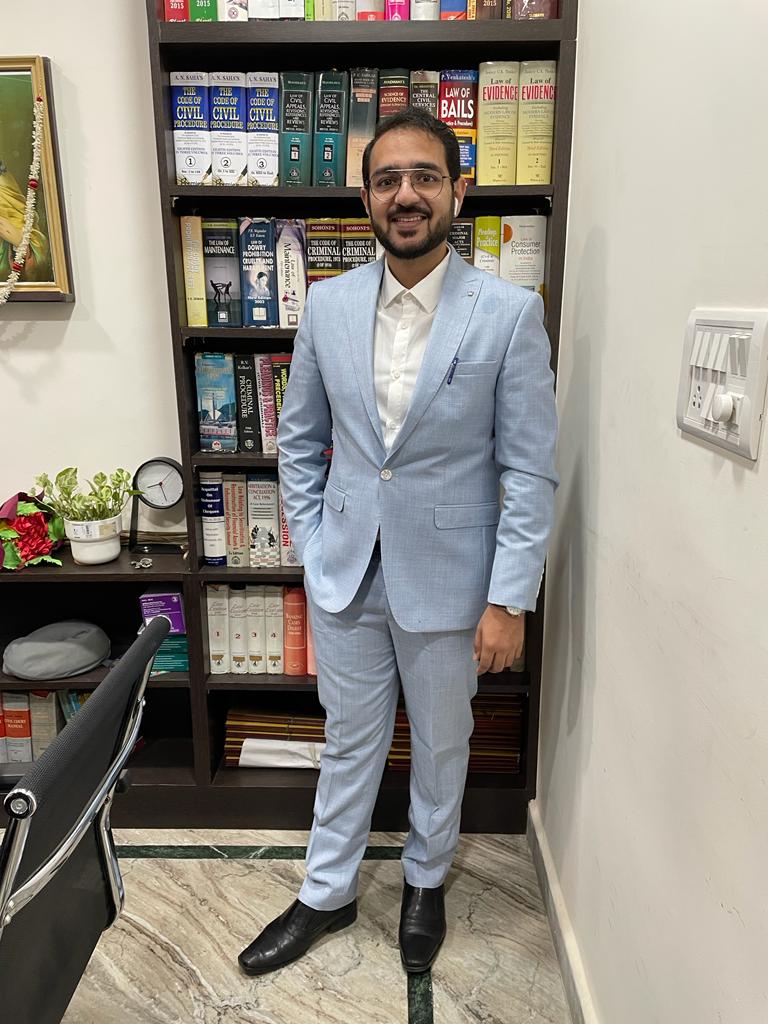
  • The initial years shape your personality as a lawyer and it goes a long way in creating an impression on others- Akshay Pathak, Principal Associate at Cyril Amarchand Mangaldas

    The initial years shape your personality as a lawyer and it goes a long way in creating an impression on others- Akshay Pathak, Principal Associate at Cyril Amarchand Mangaldas

    This interview has been published by Priyanka Karwa and The SuperLawyer Team

    Sir, our audience would like to know about your journey before you joined Cyril Amarchand Mangaldas

    I was born and brought up in Patna and did my schooling from Patna (Don Bosco Academy and St Michael’s High School). Just like any other middle class household, focus of my parents had always been on education. During school and even college I had just been an ‘above average student’. Whilst I was never the batch topper, from as long back as I can remember, I always wanted to actively participate in any event that came my way, which was related to public speaking. This was maybe the decisive factor in me opting for law. I completed BA LLB (Hons) from GGSIPU, Delhi in 2016. Before joining Cyril Amarchand Mangaldas, I have worked with Shardul Amarchand Mangaldas and briefly with Dentons Link Legal, Delhi office (Link legal was a campus placement). During my law school tenure, I had the opportunity to work as an intern under the able guidance of excellent general corporate teams of some of the best law firms in the country. I am currently working as a Principal Associate with Cyril Amarchand Mangaldas. My practice area primarily includes domestic and cross-border M&A transactions, and general corporate matters including restructurings.

    How were your initial years as a junior associate?

    There is a general perception that the initial years are tough if you are working with a law firm. Irrespective of whether you are working with a law firm or working with a senior in a chamber etc. you need to work really hard as a junior. This is inevitable and every fresher has to face this, and even I was no exception. The fear of the unknown, fear of making a mistake used to be perpetually there. As a fresher everything you are doing is new to you. There is a huge gap between theoretical knowledge and its practical application.  Hence, a junior has to spend more hours and there is no short cut to that. The initial years shape your personality as a lawyer and it goes a long way in creating an impression on others. This profession demands hard work (irrespective of the designation) and the sooner you accept this the better it is.

    Hard work and sincerity will always be given preference over just intelligence. Infact I firmly believe that if the initial years are too comfortable (in terms of work quality, number of hours etc.) it will in some way or the other adversely impact your professional growth. I was fortunate to start my journey under the guidance of some of the finest corporate lawyers of the country. If you have good seniors, you feel motivated to push yourself and give your best. Hence, I believe that role of a senior is also crucial for the growth of a fresher. People mostly quit bad seniors and not the organization or the work. A lot has been written and said about having a ‘work life balance’. This is something very subjective. Someone may get free at 7 in the evening and may feel the lack of motivation to pursue any other hobby, while the other may get free at 10 in the night and may be able to pursue a rejuvenating hobby.

    What is your take on the on-going discussions in relation to mental health issues being faced by young lawyers?

    Each of us may have issues which we may not be able to or be willing to share with everyone (specially office peers). Waking up every morning, separating your personal and professional life and going out, giving your 100 percent is never easy, in such a situation. Mental health should be taken very seriously by each individual and by peers as well. Specially in a profession like ours where you need to always give your 100 percent, not just to thrive but even to survive. It is nearly impossible to work efficiently if there are things effecting your mental well being (reasons could be personal or professional). Allowing your peers and team members that space to open up, talk about such issues can go a long way in not only increasing overall work efficiency but also in building strong bond between the team members.

    Sir, you have carved out a career in one of the best law firms in India. What were the things you did right (and wrong) in your journey so far?

    I would break this answer into two halves- one being the time spent in law school and the other half being the time spent as an associate in law firms.

    During law school, specially during the 4th and 5th year, I realized the importance of internships. If you are not from the top 5-6 national law schools, there is no other way to start working with good law firms. An internship gives you an excellent opportunity to show case your hard work and sincerity, and I believe every law student should take up internships very seriously and never intern merely for a certificate or just to fill up CV. I personally took my internships very seriously and tried to make the most out of them. Infact the team I have been working with from the past 6 and half years is the same team I interned with in my final year in law school.

    Once you start working, the first thing which you should do is try to develop dependency, and learn to be accountable for your work. ‘Being available to help’ and ‘working hard’ are the two most important attributes. You may not be the smartest one in the room, but you can work harder than the majority. That is totally under your control. Every criticism should be accepted with a positive frame of mind. As a junior one is bound to make mistakes. The most important thing is how you outgrow your insecurities and learn from your mistakes. One should never try to settle for less, specially during the formative years as a lawyer and try to always push your limits. If you start giving too much importance to work life balance in the initial stage of your career, some way or the other your professional growth may get hampered. However, I see this as a choice- one may prioritize work life balance coupled with gradual and slow growth over sharp growth over a short span. Hence, it should always be a personal decision. 

    The major part of your career revolves around corporate law. Which aspect of this thrills you the most?

    Every aspect of my work thrills me to be honest. If you don’t love what you are doing, there is something wrong with either what you are doing, or your career choice. As a corporate lawyer you get to work on some of the biggest M&A deals happening in the country. You get to engage with, work with some of the sharpest minds across various sectors. You grow not just professionally but also personally. That I believe is the most satisfying aspect of the work I majorly do.  For students / professionals who want to work with law firms, the motivating factor should always be good quality of work, better learning curve, experienced seniors to work with. One should never get carried away by hearsay negative feedback about an organization or law firms in general. At the same time never get carried away by the ‘Harvey Specter’ effect where you get enticed by other lesser relevant factors (clothes, cars, money). In long run everything follows if you are motivated and willing to work hard. ‘Overnight success’ doesn’t exist. Each day counts.

    You have effectively facilitated some major Mergers and Acquisitions. What are your key learnings while dealing with those cases?

    In my limited experience what I have understood and learnt so far is that working hard, staying updated and on your toes, are not just the only areas where you need to be good at. In addition to the above, meeting client expectations and being able to meet deadlines (internal as well as external) is something which is very important. All the hard work, sincerity is of no use if you fail to meet expectations of your senior or the client. I believe majority of the success one attains in one’s professional journey comes from being able to ‘understand and deliver as per the expectations’. Efforts which are channelled always meet better results. Hence, before working on any deliverable, understanding expectations of your client / senior is of utmost importance. 

    Internships in Tier-1 firms have been the hardest yet most desired by budding law graduates. Can you share a few suggestions which could help them to materialize the same?

    Networking and visibility is the key. Law students, specially from tier 2 and tier 3 law colleges should make it a point to mark their presence both physically and virtually in legal space. This can be by way of being physically present for seminars and conferences and being active on Linkedin. Students should keep themselves updated and actively write articles/ papers/ blogs on legal issues and changes. One cannot expect approaching anyone directly without any prior interaction, and getting an internship at one go. Students should follow a two way approach for getting internships – (1) applying well in advance (6-7 months atleast) to atleast 30-40 law firms and following up regularly (sending just 1 email for internship is as good as not applying for an internship) ; (2) building a strong presence of Linkedin by way of writing articles/ blogs, getting in touch with seniors, alumni, sharing your work with them on a regular basis, and then approaching them for internship.

    What do you think is the best for a law student to do with respect to internships? Short-term internships over several genres of law or long-term internships in a specific field of law?

    Interning multiple times with the same organization, in the same practice area with the same team preferably is better than interning 10 times with 10 different firms across different practice areas. Interning in the same practice area multiple times helps you to hone your skills and build your knowledge base in that specific practice area.

    Do non-NLU graduates stand a chance as freshers with Top notch law firms?

    Yes, absolutely. As I said earlier, internships are the best way to showcase your hard work and sincerity. If you meet the basic threshold set by a team for a fresher, and are able to demonstrate the hunger to work hard, learn and grow, college will not matter. I am also not from any NLU for that matter.

    Sir, you have a myriad of journal publications under your name. How important do you think publications are for a law graduate, both as a student and as a professional?

    Research papers become a talking point in your interview. No law firm will hire you just because you have 5 good publications. However, it does demonstrate that you have good research skills and that you were able to analyse a legal point. In an interview if you are able to substantiate on that legal issue, it can go a long way in creating a positive impression in the mind of the recruiter.

    What is the importance of moot court competitions in a CV?

    Just like a paper publication, no moot court competition can get you a job. Even if you end up winning 5 moots, no law firm will hire you solely on that ground. Participation/ winning a moot court competition demonstrates that you have good research skills and again it would be a talking point in your interview. However, I would encourage all law students to actively participate in moot court competitions and write research papers. In law school you would get to learn application of law mostly by way of your participation in co-curricular activities. 

    Lastly, what advice would you like to give to Non-NLU graduates who have big aims to get into prominent tier-1 law firms? 

    With my limited experience in legal space, the only advice I can give to anyone is to have faith in hard work, and sincerity. Hard work and sincerity would always be preferred over intelligence. Have short term goals for each semester and decide how many papers you want to write, where do you want to intern, how many research papers you wish to publish and then act accordingly. Belief in hard work more than destiny should be the mantra.

    Get in touch with Akshay Pathak-

  • Manav Gecil Thomas, Partner at Thomas George and Associates Shares his Thoughts on Networking Strategies in Litigation and Role of Tech and AI in Legal Operations

    Manav Gecil Thomas, Partner at Thomas George and Associates Shares his Thoughts on Networking Strategies in Litigation and Role of Tech and AI in Legal Operations

    This interview has been published by Prabhjot Singh, Priyanka Karwa and The SuperLawyer Team

    What motivated you to take law as a career and how has been the decision so far?

    As all students, I was also confused during my school days as to which profession I should choose. Thereafter, my mom suggested me to take up law in lines of the profession of my father as he has already established a base. I did not qualify CLAT, however, I qualified for UPES, LAWCET and ILS Law College, Pune.

    Keeping the long standing reputation and I decided to join ILS Law College, Pune. All throughout my college life, I enjoyed participating in Moot Court competitions. After completing my law, I immediately joined my father’s law firm i.e., THOMAS GEORGE & ASSOCIATES. Thereafter, my mom was instrumental in insisting me to complete my LL.M.

    I did LL.M in Constitutional Law from O.U.P.G. College, Basheerbagh and secured a Gold Medal which was a lifetime dream come true. My father has been an amazing mentor as he not only trained me in drafting, filing procedures, clerical works but he also gave me the freedom to take up matters and handle them independently from day one …!

    My first appearance itself was arguing a final hearing before the then united Hon’ble Andhra Pradesh High Court of a Criminal Revision Case pertaining to 2008. Ever since then, I have never stopped and I hope to argue many more important cases in the years ahead of my life.

    Arguing the law and interpreting the law are two important facets of my litigation life which I will always cherish. So, though law happened by accident, I am happy to go the way it carries me. There is a unique unexplained sense of happiness that, I feel while arguing cases before different judicial and non-judicial fora throughout the country. With all the tremendous pressures that we as advocates undergo, it is only, that joy that I get, after arguing different kinds of matters that keeps me going ahead…!

    Your internship experiences are filled with reputed Advocates and Judges, was there any roadmap for the same or all did was in flow? How would you guide students in choosing internships?

    As a law student after participating in few moot court competitions, I was inclined towards litigation. My first internship was with my father and mentor who taught me the basic art of advocacy, that includes drafting, filing procedures etc.

    Thereafter, I went on to intern with Designated Senior Counsel Late Padmanabha Reddy where I was mesmerised to see sir argue different kinds of matters at length on his legs from 10:30 AM to 04:30 PM…! I would observe, sir argue most complex matters with utmost patience and he was always calm and composed, the most essential art I learnt. Subsequently, I interned with Adv. S. Niranjan Reddy now Designated Senior Counsel/ Member of Parliament, at whose offices I learnt corporate litigation and its nuances.

    Thereafter, I had the unique opportunity of working with Honourable Justice Kurian Joseph (Retired), Former Judge Hon’ble Supreme Court of India and while interning with his Lordship, I was able to understand what all goes in the minds of the judges post arguments since, I was also involved in the legal research that would assist judges in arriving at their decisions. I was able to see the judicial process closly that goes on after the arguments and before the judgement is pronounced.

    This experience has channelised my arguments in a slightly different manner and I am dedicated His Lordship for imparting this knowledge in me. Thereafter, I had a short stint with late Advocate Lily Thomas who had shown me no matter whatever hurdles and challenges life throws at us one must keep moving. Lastly, in my final year, I interned with Designated Senior Counsel & Hon’ble R. Basant sir Former Kerala High Court Judge. During this internship I received unique lessons of life & law, wherein I learnt how a mentor can treat his associates, juniors and interns with patience & care and at the same time learnt how hard work and dedication plays an important role in the life of an advocate. Students are not always sure as to what kind of an advocate they want to become after graduating, so it is always beneficial to intern at different places where there are variety of matters.

    Students should always start their internships with advocates who have a variety of trial court matters. In trial courts, students can learn about procedural laws, they can observe Cross Examinations and trial advocacy skills.

    Thereafter, students must intern with advocates practising in the High Courts and then the Supreme Court if possible. After this I would suggest students to intern with different corporate law firms. By the end of their internships, I would say with utmost surety, that, the students will be able to decide their career paths…!

    Manav, any specific reason for choosing litigation over corporate, what created your interest in that?

    I hope my answer to this question does not create any controversy amongst corporate law practitioners. I do not feel that I am made up for only drafting contracts or due diligence as I like to see the law in motion and that, only happens in the courts of law. In litigation, one see and meets different types of clients with different issues and in pursuing those issues one has to appear before different judicial and non-judicial fora and convince the Honourable Judges on unique points of laws and facts. Litigation requires a unique skill of being able to put forth your points with absolute clarity and conviction.

    For the same, one has to be well versed and well abreast with the laws and case laws. In corporate law, there are different nuances of law which are being explored on a day-to-day basis but none of the corporate lawyers are able to see their documents being interpreted in the courts of law. That is why, I choose litigation over corporate law.

    However, one must understand that even though I am a litigating lawyer, on a day-to-day basis, I am dealing with various aspects of corporate law which we cannot avoid being a lawyer. Thus, I believe that the so-called difference between a corporate lawyer and a litigating professional is a grey area which cannot be compartmentalised. So, I fix no label to myself….I leave it to the readers to categorise me as any lawyer they feel based on the work I execute.

    As lawyers, society depends on us in a lot of situations and pro-bono matters is one of them. How far do you resonate with this?

    Society depends on a number of aspects that keeps evolving and law is an important part of this evolving society. The changing needs of the society requires dynamic changes by the practitioners of law. In today’s world where everyone is in the rat race to earn, a lot of poor litigants suffer with inefficient representation as the fees that they can pay is less. I completely believe that in the background of the unique requirements of the society as of today, pro bono matters would definitely assist and help the people in need in a unique and effective manner.

    Many a times, I come across poor litigants who are not guided in the right direction due to which they faced unpleasant consequences. In this background all the us at THOMAS GEORGE AND ASSOCIATES believe in helping the really needy clients and when the situation demands we do take up pro bono matters. In criminal matters I observed that the people arrayed as accused in many matters do not have the necessary sources to finance their litigation expenses and tend to seek help from legal aid.

    Many a times, legal aid is not providing effective and efficient representation thereby rendering the whole purpose futile. Thus, professionals with experience taking up pro bono matters really helps the litigants in need.

    According to you, what networking strategies should be adopted by the first-generation lawyers specifically in litigation?

    The struggles of first-generation lawyers are untold in today’s world. There is no secret mantra that can be told as to the strategies that can be adopted, however, these are a few tools which may come handy in the years to come. Networking is a very important part of litigation which one will understand as they progress in their profession. One must always bear in mind that every person one meets in any walk of life can be one’s prospective client and thus one should interact with people and make them know that one is a practising lawyer.

    There is an apt example for the aforementioned statement of mine; once while I was in a club and while I was on the way to the washroom, I met an acquaintance of mine and in a casual conversation made him know that I am practising in Hyderabad. After a year I received a call by this acquaintance who had referred a very big company for coming on board as their retainer. So, one can land up with a client in any place.

    Keeping in touch with your alma mater and alumni will also help you in being referred matters from different states pertaining to your jurisdiction. Being active on social media can also help to a certain extent. Giving internships to students, is a way of giving back to the society and in return over the years to come, one will see the benefit from the same. Also, one must always remember that hard work pays off and the reason I say so, is your work must speak for yourself and that in turn would result in receiving the due benefits of networking.

    Please elaborate for us your current role

    I am currently the Name Partner at THOMAS GEORGE & ASSOCIATES, Hyderabad. The Managing and Founding Partner of the firm is my father, Advocate Thomas George and the Senior Partner is my mother. This being the background of my firm, the positions that we hold really does not matter for us internally. That being said, on a day-to-day basis I appear on various matters before various Judicial and Non-judicial fora throughout India with my base practice in Hyderabad.

    My entire day goes in arguing matters before different courts of law and in the evening, I spend my time in preparing for matters listed either on the immediate next day or for the days to come and also meet my clients. I supervise the administrative matters of the firm.

    I delegate matters to the juniors/associates at the firm, teach/assign work/cross check the drafts assigned to the Associates/Virtual/Non-virtual interns. I brief the Managing and Founding Partner and Senior Partner of the firm on matters that needs to be argued. I also help my Associates in practising their presentations before the courts scheduled for the next day, so that, they do not face any difficulty.

    So far we’ve seen employees being harassed at workplace wrt different situations, how well do you consider the role of employment laws in the same?

    It is always beneficial for employees to research about the firm where they seek employment before scheduling any interview. I also think it will be beneficial if one can speak to people who worked in the said place prior to joining. The role of employment laws is not very effective as, the internal committee for any kind of harassment consist of members of the same firm.

    Furthermore, if any employee raises a complaint and leaves the organisation the next organisation will always look at this employee with a speck in their eyes and thus there is a fear in employees from making any complaints whatsoever.

    How does AI play a significant role in helping lawyers and what are the consequences for the same?

    AI is already playing a significant role in lives of lawyers. As on today we can see AI’s tremendous use in research while comparing to our senior generation lawyers. The search engines have been extremely helpful in researching for case laws as well as to know overruled decisions, landmark decisions et cetera. Case management has become very simple with the help of various digital applications that provides the statuses of all the matters of the firm with the click of a button. Dictation and drafting have become 10 times easier than what it was with the usage of the software that types out whatever we dictate with almost 90% perfection.

    Another application that I have come across in the recent times is a scanner pen which can be used to copy paste contents from various hard copy of agreements/drafts into the word document. AI will always remain a tool in the hands of a lawyer but can never replace mankind especially lawyers, because, the brain used to interpret law in a unique manner is not AI but it is that unique skill of that lawyer. Furthermore, convincing a judge is done by advocates who present their matters in ways they deem fit which again cannot be substituted by AI. For people who disagree then mankind itself will be overtaken by AI.

    There are also applications that are being developed for taking queries from clients through chat boxes and these apps help in consolidating the client consultations to a certain extent. Such client consultations would in a way save the precious time of lawyers. However, how much ever technology advances, if it lacks  human touch in the works of a lawyer then I believe there will not be effective representation in those cases.

    Manav, we’ve been witnessing students shifting from litigation to corporate or most of the times they dont even take litigation as an option, what can be the reasons for the same?

    Personally, I would like to disagree. In the recent years I have seen many students in fact choosing litigation over corporate law firms. The ground reality is that, as on date, there are no vacancies in many chambers as they are already flooded with young students who have just graduated. However, students do prefer a comfortable and stable life with heavy packages which corporate law firms provide and that can be the only reason that students would prefer corporate law firms over litigation.

    Once litigating lawyers start paying their juniors at least the amounts that are required for the basic survival in the cities they practice, students will definitely choose litigation. What I have observed in corporate law firms is that due to tremendous burn outs over the period of time people shift back to litigation thereby losing their initial precious years of the experience. Students must understand that litigation is like an investment which grows manifolds.

    The life of a corporate lawyer or a judicial officer or a lecturer usually ends upon attaining the age of superannuation, however, the life of an advocate has no age limit and in a lighter note; when all your fellow colleagues are retiring, the practising lawyers start earning even more…!

    Lastly, any piece of advice for our young lawyers

    Repeating what you would have already heard from various stalwarts in the profession, I would like to say that there are no shortcuts to success.

    Hard work, dedication, diligence, perseverance, patience are the keystones to success. We must always remember that success cannot be achieved overnight but it requires tremendous hard work.

    Whenever, we see successful professionals, we only tend to see their achievements without knowing the amount of pain, sacrifices, compromise that they had to undergo to reach the place that they are at today.

    Having patience will definitely play a great role in reaching those heights of success that are channelled for you. One must always remember to maintain a work – life balance which everyone has been talking about in the recent times. One must take time off work, spend time with family and friends as well, which are very important.

    I always tell my hardworking interns not to forget to chill in life. All the best!!!


    Get in touch with Manav Gecil Thomas-