Tag: MSRCL

  • Souvik Paul Mazumdar, Partner, ALMT Legal, on his journey to the top, his inspiration, and managing multiple verticals

    Souvik Paul Mazumdar, Partner, ALMT Legal, on his journey to the top, his inspiration, and managing multiple verticals

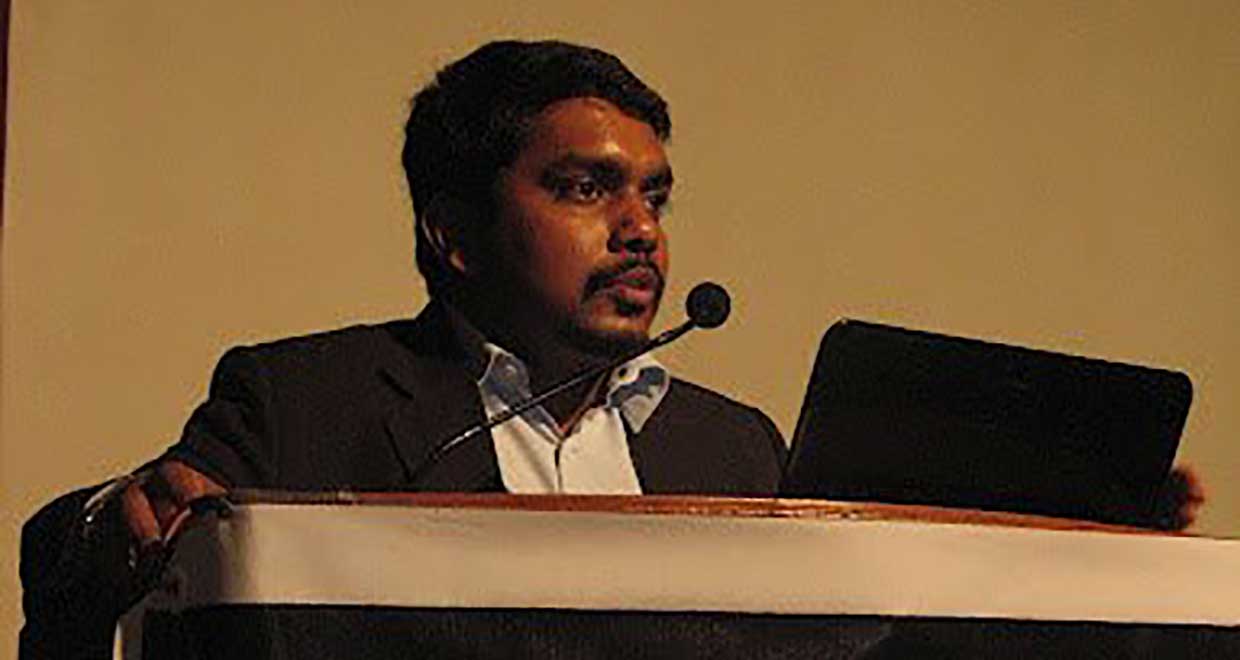
    Souvik Paul Mazumdar graduated from M.S. Ramaiah College of Law in 2005. He joined ALMT Legal soon after. His corporate practice includes advising and assisting corporates and promoters in private equity investments, mergers and acquisitions, cross border corporate structuring and capital market transaction. He has advised clients in international offerings before AIM (Alternative Investment Market) in London. He has also been closely associated with various sports management and celebrity management companies as a legal advisor and is currently concentrating on developing and building the Sports, Media and Entertainment law practice of ALMT Legal.

    In this interview we speak to him about:

    • His journey from being an Associate to Partner at ALMT
    • His experience working under varied verticals, under a host of capable mentors
    • Taking his father’s legacy of legal practice forward


    Was law always the career you wanted to take up? What inspired you to pursue law?

    To be very honest, yes, law was always my first choice. I did try my hand at the National Defence Academy by filling the form and was also fascinated by the Navy, but these were fleeting interests. Law has always been my constant passion

    My father was a senior lawyer in the Guwahati High Court. He inspired me to pursue law. I remember being in awe of his extensive collection of books and watching him read all day. Unfortunately, I never got the chance to practise under him as he passed away while I was in school. But the apple doesn’t fall far from the tree, does it. I feel connected to him through my practice of law. I love challenges and in a profession like law, every day is a new experience. The learning never stops when you are a lawyer. There is a new problem each day and with it emerges a new solution every time.
    You graduated from M.S. Ramaiah College of Law; tell us a bit about college life at BU.

    My time in college is unforgettable. Apart from just academics, those five years taught me to be independent and face the world on my own; to be able to overcome any hurdle. Coming from a small town, I had a bit of a culture shock, but managed easily. Apart from studying, my main interests were sports and motor biking. I used to play every possible sport, especially cricket.


    How did you come to join ALMT? What was your experience there like?

    I was supposed to intern with ALMT Legal along with my friend Debosree Paul during our final year. Unfortunately, that never crystallised. But I was acquainted with the ALMT Legal team. Mr. Arvind Kamath (my professor at Ramaiah College and now Partner at ALMT Legal) knew Mr. S.R. Arun (Senior Partner) and Mr. Prashant Popat (Senior Partner) personally. He suggested that I meet them for an interview and the rest is history.

    I believe that a fresher should concentrate on learning during the early years of their professional life and should not bother about packages. As my senior Mr. Vachan always use to say, “for a lawyer, the first ten years is learning, learning and learning, after ten years, the ‘L’ goes off and it is earning, earning and earning”. A fresher should decide what he/she wants to do and accordingly take a call to decide the right place. Work quantity and quality is very important.

    My experience over the first few years was very interesting. I made mistakes and learnt from my mistakes, I was too enthusiastic about many things. I started my career as an immigration and IP lawyer and moved to proper corporate law, employment law, sports law and media law gradually.


    ALMT was your first job and continues to be your workplace. What are things that you enjoy most about working here? How have you seen the firm grow during your twelve years here?

    I enjoy everything about the place! The people, the learning, the atmosphere, the seniors, the associates, the work culture, the bonhomie, everything. Most of us have been here for years and just love to be here and work and contribute towards ALMT Legal’s growth each day. I have grown from a fresher associate to a Partner.

    The firm has grown in diverse ways. It started in 2003 in Bangalore and I joined in 2005. When I joined, we had three partners and six associates (including me). Today we are twelve partners with almost 40 associates.

    We have grown in terms of clientele and also expertise. Many practice areas have developed in front of me. Today, we are a full service law firm and can assist clients across the globe and through different verticals.


    Have you had a guide or mentor in the industry? Do you think it important to have someone to look up to and take advice from in shaping a successful career?

    At ALMT Legal, I had many mentors. They were always around to guide me. Rajat Bopaiah and Junia Sebastian were always around to help me as friends. They corrected my mistakes. I have learnt to be meticulous with Dhanya Menon’s training. Rakesh Prabhu was my first senior and helped me grow over the years. Mr. Arvind Kamath is like a teacher to me. Mr. Prashant Popat’s teaching made me a better human being. Over the last twelve years, I have changed a lot; I’ve learnt to be a better person, and that is because of Mr. Prashant Popat.

    Last, and perhaps the most important is Mr. S.R. Arun. People who know me are aware of his influence in my life. He has been a true mentor to me in honing my skills as a lawyer. Everything I know has been taught by him. If I end up being even half the lawyer he is, I would consider that a huge accomplishment. I think having a mentor definitely helps you a lot. It is a huge benefit.


    As one of the most sought out after places for internships in Bangalore, what does ALMT look for in prospective interns and employees?

    What we look for is dedication, the hunger to learn and discipline. If you have these attributes, the sky is the limit.


    Your body of work includes cases dealing with M&A, Capital Markets, Sports Law, Entertainment and Media Law, Private Equity, Labour Law etc. How did you manage to build such a diverse repertoire?

    It is the hunger to learn that drives me. It is not that I decided to take up all these areas of practice. It happened and I decided to flow with it. I love challenges and these were challenges.

    One morning in 2010, I was in Mumbai to assist a client with his media law and sports law related requirement for the next eight months. It was the first time that I was dealing with something like that. The firm trusted me and I trusted my confidence. And that’s how the journey of sports law and media law started.


    What are the tricks to good legal drafting and advising clients successfully? What are the rookie mistakes that can be avoided?

    What you need to do is read well, be well prepared about your client’s background so that he need not give you the entire story, be a good listener, make notes for everything, have an eye for detail, think from a devil’s advocate perspective, avoid copy-paste and if you do so, please read it again to verify, keep things crisp and to the point, as this is not an examination paper where you think of filling up pages, and above all, be patient


    As a partner at ALMT, what does an average work day look like for you? Our readers would be very interested in understanding the roles and responsibilities of someone in your position.

    Average work day is anywhere between ten to fourteen hours of work. During transaction and deadline deliverables it can go upto 24 hours also. It is a personal choice that you make.

    Responsibility of a Partner is like the captain of the ship. You need to drive the client attorney relation. You are the person responsible. Be attentive, review everything, motivate your associates and when required do some fire fighting too.


    Outside law you have several interests including reading, painting and sports. How do you manage your time effectively between work and your hobbies?

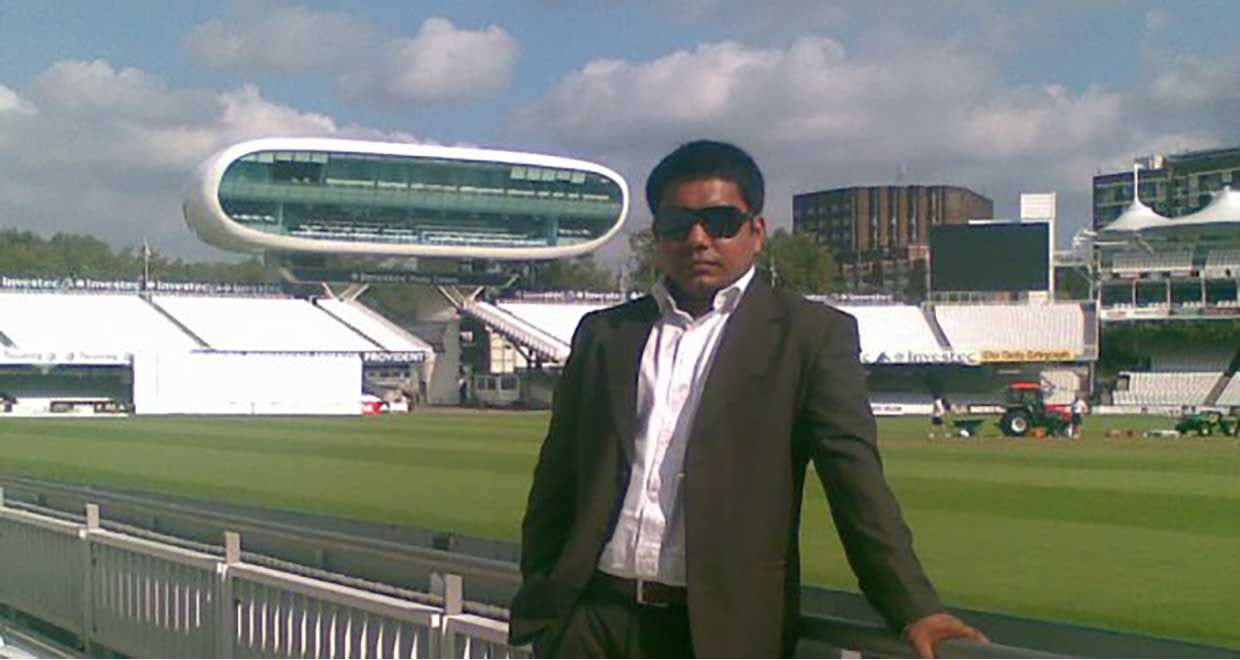
    I try to keep my weekends free. Dedicate time to my beautiful wife, my adorable dog and to my hobbies. A busy man always finds time for things that can keep him busy. I was one of the co-founders of Justice League Cricket Club and have been actively involved in organising the Law Firm Tournament in the past and also participating in many Corporate T20 cricket tournaments.
     

    Where would you like your career to take you in five years?

    I have never been an astrologer trying to see the future. I take each day as it comes so probably enjoy what I am doing and touch base on some newer verticals of law.


    What is your advice to fresh graduates who aspire to work at law firms as Associates?

    Be yourself and the world will accept you, but yes, you have to be focused, develop new interests, be dedicated and diligent, and control your arrogance.


    What would your parting message be for our readers, given that most of them are young lawyers and students of law?

    Be good and do good. It is a lovely profession and there is so much to learn. Just follow your instincts and believe in destiny. When I was in school, I believed that I was destined to study law in Guwahati and practice litigation in Guwahati High Court. Look where I am today. Don’t get too hassled and paranoid with events happening around. Stay calm and as my senior Rakesh says, “keep walking”.


  • Priyeta Chowdhury, Senior Executive Legal at Lanco on work at Corporate Bodies like Dell & Balaji Telefilms

    Priyeta Chowdhury, Senior Executive Legal at Lanco on work at Corporate Bodies like Dell & Balaji Telefilms

    Priyeta Chowhury graduated from M.S Ramaiah College of Law (Bangalore University) in 2012. Thereafter she worked as a Legal Administrative Associate at Dell International Services (Chennai) and at Balaji Telefilms Ltd. as Senior Executive-Legal. Currently, she works as Senior Executive-Legal at Lanco Infratech.

    In this interview, she talks about:

    • Law school experience
    • Work experience at Dell and Balaji
    • Appointment at Lanco Infratech


    Most of our readers are law students and young lawyers. How will you introduce yourself to them?

    Though I would prefer the day when I don’t need an introduction. But today I would like to introduce myself as a budding lawyer in the field of law or to be precise as an In-House counsel.

    My journey started in Kolkata, where my entire schooling and childhood was spent, After my completion of 12th in Commerce, and in-between all the hustle of Career decisions and determining which stream to go for, I somehow landed with the choice of studding law, Then the regular pre-law tuition classes for cracking any of the National Law schools entrance also came along. I was somehow unable to crack any of them though.

    So my last hope remained M.S Ramaiah College of Law were admissions were given on the basis of 12th Board Marks. And I somehow secured a place to be a part of the cult I belong today.

    And after my amazingly interesting 5 years of college I got opportunity to be a part of the world famous brand names in a very short span of time.


    priyeta-chowdhury-1How did you gravitate towards law? Why law and not engineering or medical studies?

    I call it a fate, being a daughter of an Engineer and also with a family history of government servants and moreover with a personal choice towards dramatics and art. I somehow landed with Law profession. It was my dad who suggested me the same and like my “parent’s obedient daughter” I thought it to be a good option among all the significant white collar jobs that were prevailing in the market.

    A reason to work for and the sheer power and the glittery gravity of the profession attracted me, though hardly there were people to guide me on this front as I have no family history of lawyers.


    First year of law school can be much challenging at times. What has been your experience?

    Agreed; but with a little personal twist, The first two years of law school decides about all the journey of next three years. My journey took off with the feeling of freedom and the power of the profession.

    Ramaiah was fun, sort of a celluloid movie that lasted for 5 years, friends, rivals, college regulations, teachers and seniors and all the law college legacy and rules.

    But among all these I found the lawyer Priyeta, the choice to pursue In-house opportunities; the choices of right internships and finally the choice of right job, which gave me the first step towards my dream carrier.


    How would you describe your time at M.S Ramaiah College of Law (Bangalore University)? What are the co-curricular activities you took part in?

    As earlier mentioned Ramaiah was like a celluloid movie which lasted for 5 years, I enjoyed my college life thoroughly, I was part of the Cultural Committee and also the sports club of my college, Being the “Miss Fresher” of my batch and part of Cultural committee member I took part in few of the inter college dance fests along with some inter college sports meets.


    What kind of internships did you do while you were a student? Any remarkable experiences during your internships that shaped your career choices later?

    I started my internship in 2nd year of my college with a law firm in Kolkata, the work was good, primarily research work and drafting, along with the opportunities to visit courts. The next few internships were with High Court advocates in the fields of Arbitration and Civil to understand the different facets and integrities of the Court culture, And then final internship with the corporate in-house team, that is Wipro Bangalore. The versatility of my internship gave me an insight as to which field of law I would like to pursue in future. As everyone I was also confused in the beginning of the law school as to which stream of law I shall chose,the major tiff was in between litigation practice and corporate practice. And then Law firms or In-House.

    But after my final internship with Wipro Bangalore I decided as to which side of the table I would prefer. Wipro also presented me with an opportunity to witness projects on Merger and Acquisition which fired my interest towards In-House practice.


    What do you have to say about mooting at law school and legal writing for journals? Are these helpful even after the student graduates?

    Personally I have no clue, how much mooting and legal writing helps us professionally. As I have never had much of keen interest on the same. In my entire law school I have attended only two moots out which one was compulsory. A lot of my friends showed a generous interest towards the moots but I somehow never got attracted towards it. On the contrary I focused on seminars and Discussions. It helped me to shape up my mind and also gave an insight about social legal issues and the thought process of our legal luminaries.


    Did you find that your law school education had prepared you sufficiently for the many tasks you were required to execute during your internships and later at your job?

    To be frank and honest law school knowledge and practical work exposure has hell and haven difference ,but yes I cannot completely deny the fact that knowledge of the law subjects are one of the essential keys to our profession. Thus I feel bookish knowledge along with the exposure’s during internships shapes ones future in our fraternity.


    After graduation, you joined Dell as Legal Administrative Associate. How did you secure your appointment? How would you describe your experience working there? What kind of challenges did you faced during this job?

    DELL INTERNATINNAL SERVICES (Chennai) was a dream come true for me, without any backing of National law school, clearing 8 rounds of interview in a span of 3 months was a challenge. Though I faced the challenge quite well, a little rigorous study over the company and its policies along with general legal knowledge, I cloud secure my position in the organisation. As a fresher the companies look into your drive to learn about the company and its business and your go-getter attitude to handle difficult corporate situations individually.


    Thereafter, you left Dell and had joined Balaji Telefilms Ltd. as Senior Executive Legal. What prompted this switchover? How did the appointment take place?

    After my span in Dell Chennai, I switched to Balaji Telefilms Limited Bombay. The professional networking sites helped me a lot. Coming from an IT company, which shaped my basics; Media was all together was and different industry, a different work culture. But as I had a very keen interest to have a flavour of the Media industry and was also getting an escape from Chennai, thus I made the choice. Though my choice couldn’t hold my interest that well. Alsocoping up with the demands of the fastest and expensive city of India for too long seemed difficult to me.


    Would you say that the work environment at Balaji Telefilms was significantly different from Dell?

    I completely agree with the difference of work culture in an U.S MNC and an Indian Company, that too especially a small production house. There’s a lot of difference in the transaction value and the policies of the companies. MNC’s are more of policy driven organisation whereas Small Indian companies are Individual driven.


    Currently, you are working as Senior Executive Legal at Lanco. What prompted you to make this choice and what made this shift possible? How has been your experience at Lanco so far?

    After Bombay, the next destination was Delhi, “Lawyers Paradise”. The city welcomed me along with my friends and a position in Lanco Infratech Limited. Again professional networking sites along with my knowledge and positive attitude towards exploring a new industry secured me the position in the infrastructure company.

    And my journey in Lanco has been remarkable; Amazing Seniors with a positive attitude of imparting the industry specific knowledge helped me to grow professionally. The company has given me exposure towards Litigations, Project Finance, Asset sale transactions and most importantly CDR process. CDR is a lifetime opportunity for an In-House Counsel to experience and along with the guidance of my seniors I handle the same.


    How different is the working environment of these three companies? How would you describe your experience?

    In my short span of career I have worked in three different Industries, brand name and cities, The work culture of all the three are quite different from each other as Dell being an U.S based MNC, Balaji Telefilms was an Indian production house and Lanco being an Indian MNC.

    But with all the experience till now I prefer to work for a policy driven organisation, where work culture is friendly and more sophisticated, and a lot of importance to the Ideas and innovations are given, thinking on one’s own feet is encouraged. And in the end the organisational culture inspires one to loyalty towards the organisation.


    What does your current work profile at Lanco consists of? How is a typical workday like?

    Being an In-house counsel for an infrastructure Company, my work profile has diverse work schedule. It includes Litigations, Transactions related to sale of Assets, Restructuring of Finances and finally CDR.

    My usual day at work start at 9 in the morning with a cup of tea, then loads of mails and lots of work for the entire day and at times the day prolongs till midnight as per the demands of the transaction. But working in the organisation is fun and the exposure that I gain with each transaction is remarkable.


    Does Lanco take interns? What is the process for same?

    We do take interns. The most important qualities that we look for in an intern is that he/she should be a leader, problem-solver, self-motivated and disciplined. A good knowledge of law is something that can be acquired over a period of time.

    An intern/College Committee shall get in touch with our Legal team or our HR team and send us an email along with a cover letter specifying the duration of the internship for the candidate that is being sought for. We encourage the applications at least 3-4 months in advance.


    Many people believe that working as an in-house counsel affords more work-life balance and is less demanding. What is your take on this?

    I personally feel that there is hardly much of difference in the work culture, yes though I have fix office hours. I do have late sittings, though may be its transaction specific but I do the same work as my external counsel would do. And to guide any external counsel I shall be well versed with the transaction first. And finally as I am the first point of contact for any Legal issues in my organisation I shall always be well aware about all the legal happening in my organisation.


    Lastly, what would be your message for all the law students reading this?

    The last few lines I would like to tell to my fellow friends who are yet to enter the fraternity, is please enjoy your college life which in our college days we used to call “Honeymoon Period”, but just maintain a balance with your internships and Studies as only fun would not fetch us what we have spent five years for.

    There is a lot of opportunities in the market for the right person with right attitude towards work. Learning is a continuous process and in our profession specifically learning never stops. So whatever it takes learn from all the rights and wrongs you do in your life.

  • Chintan Chinnappa, Senior Associate, Dua Associates, on law, litigation, and taking time out for his music

    Chintan Chinnappa, Senior Associate, Dua Associates, on law, litigation, and taking time out for his music

    Chintan Chinnappa graduated from M S Ramaiah College of Law, Bangalore in 2009. He is currently a Senior Associate at Dua Associates. While being a Senior Associate at a top tier litigation firm, Chintan also plays cricket for a club in Bangalore, manages a booking agency for artists, and never gave up on his passion for music. He is currently the lead guitarist at Inner Sanctum which is a Death/Thrash metal band from Bangalore, India.

    Chintan talks about:

    • Law school experience and Internships
    • Work at Dua as a Senior Associate
    • Taking time out for Inner Sanctum and other passions


    What brought you into studying law?

    I was born to a family of lawyers. My dad was a Judge in the High Court of Karnataka, my brother and sister-in-law (who incidentally also belongs to a family of lawyers) are practicing lawyers and my mom studied law, but never practiced. Surprisingly though, there wasn’t too much law at home while I was growing up. I am not really sure if that was intentional or whether my family just didn’t like bringing work home but I hardly heard them discuss matters or legal issues. To a large extent that gave me sufficient headroom to decide what I wanted to do with my life and take an independent decision. Cutting the long story short, I grew up, unlike most other kids, with immense respect for the profession and with a belief that lawyers saved lives. I was quite oblivious to the fact that this belief of mine was more or less solitary, in the sense that the rest of society didn’t seem to share the same feeling. This was thrust upon me once I had made my decision to study law but that didn’t really prompt to rethink my decision.


    Did you ever take part in moots when at college or indulge in academic legal writing?

    As a student I was quite focused about becoming a litigation attorney. I didn’t have any qualms about possibly having to work with/in less than ideal clients or work environments. So it was quite natural for me to moot in college and I loved it! I mooted for several years and was extremely passionate about it, and at times the passion bordered on insanity.
    I was quite fortunate to have a constant team through college and we skipped classes to work on a moot which was months away and have heated discussions in the library which would more often than not result in a few of us getting reported for causing a riot. Mooting left me with no time to indulge in academic legal writing. Honestly, that didn’t interest me as much. I preferred moots and internships and no matter how much value an article would have added to my CV I couldn’t convince myself to do something I wasn’t passionate about. That should probably answer the second half of your question as well. Students should be given the discretion to decide the activity that they would like to participate in. I would have resented giving up precious moot preparation time for an article that I didn’t wish to write. Compulsion causes more harm than good.


    Tell us something about your internship experience.

    Like I said, litigation was my calling and therefore all my internships were litigation centric. I didn’t feel the need to do a corporate internship. I interned with all the top litigation law firms/ offices in Bangalore such as Dua Associates, Poovayya & Co., Indus Law etc. I also interned with Mr. Aditya Sondhi and a few senior advocates, Mr. Udaya Holla and Mr. Naganand. In my final year, I did a clerkship with Justice Raveendran just after he was elevated to the Supreme Court.


    How different is getting hands-on experience at an internship, from learning legal theory in the university?

    There was a clear disparity between what I was made to learn in college and what I needed to learn to survive an internship. I personally believe that most universities haven’t figured out the purport of legal education. In fact, the only way to sort this out is for the universities to include in their training course (if there exists one) a compulsory three to six month internship for all professors in law firms and law offices. That’s the only way to bridge the gap.


    What kind of work did you typically find yourself doing as an intern?

    Primarily research work and drafting, not to mention the court visits and the complimentary illicit appearances before tribunals and lower courts.

    There was a huge disparity between internships in so far as the quality and quantity of work assigned to interns. A few offices understood the value of an extra hand and a few were just eager to hand over the ready to print certificate. It’s a mixed bag! But what was fascinating to me was that each office seemed to handle and structure their work differently. This was enormous learning for me and I spent most of my internships figuring out how I could finish the most amount of work in the least amount of time. The internships in effect gave me a peek into the functioning of a law office and helped me enormously in deciding which office to apply to after graduation, none of which I could have figured out just sitting in college.


    What do you feel about certain law colleges being supposedly more ‘elite’ than the others?

    I don’t really see the point of an ‘elite’ tag. All universities have the good and the bad graduating every year and this is more often than not the result of each student’s efforts in personal development. I have worked with students who have graduated from different universities, elite or otherwise and I don’t really see a sufficient difference to warrant the use of an elite tag.


    chintan-chinnappa1How do you take time out for your music?

    In addition to being a lawyer, I play cricket for a club in Bangalore, manage a booking agency for artists and also play guitars for a metal band called Inner Sanctum. It’s a Jekyll and Hyde situation on steroids! I have no idea how I manage all of this but I just love everything I do and I squeeze in as much as I can everyday to ensure I do enough justice to each of my passions.


    How do you feel the work life balance is working at law firms?

    I worked for a year, right out of college at Poovayya & Co. in Bangalore. Though it was and continues to be an excellent law firm, I didn’t see myself fitting into the overall scheme of things there and I decided to leave them in Aug, 2010. I immediately applied to Dua as I was extremely serious about litigation in Bangalore and Dua Associates is renowned for quality litigation work and a great working environment.  I joined them in Oct 2010 and it has been a good four years! The team is excellent and the firm accommodates and encourages the associates to pursue their passions and maintain a healthy work-life balance. That’s how I manage to keep my band alive!


    What does a usual day at Dua look like for you?

    Like I said, I am part of the litigation team in Dua and therefore all the work associated to litigation I am required to do which includes appearing in courts, drafting, briefing senior counsel etc. As a Senior Associate, the firm expects me to perform certain additional functions in relation to team building and team leading. Honestly, that isn’t too hard because we are fortunate to have an excellent team.


    What do you feel makes an intern stand out and is very important for him to do to have a chance of getting a call back or even a PPO?

    Confidence and the ability and desire to learn. If an intern has this, it most often than not results in a PPO.


    Picture Credits: Prateek Biswas