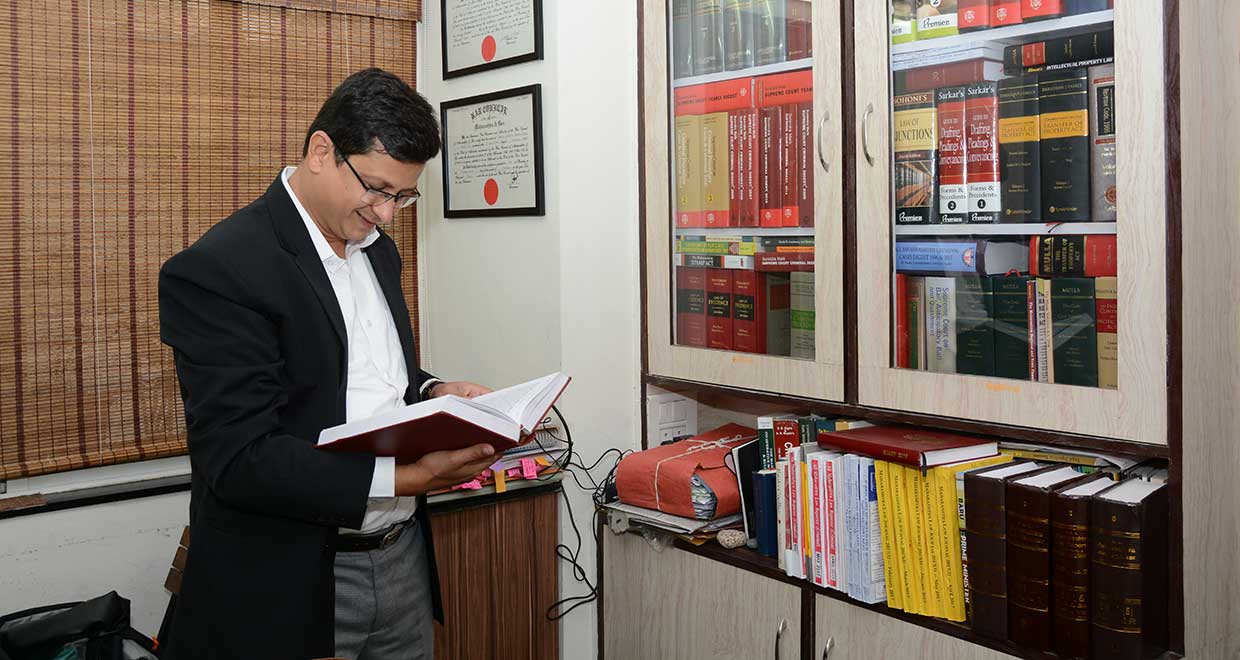
Tag: Mumbai University

  • The real success of a merger or acquisition lies in the integration that follows completion of the transaction.” – Vasanthika Srinath, Founder Partner of Kosmos Partners

    The real success of a merger or acquisition lies in the integration that follows completion of the transaction.” – Vasanthika Srinath, Founder Partner of Kosmos Partners

    This interview has been published by Namrata Singh and The SuperLawyer Team
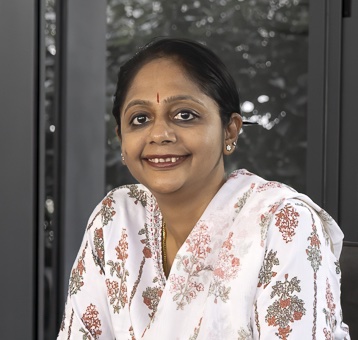
    Could you share with us your journey into the legal profession? What sparked your interest in law and led you to specialize in international privacy law and corporate law specifically?

    I started working as a business journalist in 1994, after graduating with a degree in commerce and economics from Bombay University (as it was called then). A chance meeting with a friend convinced me to study law, as I believed that it would improve my skills and help me become a better business journalist.  (The Stock Market was still reeling from the effect of the 1992 scam and knowledge of various corporate and business laws would help.) So I enrolled to study at the prestigious Government Law College at Church gate, mostly, because it was close to my workplace and early morning classes allowed us to work all day. I signed up for a moot court competition within a few months of classes and I immediately knew that this is what I want to do in the long run!  So I eventually quit journalism a few months later to focus on my law studies. 

    There were no privacy laws then – and my favourite subjects in college were the law of Torts, Contracts, Interpretation of Statutes and Private International law. I eventually joined Desai & Diwanji, where I was introduced to corporate commercial law, property law and commercial litigation. I wanted to become a counsel, so I joined the chambers of Snehal Paranjape and started my practice as a Counsel in the Original Side of the Bombay High Court. After a year and half I relocated to Bangalore, and as I did not know Kannada then (I am fluent now), I went back to doing corporate work and then moved in-house.

    I worked for a few companies, setting up their legal function and then became the General Counsel of some large IT / ITES companies. Contracts and negotiations are the life blood and most important aspect for any corporate lawyer, and as the legal head, I was also responsible for supporting growth of the business across countries, mergers and acquisitions and compliance, apart from everything else that comes with the role. When I was the General Counsel of Minacs, the Company was acquired by Concentrix, and I set up the Compliance function at Concentrix. That’s about when GDPR happened and I was one person in the company who had no conflict of interest in taking up the role of the Data Protection Officer (DPO). So I learned all about Data Protection and Privacy and set up the privacy function. Gradually, we saw the introduction of Artificial Intelligence where the laws are even more challenging. I was also responsible to ensure that we had a framework in place to ensure ethical and responsible AI design.  I learnt a lot on the job and it was very exciting and enriching for me.

    In December 2023, I joined hands with my old friend, Rashmi Sharma, and we set up Kosmos Partners together.

    So this is my career trajectory in a snapshot – property, corporate advisory, litigation, back to corporate transactions (this time in-house – mostly tech laws), corporate compliance and data protection and privacy, AI regulations and finally – back to practice.

    You’ve had an impressive career spanning over 25 years, with significant roles in various organizations. How have these experiences shaped your understanding of international privacy law and corporate legal practices?

    One can never understate the value of experience. Each and every transaction, incident, case or matter comes with its own learning. I was extremely fortunate to be at the right place at the right time and to handle the kind of matters I got to do. I was very fortunate to have the opportunity to handle quite a few mergers and acquisitions independently right at the start of my in-house career and that was a great learning. I negotiated a couple of very challenging multi-jurisdictional contracts with large corporations, who are known to be very rigid and unwilling to bend on some key terms, but we still managed to get excellent terms from them based on how we positioned ourselves. Some of these learnings taught me how to break up a problem into smaller pieces to solve it better, how to take a step back and understand the big picture, how to bring value to the table and demonstrate that, especially while negotiating.

    I travelled extensively to negotiate contracts with large clients and also, as part of my role as the Compliance leader.  This exposure taught me a lot about the laws and legal practices of many other countries, their cultures and also helped me understand the data protection, privacy and cyber security laws and practices in various countries.  I also began to appreciate how law and privacy are closely linked to the local culture. I think it is necessary to understand the history and culture of the other country before negotiating a contract or working on compliances or data privacy requirements of that country to be more effective.

    One of the biggest challenges is to try to help the business create business processes that comply with the laws of multiple jurisdictions without making it too complicated for the business.

    I also learned how important it is to understand the business and its challenges before we try to teach them the law. Once we understand their challenges, as lawyers, we should partner with the business and help solve their problems in a more practical way, rather than preaching to them. Raising awareness of the laws and regulations among business teams is also very important for business lawyers. 

    Given the dynamic nature of data privacy laws globally, how do you stay updated with the latest developments and how do these changes impact your clients?

    The only way to stay updated is to read, read and read. There are quite a few free online legal subscriptions that one can subscribe to, so one is updated of the latest regulations. Also, consider joining online groups and WhatsApp, which are good at information sharing, many of them are rather helpful too.   

    Could you walk us through a challenging case or project you’ve handled in international privacy law? How did you navigate through it and what were the key takeaways?

    One of the most challenging project was during the outbreak of the COVID-19 pandemic, and having to support the business teams in moving to work from home in a very short time. We barely had time to understand what was happening and we needed to move all equipment to employees’ homes in multiple countries around the same time. These had privacy and compliance implications, which we had to deal with for each country separately. Not only that, every country / city / state kept coming out with various regulations and notifications, which a couple of us were closely tracking real-time.

    Soon enough, the tech teams had to come up with tools to protect the security of the data that was to processed by employees from their homes, which had even more privacy challenges. Our challenge was to walk the fine line between protecting the company and its client data and confidential information and to ensure cyber security on one hand, while on the other hand, ensuring that we do not violate privacy rights. We had a great team that rose to the challenge very well. We had to understand the needs of the business, the proposed solution, its impact on privacy and then map it against the laws of each country, so we could then work with the teams on implementing a viable solution. The biggest takeaway from such projects was the importance of team effort.  Understanding the laws, of course, was important, but none of these challenging projects are successful unless everyone comes together as a larger team. 

    In your opinion, what are some of the most common misconceptions clients have about data privacy laws, and how do you address them in your practice?

    The largest misconception clients have about data privacy laws is that they are fully compliant since they are GDPR compliant. GDPR is considered as the gold standard in data privacy, but one does not need to implement GDPR across board indiscriminately. Some clients take pride in doing that. But the Indian privacy law is more focused on a consent driven approach, and if you needlessly implement GDPR for Indian data principles, you will anyway have to take a look at everything once again.

    Transitioning to corporate law, what are some of the most rewarding aspects of advising on mergers and acquisitions or structuring financial transactions? Could you share a memorable experience from your career in this field?

    I have handled and led quite a few mergers and acquisitions as the legal head. Though mergers and acquisitions are long, complex and challenging transactions, they are just the beginning. The real success of a merger or acquisition lies in the integration, that follows completion of the transaction.  And to ensure that the integration is complete and thorough, one must ensure that the due diligence was as complete and thorough. More often than not, sadly, due diligence is left to junior lawyers, who may not even understand the challenges in the documents they have been checking.

    One very memorable transaction for me, very early in my career was a deal where we were acquiring a company headquartered in the US with a subsidiary in India. The founder had passed and his wife was unable to run the business and hence selling it. There were quite a few challenges in the deal right from the start. We found tax issues and litigation in the due diligence, both in US and India. The seller wanted to retire and did not want to be saddled with any of the issues, especially in India, so she wanted us to buy the stocks in the holding company and take care of everything, while we wanted only to buy out all the assets so we did not have to deal with their tax matters. The negotiations, led by our CFO almost came to breaking point as we could not agree on the transaction structure.

    Finally, we went to our CEO and I will never forget how he broke down the transaction into smaller parts and suggested why don’t we take the stocks of the Indian company as we can deal with their litigation here since we are local and set up a new company in US and buy out the assets there, and leave the Seller to clean up the tax issues in US since she was a local there, which was acceptable to her too. We had to look at the key pain points for both parties and resolve that, and it suddenly became a win-win for both parties.  The same transaction also saw the Seller sacking her CA in the middle of the transaction. She had retained the CA to negotiate the transaction as well as vet the contract for her, but it turned out that he was not really providing her much support on the contract piece. After some time, she ended placing so much trust and faith in me that she would sign any document only if I confirmed that I have seen it and it is ok for her to sign. I had to remind her that I do not represent her, but she still reposed so much trust and faith in me to draft a fair document. That was a very overwhelming experience, and something I can’t forget.

    As someone who has held leadership positions in legal departments of major corporations, what advice would you give to young professionals looking to advance their careers in corporate law and privacy law?

    Young professionals should try to develop an understanding of the business and develop a strategic outlook.

    For in house counsels, focus on developing a deep understanding of the company’s business objectives. This involves not only knowing the law but also understanding how it impacts the bottom line. Additionally, cultivating strong interpersonal and communication skills is crucial. The ability to build relationships with colleagues across different departments, and to articulate complex legal concepts in clear and concise terms, is invaluable.

    Privacy lawyers, should necessarily try to develop some technical expertise. Beyond technical expertise, develop a strategic mindset. Anticipating legal risks and providing proactive solutions is essential for career growth. Seeking out opportunities to take on leadership roles, even at an early stage, can accelerate professional development.

    Also, do seek out a mentor, take their advice, and learn from their experience. Later, as you grow in your career, please do mentor juniors. It is our duty to keep grooming younger lawyers and build a legacy.

    Finally, considering your extensive experience and success in the legal field, what advice would you offer to fresh graduates aspiring to follow a similar path in international privacy law and corporate law?

    This is a very exciting time for fresh graduates – especially with the rapid changes to technology that we are seeing and will continue to see. The most important thing is for them to work on building a strong foundation and develop a deep understanding of the core legal principles and business fundamentals. Secondly, build a global outlook. Both privacy and corporate laws transcend borders nowadays, so it is important to stay updated on the legal and regulatory developments worldwide. Last, but not the least, as lawyers, we have to be committed to a lifetime of learning. Although Continued Legal Education is not mandatory in India, it is something we owe to ourselves. In addition, it is necessary to build a good professional network, and develop skills in legal writing, drafting, negotiations and communication and try to align yourself with a field of law that you feel passionate about. Don’t do something because it appears to be the cool thing to do. Otherwise, it will eventually wear you down. Enjoy your work and you will continue to cherish it. 

    Get in touch with Vasanthika Srinath-
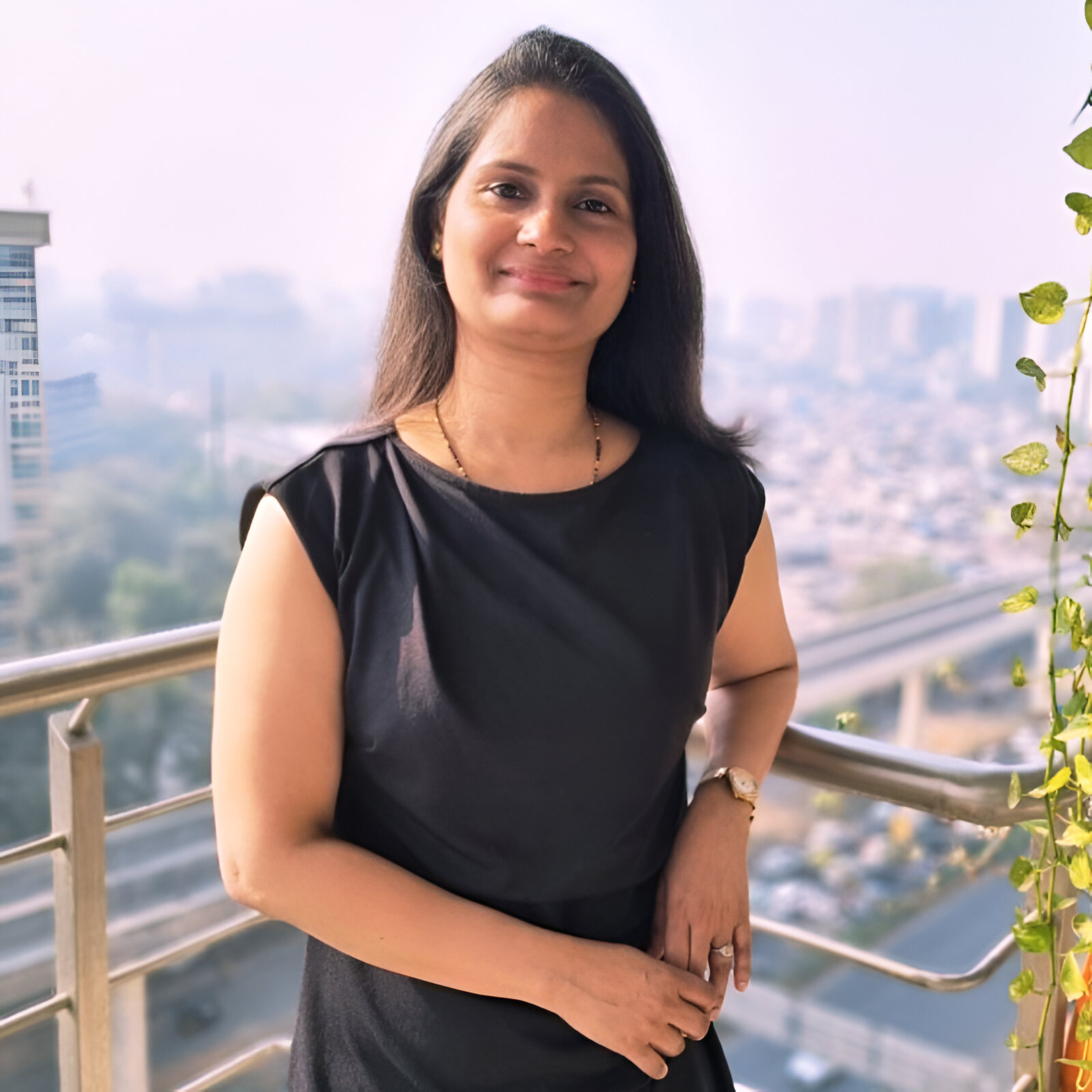
  • “Effective leadership doesn’t require being disrespectful or domineering.” – Navigating the journey of a first-generation lawyer and shaping global legal practices, Jyoti Kapoor, Associate Director at ST Telemedia Global Data Centres (India), shares her insights.

    “Effective leadership doesn’t require being disrespectful or domineering.” – Navigating the journey of a first-generation lawyer and shaping global legal practices, Jyoti Kapoor, Associate Director at ST Telemedia Global Data Centres (India), shares her insights.

    This interview has been published by Namrata Singh and The SuperLawyer Team

    Your journey in law began with an inspiration from Hindi movies. How did this fascination shape your career, and what were the initial challenges you faced as a first-generation lawyer?

    From a young age, I was inspired by the portrayal of lawyers in Hindi movies, passionately advocating for justice. This fascination ignited my dream of becoming a lawyer, viewing it as a noble profession where I could make a real difference. These cinematic representations motivated me to pursue a career in law with a vision of being a beacon of hope and justice, much like the heroes on screen.

    One significant challenge I faced was the lack of mentorship. Unlike some of my peers who had family members in the profession, I had to seek out mentors and resources independently. This, however, turned into a strength, making me resilient and resourceful. I learned to leverage every opportunity for learning and growth, from internships to networking events. 

    Entering the professional world meant proving myself in a highly competitive environment. As a first-generation lawyer, I had to work twice as hard to establish my credibility and demonstrate my skills. The early stages of my career were marked by long hours, continuous learning, and a relentless drive to excel.

    Despite these challenges, my journey has taught me the value of perseverance, hard work, and the importance of building strong professional relationships, which have been instrumental in my growth and success as a lawyer.

    You started your career at a leading publishing company and then transitioned to Legal Process Outsourcing (LPO). What motivated this shift, and how did your experience at Pangea3 influence your professional growth?

    In 2006, as the Legal Process Outsourcing (LPO) industry was rapidly emerging, I saw an opportunity to explore this new field, knowing I could return to litigation if it didn’t meet my expectations.

    I joined Pangea3 with an impressive client base, including top US law firms and some of the world’s largest companies in various sectors. I started in the corporate division where my role was reviewing, summarizing and abstracting technology, finance, and real estate agreements. This role gave me valuable insights into intricate legal transactions, enhancing my understanding of these areas.

    Later, I transitioned to the litigation department, where I got an opportunity to manage teams of high-performing lawyers. Leading a team that critically evaluated and challenged every decision was a unique and challenging experience. We often worked on projects with tight deadlines, requiring long hours, including weekends. Maintaining team spirit and motivation under such high pressure without compromising quality was a formidable task.

    My experience at Pangea3 significantly influenced my professional growth by developing my leadership skills, deepening my understanding of complex legal agreements, and providing me with a global perspective on legal practices.

    Working with stakeholders across the globe has given you a global outlook. Can you share some key insights or experiences that have shaped your understanding of global legal practices?  

    Working with global companies, often involves collaboration with diverse teams, each bringing their frameworks and practices. Establishing trust and rapport with international stakeholders often requires consistent and proactive engagement. During my time managing high-value transactional agreements, I found that regular discussions with an intent to understand the stakeholders’ goals and challenges were key to successful collaboration. There is also need of clear and precise communication as concepts and terminologies can vary significantly between countries. Therefore it’s essential to articulate legal advice in a way that clients and colleagues from different backgrounds easily understand.

    At Maersk, you set up and managed the legal team in India. What were the significant challenges and accomplishments during this period, and how did it enhance your expertise in complex negotiations?  

    One of the key lessons I learned at Maersk was the distinction between setting up a legal team versus managing an established one. My team in Mumbai, including myself, were new hires in the legal department. While my team members often looked to me for guidance, I was also learning alongside them about the work, culture, and policies. However, I was fortunate to receive valuable support from my General Counsel and CFO, who instilled confidence in me and reminded me not to be too hard on myself despite the initial challenges. My team played a crucial role in alleviating much of the pressure.

    As an in-house counsel at Maersk, my role extended beyond just advising and identifying risks to actively negotiating and defending the company’s best interests while closing agreements. The hands-on negotiation experience with the support and mentorship I received, significantly developed my skills and confidence in managing complex legal matters.

    Transitioning to Firmenich, you moved into the sales side of legal work. How did this shift in focus help you grow professionally, and what unique skills did you develop during your time there?  

    At Maersk, I was always in a dominant position representing the procurement team. In contrast, at Firmenich, I needed to be more accommodating to ensure timely deal closures without compromising the company’s interests. Striking the right balance between being aggressive and stepping back when necessary was challenging at first.

    Further, at Firmenich, I had the opportunity to work with Legal Heads for Europe, Asia, and the Americas region. Each one of them had a unique style, allowing me to learn significantly from their diverse approaches. 

    My colleagues and seniors in the legal department were incredibly helpful and supportive, that allowed me to transition from a procurement-focused lawyer to a business-driven counsel. 

    With your vast experience, what advice would you give to current in house legal professionals who are looking to navigate and succeed in the ever-evolving legal landscape?  

    Regardless of whether you are a first-generation lawyer or not, maintaining an open mindset is crucial. Embrace the continuous learning that the legal profession demands. As an in-house counsel, it’s essential to have a comprehensive understanding of your company’s business and the nature of its transactions. This insight enables you to provide relevant and strategic legal advice.

    Never hesitate to ask questions – whether about a transaction, legal concept, or business process. Seeking clarity is key to ensuring that you can offer sound legal advice. 

    Most importantly, cultivate resilience. The legal field can be demanding, and navigating its complexities requires the ability to adapt and persevere through challenges.

    In your opinion, what are the most critical ethical considerations for in-house attorneys, and how do you ensure that these principles are upheld in your daily work?  

    From a young age, I viewed the law as a profession dedicated to justice and integrity. For in-house attorneys, upholding ethical principles such as honesty and transparency is paramount.

    In my practice, I ensure that I present an accurate assessment of risks so that the organization can make informed decisions. I believe in providing clear and honest advice without overselling or exaggerating potential outcomes. If I am uncertain about any aspect of a legal issue, I ask for the necessary time to research and provide a well-informed response.

    Can you share a personal development or mentorship experience that significantly impacted your career trajectory?  

    The mentorship that I received in Maersk was invaluable as I began my career as an in-house counsel. Maersk emphasized the importance of praising in public and reprimanding in private, a principle that has deeply influenced my working style. The company’s zero tolerance for any form of belittlement, regardless of a person’s seniority, reinforced the idea that effective leadership don’t require being disrespectful or domineering.

    The weekly meetings with the General Counsel and CFO were particularly impactful. Their guidance not only boosted my confidence but also equipped me with the skills needed to lead high-performing teams effectively. This experience has been pivotal in my professional development and continues to shape my working style till today.

    As someone with extensive experience, how do you mentor and guide young lawyers entering the field? What key qualities do you believe are essential for their success?

    In India, many career decisions are often influenced by family expectations or the allure of someone else’s success. I will tell all young lawyers that don’t be afraid to take bold steps and embrace opportunities to learn, even if they seem outside your immediate area of expertise rather than simply following someone`s footsteps. While you may get inspiration from people around you,  do remember that you have to pave your path to make the mark. 

    Key qualities for success in this field include curiosity, resilience, and a willingness to continuously learn and adapt. By embracing these qualities and valuing every experience along the way, young lawyers can effectively navigate their careers and achieve long-term success.

    With such a demanding and multifaceted career, how do you unwind and relax? What activities or hobbies help you maintain a healthy work-life balance?  

    The role of an in-house counsel can indeed be demanding and exhausting but a strong family support helps me manage stress effectively.

    For me, travelling serves as a form of therapy. I take at least one vacation each year to explore new places and immerse myself in different experiences. This not only provides a refreshing break but also broadens my perspectives.

    When time permits, I find relaxation in watching movies or web series, particularly those with compelling courtroom drama. It may sound cliche, but engaging with legal dramas allows me to enjoy my passion for the law in a more relaxed setting.

    STT Global Data Centres (“STTGDCI”) is a prominent name in the data centre industry. Could you share more about the company, your role and your experience so far. 

    STT GDC India (4th consecutive winner as Great Place to Work) is one of the leading data centre providers in India and hosts critical business infrastructure for many of the top Fortune 500 companies. 

    I oversee the end-to-end closure of commercial contracts for both the procurement and sales departments. My role also extends to day-to-day advisory services, resolving disputes arising from commercial contracts, and acting as the legal SPOC for regulatory matters related to sales contracts. In the past, I supported real estate transactions and handled customer recovery.

    At STT Global Data Centres, I’ve had an incredible experience of working in a fast-paced, high-growth industry. My team and colleagues are extremely helpful and are willing to lend support whenever needed. My General Counsel has been instrumental in my development so far. He cultivates a positive and supportive work environment within the team. His management style is flexible, and he doesn’t believe in micromanaging, which instils confidence and allows me the autonomy to handle situations with a greater sense of responsibility. 

    Get in touch with Jyoti Kapoor –

  • “Filing false complaints may initially seem like a petty victory, but it leaves both parties with much resentment and whopping legal fees.” – Addressing the issue of false cases: Mrinalini Rajpal, Independent Legal Counsel- Family and Matrimonial Law

    “Filing false complaints may initially seem like a petty victory, but it leaves both parties with much resentment and whopping legal fees.” – Addressing the issue of false cases: Mrinalini Rajpal, Independent Legal Counsel- Family and Matrimonial Law

    This interview has been published by Namrata Singh and The SuperLawyer Team

    Reflecting on the beginnings of your career in law, could you share about your journey, about your family and what inspired you to pursue this path of Law?

    I come from a Sindhi business family that has been in the petroleum industry for five generations. Despite a business background, the elders always placed a strong emphasis on education, encouraging the growth of several doctors, engineers and business graduates within the family. My maternal side of the family were well-known producers and distributors in the Hindi film industry. A legal career was not a typical path within my family background, but on reflection, I feel it had always been my true calling. 

    My aspiration to pursue a legal career began at the young age of 13 when, at my school, JB Petit High School, Mumbai, I attended a lecture on environmental law by the eminent Senior Counsel Mr. Navroz Seervai. His views on how law could be used as a tool to bring about transformative changes in society resonated deeply.  The seed was further nurtured by regular teenager interests in legal fictional books and shows, and this led me to join Government Law College, Mumbai to pursue the 5-year degree course. 

    My interest in family law took root at a young age, influenced by personal relations. I witnessed the unfortunate plight of a family friend who despite being an educated lady, was in an emotionally abusive marriage but was unable to find a way out of it as she had no family or financial backing and was afraid of losing custody of her young children. Coming from a fiercely liberal background and school, it made me realise that there were people across strata who were stuck in a bad marital situation and were unaware of their options. I had hoped then, to be able to make a real difference in such situations and I am glad that I am finally in a position to realise that dream. 

    Your journey from commercial litigation to specializing in family law is quite fascinating. Could you share what prompted this transition and how it has enriched your professional outlook?

    Whilst I always knew I would eventually specialise in family law; I did not want to pigeonhole myself in a specialisation early on. I am glad I took the long road experiencing and learning about the myriad aspects of the law. During my college days, I recognized my inclination towards litigation and took up internships with law firms to acquire practical experience. I also interned at the National Human Rights Commission and in my final year, I did a judicial clerkship with the Hon’ble Mr Justice (Retd) S.J. Vazifdar (Former Chief Justice of Punjab and Haryana High Court). I observed firsthand the intricacies involved in conducting trials and the skills of persuasion a litigating advocate must possess.

    Upon graduation, I worked in several prestigious litigation firms, gathering knowledge and experience in difference areas of law such as media, real estate, arbitration, family, banking and finance. I learnt how to run a litigation holistically right from laying the foundation stone, being the first communication until its logical end. Working with the best litigators in Mumbai I learnt a lot of unique drafting styles, strategies towards a matter, practical tips on client handling or how to read a judge – with each matter furthering my skills as a litigator. 

    After spending a decade practicing commercial litigation, I took a sabbatical to expand my family and since then I have had the most wonderful experience raising my son–despite its inimitable challenges. It made me realize, like law, raising a child is a dynamic and ever-growing process, where you learn something new every day. I have also learnt the art of nuanced negotiating where I need to make my son believe that he has got his way! 

    In 2020 while the world was battling Covid, marital disputes spiked. I got a firm push towards family law when I helped a friend who was in the midst of a particularly tenacious negotiation against her well connected and financially sound (now ex) husband. He was unwilling to give her a fair settlement initially and she was out of her marital home with her young children. A long-winded expensive court battle was not an option. Extensive strategizing and negotiations eventually led to a satisfactory settlement, including a lumpsum alimony and a house in her name. This encouraged me to pursue my interest in family law and I joined the chambers of Senior Advocate Mrs. Mrunalini Deshmukh, to formally kickstart my practice. I was associated with her chamber for almost 2 years, whilst simultaneously building my independent practice. 

    In your experience, what is your perspective on false cases within the realm of family law? Have you encountered instances of such cases during your career, and if so, could you share your approach in handling them while upholding justice and maintaining ethical standards? 

    Matrimonial disputes are uniquely characterised with the baggage of bruised egos and scarred emotions on both sides – which unfortunately could result in acts of personal vendetta against the spouse (and family) at times. I have seen a sharp increase in matters where false complaints are being filed under Maintenance and Welfare of Parents and Senior Citizens Act, the Protection of Children from Sexual Offences Act (POCSO), and shockingly, even filing of false kidnapping cases, especially against the father. All these are awful pressure tactics, with a devastating impact on children. When one files a complaint for kidnapping or under POCSO- it appears that the party filing such complaint has forgotten that at the heart of the issue, there is a child being thrust into a conflict zone (which is the marital dispute essentially between the parents). To then further drag the child through such cases is adding additional trauma that the child most definitely does not deserve nor need. 

    My approach and advice is always- there are no winners in a divorce, so negotiate as hard as you can outside court in order to reach an amicable settlement and enter court only to file a mutual consent divorce Petition. I encourage parties to take all the help and external counsel possible, in the form of family, friends, mediators, marriage counsellors, well-wishers and lawyers. Exhaust all amicable possibilities including pre-litigation mediation and only once you’ve exhausted such possibilities and a settlement still hasn’t worked out, then go to court, but fight fair. Most importantly, if there is a child involved always remember that your north star is that young person, because your actions are shaping their future, and in the larger scheme, the future of generations to come. 

    Could you shed light on the importance of empathy and guidance in navigating clients through the emotional complexities inherent in family law disputes?

    Empathy is a super-power and as a family lawyer one should be cognisant of it, and try and cultivate it. According to me, family law practice is more about understanding the root of the dispute and finding a way to settle the matter as amicably as possible, rather than pushing to litigate. Either one or both parties may come from a place of ego. During the first meeting, I am usually told by the client that they want to “show their spouse their place” not being mindful that when you burn your house, you burn with it. It is then our duty to talk the client off the ledge and make them realise the pit-falls of their actions. I am very glad about the fact that in the past year I have managed to amicably negotiate and settle a number of cases, some of which started off with extreme hostility – which has further fortified my belief that at the core of every dispute, there is an inherent desire to end the acrimony and move on. I strongly encourage parties to first try counselling- individual as also couples counselling -before taking any drastic steps. Often counselling fails, but by then tempers have calmed, the parties have got better perspective and they are more receptive to a settlement. I also realised that clients (and their families) want me to hand-hold them through this very difficult phase, reassuring them that I have got their back and in doing so, it becomes much easier to reason with them.

    As an advocate for peaceful resolutions, how do you handle cases where litigation becomes unavoidable, and what steps do you take to mitigate adversarial dynamics?

    Commercial litigation lawyers usually aspire towards a landmark victory in Court and being a part of landmark judgments, but family law is a unique space where as a family lawyer, you may not be spoken of in the same breath as commercial legal luminaries, but should always be remembered as someone who brought about a peaceful resolution within a family. Having said that, it is not always possible to amicably settle matters and sometimes it is necessary to battle it out in Court. My mantra is to always keep it fair and honest whilst keeping the larger picture in mind – no matter what the circumstances may throw your way. At times, I have had to even reign my own clients in, and not let egos take over the process. However, even within an acrimonious battle, I always try and keep the door ajar for the opposing party/ counsel to walk in and engage in a settlement at any stage.

    In your experience, what are the most common misconceptions that clients have about family law, and how do you address them during consultations?

    One common misconception is that filing false complaints against the spouse and/or family will put the right pressure on you and get you the desired result. Completely untrue. Whilst filing such complaints may initially seem like a petty victory, after a point the feeling fizzles out, leaving both parties and their families with much resentment, a mountain of paper-work and whooping legal fees. The advice I provide can’t be the same for every client, it has to be tailor made keeping in mind facts and circumstances, but the one consistent advice I give is, if you want to file such complaints, be prepared to stay in court for a long time, losing years of your life and not to mention a large part of your income.  

    What advice would you give to aspiring lawyers, particularly those interested in specializing in family and matrimonial law, based on your own career journey and experiences?

    The most important yet basic advice I could offer is, do not bring your client’s energy back home, have an awareness about your own emotions and be mindful of your boundaries. A philosophy I strongly believe in is, if, as a family lawyer, you find yourself litigating more than amicably settling matters, you are doing it all wrong and need to rethink your perspective.

    With the demanding nature of your legal practice, how do you prioritize self-care and relaxation? Could you share some of your favorite methods for unwinding and maintaining a healthy work-life balance amidst your busy schedule?

    The balance between work and being physically and emotionally present for my young son, is challenging on many days. However, spending time with him is my absolute favourite way to unwind, especially after an exhausting day. We have some of the best conversations at dinner time. During the weekend, we catch up with our close-knit circle of family and friends and go for a swim at the CCI Club, which we both love. We love baking and cooking together. We also love discovering cafes around the city. To maintain a healthy work- life balance, I ensure that I start my day with a brisk walk by the sea, which both centres my thoughts and helps me plan my day. I have an incredible support system in my family and friends. I meet my friends for coffee and laughs at least once a week and those who don’t live in the city, we have a system of check-ins once every few days. I also ensure I meet up with my family almost every-weekend to get that much needed pampering. Both my siblings live out of the country so I make sure I take at least 1-2 holidays with them each year. At the end of the day, there is nothing that a well-rested night of sleep cannot cure. 

    Get in touch with Mrinalini Rajpal-

  • “Hard work pays off… ‘Fall down seven times, Stand up eight.” – From Mumbai’s Legal Haven to Dubai’s Dispute Resolution Hub: Adhiraj Malhotra, Managing Director at Singularity Legal

    “Hard work pays off… ‘Fall down seven times, Stand up eight.” – From Mumbai’s Legal Haven to Dubai’s Dispute Resolution Hub: Adhiraj Malhotra, Managing Director at Singularity Legal

    This interview has been published by Namrata Singh and The SuperLawyer Team

    Your journey from Government Law College, Mumbai to becoming a Managing Director at Singularity Legal in Dubai is quite impressive. Could you share some insights into how you started your career and the pivotal moments that shaped your trajectory?

    • Since I am a first-generation lawyer, there was little to no guidance for me from anyone in my family into what the legal profession entailed and the various nuances one needs to understand to completely foresee a career as a lawyer. My years at Government Law College were remarkable inasmuch as while the curriculum was largely manageable, the extra-curricular activities that went on in college were immersive. 
    • I was fortunate to find considerable interest in Students for Promotion of International Law. This was my first pivotal moment where the idea of practicing international disputes was seeded in my mind. During college I was never counted in one of the sharpest minds in class. That title belonged to my college friends and some of whom I continue to remain in touch with even today. The next pivotal moment was the chance to do internships while studying. My college has a storied history, one which needs no introduction and has always pushed students to gain practical exposure. 
    • The chance to intern with one of the best law firms in the country during the last three years of law school not only gave me a sense of understanding of what differs between theoretical and practical know-how of the study of law but also the several intricacies which are involved in the practice. This allowed me to get a pre-placement offer from a leading boutique law firm, DMD Advocates and allowed me to gain experience from a stellar mentor in Ms. Fereshte D. Sethna. I am humbly grateful to her for teaching me the ropes and this is where I truly fell in love with international disputes. 
    • During my time at DMD Advocates and then at Bharucha & Partners, I not only have had the chance to work alongside the top legal eagles in India but have also been fortunate to work with magic circle firms and King’s Counsel(s) allowing me to gain exposure and enabling me to think from the standpoint of a client with projects and interests in different jurisdictions.

    As someone who has worked with Fortune 500 companies and private equity firms, could you elaborate on the role of legal strategy and advisory in facilitating strategic acquisitions and setting up industrial projects?

    • There are several lenses that one needs to wear if they are to advise any Fortune 500 company or private equity firm and that is because you are working with one of the sharpest minds in the profession and those who have specific expertise in the subject matter. 
    • My role as a legal advisor to these companies and firms was from the standpoint of a strategist in highlighting the various issues which are required to be looked at not only from a legal perspective but also from a securities and regulatory perspective. My experience in handling international disputes for similar clients helped me to understand their issues fairly quickly and deliver as per the client’s requirements. 
    • Almost all the companies which I have dealt with have been publicly traded entities either on the Indian stock exchange or other exchanges across the globe. There has been a high demand for data center setups in Maharashtra and has seen an increased interest from various international conglomerates. This poses its own challenges with different cultures and jurisdictions at play. Thus, it becomes extremely crucial to understand the pain points from a client perspective when it comes to entering into a transaction for setting up an industrial project. 
    • Another important requirement one needs to keep in mind is to ensure that the wider team working on due-diligence aspect and other issues are aligned and fine-tuned to the real-world issues being faced on the transaction. My role entailed leading the transaction from top to bottom and included overseeing the legal, operations, diligence and architectural teams to ensure the client’s targets are achieved. 

    You’ve recently cleared the UK Solicitor Qualification Examination. How do you think this additional qualification will enhance your practice, particularly in the context of international disputes? Additionally, could you share what motivated you to pursue this exam amidst your already demanding career? And any tips for the person who wants to give this exam.

    • First and foremost, the UK Solicitors Qualification Exam is one of the toughest exams there are across fields and that in itself puts immense pressure. The rigorous curriculum not only enhances your thinking and capabilities but the hours one puts in crossing the line engrains the different threads of law in oneself. 
    • As an Indian lawyer working in Dubai, which is steadily becoming the global melting pot, it has tremendous advantages. There is a huge influx of investments from all across the globe. While the UAE judicial system is extremely robust, there is a high demand for a system which is closer to home. The DIFC Courts and ADGM Courts are common law dispute resolution centers, one which have put Dubai on the map for dispute resolution. As a Solicitor of England & Wales, the DIFC and ADGM Courts are home ground for me more so now than before. 
    • In terms of pursuing the SQE and the motivation, all I could say is that I had very early on in my career decided that I would not pursue a master’s degree considering I was predominantly a commercial disputes lawyer and found no reasons as to how a master’s degree could help me. I was obviously wrong. At this stage of my career, I felt that a dual qualification would benefit me more professionally than a master’s degree and I plunged straight into it. I took it as a challenge, and one which was very hard considering I had shifted jurisdictions as well. In the end, hard work pays off and nonetheless I have always believed in myself and stand by my motto “Fall down seven time Stand up eight”.

    In your opinion, what are some emerging trends or challenges in the field of international arbitration and commercial disputes that legal professionals should be mindful of?

    • At the outset, I would say that there are far too many to really count. But there are some important ones which I would like to highlight, specifically litigation finance and cross-border enforcement and recognition. 
    • Litigation finance is third party funding obtained by a company from a financier, to pay the litigation costs incurred during a dispute. A funder may also act as a general contractor to help strategies and manage the dispute and costs. This type of funding adjudges the value of legal claims even before they can be recovered before a Court or Tribunal. In this arrangement, the financier is entitled to an agreed share in the monetary settlement received by the company, and only if the litigation is favourable i.e. it is entirely non-recourse. While the Indian litigation financing industry is in a nascent stage, there is tremendous scope for this market in the country. There are now an association of major global players in litigation financing which have come together and formed the Indian Association of Litigation Finance. 
    • Cross-border enforcement and recognition is somewhat an underlying secret. Usually, a party would straight up go and enforce and award and order in a jurisdiction where they have secured relief. In reality, things are very difficult and tricky. Enforcement and execution have since ages been a pain point for a judgment creditor and one which takes the most amount of effort. In my experience, it is very important to ensure that the lawyers are alive to challenges such as dissipation of assets and incognito preferential sale(s) since almost always the assets of a judgment debtor are in a completely alien jurisdiction or a tax-haven entirely unbeknownst to the creditors. This way dissipation of assets is carried out under the rug and the judgment or award is rendered as a mere piece of papers. 
    • One advice I give all my clients is to invest in an investigative asset search exercise at the outset, and sometimes even prior to invocation just as a safety net to ensure that enforcement and execution is smooth. This has helped me in my career and luckily has served well for all my clients. I have been fortunate to have been part of teams where we have secured execution of judgment(s) and award(s) in as less as 3 months. 

    After years of practicing law in India, what motivated your decision to transition to Dubai and take on the role of Managing Director at Singularity Legal? Could you share some insights into the factors that influenced this move and how it has impacted your professional journey?

    • This was more of a personal choice rather than a professional one. I was well established in India and practiced regularly before the Supreme Court, High Court(s) and Tribunals, when I took the chance of going in-house. The only other thing then which was left was to try working in a different jurisdiction altogether. While I have been fortunate to have worked on disputes ranging across Europe, United Kingdom, United States of America and South-East Asia, I had not permanently moved my base. 
    • With Singularity Legal it was an easy decision. Singularity Legal had been making great strides in the international disputes sector and I had been keenly looking at their growth. The chance to associate myself with an international disputes firm and grow the firm in a very interesting jurisdiction like the Middle East was an opportunity which comes to few lawyers and I grabbed it with both hands. 
    • Another factor which played an important role was my inclination to work across jurisdictions. Since I have done a fair bit of international arbitrations and investor-state disputes, this was a playground which was far too familiar albeit with its own set of challenges. The challenge to make my presence and name while at the same time growing the reputation of the firm in an entirely new jurisdiction was exciting and invigorating at the same time. Fair to say that the last one year has been an eventful journey and I am glad that I chose to make the decision rather than sit in a comfortable cocoon after having spent 10 years building my name in the legal profession in India. 

    Your work spans across diverse sectors such as energy, maritime, aviation, and taxation. How do you stay updated with the latest developments and regulations across these industries?

    • It is an arduous task and one which every lawyer needs to embody in their schedule to ensure continuous growth and development. We are only as good as our knowledge. Lawyers like doctors never stop learning and studying. A few ways which I manage to keep abreast with developments across the various sectors in which I practice are:
    • Continuous Learning: I dedicate a fixed amount of time to ongoing learning through seminars, workshops, conferences, and webinars specific to each industry. These events often feature industry experts who discuss emerging trends, regulatory changes, and best practices.
    • Industry Publications and Journals: I also subscribe to industry-specific publications, journals, newsletters, and online platforms allows me to stay informed about the latest news, case law, regulatory updates, and market trends relevant to each sector.
    • Professional Associations and Networks: I have actively participated in professional associations and industry-specific networks. These are exceptionally useful not only as a networking platform but also to hone skills and gather knowledge across various sectors. 
    • Research and Legal Update Tools: I constantly use various legal research portals to seif through updates in different industries as also jurisdictions considering I cover different territories. I cannot emphasize how important it is to go on these research portals irrespective of whether you need to research or not just to ensure that you read what the new cases are and what is the legal point which is being discussed. 
    • The last thing which I do is no industry secret but one which I have taken from the practice of several leading luminaries through the last 11 years. This is to maintain a record of all the different areas of law where I have read an interesting point of law. At the same time, I also maintain a sheet which has a list of all the individuals whom I have met. These are my holy grail(s) and I would swear by every lawyer making a similar one for themselves. It is the most efficient reference point for me in time where I am stuck. 

    As the Managing Director at Singularity Legal, could you provide insight into your role and responsibilities within the firm, and how you contribute to shaping its growth strategies and operational efficiency?

    As the Managing Director at Singularity Legal, I lead the operations of the firm’s Middle East practice group and work in a dual role. As a key member of the firm, my role and responsibilities are multifaceted, encompassing various aspects of legal practice, strategic planning, and operational management. I advise clients in my capacity as a counsel and at the same time I am involved with the growth team to increase the firm’s reach in the Middle East. 

    • Operationally, it is imperative to ensure that time is chalked out for each activity especially considering the amount of networking activities that are going on across the Middle East. I actively engage in business development initiatives, including client prospecting, relationship building, and networking activities. By cultivating strong relationships with existing clients and identifying opportunities to expand our client base, I contribute to the firm’s revenue growth and market presence.
    • I actively engage in training and mentorship initiatives to support the professional development of junior associates and staff members. By sharing my knowledge, experience, and best practices, I help cultivate a culture of continuous learning and excellence within the firm. I also collaborate closely with colleagues across different jurisdictions to leverage collective expertise, resources, and synergies. Singularity Legal is an international disputes firm with offices across India, UAE and Singapore and by fostering a collaborative and cohesive working environment, I contribute to the firm’s overall effectiveness and success.

    In today’s digital age, technology plays a significant role in various industries. How do you envision the coming generation leveraging technology to achieve success in the legal profession, and what advice would you give to young aspiring lawyers on effectively utilizing technological advancements to enhance their growth and expertise?

    • Embrace technology as a tool to enhance your legal practice rather than fearing it as a disruptor. Stay open-minded about exploring new technologies and learning how they can improve efficiency and effectiveness in your work. AI has made significant strides in each industry and it is only a matter of time that we lawyers are also subsumed with the AI bug. Already a lot of the international law firms have developed their own proprietary AI tools to assist in regular day-to-day functioning. Technology helps in upskilling an industry and one should only embrace it. 
    • Investing time and resources in acquiring technological skills relevant to the legal profession as also growing aware of the recent technological developments in the legal field. It would be very useful to attend training programs, workshops, and online courses to develop proficiency in legal tech tools and platforms. 
    • Stay informed about the latest developments in legal technology and be proactive in adapting to changes in the digital landscape. Follow industry publications, attend conferences, and engage with legal tech communities to stay updated on emerging trends and innovations. There is a huge Fintech boom and Legal tech is not far behind. 
    • Collaborate with colleagues and peers to share knowledge, experiences, and best practices related to technology in the legal profession. Networking with professionals in legal tech startups, innovation hubs, and accelerators can also provide valuable insights and opportunities for collaboration. However, it is most important to focus on client value and use technology to deliver greater benefit to the client by offering innovative solutions, enhancing efficiency, and improving the overall client experience. Keeping client needs and objectives at the forefront of your technological initiatives is what will allow a lawyer to absolutely shine.

    Amidst your demanding professional commitments, it’s important to find time for relaxation and rejuvenation. Could you share with us what hobbies or activities you enjoy to unwind and recharge after a busy day in the legal realm?

    • Absolutely, being a lawyer is a demanding and hi-octane profession and one which is extremely mentally saturating as well. I have always been very vocal about maintaining a good balance between professional and personal goals. One may be doing exceptionally well professionally but if they are struggling personally, it is not worth it. 
    • I am a sports enthusiast and have tried my hands at multiple sports. However, football and golf are my go-to sporting activities to unwind. I have also recently found long-distance cycling to be a calming force which allows me to unwind amidst a busy and hectic day or week. Apart from these, I enjoy running and will be training to run the marathon this year. 

    Get in touch with Adhiraj Malhotra-

  • “Business helps social empowerment firstly by breaking down barriers, secondly by generating income for livelihood and thirdly by providing mental-emotional support.” – Niharika Gaonkar Naikar, Independent Legal Practitioner & Founder of “KriNi”

    “Business helps social empowerment firstly by breaking down barriers, secondly by generating income for livelihood and thirdly by providing mental-emotional support.” – Niharika Gaonkar Naikar, Independent Legal Practitioner & Founder of “KriNi”

    This interview has been published by Namrata Singh and The SuperLawyer Team

    Could you walk us through your journey from college to becoming an established professional in the Media & Entertainment law sector? What inspired you to pursue a career in law, particularly within this niche industry?

    Absolutely! My journey as a legal professional wasn’t something that I had preplanned like any other child. Anyone who knows me will tell you how creative and artistic I am as an individual. Craft and arts, including performing arts, have been my favourite subjects. So, the childhood dream was always to be a designer. However, my mom was too fascinated by her brother (my mama) who is a first generation lawyer practising in a different field of law and has always been outperforming. He set the bar so high that my parents somewhere deeply wished for me to be a lawyer like him. So, as they say the universe always has better plans, I started my journey with Government Law College, Mumbai and graduated in 2014. Until my last year I was very sure that I would make a career in criminal litigation, however when I studied Intellectual Property Rights in my last year, I was so fascinated by the subject that I decided to build my career in the same. I had the opportunity to intern with a media distribution company in my last year which further made the decision concrete.  

    Your journey has been quite remarkable, transitioning from esteemed organizations to establishing your independent practice. Could you share with us how your experiences in those organizations have shaped your approach to legal practice in the Media & Entertainment industry?

    The choice between being an in-house lawyer vs a law firm lawyer is a tough one. The remuneration of law firms is high but the work-life balance is off. Similarly, there is good work-life balance in an in-house role but there might not be as much diversity in work as compared to a law firm. I started my career with a leading media distribution company where I also did my last internship. I was given an offer to join immediately after I finished my exams. I was honestly more than elated as I loved the work culture there along with the international level exposure I was going to have. Many times I get asked in interviews as to why I have switched places, well I kept transitioning from one Media and Entertainment sector to another like from distribution company to a production house to studios etc. because each such transition allowed me to learn and master the different verticals in the M&E sector. I strongly believe that in-house roles offer you a better understanding of business as well as commercials. Later on moving out from these in-house roles to getting into a law firm was solely because I lost both my parents in the second wave of Covid in a week and I knew that work is the only thing that will keep me going ahead positively and this challenging role will allow me to have a strong change of environment. I consider myself fortunate to have worked at different organisations because it not only helped me grow as a professional but also allowed me to grow into a better person. Be it handling clients to handling tough situations to standing for/ with your team to extensive learnings to working under great mentors (legal as well as non-legal) it all has been a wonderful journey. Starting up my own practice was something that happened a bit earlier in life than what I had planned for but I am deeply grateful for the amount of trust and respect showered by my clients in me. The aim is to build an organisation where fairness is the key.

    Having worked extensively with clients from the Media & Entertainment industry, what would you say are the key challenges they face regarding Intellectual Property rights, especially in the digital age?

    Primarily, it’s the protection of their IP’s that the Clients face challenges in this digital age. However, when I started in 2014 there were 3-4 major categories of rights for generating revenues. Whereas if you see now, there is a plethora of rights with sub-categories. With due respect not all at present be it lawyers or clients understand the possibilities that they have when it comes to rights. So, the key challenge I feel they face is to understand the various options they have to monetise the IP and generate as much revenue as they can. 

    You’ve had the opportunity to work extensively in both Bollywood and the South Indian film industry. How do you adapt your legal strategies and approaches to suit the different dynamics of these industries? Could you please share some insights of emerging trends or challenges faced by these industries?

    The aim of moving down south in 2020 was to understand the industry better. I strongly believe that with just legal knowledge we cannot emerge as great lawyers until we actually understand the practicalities and functioning of the business side of any industry. The M&E industry in the Southern states of India functions very differently from the Bollywood. It was my privilege to help set up a branch office for one of my ex-law firms in Chennai. The challenges that are faced there are very different compared to those in Bollywood. The value system, the modes of working, agreements drafting to negotiations, and remuneration received vary in South and in Bollywood. The legal approach is of course the same as the same set of laws apply, however the functioning is not the same. In my honest opinion, entering the market as a leading law firm or as an eminent lawyer will not get you any place there unless you have the patience to wait until being accepted. 

    Apart from your legal career, you’re also the founder of “KriNi”, aiming to create job opportunities for women. How do you balance your professional life with such philanthropic endeavors, and what role do you think businesses can play in social empowerment?

    Crochet is a hobby turned into side business. My mom and my aunts were crocheters in their young days. One day during the first lockdown while I was cleaning a chest of drawers, I came across a crochet needle and a tiny ball of yarn. I picked up a very basic video on YouTube and started learning and it came out so well that I decided to continue. 6 months down the line I was so addicted that I started picking up random projects and tried to better my craft and then started posting it on my Insta page. Crochet is my therapy! I started getting crazy orders so much so that in January 2023 I got KriNi registered. I was falling short of hands and then I decided that I can take help from family or from people outside. I get messages from women in their 40’s-50’s and kids in colleges wanting to tie up because they are studying/ retired/ bored at home and are looking for some sort of extra income. The goal of KriNi is bigger and I hope I achieve it someday soon. I honestly can’t dedicate as much time as I want to but I make sure that I treat it respectfully and do as much justice as I can. Business help’s social empowerment firstly by breaking down barriers, secondly by generating income for livelihood and thirdly by providing mental-emotional support.

    Your expertise includes talent management in addition to Intellectual Property rights. How do you navigate the legal aspects of talent management while ensuring the best interests of both the talent and the production houses?

    Well, this is one of my favourite aspects of being a M&E lawyer. Having represented multiple artists/ talents in Bollywood as well as South including influencers, when I am on this side of the table the aim is to protect my talents to the maximum possible. That doesn’t mean that I come out with one sided clause. I choose to be a business friendly lawyer who is fair and understands the practicality faced by these production houses but someone who also ensures that the talent is protected as well. I believe closing transactions is an art, we all can very well stretch and argue for hours as lawyers however, it’s important to understand what to fight for and what to let go! 

    As a recipient of the LEX FALCON GLOBAL AWARDS, what advice would you give to aspiring lawyers looking to excel in the field of Intellectual Property, Media, and Entertainment law?

    Firstly, I am honoured to be a recipient of this prestigious award. Today’s aspiring lawyers function contrarily compared to our days. We believed in grilling and not focusing on work-life balance, where money was secondary and grabbing opportunity was primary. Well, the debate on this can go on however my one sincere advice to all aspiring lawyers would be to be honest to your profession. There are plenty of lawyers in the market who might be way more knowledgeable than what you are. But what will make you stand out in the crowd is your honesty and dedication towards your profession. Don’t just stick to the legal side of things, also try to understand the business/ commercial functioning.

    Your dedication to educating students and professionals about the legal and business aspects of the industry is commendable. What motivated you to start these private sessions, and what do you hope participants take away from them?

    I had just finished my 10th boards when my neighbour asked me to help her kid with studies as she had some personal emergencies. The journey started there! It was purely through word of mouth and was unplanned! I was surprised with the kind of response I received. Until my very last year of law college, I took private classes. While my friends were enjoying their college lives, I was busy teaching school kids post my college hours. Abdul Kalam once said that “Teaching is a very noble profession that shapes the character, caliber, and future of an individual. If people remember me as a good teacher, that will be the biggest honor for me.” I am extremely happy to see all my students well settled today. I personally do not like glamourising this side of mine and love to maintain the nobility of the teaching profession. Over the weekends I take online legal classes. The aim is for my students to not just acquire knowledge about the M&E industry but have a mentor whom they can reach out to for any sort of career guidance.

    With such a demanding and dynamic career, how do you unwind and recharge outside of work? Could you share some of your favorite hobbies or activities that help you find balance in your life?

    Travel! With the kind of multi-tasking that I do, travel is the only way I unwind and recharge myself. I work hard so that I can earn more and travel more! Travel adds more colour and adventure to your life. Every New Year’s I have a list of places I manifest to explore and ensure I tick them year after year! My work philosophy is “don’t overexert yourself if you don’t have to”. Hence, it’s very important to maintain a work life balance.

    Get in touch with Niharika Gaonkar Naikar-

  • Shruti Chopra, Associate, Morrison Cohen LLP, on IP Law, and studying at Berkeley

    Shruti Chopra, Associate, Morrison Cohen LLP, on IP Law, and studying at Berkeley

    Shruti Chopra graduated in law from University of Mumbai, batch of 2011. She then went on to pursue her Masters at the University of California, Berkeley – School of Law, specialising in Law & Technology, Intellectual Property, Privacy Law, Media & Entertainment. She began her career as an Associate with a full service law firm in Mumbai, India focusing on Intellectual Property and Corporate law. Prior to joining Morrison Cohen, she worked at a social enterprise start-up with a focus on devising solutions to complex legal and business issues, and with a civil society non-governmental organization leading policy and advocacy efforts for the organization at the United Nations. Since being admitted to practice in New York, she has also provided pro-bono transactional and legal services to low-income entrepreneurs and start-ups through Volunteers of Legal Service.

    In this interview we speak to her about:

    • Pursuing the unique BSL LLB course at the undergraduate level
    • Studying at Berkeley
    • Her experience in IP law

    How would you like to introduce yourself to our readers?

    In my professional capacity, I am a dual-qualified corporate attorney and specialize in intellectual property, technology and privacy law. In my personal space, I am a food aficionado, who has a food blog on Instagram and love to travel.


    What is unique about the BLS, LLB course and how did it contribute to your career in law?

    The B.L.S, or the Bachelors of Legal Science degree, is similar to the Bachelor of Arts degree offered at most law schools. It is a great way to introduce oneself to the legal system without being overwhelmed with the intricacies of it. While the learnings of law school only lay the foundations of one’s career, the B.L.S course with its emphasis of subjects such as logic, legal writing and political science ensured a smooth transition to the L.L.B degree.


    What subjects did you take particular interest in during your law school days? 

    Very early on I knew that I wanted to do something in the field of intellectual property law. This was, in part, because I come from a family that is very serious about its movies, and because it was (is) a field of law that is still developing, allowing you to be part of the process. Because of this drive, and the lack of opportunities to study intellectual property law before the final year of law school, I went to Harvard University for a summer to study the basics of intellectual property and legal writing. This was certainly a turning point, both in terms of academics as well as extra-curricular activities!

    What kind of internships did you engage in during your student years which you feel were invaluable to you in reaching your current position?

    Unlike the norm at Government Law College, I never did semester or yearlong internships. Instead, I interned during the summer and winter breaks. While my first few internships were focused on getting a feel for corporate law, in my second year and onward, all my internships were focused on strengthening my background in different facets of intellectual property law. During the year, especially during my fourth and fifth year at law school, I worked as a research assistant to Madhavi Divan, who is an exceptional teacher and mentor. She was working on updating her books “Facets of Media Law” and the opportunity to contribute to her research is largely responsible for me heading to Berkeley for my LL.M., and for being deeply invested in new media and privacy law.


    What are your areas of specialisation in law? 

    My areas of specialization are intellectual property, technology and privacy laws. I selected intellectual property laws as an area of specialization in my second year of law school, and the rest followed as I made my way through law school and professional life. The most important factor, in my opinion, is finding something you are truly passionate about. A lot of people say that law is a very dry field, without much excitement. I beg to differ. If you look around, every aspect of our life is touched by law; it is about finding what excites you. For me, since I grew up on steady appetite of movies and television, I was always enamoured by the industry and always knowledgeable about it. Soon, with technology – whether it is mobile communications, software applications, social media platforms or user content – my horizon broadened. We spend so much our day working that it is important to find something that truly motivates and stimulates you, or you risk a burnout.


    Is an L.L.M absolutely necessary for a career in law? 

    The LL.M. degree is certainly not a requirement or necessity; it is, however, a good asset. My decision to pursue the LL.M. degree was based on three things – introduction to a different legal education system, access to people from diverse backgrounds, and the opportunity explore different subjects that didn’t exist in India at the time. I chose Berkeley since it was selective in the number of Indian students it enrolled, ensuring I would be interacting with people from different countries; I met people from 49 different countries. Berkeley also has a stellar faculty for intellectual property and privacy law.

    One should expect to benefit from an LL.M. if one has an open mind; the program will allow you to make friends that will last you a lifetime, expand your professional network, and widen your thinking and adaptability to different situations. The LL.M. program is not only a professional degree; if you allow, it can be instrumental in shaping who you are as well.


    Are there any commendable Indian institutions which you would recommend to a student pursuing an L.L.M, or would you suggest looking only at options abroad?

    Since the LL.M. degree is not a necessity, I wouldn’t recommend someone graduating from an Indian law school to pursue the LL.M. degree in India, unless of course if required to get into academia. The true value of LL.M. lies in its diversity of cultures, people and the law, something better accessed outside your own country.


    Tell us about your work experience at DSK Legal where you’d held the position of Associate.

    My experience at DSK Legal was absolutely wonderful. It was my first job after law school, and I couldn’t have asked for a better set of people to work with. For me, it was absolutely critical to work with people I could learn from, and working with Mr. Anand Desai ensured that. Even though my area of practice has always been related to intellectual property, and therefore everything from entertainment law to M&A transactions to trademark prosecution, DSK Legal gave me the opportunity to work on commercial litigation, to draft memos on companies act provisions, understand real estate transactions, and experience criminal trials. The diversity of experiences is important when you are new because it gives you the ability to view things in a comprehensive manner, and not in silos.   


    You’ve assisted The Walt Disney Company in the capacity of a secondee. What did your job here entail?

    My favourite childhood movies came from Rajshri and Yash Raj; I mentioned how films were integral to my childhood! That aside, DSK Legal gave me a multitude of opportunities to learn, and one of them was the chance to with the gaming division at The Walt Disney Company. My work here comprised of two things – helping the division comply with regulations and polices set up by the Burbank office (HQ) of the company, and advising the business and product teams on legal issues that needed to be addressed in new releases. This experience has stayed with me; it taught me the importance of the commercial aspects of a business when providing legal advice.


    Tell us more about Morrison Cohen LLP. How did you come to work here?

    My path to Morrison Cohen, LLP hasn’t been conventional – to say the least. Unlike most people, I moved to India after my LL.M., worked at DSK Legal for two years, and then moved back to the United States to take the bar exam and work here. Since I was transitioning between countries, I thought it was the opportune time to expand my horizons before heading back to law firm life. I worked with a social enterprise start-up and with a non-profit affiliated to the United Nations, while providing pro-bono legal services to small businesses, all before I began working at Morrison Cohen, LLP in New York. Once I was ready to move back to a law firm, I applied for a position with the firm, and less than six weeks later I was working as an Associate. The path was a long and winding road that involved varied experiences, lots of networking, staying relevant even while not being in the legal field, and a heavy dose of confidence in my abilities.


    What can you say are the notable differences in work culture in Indian and foreign/international firms?

    I don’t think I prefer one culture over the other – both have their pros and cons. The difference in working at a top tier firm in both these jurisdictions (and I would imagine over the world) is fairly minimal. However, depending on the type of firm you choose, your experiences can differ. For example, at a mid-size or boutique firm you will likely have more responsibilities. Obviously, the US being a more mature market, firms are more streamlined in the way they function, which makes day to day life a little easier. That said, Indian law firms allow you cross-over access i.e. a corporate associate can get experiences in litigation, or a real estate associate can work on a purely corporate matter; something like that would rarely happen in the U.S.


    Tell us about your current work profile as an Associate at Morrison Cohen LLP. 

    Since I work in the corporate team but specialize in intellectual property law, a regular work day is diverse. I could begin my day working on an intellectual property and technology due diligence for a corporate transaction, follow that with a trademark application filed with the USPTO, and end with drafting a privacy policy for a start-up. In between, there is working on commercial agreements, both standalone and for transactions. This diversity allows me the opportunity to understand multiple business types, and how aspects of law apply to each. As I said before, it is important to be excited about the work you do, and the assortment of matters ensures that it never gets boring!


    Where do you see yourself ten years from now? 

    My decision to become a corporate lawyer focused on intellectual property, technology and privacy was based on the fact that the industry is ever-changing, and ever-growing, and therefore, always challenging. While a decade ago people were coming to terms with the advent of social media like Facebook and user generated content like YouTube, today it has moved towards security and privacy concerns of big data, impact of blockchain and alternate currencies like bitcoin, and the importance of developing and monetizing intellectual property assets in business. Ten years from now I imagine the industry will still be as dynamic, and by association, my practice, as challenging and exciting. I see myself as a lawyer to individuals and businesses grappling to understand how the legal ecosystem applies to the advancement of technology.


    What is your message to our readers?

    As clichéd as it may sound, believe in yourself. You are always going to be your best advocate, and if you can’t believe in yourself, you can’t expect anyone else to. In our profession, trust and confidence is everything – only if your seniors, peers and clients trust you and believe in your abilities are you able to progress. Always hustle, get up and move ahead; there is no substitute for plain hard work. Lastly, don’t be afraid to reach out, to help and be helped – find mentors, be a mentor, volunteer your time, say yes to a challenge, and allow yourself to grow. And since I believe in practice what you preach, if anyone wants to reach out, I am happy to talk and help in any way I can – I can be reached at schopra@morrisoncohen.com.  

  • Nazneen Ichhaporia, Partner, ANB Legal, on IPR Law, and her diverse experience

    Nazneen Ichhaporia, Partner, ANB Legal, on IPR Law, and her diverse experience

    Nazneen graduated in law from University of Mumbai, in 2009. She is a Partner with ANB Legal since 2014, and heads the Private Equity, M&A, Intellectual Property Rights and General Corporate practice of the Firm. She has expertise in matters relating to venture capital investments, acquisitions of unlisted and listed companies, joint ventures, cross border transactions and structuring, and external commercial borrowings. Nazneen has, in the past, also been a part of various capital markets transactions like Initial Public Offer, Rights Issue and Qualified Institutional Placement.

    In this interview we speak to her about:

    • The Indian IPR regime
    • Her time as Partner at ANB Legal
    • Her experience thus far

    How would you introduce yourself to our readers?

    I come from a family of accountants. My family has not known lawyers for far and wide in our circles. My parents, just like their ancestors had instilled in them, have taught me the philosophy of ‘good thoughts, good words and good deeds’ which is the mantra I try and follow at all times (well, most times, so to speak).  I am the only child and hence have been pampered quite a bit. But that has never prevented me from working hard and going full throttle to achieve what I want. Right from my school days, and through college, I have been very good at academics as well as at various extra-curricular activities. I secured the 7th Merit Rank in Maharashtra State at the HSC exam. I was also the recipient of Maharashtra State Open Merit Scholarship for three consecutive years. I pursued a Diploma in German language from the University of Mumbai in 2004, and secured 2nd merit rank. I was also the recipient of various prestigious awards from my college, such as “Lights Of Podar Award” and the “Principal’s Special Award” in the year 2005-06, for outstanding contributions to various co-curricular and extra-curricular college activities.

    Can you tell our readers how the combination of B.Com and LLB has been beneficial for you in your career?  

    Actually, I started with the three years law course after completing my B.Com, as an interim arrangement while I studied and prepared for my MBA entrance exams.  However, within the first six months of starting the course at Government Law College, Churchgate, I was hooked on to it completely, and decided that this was exactly where I wanted to be, rather than pursuing any management or other degree. B.Com definitely gives you the edge over others, when you have to understand the commercials/financials involved in a transaction, specially an investment or M&A deal. And a better and quicker understanding is the key to help you negotiate and drive the transaction in a particular manner, with the shortest possible turn-around time.  


    Have you ever considered pursuing higher education? 

    In the field of law, your work is your education. I do not think even the most proficient lawyer loses the tag of a student till he/she hangs in his/her boots. Higher education is surely beneficial to a certain extent, but what you learn from practical exposure is what guides you best. To implement what you know and to put it to practice, giving the best way out to the client, is always priceless!


    What were your areas of interest in law school?

    Reading and languages have always been my passion. I have dabbled in both French and German during my college days, in addition to Hindi, Marathi and Gujarati, which I can understand and speak quite fluently. Before joining law school, I had an avid interest in debating, and had won quite a few competitions for my college. This continued in law school, by participating and helping to organize various moot court competitions. I was also an active member of the Social Service League. Pistol shooting is another activity very close to my heart, though I don’t get much time for it these days. I helped coordinate and form the pistol shooting team for our law college, which was ranked among the top five teams from the Mumbai University.


    How did you land your first job?

    One of my good friends, Jayom Shah, who had then recently started practising as an Advocate, helped me with getting my first job as an intern at Kanga & Co., under the senior Corporate Partner, Ms. Preeti Mehta. My work started initially with legal research, opinions and helping out with various legal audits/ due diligence for private equity and M&A transactions. This gradually progressed to learning how to draft and negotiate complex legal documents for such transactions. Since the transactions involved parties across India, I started travelling quite a bit for work, which in turn helped me become more and more independent, and also culminated into my present love for travelling and exploring new places.

    I had a brilliant team when I used to work in Kanga & Co. My colleagues are my friends even today. We discuss legal issues among other stuff and coming from diverse practise areas, help each other whenever need arises. I have a lot to thank this firm for, and am ever so grateful for having landed there with my first internship. The four years that I spent there, from 2007 to 2011, without any doubt, had a very significant influence on me and helped shape up my legal career, leading me to where I am today.


    Can you recall the first time you argued a significant matter?

    Well I am not a litigation lawyer, so my arguments have been in the form of negotiations for various corporate transactions. Having said that, I did appear quite briefly in court, when I did a short stint in the field of litigation with a senior lawyer, Mr. Hakim. He put great faith in me and coaxed me to appear in one of his matters before the Hon’ble Bombay High Court, which I did, and thoroughly enjoyed the experience.


    Can you describe the nature of your work as a young advocate? 

    I have already spoken on the type of work I handled as a young lawyer in the corporate department in Kanga & Co. Being an intrinsic part of various transaction teams while working here, and also getting the benefit of personal interaction and guidance from the Senior Partners of the Firm, helped me to get an inside edge, which I believe has taken me a long way. When I left Kanga & Co., I was again fortunate to be working with another brilliant lawyer, Ramesh Vaidyanathan, at his firm Advaya Legal. I got to learn a lot working with him as well, especially the subtle nuances of dealing with various types of clients, both domestic and international, and always delivering to their satisfaction. He has this amazing knack for simplifying and explaining complex legal issues, to arrive at the most effective/practical solutions, which I have tried my best to imbibe.

    My biggest challenge as a young lawyer, was to step out of my sheltered cocoon, and create an identity for myself, to stand out and hold my own right amidst a brilliant and dynamic set of peers and colleagues. This healthy competitiveness helped me in keeping on my toes during those initial years, and not slackening my pace, which I believe is crucial for all young lawyers. Whatever the odds, you have to keep going at all times if you want to create your own niche.


    How did you come to be a Partner at ANB Legal?

    ANB Legal was the start-up legal venture of one of my good friends, Ashish Bhakta, who is one of the best lawyers I have known. I first met Ashish during my days at Kanga, where he was a Partner when I started my internship. Subsequently, he shifted to London, U.K. and was working there with one of the reputed international law firms. However, due to personal reasons, he had to relocate to Mumbai around the end of 2013. His offer to practice independently with him and his newly started firm ANB Legal, came at just about the right time for me. At that time, I was looking at shifting my practise to part-time independent consultancy, which would give me the discretion and flexibility to manage and devote half of my time for certain family and business interests.

    Today, I am back to full-time legal practice, and am the partner in charge of the corporate practise at ANB Legal. As a part of my role here, I devote equal importance and time to grooming my colleagues and interns, as I do to executing work, and that’s one of the things that I enjoy the most. At ANB Legal, we strongly believe that whoever comes to our Firm has to learn, and benefit from our knowledge and experiences. Our principal and senior associates now handle a lot of independent work, however I make it a point to always be available for them, whenever they require. I also try and keep pace with new knowledge management practices, and strive for constant improvement in all aspects of our work.

    What is your opinion of the Indian IPR regime?

    I think one of the biggest challenges facing our present IP laws, is to keep up with the fast evolving, and ever-changing technology. Blogging, Facebook, twitter and other social media, as also various apps and web-portals for conducting your business online, have put forth a completely new sphere of intellectual property and intellectual property users, that were unheard of earlier.  Owning, managing and exploiting your intellectual property in such scenario, without compromising it, has itself become a challenge. Our IP laws need to be reviewed and updated frequently, to be in sync with these real-time developments and trends. The fact that we have realized this and are initiating steps in the right direction, is evident from the recent move of the Government, by introducing the online filing process for registering Trade Marks and revamping the Trade Mark Rules a few months back. More such updates need to be initiated pro-actively.


    Can you give our readers some advice that will help to increase their chances of getting published?

    Good content, written from the heart and well researched is always appreciated. Do not hesitate in sharing your thoughts and views, merely because they are not in line with the popular opinion. Explain your rationale with logic and illustrations, wherever possible. You never know when a good appreciative reader takes your content higher.


    In your opinion based on your experiences, does law school prepare a student sufficiently for all the things expected from them after graduation?

    No, academic knowledge gained from law schools is necessary, but not entirely sufficient. It needs to be supplemented with practical training and exposure, through various internships and projects.


    Do you think that methods of alternate dispute resolution such as arbitration are the future of dispute resolution in India?

    I think that arbitration as the most effective mechanism of alternate dispute resolution, has great potential and future, specially in India which is a fast growing economy, and likely to be one of the major business hubs of tomorrow. Since I am mainly involved in corporate law and transactional work, I don’t think I am the right person to comment on the required reforms as such. However, I can surely say that I feel the need for an effective ADR mechanism more and more, while being involved in an increasing number of cross-border negotiations and global transactions.


    What is your opinion on the recent proposal to allow foreign law firms to operate in India? 

    If it’s going to be a level playing field, competition is always welcome. We should have faith in ourselves. I don’t see any reason to block them from the legal field in India, specially since they already have been here in other professional fields like tax and accountancy. Professionals who are good, will anyways manage to keep up with the changing times, and don’t really have to worry. Other impact will have to be seen. Whichever way, it should definitely benefit the clients. Let’s wait and watch!


    How do you remain updated about the developments in the numerous areas of law that you deal with on a daily basis?

    Unlike our seniors, we have the advantage of the digital and online world, which makes this task much much easier than the herculean process that they had to adopt to gain knowledge and updates. Today, you have access to various knowledge-share hotlines, websites, apps, etc. which help you keep on top, with minimal effort. Also, conferences and news-letters and magazines on various legal issues and trends are good options to help keep up.


    What advice do you have for our readers who are primarily college students?

    Be true to yourself and the profession, and in turn, the profession will surely give back to you, sooner or later. Don’t have a closed mind and be open/receptive to new opportunities and ideas. You never know where it may lead you. Last but not the least, don’t be intimidated and lose yourself in the jungle out there, forge your own path ahead.  Keep your faith and do not give up, ever!

  • Rohit Dangare, Partner, Dangare Sane Associates, on litigation, pro-bono work, and his teaching experience

    Rohit Dangare, Partner, Dangare Sane Associates, on litigation, pro-bono work, and his teaching experience

    Rohit Dangare graduated in law from Symbiosis Law School in 2000. He completed his Masters in Law (LL.M.) from the University of Pune in the year 2004 with specialization in Law of Contract and Criminal law. He has assisted and is associated with legal stalwart Mr. Shrikant Shivade, and has assisted him in high profile cases like ULC Scam, MCOCA, Pen Urban Co-op Bank Scam, among others. He has experience in matters pertaining to Negotiable Instruments Act, Arbitration and criminal cases. He has also assisted such institutions in drafting of various agreements including Non-Disclosure agreements, Barter Agreements and other miscellaneous ones. He has as well worked upon many revisions and appeals in the Hon’ble High Court. He is also a counsel to many accused in the Pen Urban Co-op Bank Scam in Raigad District.

    In this interview we speak to him about:

    • His association with Mr. Shrikant Shivade
    • His independent venture
    • His pro-bono work and teaching experience

    Given that most of our readers are law students, how would you introduce yourself to them? 

    I am a litigation lawyer and we are a rare breed!


    What motivated you to pursue a career in the legal field? 

    I come from a family of doctors. I wanted to pursue Pharmacy but I decided to do law because it would be a better option. To a certain extent my parents also pursued me to take law, but it was honestly an out-of-the-box decision to pursue law.


    Can you share some memorable experiences from you time at law school?

    I completed my law from Symbiosis Law College. At that time, though attendance was not compulsory, I used to attend lectures. We had lecturers by the likes of Nitesh Nawsagary and Prof. Raste, which made my curiosity for the subject grow. Also, the Indian Evidence Act was one subject to which I was attracted due to an eminent practising lawyer Adv. K.M. Irani. During my college days I was into wildlife conservation and was a founding member of an NGO namely Aaranyawak. I also was active in rescue operations and rescued many animals. I used to attend the chamber of Adv. K.V. Damle. Attending courts gave me a basic idea that advocacy is something which is going to take a lot of hard work and persistence and this prompted me to opt for internships in Mumbai. I interned with L. D. Shah & co., Advocates and Solicitors, where I learned the fundamental ground rule of advocacy, “There is no shortcut to success and you should know your brief like the back of your hand.” During my third year of law I joined Hariani and Company, Advocates and Solicitors having their office in Mumbai and Pune and for the same I am still thankful to Mr. Amit Hariani (Sir), for I did not have any recommendation but I suppose that he has seen some spark in me. I continued this internship till my final year. In Hariani and Co, I was taught that when it comes to law and interpretation of law, there is no senior and no junior, all are equal because age does not make a lawyer successful but his abilitity to interpret law defines his success. I can surely say so because a senior and I differed on some provision of law and in a weekly meeting I was praised by Amit Sir for my better interpretation and many more things. The working hours at Hariani and Company were very hectic for I remember leaving office at odd hours in the night. I also certainly cannot afford to forget Adv. Prasanna Darade who used to make me work very hard and was responsible for building my patience.

    The procedure to secure Traineeship was different in 1999/2000 and it is very different now. I think your scores matter and your extra curricular activities are also taken into consideration as a lawyer because a lawyer has to have a multifaceted personality. I would certainly say that your marks really do not matter if you want to be a litigation lawyer.


    What was your first job after college? 

    My first job undoubtedly was going to be with Hariani as I was interning at both their offices in Pune and Mumbai and they had conveyed to me that I should be joining their team, but my parents opposed the concept of me joining Hariani and Company. My parents wanted me to pursue LL.M and hence I was not left with any option but to complete my LL.M. I completed LL.M with specialization in Contract and Crime and I finally decided to work on the Criminal side as I was very much influenced by the theories of Lombroso and especially Bentham. LL.M is necessary for students because it gives you a better and in depth knowledge of law. It is useful to a student if he wishes to pursue his career as a lecturer or professor. Further LL.M would certainly help students who wish to pursue their career in Judiciary.


    You have worked with Mr.Shrikant Shivade. Can you tell us about your experience and the nature of your work?  

    My first job/ juniorship was with Adv. Shrikant Shivade and as far as joining Shrikant Shivade Sir, I had to be very patient but after many rounds to his office he was finally convinced to let me in. I don’t remember him even asking for a CV. My first juniorship taught me many things, few of them were that you have to work hard, be dedicated and focused, and the right time will come for you. One more thing I learned is working for Legal Aid i.e., pro-bono (free work) for under trial prisoners gives you a hands on experience and slowly but surely polishes the qualities as a lawyer in you.

    Lawyers learn at the cost of their clients and hence knowledge and seniority matter the most in this profession. While working with Shivade Sir, I got in depth knowledge of the procedure which is very necessary for the practicing lawyer. We generally end up saying that the super lawyers charge super prices, but they have toiled day in and day out to reach that position and to make a mark and they have those special developed skills which are rare to come by. I learnt that a lawyer should be imaginative, should put his early days of practice in observing the cross examinations and if given an opportunity, polish and or develop the skills of cross examination. In subsequent years of practice what matters are the cross examination and the art of cross examination cannot be imparted upon you but has to be acquired after a long and hard fought battle. The lawyers should especially never indulge in malpractices because if you get into this habit, it becomes difficult for you to conduct matters on merit subsequently when it matters the most.


    You have handled a variety of criminal matters and have an excellent success record. How have you achieved this? 

    As far as the matters that I have handled the list is long one but out of the fifteen session trials I have had a success rate of thirteen acquittals. One of the classic cases which requires mention is the case of Dr. Paranjpe wherein various difficulties and complex questions of law made me rise and shine everyday with a new vigour. This case was given up by few of the erstwhile juniors of Shrikant Shivade. This case raised my standards of delivery for my own self.

    In another case for culpable homicide amounting to murder, the recovery of weapon from accused was successfully challenged by me and I secured acquittal. The point that turned the case was the difference between tree and shrub.

    I have also had a mind blowing experience when one of my accused was convicted for murder and the accused after judgment the accused touched my feet and told me that whatever efforts I put for him was the best and he was obliged that I worked with absolute dedication and sincerity.

    Do you have ethical reservations regarding some kind of criminal cases?

    I have no reservations about criminal cases. I would refer you to the quotes of Ram Jethmalani that it’s not you who feed our families; whatever we do we do it in within the four corners of law. One more thing, that if we have reservations, then would we not be deciding the guilt of the accused before putting him to trial! So reservations are nonsense.


    You are currently a named partner at Dangare Sane associates. How did this happen?

    I had to move on in life at some point of time and hence after working for two years with Mr. Shivade, I decided to practice individually. I still assist my Senior in matters wherever he feels me fit and I work for him, with all dedication. Working as a Partner in Dangare Sane, the role has been a little different. I have to now look into bringing business and I have expanded the scope and horizon as law cannot be static lawyers have to be dynamic.


    What motivated you to take up teaching?In your opinion, do you school prepare students for real world challenges? 

    I have been teaching for the past twelve years. I started with Jedhe College and I still owe it to Prof. Shinde, the Principal of Jedhe College, who gave me the first opportunity. I taught at Bharti Law College, then at DES, then finally at ILS. I hope colleges value good practising lawyers who really try to impart their experience and knowledge to students. Law can be taught best with practical aspect rather than bookish knowledge. I really feel that there is a dearth of good lecturers. I would also like to mention the faith of Mr. Deshmukh in me who first forced me to teach the Indian Evidence Act. Law schools should expose the students to courts and should make teaching interactive, rather that concentrating only on theory. The students should also change their approach and have a more sincere approach when they approach for their internships rather than only having the objective of securing a certificate. Our present education system and examination system needs to be revamped because it is memory based and not understanding based. The examination system and marking system needs radical change. The educational institutions should make the subject interesting so that the students are attracted to come and attend the college and should not be forced to attend. As far as I have understood our system and the students of the college, force does not have that

  • Sana Hakim, Partner, POSH, on sexual harassment laws, being legal counsel, and her diverse experience

    Sana Hakim, Partner, POSH, on sexual harassment laws, being legal counsel, and her diverse experience

    Sana graduated in law from Government Law College, Mumbai, in 2009. Since then she has been an independent legal counsel with practice in civil and criminal litigation matters. Her expertise includes negotiable instruments and personal family law, primarily handling matters pertaining to domestic violence, sexual harassment and divorce. She has practised before the Metropolitan Magistrate Court, Sessions Court, Family Court and Hon’ble Bombay High Court. She also holds a Masters in IPR, from Mumbai University.

    In this interview we speak to her about:

    • Being Partner at POSH
    • Her passion for litigation
    • Her interest in IPR

    Given that most of our readers are law students, how would you introduce yourself to them?

    Firstly, many thanks for thinking me worthy of being a part of this commendable and extremely informative magazine, which I am sure is a great knowledge building tool for all your readers. In brief, I would introduce myself as someone who is hardworking, straightforward, and has a never ending thirst for knowledge.


    What motivated you to pursue a career in the legal field after obtaining a B. Com degree?

    Honestly, it was more of a default option as my father, Advocate Hakim Salim A.R is also an Advocate having more than 30 years of experience in the field. I would say he was the biggest motivating factor for me. Having a commerce degree opened various avenues initially and was almost successful in distracting me from becoming an Advocate; however, destiny had other plans.


    Can you share some memorable experiences from you time at law school? 

    I was involved in debates during graduation, and in law school I was more active in social service. I was exposed to the harsh realities up close from volunteering experience in orphanages to even beach cleaning, which I feel creates empathy in a person, which is something every advocate should possess.


    What was your first job after college? 

    I immediately took the plunge in practising law, and I have a good practice in family matters, domestic violence matters, criminal matters, civil matters and also cheque bouncing matters. All these are extremely varied, which gave me a good idea of both sides of law. Of course, for the exposure and initial push into the profession I have my father to thank for, however, it took a lot of initial setbacks to finally understand, that you will not get to hear always what you want to hear, and also that humility and patience can go a long way in the profession.


    What got you interested in IPR?

    I had taken IPR in my LLB days as an option in my third year. At that time the priority was to get good marks as I had heard it was quite scoring. However, I subsequently developed a keen interest in the subject, and went on to specialise in it in my Masters, and also stood third in the Mumbai University. As far as this area of law is concerned, there are many things that you can do, like become a patent or trademark agent, or specialise and take up litigation in IPR laws such as copyright, trademarks and patents. IPR laws are crucial in this day and age of globalisation, added with cyber laws which also is a part of curriculum of Masters. All of the aforementioned are a gold mine, professionally, in case you have keen interest.


    You have an excellent academic track record. How did you maintain a work life balance in law school? 

    I feel that its imperative to have your priorities set. While focus, grit, determination, and of course, hard work are important, spending time with friends and/or family, taking up a hobby or maybe even just going for a walk to clear your head, helps you puts thing in perspective. As far as possible, setting timelines for studying and even spending time with friends, I would say, is the key, as both are required in healthy proportions.


    You were a Partner at POSH at Work which specializes in combating sexual harassment. What motivated you to take up this cause? 

    I am a partner at POSH at Work which stands for Prevention of sexual harassment at the workplace. While the law on prevention of sexual harassment came into existence in the year 2013, all the three partners of POSH, which include a corporate lawyer and a clinical psychologist along with me, had been actively involved in the law individually. As fate had it, we three partners chanced and met, and formed an organisation which assists all kinds of organisations with end to end compliance of the law on Sexual Harassment of Women at the Workplace (prevention, prohibition, redressal) Act, 2013. We have also been empanelled by the Ministry of Women and Child Development , Government of India, to conduct training and awareness sessions on POSH Act, 2013, we are the only organisation in Maharashtra and Goa to be empanelled.

    The motivating factor was the law itself that is the need of the hour in light of horrendous Nirbhaya gang rape case in Delhi, to various instances pertaining to crime against women, and since am actively involved in practising in laws for women, it was also a natural course for me to take.

    Among the root causes of sexual harrasment are the perverse mindsets and behaviour of the people involved in such unscrupulous activity. In order to prevent it,  one needs to inculcate respect of each other’s boundaries irrespective of the gender you or the other person belongs to. We also need to raise more awareness among all about the SH Act 2013 (as mandated by the SH law itself) and  various crucial amendments (in the year 2013) in the Indian Penal Code etc making punishment for Crimes against Women more stringent. Many people are unaware about whom to complaint to and are apprehensive about getting justice if they complain. Therefore, making them aware and instilling the faith for the law, will also be crucial in prevention of sexual harassment . We at POSH at work through our training and awareness sessions spread awareness among as many people as possible , about the law and its implications, in order to ultimately help prevent sexual harassment.


    What motivated you to volunteer for the Teach India Program? 

    Teach India was a wonderful and motivational learning  experience. Before the actual volunteering, all of us selected as volunteers had to undergo a seven-day rigorous yet fun training, wherein we learnt unconventional methods  for teaching English speaking to adults between the ages of eighteen and 30, in backward areas of Mumbai.  My volunteering experience lasted for three months which helped the underprivileged gain a fair chance in the booming private sector, along with giving me sweet memories for life.


    Do you think law schools, especially NLUs, produce socially relevant lawyers, given that many choose to take up firm jobs?

    To be honest, it is not an attractive profession, and initially there is not much monetary gain. But I believe if you can survive at least three years at a stretch, it prepares you for life, irrespective whether you choose to continue or not. I am not aware of the NLUs, but I think practical knowledge and intention to make a difference in the society,  is pertinent and imperative in order to be socially relevant in this field.

    What are your core areas of practice? How do you prepare for court hearings? How did you go about building a client base

    It would be family matters, domestic violence, criminal, civil and criminal writs, revisions and appeals before the Bombay High Court and cheque dishonour matters. I have a judicial diaspora including the Metropolitan Magistrate courts, Sessions Court, Family Court  as well as the High Court.

    I prepare prior to and  as per the stage at which the case is kept at, by reading the relevant portions of the drafts, along with searching for latest case laws adds weightage to my arguments and submissions before the courts.

    As for your question on building a client base; along with the obvious answers which include hard work, grit and confidence, if you do good work and are sincere, the word spreads pretty quickly and forming a client base becomes incidental.


    Tell us something about your teaching engagements.

    I am currently teaching legal language, Indian penal Code, and also teaching trademarks in the Diploma Course on IPR in a Government Aided Law College for four years now.

    My advice to the students would be to attend the lectures. You gain much more than you think you do. Try and keep yourself updated on current affairs, it helps put things into perspective about the law, as the laws are made for the society, and knowing and understanding the society we live in would be critical in understanding the purpose and object of the law.


    In your opinion, does law school prepare students for real world challenges? 

    Well, the answer would be to a great extent, yes, because it teaches you the subject, you get to interact with practising lawyers through internships, lectures etc. However, you are not completely prepared unless you start appearing, preparing drafts and doing the research work yourself.


    How can a law student shape his/her profile for litigation while still in law school? 

    Irrespective of whether you are practising or not, participating in moots have varied benefits as it helps you understand drafting, research about the law as well as the judgments, and adds a practical perspective  to your curriculum.

    What are your views on the importance of higher education? 

    Do what you love. If any subject interests you, even a Ph.D will not be an enormous task.


    What hurdles have you faced in building your career as it stands today?

    If you are passionate about what you wish to build your career in, you should not let any hurdle stop you. There will be hurdles big and small, but a positive attitude and a never say die spirit are not just bookish, but extremely relevant in any field.

    What are the qualities one needs to develop to succeed as an advocate?

    Positive approach that helps you overcome the complacency which may tend to creep in; humility, and loads of hard work.


    How do you maintain a work-life balance?

    At  times I may have to work seven days a week, but I try and limit that as much, and spend some quality time with my friends and family. Going for long walks along the seaside helps my mind refresh to a great extent.


    What advice do you have for our readers who are primarily college students?

    My advice would be take all experiences possible. Studying and participating in co-curricular and extra curricular activities broadens your horizon, through which you learn to deal with various things and multitask early on in your college days itself, which is extremely beneficial in whatever you choose to do in life.


  • Abhijeet Shinde, Senior Associate, Trilegal, on litigation, the importance of an LLM, and his experience

    Abhijeet Shinde, Senior Associate, Trilegal, on litigation, the importance of an LLM, and his experience

    Abhijeet graduated from Government Law College, Mumbai, in 2008. He then went on to pursue his Masters from the University of Mumbai, batch of 2010. After successful stints with Haresh Jagtiani and Associates(Oasis Advisory and Counsel), Dua Associates, and Bharucha and Partners, he is currently Senior Associate at Trilegal.

    In this interview we speak to him about:

    • Pursuing an LLM
    • His litigation experience
    • His current role at Trilegal

    How would you introduce yourself to our readers?

    A first-generation lawyer, with no prior connection with law or the legal fraternity;  other than a twelve-year long legal battle fought by my family. Some top tier law firm stints and hard work is what has made me what I am today. I am proud of what I have achieved in this short career of about a decade. I am thankful to all my seniors, friends and colleagues in playing an important part in making me.


    What motivated you to pursue a career in law?

    Well I became a lawyer by mistake rather than by my own choice. I was eagerly pursuing to get into IIT’s as is a case with the current generation. Unfortunately (or may be fortunately), I had to abandon the IIT dream due to some compelling personal reasons. However, Mr. Mayur Vora (Managing Director of Mapro Foods Pvt. Ltd., Mahableshwar) had different plans for me. It would be fair to say, had it not been for his faith in my abilities, I wouldn’t have been a lawyer today.    


    Can you tell us about your internship experiences?

    Internship during our college time weren’t as important or sought after as they are nowadays. I did two internships, one with a small firm, and another with a practising lawyer in Bombay High Court. What I understood during these stints was that the legal profession was difficult to pursue and it was even more difficult for first generation lawyers.


    Have you ever felt the NLU and non- NLU divide? Do you think it is a consideration for employers?

    When we got out of college, the divide wasn’t as prevalent as it is today. However, even at that time, the Government Law College (GLC)/Non-GLC divide was quite apparent. People were more inclined to accept a fresher from GLC with lesser grades than from any other college. This, I think, was because most of the well known legal professionals, at that time, were alumni of GLC and were biased towards GLC students. Similarly, the NLU, non-NLU divide is quite palpable today. With the expansion of the legal profession, the desire for proficient resources has grown tremendously. Firms are ready to pay better retainerships than salaries offered to IIT freshers, to get good talent from the college itself. NLUs have provided the infrastructure required for imparting correct form of professional education so that young professionals are ready for the kind of work and culture the firms are desirous of having. It is a great opportunity for the law students from law schools to capitalize on. Though I’m personally not in favour of making this divide black and white, I do, however, appreciate the law schools’ efforts in preparing students for the kind of work they are expected to do.  


    What are your areas of interest? 

    I was always interested in Disputes. I have worked in the disputes teams of Oasis Advisory and Counsel, Dua Associates, Bharucha and Partners, and Trilegal – over a period of nine years. Unlike corporate practice, disputes throw up challenges everyday. The uncertainties and the challenges involved in resolving the disputes matters make this practice quite interesting. Over the years, I have been associated with some great personalities, high stake and interesting disputes cases. My love for my work provided me the additional push required for succeeding in disputes practice, especially, when you are a first-generation lawyer.

    I always advise interns who work with me, to do internships in both areas of practice, so that if they are able to understand and relate to their interests they will be in a better position to make an informed career choice. Difficulty is that, the short internship stints that the students undertake, are incapable of providing them enough insight into the nature of work so as to assist them in making a choice. I personally find it interesting when I meet students who are very clear as to the practice area they want to pursue after passing out of the college. I admire them. The more the students push themselves during internships, the better for them to understand the nuances of the legal field and different practice areas.

    This being an important choice, should be made before they join anywhere, since the firms have a tendency of putting resources in the basket to suit their needs and the students have no choice but to go with the flow even if that means they do something that they do not enjoy doing. Few of my junior colleagues have realised, frankly speaking – quite late in the day, after three or four years of being in corporate practice, that they like doing disputes matters and have requested me to guide them. At this stage it is difficult and quite painful to advise them to let go of their entire experience and start all over again, and with that, also take a hit on the remuneration. Few of them have been brave enough to take decisions to switch their practice areas and have done well even after that. To obviate these circumstances, I would advise students that they will do well to make their career choices at the earliest possible time.    


    What was the motivation behind opting for an LLM? 

    I always wanted to do an LLM. Specialization in Business Laws from Mumbai University was quite sought after at that time. It had evening classes for the course. I had joined Mr. Jagtinai’s chambers immediately after my LLB. It is difficult, if not impossible to do your LLM while you are working. If not for Mr. Haresh Jagtiani, who allowed me to purse my LL.M, it would have been impossible to undertake studying LL.M. It was done quite sincerely, completing the thesis and dissertation as is required, and topped in one of the subjects.

    Higher studies do add value to one’s career and students who have the opportunity do it, should do it, preferably from a recognised university. I have seen students travelling for higher studies to countries which are not known for imparting legal education; these, according to me, should be avoided. The purpose of pursuing higher education should be to add value to one’s career. Another reason it could be pursued, is to get accustomed to foreign law firm culture and get professional experience. This may be quite valuable in days to come.    


    In your opinion, what is the ideal time to pursue an LL.M?

    As I said, the aim of an LL.M should be to add value to your existing knowledge, or give you the extra dimension that was not provided in college. This could either be immediately after LL.B or even after getting some experience in the field that the student desires. The latter gives an option of specializing in a specific area of law.   


    How did you secure your first job? How important do you think a high CGPA is for recruiters?

    It was fairly easy to secure a job with Mr. Jagtaini because of his philosophy and personal views. I completely agree with them. According to him no resource in legal fraternity can be fairly assessed on the basis of his academic performance or in fifteen minutes of the interview. You will have to give a resource a chance of working for some time for anyone to realise his true potential. Specifically, because of this I do not agree on Firm/Corporates looking for students from National Law Colleges only. I have come across great knowlegable resources even from not very well- known colleges. According to me, the college or CGPA should be the last criteria for assessing a resource.  


    Please tell us about the hurdles you faced in the initial years when you were litigating?

    As the saying goes – a law professional is like wine, the older it is the wiser it gets. I was fortunate enough to get associated with Mr. Jagtiani for almost half a decade during which time I was able to hone my legal skills including drafting, application of law and argumentative skills. He at that time had some great senior people working with him. I was able to work closely with them and sharpen my legal skills. I credit my time at Mr. Jagtiani’s chamber to have prepared me for the legal career that I have today. My advice to junior lawyers would be to choose a good boss rather than well paying job. In the long run, this will tremendously add value to one’s career.  


    You have worked on and argued some landmark cases. How do you go about framing and drafting your arguments?

    Law is very dynamic. It keeps on changing and updating every now and then. Government changes and so do the Judges who interpret law. Many a time law is what the judge perceives it to be. All these factors make law very dynamic. A litigator has to be well informed, updated and should be able to convey his point with clarity and in the best possible way. Some of these qualities are inbuilt and some are required to be worked on and are developed overtime.

    One of my seniors, I remember, advised me that drafts should convey a clear message using minimum words. It is a wrong practice that is followed in drafting pleadings today when grounds over grounds and points over points are repeated. Drafts and arguments have to be concise, clear, and easily understandable by the audience it is meant for. Over the years I have worked on building these skill sets. It is always a work in progress. Fortunately, I was able to execute some high profile, high stake dispute matters successfully for our clients.

    What would be your advice to our readers who want to pursue international commercial arbitration?

    (In his time as a Senior Associate at Bharucha and Partners, Abhijeet has worked on a number of arbitration matters.)

    Arbitration is a specialized field. It is bound to grow bigger. Also, in terms of government’s motto of “ease of doing business”, further impetus to making arbitration compulsory as a mode of resolution of disputes is anticipated. Historically, there was a vast difference between ad hoc arbitrations and international institutional arbitrations in respect of timelines and the way they used to be conducted. Amendments to the Arbitration and Conciliation Act, 1996, were necessitated to reconcile the disparity and ambiguity with the rules of international institutional arbitrations and revamp the system in order to compete with these institutions, which due to their structured procedure and administrative support, provided distinct advantages, which were unavailable to parties opting for ad hoc arbitration. In a legal set up such as India’s, with huge population and enormous number of disputes, burdening of the Court system is bound to happen. Arbitration provides that leeway to this system firstly by reducing burden from the Courts and then providing a well structured and timely resolution of disputes with minimal interference from the Courts. To this end, good arbitration lawyers capable of effectively handling ad hoc arbitrations as well as international arbitration is the need of the hour. There is dearth of lawyers who can handle international arbitrations effectively. To my mind, it is a great opportunity to young lawyers to specialize in this area of law.  


    How did you secure a position at Trilegal? 

    My work was quite well known in the litigation circle. Trilegal was looking at someone senior to handle their litigation and mentor a team in Mumbai,  which at that time did not have a Partner. Since the role was to lead and mentor a team, I accepted to join them.

    Trilegal is great place to work and has a culture much different than the other places that I worked with. It is resource friendly. It has some high-profile dispute matters. These include advising and representing clients in different forums and on different aspect of law. Trilegal has a established practice in Delhi. It will take some time for Trilegal to have a robust disputes practice in Mumbai.   


    What challenges have you faced in building up your career as it stands today?

    Frankly speaking, when I look back, it does appear that I have come a long way. This is despite existence of all the issues which I have discussed earlier, particularly in respect of the legal field and personally. It is not easy to have a career in disputes if you are not passionate about law and hardworking. One thing is very clear is – hard work will never let you down and someday it will be rewarded.  

    How do you maintain a work- life balance, given the demanding nature of your job?

    This is a very important question to consider for everyone including my colleagues in the legal field. The professionals are caged due to the hourly billing and time sheet culture. I am not saying that the hourly billing and timesheet culture is bad, what I am saying is that the professionals are busy pleasing bosses or competing for good bonuses by putting in more time. I have done it and I don’t expect this to stop anytime soon. I am fortunate to have a wife who is a lawyer herself, and understands the demanding nature of my work. Otherwise, it would have been a task to balance the two.

    My advice to everyone will be to try and balance it in some way – either by taking up a sport (part time) or build on a hobby or do something unconnected with the profession. It releases pressure and helps increase productivity. It has worked for me, I am sure it will for others.  


    What advice do you have for our readers, who are primarily college students?

    Firstly, as far as choosing a career is concerned, I think it’s important that students decide, or at least converge on the practice area they would want to pursue at the earliest possible time. There’s competition everywhere, even getting into college, and after that, to get a good job. You will do good if you decide which places, if not bosses they would want to work with and try and work towards that. People landing in wrong jobs face many difficulties than the ones who start a little slower but have done so thoughtfully. Life also becomes easier if you do what you have chosen or like. A great law career awaits everyone and I wish students a successful one. I would be available should any of the readers want to contact me for career advise or otherwise.