Tag: Mumbai

  • Abhijit Joshi, Founding Partner, Veritas Legal, Ex-AZB Senior Partner on starting up with Veritas

    Abhijit Joshi, Founding Partner, Veritas Legal, Ex-AZB Senior Partner on starting up with Veritas

    Abhijit Joshi is a founding partner of Veritas Legal, Advocates and Solicitors, and is also a qualified member of the Law Society of England and Wales. Abhijit graduated in Commerce and qualified in law from Mumbai University. Over the course of his career he has worked at Amarchand Mangaldas, Dua Associates and AZB Partners. In this interview he talks to us about:

    • How he selected law and his early career.
    • Criteria for selection of associates while recruiting.
    • His formative years as a lawyer and his time at Amarchand and AZB.
    • Veritas Legal and its rapid expansion as well as advice for our readers.


    How did you decide to pursue law as a career option? Were there other lawyers in your family?

    My father passed away very young and what is not untypical of Indian families all our properties went into disputes. As a result at a very young age (school days) unfortunately I had to interact with lawyers along with my mother. It probably had a counter effect, i.e. me not wanting to take up law! So while I studied law, I never intended to become a lawyer. After trying my hand at a few things, I realized that the unplanned training I got during my childhood, had probably made me more attuned towards the profession and ultimately I decided to pursue it as a career. There is no one in my family who was ever a lawyer and I was told that this might be a serious impediment. Needless to say, I realized that if you have merit and are willing to work hard, there are no real impediments.
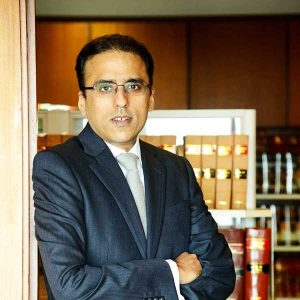
     

    abhijit-joshi-2

    Tell us about your schooling and college life before you graduated. Any fond memories or anecdotes that spring to mind that you would like to share with us?

    School days were great, but at the age of nine I lost one of my parents. It had an effect, but I coped well. I then went to Sydenham College for Commerce which was then a premier institution. There are lots of fond memories. I excelled at academics, I excelled at extra-curricular activities, I became the youngest chairperson of the Students Union. I found the love of my life, my wife. I probably learnt my early lessons on the importance of networking at the college.


    Were you always interested in corporate work? Did you have other areas of law that interested you? How did you ultimately choose your field of work?

    Corporate work has a buzz and I guess a lot of young minds would like to be associated with it. Even today, I see the same trend. I had planned nothing. I had applied to Mr. R. A. Shah at Crawford Bayley as he was the pioneer of international corporate work in those days. I was not accepted. I applied at AmarchandMangaldas and they were kind enough to take a risk on me. There were 5 to 6 lawyers in their Mumbai office in those days other than the family. I quickly realized that destiny had made the right choice for me.Amarchand was at the cutting edge of India’s economic evolution and I got to work on many of the firsts. For example, the first Euro issue, the first Cola war , etc. The firm’s orientation was towards corporate law and I eventually got interested in it and continue even today.


    How important is CGPA for a law student? While hiring, are you primarily looking at the academic record of the candidate or other areas like extra-curricular activities too?

    This is a good question. When you are judging a candidate by her resume, academics is going to form a lopsided part of consideration. However, I believe that in addition to academics other aspects of the personality of the candidate is what will give him/her the winning edge. I would assume that everyone is going to be hardworking, but it is important to know who has the “spark”. Personal interviews go a long way in getting a “gut” on the candidate. After having recruited for many, many years, it somehow comes to you within the first 5 minutes of the interview whether there is potential or not. But often this has not been fair to the candidate and this has to be validated by more scrutiny. For example, when you see extra-curricular activities, you see whether the candidate has all-round development. I would typically see what games the candidate has played. Is he a cricketer or is he a tennis player? In other words has he/she excelled at team games or individual games, is he/she a team player or a solo player.These are only aides, but I would admit that in a situation where there is not much to judge from, academics will have a very heavy weightage.


    abhijit-joshi-3

    You started your career at Amarchand Mangaldas and moved on to Dua before joining AZB. How did your initial years in practice shape your outlook?

    My initial years shaped me. My senior Mr. Cyril Shroff has left a deep impression on my work and my style of work as that is what I observed very keenly and closely during my formative years.I remember he once told me to never close the right side of a chart when you are developing options because mentally when you close it, you will feel there are no other options and you will start thinking within the box. He taught me how sound knowledge of law needs to be applied with innovation in thinking. The initial years have left an imprint on me.


    You have been associated with AZB for a number of years – you started as one of their first partners before being made CEO of AZB. How do you look back on your time at AZB?

    AZB holds a special place in my life and career. I got to observe another giant, Zia Mody. Both at Amarchand and AZB , I was around in their initial days of evolution and therefore I had the privilege of working very closely with both Mr. Cyril Shroff and Ms. Zia Mody. We were around 11 to 15 people when I joined AZB (then known as CZM) and the sheer joy of growth and the adrenaline was unparalleled. Working with Zia and Bahram was delightful as not onlywere they good lawyers, but also great human beings. I look at AZB very fondly. It has shaped me.


    Less than a year ago, you left a comfortable job to start out on your own at Veritas Legal. What prompted this move and what role do you envisage for yourself at Veritas Legal?

    I can only quote Robert Frost as an answer to this question. “The woods are lovely, dark and deep, but I have promises to keep and miles to go before I sleep.” I guess I enjoy the growth phase. I enjoy constructing. Both at Amarchand and AZB, I really enjoyed that portion of the journey. In the last decade of my career I guess I wanted to venture out and feel the excitement once again. My decision has nothing to do with any grievances about the past.It was all about the possibilities of the future. My role at Veritas Legal is dynamic at this stage. However, I do not intend to be around forever. Keeping this in mind, I did not use my name or surname in the firm name.This should never be an issue for senior talent aggregation. We have got very experienced resources. In time, I am sure they will step up and I will ease out. But before that, I would like to implement a lot of what I have learnt- what should be done and equally what should not be done. There are a lot of ideas that float in my mind. A lot of initiatives that I could not take up earlier. I intend to live each one of them. I see cultural integrity as a core part of the value system. I see value systems as the only cohesion at work place. I see that only these values will allow resources to flourish and bring excellence at their work. I hope that these will stay central to our growth and we will make all endeavors to see that these are not compromised at the altar of growth or success.


    How did large corporate deals come your way and what do you feel for your firm’s success?

    (In its relatively short period in existence, Veritas Legal has already completed around 27 transactions in the field of M&A and private equity. These include transactions for Recipharm in the acquisition of Nitin Lifesciences which is the second largest deal in India in the injectable space and Evonik acquisition of Monarch Catalyst.)

    We have more than 200 filings in various judicial fora. These have come from various sources and from all directions. I am more than pleased at the firm’s performance in the first year. But I take cognizance that the 2nd year will be more challenging than the first. We are determined to work hard and stay focused on our beliefs and hopefully better times will follow.


    Do you think the firm might perhaps be growing too fast or is hiring based on the amount of work you have to handle?

    (From having started with just two members, the firm has grown in strength to over 35 people with 25 lawyers in such a short period of time.)

    Yes, I think we have grown faster than we would have liked. However, we have not gone out and recruited anyone. The resources have been referred to us and we have recruited selectively. As matters kept coming, we kept increasing our strength to ensure that there is no burn in the system. Therefore, the growth is more a reflection of the thrust of the economy as opposed to a planned one. In fact, we have no numbers in mind. We have only quality in mind and whatever number is necessary to support the quality will be achieved.


    What do you expect from first year associates or interns from law school who wish to work for your firm?

    I do not have any eligibility criteria for interns. How do I put criteria on a student who is himself/herself discovering life? There are only basic attributes of hard work and inquisition. I love working with curious minds. I guess this is inherent and if the resource has it, it will show.


    Where do you see yourself and your firm ten years from now?

    Ten years is a long time. However, I hope that we are known for the job we do. We do not necessarily need to do everything, we do not necessarily have to be a size, but we necessarily have to be a happy place to work in and we necessarily have to be excellent at our work. I have a journey in mind with these values. The destination will reveal itself in good time.


    You are a member of the Law Society of England & Wales and qualified as a solicitor in England. How does one qualify as a solicitor in England and what advantages do you think it poses?

    Degree as such has a limited value. The knowledge you derive in gaining the degree is invaluable. Having a solicitor’s degree from England to my mind has limited value if you are practicing in India. It is not a “must have”, it is “good to have”.


    Finally, what is your parting advice for our readers?

    When I started my career, someone gave me a quote which went as under “Don’t learn the tricks of the trade – learn the trade”.I do not think that I can summarize my advice any better.


  • Lavin Hirani, Head-Legal Affairs, Red Chillies Entertainments on law and bollywood and importance of IPR

    Lavin Hirani, Head-Legal Affairs, Red Chillies Entertainments on law and bollywood and importance of IPR

    Lavin Hirani, though not a Bollywood actor himself, is a star in his own right. The present Head of Legal Affairs at Red Chillies Entertainments Pvt. Ltd. (Shah Rukh Khan’s Company), he could very well be termed as a mega star in the field of Entertainment and Intellectual Property Rights Law. A graduate of the University of Mumbai (2007), as well as post-graduate from The University of Manchester (2009), he first started off his career as a Litigation Associate with Khaitan & Jayakar, soon moving on to work as a Media & Entertainment Attorney, first with Naik Naik & Co. Advocates, and then with Hariani and Company – leaving the position in August 2015 to join RCE.

    In this interview, he speaks to us about:


    Given that most of our readers belong to the legal fraternity, how would you introduce yourself to them?

    Hello, everyone. My name is Lavin Hirani. I am settled in Mumbai, and have been a practicing lawyer since having graduated from the 3 year LLB course in Mumbai University in the year 2007. I am thrilled to have been given this opportunity to share my modest experience of 8 years as a practising lawyer, with the legal fraternity and readers of Super Lawyer.

    I currently work as the Head of Legal Affairs at Red Chillies Entertainment, a film production studio based out of Mumbai since August this year, prior to which, I was handling the  media and entertainment practice at Hariani & Co.


    Having done B.Com from Mumbai University, what motivated you to choose law as a career from the same University?

    Well, I would love to say that it was an independent decision, however the truth is that I come from a family of lawyers, including my father, who is an active practicing advocate, due to which I was always intrigued by the profession of law. However, I was never sure of the field of law I wanted to specialise in, and therefore I involved myself with different aspects including criminal and civil litigation prior to deciding that I wanted to specialise in Intellectual Property/Copyright and Media Laws.


    Did you find that your law school education had prepared you sufficiently for the many tasks you were required to execute during your internships and later at your job?

    Well, the bitter truth about most of the law schools in India, except for a few of the highly rated national law schools, is that the education and the curriculum never fully prepares you for a career in law.

    Thankfully, I was informed about this by various friends and family members, due to which I went for a law internship even before I started my law education.

    Formal legal education in India can only prepare you so much to help you get an initial background of what the procedural laws / substantive laws in India are all about. The real education starts only once you engage yourself with real life cases, which enable you to realise the intricacies involved in solving the day to day issues faced by clients and how you deal with them.


    Right after graduating, you joined M/s Khaitan & Jayakar as an Associate where you worked for one year, and then went for an LL.M. Why did you decide to go for higher studies?

    I always wanted to pursue a Masters in Law. However, I personally believed that a Masters degree in law would have a greater impact and be more fruitful if I had some kind of practical experience as an advocate before I embarked upon any form of specialised education. And to my credit, it did work for me, as I was better able to imbibe the course and appreciate the finer nuances of law, including the subjects I wanted to specialise in.

    I would also like to add that there is no ideal time to educate yourself. Every opportunity is a good opportunity. I know of several colleagues who waited for 3-4 years after graduating law before enrolling in a Masters degree, and several who jumped into one directly after law school, so there is no real straight-jacket approach to a Masters degree.


    Tell us something about your LL.M year at the University of  Manchester (UOM), United Kingdom. How did this influence your career?

    There are various reasons why one may pursue a Masters degree, especially from a foreign university. Some of the reasons would be – getting a better position with their current employers/law firms, or as the first step in their journey to work and settle abroad, or better earning prospects, etc.

    However, the reason why I chose to pursue my Masters degree abroad, was to get a broader perspective in my chosen career path, and also to gain further expertise in subjects like IPR, Competition and Business/commercial laws, which I was really interested in, with an accredited university like UOM.

    Although I would like to believe that pursuing a Masters degree abroad did help me with my career, I wouldn’t say that a mMasters degree is a must for everyone, as the costs involved are huge, and it may not always directly co-relate to an increased compensation / better position at work once you are back in India, if that’s what one is looking for.


    Soon after Masters, you joined Naik Naik & Company and worked there for two years before joining Hariani & Co. How was your experience working there?

    As I said earlier, one of the subjects I had enrolled in during my masters abroad was intellectual property rights. Naik Naik & Co. was back then and even now one of the few law firms specialising in IP and Media laws and therefore was one of the law firms I interviewed with on my return to India.

    I started working at Naik Naik & Co. from July 2010 for a period of approximately 2.5 years, wherein I got the opportunity of being involved in all kinds of matters ranging from handling transactions related to media and IP related documents to criminal and civil litigation before various courts, commissions, tribunals, CBI, the Supreme Court of India, various High Courts across the country, etc.

    I was involved in several film industry related disputes between producers and broadcasters, guild issues,  issued faced by artists, copyright infringement cases, writ petitions, criminal litigation relating to film personalities, while also being involved in non-media related issues/matters pertaining to land disputes, company petitions, service tax, the Adarsh Scam, etc.

    As a law associate, this was one of the most exciting periods of my professional career back then, as I was engaged in multifarious kinds of litigation and transactions, which is extremely important for any junior starting out in law.


    Since November 2012, you started working with Hariani & Co. Tell us about the nature of work you’re entrusted with therein.

    Hariani & Co. is a full service law firm specialising in real estate, litigation, media & IP laws, with several media and film production companies as clients. Although I was really happy with the kind of work I was doing at Naik Naik & Co., I always had a penchant for transactional IP work, which I was missing out on, due to the humungous litigation practice at Naik Naik & Co. I was entrusted with.

    I joined Hariani & Co. in November 2012, and worked there till August 2015. During my stint at Hariani & Co., I was able to hone my skills and knowledge of IP laws, especially copyright law, due to the substantial film and television related transactional work I was entrusted with, including a fair amount of media related disputes/litigation.

    I would like to mention the name of Mr.Ajay Vazirani, Senior Partner at Hariani & Co., under whose guidance I was heading the M&E practice, where I was given full charge of all media clients including some of the biggest film producers in India.

    I have been fortunate to have worked with a great set of people at both Hariani & Co. and Naik Naik & Co., which I believe is extremely essential for any lawyer, as I believe that the only way one can develop and gain, is from learning from others, including juniors, in addition to keeping yourself abreast with developments in your chosen field of practice.


    You have specialized in IP law. What made you interested in the same? How would you suggestone can gain expertise in IP Law?

    As I said earlier, I was never sure of the field of law I would choose to specialise in, which I think, in today’s world, is extremely important, while also being competent and informed to deal with any other legal issues your client may face.

    I have had the opportunity, at various stages in my career, of dealing with all kinds of laws, including criminal, civil, real estate, commercial, tax, maritime, contracts, customs, etc. However, I, since my college days, have continued to be extremely enamoured with IP laws, especially copyright laws.

    One of the primary reasons I chose to specialise in media and entertainment law is that it is extremely dynamic and ever-changing, and continues to inspire me with so many issues being faced by authors and the industry, in general, especially pursuant to the vast amendments made to the Copyright Act in the year 2012, some of which issues, the film industry continues to battle with.

    In addition to having a special interest in copyright, I am also interested in commercial/business, and contractual laws, which I think is extremely important for any lawyer today. Except for a few branches of law, everything in today’s world is about business and contracts, where another important skill for a lawyer is drafting and negotiation, which also is something I strive to get myself involved with, and improved at, with each passing day.

    Further, I am not aware of how one can gain expertise in IP law, as I do not consider myself to be an expert. However, I believe the best way to get yourself to become an expert in any subject of law, would be to involve oneself with the constant practice of dealing with real world issues of the particular field of law you want to gain expertise in, and also by updating yourself with various developments happening in the said chosen field, including through court judgments, reports and industry specific notifications/updates on a regular basis.


    What are the primary essentials of an IPR lawyer? How might a fresh graduate work on building these skills?

    According to me, the essentials of a good IPR lawyer is knowledge of the acts governing copyright, trademarks, patents and designs, including laws pertaining to contract and specific performance, as most of the acts governing IP provide for the requirement of written agreements recording transfers, assignments and registration of IP.

    It is also good to have some basic knowledge of how litigation works in India, and not just procedural laws governing the subject, as it is very important for a lawyer to understand the difference between probability and possibility of issues arising from any particular clause / agreement negotiated by one, and moving forward accordingly. Every deal/transaction has its own modalities and specifics, and therefore good drafting and analytical skills are an absolute must for a lawyer, as this is something where many lawyers miss the bus.

    I have had the fortune of working with several accomplished lawyers as a junior, and from what I have learnt from watching them from a vantage point over the past several years, I believe the best way to learn for any fresh graduate is to be sincere and spirited, as the only way one can learn is through eagerness and hard work.


    What would be your advice to students interested in Intellectual Property Rights?

    My advice to anyone interested in IPR would be to follow your instinct. There is no right or wrong field in law. There may be ones that are more lucrative than the other. However, you may only succeed if you are interested, and have some form of expertise in your chosen field.


    IPR is also vast, with lawyers specialising in trademarks, copyrights, technology, and also as patent attorneys.


    You have recently joined Red Chillies Entertainment (RCE), which is promoted by Shah Rukh Khan. How did this shift take place?

    Due to my work profile, I was involved with various film production companies, and as some of you may know, RCE has recently adopted a major shift in its strategy towards being a full-fledged film production studio. Knowing my interest and aptitude with film related transactions, and not only as someone having a legal background and approach, but also someone interested in the business end of things, I was offered to join RCE to head the legal department, which, according to me, was an interesting opportunity at this juncture of my career.

    Having known the entire team at RCE, having worked with them closely since the past several years, it wasn’t a difficult decision to make.


    What all falls under your responsibility as Head Legal at Red Chillies? What are the primary requirements for such a role?

    I am engaged in the dual capacity of Head Legal of RCE, and also as a personal in house legal advisor for Mr.Khan’s personal endorsement’s and investments.

    However, in my role as the Head Legal of RCE, I am responsible for all legal issues faced by the company on a daily basis, including being responsible for all transactions pertaining to films produced, and various other IP controlled, by RCE, including acquisition, sale, licensing and distribution of films, brand associations, etc.


    Does specialization in IPR Laws, especially Copyright, help in such a work profile?

    Yes, it does. RCE being involved in the business of production and distribution of films, I deal with issues relating to copyright laws on a daily basis. However, in addition to the same, it is also extremely important for me to delve into various issues concerning the internal workings of the company, for which knowledge of employment and labour laws, corporate, sports, real estate and various other Indian and international laws, is also a must.


    What will be your message to those who aspire to join Bollywood as a lawyer?

    I won’t use the word Bollywood, as it’s an extremely restrictive term, and is used in reference to the film industry in Mumbai, only. However, the media and entertainment space is growing day by day, and furthermore, with the onslaught of entrepreneurial ventures and start-ups in the technology / ecommerce and entertainment space, there is huge potential for IP lawyers in the future, as long as they are willing to be striven towards, and genuinely concerned about IP laws, and not just the sugar coat of the media industry, which fades away in no time.

    As a parting note, all I would like to say is that in addition to having knowledge and experience, it is extremely important that one is pragmatic and enthusiastic about their chosen field of law, including understanding the importance of maintaining inter-personal relationships with fellow lawyers / colleagues, as law is one of the few professions where you are bound to interact, in some form or the other, with your past or present colleagues, seniors, juniors and others, over transactions, deals or some form of dispute/s, and therefore one must not ever under-estimate others or over-estimate oneself, as everyone you interact with will in some way or the other contribute to your being a better lawyer.

    Wishing everyone at SuperLawyer and its readers a very Happy New Year!
