Tag: Nagpur University

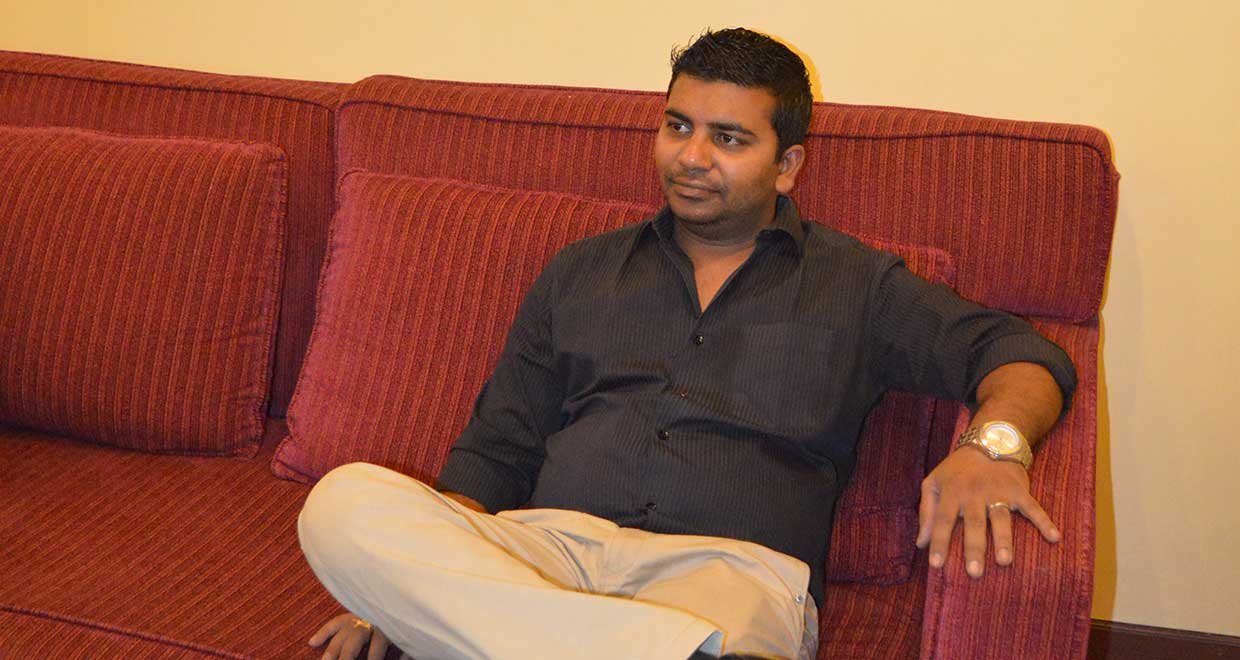
  • Gaurav Shukla, Independent Counsel, on Sports, Media and Entertainment Law, and starting out on his own

    Gaurav Shukla, Independent Counsel, on Sports, Media and Entertainment Law, and starting out on his own

    Gaurav Shukla graduated from Nagpur University in 2007. After successful stints at Pancrest Pvt. Ltd., Pangea 3, and Exceed Entertainment Pvt. Ltd., he has started independent practice, where his role entails handling both non-litigation and litigation work assignments for various clients in the field of Entertainment, Media and Sports Industry.

    In this interview we speak to him about:

    • Sports, Media and Entertainment Law
    • Being in-house counsel
    • Starting independent practice

    How would you like to introduce yourself to our readers?

    I would like to introduce myself as a person who at a very young age realised that it is one’s own struggle to deal with everyday challenges, and no matter who stands with you or comes forward to support, you have to overcome these challenges on your own. Therefore, I am a firm believer of the famous quote from the book The Alchemist, “A man is the creator of its own fate”. I have chosen law as my profession with the sheer will and determination to make my name in this profession and endeavour everyday to thrive and excel by taking a positive stride every morning.
    I have worked with various corporates as their in-house counsel. My approach has always been very unconventional in performing all my assignments and pursuing the opportunities that come my way or those that I manage to create for myself.


    Tell us a little about your days in law school.

    I graduated from DACN Law College affiliated with Nagpur University. Though I wanted to study in a law school, I failed to appear for a law school entrance. I was also very sceptical about getting through, being an average student throughout my matriculation. I remember one incident which changed my life. I was not good in spoken or written English during the initial days of law college and I misspelled a very simple word for which my entire friend circle mocked me which was embarrassing for me considering the background I come from.

    What were the activities, academic or otherwise, that you undertook in your law school days which in your opinion have shaped you and your career?

    I am an enthusiastic and an energetic youth but with the kind of college that I come from there was not much scope to engage in many activities. Therefore I thought of becoming independent and started working in the BPO industry in Nagpur speaking to American and English people on sales calls.  When my friends were busy running pillar to post in the court premises working with their seniors, I was developing a skill to convince a complete stranger sitting thousand miles away to buy a product and share their financial and personal details which I believe is a very difficult job. I am not undermining the importance of internships or visitations to court hearings, I am putting across a different approach which not only improved my communication/oratory skills but is also a prerequisite to excel in the legal profession. I was also developing my convincing skills which we need to possess in order to argue matters efficiently. We as individuals have to understand our shortcomings and work towards improving them conventionally or unconventionally.
     

    How important is mooting in the life of a law student? 

    Mooting has now become an integral part of the curriculum. Mooting is a very important aspect in developing and shaping your advocacy skills. It gives you a platform to undergo a mock experience of how you need to conduct and appear before the real courts. You develop the art of interpretation and how to put forth an argument. I also undertook the moot court competitions and approached it very seriously keeping in mind the benefits and fruits it will yield in longer run. Not choosing moot court competition is one’s own choice or preference, however we get exposure of competing with students in intra college and national moots and getting the opportunity to witness others is an experience in itself, it gives you an edge over others.

    How important are grades, in your opinion? 

    I have graduated from a law college which is not even known to the legal fraternity, but with decent grades. Campus placement or pre-placement offers are not even a probability that I could ever come across or dream off. Whatever position I have attained in my career is purely and solely out of my own efforts and perseverance.

    I do agree that grades are important and we cannot shy away from the fact that your first impression is cast on the basis of your grades before the interviewer or for even getting a chance to get a call from a reputed employer. However, grades are not everything. One may achieve good marks by mugging up the entire book without actually understanding the essence and application of the law. One has to have a very strong base and legal acumen in order to excel at the highest level. Competition is cut throat and with new technologies and modules being introduced in the market, the day is not far when the first level of work shall be done with the help of these tools.  In order to safeguard and strengthen one’s position and demand in the market, one has to have a clear understanding about interpretation and applicability of the law and to the best of the client’s advantage in order to secure the desired results. These days landing up in jobs is not totally dependent on your GPAs. As I mentioned earlier good GPAs may get you a chance to appear for an interview, however your knowledge and interpretation and  application skills along with correct approach shall sail you through the hiring process. I had the opportunity to come across many candidatures, and to be honest not even once have I looked at the table which contains their academic credentials. For me, a person’s other curricular initiatives (internships) and the exposure of different kinds of assignments is what I am most interested in. If a student having excellent GPA cannot answer a simple questions related to contract law or CPC or for that matter any other law, what is the use of that GPA? My humble advice is to understand and have correct interpretation of law as it is purely based on logic. What is not logical can never be upheld in any court of law barring few blunders which we come across.


    Who was your mentor, or main source of inspiration who motivated you all along the way?

    My one and only mentor is my father Mr. Girish Shukla who is also a senior advocate  having experience of almost four decades in the legal profession  as a Judge and as an Advocate. He is a practising counsel in the High Court, Mumbai and other fora. He has dealt with varied subject matters handling a plethora of cases throughout his career. My strength, professional ethics, inspiration, acumen, conduct and every aspect of my being is my father’s gift to me. Also my mother has played a very important role in my life, has supported and motivated me to the extent which I cannot be expressed.
     

    What are your areas of specialisation in law?

    I wouldn’t project myself to be a specialist in any area of law. However, with utmost humility, I can say that I have gathered knowledge in the field of Entertainment, Media and Sports and deal with clients on subjects like Intellectual Property Rights, Sports Law, Corporate Laws and litigation matters. I have been working in the entertainment, media and sports industry for most part of my legal career and deal with all the relevant laws and related work assignments on a day to day basis. I always had the option of joining my father in his practice and live a smooth and comfortable life. But that is not who I am. I always like to challenge myself and endeavour to achieve things on my own. I always believed that if you have a family backing in the profession that you are pursuing, that option or working with them is always open for you. However, I believed and followed the principles that will enable me to stand out and make my own name. In the legal profession, the initial years of practice are full of struggle and if you join your family in litigation practice then you are more of a liability than an asset. I therefore decided while I was in my final year that I shall pursue my career in the corporate department/non litigation work profiles wherein I get paid from day one and therefore get to avoid financial crunch. I did not have the privilege to land a job in a law firm not being a student from a law school.

    Students have to take into account two main factors/aspects vis-à-vis their financial condition/backing and their interest/strength in legal field while deciding their future steps. If they are financially sound then they can either take up independent litigation (no guarantee of fees) during initial days or work with a senior advocate for less salary. If they are not financially sound, then they need to secure a job in a law firm or in corporates/companies as in-house counsels. Second aspect is indirectly related to the first one and if they have the financial support then they can experiment to work in fields they have inclination towards and if it doesn’t work then may be try something else. It is ultimately a person’s own evaluation as to what suits their situation and what they desire/can sustain.


    How were the first few years after your graduation?

    I was the first person from my batch and entire college to secure a job in Mindcrest India Pvt. Ltd. in Pune. I had appeared for my interview and test even before my final semester exams and was offered a job. You cannot imagine how happy I was to get a job before graduating back in those days when most of my friends and other fellow students had no idea what they will do after the exams. Mindcrest has been one of the best working experiences I ever had. Not because it was my first job, but the culture of Mindcrest had a blend of work and sports, as they strongly believed in ‘all work and no play makes Jack a dull boy’. During my stint with Mindcrest, I have played various corporate tournaments and represented Mindcrest in basketball, badminton, cricket, football, snooker and other sports. I have been a sportsman throughout my childhood and being a state player in basketball and badminton, one cannot ask for more in their work life if you get to participate and represent in different sports, the organisation one is working for. Special mention to Mr. Ameet Gokhale (erstwhile India head) and the founder Mr. Ganesh Natarajan for being sports enthusiasts and ardent supporters of all Mindcrest players/employees. After Mindcrest I have worked with Pangea 3 in Mumbai and then in the sports and entertainment sector. Law college made us realise one fact that we will have to make our own fortune as college did not have the facility or infrastructure to enable us to seek pre placement offers.


    What is it about the corporate sector that kept you in this field and never let you leave for firm practice until recently?

    (Gaurav has worked with several corporate giants such as Mindcrest India Pvt. Ltd., Thomson Reuters, IMG Reliance Limited as well as Exceed Entertainment Pvt. Ltd., and as Senior Manager in the Legal Department at Bajaj Telefilms Ltd. )

    As I mentioned earlier corporate sector job is more stable financially and also provides opportunity for variety of work. You get to learn the nuances of the respective business carried out by such corporates and also get exposure to litigation and compliance related aspects which enhance your repertoire as a professional. I have worked with corporates for ten years and normally when people try to stabilise their life and try to strike a balance in terms of professional work and personal life, I have again deviated from such standard practice and have now decided to work independently with diverse clientele in distinct industries. Throughout my career, I have worked on Indian Super League (ISL), Indian School College Basketball League (ISBL), Aircel Chennai Open (Tennis), Lakme Fashion Week, Myntra Fashion Weekend, whilst working with IMG. Working on Indian Super League was a very unique experience as I had the opportunity to work with Player Auctions, Regulatory Commission Works, Player Agreements (Both Domestic and International), Sponsor Agreements, Franchise Agreements, Stadium Agreements and all other contracts executed for the League. With Balaji Telefilms Group, I had the opportunity to work and engage myself and supervise team members working on different kinds of Agreements and other litigation work for Television Industry, Films and Digital Media. Broadcasting Deals, commissioning Agreements, Film and television Production and Channel Agreements, Artist, underlying work contributors etc.

    I have recently with  my father’s guidance and mentoring ventured into independent work and started our full service law firm under the name of MGS Advocates. Currently we are catering to clients in Mumbai in various fora for litigation matters and also undertaking mandates for non-litigation work in the field of Entertainment, Media, Sports and Corporate Sector. We have associate partners in all major cities in India with whom we work on regular basis. We are currently operating from three offices located in Mumbai and we have plans to expand our facilities and offices in all major cities of the country.


    How was your experience working as a junior lawyer with a Senior Advocate?

    Due to a family emergency I had to leave the job in Pune and relocate to Nagpur to help the family members in dire situation. During this time I practised and assisted my father is all his cases at the High Court and District Court in Nagpur. I gained valuable experience of litigation, working and procedures of the district court, which is the most important to learn for a litigating lawyer.

     

    If given an opportunity, what would you do differently in your career journey up to this point?

    If given an opportunity I would go back and study law from a reputed law school in order to seek better opportunities with lesser struggle and commensurate package as per the current market standard. Being from a law college lesser known, I have worked really hard to get where I am and the monetary compensation which is offered to a law school student is something that I could never achieve from the word go, though now I believe, it is at par or even more than the standard packages offered to someone equaling my experience.

    My advice to aspiring lawyers is to stick to one organisation/firm for a longer duration at least two to three years during their initial stages after graduation, as stability these days is a major concern and I am saying this out of my own experience. Also, they should analyse and evaluate and think 1000 times before making any harsh decision of either switching their job or going independent. However, once they have made the decision they should never regret and repent the decision as it will affect them even more than the decision itself.


    Is there any other suggestion you would like to give to our budding lawyers?

    I always had one thing very clear in my mind, that no one was born knowing everything.  Apart from certain personality traits inherited by them from their parents, everything else is and has to be developed on our own. Every person does not have the same grasp, concentration, skill or ability and therefore never ever either compete or compare yourself with others. Winning or losing is not always in your hands, but giving everything to the best of your endeavours is something you should strive for and then stay focused and positive. Have perseverance, be humble, hold on, the initial days are the hardest and do not give up easily. It is your determination and sheer will power that will make you reach places because as often seen, the smart ones are not always the rich ones and the rich ones are not always the smart ones.

    Lastly I shall conclude myself with a very famous quote being an ardent fan of the world’s greatest basketball player, Micheal Jordan:

    “I’ve failed over and over and over again in my life and that is why I succeed. Obstacles don’t have to stop you. If you run into a wall, don’t turn around and give up. Figure out how to climb it, go through it, or work around it. Talent wins games, but teamwork and intelligence wins championships.”

     

  • Anupam Sanghi, Founder, Anupam Sanghi & Associates, on Competition Law, her pro-bono work, and plans for the future

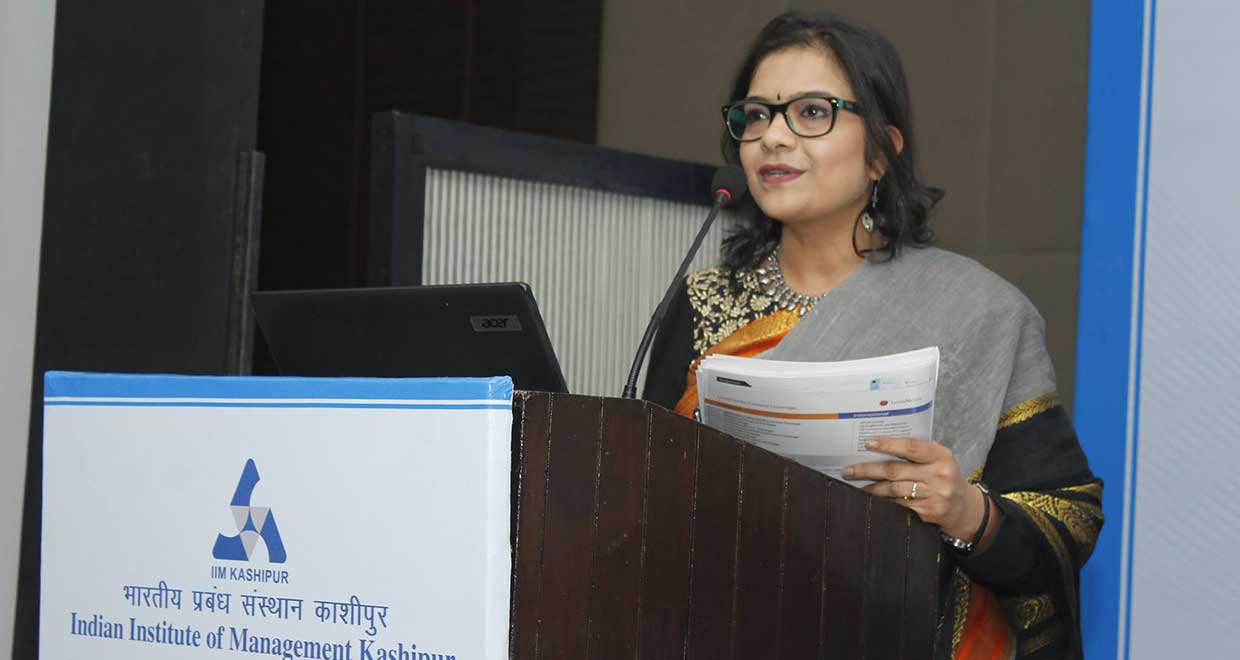
    Anupam Sanghi, Founder, Anupam Sanghi & Associates, on Competition Law, her pro-bono work, and plans for the future

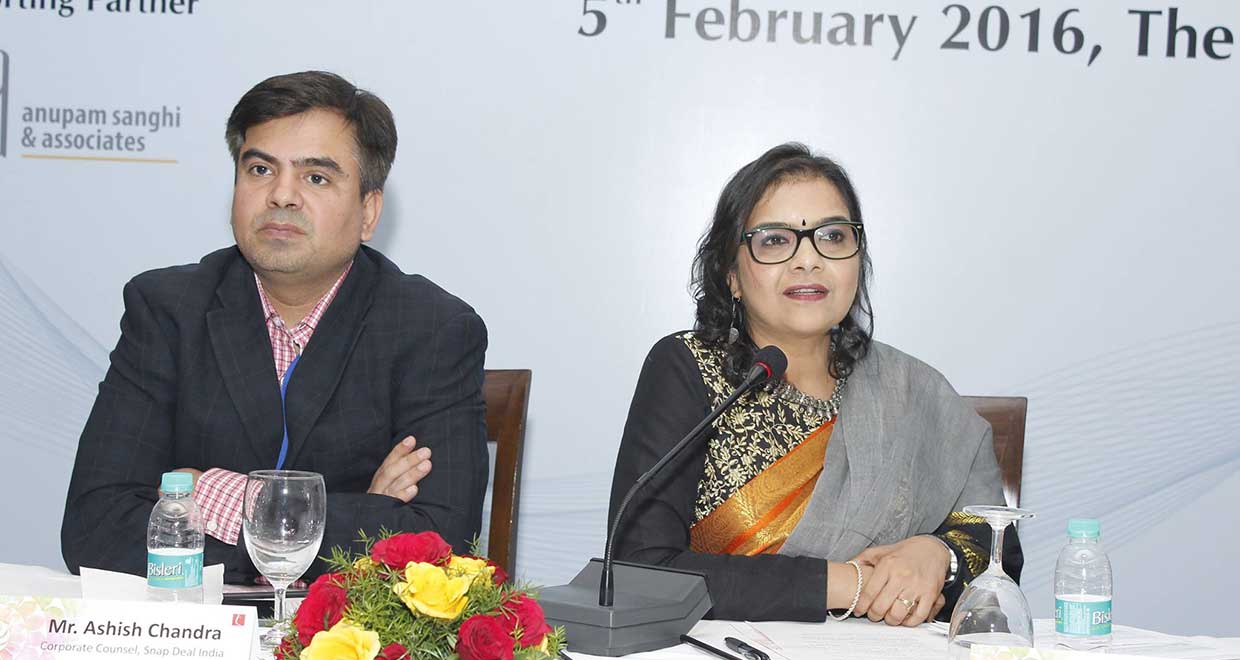
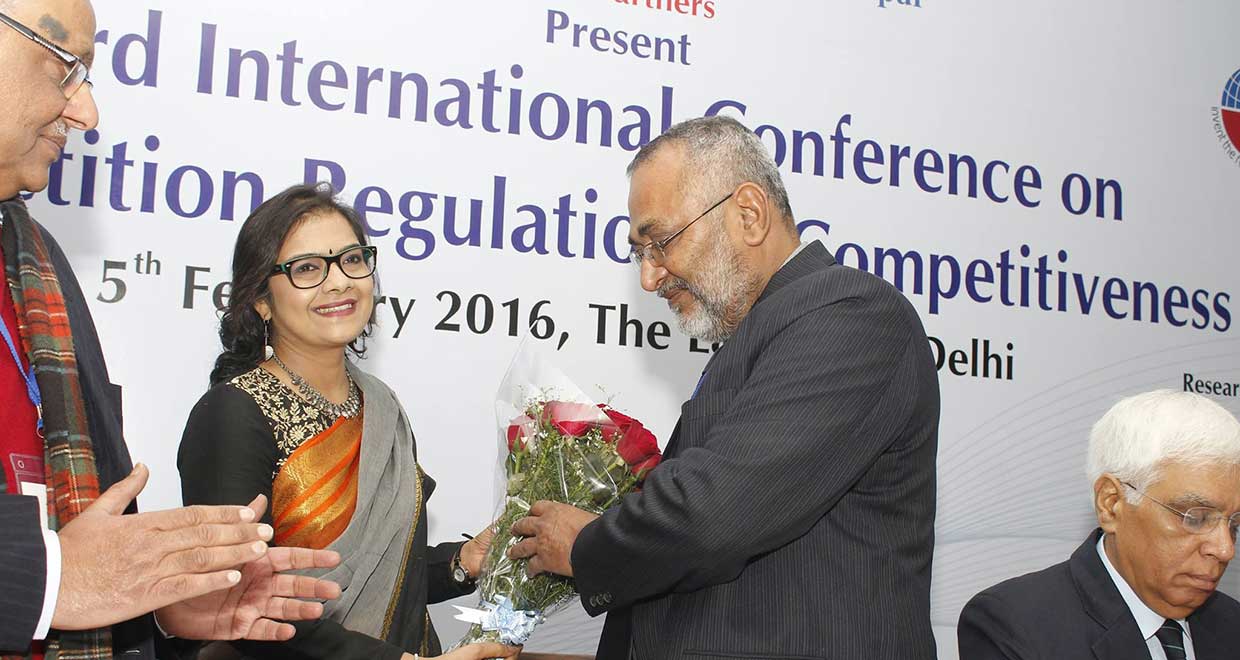
    Anupam Sanghi graduated in law from Nagpur University in 1997. She then went on to pursue her Masters in Competition Law from Kings University, in 2010. Anupam is the Founder and Managing Partner of Anupam Sanghi & Associates (ASA), and heads the TMT, Competition/Antitrust and Regulatory Practice. She has pioneered in these areas for the last eighteen years of practice, advising MNCs and SMEs on every aspect of legal & regulatory strategy, M&A transactions, compliance & training, intellectual property rights and dispute resolution / arbitrations. She is also a frequent writer, speaker and presenter at national and international conferences and seminars.

    In this interview we speak to her about:
    • Her experience in competition law
    • Her pro-bono work
    • Starting independent practice

    How would you like to introduce yourself to our readers? 

    Hello Superlawyers, to all those who consider themselves so! I initially wanted to be a CA, and law was the second option in that list. But it’s turned out to be the best choice I’ve made. I find the legal profession exciting and creative as it has the potential to transform society and move us towards a growth trajectory.  

    What motivated you to take up law? 

    I am actually a third generation lawyer. My grandfather, Late Vishnu Kumar Sanghi, was a leading lawyer, practising at the Nagpur Bench of the Bombay High Court during the period of 1940 to 1990. My uncle, Late G.L Sanghi, was a Senior Advocate, practising in the Supreme Court of India between 1957 and 2006. My grandfather inspired me to study law. He wanted me to pursue law even if I didn’t intend to practise it in the future. Though I had enrolled in the CA/CFA programme initially, I decided to pursue law soon after. As a final year law student, I worked in the chambers of Mr. Rajiv Nayyar where I got a chance to learn drafting Intellectual Property and Commercial Litigation matters. Once I started to work, I was more and more inclined to making this my career and soon found myself jumping into it like a fish takes to water.

    Did you take part in co-curricular activities while in college?

    As a student, in school as well as college, I was interested in co-curricular activities and participated in music and sports. I am trained in Indian classical music. I have participated in table-tennis championships. My love for sports made me play other games like squash and lawn tennis. In my opinion, co-curriculum is a very important aspect in a student’s life. These activities have helped in shaping my personality as a person who loves to take challenges and never gives up. A very important life lesson that sports teaches one is to accept defeat graciously and never give up. The defeats have in fact motivated me to do better. I feel it is a must for students to be part of co-curriculum, to take challenges and to realise that winning and losing is part of the learning curve. Engaging in sports, debates and other hobbies would certainly help students and fresh graduates to get a holistic perspective of life, deal with their pressures more positively and not get overwhelmed with the competitive atmosphere they face.  


    What books, judgements that you have read would you say have played an integral role in shaping your legal philosophy?

    In the beginning of my career I had picked up Nani Palkivala’s We The People. His speeches on the Indian economy were illuminating. He elaborated on the advantages of de-control and modernization in his budget analysis. In my opinion, the fundamentals of capitalism discussed by him in the book are very relevant in today’s time and would help budding entrepreneurs understand the economy better. He dedicated his time meticulously to work, as best exemplified by his success in the case of Keshavananda Bharati, one of the landmark matters he  argued in the Supreme Court. Interestingly, as a man of such sharp intellect, he also enjoyed reading self-improvement books (especially those  by Peter Drucker).

    The other legal luminary who has immensely inspired me is Soli Sorabjee. Besides the books he has authored, I used to be thrilled to read “Soliloquies”, his column published in the Indian Express. The way he made even inane matters seem humorous left me in awe of his staggering wit. 

    My Uncle, Late G. L. Sanghi, who was a Senior Counsel in the Supreme Court also had a very powerful mentoring effect on me. He was deeply perturbed by the the rampant human rights violations all around. However, he was always optimistic and truly believed that the legal profession would play a significant role in finding a solution. He felt deeply about the role of law societies (like LAWASIA where he was a past President) in these changing times. He also encouraged me to attend seminars from the very beginning of my career. I have been part of various seminars, in India and overseas, and am an active member of LAWASIA. At the LAWASIA conferences, I have met various brilliant jurists from all over the world who are like family to me today.

    In practice, all my seniors have played a crucial role in shaping me, both as an individual and as a professional. I was fascinated to meet Mukul Rohatgi, who was my first senior. He would argue in fifteen to twenty matters one after the other. Working with him, I learnt court craft and brevity. I am still learning how to be precise and make sharp arguments like him. After about a year I joined my dream firm, the erstwhile Amarchand & Mangaldas & Suresh A Shroff & Co. At the Firm, I was drafting and handling clients and court matters, dealing with senior counsels, billing, and so on. I was a part of all the activities required to run a practice. I was fortunate to handle big litigation matters in emerging areas like Telecom and Arbitration. I single handedly worked on the matters, used to report to Pallavi Shroff or Ritu Bhalla. They were extremely demanding as bosses and they brought out the best in me. For me, every day was a new test and a new incarnation of she-who-must-excel. I would have never learnt so much if I would have stayed under the family umbrella. In AMSAS, I also got a chance to work with Shardul Shroff in a couple of advisory matters and it was at this firm that I harboured dreams of one day setting up my own practice independently.

    In order to further polish my skills as a practitioner, after three years in AMSAS, I joined the chambers of Neeraj Kaul when I was also appointed as a Counsel for the Central Government. With him, I learnt court strategy and how to think on my feet. Besides sharpening my skills as a litigator, he made me take inspiration from my work and to work harder rather than questioning the sluggish legal system.


    Could you tell us about the internships you took up?

    Before I graduated as a lawyer, I interned with EY and learnt accounts, cost auditing and also a fair bit of accounting standards. I also worked in the Chambers of the present Attorney General, Mukul Rohatgi. There I learnt court strategy and case research. In those times research wasn’t as convenient as it is today. We didn’t have sites like SCC online and Manupatra to assist us. In order to get the relevant judgment, one had to understand the proposition to be argued and also the applicable legislation and provisions. Today, even non-lawyers can mindlessly do a keyword research and get relevant judgments. Knowing the exact point in issue is an art, which I learnt while working in the chambers of Mr. Rohatgi. I consider myself very lucky to have had such an opportunity.


    From a law student to a lawyer, how will you describe the transition?

    A part of me is still a student. It keeps my enthusiasm and the eagerness to learn more alive. To be a good lawyer, it’s imperative to be a good learner. My journey has been very fulfilling and enriching. I took the learning path by first joining the chamber of a senior counsel to know and understand the law well, then a law firm to apply the law and to learn to manage a legal practice. Then I went on to develop myself as a professional and as an independent arguing counsel and finally as a specialist in niche areas. My transition has been enlightening and I hope I can inspire my juniors to find their niche practice and polish their knowledge and skill sets in the same.


    Given the dynamic nature of the field you practice in, how do you keep yourself updated about the latest developments in the law?

    I wake up early morning for a walk and before going to courts or meetings, I must sit and read some case laws or articles on current issues for an hour. In the beginning of my career, I inculcated the practice to read a lot and to reflect the same in my work.

    I have been sharing my insights on new developments in Competition law on various social media platforms like Linkedin, Facebook, etc. It has the advantage of getting responses and knowing the viewpoints of others.

    I have been part of the LAWASIA network since 2003 where I participate in seminars on different areas of law every year. Since the enforcement of competition law in 2009, I have had the opportunity to speak in antitrust / competition law events organized by other forums around the world.

    What are the causes you feel strongly about? 

    I like to guide and support senior citizens with their legal issues and wills, especially when they are torn between their children who are too busy in their lives to care about their parents. Another segment which I think needs help is juvenile delinquency. I have been involved with the cause, whether it’s relating to their legal issues or overall development. I am also part of Project Abhimanyu where we provide free guidance and mentoring to law students. Lately, I have been involved in guiding young Indian entrepreneurs who lack awareness of legal and regulatory matters for their startups. I truly believe that it is not possible to have a sustainable business in an unsustainable policy environment. All business models rely on certain external conditions. Most important among these are a country’s economic policy and regulatory framework.

    There is a yawning communication gap between the government and businesses. With the right mindset, this gap can be bridged and doing business can be made a lot simpler. The economy needs to grow steadily to ultimately alleviate disparity and poverty as well. Creating a competition culture by proper enforcement of competition law will surely enable this.


    Tell us about your early professional experiences at Amarchand & Mangaldas. 

    Before I joined AMSAS, I was already working till midnight in the chambers of my uncle who was a Senior Counsel (Late Mr. G. L. Sanghi) in the Supreme Court. I used to be delighted to work with him, I would read and research with him till late night, post dinner. I used to enjoy getting an insight into issues that came to his mind at real time. However, in senior counsels’ chambers, Friday evenings were sacrosanct and there was always a pre-planned dinner or outing with other lawyer friends.

    Though I already had long working hours, at AMSAS, the pressures were different – it was more about client handling, team work, drafting and filing matters. I had to give up on Friday evening plans and even work through weekends. But at the end of the day I was happy and satisfied with the work, so the long working hours never bothered me.

    What were the challenges and learning opportunities that you faced in establishing Anupam Sanghi & Associates?

    One major challenge that I faced while developing my clientele is that managers in the corporate sector often look at small term solutions. Although I would show them the importance of looking at a long term solution to mitigate legal and regulatory risks, they cannot look beyond temporary corrective measures. If stakeholders appreciate the need to seek strategic advice, follow compliances before legal issues arise, a lot of knee jerk litigation can be avoided resulting in smooth functioning of their business plans. It gets very challenging to explain this to some business managers, especially those managing the Tech Start-Ups who need to safeguard their investments the most. However, they are beginning to see the benefit of my approach with the funding drying up and fire fighting not helping them in their litigation strategy.

    Also, the legal field is getting so competitive that we lawyers tend to get caught up in the rat race. Since I was finding this frustrating, I focused on developing my practice in a few niche areas. Thankfully, I could overcome this challenge as I resisted the rat race and stayed focused in specializing in niche areas, like competition and regulatory law.

    Building a team was also difficult as a hard task master. Now I can say I have been lucky enough to work with a dedicated and hardworking team that enjoys working on emerging issues. I feel in this day and age of social media distractions, it’s important for budding lawyers to be disciplined and to be molded into thorough professionals from the very beginning of their careers. The attractive salary packages being offered by big law firms also pressurizes them to target on earnings while they lose their formative years of knowledge building.

    Can you tell us about your experience interacting with legal stalwart Prof. Richard Whish?

    (Prof. Whish’s book on Competition Law is followed as part of the curriculum in almost every college, globally, and Anupam has had the opportunity to attend training sessions by him.)

    While doing telecom litigation, I would be looking for solutions to bring about a level playing field as DoT & PSUs like BSNL / MTNL have policy better policy benefits compared to the private players who were sinking in huge funds only to be at risk in an uneven playing field. I found that competition law did have the solution as it can be a great leveler. I enrolled at King’s College for their Postgraduate Diploma in EU Competition Law to add to my knowledge base. Prof. Richard Whish made the subject so easy and interesting that I would not blink in the entire session from 9 AM to 5 PM. The course was never ending as the latest case until the date of examination had to be studied, analysed and applied. Even for a lawyer, competition law as a subject  is not easy to understand theoretically. However, I treated Prof.  Richard Whish’s book like the Bible and what seemed like a complicated subject with more of economics became interesting. The college does have a great faculty, the other professors who took some modules were also quite good and made the subject interesting for us. I think I would never be able to understand the real philosophy behind competition law if I had did not gone through the program. It has helped me to wear two hats – one as a lawyer and the other as an economist.

    I used to enjoy studying  macro economics and costing while studying CFA (from ICFAI) prior to law. So, I think I found what was closest to my heart by studying competition law at Kings, London.

    How do you feel about the present competition law regime in India? 

    The Competition Regulator, Competition Commission of India (CCI) has created an impact in several sectors by fining for anti-competitive business conduct. For instance, the CCI has imposed a penalty of around Rs.6300 Crores on the cement cartel for price fixing, Rs.250 Crores on the LPG cylinder cartel for bid rigging, Rs.2500 Crores on car manufacturers for exclusive dealerships, Rs.630 Crores on DLF for abusing their dominance by unilateral agreements, and so on. The CCI has also come down heavily on PSUs such as Coal India for abusing their dominant power by forcing one sided terms in their Fuel Supply agreements with SEBs.

    These are record breaking fines making headlines since 2011 and by now CCI has created a fear amongst managers who are conscious of getting under the CCI scanner.

    Some of the other giants under CCI investigation are Ola, Google, Monsanto & Ericsson. In the last seven years, CCI has made its presence felt well. Though there is still a long way to go as most of these orders imposing penalties are challenged before the Delhi High Court, questioning the jurisdiction of CCI, the appellate tribunal COMPAT has remanded back cases to CCI to comply with principals of natural justice. Few matters are also before the Supreme Ccourt on issues regarding CCI’s jurisdiction and to decide on the method of calculation of the penalty. So, the courts would hopefully further evolve the law enabling in creating a competition culture. The characteristics of online markets are quite different compared to the traditional markets and free pricing / predatory issues arise. So, although the key prohibitions that violate competition law would be the same, the market data has to be analysed with a different approach as technology has changed the way the market works. Due to lack of sophisticated market definition and economic analysis, in the earlier years, CCI passed some inconsistent and / poorly reasoned orders, with two different approaches to market definition in similar markets. Advocacy for a level playing field at the policy level, following international jurisprudence and trends set by competition authorities from developed jurisdictions would help develop this sector.

    On what parameters do you choose the projects you work on?

    I have been focusing my work on evolving regulatory issues in the TMT space. So, I consciously developed a practice around Telecom, ICT / Technology sector. Competition regulation is an overarching law. Further, as a complete / holistic lawyer, it’s imperative to deal with dispute resolution. Therefore, I have developed a corporate / commercial law practice involving litigation & advisory in niche areas.


    How do you manage your time between your professional and personal interests? 

    Work keeps me wired in all the time but I do snatch out time for my love for concerts and music jams, going to the sports club on weekends, reading good humour by witty authors like P. G. Wodehouse and Oscar Wilde, Bill Bryson who depicts his traveling so hilariously. There is no other way but to somehow squeeze in these activities in my agenda.


    Where would you like your career to take you five years down the line?

    I would like to contribute to the development of competition law as a practitioner and academically as well. Actually, I would like to spend more time visiting universities sharing practical guidance with students and corporate managers, organize more events for students as a mentor in Project Abhimanyu. Hopefully, I will be working on a Artificial Intelligence (AI) project to further simplify my legal practice.


    What advice would you like to give our readers, who are inclined to developing a proficiency in Competition Law?

    Competition law is an emerging field. It is going to take some time before every firm develops a particular team for Competition law. Lawyers/freshers who want to develop a career in competition law will have to be patient to get work opportunities. It is imperative to focus on learning and research and finding solutions to every grey area in the field. Also as competition is a niche area the cases are limited as compared to general litigation. Having said that, every year the practice is evolving and is becoming more demanding. It is important for the lawyers to be focused at this stage, as this field will certainly gain an edge over other practices.

  • Neha Chaubey, Freelance Attorney, Upwork, on admittance to the Bar in India and New York, compliance, and her experience

    Neha Chaubey, Freelance Attorney, Upwork, on admittance to the Bar in India and New York, compliance, and her experience

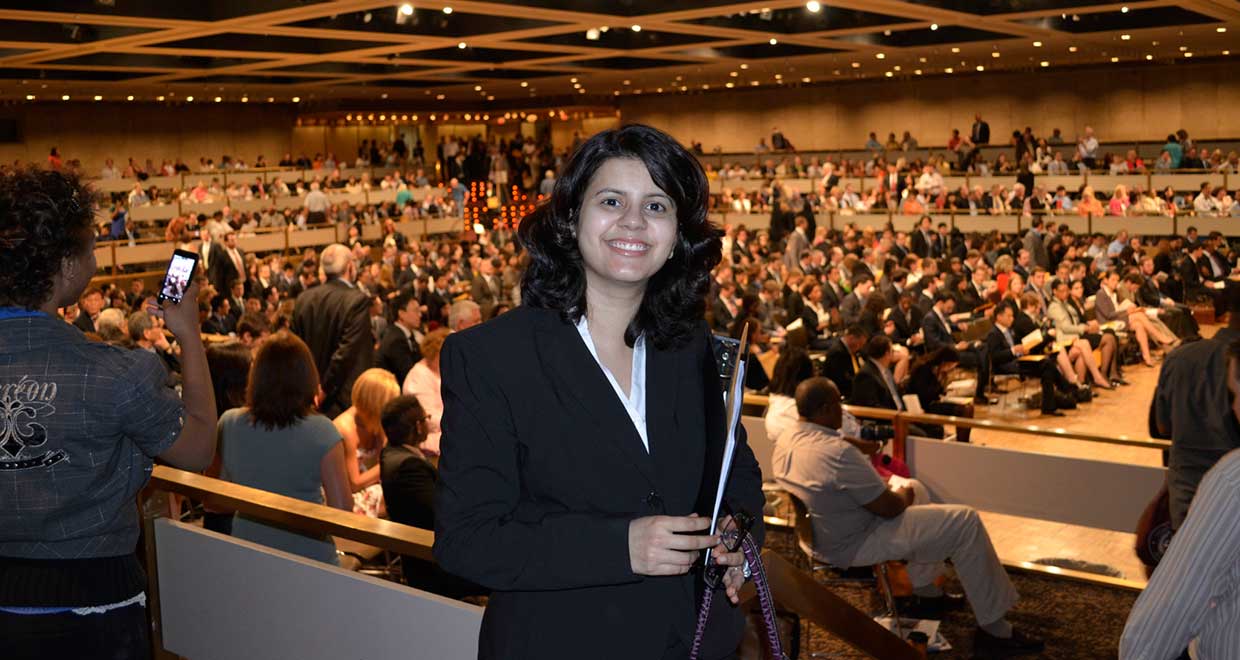
    Neha Chaubey graduated from Nagpur University in 2012. She has been admitted to practice law in India and New York.  She has over six years of experience in corporate law, personal injury law, deductible recovery for AIG, and document review. She has experience in both transactional and litigation aspect of law.  She has conducted numerous depositions, and attended conferences for personal injury cases in various courts in New York.  She has worked as an Associate Attorney in law firms in India and United States. She is currently pursing opportunities in Compliance.

    In this interview we speak to her about:

    • Practising in India and New York
    • Pursuing an LL.M
    • Her diverse experience

    Give us a brief overview of your life in law school in India.

    I completed my LL.B., a five years integrated course, from Nagpur University in 2008.  I paid excessive importance to academics and was the first merit in the Nagpur University. I was awarded highest number of gold medals in my class, for proficiency in various subjects.

    Late Prof. Mahabal, of the Nagpur University, had a very big impact on me in my LL.B. I religiously participated in his group discussions on various diverse topics every weekend.  I participated in numerous paper presentations, debates, turn-coat competitions, Model Parliaments, and moot-court competitions in my LL.B.    

    According to me, participation in each and every activity offered by the law school should be given utmost importance.  These activities prepare students for life after law school.  


    Is an L.L.M absolutely necessary for a career in law?

    LL.M is not mandatory for having a successful legal career.  LL.B. should definitely be sufficient. However, if a person wants to pursue law in the United States, the first option is to pursue JD, which is equivalent to LL.B. and the second option is to pursue LL.M.  Both the options have their advantages and disadvantages.  

    When a person completes J.D. from Unites States, it opens far more avenues for one’s career as opposed to LL.M. However, J.D. takes longer to complete than LL.M. and is much more expensive.

    When I was in the final year of my law school I started thinking about the next step.  I narrowed down my options to three categories, namely- to appear for CAT in order to pursue MBA; to prepare for TOEFL in order to pursue LL.M abroad;  or to prepare for JMFC (Junior Magistrate First Class).  As my elder sister has studied abroad for her M.S. in Chemical Engineering, I decided to follow her footsteps and pursue LL.M.  I chose Widener University, located in Delaware, U.S., to pursue my LL.M. in Corporate Law and Finance because Delaware is the most corporate friendly state in the United States.  A very high majority of companies, irrespective of their location, are incorporated in Delaware, because of its corporate friendly nature.

    During my LL.M. studies I had to complete a total of 24 credits. These 24 credits could be completed by taking some core courses (mandatory courses) and some electives (optional courses).  Each subject comprises a number of credits.  When a subject is extremely pivotal, it comprises of more credits, like Business Organization has four credits, whereas a relatively easy subject like Colloquim comprises only two credits.  These 24 credits can be completed in one year.  However, I chose to complete them in two years in order to get some extra time to pursue some internships before graduation.  I completed good amount of credits in my first year so that I had very few credits remaining in my second year.  This helped me to focus on finding internships.  In the second year, I decided to do judicial externship with a District Court Judge for which I received three credits.  I thought that receiving credits for a judicial externship would be better than taking an elective course because it would give me some invaluable first hand experience in the workings of a court.


    What kind of internships did you engage in during your student years which you feel were invaluable to your experience as an attorney?

    Being the first person to pursue law from my family, I did things by trial and error method.  I did not pursue any internship during my LL.B. If I could go back in time, I would definitely pay attention to securing internships early in my career.  I understood the importance of internships by the time I started my LL.M.  I interned at the Department of Justice and did Judicial Externship with a District Court Judge in Delaware.  I also interned with an Honorable Judge from Superior Court in Delaware.

    Which is the ideal time to do an L.L.M; right after undergraduate studies, or after a few years of practice post undergraduate studies?

    There are advantages and disadvantages of pursuing Masters right after LL.B and after acquiring some legal experience.  I did LL.M. right after LL.B.  This helped me in completing my studies in one stretch and I was done with my studies at a specific age.  Thereafter, I could focus my energy on other aspects of my life.  However, if given a chance, I would gain some experience before pursuing LL.M.  The main advantages of this second approach is that many law schools prefer students with some legal experience.  Moreover, good legal experience can come in handy when a student has less than perfect GPA.  Also, a person can decide their specialization for pursuing LL.M with more certainty after acquiring some years of legal experience.  


    How important are grades, in your opinion? 

    Grades are very important not only for securing admission in Masters but also in job search.  Many job descriptions specifically mention that students above a specific GPA would only be considered.  Moreover, some jobs require students to submit their resume, writing sample and law school transcript in order to apply for the job.  Therefore, it is important to pay attention to GPA from first year onward.  


    What is your message to our readers?

    I have been a law student and I can totally relate to the confusion and endless career related questions students may have.  When I was on the cross-roads and was contemplating whether I should pursue LL.M or not, I met a handful of seniors who had pursued masters from abroad.  Students can feel free to contact me on Linkedin for career related questions and I will try to answer them to the best of my ability.  

  • Md. Kaleem Mohiuddin on his experience at law school, journey on career building and choosing litigation over corporate companies

    Md. Kaleem Mohiuddin on his experience at law school, journey on career building and choosing litigation over corporate companies


    Md. Kaleem Mohiuddin graduated from the University of Nagpur with a degree in law in 1994, subsequently working under a Senior Advocate for a short span. He then started practicing independently in civil as well as criminal cases and is currently Additional Public Prosecutor for Additional Assistant Sessions Court, Karimnagar.

    In this interview Mr. Kaleem Mohiuddin talks to us about:

    • His time at law school
    • His journey in career building
    • His interest in civil law
    • Choosing litigation over Corporate companies


    CAN YOU PLEASE INTRODUCE YOURSELF?

    I am a first generation lawyer in my family. I graduated in law from Nagpur university in 1994. I didn’t choose law for any specific reason, it happened to me. Currently I am a practicing lawyer in the district and session court of Karimnagar, Telangana. I used to represent clients in both civil as well as criminal cases. In 2015, I got appointed as an Additional Public Prosecutor for Additional Assistant Sessions Court, Karimnagar for three years. I am presently representing police cases as well as other civil cases.

    WHAT DO YOU THINK, FROM YOUR COLLEGE LIFE, HELPED YOU THE MOST TO BECOME WHAT YOU ARE NOW?

    I am glad I pursued my legal education from University of Nagpur for the practical exams that we had for 200 marks unlike other universities with no such similar weightage. The marks for practical exams were divided equally between thesis writing and the rest for participating in Moot Court, working for Legal aid camps, attending Lok Adalats and visiting courts to see proceedings under the guidance of a practicing advocate. Now, without this particular examination, I wouldn’t have been aware of crucial things like Lok Adalats and importance of legal aid camps. Also, I made a thesis on Relevance of Facts in Indian Evidence Act. The number of sections it contained not only made it confusing but also interesting. For this reason, I think it is very important for law colleges to have curriculum which includes practical exposure and the students should take advantage of it and gain as much knowledge as they can.

    CAN YOU BRIEF US ABOUT YOUR JOURNEY AFTER ACQUIRING A DEGREE IN LEGAL STUDIES?

    Before started practicing independently in 1996, I was as a junior advocate under Advocate E. Jaggareddy. Within a period of six months of working and learning under him, Mr. Jaggareddy had other engagements, thus he could rarely come to the office which made other junior advocates show up irregularly to the office. Irrespective, I used to be in the office every day and would attend the proceedings of all the cases taken up by us. I used to work hours together flipping pages of numerous books and files and study deeply, putting things together to find loopholes in cases. Judges who had not been so polite to be otherwise, started appreciating me and that is when I felt so encouraged and my confidence level got boosted up.

    YOU SAID, YOU USED TO REPRESENT BOTH CIVIL AND CRIMINAL CASES, WHICH ONES DO YOU FIND MORE APPEALING?

    I find civil cases interesting; it is not just because the office that I worked in dealt with civil cases but also because I find civil cases challenging. In civil cases, you have to prepare the case yourself but in criminal cases you only get to defend. Pointing out mistakes is an easy task but creating a proper case is not.

    WHAT IS THE EXPERIENCE OF BEING A PUBLIC PROSECUTOR LIKE? WHAT WOULD BE THE BEST PART OF BEING AN ADVOCATE?

    I feel privileged to work for the state. Earlier, I used to represent the accused, while now I represent the complainant. The best part about being an Advocate and especially working for the state is the feeling that you get when you help providing justice to a needy person.  Rendering services to the needy helps you feel better too. The immense satisfaction at that you can aid in providing justice to the person whose rights have been wrongfully infringed is something that can’t be expressed. As I have said, law happened to me, I am glad that it did. It makes me grow every day.

    DID YOU EVER CONSIDER BECOMING A JUDGE? CAN YOU ALSO GIVE A REASON BEHIND IT?

    I personally would not want to become a judge. The scope for development decreases as you become a judge. You definitely have a huge duty upon yourself to analyze the issue with reasoning and give your judgment, but the opportunity of applying appropriate laws and fighting is lost.

    WHAT IS YOUR OPINION ON LOK ADALATS?

    I think Lok Adalat system is very important in a country such as India where the number of cases is really high. It is, in fact, one of the very important things that Indian judiciary was in need of because it can be conducted at suitable places, arranged at a short notice and can be conducted in local languages. It helps in dispensing a lot of cases in very less time; also, it is the best supplementary forum for victims for satisfactory settlement of their disputes. I too have settled a lot of cases in Lok Adalat.  Lok Adalat has the competence to deal with a number of cases like Matrimonial disputes, Family court cases, Partition claims, Damage cases, Motor vehicle compensation claims, etc. It advances equal access of justice to all.

    ARE THERE ANY CHANGES THAT YOU WANT TO SEE IN INDIAN LAWS OR LEGAL SYSTEM?

    The way Indian judiciary is working for the justice of citizens is commendable. There are few things that should be taken care of. Filling of vacancies at the earliest is needed; also the inadequacy of staff and judges should be considered and taken into account. I would also want to see few changes in procedural laws. Civil Procedure Code was drafted in 1908 when we were under the British rule. The time has changed, we have become independent but we still are following the same old laws. Amendments have to be brought and a time should be fixed for the disposal of cases because there are numerous provisions in Indian laws that could be used by litigants with mala fide intention and cases are prolonged unnecessarily. Compensation procedure should be included in procedural law for long litigation.

    DO YOU THINK MORE LAW STUDENTS SHOULD TAKE UP LITIGATION THAN GOING FOR CORPORATE WORK? WHY?

    One should do what appeals to him, but looking at the present trend of law students preferring corporate world over litigation I think students should give themselves a chance to go fight a case in the court. With the kind of infrastructure, practical skills and exposure that law schools are providing now-a-days, students are lucky enough to have such facilities and they should be able to take up litigation which is not a very difficult task to them. One might not get cases in the very first days but one can definitely work under a senior lawyer, dedicate a year for understanding the procedure, making good social relations, networking and learning things. Corporate world might be amazing but so is practicing in a court. Practicing makes you feel that you are an integral part of the society. Also, students should take up the task of making a good image of advocates in the society. The other thing that I see is that most of the people think that one could earn more in corporate world, which isn’t true. One can earn enough by practicing before a court. After all, the satisfaction that you get is above anything else.


    WHAT ARE THE TIPS THAT YOU WOULD GIVE OUR READERS, LAW STUDENTS?

    I think students should have thorough knowledge of all the acts. One should be a regular reader and should take care about the appearance. You are not a common man, you are an Advocate. Know as many things as you can, appear decent because the major part of your profession is to provide guidance to others. Maintaining good relations with others is another important thing. Be cool and friendly. When you deal with a case, hear the client very carefully, understand the legal issue and go through the Acts. Refer precedents and get a good command over procedural laws. Don’t be an independent practitioner right after graduating from law school. Join an office under a senior Advocate. Choosing the right office and right person to work under is very important. Do not think of earning at the first instance. Develop your communication skills and network. Be positive in your profession. 90% of the society would talk about the negative aspects of your profession, but law is the best profession in the current scenario. After all, the best part about life is being satisfied and that is something that you can acquire by becoming a lawyer and helping people. Also, do not think of earning money. Money is a part of life and not life itself. Follow the right path, learn things, money will follow. Before anything, develop individuality.

  • Rahul Bajaj, Undergraduate Student, Nagpur University, on being an Indian Delegate to Harvard, battling visual impairment, and braving all odds

    Rahul Bajaj, Undergraduate Student, Nagpur University, on being an Indian Delegate to Harvard, battling visual impairment, and braving all odds

    Rahul Bajaj is currently studying at  Dr. Babasaheb Ambedkar College of Law, Nagpur. Rahul interned with us for sometime, and he did exceptionally well. He is visually impaired from birth. Rahul scored 97 per cent in Class X and 95 per cent in Class XII, for which he was awarded the Dhirubhai Ambani Scholarship from Reliance Foundation and another scholarship from the Director of Higher Education, Govt. of Maharashtra.

    In this interview we speak to him about:

    • Braving the odds
    • His connection with Harvard Law School as an Indian Delegate and a student of HarvardX outreach program.
    • Future plans regarding his career


    How would you like to introduce yourself to our readers?

    I am a nineten-year-old law student and am currently in the second year of my law course at Nagpur University. I also happen to be blind since birth, with a rare retinal condition called Leber’s Congenital Amaurosis (yes, that’s quite a mouthful).
    I studied in a mainstream school and junior college in my hometown, Nagpur. I enjoy reading books, learning new languages, travelling and learning about different cultures.


    Why did you decide to study law? What were other options you were considering?

    As I am blind since birth, I realized the importance of self-advocacy at a very early age. And, once you learn to advocate for yourself, the logical thing to do after that is to learn to advocate for others. After my 10th board exams, like most other students, I began seriously considering my future options. I belong to a family of doctors – everyone in my family is, or wants to be, a doctor. I have always admired doctors but have never wanted to be one myself (ironic much?). I opted for the commerce stream in junior college; most of my friends were planning to pursue the chartered accountancy course and many people persuaded me to do the same. However, nothing appealed to me the way the legal profession did – I have always been fascinated by the power of the law to empower even the most powerless.


    What kind of study schedule do you follow?

    This might sound cliché, but I have always believed in maintaining consistency. Therefore, I generally allocate a few hours every day for studying. If you study regularly in a diligent manner, you can do very well in academics. I cannot emphasize enough the importance of maintaining a healthy balance between one’s academic and other pursuits; I don’t see any point in excelling in academics to the exclusion of all else. In fact, one of the primary reasons why I decided not to study in a national law school was because I believe that most national law schools, notwithstanding their brilliance, stifle creativity and do not allow students to focus on other things apart from figuring out how to stay in the rat race.


    How do you organise the entire activity of learning something, producing academic content and preparing for exams?

    I use an application known as a screen reader on my computer – a screen reader reads aloud the text that is given on the screen in a human-like voice. I scan all my study material onto my computer and then read it with a screen reader, so I highly rely on assistive technology. In addition, we have appointed two readers who read the study material to me and even help me to learn it.


    How do you write exams?

    I write all my exams with the help of a scribe who reads out the questions to me and writes the answers as per my instructions. Normally, I have to take several mock tests with the writer in order to build good coordination. As this is an arduous process, I get twenty minutes per hour extra for solving all my papers.


    As a visually impaired student, do you come across additional challenges, while studying in law school?

    Yes, I do have to encounter myriad challenges. Blindness permeates everything that I do, so it is always a force to be reckoned with. My uniform experience has taught me that the biggest challenge is dealing with the attitudes of those who believe that blind people are mere objects of charity and sympathy. People often have a fixed mindset, and it is very hard to convince such people that I can compete on a footing of equality with others. Lack of access to study material in an accessible format, finding a good writer for writing my exams and lack of access to important material for preparing for moot court competitions, research paper competitions, etc are some of the biggest challenges. The challenges are not just limited to law school, but also extend to other professional and social settings. During my internships, for example, I am always the elephant in the room, at least for the first few days. Most people do not have any past experience of interacting with a visually impaired person, so they do not know how they should engage with me. As a result, despite your best efforts, you do sometimes stick out like a sore thumb. That being said, I have generally had very positive experiences and have realized that people are more than happy to make reasonable accommodations if you tell them what you precisely require.


    Did you find the legal education system in general and your college in specific to be sensitive to the needs of the visually impaired students?

    All my professors have always been very supportive and encouraging; they always try to help me in whatever way they can. Forgive me for my lack of modesty, but I am mindful of the fact that this can also be attributed to a large extent to my good academic record. It is difficult for an average disabled student to thrive without asserting his/her needs. A lot still needs to be done to make legal education more accessible to the disabled in India.


    Would you encourage visually impaired high school students to pursue law?

    Law can certainly be a great profession for a visually impaired person, but I wouldn’t advise anyone to go for law just because he/she is visually impaired. My approach has always been to first decide what I want to do and then to figure out how to deal with the challenges that my visual impairment entails. This approach, in my view, is better than doing something just because it would be comparatively easier for a visually impaired person.
    That being said, if you are genuinely interested in the field of law, you should definitely go for it! I earnestly believe that the battle to compete in a world which has largely been designed to cater to the needs of the sighted greatly enhances our problem solving skills and the ability to think out of the box and every lawyer needs to have these skills in order to succeed in this profession. Moreover, like have I said before, as a visually impaired person, you do always stand out whether you like it or not. This can be a blessing in disguise, as it affords you an opportunity to change people’s perceptions, forge good friendships and above all, it allows you to have a more enriching experience than an ordinary student.


    How can other visually impaired students increase their academic performance?

    The most important thing is to learn to believe that you are not a blind student, but a competent and intelligent student who happens to be blind. In other words, you should not allow your disability to define you. It is also essential to set high goals – if you have mediocre goals, you will only end up being mediocre. The society generally has very low expectations from visually impaired students and visually impaired students often end up inadvertently internalizing these messages. You have to wholeheartedly believe that you can achieve anything that you set your mind to. I know that this is easier said than done and I sometimes still struggle to maintain this level of self belief, but you have to try. As T.S. Eliot once said, “Only those who will risk going too far can possibly find out how far one can go.”
    Contacting other visually impaired people in India and abroad who have excelled in the same course is another useful way to learn many small but significant things. Once you find out that there are other people who have overcome similar hurdles, you realize that you can do it, too.


    You are a Delegate at The Harvard Project for Asian and International Relations. Please tell our readers about it.

    The Harvard Project for Asian and International Relations, or HPAIR as it is popularly known, is a conference conducted by Harvard University which seeks to bring together roughly 500 delegates from all Asian countries to discuss contemporary socio-economic challenges relevant to the Asia-Pacific region. The conference is conducted twice a year – once at Harvard University and once in an Asian country. The conference for which I have been selected will be conducted in Tokyo in August.


    How did you become a delegate for this Harvard project?

    Actually, a couple of my friends attended the last HPAIR conference and told me that it was an amazing experience. So, I decided to test my luck and applied for the Tokyo conference. Much to my surprise, I got selected for the interview, which was conducted over Skype, and, the rest, as they say, is history. On another note, the application window for the Tokyo conference is still open. Those who are interested in applying for the conference should go to hpair.org.


    You have also been selected for a Copyright Law programme by Harvard Law School. How did this happen?

    Harvard Law School, through its HarvardX initiative for distance education, conducts an online course on copyright law every spring. Around 525 students are selected from across the globe for this course. One striking feature which sets this course apart is the fact that all the students are divided into 21 sections, and each section, roughly consisting of 25 students, has weekly online meetings and discussions. Personally speaking, this is certainly the most intellectually stimulating course that I have attended so far. The course not only allows you to learn copyright law from the best in the business, but also affords you an opportunity to acquire a deeper understanding of what it actually means to study at Harvard Law School, which is something that I have always dreamt of doing.


    What are your future career plans?

    My aim is to work as a transactional lawyer after completing my education. I would like to work in a Magic Circle firm in the U.K. or in a Tier-1 law firm in India. The main reason for the choice is that transactional lawyers are able to prevent disputes from occurring, whereas litigating lawyers essentially have to prevent an already bad situation from getting worse, so I believe that this would suit my personality well.


    What message would you like to share with our readers?

    We all have our unique flaws – some are more apparent than others. So, we should learn to appreciate and celebrate diversity instead of cringing away from someone who is not like us. However, you can learn to appreciate someone else’s flaws only once you learn to accept your own flaws. You should never stop believing in yourself, because if you don’t back yourself, who will?