Tag: National university of Singapore

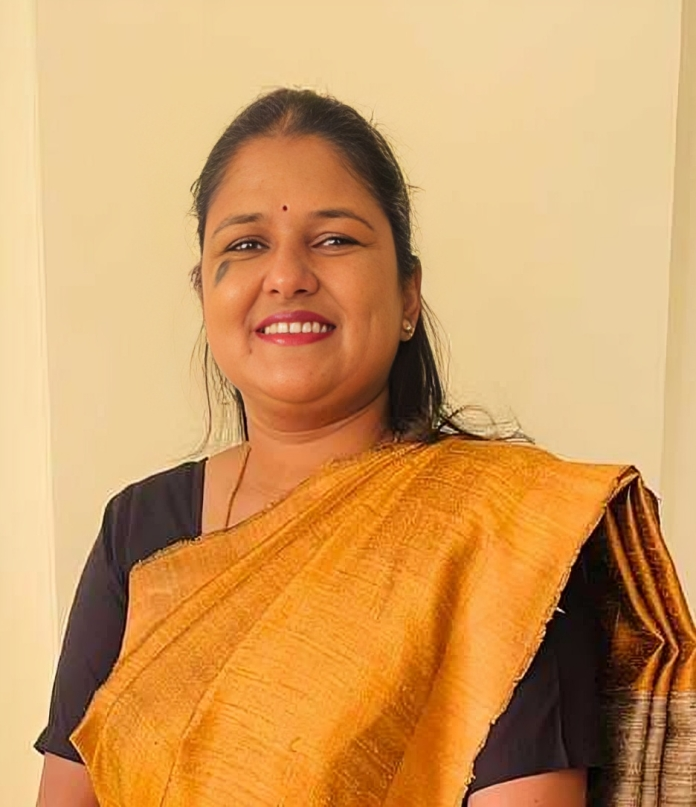
  • “In terms of latest trends – I think AI and its impact in different sectors and the legal nuances surrounding that would definitely be something over the next five and ten years.” – Shruti Iyer, Advocate-on-Record at Supreme Court of India and Partner at SA Law.

    “In terms of latest trends – I think AI and its impact in different sectors and the legal nuances surrounding that would definitely be something over the next five and ten years.” – Shruti Iyer, Advocate-on-Record at Supreme Court of India and Partner at SA Law.

    This interview has been published by Anshi Mudgal and The SuperLawyer Team
    With your broad expertise in areas such as Insolvency Law, Competition Law, Administrative Law, and more, could you share the story of how you first embarked on your legal journey? What inspired you to choose law as a profession? Was it a deliberate decision, or did your passion for law evolve gradually over time?

    I did not think I would be a lawyer. So I’m a lawyer by chance but I’m glad that I pursued law because now that I think back I am sure it is my calling. I don’t think I could have been so happy doing anything else. As destiny would have it I got admission into ILS Law College, Pune and I can safely say that I spent the better part of my life there. I was fortunate to study under some excellent faculty like Dr. Jaya Sagade, Prof. Nilima Bhadbade and Prof. Smita Sabne to name a few. Their teachings and guidance have been invaluable to me. 

    You participated in the dual LLM program in Global Business Law at New York University School of Law and National University of Singapore. Could you kindly share your experiences during that time and also ponder upon how the program equipped you to navigate the complexities of international corporate and financial services law? What challenges did you encounter during the application process, and what impact did the Dean’s Award from New York University have on you?

    I think I was extremely fortunate to be part of the NYU-NUS Dual Masters’ Program. It was truly one of a kind and we used to joke that we were part of a “limited edition”. Unfortunately, the Dual program has stopped. But it was a brilliant experience.  It was very intensive and taxing to do two programs in one year because when one university was on break we would have the classes and exams for the other. But the faculty was top notch. We got to experience the best of both worlds and had a natural kind of insight into comparative law without even having that as an elective. There is often this debate about whether it is worth pursuing an LLM abroad if you want to come back and work in India and especially in Litigation and I would like to say that if you have the resources you should definitely pursue one. Personally I feel it broadened my horizons in ways I could not have imagined. The bonus is I made some lifelong friends. The Application process was very smooth. It was completely online and I don’t recollect any hassle.  The Dean’s Award definitely helped me financially to be able to afford the program

    In terms of learning, I was extremely fortunate to be able to do my dissertation on International Investment Law under Prof M. Sornarajah. At NUS I interacted and studied under some excellent faculty like Prof. Umakanth Varottil and Prof. Arun Thiruvengadam. For the NYU Program we had some legends like Prof. Jose Alvarez for International Investment Law and Prof Stephen Choi for M&A and Securities. There are so many things that I learned during the program which I am able to use in my practise today especially when it comes to subjects like Competition Law and International Arbitration Law , apart from principles of corporate and financial laws. 

    In the early stages of your career, you worked with a major corporation. How did you approach the legal intricacies surrounding the Copyright Act and Cable TV regulations during that period? What key takeaways from that experience helped shape the foundation of your career and propelled your professional trajectory?

     I was lucky to work with some major corporations so early on in my career. It was a great learning curve for me. I dealt with several issues under the Copyright Act and Cable TV Regulations which were very relevant at the time. More than that, it helps me now immensely while dealing with in – house clients. I understand their issues and try to resolve them to the best of my ability. 

    After gaining valuable experience working in-house, what prompted your decision to transition to litigation, working alongside Senior Advocates? How did you find the shift between the two environments, and what major differences stood out to you? 

    I had a great learning experience working in – house but I always felt I was missing out on attending court. So I decided to finish my masters and switch to litigation. At that time the thought was if I don’t like it I can always go back. But I took to litigation like a fish takes to water. I loved coming to court and still do. It is what drives me. I feel like we make a difference to our client’s lives in whatever small way possible and that gives me a sense of purpose and immense satisfaction. The shift was not difficult, both have its pros and cons. But the working culture is very different. While working in – house my deadline was often completing a draft or sending an email. In litigation we are racing against time to secure bail or stop a demolition. So we cannot compare. Both are invaluable learning experiences.

    I am immensely grateful to my seniors Mr. T. Srinivasa Murthy and Mr. Senthil Jagadeesan, who have been my Gurus and Mentors in this profession. I have literally learnt everything I know from them and I continue to work and learn from them. 

    After working with various legal entities, you went on to establish your own practice. What motivated you to take that leap, and what were some of the initial challenges you faced in setting up your own firm and how did you navigate them?

    I cleared the Advocate on Record Exam and became an AOR of the Supreme Court and felt that I could start something on my own so my Partner Anandh K and I set up SA Law. It is based on our philosophy of doing good work and helping our clients. When we work in some other organisation we are always bound by their rules. Setting up my own practise gives me the freedom to do what I want both professionally and personally. It also helps me do other activities like teaching or interacting with law students and doing pro bono work without any pressure. In terms of the challenges we faced- we are both first generation lawyers from outside Delhi. We don’t have any Godfathers here. We have struggled and grown brief by brief and survived by word of mouth of our clients who have trusted us. 

    As a Founding Partner at SA Law and an AOR, you oversee a variety of practice areas, including land acquisition, civil rights, POSH (Prevention of Sexual Harassment), arbitration, and competition law. Could you share a fascinating case you’ve handled in the field of competition law and how you approached the complexities of such a case, especially for our younger readers looking to understand this area of law?

     I think one of the biggest cases I have handled is the cement cartel case. The case is now pending before the Supreme Court. But I was fortunate to work on the case from the CCI stage to the appeals before erstwhile COMPAT and then NCLAT and now Supreme Court. Working on a case through all the stages is a great learning experience. I think one of the fascinating aspects of competition law is how much we rely on foreign judgments and concepts – both the US Anti-Trust Law and EU and also compare it with our own jurisprudence. I think my LLM came in very handy in dealing with this. 

    Your passion for teaching is evident in your contributions to judging moot courts, delivering guest lectures, and conducting seminars and workshops for law students. What advice would you give to aspiring lawyers who are just beginning their legal careers?

    I don’t think I can give much advice- there are far more learned people for that. I would say enjoy your time at law school. Most of them would be doing the 5 year law course. When I look back at my time in Law College – I just remember that I had fun. I participated in all the activities in college both curricular and extra-curricular. It helped me make so many friends. And maybe I would say use that time to read and write a lot. 5 years is a long time. It is ok if you don’t have 10 internships in 5 years or don’t do many moot courts or write research papers. Of course, doing all this helps. But utilise the time doing something. I spent a good amount of time doing Purshottam and Firodiya Karandak in Pune which had a big Marathi Theatre Scene. It helped me learn one more language which is a life skill and comes in handy even today. 

     Perhaps I would add one thing – it is very easy to be enamoured by the profession when we are in college – especially when we hear Senior Advocates or Judges come to our college and talk and advise youngsters to pursue litigation. There is nothing wrong with that. Perhaps even I would give the same advice. But the initial years are tough. It is sometimes very easy to feel dejected, especially if you fall in the trap of comparison. Social media doesn’t help. Litigation is a marathon with very slow returns and requires a lot of consistent effort. And sometimes, even after a lot of hard work you may not get material returns or recognition. And that is ok. As long as you are able to feel satisfied that you are doing some good work, you should be ok with that. There are many loopholes in the system, all the more for women, but there are many good people as well- whether in terms of seniors, peers or mentors – there is no dearth of good people who will help you both personally and professionally and I think the camaraderie of the Bar is one of the best parts of this profession. Last but definitely not the least – there is no substitute for hard work. You may keep hearing about networking and legacy and luck and it is very easy to get lost in this hubris but there are no shortcuts to success. 

    As someone dedicated to staying at the cutting edge of legal developments and inspiring your colleagues to do the same, what do you consider to be the key emerging trends in your areas of expertise, such as Intellectual Property and Competition Law, particularly with the rise of Artificial Intelligence and technological advancements? How do you stay informed about these evolving fields, and what direction do you see them taking over the next five to ten years? Additionally, could you suggest any resources for our readers to stay up to date on the latest legal trends?

    In terms of the latest trends – I think AI and its impact in different sectors and the legal nuances surrounding that would definitely be something over the next five and ten years. The other emerging trend is the DPDP Act and its enforcement and the complications that arise out of them. In terms of staying updated, I think there are way more resources now than we had, especially online resources. I would say the good old way of reading law reports is also invaluable. 

    How do you manage to balance your professional growth with your personal interests? What hobbies or activities do you enjoy that help you unwind and relax after a demanding day at work?

    I think we always try to balance and if someone says that they have figured it all out then perhaps they are lying. But I try. I recently gave birth to my second child.  So I am currently in the depths of everything postpartum, but I would say whatever time I have I like to spend with my children. 

    Get in touch with Shruti Iyer –

  • “Growing up, I often heard stories about beloved authors and musicians who struggled to protect their rights. This sparked my passion for Intellectual Property Rights, as it directly addresses the protection of creators’ rights.” – Udita Kanwar Chavan, Partner at Willow Legal. 

    “Growing up, I often heard stories about beloved authors and musicians who struggled to protect their rights. This sparked my passion for Intellectual Property Rights, as it directly addresses the protection of creators’ rights.” – Udita Kanwar Chavan, Partner at Willow Legal. 

    This interview has been published by Anshi Mudgal and The SuperLawyer Team

    With your extensive experience in law, what initially inspired you to pursue a career in this field, and what factors contributed to your growing interest in Intellectual Property Rights, Technology, and Commercial Contracts?

    I am a bibliophile, and I enjoy listening to music. Growing up, I often heard stories about beloved authors and musicians who struggled to protect their rights. This sparked my passion for Intellectual Property Rights, as it directly addresses the protection of creators’ rights. Additionally, the rapid technological advancements over the past decade have led to evolving legal frameworks, such as the IT Act of 2000 and ongoing discussions around generative AI and online privacy. This dynamic nature of IPR captivated my interest and motivated me to work in this field.

    When I was studying at GNLU during each vacation I was interning with a law firm or a company and getting exposure to various fields of law such as competition law, corporate laws, labour laws,  banking and finance etc and I thoroughly enjoyed each of my internships but when I participated in the G.H, Raisoni IP Moot Competition and thereafter interned at K&S Partners, Gurgaon, I knew that this was the field of law that aligned with my personal interests and therefore, will be a practice area that I would want to pursue my career in. 

    After earning your law degree from NLU Gujarat, what motivated you to pursue an LLM in IP & Technology Laws at the National University of Singapore? How did the teaching methods there differ from other law schools you’ve experienced?

    Pursuant to earning my law degree at NLU Gujarat, prior to joining the work force for good, I wanted to study intellectual property rights and technology laws in detail since we only had the said subject for 1 semester which is a very brief period to deep dive into the subject. NUS offered a rigorous LLM course in Intellectual Property and Technology Laws with some of the most renowned faculty members teaching the subjects. When I was successful in securing a seat at NUS, it was a dream come true for me.

    At NUS the Socratic teaching method fostered critical thinking among students. The professors would often nudge us into diving deeper into a legal issue presented and encourage creative solutions to legal problems.  The diverse classroom environment allowed students from various backgrounds to share unique perspectives, enhancing our learning experience.

    You began your career at Linklaters Singapore Pte. Ltd.,, and later worked with top law firms in India. What were your early years of practice like, and what are some key lessons you learned that you would like to share with our readers?

    My early years at Linklaters Singapore were invaluable. While pursuing my LLM, I worked in their banking and finance team, where I learned the importance of diligence and comprehensive involvement in transactions. My seniors (Mr Michael Vanaselja and Mr Beelee Seah) emphasized the significance of understanding the entire lifecycle of a deal. Upon returning to India, I joined R.K. Dewan & Co., where I was fortunate to work closely with Dr. Mohan Dewan and Late Mr. M.R. Nair (head of Mumbai office). Dr. Dewan is my mentor because he shaped my understanding of Indian IP Laws, he was kind enough to let me lead various IP matters when I was still quite “green” in the field while of course guiding me whenever I required assistance. He and Mr. Nair taught me to approach legal issues from multiple angles and reinforced the need for continuous learning. 

    At Khaitan & Co., I focused on legal advisories and high-value transactions, learning to deliver quality services even under tight deadlines while appreciating the value of teamwork.

    You have had an impressive career trajectory. What factors led to your decision to start your independent practice at Willow Legal, and how do the experiences of working at large firms like Khaitan & Co. compare to running your own practice?

    After nearly a decade in practice, my partner Vikramaditya and I decided to establish our boutique firm, Willow Legal. We recognized a gap in the market where startups often lacked adequate IP protection, which affected their valuations during funding rounds. Similarly, since Vikramaditya and I are fond of arts and music, we wanted to work closely with independent artists to help them negotiate fair contracts with music labels/producers. 

    Working at Khaitan & Co. offered the convenience of having a dedicated paralegal team that handled much of the administrative workload, such as couriering documents, managing invoices, and tracking payments. In contrast, at our practice, we must attend to these details ourselves. However, this shift comes with greater freedom in managing our workloads and deliverables. We can foster stronger relationships with our clients by being readily available for meetings and calls when needed. We also have the flexibility to choose the matters we wish to pursue, evaluating them not solely based on billable hours. If certain cases require more time due to their complexities, we embrace that challenge. Additionally, we engage with a diverse range of issues and dynamic entrepreneurs, making this journey both exciting and worthwhile despite the minor inconveniences.

    Having worked on high-profile IP due diligence, what are some of the crucial aspects of IP due diligence that companies tend to overlook?

    In the music and media related transactions, we often notice that the contracts are not comprehensive to protect one’s IP ownership, specifically copyright. Very often the contracts do not even have the appropriate clauses ensuring the assignment of IP from the artist to the producer, inadequate stamping is a very common issue that is often noticed in the contracts for these industries. With reference to other transactions, we note that very often the employment contracts, founder contracts, consultant contracts also do not have appropriate IP ownership clauses or clauses pertaining to ownership of IP created during the appointment of services of the consultant. Furthermore, in many cases IP is owned by the founders of the company and is being used by the Company without appropriate licenses in place; in many cases IPs filed with the respective authorities are not prosecuted correctly (and applications are abandoned or on the verge of abandonment).

    With over nine years of experience in Intellectual Property, what trends do you foresee emerging in IP law, especially in India, in the coming years?

    Generative AI is the buzz word everywhere and it also applies to IP laws, with the increased use of Generative AI, it is only a matter of time when more disputes pertaining to the use of content developed using Generative AI or copyrights over the content that is fed to AIs to generate the results will arise. Last month we saw the first such dispute filed before the Delhi High Court (ANI v Open AI). This will definitely be an interesting space to watch. Even in the media industry, the recent case filed by Mr. Jackie Shroff seeking to enforce his personality rights has an important area of copyright law being discussed i.e. parody as an exception to copyright infringement. Furthermore, with the increased focus on clean and green technology, it is safe to say that  sustainability and green technology innovations will gain prominence, and there may be more patents filed pertaining to the same.

    Given the demands of your profession, how do you manage to strike a balance between your personal life and professional responsibilities?

    It is extremely important to have discipline in one’s life. Even in our independent practice we ensure that we have fixed work timings, working days and in all of this we ensure that we continue pursuing our hobbies come what may. Many people underestimate the importance of having hobbies, but it is extremely important for one to make time for their hobbies and it can be something as simple as reading a book or meditation. When work demands spill over into personal time, we compensate by taking breaks on non-working days to recharge.

    What advice would you give to law students who aspire to build a successful career in law like yours? Are there any particular resources or tools you regularly rely on when navigating the legal profession?

    I encourage law students to pursue diverse internships to discover their true interests rather than simply following trends or lucrative paths. Every area of law has potential for success if one remains committed to continuous learning and adaptability. Embrace challenges as opportunities for growth; mistakes are part of the journey toward improvement. I would also recommend young lawyers to not be afraid of taking chances, to be a solution provider and if in the process you make mistakes, it is alright everyone has been there, we just have to learn from them and be better as each year goes by. Most importantly, have a close circle of family and friends, sometimes the work may get overwhelming and tiresome at such times your loved ones will help you bounce back with rigour.

  • “What particularly appeals to me about IP law is that it is a field where creativity and innovation are protected. It’s fulfilling to contribute to the growth of creative endeavors and ensure that these efforts are legally protected.” – Surabhi Pathak, Intellectual Property Manager at Cat and Pillar, Singapore.

    “What particularly appeals to me about IP law is that it is a field where creativity and innovation are protected. It’s fulfilling to contribute to the growth of creative endeavors and ensure that these efforts are legally protected.” – Surabhi Pathak, Intellectual Property Manager at Cat and Pillar, Singapore.

    This interview has been published by Anshi Mudgal and The SuperLawyer Team

    After completing your law degree, you pursued an LLM in Intellectual Property & Technology Law from the National University of Singapore. What motivated you to specialize in this field, and what aspects of IP law drew you to it specifically?

    During my undergraduate studies, I had the opportunity to intern in various areas of law. It was in my fourth year that I opted for Intellectual Property (IP) law as a specialization and completed my first IP internship at Remfry & Sagar. I thoroughly enjoyed the experience and realized that IP law was where my passion lay, leading me to specialize in it for my career.

    What particularly appeals to me about IP law is that it is a field where creativity and innovation are protected. I find it rewarding to be part of the process that helps individuals and businesses build and safeguard their brands. It’s fulfilling to contribute to the growth of creative endeavors and ensure that these efforts are legally protected, allowing them to thrive in a competitive market.

    Could you share your experience pursuing your specialization in Intellectual Property & Technology Law at the National University of Singapore? What advice would you give to students wishing to pursue a master’s degree? Additionally, what was the process like for you in applying and gaining admission to the university?

    I had a highly rewarding experience specializing in Intellectual Property & Technology Law at the National University of Singapore (NUS). The program provided me with invaluable opportunities to develop key skills, particularly in research paper writing, where I saw significant improvement.

    NUS also offered intensive courses taught by visiting faculty from prestigious institutions. I was fortunate to learn not only from the esteemed NUS professors but also from one professor from Harvard Law School and another from an esteemed Italian university, which was a truly enriching experience. One module that particularly stood out to me was The Fulfilled Life and the Life of the Law, which offered profound insights.

    The coursework was rigorous, with a significant amount of reading material, which required great discipline to stay focused. My advice to students considering a master’s degree at a foreign university is to form study groups early. Dividing assignments and teaching each other different sections is an effective way to manage the workload and stay on track.

    For the application process, I submitted a resume, personal statement, degree transcripts, official TOEFL score report (you can also take IELTS and a waiver can also be requested), and two letters of recommendation. I am deeply grateful to my professors for providing me with glowing recommendation letters.

    With the unwavering support of my parents and family, I was able to turn my dream of pursuing a career abroad into a reality. I was also fortunate to have a dear friend, who was pursuing her PhD at NUS, guide me through the entire application process and my journey at the university.

    Please note that the application process may have changed over time, so I recommend checking the latest details on NUS’s official website: https://law1a.nus.edu.sg/admissions/app_periods_forms.html.

    You started your career at a leading firm like Remfry & Sagar. What were some of the most important lessons you learned in the early stages of your practice, and what inspired you to develop an international career?

    One of the most important lessons I learned in my early career days was the critical nature of managing deadlines, as IP law is particularly deadline-driven. I had to adapt to prioritizing tasks and staying organized under pressure. This process involved considering various factors, such as critical deadlines, client-set timelines, time zones, and the estimated time required for each task. Ultimately, there is no one-size-fits-all approach; it requires navigating different permutations and combinations to ensure that everything is completed efficiently and on time.

    I also realized that working smart is just as important as working hard. It’s essential to optimize your approach, streamline processes, and focus on efficiency without compromising quality.

    Additionally, I learned the importance of maintaining a mindset of continuous learning. The legal landscape, especially in IP, is constantly evolving, and being open to new ideas and approaches has been crucial to staying relevant and delivering the best outcomes for clients.

    Another key lesson was the importance of delegating effectively. As a professional, it’s essential to recognize when tasks can be shared with others to maximize efficiency. Delegating responsibilities not only helps manage workload but also fosters teamwork and collaboration, which are crucial for success in any profession.

    My decision to work in an international setup was driven by my interest in how global legal frameworks intersect with diverse industries and cultures. From the outset of my legal career, I realized that the challenges and opportunities in today’s interconnected world often span multiple jurisdictions. This realization sparked my desire to expand my expertise beyond national boundaries.

    Additionally, working with international clients and understanding the complexities of cross-border legal issues was something I found both intellectually stimulating and professionally rewarding.

    As the head of a department at Mirandah Asia (Singapore) Pte. Ltd., managing trademark portfolios across six continents, how did you navigate the complexities of different legal systems?

    Navigating the complexities of different legal systems requires a solid understanding of each country’s IP laws, procedures, and practices. For example, while Letters of Consent are not accepted in Thailand, they are typically acceptable in Singapore. Therefore, it is essential to be aware of these regional differences before developing a strategy to overcome potential objections and ensure compliance with local requirements. Over time, I became familiar with the IP laws of different jurisdictions, but it helped to consult local experts from time to time to clarify any nuances.

    With experience in both the Indian and Singapore IP Regulations, what do you see as the key differences between the two? How do these differences impact your practice when managing international trademark portfolios?

    The Singapore IP regime is relatively faster compared to the India one. With respect to trademarks, in Singapore, a trademark application with no objections can proceed to registration in 6-9 months while in India it can take about 18-24 months.

    When it comes to the inherent registrability of marks, the approach in Singapore and India differs regarding the stylization of marks. In Singapore, stylizing a mark can often help avoid absolute objections, even when the mark includes descriptive terms. In contrast, India tends to be more rigid in its approach. Even if a mark is stylized, it might still face objections if it contains descriptive terms.

    Another important difference is the approach to citing earlier marks. In Singapore, it is rare for earlier marks to be cited as obstacles unless they are highly similar or identical. However, in India, the Registry has been known to cite even far-removed marks as potential conflicts, making the process more complex.

    These differences impact the management of international trademark portfolios, as brands operating in both regions must prepare for longer timelines and more complex objection handling in India, whereas Singapore offers a relatively smoother and faster registration process.

    Vis-à-vis copyright, while for both countries copyright is automatic upon creation, there is no formal system of registration of copyright in Singapore while there is one in India.

    As an Intellectual Property Manager, what challenges do clients face in global markets when it comes to trademark registration, and brand protection? Could you share a specific example of a case you’ve handled in this regard?

    One of the main challenges clients face in global markets when it comes to trademark registration and brand protection is that many countries have different trademark registration practices.

    Southeast Asian countries, in particular, can present significant hurdles.

    For example, Indonesia operates under a first-to-file system, meaning the first person to file a trademark application gains exclusive rights to it over the person who uses it first. As a result, trademark squatters often register well-known brands’ trademarks before the rightful owners do. Since trademark rights are territorial, these squatters demand compensation to withdraw or transfer the trademark to the legitimate brand owner.

    I have dealt with numerous such cases, often filing oppositions on behalf of clients. Fortunately, Indonesia accepts bad faith as a ground for opposition, which is helpful in cases involving well-known brands. However, for lesser-known brands, proving bad faith can be more challenging.

    Given your international practice across various global markets, how do you stay up to date with the latest trends in IP law and how do you incorporate these trends into your own practice?

    I keep myself informed by staying in touch with industry experts through conferences, networking on platforms like LinkedIn, and being an active member of IP organizations such as the International Trademark Association and the Institute of Singapore Trademark Agents.

    These resources provide valuable insights into the latest trends and developments, which I then incorporate into my work to ensure that clients receive the most current and effective advice. This is achieved by reviewing and adjusting my strategies to align with emerging developments.

    For example, if new regulations or rulings affect trademark protection, I make sure that clients are aware of these changes and adjust the strategies accordingly.

    As a mentor in the Law Alumni Mentor Program, what advice would you offer to younger legal professionals who aspire to build a successful career in Intellectual Property law?

    My advice to younger legal professionals aspiring to build a successful career in IP law is to first and foremost enjoy the subject, which will keep one motivated in the long run.

    Additionally, I recommend pursuing additional certifications or graduate programs to deepen one’s expertise, which can help specialize and stand out in the IP landscape.

    Finally, it’s important to balance work with enjoyment. IP law can be demanding, so finding time for hobbies or social activities is essential for maintaining a healthy work-life balance, which will ultimately support long-term success and satisfaction in career.

    Given the high demands of your legal career, how do you balance your professional responsibilities with personal obligations? What strategies do you use to recharge and stay motivated in your work?

    Balancing professional responsibilities in a high demand legal career with personal obligations requires effective time management. I make sure to prioritize my tasks and set realistic goals for both work and personal life.

    One of the key factors that helps me is having a strong support system, including family, friends, and colleagues—and I consider myself fortunate to have all of these. Having people to rely on for emotional support and a sense of community is crucial.

    Additionally, engaging in some physical activity helps to stay recharged. My personal favorite is playing badminton or cycling which help clear my mind, helping me during demanding times.

    Lastly, sometimes, a little getaway is all you need to recharge.

    Get in touch with Surabhi Pathak-

  • “Don’t resist any new experience or challenge, it is only in the deep end that we really learn how to swim”-  Tishampati Sen, Counsel at the Supreme court of India

    “Don’t resist any new experience or challenge, it is only in the deep end that we really learn how to swim”- Tishampati Sen, Counsel at the Supreme court of India

    This Interview has been published by Pragya Chandni and The SuperLawyer Team

    Can you share with us how your journey into law began? What inspired you to pursue a career in this field?

    My journey with law started only incidentally. As a child finishing high school, all I knew of what I wanted to do – was join the corporate world, and be a corporate honcho – I wanted to walk in my father’s rather large shoes – as I had always seen him as a top corporate executive. But I soon learnt that engineering was not for me. No matter how hard I  tried – I just didn’t grasp the concepts for JEE exams, while for my friends it was a piece of cake. Then someone told me of a few prominent corporate executives who were actually lawyers by training. Since I had always been a debater, the common opinion was that I would do well in law. That is what I wanted to do, complete my LL.B., do some work, pursue an MBA and then proceed with life. But clearly life had other plans. I started enjoying reading law in law school, and started performing well in Moot Court competitions. But even then I had no plans of pursuing law post my LL.B. Then one day in an international arbitration competition held in Delhi, I was awarded the best speaker, and more significantly, a scholarship to National University of Singapore for an LL.M. No one, in their right mind, can let such an opportunity go by and so that is how I went ahead and pursued my LL.M, even with no intention of continuing with law. When I returned to India, I decided to work in a law firm for about a year (or two) before I would go ahead for my MBA – as previously planned – but my tryst with law, started at JSA under Mr. Sumanto Basu, and that is when I fell in love with law, and with being a lawyer. I saw large corporations, value and plan entire business strategies based on the advice given by Mr. Basu, who in turn based his advice on the work done by us! That realisation was empowering and humbling at the same time. After this, there was no looking back.

    You graduated from NLU Jodhpur and then pursued your LL.M from the National University of Singapore. How did your academic experiences shape your career in law, especially in international commercial laws?

    Both NLUJ and NUS have had significant contributions to my life. These institutions helped create the foundation for the legal acumen, and the understanding of the principles of law and practice. I owe a lot to NLUJ of course, the fundamentals of our legal understanding, the basic concepts of law, jurisprudence, drafting and advocacy was taught to us, and ingrained in us by the alma mater. NLUJ taught us research methodology, how to articulate one’s opinion coherently in articles, and the art of persuasion – through moot court competitions. The plinth on which I have built my practice, was created at NLUJ. But I think even beyond the academic training, NLUJ played a very big role in the development of my personality. I don’t think law school, at the undergrad level especially, should be looked at only as a place to read and learn law. Much more importantly, this is a place where you’re mixed into a melting pot, and you learn a lot about yourself, and your relationship with the world. 

    NUS, because I was much older when I went there, and also because the LL.M. is only for a year or so – is where the focus was predominantly on academic rigour. I had the opportunity to sharpen the understanding and application of the laws. In an international LL.M., one is reading foreign law, which may or may not be relevant later. But that is precisely why an LL.M may be important. It trains you to read and comprehend all sorts of legislations – even those which you may not be able to relate to. What was very different in NUS for me, was the way examinations were held. Most of the exams were open – book exams, they didn’t want to assess one’s memory, but one’s understanding of the concepts. This forced me to learn to comprehend and articulate faster, rather than just mug things up. The LL.M. also taught me that there are multiple viewpoints available for the same issue, and that it often varies based on what one’s life journey has been and the culture / society one has been exposed to. This also became relevant and useful when interacting with other lawyers and arbitrators in the international context.

    Starting your career at J Sagar Associates, you worked on both the transactional and litigation sides of law. How did this dual experience influence your professional development and perspective as a lawyer?

    There is a marked difference in the way transactional lawyers and litigating lawyers deal with clients and with the mandate before them. In both, of course, you keep the client and the client’s interest at the forefront, but there is a difference in the approach. On the transactional side, the focus is on advice and in enabling the client to get a deal done. One is often batting for the client, against another party but, importantly, towards a common goal, i.e., arriving at an agreement, which is mutually beneficial to both the parties involved, and which will govern the relationship of the parties going forward. The understanding of the industry, the Client’s business, its weaknesses and needs, governs your advice and actions. 

    Whereas in litigation, it is almost always adversarial, where one has to strive to defeat the other side and their version –  in order to make one’s own client win. Here, the facts of the case, the law, and the specific personality of the court / tribunal, are what reign supreme in the mind of the advocate. Of course, this is overly simplified, and a generalisation, but that there is a difference in the approach is clear. I can happily say that I thoroughly enjoyed both sides of the coin, but it is the litigating and adversarial side of the practice that I love. The fact that I have received invaluable training from prominent people in both these fields in JSA, I feel I have widened my viewpoint and perspective as a lawyer, which has helped me to grasp issues in a matter, and also comprehend the business realities which cause the clients to make certain decisions. Some of the law firms require freshers to be on rotation, and go through various practice areas for the first 6 – months or so. Given my experience, I think it’s wonderful and long may it continue. 

    You’ve had the opportunity to work under prominent figures like Mr. Vipin Nair and Mr. Gopal Subramanium. How did these experiences and mentors impact your approach to practicing law and handling significant cases?

    My seniors have not merely had an impact on my approach to practicing law, they have all shaped me into the lawyer and the person I am today. My practice, and how I present myself in court and to other advocates / clients, is entirely a reflection of all my mentors and seniors. I have had a number of mentors in my life, but significantly, I must mention Mr. Sumanto Basu – who took me under his wing when I was an absolute fresher and who then taught me not just how to practice law, but even how to conduct myself. Mr. Amar Gupta – who was instrumental in my transition to litigation and who planted in me the love for litigation and court craft. Mr. Vipin Nair and Mr. P.B. Suresh taught me the tips and tricks of independent practice, advocacy, effective drafting and most importantly demonstrated how important it is to build a rapport with the Bench, other members of the bar and the court staff. From Mr Gopal Subramanium, of course, as a very senior and eminent senior counsel, I learnt how a person of his stature prepares for matters, deals with the pressure, the adulation and the criticism, and keeps the dignity of the Court and the need of the matter at the forefront. 

    Your practice covers a wide range of areas including corporate litigation, arbitration, and consumer law. How do you manage such a diverse portfolio, and what challenges have you faced in balancing these different specializations?

    It isn’t about managing a diverse portfolio, I have a practice that covers a wide range of areas, purely because I enjoy a wide range of subjects and each area comes with its own style of pleading, practice, and its own jurisprudence. It is a lot more enjoyable (at least for me), and the issues and the clientele that I interact with are also dynamic and different. As far as I am concerned, it keeps the hunger and the attraction for the law and litigation going. Having said that, I must clarify that having a wide practice area is not unusual, there are several other counsels as well, who practice in several fora and we regularly meet each other in different courts. Those predominantly practice in one type of practice area, do so probably because they have attained true expertise in that field of law and therefore are now required to devote most of their time assisting the courts, and advising clients, in that area of legal practice.

    You have been involved in several landmark cases, such as the class action matter involving data privacy and the whistleblower suit. Could you tell us more about these cases and what they mean for the legal landscape in India?

    Both of these matters that have been mentioned, are sub – judice, and so I don’t want to get into them in detail. But in short, the data privacy matter is an interesting one, where medical data entrusted with a cloud storage service provider went missing. The service provider took the defence that no liability can be attributed to it, since it provided a back – up only in the more expensive version of its service. The complainant therein was aggrieved by this position since the complainant felt that such a defence cannot be taken when data (and sensitive data such as this) has been admittedly lost based on the negligence and internal glitch of the service provider. Recognizing that this will be an issue for all those who have not taken the more expensive version of the service, a consumer complaint, with an application to treat the same in the interest of the class of consumers was filed. The National Commission passed certain significant orders in the matter (although the matter is pending adjudication), the issue is now before the Supreme Court. 

    Clearly this is an important issue because this not only deals with the sensitivity with which data must be dealt with, but also as to whether a class action proceeding can be maintained for an issue such as this. With data becoming the currency in the new world, matters such as this, would certainly become relevant for the law to develop appropriately. 

    The whistleblower matter is another interesting matter, where a person brought to the attention of the internal management of a large MNC that unethical practices were rampant within the organisation. Pursuant to an internal investigation, the admitted whistleblower was terminated from the employment on the ground that he too had been involved in the said unethical conduct. The whistleblower filed a civil suit challenging the said termination claiming that this is an attempt to penalise the person for blowing the whistle internally. He has also filed a Writ Petition bringing to the attention of the Court the fact that the law in India is woefully inadequate as far as according protection to whistleblowers is concerned while several countries have robust laws to protect whistleblowers and to prevent retaliatory conduct. A Judgment of the court in this regard, will certainly have a major impact and may actually cause the law and businesses to provide realistic mechanisms to prevent unethical conduct and to protect those who wish to speak out against such conduct. 

    As someone who has achieved considerable success in the legal field, what advice would you give to fresh law graduates who are just starting their careers?

    Its very nice of you to say so, I don’t know if I can be said to have achieved considerable success – as yet, but if I had to share a couple of my learnings with fresh law graduates, it would be this:

    Know your subject and the law very well. Please read the law. This includes being updated with the recent judgments and reading the bare acts. I have come to learn that knowing the law really well puts you at an advantage on any side of the practice. There is simply no substitute for it and those who really become prominent, almost always, have a strong command on their subject and are armed with a profound knowledge of the law.

    Not many really know what is good for them, and what they are meant to be, especially so, when you’re a fresh law graduate, and your only understanding of the legal world is through limited internships and maybe SUITS! Therefore take on all experiences wholeheartedly. Don’t resist any new experience or challenge, it is only in the deep end that we really learn how to swim. Plus, it is the ability to see a problem or a legal issue, from various viewpoints and perspectives, that sets one apart from the rest and that ability is honed especially by having a varied bouquet of life experiences. So don’t sweat the small stuff and dive – in deep.  

    Get in touch with Tishampati Sen-

  • “In law and in life, embracing every opportunity for learning and mentorship is the compass that guides you towards success.” – Raghunath Peter Doraisamy, Managing Partner at PDLegal LLC Advocates & Solicitors.

    “In law and in life, embracing every opportunity for learning and mentorship is the compass that guides you towards success.” – Raghunath Peter Doraisamy, Managing Partner at PDLegal LLC Advocates & Solicitors.

    This interview has been published by Namrata Singh and The SuperLawyer Team

    With 25 years of extensive practice in law, you’ve built an impressive career as the Managing Partner of PDLegal LLC. Can you share a bit about your journey from college days and struggles you faced during that time and what motivated you to establish your own law firm?

    My journey in law began with a deep-rooted passion for justice and advocacy, nurtured during my university days. This drive, coupled with extensive experience gained over the years, led me to establish PDLegal LLC. My goal was to create a firm that embodies a blend of personalized, partner-level service with efficiency and cost-effectiveness, addressing the evolving needs of our clients.  

    Your areas of expertise range from Maritime and Shipping to International Trade, among others. What drew you to specialize in these particular fields, and how have they evolved over the course of your career?

    My inclination towards Maritime, Shipping, and International Trade law stemmed from recognizing the dynamic and globally interconnected nature of these fields. These areas are not only pivotal to global commerce but also constantly evolving, presenting unique legal challenges and opportunities. Over my career, I’ve witnessed and adapted to significant changes in these sectors, ensuring that our firm stays at the forefront of legal expertise and innovation.

    Having been recognized by leading legal directories like Legal 500 and Chambers & Partners, what do you consider to be the key factors that contribute to your success as a litigation and arbitration counsel?

    The key factors that have contributed to my success in litigation and arbitration include a relentless commitment to excellence, a strategic approach to each case, and a deep understanding of our clients’ needs. Recognition by leading legal directories like Legal 500 and Chambers & Partners reflects our firm’s dedication to delivering high-quality legal services and our ability to achieve favourable outcomes for our clients.

    PDLegal LLC has a strong regional presence with offices in Singapore and Bangkok. How does the firm adapt to the legal landscape in different regions, and what challenges and opportunities does this bring to your practice?

    Adapting to the legal landscapes in Singapore and Bangkok involves a keen understanding of regional legal nuances and cultural sensitivities. Our firm leverages its strong regional presence to offer tailored legal solutions. The challenge lies in navigating diverse legal systems and market dynamics, but it also presents opportunities for cross-border collaboration and expanding our expertise in international law.

    Your practice involves both contentious and non-contentious matters. How do you balance being a trusted business advisor for non-contentious issues like joint ventures and mergers while also navigating complex litigation matters?

    The key to balancing both contentious and non-contentious matters lies in versatility and deep legal acumen. For non-contentious issues like joint ventures and mergers, I focus on being a strategic advisor, ensuring due diligence and foresight. In complex litigation, my approach is more dynamic, with an emphasis on thorough preparation and robust advocacy. This dual role requires adaptability and a deep understanding of our clients’ diverse needs.

    With your background in Maritime Law, how do you perceive the future of the maritime industry, especially considering the advancements in technology and environmental considerations?

    The maritime industry is poised for significant transformation, driven by technological advancements and environmental considerations. As we move towards more sustainable practices, I foresee increased adoption of stricter environmental regulations. 

    Given the recent advancements in technology, there’s a notable shift towards automation in shipping operations. How do you see this trend impacting the maritime industry, and what legal considerations or challenges might arise as a result of increased automation in shipping processes?

    Automation in shipping marks a revolutionary shift, enhancing operational efficiency and safety. However, it also introduces legal challenges, particularly in terms of liability, regulatory compliance, and cybersecurity. As the industry adapts to these changes, our role is to guide clients through this legal landscape, ensuring they stay ahead of the curve.

    As someone deeply involved in pro bono legal services, can you share a rewarding experience or a case where your involvement made a positive impact on the community you serve?

    We do a number of pro bono cases through the Law Society of Singapore Pro Bono Services (“LSSPBS”).

    Beyond your professional achievements, what are some personal hobbies or interests that you indulge in to unwind from the demands of the legal profession?

    To unwind from the demands of the legal profession, I enjoy watching football. I am an avid Manchester United fan.  

    Given your extensive experience and success, what advice would you offer to college students or young professionals on how they can make the most of their college days and choose meaningful internships to pave the way for a successful legal career?

    For university students and young professionals, my advice is to embrace every learning opportunity, whether in academics or internships. Focus on building a strong foundation in legal principles while also developing soft skills like communication and problem-solving. Networking and mentorship are invaluable; seek connections that inspire and guide you towards your career goals.

    Get in touch with Raghunath Peter Doraisamy-