Tag: nclat

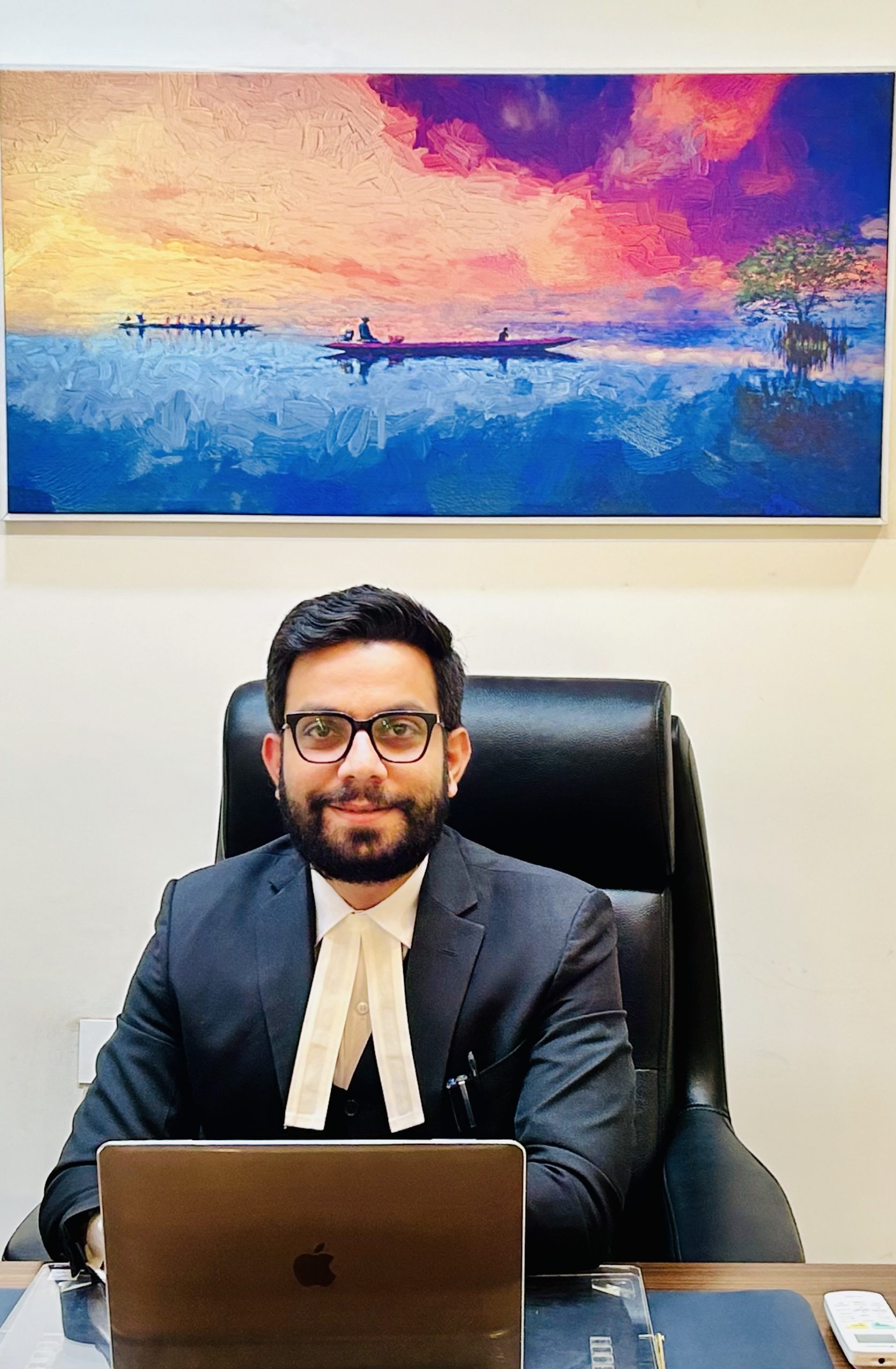
  • “The IBC is a significant reform and its successful implementation can bring resolution to the stress situation in the country’s financial system”- Puneet Yadav, Founding Partner- Samaya Law Chambers

    “The IBC is a significant reform and its successful implementation can bring resolution to the stress situation in the country’s financial system”- Puneet Yadav, Founding Partner- Samaya Law Chambers

    This Interview has been published by Pragya Chandni and The SuperLawyer Team
    Could you share a bit about your journey into law and how you decided to pursue it as a career, especially with your educational background at National Law Institute University and Symbiosis Law School?

    My father played a significant role in guiding me to pursue law considering my personality. Then, I was always keen to pursue law since my school days and at that time law was not sought for profession as it is now. We did not have CLAT in the year 2003 and had to fill up individual forms for each college. I was fortunate enough to get through B.A.LL. B course in Symbiosis Law School, Pune. I was inclined for post graduate education and thereafter, I appeared for CLAT LLM and I got through National Law Institute University, Bhopal. It’s a wonderful experience to independently live in a hostel which makes you a confident individual to deal with every situation in your life without the support of family. I not only got to polish my legal and individual skills at the law schools but also got to make great friends during both the courses who are budding colleagues and make the legal practice feel like home.  

    You’ve had a diverse experience, from working in top legal firms to founding your own practice at Samaya Law. What inspired you to take the entrepreneurial route, and how has this journey been for you?

    I am thankful to all the law firms, their partners, and senior advocates who I worked with through my journey. I got immense experience and guidance from them which helped me build my independent practice. Since beginning, I always wanted to have my independent practice as it gives a sense of accomplishment to me, however, working in a firm setup can be equally beneficial considering the fact that the initial few years of independent practice take a toll on you mentally and financially. I was lucky enough to have my own set of clients who trusted in me and helped keep afloat in initial years of practice which is significant to keep you going. The journey of independent practice is full of peaks and valleys as its both demanding and rewarding profession. You have a thrill of victory which is unmatched and gives you a sense of pride and satisfaction and doing public interest litigation can give added satisfaction by making a difference in the lives of people. The downfall being the stress and expectation not only towards yourself but also to Clients and Judges. However, this profession can teach you resilience, perseverance and the importance of hard work which makes you a valuable legal professional.

    Your practice involves appearing before various courts and tribunals, including the and the National Company Law Tribunal and Supreme Court of India. Could you highlight a memorable or challenging case you’ve handled and the key takeaways from that experience?

    After my stint with law firms, I started my independent practice and after a few years started our law firm Samaya Law along with my partner Sourabh Gupta, Advocate and we  completed 10 years in June, 2023. We appear before all courts, tribunal across India. However, being based in Delhi gives an opportunity to physically appear before the Hon’ble Supreme Court and Appellate Tribunals. Although, now the Supreme Court also works on Hybrid mode which helps all the counsels across India to get remote access to appear and argue their cases. We recently argued a case under the maternity benefit act wherein the Petitioner was being denied maternity benefit as her contract with the government body had come to an end. In a landmark judgment, a three Judge bench of the Supreme Court in Dr. Kavita Yadav v The Secretary, Ministry of Health and Family Welfare Department & Others (17 August 2023) held that if a woman has worked in an establishment for 80 days, she would be eligible for full maternity benefits, even if such benefits exceed the term of contract. We also made a significant petition for post-graduate doctors during the COVID-19 period when they were being sent across states for their practical examination as per National Medical Commission and Diplomate of National Board guidelines. The Supreme Court intervened and directed the NMC and NBE to conduct examinations within the state so that the post graduate doctors do not have to cross state as per directives of the government of India. This brought relief to more than 1 lakhs doctors who were appearing for the examination. Each forum has its own way of working, before the Supreme Court you only get 2-3 minutes to explain your brief at the admission hearing so you need to prepare your list of dates and synopsis thoroughly and be precise with your arguments on factual and legal aspects to catch the eye of the  Judge.

    With a significant focus on drafting and vetting petitions across different legal domains, could you share some insights into your approach to crafting effective legal documents and the importance of precision in this aspect of your work?

    My advice would be to keep your focus on the facts of the case because facts forming part of the pleadings can never change and highlighting relevant facts of the case can bring life into a dead brief. It is crucial to draft pleadings that are short, persuasive, point blank and not overstated. It’s best to work on all kinds of pleadings before the trial court and High Court in the initial years of your practice which can be beneficial when you handle matters before the Appellate Courts and Supreme Court. Most part of building up a case happens at the trial court and if the pleadings are not drafted, covering the facts accurately can bring significant damage to the case as it becomes difficult to introduce new facts or legal grounds in support of the brief at appellate stage of the proceedings. The pleadings should ensure that all the relevant facts are covered on the issues to be framed and lead evidence on the said issues to support your case. In a case done by us the Hon’ble Delhi High Court in a suit (CS(OS) No.553 /2016 order dated 21.05.2019) dealing with recovery of possession of an immovable property and a counterclaim for recovery of over Rs. 5 crore had due to lacuna in the drafting and not claiming the relief for recovery of possession made an observation “This is a classic textbook case of, how not to draft a plaint, which should be taught in law colleges and to young lawyers so that such bloopers in drafting of pleadings, damaging to one’s own client, are avoided.”. The pleadings have to be factually fortified and legally formulated to bring forth your best case. 

    Having engaged in extensive research across civil, criminal, and commercial laws, could you discuss a specific area of law that you find particularly intriguing or challenging, and why?

    The latest insolvency and bankruptcy code, 2016 has brought a fresh dimension to the insolvency law including bringing new questions of law which need to be answered both by the Lawyers and Judges. The fact that the code has been modified five times in the last five years including several judgments which have been passed by the Hon’ble Supreme Court itself shows the way it is evolving and which makes it challenging. The IBC is a significant reform and its successful implementation can bring resolution to the stress situation in the country’s financial system. We constantly support the Insolvency Resolution Professionals and companies on advising them on the intricacies of the Code and its implementation. 

    Your involvement in arbitration, both domestic and international, is notable. Can you share a bit about your experiences with arbitration cases and any unique challenges or differences you’ve encountered in handling international arbitrations?

    With the introduction of Arbitration and Conciliation Amendment Act, 2015 the arbitration proceedings must be completed within a time bound manner and which has brought drastic improvement in the overall process of arbitration. The constant queries of the clients as to the time limit within which dispute would be resolved has been answered by way of the said amendment and also by bringing in Schedule IV with the amendment of 2015 the fee being charged by an arbitrator has been regulated making the whole process efficient and cost effective for the client. Thus, we advise clients to keep arbitration clauses in the agreement so that the disputes, if any, can be resolved in an efficient and timely manner. However, it is particularly important where the parties (or their assets) are in different jurisdictions or where the disputes might give rise to complex and technical issues. We recently did an international commercial arbitration under the ICC rules where the seat of arbitration was Narobi, Kenya. The arbitrators in such arbitrations are chosen by the arbitration rules which provide for a method of appointment of arbitrators in case the agreement does not name the arbitration. The cost between a sole arbitrator and three arbitrations can vary considerably in international arbitration including the efficiency within which arbitration can be completed as there is lesser need for coordination between the arbitration. However, high value and complex arbitration would be better with the panel of 3 arbitrators as they can give more insight into the decision-making process. The timelines set in the international arbitrations are strictly adhered to and any deviations are subject to high cost awarded against the defaulting party including closing their rights if no reasonable reasons have been given by the parties. In choosing the seat of arbitration, the parties should consider the effect that this might have upon the conduct of the arbitration and the potential enforceability of the ultimate award and selecting a state which is party to the New York Convention as the seat of any arbitration, provides parties considerable scope for the enforcement of their awards.

    Given your wealth of experience, what advice would you offer to law graduates who are just starting their careers in the legal field? What key lessons have you learned that you believe could benefit those embarking on their legal journey?

    I would advise all the young graduates to learn the basic skills of drafting and research in their initial years along with arguing matters before the courts whenever they get an opportunity. The key would be to accumulate as much knowledge as possible from your seniors, arguing counsels and observing proceedings before the courts. In addition, always keep yourself abreast of the times by reading the latest judgments and updates of law in every field. Always be nice to your opposite side, you will have to face them every day in court and not the clients. Never lie to the court, better lose a client than your respect and trust before the court. Lastly, always take care of your health and follow stress management by having work life harmony.

    Get in touch with Puneet Yadav-

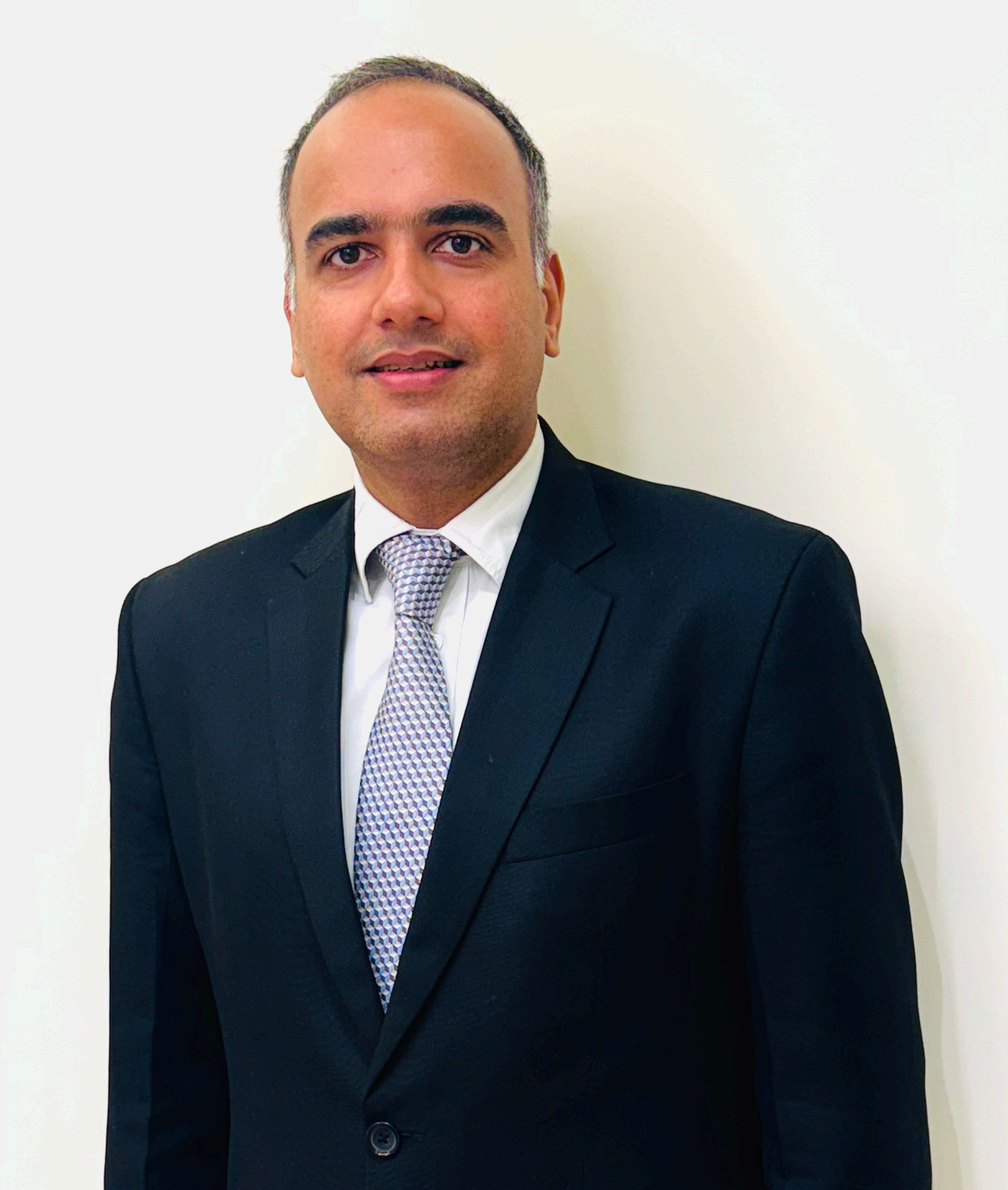
  • “People can be either destined for something or they can find the determination to get it” – Palash S Singhai, Advocate-on-Record, Supreme Court of India.

    “People can be either destined for something or they can find the determination to get it” – Palash S Singhai, Advocate-on-Record, Supreme Court of India.

    This interview has been published by Namrata Singh and The SuperLawyer Team

    Palash, your journey from assisting your father at the District Court to becoming an Advocate on Record at the Supreme Court is remarkable. What sparked your interest in law despite not initially considering it as a career option?

    I think people can be either destined for something or they can find the determination to get it. The advantages and pitfalls are many and, and yet it can work either way as long as we understand what we must do. I chose to study law and become a lawyer and I had some idea about what to expect. My father is a lawyer too, and he was my first mentor. After I finished high school, I started assisting my father in matters before District Courts. But when it came to choosing a career, neither of my parents persuaded me to study law. In fact, once I got enrolled into the law school, my father told me that he will not have me as a junior and that I had to find my own way. I know his intention was to ensure that I don’t get comfortable with the thought that I can just go back and join him. Sometimes you do better when things are not already decided for you. So, despite law being in my destiny, I chose it and I enjoy it everyday.

    As one explores further and learns more aspects of law practice, the excitement and zeal to learn only grows. But with this excitement, it is also important to remember that our work affects other people. So I try to be punctual at work and make sure to be present in courts whenever a matter is listed. I try to be diligent in preparing my case briefs and be ready to make submissions. For me there was no plan B and so I make sure that I am prepared for the challenges that litigation brings and I stay determined.

    You’ve had the opportunity to work on diverse cases, from representing a leading Infrastructure Company in arbitral proceedings to handling matters related to oppression and mismanagement. Is there a specific type of case or legal challenge that you find particularly stimulating or rewarding?  

    As a lawyer you have to be always ready for a variety of briefs. A new challenge comes with every new case. According to me, the best way to start preparing for a matter is to first read and understand all the relevant provisions of law, the statutory mechanisms, the procedures and the legislative intent of that law. From this, it becomes easier to proceed in the matter. The next step would be to marshal the facts. This enables us to be the master of the brief. If there is a chink in the armor, then we must know it. Unless we have complete control over the facts, there will always be some room for doubt. The best part about law is that it keeps evolving, so we can always read more and improve the arguments. However, the facts remain constant. Knowing all the relevant facts beforehand is not only crucial for the initial stages of a legal dispute, but also for appeals and petitions against a bad order. 

    It goes without saying that every new case is rewarding as it brings new challenges and the opportunity to overcome them. It also brings the opportunity to learn and to be more informed, articulate, and proficient. If you deal in diverse matters, you can draw a corollary from other laws and apply them to the case in hand to compare where the relevant law does not cover a certain aspect. If you know more, you can create a more convincing argument.

    You’ve been involved in a diverse range of legal matters, from commercial litigation to arbitration. When you’re not deep in legal intricacies, what’s something about Palash that people might be surprised to learn? 

    As lawyers, we are required to constantly juggle between courts, conferences, office, and whatnot. Since the time is always limited, we must utilize it properly and wisely. I have been fortunate to work in the organizations where I was given the liberty to set my own deadlines and prioritize my tasks accordingly. This also gives me a chance to keep up with my interests and hobbies. On most weekends, I play cricket or badminton with friends or we just end up spending some quality time with great conversations and movies etc. Being away from the family, this is a great way to feel comfortable in midst of all the stress. During the court vacations, I plan my travels and to try to get away from all this hustle bustle and to just explore places and food! I also never miss the annual “Jashn-e-Rekhta” in Delhi. Something which is surprising about me needs to be asked from my friends and colleagues because I spent most of my time around them so I think they are in a better position to point out something which is not very common about me.

    Being deeply committed to your work, you mentioned missing the football world cup final for your exams. How do you balance your passion for sports, particularly football, with the demands of a legal career?

    As I said, lawyers need to juggle between things and it is not as easy for everyone to find a good work life balance. I have seen my friends working till midnight or after that as well, working on weekends, holidays, festivals and on many other occasions. But I think we can all learn how to manage our time and work. Our profession demands utmost dedication, however, post Covid-19 era, I have realized that deadlines can be pushed when it comes to the health and well-being of a person. I never compromise on my health, but I also never make it a reason for deliberately delaying any important work. There is a difference between needing some personal time and merely making excuses, and I learnt that as soon as I stepped into this profession. 

    Staying involved in sports activities also helps. For me, sports, even if you just watch it, is the best way to release all the work pressure and helps in rejuvenating. I am a football geek. I had planned to watch the UEFA Champions League Final in Istanbul in May 2020 but then Covid-19 happened and it ruined all my plans. Then again, I had planned to attend the Football World Cup Final in Qatar, 2022. This time again my AoR exam was on the horizon and that was of course the priority. The exam was scheduled on the very next day of the Finals between Argentina and France. It was a legendary match and since I had decided not to watch it at all, my phone was flooded with calls and texts from all my friends and colleagues who begged me to just watch the game for some time. I didn’t and I don’t regret that decision as I cleared the exam and became an AoR which is a bigger achievement for me.

    Despite all these, I keep a slot blocked either on Saturday or Sunday first half for the sports be it football, badminton or cricket. I think this much I deserve after working sincerely for the entire week.

    It’s admirable that you take on pro bono matters for those who face financial constraints in seeking justice. Can you share a rewarding experience from one of these cases that left a lasting impact on you?

    One of my seniors during my initial days in the profession told me very frankly that I should start my career by focusing on briefs rather than money. That the money will chase you if you justify the work. I kept his words in mind as I started taking up my own briefs and made sure to never focus on fees or ask for it before understanding the matter as well as the client. Someone once referred my name to a daily wage earner from a small village in Uttar Pradesh and told him that I won’t charge too much for his case. When I met that person, he told me how he had lost his child due to electrocution and the police had filed a closure report in the matter. He was desperate to be heard and so he offered some money in advance hoping to persuade me to take up the matter. I told him that I will take it once the matter progresses. In the end, we succeeded before the court and the person came back for my fees. I politely declined and told him to use it for his betterment. To this day, that person has referred numerous other briefs from his locality, and I think in a way, the advice from my Senior has really paid off. Also taking up a pro bono matter makes us understand the ground reality of the justice system in our Country. Not everyone can afford to engage big law firms and big counsels for their matters and the cases, despite being genuine, suffer due to the complex legal system and lack of resources. Every once in a while, if we can give them some representation and put our equal efforts for their best interest, we will understand why this is a noble profession. At the end of the day, everyone is entitled for just and fair legal assistance and as a lawyer I feel it is my duty to perform my part by doing whatever it takes and to the best of my abilities.

    In addition to your legal pursuits, you’ve been associated with different law firms and chambers. How do you define the role played by the chamber/firm/offices in shaping your career?

    I have worked with different organizations wherein I have worked for various clients. In this profession, working in a law chamber is very different from the firms. All these organizations have their own practice, procedure, work culture etc. which helps us to realize what is a best suited environment for us. This has played a very crucial role in my career as it helped me to decide how I want to proceed in the profession. Unfortunately, I have not worked with a Tier 1 firm but the boutique firms and law chambers have given me my career objective. My inclination was always towards the law chambers as they never had any specific or dedicated team for a practice area which helped me to have diverse cases and to be very frank and independent to appear, argue and appeal (in case anything goes wrong). I am grateful to the chambers where I have worked because there only, I realized my potential, my zeal and enthusiasm towards this profession. By no means I am trying to dishonor the working environment of the firms but I am just explaining how I have realized what is going to be the best recourse for my future.

    As someone who has cleared the Advocate on Record examination on the first attempt, what advice would you give to law students or aspiring lawyers who are navigating their early years in the legal profession?

    I always feel that I have always benefited from the advice and guidance of my Seniors in this profession. One has to grasp the good qualities from their Seniors which had benefited them in the profession. I still remember that during the initial days in the profession my Senior told me that I have to be thorough with the brief even if I have to take an adjournment in the matter. This helped me a lot as whenever I entered any court, I used to have my brief and a brief note on the matter so as and when if the judge is asking about the matter or even a date of event, I am in a position to answer the same without any hesitation and it will give an impression that the adjournment has not been sought just to delay the matter. Another piece of advice I received from my Senior was not to waste time while waiting for your matter in court. I was told to observe and hear the arguments in the court and see how different lawyers come up with their own strategy for making submissions and bringing fresh judgments which I might find useful in near future. This was immensely helpful during the preparations for the AoR exam as well. While I was preparing, I was hard pressed for time due to the ongoing matters, drafting etc. so I decided while waiting for my matter in court I will start making notes of the submissions of the lawyers to speed up my writing skills. In the end I feel that it worked to my advantage. 

    Get in Touch with Palash S Singhai-

  • In conversation with Anirudh Suresh – Founder and Partner at Aristo Legal and featured in the list of “Top 50 Disputes lawyers in Asia” by Thomson Reuters

    In conversation with Anirudh Suresh – Founder and Partner at Aristo Legal and featured in the list of “Top 50 Disputes lawyers in Asia” by Thomson Reuters

    This interview has been published by Sonali Parashar and the SuperLawyer Team


    How would you like to introduce yourself to our readers?

    I am Anirudh Suresh, Founder of Aristo Legal, a full-service pan Indian corporate law firm. My success story as a first-generation lawyer was recently published by Brut as I was recognised among the Top 50 Disputes Lawyers in Asia (Litigation and Arbitration) by Thomson Reuters on the basis of my work, market feedback and client recommendations. My interest in law and legal enforcement goes back to my 10th grade. While I don’t exactly recall the genesis of this interest, I sure till date remember and feel its intensity.

    We get that being a first-generation lawyer, it is difficult to find one’s footing. You started off as a Litigating Lawyer and then you moved up to become a Corporate Lawyer. Can you share what all struggles did you face while being a Litigating Lawyer and then as a Corporate Lawyer? What all skills did you learn as a Litigating Lawyer which are now assisting you in your current role?

    As a Litigating Lawyer for the first 5 years, I was working 8 AM to 8 PM, 365 days a year but I never complained about it as I was involved in my work deeply and enjoyed the learning experience step by step. It’s a matter of interest, at the end of the day. I used to appear before all courts in Bangalore for all sorts of matters and this helped me in developing a diverse and strong foundation, eventually allowing me to head the Delhi office of Bathiya Legal successfully as we had a range of matters under the Companies Act, Insolvency and Bankruptcy Code, and Competition Act. I never felt any of these experiences to be a struggle as I enjoyed the work and liked what I was doing. In fact, it never felt like work either. So, the knowledge and court craft I had developed as a litigation lawyer enabled me to successfully implement it for the corporate litigations matters that I took. This journey has given me the confidence to handle any matter before any court.

    You’ve accomplished so much in your career in such a short time; what skills do you think a law student should develop in order to pursue a career in Corporate Law?

    Firstly, I feel like I still have a lot to achieve. I would recommend that law students read the entire commentary on a subject rather than reading only the textbook. This will mean that they would have read thousands of pages, and this reading habit will help improve their drafting skills and legal communication skills. And the hard work put by them in reading so many commentaries will bear fruits when they start practising. Further, they should meet lawyers in different practice areas and understand the practical aspects of those areas. For this, I would recommend students complete at least six months of internship under a corporate law firm or a corporate lawyer. 

    You have graduated with B.A.LL.B. from B.M.S. Law College, and then went on to pursue your PG Diploma and Masters from National Law School of India University and O.P. Jindal Global University. How important do you think it is for a law student to pursue Masters? Does it help one in his career trajectory?

    I often see law students rushing to get a master’s degree immediately after graduating from law. I would recommend that the students should start their practice in a particular area of law and get accustomed to a particular practice area as a working professional and then pursue Masters in that relevant practice area. This would make the master’s degree have value as your work experience and your interest would align with it. 

    You have also led the Delhi Office of Bathiya Legal for about 3.5 years. What exactly were your responsibilities while you were there? How would you describe your experience of working at such a reputed law firm? 

    My responsibility as the head of the Delhi Office was to handle all the corporate litigation matters in Delhi, Jaipur and Chandigarh and work closely on M&A and Private Equity transactions when the buy-side or the sell-side was based in Delhi. I regularly appeared before various forums such as Supreme Court, High Court, NCLAT, NCLT, DRT, Consumer forums, etc. And this journey helped me develop myself as an advocate and realise my potential. I will forever be grateful for the platform that Bathiya Legal gave me. The amount of confidence, trust, and faith that the Partners put in me, and I hope I have reciprocated the same by ensuring positive results with the best of my efforts. I was very much impressed with the values, ethical standards and calmness to approach of the Partners which I too hope to implement. I can go on writing volumes about the positive influence this firm has had on me.

    Your work as a corporate lawyer has earned you a well-deserved appreciation in the legal industry. What have been your key learnings to date? And what does it feel like to be recognized among the Top 50 Disputes Lawyers in Asia (Litigation and Arbitration) by Thomson Reuters?

    I would like to reiterate that I still have a long way to go as known is a drop and unknown is an ocean. My key learnings to date would be that Client satisfaction is key and this can be achieved with extensive research and ensuring timely deliverables. And I feel that my work in the past which involved getting successful reliefs for clients in high profile precedent-setting matters has been acknowledged by this recognition bestowed upon me by Thomson Reuters, Asian Legal Business. 

    It is now close to a decade that you’ve been in the legal profession. What do you think is the difference between the law profession right now and the profession a decade back? And, what all changes would you like to see in our Indian Law Profession?

    The legal profession has completely changed in the past decade. Both substantively and procedurally, one could probably call it one of the most dynamic and important decades. Many new age laws such as the Insolvency and Bankruptcy Code, Companies Act being overhauled, Data protection Law etc. have come up and they are constantly subject to change based on different interpretations given by the courts every other day or based on amendments passed by the government to keep pace with the rapidly growing economy. In terms of practice, the profession and the professionals have been highly digitalised, and it becomes vital for lawyers to be tech-savvy.  

    I would like to see more courts make way for hybrid hearings such as NCLT and NCLAT. The normalization of hybrid hearings would be a much welcome development towards implementation of the online dispute resolution. I would also like to see long term internships that range at least 6 months being made mandatory for law students during their final as it helps them to get a true picture of a particular practice area.

    What would be your parting advice to the budding lawyers? How would you like to inspire those who are unsure about their future in the profession?

    Read, read, read. One should find what motivates them to keep them going. A healthy relationship with colleagues, respect towards seniors and ensuring timely deliverables to clients should be a habit rather than a mode of precaution. Never look back and compare yourself with peers, just keep yourself occupied all the time and the work you do will automatically lead you to the path suitable to you. 

    Get in touch with Anirudh Suresh: