Tag: nclt

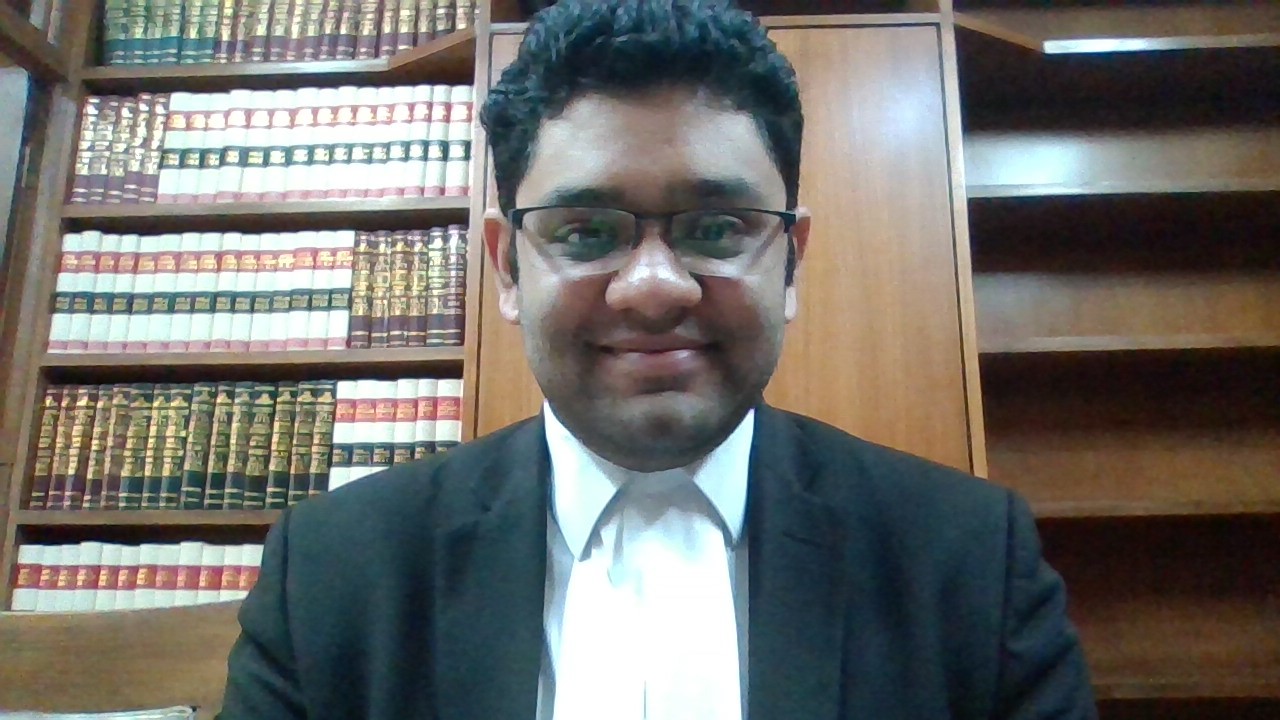
  • “Litigation is not about instant rewards, it’s a long game. It tests your patience, builds your  character, and teaches you lessons that no textbook ever can.” – Kauser Husain, Advocate at Supreme Court of India.

    “Litigation is not about instant rewards, it’s a long game. It tests your patience, builds your  character, and teaches you lessons that no textbook ever can.” – Kauser Husain, Advocate at Supreme Court of India.

    This interview has been published by Anshi Mudgal and The SuperLawyer Team
    In the early stages of your career, you interned with several leading law firms. Could you  share specific experiences or lessons from those internships that significantly shaped your understanding of the law and laid the foundation for your litigation practice?

    Thank you very much for inviting me—it’s a pleasure to be here at this platform, and I  truly appreciate the opportunity. 

    Coming from a non-NLU background, having pursued my BA LL.B. from Aligarh Muslim  University followed by an LL.M. from NALSAR, the path to breaking into top-tier law firms  wasn’t straightforward. However, through determination and consistent effort, I was fortunate to  secure internships with leading firms such as the erstwhile Amarchand Mangaldas and Luthra &  Luthra. 

    I consciously chose to work across both corporate and litigation teams to gain a well-rounded  understanding of the legal landscape. On the corporate side, I was involved in drafting commercial  contracts, conducting due diligence, and assisting in deal structuring—experiences that honed my  attention to detail, regulatory knowledge, and commercial insight. 

    However, it was in Litigation that I found my true calling. Attending court proceedings, grasping  procedural intricacies, drafting legal responses, and conducting research using platforms like SCC  Online and Manupatra, etc. significantly shaped my litigation skill set—tools, which I still continue  to rely on in my current practice. 

    A particularly formative experience was assisting in a complex arbitration matter, where I had the  opportunity to observe Senior Counsels navigating the procedural and substantive challenges with  strategic finesse. This experience further solidified my interest in litigation, especially in the realm  of Criminal law, which demands keen analytical thinking, real-time problem-solving, and  persuasive advocacy. 

    Beyond technical proficiency, these internships instilled in me essential soft skills—discipline, time  management, and the ability to perform under pressure. They laid a strong foundation for my  litigation practice and continue to influence the professional I aspire to be. 

    What drew you to the legal profession? Was law always a planned career path for you, or did your interest develop gradually over time? 

    To be honest, Law was not my initial career plan. Coming from a commerce background,  I had originally considered pursuing professional courses like CA or CS. Around 2010, when I  completed my 12th grade, awareness about legal education—especially institutions like National  Law Universities and entrance exams like CLAT—was still quite limited, particularly at the  grassroots level.

    It was actually through my father that I first came to know about the option of studying law. That  sparked my curiosity, and I began researching about the Law schools, the Legal Profession,  placements, top law firms, and prominent lawyers. The more I explored, the more I found the  field fascinating—it felt like an opportunity to do something meaningful and different. 

    Once I joined law school, my interest deepened gradually. Studying various legal subjects and  gaining practical exposure through internships helped me understand the vastness and depth of  the profession. 

    Most lawyers tend to pick a specialization early on—fields like IPR, corporate law, or tax. But I  deliberately took the longer route. I wanted to earn clarity through lived experience rather than  rushing into a niche. By working across different domains, I gained a broader perspective and  eventually discovered that my true passion lies in Litigation. 

    What motivated you to pursue an LL.M. in Corporate & Commercial Laws from  NALSAR University of Law? How did that specialization deepen your grasp of commercial legal  issues and impact your practice? 

    After qualifying CLAT, I thoroughly researched LL.M. specialization options offered by  various National Law Universities. NALSAR stood out to me for its diverse range of  specializations and academic excellence. Given my prior internship experience with corporate  teams in Law Firms as well as Litigation Chambers, I decided to pursue Corporate and Commercial  Laws as my primary specialization. 

    I was particularly drawn to this field because of its dynamic interplay between legal reasoning,  business strategy, and regulatory frameworks. However, my interest didn’t stop there. During my  internships, I also discovered a genuine passion for litigation. I initially aimed to pursue a dual  specialization with Criminology but couldn’t formally opt for it due to program constraints.  Nevertheless, I chose Criminology as an elective to complement my corporate focus. 

    This combination—Corporate & Commercial Laws with an understanding of Criminology— equipped me with a well-rounded legal perspective. It allowed me to develop the skill set needed  for both corporate advisory roles and litigation practice, offering me flexibility in career direction  while deepening my understanding of complex commercial and criminal legal issues. 

    You’ve worked on landmark constitutional cases like Aadhaar and M. Nagaraj alongside  senior advocates. What were some of the most challenging or rewarding aspects of those matters?  How have those experiences shaped your current approach to litigation? 

    After completing my legal studies, I was fortunate to work under the guidance of  esteemed Legal Professionals, including under Chambers of Advocate-on-Record and prominent Senior Advocates such as Mr. Arun Kathpalia and Mr. Sidharth Luthra. Working in their Chambers  gave me the rare and invaluable opportunity to contribute to Landmark Constitutional matters  such as M. Nagaraj, Aadhaar, Ayodhya, and cases concerning mob lynching, among others. 

    One of the most enriching aspects of these experiences was engaging with complex constitutional  questions and the evolving landscape of public law. Tasks such as conducting in-depth legal  research, preparing concise briefing notes for senior counsels, and closely observing courtroom  strategy helped refine my analytical abilities and broaden my legal perspective.

    What I came to appreciate deeply is that litigation extends far beyond courtroom appearances— it’s about the discipline, consistency, and integrity brought to each stage of a case. The rigorous  process of preparing briefs, anticipating counterarguments, and grasping the wider constitutional  ramifications of a judgment has significantly shaped my litigation approach. I’ve learned to pay  close attention to detail, think critically, and always stay anchored in the constitutional values  underlying each matter. 

    These experiences have cemented my long-term interest in constitutional litigation and criminal  law practice. They’ve also taught me that even behind-the-scenes contributions play a vital role in  shaping outcomes and influencing the development of the law. 

    You’ve had the opportunity to work under Chambers of the most  distinguished Senior Advocates in the country, including Mr. Sidharth Luthra and Mr. Arun  Kathpalia, predominantly in areas like criminal law and insolvency. What were some of your key  takeaways from working in their Chambers, both in terms of legal acumen and professional  growth?

    I began my legal career after completing my studies by joining Chambers of Advocate on-Record Mr. Fuzail Ahmad Ayyubi, who has a robust criminal law practice, followed by Mr.  Sanjay Kapur, a leading counsel for the State Bank of India with a strong practice in civil and  commercial laws. These initial experiences were truly foundational. I was actively involved not  only in legal drafting but also in understanding court procedures and clerical work—skills, which I believe are essential for any young lawyer starting a career in litigation. Gaining this procedural  insight early, gave me a practical edge and helped solidify my interest in courtroom advocacy. 

    While working under AOR’s Chambers, I gradually developed a deep interest in Criminal law. One  of my aspirations was to work under the guidance of Mr. Sidharth Luthra, Senior Advocate— an opportunity I knew would be both rare and competitive, given his stature in the field. Before  joining his chamber, I had the privilege of working with Mr. Arun Kathpalia, Senior Advocate,  who is widely regarded as a top-tier Counsel for complex IBC matters before the Hon’ble Courts. 

    Mr. Kathpalia’s exceptional memory and mastery of Insolvency Law were immensely inspiring.  Assisting him in high-stake matters and undertaking intensive legal research helped me build a  strong foundation in commercial litigation and develop a more strategic, structured approach to  handling complex cases. 

    Eventually, I was fortunate enough to get a chance and join the Chambers of Mr. Sidharth Luthra— a long-standing goal of mine. Working under his mentorship has truly been a best once-in-a lifetime experience. He is a tough master yet a remarkable mentor one can ever have. As I often  say, you may enter his Chamber like a puppy, but you leave it with the strength and discipline of a  Rottweiler. The transformation is that intense, but incredibly rewarding. 

    Mr. Luthra’s Chamber molds you into a well-rounded Litigator, regardless of your area of  specialization. But particularly for someone inclined toward Criminal Law, the exposure is  unmatched. From sharpening your legal research and drafting skills to preparing argument notes  and managing the pressure of a fast-paced litigation environment, you are constantly challenged  to grow. You lose the fear of reading voluminous bulky case files and develop habits that sustain  a long-term career in litigation. 

    While I may never match his brilliance, what I’ve truly tried to internalize are his work ethic, time  management, argumentation style, command over case laws, and unwavering dedication to the craft of advocacy. These experiences have been pivotal in shaping both my legal acumen and  professional outlook, instilling the discipline and resilience required for a meaningful career in  litigation. 

    What inspired you to establish your independent practice? What initial challenges did you  face while setting it up, and what vision did you have for your role as an independent counsel? 

    From the early days of my undergraduate and postgraduate legal studies, I was  determined to immerse myself in every dimension of the law—be it Corporate practice or  Litigation—rather than confining myself to a single niche. My internships across leading Law  Firms and prominent Chambers exposed me to the nuances of drafting, court procedures, and  client handling. But it was through those hands-on experiences that I discovered my deeper  inclination toward Litigation. I came to understand that Litigation isn’t just about mastering  statutes and precedents; it’s about crafting compelling narratives, building trust through  connections and referrals, and delivering real justice to clients. 

    Starting an independent practice as a first-generation lawyer—from a mid-tier city to the legal  landscape of Delhi—was undoubtedly daunting. I had no legacy to rely on, no ready-made client  base, and there were days in the beginning when court appearances were few and far between.  Establishing credibility meant more than just refining my research and drafting abilities; it meant  absorbing the invaluable lessons I learned under mentors like Mr. Arun Kathpalia and Mr. Sidharth  Luthra, developing strong interpersonal and conversational skills with a blend of strong command  over the Laws. 

    The vision behind KH Law Office has always been twofold. First, to build a practice rooted in  integrity, meticulous preparation, and genuine client empathy—ensuring that anyone who walks  through my doors, whether for a criminal matter, commercial dispute, NGT proceeding, or an  IBC case, feels assured that they have a dedicated and dependable advocate. Second, to maintain  intellectual and professional versatility. While my core focus lies in Criminal and White-collar  matters, I actively take up the cases in civil litigation, GST, environmental law, and Insolvency. 

    Today, with established branches in both Delhi and Gorakhpur and a steadily growing practice,  I look back with pride and can say, it was perseverance, belief in myself, and the understanding  that true excellence in Litigation goes beyond specialization, that helped turn my vision of  independent practice into a growing, dynamic reality. 

    As an empanelled legal counsel for the Competition Commission of India, what are some  of the unique challenges that arise in representing regulatory authorities? How do you address  complex, sector-specific legal issues in such matters? 

    Representing a regulatory authority like the Competition Commission of India brings a  unique set of challenges. One of the key responsibilities is to ensure that legal arguments not only  align with statutory mandates but also uphold public interest and regulatory integrity. Unlike  private clients, where strategy often centers on protecting individual interests, working with a  regulator demands a broader, sector-wide perspective. 

    As an independent practitioner, I value the objectivity and responsibility that comes with such  empanelment. It’s not just about winning a case—it’s about reinforcing regulatory frameworks and  promoting fair competition in the economy.

    Many of your publications explore important issues like trials by media, cybercrime, and  gender justice. How do you manage to balance the demands of a full-fledged legal practice, your  commitment to writing on socially relevant topics, and finding time for your personal life? 

    Balancing a full-fledged legal practice with writing on socially relevant topics and  maintaining a personal life does come with its challenges, but it’s something I’ve been passionate  about for a long time. Since my college days, I’ve been actively involved in academic writing and  have had several papers published. After completing my post-graduation, my inclination toward  academia only grew stronger, and I made a conscious decision to pursue it alongside my litigation  practice. 

    Over the years, I’ve delivered lectures on various legal subjects—predominantly in criminal law— which has not only helped me deepen my own understanding but has also allowed me to stay  updated with evolving legal concepts. I genuinely enjoy interacting with law students; those  engagements are often mutually enriching and offer fresh perspectives. 

    Balancing litigation, academic writing, and teaching definitely requires good time management. I  usually try to dedicate some of my weekends—Saturdays and Sundays—to research, writing, or  preparing for lectures. I firmly believe that a lawyer should possess dynamic qualities and should  actively contribute to both the practice and academic sides of the profession. Engaging with the  next generation of legal minds is both energizing and intellectually stimulating, and that’s how I  strive to maintain balance in my professional life. 

    What advice would you offer to young law graduates aspiring to enter litigation? Are  there any specific resources or practices you would recommend to help them stay updated on the  latest legal trends and developments? 

    My genuine advice to young Law graduates aspiring to enter Litigation, especially from  the lens of someone who built an independent practice as a first-generation lawyer with no legal  background, would be this—have a strong vision, stay persistent, and believe in your ability to  grow through the process. 

    Litigation is not about instant rewards—it’s a long game. It tests your patience, builds your  character, and teaches you lessons that no textbook ever can. Many freshers walk into Chambers  asking, “What’s the starting salary?” And while it’s understandable, Litigation doesn’t begin with a  CTC—it begins with court. If your first instinct is to calculate income before understanding the  practice, Litigation might not be for you. This profession pays, but only after it shapes you. It pays  when you’ve shown that you’re worth paying. 

    In the initial phase, your goal should be to learn—not to earn. Some may pay you in the first  month, others may wait until you prove your contribution. What matters is your presence, your  commitment, and your curiosity to grow. 

    My advice: 

    Keep reading—not just judgments and articles, but also good books on legal reasoning, advocacy,  and even biographies of great lawyers. 

    Develop the habit of going through Bare Acts—they are the backbone of Legal interpretation. Strengthen your Legal Research and Drafting Skills—these are the tools of your trade.

    Build your communication skills and cultivate professional relationships—referrals and a good  reputation can take you a long way. 

    Stay updated with legal developments through platforms like SCC Online, LiveLaw, Bar & Bench,  and newsletters by reputed firms or legal portals. 

    Also, don’t try to immediately narrow your focus. In the early years of your independent practice,  take up all kinds of matters—Civil, Criminal, Commercial, Environmental, Tax, IBC—whatever  comes your way. It helps you gain exposure across various Hon’ble Courts and develop command  over a range of subjects. Gradually, you’ll discover where your core interest lies. 

    Ultimately, the path is tough, especially if you’re starting from scratch—but if I could do it with  perseverance and a clear vision, so can you. Stay consistent, stay grounded, and don’t be afraid of  the slow climb. Because in litigation, once you rise, the view is absolutely worth it.

    Get in touch with Kauser Husain –

  • “The global pandemic underscored the importance of technological advancements, demonstrating that even the legal profession is now deeply intertwined with technological progress.” – Ninad Dogra, Advocate-On-Record at the Supreme Court of India

    “The global pandemic underscored the importance of technological advancements, demonstrating that even the legal profession is now deeply intertwined with technological progress.” – Ninad Dogra, Advocate-On-Record at the Supreme Court of India

    This interview has been published by Namrata Singh and The SuperLawyer Team

    Can you share what inspired you to pursue a career in law and how your journey began at Amity Law School, New Delhi? 

    From a young age, I was drawn to a career in law. The respect and prestige associated with the profession initially piqued my interest while I was still in high school. The influence of my uncle further solidified the decision. J.K. Das, a Senior Advocate. His practice and the engaging stories he shared about the legal field deeply inspired me.  

    Determined to pursue law, I discussed my career choice with my parents, who supported my decision. I opted for an integrated five-year law course and focused solely on preparing for the entrance examination. At that time, Amity  Law School in New Delhi was highly regarded for its five-year law program. After successfully clearing the entrance exam,  it became the natural choice for my legal education. At Amity  Law School, I gained a solid understanding of legal concepts.  Many of the professors, who were former practitioners,  provided invaluable practical guidance and insights,  enriching my academic experience with real-world applications.

    You’ve represented clients across various sectors, from telecom sector to real estate to dispute resolution. How do you adapt your legal strategies when switching between such diverse industries?  

    Every case and client has unique demands, making understanding their wishes and aims fundamental to effective representation. Each industry requires a tailored strategy, and adaptability is crucial. For example, in the real estate sector, my primary focus is to protect my client at the stage of contract execution. The goal is not to suppress the consumer or customer but to ensure that the contract remains balanced and fair within the statutory framework and compliance requirements. This approach ensures that the contract does not become lopsided, protecting the client’s interests while upholding legal and ethical standards. In commercial arbitration matters, the aim is to try and attempt to get a just and quick resolution for the client.

    The emphasis is thus to have a client-centric legal practice and adaptability in meeting their needs effectively. 

    What motivated you to start your independent practice in 2017,  and what challenges did you face during this transition? 

    After working as a junior lawyer under seasoned and experienced professionals, transitioning to establish my independent practice felt like a natural progression. During my tenure as a junior, I dealt with a variety of legal issues and gained significant experience in briefing senior counsel. I was fortunate to have skilled mentors who guided me through the formative years of my career. Their support and mentorship provided me with the confidence and foundation needed to embark on my legal practice. 

    For a first-generation lawyer, establishing an independent practice presents significant challenges. Without a family background in law, navigating the complexities of setting up a practice and building a professional network can be daunting. However, the support and mentorship I received from experienced seniors played a crucial role in overcoming these obstacles and achieving success in my practice. 

    Independent practice as a litigating lawyer has two facets to it, on the one hand being an independent practitioner gives you the freedom to have complete control over your schedule or work, working style cases etc, whereas on the other hand having a sustained clientele in the beginning is a constant concern. Transitioning to an independent legal practice often also involves a significant shift from the stability of a regular income to the uncertainties of variable financial stability. However, with hard work and sincere efforts, one can overcome these difficulties and achieve success in establishing an independent practice.  

    Your experience spans multiple judicial fora. How do you prepare differently for cases in the Supreme Court versus other tribunals?  

    Arguing before any legal fora may appear glamorous, but it demands significant hard work and effort. Although there is not much difference in preparing for cases before the Hon’ble  Supreme Court or any other fora, the basics remain the same i.e. being fully prepared with the facts of your case. Being prepared with your file, and its minutest detail is essential for preparing your case before any legal fora.  

    Given your extensive experience with the NCLT and NCLAT, what trends do you see in corporate law and insolvency matters today?  

    Insolvency laws are indeed evolving, and each case can bring new interpretations and clarifications. The distinction between  “Operational Creditor” and “Financial Creditor” is a prime example of how nuanced and complex these laws can be.

    In the context of the Insolvency and Bankruptcy Code (IBC)  in India, “Operational Creditors” are typically those who provide goods or services to the debtor, while “Financial  Creditors” are those who lend money or provide financial assistance. The confusion you mentioned, particularly regarding authorities like NOIDA, highlights the challenges in applying these definitions to specific cases. 

    The Supreme Court’s ruling in NOIDA vs. Anand Sonbhadra was indeed pivotal. By clarifying that NOIDA qualifies as an  Operational Creditor rather than a Financial Creditor, the  Court helped to resolve ambiguities and set a precedent for similar cases. This kind of judicial intervention is crucial for providing clarity and ensuring that insolvency proceedings are conducted fairly and consistently. 

    You’ve written about the US Supreme Court conducting hearings via telephone. How do you see technology shaping the future of legal proceedings in India?  

    During the COVID-19 pandemic, while the world came to a standstill, our judiciary continued its operations. I recall that at the pandemic’s onset, Justice Siddharth Mridul (as he was then) conducted urgent court hearings via WhatsApp to address the well-being and transportation of students stranded in Kazakhstan. These instances highlighted the pivotal role of technology in the administration of justice. The global pandemic underscored the importance of technological advancements, demonstrating that even the legal profession is now deeply intertwined with technological progress.

    The legal field by its very nature is dynamic and ever-evolving and our legal system has adopted such advancement. The introduction of technology has indeed made our courts much more accessible, and transparent. Hybrid hearing is a norm in courts in Delhi, from District courts to the Hon’ble Supreme  Court.  

    While I acknowledge the benefits of technological advancements, I believe there are still limitations to address,  such as the need for a reliable internet connection.  Additionally, I feel that traditional in-person arguments can be more effective than virtual ones. Face-to-face interaction with the Court often provides a significant advantage in conveying your arguments persuasively and effectively. What was the process like for you to qualify as an Advocate-on-Record with the Supreme Court of India, and what key strategies or insights would you share with those preparing for this examination? 

    What advice would you give to young legal professionals aspiring to specialize in corporate law and dispute resolution?  

    For any young professional aiming for success, there’s no substitute for hard work. Burning the midnight oil, especially in the initial years, is often necessary. Alongside diligence, the ability to think on your feet and read the room is crucial.  For lawyers, this means not only focusing on the facts of a case but also being attuned to the judge’s reactions to achieve the best outcome for their clients. Also one should be open to exploring diverse practice areas for gaining valuable experience.  

    Staying updated on recent developments in the law is non-negotiable. The legal landscape, particularly in dispute resolution, is constantly evolving. For instance, the correctness of an arbitral award can now be decided through a curative petition, despite the general principle of minimal judicial intervention. Thus, being aware of these changes is essential. 

    Lastly, one important lesson I learned early in my career was the value of respecting opposing counsel. Maintaining professionalism and courtesy is key in any legal practice.

    Outside of your legal career, do you have any hobbies or interests that you feel contribute to your effectiveness as a lawyer?  

    Reading short anecdotal stories related to the legal field is a wonderful way to stay connected to your work while enjoying some downtime. It can also provide valuable insights and inspiration for your practice. 

    Playing team sports like volleyball and cricket is a fantastic way to unwind and develop important skills beyond the courtroom. The teamwork and strategic thinking involved in sports can translate to a more collaborative and strategic approach in your legal work. Physical activity is a great way to relieve stress and keep your mind sharp. It’s great to hear you’re managing to integrate these passions into your busy life!

    Get in touch with Ninad Dogra-

  • “Since Insolvency Law is still at a fairly nascent stage, every case brings with it a new set of challenges giving you the opportunity of contributing towards the Insolvency Jurisprudence as a whole”- Himanshu Chaubey, Partner, Edictum Law & Co.

    “Since Insolvency Law is still at a fairly nascent stage, every case brings with it a new set of challenges giving you the opportunity of contributing towards the Insolvency Jurisprudence as a whole”- Himanshu Chaubey, Partner, Edictum Law & Co.

    This Interview has been published by Pragya Chandni and The SuperLawyer Team

    Can you share the journey that led you to pursue a career in law, starting from your education at Hidayatullah National Law University? What motivated you to choose law as a profession?

    Honestly speaking I stumbled upon law by chance. I was always interested in humanities and social sciences but took up a Science in my plus 2. But I soon realised  that I was not very good at it. A friend of mine then informed me that there are these institutions called the National Law Universities and people graduating for these institutions are getting well-paying jobs. It was the first time that CLAT was being conducted for admission to these colleges. I did some research and thought that it might suit my interest. So I must admit candidly that I chose law to avoid doing Engineering and was lured by the promise of a Fat Pay Cheque .  

    As an Advocate-on-Record at the Supreme Court of India, you’ve handled matters of constitutional and national importance. Could you discuss a specific case that stood out to you, and how it shaped your perspective on legal practice?

    Ans. As an AOR one matter which really stood out for me was a case wherein My Client, who is an RTI Activist, was not being allowed to reside within the confines of a District on the basis of false FIR’s registered against him. The FIR’s were registered by the same people against whom action was being taken on the basis of representations made by My Client. The Supreme Court while allowing the Appeal observed and reiterated that the fundamental right of Free Movement and Residence across the Country cannot be curtailed on flimsy grounds. 

    Your experience involves representing clients in various High Courts, dealing with matters related to the Arbitration and Conciliation Act, 1996. Can you share insights into the challenges and strategies you often encounter in this area of law?

    Ans. An Arbitration is nothing but a trial being conducted by a judge chosen by the parties and as per rules chosen by the parties. Therefore every Arbitration has to be approached in the same manner as one would approach a Trial before a Court of First Instance. As is the case with any Trial, even in Arbitration, it is of utmost importance that all the documents and facts, which are essential for establishing the claim, are brought on record. Even though it is said that one should not hide any facts from a doctor and a lawyer, however it is also a part of Human Nature to narrate only those facts which are beneficial to us. Therefore it is our job as lawyers to even extract those facts and documents, which are harmful to us so that we are not blindsided by them during the Arbitration. If you are thorough with your facts then all other challenges are manageable.  

    In your independent practice, you’ve represented clients before the National Company Law Tribunal and drafted appeals before the National Company Law Appellate Tribunal. How did this experience contribute to your understanding of corporate law and insolvency matters?

    As a firm our primary focus is towards commercial litigation and naturally that includes litigation before the NCLT and the NCLAT. Since Insolvency Law is still at a fairly nascent stage, every case brings with it a new set of challenges. That also gives you the opportunity of contributing towards the Insolvency Jurisprudence as a whole. One case that stand out for us, which also then became a landmark judgment with respect to powers of NCLT under the IBC, is the case of E.S. Krishnamurthy v. Bharath Hi-tech Builders Ltd.  We handled that case from the NCLT uptill the Supreme Court and therefore it is very close to our Hearts. 

    As an Associate at Gohil and Singh Law Chambers, you were involved in drafting and researching on petitions before the Supreme Court. Can you share a memorable case and the legal issues you tackled during that time?

    Mr. Pradhuman Gohil, has played a big role in my development as a lawyer. I worked with him for four years and extensively worked on matters before the Supreme Court. There were several cases which helped me to hone my skills as a lawyer. However one case which stands out was a Criminal Appeal in which we were defending a person convicted for murder. The case was based purely on Circumstantial Evidence and primarily based on statements of witnesses. We prepared for that matter for over six months and the hearing went on for 3 weeks. That case had all the issues can can think of a in a Criminal Case, ranging from importance of a Statement under Section 313 CrPC, Completion of Chain in a case of Circumstantial Evidence, Veracity of the testimony of a Hostile Witness, etc. 

    During your association with the office of Mr. Ajit Kumar Sinha, Senior Advocate, you were involved in researching matters before the Supreme Court and High Courts. Can you elaborate on the types of cases you worked on and the legal principles you engaged with?

    Mr. Ajit Kumar Sinha is my mentor in the profession. I did majority of my internships under him and eventually started my career with him. I worked under his guidance for 2 and a half year. During my time with Mr. Sinha, I had the opportunity to work on matters pertaining to mining laws, service laws, Land Laws, Tender Matters etc. I also had the opportunity to assist him in the Coal Scam Matter and the NJAC matter. 

    Given your diverse legal background, from constitutional matters to criminal law and commercial transactions, what advice would you offer to recent law graduates aspiring to build a versatile legal career and those interested in practicing law at a high level and dealing with matters of constitutional significance?

    My Advice to recent law graduates to not restrict themselves to practising only in one area of Law. The Beauty of the profession lies in its diversity and therefore one must try and grab onto all the work that comes their way. One must be a jack of all trades, because that goes a long way at retaining clients. The aim has to be that for your Client you should be the one stop shop. 

    Every person has a different journey and one advice that a friend of mine once gave me is to not compare my journey with that of others. Law, and especially litigation, demands perseverance. You just need to stick around and give your hundred percent, and at the cost of sounding preachy, I must say that there are no short cuts.

    Get in touch with Himanshu Chaubey-

  • “The IBC is a significant reform and its successful implementation can bring resolution to the stress situation in the country’s financial system”- Puneet Yadav, Founding Partner- Samaya Law Chambers

    “The IBC is a significant reform and its successful implementation can bring resolution to the stress situation in the country’s financial system”- Puneet Yadav, Founding Partner- Samaya Law Chambers

    This Interview has been published by Pragya Chandni and The SuperLawyer Team

    Could you share a bit about your journey into law and how you decided to pursue it as a career, especially with your educational background at National Law Institute University and Symbiosis Law School?

    My father played a significant role in guiding me to pursue law considering my personality. Then, I was always keen to pursue law since my school days and at that time law was not sought for profession as it is now. We did not have CLAT in the year 2003 and had to fill up individual forms for each college. I was fortunate enough to get through B.A.LL. B course in Symbiosis Law School, Pune. I was inclined for post graduate education and thereafter, I appeared for CLAT LLM and I got through National Law Institute University, Bhopal. It’s a wonderful experience to independently live in a hostel which makes you a confident individual to deal with every situation in your life without the support of family. I not only got to polish my legal and individual skills at the law schools but also got to make great friends during both the courses who are budding colleagues and make the legal practice feel like home.  

    You’ve had a diverse experience, from working in top legal firms to founding your own practice at Samaya Law. What inspired you to take the entrepreneurial route, and how has this journey been for you?

    I am thankful to all the law firms, their partners, and senior advocates who I worked with through my journey. I got immense experience and guidance from them which helped me build my independent practice. Since beginning, I always wanted to have my independent practice as it gives a sense of accomplishment to me, however, working in a firm setup can be equally beneficial considering the fact that the initial few years of independent practice take a toll on you mentally and financially. I was lucky enough to have my own set of clients who trusted in me and helped keep afloat in initial years of practice which is significant to keep you going. The journey of independent practice is full of peaks and valleys as its both demanding and rewarding profession. You have a thrill of victory which is unmatched and gives you a sense of pride and satisfaction and doing public interest litigation can give added satisfaction by making a difference in the lives of people. The downfall being the stress and expectation not only towards yourself but also to Clients and Judges. However, this profession can teach you resilience, perseverance and the importance of hard work which makes you a valuable legal professional.

    Your practice involves appearing before various courts and tribunals, including the and the National Company Law Tribunal and Supreme Court of India. Could you highlight a memorable or challenging case you’ve handled and the key takeaways from that experience?

    After my stint with law firms, I started my independent practice and after a few years started our law firm Samaya Law along with my partner Sourabh Gupta, Advocate and we  completed 10 years in June, 2023. We appear before all courts, tribunal across India. However, being based in Delhi gives an opportunity to physically appear before the Hon’ble Supreme Court and Appellate Tribunals. Although, now the Supreme Court also works on Hybrid mode which helps all the counsels across India to get remote access to appear and argue their cases. We recently argued a case under the maternity benefit act wherein the Petitioner was being denied maternity benefit as her contract with the government body had come to an end. In a landmark judgment, a three Judge bench of the Supreme Court in Dr. Kavita Yadav v The Secretary, Ministry of Health and Family Welfare Department & Others (17 August 2023) held that if a woman has worked in an establishment for 80 days, she would be eligible for full maternity benefits, even if such benefits exceed the term of contract. We also made a significant petition for post-graduate doctors during the COVID-19 period when they were being sent across states for their practical examination as per National Medical Commission and Diplomate of National Board guidelines. The Supreme Court intervened and directed the NMC and NBE to conduct examinations within the state so that the post graduate doctors do not have to cross state as per directives of the government of India. This brought relief to more than 1 lakhs doctors who were appearing for the examination. Each forum has its own way of working, before the Supreme Court you only get 2-3 minutes to explain your brief at the admission hearing so you need to prepare your list of dates and synopsis thoroughly and be precise with your arguments on factual and legal aspects to catch the eye of the  Judge.

    With a significant focus on drafting and vetting petitions across different legal domains, could you share some insights into your approach to crafting effective legal documents and the importance of precision in this aspect of your work?

    My advice would be to keep your focus on the facts of the case because facts forming part of the pleadings can never change and highlighting relevant facts of the case can bring life into a dead brief. It is crucial to draft pleadings that are short, persuasive, point blank and not overstated. It’s best to work on all kinds of pleadings before the trial court and High Court in the initial years of your practice which can be beneficial when you handle matters before the Appellate Courts and Supreme Court. Most part of building up a case happens at the trial court and if the pleadings are not drafted, covering the facts accurately can bring significant damage to the case as it becomes difficult to introduce new facts or legal grounds in support of the brief at appellate stage of the proceedings. The pleadings should ensure that all the relevant facts are covered on the issues to be framed and lead evidence on the said issues to support your case. In a case done by us the Hon’ble Delhi High Court in a suit (CS(OS) No.553 /2016 order dated 21.05.2019) dealing with recovery of possession of an immovable property and a counterclaim for recovery of over Rs. 5 crore had due to lacuna in the drafting and not claiming the relief for recovery of possession made an observation “This is a classic textbook case of, how not to draft a plaint, which should be taught in law colleges and to young lawyers so that such bloopers in drafting of pleadings, damaging to one’s own client, are avoided.”. The pleadings have to be factually fortified and legally formulated to bring forth your best case. 

    Having engaged in extensive research across civil, criminal, and commercial laws, could you discuss a specific area of law that you find particularly intriguing or challenging, and why?

    The latest insolvency and bankruptcy code, 2016 has brought a fresh dimension to the insolvency law including bringing new questions of law which need to be answered both by the Lawyers and Judges. The fact that the code has been modified five times in the last five years including several judgments which have been passed by the Hon’ble Supreme Court itself shows the way it is evolving and which makes it challenging. The IBC is a significant reform and its successful implementation can bring resolution to the stress situation in the country’s financial system. We constantly support the Insolvency Resolution Professionals and companies on advising them on the intricacies of the Code and its implementation. 

    Your involvement in arbitration, both domestic and international, is notable. Can you share a bit about your experiences with arbitration cases and any unique challenges or differences you’ve encountered in handling international arbitrations?

    With the introduction of Arbitration and Conciliation Amendment Act, 2015 the arbitration proceedings must be completed within a time bound manner and which has brought drastic improvement in the overall process of arbitration. The constant queries of the clients as to the time limit within which dispute would be resolved has been answered by way of the said amendment and also by bringing in Schedule IV with the amendment of 2015 the fee being charged by an arbitrator has been regulated making the whole process efficient and cost effective for the client. Thus, we advise clients to keep arbitration clauses in the agreement so that the disputes, if any, can be resolved in an efficient and timely manner. However, it is particularly important where the parties (or their assets) are in different jurisdictions or where the disputes might give rise to complex and technical issues. We recently did an international commercial arbitration under the ICC rules where the seat of arbitration was Narobi, Kenya. The arbitrators in such arbitrations are chosen by the arbitration rules which provide for a method of appointment of arbitrators in case the agreement does not name the arbitration. The cost between a sole arbitrator and three arbitrations can vary considerably in international arbitration including the efficiency within which arbitration can be completed as there is lesser need for coordination between the arbitration. However, high value and complex arbitration would be better with the panel of 3 arbitrators as they can give more insight into the decision-making process. The timelines set in the international arbitrations are strictly adhered to and any deviations are subject to high cost awarded against the defaulting party including closing their rights if no reasonable reasons have been given by the parties. In choosing the seat of arbitration, the parties should consider the effect that this might have upon the conduct of the arbitration and the potential enforceability of the ultimate award and selecting a state which is party to the New York Convention as the seat of any arbitration, provides parties considerable scope for the enforcement of their awards.

    Given your wealth of experience, what advice would you offer to law graduates who are just starting their careers in the legal field? What key lessons have you learned that you believe could benefit those embarking on their legal journey?

    I would advise all the young graduates to learn the basic skills of drafting and research in their initial years along with arguing matters before the courts whenever they get an opportunity. The key would be to accumulate as much knowledge as possible from your seniors, arguing counsels and observing proceedings before the courts. In addition, always keep yourself abreast of the times by reading the latest judgments and updates of law in every field. Always be nice to your opposite side, you will have to face them every day in court and not the clients. Never lie to the court, better lose a client than your respect and trust before the court. Lastly, always take care of your health and follow stress management by having work life harmony.

    Get in touch with Puneet Yadav-

  • “Litigation is 10% intelligence and 90% diligence and Every citizen is capable of understanding the law, provided it is explained in simple language” – Shrutanjaya Bhardwaj, Counsel & Founder, Pravah Law Offices.

    “Litigation is 10% intelligence and 90% diligence and Every citizen is capable of understanding the law, provided it is explained in simple language” – Shrutanjaya Bhardwaj, Counsel & Founder, Pravah Law Offices.

    This interview has been published by Namrata Singh and The SuperLawyer Team

    We are extremely delighted to have you with us for this interview. To start, could you please introduce yourself and share the inspiration behind establishing Pravah Law Offices?

    Thank you for having me. I have been a Delhi-based practising lawyer since 2017. The bulk of my practise is at the Supreme Court, which is also the forum where I learnt the maximum work as an associate with my mentors, Ms. Haripriya Padmanabhan and Mr. Gopal Sankaranarayanan.

    ‘Pravah Law’ is the official designation of my law chambers. The primary motivation behind establishing it was to foster a distinct professional identity that resonates with my core values and expertise, to enhance the efficiency and organization of my practice.

    Being awarded the Vice-Chancellor’s Gold Medal for ‘Best Male Student’ is a remarkable achievement. How has your academic journey, including your time at National Law University, Delhi, influenced your approach to law and legal practice?

    Getting the Vice-Chancellor’s Gold Medal was a big confidence booster because of what it signifies: it is awarded to two students from each batch, male and female, who graduate with the best all-round performance. Incidentally, even at my school’s farewell function, I was awarded the ‘Best All-Rounder’ trophy—something I cherish more than any other recognition I’ve received. I enjoy being able to handle multiple activities and projects together. In college, I was an avid sportsperson, musician and mooter (in that order) with an interest in many other extra-curricular activities. 

    As regards academics, those five years were formative. My teachers at NLU Delhi were outstanding in terms of how much they pushed us. For instance, we were made to prepare bulky, complex judgments and other texts within tight deadlines—not just read the material, but also form polished opinions about it. This seemed impossible back then. We kept complaining about being forced to meet unrealistic standards! But I realise with every passing day as to how much edge those exercises can give you in a profession where reading is everything and everything is to be read. I owe a lot to NLU Delhi.

    Your LL.M. at the University of Michigan Law School was accompanied by the prestigious Michigan Grotius Fellowship. How did this international exposure shape your perspective on law, and what key lessons did you bring back to your practice in India?

    It was a terrific experience. UMich gives you the freedom to design your course by choosing any combination of subjects. So, besides my law subjects (media law, freedom of speech & religion, equality law etc.), I selected a few subjects situated at the intersection of law and philosophy, which significantly contributed to my intellectual growth. My teachers were excellent and my classmates were intelligent and accomplished, which made classes engaging and challenging. It was exactly the kind of quality I wanted in my higher education.

    Looking back, my most important learning in Ann Arbor was that there’s always another way—to think of a legal problem, articulate an argument, research case law, and even draft a memorandum—if only one is willing. I find that many colleagues here are used to old methods that may no longer work, at least not as effectively as one would like. The mere willingness to try another way can produce great results. And it requires no earth-shattering effort; sometimes, it is as simple as learning a new technological tool, shortening your drafts, using visual representations (graphs instead of paragraphs), making a LinkedIn profile, or even writing an email that you thought would be futile.

    Law Vaarta is a unique blend of Hindi and English, making legal discussions more accessible. What inspired you to start this podcast, and how has the response been from your audience?

    I believe that law is not as elusive as it is made out to be. Every citizen is capable of understanding the law, provided it is explained in simple language. Unfortunately, discussions around the law on TV and other media are either superficial or too technical-sounding. That is why I felt that a platform is required where complex legal issues are explained in straightforward language without losing their complexity.

    I am delighted with the response the podcast has received. People have been kind in their appreciation as well as criticism, both of which are aimed at improving the quality of the content. I’m learning new things about content creation on the go. In 2024, I intend to increase the reach of the podcast through interactive content that will cater specifically to law students and young litigators, in the hope that litigation can become a more accessible profession.

    Your research covers various topics, from constitutional rights to online gaming legislation. What upcoming research projects or areas of interest are you currently exploring?

    Over the past couple of years, I have picked up an interest in empirical research on judicial behaviour. I am currently working on two projects relating to preventive detention and one on India’s abortion law. All three projects are geared towards understanding the behaviour of the Supreme Court and High Courts in cases involving the fundamental rights of citizens. For instance, in the preventive detention research, I am trying to map the speed with which our constitutional courts act in habeas corpus petitions against illegal detentions.

    The Right to Receive Information is an upcoming publication. Can you give our readers a sneak peek into what conceptual problems you explore in this piece?

    In the post-emergency years, the Supreme Court infused many fundamental rights with expansive content. The right to receive information was a product of this exercise. The Supreme Court held that the right to “speak” under Article 19 of the Constitution includes the right to “know”. I find this to be somewhat of a logical jump. There is no doubt that an informed citizen will exercise their right to free speech more meaningfully, but it is hard to agree with the proposition that there is no right to free speech without full or proper information about the subject matter. Anyway, the paper mainly explores the judicial approach to the right to receive information over the years, first, on whether the right is horizontal or vertical, and second, on whether there are any additional grounds on which the right to receive information can be restricted over and above the grounds listed in Article 19(2). The paper finds that the judicial approach on both counts has been thoroughly inconsistent and requires clarity.

    On a personal note, outside the legal realm, what are your hobbies or activities that bring you joy and relaxation?

    I try and do everything that interests me: poetry, sports, music and beyond. Lately, I have been exploring coding to automate some of my daily tasks as a litigator, which would help me save time on clerical work and focus on the more substantive aspects of the law.

    Looking ahead, what are your future goals or aspirations for Pravah Law Offices 

    As the chamber’s work grows, increasing the size of the team has been on my mind. In fact, Pravah Law recently finished one round of hiring. To my good fortune, I have generous mentors and supportive clients, and I am sure the chamber will grow rapidly with their blessings.

    Other than that, I endeavor that Pravah Law remains ahead of the curve in terms of technological infrastructure and awareness. I believe lawyers must upgrade and upskill every year. Artificial intelligence is making path-breaking advances by the minute, and I do not doubt that lawyers will have to catch up to stay relevant. 

    Considering your multifaceted journey, what advice would you offer to aspiring lawyers, especially those who are interested in a diverse legal practice or engaging in legal academia?

    ‘Advice’ is a tricky concept. Everyone comes from a different context and must figure out their own ways. But I would pass on the following helpful pieces of advice that I have followed:

    1. “Litigation is 10% intelligence and 90% diligence.”
    2. “Don’t settle for mediocrity.”
    3. “Writing is thinking.”

    Get in touch with Shrutanjaya Bhardwaj-

  • “People can be either destined for something or they can find the determination to get it” – Palash S Singhai, Advocate-on-Record, Supreme Court of India.

    “People can be either destined for something or they can find the determination to get it” – Palash S Singhai, Advocate-on-Record, Supreme Court of India.

    This interview has been published by Namrata Singh and The SuperLawyer Team

    Palash, your journey from assisting your father at the District Court to becoming an Advocate on Record at the Supreme Court is remarkable. What sparked your interest in law despite not initially considering it as a career option?

    I think people can be either destined for something or they can find the determination to get it. The advantages and pitfalls are many and, and yet it can work either way as long as we understand what we must do. I chose to study law and become a lawyer and I had some idea about what to expect. My father is a lawyer too, and he was my first mentor. After I finished high school, I started assisting my father in matters before District Courts. But when it came to choosing a career, neither of my parents persuaded me to study law. In fact, once I got enrolled into the law school, my father told me that he will not have me as a junior and that I had to find my own way. I know his intention was to ensure that I don’t get comfortable with the thought that I can just go back and join him. Sometimes you do better when things are not already decided for you. So, despite law being in my destiny, I chose it and I enjoy it everyday.

    As one explores further and learns more aspects of law practice, the excitement and zeal to learn only grows. But with this excitement, it is also important to remember that our work affects other people. So I try to be punctual at work and make sure to be present in courts whenever a matter is listed. I try to be diligent in preparing my case briefs and be ready to make submissions. For me there was no plan B and so I make sure that I am prepared for the challenges that litigation brings and I stay determined.

    You’ve had the opportunity to work on diverse cases, from representing a leading Infrastructure Company in arbitral proceedings to handling matters related to oppression and mismanagement. Is there a specific type of case or legal challenge that you find particularly stimulating or rewarding?  

    As a lawyer you have to be always ready for a variety of briefs. A new challenge comes with every new case. According to me, the best way to start preparing for a matter is to first read and understand all the relevant provisions of law, the statutory mechanisms, the procedures and the legislative intent of that law. From this, it becomes easier to proceed in the matter. The next step would be to marshal the facts. This enables us to be the master of the brief. If there is a chink in the armor, then we must know it. Unless we have complete control over the facts, there will always be some room for doubt. The best part about law is that it keeps evolving, so we can always read more and improve the arguments. However, the facts remain constant. Knowing all the relevant facts beforehand is not only crucial for the initial stages of a legal dispute, but also for appeals and petitions against a bad order. 

    It goes without saying that every new case is rewarding as it brings new challenges and the opportunity to overcome them. It also brings the opportunity to learn and to be more informed, articulate, and proficient. If you deal in diverse matters, you can draw a corollary from other laws and apply them to the case in hand to compare where the relevant law does not cover a certain aspect. If you know more, you can create a more convincing argument.

    You’ve been involved in a diverse range of legal matters, from commercial litigation to arbitration. When you’re not deep in legal intricacies, what’s something about Palash that people might be surprised to learn? 

    As lawyers, we are required to constantly juggle between courts, conferences, office, and whatnot. Since the time is always limited, we must utilize it properly and wisely. I have been fortunate to work in the organizations where I was given the liberty to set my own deadlines and prioritize my tasks accordingly. This also gives me a chance to keep up with my interests and hobbies. On most weekends, I play cricket or badminton with friends or we just end up spending some quality time with great conversations and movies etc. Being away from the family, this is a great way to feel comfortable in midst of all the stress. During the court vacations, I plan my travels and to try to get away from all this hustle bustle and to just explore places and food! I also never miss the annual “Jashn-e-Rekhta” in Delhi. Something which is surprising about me needs to be asked from my friends and colleagues because I spent most of my time around them so I think they are in a better position to point out something which is not very common about me.

    Being deeply committed to your work, you mentioned missing the football world cup final for your exams. How do you balance your passion for sports, particularly football, with the demands of a legal career?

    As I said, lawyers need to juggle between things and it is not as easy for everyone to find a good work life balance. I have seen my friends working till midnight or after that as well, working on weekends, holidays, festivals and on many other occasions. But I think we can all learn how to manage our time and work. Our profession demands utmost dedication, however, post Covid-19 era, I have realized that deadlines can be pushed when it comes to the health and well-being of a person. I never compromise on my health, but I also never make it a reason for deliberately delaying any important work. There is a difference between needing some personal time and merely making excuses, and I learnt that as soon as I stepped into this profession. 

    Staying involved in sports activities also helps. For me, sports, even if you just watch it, is the best way to release all the work pressure and helps in rejuvenating. I am a football geek. I had planned to watch the UEFA Champions League Final in Istanbul in May 2020 but then Covid-19 happened and it ruined all my plans. Then again, I had planned to attend the Football World Cup Final in Qatar, 2022. This time again my AoR exam was on the horizon and that was of course the priority. The exam was scheduled on the very next day of the Finals between Argentina and France. It was a legendary match and since I had decided not to watch it at all, my phone was flooded with calls and texts from all my friends and colleagues who begged me to just watch the game for some time. I didn’t and I don’t regret that decision as I cleared the exam and became an AoR which is a bigger achievement for me.

    Despite all these, I keep a slot blocked either on Saturday or Sunday first half for the sports be it football, badminton or cricket. I think this much I deserve after working sincerely for the entire week.

    It’s admirable that you take on pro bono matters for those who face financial constraints in seeking justice. Can you share a rewarding experience from one of these cases that left a lasting impact on you?

    One of my seniors during my initial days in the profession told me very frankly that I should start my career by focusing on briefs rather than money. That the money will chase you if you justify the work. I kept his words in mind as I started taking up my own briefs and made sure to never focus on fees or ask for it before understanding the matter as well as the client. Someone once referred my name to a daily wage earner from a small village in Uttar Pradesh and told him that I won’t charge too much for his case. When I met that person, he told me how he had lost his child due to electrocution and the police had filed a closure report in the matter. He was desperate to be heard and so he offered some money in advance hoping to persuade me to take up the matter. I told him that I will take it once the matter progresses. In the end, we succeeded before the court and the person came back for my fees. I politely declined and told him to use it for his betterment. To this day, that person has referred numerous other briefs from his locality, and I think in a way, the advice from my Senior has really paid off. Also taking up a pro bono matter makes us understand the ground reality of the justice system in our Country. Not everyone can afford to engage big law firms and big counsels for their matters and the cases, despite being genuine, suffer due to the complex legal system and lack of resources. Every once in a while, if we can give them some representation and put our equal efforts for their best interest, we will understand why this is a noble profession. At the end of the day, everyone is entitled for just and fair legal assistance and as a lawyer I feel it is my duty to perform my part by doing whatever it takes and to the best of my abilities.

    In addition to your legal pursuits, you’ve been associated with different law firms and chambers. How do you define the role played by the chamber/firm/offices in shaping your career?

    I have worked with different organizations wherein I have worked for various clients. In this profession, working in a law chamber is very different from the firms. All these organizations have their own practice, procedure, work culture etc. which helps us to realize what is a best suited environment for us. This has played a very crucial role in my career as it helped me to decide how I want to proceed in the profession. Unfortunately, I have not worked with a Tier 1 firm but the boutique firms and law chambers have given me my career objective. My inclination was always towards the law chambers as they never had any specific or dedicated team for a practice area which helped me to have diverse cases and to be very frank and independent to appear, argue and appeal (in case anything goes wrong). I am grateful to the chambers where I have worked because there only, I realized my potential, my zeal and enthusiasm towards this profession. By no means I am trying to dishonor the working environment of the firms but I am just explaining how I have realized what is going to be the best recourse for my future.

    As someone who has cleared the Advocate on Record examination on the first attempt, what advice would you give to law students or aspiring lawyers who are navigating their early years in the legal profession?

    I always feel that I have always benefited from the advice and guidance of my Seniors in this profession. One has to grasp the good qualities from their Seniors which had benefited them in the profession. I still remember that during the initial days in the profession my Senior told me that I have to be thorough with the brief even if I have to take an adjournment in the matter. This helped me a lot as whenever I entered any court, I used to have my brief and a brief note on the matter so as and when if the judge is asking about the matter or even a date of event, I am in a position to answer the same without any hesitation and it will give an impression that the adjournment has not been sought just to delay the matter. Another piece of advice I received from my Senior was not to waste time while waiting for your matter in court. I was told to observe and hear the arguments in the court and see how different lawyers come up with their own strategy for making submissions and bringing fresh judgments which I might find useful in near future. This was immensely helpful during the preparations for the AoR exam as well. While I was preparing, I was hard pressed for time due to the ongoing matters, drafting etc. so I decided while waiting for my matter in court I will start making notes of the submissions of the lawyers to speed up my writing skills. In the end I feel that it worked to my advantage. 

    Get in Touch with Palash S Singhai-

  • In conversation with Anirudh Suresh – Founder and Partner at Aristo Legal and featured in the list of “Top 50 Disputes lawyers in Asia” by Thomson Reuters

    In conversation with Anirudh Suresh – Founder and Partner at Aristo Legal and featured in the list of “Top 50 Disputes lawyers in Asia” by Thomson Reuters

    This interview has been published by Sonali Parashar and the SuperLawyer Team


    How would you like to introduce yourself to our readers?

    I am Anirudh Suresh, Founder of Aristo Legal, a full-service pan Indian corporate law firm. My success story as a first-generation lawyer was recently published by Brut as I was recognised among the Top 50 Disputes Lawyers in Asia (Litigation and Arbitration) by Thomson Reuters on the basis of my work, market feedback and client recommendations. My interest in law and legal enforcement goes back to my 10th grade. While I don’t exactly recall the genesis of this interest, I sure till date remember and feel its intensity.

    We get that being a first-generation lawyer, it is difficult to find one’s footing. You started off as a Litigating Lawyer and then you moved up to become a Corporate Lawyer. Can you share what all struggles did you face while being a Litigating Lawyer and then as a Corporate Lawyer? What all skills did you learn as a Litigating Lawyer which are now assisting you in your current role?

    As a Litigating Lawyer for the first 5 years, I was working 8 AM to 8 PM, 365 days a year but I never complained about it as I was involved in my work deeply and enjoyed the learning experience step by step. It’s a matter of interest, at the end of the day. I used to appear before all courts in Bangalore for all sorts of matters and this helped me in developing a diverse and strong foundation, eventually allowing me to head the Delhi office of Bathiya Legal successfully as we had a range of matters under the Companies Act, Insolvency and Bankruptcy Code, and Competition Act. I never felt any of these experiences to be a struggle as I enjoyed the work and liked what I was doing. In fact, it never felt like work either. So, the knowledge and court craft I had developed as a litigation lawyer enabled me to successfully implement it for the corporate litigations matters that I took. This journey has given me the confidence to handle any matter before any court.

    You’ve accomplished so much in your career in such a short time; what skills do you think a law student should develop in order to pursue a career in Corporate Law?

    Firstly, I feel like I still have a lot to achieve. I would recommend that law students read the entire commentary on a subject rather than reading only the textbook. This will mean that they would have read thousands of pages, and this reading habit will help improve their drafting skills and legal communication skills. And the hard work put by them in reading so many commentaries will bear fruits when they start practising. Further, they should meet lawyers in different practice areas and understand the practical aspects of those areas. For this, I would recommend students complete at least six months of internship under a corporate law firm or a corporate lawyer. 

    You have graduated with B.A.LL.B. from B.M.S. Law College, and then went on to pursue your PG Diploma and Masters from National Law School of India University and O.P. Jindal Global University. How important do you think it is for a law student to pursue Masters? Does it help one in his career trajectory?

    I often see law students rushing to get a master’s degree immediately after graduating from law. I would recommend that the students should start their practice in a particular area of law and get accustomed to a particular practice area as a working professional and then pursue Masters in that relevant practice area. This would make the master’s degree have value as your work experience and your interest would align with it. 

    You have also led the Delhi Office of Bathiya Legal for about 3.5 years. What exactly were your responsibilities while you were there? How would you describe your experience of working at such a reputed law firm? 

    My responsibility as the head of the Delhi Office was to handle all the corporate litigation matters in Delhi, Jaipur and Chandigarh and work closely on M&A and Private Equity transactions when the buy-side or the sell-side was based in Delhi. I regularly appeared before various forums such as Supreme Court, High Court, NCLAT, NCLT, DRT, Consumer forums, etc. And this journey helped me develop myself as an advocate and realise my potential. I will forever be grateful for the platform that Bathiya Legal gave me. The amount of confidence, trust, and faith that the Partners put in me, and I hope I have reciprocated the same by ensuring positive results with the best of my efforts. I was very much impressed with the values, ethical standards and calmness to approach of the Partners which I too hope to implement. I can go on writing volumes about the positive influence this firm has had on me.

    Your work as a corporate lawyer has earned you a well-deserved appreciation in the legal industry. What have been your key learnings to date? And what does it feel like to be recognized among the Top 50 Disputes Lawyers in Asia (Litigation and Arbitration) by Thomson Reuters?

    I would like to reiterate that I still have a long way to go as known is a drop and unknown is an ocean. My key learnings to date would be that Client satisfaction is key and this can be achieved with extensive research and ensuring timely deliverables. And I feel that my work in the past which involved getting successful reliefs for clients in high profile precedent-setting matters has been acknowledged by this recognition bestowed upon me by Thomson Reuters, Asian Legal Business. 

    It is now close to a decade that you’ve been in the legal profession. What do you think is the difference between the law profession right now and the profession a decade back? And, what all changes would you like to see in our Indian Law Profession?

    The legal profession has completely changed in the past decade. Both substantively and procedurally, one could probably call it one of the most dynamic and important decades. Many new age laws such as the Insolvency and Bankruptcy Code, Companies Act being overhauled, Data protection Law etc. have come up and they are constantly subject to change based on different interpretations given by the courts every other day or based on amendments passed by the government to keep pace with the rapidly growing economy. In terms of practice, the profession and the professionals have been highly digitalised, and it becomes vital for lawyers to be tech-savvy.  

    I would like to see more courts make way for hybrid hearings such as NCLT and NCLAT. The normalization of hybrid hearings would be a much welcome development towards implementation of the online dispute resolution. I would also like to see long term internships that range at least 6 months being made mandatory for law students during their final as it helps them to get a true picture of a particular practice area.

    What would be your parting advice to the budding lawyers? How would you like to inspire those who are unsure about their future in the profession?

    Read, read, read. One should find what motivates them to keep them going. A healthy relationship with colleagues, respect towards seniors and ensuring timely deliverables to clients should be a habit rather than a mode of precaution. Never look back and compare yourself with peers, just keep yourself occupied all the time and the work you do will automatically lead you to the path suitable to you. 

    Get in touch with Anirudh Suresh: