Tag: new york bar

  •  “The use of mediation not only provides a more amicable and cost-effective resolution for clients but also helps preserve relationships that might otherwise be damaged by adversarial litigation”- Ekakshra Mahajan Mandhar, Managing Partner at Mandhar Associates 

     “The use of mediation not only provides a more amicable and cost-effective resolution for clients but also helps preserve relationships that might otherwise be damaged by adversarial litigation”- Ekakshra Mahajan Mandhar, Managing Partner at Mandhar Associates 

    This Interview has been published by Pragya Chandni and The SuperLawyer Team

    Can you share what initially inspired you to pursue a career in law? Was there a specific moment or influence that set you on this path?

    From a young age, I had a strong inclination towards law because it represented a pathway to justice, which deeply appealed to me. The idea of being able to contribute to fairness and uphold the rights of individuals and communities was incredibly motivating. There wasn’t a single moment that set me on this path, but rather a consistent interest in the principles of justice and equity. This passion ultimately guided my decision to pursue a career in law.

    You have an impressive educational background, including an LL.M. from Penn State Law. How did your studies there shape your legal perspective, particularly in specialized fields like Antitrust, Bankruptcy, and Energy Law?

    Thank you for your kind words. Indian competition law has largely evolved from U.S. antitrust law, so studying this area in the U.S. provided me with valuable insights that I could apply back home. Bankruptcy law was particularly intriguing, as it was a nascent field in India with the recent enactment of the Insolvency and Bankruptcy Code (IBC). Engaging in a comparative analysis with U.S. bankruptcy laws provided me with a robust foundation, which has been incredibly beneficial as I now specialize in this area. Energy law, while still evolving in many respects, is a field where the growth of renewable energy sources presents significant opportunities. My studies at Penn State Law allowed me to explore emerging trends and regulatory frameworks in the U.S., equipping me with the knowledge to anticipate and navigate similar developments in India. 

    Being a dual-licensed attorney in both the State of New York and India is quite an accomplishment. What challenges did you face while obtaining these licenses, and how do they complement your practice?

    Obtaining licenses to practice law in both the State of New York and India was incredibly rewarding. Passing the New York Bar exam felt like a wonderful accomplishment. It was a daunting exam, but successfully navigating it instilled a sense of confidence and added credibility to my professional profile. Being dual-licensed complements my practice by allowing me to offer a broader range of legal services and insights, bridging the legal frameworks of both jurisdictions. This dual qualification enables me to better serve clients who operate internationally and provides a unique edge in comparative legal analysis.

    Your work primarily focuses on resolving civil and commercial disputes. What drew you to this area of law, and what are some of the key challenges you encounter in these cases?

    I have a profound understanding of the intricacies involved in civil and commercial fields like tax and bankruptcy, which provides a specialized edge in my practice.

    I enjoy tackling challenging subjects, and given the vastness of civil and commercial law, it’s akin to navigating an ocean with no shore. The complexity and diversity of issues keep me intellectually engaged and continuously learning.

    One of the key challenges in these cases is the depth and breadth of knowledge required to address the multifaceted legal and factual issues that arise. Each case is unique, demanding a thorough analysis and a tailored approach to achieve a resolution. Additionally, staying updated with constantly evolving laws and regulations is crucial. Overall, the dynamic and challenging nature of civil and commercial disputes aligns perfectly with my passion for the law and my desire to make a significant impact in this field.

    You’ve advised both domestic and international clients on complex legal issues. How does working with international clients differ from domestic ones, and what unique perspectives do you bring to the table? 

    Working with international clients often involves navigating diverse cultural backgrounds and managing a broader range of projects. This variety provides access to a wider array of legal issues and challenges, making the professional journey more enriching. Being well-versed in multiple jurisdictions allows us to offer valuable insights and advice that are beneficial from both regulatory and compliance perspectives. We guide clients on a macro level, considering the broader implications of their legal matters across different legal systems. This comprehensive understanding enables us to tailor our advice to meet the unique needs of international clients, ensuring they receive well-rounded and effective support and do not have to rely upon or engage multiple professionals across different jurisdictions. 

    As a trained mediator, how do you integrate mediation techniques into your legal practice, and what benefits do you see for your clients in resolving disputes through mediation?

    As an Advocate, it is essential to weigh the best interests of the client. Often a client is warring within their corporate circuit or amongst their familial relationships which could be settled out-of-court with third party intervention. Significant court backlogs and investment of time and resources required for litigation often motivate clients to pursue mediation, if counselled well. We do take pride in facilitating communication between disputing parties, by mediating between them and subsequently drawing up agreements, reiterating that issues can be resolved more efficiently and amicably through ADR than court proceedings. Even once litigation has been initiated, mediation techniques can play a crucial role in guiding parties towards a settlement. Overall, the use of mediation not only provides a more amicable and cost-effective resolution for clients but also helps preserve relationships that might otherwise be damaged by adversarial litigation.

    Finally, what advice would you like to give to fresh law graduates who are about to start their legal careers, especially those aspiring to achieve similar milestones as yours?

    My advice is not to fret and take the time to understand how vast the field of law truly is. It’s no longer confined to the dual choice of litigating or working for a corporate firm. The profession has expanded to offer numerous new, untapped opportunities.

    I delved into the specialized field of taxation law two years after graduation, which demonstrates that you don’t have to figure everything out during law school. Use internships to explore different areas and weigh where your interests lie. This practical experience will help you discover your passion and guide your career path.

    Remember, the journey to achieving milestones takes time, and each step, whether big or small, contributes to your growth as a legal professional. Stay open to learning and embrace the diversity of opportunities the legal field has to offer.

    Get in touch with Ekakshra Mahajan Mandhar-

  • ” I like the variety that comes with being a practising advocate. I did not deliberately choose these practice areas, most lawyers don’t get that choice– at least not initially when you’re starting out”- Devyani Gupta, Advocate-on-Record, Supreme Court of India

    ” I like the variety that comes with being a practising advocate. I did not deliberately choose these practice areas, most lawyers don’t get that choice– at least not initially when you’re starting out”- Devyani Gupta, Advocate-on-Record, Supreme Court of India

    This Interview has been published by Pragya Chandni and The SuperLawyer Team

    Could you please share with us the pivotal moments or experiences that led you to pursue a career in law, particularly your journey from your undergraduate studies at National Law Institute University, Bhopal, to earning an LL.M. from Cornell Law School?

    I just went with the flow and ended up where I did. When I was in school, I was very sure that I’ll be studying English Hons. in Delhi University. Most of my classmates in school were heading to DU and I felt like that is where I want to be as well. But I cleared CLAT and allowed myself to be talked into studying law – and boy, am I glad I did! Although I was quite average academically, the five years I spent at Bhopal were very fulfilling. The decision to apply for Masters was also one without a lot of planning behind it –I was in the final year of my course, I had no job and I had no idea what I wanted to do. I made a last minute decision to apply for LL.M.. In fact, some of the admission deadlines for colleges had already passed by the time I got around to applying. My LL.M. year was very enriching and I thoroughly enjoyed it.

    As an Advocate-on-Record at the Supreme Court of India, you have a diverse range of experiences, including representing political parties and government departments. What motivated you to specialize in areas such as commercial law, service law, constitutional law, and election law?

    I like the variety that comes with being a practising advocate. I did not deliberately choose these practice areas, most lawyers don’t get that choice– at least not initially when you’re starting out. You say yes to all kinds of work. For me, this diversity is what keeps the work exciting and interesting.

    During your time at Cornell Law School, you served as an Associate Editor for the Cornell International Law Journal and as a Researcher for the Center on the Death Penalty Worldwide. How did these roles shape your perspective on the legal profession, and how do they contribute to your current work?

    My work as an Associate Editor for the Cornell International Law Journal felt like a natural extension of my work at the NLIU Law Review when I was in Bhopal. I had been a part of the journal since the first year, and continued up till my final fifth year when I was effectively in-charge of the Editorial Board – Content Review. At CILJ, I had an exposure to how much more professional these journals are; you work on tight deadlines, the articles and publications are by well-known academics, the editing is strict, the citations must always be as per the Bluebook. I feel like my editing experience helps me write and draft better. It instills an ability to discern good writing quickly.  

    My time as a Researcher with the Death Penalty Worldwide was shorter. I felt like I had taken on too much, what with all the credits and extra-curricular activities, and could not continue it for longer. 

    Drafting and researching constitute a big chunk of my professional responsibilities, so I’d say, yes, these experiences definitely help me now.  

    From your extensive internship experience, including working at Parekh & Co., Amarchand & Mangaldas & Suresh A Shroff & Co., and others, which experiences had the most significant impact on your development as a legal professional, and how did they influence your career choices?

    I did not do as many internships as some of my classmates and colleagues. But from the ones I did, I got a fair look into the workings of litigation chambers, litigation law firms and corporate law firms. I also got to work with an Intellectual Property Rights team, specifically the patents team of a law firm. Through these experiences, I realised that (A) I’m probably better suited as a litigating lawyer over a transactional one, and (B) I’d rather work with a small team of a few colleagues than with a large team of people. The internship experiences brought that clarity at some point.

    You’ve been involved in varied cases relating to Constitutional matters, and also many election disputes involving RP Act, symbol order etc. Can you share a specific case or experience that challenged you professionally and how you navigated through it?

    I think each case is a new challenge in itself. I cannot think of anything specific at the moment but I am looking forward to a few 7-judge bench matters that are scheduled to be listed where I am involved as the Advocate-on-Record. 

    What made you decide to take the New York Bar Exam? Have you had the experience of handling cases before US Courts as an Attorney and Counselor-at-Law in the State of New York. 

    Most international students in my LL.M. cohort were very keen on taking the New York Bar Exam. On finding that I can easily fulfil the eligibility requirement by taking certain credits from a list of a few select courses, I decided that I will also take the exam and see where it takes me if I pass. I was open to exploring work opportunities outside but I didn’t know what kind of law I wanted to practise. 

    I passed the NY Bar, but I came back to India soon thereafter and joined the litigation chamber of an Advocate-on-Record. The NY Bar qualification is now just an embellishment on my CV. My feet – and practice – are firmly planted in the Supreme Court of India.

     Lastly, considering your rich and varied experiences, what advice would you give to recent law graduates who are embarking on their legal careers?

    There is no straight line to success and everybody’s experiences are different. Don’t compare your path to others’. Stay motivated and stick it out. Showing up is half the battle.

    Get n touch with Devyani Gupta-

  • “Young lawyers should avoid being a generalist and look for specialization. Law is a profession and should be treated as a career which spans 30-40 years.” – Anil Choudhary, Partner at Finsec Law Advisors.

    “Young lawyers should avoid being a generalist and look for specialization. Law is a profession and should be treated as a career which spans 30-40 years.” – Anil Choudhary, Partner at Finsec Law Advisors.

    This interview has been published by Namrata Singh and The SuperLawyer Team

    Your journey includes an LL.M. from Harvard Law School and a B.A. LL.B. (Hons.) from NALSAR. How did your time at these prestigious institutions shape your approach to law, and do you have any memorable experiences you’d like to share from your time at Harvard?

    It was a privilege to be part of the two leading law institutions both in India and the world. As a law student, I was exposed to the best professors and brightest of legal minds which helped me develop my curiosity in law. I understood very early that law as a subject is ever evolving and there are no right answers in law. It is all about thinking in pairs where you need to think both sides of an argument and not rush to conclusions. 

    HLS for me was an exposure to the international world as we had students from more than 50 countries in the LLM batch. I made friends from various countries and understood their culture and thought processes. HLS not only made me a better lawyer but more than that it gave me tools to understand the world and its people better. 

    As a member of the New York Bar, you bring an international perspective to your practice. How has being admitted to practice law in New York influenced your career, and what unique insights do you gain from practicing in both India and the U.S.?

    I can confidently say that NY Bar was the toughest examination I gave in my life and for which I worked the hardest. As a lawyer trained in India, it is more difficult to crack the NY Bar since you would need to unlearn Indian laws and focus on both federal and NY state laws which at times would have conflicting positions. 

    Although I don’t actively practice US laws, having been exposed to securities law jurisprudence of the US- it helps tremendously in my practice in India. Most of Indian securities laws have been made on the similar lines as US laws and while Indian laws are still at a developing stage- US laws have an established history and jurisprudence. I often refer to US laws to draw parallels while assisting securities market players in both advisory and disputes practice.

    Congratulations on co-authoring the book ‘Securities Regulation – Primary Market Offerings in India.’ What inspired you to delve into this subject, and how has the book been received in the legal community?

    In my first few years of practice, I was a capital markets lawyer and had worked on several IPOs. I quickly realized that most of the laws surrounding this practice have been influenced by US laws and the knowledge of US securities laws is essential to excel in the field of securities laws. This motivated me to do my LLM at Harvard and once I returned I was itching to put down on paper a comprehensive legal book on doing IPOs in India. There was no existing literature and for me it was an opportunity to understand the Indian laws contextualizing it to the prevailing US laws. The book was more of a learning experience for me to better understand the policy rationales and choices India has made to regulate the Indian securities market as compared to other developed jurisdictions.

    I have heard that few law schools and MBA colleges use the book as part of curriculum and most law firms also have a copy of the book. I believe it was well received but it would now need an update and reprint for which I am trying to motivate myself.

    Finsec Law Advisors has likely seen various achievements during your tenure as a Partner. Can you highlight a moment or accomplishment that you are particularly proud of, either for yourself or for the firm?

    FLA is one of the very few firms in the country that is a specialist firm in the field of securities laws and financial regulatory space. We have been consistently ranked as the Top Tier in all Indian and global rankings of laws firms specializing in Indian securities laws.

    The Firm over a decade has been the forerunner in thought leadership and policy development of securities laws. We are active in advisory, disputes and policy work in the financial sector laws. Over the years, we have not only advised top marquee clients like top blue chip listed companies, largest mutual funds, stock exchanges, FPIs, AIFs etc. but have been actively assisting the growth of the fintech industry with clients like Zerodha, Smallcase, Navi etc. We are proud to develop a niche practice area focussed on expert and quality services to our clients and forerunner in thought leadership and policy development.

    You’ve been actively involved in academia, giving guest lectures and teaching a credit course on Securities Regulation at NALSAR University of Law. How does your involvement in academia complement your legal practice, and what insights do you gain from interacting with students?

    We as a firm work on a very focussed area of practice and therefore for us it is not only important that talents joining the firm not only have proven academic excellence but also have a keen interest in securities laws. For us law school courses and other academic endeavours help us develop students’ curiosity in the subject and also assist us to go back to basics to explain laws in first principles. Our practice requires specialized skill sets and continuous learning, teaching stints and guest lectures also lead you to re-read the laws and overall help me in my professional growth.

    With over 17 years of experience, you’ve seen the legal landscape evolve. What changes in the legal industry do you find most intriguing or challenging today?

    I think there are two major shifts in the legal industry space- one is technology and the other is specialized skill sets. With the development of technology, starting a legal practice is just one degree and a computer away. Technology has ensured the barriers between clients and experts have been diminished and all services can be provided without requiring any physical meeting or sharing of documents. Now, with AI etc the legal industry would evolve further where the first level of research or first draft of an opinion or suit can be drafted by AI. The human skills would be to review and verify the technology output.

    Since technology would replace general research and drafting skills, top money would be paid by clients only for specialist lawyers. This shows the shift in trends in the legal industry wherein specialist law firms having the technical expertise and experience in narrow practice focus would only survive in the next decade or two. 

    Your expertise extends to regulatory proceedings, including cases of insider trading and securities fraud. Can you share an interesting aspect of this work that people might not be aware of?

    As a securities lawyer, we need to not only understand the regulatory framework but also understand workings of the securities market like trading, settlement, F&O and roles of intermediaries involved such as brokers, clearing members, stock exchanges, custodians etc. It is essential that we understand the securities market eco-system as we regularly need to analyse trading patterns, fund flows etc towards advising our clients. For effective advice, both legal and factual matrix need to be analysed carefully towards providing optimum solutions for the client.

    Also, we assist our clients in development of new products especially in fintech space and policy development wherein we assist in creating a regulatory framework for new services, platforms in the financial industry. We often work on complex technical issues in the space of payment systems, exchange control and other SEBI and RBI regulations that require us to be up to speed with the latest developments both in the field of law and technology.

    Another interesting part of my practice is that I not only get to advise clients on various financial regulations but also I regularly appear before SEBI and SAT to argue matters. Working on policy, compliance and regulatory proceedings/dispute at the same time gives us an edge on the regulator’s mind. We understand why the laws are framed, how the laws should be implemented and lastly, how it is enforced which help us to defend/advise our clients better.
    Thinking about the future generation of lawyers, what advice or insight would you offer to those aspiring to follow in your footsteps and make an impact in the legal field?

    I think young lawyers should follow their heart and choose a field that interests them the most. Only if you enjoy your work can you excel. Young lawyers should avoid being a generalist and look for specialization. Being an expert in one field of law would help them be less reliant on jobs in big law firms and help them set up their independent practice or law firm in the future. Law is a profession and should be treated as a career which spans 30-40 years and one should not look out for short term goals and treat it as a job without any long term goals. Lastly, I would advise young lawyers to be more patient and showcase more perseverance in their chosen field- in law nothing is more rewarding than experience and dedication which leads to self confidence of the lawyer which translates confidence of clients to the lawyer.

    Get in touch with Anil Choudhary-

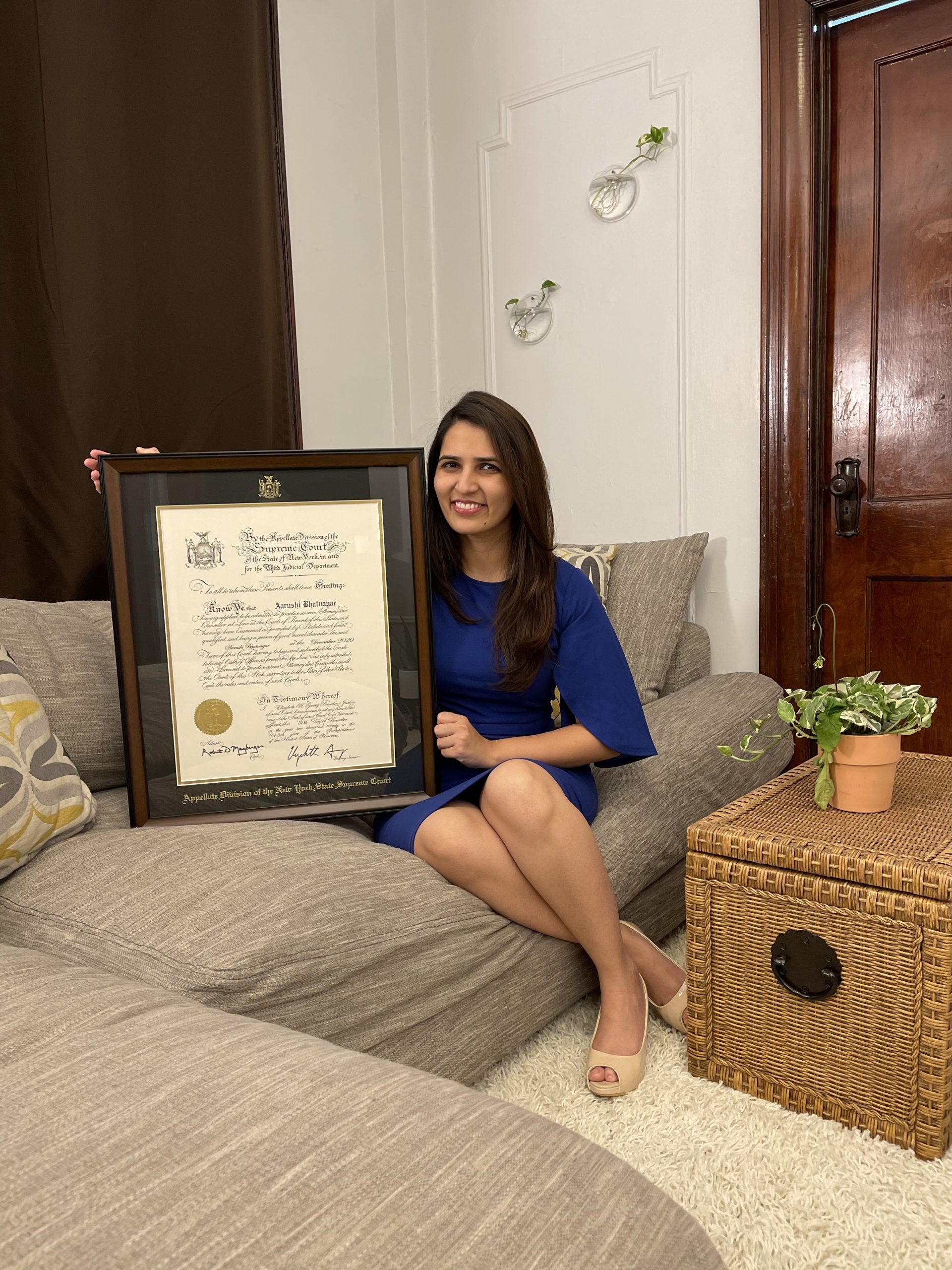
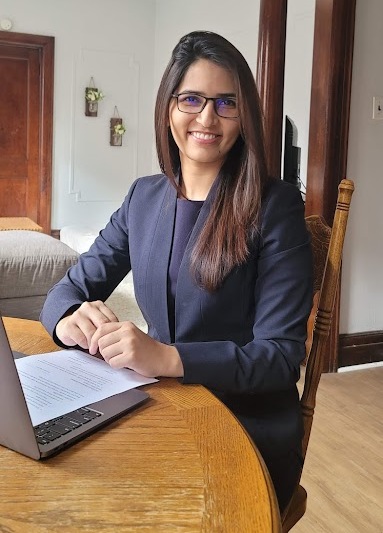
  • Ms. Aarushi Bhatnagar, Managing Attorney at PUNHANI LLC on LLM from NLU Jodhpur and NYU, cracking the NY state bar exam and practising immigration law in the United States

    Ms. Aarushi Bhatnagar, Managing Attorney at PUNHANI LLC on LLM from NLU Jodhpur and NYU, cracking the NY state bar exam and practising immigration law in the United States

    This interview has been published by Sonali Parashar and the SuperLawyer Team


    If we start from the beginning, were you always academically diligent? Did you always want to pursue law? What other career would you have chosen if not law?

    I have always considered myself a sincere but average student. I was not excessively academically inclined during my school years. Instead, my interests were directed toward art-related extra-curricular activities. Accordingly, my slam-book career goal was to be a fashion designer. At the same time, I had a strong family background in law, with multiple family members being in judiciary and litigation. Being amidst frequent family discussions involving topical legal issues, I gained valuable insight into the legal world and its opportunities. Ultimately, my interest in engaging with current affairs and doing my part to help the people around me pushed me to pursue law as a career.

    You have completed your master’s from NLU Jodhpur. Would you like to share a few tips with the students who are preparing for CLAT? How different is the preparation of CLAT PG from that of UG?

    The best advice that I can give to students preparing for the CLAT is to do as many practice tests as possible. In my experience, that is the key to cracking any competitive exam. Of course, studying and knowing the basic material that will be tested in the exam is also essential.

    I found the CLAT PG preparation to be easier than the UG preparation. The subjects tested in the CLAT PG exam are part of the law school curriculum. If one has studied and built a strong foundation in the relevant law subjects during their undergraduate years, the CLAT PG exam preparation becomes a revision exercise. On the other hand, students preparing for the CLAT UG exam are right out of high school with no formal exposure to legal academia. In such a situation, enrolling in a good entrance prep course is worth considering.

    Despite having an LL.M. Degree from NLU Jodhpur, you decided to pursue another LL.M. degree from NYU and had the flexibility of designing your course structure (subjects) there. What major considerations should one take into account while designing their course? What extra efforts have you made being a foreigner?

    Many LL.M. programs provide the students with an opportunity to design their coursework. However, one must consider several factors while making this decision. First, the coursework should align with the candidate’s short-term and long-term career aspirations. A career in law is often path-dependent, and the first job often charts the path for future professional endeavours. Second, it is essential to choose an area that complements the candidate’s prior experience. Choosing a field that builds upon the existing credentials ensures that one can make the most out of a short and rigorous LL.M. program. On the other hand, LL.M. also provides a unique opportunity to diversify into new areas. It is essential to consider one’s areas of interest and the corresponding job opportunities while striking that balance.

    As a foreigner, one should put extra effort when making space in a completely alien environment. I actively participated in networking events (both within and outside the university) and pro-bono activities, which gave me the familiarity and visibility required to succeed in the US job market. At the same time, being flexible and open-minded facilitated my venture into immigration law, a field that I have since fallen in love with.

    Can you share in brief about your current role and responsibilities as a Managing Attorney at a boutique law firm in the NJ/NY area? How do you manage to maintain a work-life balance?

    As the Managing Attorney of a boutique law firm, I have a diverse and dynamic set of responsibilities. I am responsible for onboarding clients, managing the cases from inception to completion, and handling the firm’s day-to-day operations. I advise multinational corporations, business units, and individuals on employment-based and family-based immigrant and non-immigrant visa petitions and applications. My role also entails hiring and training junior staff, including attorneys, law clerks, and paralegals.

    Compartmentalizing my work and non-work activities helps me maintain a good work-life balance. While at work, I dedicate myself to planning and executing my tasks efficiently. Breaking complex cases and procedures into simple daily tasks helps me leave the office with a sense of completion and accomplishment. It also ensures that work anxiety and stress do not spill over to my personal life. During weekends, I like to travel and engage in cooking, arts, and crafts. Having an active lifestyle rejuvenates me and prepares me for the upcoming work week. However, there are certain times when maintaining a work-life balance is challenging. In those times, having a good support system at home helped me keep my spirits up.

    You used to work as an Assistant Professor at Banasthali University, Rajasthan and now you are working in a law firm. What all struggles did you face adjusting in Banasthali and then in a Law Firm? What all things and skills did you learn as an Assistant Professor which are now assisting you in your current role as a Managing Attorney in your Law Firm?

    Teaching at a university and working in a law firm is different in certain aspects. As a teacher, I followed a well-structured curriculum and spent all my efforts ensuring that my students remained interested in the topic and benefited from the course. On the other hand, managing a law firm requires me to handle unanticipated challenges daily. However, I have enjoyed both these roles and did not face any issues in transitioning from the former to the latter. Instead, I found that the teaching skills I developed in Banasthali come in handy when I train new hires at the law firm.

    Would you like to share a bit about the field of immigration law? What is the future scope and struggles involved in the same?

    Immigration is a very dynamic field of law. It involves securing and defending the rights of immigrants from various countries and backgrounds. The legal landscape is constantly evolving, and the changes substantially impact many companies and individuals. The ongoing pandemic has amplified immigration-related issues by forcing many firms to downsize and leaving many immigrants jobless and without a livelihood. Given the ever-increasing importance of the field, it is (arguably) one of the most attractive and rewarding career paths for law students.

    You also cleared the NY state bar exam. How strenuous was the preparation? What are the eligibility criteria for the exam?

    Preparing for the NY State Bar Exam is like a full-time job. It was one of the most challenging tasks I have undertaken. Enrolling in a good bar prep course is extremely helpful.

    There are various qualifying methods to sit for the NY state bar exam. The most common criteria include graduating with a first law degree (J.D.) from an American Bar Association-approved law school. However, in the case of international students/foreign-educated lawyers, the eligibility criteria are pretty cumbersome. All foreign-educated lawyers must submit an online credential evaluation request along with the required documentation to the Board of Law Examiners. One should submit these documents even before the start of the LL.M. program because the evaluation process is time-consuming. LL.M. students must also fulfil the specified credits requirements via classroom courses in substantive and procedural law and professional skills. The official website of the New York State Board of Law Examiners provides the detailed eligibility criteria and application process.

    What will be your parting words for our readers? 

    Focus on having both career goals and life goals. Be ambitious and entrepreneurial but remember that professional success depends heavily on working smart (in addition to working hard). Reach out to people and take their guidance, rather than spending time reinventing the wheel. Be patient and diligent, and success will eventually come. Lastly, prioritize creating a wholesome life experience as it is the journey that counts.


    Get in touch with Aarushi Bhatnagar –