Tag: NLIU

  • Nidhi Khare on pursuing LL.M from NLIU, work as an Assistant Professor at Jagran Univ

    Nidhi Khare on pursuing LL.M from NLIU, work as an Assistant Professor at Jagran Univ

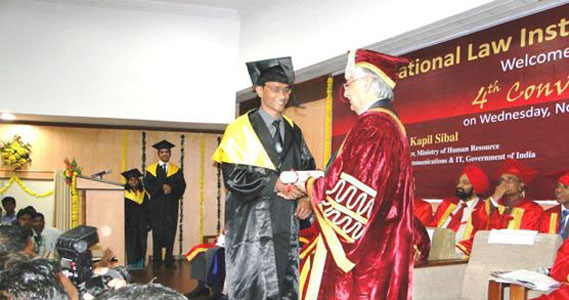
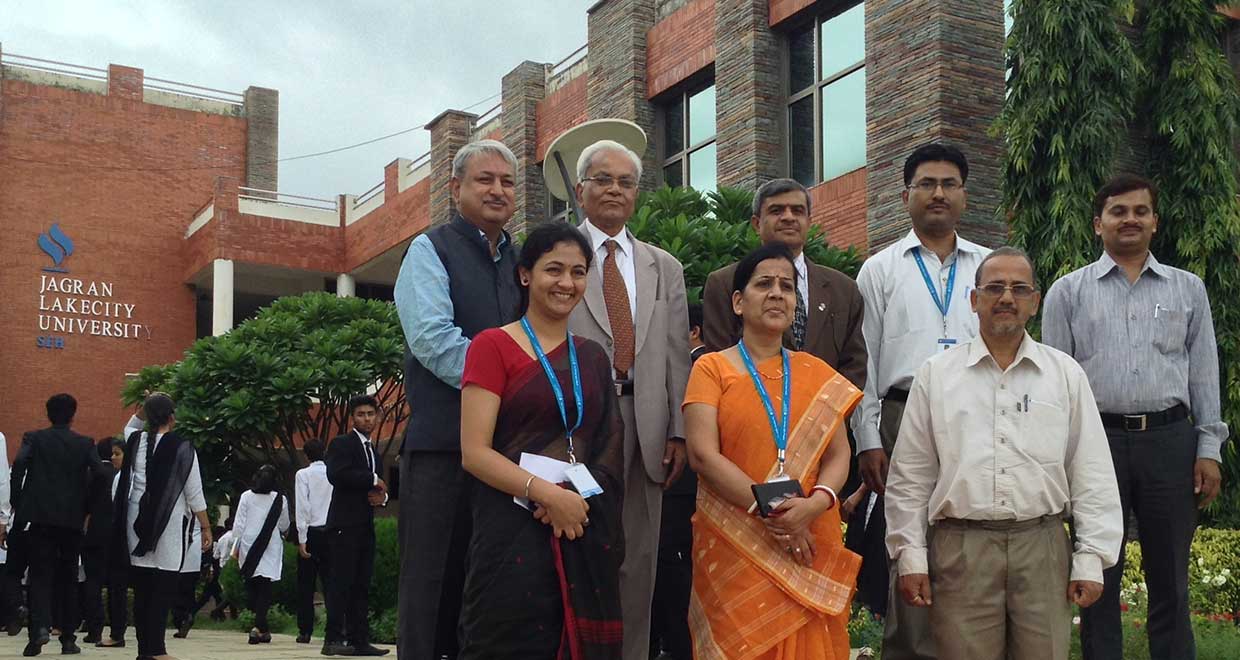
    nidhi-khare-3Nidhi Khare completed her graduation and post-graduation from National Law Institute University, Bhopal in 2013 & 2014 respectively. She was an avid mooter during her B.A.LL.B. days and has multiple publications to her name. She had always planned to pursue a career in academics since her days in law school. Presently, she is working as an Assistant Professor at Jagran University, Bhopal.

    We asked her to share her experiences and strategies she used over the years.

    • In this interview, she talks about:
    • Pursuing B.A.LL.B. and LL.M. from NLIU, Bhopal
    • Importance of co-curricular activities for a law student
    • Opting for teaching


    Most of our readers are law students and young lawyers. How will you introduce yourself to them?

    Well as far as introducing myself is concerned, I am a law student from the last six years and I am working as an Assistant Professor at School of Law, Jagran University, Bhopal. I take pride in the fact that I continue to be a law student and I have chosen a field wherein I can share my knowledge of law with young legal minds and carry on with the process of learning of law.


    How did you gravitate towards law? Why law and not engineering or medical studies?

    It wasn’t like I always wanted to do law. To be honest, initially I had a fear in mind about law and the heavy books that they are supposed to read. I got into law at my family’s advice but once I was into law, I found it is all just about logic and its practical application. I had no particular reason as to why not engineering or medical except the fact that I wasn’t good at physics and chemistry.


    How would you describe your five years of law school at NLIU?

    Five years at NLIU have changed me as an individual, as an intellectual to be precise. I believe the opportunities that a student can get at NLIU, or any national law school for that matter, are sufficient to develop the legal acumen that a law student needs. Also, I feel no shame in admitting the fact that before entering law school I used to have a tremendous public fear but by participating in competitions such as moot courts, client counselling, etc., I got rid of my public fear and I think I owe a lot to these opportunities that I could think of entering the profession of teaching.


    What kind of internships did you do while you were a student? Any remarkable experiences during your internships that shaped your career choices later?

    When I entered the law school, I did not have a set frame of mind as to what I want to do after graduation. When you enter a law school, especially if it is a National law school, there is a lot of hype created about working in law firms and Corporates and it is not unusual for a student to get carried away with it. To clear the mist that had settled in my mind, I interned in Majmudar & Partners, a leading law firm, and Wipro Technologies to have my share of experience, both with firms and Corporates. I also interned with ONGC to know about the work culture in government set ups. It was during these internships only that I realised that I had no interest in working on company contracts or fighting cases in Courts.


    You have been a member of multiple committees while in law school. Do you think these enhanced your skill-sets? Please share a few of your memorable experience.

    Yes I have been a member as well as Convenor of the Cell, as we call it in NLIU, and it has definitely taught me a number of things which probably classroom experiences don’t teach you. As a member of the Environment Cell, I learned the usual qualities of team work and patience but when I was a Convenor of the Consumer Cell, I learned to work and manage while dealing with people of different attitudes and mind-sets. It taught me the quality of being a patient leader.


    You have participated in various moot court competitions. Tell us how important is mooting and what effect does it have on one’s CV?

    Mooting, I think, is one of the most important exercises that a law student must do because it greatly improves your communication and argumentation skills. It also makes you think from a different angle altogether towards legal problems. Then ofcourse mooting helps a lot in removing the fear of public speaking. It brings clarity to your thoughts since when you know that you can be grilled by the judges on any assumption you make, you certainly do an in-depth research to have an authority backing all your arguments. It thus also improves your research skills.


    Right after graduating, you went for LLM.  What was your motivation behind pursuing LL.M.? When did you finally decide that you need to do masters?

    When I decided I have to go into teaching that was the point I knew I had to have a masters degree to be able to teach in a Law University. Also, because my interest area has always been criminal law but graduation doesn’t offer you an in-depth study into any particular field of law, I opted for LLM in Criminal Law.


    Tell us something about your LLM year at NLIU. How did this influence your career?

    I did the one-year course. It was actually introduced in that very year only. As far as the experience is concerned, yes it does certainly increase your knowledge on particular areas of law and the dissertation makes you have a deeper understanding of a particular concept.


    What was your topic of research for LL.M? Why did you choose that subject for research?

    My interest has always been women-centric laws, and I have worked a lot on sexual offences against women. I have a number of publications on sex trafficking of women, I have presented a number of papers both at national and international level on anti-trafficking laws and owing to this interest of mine, I chose rape as my area of study. My topic for research was ‘Development of Rape Laws in India: a Critical Analysis.’
     

    nidhi-khare-2

    What do you like best about teaching? What is the best thing about being a Professor and what’s the worst?

    I get a lot of satisfaction from teaching. This I realised when I used to teach the poor children staying in the village nearby our university who we used to teach as part of PULER, an NGO of our University, and they used to understand and learn from me. That was the point I decided that I will go into teaching. I taught in a coaching institute in Bhopal in my 5th year and while I was doing my LLM and those two years made me clear that this is the only thing I want to do for my entire life. I think the best thing about teaching is that you constantly learn and this profession offers you an opportunity to share knowledge and learn from others as well, including students. As far as the worst thing is concerned, I will say it’s not worst but it is bad that in India we don’t realise the importance of teachers in a student’s life as well as for the nation-building. They are considered to be doing an easy job and people think that if someone wants an easy life, he should go for teaching which is an absolutely wrong notion. A teacher has to do a lot of preparation to even stand for 15 min before the students. It is not an easy job at all.


    What are your favorite subjects? What subjects are you currently teaching?

    My favorite subject is criminal law. As of now I am taking contract law for the undergraduate students and I teach Business laws to students doing MBA in finance stream.

    Do you think students should behave the professors like friends, or is it necessary to maintain a disciplined environment to create a good classroom environment?

    I think it should be a combination of both.

    Describe an outstanding teacher. What do you think makes this educator outstanding?

    I don’t know how to define an outstanding teacher but I think a good teacher is someone who can communicate his thoughts clearly to the students and who feels that he is there to discuss with the students rather than to tutor them.


    Any important things which law school didn’t teach you but ‘teaching’ did?

    Yes, it brought more clarity to my understanding of concepts because when you are teaching, you can’t be anything less than perfectly sure of your concepts.


    Where do you see yourself five years from now?

    I see myself interacting with students in a class, and on the verge of or already completed my Doctorate.


    Lastly, what would be your message to people who want to take up a career in teaching?

    I will just say do not take up teaching just because you don’t see any other better option because as a Professor you are responsible for the life and career of all those students you teach, which you definitely cannot put at stake. So teach only if you enjoy teaching.


  • Garima Tiwari on pursuing masters from UNICRI, doctorate from Univ of Camerino and legal research

    Garima Tiwari on pursuing masters from UNICRI, doctorate from Univ of Camerino and legal research

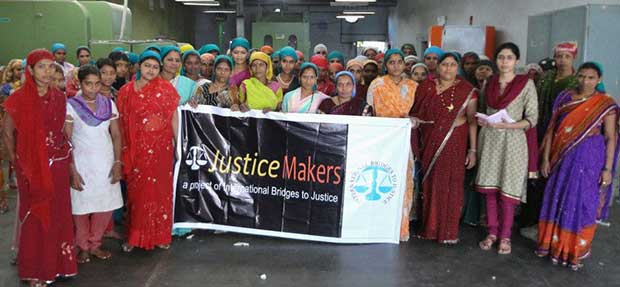
    garima-tiwari-2Garima Tiwari is an exceptionally meritorious student of 2009 batch of NLIU, Bhopal. After working at National Judicial Academy, Bhopal for two year, her interest in International Crime and Justice led her to pursue Masters from United Nations Interregional Crime and Justice Research Institute in collaboration with University of Torino, Italy. She has been awarded the Justice Makers Fellowship by International Bridges to Justice, Geneva for project on awareness of HIV/AIDS amongst the criminal justice system as also legal aid for the under-trials. She has a number of publication and has authored various books. Currently, she is a Doctoral candidate at University of Camerino.

    In this interview, she talks about:

    • Course structure of Masters at UN Research Institute
    • Key ingredients of Statement of Purpose
    • Authoring books and publications
    • The best ways to do Legal Research


    Given that most of our readers are law students and young lawyers, how will you introduce yourself to them?

    I would first like to congratulate the whole team of SuperLawyer for concretising this innovative and stimulating idea of ‘inspiration dissemination’. I graduated from National Law Institute University, Bhopal in 2009. I worked at the National Judicial Academy, Bhopal as Law Associate (Faculty) for 2 years. I have a Masters in International Crime and Justice from United Nations Interregional Crime and Justice Research Institute in collaboration with University of Torino, Italy. In 2012, I was awarded the JusticeMakers Fellowship by International Bridges to Justice, Geneva for my project on awareness of HIV/AIDS amongst the criminal justice system as also legal aid for the undertrials.  Currently I am pursuing my Doctorate at the University of Camerino, Italy alongside my work as a Researcher in comparative law with Lexidale-International Policy Consulting, Cambridge MA. I am also co-founder and author at A Contrario ICL- an international think tank devoted to research and writings on International Criminal Law and senior editor with The Lex Warrier.


    How did you gravitate towards Law? Tell us about your college life at Bhopal. What all activities did you partake in?

    I remember reading the achievements of few of my seniors in the newspapers. Law always fascinated me, and when my father brought in the brochures of the law schools, I was all ready to get in. In 2004, there was no CLAT and all universities conducted their separate exams; I cleared the entrance and there I was at National Law Institute University, Bhopal. I concentrated more on my academics. When I joined law school, it was all about getting a corporate law job. I wouldn’t deny that I tried to fit in, but somehow I wavered from that path. I loved research and writing and I guess I made good use of the crazy amount of projects we were supposed to write. I could publish a lot of them subsequently. I was a part of the environment law cell and we conducted various activities including mock parliament, slum drives, awareness camps etc. I wasn’t into moot courts, was not my thing. I enjoyed my college life thoroughly, and it makes me nostalgic thinking that it’s been almost 10 years when I first stepped in there.


    What were your areas of interest during your graduation? How did you go about developing expertise and knowledge in these areas?

    I loved international law, comparative law and human rights. Internships for me were testing the water for what I wanted to do ahead. I interned in NGOs, Human Rights Commission, law firms and with lawyers.  During one of internships, I developed interest in international trade law and I decided to work further on it. In my fourth year itself, I started research and drafting work for an advocate practising in international trade law and on graduation, I went ahead and joined his law office, before joining NJA. My advice would be to use internships to understand what you like, and not as something to fret over. As for my interest in Public International Law, I knew I would someday do a specialisation in it and so I kept myself updated with its readings.


    You were one of the most exceptional students at NLIU. You bagged a silver medal during your B.A.LL.B. Please give us a few actionable tips on managing higher grades.

    Thank you for your kind words. For me nothing has replaced hard-work ever. It definitely helps to attend lectures but always make a point to read beyond them. That way, you develop an understanding for the subject that is not just exam oriented. It is easy to score high, if you are not stressed about it. Be regular in your studies. Don’t leave for later what you can finish today. Time management is a skill which one needs to develop gradually. Frankly, there is so much time that if one is disciplined and focussed, it is easy to manage academics, and extra-curricular.


    What made you pursue your LL.M from United Nations Interregional Crime and Justice Research Institute after pursuing LL.M. in IPR from IGNOU?

    I did MIPL from IGNOU when I was working at NJA.  MIPL is not an LL.M. It is specialised master programme for 2 years. After two years of work at NJA, I wanted to further my academic profile, and I decided to get an LL.M. Gaining insight into Indian judicial system at NJA, I was very much interested in studying international organisations and implications of international dynamics on the domestic legal system. Masters from UNICRI was an apt course for this. Located in beautiful Italy, there was nothing better than combining my interest for studies and travel.


    Tell us about the course structure and specialization of Master of Laws at UN Research Institute?

    UNITO/UNICRI LL.M was a wonderful experience and it introduced me to international criminal law, international organisations and international humanitarian law The LL.M is set at the United Nations Campus in Torino Italy. It is highly specialised and tightly scheduled programme of 3 months online phase and 6 months on-campus phase. The classes started at 8/9 in morning and continued till 6 in the evening. We were a batch of 42 people from 28 countries. The programme is a perfect combination of theory and practice. We were exposed to various exercises – mock trials, moot court, seminars, prison visits, practical exercises with the Italian Army, defence seminars and witness psychology classes. The moot court itself involved participation is an army camp where we enacted half of the problem of the moot court. It was an amazing learning experience, which worked on group dynamics. The faculty was very experienced and included lawyers and judges from international courts and tribunals. It was one of the best decisions I took, as it exposed me to the international and varied nature of law; of multiple career opportunities and a chance to travel the world.


    What is the key ingredient of a well written SOP? Can you make it personal? Any tip to those making their SOPs? What might be the one mistake that the majority make?

    Incorporate your strong points. While many other applicants will have similar traits, your SOP should be written in such way that these points make you stand out.

    Show that you are different from the lot, but do not go overboard in doing so.

    Highlight the reasons for going back to academics after your work. Stress on how your work profile, makes you a better candidate. Be articulate yet precise.

    Exaggeration is a common mistake. After working with many professors and selection committees, I can definitely say that use of complex language and bragging, generally puts the committee off. Do not forget it is a formal statement, and as a law student you are supposed to have some drafting skills. Though one needs to make it personal, but it cannot be an informal statement showing your desperation to join the course. You may ask colleagues and professors, to read and see what they make of it. It should not read a negative trait for you.


    Do you think that having your recommendation letters written from distant acquaintances with influential position may backfire against you while making your application? What is the proper thing to do instead?

    Definitely, one should use recommendation letters only from people who know you academically and professionally. Universities, may make a call to the person recommending and discuss about you. A distant acquaintance, might be left without clear answers on such occasions.  This also holds true, when the universities directly contact the referee with online forms. Therefore, it is always advisable to take recommendation from professors or employers you trust and who would be able to speak accurately on your profile.


    You have publications in various renowned journals. How should one go about writing papers and getting the same published?  How do you identify and decide on a topic or area of law to write on? What is the process like?

    Selection of the topic depends on the medium you are going to publish, the audience and definitely, based on your interest. If you are writing for a blog, I would suggest write posts on current issues of your liking. That not only gives readers a chance to understand different views, but would also help you to develop critical understanding. Unlike blog, for journals and authoring a book, deadlines are important. For writing articles in different journals, you have to carefully follow the guidelines provided by the journals regarding the word count, formatting, referencing and language. They may accept your paper in the first go, or may send it back for editing, it is all a part of bringing out quality work and so patience and an open attitude to criticism is the key.

    For books, there are in general two situations. If you already have a manuscript which you would like to get published-you have to write to the publishers, have discussions and come to a common ground. The other situation is when the publisher approaches you with a project, in which case, you have to decide whether you are comfortable working on the format and idea. Usually, you submit a sample chapter, before proceeding. Once that is accepted, there is an agreement outlining all the copyright and payment issues, and you are all set to go.


    garima-tiwari-4You have published 6 books also. Tell us about the whole process. How did it all start? Please give us the highlights of your best work. When did you start writing your first book? How much time did it take?

    I read on Facebook that LexisNexis India was looking for academic writers, and I applied. After discussions with them, I started working on the Quick Reference Guide on Jurisprudence I and subsequently Jurisprudence II. QRGs are quick referencer cum revision books mapped to syllabus of all law universities, focussing on quick conceptual clarity. It contains notes, case materials and important questions.  This was very challenging as for my first book itself, I was writing on jurisprudence which students find really difficult. So I concentrated on simplifying the subject yet still not losing the essence and details. Soon after, I was contacted for an innovative project by LexisNexis, to work on Understanding Law Series which is a series of books aimed to make different laws accessible and understandable to people interested in studying law, lawyers and common man. Essentially it aims at legal awareness. I worked on four titles under this series – 1. Understanding Laws –A Legal Quotient Primer 2. Understanding Laws: Contracts 3. Understanding Laws: Consumer Rights 4. Understanding laws: Cyber Laws and cyber crimes.

    I wrote all the 6 books in the 2013-2014 and it has been a very enriching journey.


    How did publishing affect your legal career? Apart from academia, does it help one to secure jobs at all?

    Research is highly respected in many countries and I am glad, that slowly India is also moving towards accepting legal research as a possible career option. Publishing articles, writing blogs and authoring books, all has definitely helped me in obtaining more work. Apart from the academic benefit it offers, publications have helped me to gain independent research projects with various organisations and companies. For jobs in legal research, you need to show you can write on varied subjects with precision .There is immense opportunity to travel and be part of amazing discourses. Good research pays really well, unlike what is normally understood. It was because of my publications during university and internships that I secured the position of senior researcher with Lexidale-International Policy Consulting Cambridge, MA. So, yes, publishing does help secure jobs.


    Presently, you are a Senior-editor at The Lex Warrier. What are the top three things you consider as sine qua non for a great research work?

    Knowledge on the subject you are researching. You should know where to look for the right and authentic material. Research is not cut-copy-paste.

    Good command over language-this requires a lot of reading. A good researcher is not just born overnight. Be ready with your diligence and patience.

    Carelessness in research shows in the product. One should be very precise and write only what is essential. Be honest and avoid plagiarism.


    garima-tiwari-3

    At present, you are a Doctoral Candidate at University of Camerino? What is your motivation behind doing so much study? What made you to pursue Ph.D.?

    Yes, currently I am in the second year of my doctoral research at the University of Camerino, Italy with full fellowship. With the same objective of understanding the impact of international law on domestic jurisdictions, that I pursued my masters, I am carrying out my doctoral research. My research deals with understanding legal imperialism and cultural relativism, from the perspective of countries like India in the era of international law. Ph.D will help me to specialise further in the area of knowledge. I believe the fact that I made career out of what I love to do, essentially motivates to me to study.


    What are your long-term goals? What do you plan to accomplish in the coming five years?

    I would probably be writing, teaching, researching and travelling to new places. I am already working on many research projects, so maybe I will start my own research venture and A Contrario is also shaping up well.


    Lastly, what would be your message to law students interested in going for higher studies from India?

    I say- go for it. LL.M from abroad will open up many new ideas and expose you to different career options which you might not be considering now. You will learn about other cultures which will broaden your thinking process. It does not matter in the long run, where you studied from, what matters is the quality and dedication in your work. Do what you love, dream big, and work hard towards it. Goodluck and have fun!

  • Chetna Shrivastava on securing top-notch internships, bagging a PPO and managing academics

    Chetna Shrivastava on securing top-notch internships, bagging a PPO and managing academics

    chetna-shrivastava-2Chetna Shrivastava is one of the most diligent and illustrious scholars of the 2015 batch of NLIU, Bhopal. She has a noteworthy academic, mooting and debating record. She is a part of the Editorial Board of the NLIU Law Review and co-founder a student run newsletter in NLIU. Her diligence and mettle at work was recognized when she received a job offer from Khaitan & Co.  during campus placements. We asked her to share her experiences and strategies she used over the years.

    In this interview, she tells us about:

    • Securing top-notch law firm internships
    • Her journey from an intern to getting job offer from Khaitan & Co.
    • Importance of academics, internships, debates and moots


    Most of our readers are law students and young lawyers. How will you introduce yourself to them?

    To begin with I would like to applaud this venture of Superlawyer of creating a database for law students and young lawyers to make informed choices after coming across experiences of the old souls (no offence!).

    For this interview I will make a sincere effort to be as serious as the interview demands. While my grades so far portray me as a nerd, my friends will have a different story.

    Caution: Those reading this interview for a chalked out strategy at bagging a job might be disappointed to know that the interviewee is a clueless person who has solely focused on gaining varied experiences to finally make the most suitable choice.


    Tell us a bit about your childhood and pre-college life as well as educational background. Do you have lawyers in your family?

    I finished my schooling from Christ Church Girls’ School, Jabalpur, a reputed school with a rich cultural and educational heritage owing to its establishment dating back to 1870. My parenting and schooling ensured my proactive participation in extracurricular activities along with securing the top ranks in academics throughout school. To diversify my options I took up Mathematics and Biology (with Physics and Chemistry) after Class 10th.

    I am a first generation lawyer.


    In India there is still a bit of resistance towards legal education. What motivated you to choose law as a career?

    Yes, the resistance towards legal education persists however it is weakening with increasing awareness of the diversity of career choices offered by legal education. The instances have reduced where I face quizzical aunties on how I could possibly take “CAT” right after school.

    The two years that followed after Class 10th made me realise that performing well and having an inclination for the subject are not synonymous. Though I performed equally well in all the subjects, arts and humanities fascinated me more as compared to deciphering the molarity of salt solutions or calculating the net forces in a rope and pulley system. I had come across several school alumni who were already pursuing a successful career in the field of law. Hence it did not take me long to decide on law as a career. Though my parents are doctors and had the same career intended for me, they were very supportive when I expressed my wish to take CLAT.


    You have participated in various moot court competitions, tell us how important is mooting and what effect does it have on one’s CV?

    Being a lawyer involves the practical application of the concepts that we are taught in the law school. Moot court competitions provide an opportunity to hone the argumentative skills along with understanding the practical nuances of the law concerned. It definitely adds a positive aspect to the CV because it evidences one’s thorough understanding of the principles with a practical experience.


    Apart from mooting and academics what other co-curricular activities did you engage yourself in?

    As a first year student I had a brief stint as an adjudicator, representing my college in various debates. A major part of my co-curricular activities has been attributed to being a part of the Editorial Board of the NLIU Law Review, CSIPR Journal and the Literary Society. In my third year I co-founded a student run newsletter.


    All your internships have been at top notch law firms. Tell us what all places you interned and how did you procure your internships?

    Apart from NGOs and Chambers of Senior Advocates, I have interned in DSK Legal, Bombay, Khaitan and Co., Bombay and AMSS, Bombay. The latter two internships were procured with the help of the PCC in my third and fourth year respectively. While the earlier ones were procured by numerous individual applications sent well in time before the intended internship duration.


    Did you plan your internships throughout law school deliberately or did it all just happen by chance? How relevant did you find your law school education with the kind of work you were required to do at law firms?

    Honestly, the four years in the law school so far have been a journey of trying to accumulate varied experiences. Therefore my internships were an attempt to assess the pros and cons of the various options available to me after law school. Apart from merit “chance” was definitely an assisting factor as being a first generation lawyer it is not easy to secure the intended internship in the earlier years of law school.

    The law school curriculum made me adept in understanding the assignments in the internships. However in the process of working on those assignments I gained a deeper understanding of the specific concepts which form a part of the subject taught in the law school. The internship was perfectly complementary to the curriculum in aiding a holistic understanding of the subjects of the curriculum.


    These days there are many law students rushing forth to intern at law firms from their first year itself throughout till their fifth year. What do you have to say about the advisability of law students pursuing such a course of action?

    Like I already mentioned, my internships were aimed at accumulating varied experiences of the options available after law school. I began with NGOs and Chambers of Senior Advocates and interned at a law firm for the first time by the end of the second year. In hindsight this helped in developing a legal aptitude to execute the assignments with a better understanding of my work. I would advise students to intern in law firms around the time when corporate laws are introduced in the curriculum as the internship and academics mutually benefit the understanding of the subject.


    Recently, you bagged a job offer at Khaitan & CO. How did you go about achieving this?

    At the end of my third year I secured an internship with Khaitan & Co. after being screened by an interview process arranged by the PCC. I was diligent in the internship which was facilitated by the inclusive atmosphere offered by the firm to its interns. By the end of my fourth years I was shortlisted for a PPO interview by the firm which was kind enough to consider me a worthy candidate for the job.


    There is a phenomenal obsession amongst law students with maintaining a very high CGPA. How important according to you is this in securing a job?

    As being one with the “obsession” and being decently successful at it, I believe that it plays a determining factor in securing a job. A consistent, more crucially than high, CGPA projects one as a diligent and sincere student to the recruiters. Most of the screening process by the recruiters has short listing of the candidates on the basis of their ranks in the first phase. However grades are not the sole reflection of one’s knowledge. Averagely good grades complemented by co-curricular activities make the student come across as one who can balance both in a rigorous academic routine and hence a better candidate for a job which involves simultaneous assignments.


    What should one law student aspiring for a job at top law firms do? How would you recommend they prepare in their last 2 years at law school?

    In the last two years the students should strategically apply for internships in the firms they aspire to work in. The internship is a perfect opportunity for making a mark as a prospective candidate for the job. A thorough knowledge of the corporate laws and efficient application in the internship contributes majorly towards securing the job complemented by a good performance in the recruitment procedure.


    Where do you see yourself five years from now? Would you consider going for an LL.M. abroad?

    As a person who goes with the flow, this is a difficult question to answer. Currently I’m looking forward to working in Khaitan & Co. and gaining the most out of my experience. LL.M. is not an option I am considering.


    What message would you like to give to our readers?

    Being a student of a field with such diverse career options you should explore and make the most of your experiences to make an informed choice. Remember the closing scene of Kung Fu Panda where Mr. Ping discloses to Po that there is no secret ingredient? That realisation helps in working towards achieving your goal knowing that the only indispensable ingredient is well directed hard work and sincerity.

  • Hita Kumar on leaving AMSS to pursue LL.M from NUS over Cambridge, writing an SOP and getting recommendations

    Hita Kumar on leaving AMSS to pursue LL.M from NUS over Cambridge, writing an SOP and getting recommendations

    hita-kumar-2Hita Kumar is a graduate from National Law Institute University, Bhopal (Batch of 2012). Her journey through law school has been one of an ideal student. While maintaining a good CGPA, she bagged a job with AMSS in law school. She worked there for two years. Currently, she is pursuing Masters in Corporate and Financial Services Law from National University of Singapore.

    In this interview Hita talks about:

    • Choosing NUS over Cambridge University for Masters
    • Writing an SOP and getting recommendation letters
    • Work experience at AMSS and leaving it to pursue LL.M


    Most of our readers are law students and young lawyers. How will you introduce yourself to them?

    I am not your stereotypical law student who loves hearing her own voice, arguing for the sake of argument and is very opinionated (no offence!), but rather more of an introvert who is not afraid to speak her mind when a situation requires me to. I’ve been told that I come across as very serious, sincere and nerdy, which is probably true when it comes to my work but people who are close to me know how nutty I can be. I’ve done my BA.LLB (Hons.) from NLIU, worked at AMSS, Bangalore and am now pursuing my Masters in Corporate and Financial Services Law at NUS. On paper I probably look like countless others, but I’ve probably gone through this journey with the least number of hiccups, which only goes to show that consistent hard work generally pays off.


    How did you gravitate towards law? Why law and not engineering or medical studies?

    From the unbiased ethics of law to the high dependence on insightful reasoning, I gravitated towards law for a number of reasons and not specifically one reason, such as wanting to be well-spoken, well read and highly regarded, wanting to be person whom you can trust to resolve issues and wanting to have the power to make right an injustice, to even know an injustice when faced with one. While I enjoyed science during 11th and 12thI never saw myself as an engineer or a doctor because it seemed too common a career choice for people who took up science. An alternative to law that I did seriously consider was a degree in Economics.


    How would you describe your time at NLIU-Bhopal?

    My time at NLIU was quite fulfilling and whilst it was demanding and academics were always a priority; NLIU was structured in the way that we were given a lot of freedom to venture into activities that interested us.It was up to us to take the initiative and develop our skills during our tenure as law students. I tried my hand at mooting, client counselling, negotiation, writing and organising events on campus. I particularly enjoyed my stint as part of the founding editorial team of the NLIU Law Review. Being a sports enthusiast, I often spent time playing basketball, throw ball and badminton. Representing the University for events both; co-curricular and in the sports field was something I always looked forward to. NLIU Bhopal is where I grew up. Entering law school at 18 straight out of school and leaving at 23, with lawyer’s degree in hand, my time at NLIU has had the biggest impact in my life to date.


    You have worked at AMSS for two years. How was the experience?

    In two words, a ‘roller coaster’; there were highs and lows, it was exciting and intimidating, and I left AMSS feeling like it was one hell of a good ride. I was part of the first batch for which there was a rotation policy i.e. we were with three different teams for six months each, before being allotted a specific practice area. This was a great opportunity for a fresh graduate like me, to work on different areas and different teams before finally being allocated permanently with one team. It gave me the opportunity to explore a number of areas of corporate law and get a broader perspective of the working of the Indian corporate legal system. While there was a tremendous learning of various corporate laws but also an emphasis on learning of other skills like client handling, time management, drafting and presenting. I was lucky to have a few mentors who made the transition from being a law student to a lawyer easier than it would have ordinarily been.The fact that I made some really good friends along the way made the journey better than expected!


    The glitz of a corporate job may blind a law student and he may fail to look at different career opportunities. Were you in doubtful before joining NUS? Why did you prefer to pursue Masters over your job?

    I think the emphasis in Indian law schools is always on recruitments and the placement season is invariably a very tough time for most students. The pressure of getting a job, if not a lucrative one, is very high. Being at NUS, I now realise there were/are far more career options and job profiles that I could’ve seriously considered had I known about them; which is why I feel it is extremely important to have a strong working relationship with your alumni, have a wide circle of friends and acquaintances including people beyond your law school and to never be hesitant to reach out to any of them for guidance.

    Having said that, I had to do a lot of soul searching before I could finally come to the conclusion that I wanted to quit my job and study for the Masters program at NUS. There was a constant debate about whether an LLM over AMSS is the so called ‘right’ way to go? Would it bear fruit at the end of day? A dear senior of mine once told me time and again that it’s what you make of the opportunities you choose that determines the outcome and not the choice itself.

    As to why I preferred doing an LL.M over the option of continuing with my job, it would have to be the timing. For me, it was the perfect time to take a step back and reinforce my academic foundation in corporate law. After two years of experience in the profession, I now having a better insight into how the business of law is actually conducted and I could explore this further by studying the areas of law I am interested in during my LL.M.


    When you decided to quit job and pursue LL.M? Was it pre-planned or it just happened during your law firm days? What was your motivation behind doing LL.M.?

    Pursuing an LL.M was not part of the original plan, at least not consciously. At some point, whilst working I realised that I was not ready to be an adult just yet! On a more serious note, I decided to give myself an opportunity to explore the academics in depth before I settle down into my forte. My motivation behind doing an LL.M, and a foreign LL.M at that, was to experience a different kind of education system and culture.


    How did you choose NUS over others? How did you go about choosing a university?

    My choice to study at NUS was a practical one. Having said that I was quite convinced that NUS has an excellent LL.M program, especially for corporate laws and has been consistently ranked as the top university in Asia. To be completely honest, the clincher, was the funding offer I received from NUS. I was granted the Faculty Graduate Scholarship which covered my tuition expenses which made the offer of admission too good to refuse. Whilst I did have the option to take up the MCL program at Cambridge, I guess the practicality and the positives that NUS had to offer outweighed the option of taking up a huge loan for a relatively new program. While choosing a University, it is important to research the actual program you would like to join by speaking with alumni, it’s not ideal just to go by the name and reputation of the University; keeping in mind always, your reasons and priorities for pursuing an LL.M.


    How did you go about writing your SOP? Are there any key factors which one should keep in mind before writing the SOP?

    Writing an SOP and the entire application process in general is extremely testing and can get frustrating at times. My guess is that universities intentionally make it so, to weed out half-hearted applications! I spoke to a lot of people who have been through the process themselves, all whom had varying but valuable input. I think it comes down to putting across those aspects of yourself and your credentials that you feel paint a complete picture of yourself and one that leaves an impression with the admissions committee. There’s no formula to writing an SOP but a couple of things according to me would certainly make a difference would be (1) the reasons you think you standout from the rest of your peers; (2) the reasons you want to get back to academics after your first degree; and(3) correct grammar! It’s also very important to get many as many people as possible to vet your SOP, the more eyes you get on your SOP, the more it will evolve.


    How about recommendation letters? Who all recommended you to pursue LL.M?

    Since I had only worked for two years before completing my LL.M applications, I requested my professors at NLIU to give me their recommendation. They were all very supportive of my decision and asked me for my CV to get a better idea of the particular work I did throughout law school. Of course, there is a fair bit of coordination involved if you are not in university anymore, so I would keep enough time before the deadlines to make all the arrangements and request for a few extra copies should the need arise.


    Does NUS provide students with scholarships? Are there any other institutions, which provide scholarships?

    NUS does give out scholarships on the basis of merit. You may opt to automatically be considered for the various scholarships as part of the application itself. There are various other institutions that give scholarships (full, partial and loan scholarships) which are well known such as given by Inlaks Foundation, Tata Foundation, Aga Khan Foundation, Narottam Sekhsaria Foundation and the Mahindra foundation, amongst others. It’s important to start doing your research on scholarships at a very early stage and keep track of the requirements and deadlines.


    How is your experience so far? Tell us about the faculty and facilities. Anything memorable that is stuck in your mind?

    So far, my experience has been absolutely fantastic. My modules are extremely interesting and the Professors supplement them with excellent lectures and reading materials. The NUS Law faculty is very highly qualified and motivated to teach and engage students. The facilities range from an extensive library (with a large number of E-resources), to sports facilities, from well-regarded centres of research like the Centre for International Law, Centre for Asian Legal Studies and Centre for Banking and Finance Law to state-of-the-art use of IT in various internal systems like the Integrated Virtual Learning Environment, where all the materials for modules you have opted for are posted. Having been here only a couple of months now, I am still soaking it all in. What has been striking has been the frequency and quality of the seminars that are conducted on various topical legal issues by guests to the university. Though, the very first thing that hit me was that my lectures were 3 hours long. But as it turns out, if you like what you hear, 3 hours can fly by fast enough!


    How’s the Indian fraternity over there? Are there many Indian students?

    There are enough and more Indians here that I never feel too far away from home! I think that says it all.


    How difficult was studying abroad in terms of finding accommodation, finances and settling in?

    Singapore is an excellent place for people who have never lived abroad. It’s almost impossible to get lost, filled with Indians and generally some of the most friendly and helpful people. While the cost of living is definitely higher than India, I can’t imagine it being too difficult to manage your finances if you can budget your expenses.


    Where do you see yourself five years from now?

    Probably doing something that I don’t even know of right now, but hopefully something that is exciting. However, options that one could probably look at are working at a foreign law firm, a multi-national corporation, teaching, a legislative think tank, an arbitration institution, a legal team of an international organisation like the WTO, and many others. Taking courses that interest you, talking to people in the field and keeping an open mind will help things fall into place.


    If you could re-live your 5 years in Law school, is there something you would do differently?

    While I have no regrets about my time in NLIU, I’m sure there are things I could’ve done better like taken a few more risks with internships, kept in touch with more alumni and stressed out a little less!


    Lastly, what would be your parting message for our readers?

    Make the most of the opportunities that come your way, so that you don’t have regrets in life!

  • Anamika Ahir on appointment and work at SEBI, internships and publications

    Anamika Ahir on appointment and work at SEBI, internships and publications

    anamika-2Anamika Ahir graduated from NLIU in 2013. She was an avid mooter during her law school years and has multiple publications to her name. Presently, she is working with the Securities and Exchange Board of India. We asked her to share her experiences with us.

    She tells us about:

    • Recruitment process at SEBI
    • Importance of Internships
    • Writing for journals and publications


    Tell us a bit about yourself – your childhood, life before your career in the field of law and educational background.

    I remember myself to be a little reserved as a child. I took academics seriously but I was also inclined towards extra-curricular activities. I actively participated in creative activities like writing poems, singing, and dramatics in school. I enjoyed camping and outdoor adventures and ended up attending two years of NCC (National Cadet Corps) during school days. Lately, I have developed a fondness towards learning languages and I have already cleared first proficiency level in French.


    How did you choose the field of law as a career?

    I never seriously thought of pursuing law as a career. The idea was suggested to me by my parents, although no one in my family is from legal background. At first I was a bit unsure about it but after giving it a thought I decided to “give it a try”. Fortunately, I managed to get through NLIU, Bhopal and decided to pursue law at once. Since then it has been an awesome journey and there was no looking back.


    How would you describe your time at NLIU? What kind of co-curricular activities did you participate in?

    Law School was a remarkable experience for me. It was more like a roller coaster ride than a cruise. I have had numerous ups and downs, but somehow I’ve been able to land on my feet. All the thrill and fear during the ride has made my persona more resilient than ever. I think that the dearest reward I received from my law school education is the skill to appreciate a particular issue from various perspectives. This, I believe, is the most valuable asset of a lawyer.

    While pursuing law, amongst a host of activities I chose to participate in moot court competitions and presenting papers in seminars. I considered both these activities to be indispensable if I wanted to make the most of my legal education. Personally, I enjoyed mooting the most. I had the opportunity to represent my university at moot court competitions organised by the Bar Council of India and Chandigarh Judicial Academy. Presenting a case before a bench comprising of high court and district court judges was an elating experience for me.


    Which is the most important co-curricular activity in law school considering its relevance to the field of law?

    Honestly, one cannot classify any one co-curricular activity as “most important” based on its relevance to the field of law. The diversity in the field of law forbids any such general classifications. For example, a student interested in legal journalism might find debating and writing papers more useful than mooting.

    However, having said that, I would still recommend students to try their hand at mooting just for the experience. Moot courts are a unique attribute of law schools and this itself makes it worth giving it a try. Mooting develops all critical skills such as legal writing, researching and speaking simultaneously. These skills are more or less relevant for most fields of law.


    You published legal articles in multiple journals when you were in law school. Do you feel this activity just contributes to building a polished CV or does it have relevance beyond that?

    Publishing articles definitely has its relevance way beyond polishing your CV and bragging about it. The main benefit of publishing articles is reaped while writing the article even before it gets published. That’s right! The reason why publishing articles is held in high regard is because it is the best evidence of a student’s researching & writing skills. The process of research and analysis followed while writing a paper ensures the overall development of critical legal skills. It not only builds confidence but also reflects on your academic orientation. Keeping in mind the numerous benefits of publishing a paper, trying your hand at writing is worth the effort and the success in getting your work published is irrelevant.


    How should one get started about publication? How much time is required to write an article?

    The best and the easy way will be to work sincerely on the projects you submit as a part of your curriculum. If you have a well written project half of your job is done. Now, all you need to do is convert your project work into an article by adding the desired research and structure as per the requirement. This is ideal for students who have not yet ventured in the field of writing. For those who have already tried and tested their writing skills, they may identify topics of their interest which have legal relevance and then pursue it to its logical end.

    The time frame within which an article can be written depends on the subject of the article. In my case, I have always written on legal issues highlighted in current affairs. Therefore, it was imperative for me to finish writing within a week or less keeping in mind the ever changing position of law.


    You have worked at ELP, NDA as an intern. Tell us about your experience at these internships. Now that you look back, how do you think these internships influenced your career?

    I managed to score an internship at NDA through the Placement Committee of my university. The selection process involved screening of your CV followed by a telephonic interview. My work profile while interning at NDA majorly involved due diligence of companies and research work related to FEMA and Companies Bill. This was my first internship with a big law firm and I left no stone unturned to ensure that I make the most of it. Unfortunately, I fell very ill during the internship and was not able to put in extra hours of work when required. Nevertheless, I ensured that I did not miss work on any day and was always ready to push myself as much as I could during the office hours. Even after this I was lucky enough to secure a second round of internship at NDA.

    My second internship was at ELP. I applied to the HR of the firm personally and secured an internship. My work profile at ELP was similar to that of NDA as far as the due diligence and research work is concerned. This time I also got to draft and review agreements and affidavits in addition to the research work.

    The whole experience of working within the corporate structure helped me in gauging my potential of working and growing in such organisations at a very early stage. This helped me in making crucial decisions during my placements.


    Did you plan out your internships throughout law school or did it all just happen by chance? Any advice for the young law students as to how they should choose and plan their internships?

    By the end of my second year of law I had decided to pursue a career in corporate law. Since then, all my internships were planned in advance. Luckily for me everything worked out well and I was able to score some good internships.

    According to me following factors should be considered before choosing an internship:

    1. Firstly, decide on what type of law you want to pursue, the earlier you figure out which area of law is crafted for you the better. The first two years of law can be dedicated to discover which area of law you desire to pursue. It is a good idea to intern with an organisation which specializes in the field of law of your choice. For instance, if you pick family law or labour law you might consider an internship with either a boutique law firm or a practising Advocate focussing on the area of your interest.
    2. Secondly, the timing of the internship must be considered while making a decision. Any internship after your second year of law should be well planned and must be associated with the field of law you want to pursue after graduation. All the experimentation and testing must ideally be over by that time. Also keep in mind the part of the year in which you want to intern. If you plan to intern during the summers, don’t forget that courts are closed in June for summer vacation, therefore, interning under a practising Advocate will not give you the expected court room exposure.
    3. Thirdly, the length of your internship must be considered before making any decision. Most internships last for a summer. Such internships allow you to focus on your law school studies during the academic year. You can opt for longer internships provided that your law school attendance and examination rules permit you to do so.
    4. Fourthly, I would advise students to refrain from interning at big law firms in the first two years of their law school. It’s a well known fact that most big law firms do not accept interns from first, second or sometimes even third year of law. Any internship with such organisations in your initial years of law is a giveaway of the fact that the internship was obtained through personal contacts. This will reflect poorly in your resume at a later stage. The other reason to avoid interning with big law firms initially lies in the fact that law students at entry level are not well equipped to deliver the work expected from interns in such organisations.


    How do you think one can make most out of internships?

    There are mainly three things a law student gains out of internships:

    1. Practical knowledge: Internships are a device of bridging the gap between pedantic orientation of a law student and the pragmatic approach of a professional. In order to maximise this, interns should develop a mindset to let go of the idealistic academic approach towards work and focus more on the ultimate goal of “How to accomplish work effectively”. For example, if you are asked to research any topic, it is imperative for the intern not to begin with an academic approach. It is always a good idea to “ASK QUESTIONS” and to know the background in which a specific research work is given before you start your full-fledged research. Most of the time the person giving instructions may not mention why he needs a particular information or what is going to materialise out of the given research exercise. Asking questions will not only give you clarity but also display that your aim is not to mechanically get done with the work but highlight your genuine interest in your work.
    2. Networking: One of the most important advantages of interning is NETWORKING. Building a good rapport within the organisation and also amongst other interns will reward you throughout your career. Starting this as early as possible is a smart move. Networking will open your mind to new opportunities and keep you abreast with the dynamic legal industry.
    3. Building work ethic: Internships are the only occasions during which a law student gets the feel of work culture in the legal industry. One should use this opportunity to build work ethics. Later, this exercise will make your transition from a student to a professional very smooth.


    How relevant did you find your law school education with the kind of work you were required to do during internships?

    Quite relevant, I must say. While interning at law firms, I found myself already equipped with necessary skills of legal research, legal writing and drafting of documents. The law school curriculum ensures that these skills are developed in students to a certain level. All you have to do is put them to use in order to hone them to perfection.


    Right after your graduation, you’re working with SEBI. What is this experience like? What were the obstacles and challenges you faced during this job?

    Working with SEBI is a unique experience. SEBI is a comparatively new regulatory organisation (it was established in the year 1988) with a challenging role assigned to it. Indian securities market is changing with lightning speed. Understandably, the regulator is also making sincere efforts in keeping itself abreast with the dynamic securities market. Being a part of the legal front of SEBI, my role in the organisation is equally challenging.

    The experience of working with SEBI is enjoyable and at the same time full of responsibilities. The biggest challenge while working with SEBI was to understand the fundamentals of the complex functioning of securities markets. When I joined the organisation I had sound theoretical knowledge of laws relating to securities market. But it wasn’t long before it dawned upon me that this wasn’t enough. It took me quite some time to figure out the structural and functional aspects of the securities market. I am still learning the interplay of most of the sophisticated mechanisms of the market.


    What would you suggest a law student should do in order to land a job in SEBI?

    SEBI follows a two tier selection mechanism for recruiting officers.  I would advise all students who are interested in working with SEBI to keep a track of announcements made in this respect. Information regarding the examination is available on the SEBI website. The first tier of the selection process involves Multiple Choice Question (MCQ) based examination. The said examination is conducted for the following subjects:

    1. English
    2. Quantitative Aptitude
    3. Reasoning Ability
    4. General Awareness

    Based on the score of this examination, candidates are shortlisted for the final round of personal interview for recruitment of officers at Grade- A level. Law students must be well versed with the latest developments in laws relating to securities market. In addition to this brushing up constitutional law and procedural law before appearing for the interview will be helpful.


    Lastly, what would be your parting message for our readers?

    I have made a sincere effort to share my insights candidly with the readers. I would advise all the readers to always strive for better and never let the sense of complacency overshadow the urge to grow and excel. To compete with oneself is the best way to push your limits. Remember, the toughest competition is always the one which you have with yourself. Follow this and you will find yourself self-motivated far from envy and unhealthy competition.

  • Kriti Kalyani, Associate, LKS, on tips for interviews and building a profile

    Kriti Kalyani, Associate, LKS, on tips for interviews and building a profile

    kriti-kalyani-2Kriti Kalyani is a graduate from National Law Institute University, Bhopal, batch of 2014. Her diligence paid off when she received a job offer from Lakshmikumaran & Sridharan (LKS) in her fifth year of law school. Currently, she is working as an Associate there.

    In this interview, Kriti talks about:

    • Importance of Internships
    • Preparing for job interviews
    • Securing a job at LKS


    Tell us a bit about your pre-college life.

    I have a theory. I wish to do everything possible, so I don’t have any regrets in life. I am grateful to my school for providing the opportunities and giving ample recognition to students. Studies, co-curriculars like Student Council, debates, elocutions, dances, poems and essays to name a few things I did. I belong to the generation where people judged you if you took Commerce. So I did exactly that and proved them wrong. And fortunately, I love where I am today.

    I am a first generation lawyer in my family. So law was not an easy choice. But in a way, it was good, since there were no standards to match up to.


    Why did you decide to study Law?

    Frankly, there was no inspiration. No Perry Masons, no Boston Legal. I wanted to do something different and Science was out of the mix. I love reading and talking. Being a lawyer pays me to do exactly that. What more can one want in their profession!


    How practical do you think are the shows like The Practice, J.A.G., Boston Legal, Suits, etc. and movies like 12 Angry Men, Philadelphia, etc.?

    These shows miss out on the important details and the unglamorous parts of the profession. But their aim is entertainment and not to raise awareness if the profession, so we cannot really blame them.


    How would you describe your time at National Law Institute University, Bhopal?

    As much as we crib and complain while we are at it, I miss every moment I spent there. NLIU made me what I am today. A college expands your horizon in terms of the people you meet, the work you do, and makes you the person you eventually become. It’s not about what your college gives you but what you take from it. Studies, Moots, Asian Debate Championship, London Mediation Competition, Cultural Events, Sports Fests, are just a few things which I did in college. I managed the mess for a year, and stayed up nights to organize events which our college hosted.  If you do something each day, that your future-self would thank you for, then you have done a good job!


    Do you think mooting is beneficial for Law students or is it just to make your CV look fancy?

    Yes, mooting is beneficial. But in my opinion not to per se make one’s CV fancy. It teaches you to research smart, gives you the argumentative technique, teaches you the importance of paying attention to details and to withstand the judges’ grilling sessions. Not to sound preachy, I had actually quit mooting in my 2nd year, after being a participant in a moot that was fixed. I did one moot as researcher, in 5th year, and our team won it. It reinforced my faith, that it would probably be okay if someone did not moot.


    How did you secure internships with top tier firms?

    Most of the internships, including the last one at Lakshmikumaran & Sridharan, Delhi were through personally sending mails and following up. Nishith Desai and Associates, Bangalore was through College Placement Committee. I consider myself lucky because I never had to pester HRs and got confirmations based on my mails. What worked for me was the cover letter and to understand and similarly modify one’s approach based on the firm one is sending their CV to. Do NOT send a bcc to all firms in one go! Putting in mails well in advance and following up is a must.


    How relevant did you find your law school education with the kind of work you were required to do at law firms?

    Law school education is like how Sheldon in The Big Bang Theory learns to drive a car, sitting in his living room, knowing the physics of it, and learning to drive through a computer simulation. We all know how that would pan out if he were to drive on a busy road.

    My plan was to know the options that the field had to offer before choosing one. I wanted to know what I would like and what I wouldn’t. My internships were 50% plan of what I want, and 50% chance of what I’d get. I have interned at a PSU, a corporate law firm, a litigation firm, an IPR firm, and a tax firm. I finally decided that I liked tax enough to make it my profession. Also, because we are not extensively taught tax in our curriculum, there was more curiosity and eagerness to learn.


    What do you have to say about the advisability of law students pursuing internships at firms alone?

    Corporate law firms are just one part of what this field offers. I agree that it’s probably the most glamorous part in terms of money, but money won’t sustain you in it for long, interest will. So ensure that you like your work before you decide to pick it up. A possible way to go about it could be by way of elimination of available areas of practice. Some people wish to pursue UPSC and Judicial Exams. Corporate law firms wouldn’t really help them much.


    You have been a member of multiple committees while in law school. Do you think these enhanced your skill-sets?

    It’s one of those underrated and creditless things that you do in college. I think it’s equally important to learn the administrative work and to have the ability to make others work. I worked hard for every cell I was part of, for every event I volunteered. Eventually, I became Convener of the Cell for Studies in Intellectual Property Rights (CSIPR) which publishes its Annual IPR Journal. Dealing with college administration, correspondences with authors, ensuring work to be done on time, etc. made me more patient. The clerical and at times monotonous work is a huge part of a lawyer’s life. Trust me, paperwork never leaves you, and the Cell gave me enough experience to not throw papers in somebody’s face!

    I was also part of the Sports Committee for a good four years. Organizing Virudhaka-2013 was an amazing experience and this September-October, I am even getting nostalgic!


    You secured a job at Lakshmikumaran & Sridharan (L&S) in your fifth year of law school. How did you go about achieving this?

    I had applied via mail to L&S for my Summer Internship, and fortunately I got through. My previous internship at Nishith Desai Associates, Bangalore helped. At L&S, the presentation which the interns made in the end was the deciding factor. I read a lot of cases, lot of opinions, prepared a chronology of judicial pronouncements and even prepared the pattern of the mindset of the Tribunal and High Court judges. The presentation was well liked and my mentor put in a good word for me. I got a call back, but L&S came to campus before my scheduled internship and I got placed!


    How many times did you intern at L&S before you bagged the job offer?

    L&S usually follows a policy of 1 call-back and then a PPO. I interned at L&S in June and got a call back for October. However, they came to campus in September and I was recruited.


    How did you go about preparing for your interview?

    My senior had told me, not knowing something which is mentioned on your CV is a criminal offence! So I did my CV well. That means reading up on all recent changes in the topics you did three years ago! Apart from that I brushed up my tax basics. L&S usually does not ask a lot of HR questions, so did not do those much. I was asked Class 12th Accountancy in my interview as well, so there isn’t a 1-2-3-step formula. You can only do so much. Be confident and trust all that you have learnt in five years.


    How do you think one should go about writing a CV when one is applying for a job?

    DO NOT lie on your CV. If you’re going to lie, be smart about it. Add topics/subjects which you know about. Do not add something which you won’t be able to answer in an interview.


    Where do you see yourself five years from now?

    Well, that’s a difficult question. As of now, it’s been three months at L & S, in the service tax litigation team, and so far it has been an amazing experience. I cannot plan too far ahead, so as of now I am learning the tricks of the trade, and it’s good. LL.M. is a distant plan, if at all.


    If you could re-live your five years in Law school, is there something you would do differently?

    If I could re-live the five years, I’d probably try and get an article published. I’d pray for the patience to write one!


    Lastly, what would be your parting message for our readers?

    All life philosophy apart, enjoy your time while you can. As easy-going and independent work life feels, it isn’t! It has its perks, but nowhere close to being in college. Coming back from work, and having just enough time to pick up a book and read one chapter is a luxury. So, make the best of it while you can. Make it count!

  • Bishen Jeswant, Sub-editor, ESPNcricinfo, on experience at Trilegal and sports journalism

    Bishen Jeswant, Sub-editor, ESPNcricinfo, on experience at Trilegal and sports journalism

    Bishen Jeswant graduated from National Law Institute University, Bhopal in 2011 and is currently working as sub-editor with ESPNCricinfo. He decided to leave his lucrative career with Trilegal to pursue his passion for cricket. He is also qualified to be a coach at Karnataka State Cricket Academy.

    In this interview, we speak to him about:

    • Balancing academics and extra-curricular activities
    • His experience with Trilegal
    • A typical workday at ESPNcricinfo

    What got you into legal studies?

    The reason I picked law was because I was attracted to public speaking, but you realise soom enough after entering law school that public speaking is but a minor aspect of good lawyering. So, while I may not have decided to pursue law for the right reasons, it was a happy accident because I thoroughly enough the critical reasoning and logical thinking aspects of law over the course of my five years.

    I was part of the last non-CLAT batch and we wrote a whole gamut of exams in the hope of securing admission to at least one of the top law schools. The NLIU-Bhopal entrance paper was leaked that year (2007) and we had to take it twice.


    How would you describe your fresher year at NLIU?

    The term fresher is often associated with ‘ragging’ and I will admit that I was slightly apprehensive when I joined college. However, I strongly feel that the ‘Personality Development Program’, as our seniors called it, was an integral part of settling in, making friends and being able to call NLIU home. There was nothing so untoward that it could not be dealt with by a positive attitude and an open mind.

    Once settled in, the first year is the time to explore and make use of every opportunity that law school provides, and it does provide you with a whole lot. Whether mooting, debating, client counselling, research paper writing or MUNs, the time in the first year was spent in turning every possible stone to assess and determine the type of activities that I wanted to pursue during the five years, and to understand the bigger picture of what I wanted to achieve.


    What is your advice to budding mooters?

    (Bishen has participated in various moot court competitions like Pro Bono Enviro Moot Court Competition, National Corporate Moot Court Competition and NUJS Herbert Smith Moot Court Competition. He has also won Best Speaker awards in few of these competitions.)

    Apart from having strong research, I think the most important aspect of mooting, and even arguing in a real courtroom, is reading the judge. Whether the decision goes your way or not is dependent on whether the adjudicator is adequately satisfied. Within the first few minutes of the oral rounds, it is important to gauge whether the judge is the kind of person who likes to be bombarded with law, or whether he prefers crisp logical arguments, whether he appreciates lawyers being deferential etc. I’ve also felt that a good argument is one that is not only legally and logically sound, but one that is well presented, clearly structured and easily comprehensible. It is very important to modulate your voice, change your pitch, adapt your tone, and vary the pace of speech depending on the significance of the point that you are arguing and the emphasis that you would like to lay.


    Tell us about the 1st All India Moot Court Conveners Conference at NLIU, Bhopal, that you were instrumental in organising as Convener of Moot Court Association.

    During my stint as MCA Convener, I felt that it was imperative to utilize my position for the betterment of mooting, and the growth my University. I became Convenor in my fifth year, and had come across various shortfalls in the country’s mooting structure through the course of my first four years. Issues ranging from the scale of marking, moot formats, fairness in matchups, seeding of teams, etc. I felt that the only way to correct these issues was to bring all those people who matter into one room and pass resolutions to standardize mooting across the board, and this is how the Guidelines for Uniform Moot Practices (GUMP) were formed, with the help of Moot Conveners from around twenty law schools, as well as Surana & Surana, a law firm that organizes around ten moots in a year, including Stetson, Jessup and the like.

    We conducted the 1st NLIU Intra University Client Counselling Competition as well that year, with the intention that this would become a national event in subsequent years, making NLIU the first national law school to have its own client counselling competition.


    bishen-jeswant-2How did you manage the academic pressure along with your extracurricular interests?

    There is plenty of time in college to focus on academics while doing other activities side-by-side, all one needs is the drive. For me, it was important that I undertook as many extra-curricular activities as possible during my five years. I acknowledged that this attitude would not allow me to be at the top my class academically, but I set myself a target to maintain an ‘A’ Grade (or 70%) throughout the five years. I eventually finished with about 71%, with the batch topper scoring about 75%. It is therefore a question of simply setting targets, and having the discipline and focus to achieve them.

    There is so much time that despite devoting the required amounts towards academics and extra-curricular, there is still enough left to play sports, watch movies, TV shows and spend time with friends. This may seem harsh, but those who claim that one cannot excel in extra-curricular activities without compromising on their academics, are simply looking for an easy excuse.


    What skills have you acquired from these internships and how helpful have they been in your legal career?

    Internships serve the limited purpose of exposing you to the professional world. No internship can prepare you for what a corporate lawyer or litigating advocate will have to deal with on a daily basis, but it can certainly provide you with the exposure required to soften your landing. Students in law school spend too much time fretting about internships. While having good internships on your CV will probably help you in landing a job, it is not worth agonizing over. The important thing is to set out your goals and ambitions and focus on carrying out the right processes, the internships and everything else will follow.


    How did you secure your appointment with Trilegal?

    I thoroughly enjoyed working with Trilegal, a big firm with a young culture, professional outlook and some great people. My two year stint with Trilegal taught me a lot about the need for discipline in the professional sphere, the need to pay attention to detail and the need to communicate efficiently with your peers, superiors and subordinates. I worked in the field of employment law and one of challenges was deciding whether I should specialize so early in life. I eventually decided that I would be an expert in one field right from the start rather than be a jack of all trades. It helped that the subject matter itself was quite interesting. Other challenges of the job are around meeting tight deadlines, putting yourself in the client’s shoes, being able to analyze issues from the other party’s standpoint etc., all of which you learn to deal with on the job.


    What prompted you to leave a lucrative legal career and join ESPN?

    The answer to this question is very simple. I have always been extremely passionate about cricket and have dreamt of working in the sporting sphere. I had spent two years working with a firm, and realized that if I would not be able to attempt a career switch few years down the line – for various reasons, beginning with the fact that most organizations would not be willing to hire a 30 year old at an entry-level job and further that I would have become too comfortable in my legal job to experiment too much or make too many compromises. The bottom line is that I would have regretted not giving my passion a chance, and it was therefore a very simple decision to make.


    How did you approach the ESPN for this job?

    I didn’t have any contacts at ESPN, so I had to go about this the hard way. I penned a few articles to create a portfolio of sorts and decided to use this to apply to a few places. I had applied to CricBuzz, ESPNCricinfo and had even written to Anil Kumble, who was the then President of the Karnataka State Cricket Association. I had made these applications in the hope that I would hear back from at least one of them, but somehow, I heard back from all three, and ended up being in a position to choose where I wanted to work. I chose ESPNCricinfo because, apart from being a market leader, this is a site that I have been using for years and was therefore close to my heart. There was an opening in the stats team here, and I was to write some stats based articles to demonstrate my aptitude and statistical bent of mind, all of which thankfully worked out well. The rest is history.


    Tell us about your workplace and what a typical workday in your life looks like?

    A typical workday could be broken up into two types – match days and non-match days. On a match day, I will usually provide continuous live stats for viewers based on the current trends in that particular game. At the end of a game (or a day, in case of a Test match), I will usually publish a statistical report assessing the day’s play. Not everyone in the office will be covering the same match, so all of us have a personal TV as well as a laptop at each of our workstations to enable to us carry out our individual duties. On a non-match day, the nature of the articles that I write will usually be more analytical and not related to a particular match, such as on whether ‘Dhoni is statistically India’s best captain’, or whether ‘Hashim Amla is statistically the best ODI batsman’. Perks of the job include being able to meet the Dravids, Chappells and Laxmans of the world on a regular basis and being able to interact with them.


    You have been an active cricket player and also work as a coach? How did you manage to find time for pursuing these activities?

    I had coached at Jawahar Sports Club in Bangalore and cleared the KSCA State Panel Umpires exam as well as the KSCA Level “O” Coaches Exam. The answer to how I found time is a continuation of a previous answer – the time is there, it was only a question of whether I have the drive and discipline to make use of it. In this case, I was doing something that I love, and therefore, making time did not feel like a chore. I’ve always believed that most things in life are about showing initiative and taking that first step, and once that is done, the rest falls into place slightly easier. To make the effort sweeter, all of these activities that I undertook eventually helped in bagging the ESPN job.


    What would you be your suggestion to law students keen on pursuing a career in sports?

    Whether my decision was right or wrong will depend on how a reader views it, but here are my two cents anyway. At any stage in our life, when we choose to do or not do something, we must ask ourselves whether we are likely to later regret our actions. If the answer is yes, we need to take steps to ensure that there is no regret later.

    Writing a blog is a good way to start building your portfolio while in college. This is something that I didn’t do, and had to therefore write articles at a later point, under a time crunch and significantly more pressure, in order to set out on my mission. Also, students are sometimes under pressure to take up a legal job because they have invested five years and a lot of money on education. However, if you find that you true calling is not law, it is only smart that you don’t waste more time in a legal job. However, if you are not absolutely certain about your career, I would suggest that you undertake a legal job for at least a couple of years so that it becomes that much easier to return to the profession at a later point, should you choose to do so.

  • Manoj Bhati, Civil Judge/Judicial Magistrate, MP Judicial Services, on cracking the exam and his experience

    Manoj Bhati, Civil Judge/Judicial Magistrate, MP Judicial Services, on cracking the exam and his experience

    manoj-bhati-2Manoj Bhati graduated from the National Law Institute University in 2011. In the same year he cleared the Madhya Pradesh Judicial Service Examination. He has been serving on the MP Judiciary for the last two years.

    In this interview we speak to him about:

    • His experience as a law student at the National Law Institute University.
    • Preparing for Judiciary during college years, without coaching
    • Tips on clearing competitive examinations in the country.


    How would you introduce yourself to our readers?

    First of all I would like to thank SuperLawyer for giving me this opportunity to have some words with you. For our readers, I am a BA. LLB (Hons.) from NLIU Bhopal. In the same year I got selected in the M. P. Judicial Services as Civil Judge/ Judicial Magistrate. I have been serving on the Indian Judiciary for the last two years.


    What motivated you to choose law as a career?

    I agree. Back when I joined BA. LLB, pursuing law was considered by the ones who had no other option (I have confirmed it from many seniors of mine), many of my neighbours had no idea how graceful and career oriented the course could be. They only had a thought that like others I too would go and sit in court to become an advocate but now things are different. As we see young chaps are leaving IITs, etc. and joining law programs through CLAT and other exams. As I told earlier I decided to study law to get legal knowledge that would have helped me in my IAS exam.


    Prior to entering law school did you ever wish to be a Judge?

    I never really thought of being a Judge. Initially at NLIU I was a person who wanted to join the corporate sector just not to be an unemployed person whose ultimate destination was civil services. A teacher I knew of, used to teach at Bhopal University, and she became a judge back in 2008. Her selection motivated me and her guidance helped me in preparing for the exam.


    manoj-bhati-1

    When did you start preparing for the exams?

    I started preparing formally at the beginning of 4th year. But I had already started to focus from the 3rd year on subjects which were asked in judicial service exams. My advice to the aspirants is to start preparing by the end of your 3rd year of a five year course and focusing more on subjects like CPC, CrPC, IPC, Evidence act, Constitution, contract act, Hindu Laws, Muslim Laws etc. when we study them in the Law School. It helps us in reducing the workload when we prepare after College. New Subjects which we are not taught in Law School will need time to be prepared thoroughly.


    How valuable do you think coaching institutions can be for preparation of judicial exams?

    To be very frank, I am not a big fan of taking coaching classes. I did not attend any coaching classes. For me, coaching classes just help you in getting disciplined e.g. you will at least study at the coaching time and at home whatever taught at coaching on a particular day. Law school is very hectic and after attending classes 9 through 5 the energy level goes down. On the other side, it is a boon for those aspirants who have not been able to focus on studies due to some problem during college or who need some base to start with. My advice for students is to get Standard Text Books for each subject and start with yourself and if they find it difficult to prepare themselves then only switch to coaching classes.


    What are your views on taking notes in class?

    For me, taking notes is the most important part of your preparation. Notes will help you in revising your subject as you need to revise the subjects more frequently. Better take rough notes in classes and later mend them as per your need to make useful notes.Notes save your time when you have lesser time in between Pre & Mains Exam. I did not adopt any special strategy except to focus on those subjects which are asked in Judicial Service Exams. One should give more time to subjects like CPC, CrPC, IPC, Evidence act, Constitution, contract act, Hindu Laws, Muslim Laws as preparing them in college means preparation half done!!


    Did you undergo a rigorous academic schedule?

    As we know life at a law school is very tough. You have a hectic schedule and time management is a very important aspect. At law school I chose evening time when everyone was busy with sports, gym and other things to avoid disturbances. I still feel sorry for my dear friends who used to knock my door to go to the market or outside but I had to refuse them.


    Tell us about your time at the Judicial Academy.

    For training of new Judges of the District Judiciary of MP we have the State Judicial Academy at Jabalpur. In future when I visit National Judicial Academy as a Judge I will share my experiences with the readers. For me, training period has been just like 1st year at college. You have to start afresh and go ahead just like a beginner. Gradually you grow in confidence with your experience. Thousands of people attempt for judicial exams and only a few get selected.


    Which are the prime skills and expertise required to crack the exam?

    Competition at judicial services is very tough. My tips to aspirants is to start preparation early after you have been taught procedural Laws such as IPC, CPC, Crpc at your college. Starting too early is a waste of time as you won’t be able to understand these subjects without a basic idea. A candidate for judiciary should be well versed at procedural laws because they form the very base of your knowledge. You should be focused on studies. Get previous question papers from the market and try to get a basic idea about sections on subjects which are important and how to prepare them. Maintain good writing speed by practicing as main exams are lengthy and you have to attempt the whole paper to get selected in a tough competition. Prepare Self notes on each subject; they will help you in a quick revision as time is very limited. Keep revising the subjects continuously because if you prepare a subject and then don’t revise, you will end up losing command over it.


    What is the importance of CGPA for law students for judiciary aspirants?

    If you want to join corporate sector CGPA is very important. But for Judiciary CGPA is only important to the extent that you must have a prescribed minimum percentage to sit in the exam which is generally 50-55 %. CGPA does not make a difference at the interview, only the questions during the interview do. The honorable interview committee mainly focuses on legal knowledge, besides how many placement offers you had bagged, why would you want to leave a lucrative city life and want to work in a rural atmosphere and whether you would be able to work at small districts and villages. Besides subjective questions, basic questions on international law and events were asked.


    What is a typical day at work like?

    You have to work 10 AM to 7 PM, 6 days a week. You can say life is just like that of the corporate sector. Important files you have to read at home for the next day’s work i.e. you have to prepare in advance. You have to devote the most of  your 24 hours.


    What do you think of the Indian judicial system?

    Indian judicial system is one of the best judicial systems in the world. As we see judiciary has been protecting the rights of people since independence. Every system has some flaws, and so does our judiciary. For me, the notable thing is legal delays, the reason being lesser number of judges and more number of cases. In India we need adequate number of judges and need police reforms in effective justice delivery system. Plus we need drastic changes in old laws. A judge can’t go beyond what the law is and old laws need changes with respect to changing times.


    What will be your suggestions to our readers who wish to join judiciary?

    Best of luck to all readers who want to join this noble cause. You should develop good reading habits, accumulate knowledge with as much reading as you can, try to be a good listener and prepare thoroughly. You must remain focused and patient.

  • Harsh Gagrani, Director, LegalEdge, on being author, entrepreneur, and lawyer

    Harsh Gagrani, Director, LegalEdge, on being author, entrepreneur, and lawyer

    Harsh graduated from NLIU, Bhopal, in 2011. He is the director of LegalEdge Tutorial. He also recently authored The Pearson Guide to the CLAT.

    We asked him about:

    • Starting up on his own with LegalEdge
    • His advice to law students who couldn’t make it to top NLUs
    • On CLAT 2015 and writing The Pearson Guide to the CLAT

    Kindly acquaint us with your college life and your aspirations in college.

    Studying in NLIU was one of the most profound experiences of my life so far. It helped me break out of my comfort zone, and hone my basic skills as a person. The students in NLIU are the chosen best from across the country, and my illusion of being at a higher pedestal in a few activities I have always been good at (quizzing, writing) were shattered right in the first trimester. Thankfully, leaving my comfort zone helped me prepare for the bigger battles I face every day now.

    As for other activities, as ironic as it may sound, I was never into anything that involved speaking (moots, debates et al), even though I’m a teacher now! I experimentally wrote an article for a website in the first year, and got seriously hooked to writing. Over the next few years, I wrote and got published close to a dozen articles, winning a couple of essay competitions on the way. Somehow, and this goes against popular wisdom, mooting never gave me the high that a publication did.


    Any fond memories which you would want to share with our readers related to your days in law school?

    A couple of them actually. The first was the publication of my first article, on a pretty obscure website. The article, when I read it today, seems like a complete piece of trash. Even a website publication barely added any value to my CV. But more importantly, it got me started and developed my fascination towards writing, which has helped me to this day.

    The second, astonishingly, would be the moment when I decided against going for a job and starting my own venture immediately after graduating. In my final year, I did sit for placements and sadly (read: thankfully), got through none. As the end of college life was approaching, I had casually decided upon starting my own venture, but half-heartedly sat for placements to gain ‘work-ex’ of a few years, as that’s what the conventional wisdom said. Not getting through the placements came as an eye-opener for me, and I re-evaluated my plans. Luckily, my peers and family supported my fanatical plan of starting the venture without any experience. It has worked well for me so far.


    What motivated you to start Legal Edge Tutorials?

    As I’ve already stated, I zeroed in on starting my venture sometime in my final year. However, I was entirely clueless as to what I would start. I toyed with a few ideas, all of them requiring some prior experience, which I lacked. This included starting an e-commerce company (with absolutely no tech experience), starting an Indianized version of SSRN (if anyone is interested, I’m still game!), a virtual stock exchange (seemed promising then, seems absurd now) etc. I researched on all these ideas, met people, prepared business plan, spoke to interested parties and conveniently shelved the idea, seeing a lot of pitfalls in all of them.

    The idea of starting a law test prep coaching was given by a good friend. Bhopal had matured well as a go-to destination for law aspirants from all over India, and regretfully, the feigned best in coaching business still yielded highly dissatisfied aspirants. We saw an opportunity and started working towards it. Luckily, we didn’t have much time to ponder over the idea and finalize business plans, as the ideal time to launch batches was already around the corner, or I’m sure I would have shelved this idea also. We set the ball rolling and launched within a month of writing our last examination in NLIU.


    What makes Legal Edge Tutorials different from its peers?

    The competition in CLAT prep industry, especially in Bhopal, is very tense. The city already has old guards maintaining their presence, brands spreading their presence and new players establishing their presence. Luckily, we’ve been able to carve a niche for ourselves. Why we’re different? I’ll deviate from clichés like ‘personalised attention’ and ‘best infrastructure’ and get straight to the point:

    • We never compromise on faculty, which in my humble opinion, is the single most important determinant of any student’s success.
    • Extremely high focus on developing great content. The content we give to the classroom students has been regenerated to develop best-selling books, twice.
    • New modes of learning. I take close to 30 internal current affairs quizzes in a session, we regularly take newspaper reading and magazine reading sessions and conduct tons of inter-batch competitions. All these activities play a major role in getting even a disinterested student involved in the learning process, by making the process more fun and exciting.

    Also, while we’re growing rapidly and trying to establish presence in various cities, we try not losing sight of the importance of our job. Students and parents trust us blindly. They swear by us in choosing what exams to take, what colleges to go for, what books to refer to and the like. These decisions potentially make or break careers. The constant realization of this incalculable responsibility, and the delicateness with which we try to deal with the same, truly differentiates us from the peers.


    Five years from now, where do you see Legal Edge Tutorials?

    A student I taught in the first year of LegalEdge, who missed securing a seat in National Law Schools by measly three marks, recently came up to me and told me that he is now preparing for UPSC. The habits he had developed while studying at LegalEdge, especially the reading habit, speed reading tricks and fascination towards subjects like GK, has been with him ever since. He says it has vastly helped him in his preparation for other examinations.

    I’d like LegalEdge to replicate this for thousands of students over the next five years. Opening more franchisees and expanding our presence is a given, but I’d like LegalEdge to be an experience of a lifetime for students.


    Do you think CLAT scores are truly indicative of a student’s potential?

    We’ve been lucky enough to have hundreds of students every year who work to their full potential and give CLAT their best shot. However, due to the very nature of competitive examinations, not every student, and not even every brilliant student, necessarily cracks a good National Law School.

    Message to those students- I’ve seen most of the non-National Law Schools, especially the newer ones, working even harder than National Law Schools to establish their presence. They get the best competitions organized, liaison with established authorities to deliver lectures in the college and connect with the students, devise a strict curriculum, help the students in getting internships and try hiring great faculties on a regular basis. If you haven’t cracked a National Law School but are lucky enough to be  part of such a college, you’ve got pretty much everything a good college has to offer, National or otherwise. Be proactive. Participate in multifarious activities. Establish a good network. If you waste the fantastic opportunities coming down your way, the blame for failures later on in your life should then be reserved only for yourself and not your college.


    CLAT 2015 is probably going to be online; how do you think students should get themselves prepared for an online exam?

    The whole hullabaloo of CLAT going online has been due to an interview which the Vice-Chancellor of RMLNLU (CLAT 2015’s conducting authority) gave sometime in June, 2014. Since the official notification isn’t yet out, I’d suggest against going for online mocks for now. The notification, clarifying the online conduction of CLAT, should be out by November. Students at any level of their preparation would then have sufficient time to go for online mocks, and acclimatize themselves with this completely different test taking pattern. Till then, I’d say stick with offline mocks.


    Do you provide any work opportunities for law students?

    As a matter of practice, we do not hire undergrad law students as faculty. We’ve been fortunate to have some great NLIU, Bhopal alumni as faculty, including Kapil Duggal (’14 Batch), Swapnil Verma (’10 Batch), Shreya Dua (’14 Batch) and Shivendu Joshi (’11 Batch). However, we’ve hired some really good undergrad students in the content development team from five to six National Law Schools, with some of them working with us since the past three years now.


    Please tell our readers, when and how you decided to write a book.

    Sometime during the end of our first year, we realized that our Current Affairs section was becoming extremely popular among students, when we received dozens of inquiries for the same in a short span of time. It was then that I decided to compile the questions in the form of a book. Since we had most of the content, it didn’t take us much time to release the book. About 500 copies of the book were printed, which were sold out in a month’s time, about 90% of them only in Bhopal. It was then that I realized this big gap in CLAT preparation guide market.

    I sent a few copies of my first books to about a dozen good publishing houses, of which Pearson and Macmillan replied. After the initial contract was signed, it took close to nine months for our team to deliver the content and come out with this 700-pages long CLAT guide. We’ve been fortunate enough to get rave reviews about the book from students, teachers and the publishers alike. Work on second edition of this book has already begun and it should be released sometime in January.


    How is writing a book different from writing a blog?

    Flexibility is what differentiates the blog writing experience from the book writing one. A blog can be written to cater to the needs of different target markets within the same segment. This doesn’t necessarily apply to the book writing experience. Which brings us to the point of aspects to be considered while writing a book. In my humble opinion, they are as follows:

    Define your target market neatly: A book meant for all is a book meant for none. An author should always decide beforehand an ideal reader for whom the book will prove to be a boon, and ignore everyone else. My book is primarily meant for students at the beginning of their preparation journey.

    Giving a strong answer to the ‘why’ question of buying your book: Think about the strongest reason why would you want your potential reader to buy your book over others. While working on the book, stay true to that reason. In our case, it was highly original questions. It sure took us much more time, but the effectiveness of the end product made it worth the efforts.

    On requiring external help: In my opinion, bringing more people on board helps in churning out a much better work than working alone. However, don’t lose sight of the second point (staying true to the reason) while deciding upon the people to include on your work.


    What does it take to be an entrepreneur?

    Even more than the guts to start and invest, being an entrepreneur involves guts to carry on when the tides aren’t exactly in your favour. There are times when even your closest ones don’t really believe you can make it big. The self-belief shown during those times can sometimes make all the difference. Other than perseverance, here is a list of three most important skills an entrepreneur must possess:

    Not compromising – Each business has at least one aspect which cannot be compromised, come what may. In coaching industry, this aspect is hiring great faculty. Infrastructure, material, other staff, location et al can all be compromised on and a prep centre can still work like charm, only if the quality of teachers is not compromised, though it is never the other way round. An entrepreneur should start his venture keeping in mind this uncompromisable aspect of his business.

    Seeing the Bigger Picture – This is primarily what differentiates a follower from the one being followed. An entrepreneur should be able to see through the daily clutter the business generates, and broaden his horizons as far as possible. Business book E-Myth Revisited summarizes this aptly, “Work on the business, not in it”.

    Ability (and willingness) to toughen up – Being a new entrant in the industry, we’ve screwed up the way any new venture does. But I’ve always made sure we face even our critics as they help us improve in a way a satisfied customer can never do. Actively solicit reviews to products and services, and have the courage to face the negative ones as well. They’ll help you improve beyond imagination.


    Lastly, what would be your message to law students and young lawyers who want to pursue entrepreneurship?

    Legal Entrepreneurship took its time to take off but has now certainly left its nascent stage. We’ve seen some great ventures taken up by law students/graduates in the past half a decade, including iPleaders, Lawctopus, CLATapult and LiveLaw. Here’s the message to budding entrepreneurs of legal sector:

    Start soon, and start with something small. A blog. A YouTube channel (and keep updating it with relevant stuff), a social organization, a website to help CLAT aspirants (Joking! We already have quite a lot of those). You got the point.

    Find a mentor. You’ll find people who have been there, done that, in every field. Connect with them. You’ll learn bucketful of relevant things with every conversation you have with them.

    Do it for profits. There, I said the unspeakable. Take up a venture for the profits. Don’t make it your primary purpose, but don’t ignore it either. Profits are like oxygen for any venture. A venture should not be existing solely for profits, but in absence of profits, it’ll die down soon. The problem is that I see a lot of initiatives coming up with no definite profitability plan even after many years. They start-up for the sake of starting-up. Unless you don’t make profits as one of the purposes of starting-up, your motivation will die down soon and the venture will appear like a liability, serving you and your customers no good.

    Final message- If you’ve been thinking about starting up, do it. Right now. Not after graduating. Not next month or next week. Start anything up right now. It doesn’t have to be big (it cannot be at this stage, anyway). But it’ll kick-start your entrepreneurship journey and prepare you for handling bigger ventures. And let’s connect if you need any help!

  • Swati Shanker, Law Graduate, NLIUB, on preparing for interviews and appointment at AMSS

    Swati Shanker, Law Graduate, NLIUB, on preparing for interviews and appointment at AMSS

    Swati Shanker is a student from National Law Institute University, Bhopal, batch of 2015. She has interned with top notch law firms and was placed with Amarchand & Mangaldas & Suresh A. Shroff & Co. during campus placements.

    In this interview we speak to her about:

    • Managing Grades in a trimester system
    • Excelling at moot court competitions
    • Securing a job from Amarchand


    How would you introduce yourself to our readers who are mostly law students and young lawyers?

    Firstly, I would like to congratulate the Super Lawyer team for initiating this informative web portal. I think it by sharing first hand experiences of lawyers and law students pertaining to various law school activities and higher studies provides valuable insights to law students and will help them decide their career path and objectives accordingly.

    Talking about myself, I am a fifth year law student of National Law Institute University, Bhopal. I am a first generation lawyer. My law school journey till date has been a valuable learning experience. As a law student, I have always tried to excel in both academics as well as extra-curricular and co-curricular activities like mooting, authoring research papers etc.  This has helped me learn not only the theoretical aspects of law but has also helped me inculcate legal-analytical approach and hence the practical application of the subjects.

    My area of interest is corporate law and in furtherance of my interest I have interned at some major corporate law firms like Wadia Ghandy, AMSS. I have also authored various articles on current corporate topics. I look forward to establish myself as a successful corporate lawyer and make significant contributions in this sphere.

    I like reading novels. I also have an inclination towards meditation and have trained myself in various forms of the same. I like travelling and exploring new places.


    How did you decide to study law?

    Being part of various social welfare organisations and having been involved in various social activities since my school days, I developed an inclination towards law at a very early stage. However, I never considered of pursuing a career in law initially and opted for science after 10th boards. In my standard 12th I came to know about the Common Law admission Test (CLAT) and it appealed to me a lot as I perceived it as an opportunity to nurture and develop my interest in law. Being a first generation lawyer my parents had apprehensions towards legal career and hence I had no option of quitting science altogether. So I started preparing for engineering and law entrances simultaneously and cracked both. Despite of being offered national engineering colleges my parents being very supportive allowed me to pursue my dream career and hence I ended up landing in law.

    I am a first generation lawyer.


    How did you manage to keep up your grades?

    I found trimester system to be easy going and more helpful in improving grades. Continuous evaluations in a trimester system can make one realise his or her strengths and weaknesses and hence improve performance with each trimester. I managed to keep up my grade by paying attention to class room lectures and self study. Class room lectures not only help you keep a track of the course but also in a broader manner portray the content and the manner in which questions should be answered in an examination. I treasured valuable experiences from each trimester, employed them in subsequent ones and managed to excel my performance with each trimester.


    swati-sanker-1Can you tell us about your mooting experience?

    (Swati has won Stetson International Environment Moot (South Rounds) and represented the university in Stetson International Round.)

    Winning Stetson and getting an opportunity to represent India was one of the most valuable law experiences of mine.  The moot provided me a huge exposure to international law and its facets. Both national rounds and international rounds require an individual to be aware of each and every minute details of the problem. However, international law differs from national round in one aspect that the judges put extreme weight age on mannerism and courtesy.  The moot was not only helpful academically but also provided an opportunity to interact with various national and international teams.


    In your opinion, what would it take to excel at moot court competitions?

    Intelligent and diligent team work guarantees success at moot court competitions. Mooters should have an eye for each and every detail, as a single word can change the whole game. To excel at moot court competitions one needs to follow following steps:

    • Be well versed with the problem
    • Research should be exhaustive and meticulous
    • Memorandum should be neatly drafted and formatted.
    • Oral arguments should be properly structured and logical.


    Our readers would be quite curious to know how you went about securing your internships.

    Yes, I have interned with some major corporate law firms. I secured theses internships through both personal applications and college’s recruitment committee. A well drafted and tailored CV plays a significant role in fetching an internship. Further, getting an internship through personal application requires one to prepare a well drafted cover letter and vigilant follow up.


    How relevant did you find your law school education with the kind of work you were required to do at law firms?

    I consider internships as a great learning experience as it provides a practical exposure to diverse areas of law and helps an individual find his area of interest. Internships were always a deliberate plan for me because I considered it as a tool of exploring my area of interest and decide my career objectives. In furtherance of the same, in my initial years at law school I interned with various high court and Supreme Court lawyers, commissions, litigation law firms and corporate law firms. Of all these internship experiences I found corporate law to be very appealing and decided to pursue my career in the same.

    Law school education focuses mainly on the theoretical aspects of law whereas internships are more about practical application of law. However, law school education helps in developing a fundamental understanding of law and sets a broader picture of law. Based upon my practical experiences, I found law school education to be if not sole but a contributing factor for having a successful internship experience.


    What do you have to say about law students interning exclusively at law firms all through their undergraduate years?

    Law being a diverse field, a well informed decision as to area of interest is a prerequisite condition for a successful legal career. Internships assist an individual in arriving at such informed decision. Rushing forth to intern at law firms since the very first year frustrates the objective behind internships. Hence, I would advise that rather than opting this attitude law students should strive for diverse internship experiences at vivid places in their experiences and then take an informed decision.


    Please tell us about the recruitment application process at AMSS.

    Yes, I have been offered a job at AMSS through campus placement.  I have interned twice with AMSS. I applied for these internships through the college’s recruitment committee. The recruitment application process at AMSS involves majorly two steps. First stage involves short listing of C.V.  and the shortlisted candidates are then asked to fill a questionnaire providing various personal and academic details. This is followed by the final and deciding round i.e. personal interview.


    How did you prepare for the job interview?

    My job interview preparation was based primarily on C.V, general corporate laws and HR questions. My AMSS job interview was primarily C.V based. In order to crack the interview one needs to be very thorough with the C.V. Hence, it is advisable that the C.V. should be drafted properly and should contain only those things about which you are confident. Further, while reading C.V. you should also try to find out any recent development in the area that you have mentioned in your C.V. Thus, a C.V. reading should be both vertical and horizontal. Further, overview knowledge of various major corporate laws subjects like, Contract, Companies Act, Transfer or Property, Partnership and securities laws are advisable.

    Yes, HR questions were also asked in the interview. The HR questions asked in the interview were usually repetitions of the AMSS questionnaire that one is supposed to fill after the short listing stage.

    One more thing that I would like to add here is if you have interned with AMSS previously always be thorough about the team with which you have worked. In the interview you might be asked the name of the team and the partners you have worked for. Also one is advisable to be updated on the recent developments in the firm.


    Are grades of critical importance in securing a job?

    To some extent this assertion is correct. CGPA plays a determinative role in securing a job for some of these law firms. However, it is not necessary that in order to get placed here you need to have extraordinarily high grades. Decent grades (among top twenty rankers) coupled with significant extra-curricular activities will also achieve the purpose.


    If you could re-live your five years in Law school, is there something you would do differently?

    I have balanced my law school life by placing equal importance on both academic and extra-curricular activities. In five years at law school I have managed to win moots, author research papers, however, I never got a chance to spend considerable time on sports. So, if given a chance to re-do my five years in law school I would like be more active in sports and would like to represent my college at various sports fests.


    What’s the next goal on your list?

    Currently I do not intend to do an LL.M because at this juncture I am looking forward to working with AMSS and learning the practical aspects of corporate law.  However, in order to broaden my domain of knowledge, I might consider doing an LL.M in corporate laws from abroad.


    swati-sanker-3Lastly, what would be your message for our readers?

    My message to readers would be that “intelligent hard work always pays off”.  Success demands dedication and consistency. Further, you should be sure about your career goals and objectives. As per my practical experiences success at law school is a four step process:

    Maintain good grades

    Intern with diverse institutions  and find out your area of interest

    Undertake various extra and co-curricular activities, be it mooting, papers, sports.

    Develop social and communication skills

    To sum up my law school experience:  “Law school journey is like a roller coaster ride, enjoy the rises and falls.”