Tag: Nottingham

  • Shashank Garg, Partner, Advani & Co., on being a first generation lawyer, and his experience in litigation, arbitration, and commercial law

    Shashank Garg, Partner, Advani & Co., on being a first generation lawyer, and his experience in litigation, arbitration, and commercial law

    Shashank Garg is a graduate from Guru Gobind Singh Indraprastha University, batch of 2008. Since then, he has worked at Parag Tripathi Law Chambers, Accendo Law Partners, Advani & Co., among others. He has represented the state of UP as well as the central government before the Supreme Court of India. He then went on to pursue his Master’s degree from the University of Nottingham in 2008, with a focus on International Commercial Law.

    In this interview, we speak to him about:

    • Being a first generation lawyer
    • His experience in arbitration, litigation, and commercial law
    • His successful publications, and studying in the UK

    Please introduce yourself to our readers.

    I am an avid traveler by choice, and a commercial lawyer for nine years by profession.


    Were you always inclined towards law?

    I zeroed in on law after eliminating all other possible alternatives. My parents had given up on me after they noticed my general apathy towards anything that involved reading or writing. Funnily enough I ended up choosing law where both the things I hated as a kid became an indispensable part of the job. I am a first generation lawyer and frankly that is a blessing in many ways as you can carve out your own path without the pressure of any standards/expectations set out by your elders in the profession. I studied at USLLS (GGSIP University, Delhi) which gave us enormous exposure. The energy on campus was infectious, to say the least. Diverse internships, conferences, moots and other events that I was involved in helped me crystallize my interest towards litigation.
     

    How did you start your legal career?

    I was amongst the lucky few who got the opportunity to wear the robe for the first time at the Chambers of Mr. Harish Salve, where I was already an intern before graduating. I proceeded to do my masters in a few months thereafter but that short experience reinforced my liking for litigation. My masters was in International Commercial Laws from the University of Nottingham, U.K, which was my real introduction to the world of commercial law. However, on my return I joined the chambers of Mr. Parag Tripathi, Sr. Advocate, (then Additional Solicitor General of India) which meant dipping into to the deep ocean of litigation, since he was a government law officer. The chamber used to deal with more than twenty matters on admission days in the Supreme Court. Mr. Tripathi is a tough taskmaster but it was an overwhelming experience. I soon decided to set up an office with two friends (Apar & Animesh) and we founded Accendo Law Partners. We were inexperienced but had a lot patience and energy to make it work. I can’t say if it really worked the way we wanted it to but it was certainly a rewarding journey. We merged with Advani & Co. where our practice became more about hardcore commercial disputes. This meant less of court and more of arbitration but this was in no way any less exciting than litigation. I would say arbitration is a sophisticated version of litigation in terms of action; I now do a balanced mix of both.


    Tell us about your time in Nottingham.

    Going for masters was an impulsive decision that I thoroughly enjoyed. I made friends with new subjects; ones that I didn’t think were my cup of tea. I was taught Commercial Conflict of Laws by Prof. James Fawcett (author of Cheshire on Private International Law). He is a true legend of the subject. I did my dissertation under him and received distinction. This was my first exposure to world class learning. The faculty teaches so passionately that it motivates every student to perform better. We cannot deny the fact that most law schools in India lack such levels of commitment by faculty members; this is the first big difference you get when you choose to study abroad. Exposure to a foreign university is a great addition to your skill set, however it really depends on an individual how much he can make out of this one year. LL.M. from an Indian university is a great option too since it has been reduced to a year now and most National Law Schools offer very interesting and niche areas for masters programs. One needs to understand what a masters degree is to be able to make this informed choice. Students often take it as an extension of student life by a year but in reality it is deeper understanding of few subjects that you may want to take up as a career choice. I would strongly urge students to go for masters after three to four years into the profession, when they have found their area of interest. It’s always easier to do your masters in a subject that you are practising in then to come back and find a job in the subject area you did your masters in.


    Could you talk to us about the certificate courses you pursued?

    (Shashank went to Hague Academy for the summer course on private international law in 2009 on scholarship and then took up some more certificate courses internationally.)

    I applied to Hague academy while I was doing my masters in U.K and my letter of recommendation was written by Prof. James Fawcett. I feel that his LoR made the difference, Professors of his repute do not write LoRs often. I was informed by the academy that I have been awarded complete scholarship for the course which meant my course fee, my air travel and my stay in Netherlands was paid for by the academy. After coming back to India, I decided to take up new avenues to learn and hone my legal acumen. I attended Certificate Mediation training organized by ADR Group UK which made me a certified civil and commercial mediator, I also attended the 12th Arbitration Academy at University of Cologne, Germany. Even today I try and make a couple of academic trips in a year whether it is to judge an international moot or to speak at a law school. This keeps me connected to the academic world in many ways.

    What are your thoughts on arbitration in India?

    (Shashank is currently associated with various ADR bodies like IAF, PACT, KCIA and Arbitration Sub-committee of IBA.)

    Arbitration in India is the talk of the decade. Fortunately this decade has seen a lot of positive change. We have seen the amended law in arbitration which was brought to imbibe more confidence in the end users. However, with that noble thought our legislature proceeded in an over-zealous manner, thus creating a rather impractical scenario of arbitration instead. The Arbitration is here to stay and thus the courts and charming lawyers are finding innovative solutions to the problems being posed by amended law. Courts in India, especially New Delhi, have to be given their due credit in making arbitration stand tall and firm. We are also witnessing rapid growth of institutionalized arbitration in India, with most PSUs using ICC, SIAC or LCIA clauses in their commercial contracts with foreign parties. MCIA at Mumbai is certainly a fresh breath of air in this environment with world class facilities and some of the top people worldwide endorsing it to be the next big thing in the Asian region.

    Practise of arbitration is distinct from litigation. Unless you do arbitration the way it’s to be done, you wouldn’t notice the difference. Sadly, many civil lawyers doing arbitration have made CPC their Bible for all practical purposes, causing confusion of concepts amongst law students and young lawyers. The most important thing to keep in mind for practising Arbitration is the fact that it is a private justice delivery system with the backing of law.


    In your opinion, what skills have contributed the most to your success?

    I would not call my experience a lot but yes I had the good fortune of exposing myself to diverse fields, I authored a book titled Tourism Laws in India in 2013 for travelers to have a ready compendium of laws that they may need during their journey in India as a tourist. The second edition is likely to come this year by May. My other book on ADR is being published by Oxford University Press and should be out by July 2017. Moreover, I am working on another book which is being published by EBC on Criminal Investigation and prosecution. Recently I contributed to the LexisNexis publication on arbitration that was published for Niti Ayog. In my practice, other than commercial arbitration, I am doing criminal law, media and entertainment law and aviation law as well. Diversity comes from curiosity; I have been curious about my limits, interests, and capabilities, and in this process I have gained tremendous amount of confidence in dealing with my limitations.

    Being a first generation lawyer one should prepare for an adventure. If you go the traditional way, you are likely to give up soon as the charms and gifts of the legal profession take time to come by your side. Be self aware and work towards your shortcomings by accepting them and not by covering them up. Perseverance and commitment are the two key skills that should be learnt at an early stage in your career. As a lawyer, your communication is your identity, whether written or oral; be clear and crisp in that to create a strong impression. Simple steps such as reading the newspaper can help you develop awareness of issues around you giving you confidence to communicate in any setup. Use your time carefully when you intern as those are the places you can afford to make mistakes and create opportunities for yourself.


    Did you also engage in any extra-curricular activities as a student?

    As a student I focused on anything that was new and challenging, I would not call these activities extracurricular as such. Our law school was quite new and we were the third batch to come in, I decided to make a mark for the law school by organizing various events such as international moots, (Jessup, North India) and the Law Lecture series (lectures were delivered by: Justice R.C Lahoti then Chief Justice of India, Mr. KK Venugopal, Mr. Soli Sorabjee, Dr. L.M Singhvi, Mr. R.K Jain, Mr. Ram Jethmalani and Mr. Harish Salve). I really doubt if any law school in the country has had all these legends coming to speak at their campus. We did many such things with the help of great batch mates and highly reliable juniors. In fact, my student life at the law school was more outside the classroom than inside.  My current hobbies would include travelling and sleeping as much as I can – I hope I don’t have to change any of these in future also.


    Talk to us about your resume as it stands today.

    I have been a chamber junior at litigation chambers; I have been a partner at my own start-up followed by being a partner at a 30 year old arbitration specialist law firm and then being a partner at another more than 30 year old traditional commercial litigation law firm. The journey was exhilarating; each place had its own character and persona. Today I am wearing multiple hats and happily so–Partner-In Charge for Advani & Co. Delhi, Spl. Counsel for Delhi Development Authority, and Standing Counsel for State of Goa are some of my active roles.

    A resume/CV should not exceed two pages and in rare cases, three. For a fresher applying for a job or for a student applying for an internship their resume/CV is their face for the prospective employer and most decisions are taken by way of elimination. In other words given the heavy application load, HR of firms often look for mistakes in the resume to trash it so that only most serious and sincere students make it.

    As a tip, keep it clean and honest (removing achievements of school life and things that are unlikely to matter to your employer).You should be able to answer everything on your CV as the puffery used in CVs is often detected by the interviewer. No particular aspect can be considered more important than other as all of it would depend on where you are applying and what is your choice of practice area. As a matter of practise: academics, internships, publications, extracurricular would together form a complete CV.


    What do you think is the best way for students to prepare themselves for the professional world?

    The first step is realization; the sooner a student realizes that he has to step into the professional world after law school is over, the better it is. Many students realize this in the last semester and by then it gets too late to build a formidable CV. Also, during internships you should identify areas you don’t like instead of areas you like, this way you keep many options open by eliminating areas that are not your cup of tea. First two years will be intense and harsh and the same should be treated as training on a stipend to feel better about it. Your internships will give you a preview of what you are likely to see when you join an office. No work in office should be considered below your dignity–standing in queues, picking up files, photocopying, etc. are some of the usual tasks in the early years of the profession.

    I was prepared for it all but yes, it is never enough. You feel the pressure of deadlines like never before as these are real clients and real cases. Weekends and friends can suddenly become a myth and sleep is your only craving. But it all gets better with time and you start enjoying the pressure.


    Tell us a little about your internships.

    Being a first generation lawyer, internships were the first thing I focused on. I had no network or contacts to get into prestigious firms and chambers. So I decided to create opportunities instead of waiting for them. I interned with Sr. Advocates like Shanti Bhushan, Collin Gonsalves, Harish Salve, Iqbal Chagla, M.N Krishnamani and K.K Venugopal, and firms like AZB & Partners, Vaish & Associates, and Archilex Law Corporation in Singapore. I also interned at NHRC and Securities Appellate Tribunal, Mumbai. Each internship opened new avenues of opportunities. Since most of my internships were with senior counsels in Supreme Court I was sufficiently prepared for my role as a junior counsel or at least I thought so.

    There was so much to learn at each of these places, I learnt core professional values while getting exposed to the various nuances of legal world. It is difficult to spell out what I had learnt but I learnt an important lesson that winning the court is different and far more important than winning the client.


    Any last piece of advice for our young readers?

    There is no dearth of work in this profession but there still is cut throat competition. Getting insecure is the last thing you should do when you begin you career. Let your long term career goals chart out your short term career choices and not the other way round. If you get a chance to work at a good office which offers you comfort and mentoring both, do not be in a hurry to leave it for a fatter pay cheque.


     

  • Gargi Panwar, Associate at Rajani Singhania & Partners, on LL.M from Nottingham Univ for a career in corporate law

    Gargi Panwar, Associate at Rajani Singhania & Partners, on LL.M from Nottingham Univ for a career in corporate law

    Gargi Panwar graduated with a BLS.LL.B degree from Rizvi Law College, Mumbai in 2010.She started her legal career as a Junior Associate in the Chambers of Advocate Flanian G. D’souza. Thereafter she went on to pursue Masters from University of Nottingham in International Commercial Law. After coming back to India, she joined Precept Legal as an Associate. She also holds a Diploma in Corporate Law offered by Asian School of Cyber Laws. Currently, she works as an Associate at Rajani, Singhania & Partners.

    In this interview, she talks about:

    • Law school experience at Rizvi Law College, Mumbai
    • Choosing to pursue higher studies over job
    • LL.M experience at Nottingham
    • Work at Rajani, Singhania & Partners


    Given that most of our readers are law students and lawyers, how would you introduce yourself to them? What is it that motivated you to take up law as a career?

    I am Gargi Panwar, a lawyer specialising in Property Laws and Mergers & Acquisitions in Maharashtra. My work involves a lot of communication with the clients, negotiations and meetings. I call myself a part time litigator because I handle a lot of Schemes of Arrangements and Amalgamations, Schemes of Revivals and therefore I can be often seen running into Company court (sometimes if not always in the rush hour).

    It’s a little cliché but I wanted to be a lawyer since I was a 14. By the time I turned 18, I was ever determined to pursue law as a career. I am happy that I could do what I really wanted to in my career.

    Motivation is not something that comes out of always winning but sometimes the setbacks in your life motivate you to walk on the chosen path with more determination and zeal. Therefore, no matter what everyone says, always ask yourself this question “do I want to pursue it?” and if you do, then give your 100% in achieving it.


    What do you think is the kind of interest or aptitude one needs to pursue law?

    A person needs to love reading because our profession is such that we can never know everything. There is a constant change in relation to laws and regulations and therefore, in order to be up to date one needs to read. In corporate law, I feel a person needs a lot of patience and tolerance to be exercised when clients act difficult. Also, one needs the aptitude to see different outcomes of a problem and then find the most viable option at hand. This is very important in litigation as one needs to be able to identify the key issues and find most appropriate arguments for the same.


    What were your areas of interest during your graduation? How did you go about developing expertise and knowledge in these areas?

    I was always inclined towards corporate law. Not because I do not enjoy litigation, but because I love negotiations. I feel any problem can be solved if two parties sit across each other and talk. Therefore, Company Law and Alternate Dispute Resolution were my fields.


    After your graduation, you started working as a Junior Associate at the Chambers of Advocate Flanian G. D’Souza? What kind of challenges did you face during this job?

    By the end of fifth year, I realised that I need to work under an Advocate who can give me an overall experience in various streams of law. Flanian D’Souza and Jerome D’Souza are very well known lawyers in Bandra, Mumbai for Civil Law & Property Law. I approached them through a friend who was working with them. Flanian Sir instantly appreciated my confidence and my good credentials and I started working with him from the next day. I had to leave the job because I wanted to study further.


    Did you always have higher studies in your mind? If not, what motivated you to go in for the same?

    More than me, my parents were keen on sending me abroad for my LL.M. Also, I love studying. If I could, I would be a student forever.


    gargi-panwar-1

    Do you think it makes sense for students to go overseas to study law when they want to practise in India?

    It depends on what kind of practice you will have once you come back to India. If you are interested in Maritime Law, Human Rights, International Insolvency, Intellectual Property Law or like me if you want to be a specialist in Mergers &Acquisitions, then studying abroad should definitely be your choice.

    Apart from this, students may also opt to study abroad as the experience of the international standards of education, meeting people and interacting with people from all over the world, making lifelong connections with people from all over the world are few of the many advantages of studying abroad.


    After pursuing Masters, you joined Precept Legal as an Associate. What was the nature of your work there?

    I dealt with Intellectual Property Law, Property Law and Civil Law.


    Currently, you are working as an Associate at Rajani, Singhania & Partners (RSP). What prompted you to make this choice and what made this shift possible?

    After coming back from studying for my LL.M, I was looking for a placement relating to Mergers and Acquisitions. I got that opportunity in RSP.


    What kind of work and responsibilities does an Associate at Rajani, Singhania & Partners deal with? What should a student do so that he gets placed in a prestigious firm like RSP?

    I am currently working in the M&A Team. I am currently working on matters involving corporate restructuring such as arrangements, amalgamations, mergers & demergers, revival scheme matters. It’s a round the clock job, exciting and exhilarating.

    Students should work towards doing internships with firms and know the work culture of the firm. The name of the firm is important but what is more important is what you want to pursue and how will you achieve success in what you want. Confidence is also a major factor in getting jobs in law firms. A well read person is always preferred.


    gargi-panwar-5

    Tell us about a case that you are particularly proud of. What steps do you take to prepare for a difficult case?

    I am currently working on a revival of a company after almost 75 years of its incorporation and about 50 years of the company being ordered to be wound up.

    One has to know the facts and read all the papers of their matters. Also, research on various aspects of the matter is also very important.


    What is the current scenario of studying corporate law as a career option in India?

    It’s a very positive and bright future for students who opt for corporate law. There is an unquenchable thirst to absorb good minds in every law firm.


    There is a school of thought that labels LL.M’s as being little more than an expensive holiday unless the individual concerned wishes to enter the world of academia/research? Now that you are working, do you feel the experience acquired during your LL.M is relevant to your professional life?

    Definitely, I am well versed with U.K. Law, U.S. Law and Indian Law because I got an international perspective while studying for my LL.M on various subjects including intellectual property, business law, banking and regulations, cross border mobility and insolvency.

    Also, I am much more confident and sure of myself than when I was before I went abroad for my LL.M.  My earning potential has also increased because of the  added qualifications.


    What do you cherish most about the experience you’ve had over the past two years?

    The fact that I have become a confident, smart and successful woman over the past two years, esp. for the LL.M which gave me the much required exposure. I would love to hold on to my LL.M experience.


    Last but not least, what’s next for you?

    Currently I have not thought about the future but I hope I have opportunities and matters to show my skill. Also I am planning to study further and maybe do my solicitors or an MBA. Well, time will tell.

  • Anwesha Pal, Assistant Professor, Nirma University, on IPR, and the Indian tertiary education regime

    Anwesha Pal, Assistant Professor, Nirma University, on IPR, and the Indian tertiary education regime

    Anwesha Pal graduated from WBNUJS in 2009, and thereafter pursued her LL.M in IPR from Nottingham University. Presently, she is an Assistant Professor at Institute of Law, Nirma University.

    We had earlier reached out to her to share her LL.M experience at Nottingham:

    Anwesha Pal on LL.M. in Intellectual Property from Nottingham University

    In this interview we speak to her about:

    • Pursuing Masters from Indian and Foreign Universities
    • Best Universities for Intellectual Property studies
    • Opting for teaching and on scoring higher


    When and how did you decide to pursue Masters and further studies?

    It was in my final year of NUJS that I wanted to study further and wanted to apply to the UK before the fees were hiked up due to the cutting down of the Government subsidies to universities. So I zeroed in on various universities including King’s, Queen Mary, UCL, Warwick and Nottingham, out of which I chose University of Nottingham to do my LL.M in International Commercial Law. However, I didn’t think of getting into academics full-time then, and kept my options open.


    Which universities did you select for your LL.M?

    I chose University of Nottingham, King’s College London, UCL, Queen Mary University of London, University College London, and University of Warwick.


    How different is an LL.M in India from one abroad?

    There is quite a difference between the two of them. LL.M in Indian universities is more of a spoon feeding business. However,  in the UK I found that the students had to take the responsibility of their own learning themselves. One difference that I often talk about with my friends is the way dissertations are treated in both the countries. In the UK we were supposed to find out our own topics and research all by ourselves without any help whatsoever from the supervisor and only at the time of getting the topic approved one can meet and consult the supervisor. But in Indian Universities the dissertation supervisor plays a huge role in the shaping of your dissertation. If you do not have a good supervisor you actually will not learn anything and eventually your dissertation’s quality could be compromised.


    What led you to pursue LL.M from Nottingham even after having finished your LL.M from India?

    The laws in India are mostly influenced by the west and to learn from the best people in the business was the biggest incentive for pursuing the LL.M. The academic program was designed in a way to provide ample opportunities for research. Moreover, an international exposure is always a good thing to have. It gives you perspective with regard to the various learning patterns adopted by various students and cultural exchange in more ways than one proved to be a beneficial life lesson too.


    Do you think the Indian higher studies regime requires an overhaul?

    Indian higher studies in law do not need a complete overhaul but definitely needs a stricter curriculum. With all the debate about scrapping the one year LL.M, I do not support the view. I think a trimester system with an intense program dealing with the most important subjects at national law schools would attract not only the best students but would bring in better teachers as well who will be able to deal with such a challenging program. The responsibility of learning in such cases increases manifold for the students and encourages self-learning rather than spoon feeding.


    Which universities do you think are best suited for someone who wants to specialise in IPR?

    In the UK, I found the best faculty for IPR in the University of Nottingham, alternatively one may choose King’s and other colleges under the University of London. In India, apart from GNLU, I have little knowledge about any other national law schools that are providing a specialization in IPR. However, in India there is little scope to choose your subjects since the UGC has made a few subjects completely mandatory for LL.M


    Have you considered Doctoral Studies?

    I have considered doctoral studies and am working on my research proposal. I am keeping my options open at the moment, and haven’t zeroed in on a particular university yet.


    What does it take for a lawyer to get into academia?

    One cannot possibly enlist the essential qualities, since every student or every subject that one is working at brings forth absolutely new challenges with itself. But one can say without a doubt that an academician who is into active teaching and researching needs an immense amount of patience and should not have a fragile ego. There is so much even a teacher can learn from her students. Apart from patience, one needs to have the tenacity to keep working to better one’s teaching and learn more things, instead of being complacent about the knowledge gained so far.


    What were your goals after graduating from Nottingham?

    Nottingham opened new vistas for me and teaching was not the only option that I had considered back then. The decision to move into academics happened gradually through working for iPleaders and at IMS.  The experiences I had while working at both the places were extremely rewarding and enriching. Teaching at Nirma has been a learning experience and equally rewarding so far, mostly because of the diverse student body that has an immense amount of potential, academically.


    What advice do you share with your students on scoring higher grades?

    Scoring high grades is more often than not a result of learning through self-studying. Listening to the teacher patiently and interacting in the class goes a long way in this respect. Taking notes is very important as they are your guides when reading for yourselves. However, I think it is a crime on a student’s part to expect readymade notes from the teacher at the university level.


    What would be your advice for law students who want to take up the profession of teaching?

    One must choose the profession of teaching law for the love of teaching and not only for the love of law. Teaching is a very different ball game from learning for oneself. Different students have very different needs and learning methods and one who can cater to all of them efficiently is considered to be a good teacher. Although, one can only strive to do so.


  • Roshni Manuel, Associate, Veritae Legal, on studying in Nottingham, maritime law, and plans for the future

    Roshni Manuel, Associate, Veritae Legal, on studying in Nottingham, maritime law, and plans for the future

    Roshni Manuel graduated in law from ILS Law College, Pune, in 2010. She then went on to pursue her Master’s degree from the University of Nottingham, specializing in Maritime Law. She is currently Retainer Associate-Corporate, at Veritae Legal, where her role and responsibilities include General Corporate Practice, Trademark Registrations, and Corporate Agreements.

    In this interview, we speak to her about:

    • Maritime Law as a career and its scope.
    • Life at ILS and University of Nottingham.
    • Important requirements for application to a university in UK.


    Given that most of our readers are law students and lawyers, how would you introduce yourself to them?

    I am only a beginner in this big arena with just a year’s experience. I am thankful to the whole team for choosing to take my interview. And I’d like to introduce myself as an aspirant of law.


    What motivated you to pursue law?

    I was always interested in the humanities and hence, law. Another explanation would be, I wanted to be on the other side of the crowd who knows exactly how policies in this country are drafted and what its legal implications are. I must say I have not reached that level of analysing law and policy but I do keep a track of it whenever I get time.


    roshni-manuelHow about your college life at ILS—do you miss it?

    Life at ILS, Pune was very colourful and competitive like any top 10 law schools. My college has got a very heritage look and it is a very peaceful place with acres of timbre and wild birds. So, whenever I think of my college all I think of is the peaceful Campus, my friends and dear professors and of course, the famous library. Something about grad school is you wont miss it until you pass out; it could be because at some point you may think five years is a little too much to tolerate;  I never thought I will miss it so much until I joined LL.M. at Notts.


    What kind of internships did you do while in law school that helped you in shaping your career choices later?

    In my case it was my first internship which helped me choose my stream of interest. It was in a Maritime Law Firm at my hometown. I have tried my hands in different areas of law but I find Maritime a very interesting and a suitable field for my caliber.
    I guess rather than going for the popular one or the one with better scope, one should always choose the field which matches their caliber and interest.


    What made you go for higher studies so early in your career?

    I planned for LL.M. when I was in 4th year law. I don’t have a specific explanation for taking it up early but at some point during ILS days i thought i should be more focused on my field of interest and that could be one reason for opting LL.M soon after graduation.


    How did you develop an interest in a field as niche as maritime law?

    I hail from a port city, Cochin, and my parents are also in the shipping industry but not lawyers. Them being in the same industry surely opened the gates but I think it was my first internship which planted the interest for the subject in me.


    Why University of Nottingham? What other universities did you apply to?

    As you know I was keen on Maritime law since my time as an undergraduate and hence applied only to universities which had maritime law as a specialized field. Other universities I applied to include University of Southampton, Swansea, and UCL. I chose Nottingham for its ranking and for the faculty, especially Prof. Bennett (Marine Insurance maestro).


    Would you tell our readers about the application procedure and other requirements?

    Firstly you should be sure about the subject to specialize; you must make your own list of universities and should never take advice from any education abroad consultancy in this matter. Every university has different criteria for selection. I have applied to only UK universities so the procedure below is just for UK

    1. IELTS score above 7
    2. Aggregate marks should be 60% or more
    3. 2 references
    4. Statement of Purpose

    Visa requirements keep changing so please check the UK consulate website for details.


    Tell us something about your LL.M. years.

    I would say LL.M. abroad widened my perspective. It is totally different when it comes to studies there. I found their method of teaching very interesting. It is basically seminars; the student is expected to prepare for every seminar and participate in the discussion. I was part of the LL.M society and Indian Society. I got the opportunity to organize events and interact with well established lawyers. Apart from the regular activities, if you are lucky, by using the university contacts you could snatch a summer internship in Europe as well.


    Currently, you are member of Maritime Law Association of India. Tell us something about your role over there.

    The partners of the firm United Maritime Law Chambers are part of the governing council. And me as their associate got the opportunity to interact with aspirants in maritime field, judges and International Lawyers. And I did get an opportunity to publish one of my articles.


    You work as an Associate with United Maritime Law Chambers. What kind of work are you involved in over there?

    I am entrusted with maritime case research, case follow-ups, drafting, contract review, marine insurance matters, etc. and occasional corporate work for shipping companies.


    How is Maritime law different from other areas of law?

    Maritime law includes norms of national law, referring to various branches (civil, administrative, criminal, etc.) and norms of international public and private law. Commercial maritime law which includes carriage contracts is basically law of contracts and the maritime aspect in it makes it different.


    What would be your advice to students interested in Maritime law?

    You should be studying subjects like Maritime law, Carriage of goods by sea, law of the sea, International sale of goods, Marine insurance and should have a very strong base in law of Contracts. It is a very interesting and popular field. The opportunities are many if you are really keen; like shipping companies, law firms, P & I clubs, etc.


    Last but not the least, your advice to future lawyers and current law students?

    Dream high and make as many contacts as you can. Make merry with your classmates as those connections will help you in future and would be something you can trust and rely on.

  • Anwesha Pal, Masters candidate, Nottingham University, on staying in academia, pursuing IP Law and plans for the future

    Anwesha Pal, Masters candidate, Nottingham University, on staying in academia, pursuing IP Law and plans for the future

    Anwesha Pal is a graduate from NUJS, Kolkata, batch of 2009. She then went on to pursue her LL.M. in IP Laws from Nottingham University.

    In this interview we speak to Anwesha about:

    • Her time in Nottingham, the curriculum and faculty
    • Application procedures and scholarships available
    • Her decision to pursue a career in academia and plans for the future


    What was your motivation behind doing an LL.M.?

    I have always wanted to teach and when I realized that teaching law at prestigious institutions is indeed possible, I decided on pursuing my masters in law. LL.M. is an academic degree. Therefore, if you are thinking about a career in academia, then an LL.M. is mandatory. Also international exposure could be an added benefit in more ways than one. LLM should be done primarily if you want to gather more knowledge in your area of interest. An LL.M. is mandatory if you wish to study further. It is not entirely true in the present day job market that only a master’s degree in law will help you in grabbing high paying jobs.


    anwesha-pal2

    How did you choose the university? Where else did you apply?

    To do an LL.M. I thought UK would be best suited to my needs. I was interested in Intellectual Property laws and other commercial laws. I had applied to King’s College London, QMUL, University of Warwick and University of Nottingham. I went through the course structure for each, the faculty concerned with the subjects I chose to study, the place of study and the costs involved.

    University of Nottingham has one of the best faculties for Intellectual property laws in the UK and one of the most intensive courses in Masters of International Commercial Laws. With an amazing library and a brilliant atmosphere for studies and a superbly picturesque campus, every second spent there studying has been worthwhile.


    Any interesting details about the course worth sharing?

    To start with, our Intellectual property law course instructors were Dr. Estelle Derclaye and Dr. Paul Torremans who are very renowned in their fields. For all the other subjects, the seminars were coupled with lectures from Mahesh Uttamchandani from the World Bank, Pascal Kamina for Intellectual Property law and some other eminent dignitaries.


    How was your experience? Tell us about the faculty and facilities. Any memorable instances you might want to share with us?

    Situated two and a half hours from London, the facilities in and around this university are incredible. The 24 hour access to all the buildings and the library within the university was very helpful since we had to prepare for the day-to-day seminars on almost all the days and additionally research for our papers due at the end of the term. The faculty was very helpful and understanding. The staff in the school of law were equally well-informed and organised.

    The hand-outs and the manuals were extremely helpful in preparing for the classes and the students’ portal was very well designed to cater to all our research needs. University of Nottingham has access to innumerable journals across the globe in almost all the major areas of research and studies. The library is huge and divided into levels. The basement and the ground levels being group study zones designed with brightly coloured walls and a brilliantly designed cafeteria. The other two levels above it are the silent study zones with in-built study carrels that have a plethora of books and journals for almost all the humanities related subjects.

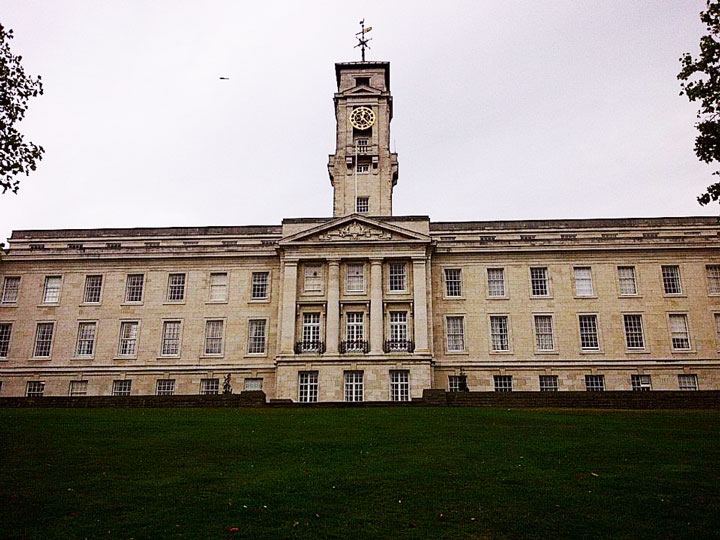
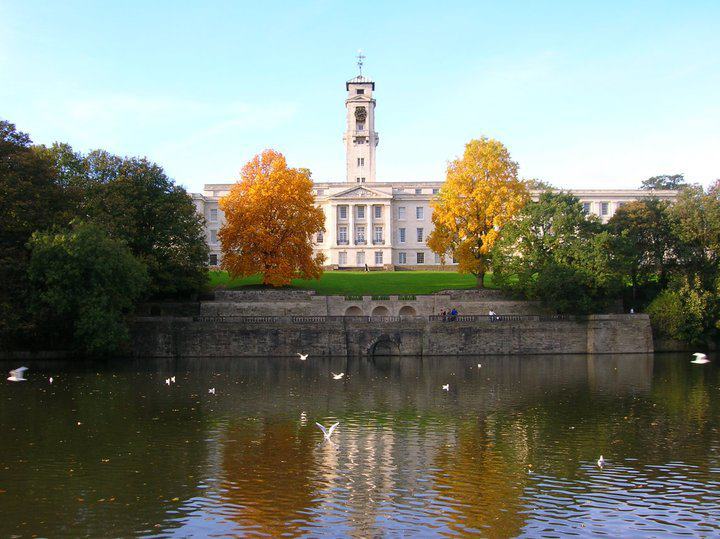
    anwesha-pal8The University of Nottingham, UK is divided into four campuses where the University Park Campus is the one where the school of law is situated amidst beautiful gardens and a lake with swans and lots of greenery. The hopper bus services are very effective which transfer you from one campus to the other for free. These are double-decker buses which run every few minutes.

    A funny thing to note here would be that two of University of Nottingham’s campuses had been shown in a Bollywood movie called Teri Meri Kahaani, which some of our European and English professors went to watch too!
    Well, I think one of the best experiences while living in the UK was when I got the opportunity to watch the Olympics (rhythmic gymnastics) at the Wembley Stadium.


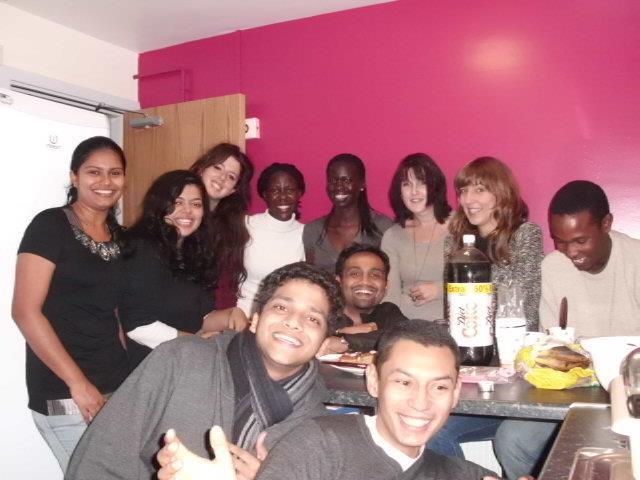
    Holi at Nottingham
    Holi at Nottingham

    How’s the Indian fraternity over there? Are there many Indian students?

    The Indian community in the University is not very big. The LLM Class of 2011-12 had around 100 students out of which 25 were Indians and a few Indian origin UK citizens. The Asian community is pretty big there with a lot of students from China, Korea and South East Asia. There are many societies such as the Indian society, the Hindu society, the ISKCON society and so on where you can meet a lot of Indians too who are enrolled in various fields of study at Nottingham. These societies make you feel like you are a part of a family away from home and the activities during Holi and Diwali were very well organised which my friends from all cultures and ethnicities enjoyed alike. There are quite a few excellent Indian restaurants that have all-you-can-eat buffets in store. They are preferred by Indians and non-Indians alike.


    How is the recruitment/ placement situation for overseas students?

    Ever since the UK did away with the PSW (Post study work visa), the placement situation has not been very encouraging for international students in UK. However, there are a lot of companies including banking companies and other organisations that introduce the graduate program each year. One can always apply for the same and get recruited at the end of the training period. For students applying to law firms in the UK, I found in addition to the international law firms such as Clifford Chance, Herbert Smith and the likes, there are many ethnic minority law firms which release their training contract schemes and vacation schemes every year. The best place for the information regarding employment opportunities is in the law fairs organised by your universities.

    The University of Nottingham has the reputation of getting the majority of students employed each year, undergraduates and postgraduates alike. However, if you are interested in a career in academics, you should keep an eye out for various research associate positions in various universities in the UK including your own university. The Careers and Employability Services cell of University of Nottingham was very helpful with such information.


    How was the academic schedule? Was there a lot of academic work?

    The academic schedule was brilliantly designed, although the courses were very demanding. The course was a mix of full year and half year options along with a dissertation at the end which summed up to 180 credits overall. The students were at liberty to choose the subjects they wanted to take. The assessments for all the subjects were not the same. For some, 15 page essays had to be submitted, whereas for some there were exams in the end. The majority of the subjects one took decided the specialisation such as Masters in International Commercial Laws, European Laws, Human Rights Laws, Maritime law and so on.

    Yes, there was a lot of academic work. For the LL.M. students there were two hour seminars each day for the subjects one chose. The hand-outs for these seminars were given out and additional reading material was put on the portals a week in advance. Studying the given topics thoroughly was a must since the seminar could not be followed otherwise and moreover one would not be able to take advantage of the seminars and the discussions in the class if they were not familiar with the topics. Also, the class performance, which was instrumental in getting recommendations from the professors, was gauged according to one’s participation in the class.

    Formative assessments were also very crucial in understanding the expectations of the professors with regards to our assessments. These were not marked and were meant for practice alone. Apart from that, all the professors were very approachable and always ready to help with your doubts.


    anwesha-pal5What about accommodation?

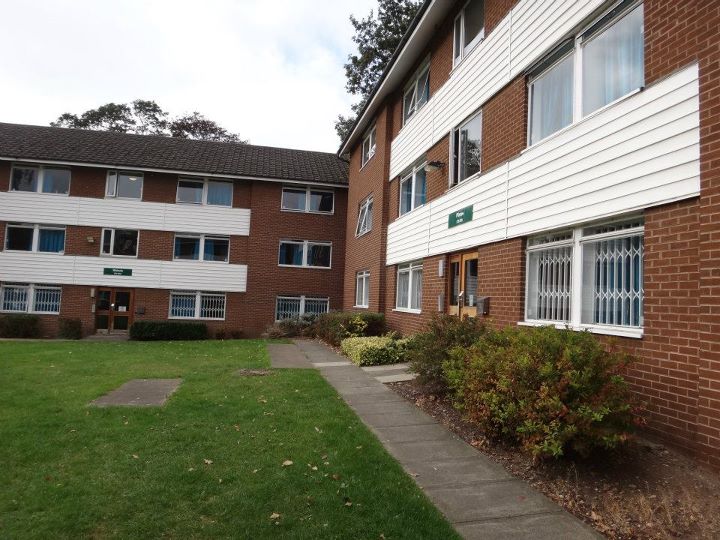
    The accommodation that I had booked before I left for the university was Broadgate Park. It is situated in Beeston that is a 5 minutes’ walk from the School of Law and other administrative buildings. The road leading to the university goes alongside huge playgrounds, a lake with swans and a small hillock paved with neatly trimmed lawns and bushes with concealed lights that give you the feeling of living in a scenic resort.

    The experience was brilliant. The best part of it was when I was placed in the students’ accommodation with girls from various countries in my flat. I made new friends from various cultures, learnt a lot from them and shared my own too.

    With vast green expanses sunny days were enjoyed by the students whiling away their time on these lawns, debating over issues of politics, playing games and flying kites. We would even organise barbecues during summer break.

    Broadgate Park
    Broadgate Park

    Broadgate Park also organises balls every half a year. The Christmas ball is an extravagant affair with European expert acrobats performing difficult acts followed by prom dances by the guests later on in the night.

    The accommodation that I chose was that of a single study, although there are a wide variety of accommodations that one can choose from, including lesser expensive options.

    The flat that I was allotted had flatmates from Canada, Uganda and China. I found really good friends in them. They were very accommodating and immensely helpful. Exploring Nottingham with them was an experience I will never forget. Social get-togethers with classmates were another highlight that was a very culturally enriching experience. I would encourage students going abroad to take advantage of the international experience as a whole and not limit their world to studies alone.

    The accommodation also organises feasts on various occasions for free for the residing students. At such events one can get sumptuous grub, cultural exchange and make new friends.

    Nottingham is a beautiful town that hosts one of the biggest fairs in Europe which is called the Goose fair. The largest Indonesian festival in the UK was held here as well. It is the land of Robinhood and his friends and you can even find the roads of the town named after them such as the Maid Marian Way, Friar Tuck lane and so on.


    anwesha-pal3Tell us about your classmates, was there a predominantly international crowd? What was the general age group of students?

    My classmates were predominantly European and Chinese students. However, there was an eclectic mix of students from the continents of Africa and other Asian countries. The style adopted in their countries regarding research and studying case laws is very different from the ones adopted in India. The way of teaching was mostly in the form of discussion and reading beyond what was enlisted in the seminar hand-outs.

    The general age of students varied from 24 to 40 years. I met students from Pakistan and Africa who were in their 40s and were either already teaching at various institutions in their countries or working at solicitor firms or were Barristers in London. There was even a student from Czech Republic who was in his mid-thirties and had been working at Clifford Chance for a few years. Some of them were working in Government organisations in their countries.


    Did you get time for any extracurricular activities?

    The course had been designed very beautifully that it even left quite some time for pursuing activities other than the one that were related to academics. During the summers when the lake was not frozen, one could participate in rowing activities around the lake or join the swimming club or the belly dancing societies to learn something new. There are several student-run activities for the health conscious too. Also one could even join the baking club to learn baking or help with the charity functions. There was even a Quidditch society for the Harry Potter buffs. There were societies that enacted period wars, replete with costume and props. For those who were passionate about volunteering, there were charities that needed volunteers to work at the local departmental stores and places like the British Heart Foundation and Cancer Research Institutions to help raise money.

    However, for people who wanted to earn some extra bucks during the breaks, Nottingham being a university town was full of opportunities for students to work in. The ones offered by the university was the Note-taking service and other related support work for the disabled or people with handicaps in the university. The pay was very attractive with almost 16 to 20 pounds per hour with an extra holiday pay. Jobs offered by the university were by far more lucrative than any other jobs that were being offered by other organisations.


    How does one go about scholarships? Does the institute offer any scholarship?

    There are many scholarships on offer such as the Commonwealth Shared Scholarship Scheme, The Developing Solutions Masters Scholarship, IELTS Scholarships, Charles Wallace India trust Scholarship, Aga Khan foundation Scholarships, Goa Education Trust (GET) Scholarships, Chevening Scholarship and so on. The detailed information is given on the university’s website. The University offers a scholarship as well. This scholarship is given by the International Office of the University. Information about the same has been provided on the website.


    What are your future plans? Going forward, how do you expect this experience to influence your career?

    My plan at the moment is to focus on my academic career and move ahead with it. I believe the experience that I have had at Nottingham coupled with my undergraduation from NUJS would be a stepping stone to an academic career that I have always dreamt of. I hope to find better opportunities for my higher research degrees with my experience in Nottingham.