Tag: NUALS

  • “Media and IP law is a fascinating field – creative, fast-moving, and filled with opportunities, but it also takes time to find your footing.” – Thomas Joseph, Vice President – Legal at ITW Consulting Pvt. Ltd.

    “Media and IP law is a fascinating field – creative, fast-moving, and filled with opportunities, but it also takes time to find your footing.” – Thomas Joseph, Vice President – Legal at ITW Consulting Pvt. Ltd.

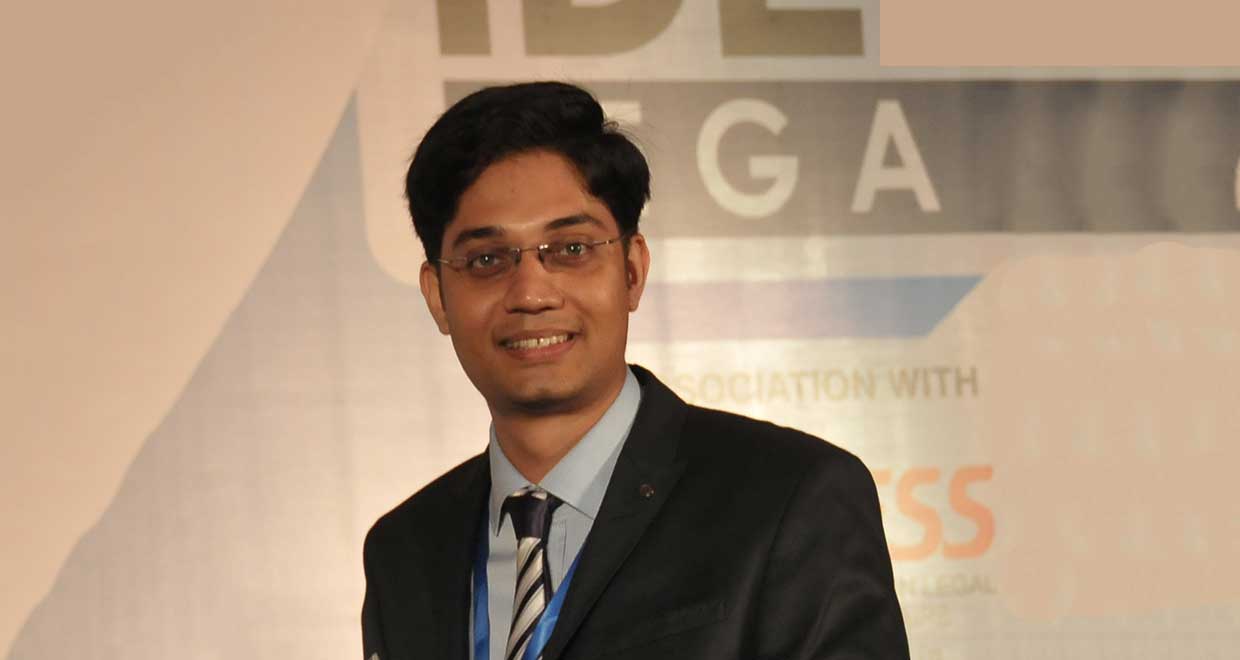
    This interview has been published by Anshi Mudgal and The SuperLawyer Team
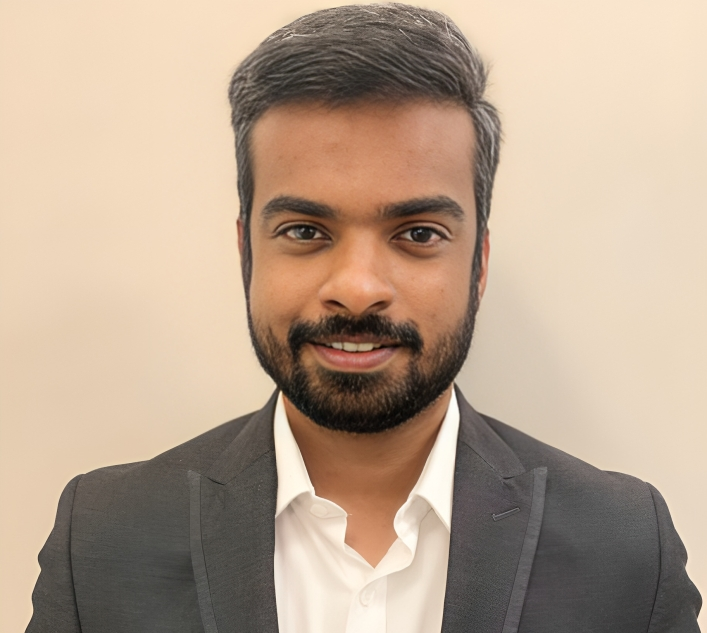
    With over a decade of experience behind you, what initially drew you to the field of media, entertainment, and technology law as your niche area of practice? Were there any specific instances or experiences in your early career that inspired this choice?

    While I was pursuing my undergraduate studies in law, I found myself naturally drawn to intellectual property law. It was the subject that most piqued my interest and felt aligned with my strengths, which led me to pursue a master’s degree specializing in IP law. I would say that I chanced into the niche of media and entertainment, rather than setting out with a deliberate plan.

    While at BananaIP Counsels, a boutique IP law firm based out of Bengaluru, where I started my career, an opportunity came up for a secondment with Yash Raj Films Pvt. Ltd., one of the most prominent film production houses in India. I happened to be available at the time and willing to make the move from Bengaluru to Mumbai. That secondment turned out to be the defining moment in my career – it exposed me to the world of media and entertainment law in a very hands-on way and sparked an enduring interest in the field.

    Over time, that interest organically expanded into the technology space, mirroring the broader industry shift from traditional theatrical models to digital streaming and content distribution. It’s been a rewarding journey watching the intersection of IP, media, and tech evolve – and being able to grow along with it.

    What motivated you to pursue law as a career in the first place? How was your experience pursuing your LL.M. in Intellectual Property Law at NLU Jodhpur, and in what ways has that specialization shaped or benefited your professional journey?

    I’d have to be absolutely transparent here: I’d be lying if I said I always wanted to be a lawyer. Growing up, I explored several career paths, and even when the time came to make a serious decision, I didn’t have a clear plan. Like most parents, mine nudged me toward becoming an engineer or a doctor. But the problem was, I was genuinely terrible at math and chemistry. To this day, integration, differentiation, and organic chemistry remain terrifying concepts! That’s when the idea of law entered the picture – something that seemed respectable enough to satisfy my parents (especially since my father was once a lawyer), and doable enough for me to take a chance on.

    That’s how I ended up in law, and while my entry wasn’t driven by some lifelong calling, I’ve loved every moment of it since. The learning process, the anxiety of the early years, the timidness in client calls, the thrill of my first contract closure – it’s been a rewarding journey in every sense.

    Pursuing my LL.M. in Intellectual Property Law at NLU Jodhpur was a pivotal experience. I still vividly remember stepping onto campus and being immediately overwhelmed by the sheer intellectual energy around me. While I already had a budding interest in IP law, the environment at NLU Jodhpur – exceptional professors, a rigorous curriculum, and fiercely bright batchmates – amplified that interest manifold. Some of my most valuable lessons came not just from the faculty, but from my peers, who constantly challenged me to think sharper and work harder.

    The academic foundation I received there has consistently supported me in my professional life, especially during complex negotiations. The theoretical grounding in IP law has helped me back my legal arguments with confidence and clarity. I truly credit NLU Jodhpur for deepening my interest in intellectual property and for equipping me with the tools that continue to shape my practice to this day.

    You began your career with a prominent IP law firm. How did that experience help deepen your understanding of intellectual property law, and what aspects of that role proved to be particularly beneficial in building your foundation?

    I began my career with BananaIP Counsels, a boutique IP law firm based in Bengaluru. For any young lawyer keen on intellectual property law, I’d say it’s one of the best places to start – and that’s coming from firsthand experience. The kind of exposure and practical learning I received there helped build a solid foundation that I continue to rely on to this day.

    In the initial months, I was completely immersed in trademarks, copyrights, and designs, primarily focused on registration and prosecution work. BananaIP managed a massive portfolio for clients across diverse sectors, most of which were still at the prosecution stage. I was part of a two-member team handling the entire portfolio, which meant I was thrown into the deep end very early on. It was intense, but incredibly enriching. That level of responsibility so early in my career helped me develop a strong grip on the basics and a sense of confidence in client-facing work. One of the things I particularly enjoyed was engaging with clients, understanding their businesses, their concerns, and helping them make informed decisions. 

    The first contract I ever worked on was a software development agreement, and it was anything but simple. At the time, I felt like I was stretching every intellectual muscle I had, even though in hindsight, my contribution was probably quite limited! Still, I remember enjoying the process thoroughly – it was a taste of what was to come.

    The secondment with Yash Raj Films, as I mentioned earlier, was a turning point. It marked my entry into the world of film production agreements, artist contracts, licensing and merchandising arrangements – areas I wouldn’t have accessed so early in my career if not for that opportunity. I firmly believe that I have had takeaways from each and every contract that I have worked on, and the negotiations around them.

    While I may not have applied it consistently over the years, one lesson from my time at BananaIP that has stayed with me is the understanding that a contract doesn’t need to be 50 or 100 pages long to be effective. I learned this early on under the guidance of Dr. Kalyan C. Kankanala, the Managing Partner. With the right language and clarity, even a concise document can robustly protect a client’s interests. It’s a principle I continue to keep in mind with every deal I work on.

    After your time with the law firm, you transitioned into in-house legal roles. What prompted that shift, and what differences did you observe in terms of work culture, responsibilities, and expectations between law firm and corporate legal environments?

    The engagement with Yash Raj Films (YRF) gave me an initial taste of the in-house life – though not entirely, since it was still a secondment. I was technically still a firm representative, embedded within a corporate setup. That said, I was dedicated exclusively to YRF and found myself enjoying what seemed like the relatively comfortable pace of an in-house role. Being in the media and entertainment space definitely had its allure as well, and I was keen to explore the other side. 

    But I soon realised how misleading that perception was!

    When I eventually transitioned into a full-fledged in-house role, I quickly understood that the challenges are very real – just different from those in a law firm setting. Gone were the days where I could present multiple legal options to a client and leave the final decision to them. As in-house counsel, you’re not just an advisor – you’re a stakeholder. The responsibility to safeguard the organisation’s interests rests squarely on your shoulders, and that burden isn’t one to be taken lightly.

    You have to own every piece of advice you give, make judgment calls with clarity, and ensure that risks are mitigated to the greatest extent possible. It’s a role that demands both precision and accountability.

    While I do sometimes appreciate not having to worry about business development targets – something law firm lawyers are always chasing – I’ve also come to understand just how critical relationship building is within an in-house setup. Whether it’s negotiating a contract or resolving a dispute, trust and rapport with internal teams and external partners make all the difference in getting things done efficiently.

    During your time at Sony Pictures Networks, you dealt with a wide range of legal responsibilities, from content acquisition and syndication to anti-piracy and artist engagement. What were some of the major legal or strategic challenges you encountered in that role?

    My time at Sony Pictures Networks was incredibly enriching and dynamic. I was brought on board specifically to handle the legal work for Sony’s sports network of channels – a significant shift from my prior experience, which had been largely focused on films. That transition itself was a steep learning curve. Sports broadcasting brought with it a whole new set of commercial structures, rights frameworks, and timelines. But it also offered a fantastic opportunity to expand my understanding of the broader media ecosystem and quickly adapt to a fast-paced, high-stakes environment.

    We had a very lean team at Sony, which came with its advantages. The exposure I received there was tremendous—not only in terms of the volume of work but also the variety. Fortunately, Sony as an organisation extended to me the flexibility to go beyond sports, and I had the opportunity to work on transactions related to entertainment content as well—both regional and international. This included production agreements, satellite service arrangements, IT services, and more. It gave me a well-rounded perspective of the business and the interconnectivity between various content verticals.

    The breadth of work – from content acquisition and syndication to anti-piracy, platform distribution, marketing, and brand partnerships – meant that no two days were ever the same. I particularly enjoyed working on contracts related to Sony’s digital streaming platform, SonyLIV. It was exciting to be part of the team navigating the legal landscape for a platform that was growing rapidly and experimenting with new formats, content categories, and user engagement models. Drafting and negotiating deals for SonyLIV required a different lens, one that considered evolving consumption patterns, dynamic digital rights, and a constantly shifting regulatory backdrop.

    One of the major legal and strategic challenges I encountered was in the area of content acquisition and syndication, particularly in navigating the complexities of rights management across multiple platforms and territories. With the growing dominance of digital platforms and shifting consumer behaviours, it became crucial to ensure that the licensing frameworks we were working with were future-ready, accounting for evolving monetisation models like OTT distribution, catch-up rights, and platform-specific windows. Negotiating these deals required a strong grasp of both legal nuance and business strategy, especially when dealing with high-value content.

    Anti-piracy was another area that stood out as both challenging and rewarding. The legal framework was only part of the solution – what truly made a difference was working cross-functionally with technical teams, content security partners, and external counsel to develop a holistic strategy. We had to move fast, be proactive, and often act under significant time pressure to protect high-value broadcast properties from unauthorised distribution online.

    Overall, my time at Sony helped sharpen my commercial acumen just as much as my legal skills. I was fortunate to work alongside brilliant business and creative minds, and I walked away with a deeper understanding of how to structure deals that are legally sound, commercially viable, and operationally practical.

    As Vice President – Legal now, you manage complex global commercial contracts across industries like media, gaming, and cryptocurrency. How did you navigate legal challenges in emerging and often uncertain areas like cryptocurrency, where the regulatory framework is still developing?

    As Vice President – Legal at ITW Consulting Pvt. Ltd., a leading sports marketing consultancy, I’ve had the opportunity to work across a wide spectrum of sectors, including cryptocurrency platforms and brokers. While our core domain is sports marketing, our client base is incredibly diverse, and increasingly includes players from emerging sectors like crypto who are keen on expanding their market footprint through promotional campaigns and activations.

    One of the more nuanced legal challenges in this space has been navigating the advertising and marketing compliance landscape for crypto-related clients. The regulatory framework around cryptocurrency in India continues to evolve and remains somewhat fragmented, particularly in the context of promotion and advertising. This makes it critical for us to be proactive and cautious when facilitating campaigns for such clients, especially those involving high-visibility assets like athlete endorsements, jersey branding, and on-ground activations during major sporting events.

    Advertising, particularly in the crypto space, is highly dynamic. Over the past couple of years, we’ve seen increased scrutiny from regulators and self-regulatory bodies like the Advertising Standards Council of India (ASCI). The ASCI guidelines, for instance, mandate that all crypto-related ads carry specific disclaimers, avoid misleading statements, and are framed in a way that ensures consumer awareness of the associated risks. These requirements apply not just to traditional media but also to digital formats, influencer-led promotions, and branded content.

    In our role, we take it upon ourselves to closely monitor regulatory developments and ensure that the marketing campaigns we help structure are fully compliant. This involves vetting creatives, advising on appropriate language and disclaimers, coordinating with talent managers to ensure alignment with endorsement regulations, and flagging any potential reputational or legal exposure to both the client and the sporting entities involved.

    What makes this particularly challenging is the pace at which the landscape changes. We’ve had instances where guidelines were updated mid-campaign cycle, requiring real-time legal intervention and rapid reworking of campaign material. It has reinforced the need for agility and close coordination between legal, creative, and client servicing teams.

    Overall, the experience of working with crypto clients has sharpened our ability to operate within uncertain legal terrain while still enabling effective, compliant brand campaigns. It’s an ongoing balancing act – protecting the interests of all stakeholders while allowing innovation in the way brands engage with sports audiences. 

    Currently, your company operates across jurisdictions such as the UK, UAE, Sri Lanka and Bangladesh. How do you handle cross-border legal compliances, especially when it comes to reconciling differing regulatory standards, managing jurisdictional risks, and ensuring contractual consistency? 

    At ITW, our operations span multiple jurisdictions including the UK, UAE, Sri Lanka and Bangladesh, each with its own unique regulatory and commercial landscape. Managing legal compliance across these markets requires a combination of structured internal processes, a proactive risk management approach, and at times, collaboration with reliable local counsel. 

    Our approach typically begins with in-depth legal research to understand the local regulatory environment and identify key areas where local laws diverge from Indian law or from each other. This helps us tailor our contractual structures accordingly and flag jurisdiction-specific risks early in the deal cycle.  Where matters are particularly nuanced, sensitive, or enforcement-heavy, we do supplement our internal research with guidance from trusted local counsels. However, we remain deeply involved in the interpretation and application of such advice to ensure it aligns with our business context and deal objectives.

    One of the core challenges is reconciling differing regulatory standards, particularly around areas like advertising laws, data protection, taxation, anti-bribery, and foreign exchange regulations. The first step is always jurisdictional risk mapping: understanding where local laws diverge significantly from Indian legal standards or from each other, and identifying areas that may require bespoke contractual treatment. 

    We mitigate these risks by working closely with experienced local counsel in each jurisdiction, especially when it comes to structuring agreements, reviewing campaign compliance requirements, or interpreting local laws that impact talent contracts, IP rights, or payment flows. We also build jurisdiction-specific clauses into our contracts, ranging from governing law and dispute resolution mechanisms to regulatory compliance representations and exit rights, ensuring each agreement is not only enforceable but also commercially viable across markets.

    Contractual consistency across jurisdictions is another key priority. While commercial terms may vary, we maintain a common legal backbone for our master service agreements, advertising agreements, and IP licensing documents. This standardisation ensures internal clarity and operational ease, while still allowing flexibility for local adaptation.

    Additionally, we’ve institutionalised internal legal review protocols for cross-border deals, including multi-tier approval processes, and regular compliance check-ins with our business and finance teams. 

    Ultimately, operating across borders requires striking a balance between legal risk management and commercial pragmatism. Our goal is to be a business enabler, facilitating seamless execution while ensuring that every deal aligns with both global compliance standards and local legal realities.

    Looking back, what has been one of the most challenging cases or experiences you’ve faced in your legal career, and how did you overcome it? Also, how do you stay updated with the ever-evolving landscape of IP and technology law?

    I’ve always found answering the first question quite challenging. Unfortunately, I wouldn’t be able to give you a straight answer in this instance either. All I can say is that whenever I’ve faced challenges during the course of my career, they felt at the time like insurmountable mountains – situations I had no idea how I’d navigate. Some of those I managed to overcome; in many others, I failed miserably. But with the benefit of hindsight, I now view those moments through the lens of what they taught me. Often, I find myself wondering if they were really as daunting as they seemed back then. What has remained with me are the lessons – whether it was about managing expectations, communicating under pressure, or simply learning how not to handle a situation. Every experience has contributed to shaping how I approach my work today.

    As for staying updated with the ever-evolving landscape of IP and technology law, I try to stay curious and consistent in my learning. I regularly track regulatory updates, case law developments, and global trends through a mix of legal journals, newsletters, and reliable blogs, both domestic and international. I also find that industry-specific reports and thought pieces published by consulting firms often provide valuable insight into how law intersects with business strategy in tech and media.

    Most importantly, I learn a lot through practical exposure, by working on transactions that push the boundaries of existing frameworks and force me to explore new interpretations. In many ways, the clients and teams I work with keep me on my toes more than any publication can. Conversations, negotiations, and even internal debates often lead to the most meaningful learning moments.

    What advice would you offer to young lawyers or law students aspiring to enter the dynamic fields of media and IP law? Are there any values, habits, or skills they should focus on developing early in their careers?

    If I had to give one piece of advice to young lawyers or law students aspiring to enter the world of media and IP law, it would be this: stay curious and stay patient.

    It’s a fascinating field – creative, fast-moving, and filled with opportunities, but it also takes time to find your footing. You might start out doing what seems like routine or administrative work, but those early experiences often lay the strongest foundations. Be open to learning from everything, even the smallest tasks.

    Develop the habit of reading – contracts, case law, industry news. Understanding how the law interacts with business, creativity, and technology is key in this space. At the same time, work on your communication skills. You don’t just need to know the law – you need to be able to explain it clearly to people who may not.

    Another thing I’d say is: don’t be afraid to ask questions. Some of the best learning I’ve had came from simply being curious enough to say, “I don’t understand, can you explain?” Over the years, I’ve also found that when younger colleagues or interns ask me questions, it often leads to discussions that help me reflect and learn as well. Sometimes, their questions challenge assumptions or bring in a fresh perspective I hadn’t considered. Those exchanges are some of the most rewarding parts of the job, and a reminder that learning is always a two-way street.

    And finally, be kind, to yourself and others. Law can be intense, and it’s easy to get caught up in chasing the next big thing. But if you focus on doing good work, being dependable, and staying grounded, the rest has a way of falling into place.

    There’s no one path to success in this field, and that’s the beauty of it. So take your time, build your skills, and don’t forget to enjoy the ride.

    Lastly, given the demanding nature of your work, how do you strike a balance between your professional and personal life? What does unwinding or relaxing look like for you?

    To be honest, that’s something I’m still figuring out. Striking a balance between work and personal life doesn’t come naturally to me – disconnecting from work can be difficult, especially when you’re fully invested in what you do. Thankfully, I have a very strict (albeit quite understanding) wife and the cutest one-year-old who keep me in check and remind me when it’s time to log off.

    Unwinding, for me, is all about the simple joys – spending time with my family, catching up with friends, planning a quick trip, or just having a quiet evening at home. I enjoy reading, and I try to stay active through football, badminton, and more recently, pickleball (was just curious to know what the fuss was all about, but I’ve grown to really like it).

    Balance is still a work in progress, but I’m grateful for the people and little routines in my life that help me step away from the legal grind and recharge.

    Get in touch with Thomas Joseph –

  • It is always an advantage to have a 360-degree perspective on briefs, as it helps avoid situations where you win the battle in one forum yet lose the war in another- Lakshmi Menon, Independent Legal Practitioner at Law Chambers of Lakshmi Menon

    It is always an advantage to have a 360-degree perspective on briefs, as it helps avoid situations where you win the battle in one forum yet lose the war in another- Lakshmi Menon, Independent Legal Practitioner at Law Chambers of Lakshmi Menon

    This interview has been published by  Priyanka Karwa and The SuperLawyer Team

    Can you share with us your journey and what inspired you to pursue a career in law, especially with your impressive academic achievements?

    Like many others, I was once keen on cracking the UPSC exams and making my mark as an IAS officer. I was told by my family and friends that attempting the UPSC with law as a subject paper would make things easier. This made perfect sense. Law is after all a key pillar of governance, and I believed that having a degree in law would naturally give me an edge over my competitors when attempting the UPSC exams. So to my mind, the law was simply a means to an end at first. This is by no means to say that I did not take my CLAT preparations very seriously. I moved to ISC from the State Board after Class X as I felt this would allow me to pursue subjects that were more relevant for CLAT with more rigor. I also signed up for CLAT coaching classes, and gave it my best to make it to a good law school. 

    My larger goal of clearing the UPSC did not waiver, that is until I actually started law school and fell thoroughly in love with the law. I was awed by this complex network of norms that held the social contract together while leaving enough room for clever interpretations and mental gymnastics that it never became tedious. I lost myself in my textbooks and lectures, spending hours at the university library to soak in as much as I could of what the law had to teach me. I soon realized that the law was no longer something I had to do, but something I wanted to do. Once this realization hit, I never looked back.

    As for my “academic achievements” as you call it, I believe they are the by-products of  two things. First, a genuine fondness for what I do, and second, discipline / hard work. I also believe that consistent performance, be it at academics or any area for that matter, is just as important as excellence. Consistency takes determination, and a willingness to commit continuous effort to whatever one does. This belief has helped me stay focused not just in my academics, but also in my work.

    You’ve had a diverse range of experiences, from working at a prestigious tax law firm to handling various civil and commercial matters. What prompted you to establish your independent law practice in 2019?

    It was in my first year of law school, when I participated in the Nani Palkhivala Direct Tax Moot in Mumbai, that I was drawn towards tax law. This led me to pursue an internship with Lakshmikumaran & Sridharan in my third and fourth years, when I was fortunate enough to be offered a PPO. The time I spent at LKS in the formative years of my career was crucial, as it concretised my affinity towards tax law and ensured that it would remain one of my core practice areas. My subsequent stint reading for the BCL at Oxford University considerably broadened my professional horizons and opened my eyes to the fact that I need not pigeonhole myself into any one branch of law. The course structure allowed me to craft a cocktail curriculum for myself comprising among other things finance, trade, and comparative corporate law, which prompted me to look beyond my interest in tax when charting my career trajectory. My internship with Mr. Philip Baker, QC, served as a reminder of the adrenaline rush that came with running a well-researched and well-presented matter, and rekindled my interest in litigation. Upon my return to India, I spent some time learning the ropes of litigation at the chambers of Adv. C.K. Nandakumar (now a designated senior counsel), where I also learned invaluable lessons on running an independent law practice. From there, establishing my own chambers seemed a natural progression and I was able to fulfil that dream in 2019 – thanks in no small part to the blessings and support of my wonderful group of family, friends, seniors, and colleagues. 

    Your practice covers corporate insolvency, property, tax, and other commercial and civil matters. Could you give our listeners some insight into the unique challenges and rewards of handling such a wide array of legal areas?

    There are moments when I identify all too well with the adage “jack of all trades and master of none” as a general practitioner, given the sheer scope of work. Apart from needing strong foundations in all areas in which you practice, you also need to constantly stay on top of domain developments – be it a landmark judgment settling (or-unsettling) a substantive question of law, or an obscure circular from a local authority that manages to make existing workflows obsolete in one swift stroke. Many colleagues also argue, perhaps rightly so, that the world is heading towards super-specialization. Increasingly complex problems call for increasingly complex solutions, and some say that it is simply too difficult if not impossible to gain the required level of insight into multiple domains at once.

    However, for every moment of uncertainty, there are two others to remind me that there is still immense value in what we do. It is always an advantage to have a 360-degree perspective on briefs, as it helps avoid situations where you win the battle in one forum yet lose the war in another. Such a perspective only comes with experience gained by handling matters across domains and forums. We also do not work in silos and make it a point to enlist the help of domain experts as and when required.

    In addition, and most importantly, the subjects we handle are all interconnected at various levels. It is not possible to practice say corporate or commercial law without having a good grip on property and tax law. Ultimately, what makes a good lawyer is their innate understanding of how people work and think. The broader your sense of how and what makes the world tick, the more effective you are as a lawyer. 

    You’ve represented both government and non-governmental organizations, as well as tier 1 and 2 law firms. How do you adapt your approach when working with different types of clients and organizations?

    Every client, whether a government organization or a business, has a set of attributes that is unique to them. This could be their nature of work, familiarity with the legal system, reporting requirements, personal convictions – the list goes on. There are some clients who need to be sat down and patiently walk through their legal strategy many times over, while there are others you may not meet in person at all and with whom you interact only when strictly necessary. Needless to say, a one-size-fits-all approach will not work here and you are expected as a lawyer to tailor your approach based on the unique attributes of the client as well as the matter at hand.

    While the specifics may vary, there are some aspects of client relationships that stay the same irrespective of the client. For instance, I make it a point to handle every client with a high degree of professionalism, always respecting the human element behind each litigation. I do not differentiate my clients on an interpersonal level based on where they come from or what their background is. Lessons learnt from working with some clients can also be transposed to others, making the overall processes stronger. 

    As a guest lecturer at several universities and a guest editor for peer-reviewed journals, you’re deeply involved in legal academia. How do these roles complement your legal practice, and what do you enjoy most about them?

    While I have carried forward an interest in legal academia from my law school days, I am not sure it would be accurate to call me “deeply involved” at this point, as time and bandwidth constraints have certainly impacted my involvement. In the past, I used to be a frequent contributor to my university law journal and newsletters, as well as some external publications. We had an in-house knowledge building team at LKS, whose high-quality content kept us young lawyers on our feet and up to date. At Oxford, I was part of the South Asian Political Thought Discussion Group and occasionally coached younger students for moots and peer-reviewed their papers. I still receive invites to deliver guest lectures on tax and insolvency law from time to time and speak at various events / platforms. 

    I believe it is important to keep in touch with legal academia in whatever limited way our work schedule permits. Making time to read the right literature and also interact with students and other academicians will go a long way in strengthening one’s knowledge pool, particularly on aspects one may not routinely encounter in the course of work. As the rush from one matter to the next rarely leaves room for creative thought or knowledge-building, it becomes necessary to find other ways to organically stay in touch with academia. This could even be something as simple as setting aside time to discuss learnings with peers and colleagues.

    You’ve been recognized with awards such as the “Emerging Women’s Leader” award. What do you believe contributed most to your success, both academically and professionally?

    Success in any field in my opinion is largely the product of three things – determination, hard work, and consistency. If you give enough time and commitment to anything you do, success will find you sooner or later. Cliched as that might sound, I can say from personal experience that the formula does work. I had my priorities well-set from a very early age and was highly driven to be good at whatever I did. I knew my strengths and weaknesses well, and I put in as many hours as it took to get the results I wanted. I was also fortunate to have a good support system of family that helped me however they could, especially my parents, my husband and one particular maternal uncle, be it through words of encouragement to inspire me or objective reality-checks to keep me grounded. 

    In your impressive list of publications, you’ve covered topics ranging from tax law to arbitration. Could you highlight one area of law that you’re particularly passionate about and why it matters in today’s legal landscape?

    Although I have written on a variety of matters in the past, they have all largely been the outcome and logical extension of some litigation or advisory opinion that I have rendered. This is an unfortunate reflection of the reality that litigation leaves very little time to focus on other areas of interest.

    That said, if I were to highlight one area of law as my favourite, it would have to be insolvency and bankruptcy law. As an office, we handle matters under the IBC across all forums, from the NCLT up to the Hon’ble Supreme Court of India. This has given us a well-rounded and elaborate perspective in handling complex IBC matters. Our interactions with a variety of stakeholders including shareholders, directors, creditors, resolution professionals / liquidators and others in the system have not only helped us better understand the commercial motivations behind many decisions made in the IBC space, but they have also given us the ability predict with some accuracy the roadblocks in a resolution / liquidation process and plan around them. India’s experience with insolvency and bankruptcy may still be maturing, but I very much look forward to continuing my work in this evolving domain.

    Given your extensive experience in the legal field, what advice would you offer to recent law graduates who are just starting their careers and navigating the legal profession?

    As a first-generation woman lawyer, I was told at various points throughout my journey that the road ahead would be more than a little challenging. When I left my plush corporate job and set out to read for the BCL and thereafter, came back to India to be a full time litigator, there were several well-wishers who gave me similar caveats about the transition to litigation. I can now say with the benefit of hindsight that they were not wrong. There is a lot of struggle and even more uncertainty, especially as an independent practitioner. In my initial years of independent practice, the lack of definite answers like where / when / how will the next brief come if they come and will they pay, were all very unsettling. And very honestly, they still are.

    What I was not told enough however, was how rewarding an experience it is to brave the storm and watch yourself grow into the lawyer you always wanted to be. It is in fact the years of struggle that taught me to trust myself better. I took many leaps of faith, some small and some big, I made mistakes, learned from my mistakes, sought help and gave help where I could, and made it my life’s mission to pursue my dream of becoming a good lawyer. I will take the very fact that I am speaking to you now as proof that all the time and effort put in over the years did pay off. 

    This would be my advice to my future colleagues who are just stepping into the legal profession as well. You have chosen a career full of promise and intrigue. The road to success may be more treacherous for some of you than others, but it will not be easy for anyone. The law truly is a jealous mistress, and will demand all the attention you can give. However, if you give it the attention it deserves, the sky’s the limit. Take the time to introspect and know the direction you wish your career to go, keeping in mind that there always is room to reorient down the line. Once you have this clarity, work with an office that teaches you not just the subject but also the smaller life lessons that will help you in your career. Build a robust network of friends, colleagues, and acquaintances, as the importance of reputation through word-of-mouth cannot be overstated. Last but not the least, never stop learning. There is an ocean of knowledge available at your fingertips – make good use of it.

  • Pratik Bakshi, Business Development Associate, J. Sagar Associates, on launching World Law Forum, and resolving Business and Human Rights disputes through arbitration

    Pratik Bakshi, Business Development Associate, J. Sagar Associates, on launching World Law Forum, and resolving Business and Human Rights disputes through arbitration

    Pratik Bakshi graduated from National University of Advanced Legal Studies (NUALS), Kochi in the year 2018. He is currently working as a Business Development Associate with J. Sagar Associates, Gurugram. He has founded several organisations, such as World Law Forum, the Network for International Law Students, and The Union Debates (previously, Indian Union Debate Forum). He is one of the few people working extensively on Business & Human Rights in India and is a member of the Sounding Board of the Hague Rules on Business and Human Rights International Arbitration, a committee working on establishing a system to adjudicate business and human rights disputes through arbitration.

    In the past, he has worked with Ram Jethmalani as his PR/Social Media Manager; and advises various law-focused start-ups, including The Negotiation Academy, The European Centre for Career Education etc. Through his latest venture, World Law Forum, he aims to bring a transformation in the world through law. World Law Forum has since its foundation worked on crucial and niche areas, such as Modern Slavery in Australia and Anti-SLAPP Legislation in India.

    In this interview, he talks to us about-

    • His law school experience at NUALS;
    • His internship experiences with Mr Mahesh Jethmalani, Khaitan & Co. and J. Sagar Associates;
    • His experience as the founder of Network for International Law Students and World Law Forum;
    • Prioritising works in law school;
    • His appointment experience as a Business Development Associate with J. Sagar Associates; and
    • His opinion about resolving human rights disputes through arbitration.


    HOW WOULD YOU LIKE TO INTRODUCE YOURSELF TO OUR READERS? PLEASE SHARE YOUR ACADEMIC AND PROFESSIONAL BACKGROUND.

    I like to introduce myself as a lawyer by profession and an entrepreneur by passion. I graduated earlier this year from the National University of Advanced Legal Studies (Kochi) and I am currently working at J. Sagar Associates. Since my first year at law school, I have founded six organisations, half of them were successful and the other half not-so-successful. But I guess, that’s part of being an entrepreneur.

    WHY DIDN’T YOU OPT FOR CONVENTIONAL DEGREES IN ENGINEERING OR MEDICINE?

    To begin with, I wanted to be an automobile engineer and had made up my mind to develop the next cutting-edge car design and technology. I remember being super-excited when we were about to start our Physics lesson on ‘Torque’ in school. Almost needless to say, I didn’t understand anything, and after a few weeks, I made a conscious decision that it was not my thing. Well then, like many others, I chose law because I didn’t fit in elsewhere. I also heard that law graduates made good money compared to other graduates, so that helped me make my mind a bit as well. Looking back, I would say that it was one of the best decisions that I have ever made in my life.


    TELL US A BIT ABOUT YOUR TIME STUDYING LAW AS AN UNDERGRADUATE AT NUALS, COCHIN. ARE THERE ANY MEMORABLE MOMENTS OF LAW SCHOOL, WHICH YOU WOULD LIKE TO SHARE?

    When I started law school, there was absolutely nothing to do there. We had classes for six hours till 04:30 in the evening; and the library would shut at about 06:30 if I remember correctly. There was barely any time and resource for the students to take on any extra-curricular or extramural activities. Things changed and became better after a year or so with some positive reforms coming in, but personally, I had already lost hope/interest in whatever goes on in law school. By then I had already started the Network for International Law Students (NILS), which kept me busy. It was a new organisation then, and I was excited to work with students and lawyers from across the world. Then during my third year, I contested for being the Debate Secretary of the law school and lost (by a huge margin, I remember). I was the most experienced in organising debates, or would I believe, but then you know how things work in an election. So, I started another organisation called the Indian Union Debate Forum along with a classmate of mine, who was equally frustrated with the whole high-drama politics that was going on. The idea was to introduce the Oxford/Cambridge Union-styled debates in India. We had our first debate three to four months later and were thrilled by the response that we got. We got Ram Jethmalani, Subramanian Swamy, Manish Tewari, Madhu Kishwar, KTS Tulsi, Pinky Anand among others as speakers and debate against each other – a never seen before the scene in India. So, it was probably the most engaging and exciting period of my law school life.

    INTERNSHIPS PROVIDE STUDENTS WITH THEIR FIRST EXPOSURE TO THE PRACTICAL ASPECTS OF THE LEGAL PROFESSION. COULD YOU TELL US ABOUT THE INTERNSHIPS YOU TOOK UP, AND WHAT YOU LEARNT FROM THOSE EXPERIENCES?

    Internships are helpful because they help you realise what you are made for. For me, it made me realise that I am certainly not made for transactional law. Of all the internships that I have done, I have enjoyed three of them thoroughly – Mahesh Jethmalani, Khaitan & Co, and J. Sagar Associates. When I was an intern under Mahesh Jethmalani, there wasn’t a lot of work for the interns to be honest, but the aura of watching Jethmalani Jr. in the court and see him argue made up for it. Plus, you got to be involved in all the cases that you see every day in the news, so it was all very exciting. Next up, Khaitan & Co, I was with a great bunch of people and enjoyed all the work that was given to me – primarily disputes matters. And lastly, JSA because it introduced me to the area of business development for law firms in which I am currently involved now.


    YOU ARE THE FOUNDER OF THE NETWORK FOR INTERNATIONAL LAW STUDENTS (NILS), A STUDENT-RUN BODY WHICH HAS ITS PRESENCE IN 26 COUNTRIES. COULD YOU PLEASE TELL US A BIT ABOUT THIS ORGANISATION AND WHAT MOTIVATED YOU TO ESTABLISH THIS ORGANISATION?

    As said earlier, when I joined law school I always felt that one has to take a lot of his/her own initiative to keep herself engaged. I believe it’s the same with most law schools in India and other developing countries. I started NILS with a focus to provide something to students especially from developing countries to farther the exposure and engaging themselves in activities which otherwise they wouldn’t in their law schools. We did some interesting events and exchange programmes which were highly praised and received wide attention. I was fortunate to come across a bunch of enthusiastic students who believed in my idea and took it to the next level; and as you said correctly, currently we have over 5000 members in 26 countries across all continents, except Antarctica of course.


    LATELY, YOU CO-FOUND WORLD LAW FORUM. WHAT STIRRED YOU TO LAUNCH THIS ORGANISATION AND CAN YOU TELL US A BIT ABOUT ITS GOALS?

    I was set to retire from NILS in 2018. Many people advised me not to retire as it was my baby, but then I wanted NILS to grow as a democratic organisation, run by and for law students. Therefore, it did not make sense for me to stay there forever, after ceasing to be a law student. I wanted to take my experience to the next level and founded World Law Forum, along with a colleague of mine who I worked briefly in NILS. The idea behind World Law Forum is to engage people in discussions on areas of law which are rarely discussed upon, either because people are not aware of them or because they think they are not important enough. Therefore, the core-topics that we work on are cutting-edge and will be the most relevant topics in the next decade. We organised the first-ever conference on Modern Slavery in Sydney earlier this year, after the Modern Slavery Act coming into force in the New South Wales. In India, we organised India’s first-ever conference on Strategic Lawsuits Against Public Participation (SLAPP), with over 620 participants. Therefore, the areas of our work are generally the “first-ever” or “among the firsts”, and we try to promote such areas of law, which would be relevant in the future. So far we have got a really good response, with eminent people including Head of States, Noble Laureates, Judges and the most eminent lawyers, journalists and academics having attended our event.

    Another thing that led to the foundation of World Law Forum is that we felt that the legal profession is a bit isolated and most events organised in the legal sector involve mostly members of the profession and barely from other professions or walks of life. However, the law is something which affects everyone and therefore ours is a platform for people from all walks of life to come together and discuss the law.


    WAS IT DIFFICULT FOR YOU TO RUN THESE ORGANISATIONS CONCURRENTLY WITH YOUR LAW SCHOOL WORK? HOW DID YOU MANAGE TO HANDLE BOTH THE WORK SWIFTLY? DID YOU EVER PRIORITISE THESE WORKS OVER YOUR ASSIGNMENTS AT LAW SCHOOL?

    It was not difficult at all. Rather, it was the most fun part of my law school. You have to prioritise your work and that’s what I did. There were some subjects in our curriculum that I was not interested in, so they were low on my priority list. While, there were some subjects and professors I really liked, and I focussed on them. And most students in India cover most of the curriculum a couple of nights before the exam, I was part of the same gang. So, it was all good. At least it helped me learn the skill of multitasking which is very essential.


    DO YOU FEEL THAT HUMAN RIGHT DISPUTES ACROSS THE GLOBE CAN BE RESOLVED THROUGH ARBITRATION INSTEAD OF COURTS? IS ARBITRATION THE PROPER ADJUDICATORY MECHANISM TO RESOLVE THESE DISPUTES?

    I am a member of the Sounding Board of The Hague Rules on Business and Human Rights Arbitration. The Working Group is working on developing this system where Business and Human Rights disputes can be solved via International Arbitration. The Drafting Committee is chaired by Bruno Simma, a former Judge of the International Court of Justice.

    So, most of the Business and Human Rights cases arises from countries or regions where the courts and other mechanisms have failed to deliver justice, which can be because of lack of courts or corrupt courts etc. Even where competent courts are available, Arbitration offers an attractive alternative with speedier procedure and awards that are potentially enforceable throughout the world under the New York Convention.

    We are often asked why businesses would who are accused of human rights abuses chose to submit the disputes to arbitration. We must understand that today, the consumers have started looking into the business ethics of companies before buying products and have in the recent past seen boycotting of products of companies accused of human rights abuses. Therefore, when a corporation’s reputation is questioned, the management might prefer speedy resolution of the dispute, rather than a lengthy litigation in court. In the case of arbitration, the parties may also choose judges with expertise in Business and Human Rights, rather than submitting the matter to the court where the judge is chosen by “the luck of the draw”. An expeditious and fair hearing would limit the reputation damage and can also help the victims in accessing justice faster and more conveniently.


    YOU HAVE WORKED AS PUBLIC RELATIONSHIP MANAGER WITH THE OFFICE OF RAM JETHMALANI AND HAVE BEEN ADVISING THE NEGOTIATION ACADEMY ON ITS BUSINESS EXPANSION. WHEN DID YOU DEVELOP YOUR INTERESTS TOWARDS THESE SORT OF BUSINESS DEVELOPMENT WORKS?

    I have known Mr Jethmalani for a while now, as he was the first Patron of NILS. When he resigned from his own newspaper, The Sunday Guardian after an editorial dispute, I suggested that he should consider having his own blog, considering he already has a mass following. He agreed to the idea and I started running his blog/website, and slowly was assigned the task to handle his media accounts. As far as the Negotiation Academy is concerned, I had invited Claudia Winkler to India for a series of workshops on negotiation targeted at law students. Until then, she had mostly trained lawyers; but after seeing the potential in the student market, we decided that an academy on negotiation with a focus on training students would be great. And so, I’ve been involved with the Negotiation Academy from the scratch and advise on the business strategy.

    For most of the last five years of my life, I’ve been doing business strategy and development for the different organisations I have been involved with – so my interest in it evolved over the years.


    HOW DID YOUR RECRUITMENT TAKE PLACE AT J. SAGAR ASSOCIATES? WHAT DOES A TYPICAL WORKING DAY LOOK LIKE FOR YOU?

    I interned with J. Sagar Associates during the final year of my law school and it seemed to be a great place to work for. As I was deciding on what career path should I choose after law school, JSA seemed to be a great stepping stone as I had always admired the principles on which the firm has been founded – of being democratic and providing equal opportunity to everyone; which is a rare sight in the legal industry in India. And so, I showed my interest to have a permanent position in the firm and after sending my CV etc, and I was selected to work for the firm.

    I am responsible for the submissions that the firm makes to different journals, improving market-visibility, working on proposals and pitches, analysing the business of peer law firms, identifying conferences and events which the firm can participate in, and forming other marketing and branding strategies.


    DO YOU THINK YOU LAW DEGREE PROVIDES YOU WITH AN EDGE IN PURSUING YOUR WORK AT J. SAGAR ASSOCIATES?

    The work at the firm is not directly related to law, but then having studied law always provides you with an edge, since it takes you considerably lesser effort in understanding how a law firm works, what visibility is essential for a law firm and what do the clients look for.


    PLEASE SHARE SOME ADVICE TO YOUNG LAW STUDENTS WHO WISH TO HAVE A CAREER IN ENTREPRENEURSHIP?

    I have always followed the principle of ‘Zero to One’ by Peter Theil, which basically means that to be successful in entrepreneurship, you must be the first in the market. If you are just copying someone else or trying to do what already exists in the market, you are only one in the ‘n’ number of competitors. While if you’re coming with an innovative product or service, you are the only one in the market, you get the first-movers advantage and almost enjoy a monopoly till someone else comes up. Therefore, to be successful in long-term, you must be innovative and work on something which is missing in the market; or provide an out-of-the-world perspective/angle to an existing product or service. This applies to all sectors. Even for law firms, one must show how one’s firm is different from its peer law firms. So, you need to find your USP and start working on it at the earliest. Don’t overthink – just go with the flow. You may want to make your Plan A and Plan B, but in entrepreneurship, mere Plan B is not enough, and you might need to plan yourself until Plan Z or even further. But as you start working on it, you learn to improvise and move on. Patience is supremely important. Don’t worry about funding because if you have a solid plan/idea, money would come in from one side or the other. And the best time to start working on it is while you are studying because there’s not much at stake, you have more time and can take risks.


    WHERE DO YOU SEE YOURSELF TEN YEARS FROM NOW?

    It’s a tough question. I don’t generally think that far away. But I would say I see myself as an entrepreneur who has brought at least something valuable to the world. Ticked off my bucket list. Maybe, politics? But I know that I would be a really bad fit in there.


    WHAT WOULD BE YOUR PARTING MESSAGE TO OUR READERS WHO ARE PRIMARILY LAW STUDENTS AND YOUNG LAWYERS?

    Work towards what defines you. Just because you went to law school does not mean you have to be a lawyer. There are so many more opportunities out there if you can convince yourself that it is worth that tiny risk. Parents are always harder to convince, but then they will be convinced in a few months if they see you making a living and happy with what you are doing.


  • Mary Kavita Dominic, Rhodes Scholar, on receiving the coveted honour and writing the perfect Statement of Purpose

    Mary Kavita Dominic, Rhodes Scholar, on receiving the coveted honour and writing the perfect Statement of Purpose

    Mary Dominic is a graduate from NUALS, Kochi, batch of 2017. She is the first student from her university to secure the prestigious Rhodes Scholarship. Mary has always been a passionate advocate for human rights. She has volunteered at a legal aid camp in the Attapady district of Kerala, which sought to enable the indigenous tribal community of the region. She has also interned with HelpAge India and participated in a National Human Rights Commission Survey, in order to fight for the rights of the elderly. She has pursued an online course on International Human Rights by Professor Olivier De Schutter of the Université catholique de Louvai. At Oxford, Mary will read for the Bachelor of Civil Law, focusing on international criminal law and comparative human rights.

    In this interview we speak to her about:

    • Writing the perfect SoP and getting letters of recommendation
    • Striking a balance between academic merit and extracurricular interests
    • Her programme in Oxford and her plans thereafter


    First of all, congratulations for bagging the prestigious Rhodes Scholarship. How and when did you decide to apply?

    I was always in awe of Rhodes scholars, even prior to taking up law. But somehow, I always felt that such a prestigious scholarship was beyond my reach. It was my mother who suggested that I apply for it when she read about it in the newspapers.


    The Rhodes Scholarship is celebrated for its tedious application procedure. Could you take us through it?

    Firstly, you’re required to send in your CV, personal statement and six references (at least three of which should be academic) along with other personal details to the given mail ID. You can also send it by post. Based on this, some applicants are shortlisted for the preliminary interview. I had mine in Delhi. But I hear there were other centres too.

    The preliminary interview is a technical one where the panellists are most likely to be experts in your field. Since I’m a law student, I was interviewed by a legal panel. Likewise, there are panels for science, economics, political science, etc. Based on your performance in the preliminary interview, around eighteen applicants are shortlisted for the final interview. Here, the panel will comprise experts from varied fields. They’ll mostly question you on your area of interest. I think they try to gauge your passion for your proposed area of research.


    When is the appropriate time to apply for the Rhodes Scholarship?

    If you are currently pursuing a degree, you should ideally apply when you are in the final year of your course. Applications generally open in June for Indian students.


    What is the significance of the Statement of Purpose and how long did it take to write yours? Do you have any tips for prospective lawyers out there currently working on their own?

    Personal statements are crucial since they help communicate your passion and why you are a suitable candidate for the scholarship. It also helps them evaluate whether or not you possess any of the qualities that are expected of Rhodes Scholars.

    I must have spent a week contemplating what exactly to include in my personal statement. But the actual writing should have taken two days. I made a couple of drafts before sending out the final one.

    Before writing the personal statement, I watched videos of previous Rhodes scholars that are available online. One thing that all of them agreed on was that there is no straightjacket formula for writing a good personal statement. They do, however, advise you to be honest and explore your own creative self. That would be my suggestion as well.


    How do you go about writing a good Statement of Purpose?

    Like I said, there is no formula. Everyone has different interests and the Statement of Purpose should reflect those individual interests. Your personal statement should convey your passion for your subject and your research. You can talk about a personal incident that inspired you to pursue a particular field of study, or a specific sport that you draw motivation from. It is completely subjective.


    Moving to referrals – how much of a role did they play in your selection? Can you take us through the procedure involved?

    You will need to have 6 referees in mind. At least three of them should be academic referees i.e. professors who are teaching you in your current course or have taught you in your last completed course. There is an online application portal where the referees will have to register personally and upload their references.


    How important are good grades in order to bag the Rhodes Scholarship?

    Academic consistency and reasonably good grades are extremely important, as far as I understand. Since you will be sending in your CV along with other documents, your academic grades will be given sufficient weightage.


    How would you describe a well-balanced CV, one that has the potential to make the cut?

    It is important to have a good mix of both academic as well as extracurricular interests. I mostly had debates and moot court achievements to show for extracurricular achievements. I used to play the electronic keyboard, which was another non-academic activity that I had included in my CV. Before the final interview, I met other applicants, some of whom were national level dancers or sportspersons.

    But most importantly, I believe that the social work you do is extremely relevant because it demonstrates how you propose to give back to society. Internships with NGOs, participating in legal aid camps and volunteering for charitable organisations could have possibly enhanced my application.


    Are moots, or any other activity in particular, given significant weightage?

    Moot Court experience is definitely adds to your application and equips you to handle questions with confidence and clarity. It supplements your research credentials as well. But not having any significant achievement, will not, by itself, be considered a major deficiency in your application. Most importantly, it is the experience that counts.


    How did you prepare for your technical interviews? Describe your most memorable one.

    I had indicated in my personal statement that international criminal law was my specific area of interest. So, I focussed primarily on that area. I had already done a few moot courts dealing with the subject, so I revised the basics of what I had learnt. I had also brushed up on recent developments in that area.

    During the interview, while I was asked certain questions about international law, I was also asked general questions about current issues. One of the questions was about the alcohol prohibition in Kerala and my views on the same. I remember our discussion not being purely legal in nature, but also slightly political, which I rather enjoyed.

    Another question that I distinctly remember and which made me think quite hard was regarding the formation of Telangana and the legal issues surrounding the same. The interview, though challenging, was more like a discussion with the panellists, which was rather enjoyable.


    What are the qualities that are being sought in candidates, and do you have tips on how to hone them best?

    I am not exactly sure what they look for in the interview. Personally, I tried to answer the questions with confidence and clarity. I essentially thought through the entire discussion and tried to make my arguments logically coherent.


    The final round of interviews are notorious for being the most gruelling. What were some of the broad topics touched upon?

    You know, the final interview is not strictly a technical one. However, I found it equally nerve-wracking. Our final interview was chaired by Mr Kumara Mangalam Birla, along with nine other eminent panellists. It was a daunting task to hold your own and not be intimidated in the presence of such distinguished personalities.

    They asked me a wide range of questions from “Where do you think human rights come from?” to “Would you support the sterilisation of women who are likely to give birth to crack babies?” I also remember being asked about the protection of intangible cultural heritage.


    Are the questions random in nature or was there a general broad base where they stemmed from?

    Your CV and personal statement form a broad base for them to question you from.


    Do they prefer someone whose proposed area of research is interdisciplinary in nature or are they looking for someone who is remarkably accomplished in a more specific field of study?

    That is a difficult question to answer. Either way, it is your passion for the subject that really matters.


    Did not having any past Rhodes Scholars in your college pose a challenge while applying for this scholarship?

    To some extent, yes. I was not sure as to whom to approach for advice regarding the personal statement. But I had plenty of support from the faculty who were always honest about the areas that I could improve on and this proved to be extremely helpful. I was assisted by my friends as well as my seniors who had passed out. Some of them even offered to put me in touch with previous Rhodes scholars they were acquainted with.


    What do you wish to do post Oxford University?

    I hope to work at the Office of the Prosecutor at the International Criminal Court in Hague. But ultimately, I want to come to India and be a part of the Legal and Treaties Division under the Ministry of External Affairs.


    Any final tips that you have for juniors who may have already started the application procedure?

    A reasonably good academic performance, participation in extracurricular activities and sparing time for social work is important. For law students in particular, moot court experience and one or two publications might be helpful. However, this does not mean that this is the only way in which you can secure the scholarship. These are merely one or two options that you could consider. Most importantly, try to work on what you think you are passionate about and be honest in your application.


  • Abhishek Sinha, Associate Partner at Khaitan & Co., on how to gain expertise in Corporate Law

    Abhishek Sinha, Associate Partner at Khaitan & Co., on how to gain expertise in Corporate Law

    Abhishek Sinha is a dual qualified (England & Wales and India) corporate lawyer with a post-qualification experience of more than ten years. Prior to joining Khaitan, he was working as a ‘Partner’ at Shardul Amarchand, Mumbai. He started his career at a leading law firm in Mumbai (DSK Legal) and later joined the Mumbai office of AZB & Partners. In the year 2012, he was seconded to Morrison & Foerster, Tokyo as an ‘International Visiting Attorney’.    

    Abhishek has been leading transactions involving corporate and commercial laws. Abhishek has wide-ranging experience in advising on private equity matters, as well as structures requiring India entry strategies. He has been involved in various acquisition matters (both domestic and cross-border), contract negotiations, and has regularly advised his clients on investment strategies, joint ventures, strategic alliances, regulatory compliances, exit options and general corporate matters.

    To satisfy his academic inclination, in addition to his legal practice, Abhishek has been a visiting lecturer at ILS Law College (Pune), KC Law College (Mumbai) and Government Law College (Mumbai). He has also handled various academic assignments at several law colleges, including HR College (Mumbai) and the National University of Advanced Legal Studies (Cochin). He has on numerous occasions spoken at several seminars and conferences, including the Institute of Company Secretaries of India and the Institute of Advanced Legal Studies, Pune on issues pertaining to foreign direct investments, due diligence, companies act, the law relating to contracts and related subjects.

    In this interview he talks to us about:

    • Life, law and the choices he made while pursuing it.
    • The work entailed in his position, and the field of corporate law dealt with.
    • The importance of grades at the law school.
    • Importance of socializing in career progression.

    Tell us something about yourself. Where did you grow up and attend school?


    Hi! This is the much-dreaded classic question: “Tell me about yourself”! It reminds me of a quote from ‘The Office’ (I think season 5): “Sometimes I’ll start a sentence, and I don’t even know where it’s going. I just hope I find it along the way.

    I’m a dual qualified (England & Wales and India) corporate lawyer with a post-qualification experience of more than ten years. I graduated from ILS Law College, Pune in 2006 with dual bachelor degrees. Presently, I am working in the Mumbai office of Khaitan & Co, as an associate partner, primarily focusing on private equity transactions. Prior to re-joining Khaitan, last year, I was a corporate partner at Shardul Amarchand, Mumbai. For me, my first office will always remain special, and it must find a mention in this “know me” segment. I started my career at a leading law firm in Mumbai (DSK Legal) and later joined the Mumbai office of AZB & Partners. After a stint of approximately two and a half years at AZB, I joined Khaitan. I have also spent a fair amount of time at the Tokyo office of Morrison & Foerster as an ‘International Visiting Attorney’.

    I grew up in a small town, Ranchi (yes, the same place as Dhoni!) and completed my schooling from DAV Shyamli (yes, the same place as Dhoni!!). Just for my SoBo friends, Ranchi is the capital of Jharkhand (and yes you can google for Jharkhand).

    What brought you into studying law as your profession?


    Law, happened to me, just by chance and not the choice. I was a science student and didn’t score well in the entrance test to grab an MBBS seat. My rank in the CBSE PMT was just enough to get me through BDS, and I never wanted to spend my entire life looking inside someone’s mouth. My dad wanted me to join the BDS, and I was just looking for a way out. India Today magazine came to my rescue; ILS was ranked 2nd in the law colleges ranking that year, and I applied because that was the only college where the admission was based on class 12th marks. Mine was the last name in the 1st merit list. But the real motivation to pursue my law degree seriously happened in the 3rd year of my college. The only good thing about myself (I am just being modest, there are a lot of good things about me), is that once I take things seriously, I take it seriously. I worked hard and topped the Pune University in my 3rd and 4th year of college (that’s a different thing that both the years, after re-evaluation results, I was ranked 2nd). Haha!

    After joining the profession, I had the benefit of having some amazing mentors, and I think my ‘student mode’ will continue for a long time as there’s a lot to learn and I have just started.

    What were the activities you were a part of?


    I was a very active student in college. Name the ‘cell’ or the ‘committee’, and I was there in it. Apart from all the college activities, I was associated with several NGOs and experimental leadership training groups. I used to enroll for every other diploma/certificate course, thinking it may help me in getting a job. Today, the students have a lot of avenues to get information and then decide what is right for them. For me, it has always been the harder way of “hit and trial method”, but I am not complaining at all.

    Apart from the above, I used to teach in a school in Pune over the weekends and go for my long mountaineering trips by cutting down on my internship period by 10 days (well every internship), sell newspaper subscriptions and insurance products (yes I was an insurance agent from 2nd year to 5th year of college and surrendered my license, right after getting placed).

    If today, I am asked to give a list of top 3 things which is essential apart from attending regular classes, the list will look like this: (i) participating in moot courts, (ii) self-reading and writing articles or research papers; and (iii) internships.

    Tell us about the nature of work you are entrusted with and what’s a typical day like?


    Apart from merely leading transactions, involving corporate and commercial laws, I advise on private equity matters, as well as structures requiring India entry strategies. Just to give a quick flavor, my work profile includes advising on various acquisition matters (both domestic and cross-border), contract negotiations, financial investment strategies, joint ventures, strategic alliances, exit options and general corporate matters.

    A typical day at work is the same as any corporate lawyer- attending to client meetings and conference calls; internal meetings, reviewing the documents, responding to emails, etc. However, I make sure that I take out the “me time” for reading the legal updates, chatting with seniors and taking my coffee (and stamina-sticks) breaks.

    To satisfy my academic inclination, I teach at ILS Law College, KC Law College and Government Law College, Securities Law Course, the Institute of Company Secretaries of India (seminars) on issues pertaining to foreign direct investments, due diligence; companies act, the law relating to contracts and related subjects.

    How do you say one can gain expertise in corporate law? What does it take to be a good corporate lawyer?


    There’s no strategy or science behind becoming an expert in any area. If you like the subject, half the work is already done.

    I will digress a little bit, but it’s important. Most of the interviews, students are able to answer (to perfection), the questions, which are out of their regular curriculum (like questions on FDI Policy, FEMA). However, a simple question on contract act, sale of goods act, companies act, will make them scratch their ear.

    The short point is, the basics of law need to be absolutely clear. This cannot be compromised if you want to excel (I am not talking about being an average corporate lawyer). All the other fancy laws can be learnt while working. Always remember, Indian Contract Act 1872 is the “mother of all laws”, and you must know it and know it all.

    Having said all this, please make a note that just by knowing the law (or so called being an expert) will not make you a good corporate lawyer. You need to be a team player, learn to logically articulate your point/ position and never be disrespectful in an argument (unless the other person is a bully). Everything else will fall in place.

    How do you maintain a work-life balance? Are there any specific time management tips you would like to share?


    Though this is tricky, it’s critical for me. Life of a corporate lawyer is very demanding, so one has to make a conscious effort to maintain this balance. For last several years, this has worked for me (not saying that it has worked all the time):

    • maintaining an effective to-do list (and prioritize matters)
    • effectively delegating and keeping the working team on the same page, up-to-date with the matter so the person next in line can take charge whenever required
    • Learning the art of saying “no.” Sometimes this is the key (Caution: use with care).  

    Most of my friends wake up, shower, and go straight to work. They all complain about having no time to do anything. I make sure that I get at least 3 hours for myself in the morning.This makes me more productive and helps in having a peaceful workday.

    Tell us about your journey from being a student to a partner. Whether life changes after being a partner?


    For me, this journey was a natural process. I kept my focus on doing good work and left all other things to my mentors (who never disappointed me). My agenda was to complain only when I wasn’t getting challenging work

    (but that never happened).

    Life doesn’t change if you like your work and have the same vision as the firm. Just be prepared for the responsibility.

    Tell us about your international secondments. How important are these secondments?


    The six months I spent in Tokyo with Morrison & Foerster, provided me with a very different kind of exposure. Japan as a jurisdiction is a unique, distinct and process oriented. I sincerely believe that such secondments are very important for everyone who is on track for a leadership role.

    How to excel in what you do? How to become the star of the firm?


    There’s no rocket science in excelling in anything you do. You:


      • have to be passionate about what you do. If you aren’t, change
      • should keep your focus on quality work
      • shouldn’t get bothered about what people say behind your back (just remember, they are either jealous or simply jealous and that means you are doing good)  
      • Interact with your seniors. You will get to learn a lot, even in a mere 2 min conversation
      • teach a subject at some law school. You will be amazed to see how this will change things in your work life

    select a stream/ segment and be the champion in that enjoy your life.

    • If you keep taking the stress and working all days, weeks and months- what’s the fun in being a star.   

    What is the difference between a hard worker and a smart worker?


    A hard worker is a like a horse with blinkers, just running in one direction without a long-term goal. A smart worker will have a 360-degree vision, will prioritize things and effectively manage his time. No one wants to be in office over the weekends!

    Please note that there’s a difference between ‘shirking away responsibility’ and the ‘art of delegation’. As you go up the ladder, you have to be a smart worker, taking the team together towards the collective vision through effective delegation, prioritizing things and being responsible for team’s action.

    How important are the grades at a law school?


    If a survey is done, this question will top the list of every law student. We should remember one simple point, anything that reflects on ‘what all and how’ have you done things in your five years (or 3 years) of college life- is relevant, very relevant. I am not in any way looking away from the known concerns on curriculum, a pattern of examination and marking strategy. I am just trying to say things are relative, isn’t it the same for every student taking the exam? So you have to be relatively the best! Period.

    Having said this, I don’t believe that just a good grade is an indication of strong fundamental knowledge of the law, but it’s enough to bring you to the other side of the table for an interview. Isn’t that the first hurdle, which you want to cross anyway.

    Is it important to be people’s person for career progression?


    Well, this is a very tricky question. Let me answer this little differently.

    You cannot give importance to a bi-product. However, sometimes, certain bi-products are equally valuable, just like the final product itself. Therefore, the entire process force has to be directed towards the final product, and all other things will fall into place.

    I won’t say that being a people’s person is a critical criterion. But everyone likes to work in a team, which is aligned towards one goal.

    What is the importance of socializing on career progression?


    We need to understand that ‘socialization’ as a construct is not a skill-set, which needs to be developed. We are born with it. The entire premise of civilization and society is based on socialization. Ross (well…not Mike Ross!) defined socialization as “the development of the we feeling in associates and their growth in capacity and will to act together.” Gone are those days where a star corporate lawyer used to steal the show! It’s the era of “we & all” and only collective effort of the team makes an individual and the firm successful.

    Please note that socialization in this context doesn’t mean eating, drinking, smoking, partying and/or gossiping together. It means more than this! Having a meaningful conversation with everyone, greeting them, and being there when they need you (work or otherwise) is the construct, which helps you attain that maturity and stability in the system. Having said this, you shouldn’t confuse this with ‘acting in a manner to please others’.

    I feel that today, a firm may be ready to lose a star lawyer who is not a team player rather than a perfect team player. Productivity and effectiveness are directly proportionate to the collective efforts. The standards these days are so high that every other lawyer has same or similar skill-sets as far as the technical/legal skills are concerned. What will differentiate a good lawyer from the rest are the leadership skill and the ability to make team members a part of transaction/ matter they are working on. In my experience, productivity and learning agility of an associate increases exponentially when he/ she gets a feeling of “my matter” rather than “partners’ matter”.

    What message would you like to leave to our readers?


    Especially for the young corporate lawyers, it’s important that they:

    • learn to write/ draft in simple English;
    • understand and appreciate the commercial construct of transactions, and
    • understand, the client wants a solution-oriented approach.  

    I am not highlighting the obvious that they need to know the law and keeping abreast with the latest developments/transactions.

    I genuinely believe that I am a risk taker. I know that if I don’t take any chances in this short life, I will have a dull and boring life.Who wants a boring life anyway? Having said that, it doesn’t mean you will succeed every time. In fact, you will fail most of the times, but the good part is the experience you get and the fact that you will never regret “not doing it”. Regretting about things ‘that you never tried’ is worst than trying and failing.

    The short point is that you should do whatever you want to do in life if you feel it’s the right thing for you. Period. Whatever you do in life (good or bad), people around you will speak about you. It’s fine, because, at the end of the day, you are here for the experience and not to just please people around you.

    Also, if you’re good at what you do, there’s no reason you can’t brag about it.

    Always remember, we all ‘work to live’ and not ‘live to work’. Being dedicated is one thing and being in office 24/7 is another. Go out, meet with friends, travel, do something for yourself, and patiently hear everyone but listen to just yourself.

    Fitness is not just an important aspect; it’s essential if you want to enjoy your work as well as your personal life. You just can’t ignore it. I don’t need to explain what needs to be done. Everyone knows it, so don’t be lazy, go out and sweat.

  • Sairam Sanath Kumar, Legal Manager, Cognizant, on work experience as an in-house counsel at IT companies

    Sairam Sanath Kumar, Legal Manager, Cognizant, on work experience as an in-house counsel at IT companies

    Sairam Sanath Kumar belongs to the first batch of National University of Advanced Legal Studies, Kochi (Batch of 2007). During law school, apart from achieving excellence in other co-curricular activities he was an avid mooter also. He was a part of the winning team at the 17th Constitutional Law Moot Court competition in Kerala Law Academy in 2006. He has held numerous publications to his name.

    Soon after graduation, he did a post-graduate journalism course at the Asian College of Journalism in Chennai. He then worked in Delhi for CNN-IBN as a television journalist and then with Indian Express, where he covered the Delhi courts as a legal correspondent. Thereafter he joined Infosys as an Associate Legal Counsel and in May, 2012 he switched to Cognizant Technology Solutions as a Senior Legal Counsel. He currently works a Legal Manager there.


    How did you to decide to pursue law as a career?

    Frankly, I didn’t have law in mind initially. At school, I was keen on pursuing journalism. Law happened when several friends decided to sit for the entrance exam and I joined them. It was a last-minute jump. I don’t regret the decision.


    Tell us about your life at National University of Advanced Legal Studies (NUALS).

    I was part of the first batch of NUALS. Without much fanfare, we lit the ceremonial lamp on the first day and commenced classes. It was a small campus in the first few years. They later shifted to a sprawling, full-fledged campus in another part of Cochin. We were a bunch of 50 and quite happy that we didn’t have seniors to dictate us. We took the lead in everything – participating in and organizing moot courts, legal aid clinics, editing and publishing the law school journal, networking with eminent lawyers, arranging internships, extra-curricular, campus placements etc. It was a lot of effort and great fun. Of course, we were the proverbial ‘guinea pigs’ – the management did all their ‘experiments’ on us. Our batch and subsequent batches won several moot court competitions all over the country in the 5 years we were there. We were very buoyed by these, especially since we started off as underdogs.

    I was part of the winning team at the 17th Constitutional Law Moot Court competition in Kerala Law Academy in 2006. If I remember right, NUJS had won this moot 3 or 4 years on the trot. We ended their run in 2006. It was a huge morale-booster back then.

    I also took time off to write thesis papers. I got a few papers published in leading law journals such as All India Reporter, Criminal Law Journal, Cochin University Law Review etc. on topics affiliated to constitutional law and criminal law. I was also a student editor of NUALS Law Journal – we published the first edition in 2007 that carried long-form articles from law students, prominent lawyers and jurists.


    Looking back, how significant do you think your legal education was?

    Well, it was definitely significant to qualify as a lawyer! As a law student, I wasn’t decided on pursuing a career in any particular branch of law. Legal education was about toying with various options and subjects. I was, in fact, keen on legal journalism. I wanted to cover the courts and legal policy for a major national media house. I worked as a journalist for 2.5 years initially, before I took up an in-house counsel’s job.


    Soon after graduation, you joined Infosys as an Associate Legal Counsel. What landed you in this job?

    No, I did not join Infosys after graduation. I did a post-graduate journalism course at the Asian College of Journalism in Chennai for a year, right after law. I then worked in Delhi for CNN-IBN as a television journalist and then with Indian Express, where I covered the Delhi courts as a legal correspondent. Journalism in Delhi was exciting. I covered several newsworthy cases such as the 1984 Sikh riots, NitishKatara murder, Delhi terror blasts, Uphaar theatre tragedy, status of under-trials in Tihar jail, etc. I would visit courts, interact with senior advocates, activists and petitioners; break down legalese for a layman’s understanding. I was a journalist for around 2.5 years, and then moved to Bangalore. I got back to being a lawyer for personal reasons. I got to know that the Infosys legal team was looking for hires, applied, was interviewed by the General Counsel and got the job.


    Generally the first year after graduation is the most defining time for a law graduate. What would you suggest a fresh law graduate should do to garner the maximum from the market?

    It depends on what you’re interested in pursuing. I think it’s very important to give yourself the time and space to experiment if, after graduation, you’re still undecided on what to do and how to shape your career. The first year after graduation is probably the best time to zero in on a career path. If you’re the experimenting kind and looking for a full-time job with a firm or company, you may have to jump a couple of jobs early on. I would say, those jumps are crucial, provided you stabilise later. If, however, your first job works out well (which is quite rare), nothing better.


    You left Infosys to join Cognizant Technology Solutions as a Senior Legal Counsel in 2012. What prompted this choice and what made this shift possible?

    Cognizant attracted me because it is one of the fastest growing top-tier IT companies. I went through four or five rounds of interview and a written test before I was offered the job. It’s been a good journey so far.


    You were promoted to Manager – Legal from Senior Legal Counsel, in exactly a year at Cognizant. How did you go about achieving this?

    I was managing my portfolio independently from the start by catering to client requirements and ready to manage a team. I understand that triggered the decision to promote me.


    What is your work profile at Cognizant like?

    I am the lead counsel for all client-specific transactions and compliance for ASEAN and Greater China across verticals. I manage a team of 4 attorneys who directly report to me, spread over Chennai, Bangalore and China. I was earlier managing a team for Cognizant’s Global Alliances that drove to closure several strategic transactions for the company.


    sairam-sanath-kumar-2

    As a Manager, what are your responsibilities, and what’s a normal workday at Cognizant like?

    A ‘normal’ workday may not be very normal! It could involve anything from long-drawn negotiation sessions with clients/partners/third-party vendors to short-notice conference or video calls with business teams and other internal stakeholders, advising company’s executive management on risk mitigation, deal structuring, compliance, intellectual property, data protection, employment/HR matters, updates on laws and legal policy, etc.


    What are the toughest challenges in a job such as yours?

    Establishing a relationship with business teams based on mutual trust is integral. That takes time, effort and regular engagement with multiple stakeholders. Business/sales teams, including the senior management, need to be convinced that you’re the go-to lawyer for their business, that you can handle client and business pressures and be an equal partner to them. It takes effort to win them over. The vice-versa is true as well. A lawyer’s advice need not always go down well with his/her internal clients. There are bound to be differences of opinion. But it’s crucial to ‘disagree agreeably’. At the end of the day, you’re facilitating business, even if that entails naysaying.


    What, in your opinion, are the soft skills essential for a young lawyer to build a successful career?

    Excellent inter-personal skills, impeccable command over written and spoken English (or the concerned language of medium), managerial and team-building skills, and a right balance of affability and assertiveness.


    What, in your opinion, constitutes the most important part of professional ethics at work? How do you deal with mistakes or errors?

    It begins with taking complete responsibility for your work. As an in-house counsel, you’re answerable to the management and internal clients for your and your team’s advice and opinion. Every word spoken or written, every email counts, and is a potential building block for others to judge your integrity. Secondly, it’s a cardinal rule to treat your colleagues and team members in a fair and just manner.

    There would be serious introspection to do for a lawyer who makes mistakes of facts and blatant blunders. The reality is, there’s no room for mistakes or errors.


    sairam-sanath-kumar-3

    Please tell us more about the Lexcellence award.

    (Sairam received the Lexcellence Award in October, 2013 from the Legal Center of Excellence – Cognizant for outstanding performance, and the Young In-House Lawyer of the Year Award at the 7th Annual Legal Counsel & Congress Awards held in Mumbai in March, 2014.)

    I was nominated for both these awards by the General Counsel of Legal APAC at Cognizant, G.V. Anand Bhushan. Lexcellence Award is an annual award given to select in-house counsels in Cognizant, amongst more than seventy spread across India and Asia Pacific.

    The latter was at an event organised by IDEX Legal and Lex Witness (a magazine on legal and corporate affairs), to acknowledge excellence amongst in-house counsels and lawyers in India, cutting across industries and practise areas. The jury for this comprised of some of the top names in the profession in India. IDEX short-listed me as one of the final 3 contenders. I was announced the winner at the event.


    What would you suggest to someone who wishes to work with a company like Cognizant?

    Frankly, there’s no formula or template. Take it as it comes, give it your best.


    What would you suggest for a law student to stay ahead in today’s times?

    It’s definitely worth the effort for a law student to invest in much more than academics. A law course can offer diversity in terms of subjects and activities that that no workplace easily can. I think most students nowadays understand this.


    What are your views on the future of Indian legal education?

    With too many ‘national law schools’ in the country, the premium traditionally placed on students who graduate from these institutes isn’t as high as it used to be. By the same logic, a huge chunk of graduates nowadays is from national law schools. Most firms and companies who recruit fresh graduates do not/cannot differentiate on the basis of alma mater anymore. Legal education has democratized itself to a significant extent, and this phenomenon is here to stay.

  • Raghul Sudheesh on starting up with LegallyYours, career in legal journalism & being an RTI activist

    Raghul Sudheesh on starting up with LegallyYours, career in legal journalism & being an RTI activist

    Raghul Sudheesh needs no introduction. He is popular among the legal fraternity as someone who used to work at Bar & Bench and later started up with the only Legal newspaper in India: LegallyYours.

    We talk with Raghul about his:

    • Starting up with LegallyYours
    • A career in legal journalism
    • Experience as an RTI activist and importance of RTI


    Tell us about yourself. What were you doing before Legally Yours?

    I graduated from NUALS, Cochin in 2011. While at Law School, I was never interested in a corporate or a law firm career. From my second year till the end of Law School, I interned with Advocate M A Rashid who founded the web portal Answeringlaw. Answeringlaw was a new experiment and was started even before Indian Kanoon; and was providing daily Supreme Court judgment updates along with other relevant legal news updates. It was the turning point in my law school life as it sparked my interest in blogging and my blog Stripped Law<www.strippedlaw.blogspot.com> was my first step into legal writing.

    I was planning to pursue Masters from abroad till my final year; but then things changed suddenly. I decided to work for few years and then pursue Masters. It was Prof. Shamnad Basheer who suggested that I should try my luck with legal journalism; probably he might have felt so after seeing my blog posts. I applied to Bar & Bench and got through because of Prof. Basheer’s reference. From then, there was no looking back. I stayed with Bar & Bench for almost two years covering courts, judiciary and law schools. It was a very fulfilling and heart warming experience!


    legally-yours

    What is Legally Yours and how is it different from working at the other places?

    Legally Yours is focussed on print and is not an online publication. We will have a website soon but the focus is on hard copies as of now. We are a monthly and my challenge is to make it a fortnightly. Also the circulation has to be improved from 10,000 copies to a six digit number. I take this as an exciting opportunity and the Managing Editor, Siby Sudhakaran is an entrepreneurial person. Siby comes up with lot of exciting ideas. Recently, we launched India Law Schools Index [ILSI]. ILSI aims to facilitate and help law aspirants in making an informed decision about a college. ILSI lists all law schools in the country with relevant information. I feel fortunate to work with this young and dynamic team. You don’t get to do that always!


    What is your advice to legal entrepreneurs?

    I would advise them to start small and grow big, rather than going for investors in the initial stages. If you have an investor in the initial stages, it can lead to a situation, where the investor takes the company from you. You will need to have total control over your business and that is very essential. However, in certain cases investors become inevitable. There you need to be very clear on your terms and conditions. Arrange your finance wells in advance. I know start ups where investors went back on their promises and never gave funding as promised. So please don’t wait till funds become so urgent.


    Do we need mentors to be successful in a legal career?

    I do not believe mentors are inevitable for success in law school but guidance is however good. If you see my career, I have had good people to advice me like, Prof. Shamnad Basheer, M A Rashid, Richa Kachhwaha and many others.  I used to reach out to people in the industry and maintain good rapport with everyone. That has always helped me a lot. I would advise my juniors to do the same. Keep networking and speak out to people. Ask them about all the queries you have and they can turn really helpful at times. Also, maintain good relations with peers from other law schools, which can also help a lot!


    What do you have to tell those who want a career in legal journalism?

    My simple advice would be to keep reading and keep writing. Your reading has a direct influence on your writings. This is the best thing you can do to improve your writing skills. This can help a lot, at least that is what my experience has taught me. Writing scholarly articles on law and doing legal journalism are entirely different things. Some people tend to mix up the two. I would suggest following Indian legal news portals, the international ones and prominent newspapers regularly. You need to start writing / freelancing from law school days, so by the time you pass out, you are a familiar face in the legal journalism circle. Legal Journalism – on print and web is growing at a fast rate. I am sure there will not be any dearth of openings. Five minutes before this interview started, I got a call from a Senior Journalist, asking if I can recommend any good legal journalist for their news portal!


    Are you hiring? What kind of people do you need?

    We do not have any major openings as of now but I am looking for a pro active law student as my Research Associate at Legally Yours. The person will have to assist me in all my works and in addition to that the person will be assigned other tasks. If anyone is interested, please mail me: raghul@legallyyours.in


    What role do you believe legal journalism will play in the coming five years?

    As of today, our profession is very rotten. CLAT is full of goof ups, AIBE has been a mess, corruption is even creeping into Judiciary, litigation is much expensive and what not! These are issues which affect law aspirants, law students, advocates and judges. Anything that affects the legal fraternity is likely to impact the society and the country directly or indirectly. Hence, we would be focusing on such issues. Our aim is to bring in more transparency and there by cleaning up the whole system as all the democratic institutions, particularly the judiciary, need to be strengthened.


    How indispensable is RTI for an investigative journalist? What are your thoughts on the proposed RTI Amendment? How has been your experience being an RTI activist?

    RTI Act is an indispensable tool for a legal journalist. We pick many stories from RTI replies and the Act is a must for transparency in this country. The process as of now is simple but there are attempts to make amendments and weaken the Act. Especially, there is an attempt to put a limit on number of words you can ask in your query. All these will make the Act ineffective. I think the Act should continue in its present form and protection for RTI activists must be provided.

    Once I filed an RTI application at a top law school asking details about the expenses of the law school, particularly the Vice-Chancellor’s expenses. One day, when I reached my office at morning, I saw a policeman standing outside and the receptionist conveyed that he was waiting for me. The policeman came to check who I was and what I was doing. They also delivered the RTI reply from the law school in person to me. The Sub-Inspector (over phone) conveyed that the Vice-Chancellor (through the Commissioner’s office) asked to deliver this to me as they could not find my address. I receive more than 10 letters at my office on a daily basis, so I don’t believe their version that they could not trace my address. I found this to be very awkward and an attempt to intimidate me. Had I not been a journalist and the place my office, the situation would have been different. If this is what a law school does to an RTI activist, you can imagine the situation of activists seeking information from government offices! And as of now there is no protection for RTI activists.


    What would be your message to law students?

    My humble advice would be to pursue what your heart says. Do not do something that’s just mechanical and do not just follow what others do. Please stay away from the herd mentality at law school. Just because someone is doing something, you do not have to follow it. Believe in your talents! All the best!