Tag: Osmania

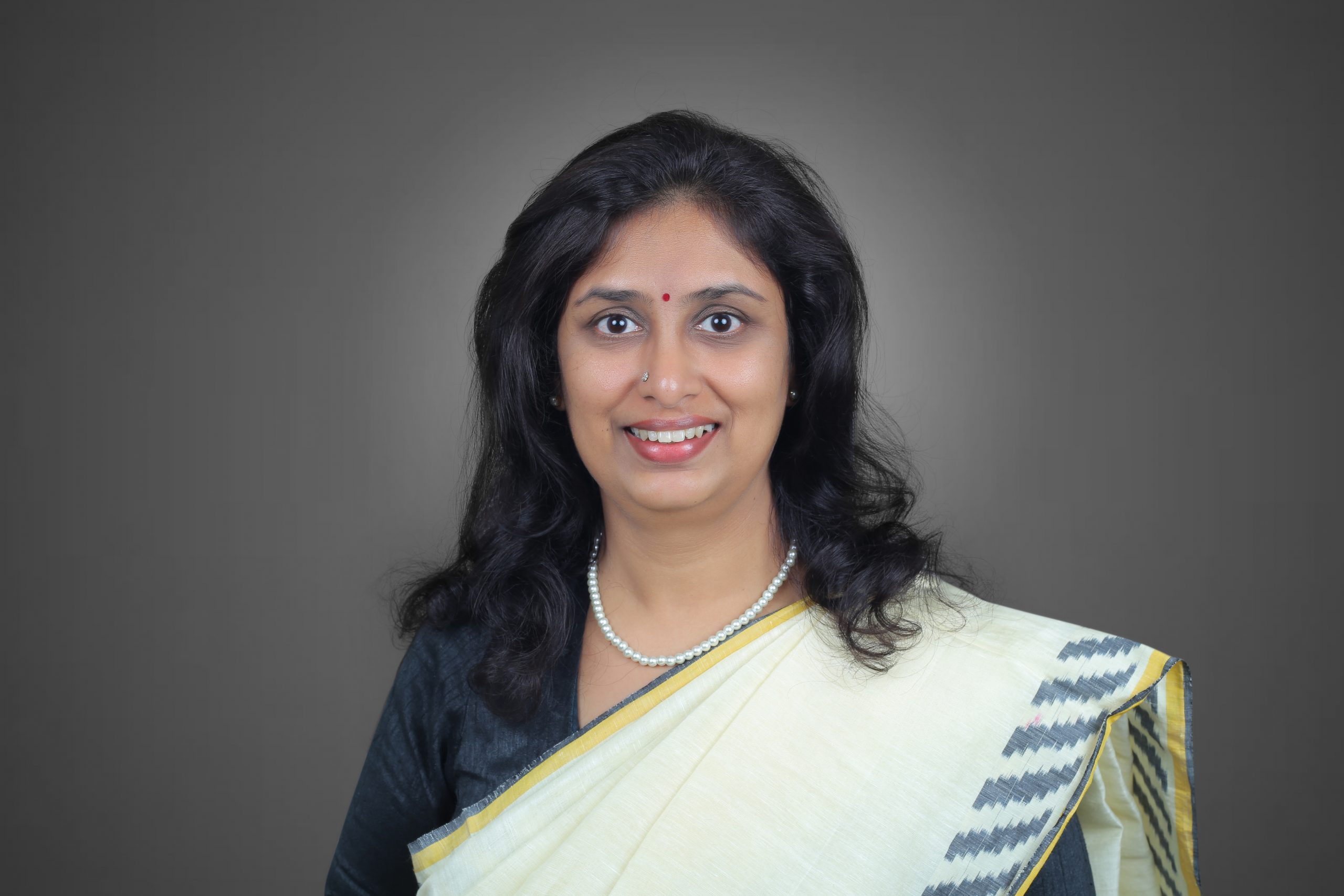
  • “Self-trust is the primary requirement. Understanding the fundamentals of law, good communication, time management, teamwork, dedication, critical thinking, and adaptability are equally important” – Savithri Sravanthi, Founder & Managing Partner at IUSTUS LEGAL

    “Self-trust is the primary requirement. Understanding the fundamentals of law, good communication, time management, teamwork, dedication, critical thinking, and adaptability are equally important” – Savithri Sravanthi, Founder & Managing Partner at IUSTUS LEGAL

    This interview has been published by Namrata Singh and The SuperLawyer Team
    Could you share with us the story behind your decision to pursue a career in law? Does anything change for a women post-marriage? Looking back, would you revisit your career path? 

    Becoming a lawyer was my childhood dream. Unlike an add-on degree, I wanted the legal profession to be my primary career. My father was an accountant while my mom initially was a homemaker and later turned into an entrepreneur. Fortunately, as a child there was no pressure from my parents to choose the career path of their preference or excelling in academics. My choice of electing a legal profession as a career option was welcomed and completely supported by my parents. Relentless support from parents meant a lot to me, which motivated me to achieve a Gold Medal in my bachelor’s degree. 

    Family support for any lady post marriage undoubtedly helps her to retain her identity whereby she can balance her career aspirations with familial responsibilities. I have been fortunate to receive encouragement from my husband and kids, that I was able to achieve a Gold Medal in my Master’s degree 17 years after I completed my bachelors. 

    Time files, it has been more than 2 decades. If I look back, I feel it is deeply fulfilling and gratifying. I wholeheartedly thank my mentors, seniors, peers and family who contributed to my professional growth and being part of my life’s journey. 

    As a legal advisor across various sectors, including IT & ITES, Manufacturing, Real Estate, Pharma and Techlaw, what common challenges do you encounter, and how do you address them while ensuring compliance and legal efficacy?

    Every client reposes trust on their advisors, either legal or financial. As a legal counsel I pre-empt and aid our clients navigate through complex situations and challenges and comply with the laws to avoid potential risks and liabilities and seamlessly concentrate on their business goals. 

    Every organisation requires to comply with a plethora of laws which makes it important for companies to place reliance on subject matter experts. As a legal counsel, we advise on various laws based on the needs of our client, which include data protection, labour & employment laws, consumer protection laws, intellectual property rights, corporate and commercial laws.

    Creating awareness and conducting training sessions to the appropriate functions helps us to interact with the teams to explain to them the need for compliance and adverse effects of non-compliance. These sessions instill a value system and is a collaborative work as we share real time experiences  and challenges. We advise on legal compliance after assessing each client’s pain points and prepare policy or guidelines to suit their requirement within the legal framework. Periodic supervision, audits and team reviews with clients aid to keep a watch on adherence with ever changing laws. Compliance is not a one-time event but an on-going task. By doing so, organizations ensure they meet legal requirements, uphold ethical standards, and manage risks effectively. This proactive approach not only reduces the likelihood of non-compliance but also enhances overall organizational resilience and reputation.

    As a practitioner in Anti-Sexual Harassment Law, how do you approach training and awareness sessions for employees and internal committee members to foster a culture of respect and inclusivity within organizations?

    Sexual harassment is a social issue. It has been nearly a decade, that our Government enacted the Prevention of Sexual Harassment of Women at Workplace (Prevention, Prohibition and Redressal) Act, 2013 (POSH Act) yet many establishments remain oblivious to its existence or compliance. Like Consumer awareness this also needs to reach the people. Like the impact created by the ‘Jago Grahak Jago’ awareness program run by the Government, we need a similar movement to sensitize and create awareness of this beneficial legislation.

    Regular meetings with IC members is highly recommended, awareness sessions for employees are important likewise orientation to IC members is also equally critical, as they redress the complaints. IC members  have to be trained to ensure judicious redressal, as most of IC members are seniors and experts in their field but may not be from legal background hence may need assistance to understand the nuances of law and manner of conducting redressal process in a time bound manner. 

    Usually, participants /audience are silent for the first 15-20 minutes, some voice their concerns during the session while some wait until we conclude. But there are many queries which can be resolved only by training and interactive sessions. These sessions are to be attended by all, it should not be a women’s day event. Government has enacted the law but its implementation is a collective responsibility. 

    Could you elaborate on your involvement in Estate & Succession Planning and share insights into the importance of such planning for individuals and families, especially in the context of evolving legal frameworks?

    Estate and succession planning are complex processes that require careful consideration of legal, financial, and personal factors. It is a collaborative effort of legal, tax and financial professionals to meet their goals and safeguard their properties. Will is the most sought out option for many as it is easy. Whereas for High Networth Individuals and Ultra High Networth Individuals s structuring, distribution and transfer of assets /wealth to beneficiaries or legal heirs upon death is a complex task. Identifying assets, including real estate, investments, savings, retirals, insurance policies, prized possessions, and personal belongings itself is the first step, which is followed by structuring and so on.  Trusts can be useful for minimizing taxes, legal attachments, and providing for minor children or individuals with special needs. Pre-empting pros and cons and advising clients is challenging yet fulfilling once we reach the desired outcome. We partner with reputed financial advisors and family office experts to give our clients holistic solutions.Although we have laws, healthcare/ advance medical directives, such as living wills, outline an individual’s preferences for medical treatment and appoint someone to make healthcare decisions on their behalf if they are unable to do so. This is a very sensitive topic similar to that of a Will. No child can ask his parent to execute a Will to safeguard our assets or have advance medical directive in place to avoid issues in case of incapacity of parent to make a decision.  

    Justice M S Sonak, who serves on the Goa Bench of the Bombay High Court, became the first person in Goa to register a “living will”, an advance medical directive for his family for when he cannot make his own decisions. Such trailblazers pave the way and pass on a message that nothing is permanent. It is rational to pass on responsibility of taking decisions in case of health in case of an emergency or wealth in case of eventuality. 

    What inspired you to embark on the journey of founding your own firm, IUSTUS LEGAL, and what specific vision or goals did you aim to achieve through this endeavour? Could you share some of the significant challenges you encountered when establishing IUSTUS LEGAL?

    Starting a law firm or independent practice is a logical and common path for any legal professional in practice. I believe a silver lining during pandemic for me was clients both domestic and international realised that corporate legal services can be rendered effectively and efficiently using technology. E-meetings became the go-to venue and virtual data room a repository of documents. Personally, I noticed there were avenues and opportunities which were opened and I wanted to explore the waters as the market dynamics were changing and legal compliance was gaining a foothold due to enormous foreign investments and funding which prompted legal due diligence and paved the way for diversified agreements and mandated compliance under corporate and labour laws.

    I truly believed that it was the right time for me to make my deep rooted vision of providing just and fair legal services to clients into a reality. Initially, I was apprehensive, as it could be risky moving out of my comfort zone and setting up a firm from scratch. It meant less to no work and less to no steady income. I took a leap of faith and established IUSTUS Legal. IUSTUS is a name derived from IUSTITIA, the Lady of Justice (Nyaya Devta) and also means righteousness, ‘dharma’, being just and fair which is based on the vision to create value to every client in every entrusted matter. It is fulfilling when a client entrusts a matter to you and feels content when the desired outcome and refers to new clients or more matters.

    It has been nearly 3 years since I ventured on this journey and we are expanding. I feel elated when I say it was an all women team (and young mothers) who continue to balance both professional and personal responsibilities effectively. We are expanding with young professional minds joining us.  I am grateful to the Almighty for being the guiding light, to our amazing clients, competent team and my wonderful family.  

    Entrepreneurship comes with its risks and challenges, but if you have conviction in yourself and faith in God, the journey is beautiful. 

    What challenges did you encounter as a woman along the way that shaped your journey to becoming a seasoned legal professional and Managing Partner at IUSTUS LEGAL?

    Conventionally, the representation of women in the legal profession is low. Despite significant advancements, women face challenges and many let go of this profession due to gender discrimination, demanding timelines, constant comparisons, unrealistic expectations, work-life balance, motherhood etc. Support from seniors and family is important for any woman to pursue their career aspirations. I was fortunate that there have been only a few such instances more gender based, but have heard so many experiences from my friends and colleagues to quit the profession and change their career paths. 

    In fact many women colleagues leave the profession due to familial responsibilities or unsupportive family, post marriage or childbirth. Out of 30 women students in my class of 2000 batch, hardly a handful women are continuing in this profession, which is disheartening.

    I truly believe and advise young mothers, who have no support but have legal acumen and skill sets, could take up tasks where they could work from home or work as freelancers. 

    Earlier, litigation or corporate law were the only options, now the legal profession has further branched out. One can be a legal correspondent, legal analyst, part time lecturer, corporate lawyer, labour law consultant, POSH advisor. Quitting is easy, navigating through odds is a challenge worth trying.  

    How do you balance your work-life as a legal professional? How do you manage your work day?

    Time is the most precious commodity which is non-renewable, but we need to value both time and money. Legal profession is highly demanding. Striking a balance is not an easy task as profession and personal life are equally important. Based on situations, I have prioritized both professional growth and personal life. 

    In response to your question, I prioritize work every day before I start my work, I read a matter and make hand noting this helps me recollect the matter easily, avoid procrastination, except in case of emergencies and keep a watch on the deadlines, in case work spills beyond expected timeline I ensure apprising clients helps in maintaining a healthy and long standing professional relationship. I believe enriching client relationships and being updated with domain areas is also spending time productively as a lawyer. delegation of work with a team helps in productivity, time management and ability to focus on priority and high risks matters.

    Most of all, I believe in spending time with family and taking short breaks/getaways as it rejuvenates me. This helps growth of professional and personal lives

    What advice or suggestions would you offer to the next generation of aspiring legal professionals who are entering the field, especially in light of the evolving legal landscape and emerging challenges?

    Self-trust is the primary requirement for any aspiring student as comparisons are bound to happen and that should not adversely impact on your growth. Embarking as a lawyer is an exciting yet challenging journey. Understanding the fundamentals of law and research are key skill sets but good communication, time management, team work, dedication, critical thinking and adaptability are also equally important. 

    Formal education gives aspiring lawyers an overview of law but practical learning under a senior /mentor and gaining insights from experienced professionals enhances the knowledge, legal reasoning and application of the education judiciously. Attending workshops, conferences, networking aids in an impactful way to foster continuous learning. A legal professional must be willing to be a lifelong student to sustain and grow. My motto ‘if you are not updated, you are outdated’. Stay updated to continue and shine in this noble profession and collaborate with colleagues. One may not know everything but everyone will know something.

    I am happy to have been part of this pious profession and strongly urge students to consider this as their career option, if it aligns with their skill sets, interests, and career aspirations. Lawyers can positively influence the Country’s law & policy, make key contributions in people’s lives and decisions through their expert legal guidance. 

    Get in touch with Savithri Sravanthi –

  • Never think you are an accomplished professional; you should always be a learner- Iqbal Tauseef, Director Legal Affairs – Country Head – India, TTEC

    Never think you are an accomplished professional; you should always be a learner- Iqbal Tauseef, Director Legal Affairs – Country Head – India, TTEC

    This interview has been published by  Priyanka Karwa and The SuperLawyer Team

    You’ve had an impressive and diverse legal career spanning various industries and roles. Can you share your personal journey and what initially inspired you to pursue a career in law?

    My Inspiration to pursue the law is to understand the world from an equity and justice perspective. My way of seeing things has developed a lot with critical and logical thinking. Another reason was to be part of the corporate world and sit along with the executives on the table, as their advisor for ease of business from a legal perspective, while meeting their business goals. 

    With experience in IT, software, FinTech, pharma, healthcare, energy, environmental, and manufacturing industries, how do you adapt your legal expertise to meet the unique needs of each sector?

    My vast experience on basics of Contracts Drafting and Negotiations, Compliance and Dispute resolutions skills has made it efficient for me to cross through various industries. One, can be part of multi-industries, if you have strong legal skills and business acumen, as every business requires someone who can avoid the disputes and resolve them if they arise. Strong hold on knowing what compliances are applicable to respective industries, is also another tool for getting on different boats.

    You’ve worked extensively in contract management, negotiations, and arbitration. Could you tell us about a particularly challenging contract negotiation or arbitration case you’ve handled and the key lessons you learned from it?

    I have seen multiple challenging negotiations, wherein I bridged between sales targets and risk mitigation, which is not an easy task. One of the important projects in my journey was an agreement negotiation for setting up a Waste to Energy Plant in India. This is to be the third largest Waste to Energy plant in India. This project was awarded by one of the State Governments to the Company and was given on the BOOT model. The main challenge was to figure out the technology procurement which meets the budget and quality specifications. At the initial level the procurement team reached out to a Japanese Company for providing the Incinerator and that was to be done in consortium with one of the Indian Company for civil works. As part of the legal, I advised upon the challenges we may face for any change in scope and compliance by the consortium (consortium being led by a foreign entity). The executive committee including the CEO and CFO took the cognizance of the risk and decided to reconsider the options for procurement. Instantly, I advised an Indian Company who can be prompt to accept the changes based on the requirements and necessity. The Company worked in that direction and got one of the leading players in India on board for supplies. I as a head for Contracts initiated the drafting, negotiating and finalizing the procurement agreements. We successfully had achieved the timelines with efficacy.

    This deal plays an important role in my career as it involves identifying the unforeseen challenges related to technology issues, warranty, onsite safety, labour availability (During Lockdown period) and completions within the timelines. All the legal matters related to drafting of documents, advising on Logistics & Labour, Financial documents including bank guarantees, corporate guarantees are dealt by my team headed by me. I am proud of this work as we successfully deployed the Indian Company to compete with a foreign company on technology and timelines.

    Your experience at Re Sustainability includes some significant achievements, such as incorporating SPVs and advising on public-private partnerships. Can you share more about these experiences and what they meant for the organizations involved?

    Re-Sustainability is India’s leading waste management company. It is also competing with foreign companies and handles certain major projects outside India as well. Re-Sustainability majorly bids on government projects and has its presence in more than 50 cities and towns in India. This makes the company a reliable partner for various governments and helps the company to build public-private partnerships on certain projects. Few of the significant projects are ‘waste to energy plants’ built in Telangana and Delhi, Municipal Waste project in Chennai etc. 

    In your role at TTEC, you’ve managed a wide range of responsibilities, including M&A, global contracts, legal counsel, and more. Can you discuss how you balance these diverse responsibilities and the key to success in such a multifaceted role?

    “Never a learning, will go in vain”, all my experience and learning throughout various industries helped me to bag this significant role at TTEC. I am associated with TTEC as Legal Head for India. I bag legal, compliance and COE domains. Keen eye on corporate compliances, upgradation with Contracts negotiations skills and productive team leader qualities, helps me to balance all the three roles. We give 100% dedication to what we do and that brings the reliability of various stakeholders, on legal. I have a Contracts Centre of Excellence team working with me, which helps global stakeholders to draft and negotiate their revenue and corporate contracts for various regions such as North Americas, Australia, EMEA etc. 

    My Key to success is never say “I can’t”, you learn and you do it with dedication and honesty.

    You’ve contributed as an author and have written articles in the legal field. Can you tell us about your experiences in legal writing, and what impact do you think it has on the legal profession?

    Yes, I do write on legal subjects. I wrote an article “FORCE MAJEURE IN DIFFERENT LAWS AND COVID-19” and also contributed to “Handbook on Arbitration: A Practical Guide for Professionals” – published by Institute of Company Secretaries of India. Serving the legal fraternity is significant for legal professions, who gain a good repute and exposure. The way you can serve is to write and share your thoughts. Legal writing is very important to let young and aspiring lawyers know how industry works, how to interpret the law and share the legal skills. This will motivate and guide them to explore legal avenues and gain the subject matter. 

    Your career is filled with awards and recognitions, such as being recognized as one of the Top In House Counsels by Forbes. What, in your opinion, sets you apart in the field of law, and what advice do you have for legal professionals aspiring to achieve similar recognition?

    I believe, hard work, dedication and honesty in the below aspects, have brought me these recognitions and awards.  What sets a legal professional apart can vary, but here are few aspects that can contribute to recognition and success in the field:

    1. Expertise in a Niche Area.
    2. Strong Advocacy and Communication Skills.
    3. Ethical and Professional Conduct
    4. Community Involvement
    5. Mentorship and Networking
    6. Continuous Learning and Adaptation

    As an accomplished legal professional, what advice would you like to give to fresh graduates or those starting their careers in law?

    Never think you are an accomplished professional; you should always be a learner. Here are some tips that can help new lawyers as they embark on their legal careers:

    1. Continuous Learning: The legal field is dynamic, and laws are subject to change. Make a commitment to lifelong learning by staying up-to-date with legal developments and continuously improving your legal knowledge.
    1. Effective Communication: Strong communication skills are essential in law. Develop your ability to articulate complex legal concepts clearly and concisely to clients, colleagues, and judges.
    1. Legal Research Skills: Become proficient in legal research methods and tools. This skill is fundamental to building solid legal arguments and understanding the legal landscape.
    1. Networking: Build a professional network early in your career. Attend legal events, join bar associations, and connect with experienced lawyers who can provide guidance and mentorship.
    1. Legal Specialization: Consider specializing in a particular area of law that interests you. Specialization can make you more attractive to clients and employers.
    1. Work Ethic: Hard work and dedication are often keys to success in law. Be prepared to put in the time and effort required to excel in your work.
    1. Ethical Conduct: Maintain the highest ethical standards. Trust and integrity are paramount in the legal profession.
    1. Professional Development: Seek out opportunities for professional development, such as CLE (Continuing Legal Education) courses and workshops.
    1. Practice Management: If you’re in private practice, learn about law firm management and business development. It’s not just about practicing law but also about managing a legal practice effectively.
    1. Mentorship: Find a mentor who can offer guidance, answer your questions, and provide insights into the legal profession. A mentor can be invaluable in helping you navigate your early career.
    1. Adaptability: Be prepared to adapt to changing circumstances and legal landscapes. Flexibility is a valuable trait in the legal field.
    1. Attention to Detail: Legal work often involves complex documents and contracts. Pay close attention to detail to avoid errors that can have serious consequences.
    1. Legal Writing Skills: Practice and improve your legal writing skills. Writing clear and persuasive legal documents is a critical part of legal practice.

    Remember that building a successful legal career takes time and dedication. Don’t be discouraged by initial challenges or setbacks, as they can be valuable learning experiences. Over time, your skills and reputation will grow, and you’ll have the opportunity to make a meaningful impact in the field of law.

    Get in touch with Iqbal Tauseef-

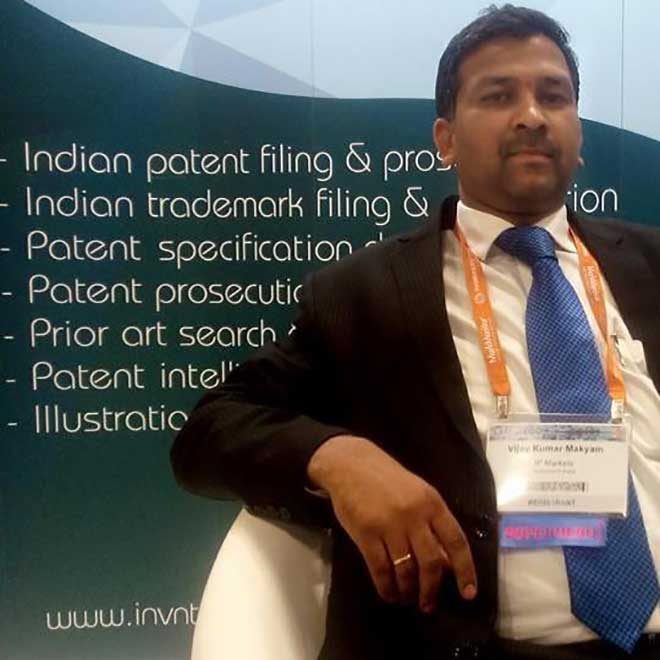
  • Vijay Kumar Makyam, IPR Attorney, I-WIN IP Services, on IPR in India, his diverse experience, and plans for the future

    Vijay Kumar Makyam, IPR Attorney, I-WIN IP Services, on IPR in India, his diverse experience, and plans for the future

    Vijay Kumar Makyam graduated in law from Osmania University in 2003. He then went on to pursue his Masters in 2013, with a specialisation in Alternative Disputes Resolution. He has been a Senior Trademark Analyst at Brain League IP Services, and Guest Faculty at National Institute of Pharmaceutical Education and Research, Hyderabad. He is founding member at I-WIN IP Services and IP Markets. where he heads Patents and Trademarks. His role entails handling  procedures like registration of copyrights and trademarks, filing patent application and processing in India and coordinating filing and prosecution at USPTO, European Patent office, etc.

    In this interview we speak to him about:

    • Being an IPR lawyer
    • His teaching experience
    • Plans for the future

    How would you like to introduce yourself to our readers? 

    I would like to introduce myself as IPR Attorney; Apart from registered Patent and Trademark Agent, I am a litigating lawyer, appearing for my clients in District Courts and High Courts in various parts of the country.  Yes, my education went into different streams like wind blow, I have pursued the courses as per the need of hour. Apart from the regular main stream education, I have also pursued P.G. Diploma in Intellectual Property Rights from NLSIU, Bangalore and computer skills in that I have done PG Diploma in Computer Applications, Diploma Client Server Applications, Diploma in Desk Top Publishing. Someone has rightly quoted “Education moulds the person”, my personality and career has certainly been moulded by Education. In simple words whatever I am today is because of the education I pursued.  When I was studying B. Com, I was unhappy in with the fact that I am not going through a professional course and that prompted me to pursue LL.B., since I am qualified only for Law; Medicine and Engineering were not possible because of my financial conditions existing then and my parents wanted me discontinue education to support the family.


    What motivated you to pursue law?

    I am first generation lawyer in my family. As I earlier answered, it is only that I wanted to pursue some professional course, I pursed LL.B., as otherwise I was more interested in Computer Science and that is the reason why I did M.S. in Computer Science. Though I had a law degree, I did not want to practice law, since I believed in a myth that lawyers are liars and I would have to support false cases largely. I was also under an impression that truth followers never knock the doors of the court. Thus, I was looking for some chamber practice. Intellectual Property Rights protection was an area I felt was perfect for such chamber practice and I Registered myself initially as Trademark Agent. There was no guidance to me, since no one in our family were lawyers. So, I was guided by my law school seniors and professors in choosing this career.


    Did you take part in co-curricular activities while in college? 

    Yes, I have attended about eight National Moot Court Competitions; all of which enhanced my research skills. We were unaware of internship programs those days and as such I have not taken up any internship. However, I believe Moot Court Competitions coupled with Internship programs can provide real time experiences to the law students.


    What triggered your interest in IPR law?

    I attended the 5th Raj Anand Moot National Court Competition, which introduced IPR Subject to me, which until then I was unaware about. Thereafter I attended several national seminars on IPR topics and most importantly my law school super senior who attended FPLC for his LL.M encouraged me to get into IPR.


    Could you tell us about the internships you took up, and what you learnt from those experiences?

    As I stated earlier, we were unaware of the internship programs during our law school days. So, I did not get an opportunity to work as an intern. However, the first firm where I worked is a start-up IPR Firm, where all the processes are established from the scratch and the team specifically is quite qualified that helped us in brain storming sessions and coming up with greater ideas for providing specialized services in IPR.


    From a law student to a lawyer, how will you describe the transition?

    Yes, it was huge difference. From novice to an expert lawyer.  Five important things that shaped me as a good lawyer today are 1) Language 2) Vocabulary 3) Presentation 4) Dressing sense 5) Spontaneity. These five aspects I have not learned in law school, but during my practice.


    Tell us about your early professional experiences at the Brain league IP Services. 

    Yes, Brain League gave me an opportunity to build my career as it stands today. Brain League was one of the early IPR Start-ups in India, at that point of time we had no clients interested in the services that we offered, services such as IP Audits, IP Valuation, IP Licensing, IP Monetization etc., since IPR itself was new to Indian Society at that time. So, Brain League chose IP Training as its main stream services and slowly developed various services which helped them in creating a market for their core services being IP Audits, IP Valuation, IP Licensing, IP Monetization. I played an important role in implementing Brain League’s Services as we were very small team, we had no restrictions on what work we took up. I was also involved in administration, marketing of Brain League services which helped me setting up my own firm latter.


    Having worked at I-WIN IP Services for over eight years, how would you describe your work experience there? 

    I-WIN IP Services was started in the year 2009, we were three team members when we started I-WIN IP Services, Being the founder I had to establish all the procedures in I-WIN IP Services, my work experience at Brain League helped me a lot in doing so. I enjoyed working on Trademark Opposition proceedings, participating invention disclosure meeting with the clients and implementing Training programs.


    As a guest faculty at NIMSME, how do you find the Indian legal education standards? 

    At NIMSME, I teach international students on Indian IPR as well as entrepreneurs on effectively protecting and managing their IPRs. The difference I can point out in regular academics is that they lack practical exposure. The law Professors are not practitioners as such they will not interpret the law the way practitioner interpret for the benefit of their clients. I have seen couple of law professors updating themselves by reading law journals or taking inputs from practising lawyers; however, that will not create the knowledge for dissemination to students. Further Indian legal education need to be streamlined from text book oriented education to practical approaches. While teaching at NIMSME I provide lot of practical examples that my clients faced and overcome; this makes the audience interesting then reading a provision of law and citing an example.


    What is the academic background and qualification necessary to become a patent agent in India?

    Section 127 of Patent Act, 1970 prescribes any Science or Engineering degree to be qualified to take up Patent Agent Examination. This is precisely why I did M.S. in computer Science. I was into IPR Domain from long time and I was taking assistance of Registered Patent Agent for filing Patent Applications of my firm. Thus, I was determined to become a Patent Agent and pursed M.S. Computer Science before taking up Patent Agent Examination.


    Given the dynamic nature of the field you practice in, how do you keep yourself updated about the latest developments in the law?

    Technology helped me a lot in keeping myself updated. I browse through blogs, youtube videos and Whatsapp Groups to keep me updated with the latest updates. Seminar and Training programs that I frequently attend will help me to keep myself updating updated. Further, the cases I handle will also make me to read on particular provision of the law and brain storm on those specific topics. Finally our interns also contribute to my knowledge.   


    What are the causes you feel strongly about? 

    The knowledge and awareness on IPR is still quite low in Indian Society as well as in lower courts judiciary. There had been occasions when the lower Court Judges were not even aware of what I was arguing while handling an IPR Matter. It was left up to us to educate them initially in the subject then latter put forth the factual positions to obtain an order.


    As the Senior IP Analyst at IP Markets, what does a typical working day look like for you?

    I need to attend Courts every day. By 9:30 AM I shall be in office picking up the bundles necessary for the day in various courts, by 10.30 we will be in the Court Rooms, sometimes we need to await for our case to be called or else we shall advance our arguments and return to office by 2:30 PM and work on next day cases either research on a particular point of law or drafting affidavits, counters and written arguments etc., till evening 5:30 PM; post which we will have couple of client meeting till 8:30 or 9.30 PM to conclude the day.


    How do you feel about the present IPR regime in India? 

    IPR is still at a nascent stage in India; this is primarily because Indian system has not been developed to adapt to the IPR regime. Thank fully the National IPR Policy and its one of the objective to create IPR Awareness in the country and is helping India to shape its IPR Regime. To the extent of legislations, yes, we are sought of created enough legislations, however, we still need advanced law to tackle various situations prevailing in Information Technology, Biotechnology, Nanotechnology etc., that apart we are still at a novice stages in IP Licensing, Technology commercialization, IP Insurance etc., are concerned. Competition law, Standards in Patent System etc., are few concerns we are trying to address. However, still in most of the Indian industry IPR Centres are considered as cost centres than Innovation hubs. We don’t have proper mechanism where we can connect the innovation to industry in proper line; our academic research is all going in drain or exported to foreign countries. We don’t have specialized laws tackling knowledge exports. In conclusion I would say that we have just begun our journey in the IPR Regime and there is a long way to go.


    On what parameters do you choose the projects you work on? 

    We specifically concentrate on all or any IPR issues. Thus our parameters is to choose only those projects wherein some IP issue is involved. Given the present team size we have no specific body constituted for specific work; I also believe when the team size is small every one gets to learn everything. One interesting case we handled for one of our Pharma Client where two big MNC companies fighting Patent Infringement suit in US Delware Court obtained stipulated protected orders and directed a Letter Regoratory,  enforcement letter seeking confidential data of our local pharma client. The Honourable High Court appointment Commissioner and issued enforcement directions. We had to oppose enforcement of the orders because the data was confidential and it cannot be compromised even though there is a court Stipulated Protective Order. This is more so since the information and data is sought from a third party i.e., my client who was not even impleaded in the litigation at US Courts.  


    How do you manage your time between your professional and personal interests? 

    In spite of my demanding professional life, I still manage to keep my personal life unaffected and I spend time with my family and friends as and when it is needed. Social networking and Travelling are my other interests. Travelling and exploring new places excite me. My work allows me to travel different places and thus my personal interests are also satisfied with my professional Life.


    Where would you like your career to take you five years down the line?

    I would like to be called one of the top IP Lawyers in the country and I would like to use this position to benefit of my country in protecting its Intellectual Capitalism.


    What advice would you like to give our readers, who are inclined to developing a proficiency in IP Law?

    There are no short-cuts to the success, Hard work, dedication and using technology to the core are mantras to success; every case gives an opportunity to learn a new aspect; don’t judge yourself to be experts of any subject and further every day reading of the law and the case law will keep you abreast with the latest developments.

  • G R Srikkanth, Vice President – Legal, RP Sanjiv Goenka Group on a decade long experience as In-House Counsel

    G R Srikkanth, Vice President – Legal, RP Sanjiv Goenka Group on a decade long experience as In-House Counsel

    GR Srikkanth studied law from Osmania University and graduated in 1996, after pursued LL.M. at the same place in 1998. Currently the Vice President – Legal at RP-Sanjiv Goenka Group, Srikkanth is a rank holder in Labour Laws and IP Laws. His prior assignments include a near-decade experience at HUDCO (Govt. of India) and Govt. of AP.

    In this interview, he tells us about:

    • His decision to do two diplomas in Intellectual Property Laws
    • His experience as a Legal Manager at Housing Urban Development (HUDCO)
    • His advice on drafting infrastructure agreements
    • His achievements and landmark moments at RP-Sanjiv Goenka Group


    Did you have lawyers in your family?

    I have done my schooling and college education in Hyderabad. There are no lawyers in my family, I was very much interested in joining politics and LLB was a natural choice.


    How did you choose to do Cost Accountancy?

    (Srikkanth initially started as a commerce graduate with cost accountant qualification)

    Law was my first choice, but I also enrolled in cost accountancy to gain some accounting knowledge.


    How instrumental was Osmania in shaping up your legal career?

    (Srikkanth studied law from Osmania University and scored 1st division in the year 1996. Thereafter, he did his LL.M. from Osmania in the year 1998 and ranked 9th in the entire university)

    Osmania University’s eminence is unparalleled to any other institution in the country and it is the epicentre to many movements. It taught me a practical approach to looking at things. OU’s environment has always instilled confidence in all its students.


    Tell us about your courses. Share any incident from that time.

    (Srikkanth has done two courses i.e. Diploma in Intellectual Property from WIPO (UN) 2006 and PG Diploma in Intellectual Property Laws – IIT Kharagpur.)

    When IIT KGP started Law School and commenced PGDIPL, I took some break from work and enrolled there. Being in first batch there, we faced some short term issues similar to any new venture. But overall, the experience was enriching. A memorable incident was drafting an invention disclosure for a chemical product. Being a commerce graduate, it took much more effort on my part to complete the project.


    Please tell our readers about what your work experience was like at HUDCO. What did an average day of work look like?

    (Right after graduation, Srikkanth worked as Manager of Law in Housing Urban Development (HUDCO) (a Government of India enterprise) for nearly 9 ½ years)

    I appeared for HUDCO’s exam and got through and this is how I started my career with HUDCO. Primarily, the job involved appraisal of various projects in real estate, and various infrastructures like utility, social, urban infrastructure project.  HUDCO is a leading player in techno financing; it makes feasible studies about the project and finance. I was lucky that major projects commenced in my jurisdiction I got to work in many places across India which helped me learn various local revenue laws and regulations.  Major contribution was drafting of letter of comfort in lieu of State Government guarantee, when there were restrictions in issuing State Government Guarantee due to over borrowings of the State Government. This instrument was even vetted by RBI as a valid document for financing and it’s a first of its kind.


    Share with us the major points one should concentrate on, while drafting agreements on infrastructure projects?

    While drafting infrastructure projects, one needs to contemplate all kinds of risks that may be associated with the project and take a detailed brief from other functionaries like civil, environmental, structural engineering and finance team.  List out all the possibilities and make a provision regarding them in the agreement. Similarly, list out all the applicable laws and appraise the provisions with reference to the project whether they have any impact on the same. Also, address the issues fit-out period, concessions, compliances under labour and corporate laws, insurances and assignments etc. If the lawyer/in house counsel is involved in drafting terms and conditions from the tendering or RFP, then he/she will be in a better position to draft instead of merely vetting the agreements.


    How fulfilling were the last 10 years both on the professional and personal fronts? How challenging and grueling were the difficulties and how did you overcome them?

    (After HUDCO Srikkanth joined RP Sanjiv Goenka Group as Chief Manager Legal and has now been promoted as Vice President Legal.)

    Retail Industry is most challenging and complex in terms of legal and regulatory issues.  Every product whether, food or non-food, is covered under some law or regulation, a Hypermarket where 30,000 products are sold attracts dozens of legal and regulatory issues. For example, retailers need licenses even to sell products like mosquito repellents, cosmetics, etc. Every day is different and there is a need to address issues instantly. Over a decade, I have been able to learn many things.


    Would you kindly share your accomplishments and job specifications at RPSG Group?

    I have been awarded Chairman’s TOP GEAR award in 2008 for best performance in resolving legal issues, I have also been nominated for the Best In-House Counsel for Asia Pacific Award by International Law Office for the year 2012 – 2013. I have managed these laurels with the immense support I get from my wife and son.


    Please tell us a bit about your award by Retail Association of India.

    Retail Association of India (RAI) is an apex body which represents modern retailers and works towards growth for modern retail in India. www.rai.net.in. RAI has various committees representing the functions of Retail. Advocacy Committee spearheads the legal and regulatory issues of Retail Industry. Over the years advocacy committee has successfully liaised with various State Governments and Central Government to address legal and regulatory issues.
    I being a member of advocacy committee have contributed towards facilitating various changes in the field of labour laws, essential commodities laws, insecticide Act, Food Safety and Standard regulations etc., in recognition of these services RAI felicitated me with the award for excellence in Legal and Regulatory services in Retail Trade in India.


    g-r-srikkanth-2

    Kindly share your experience as a Member of the Taskforce on Food and Regulatory Issues and Advocacy Committee of Retail Association of India (RAI).

    Our advocacy committee at RAI is very active and we coordinate with various State Governments and the Central Government on legal issues, especially with reference to retail sector. We have made noteworthy contributions in this regard, for example, exemption from weekly closure, keeping of records in electronic form, changes in food laws and legal metrology.  The primary objective of the committee is to address the issues of the industry and facilitate the members.


    Tell our readers what needed to be done to ensure fair trade practices and what suitable measures are needed to promote the growth of infrastructure and retail sector.

    Major challenges for both the industries are approvals and clearances from various authorities due to which the projects over run and the costs increase. There needs to be a time bound clearance. It will be better to have deemed provisions which are designed such that if there is a failure to accept or reject the projects within a certain period of time, then they are deemed to be approved.


    What are your plans for the future? What advice would you give to those law students wishing to pursue a career in infrastructure and retail sector?

    I advise the young lawyers and students who wish to pursue these sectors to understand the entire process of the businesses and spend considerable time on the project viz., physically visiting the generation station, road project, airport and taking notes and understanding the processes and make the list which can impact the business and how to address the same in the communications/agreements. Keep reviewing various literatures pertaining to the domain in which you are interested.


    Would you like to see yourself in the the role of a lawyer or a facilitator?

    I would like to remain an In House Counsel, as the role of counsel is “more for less” and this function has evolved as a facilitator over time rather than merely being that of a litigator.