Tag: Panel Lawyer

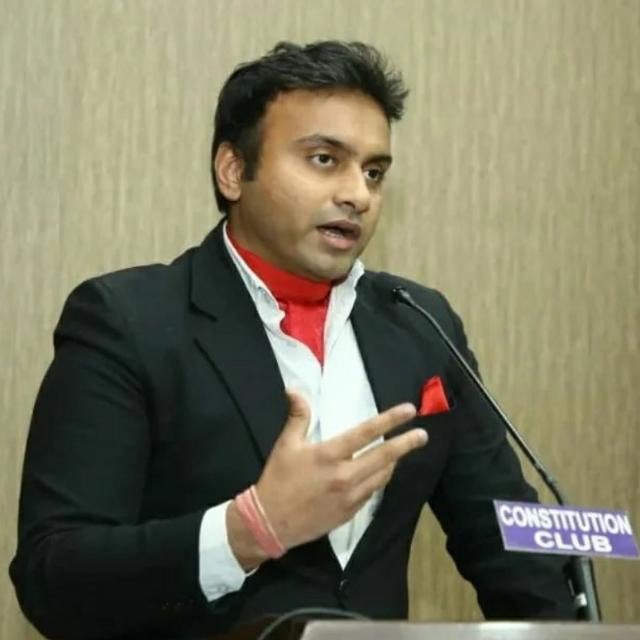
  • “The allure of working at the apex court and daydreams of arguing before a Constitution Bench inspired my aspiration to become an AoR.” – Shivank Pratap Singh, Advocate on Record at the Supreme Court of India.

    “The allure of working at the apex court and daydreams of arguing before a Constitution Bench inspired my aspiration to become an AoR.” – Shivank Pratap Singh, Advocate on Record at the Supreme Court of India.

    This interview has been published by Anshi Mudgal and The SuperLawyer Team
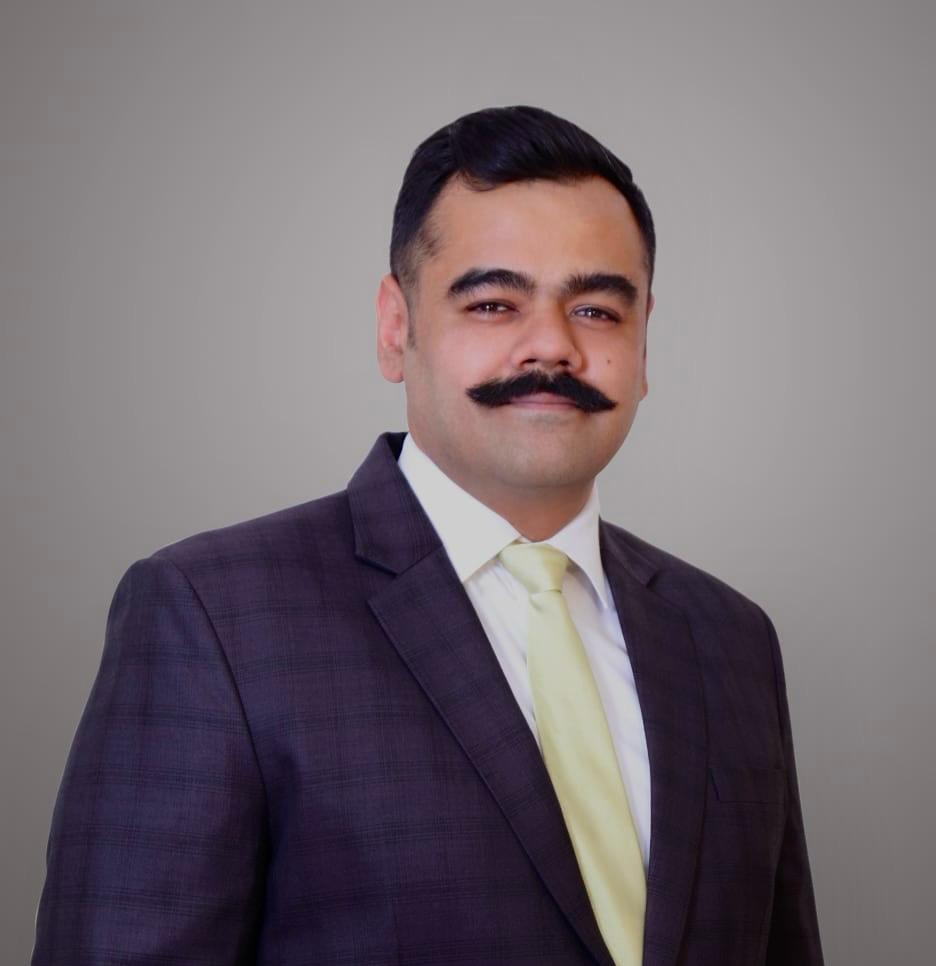
    Becoming an Advocate-on-Record is a notable milestone. How has this role influenced your practice, and what added responsibilities and opportunities has it brought with it?

    At the felicitation event for the Advocate-on-Record (AoR) cohort I was part of, one of the office bearers remarked on how many current Supreme Court judges and successful senior advocates once held the AoR designation. I fully agree, it is indeed a significant milestone. From the very beginning of my legal career, I have been involved in matters before the Hon’ble Supreme Court. Even as a law student, while interning with a Senior Advocate who was then the Additional Solicitor General of India, and another renowned Advocate-on-Record, my interest in practicing at the Supreme Court grew substantially. The allure of working at the apex court and daydreams of arguing before a Constitution Bench inspired my aspiration to become an AoR. Professionally, becoming an AoR has had a profound impact on my practice. A significant portion of my clientele comprises corporates, PSUs, and government bodies, many of whose matters ultimately reach the Supreme Court. Knowing that I am an AoR provides them the assurance that I can seamlessly handle their cases from initiation to conclusion. Furthermore, the AoR designation has opened new avenues, particularly access to appeals originating from courts outside Delhi, which make up a large portion of the Supreme Court’s docket. This has allowed me to engage with unfamiliar legal terrains, such as matters relating to mining or religious endowments, that are not commonly litigated in Delhi, thereby broadening both my exposure and expertise.

    You began your career with some of the top law firms in the country. What were some of the most impactful experiences during that time that significantly shaped your professional trajectory?

    Looking back, I feel quite lucky to have started out at some of the leading law firms in India. Making the shift from law school to a Tier-1 firm was a bit of a shock to the system at first. One day you’re attending lectures and the next you’re handling serious matters for big companies, many of them multinationals with huge stakes involved. There was a real sense that everything had to be perfect from the get-go, especially when it came to drafting and research. As a junior associate, that kind of pressure can either rattle you or sharpen you.

    In my case, I think it did the latter. The fast-paced, high-stakes environment taught me to be meticulous and put in the work, right from day one. That habit stuck, and it’s something I still carry with me, no matter what kind of matter I’m dealing with.

    One memory that stands out from those early days was when I was asked within my first week to brief Mr. P. Chidambaram, Senior Advocate, on a writ petition related to service tax. I won’t lie, I was nervous. I stayed up most of the night going over every detail of the case so I’d be ready. It was a trial by fire, but somehow, it went well and gave me a real boost of confidence.

    Beyond individual moments, what really shaped me was the overall work culture particularly during my time at AZB & Partners and Cyril Amarchand Mangaldas. I got to work with international clients and interact with foreign lawyers, which gave me a fresh perspective. One thing that really stood out was how structured and transparent their approach was; frequent updates, clear timelines, and detailed billing were the norm. I’ve tried to bring some of that structure into my own work now, and it’s definitely helped in building better client relationships.

    Having worked with both reputed law firms and Senior Advocates, what key differences have you observed in terms of work environment, nature of responsibilities, and overall approach to legal practice?

    The common aspect of both law firms as well as senior advocates is that as associates/juniors there is an expectation of high level of professionalism. Working in a dispute resolution team at a law firm entails a lot of team work and coordination. Law firms also have a hierarchical structure and within a few years an associate upon getting promoted is expected to lead, guide and train junior members of the team as well. It is also noteworthy that in full service law firms we often worked with lawyers from corporate, transaction and tax teams where their clients got into matters of litigation. This is an advantage of working at full service law firms where even though you may be in a litigation team, there are instances where you get to experience and work along with peers from different practice areas which broadens your horizon. In contrast, when you are working with a senior advocate, there is no hierarchy as such and juniors are expected to directly assist the senior. In turn, however, you get to learn directly from the senior who has decades of experience in the field. There is also no expectation or requirement to lead or supervise other chamber members as each of them would assist the senior in their individual capacities. As far as the responsibilities are concerned, there is a clear distinction in role one plays as a lawyer at a law firm in contrast to a junior in the chamber of a designated Senior Advocate. Most of your readers would already know that Senior Advocates do not engage with litigants directly and the solicitors are their clients essentially. Further, Senior Advocates chambers do not draft pleadings and do not file matters. The aforesaid tasks are to be executed with great sincerity and precision in a law firm. I was lucky to have incredible mentors like Ms. Roopali Singh, Former Senior Partner AZB and Partners and currently the head of dispute resolution at Vritti Legal. I learnt the basics and nuances of drafting under her tutelage. In the initial years of practice at law firms, all filing related tasks are handled by the junior members of the team in collaboration with the court clerks. It is an art to file a petition with minimal or no defects and in cases which are time sensitive and urgent in nature, it can be a make or break thing. I think my experience in law firms also helped me gain proficiency in filing procedures dealing with the registry which is often overlooked as a rudimentary task. 

    In contrast, working with a senior advocate is totally focussed on mastering the facts and the law of the case and working with the Senior to bring out the most impactful and precise arguments for addressing the court. My Senior, Mr. Prashanto Chandra Sen, Senior Advocate is a product of Dr. AM Singhvi’s chamber and the first thing I learnt from him was a particular style of preparing a note for arguments which he had learnt from his senior, Dr. Singhvi. This consists of a list of relevant dates, submissions and response to contra points. I still follow this format for matters that I argue on my own and even for briefing other Senior Advocates in my matters. Working in a senior’s chamber also means more number of cases to deal with on a daily basis for hearings as compared to a big law firm where the number of hearings per day would be significantly lesser. 

    With a background in Computer Science (BTech), what inspired your transition to a career in law? How did your experience in law school shape your journey, and in what ways has your engineering education contributed to your legal practice? 

    A career in law was never on my list. I had started preparing for MBA exams like CAT in my final year of engineering and scored well in my first attempt. I decided to improve my score to get into a top IIM and dropped a year after completing Btech to reappear in CAT. In the meanwhile, on a friend’s suggestion, I gave the Delhi University, Faculty of Law entrance and cleared that. I enrolled and started attending classes out of curiosity. As fate would have it, I liked what was being taught in law college and jettisoned the plan of doing the MBA, leading to a switch in a career to law. 

    The Delhi University 3 year course experience is quite different from 5 year BA LLB residential programs. Even though we had excellent professors, there was a lack of guidance regarding career options post law school. So I decided it was best to intern as much as possible and get a taste of different practice areas and offices. Being in Delhi helped because there were several options from law firms to reputed chambers where one could look to land an internship. After interning extensively in various offices, I felt that being a first generation lawyer, the best option for me was to join a law firm preferably a tier one firm which pays well ;). I was lucky to intern a couple of times at the AZB and Partners Delhi Office and had offers to join the capital markets team and dispute resolution team. Given my interest in litigation I chose the latter. That was the formal start of my journey in litigation which I thoroughly cherish. 

    My science and engineering background has helped me immensely in practice. This was felt particularly while working on matters of interstate river water disputes where I was on the legal team from the State of Andhra Pradesh, led by Mr. R Venkatramani, Sr Adv and presently Attorney General of India. Water disputes require advocates to understand highly technical concepts related to hydrology, cropping etc. which in my humble opinion can be grasped better, faster and deeper by a student of science and technology as compared to someone who hasn’t received training and education in sciences. Even in my construction arbitration practice I have reaped the benefit of my science background, particularly on disputes arising out of issues relating to design and specifications in a construction contract. 

    You’ve advised and represented construction and project management firms in high-stakes arbitration involving contractor and subcontractor disputes. What are some of the recurring challenges in such matters, and how do you approach them to secure effective outcomes?

    A lot of claims in construction and infrastructure disputes arise out of delays. Delays can be on many accounts,  Invariably, when there is a dispute between a private party and government entity, it is the latter who is blamed to cause delay. Delays could arise on various counts such as lack of statutory approvals, late handover of site, change in scope of work and delay in delivery in drawings and designs, which are out of the contractor’s control. On the other hand, if a contractor defaults in its obligations and causes a delay, claims for liquidated damages (if already specified in the contract) or damages for breach can be made against the contractor by the principal. These are situations which should be handled tactically at an early stage before an aggrieved party precipitates the issue to become a legal dispute. A lot of these disputes can even be avoided by careful drafting of contracts which eliminates ambiguity. Proper contract management and risk mitigation is another aspect that parties must consider to avoid and reduce potential liabilities in the event a dispute arises. Once a dispute has been referred to arbitration, the first thing I would try to achieve, in case I am representing a claimant, is to identify if there are special equities in its favour which might result in getting interim relief in the form of stay on bank guarantees and forfeiture of security deposits. This is extremely difficult, albeit, not impossible and can go a long way in securing some level of financial relief for a party at the very inception of a dispute. I also believe that bringing on board experts can prove critical for the outcome in complex arbitration matters. The impact that experts make is greater in cases where there is a sole arbitrator who is trained judicially as a judge or an advocate. Expert reports along with oral testimonies can often bring the desired clarity to an arbitrator’s mind which can tip the scales in such disputes. 

    Another great challenge that counsels may face is the ‘Arbitrator’. Today we have a lot of talks, conferences and events centred on the arbitration practice. Every month something would be organized where lawyers, judges, in-house counsel, people from the law ministry come and give speeches about making India a hub for international arbitration, how challenge to awards and court interference should be limited etc. However, a topic which is often overlooked is the quality of arbitrators we have in our country, particularly with respect to their integrity. Unfortunately, if a party is pitted against an arbitrator who is deciding the matter for extraneous reasons, an effective immediate solution may not always be on the cards. In such cases it may be wise to come to a reasonable settlement. 

    Representing the Union of India and UPSC before various judicial forums, including the Supreme Court, involves complex litigation. How do you manage the legal and strategic dimensions of handling high-stakes public and service law matters on behalf of the government?

    In my humble opinion, the most important part about litigating on behalf of the government is to get proper instructions from the concerned officers. I have been lucky to have worked with incredibly competent and energetic officers during my tenure as a panel counsel with various government entities which has helped me in effectively representing them before Courts. In the Supreme Court, the critical cases involving the Union of India are led by the Additional Solicitor Generals, the Solicitor General and the Attorney General. Briefing such stalwarts on matters which involve questions of interpretation of the constitution, issues related to national security, legality of policy decisions which has implications of thousands of crores is like doing a masters of law on these subjects with real life implications. Working closely with these Seniors on 300 + matters in the Supreme Court, often handling 5 fresh cases a day has helped me develop an instinct to identify what is most important in a petition to highlight and show to the Court. This experience has helped me with the skill to manage client expectations and offer better advice regarding the reliefs that are likely to be granted in their favor, rather than what is initially requested and prayed for. This is an essential part of advocacy whether you are representing the government or a private party. Sometimes our instincts may not be accurate enough, and the client may benefit from providence and get the relief they expected rather than the conservative outcome predicted by their advocate, however, such victories also taste sweet. 

    Looking back, what has been one of the most challenging cases in your career so far, and how did you approach and resolve the complexities involved?

    Well, every case is challenging and has a certain degree of complexity involved, we wouldn’t be in Court otherwise ! I will, however, talk about a couple which came first to my mind when I read this question. This is a recent one where I was appointed as an amicus by the Supreme Court for an accused to whom notice could not be served and accordingly, he didn’t appear before the court. As we know, criminal matters cannot proceed ex parte, so I was appointed to assist the court on behalf of the accused. The allegations in this case were very grave which attracted provisions of POCSO. The challenge here was that I was representing a client who I never interacted with, which was a first for me. Upon thorough and meticulous examination of the trial court record, I successfully presented a defence that was accepted by the Court, resulting in the confirmation of his acquittal against the prosecution’s case.

    A second very challenging case was one where I appeared on behalf of the revenue authorities before the Supreme Court and the question of interpretation of a customs and excise circular was involved. The other side was represented by Mr. Arvind Datar Sr Adv. After Mr. Datar’s arguments were concluded, the bench was convinced that I had no case, in fact the question put to me was – “what is left to argue now ?”. It is only because I had extensively prepared the matter, made a comprehensive note for arguments which had all the relevant page numbers cross referenced and had a compilation of judgments which was again numbered with an index which indicated the relevant paragraphs, that I could persuade the court to consider my submissions which lasted for around 45 minutes. It involved rigorous grilling from the bench as well. The judgment was reserved and the opposite party got the relief sought, but the experience I gained was something remarkable and gave me the confidence to have faith in myself irrespective of the stature and calibre of the counsel on the opposite side.  

    Given your diverse expertise across litigation and arbitration, what guidance would you offer to young lawyers who are just starting out, especially those aspiring to build a robust career in litigation?

    Today a fresh graduate who wishes to pursue litigation has 3-4 different kinds of workplaces to start out. It could be the chamber of an advocate or senior advocate, a law firm, an in-house role where substantial litigation work exists or as a research associate/law clerk with a High Court or Supreme Court Judge. Out of these, 3 roles are transitory and one cannot continue in that position or establishment for their entire career. Law firms are one such place where you can start as an associate and rise up the ranks in a fairly structured and predictable manner. I would suggest someone who is a first generation lawyer without significant financial support from their family who does not have a great appetite for risk and uncertainty (which is certain in private practice), should try and join a law firm. It will give them financial stability, reasonable exposure to courts along with other advantages of working in law firms which I have already touched upon in some earlier questions. People who are passionate about law and want to build their own practice in the future should join a busy chamber and then look for a good senior’s chamber to polish and sharpen their skills further. Another thing worth noting in litigation is that one should be ready and available to work everyday of the week for long hours on a consistent basis under mentors and bosses who are strict and demand the highest standards. Going through such rigours is the best thing that a budding litigator can do for themselves. A quote attributable to a great figure- Abraham Lincoln may give my suggestion more context, which goes – “You can’t sharpen your razor on velvet”

    Is there a core philosophy or guiding principle that you’ve followed throughout your legal career? Looking ahead, how do you envision the growth of your practice in the evolving legal landscape in India?

    I have been a lawyer for a decade now. A core philosophy or guiding principle which has been there through and through is absent as far as I am concerned. But along the way I have learnt a few things which guide me now and I view them as beneficial generally. 

    There is one quote that I picked up from a book called “The 38 Letters from JD Rockefeller to his Son”. In one of the letters JD Rockefeller tells his son that – “To eat an elephant, you need to eat one bite at a time. The same goes to when you are doing something. If you want to accomplish everything in one go, you will only let the opportunity slip away.”  

    So, this field is a big elephant, you have to eat it one at a time. We cannot be an expert in every field of law or build a great network or have a great team or accomplish several other things which are essential for a successful practice, all at once. If we attempt that, there will be chaos which would lead to anxiety and nothing will be accomplished. Therefore, my 2 cents on an approach to a career in law would be to gradually advance, be patient, and take actions which are planned, structured and precise. This will slowly build into something very impressive and worth cherishing.  

    The second would be to be bold and ready to get outside your comfort zone. When I observe, read and hear about the great individuals who have been in this profession, the thought which comes to my mind is that if they could do it, why not me. This thought keeps me going when the chips seem to be down and doubt arises. 

    Third and last one is – to prioritise learning and upskilling. Look out for the latest trends and take the first mover advantage in this highly competitive market. 

    We are a rapidly growing firm led by two partners and one tax consultant. Apart from the conventional practice areas we are also looking at the future and emerging fields such as law and regulations surrounding AI, its impact on intellectual property, cybersecurity, energy law and data privacy. These fields are interesting from an academic as well as practice stand point. Jurisprudence on these subjects will rapidly develop in the future. As I have said before, there are opportunities for the early entrants which is golden for new firms like ours as the entry barriers are less. It goes without saying that we will build upon our strengths and continue serving our existing clients with top notch tier one level service in a cost effective manner, while we strive to grow by expanding our teams and clientele.  

    Get in touch with Shivank Pratap Singh –

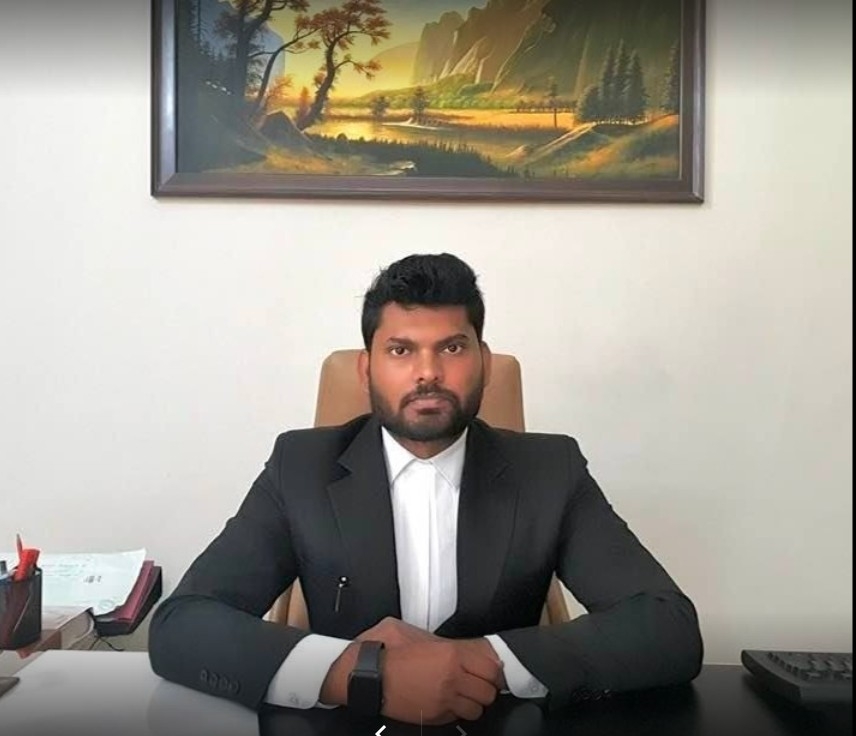
  • The journey of a first-generation lawyer is never easy, but through hard work, personal networking, and an unwavering commitment to ethics, success is achievable for anyone,” -Vaibhav Mishra, Advocate-On-Record at the Supreme Court of India.

    The journey of a first-generation lawyer is never easy, but through hard work, personal networking, and an unwavering commitment to ethics, success is achievable for anyone,” -Vaibhav Mishra, Advocate-On-Record at the Supreme Court of India.

    This interview has been published by Namrata Singh and The SuperLawyer Team

    Could you share what inspired you to pursue a career in law, and how your journey has evolved from your early days at Campus Law Center, Delhi University, to becoming an Advocate-On-Record at the Supreme Court?  

    In a way, I am an accidental lawyer as after my graduation in 2009 with B.Com (Hons.) course from Zakir Husain Delhi College(erstwhile Zakir Husain College), Delhi University I was preparing for CAT and other MBA entrance exams along with Combined Defence Services examination. I cleared my Combined Defence Services examination and went to 14 SSB (Service  Selection Board) Allahabad around March 2010. Unfortunately, I could not clear the Service Selection  Board interview and later joined Aon Hewitt (erstwhile Hewitt Associates) as a Research Associate.  In the meantime, I had cleared the Faculty Of Law, Delhi University entrance exam and got a decent rank so I took up the 3-year LLB course at Campus Law Centre. 

    During my days at Campus Law Centre, I took part in many Moot Court Competitions all over India and debates within the college itself. The atmosphere in Campus Law Centre is different as compared to other Law Schools’ be it National Law Universities or any other Law School. The vibe of studying at Delhi University, especially on North Campus and the exposure which one gets there develops the personality of an individual holistically. My internship stints in different offices after classes also helped me in making my decision towards taking up litigation as a career.  

    After my graduation in 2013, I was working as a Law Clerk with HMJ. (Retd.) Shiva Kirti Singh in  Hon’ble Supreme Court and later on in many different offices such as Suri & Co., Luthra & Luthra  Law Offices India (erstwhile L&L Partners), Chambers of Sr. Adv. Ajay Verma, C&C Associates,  M/s. Dev Bhumi Cold Chain Pvt. Ltd. before going fully independent. All these offices helped me in becoming a better individual in my professional career and maybe in life as well. The exposure of dealing with different kinds of people and different complex situations has its advantages &  disadvantages which one tries to navigate.  

    I had the opportunity to clear my Advocate-On-Record exam on my second attempt and got the result around April 2023. I think for establishing one’s career in litigation in the Supreme Court although it is not mandatory becoming an Advocate-On-Record does help as a stepping stone.  

    You are currently enrolled in the Professional Final Level of the Company Secretary course. What motivated you to pursue this course at this stage of your career? Do you see it as a strategic move for future growth in your field, or do you have any new plans or directions you aim to explore with this qualification?  

    I think this course will help as an add-on if one still pursues law as a career. I did B.Com  (Hons.) before doing law so I found taking up another course such as Company Secretary as an advantage. But mind you this course does take up quite some time & energy in preparations, even though I  am a bit held up in the Professional Final Level for quite some time. But it is also my opinion that the benefits after clearing this course are quite immense in commercial client buildups for individual practitioners specifically related to NCLT & NCLAT matters and even for those who want to join  Commercial Legal Practice of Law Firms or Corporate In-House jobs. 

    It is also a reality that at the end of the day one might have 2-3 or 7-8 academic/educational course degrees, but if one does not know how to use them practically, then it does not make much of a difference in a practical professional career.  

    As an Advocate-On-Record at the Supreme Court, could you describe the unique responsibilities and challenges associated with this role compared to other legal positions you have held? 

    As an Advocate-On-Record, one must be mindful of the Special Leave Petitions or other drafts drafted and filed in Hon’ble Supreme Court, since the language is explicitly read and re-read by Judges and Counsels in open Court. Anything that is seen as amateurish or even bordering contempt of court can have serious repercussions for the Advocate-On-Record on whose name the document has been filed. The strictness of the Hon’ble Supreme Court is also legitimate since there is no appellate court as per se after the Hon’ble Supreme Court. 

    The stakes are high being an Advocate-On-Record due to the responsibility being attached with cases in Court, hence that will be a big difference as compared to other positions held in my legal career.  

    Could you share some insights or memorable experiences from the high-profile cases you have handled, such as those involving the Delhi Development Authority (DDA) or the Airport Authority of  India? 

    With DDA, most cases were general land acquisitions in the manner of Writ Petitions in the High Court or Arbitrations related to the 2010 Commonwealth Games; henceforth, they were property law or commercial and arbitration-related. 

    However, there was one case while appearing for a private party against the Municipal Corporation of  Delhi wherein a commercial establishment was sealed which was against the Hon’ble Delhi High Court order. I was working at C&C Associates at that time and we had to apply with regard to the same in the High Court, got it mentioned and then listed so that it can be heard as soon as possible.  We argued in the evening and got a favourable order around 5:30-6 P.M. The efforts and the result of doing everything on almost the same day made this case special. 

    While looking after litigation matters at M/s. Dev Bhumi Cold Chain Pvt. Ltd. I had the opportunity to look after a case filed through a local Counsel in the United States Of America in the state of Washington, which required me to see witness depositions in a Court there till 2-4 A.M. in the night (Indian Standard Time) about 3-4 time and mediation attempt between parties couple of times, also had the opportunity to prep up an Indian witness being deposed in the Court in United States. I  must add that based on my experience just like most Indian Courts are not as depicted in Indian movies, similarly courts in the United States are not as depicted in their movies (may I mention A Few  Good Men!).  

    Another case was in Sikkim High Court wherein I flew to Gangtok to argue and get a stay order for the client. We had to file a Special Leave Petition in the Supreme Court to get the stay application heard in Sikkim High Court I think during winter vacation time. The climate terrain in that part of the region during winter is very cold, hence matter of preparation and getting a favourable order in an environment which one is not used to had its charm. I must add that North-East  India is extremely beautiful and if one can then one should see the natural scenery there. 

    What has your experience been like as a Group ‘A’ Panel Counsel for the Central Government, and how do you balance this role with your private practice? 

    Being a Group ‘A’ Central Govt. Counsel in the Hon’ble Supreme Court is a mixed bag, from criminal to tax to service matters all kinds of cases come up. The work quality gives great exposure and managing it with private practice is not that big a task if one gets used to handling it quickly &  efficiently.  

    You have significant experience in arbitration and mediation. What are the key skills a lawyer needs to succeed in these areas, and how do you prepare for arbitration proceedings? 

    I don’t know if I have significant experience in this field as it’s quite broad, but I can say that the preparation for cases in this area should be thorough since commercial arbitration matters have a lot at stake in terms of commercial repercussions. One should know the relevant provisions of law and the procedure before the appointment of an Arbitrator and after the appointment of an  Arbitrator.

    In Mediation proceedings, if parties are willing to settle the issues at hand, then all endeavours should be utilized to do so. Otherwise, prolonged litigation is in the interest of no one in the long run as compared to speedy disposal of a case at hand.  

    You have authored articles and a book on legal topics. How important do you think it is for practising lawyers to contribute to academic discourse, and what impact does it have on their practice? 

    I have written two books one on Patna High Court and its judgments and the other one on my  Grandfather Late Shri Lalit Narayan Mishra (Former Railways Minister). I believe writing is a flare that helps in augmenting the drafting skills of a lawyer. I also contribute articles for The Daily  Guardian, so I’ll encourage writing articles as a scope as well.  

    A practising lawyer should try to contribute to the academic discourse as a Guest Faculty or through any other medium as long as it does not affect the professional practice of the lawyer.  

    As someone with a highly demanding career, how do you manage to maintain a work-life balance,  and what advice do you have for young lawyers struggling with this aspect? 

    In my opinion, work-life balance goes for a toss whether you are an Independent Practitioner or working in a Chambers/Law Firm/In-House Corporate Office. The reason for the same is competition in the market especially when it’s difficult getting clientele for your practice or job in someone’s office.  

    Time management is quintessential in such situations. Although time management is still a work-in-progress for me, those who can handle time durations for work and family along with extracurricular activities such as theatre or sports can still have a decent work-life balance.  

    Based on your extensive experience, what advice would you give to young legal professionals who are just starting their careers, particularly in the areas of civil and commercial law?  

    My advice to someone would be to do your best, so you don’t have too many regrets later. Those who are young in the profession should work on what they can do rather than thinking of  something which might not be in their control for example applying for as much legal empanelment work as possible rather than waiting for work to come. 

    It’s a tough field where different types of people will come across in the profession, some as friends some may be something else. Always remember to value yourself no matter what the situation is while avoiding the fine line between self-confidence and arrogance.  

    The client whether an individual or a corporate house will be posting faith in you as a lawyer, so avoid letting someone down. Be ethical, since shortcuts and cutting corners will lead someone nowhere in the long run. 

    Any newcomer in the field should read the file at hand a lot and should be well-versed with the facts of the case while being updated with the recent judgments on the moot question in the matter. If opportunity is there then one should enjoy the process of arguing before the judge, whether District  Court or Supreme Court to the best of one’s ability; the next client/the next opportunity could very well be watching the proceedings.  

    I also believe that the difference between first-generation and second/third-generation lawyers is in the first few years of the profession, it all gets levelled out based on the hard work and personal networking skills of the individual. There are enough first-generation lawyers in the field who are role models for many. 

    Get in touch with Vaibhav Mishra-

  • “Lawyers are tools of social change in society. Observing my surroundings, where there are prevalent economic and social inequalities, I always wished to be a tool for social change.” – MANOHAR PRATAP, Advocate-on-Record at the Supreme Court of India.

    “Lawyers are tools of social change in society. Observing my surroundings, where there are prevalent economic and social inequalities, I always wished to be a tool for social change.” – MANOHAR PRATAP, Advocate-on-Record at the Supreme Court of India.

    This interview has been published by Namrata Singh and The SuperLawyer Team

    Can you share what initially inspired you to pursue a career in law, especially coming from a remote rural area in Bihar? Who showed you this career path of Law? Please allow us to walk through your journey.

    Right from the very beginning, i.e. primary school days, I used to read that most of the freedom fighters, politicians and ministers were lawyers. This fact developed thinking inside my mind that lawyers are tools of social change in society. Observing my surroundings, where there are prevalent economic and social inequalities, I always wished to be a tool for social change. Though initially, I tried social upliftment in the village through arranging plays, cleanliness drives and free tuition after passing intermediate examinations, I decided to choose law as a profession so that my passion could also be fulfilled.

    Transitioning from a Hindi medium school to studying law in English must have been challenging. How did you overcome these hurdles, and what advice would you give to students in similar situations?  

    Transitioning from Hindi Medium to English was the biggest challenge. Initially in school, I learnt translations from books, but later I chose more convenient ways to learn English by listening to Hindi and English news broadcasts respectively. Hindi and English broadcasts of BBC, DW (Deutsche Welle) and All India Radio on short waves helped me to a greater extent. Later in college, I used both Hindi and English medium books to study, however I used to write examinations in English. Watching English movies with subtitles also helped me in gaining vocabulary. After joining the courts, reading judgments regularly improved my English.

    Young students who are in similar situations are advised to read lots and lots of bilingual study materials and switch to English gradually. In the current times, knowledge of the English Language is a must for success at least in Supreme Court and High Courts. However, no one should feel shy in trying even if he/she feels that his English is not perfect. Even today, after almost a decade of law practice, sometimes I fail to find or remember exact English words for feelings that I wish to express to Court or somewhere else. So the most important part is to keep trying and to remember that none of the Indians speak English as their mother tongue and they all have learnt English sooner or later as a second language only.

    You have an extensive background working with legal stalwarts like Mr. K. K. Venugopal and Mr. Kapil Sibal. What are some key learnings you gained from these experiences?  

    Briefing legal stalwarts like Mr. K. K. Venugopal and Mr. Kapil Sibal are insightful. I have briefed them on many occasions in my independent matters. The biggest learning from briefing them is, to hear briefs patiently and carefully. Even though they are themselves an authority on some legal subject matters, but then also they take briefings very patiently and accommodate the viewpoints of juniors. In one of the matters wherein interpretation of the MMDR Act was involved, Mr. K. K. Venugopal, who was the Attorney General of India, had many detailed discussions with me as assisting counsel before giving the final Written Opinion to the State of Chhattisgarh.

    Since shifting your focus to the Supreme Court in 2016, how has your approach to handling cases evolved, and what unique challenges have you encountered?  

    After shifting practice in the Supreme Court, my approach has remained simple and steady. I never draft unnecessary bulky briefs and have never tried to mislead the Hon’ble Court or the opposite party. In the beginning years, my focal point of briefs was scattered but with experience, gradually, I have learnt to pinpoint the main legal issues involved in a case, so that the Hon’ble Court may not waste valuable judicial time in finding legal issues in a brief.

    The most unique challenge I have faced in the Supreme Court is the unbalanced approach of Hon’ble Benches in hearing cases that are led by Senior Advocates and Advocates. There is a general tendency among Judges that if a matter is represented by relatively young counsel, it must not be an important matter. Some benches even get angry and try to dissuade them from appearing in the Supreme Court threatening with costs.  

    You have been involved in various public interest litigations aimed at improving the judicial system. Can you discuss a specific PIL you worked on and its impact on society?  

    I remained part of many PILs. However, the most important PIL was ‘Youth Bar Association of India V Union of India’ reported in (2016) 9 SCC 473 wherein the Hon’ble Supreme Court was pleased to direct all states and Union Territories to upload a copy of FIR on respective websites within 24 hours of its registration. This judgment had a huge impact on the administration of justice. Earlier, common citizens were not able to get copies of FIR even after many attempts, now it can be obtained through some clicks online. In one of PIL ‘Manohar Pratap V Union of India’ W.P. (C) No. 780 of 2019, I raised issues of the deaths of hundreds of children in Bihar due to Encephalitis. The Hon’ble Supreme Court took a serious view in the matter and in reply filed by the State of Bihar, it was found that there is a complete lack of medical services in Bihar. Later the matter was disposed of with liberty to approach the High Court of Patna.

    During your tenure as Deputy Advocate General for the State of Chhattisgarh, what were some significant cases you handled, and what did this role teach you about state-level legal issues?  

    During my tenure as Deputy Advocate General, most of the matters handled by me were related to the MMDR Act and NGT Act. There are no such remarkable judgments to point out, however representing the state I learned about the stage-wise implementation of policies, and lacunas in State machinery leading to non-implementation of judgments.

    As a staunch supporter of mediation in matrimonial cases, how do you see mediation contributing to a more efficient and humane judicial process?  

    Mediation is an important tool for resolving disputes. From my personal experience, I found that there is a 50% success rate for resolving disputes through mediation, which is much better than dragging cases for years.

    As a staunch supporter of mediation in matrimonial cases, how do you see mediation contributing to a more efficient and humane judicial process? Can you elaborate on its effectiveness in resolving disputes compared to traditional litigation?  

    Most mediations are in matrimonial disputes arising from transfer petitions. I don’t do adversarial litigation in matrimonial disputes and always try to find an amicable solution through the help of mediators from the Supreme Court Legal Services Committee. Meditations in matrimonial disputes are completely averse to traditional litigation. When parties in matrimonial disputes go to Courts in traditional hearings, they develop animosity against each other which further deteriorates their relationship, and litigation keeps going on for years and years. However, in Mediation, when parties sit face to face in the presence of a mediator, with the comfort that their words cannot be used against each other in a Court of law, they open up and issues are generally resolved in 1 to 3 hearings. Which saves a lot of judicial time.

    Outside of your legal practice, what personal hobbies or interests do you pursue, and how do they help you maintain a work-life balance? 

    Outside my legal practice, I am a pet lover and I like to travel to serene places. I am a good swimmer. In my free time, I watch a lot of documentaries based on various social and other issues around the world.

    Looking ahead, what are your goals for your independent practice, and how do you plan to continue contributing to the legal field and society at large?   

    My goal in independent practice is to keep gradually rising and make space among already established names in the Supreme Court. For my contribution to society, I do many pro bono cases, mostly for persons in custody. All the matters that I argue in the Supreme Court are aimed towards strengthening the civil liberties and rights of common citizens. I believe that every advocate owes a duty to challenge arbitrary actions of Govts. which are aimed towards curtailing liberty in any manner. 

    Get in touch with Manohar Pratap-

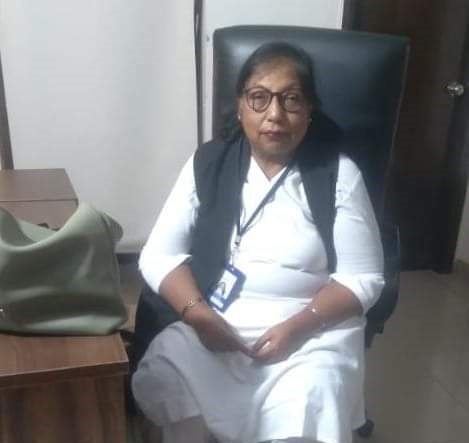
  • “The legal profession is not just about earning big money but making citizens aware of their legal rights and protecting them from being exploited,” – Shipra Ghose, Advocate-On-Record at the Supreme Court of India

    “The legal profession is not just about earning big money but making citizens aware of their legal rights and protecting them from being exploited,” – Shipra Ghose, Advocate-On-Record at the Supreme Court of India

    This interview has been published by Namrata Singh and The SuperLawyer Team

    You have a distinguished career as an Advocate-on-Record at the Supreme Court of India. Could you share with us how you began your journey in law?  And your father, Late Sankar Ghose, was a Senior Advocate at the Supreme Court of India. How did his career influence your decision to enter the legal field, and what lessons did you learn from him?    

    I was always  interested in studying law coming  from a family of lawyers. I graduated in Political. Science (Hons ) from Delhi University  wherein I studied  the Indian Constitution, international relations and other allied subjects and in my third year I had participated in model Parliament organized by the Delhi University and all  these  factors  reinforced my desire to pursue a 3 year LLB course from the  Faculty of law,  Delhi   University  (1988 -1991  batch). Thereafter  I  had wanted to pursue LLM in international law, as my first love was to pursue a  career   in  academia   and  research   however   the   same   didn’t  materialize  and   my   father  motivated  me  to  join  the  legal    profession  as  a  practicing  lawyer. He  felt  that  I  had  good communication  skills. He  also  emphasized  there  was  ample  scope  for  research while  studying   a question  of  law in  a case, the  lawyers needs  to  have clear  understanding  of  law, conduct   legal   research   to  support   the  client’s  case  and stay  updated  with  recent  judgements, laws  and  give  his  client  the  most  appropriate  advice  in  a particular  situation.  

    After  I graduated  in  Law   for  a year  I  worked  with  M/s  Khaitan  &  Company,  Delhi  appearing  in their Delhi High   Court  matters  ( mostly  of  Civil  nature)  and also also  drafting  related documents  and  also conducted a  few admission/denials. My father always  insisted  before  one finally  steps   into  the  Apex  Court  work  one must  learn  the   original   side  work  and  conduct  trials and  master  the  Code  of Civil  Procedure .   

    I  joined  the  legal  profession  in September 1991  and I  passed  the  Advocate  on  Record   Examination  in 1997 in  the  first attempt. My father  was  suffering  from  Prostate  cancer from the year 1996  and I lost him in  February 1998.      

    I  had  an  opportunity  many  a times to  work   with  my  father  while  attending   his  chamber ,  I  researched  on  various   questions  of  law  and  I also drafted   notes  of  Arguments and I learnt from him how to improve upon  them and make them more precise. This  itself was a great learning experience.         

    You have been on the panel of the Supreme Court Legal Services Committee, often dealing with criminal and matrimonial matters, and have served as Amicus Curiae. How do these roles contribute to the legal system, and what impact do you believe your work has on the lives of individuals seeking justice? Additionally, what drives your commitment to pro bono work, and how do you choose the cases you take on?

    I  being  a Panel Counsel  of  the  Supreme  Court   Legal  Services Committee  ( SCLSC)  and Amicus  Curiae   get  an  opportunity  to provide  legal   services  to  the  less  fortunate people in the society  this stems   from   my  belief   nobody   should   be  deprived  to  represent  himself  or  herself  through  a  lawyer  irrespective  of   his  or  her social  status  and  justice  is accessible  to  all. I also  feel  by  doing  pro bono  work  I  am   able  to  give  back  to  society. The  legal  profession  is  not  just  about  earning  big money  but  I  think  we  lawyers  have  a duty  to   make  citizens,  the less  fortunate ones  aware  of  their  legal  rights  and  also  protect  them  from   being  exploited .

    I  have  dealt  with  many criminal  matters being  in  the  above two  panels, in  one  of  my  cases the appellant had already undergone more than 21 years incarceration and I  had  prayed he should be released on sympathetical considerations. The  Apex  Court  observed  since  the appellant has undergone such a long period in custody, he may apply for remission as per the policy of the Government  in vogue and  further directed that even in case, the appellant was not  able to make any application for remission, the State was obliged to consider this aspect in accordance with the policy of the State.  The  Apex   Court  dismissed  the  Appeal  with  the  above  observations(Criminal Appeal No(s). 1681/2013 PANKA VIZ PANKU(s) VERSUS THE STATE OF CHHATTISGARH   decided  on   08. 05.2024). I  feel  the  above  observations  would be  a great  help  to  the  accused. In certain  criminal matters  

    I  also had   an opportunity  to work  on   matrimonial  matters  and  civil  matters  bring  on  the  panel  of  SCLSC  panel ,I  had  an  opportunity  to draft  many  transfer  petitions  for  wifes  and  got  their   matrimonial matters  transferred from one state to another ,these days in some cases the wives are working and well paced , it was not easy to get their matter transferred but one has to convince the Court that the wife is facing genuine difficulties only then one succeeds in getting a transfer.

    I  have  represented  a few  clients   before  the  Supreme  Court  Mediation Cell   where  some  cases  involving   matrimonial   disputes, and  other civil   disputes  were  referred  to  Mediation  Cell  by  the Judges  of Apex  Court wherein  we  the  lawyers  from  both  sides  had an opportunity  to  make  the   parties sit   under  one  platform  under  the  guidance  of  mediators  and  impressed  upon  them that   where  a child  was  involved  in   the  well  being  of  their  child  they  should  live together, were we  failed  to convince  the  parties  to  live together, the  mediator‘s  impressed  upon them that   instead of  filing  contentious  cases  against  each  other  they  should   resolves  all  their  disputes  and  part  amicably. In  some  cases the  meditators  was  able   to  prevent custody  battles  amongst  parents  and  worked   out   a  shared custody  of  the  child  and sharing  of  expenses  for  the  child,  in  some  cases  where the  wife was   not working,  the meditators worked out  a  lump sum  alimony  for  the  wife  and child  and  visitation  rights for  the   father of  the  child. I  feel we  lawyers  should  always give  the  correct  and  appropriate   advice to  our  clients  and  if  there  is  a possibility of  out  of  court  settlement  we  should  encourage  the  same  as  that  it  would  be  beneficial  for  the  client, our  legal  system, save  costs and   not  unnecessarily  prolong  litigation.

    What do you consider the most important qualities and skills that a successful lawyer should possess today? What advice would you give to the new generation of lawyers to help them excel in the field of law? Are there any specific skills or strategies you believe are essential for success in today’s legal landscape?

    To be  a  successful lawyer one  must possess excellent communication skills, analytical  skills, argue with persuasiveness before the Court of Law,  which  can be learned and developed by appearing  in  various  cases  and  watching   and  observing   seniors  argue cases. A lawyer  should  not always take the paths of the precedents  but  should be creative and possess the ability to think out of the box  to   reach  the   best  possible solution.

    I  feel a newcomer  after law school  if   he opts for  litigation, he  should  either join a lawyer with 10-15 years of experience who has a lot of work, or with a government lawyer, or litigation law  firm. I  also  advice   law   students during  their  five  year  law  course  to  do varied internships  like  work  with  a NGO, work  with   a  litigation  law  firm or  corporate  law  field  (whichever  field  they  wish  to choose)  and  make  informed  career  choices. 

    In today’s time  Lawyers have to stay updated with all  legal developments, changes in law and  be techno savvy.

    Given your broad experience across different legal areas, how do you incorporate interdisciplinary approaches in your cases, especially in complex matters that intersect with economics, sociology, or technology? And how do you manage to stay updated and proficient in such diverse fields of law?

    My broad expertise developed through years of studying and practicing law across different domains. I  was   also   an empanelled  ‘B’ counsel of Union of India, Supreme Court from 30.9.2009 to 29.9.2014  wherein  I  had  the  opportunity  to   draft, appear  and  brief   law  officers  and  Senior Counsel  in  matters relating to direct and indirect taxation, Land Acquisition matters, Defence matters/ Military matters, Service matters, Matters relating to Railway, Trade Mark n  Matters, Arbitration matters.

    I  am  also  in the panel of PSU’s, wherein  I had an  opportunity   to  work on cases involving disputes arising out of     Construction Contracts  and therein we  took  assistance  of  engineers  to  understand  the  technicalities of  the   Construction   Contracts . These disputes were often  referred  to  Arbitral   Tribunal.The composition of an arbitral tribunal may involve each of the claimant(s) and the respondent(s) appointing one member each while the two so appointed, nominate the presiding arbitrator. In such a situation, government agencies could consider nominating a technical member on the arbitral tribunal so that the tribunal is not required to seek external expert assistance on matters of technicalities     

    I find the diversity of legal issues fascinating. The intersection of law with other disciplines such as economics, sociology, business, finance, technology etc., are   becoming increasingly  dominant. We   lawyers have  to possess interdisciplinary skills  and  must   sometimes   work   as   a team  of  varied  professionals depending  on  the  nature  of  legal  work   to  provide the best  possible  solution  to  complex legal issues.

    Balancing a demanding career and personal life can be challenging. How do you manage to maintain this balance, and what hobbies or interests do you pursue to unwind?  

    I think  it  is  very  important  to  balance  professional and  personal  life, after  becoming  an  advocate  on  Record  I  embarked  upon  my Independent  Practice, it was initially very challenging to ensure inflow of  regular work  to my office, to continuously follow up  payments and ensure all establishment costs are made.

    However having a home office had its own advantages as  I  had  a growing   daughter, it  was  easier  to  manage  home, work  and  spend  quality  time  with  her. Since  the year 2019 I  have a chamber in the  Supreme  Court, now   my  daughter is  now a working  professional, I can afford  to  spend  more  time  in  my  Supreme  Court  Chambers.

    I  don’t  get  much  time  to  pursue  my  hobbies  but  I am fond  of traveling, photography,  and listening  to  good  music .

    With the increasing integration of technology in the legal field, such as virtual courtrooms and AI-driven legal research, how do you see technology reshaping the practice of law?

    Technology  is  a boon, every  lawyer  needs  to  embrace technology  in today’s era  and  as  the  same helps  in enhancing efficiency  of  lawyers.  Legal Tech provides lawyers with instant access to vast databases of legal information and facilitates faster and  enables lawyers to find relevant precedents, analyze legal issues, and develop stronger arguments. 

    When this COVID pandemic arrived, the Indian courts adopted this new system of  digitalization. Virtual  hearings were  introduced which  have multifarious  advantages  The  above  system  has  introduced  e filing. Physical hearings continue side  by side. Lawyers and parties spread across  different states, and even countries, can file cases and argue their case from the comfort of their home.  Many  Courts  in  India launched a digital platform to ensure that all its orders are available online with digital signatures free of cost for the lawyers and litigants. This provides the dual benefits of cost and time saving. We hope  the  digitalization  of  Courts  in India  will  help to clear  the  backlog of cases.

    As someone who has worked under distinguished legal minds like Late Dipankar Gupta and in firms like Orr, Dignam and Co., how important do you think mentorship is in the legal profession? Also could you please share how these work experiences helped you in nurturing your legal knowledge and expertise?

    My mentors and  seniors  have not merely made  an impact on my approach to practicing law, they have all  shaped  me  into the lawyer and the person I am today. My father  Late   Sankar  Ghose  Senior  Advocate was my first  mentor  who imbibed in me the love for litigation and court craft. I  worked  in the office of  Mr. Late  Dipankar Gupta Senior Advocate  when he  was  the  Solicitor General  of  India  for  a year. I learnt  to work on  Government  Briefs. I learnt how a person of his stature prepares for matters, deals with the pressure, the adulation and the criticism, and keeps the dignity of the Court and the need of the matter at the forefront.

    I had an opportunity to work with the law  firm, ”Orr  Dignam  &  Company  (Solicitors and Advocates  law  firm“ from the year 1995 to 1997 when Rahul Dave, Advocate on Record had taken over the Delhi office  it was a growing  law firm  with  three partners and six associates. I got better opportunities to learn and work on matters independently as  it  was an upcoming law  firm.  I was  looking  after  their  Supreme Court  matters,  drafting  SLPs, TP.s and Writ  petitions  and  also  argued matters  before  the  Apex  Court and briefed Senior Counsels. I got an opportunity to extensively work on Civil, Taxation, indirect taxation  Arbitration matters contractual and criminal matters. I  also got an opportunity  to appear  in various  other  forums like Consumer courts, Company law Tribunal, Delhi High and also have  drafted matters  to  be filed  in  these  forums. 

    The  partners  in the  firm were  encouraging   towards  each  of  their associates. Since I was  regularly doing their Supreme Court work involving  myself  in the process, right from researching to preparation to  drafting to filing, listing and arguing the matter, all  this  severed  as  a ground  work for preparation  for  my Advocate on  Record  exam. Thereafter, I cleared my Advocate on Record exam in the year 1997 in the first attempt  and  embarked  upon  my independent  practice

    You have been in the legal profession for over three decades. Can you share the ups and downs you experienced while establishing yourself, especially considering the challenges of your times? Additionally, please provide some unique insights on the learning and evolution of the legal landscape from when you started to the present day.  

    My  initial years of practice  was  all  about   learning, seizing  each  and every opportunity that came my way wholeheartedly. I  never  said   no  to  any case  be  it a corporate client  or  a  less fortunate  client  (pro bono  cases ) as  I  felt  no case  is big  or  small,  as  every case  provided  an unique  learning  opportunity and   makes  one grow  immensely. Similarly  I  was  open to  learning  all  branches  of  law  be  it  civil, contractual, taxation,  arbitration,  rent  cases, service, criminal  etc.,  on  whatever  I  got  an  opportunity  to  lay  my  hands  on and consequently I emerged  a  an  general  practitioner which   greatly helped  me in  my  practice  as an Advocate on Record  of  the  Supreme  Court  of  India.         

    One  of  the  biggest  challenges  was   passing my  Advocate  on  Record  Examination in  the  first  attempt  in the  year  1997 while I was working in a law firm and my daughter was only 3 years old. After  becoming  an  Advocate  on  record  I  had  an  inflow of some basic works  like  Transfer Petitions,   Service Matters, Land Acquisition matters, Indirect Taxation , Rent matters, Arbitration matters and Criminal matters.

    I also   managed   to  get  some  work   from   the  lawyers  in  Calcutta  High  Court, even  if  a  drafted  SLP had  come  to my  office  I always  went   through  the  drafting   and   ensured  the  every  matter  which  is  filed  through   my   office  is  drafted  in  a language   appropriate   with  the Court  norms.  I  have also   drafted  many  special  leave   petitions, transfer   petitions  and  writ   Petitions,  argued  many matters  independently  and  briefed  Senior  Counsels  as  and  when  required. Sometimes  I  appeared  and  argued as  an AOR  on  cases  involving  a pure question  of law which  involved  extensive  research . One  such case  of  the Apex Court  being   State  of   West   Bengal  vs   Sarkar   &   Sarkar  being   CIVIL APPEAL NO.5939 OF 2007 decided  on 19th  April  2017 where  I  argued and   got  a verdict  in  favor  of  my  client.

    In  another  public   interest  litigation  which I filed  ‘SAYAN MUKHERJEE vs. THE PRINCIPAL SECRETARY TO HIS EXCELLENCY THE GOVERNOR OF WEST BENGAL Diary No.- 12854 – 2024‘  challenging the inaction on the part of the West Bengal Governor Dr C.V. Ananda Bose in giving assent to the West Bengal Universities (Amendment) Bill 2022, which was passed by the State legislature in June 2022, the  Apex Court on 22nd April  2024  issued notice and  has sought a response from the Principal Secretary to the Governor of West Bengal, the Union as well as the Principal Secretary of the Department of Higher Education in this regard.    

    Along with my AOR practice in the Apex Court I continued my practice in other forums like Delhi High Court, consumer courts, district Courts, Debt recovery Tribunal etc. I never  got  any  clients from  my  father  as  he being  Senior  Advocate, never entertained litigants directly. I also had to  build my law practice from scratch and my journey is  full of high and lows and when I was able to get justice for my client, I was happy but at the same time I learnt from every mistake I made.

    Get in touch with Shipra Ghose–

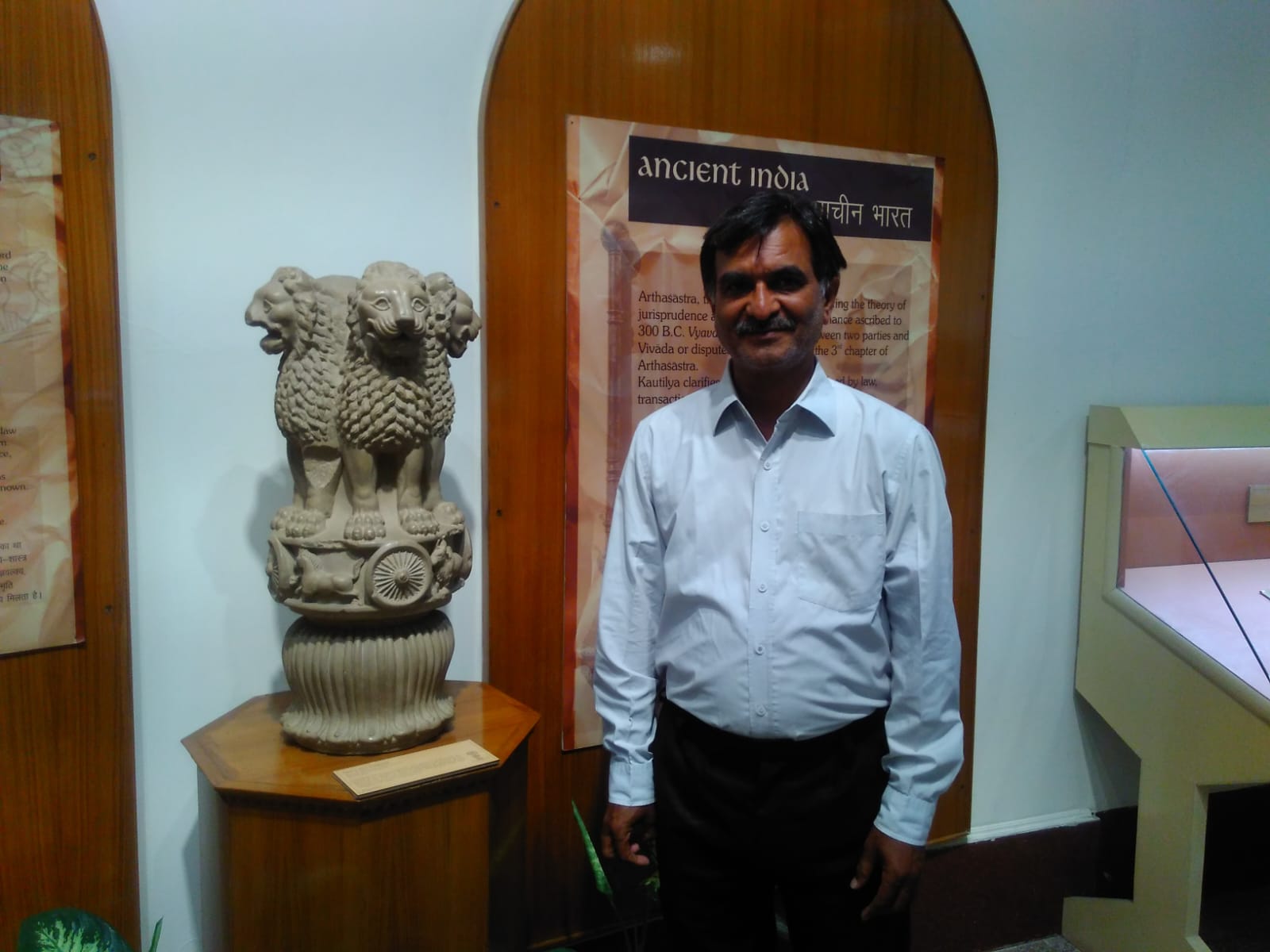
  • “As a Panel Advocate, I developed ethical practising skills and increased my corporate legal field knowledge.” – From Ayurveda to Advocacy: The Transformative Journey of Deen Dayal Purohit, Advocate at the Jaipur High Court & Purohit & Associates,

    “As a Panel Advocate, I developed ethical practising skills and increased my corporate legal field knowledge.” – From Ayurveda to Advocacy: The Transformative Journey of Deen Dayal Purohit, Advocate at the Jaipur High Court & Purohit & Associates,

    This interview has been published by Namrata Singh and The SuperLawyer Team

    Could you please introduce yourself to our readers and walk us through your journey? Also before pursuing your LL.B., you completed a diploma in Ayurveda Ratna. What motivated you to switch to law after seven years in Ayurveda? What inspired you to pursue law?

    Yes, I’ll feel grateful to introduce myself and about my journey to you. From 1985 to 2000, I served as a consultant in the renowned Ayurveda Pharmaceutical company, meanwhile, in 1997 my brother B.P. Chhangani was selected for judicial service. He motivated me to do an LLB course, and as you know I cleared LLB in the year 2000 and started practising as an Advocate from 2000 onwards to continue.

    Could you please elaborate on the main practice areas you specialize in and the types of cases you most frequently handle in your legal practice?

    My main practising areas are Criminal, and Writs in the High Court.

    What responsibilities does your position as a Public Notary for the Government of India entail, and how does it integrate with your other legal work?

    In the tribunals and high courts, documents need to be notarized, so, it is a part of day-to-day professional practice.

    You have been a panel advocate for numerous institutions. How does this role differ from private practice, and what skills have you developed from these experiences? Please share some insights from your work as a panel advocate.

    Panel Advocating work is different from private practice. As a Panel Advocate, I’m working in corporate culture. During my work as a Panel Advocate, I developed ethical practising skills and increased my corporate legal field knowledge. 

    Could you please discuss the significance of the reportable judgments you were involved in, such as Priyanka Shrimali Vs. State of Rajasthan and Hindustan Zinc Ltd. Vs. State of Rajasthan and Ors.? Also you could share some insights from the case.

    In the case of Priyanka Shrimali Vs. State of Rajasthan the significance of this matter was “Married daughter is entitled to the compassionate appointments in the Government service”. Before this judgment, the Married daughter was not entitled to the compassionate appointment. In the case of Hindustan Zinc Ltd. Vs. State of Rajasthan and Ors., the significance of this matter is “the challenge to the vires of provisions of sec 38(C) & 39 of the Act and Rule 24(1) of the Rules fails. The writ petitions are dismissed. However, the petitioners, if aggrieved by the entry made in the provisional assessment list, shall be at liberty to file the appropriate objections before the Assessing authority and in the matters wherein final assessment orders have already been made. The demands have been created, they shall be at liberty to file an appeal before the Appellate Authority, if not already filed, within thirty days from the date of this order. The amount, if any, deposited by the petitioners against the demand created in terms of interim orders passed by this court or otherwise, shall be adjusted against the amount payable to satisfy the condition of pre-deposit for maintainability of the appeal”.

    Beyond your areas of expertise, which other fields of law do you find particularly fascinating or are passionate about exploring further, and why?  

    In Legal Service Authority Act, Insolvency and Bankruptcy Act and Companies Act, but especially in Article 39 A of the constitution of India enacted Legal Service Authority Act because the Legal Service Authority Act, sec 12 is about free and competent legal services for the needy person and other persons that need the justice.

    As an experienced lawyer, what do you think the current generation can do to prepare themselves for successful careers in law and beyond?  

    The current generation has ample opportunities to prepare and develop for successful careers in legal fields, like International Arbitration, Companies Law, Banking Law, Legal Drafting and several other fields.

    Outside of the legal realm, what are your hobbies or interests that help you unwind from the demands of your profession?  

    Outside the legal realm, I’m working for several legal awareness campaigns at various places like schools, colleges, and public places on subjects like POSH, POCSO, IT, CYBER CRIME, SENIOR CITIZEN’S RIGHTS, LABOUR ACT, PCMA ACT etc.

    Could you tell us more about Purohit and Associates, the types of legal practices they specialize in, and what opportunities they offer for interns looking to gain experience in the legal field?  

    The Purohit & Associate practices in the subordinate court, tribunals, High Court, DRT, State Commission and various other fields, and It develops the skill of Associates in practice as well as in the competition of judicial exams and gives enough opportunities to the Associates working under the Purohit & Associates, and also provide opportunities to intern about “earn while learn”.

    Get in touch with Deen Dayal Purohit-

  • In Conversation with Vikrant Parashurami- A Hotel Management grad who went on to pursue Law, and now heads his own Law Firm, P Legal – Parashurami Legal

    In Conversation with Vikrant Parashurami- A Hotel Management grad who went on to pursue Law, and now heads his own Law Firm, P Legal – Parashurami Legal

    This interview has been published by Ojuswi Sahay, Sonali Parashar and the SuperLawyer Team


    What prompted you to pursue a career in Law after graduating in Science from the Institute of Hotel Management, Catering Technology and Applied Nutrition, Mumbai? 

    I wanted to study further after Hotel Management and my preferred course was Law. Also, having both parents in the Legal field further prompted and pushed me to take law as my preferred choice of stream. Having Hotel Management as a previous qualification, the plan was and still is to take up work involving the two core fields of my education i.e. the legal issue relating to the Hotel and Hospitality Industry.

    Was there any specific reason to pursue a Diploma in Modern Applied Psychology after completing Diplomas in Corporate Law, Intellectual Property Law, Cyber Law and a Post Graduate Degree in Alternative Dispute Resolution? 

    Certainly, there was a specific thought process and reason for pursuing and studying Modern Applied Psychology. The Diploma in Modern Applied Psychology involved the science of human behaviour and how to apply it to everyday life and that is an essential and inseparable part of the Legal field, especially the Litigation part of it. A study of this aspect would certainly help in practice (litigation) hence the course was taken up and completed. 

    Do you enjoy training young minds? Do you believe one can always teach and learn at the same time? Would you like to share any skills or habits that you inculcated after having years of experience in teaching?

    I absolutely love interacting with young minds and students and I started teaching right after my graduation in Hotel Management. My first class of students comprised of students from my graduate college i.e. IHM Mumbai. I am a staunch believer that one tends to learn continuously while one teaches and interacts with students.

    I have taught students of the 3 and 5 years law courses and the students in 3 years course are generally from a very broad age group and interacting with such a broad age group always gives you different perspectives about law and life in general. Teaching law students has definitely taught me to be more patient, be more open to different perspectives and be open to the idea that you might not always know everything and that there is always something to learn from everyone. 

    How can a young lawyer step into international practice? Do you think working with foreign firms propels career growth?

    Personally, I got an opportunity to work with an attorney practising with a U K based law firm because one of my professors thought I would be a good fit for the work and that professor was in fact supposed to undertake that work, but due to some prior commitments on the part of that professor, I got an opportunity to work with that Attorney and learn.

    So from my personal experience, I would say that you just have to do your best whenever you get opportunities and make sure you interact with as many people as you can during and after your law graduation or for that matter any course that you take up. Working with a foreign firm certainly gives you great exposure and that certainly helps in getting you prepared for better opportunities that come your way in your career.

    You happen to be empanelled with various Insurance Companies, online platforms, and also BMC. Can you tell us a bit about your role and which role do you enjoy the most and why?

    I am empanelled with various companies including Insurance Companies as their panel advocate. I am empanelled as a dispute resolution professional with online platforms and I am empanelled as a counsel with the Municipal Corporation of Greater Mumbai commonly known as BMC.

    As a panel advocate for insurance companies, I am required to protect their interests before Courts and Tribunals. As a Dispute Resolution Professional, I am required to be an Arbitrator, Mediator or conciliator in disputes that the parties submit to these online platforms for resolution. As a counsel for MCGM or BMC, I have the responsibility of representing the MCGM/BMC before various courts as a Counsel and arguing cases on behalf of the MCGM/BMC. 

    Very frankly I enjoy all the roles and the responsibility that comes with each as all different roles involve dealing with issues under different laws and I prefer working on a variety of laws and issues. As a member of the legal fraternity and as an advocate  I believe it is our duty to give back to the society as much as we can and by taking up different roles and by dealing with issues under a wide range of laws I feel I am getting better equipped to do my part to the best of my capabilities.

    Would you like to share your experience as a member of the Managing Committee of the Advocates Association of Western India (AAWI)? What are the eligibility criteria for this role?

    As a member of the Managing Committee of the Advocates Association of Western India, I have been able to interact with advocates practising at the Bombay High Court, especially on the Appellate Side and have been able to be a part of the committee that is supposed to be the voice for the advocates and take up their issues with the Bar Council of Maharashtra and Goa and with the High Court Association. This has also helped me in understanding another aspect of being a part of the legal fraternity that requires dealing with issues faced by the legal fraternity and resolving them.

    You also happen to be heading your legal firm by the name of P LEGAL – PARASHURAMI LEGAL since October 2019. Can you tell us a bit about your law firm? And, what is the life of a Founder of a reputed law firm and a renowned lawyer like?

    I have been practising since 2012 and have started my law firm by the name P LEGAL – PARASHURAMI LEGAL in 2019. The motto of the firm is to provide Practical, Practicable and Pragmatic legal solutions (If you take a closer look at the logo of the firm, the P in the logo has 3 lines which indicates 3 P’s which in turn stand for Practical, Practicable and Pragmatic in addition to representing my surname).

    As a firm, we take up a variety of work which includes consulting as well as litigation and we represent a variety of clientele in their legal issues and disputes. As a Law firm, it is our endeavour to expand our scope of work and take up varied work in a variety of streams in Litigation as well as non-litigation, while providing legal solutions to our clients. 

    As a firm, we also try to provide law college students opportunities to get practical experience while interning with us. 

    Coming to the aspect of being the founder of a reputed law firm and renowned lawyer, I would only say that there is a long way to go and there is a lot more work that remains to be done as the Legal field is dynamic in nature, there is always scope to do more and learn more and get better every time. 

    Also, being associated with an organisation that is recognised for doing good work and being a professional who is getting recognition for good and genuine work, only adds to the responsibility and makes me strive harder to do better work. While striving to do better you only realise that there is a lot that can be done in the field in general and for society and this entire process is most certainly a humbling experience. 

    At last, would you like to give any parting advice to the young lawyers out there as to how can they practice litigation considering the current era of digitalisation? 

    The advice I would like to give to all the young lawyers, from my personal experience, is that as lawyers we should never shy away from any sort of work that comes our way and that as lawyers we should push our limits and expand our horizons. 

    As I have earlier mentioned, the legal field is dynamic in nature and as such, every advocate gets hands-on experience in dealing with the ever-changing environment in litigation and therefore is well equipped with dealing with new things. Digitisation, I feel, is one such change which every advocate should and can adopt and adapt to and moving forward, that is going to be the way all work would be undertaken. 

    For lawyers who have recently started their practice or would be starting their practice soon, they are better placed according to me as they get an opportunity to digitise all their records right from the very beginning and that would certainly work to their advantage. 

    To wrap it up, I would like to wish all the young lawyers and budding advocates and mention the two lines or sayings that have always helped me and that would certainly help many budding lawyers in practice: 

    Work hard in silence, let your success make the noise & Never say never.


    Get in touch with Vikrant Parashurami –