Tag: Partner

  • Sankalp Sharma, Partner at Sankalp Sharma & Associates on How he established an independent practice

    Sankalp Sharma, Partner at Sankalp Sharma & Associates on How he established an independent practice

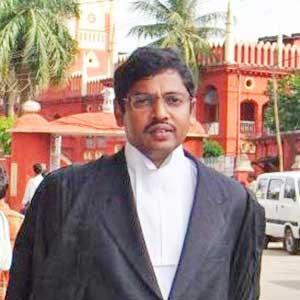
    Sankalp Sharma graduated from NLIU, Bhopal in 2010. He thereafter joined the Office of Manjit Singh Ahluwalia and then moved on to work with Virender Goswami & Associates. His work at these places spanned a time period of almost 2 years. In June 2012, he started up with Sankalp Sharma and Associates.

    We asked him to share his insights of:

    • Building a career in litigation
    • Building up a firm clientele
    • Challenges of setting up a law firm on one’s own


    How did law happen? Did you ever think of alternate career options?

    Law for someone like me, was always the most logical thing to do, the idea was to be someone that is both independent and socially useful. Growing up all that I wanted to be is someone who’s not dependent on others for survival, I guess the idea has stuck and found the basis behind a lot of decisions that I take in life. I believe I was just made for litigation.

     

    sankalp-sharma

    Tell us about your years in law school. Do you believe that excellent CGPA is the key to all success?

    Years in law school can be summarized as the most amazing learning experience both academically, socially, and personally. For a person who comes from a small city, every day spent at the NLIU was absolutely worth it. I took part in almost everything that came my way, be it mooting, client counselling, being part of organization committees of different events organized at the Institute. The idea was rather simple, I wanted to know more and more about different spheres of people in the society, how they function, how do they approach difficulties and these minute observations can only be made when you participate, no matter what event it is, different people that you meet and participate with, each and every one of them will teach you something new. I personally believe mooting definitely made a huge difference. It helped me to learn the skill of penetrative and focused research, structured presentations, anticipation and on the spot witty responses that in a real life court room make a huge difference.

    Whether CGPA is key to all success, the answer is definitely not, however CGPA is for sure key to most of the success. I am yet to find people, out of law school, who have done well for themselves academically and not in professional life. The academic years make the foundation of what you turn out to be later. In whatever little time I have spent in the profession, I can tell you this much, that it does not allow you to rework your basics, you may find people really working hard in professional life and succeeding without having great CGPA’s; however, with same hard work people with good CGPA’s have done wonders. Amongst all the fun and once in lifetime experience at the Institute, we must never forget that the basic reason we are at that place is to learn.


    What were your areas of interest during your graduation?

    I fell in love with the constitution, right at the nascent stages of my college life, It was followed by contract, CPC, CrPC, Company Law, Competition law and so forth. The principle that I personally followed with my academic work was to keep it really simple, multiple readings of the bare provision followed by prolonged discussions with professors and my friends. I have found that there is no shortcut to learning, you simply have to study. Participating in events always help and one should do more and more, life post college turns extremely competitive, your participations help you hone your skills, be it speaking, logical thinking and analysis, it also helps you to built connections that help you in later years.


    Right after graduation, you joined the Office of Manjit Singh Ahluwalia where you worked for almost one year. How did your appointment take place? Please tell us about your experience working there.

    Mr. Manjit Singh Ahluwalia, is one of the leading advocates practicing in Delhi High Court. I had interned with him during my college years, at the last one, he made me an offer to come and join him, kind of what we call as PPO. Working with him I learnt the basics. The best thing about his office was that he had all sorts of matters, from civil to criminal work at High Court, from arbitrations to hard core trial matters. Personally he is a gem of a person, I would say an amazing defense lawyer, an intriguing legal mind with a knack of just ripping into the opposite side. He gave me a lot of freedom, right from drafting to arguments, and all that he ever said “go ahead and do it, I am right behind you”. The result was, right after passing out from the College, I was independently handling clients, arguing matters. My days with him taught me almost everything that one can possibly learn standing from defense side. He was the one, who taught me the practical fundamentals of independent litigation practice, the difficulties that you face and how to just keep going despite the ups and downs in the profession.


    You thereafter left the Office of Manjit Singh Ahluwalia to start working at Virender Goswami & Associates. What led to this shift? How was your experience working there?

    The Shift from Mr Ahluwalia to Mr. Goswami was a planned move. I had worked a lot with Mr Ahluwalia during my internship years as well, and after almost an year I realized that I was getting more and more comfortable, things were getting easier, I have followed a simple formula in life; don’t let yourself get too comfortable, if you are getting comfortable, means that your learning curve is starting to go down. So I decided that it’s time for me to move on, next I wanted to work at an office that has more work from the plaintiff/ prosecution side, I had to learn the art of prosecuting, Mr. Goswami again is one of the leading lawyers at Delhi High Court, I am yet to see any lawyer who is better than him in terms of cross examination of a witness, his was an art that has been learnt from years of practice, at times with him in a cross examination I could see him toying with the witnesses. Even before the cross examinations he would predict the responses to each and every question, the detailed planning and possible tactics were well thought of, the depth and understanding of evidence law that he posses is unmatched, with him I learnt looking at matters differently, more from the perspective of how something gets proved, what facts will make your case and how to put them correctly.


    After having worked at Virender Gowami & Associates for one year, you started your independent practice. What prompted you to make this choice and start a law firm?

    I worked with Mr. Goswami for one and a half year, the idea of starting on my own was always on my mind, the plunge was again based on the same fundamental, life getting too comfortable. While working at both the offices, I had already started working on my social contacts, people had started approaching me with small matters, once the number started increasing to a level where I felt I could take the risk of starting on my own, I just went for it.


    How did you overcome your initial jitters in a courtroom full of experienced lawyers and judges? Tell us about the highs and lows.

    You never overcome the small amount of nervousness, at least I haven’t , I personally believe that it’s a good thing, it means that you are serious about your job. I was never too overawed by big lawyers and judges, for me they were always people from whom I had to learn, yet maintain my own individuality. My High came in terms of one of the matter that I argued for a socially backward class girl that was thrown out of a school, the matter was greatly argued at the High Court level and ultimately went up to the Supreme Court where it was compromised with school consenting for admission. The low came in terms of a matter in the Supreme Court, The matter was relating to a lady who killed a man trying to rape her, the matter embroiled in a political controversy and resulted in her conviction for life. I tried my best to build a case up In Supreme Court, yet despite my best efforts I could not make a good case.


    Did you ever consider a career in the corporate sector? Is it better to work in the corporate sector for a few years before starting litigation?

    I was always inclined towards litigation, I Just loved the feel of court rooms, the big arguments, the entire set up, However, I did my internships on the corporate side as well, just to be sure that I am not made for it. Preferring corporate or litigation is always a personal choice, it is also a personality choice, some of us are simply not made for the rigors of litigation, some of us don’t have the patience to see it though, at times financial reasons don’t allow you to chose litigation as well. Litigation without doubt takes a lot of courage, a little madness, you have to be mentally strong, give up the natural human tendency to go for the comforts of life, money, stability etc. Especially when you know that you too could easily take that route. If you intent to litigate, the early you start the better it is for you, if you enter into corporate world, it makes you comfortable in terms of financial stability, and after that its hard to enter litigation where financial stability is a big question.


    Please tell us a bit about “Sankalp Sharma & Associates”. What is a day at work like? Is it easy to have a work-life balance?

    We are a start-up, the idea is to provide professional, honest and comprehensive solutions to legal issues. We are focused in providing legal solutions to our clients that would help them in long term business development as well. Integrity, sincerity and honesty is what we live by. Working at office is based on a simple philosophy of “we do what we say.” The most difficult part is to build up a clientele and fulfil the commitment that we give to our clients. With a start-up your reputation is always tested and is on the line each and every time. The work life balance is obviously not easy to maintain, you have to make schedule and try your best to follow it, at times it works at times it doesn’t and that’s life.


    If someone who works with you makes a mistake or an error in an assignment what course of action do you follow as a partner?

    Work culture is simple, be sincere and work hard, in a litigation office, the challenges are never-ending, every matter has its own twist, litigation has nothing predictable, trust me. Mistakes are part and parcel of our lives, all of us make them, and the idea is to learn and not to repeat it again. All that I expect from people who work with me is to give their 100 %, as long as you are doing it, all is fine.


    What were the difficulties you faced in the early days of your practice? How difficult would you say it is to build a reputable practice?

    The most difficult part in the early years of practice, especially when you are young is to make your client believe that, though you do not have grey hairs on your head, the grey matter inside is good enough to give the opponents a good run for their money. Initial infrastructure developments, financial managements, building social contacts are obvious difficulties. However, the hidden difficulties that you face is the constant question mark that people around you put up to you about your success, the capacity to keep the fire burning despite a series of bad days, lack of clients and so forth.

    It’s not only about the practice, anything in life that you want to make big, will come with its own baggage of problems, no one will ever say that I became successful in life without going through the problems associated with it. Similarly in practice the problems are many, yet you will always have answers to them, if you are willing to put your heart and soul into it.

    One cannot fix a time frame to build a clientele, for one it’s a continuous process. Secondly it greatly depends on your social contacts and connections with the right people and the hard work that you put in to it. However, in my experience, if you are reasonably active and connected and are working heard and sincere with your work, your practice should start to move in span of two years, a decent clientele would take reasonable 5 to 7 years to build.


    What can the law schools do to encourage more people into litigation? Do you think the law school curriculum requires overhaul?

    I personally believe, that no one can encourage you to be in litigation, it is a very personal and introspective choice in life, law schools are not structured to make someone make a certain choice. Moreover, litigation is not merely a profession, it’s how you choose to live your life till the end of days and no law school, no person can make it for you, no one can push you to take it either. It should always be a well thought of decision in life. I don’t think that law school curriculum needs an overhaul, it only needs restructuring. I have a very firm belief that the role of the law school is limited to make a young mind look at the various options he has in life, introduce him to an amazing number of subjects and choice, ,teach him to read law, and thereafter leave him free to make his own path, curriculum etc are very minute things in the bigger picture of life.


    Do you take interns? What do you look for in a prospective applicant?

    We do take interns, the procedure is similar to most of the places, you write to us and we respond back with loads of question to see you fit our requirement or not. What we look for is sincerity, hard work and the ‘never say no’ attitude.


    What would be your message to law students who dream of having their own law firm one day?

    If you have a dream be it owning your own law firm or any other thing, you have to treasure it, see it as a small plant, that has to be nurtured, protected from the storm and lightning, you have to have that belief in you and your dream to make it a reality. Hard work, sincerity, patience, perseverance, self belief, honesty, integrity and never say never attitude are qualities or pillars on which your dreams will stand.

    For litigation, you should start as early as possible, in law school focus on core subjects like Constitution, CPC, CrPC, Evidence, TPA, IPC and the likes, develop the capacity to study for long hours, develop skills of research and speaking. Participate in as many competitions that you can. Don’t focus on big names while your internships, rather focus on places that have loads of work and less hands, so that you get an opportunity to deal with the real things, work at places where you can see a variety of work, place that gives you freedom to implement your learning and ideas. Start working on your social contacts at a very early stage; decide which areas you are most comfortable with and which city you would want to start your practice at. Work for some time with a good office so as to give yourself sometime to make your presence felt in that circle and lastly, once you have that self belief that you are ready. Take the Plunge.

     

  • Suhas Baliga, Principal at Innove Law, on quitting Law Firms and starting up

    Suhas Baliga, Principal at Innove Law, on quitting Law Firms and starting up

    Mr. Suhas Baliga graduated from NLSIU, Bangalore in 2008. He thereafter joined Luthra and Luthra and then moved on to Trilegal. His work at law firms spanned a time period of almost 4 years. Thereafter he moved on to co-found Impact Law Ventures in 2012. In June 2014, he started up with Innove Law which focuses on investment and corporate advice to seed, early stage and growth-stage companies, with a team of three associates.

    We asked him to share his deep insights on:

    • Life at a Law School
    • Building up a firm clientele
    • Challenges of setting up a law firm on one’s own


    Tell us a bit about your childhood and pre-college life as well as educational background. Did you have lawyers in your family?

    No. I haven’t had any lawyers in my family as such. Is it helpful to have lawyers in the family? Yes. But at the same time it is not necessary. You can also bring in lawyers into the family by marrying into one! The more difficult part of becoming a lawyer can be setting up a law practice from ground up. I wasn’t brave but had the initial good fortune of working in a firm which paid its associates well and which did not privilege family background but this is not the case with law firms in general. There is some preference for families not because we are a feudal country but because the way law firms are organised and ownership is structured, it favours closely held ownership and management, though things are changing. I never imagined myself to be a lawyer. It was a matter of chance that I went to law school. I was surprised and taken aback since that was the only law school entrance exam that I took while looking forward to engineering since that was something everybody did in Karnataka at that time. In hindsight I am happy I didn’t follow the herd.


    So did you prepare for a career in technology or medical before that?

    I did not ever think there is only one path. It is more of a question of what I found interesting at every point of time. Apart from being interested in politics, I was interested in pure sciences. In fact when I was in my 12th, I was either watching the news or studying physics. Because in science there were other subjects to study like biology and chemistry I used to enjoy what I used to do.


    What made you gravitate towards the study of law at NLS? Was it planned or just a matter of chance?

    NLS turned out to be a pleasant surprise. I was happy that I wasn’t doing engineering like everyone else and doing something different there. The fact that it was an Arts course where there was history and economics was fun. I always liked reading and writing and this aspect of the course was especially attractive. When I joined NLS it used to have a good public law focus. It used to have three constitutional law courses and three political science courses – I think the arts and public law aspects of law courses have great value in moulding an all-round lawyer. A strong grounding in constitutional law, administrative law and arts subjects also makes for a better corporate lawyer given its influence on legal and regulatory issues in general.


    Was the shift from science to BA.LL.B difficult?

    Not really. I remember having my first class at NLS where the professor was talking about a ball which was hit by a cricket bat and it fell outside and landed on the head of a fan in the audience, I found it all very flimsy. After calculus and thermodynamics, it seemed pretty thin. Also what puzzled me is that people used to make notes on these things! I never felt the subjects to be extremely challenging although I found some law subjects fascinating, especially where they intersected with arts subjects or where they are grounded in first principles, such as jurisprudence, criminal law, law of trusts, contract and transfer of property. Even after my 3rd year in college I wasn’t sure of doing law. I worked on a literary magazine for the college and everybody knew me as someone who writes and not someone dribbled in the professional life of law. Although I was sad when I was graduating because of not having extremely high grades, I was happy to have used the five years of college to explore varied interests and passions. In my own way at my own pace that was the best thing about college. In hindsight, I feel I took education like education should be taken. If you were to ask me, at the same time I did not take to everything about law school. I found certain aspects mundane, such as “mooting” and debates, even though a large part of my work today involves negotiating, presenting and having conversations with real people.


    Law school can be monotonous at times. What different things did you do these five years at NLS?

    I picked up on certain interests I had before but the law school culture certainly played a part by exposing new avenues to explore them, be it music, movies, theatre, women (!), books. There was much to do. I did participate in things recognizing that college is that period of life where you build relationships both professional/personal and expand your mind and explore new ideas.

    Grades certainly may be a significant criterion, yet ironically if an analysis is made between people who scored at the top of their class and their current state of affairs, the result might be surprising. Grades may give one a good push, probably a foreign law firm job but it is not going to make one’s career. In fact, as a lateral higher when you send an application I doubt your grades will be looked at very closely.


    Tell us about your internships. Did you get any institutional support for internships from your college? Any remarkable internship experience which shaped up your career?

    So as far as my internships were concerned, my idea was to broad base them and never to do the same thing twice. First year I interned with a newspaper, Second year I interned with Ramchandra Guha, Third year I interned with a litigator, and in my Fourth year I did a corporate internship and oddly it was then that I discovered some interest in the legal profession. My journey as a corporate lawyer started when I was with Lexygen in Bangalore. When I joined them in their first few months, there were only three lawyers there. Lexygen was an amazing place because there was this young team who were trying to build something big. They used to love doing what they were doing and continue to do so today.


    suhas-baliga

    Did you find that your law school education had prepared you sufficiently for the many tasks you were required to execute during your internship?

    Absolutely not. In no way did law school prepare me for an internship. Most of the internships showed me that the work as a lawyer often has little to do with anything that I had studied at law school. One of the major criticisms of law schools today in the profession is that they hardly put any emphasis on analytical and critical reasoning. They don’t learn the method neither do graduating students have an eye for detail or focus on the outcome of what you are doing and what the practical aspects are. You learn some cases and principles and feel very intelligent but the moment there is a real situation before you, you do not know how to react. In India, law practice and academics have been divergent and much needs to be done to bridge this gap. The intersection between teachers and academicians in the university and practising lawyers and professionals is very limited.


    What do you feel about the perception that students of certain ‘elite’ NLU’s have a much easier time in kick-starting their career as compared to law students from other colleges?

    It shouldn’t ideally matter which law school you go to. The only difference that I see, not to blow my own horn, is that in NLS during my years, we had to do some 60 term papers out of which 30-40 were serious, so that amount of writing brings in some amount of practice on how to write. So I do give NLS due credit for teaching you how to write. Whether you learn it or not is a different matter. With a lot of other colleges also they have applied the same model but most of the writing they do are for their final exams. I think it is more of a question of rigour and how much work you end up doing and if you are required to do certain amount of work it pushes you to do that amount of work. I think the greatest difference between what is considered a good college like NLS and others are the networks. And that is the only sort of advantage and this is across the board in every industry. In IIM Ahmadabad, your juniors and seniors all of them are from IIM Ahmadabad. It is an old boys club that you can tap into later. And yes there may be a difference in kinds of the professors that you deal with and the kinds of courses that you take up. There were some amazing batch mates and professors during my time with whom I built amazing relationships with. So there are obviously many intangible advantages of going to a good college which may or may not have anything to do with the actual skills that you learn.


    Like networking and alumni circle, basically?

    It is not just about alumni, but also the people who come after you in the college and the ability to network across a bunch of lawyers. E.g. I was Roll no 1291. There were 1290 lawyers before me. And now it has come down to 1800 or 2000 or so. There were 2000 lawyers from my college which is not such a huge number and a lot of them were well dispersed across the profession. So now if I want reference in different firms it can be somebody from my college, or if I want to hire people I may send reference to them. So yes it is a network, but more importantly, in terms of your college also you have a residential environment where people engage with each other a lot which has a certain intrinsic value. It is an example of a soft advantage which may not be directly linked what an institution is bringing to them but it is more like an ecosystem wherein it allows people from different spheres to come across, get to know each other and build a professional network. In the long run however, your ability to build networks is dependent on the efforts you put in, and the longer you spend out in the profession the less important your alumni networks become.


    So you may agree to the fact that it is more about the student community of the university and not directly linked to the university itself?

    Yes, and that is unfortunate and it is not the ideal situation. The university should contribute to who you are. I am not saying that NLS did or didn’t but there indeed is a lot of scope for improvement, and this is the same thing with an LL.M too. I don’t think a LL.M degree from Harvard makes one a better lawyer as much as give you access to another network. I do not mean to in any way discount the exposure that comes from attending great institutions and taking courses seriously.


    After graduating from NLSIU you directly joined Luthra & Luthra. How did the appointment take place? Tell us what a typical day at work was like for you?

    So after my experience in Lexygen, Luthra & Luthra had picked me up for an internship. My internship went well and I liked everything about it. 2008 was a fantastic time, I was interviewed, and they offered me the job. It was a great year even for people like me who were at bottom of my class given that half of my class was taken up by foreign firms.

    Once I joined Luthra and Luthra, I worked with the infrastructure, banking and finance practice. The first six months of Luthra were as or more challenging than five years of law school. Apart from hard work, having to learn very quickly, having to deal with clients, being in situations where you do not understand anything yet you are forced to understand. I was fortunate to have very smart people work with me and that was a fantastic thing to happen in the first year of your career. It was a great place to work at with a comfortable atmosphere and a fair degree of freedom to innovate and yet have high expectations. I used to deal with bureaucrats, anchors, policy issues and policy making, issues in terms of documentation for the infrastructure sector, how contracts should be modelled, high level discussions on how a project can be structured, and in an old fashioned way we learnt to read everything twice, be very thorough. It was also very broad based because there was the corporate side, the contract and commercial side, the legal and regulatory side. After 3 years I felt I needed a change, because I was doing a lot of things which I have done before and I wanted to explore new avenues.

    Trilegal offered me a position in Bombay and ensured that I will have a good mix of work that I had done in the past and what I wanted to do. I was there only for a year so I can’t really judge though I wasn’t really particularly thrilled with the shift as Trilegal had very little work in my practice areas at the time and I wasn’t assigned a stable senior resource to work with. It was in my time there that the bug of enterprise bit me. When I got out of Trilegal, it was clear that I wanted to do something which builds on my experience. It has to innovate and has to be the result of the knowledge that I have inculcated from working with law practice. I also felt there was much that could be done better and decided to move towards setting up my own model.


    You thereafter left Trilegal to start your own venture. What were your ideas while quitting Trilegal? What were the challenges you faced starting up with Policy Craft and Impact Law Ventures?

    There was no idea honestly. Like I said my idea was to build on my past experiences and skills that I had like in corporate finance, debt and equity finance, project finance,  and the various skill sets that I had,  and also in terms of building some sort of regulatory practice in terms of being able to do more in research and analysis and advocacy. When I started out the first transaction that came to me, and started working with similar early stage investments, it was 2012 and the early stage market was picking up. In the course of 2012, I learnt what kinds you need to deal with and the kind of market for legal service there is and I think that was very useful when I started working with my partner, Pankaj.

    After quitting Trilegal, there was one month where I borrowed money from my father. Unfortunately I had saved no money! I don’t really see it as a challenge but just me. I have been out on my own for two and a half years now and I see this as a lot less risky as opposed to working with a law firm. Over there, you tick one or two people off and you may just get fired. In a law practice where you serve clients, the relationship is more goal oriented and broad based. It may be risky to have a technology start-up but that is not the case with a law start-up. The latter is built on relationships with clients who trust you, which if maintained well are relationships for life.


    You have worked at larger law firms earlier and then after starting your own firm do you feel the work/life balance has changed? Is it more comfortable be your own boss or is the pressure of work almost similar?

    I understand bigger law firms better now that I have seen the business side of having run my own law firm. Most fresh corporate lawyers have an extreme sense of entitlement and typically don’t understand that law firms are a service provider and their clients are service recipients. When you think about the law firm model, or start your own firm, how to pay your employees etc, it gives you a greater insight into how a law firm works. People think if one becomes a corporate lawyer, then one has to draft documents, one would have to read this and that, which is like saying, if I become a Chef I would have to cut bananas! I think creating value for your clients using your abilities to the best you can is the most important.

    So in this profession, if you think that there are some people who get work and some who will do the work, then it means that you don’t recognize that work involves handholding your clients apart from drafting their documents or advising them or giving them memos. I don’t think the way the profession is structured right now; you can really make the distinction and think you are one or the other. If you do you are running a risk. If you can only sell and can’t practise the law, or if you can only practise the law and not sell or manage, either way you would be putting yourself at risk. So ideally, there is no such thing as a rainmaker. There are good lawyers and there are bad lawyers.


    Tell us a bit about your current occupation in Innove law.

    One of the things I learnt in the last two and a half years is that there is a community in India that is looking at building businesses which are driven by innovation and explore completely new models, either in terms of technological base or processes or in terms of the kinds of services they are trying to provide to the populations they are trying to serve. A lot of these businesses that are today’s small or that are growing have very interesting entrepreneurs, investors, stakeholders who are trying to build something larger tomorrow and this is the client base that interests me and I feel that the number of people who are starting up or building new businesses, need to go up and they have to do businesses in India in a way that safeguards their interests. So a lot of work that I do and that we intend to do here, whether it is with the clients, or with the policy or regulatory side, is focused on serving this group. We do this by representing entrepreneurs when they are negotiating their investments, represent investors when they are investing, represent businesses when they are growing, give legal advice concerning strategic issues that start-up businesses face amongst other things. This is just a simple way to describe it.


    Where do you see yourself in five to ten years down the line?

    So there are two things, in terms of 5 years and Innove law, I would like to see that the clients that we are working with right now and the clients that come to us will grow and will help in pulling the firm along. In 10 years from now, I would like to see myself having published at least one book. It can be fiction or non-fiction. But everyday what drives me is that the people that I work with today own tomorrow. It is fantastic to see your client who was fresh out of college when you first represented him is running a 100 million dollar company. There is nothing like that.


    What would be your advice to our readers who may be aspiring to start their own law firms one day?

    My advice to them would be that from day one, build relationships with your clients and colleagues and work hard. Read everything that comes to your desk.  Be imaginative.

  • Robin David, Equity Partner at Dua Associates on career in corporate litigation

    Robin David, Equity Partner at Dua Associates on career in corporate litigation

    Robin David is currently a Partner at Dua Associates, Delhi. He graduated in B.Sc from Loyola College and thereafter completed his LL.B from Bharathiar University in 1989. Right after his graduation he joined the Bar and had been independently litigating. His practice areas included Contracts, Company Law, Competition Law and other corporate matters.

    With an in-depth expertise in various corporate matters and prior experience of 12 years in litigation, Robin joined Dua in 2002 and had since been working there. With his formidable experience in litigation he was quickly elevated to the rank of a partner in 2004. In 2013, he was made an equity partner.

    We took this opportunity and requested him to share:

    • His experience of litigation as a fresh law graduate
    • Building reputation and clientele in litigation
    • The role of higher education in building an illustrious career
    • The journey from a law student to becoming a partner at one of the leading law firms in India


    How would you introduce yourself to our readers who are primarily budding lawyers? Did you belong to a family of lawyers?

    I am a practicing lawyer for about 25 years. Legal practice is a great and exciting challenge. The legal profession gives one the opportunity to learn and to adapt. Most importantly lawyers have a great opportunity to do justice. I believe that lawyers have a significant role to play in the justice delivery system. I am the first lawyer in my family.


    You are a B. Sc. (Physics) graduate from Loyola College. Could share with us any specific incident which motivated you to pursue law as a career?

    I initially wanted to study engineering or science. However, since my childhood my mother told me that I would make a good lawyer. She implanted and reinforced confidence in me. So I applied for law more out of [sociallocker]my faith in her belief. I qualified the entrance examination. After few years of practice I realised how right she was because this profession is definitely for me.


    Being a science graduate, did you face any difficulties in law school? A lot of students from science stream pursue law after their 12th and face a lot of difficulties in studying subjects related to law. Can you share with us certain tips to overcome this issue?

    I do not believe being a science graduate is a disadvantage to pursue legal studies. Nor do I think that students from arts/humanities will have a considerable edge over science students while studying law. The study of science encourages analytical thinking, which in my opinion is one of the vital ingredients for legal studies and practice. The most important phase of learning for a litigation lawyer is during the first few years in practice.


    robin-david-1Did you do any internship during the course of your studies? What kind of work did you come across during your internships?

    I did not have an opportunity to intern as a student. This was probably because there was no mandatory requirement to intern at that time.

    However, I believe internships today are important. Internships provide an opportunity for students to learn about the application of law and get insights into the legal profession. Interns will be well advised to take their internships seriously. Ideally, interns should be willing and open to learn and know more about legal practice.


    You were also in the cricket and hockey team of your college. How important is it for one to engage in other activities apart from academics and professional interests?

    I started paying cricket from the age of 2. I have always been interested in sports and sporting activities. I played a bit of cricket, hockey and table tennis during school and college. Now I play cricket for my firm. I play golf as well. I believe it is necessary to engage in sporting activities and activities apart from academics and professional work. Being physically fit is crucial. Lawyers would do well to invest time on fitness and physical well being.


    Did you ever think of joining the civil services after graduating? Which career options were available to a law graduate in 90s?

    Civil services did cross my mind albeit not seriously. As far as I can remember the openings/options available to young lawyers were mainly to:

    • work as a junior lawyer (with little or no pay)
    • to join as law officer in any organisation/bank
    • join civil services
    • go abroad for LLM or to study LLM in India


    When you started your practice in 1990, how was the court atmosphere? How did the judges respond to young and new lawyers like you? What were the major challenges faced by you in the initial years of your practice?

    The courts are much more crowded now. The first challenge was to decide where to start work. Another challenge was learning the court procedures and practical aspects of legal practice. I was fortunate to commence work in the Delhi High Court. All seniors and judges were generally encouraging and helpful. However, the process of learning procedural law and how to face the Court is something every practicing lawyer will have to figure out on their own. The legal community is based on the seniors wanting to teach and the younger members of the Bar being open to learn. The junior lawyers were always respectful to the seniors and the institution. I also faced financial challenges because I was initially given a small stipend but I believe that such hardships actually help and motivate aspiring lawyers to work harder and be better advocates.


    How did you build up your clientele? How many years of practice do you say it would require to build a firm clientele?

    I am not aware of a formula to build a clientele nor can you stipulate a time line. I do not believe there is a formula to build up clientele. However, I have learnt that building clientele requires hard work, honesty, time, result oriented thinking and several other factors. In my experience I have found that the clients trust honest and sincere counsel. Knowledgeable lawyers do have an edge, however they are expected to be sincere to the cause and be honest. Lawyers should build up a good reputation for themselves.


    You have experience in litigation of around 25 years. Can you share with us your experience as a practising lawyer?

    Lawyers are trustees of the legal system. A lawyer is responsible to act with integrity and maintain public confidence in the judicial system. To be a successful litigation lawyer one must belong to a court in addition to knowing the basics of law. Counsel must be aware about their court and keep themselves abreast of the changes and developments. Counsel must be involved in Bar Association and participate in the court and association activities. Counsel should contribute to court related activities such as legal aid, arbitration, mediation, etc. I have had the good fortune of working with some great lawyers. I have also been a lawyer for the Delhi High Court Legal Services Committee since 2008. Learning from watching and observing court proceedings is an essential part of being a good lawyer.


    As a practising lawyer how did you manage to learn the basics of court room practice? Did you have anyone to guide and mentor you during the initial days of your practise?

    No doubt one learns from the seniors and colleagues whom you work with. I leant a great deal from observing others and noticing the reactions from the judges.

    I believe a lawyer requires to have a mentor not only during the initial years of practice but also later on. Initially mentoring is done by seniors but later you have to become your own mentor. A very important aspect of legal practice is the ability to evaluate yourself. Even the Bar Council of India recommends mentoring and training by lawyers.


    If someone does not go to a top law school, would you say he still has a shot at a great career in law? What should such a person do to develop necessary skills and profile?

    Going to a top school per se does not make you a good lawyer. Honest effort and hard work make a good lawyer regardless of the school.


    How did you get an opportunity to work with Dua Associates? How is your work at Dua Associates different from your independent practice?

    I began my association with Dua Associates in 2002. At that time I put in about 12 years of hard work as a legal practitioner and was already known for my work as a litigating counsel.


    Having been at Dua Associates since 2002 as a manager in the litigation team, you were promoted into the equity partnership; what qualities do you think helped you to achieve this status?

    Though I joined as manager in 2002, I was made partner in 2004. I was made equity partner in 2013. It involved sincere hard work and time.


    When you hire interns under you, what kind of qualities do you look for? What should an intern do to get noticed in a positive way?

    Honesty, hard work and commitment to work are important qualities in interns. I see interns who are there only for the sake of putting it on their CV.


    What changes has being a partner brought into your life, do you ever feel that there is excess of work load on you? How do you manage to strike a balance between your personal and professional life?

    Ever since I have started work as an advocate I have put in many hours of work every day. Becoming partner did not have any significant change to my professional working style. Have realised the importance of team work and have the need to contribute to the larger cause. Law is a calling and not a job.


    Do you feel that great lawyering skills are sufficient for a person to become a partner? What separates the people who become partner from those who don’t?

    Partners’ skills should complement one another. Ideally, if one is good at business development then the other partner would be good in other set of skills. Further skills can be learnt. Though, in my opinion a law firm needs persons having different sets of skills. Partners are those with great sets of skills and also those who show commitment to the growth and development of the firm.


    Do you feel that higher education helps a person to have a successful legal career? What would be your word of advice to students who wish to go for higher studies?

    It would depend on what you are looking for. For an advocate, LL.B is sufficient because practical knowledge can only be gained on the ground.


    How is the work culture at Dua Associates? If an associate commits a mistake or an error what course of action do you follow as a partner?

    A partner is responsible. In Dua Associates the Partners are the team leaders and oversee the work of the team. For example, if a plaint is drafted for a client the draft would be carefully seen by a Partner before it is sent to the client.

    Associates who repeat mistakes or stop learning will at least be talked to.


    What qualities do you think one should possess to carve out a niche for himself in this field?

    I believe hard work, honesty and sincerity are important qualities. Always be ready and willing to learn. Additionally one must be aware of the system and surroundings.


    What would be your message to our readers who are budding lawyers and law students?

    • Justice is important. Lawyers have a great opportunity to play a role in the justice delivery system. Many prominent lawyers have played important roles and contributed to the Indian freedom struggle. Lawyers can have significant involvement in society and can set the standards. Legal practice is a calling and not a job.
    • Honesty and sincerity in counsel are traits that are always respected by the judges, clients, briefing counsel and even opposing counsel. A lawyer must conduct himself with dignity.
    • Building a good reputation is necessary. A lawyer should carefully guard his reputation.
    • A lawyer should always be conscious of his/her role as officers of the court.
    • Young court lawyers should read the briefs and be well prepared. Know your facts. I have seen many young lawyers who are in a hurry to go up the ladder and look for shortcuts to grow. There are no shortcuts.

     [/sociallocker]

  • Talha Salaria on founding ‘Lawyers at Work’, expertise in Corporate Law and building a career

    Talha Salaria on founding ‘Lawyers at Work’, expertise in Corporate Law and building a career

    Talha Salaria graduated from NLSIU, Bangalore. She has been a corporate lawyer for most of her career. She is the founder of Lawyers at Work.

    In this interview, we asked her about:

    • Her experiences as a founder of ‘Lawyers at Work’
    • Her experiences of practicing as a corporate lawyer.
    • Internship experiences and their importance in a student’s career


    When did you decide to take up law as a career?

    I didn’t choose law – I think law chose me. While I do have a few lawyers in my family, most of them went on to join the bureaucracy as IAS officers.

    I studied in Welham Girls High School, Dehradun. Since we were living together as boarders, we used to hear about various opportunities that are available for higher studies. I knew that I wanted to do a professional course and hence applied for the entrance exam of NLSIU, to have another option.


    You have been a corporate lawyer for most of your career. What prompted you to take up corporate law? Share with us some experiences which helped you to shape your career choices.

    When I started working I wanted to be financially independent. Unfortunately, litigation did not offer that opportunity since at that time (and maybe even now), it did not pay much, atleast initially. Moreover, I really enjoyed the atmosphere of corporate law firms. Most of my internships were with JSA where we were a small team, very focussed and yet we had a lot of fun. It was a great atmosphere and a very good platform for learning – I wanted to be a part of it.


    You started your career at J.Sagar Associates where you worked for six years. Thereafter, you co-founded MMB Legal. Were you always keen on having your own establishment?

    I was not keen on having my own establishment as such but over a period of time, I felt I had the risk appetite and the confidence to be able to do it. I do not necessarily make detailed long term plans but when I see an opportunity, I make sure that I respond to it immediately. The markets were good, the adrenalin was high – there was nothing stopping us!


    Almost five years after co-founding MMB Legal, you established your own law firm named “Lawyers at Work”. What prompted you to make this choice and what made this shift possible?Any specific reasons why you chose the name “Lawyers at Work”?

    I wanted to push myself to the limit – it is very challenging to set up on your own and it was a challenge that I wanted to explore.

    Choosing the name took a long time – I did not want to name the firm after myself – I was very clear about that. After much thought, we stumbled on a name that sounded good and exciting.


    Please tell us something about “Lawyers at Work”. What is a workday like?

    The key aspects that we focus on is learning and being a facilitator to the business of our clients rather than a cog in the wheels – therefore, we are very quality and timeline driven. At the same time, we like to ensure that everyone gets their weekend’s off and some personal time on a daily basis. There are very few rules – the idea is to take ownership of the work and also your conduct so that people come together as a team rather than based on hierarchies.


    What were the initial challenges you faced setting up “Lawyers at Work”? Having established a law firm earlier would you say it was easier for you the second time?

    It was definitely easier to set up the second time. Infact, MMB Legal was a great learning experience and a stepping stone for setting up L.A.W. The main challenge that we have faced right from the start is getting good people and attracting good talent. Our clients have been very supportive and we have not had any concerns regarding getting work, which is the typical concern for a start up.


    What is the most challenging or stressful part of being a founding partner of a law firm? Is it easy to have a work-life balance?

    The challenging part is to play so many different roles in a given day – administrator, rainmaker, mentor, lawyer – just to name a few. It keeps you on your toes. Given the fierecely competitive environment, especially in the Bangalore market, one needs to be constantly up to mark and creative in ensuring that you build yourself up brick by brick. I have a great work-life balance through it all – it is possible to have one with good time management and multi-tasking.


    Please share your experience starting up with a law firm for the benefit of law students and young lawyers who want to start up on their own.

    I would strongly urge young lawyers to focus on learning for the initial 10 years. The legal profession is a lot about experience and expertise which cannot be learnt in 1 or 2 years. Ideally, the young lawyers should litigate for atleast a couple of years and if they are in a corporate set up, they should focus on learning rather than aiming for the big figure salaries. Once the foundation is set, it is easy to set up and build on it later.


    The trend is now on gathering various internship experiences at different places. Was the scenario same while you were pursuing law? How is internship helpful for a law student?

    This trend was there even at our time. Internships are what you make of them. We have had interns who have come only for the sake of recording the internship on their resume and others, who, with the focussed work that they have done, have treated it as a rich learning experience. I remember when I was interning, I did my first due diligence and it was an eye opener for what was to come in future.


    Does your law firm take interns? If yes, then what is the application procedure? What do you look for in a prospective applicant?

    Yes, we take interns. The applicant can write to admin@lawyersatwork.in. We generally take one intern at a time to ensure that it is a fulfilling experience for the person.


    What would be your parting message to law students who want to be successful in corporate law?

    Hardwork, dedication and the right attitude will go a long way in being successful, and this applies to a career in corporate law as well.


  • Ganesh Chandru, Partner, Rodyk & Davidson, on arbitration as a career option and regime of arbitration in India

    Ganesh Chandru, Partner, Rodyk & Davidson, on arbitration as a career option and regime of arbitration in India

    Ganesh Chandru is a partner in Rodyk & Davidson LLP’s Litigation & Arbitration Practice Group. He is admitted to practice in Singapore, England and India, and is a Fellow of the Chartered Institute of Arbitrators and the Singapore Institute of Arbitrators.

    The GNLU Digital Media Team had the opportunity to interview him at ‘Changing Face of Arbitration’ seminar about some very specific areas of the Arbitration Law in India.


    What advice would you give to law students who wish to take up arbitration as a career option?


    Apart from organising Moots and Seminars, what can a law school do in order to generate interest among the students towards arbitration?


    What can be done to reshape the arbitration regime in our country?

  • Tejas Karia, Partner, AMSS, on the Indian Arbitration Regime

    Tejas Karia, Partner, AMSS, on the Indian Arbitration Regime

    Mr. Tejas Karia graduated from ILS Law College, University of Pune, in 2000. He then went on to pursue his Masters at Sir L A Shah Law College, University of Gujarat, with a focus on corporate and commercial law, before going to London School of Economics and Political Science for a second Masters degree, with a specialization in international commercial arbitration and commercial laws. Mr. Karia is currently a partner at Amarchand & Mangaldas & Suresh A Shroff & Co. At the recently organised seminar ‘Changing Face of Arbitration’ at Gujarat National Law University he was invited as a panelist.

    The GNLU Digital Media Team requested him to share his thoughts about a few very specific things in the arena of Arbitration.

    At the seminar, he speaks to students about:

    • The current state of arbitration in India
    • His diverse experience
    • Advice for students aspiring to a career in arbitration

    What advise would you have for law students who wish to take up Arbitration as a career option?


    What can a law university do in order to generate interest for Arbitration among the students?


    What are your thoughts on the state of Arbitration Law in our country?


    After the recent White Industries award which went against India, how do you think it shall affect the Arbitration regime of our country?

  • Manoj Menon, Partner, Dua Associates, on skills which transform an associate to a partner

    Manoj Menon, Partner, Dua Associates, on skills which transform an associate to a partner

    Manoj Menon is a graduate from NLSIU, batch of 1996. He was recruited into a Chicago based firm called Arthur Andersen LLP considered as one of the ‘Big Five’ in Accounting after his graduation. Thereafter in 2004 he became a partner at Dua Associates. After working there for sometime he founded Tatva Legal along with some of his colleagues. In 2013, he moved back to Dua Associates.

    In this interview we speak to him about:

    • Working at an US based accounting firm
    • Becoming a partner of Dua Associates in a short time
    • What it takes to become a Partner from an Associate

    Tell us something about your life before law school.

    I grew up in Cochin and went to high school there. My father and my brother are doctors though I did have a couple of uncles who were practicing lawyers.


    The image of a lawyer back in ’91 was neither inspiring nor attractive for most students. What motivated you to choose law as a career?

    While I was growing up, we were made to believe that the only career options available were medicine or engineering. Law was something of a back-up option that you pursued if you did not make it to medical or engineering school! I was nudged into considering law as an option by my uncle who told me about National Law School. NLS was about three years old then and yet to have a graduating batch. It seemed like a good idea at that time and so I went with the flow.


    How important do you think mooting is for law students?

    While I wasn’t a mooter in NLS, in retrospect I think mooting can be very useful in helping you hone your research skills as well as to help you analyse issues in a manner you would be required to once you start practicing law. It also forces you to think on your feet and gives you a feel of what litigation could be all about.


    If you see that a person you are considering to hire is good at mooting, debating and has a few publications, does it influence your decision to some extent?

    It definitely does not hurt to have additional skill sets and these could be differentiators while evaluating two otherwise well matched candidates. However, I feel that work experience is the most important aspect of your resume and could be the difference between whether you are hired or not. Personally, it is very important that the person I am hiring fits in with the culture of the firm and sometime you have to go with your gut on that one!


    Now that you are on the other side of the table, what do you think a fresher should do in order to get hired?

    Andersen was one of the firms that recruited from campus. They had recruited from campus the previous year and so I had friends who had already spent time there and loved the place. Recruiters for Andersen looked beyond just grades and tried to gauge potential of the candidates through various rounds of interview and luckily for me, they saw something in me that they liked. I’m grateful for the opportunity to have worked in Andersen because of the amazing work culture and for the solid foundation that I believe it gave me.


    What would you say helped you join the ranks of a partner?

    A partner of a firm is someone who can add value to the firm and help grow the practice. Normally, it involves ability to execute work efficiently as well as to bring in new work. The firm gives you an opportunity to grow your own practice within the umbrella for the firm w ith minimal interference and this helped me grow as a lawyer and make the natural progression towards partnership.


    What kind of effort should a young associate put in to work to get it appreciated?

    What I look for in an associate is the willingness to learn and the desire to get better at what they are doing. If you have that, everything else falls into place. Taking responsibility is a huge part of the learning process and when you see that in an associate, you naturally end up pushing good work towards that person and relying on that person.


    What does a partner at a Law Firm like Dua Associates do?

    A partner typically starts and ends his day worrying about billing and recoveries! While there is no typical work day, the responsibility extends to sourcing work and ensuring that the work is executed effectively. Keeping your team happy or in the very least content, is the key to sleeping well at night!


    When you hire lawyers under you, what kind of skills and profile do you look for?

    Like I said, I look for someone who I feel can learn fast and who fits in with the ethos of the firm. More often than not, you get a feel of the person when you meet him/her and from there on you hope for the best! With working lawyers, work experience is a key factor. With fresh graduates, while internship experience matters, I basically look for a bright person who I feel can learn fast on the job.


    How important is it for a law firm partner to be good at business development, or are great lawyering skills enough to become a partner?

    Traditionally, a partner is expected to generate billings for the firm. However, firms adopt different models where certain partners could be rainmakers while others would concentrate more on servicing the work so generated. Partners could also concentrate on specific aspects such as business development or administration of the firm depending on the way a firm is structured. It is important to identify ones specific strengths and work in an organisation where such skill sets are considered relevant while evaluating eligibility for partnership.


    Dua Associates have offered internship opportunities to a lot of law students. What would you look for in a cover letter and a CV?

    We typically look for students doing their third year of law or more. While prior internship experience helps, an interest in a particular branch of law or some exposure to the same like attending seminars or publishing articles on the subject would be helpful.


    How do you think interns can get noticed in a positive way in the limited time they have?

    Unfortunately, interns are often plied with drudge work. However, if they take initiative and show an interest in taking on work, it surely helps.


    Do you think higher studies can be a necessity for a successful legal professional?

    While I don’t think that higher studies are an absolute necessity for a successful career, it makes for some great exposure which can add value to a professional. I believe it is a matter of personal choice but having said that, if you have the opportunity, I would definitely recommend that you grab it.


    How does one strike a work-life ba

    I believe how you manage your life is a matter of choice and once you figure out your priorities in life, you will find a way to maintain your work-life balance. An important aspect of the same would also be to work for an organisation which shares your values and which respects the fact that you are entitled to a personal life outside work.


    Lastly, what would be your message to law students and young lawyers who aspire to become a partner at a top-notch law firm?

    Be careful, what you wish for!

