Tag: PGCL

  • Priya Rawal, Senior Executive-Legal, Roche Diagnostics India, on healthcare regulations in India, family law and her work experience

    Priya Rawal, Senior Executive-Legal, Roche Diagnostics India, on healthcare regulations in India, family law and her work experience

    Priya Rawal qualified in law from Pravin Gandhi College of Law in 2010 and worked at Dave and Girish as a paralegal and as an associate after graduation. Later, she served at a top tier law firm, Economic Laws Practice before she started working full time with renowned family law expert, Mrs. Mridula Kadam. She eventually steered into the role of a business lawyer and has worked with leading healthcare companies. She is also a Certified Life and Wellness Coach from the Symbiosis Coaching Institute (accredited through the International Coach Federation and the Certified Coaching Alliance). She is currently Senior Executive – Legal with Roche Diagnostics India Private Ltd.

    In this piece, we talk to Priya about:

    • Her experience with assuming varied roles in the legal industry
    • The legal standards and practices upheld by the healthcare sector in the country
    • The difference between being a practicing lawyer and in-house counsel
    • The importance of trying one’s hand at different kinds of law before settling for a particular role

    Tell us a bit about yourself; what inspires you?

    Born and raised in the city of dreams, I am an enthusiastic and ambitious person by nature. That reflects well in the choices I make, both personally and professionally. I trust my instincts and follow the path they take me along, believing that every experience is a stepping stone to the goals I wish to eventually achieve, in terms of my career and life in general.

    My inspiration for everything continues to be the most dominant personal quality of my mother, which is happiness. I follow everything that brings me happiness and with that I can easily say my mother is the biggest inspiration of my life.


    What led you to become a lawyer?

    My decision to pursue law was more of an accident than a choice. I was born into a family of lawyers and for as long as memory serves, I remember watching members of my family read, draft cases and even argue, as much about law as about life. My father has been a major driving force in encouraging me to pursue law as he had immense faith in me. He was always encouraging of my inquisitiveness and thought I was a go-getter.


     How was your first experience working in a law firm?

    My first working experience in a law firm was an eye opener. Before you start working, you don’t completely understand the distinction between theory and practice. I have been fortunate enough to start my career as a student with a law firm that provided me with working opportunities at par with other senior lawyers and also encouraged me to handle challenging roles.


    Tell us about your experience of practicing in the Family Court?

    After around three years of working experience with law firms, I got the once in a lifetime opportunity of working with Mrs. Mridula Kadam, the distinguished family lawyer. Under her leadership, I grew not just as a lawyer but also as a person.

    Being a family lawyer isn’t easy; you need to be empathetic, strong, strategic and reasonable; and sometimes, all at once. You have a larger role to play as it involves life changing decisions for your clients. Practising family law has definitely been one of my best working experiences.

    Moreover, for a well rounded career in law, it is important to understand the judicial system, appear in courts and learn the nuances of arguing, drafting and negotiation in a competitive environment. Dealing with different people is another aspect which plays a huge role in enhancing a lawyer’s emotional intelligence and there is no better field than family law to closely understand the wide spectrum of human psychology.

     

    How did the transition from practising family law to being an in-house counsel take place?

    The transition was never planned. It just happens when you are open to new experiences, taking certain risks and keen on exploring alternative markets and working environments. I would emphasize that the younger you are, better are your chances at getting a 360 degree overview of the way things operate in different markets. I consider myself fortunate to have experienced working across such diverse fields because it has helped me understand what works for me and what doesn’t.

    Help our young lawyers understand how a typical day in a law firm would be different from being a practicing lawyer or an in-house counsel?

    That’s an interesting question. Let me just say, there is little common in the working environment apart from the fact that all roles deal with the legal issues of one’s clients. A day in a law firm would perhaps comprise a series of highly urgent matters, placed back to back for the lawyer to tackle. The day would most likely be challenging in terms of juggling tough deadlines and quality output. The working hours in a law firm are also very erratic.

    A practising lawyer’s day is relatively far more organized, though they operate within a rather unorganized system. They are usually aware of the nature of the hearing scheduled in court and their appointments post court hearings. All they are never sure of, is whether the court proceeding will make substantial progress or just be adjourned to another date.

    An in-house counsel’s day would be better planned. They are occupied in meetings with the business stakeholders to understand their legal requirements. Having said that, the expectations are higher from a business lawyer as not only does it require understanding the law but also ensuring that the business operates efficiently within the framework of stringent regulations.


    Which statutes regulate the healthcare industry?

    The healthcare industry contains several other industries within its fold, and therefore different laws are applicable to these different industries. By and large, the Drugs and Cosmetics Act, 1940, read with the rules, Legal Meteorology Act, 2009, Voluntary code – Uniform Code for Pharmaceutical Marketing Practices, Medical Council of India (MCI) rules and regulations, Drug Price Control Order, 2013, Drugs and Magic Remedies (Objectionable Advertisements) Act, 1954, healthcare industry codes are some of the important legal statutes that apply to healthcare companies.

    What are the legal challenges involved in the promotion and marketing practised by healthcare organizations?

    Provisions under the Drugs and Magic Remedies (Objectionable Advertisements) Act, 1954 and rules there under, primarily govern the advertisement of drugs. Uniform Code of Pharmaceutical Marketing Practices (UCPMP), a voluntary code, came into effect in India in  January, 2015 after years of deliberation, and laid down key provisions dealing with promotion of a drug, claims and comparisons of a drug, dealing with healthcare professionals etc.

    The challenge as I said is to be within the framework and make business initiatives happen by striking a balance between legal mandates and business requirements. Dealing with HCPs is undoubtedly one of the most sensitive issues handled by healthcare organizations today and they are taking utmost care to manage the same by adopting watertight measures to ensure transparent collaboration with the healthcare professionals.


    What inspired you to take up a Legal & Compliance driven role in your current organization?

    For me, it has always been quality legal role over anything else. In my current role, I am a critical stakeholder in ensuring that marketing/promotional initiatives take place within the framework of Indian laws and regulations. There is a dash of everything, be it strategizing litigation matters, drafting, negotiating and advising on contracts, drafting policies that are business-centric and in compliance with the laws and regulations and also working on audits and global and regional projects. I must emphasize that minimum outsourcing of legal matters to law firms makes the experience even more enriching.

    I enjoy working in an environment which provides room for discussions, debates and opinions. I try my best to leverage my learning as a Certified Life Coach and use it optimally to deliver high performance and mentor myself too.


    What would be your advice to the aspiring lawyers?

    Invest time in discovering your core strengths and which field of law interests you passionately. Experience of working full time with a practicing lawyer and a law firm, undoubtedly lays a strong foundation and provides a holistic overview. Make the most of the opportunities available at law schools by participating in debates, moots and related legal curriculum activities. Do not rush into anything only because it will pay you well or will look good on your résumé.

    One of my other personal experiences is that it is extremely important to understand the ‘why’. When you understand why you are doing something and how it impacts the firm or your client largely, work will become service and providing quality output will become ingrained into your system. Self awareness upon introspection or through coaching/mentoring will help you know yourself well; the rest is mere implementation and tracking the little milestones. I urge the young lawyers and students to use the coaching services available, which will benefit them motivate them to reach their fullest potential. It will acquaint them with the behavioral and technical skills that are required of a lawyer to succeed in their field.


    Disclaimer: The views expressed by the interviewee are personal to the interviewee, and do not represent that of the organization she works for.
  • Tejas Motwani, Assistant State Counsel for the State of Gujarat on securing a foreign scholarship and working in an international law firm

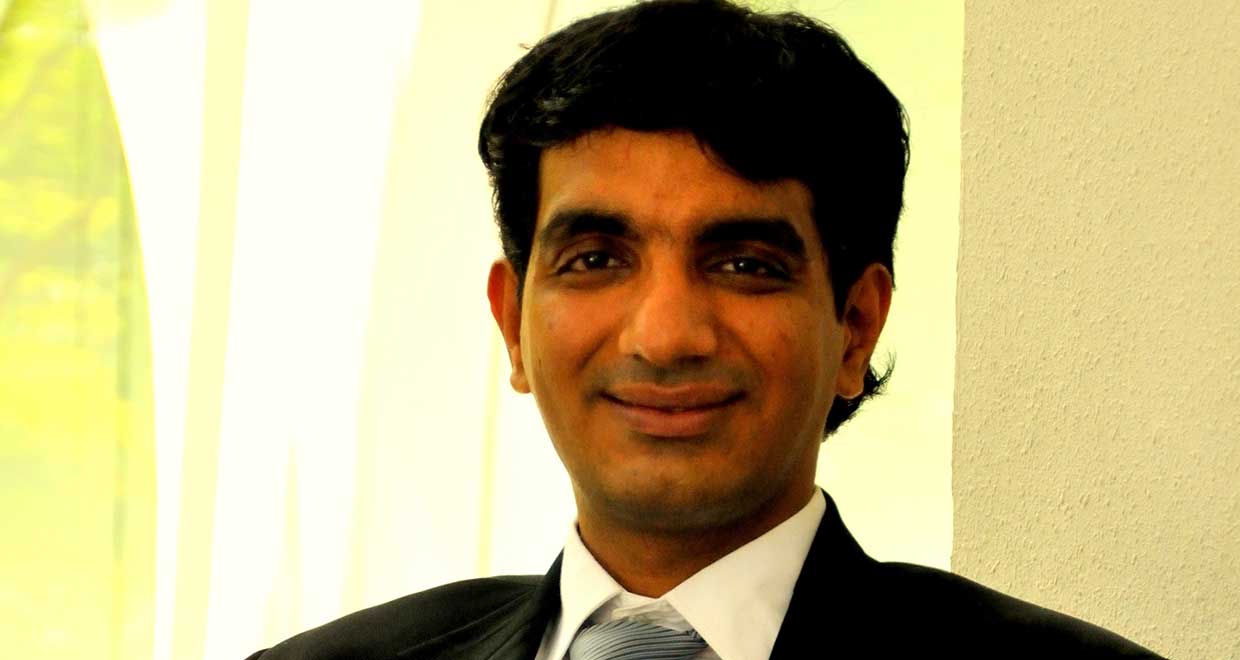
    Tejas Motwani, Assistant State Counsel for the State of Gujarat on securing a foreign scholarship and working in an international law firm

    Mr. Tejas RK Motwani, an alumnus of Christ College of Law, Bangalore (now School of Law, Christ University Bangalore) graduated in the year 2012. He was awarded the “Mapanna Kharge Memorial Gold Medal” by the Governor of Karnataka, His Highness Mr. H.R.Bharadwaj for securing the highest marks in Constitutional Law. He pursued an L.L.M from National University of Singapore. He is presently pursuing Master of Public Policy (M.P.P.) at University of Oxford, United Kingdom.

    Currently practising as an Assistant Government Pleader for the State of Gujarat, he is the founder and managing partner of Rannim Associates, Gujarat. In addition, he is currently a visiting faculty member at the Institute of Law, Nirma University, where he teaches “WTO and International IPR”. He has experience of being a Foreign Lawyer at Patrick Miranda Co. Pte. Ltd. Singapore. He is also the founder of a philanthropic organisation named as English with Tejas.


    In this interview, he talks to us about-


    • Practicing as a State Counsel in India.

    • His experiences while initially practicing abroad and consequently practicing in India.

    • His take of Law school and the decisions and steps necessary for becoming a successful Law student.


    How will you introduce yourself to our readers? How did you decide to pursue a career in law?

    I’m Tejas and currently serving as an Assistant Government Pleader for the State of Gujarat. I regularly represent the State in its various litigations at the High Court of Gujarat. I was previously working with an international law firm at Singapore.

    I choose law almost as an afterthought. I had decided to become a doctor and took up science in my 10+2. However, physics was probably not my cup of tea. As I realized this, I had some wonderful opportunities in my school to participate in debates, declamations and write for school magazine. Some conversations with close friends, family and with my teachers, made me think that law is a good option. Soon I decided to write some entrance exams and landed up in Christ, Bangalore. I was disappointed on not getting through the GNLU entrance exam (at that time there were separate exams for each law school); however, in hindsight I am glad that it did not work out. Bangalore was a wonderful experience and helped me grow both personally and professionally.

    You graduated as Gold Medalist in Constitutional law and as a topper in various other subjects. Could you please shed some light on how you accomplished that? Do you want to give any advice on the same?

    Constitutional law was something that I started loving since first year of my law school. We had some wonderful teachers who spoke on various nuances of the constitution in our political science classes. This led me to read more about constitutional law. Further, after the second year of my law school I started taking lectures at Law School Tutorial (LST) which is a famous coaching center for cracking law school entrance exams. I used to teach constitutional law at LST. I guess that helped me immensely, as I had to prepare myself before entering the class. I believe that from an examination perspective, I was well prepared. However, I didn’t expect to ace the exam. So when someone called me and said that I had topped Bangalore University (which has some 30+ law colleges affiliated to it), I was elated and surprised.
    Similarly, for other subjects like public international law, human rights law, which I topped. I believe that participation at moots, paper presentations, attending conferences prior etc. helped me. The experience from these activities made it easy for me and it was like I already knew few things before being taught in the class. This made exam preparation easy and got reflected in the results.

    As a law student, you have been very active in various activities such as mooting, debating, theatre etc. Did these activities help you? How did you strike a balance between academic and non academic pursuits?

    Well, there was no particular formula for striking balance. But, these activities certainly helped me and shaped me into a well informed person. I mooted all throughout five years of my law school and for me it was fun each time. I think the most enriching experience was participating in Jessup. We had a competitive challenger round, based on which selection was made. I was lucky to be part of team which had some amazingly hard working seniors from whom I learnt a lot. I remember my senior Shruthi Jagannath telling me that “every line has to be cited and every new idea has to be explained (in the memorial)”. I am grateful to her for insisting on this rule and since then I have imbibed this rule in all my legal writings and it has been truly helpful. Mooting also let me travel to different cities and gather some wonderful experiences.

    Similarly, I liked being a part of the theatre team. I was part of 4 – 5 major theatre productions while studying at Christ. Prominent one was being part of ‘Vision 2020’, an annual theatre production performed before audience numbering around 1000. This production involved working with professional theatre artists, and involved lot of learning as well as making new friends. Theatre also let me express myself (or rather the character) in front of crowd and this experience can only be perceived.

    While at law school you have interned with prominent law firms such as Amarchand Mangaldas, Wadia Ghandy etc. You have also interned with international law firms such as Drew & Napier LLC and Allen & Gledhill. How did you choose these internships? What were your major takeaways? What should students keep in mind while building up their internship experience?

    I experimented with most of the internships. For example, in the fourth year of law school, I interned with a corporate law firm and immediately after it interned with a non-profit law and policy institute. In hindsight, I think most of the internships in earlier years of law school were fun. These internships were without pressure of aspiring or converting them to jobs. My internships in the later years of law schools were part of the rat race, which gets onto almost everyone, in the law school. Somehow, as the final year dawns, there is this pressure of getting a placement and one tends to act in that direction, knowingly or unknowingly. However, many of the internship were useful. I think the major take-away was exposure to different working environments and working styles. Like working style in a government regulatory authority is completely different from style in a top-tier law firm which works in an entirely different manner from an international law firm.

    My advice to students would be to be open to experiment and intern with different type of places. I guess, being a student is the only opportune time to experience being in different and varied offices.


    You have completed your LL.M. from National University of Singapore. How was your experience? You were awarded ‘Jawaharlal Nehru Award for International Understanding – Dr. Angela Merkel Scholarship’ to study in Germany. How did you choose Singapore over Germany?

    Singapore over Germany was based out of convenience and information. Singapore is closer to home and more convenient in terms of language, food, culture and housing. Plus NUS website has lot of useful information regarding the law school, the teachers and their way of working. Back then, I was not very confident about these things in Germany. Hence, despite having a full scholarship I choose to study at Singapore. However, if I am given that option today, I think I might choose Germany. Leaving a fully paid scholarship doesn’t make much sense and I would probably take spirited decision of being in Germany and also simultaneously work hard to grasp the German language and other things.


    Your LL.M. research was on Gambling laws. This was also published with SCC. Why this startling choice of subject?
    As part of research competent in my LL.M. year, I decided to write on gambling laws. I did not want to write on the conventional constitutional law topics and therefore thought to do something innovative. I happened to read about gambling laws on internet and probed more about it in the Indian context. I must also say that Singapore has world’s best casinos which helped me to gain some firsthand knowledge on what and how gambling functions. I spoke about it to my guide, Professor Arun Thiruvengadam, who thought this subject has some potential. Gambling laws are very interesting and despite being a huge industry in India much less has been written on it. Later, people at SCC were kind enough to publish it; albeit after some changes.


    How was your experience working with an international firm? How did the practise there differ from the practise here? What advice would you give to our readers who are keen on working outside India?

    My experience working with an international law firm was wonderful. I think one of the first things that law firm teaches you is professionalism. I learnt the manner in which clients should be addressed, how their problems are to be tackled and level of importance that needs to be given to each and every client. I was lucky to have some amazing bosses and colleagues, from whom I have learnt various professional and personal etiquettes. Having said that, I believe law firms comes with its clutter of office politics. Hence, law firm experience also taught me about dealing with dim-witted colleagues.

    My advice to the readers who are keen on working in firms outside India, especially Singapore, would be, to first try and get an internship at the respective firm. This would give exposure to international environment and help in building useful contacts. Also, it is important to check the local bar requirements and conditions or country specific prerequisites for working as a foreigner are. Singapore allows foreign qualified lawyers to work with some restrictions.


    Currently, you work as Assistant State Pleader for the State of Gujarat. How is it litigating on behalf of the State? What challenges have you faced while handling this position?

    Litigating for the State is completely a different experience. State is the biggest litigant in our country and therefore as a state counsel the work is never ending. On a daily basis, 20 to 30 matters are allotted to each assistant pleader in the High Court. This requires reading the files and being prepared for the Court the next day. The initial days are quite tough. But once you get a nag of things, you know what is more important and learn to prioritize the files. One of the most important things that this position provides is continuous face time in the Court. You argue in Court on daily and continuous basis which helps in improving court craft and arguing skills. As state counsel, you are responsible for drafting petitions, replies, affidavits, applications etc. Hence, the learning is immense and experience is certainly worth treasuring.

    Also, the position helps you to learn skilled way of presenting things. Just one bad move from the counsel in the Court could have wide ranging effect on the state policies and state exchequer.


    You are currently set to pursue another Masters at the University of Oxford. What is your motivation for pursuing second Masters? What do you think are the career prospects of Public Policy in India?

    Like many law students, Oxford/Harvard has always been dream destinations for me. I have been thinking of studying at these places since very long. My primary motivation is to be part of the intellectual environment that brews at Oxford. I believe learning subjects from world authorities and discussing areas of interest with them on daily basis would be a very enriching experience. Hence, when I was offered admission from Oxford, I thought it is an experience worth gaining, even if it requires disturbing my settled and edifying job.
    Public policy is one of the growing areas in India. Lot of public policy institutes have mushroomed in India in the last few years. Some of these institutes are doing highly credible job in advising governments. I believe in the near future, corporate in India will also hire policy advisors, as done in many of the western countries.


    You have also taught as visiting lecturer at the Gujarat National Law University and at Institute of Law, Nirma University. What are your thoughts on the present legal education system in India?
    Like many others, I feel that law teaching in India is highly exam-oriented. Course for each subject is pre-set and teacher is expected to only teach on those lines and ask questions only on what is taught. This does not promote discussions on varied ideas in classroom as teacher is under pressure to complete the course. Students also get used to this system and tend to work only towards what is required from the examination perspective. I believe moving away from this and focusing more on learning rather than examinations would be helpful.


    You have to your credit more than 35 odd published works with journals and newspapers. How does one take up writing and what does it take to write for journals such as Queen Mary Journal of law and for newspapers like The Times of India? What learning would you share with students who are keen on writing?
    I think there is no particular way of learning how to write. The more one writes, the more one learns. For example, when I today look back at the articles which I wrote in former years of my law, I feel some of them are not great in content and quality. I believe the more I write, the more I improve. For those who are keen on writing, I would say start writing. Some of the articles would be rejected and some publishers may not even respond. However, if one persists, after few articles the quality will get better and the work will get published and appreciated.


    You have worked at varied places namely,International law firm, at High Court and has  also got an experience in teaching. While most people talk about choosing one path, is there any specific reason behind choosing varied areas to work?

    This idea of “one passion” or “find your calling” does not appeal to me. I find that this is what people/society wants us to do. I find many people advising that by the time you graduate from law school, you should know what your “calling” is and work towards this. I am not in much support of this and believe that one person can be multi-passionate and can have more than one calling. I like litigation and along with it, I teach part-time because I like teaching equally. Similarly, I liked my law firm job and was equally passionate about it. For some people, the idea of “one calling” may work and they work towards that. However, for many having more than one calling is way of being and I believe that should be respected and people should chase more than one passion. Emilie Wapnick has made an inspiring Ted Talk on this and I invite everyone to watch: https://www.youtube.com/watch?v=QJORi5VO1F8.


    Finally, any message for our readers? Would you be willing to guide some of our readers?
    Do all things that you like.
    I would be very happy to guide in any possible manner. My Email id is motwanitk@gmail.com.


  • Alok Shah, Senior Manager – Legal (International Business) at IndiaCast Media (TV18 & Viacom18), on a career in international media distribution

    Alok Shah, Senior Manager – Legal (International Business) at IndiaCast Media (TV18 & Viacom18), on a career in international media distribution

    Alok Shah qualified in law from Pravin Gandhi College of Law in 2010 and worked at Kanga & Co. first as an Article Associate and later at Hariani & Co. as an Associate before pursuing a post-graduation diploma in Media and Entertainment law from NALSAR, Hyderabad in 2014.

    Immediately after that he got recruited at IndiaCast Media Distribution Pvt. Ltd (TV18 & Viacom18 Venture) as an Asst. Manager Legal of their International Business. Alok grew in this role and he is at present Senior Manager – Legal (International Business) at IndiaCast Media Distribution Pvt. Ltd. (TV18 and Viacom18 Venture).

    With his work experience in the international media distribution industry Alok shares talks to us about negotiation of contract with international lawyers, their interpretations, their contractual skills, and their drafting techniques amongst others.

    • His shift from law firm to in-house and private equity/real estate to media and entertainment.
    • How the Indian media and entertainment market has evolved and the dynamics of the media.
    • Challenges young lawyers might face in the media industry and the challenges he faces in dealing with international lawyers.


    Tell us a bit about yourself, and what drives you?

    Born and brought up in Mumbai, I breathe the spirit of this city.  From my childhood, I was interested in the fields of Political Science, Media, Sociology and Political Affairs. My father is a businessman and my Mother is a successful entrepreneur. Hailing from a family that is passionate about what they do, I wanted to choose a field in which I could truly excel – and that’s how I ended up pursuing law.

    My ambition and thirst for knowledge have been the driving forces in all my endeavours.


    How was your experience of legal education? Have you thought of higher studies?

    My experience in legal education was both a mix of academics and work experience. I was in Pravin Gandhi College of Law which is affiliated with Mumbai University. I enrolled for an articleship to pursue solicitors in my fourth year of law school with a reputed law firm. I was working with the youngest partner of that firm who specialised in Real Estate and Capital Markets. For me back then, work experience was a priority over higher studies, so I kept my focus on gaining as much work experience in multiple legal areas so as to ensure complete grip on the practice. At present, after completing 6 years of work experience in this industry, I plan to enrol in a business school to enhance my expertise in this industry.


    alok-shah-2

    What did you do in the year right after graduation?

    After graduation, I had an opportunity to either continue with the same firm or join another reputed law firm. This was during the time India was still reviving from the collapse of the Lehman Brothers shock, and I decided to move out of capital markets, considering the change in the market scenario. At that stage, I decided to join another cross functional law firm which had remarkable presence in multiple practice areas. I was excited to learn about new fields and wanted to take my time to decide what drives me to my best.


    What was your reason to change from a law firm to in-house?

    Well, now that was one of the most path breaking decisions of my career. I realised that it is difficult to understand the dynamics of the industry, being an external counsel who would be approached only in the event of a legal dispute. I had to be an ‘industry insider’ to understand the grassroots of the business. To summarise – I felt the need to move from ‘execution’ to ‘Strategy and Decision Making’ and that’s where my decision to shift as in-house counsel stemmed from.


    What about your shift from private equity / real estate to Media and entertainment?

    My goal to work as an in house counsel was not only to assist in legal matters but also to understand the nuances of the ever changing and complex business intricacies. Considering that I was primarily involved in private equity and real estate matters, it was not possible for me to enter a hedge-fund or a real estate conglomerate only with a law degree. My law firm had a full-fledged Media and Entertainment team as well. Call it a wonderful stroke of luck or destiny, I was involved in one such transaction and since then there has been no looking back. I gauged that Media is one of the fastest growing industries and is far more challenging in the dual avenues of law and business.


    alok-shah-3

    What is so different in Media compared to other areas of law?

    The media is one of the most revolutionary industries of this century. What is new right now may become old in the next 6 months. With new inventions, changes in technology and fast-paced innovations, it becomes very challenging not only for industry experts, but also for lawyers to keep pace with this ever growing sector. In this field, in addition to keeping a track of new legislations, a lawyer also needs to understand new technology (which is quite unlike any other field of law) – its dynamics, relevance and functionality. Moreover, Media law itself has so many different areas of practice such as distribution, licensing, acquisition, film production, artist management, merchandising etc. which makes this industry far more dynamic and specialized.


    What are the challenges that a young lawyer may face after joining this industry?

    I believe that legal education in India does not completely cover all aspects of media and entertainment laws considering that it is one of the most evolving and dynamic areas. Though Intellectual Property Rights (IPR) is one topic in our curriculum which tries to cover basic understanding of this field, I still believe that it is a limited resource to enable young graduates in understanding this industry. To overcome this challenge, I did my post – graduation diploma in Media and Entertainment laws from NALSAR University, Hyderabad. I would advise every young lawyer who is keen and passionate to enter this industry to enrol in some course enhancing knowledge in the field of Media and Entertainment law. Also, they can subscribe to magazines, web portals, newsletters concerning this industry to get a first-hand insight.


    How did the Indian market in Media and Entertainment evolve?

    Traditionally, in the pre-2000 era the Indian Media industry was not institutionalised and unregulated, under which films were funded by private money lenders, often by underworld gangsters, primarily interested in the collections from distribution rights or the box-office collections. But after it was accorded the “industry status” in 2000 by the Government of India, the following years saw the Indian films receiving funding support from the banks, Indian corporate and foreign studios thereby giving rise to more sophisticated digital production and postproduction techniques.

    As far as distribution is concerned, the Government’s move towards digitalization and addressability for cable television by 2016 is expected to provide an impetus to Direct to Home and digital cable growth. The Media and Entertainment industry is at a convergence point with digital being the buzzword and perhaps that is the reason television screens are being replaced with smart phones. From receiving news bulletins on Doordarshan to twitter updates – the Indian Media industry has come a long way.


    How is the Indian media and entertainment market different from international market?

    As far as media distribution is concerned, India is a highly regulated market as compared to other countries. In India, a broadcaster cannot have an exclusive deal with any platform since the same is prohibited under the Telecom Regulatory Authority of India (TRAI) regulations. However, the international market operates quite differently. In many western countries, the platforms insists on exclusive deals and that’s where the role of a lawyer becomes crucial, giving room for extreme and sometimes crass negotiations. In such deals, the discussions are quite pro-longed since the contract is not subject to any regulations of any territory (barring few clauses), but are based on pure commercial negotiations in which both – the distributor / broadcaster on one side and the platform on the other side try to grab the best deal for themselves.

    There are few contracts which may take more than a year just to reach a logical end during negotiations.  To summarise, in the international market the broadcaster’s main task is monetary exploitation of content, whereas in India, the broadcaster looks for maximum penetration of its content among masses.


    In how many countries is Indian Content available?

    In foreign countries, Indian content in Hindi language would not just attract the Indian community but the entire South Asian fraternity. Also, content from Indian regional languages have found substantial prominence in countries which have the presence of Indian regional audience. As far as Indian movies and television shows are concerned, they are available in more than 120 countries. It is pertinent to note that our content is dubbed and subtitled and broadcast on different foreign channels. People will be surprised to know that even in remote eastern European countries such as Georgia and Kazakhstan, our content which is dubbed in local languages is quite popular.


    Approximately how many foreign lawyers have you interacted with?  Can you share your experiences with a few of them?

    I have been involved in negotiations with approximately 20-25 foreign lawyers from different nationalities (such as US, UK, Canada, Bangladesh, Sri Lanka, Australia, New Zealand, Singapore, Russia, Pakistan, Egypt, UAE, South Africa, Brazil, Caribbean Islands etc.). There are times when there are strenuous negotiations involved especially when the first draft of the contract is shared by or with the other side whereas there are some transactions which are quite smooth since there is an existent commercial understanding in place. My personal experience has been both – enduring and challenging in dealing with lawyers from different nationalities. I have felt that the drafting skills of lawyers of western countries are worth appreciating, whereas as far as negotiations are concerned, lawyers based in Middle-East territories can give sleepless nights since they are hard to convince.


    What are the challenges you face in negotiating with foreign lawyers?

    Considering that the Media and Entertainment industry is evolving at different pace in each country; one of the most challenging aspects is to understand the technology prevalent in that country. When we are negotiating with platforms based in developed countries like US and UK, it is a daunting task as these countries are at least 5-10 years ahead of us when it comes to technology and technical know-how. As a lawyer, we need to imagine and understand how technology functions before we start with our negotiation process. Also, working in different time-zones can be quite taxing but the thrill makes it all worthy.

    Moreover, when you cannot have face to face communication or video conference, it is difficult to understand the body-language of the opposite lawyer and that makes the process more time consuming. Their language, interpretation, pronunciation and accent are another set of barriers which a lawyer may face during the negotiation process.


    What are the legal issues you generally face in negotiating a media contract especially while negotiating with international lawyers?

    There are certain legal issues pertaining to payment of royalties, indemnity, jurisdiction and governing law which are contentious to negotiate in an international distribution and acquisition contract. Limitation of liability is another thorny issue between the parties considering that in the event of any dispute the company should not be exposed to unlimited liability, that too in a foreign court of law. Negotiating a clause on payment of royalties in an international distribution contract is a tough job for an Indian lawyer due to ambiguity in the current copyright regime in India. These clauses are sometimes real deal breakers.


    How important are lawyers in this industry?

    Over time, the role of a legal department in a company has transformed from merely being a support function in an organisation to a full-fledged in-house counsel, which means that we are advisors to the senior management.  Especially in this industry, which is quite niche, I see the role of lawyers expanding specifically in international business. The CEO’s and business managers are now more than willing to rely on people with legal background for complex issues. In USA, there are many managers and business leaders in media and entertainment sector who have their origin in legal industry. In India too, the trend is changing – lawyers have been given role as business managers since they have the dual advantage of understanding and assessing the risk as well as ensuring maximum profit for the company.


    What would be your advice to young lawyers who would want to join this industry?

    There has never been a time more suitable than today to join this industry. It is exciting, fast paced and dynamic just like the present generation. Technology is set to change the world and its rapid consequences on the law cannot be ignored. There is no age limit for academic centric goals since we are in a field where one has to keep abreast with day to day developments in their respective area of practice. My advice to them is that they should not be satisfied with only becoming a better attorney but go a step ahead and get a perspective of the business world. The key to the next few decades of business operations, Indian or international rests in the hands of the lawyers of today, they only have to realise their pivotal role.


  • Kritika Kapoor, Assistant Manager – Legal, Reliance Broadcast Network, on work profile and experience

    Kritika Kapoor, Assistant Manager – Legal, Reliance Broadcast Network, on work profile and experience

    Kritika Kapoor is a graduate from Pravin Gandhi College of Law. She has interned with Advocate Rajesh Bijlani and SPN Law Associates under the mentorship of Advocate Satish Nagvenkar. After graduation, she started working at B4U Television Network. Meanwhile, she also pursued a Masters in Intellectual Property Rights from Mumbai University. She is currently an Assistant Manager – Legal at Reliance Broadcast Network Limited.

    In this interview she talks about:

    • Life at Pravin Gandhi College of Law
    • Working at B4U Television Network
    • Being Assistant Manager – Legal at Reliance Broadcast Network Limited


    How would you introduce yourself to our readers who are primarily budding lawyers? Did you belong to a family of lawyers?

    Hello Readers!  I come from a family with a strong science background. My father is an engineer, my sister is a dentist and my mother is a homemaker who has a degree in home science. I too, was keen on entering the medical profession and hence took up science in junior college.  It was during my junior college days that I was drawn to the legal profession whilst working on a personal property dispute. I believed pursuing law would be a challenging and intellectually rewarding career option and would complement my personality and skill sets.


    Tell us about your five year journey through law school. Share some highlights from your college days that shaped you as a professional.

    The faculty at Pravin Gandhi College of Law encouraged both academics and extra-curricular activities and the college was always buzzing with action and excitement. I participated in various activities like moots, debates, crime scene investigation competitions, essay writing competitions, etc., and the experience indeed helped me refine my research, analytic and reasoning skills.

    Signing up for various courses relating to consumer protection, property transactions, professional legal communication, etc. helped me add on to my knowledge base. I did a 4-month course on intellectual property from NMIMS which really helped me get an in-depth understanding of IP laws.

    Students should be encouraged and provided a platform to take up research papers and dissertations.

    As President of the college’s Sports Committee, I represented PGCL in various tournaments organised by law schools across India. I won individual titles in Table Tennis & Carrom and team trophies in throwball in various sports tournaments such as: ‘Yuvardha’ organised by National Law University, Jodhpur; ‘Symbhav’ organised by Symbiosis Law School, Pune; and ‘Spiritus’ organised by NLSIU, Bangalore.

    I was in-charge of managing 50+ members contingent on these trips and that truly honed my leadership, time-management, and interpersonal skills. Sports helped me imbibe essential qualities such as sportsmanship, teamwork, respect, integrity, dedication and crisis management. Above all, sports taught me how to be perseverant during times of failure and to remain humble in success. I learnt that you may not always win, but you must play the game with all your heart.


    Did you take up any internships or work during your college days?

    Throughout law school I kept myself busy with one thing or the other. I had 5 years of education ahead of me but still wanted to be occupied and financially independent.  In my first year, I took up a job at Intelenet and was working as a Sales & Service Manager for an inbound call process for Barclays Bank, UK, servicing bank accounts and up-selling banking products.

    My first legal internship was with a practicing criminal lawyer, Advocate Rajesh Bijlani. I assisted in research and drafting on contentious cases relating to murder, rape, etc. Thereafter, I worked with SPN Law Associates, under the mentorship of Advocate Satish Nagvenkar who has a strong practice in property law. It was during my stint at SPN that I acquired a good grip on drafting and pleading. A few months before my final semester exams I got placed at B4U Television Network and started working there.


    How did you secure your appointment at B4U? What did your work comprise of?  How would you describe your experience working there?

    Like all other enthusiastic final year students, I enrolled for the college placement program and simultaneously started hunting for opportunities myself.  I was contacted for an opening at B4U, which is one of the world’s leading Bollywood television networks, by a consultant who found my resume on an online job portal. I had to undergo two rounds of interviews, first with the Legal Head, Natasha D’Souza and the second was with the Chief Financial Officer, Sandeep Gupta. In the first round I had to answer a few pertinent questions related to property laws, drafting and copyright in order to verify the veracity of my resume and was then asked to draft a reply to one Public Notice. In the second round I was asked a few more questions to identify my individuality and to see if I was fitting to the company and team.

    Working at B4U, I was exposed to the niche practice of media laws. My work primarily involved drafting specialised agreements related to film acquisition & distribution, hiring of transponders, channel distribution, hiring talent, corresponding with government authorities and administrative bodies like MIB, TRAI, FDA, DAVP, IPRS and ensuring regulatory compliance. During my stint at B4U, I undertook extensive research on TRAI Regulations, content laws and the amendments to the Copyright Act. The company provided me a great learning platform and I was fortunate to work with veterans like Sandeep, Natasha and Manisha, who were extremely kind to invest their valuable time in mentoring and training me.


    Tell us about your work as an Assistant Manager – Legal at Reliance Broadcast Network Limited. How has the journey at Reliance been so far?

    Reliance Broadcast provides me with simultaneous exposure to the radio & television businesses. I am blessed with a young and vivacious team of lawyers, company secretaries, Charted Accountants, etc. with whom I closely work. My job requires me to juggle between various duties such as drafting & negotiating contracts, regulatory compliance, litigation management, liaison with counsels, intellectual property management & protection, research & strategy, setting SOPs, providing opinions, prescribing S & P procedures, corresponding with government authorities on business and policy related issues. At the office, I’m always on my toes and that’s one of the reasons I love working here.

    The exposure I’ve gained at Reliance has helped me grow professionally as well as personally. My work has been recognised and appreciated due to which I was recommended for a promotion to Assistant Manager within a few months of joining.

    While working under the leadership and able guidance of Asheesh Chatterjee, our Chief Financial Officer, I have been able to develop a strong commercial acumen and now have a more pragmatic & business focused approach. I am very grateful to my bosses – Asheesh Chaterjee, Gururaja Rao and Shikha Kapadia, who always reposed their faith in me and motivated me to perform better.


    Please tell us about the recruitment process at RBNL. What do they look for in their prospective employees?

    I have observed that employers are looking for candidates who are eager to learn and are optimistic about work. They want someone who is hard-working and a team-player.


    Tell us what your typical work day is like. What kind of work does an Assistant Manager – Legal at Reliance Broadcast Network generally deal with? How has the journey at Reliance been so far?

    A normal day at work would involve one or more of the following:

    • Drafting Agreements
    • Legal Research
    • Regulatory Compliance and correspondence
    • Opinion to S&P Team
    • Due Diligence
    • Court Visit
    • Strategy meetings
    • Liasoning with counsels

    At RBNL, I learn something new each day. I am often assigned tasks that are completely new to me and there is always scope for improving as a professional.


    In the meantime, you managed to pursue Masters in Intellectual Property Rights from Mumbai University. Was it a professional requirement to enhance your career?

    Since I was working in the media industry, I thought it would be prudent to pursue a Master’s in Intellectual Property. Besides, I’d like to be a guest lecturer of law, few years down the line.

    How can one apply for an internship at RBNL? What qualities do you look for in an intern?

    The desire to learn and basic understanding of legal concepts are qualities we look for. Usually and candidates pursuing CS and Law are preferred.


    What do you think of the young law graduates/students and the standard of education in the field currently?

    I think young law graduates feel inadequately equipped in their initial years of practice. The legal education system should be revamped so as to prepare students for the skills required in practice. Various internships during college years should be encouraged, giving students exposure to litigation, corporate set-ups, judicial jobs, research roles, etc. Once a student is aware of the various options available after graduation, he can make a more informed decision regarding his career path.


    Lastly, what would be your message for our readers?

    Well, considering my target audience is a group of aspiring lawyers I’d like to say, please make the most of your time during law school and explore the various options available to you. Don’t be swayed into choosing a path just because many of your colleagues are opting for it.  Know your own strengths and weaknesses and figure what is best suited to you. Set goals for yourself and work hard towards achieving them. Remember if you are passionate about your dreams and pursue them diligently, success will inevitably follow.


  • Hiral Vimadalal, Assistant Manager-Legal, Viacom 18 on work at law firms and in-house

    Hiral Vimadalal, Assistant Manager-Legal, Viacom 18 on work at law firms and in-house

    Hiral Vimadalal graduated from Pravin Gandhi College of Law in 2009. She is one of the founding members of Moot Court Society at Pravin Gandhi College of Law. She started her legal career as an Associate at ‘India Law Services’. Thereafter she worked at V.A. Associates and Wockhardt Limited. She has recently joined Viacom 18 Media Private Limited as an Assistant Manager – Legal.

    In this interview, we asked her about:

    • Law School experience
    • Importance of internships and co curricular activities
    • Strategies used while working with different law firms and companies


    Why did you decide to study Law? What inspired you to do so? How did you get through to Pravin Gandhi College of Law?

    How the idea of studying law crossed my mind is a very difficult question to answer! Ever since I was a twelve year old, I had pretty much made up my mind to study law. As a twelve year old I had practically zero exposure to what it would be like; but then languages, debates and drama were strong points of interest throughout my school time. I guess law was an extension to doing what I loved the most!

    Well, I guess it was one of those strong intuitive decisions which guide you and shape your future that might’ve inspired me.

    I missed getting into the premier law college in Mumbai and took up admission at another law college closer to home with the intention of working hard in the first year and then getting into that particular premier law college in my second year. However, two months into the course, PGCL (then known as SVKM’s college of law) published an advertisement that admissions for their new five year course were open. Knowing SVKM’s reputation of arranging world class facilities and the best faculty for all their courses, I jumped at the opportunity and moved. I am from the first batch to have passed out of the college. Making that move is one decision I am proud of!


    What were your areas of interest during your graduation? How did you go about developing expertise and knowledge in these areas?

    My key interest areas during my graduation were Intellectual Property Rights, Cyber Laws and Media & Entertainment Laws. My sister has done her MBA in marketing and my best friend is a Creative Designer; hence, I was always over exposed to the world of brands, ads and everything related! I think it was natural for my interest to lie in these areas! A silly confession – I am a brand buff and love advertisements. I am one of the few people who refrain from changing channels during advertisements.

    I had a fabulous college life, where the principal of our college along with the great faculty, ensured that each student’s interests were shown. They arranged for guest lectures and short workshops in various areas of law to ensure that all the students made an informed decision about their future.

    IPR was taken care of in college as a part of the Mumbai University curriculum and I took up a six month certificate course in Cyber Laws from ASCL, Pune. This course provided me with an extensive understanding in Cyber Laws, cases, practical problems and solutions and of course the newly introduced (at that time) Information & Technology Act.


    hiral-vimadalal-2

    As a law student which activities did you participate in? Did you have any guidance on how to go about your academics, co-curricular activities and internships?

    Since we were the first batch, we took up the initiative of setting up the Moot Court Society in our college. I was one of the founder members of the MCS along with few of my batch mates. I have participated primarily in Moot Court competitions in college and also in Client Counselling competitions, essay writing competitions and debates.

    As the years started going by and we grew as an institute, we started taking up the roles as mentors and organizers of various moots in college. We also ensured that the best team gets to represent our college in moots held by other colleges.

    Whatever that I may say about the faculty and guidance, would be less. They ensured that we had great firms/organizations/NGOs coming in for our internships and ensured that we got good exposure in whatever field that we wanted. Of course it was difficult initially being a new college, but we did phenomenally well! We had a very transparent set-up for everything and could openly share ideas and take initiatives for everything from internships, co-curricular activities and even guest lectures.

    Our college organized a one of a kind three day festival called ‘Shartrartha’ which had a series of lectures and discussions by legal luminaries. We had screenings of several trial films followed by discussions on the practicality and applicability.


    What kind of internships did you do while you were a student? Any remarkable experiences during your internships which might’ve contributed towards shaping your career choices?

    I’ve had varied internships throughout my college years. However, I was never working straight throughout those five years since I loved being in college and was actively involved in the fests, moots, etc. I have interned at a full service law firm in my second year (when I hadn’t even started studying the legal subjects) and went back there subsequently in my 3rd year as well. The firm gave me exposure in all sorts of litigation matters, civil and criminal, the nuances of contracts and some knowledge on IPR as well. I used to do a lot of research there, which form the basis of my research skills today.

    Towards the end of my college, I interned at a full service IPR firm, which gave me faith that I could make it as an IP lawyer while reassuring my love for IPR as well. My senior in this firm gave me a lot of insight on Trademarks and the practical applications of what we learn in college. I predominantly did the drafting of replies to the objections raised by the Trademark Registry so it was a stepping stone to what was in store!

    So these internships have shaped different skills and are a founding stone of everything that followed.


    What do you feel about the perception that students of certain ‘elite’ NLU’s have a much easier time in kick-starting their career as compared to law students from other colleges? Is this true at all?

    As much as I don’t want to believe it, it is true. Due to the curriculum and demi-god statuses of the National Law Schools, they manage to get the best internships, best placements and even better salaries. And it is not only the National Schools. It is even between the premier law colleges in cities vis-à-vis the others. I know how many times I have answered questions about my college and why I was not from the premier law college and what my college did. I have seen the scornful look on the faces of prospective employers when they hear that you are not from a particular college. In fact, even after a great interview, things have not worked out because I was not from a particular college.

    I think it is high time the perception changes. People should be judged by their qualifications and talent rather than a name backing their education.


    After graduating from Pravin Gandhi College of Law you joined ‘India Law Services’ as an Associate. How did the appointment take place?

    After completing law, I was looking for a suitable job to kick start my career. I got to know through a friend that ‘India Law Services’ was looking to hire and so I sent my resume. I met the IP partner and it all fell in place.


    You left India Law Services and had joined V.A. Associates. What led to this shift? How was your experience working there?

    Joining V.A. Associates was technically not a shift. The IP partner of ‘India Law Services’ started his own practice and hence the entire team shifted with him. This experience, as I always maintain, was my college to the practical world. Mr. Parelkar is one of the most knowledgeable persons I have come across and to top it, he loves to share his knowledge. I’ve got a great exposure because of him and learned the procedural aspects of IP law, infringement suits and the works. While I was only assisting in suits, it gave me an insight into what is expected in a trademark infringement suit and what must be covered to get a favourable order. I got exposure into the functioning of the Trademark Registry and the nuances of dealing with them. This was also the first real experience at dealing with the clients and the Trademark Registry.

    To sum up, all my skills have been honed by Mr. Parelkar and I would not be what I am and where I am if it were not for this experience.


    You thereafter left V.A. Associates to start working at Wockhardt Ltd. as Senior Legal Executive. What prompted you to keep changing your job so frequently? What was the nature of your work there?

    After working with ILS/VA Associates (which as I explained earlier was not a shift), it was time to spread my wings. I was looking for an opportunity where I could get exposure to the other aspects of IP. Even though my primary interests always have been in Media & Entertainment or Technology, Wockhardt came about and I decided to take it on since Pharma was booming as an industry and lot was happening in the Pharma IP space. My profile was IPR but my responsibility grew manifold. In Wockhardt I was handling a portfolio of 2500-3000 brands and we did everything in-house. We did not engage external counsels, except for litigations.

    The working of a company is completely different than that of a law firm. We were a small team of five-six lawyers and maintained a policy of one-for-all and all-for-one. My senior Debolina Partap might have seen something in me, for she gave me exposure in so many aspects, apart from IP. She groomed me to be an in-house counsel. By the time I left, we had set up a full procedure and SOP for the trademarks/copyrights of the company, I had interacted with a bouquet of law firms internationally for our trademarks, which gave me so much exposure to the Trade Mark policies in various countries and also helped me establish a network. These experiences are really important to shape your future and take you to the next step. I have done several TM litigations, legal notices, and been a keen observer in negotiations, which have all helped me grow in more ways than I can explain. I have done Drug Litigations which involved different laws and had me interact with various government officials. It was also the first time that I got a practical insight into compliances and labour issues. Even though the exposure was limited, I had a lot to learn. I cannot sign off without thanking the organization for giving me my first ever Divestment Transaction. The myriad levels of interaction, the due diligence, IP streamlining, documentation, numerous negotiations and discussions were an experience which I cannot justify with words. Understanding the dynamics of an organization and also the correlation between departments of a company is something that I have Wockhardt and Ms. Debolina to thank for.


    You’ve recently joined Viacom 18 Media Private Limited as an Assistant Manager – Legal. How did the switch from Wockhardt take place? Did you get an offer or did you apply for Viacom?

    Viacom 18 was a dream job. I remember wishing that I somehow land a job there every time I crossed the building. As I said, Media & Entertainment laws have always been a key interest of mine. I was ecstatic when the consultant called me for an interview. While Pharma is extremely lucid and has a lot to offer, I felt it was time to finally pursue a dream job and make the switch before I got labelled as a Pharma Counsel.

    The consultant called me with this opportunity and needless to say, I jumped at it. I was extremely uncertain of landing the job, given my non-media exposure, but my boss may have seen something in me, which I am forever indebted for.


    What does your current work profile at Viacom 18 consists of? How is a typical workday like?

    I am predominantly responsible for the IPR portfolio here as well. Viacom18 is growing every day in terms of IP and the issues are completely different. I am getting more exposure in Copyright and different areas and dimensions of IPRs which are specific to the Media and Entertainment industry. We have also undertaken to sensitize our Business Units to the TM/Copyright Law and hold training for them regularly. I have also been assigned a portion of the litigation profile, which of course is very different from the litigations I am used to handling. So in that sense I am still taking my baby steps with litigation here. My boss, Thomas George is a phenomenal person and is one of the very few “born intelligent” people. He comes from a litigation background, so he is guiding me at managing the litigations like a lawyer, rather than a Manager/In-House Counsel. He teaches in a way that one will never forget for their entire lives. I have a lot to learn from him and hopefully I am taking away as much as I can from his experiences. We have a great team here which is always willing to share and help each other. Everyone is super cool and friendly. It seems like I am working with friends, which makes work twice as exciting. I look forward to every single day here.

    A typical workday is filled with lots of work and lots of fun too. Our day starts at 10.30am and is always action packed. There are several days which are busier than others if there are deadlines in terms of notices, responses to file and if there are several matters on board for that week. But we ensure to get our daily dose of fun as well. So as I said earlier, I really look forward to each day here!


    Does Viacom 18 take interns? What is the process for same?

    Yes. Viacom 18 does take interns. It is need based and we usually route it through HR. Sometimes, we can refer an intern to the team in need for one. However, we do not have a regular policy for taking interns or GTs in the team.


    Many lawyers would say that the actual learning takes place in the years of practice. How far would you say it is true? What was the case in your situation?

    It is true to the last word. While your school or college will lay the foundation stone, it is the practice and what you take out of those experiences that shape the rest of your career and future. You may study the law but will not know which provisions are applicable till you actually do a case involving that law. Further, it is not about the law. It is also about strategy, sometimes avoiding the conflict and how you tie up the interest of the Business unit/client and the facts, to put your best foot forward. Communication is also extremely important. What and how much to say and when is also an important part of the exposure.

    In my case, I believe that every experience I have had during these years has taught me something. Practical aspects of the law can sometimes be very different from what it may appear in theory. This distinction will come only as you move ahead. I have been lucky to have had some great experiences and seniors who have really helped me get till where I am.


    Lastly, what would be your parting message for our readers?

    Law is an amazing field to be in if it gives you the kick. I have never wanted to be anything else. In today’s day and age, when everything can be ‘managed’ it is important to be true to yourself and the profession. We are a big lot and have the power to do a lot if we wish!

    Cherish all your professional experiences. Every challenge you are faced with leaves a lasting impression. So I urge the readers to always be open to getting the best of the experiences, both good and bad. Trust me, the bad ones teach lessons for life! And the good ones stay with you as a fond memory and a teaching for life!