Tag: PIL

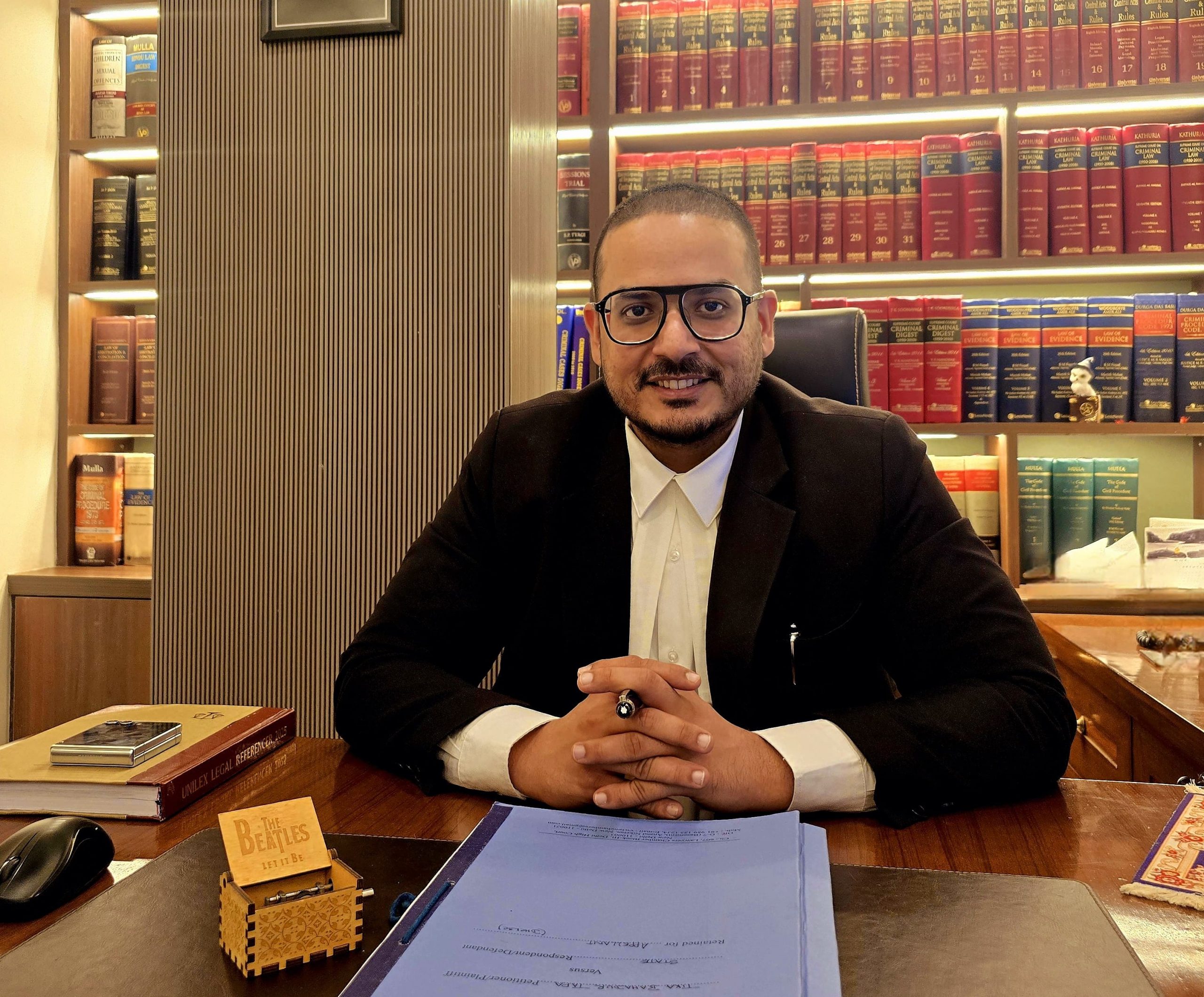
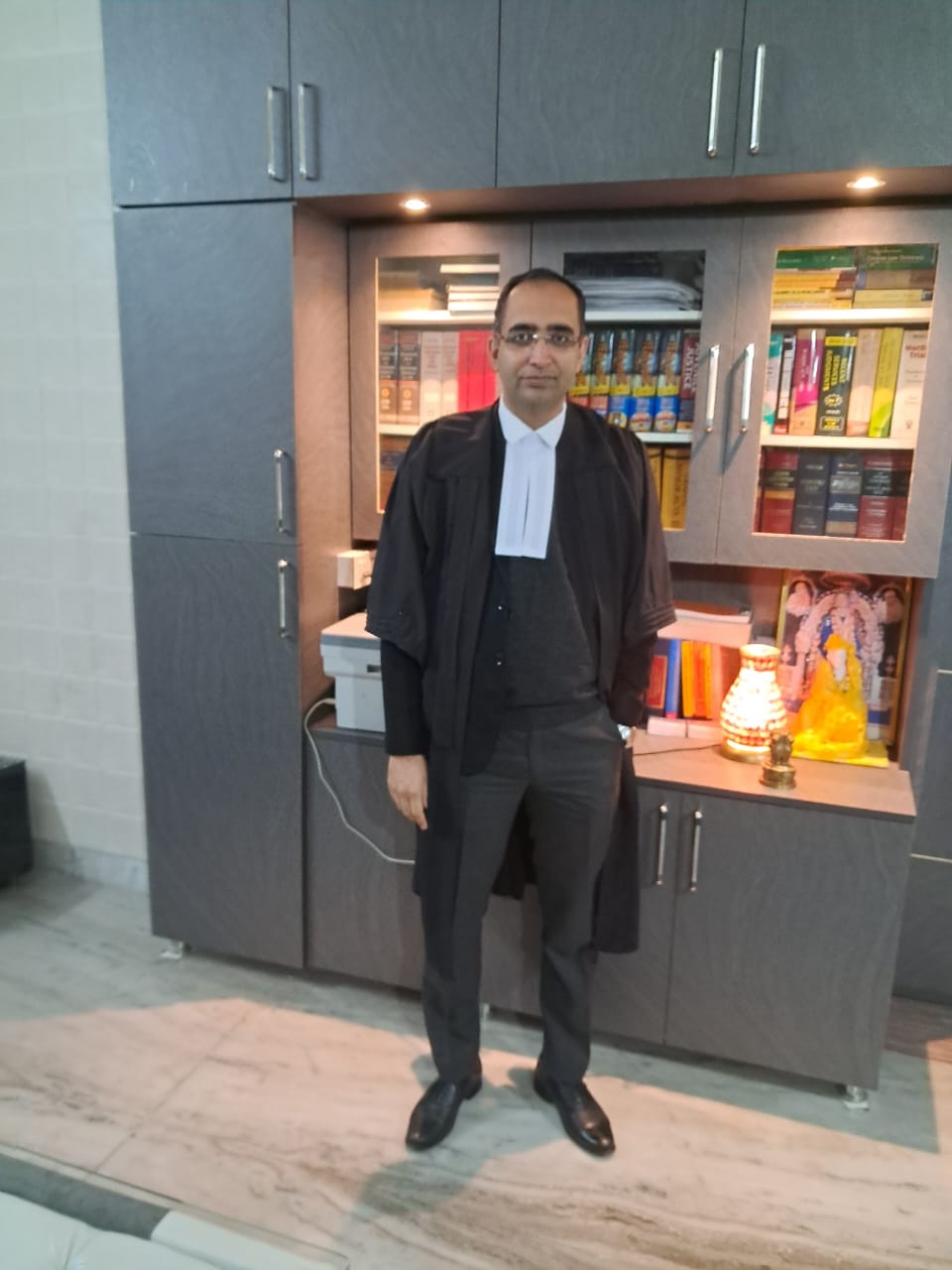
  • “To young lawyers, I say: do not enter this profession only to earn, but also to serve. Cultivate empathy, resilience, and a deep understanding of constitutional values.” – Abhishek Kumar Choudhary, Advocate at Delhi High Court & Supreme Court of India.

    “To young lawyers, I say: do not enter this profession only to earn, but also to serve. Cultivate empathy, resilience, and a deep understanding of constitutional values.” – Abhishek Kumar Choudhary, Advocate at Delhi High Court & Supreme Court of India.

    This interview has been published by Anshi Mudgal and The SuperLawyer Team
    You have built a 14-year legal journey rooted in public service and constitutional values. What inspired you to pursue a career in law, especially as a first-generation advocate coming from a commerce background?

    My foray into the legal profession was driven not by legacy, but by purpose. I come from a humble background, having topped my Commerce stream at Kendriya Vidyalaya, Ghaziabad with 90% marks overall. I then pursued B.Com (Hons.) at a reputed college under Delhi University. While most of my classmates were preparing for Chartered Accountancy in what felt like a rat race, my journey took a sharp turn during my final year examination.

    One particular incident changed my life. During the final B.Com (Hons.) exam, a mischievous student in our college was caught using unfair means. When the flying squad arrived, he threw the cheating material near an innocent girl student. The squad presumed her guilty and began disallowing her from writing the exam. I was a direct witness to the episode and immediately intervened, raising my voice against the injustice. I requested the squad to verify handwriting and narrated the true sequence of events. One of the senior officials sarcastically asked, ” Kya aap vakeel hain is ladki ke? ” That statement, although meant mockingly, ignited something deep within me.

    From that day, my classmates teasingly began calling me “Abhishek Vakeel,” despite my not even holding a law degree. What was meant as a joke became a badge of honour. It planted the seed that an advocate is the one who defends the innocent when no one else does.

    This awakening found further support in my elder brother, Vivek Choudhary—a Class I Central Government Officer and currently pursuing MBA from IIM Ahmedabad on Government sponsorship. He’s my role model. He took me to visit the Supreme Court, where I witnessed top lawyers arguing passionately, fearlessly answering judicial queries, and defending public causes with intellect and grace. That night, I couldn’t sleep. I dreamt of standing in those very courts, giving voice to those silenced by systemic oppression. My brother recognized this spark, and he invested his income and emotional support to help me pursue law. He is my hero, and I owe the advocate within me to his belief in my purpose.

    Many of your Public Interest Litigations have addressed significant socio-economic challenges. In your view, what role do PILs play in strengthening democratic values and public accountability in India today?

    Public Interest Litigations (PILs) are not merely judicial tools—they are the constitutional lifeline for the voiceless. They provide hope to the one standing last in the queue for justice. To many, courts are like the moon—visible but unreachable due to cost, complexity, and lack of legal awareness. But PILs create a bridge to that lunar surface.

    A PIL is like Ganga Jal—pure and accessible. Like Bhagirath brought the Ganga down for mankind, a bonafide petitioner brings the concerns of the unheard to the court. PILs install fear in law-breakers and deter corporations and individuals with malicious intent. They make the powerful pause and re-evaluate when they see justice knocking at their door on behalf of the powerless.

    The beauty of PILs lies in the fact that no locus standi is needed. Anyone with a genuine concern for public welfare can approach the court. It democratizes justice by empowering individuals to act as the conscience of society. For me, PILs are not cases—they are missions. Whether it’s securing food for paramilitary forces or demanding healthcare for the underserved, PILs are my way of translating constitutional values into real-world action.

    Having had such immense experience over the years, could you share a particular case that was especially challenging for you personally and how you navigated it?

    Every case has its own challenges, but the fight for Martyr Status for Paramilitary Forces stands out. Despite their sacrifices, paramilitary personnel were long denied the dignity of being recognized as martyrs. I had to battle bureaucratic indifference and convoluted policy frameworks. But more than that, I carried the emotional weight of families whose pain had long been ignored. That PIL wasn’t just a legal win—it was a tribute to sacrifice.

    Over the years, I have filed over 36 successful PILs without charging a single rupee, with not one attracting adverse court remarks.

    Another notable case was when Delhi Metro officials held a train hostage at Dwarka Metro Station over a dispute with CISF. Commuters, including students and senior citizens, were locked inside for 45 minutes. I filed a PIL the same day in the Delhi High Court. The result? 56 officials were suspended, and Delhi Metro was declared an Essential Public Service. That PIL sent a message: public inconvenience cannot be held hostage to internal disputes.

    In another instance, I filed a PIL demanding identity protection for brave jawans whose families were endangered due to media interviews revealing names, schools, and addresses. I pleaded with the court to mandate blurring of faces and anonymizing sensitive details.

    I have also sought a special law on road rage, after witnessing its terrifying consequences in Delhi, where innocent commuters are assaulted over minor incidents by muscle-wielding individuals.

    These cases aren’t just files—they are lived experiences of pain, injustice, and eventual hope. And they reaffirm my belief: law can be a healing force.

    In matters such as the Ola-Uber drivers’ strike and the regularization of DTC contractual workers, you have represented often-overlooked issues. What do you see as the key legal and structural challenges addressing issues relating to contractual workers under labour law?

    The biggest issue lies in the legal ambiguity of contract-based employment, which often serves as a loophole for employers to bypass fair wages, job security, and benefits. In the DTC matter, drivers were being paid on a per-kilometer basis. To earn a livelihood, many drove buses for days without rest, leading to fatigue-induced accidents and loss of innocent lives. It was exploitation under the garb of employment.

    Contractors earned crores by billing “minimum wages” under their name, while the actual drivers received only a fraction. There was no social security, no medical aid, and no dignity.

    During the Ola-Uber drivers’ strike, I realized that app-based economies further compound this problem by designating workers as “partners,” removing all accountability for welfare.

    We need enforceable parity, not just legal jargon. The system must acknowledge the humanity of the worker, not just their productivity.

    You have described law as a responsibility toward humanity. What advice would you give to young lawyers aspiring to pursue pro bono or public interest litigation, and what values and skills should they instill in themselves for the next generation of legal professionals?

    To young lawyers, I say: do not enter this profession only to earn, but also to serve. Cultivate empathy, resilience, and a deep understanding of constitutional values. Pro bono and PIL work may not always bring monetary returns, but they enrich your character and sharpen your advocacy skills in unmatched ways. Build your credibility through hard work and sincerity. Learn to listen. Be patient with the system, yet persistent with your purpose. The next generation of lawyers must embody not just knowledge but also compassion and courage.

    In India, a single citizen is directly or indirectly touched by around 3,500 laws—yet ignorance of law is no excuse in our country. Even a rickshaw puller breaking a rule cannot claim he did not know the law; that is where the true responsibility of a lawyer begins: to serve those who do not have the privilege or resources to know the law. Law is like an ocean—vast and deep—and the lawyer must be the boatman for those who cannot swim through its complexities.

    Being the voice of the voiceless is the highest calling—just as only a mother understands the silent cry of her child, a lawyer must develop the instinct to hear the unheard and stand as the voice of the powerless. Trees cannot come to court when they are cut illegally; the air of Delhi cannot file a petition when it is poisoned. It is we, lawyers with vision and a sense of ownership for our nation as our own home, who must stand up. If there is dust in our house, we do not wait for the neighbour to clean it—we clean it ourselves. Similarly, if you see injustice in society, do not wait for someone from America or London to come and fix it. Be the cure yourself.

    Don’t be disheartened if you stand against a senior or well-known counsel. For your client, you are their Ram Jethmalani, because you are the only one they can afford. Treat each client—paid or pro bono—as your most important one. Remember: a single satisfied client becomes your unpaid ambassador to a hundred more.

    As Swami Vivekananda rightly said, “All power is within you. You can do anything and everything. Believe in that.” These are the words I always speak to my juniors, associates, and interns—my office has produced many brilliant legal minds who now carry this spirit forward.

    As a first-generation lawyer, what were some of the key challenges you faced early in your career and how did you overcome them while building a socially driven legal practice?

    Lack of mentorship, limited networks, and financial uncertainty were significant hurdles. Unlike peers with established family chambers, I had to create my own space. After graduating from Campus Law Centre, Delhi University, I initially prepared for the judicial services exams at Mukherjee Nagar. But while my heart was always with litigation, half-hearted preparation could not yield results. After an unsuccessful year, I enrolled for my LL.M. and decided to apply for law researcher positions before Hon’ble Judges of the Delhi High Court.

    Each interview, however, started with the same question: “Who is an advocate in your family? Is there any judge?”—a question that always kept me outside the door. I faced rejection after rejection while seeing my juniors and batchmates being selected. I stopped applying altogether—until I heard that Hon’ble Justice Rajiv Shakdher, then of Delhi High Court and later Chief Justice of Himachal High Court, needed a Law Researcher. I applied again. There were 10-15 candidates that day, but Justice Shakdher asked me only questions related to my legal knowledge—and selected me on the spot. He never asked the question I dreaded.

    My mentor, my Guru, saw not my background but my potential. Justice Shakdher brought out the best in me. During my training under him, I found my calling as a PIL activist. I still remember reading Ghalib’s poetry books from his chamber—a hobby I cherish to this day. I carry with me his wisdom: Abhishek, when your case is strong on merit, you need not argue loudly. But when it is weak, you cannot afford to stay quiet.” His guidance shaped my understanding of the law and the role of the press too “The role of the press is like a mirror—it tells the king when he is naked.”In this profession, a senior’s role is crucial. If your master is Krishna, you will surely become an Arjuna. My mentor was my Krishna—he picked a small-town boy with no connections and made him an advocate for the unheard voices of this nation.

    As panel counsel to various government bodies and PSUs, including NDMC, what kinds of matters do you typically handle and what are some unique challenges that come with representing public authorities?

    I handle a wide spectrum of matters—ranging from service disputes, contractual enforcement, regulatory compliance, to urban development and infrastructure litigation. Representing public authorities like NDMC or Indraprastha Gas Limited means you must defend government action with integrity while ensuring legality, fairness, and public interest remain paramount.

    There is always public scrutiny, frequent bureaucratic hurdles, and complex policy frameworks to navigate. It demands a deep understanding of administrative law and an ability to harmonize governance with justice. I remember a unique matter while representing Indraprastha Gas Limited—where a pipeline connection for residents had to pass beneath the Chief Minister’s official residence in Civil Lines, Delhi. Security protocols disallowed digging there. But by taking the plea of larger public welfare, we convinced the Hon’ble Court to direct the CM’s Secretariat to allow the underground pipeline work so that adjoining residents could get gas connections. This demonstrated how, in matters of genuine public interest, even the Chief Minister’s house can be dug up—because the law always serves the people first.

    You have received recognition for your contributions to socially impactful cases, including improving food quality for paramilitary forces and advocating for alternate employment for UPSC interview-qualified candidates. What motivates you to take up such causes?

    I am deeply motivated by the belief that law must uplift the vulnerable and forgotten. After graduating from Delhi University’s North Campus, I did my coaching for judiciary at Mukherjee Nagar, where many of my friends cracked the UPSC and now serve as IAS and IPS officers. Through them, I learned the harsh reality—sometimes, a candidate misses the final merit by just one mark and, out of despair, takes their own life. I have always felt that any candidate who reaches the UPSC interview stage—clearing the world’s toughest preliminary and main exams—has immense worth. Why should they not get an alternative government job from the pool of interview-qualified candidates?

    Similarly, when I discovered that paramilitary officers and lower ranks were eating food of vastly different quality, I filed a PIL for uniform food standards—because the motherland does not feed one son better than the other. In a family, when a mother cooks food, it is served equally to the elder and the younger. The same must be true for our forces.

    These cases chose me as much as I chose them. They remind me daily that justice delayed is justice denied. I am driven by conscience, not convenience. The path is long, but its impact brings dignity, hope, and change for countless lives.

    Managing a demanding public interest and litigation practice can be intense. How do you maintain personal well-being and avoid burnout amidst such diverse responsibilities?

    Balance is critical, though not always easy. I believe in compartmentalizing my work and carving out moments for reflection and rest. Staying connected with nature, spending time with family, and celebrating small victories keep me grounded. My hobbies—poetry writing, painting, cooking vegetarian food, listening to songs, and playing cricket—recharge me. I even captained my batch’s cricket team at Campus Law Centre.

    Beyond courtrooms, I find purpose in acts of compassion. In Noida and Greater Noida, I noticed stray cows suffering in the scorching summer heat without water. I took the initiative to install water tubs for them and donated these to the Noida authorities. Today, thanks to this step, many cows are saved from thirst and heat waves every year. I have received awards and recognition from NGOs and news channels for this effort, and several housing societies have now adopted similar practices by installing water bowls for stray cattle and animals.

    At the end of the day, when your work is rooted in service, it ceases to feel like a burden. But yes—rest, reflection, and self-care are vital. Only a healthy advocate can truly fight for justice.

    Closing Note

    Thank you, SuperLawyer and LawSikho, for this thoughtful opportunity. If my journey can inspire even one young lawyer to choose justice over convenience, I will consider it time well spent. Law is not just a profession—it is a mission. May we never forget that.

    Get in touch with Abhishek Kumar Choudhary –

  • “I’ve learned from my seniors that no brief should be refused on the grounds of scale or fee. No matter is too small, and every litigant deserves a chance.” – Vishesh Wadhwa, Founder of Vishesh Wadhwa Chambers.

    “I’ve learned from my seniors that no brief should be refused on the grounds of scale or fee. No matter is too small, and every litigant deserves a chance.” – Vishesh Wadhwa, Founder of Vishesh Wadhwa Chambers.

    This interview has been published by Anshi Mudgal and The SuperLawyer Team

    Your academic journey has clearly provided a strong foundation for your legal career. Could  you kindly share how these early academic experiences influenced your decision to pursue law, and what valuable lessons you gained during that time? 

    From a very early age, I was fortunate to be surrounded by the world of law. My father, Mr. R.K.  Wadhwa, a practicing lawyer, served as a constant source of inspiration and familiarity with the legal  system. Law, in that sense, didn’t come to me as a sudden career decision, it seeped into my life  gradually. The exposure at home planted the seed, even though, at one point, I had briefly considered  exploring a different path. 

    Thereafter during my days in Modern School, where I made a somewhat unconventional choice to  pursue Humanities, at a time when the stream was often misunderstood or even looked down upon. But  I had no inclination toward Physics, Chemistry, or Math. I was genuinely drawn to subjects like Political  Science and Psychology, which resonated with my interests. It was during this period that my interest  in law was truly solidified. My School also offered an intellectual environment. Being surrounded by  accomplished alumni, including legal luminaries, only deepened my resolve. 

    My journey continued at Amity Law School, which was still in its formative years, I belonged to the  fifth batch. The atmosphere was dynamic; our seniors had built the foundation for various  extracurricular societies, and soon, the baton was passed to us. I was deeply involved in debates, and  with encouragement from peers and mentors, I went on to found the Amity Law School Debating  Society. My passion for expression and the performing arts led me to also co-found the Music and  Theatre Society and become part of the Cultural Society. I actively participated in national-level moot  court competitions, and led contingents representing ALS at institutions like NALSAR, BITS Pilani,  and Symbiosis Pune. 

    I also realised that sometimes it’s not the ‘Big Wins’; But, the small victories that matter. Around my  Fourth year, Amity didn’t have its own logo at the time—it functioned under the larger Amity University  banner. But that lack of identity stirred something in me. I wanted ALS to have its own unique presence.  With support from then-Director Maj. General Nilendra Kumar, I conceptualized and designed the  official logo for ALS. 

    Having gained valuable experience through various internships and legal research positions  in the early stages of your career. Would you be able to share some of the most impactful or memorable experiences from that period and how they helped shape your understanding of the  law? 

    Internships were where theory met reality for me. I had the chance to intern with a wide variety of legal  offices, law firms, individual practitioners, and chambers. Each setting brought with it a unique learning  curve, and I quickly realized that no amount of classroom education could substitute for the practical  experience of being in court. In courts, you’re constantly thinking on your feet. You’re taught to use  every resource at your disposal—even when you walk into a courtroom with seemingly nothing. The  unpredictability trains you to stay alert, adaptable, and resourceful. 

    After graduating, I spent some time working with my father in the trial courts. It was a hands-on  experience that introduced me to the ground realities. My father had a purely criminal practice, he was  mostly briefed from the defence side to conduct cross-examinations which in a way, gave me deep  insights into trial work and how a criminal case is methodically built. It was an education like no  other. He used to tell me “Agar aap vakalat ko 2 din chhodoge to wo aapko 4 din peeche karegi.” —if you  step away from law for two days, it will set you back by four. And I felt the truth of that every time I  missed a day in court. Sometimes, even when you might not have a matter of your own, you still have to come to court even if you spend the day just sitting in the court library or listening to arguments in  someone else’s matter; that can at times teach you more than a lecture ever could.

    Soon after, I began assisting Mr. Sudhir Nandrajog in the High Court. He had this saying that stuck with  me: “If you’re good at law, you hammer the law. If you’re good at facts, you hammer the facts. If you’re  good at neither, you hammer the table.” It was humorous on the surface, but layered with insight. The  latter is one of the most important characteristics to have in a lawyer, where you put forward your  submissions to the Court knowing you might not be very strong either on the facts or on the law. This  is where your oratory skills and imaginations are used the most. 

    The early years are all about being a sponge. You absorb everything, from your seniors, your peers,  your juniors, and even opposing counsel. Every moment in court, even the bad one’s like every heated  exchange, every procedural hiccup prepares you for tomorrow. At times you might just be learning what  not to do the next time around. Whether you’re waiting for your matter to be called or spending time in  the Bar Room listening to seasoned lawyers dissect a point of law—it’s all part of your training. 

    Having worked alongside numerous esteemed Advocates and Senior Advocates, what inspired  you to establish your own practice? If you don’t mind sharing, were there any particular  challenges you faced when setting up your own firm in the initial stages? 

    Although I had worked with seniors in the field for some time including my Father, I still had the urge  to carve out something of my own. I wanted to build my own practice that reflected my ideals and my  name.  

    Of course, it wasn’t easy. The initial phase was lean, money was tight, clients were few, and everything  had to be managed singlehandedly. I didn’t have a team, or even support staff. No clerk, no office boy.  I was everything rolled into one; I was managing the files, doing the drafting, attending court, and at  times, even cleaning out my office. But that struggle, in hindsight, is what keeps you grounded and  makes you realise your worth. Despite those strenuous years, I would not trade it for anything. Having  your own practice comes with a sense of freedom which would give me the space to shape my identity  as a lawyer. 

    Twelve years on, I still consider myself a student of the profession. Every single day teaches you  something new. What I’ve come to realize is that a litigation office is a lot like a household. While you  might think of yourself as the head of the family, it’s the clerk who keeps the house running (who  actually governs everything and makes you feel the void if on leave), It’s the seniors who offer  perspective and grounding, and Your colleagues (the infamous Juniors, as people call them in this  profession); they help you out the most when you’re in an uncomfortable situation before a Judge and  teach you things which even a senior can’t teach you. These lessons, some learnt the hard way, have  formed the cornerstone of my independent practice. And even with all the unpredictability, I wouldn’t  trade this journey for anything. 

    Your involvement in pro bono work across a variety of legal sectors is truly commendable.  What motivates you to take on such cases, and if you would be willing, could you share a specific  instance where your pro bono work made a significant difference in someone’s life? 

    Pro bono work has always held a deeply personal significance for me. I believe that if the legal  profession has given you the privilege of a voice in a courtroom, the least you can do is use it for those  who cannot afford to be heard. Every human doesn’t come with resources, but everyone needs to be  represented; and I do believe that having some degree of privilege, it is our bounden duty to represent  their side of the stories and some of those stories stay with you forever. 

    The least a lawyer can do is give back to the society; because every client/ litigant who is seeking legal assistance cannot afford to spend heavily on counsel. I’ve learned from my seniors that no brief should be refused on the grounds of scale or fee. No matter is too small, and every litigant deserves a chance. That ethos continues to guide my practice.

    One such case was that of a man, whose young son, about 21-year-old boy, working as a young air  conditioning technician for DTC Buses, was brutally murdered in broad daylight. The father, who was  a rickshaw driver, and his wife, had been running from one police station to another, and despite the  gravity of the crime, no FIR had been registered. They were absolutely desolate and hopeless and not  in a position to afford any legal representation. They came to me through a Local Help who knew me  as somebody who would be willing to help them. I wanted to help them in whatever way I could extend.  You can’t take empathy out of this profession.  

    Another matter that stands out was a case involving slum demolition. Entire families approached me, numbers running into 100s; their homes, slums were to be demolished overnight and entire families  were to be displaced, without notice or recourse. My entire Team sat through the Night and we got relief the next day. The gratitude and blessings that those people felt is something that reminded me  why I did and what I did in the first place. These were more than just legal battles; Situations like these  reaffirmed my belief that the law must be a tool for justice, not just procedure. 

    With your extensive experience working with high-profile clients and handling numerous  reported judgments, could you share a particularly interesting or noteworthy case that has had a  lasting impact on you professionally? 

    One of the most impactful cases I handled came just a year and a half into my legal practice. A senior  lawyer referred the matter to me, since the client was in an urgent and vulnerable situation. It involved  a French national, residing in the UK, who had been in a live-in relationship with an Indian man. They  had a child together, and by mutual agreement, the child would visit the Father’s family in India for  short periods. However, during one such visit, the father refused to let the child return. The mother,  distraught and left with no recourse, flew to Delhi to seek legal assistance. That’s when I was brought  on board. 

    I had never handled a Habeas Corpus petition before, but we knew we had to act quickly. We spent the  night researching and drafting the petition. We mentioned the matter urgently the next day. The father  eventually appeared before the court, bringing the child with him. One of our other prayers was seeking  the custody of the Child for the mother, but the court was initially hesitant, as the scope of habeas corpus  petitions is generally limited. However, we showed precedents which recognized that in exceptional  circumstances, custody could be addressed within Habeas proceedings. 

    The court, after hearing our arguments, showed indulgence in the facts; The court also intervened to  ensure the mother’s visa extension was considered on priority, so that she could stay in India and contest  the proceedings. Within just two to three hearings, the matter was settled in our favour, and the child  was allowed to return to the UK with the mother. 

    The matter gave me immense confidence and encouragement; I realised that there was no substitute for  research and preparedness. It was our research that had come to the aid of our client. The emotional  weight of that case was also immense, not just for the parties involved, but for me as well. 

    There have been moments in my career when I was confident of my case, of the facts, of the law and  still lost. And then there have been matters where I thought I was fighting a losing cause, only to have  gotten a good order. I have learnt something fundamental through all this; sometimes, your job isn’t just  to win; it’s to show up, speak up, and stand firm, even when the outcome seems uncertain. You may be  fighting an uphill battle, but your presence and persistence can make all the difference. These  experiences have been humbling and invaluable. They’ve taught me to never take anything for granted  in this profession. 

    As a Panel Counsel for the Delhi High Court Legal Services Committee, you’ve made  meaningful contributions to welfare initiatives, especially for foreign national prisoners. What led you to focus on this area, and what unique challenges do foreign prisoners face in India? Could  you share any insights from a recent case or initiative in this field? 

    My time with the Delhi High Court Legal Services Committee has taught me many important lessons and  given me an opportunity to work for many causes. One case that stood out involved a convict who had  suffered a life-altering accident while working inside a jail-run paper factory. He lost three fingers due  to the lack of safety protocols. Prior to my involvement, multiple writ petitions had been filed on his behalf, but no concrete outcome was achieved. When the matter finally came to me, we argued that while prisoners may not be treated at par with civilian workmen under certain compensation laws, they  still possess fundamental and civil rights. If an injury occurs while working inside prison premises,  there is a duty on the State to ensure compensation and adequate medical care. The Court was kind to  accept our submissions and framed guidelines for compensating prisoners who suffer such injuries. In  my opinion it was a small but significant step toward justice behind bars. That case was a reminder that  dignity and rights do not stop at the prison gate. 

    Some causes find you before you go looking for them. My work with foreign national prisoners began  that way, through my role as a Part of the Delhi High Court Legal Services Committee, I came across  cases involving foreign national Prisoners, many of whom faced long incarcerations and still faced  uncertainty about their dates of deportation. These individuals faced a unique and often overlooked set  of challenges. Most had no local support, no financial means, no access to translators, and in many  cases, no consular assistance. Something as basic as arranging for a surety or providing a permanent  Indian address became insurmountable obstacles to their release. The legal system, while well intentioned, can become an alien labyrinth when you’re navigating it in a foreign land with no resources  or familiarity. Justice cannot be selective. It cannot favour those with access and leave behind those  without. If our system is to remain just and equitable, we must ensure that everyone, regardless of  nationality or status, is afforded due process and humane treatment. 

    During my time as DHCLSC, I also had the opportunity to visit the FRRO, we witnessed the  Overcrowding in the centre, and saw the deplorable state of affairs, where some foreign nationals are  there for more than 6 months, and some for many years altogether, which in my opinion should  absolutely not be the scenario. We came across multiple facets that in our opinion require interventions  and corrections. In our role, we even made a report and we submitted the same to the DHCLSC. 

    Your dedication to social causes, including fundraising and various welfare activities, is truly  admirable. What inspires you to invest time and energy into these causes, and how do you manage  to balance your professional commitments, social work, and personal life? 

    Giving back has never felt like an obligation; it’s always felt like a natural extension of my work. A  large part of that comes from my upbringing. My father was also active in bar politics. I had never seen  him turn his back on a cause, on a fellow lawyer in need of aiding the causes he believed in. 

    That influence shaped my own sense of responsibility. In my limited capacity I have tried to aid causes  I could contribute for; from assisting fellow lawyers in need during Covid crisis or organising Blood  Donation Camps and contributing to other initiatives. For me, legal work and social work are not  separate silos—they’re deeply intertwined. 

    Of course, balancing your personal lives and litigation isn’t always easy. The days are long, and  the stress of litigation can be unrelenting. But having a strong, dependable team makes all the difference.  My office operates like a family. In jest, but also in truth, I often say, your clerk is like your spouse, and  your colleagues are your children. Everyone has a role, everyone supports the other, and somehow, the  whole house runs.

    Time management and alignment of values are essential. When you genuinely care about what you’re  doing, the work, even the long hours, starts to feel purposeful. And that purpose sustains you. You don’t  just show up to win cases, you show up to make a difference. 

    Social commitments don’t compete with my professional life, they enrich it. In my opinion, this  profession requires you to be social, connecting with people is necessary to growing in the profession.  

    With your wealth of experience across diverse legal fields, you are uniquely positioned to offer  guidance to aspiring legal professionals. What advice would you offer to law students and young  lawyers who wish to pursue a career in litigation? Are there any resources or approaches that you  believe are essential for success in today’s legal environment? 

    Litigation is not for the faint-hearted. It tests your patience, your resilience, often all at once. You will  walk into court with a well-prepared brief and walk out feeling like you know nothing. You will lose  cases you believed were great and win cases you had given up on. It humbles you. And it should. Be  prepared to consult everyone—your seniors, your peers, even your juniors. I’ve learned valuable lessons  from colleagues younger than me, simply because they were looking at the problem from a fresh angle.  Don’t let ego get in the way of learning. This field rewards humility far more than bravado. 

    There will be days when you feel lost, when a judge pulls you up harshly, when you’ve stayed up  preparing and things still don’t go your way. That’s okay. As a lawyer, your duty is that of a messenger  between the client and the bench. Your role isn’t to take matters personally, but to do justice to the brief  entrusted to you, to the best of your ability and conscience. You’re a professional messenger between  your client and the bench. You have a responsibility of not upsetting either of the Two. 

    The courtroom has also taught me to never underestimate the importance of humility. No court is too  big and no matter is too small (I guess that’s what they say). It’s a bounden duty of any court to treat all matters at an equal pedestal. We, as officers of the court, our submissions should always be  respectful, well-prepared, and mindful of the board of the court. If you’re concise, clear, and courteous,  even the busiest bench will give you a fair hearing, every court/judge will have indulgence in your case. 

    I have learnt an invaluable lesson: litigation is never a race amongst individuals or a sprint—it’s a  marathon. Each lawyer begins from a different starting point. It’s a field that will exhaust you, test your  patience. Reaching every milestone would again make you realise that you’re still far away from the  end point. You just have to keep at it.  

    As technology continues to evolve, its impact on the legal sector, particularly in criminal law, is  becoming increasingly significant. How do you see the future of law unfolding in this regard? In  your view, how are courts and the legal system adapting to these changes, and what potential  challenges or opportunities do you foresee as a result? 

    I remember observing how things worked during my father’s time—everything was handwritten,  typewriters clacked away in the background, and court files were carried in bundles tied with redband.  The charm of old-school advocacy still lingers, but there’s no denying that the tools of the trade have  transformed. Today, virtual hearings, e-filings, digital courtrooms, online legal research, and case  tracking platforms have become the norm. The pandemic accelerated this shift, making digital  competence a necessity rather than a choice. For many of us, adapting to this new normal was  challenging, but also eye-opening. 

    Courts are adapting. Judges are becoming more comfortable with hybrid systems. Filing and listing  procedures are becoming more streamlined. But as we digitize, we must also confront the digital divide.  A significant portion of the bar, especially in district courts, continues to struggle with basic  connectivity, lack of infrastructure, and limited digital literacy. For justice to remain accessible, we  cannot allow technology to become a gatekeeper. It must be an enabler.

    A fair and inclusive legal system cannot only serve those fluent in English, comfortable with apps, or having high-speed internet. The evolution of legal practice must be sensitive to those left behind. We  need infrastructural support, training initiatives, and perhaps most importantly, the will to ensure that  no lawyer or litigant is excluded simply because they don’t have access to a screen.

    Get in touch with Vishesh Wadhwa –

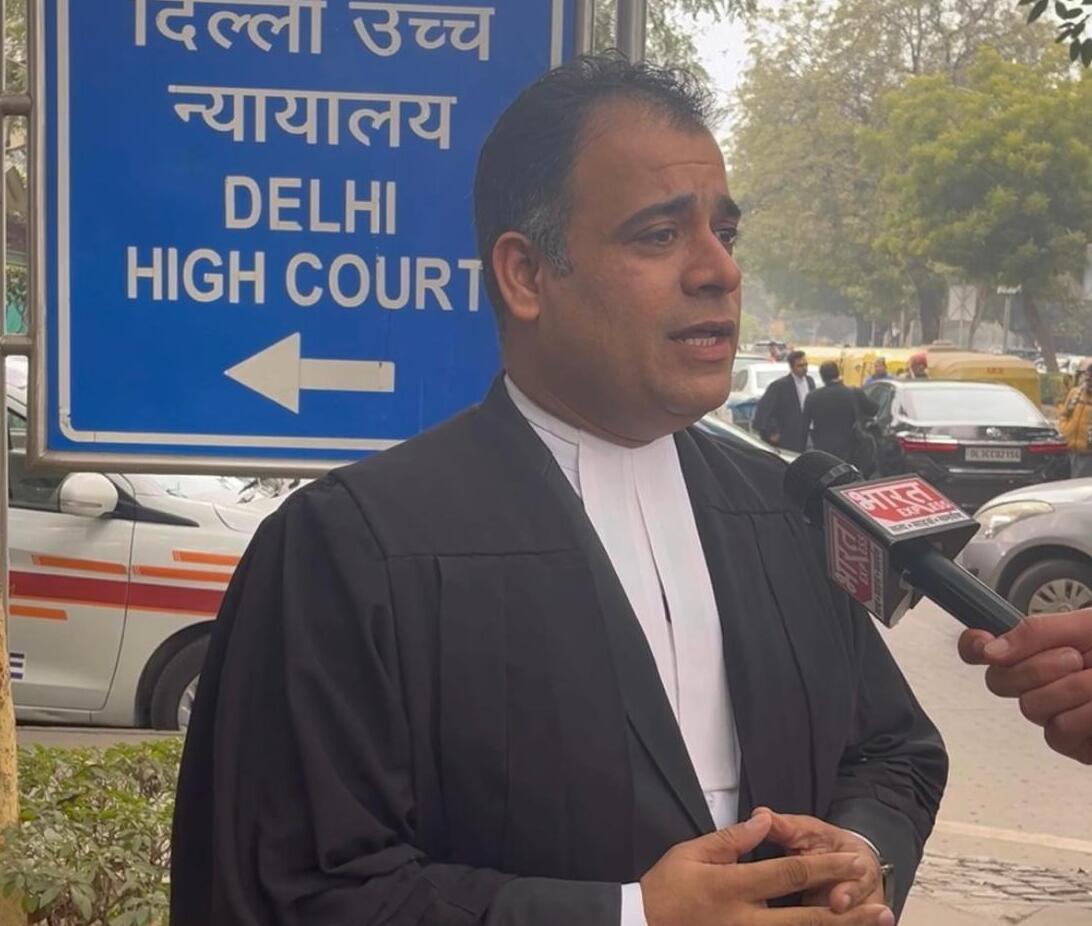
  • “The tactics to use criminal law for  monetary gains need to be checked for a healthy Indian Society. I feel it is a misuse of the judicial process and sensitization of different stakeholders is necessary to avoid misuse  of criminal law for personal satisfaction”- Saurabh Kapoor, Advocate on Record at Supreme Court of India

    “The tactics to use criminal law for  monetary gains need to be checked for a healthy Indian Society. I feel it is a misuse of the judicial process and sensitization of different stakeholders is necessary to avoid misuse  of criminal law for personal satisfaction”- Saurabh Kapoor, Advocate on Record at Supreme Court of India

    This Interview has been published by Pragya Chandni and and The SuperLawyer Team

    Can you share the pivotal moments that led you to pursue a career in law, from your  LL.B. at Maharaja Ganga Singh University to becoming an Advocate on Record at the  Supreme Court of India? 

    Honestly, I admit that I am an accidental Advocate. I had never thought to pursue  LL.B. and practice Law. Rather, I first visited Courts, on the day of joining in the  profession as an intern at District Courts, Ludhiana in February, 2012. I am basically a physiotherapist and even worked as respiratory physiotherapist at Dayanand Medical  College and Hospital, Ludhiana before starting my independent practice as  physiotherapist. My father was a bank officer and I also wanted to join Government  Service, so I tried my luck in UPSC and developed interest in the Constitution of India.  During my job as physiotherapist, I developed a habit of using the library in 2008. That was the turning point of my life. 

    But destiny wanted me to join the legal profession, as one of my friends during my UPSC  preparation advised me to pursue LL.B. It was November, 2009 and admissions were  closed as the examination was scheduled for March, 2010. My friend who was already  pursuing LL.B. from that University advised me to visit college. I got admission on  payment of late fees and penalty. My friend left LL.B. after second year but I continued and completed my degree. I started my career in the Chamber of Sh. Amandeep Singh  Grewal at District Courts, Ludhiana in 2012. Being from a medical background, I have  keen interest in reading, subscribed to quarterly law journals to keep myself updated since the beginning of my career and even opened a small office at Ludhiana. Sh. Davinder  Pal Singh, my dear friend and senior, gave me the opportunity to address the judicial  magistrate on preliminary summoning in 138 N.I. Complaint. He had also trusted my abilities and referred to a proclaimed quashing to me during earlier days at High Court.  In 2013, a retired bank officer visited my office to claim benefits as he was dismissed  by disciplinary authority in 2001 and reinstated by appellate authority in 2003 with  punishment for stoppage of increments for 5 years. The bank counted 5 years from 2003  instead of 2001. Being fresher, I was reluctant to take his case whereas the client not only  trusted my ability but motivated me to proceed with his Civil Writ Petition. I learnt High  court etiquettes on observing advocates while waiting for my turn at Punjab and  Haryana High Court, Chandigarh. The notice was issued and thus started my journey at  Punjab and Haryana High Court. Similarly, I was successful in getting the Proclaimed  Order quashed without even issuance of notice to the respondent by Punjab and Haryana  High Court. So, people started referring to my work. 

    I was appearing before DRT, Chandigarh and other forums as well because I never  wanted to specialize but to expand my wings. It was tough during initial years but I  never stopped and kept moving with the flow. Thereafter, in 2017, an advocate referred  me two Special Leave Petitions pertaining to bail in 420 IPC. I contacted Ms. Manju  Jately, AOR for filing and started appearing as arguing counsel before Supreme Court.  During lockdown, I planned for AOR examination as Court work was limited, so joined  Ms. Manju Jately as a trainee. I appeared in AOR examination in December, 2021 

    but could not make it in the first two papers because simultaneously I was pursuing LL.M. As such, I was determined to become AOR and succeeded in April, 2023. 

    You’re currently pursuing a Ph.D. at Rajiv Gandhi National University of Law,  Punjab. How do you balance your academic commitments with your active legal  practice, and what motivates you to continue your scholarly pursuits? 

    It is really difficult to pursue both things together but my friends and associates  helped me during mandatory Ph.D. coursework. The Ph.D. research has helped me to  refine my legal skills and knowledge. The research work does have an impact on my  professional career. As my supervisor has shared a time Schedule to complete various  stages of the research, therefore, I have become selective in accepting matters since  2022. I have a library in my office and I even use the Court Library during free time at courts to continue my research. I have also got a new teaching assignment and was invited by Punjab  Police Academy for training of Punjab Police Officers. I was felicitated by the Director,  Punjab Police Academy and this motivated me to pursue my research further. To curb  the pressure, I have already closed Facebook and other social media applications. I am  going to shift to keypad mobile to save myself from distraction and limit internet usage.  

    You’ve qualified in the Canadian Law examination. Could you elaborate on your  interest in international law and how it has influenced your practice in India? 

    I had planned to migrate and therefore, wanted to pursue a career in law after  migration. I applied for assessment before migration to Canada in 2015. But I did not  find Canada as a place to live for the rest of my life and returned back. To enhance my skills  and legal acumen, I appeared in examinations conducted by the National Committee on  Accreditation for law society of Canada. I have been influenced by many legal issues and have even included in my professional and academic life to name a few:- 

    The Canadian Supreme Court decision on disclosure influenced me to a great extent.  The Court in William W. Stinchcomb v. Her Majesty The Queen held that “The Crown  has a legal duty to disclose all relevant information to the defence. The fruits of the  investigation which are in its possession are not the property of the Crown for use in  securing a conviction but the property of the public to be used to ensure that justice is  done. The absolute withholding of information can only be justified on the basis of the existence of a legal privilege and privilege is reviewable”. 

    As I wanted to do something on disclosure by prosecution in India, so this is my research  topic in Ph.D. During interview for Ph.D., Prof. (Dr.) G.S. Bajpai, Vice Chancellor,  RGNUL (Punjab) appreciated my research interest in disclosure and advised me to  conduct pilot study. I have also got an article published on “Inconspicuous Duty of the  Prosecution to Disclosure” in Criminal Law Journal, March, 2022. My Supervisor, Dr.  Shiva Satish Sharda at RGNUL, Punjab has also motivated me to pursue comprehensive  research so as to work in directions for necessary amendments in legal regime looking 

    problems of overcrowding of prisons, increasing under-trials population and low  conviction rate in India.  

    I am also advising during training to the Police Officers at Punjab Police Academy to  respect the fundamental rights of accused and disclose the fruits of investigation to  avoid false prosecution. I have even impressed the trial court for disclosure of withheld  exculpatory evidence collected by the investigating agency in one or two criminal trials.  

    The Model Code of Professional Conduct is another area which helped me to learn  lawyer’s ethics and was useful in AOR examination. The Model code forbids the  lawyers to advise clients to initiate criminal and quasi criminal proceedings to secure  satisfaction of private grievances. But it is common in India to initiate criminal  proceedings to threaten or intimidate the opponents for personal matters like financial  disputes, property matters, family disputes including marriage and custody of children 

    and sometime even the consensual sexual relations are given the color of rape as  recently noticed by Madhya Pradesh High Court. The tactics to use criminal law for  monetary gains need to be checked for a healthy Indian Society. I feel it is a misuse of the judicial process and sensitization of different stakeholders is necessary to avoid misuse  of criminal law for personal satisfaction.  

    Your practice spans across various courts and tribunals, dealing with a wide range  of cases. How do you manage such a diverse portfolio of legal matters, from civil writs  to criminal appeals and everything in between? 

    My mentor has been dealing with both civil and criminal matters but he has  not been dealing in service matters. I got an understanding of service law as my father  retired as a bank officer and my first matter at High Court pertains to service matters of a  retired bank employee only. I am always keen to learn and spread my wings, therefore,  I shifted to Punjab and Haryana High Court, Chandigarh. Being the capital of two states,  there are various forums. As such, I never denied matters for forums like DRT, State  Consumer Commission, Human Rights Commission and NCLT. The initial foundation days gave me exposure to both civil and criminal branches of law before various forums. 

    I have been associated with the Department of Defence welfare (Punjab) since 2019 and  this has helped me to refine skills in civil writs and service matters including  departmental disciplinary proceedings. Even today, I take original civil and criminal  matters before all courts because I believe one should not stop learning and limit oneself to any stream of law. One needs to accept change and challenges of life with open arms  and mind. Litigation is a team work, I have always been assisted by friends, colleagues  and even my senior appears for me at District Courts whenever required because I could  not spare except Saturday for District Courts. Lastly, I am indebted to my associates  and clerks at Supreme Court, New Delhi, Punjab and Haryana High Court, Chandigarh and District Court, Ludhiana for timely filing, without whom, it is not possible to appear  at different courts.

    Your civil writ petition in 2019 regarding CCTV installations in polling booths  received media coverage. How do such cases with public interest components shape  your approach as a lawyer, and what impact do you aim to achieve beyond legal  resolutions? 

    There is a difference between Public and Publicity Interest Litigation as recently  highlighted by the Former Chief Justice of India. I never used PIL jurisdiction for publicity  and have not received any case even if any matter is reported in the media. I am very  particular about professional ethics. The civil writ petition pertaining to CCTV  installations in polling booths was pro bono and I mentioned the same in morning to get  it listed in afternoon. The Court found legal points in the matter and issued directions to  install CCTV cameras at Polling Booths with the objective of fair election looking at  apprehensions of the petitioner. An advocate being aware of the constitutional and  statutory rights of the people and citizens of India, must use its expertise for the welfare  of the society. I am impressed by Sh. Mahatma Gandhi, father of nation, the way he  used his legal expertise against oppressive law in South Africa and he is being  recognized globally for his welfare activities and Indian struggle for independence.  Similarly, one should not limit his legal expertise for dispute resolution but work for  social welfare and learn from seniors in the profession. 

    You’ve provided legal opinions for Indian Express Pvt. Ltd. Can you share an  instance where your legal advice played a crucial role in the resolution of a complex  legal matter? 

    I have been associated with Indian Express since 2017 and contested their civil  matters at District Courts, Ludhiana and Chandigarh and NCLT, Chandigarh. But, I  have been specifically engaged by Indian express in 2019, to carry out the thorough  legal search and submit a report on the status of the complainant partnership firm as directed  by the Supreme Court in a defamation complaint against Chairman, Indian Express pending  before Chief Judicial Magistrate, Ambala. On the basis of the report, the Supreme Court  quashed the criminal complaint and summoning order issued in 2000 against the Chairman,  Managing Director and Editorial Director of the Indian Express Group. 

    You’re actively involved in legal awareness programs and social welfare activities.  How do you believe legal professionals can contribute to the betterment of society  beyond their regular legal practice?  

    I feel it is the duty of every person to contribute to society. So, to repay the debt of what has been gained by me during the course of professional and personal  experience, I try to volunteer within my limits and even try to settle the family and  personal matters at the pre-litigation stage with honest advice. One can contribute by  organizing camps at villages and also by starting lecture series for different stakeholders. Our government needs good legal instructors with bare minimum expenses, therefore, one can apply as instructors/trainers at different training governmental and non governmental institutes or organizations. In the world of the internet, social media is a good  platform for necessary legal education. The legal awareness and education should not  focus on work procurement but with welfare objectives. Presently, the crime against  children is rising and therefore, I feel it is important to sensitize the people with sex  education, penalties in sexual crimes. People need to be aware of fundamental duties as well rights because duties are equally important as rights. The most important duty of every advocate is to educate the youth of the nation as most of them, due to physical  interaction indulge in activities forbidden by law and destroy their career and life. 

    Considering your extensive experience, what advice would you give to law  graduates who are just starting their careers in the legal field? 

    The first lesson, my senior taught me that never run for money but work hard,  the money will follow you. India is a developing nation, where people need affordable  and quality legal assistance. There is no dearth of work and the only precondition is hard  mental labor to update oneself with all facts and relevant legal issues. There is neither  any shortcut nor scope of smart work in the legal field. Last but not least, honest efforts by  lawyers, honest thorough presentation to court and honest updated advice to clients. Honesty, dedication and hard work automatically pay back. Failure does not determine success but the response to it. Therefore, always be ready to learn, unlearn and  relearn. 

    In the end, I am grateful to the SuperLawyer Team for this interview.

    Get in touch with Saurabh Kapoor-

  • Andrea Chavarria, Founding Attorney at The Chavarria Law Firm, Dallas, on practicing in international immigration law

    Andrea Chavarria, Founding Attorney at The Chavarria Law Firm, Dallas, on practicing in international immigration law

    Andrea Chavarria is an American lawyer and business owner who works on immigration issues at the Chavvaria Law Firm in the Dallas/Fort Worth Area. Andrea after completing her Bachelors on Journalism in 2004 from University of Texas, went ahead to pursue a year long masters program in International Law and Diplomacy from Schiller International University. Thereafter Andrea joined the Juris Doctor programme at Thomas M. Cooley Law School and qualified in law in 2009.

    Andrea pursued a few more short term courses at University of Geneva, the Hague Academy of International Law and at the School of Advanced Study, University of London.

    In this interview, she speaks to us about:

    • What motivated her to pursue law and take up immigration issues
    • How her experiences at the Hague, the University of London and the University of Geneva impacted her
    • Her pro bono work with CARA
    • Her views on the immigration issues and refugee laws, as well as her expectations about the evolution of policy in those areas


    How would you like to introduce yourself to our readers?

    I was born in Mexico and raised in the United States. I am an attorney and business owner in Texas. I love traveling, reading, listening to live music, and tacos.


    Growing up in America, what motivated you to take up and pursue a career in law?

    As a kid, I would watch my mother help out people in our community. They were usually people who had just moved to the United States or who didn’t speak English. I knew that I wanted to help people as well. It wasn’t until I got to college that I realized that I wanted to become a lawyer. As an immigration attorney, I have the opportunity to help people in a way that positively changes their lives.


    What prompted the switch from journalism to law? How do you think the two professions differ with respect to the impact you can make towards social justice and change?

    I originally wanted to become a journalist so I could write about politics, laws, and human rights issues. I was taking a lot of political science classes in college and that’s when I realized that I wanted to work directly with people and the law rather than write about it.

    The two professions differ but both professions are necessary in order to have an impact on social justice and change. Immigration attorneys can have a direct impact on someone’s life, which in some cases can be a matter of life or death. For example, I represented an individual who, if returned to his home country, would be persecuted by his home country because of his religious beliefs. We won the case and the individual was able to remain in the United States where he can openly practice his religion.

    Journalists are important. They can have a broader impact because they are able to present an issue to a wider audience. There was a particular judge in an immigration court who was known to be ruthless towards children in removal proceedings. Complaints were filed by several attorneys, but nothing changed until a newspaper published an article about the behavior of the judge. Soon after, all of the children cases were removed from the judge’s docket. That’s just one example of how journalism can have an impact on social justice and change.


    Consequently, how did your experience as a legal assistant/intern change your views on the ground realities of the practise?

    It wasn’t until I worked as a legal assistant and as an intern that I realized how much work goes into one case and how important it is to have a good team working together. Attorneys generally get the credit, but assistants, paralegals, interns, and other staff members deserve credit as well. It really is about teamwork.


    Your extensive work as a volunteer covers refugees, family detention, mentoring, etc. What motivated you to take up these causes?

    Through my practice, I realized that there was a great need to help certain individuals who were fleeing their countries, but who did not necessarily have the funds to hire an attorney. In the United States, individuals who are in removal proceedings are not afforded an attorney. Even children as young as three years old are not provided an attorney. These individuals are often seeking asylum. Having an attorney can often make a difference in someone’s case. Everyone deserves to have the right to put forth the best case possible. That’s one of the reasons why I am an advocate for volunteering and working with refugees and fighting against family detention centers.

    I also do volunteer work through the Dallas Bar Association and Dallas Hispanic Bar Association. I enjoy volunteering with these organizations because I get to help my local community. It’s important to give back to your community.


    andrea-chavarria-2

    To what extent did your education at The Hague Academy, the University of Geneva, and the university of London augment your perspective on the immigration laws and other related issues within the U.S.?

    My time at those institutions has taught me how intertwined the U.S. immigration laws are with international laws and human rights principles. When working on an immigration case, it’s important to not only look at our current U.S. immigration laws, but to also look at our international principles and obligations. In the immigration field, we have seen situations where the United States failed to adhere to its international obligations. We’ve recently seen this happen with the detainment of Central American women and children. The institutions mentioned above have helped me gain a better understanding of our international laws, obligations, and the complexities of enforcing these laws and obligations.


    What would you like to tell the readers about your pro bono work with CARA?

    I previously did some volunteer work with the CARA Family Detention Pro Bono Project. CARA was created due to the Immigration and Custom Enforcement’s (ICE) significant expansion of its family detention centers in Dilley, Texas and Karnes City, Texas. Women and children, who are often seeking asylum, are being detained in facilities that are inhumane and inconsistent with a fair and just legal process.

    andrea-chavarria-1I spent some time at the detention center in Dilley, Texas where I assisted in representing women in their bond hearings, preparing them for their credible fear interviews, and informing them of their legal rights. All of the women I spoke to fled their home countries because they feared for their lives or the lives of their children. Some of the women had been in the detention center for months because they could not afford to pay the bond the immigration judge issued. Some of these bonds were as high as $15,000. Many of the women felt hopeless. A majority of them were traumatized. Others were stressed and worried about their children who were also in the detention center. Some children weren’t receiving adequate medical care. Other children weren’t eating properly and losing weight. It was shocking and heartbreaking to see women and children, who had fled their countries due to fear, be treated in such an implacable way. Unfortunately, these family detention centers still exist. Women and children continue to be detained in this centers. If it weren’t for CARA and the help of volunteers, many of these women and children would not know their legal rights. To learn more about CARA visit their website: http://caraprobono.org.


    What drove you to establish your own firm in 2010?

    It was a culmination of things. I was working for a particular law firm and realized that it wasn’t the right fit for me. I wasn’t sure what to do next, but I knew that I still wanted to work in the immigration field. I relocated to Dallas and soon after I realized that there were many people who were in need of immigration assistance. Both of my parents are business owners so I grew up with a business owner mentality. It was with their help and support that I made my decision to start my own practice.


    Given the socio-political atmosphere within the country owing to the upcoming elections, how do you think immigration and refugee law and policy will evolve in the near future?

    I would like to think that in the future we will have sound immigration laws and policies, but I don’t foresee it happening in the near future. In the last couple of years, I have seen how fear and xenophobia have affected refugees and immigrant communities. The state of Texas tried to block Syrian refugees from entering the state, which the federal government said it can’t do. That’s just one issue, but there are so many other issues that we have to deal with in the immigration field.

    Overall, our immigration laws are complex. Advocates have been trying to push for some type of immigration reform for more than ten years. Congress has repeatedly failed to pass any type of immigration reform. The Obama Administration has deported more individuals than any other president. Recently, the United States Supreme Court issued a 4-4 split decision in U.S. v. Texas, which was a lower-court challenge to the expanded Deferred Action for Childhood Arrivals (DACA) and Deferred Action for Parents of Americans and Lawful Permanent Residents (DAPA). The deadlock means DAPA and the expansion of DACA will not move forward.

    There are numerous issues that need to be addressed within immigration law and the outcome of our next presidential election could gravely affect how our laws and policies evolve. Depending on who wins, we may see harsher policies and more deportations or we may see a push for comprehensive immigration reform. At this point, I’m unsure of what our future immigration laws and policies will look like.


    As a lawyer, do you believe that it is a responsibility of those well versed with the legal statutes and policies to aid those without the resources to access this due procedure?

    Yes, I strongly believe that individuals, such as attorneys, who understand the law have a responsibility to provide assistance to those without resources. One of the best ways to assist is by providing pro bono services through a non-profit organization or local bar association.


    Summing up, what do you believe are the main obstacles to progressive immigration laws?

    One of the main obstacles is Congress and its inability to pass a comprehensive immigration reform bill. Congress has been deadlocked over the issue for the last few years. On November 20, 2014, President Obama announced his executive action plan, which would grant deferred action to certain individuals. Some members of Congress believed that his actions were beyond the scope of his authority. His plan to bypass Congress was met with some controversy and once again, Congress killed any chance of passing a sensible immigration reform bill. Will Congress remain at a standstill? Only time will tell.

    Another major obstacle is the misconception of immigration laws. There’s the rumor that giving birth to a child in the United States grants automatic citizenship to the parents. It does not. I’ve been asked why undocumented individuals don’t just get in line to obtain legal status. There is no one line. Some individuals may not have a qualifying relative to petition for them. In other cases, it can take more than 20 years to obtain legal status through a family member. The process isn’t as quick and easy as some might think. Another common myth is that most immigrants are in the United States unlawfully. While there are some undocumented immigrants, there are also various other immigrants who are legally residing in the United States or who entered the United States lawfully. All these types of misinformation are harmful because it undermines public support for immigration reform.


    How do organizations such as AILA help change the status quo?

    Change comes through advocacy. Organizations, such as the American Immigration Lawyers Association (AILA), play an important role in advocating for reasonable changes in immigration law. In April, I traveled to Washington, D.C. to participate in AILA’s National Day of Action. Several AILA members and I visited Congressional offices to explain why comprehensive immigration reform is necessary. This type of advocacy is important because it’s an opportunity to highlight the problems plaguing our current laws. It’s also a chance to give members of Congress and their staff examples of how our existing laws have affected immigrants, their family members, and their communities. Since it’s the role of Congress to pass legislation, it’s crucial to inform its members why certain laws aren’t working.


    Finally, do you have any other advice for our readers, most of whom are college students?

    You will make mistakes. We all make them. However, learn from your mistakes and always own up to your mistakes.


  • Lawrence Liang, Human Rights Activist, on academic legal research and co-founding Alternative Law Forum

    Lawrence Liang, Human Rights Activist, on academic legal research and co-founding Alternative Law Forum

    Lawrence Liang graduated from National Law School of India University, Bangalore in 1998 and has been the co-founder of Alternative Law Forum. He is based out of Bangalore, and is widely known across the legal fraternity for his campaigns on issues of public concern, especially on conflicts of Intellectual Property and medical accessibility.

    Soon after his graduation he received the Chevening Scholarship and did a Masters in Law and Development from the University of Warwick. He holds a Ph.D in Film Studies  from Jawaharlal Nehru University and a Post-graduate Diploma in Cultural Theory from Centre for Study of Culture and Society, Bangalore. Over the course of his career he has immersed himself in human right issues, media law and legal writing. He is currently a visiting faculty fellow at Yale.
    In this interview he talks to us about:

    • His time at NLSIU and Warwick and his educational qualifications
    • His various experiences as a Fullbright Scholar, Henry Hart Visiting Faculty Fellow, and the Hughes Visiting Scholar.
    • Alternative Law Forum
    • His work with iCommons, the Sarai Institute and Public Access Digital Media Archive (Pad.ma) and Indiancine.ma.
    • How he combined media and law
    • His experience as a member of the Drafting Committee of the Colombo Declaration on Free Speech and Media in 2008
    • His views on human rights advocacy


    What could be a short introduction of yourself?

    Hi, my name is Lawrence Liang and I am a legal researcher and writer based in Bangalore. I was one of the co-founders of the Alternative Law Forum, a collective of lawyers working on public interest issues and I have been involved with ALF for around 15 years. I left ALF in 2015 and I am currently a visiting faculty fellow  at Yale.


    You received an English Honours in English Literature from St. Joseph’s College, Bangalore before graduating with a law degree from NLSIU. What prompted the choice to study law?

    An early fascination with law – possibly prompted by popular culture – drew me towards law, but more than a clear idea of wanting to do law, I was clear that I had no inclination towards the sciences and at that point of time pursuing my first love – literature – didn’t seem like a feasible career option. Also it was the time that the National law school had just been set up and we started encountering a number of the NLS students in the quizzing and debating circuit and they seemed like some of the brightest people we had met. On inquiring further we figured that the law school was an an incredible experiment to revamp legal education and appeared to be the most exciting place that one could be in. My English Honours was actually alongside my time at law school. This was at St. Josephs’ where the department used to offer English Honors programs open to all, and in many ways doing this alongside the law shaped many of my subsequent interests in inter disciplinary studies, and in law and literature. While we we were studying subjects like copyright in law school, we were also being exposed to critical theory at Josephs, and one could start seeing the connections between ideas of authorship which were so central to copyright but being differently interrogated by thinkers like Michel Foucault and Roland Barthes. It convinced me of the need to have a wider approach to the law than just legal formalism.


    What work did your masters in Law and Development involve in Warwick?

    The Law in development program was attractive to those of us interested in a critical perspective mainly because Prof. Upendra Baxi taught there, and his scholarship had been very important to us. Warwick has a wonderful history of a engagement with law from a global south perspective and while there, my main learning was to develop a sharp ideological understanding of law and political economy especially in the way that it impacted questions of justice.


    As a recipient of the British Chevening Scholarship, what opportunities did that open up for you? Was there a process for application for the scholarship?

    The Chevening scholarship was literally the only way I could have afforded doing a Masters in the UK and we were lucky at that time that they had two scholarships for people interested in law and development. There was an application and interview process and the interview was a bit of a disaster, so I was rather lucky that I actually managed to get the scholarship. My time at Warwick helped shape an interest in activist lawyering and I started thinking about the need to set up a space after returning. I also took the opportunity to do courses that allowed me to dive into the continental philosophical tradition which significantly shaped my intellectual and political outlook.


    You were the Best Outgoing Student at Warwick! What activities did you engage in there besides academics?

    It is amazing that I got any work done there actually considering it was also a year of being passionately in love. But since cross border romances are best conducted under the shadows of culture I managed to watch many art house films and plays which I did not get to see in India, and the summer was one long cricket match rudely interrupted with thesis and course work breaks.


    You have a Ph.D from the Jawaharlal Nehru University Film Studies Dept. and a PG Diploma in Cultural Theory from Centre for study of Culture and Society as well. How did you come to cultural studies? Did it have an impact on your approach to law?

    Strangely enough while I turned to cultural studies and film studies from a boredom with law, they also enabled me to return to the law with renewed interest, but with a slightly modified perspective. My interest in cultural theory allowed me to read the law not merely from within its internal logic of rules and norms, but through a symbolic register where one could read law as culture. In recent times it is the discipline of anthropology which has been most exciting for me and the work of legal anthropologists like Pratiksha Baxi, Annelise Riles, Perveez Mody in domains as varied as rape law, international finance and the Special Marriages Act have been very exciting and inspiring for anyone interested in the workings of the law both in theory and practice.


    As a Fullbright Visiting Scholar in Columbia University at the Anthropology Department, what did your work entail?

    My time at Columebia offered me a chance to finish work on my doctoral thesis, and being at the anthropology department was to be a part of a fantastic intellectual community which allowed me to interact with many people whose work I have admired over the years. Brian Larkin who has worked on an ethnography of media piracy is a kindred spirit and he was my host while I was there. In some ways anthropology has emerged as the intellectual refuge for many disciplines and the number of law graduates who have becomes anthropologists is a good indication of what a fertile field it is especially in a country with as complex a legal system as India where numerous legal traditions and temporalities coexist and collide with each other.


    Now you are the Henry Hart Visiting Faculty Fellow, at Yale Univ. for the academic year 2016-17. What do you focus your teaching on?

    I am teaching two courses, one is a cinema course where I look at the social life of cinema in India moving beyond the cinematic text to focus on spatial and technological histories, fan clubs, labour histories etc. The second course I am teaching is on the Trial and its public effects in India where I look at key trials that captured the public imagination in India in the colonial and postcolonial context. I move between cases like the Tilak trial, the INA trials to the Nanavati case and the Arushi trial as a way of looking at the public life of law in India, and the way that trial becomes a critical event that recalibrates ideas of politics and public morality. It also becomes a story about the intersection between law and media since these very public trials become a theatre of justice constantly mediated by different technologies of mass media and legal trials become an effective site for the staging of dramaturgies of justice.


    As the Hughes Visiting Scholar, Centre for South Asian Studies, University of Michigan University in 2014, were there any interesting conclusions to your work then, that you could share?

    Michigan was a brief stint in which I got to test out some of the ideas that I had been working on at the time especially on ideas of forensic imagination and the rise of forensics in legal process. I was interested at that time in the idea of the doctored image, narco analysis etc and my friend Joyojeet Pal who teaches at Michigan is also interested in information politics so there was a superb synergy. I was there just after the Polar Vortex which meant that the extreme cold ensured that you just lock yourself up and do your work without any distraction. Ann Arbor represents the best and worst that a life in ideas could represent- the Ivory tower you are confined in because it is just too snowy to step outside but where you keep warm in good intellectual company.


    You were a Co-founder of ALF. How did the idea develop to start that?

    lawrence-liang-2ALF was both the result of many years of conversations with friends as well as strangers who were as excited about the possibility of the experiment. Most of us had done some time with human rights lawyers or organizations, and while we were inspired by the legacy of critical lawyering India, we also felt the lack of a space that brought together litigation, activism and academic research. ALF was born out of a belief that there was a need to bring together these in a way that broke the barrier between theory and practice, and to a certain extent we were successful even if this was not without its attendant difficulties. The temporal nature of litigation and activism is always about the immediate and the urgent while research has a longer durée, and sometimes these can be in conflict with each other. But at ALF I was lucky to be in the company of extremely passionate and committed people, and I learnt that one’s political stances are not just learnt from the outside world but equally in these small experiments at collective living and working. To believe in an abstract idea of the right to equality is one thing, to actualize it in your practice is much more difficult, but in trying to do so you learn more about the abstract value as well.


    What work does ALF focus on? Is there a unique work culture that volunteers or employees are expected to adhere to or anything in particular that is expected from them?

    ALF works in a variety of areas from access to the criminal justice system, the politics of intellectual property, sexuality, labour etc. From the start we were committed to the idea of a non hierarchical workspace which was organized on the basis of collective responsibility- again much easier in principle than in practice- but I think an informal ethos and a respect for each other’s work is what attracted people towards ALF. Given the relatively modest salaries that we were offering, what made ALF attractive for many people was that it offered a vibrant intellectual and political environment, a collegial space underwritten by friendship and the chance to do work which you could see had some impact at least  on the lives of people.


    What impact has working at ALF had on your life outlook?

    This one will probably need more space than I have, but one simple one is a recognition that while the law is often a leaky umbrella, often it is the only one we have. And the real challenge of an ideological critique of the law is not to disavow it, but to deploy as effectively as possible using its own logic to work for those whom it normally works against. Apart from the professional side, it has shown me via the words of Neil Gaiman that inside everyone are strange and surprising universes and to work together is to be invited to universes that one would not normally be a part of.


    Tell us a bit about the Public Access Digital Media Archive (Pad.ma) and Indiancine.ma.

    Pad.ma is an online archive of video and documentary footage. It seeks to create a visual archive of densely annotated clips and Indiancine.ma tries to do the same for Indian films. These are collaborations with a fantastic group in Berlin, Pirate Cinema and Camp in Mumbai. They arise from a simultaneous interest in visual culture as well as in the radical potential of open access.


    You have shown remarkable commitment to a variety of causes over the years. What are the major causes you espouse? Did you always know what issues you wanted to work on or did that happen with time?

    While one always has a vague sense of values that one is committed to, the commitment to specific issues often arises from a particular context. For instance while I was generally interested in media laws, it was through the process of working with Vikalp (A group of documentary film makers who came together to fight censorship) that you are then forced to dive into and in some sense try and master a particular field. Similarly with issues of access to knowledge, the specific context of the DU photocopy case both confirms the importance of a politics of knowledge even as it refines the political stance you had through the technical prism of law. To be simultaneously committed to things you believe in even as you remain open to contingent forces that change or alter your politics is both exhilarating and inspiring. There is a lovely saying that revolutions should be born out of joy not sorrow, and I think we often derive out vitality from the energy of those we see around us, who in the face of extreme injustice are still defiantly hopeful for a better world.


    Tell us how you have managed to combine media and law?

    We live in a mediatized world where it is difficult to imagine any aspect of our lives which are not touched by media. From cinema to the internet, media occupies and shapes our consciousness, so it no coincidence that the world of law becomes crucially enmeshed with that of media. In a narrow sense that would mean the regulation of media, but in a broader sense it also means the transformation of law itself where law also becomes mediatized. The emergence of sting operations, the prevalence of trial by media are crucially media effects even as they are legal events, and to think of the contemporary is to think of media. Ravi Sundaram whose work has been very influential for me has a book which theorizes India ‘after media’ and in a sense he posits that everything changes after media and as a legal scholar you are bound to account for what that means in the legal world.


    What is you role in iCommons? What do you strive to achieve there?

    The Creative commons movement was a very important moment that showed us the possibility of what an alternative imaginary to the closed world of copyright could be. It expressed a philosophy of sharing and the creative potential of it contrasted with the diminishing of the public domain by strong IP regimes. It was also beset by its own limitations being enshrined within the idea of liberal legality, and for someone coming from India, where you could see the democratizing potential of illicit practices such as piracy, my own role was to contextualize what something like the CC movement meant in the global south, but also to nuance the debate with an understanding of the social and cultural worlds of knowledge sharing beyond the law.


    What work have you done in collaboration with Sarai?

    Sarai was one of the most exciting and important media and cultural spaces that emerged in early 2000’s which opened up all kinds of possibilities in the public discourse around art, media and urban space. It was set up jointly by the Raqs media collective and faculty members of CSDS and they supported the most cutting edge work in theory and practice for many years. The range of fellowships they offered, the legacy of the work they supported (from artists to graphic novelists) has been phenomenal. I started collaborating with Sarai in 2002, and it was a combination of boldness and generosity on their part which also helped ALF in its formative years. They saw a bunch of passionate and smart lawyers who wanted to try something new and supported us (intellectually and financially) helping us set our foundations. In 2005 we organized a global conference on intellectual property called Contested Commons and Trespassing Publics which I think made a significant impact on the global discourse on IP. We also co organized an event called World Information City that brought together artists and theorists thinking about idea and politics knowledge era as they played out in the lives of cities. My conversations with Jeebesh Bagchi, Ravi Sundaram, Ravi Vasudevan, Shuddhabrata Sengupta and others opened up ways of thinking from the diverse worlds of art, cinema and technology. Sarai, I think, allowed for us to see the various expressive forms that thought can take, and the traditional academic form of scholarship was both something they showed the limits of even by pushing the boundaries of how scholarship could be creatively and energetically expanded.


    You have several publications to your credit! How do you choose when to write about what? Do you think research and publishing is very important for a law student?

    Sometimes you choose to write because you are following an intuition, a curiosity and an intellectual itch. Other times a specific areas chooses you by virtue of its immediacy. At any rate for academics to write is to think and even though the act of writing is often a painful process every once in a while in the midst of writing you realize you are expressing thoughts you didn’t even know you had. So yes writing is crucial for law students, and I am grateful for the endless projects that we had to do as law school. I don’t think law school really teaches you law, what it does teach you is how to think about the law, how to forage for research material and how to put together an argument. What I do think is important is to fight the very real possibilities of writing becoming a painful drudgery (often the case with academic writing) and to experiment with different forms which retain the joyfulness of writing. For me writing in a range of forums from art journals, newspapers and academic spaces has been the key to maintaining my sanity since the joy of writing can easily be assassinated by footnotes. But more than a writer I think of myself as a reader, and writing for me is often is an excuse to make sense of what I am reading and to have imaginary conversations.


    Please tell us about your experience as a Member of the Drafting Committee of the Colombo Declaration on Free Speech and Media in 2008?

    This was a considerably difficult period in Sri Lanka, the civil war was at its peak and one of the immediate casualties was free speech. Journalists and editors were being targeted – often killed by the state as well as the LTTE. It was humbling to learn of the incredibly difficult circumstances under which journalists were doing their work and as members of the drafting committee we were privy to a remarkable set of testimonies. It reminded me of Foucault’s idea of parhessia- an idea that preceded the idea of free speech and referred to fearless speech- reminding us of the high stakes involved in speaking truth to power, and the small role that lawyers can play in nurturing a safe home of fearless speech. The experience really shaped my understanding of free speech laws in India and to appreciate the relatively good jurisprudence that exists on free speech in India. All the more crucial in these days when sedition charges are thrown about like cheap change and when shrill blood hungry media anchors become the greatest dangers to free speech.


    What changes do you hope to see in human rights advocacy in India over the next decade?

    With the mushrooming of law schools all over India, I hope that we in addition to producing lawyers for law firms, we also produce a generation of lawyers who continue a critical tradition. The law students I meet today are remarkably bright- certainly smarter than we were- they are born digital and command an enviable ease with all kinds of online research skills, and what would be fantastic is to have more lawyers who are able to engage with human rights issues not just in a generic sense of political empathy, but to deploy their legal skills in understanding and critiquing mainstream areas of law. What the human rights movement needs are more lawyers who know corporate law, insurance, taxation etc. In other words we need lawyers who understand the belly of the beast but also understand that the beast preys upon those who are most vulnerable and to be an effective human rights lawyer means internalizing Part 3 of the constitution, but also understanding how corporate governance can affect the same Part 3.