Tag: PMLA

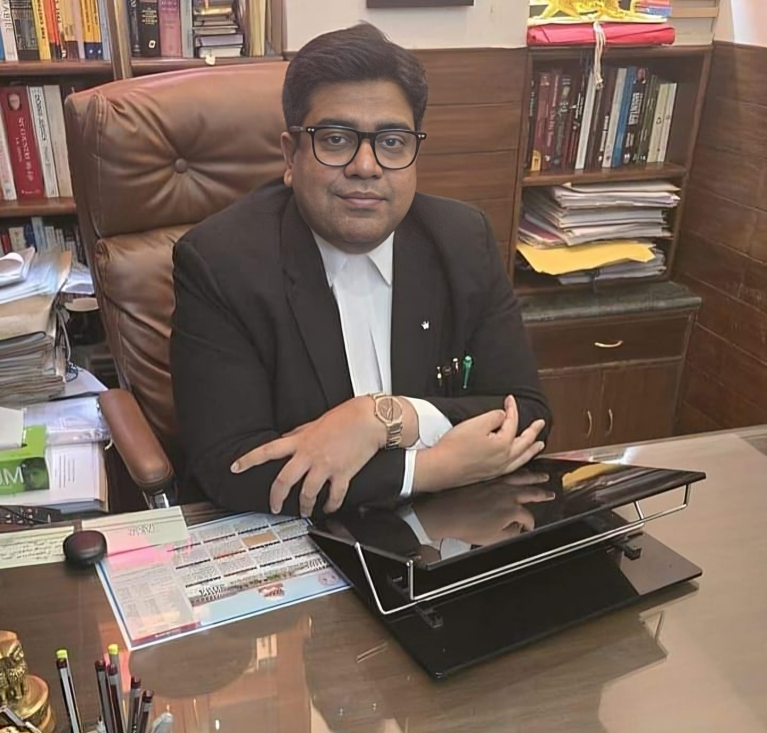
  • “Litigation is not about instant rewards, it’s a long game. It tests your patience, builds your  character, and teaches you lessons that no textbook ever can.” – Kauser Husain, Advocate at Supreme Court of India.

    “Litigation is not about instant rewards, it’s a long game. It tests your patience, builds your  character, and teaches you lessons that no textbook ever can.” – Kauser Husain, Advocate at Supreme Court of India.

    This interview has been published by Anshi Mudgal and The SuperLawyer Team

    In the early stages of your career, you interned with several leading law firms. Could you  share specific experiences or lessons from those internships that significantly shaped your understanding of the law and laid the foundation for your litigation practice?

    Thank you very much for inviting me—it’s a pleasure to be here at this platform, and I  truly appreciate the opportunity. 

    Coming from a non-NLU background, having pursued my BA LL.B. from Aligarh Muslim  University followed by an LL.M. from NALSAR, the path to breaking into top-tier law firms  wasn’t straightforward. However, through determination and consistent effort, I was fortunate to  secure internships with leading firms such as the erstwhile Amarchand Mangaldas and Luthra &  Luthra. 

    I consciously chose to work across both corporate and litigation teams to gain a well-rounded  understanding of the legal landscape. On the corporate side, I was involved in drafting commercial  contracts, conducting due diligence, and assisting in deal structuring—experiences that honed my  attention to detail, regulatory knowledge, and commercial insight. 

    However, it was in Litigation that I found my true calling. Attending court proceedings, grasping  procedural intricacies, drafting legal responses, and conducting research using platforms like SCC  Online and Manupatra, etc. significantly shaped my litigation skill set—tools, which I still continue  to rely on in my current practice. 

    A particularly formative experience was assisting in a complex arbitration matter, where I had the  opportunity to observe Senior Counsels navigating the procedural and substantive challenges with  strategic finesse. This experience further solidified my interest in litigation, especially in the realm  of Criminal law, which demands keen analytical thinking, real-time problem-solving, and  persuasive advocacy. 

    Beyond technical proficiency, these internships instilled in me essential soft skills—discipline, time  management, and the ability to perform under pressure. They laid a strong foundation for my  litigation practice and continue to influence the professional I aspire to be. 

    What drew you to the legal profession? Was law always a planned career path for you, or did your interest develop gradually over time? 

    To be honest, Law was not my initial career plan. Coming from a commerce background,  I had originally considered pursuing professional courses like CA or CS. Around 2010, when I  completed my 12th grade, awareness about legal education—especially institutions like National  Law Universities and entrance exams like CLAT—was still quite limited, particularly at the  grassroots level.

    It was actually through my father that I first came to know about the option of studying law. That  sparked my curiosity, and I began researching about the Law schools, the Legal Profession,  placements, top law firms, and prominent lawyers. The more I explored, the more I found the  field fascinating—it felt like an opportunity to do something meaningful and different. 

    Once I joined law school, my interest deepened gradually. Studying various legal subjects and  gaining practical exposure through internships helped me understand the vastness and depth of  the profession. 

    Most lawyers tend to pick a specialization early on—fields like IPR, corporate law, or tax. But I  deliberately took the longer route. I wanted to earn clarity through lived experience rather than  rushing into a niche. By working across different domains, I gained a broader perspective and  eventually discovered that my true passion lies in Litigation. 

    What motivated you to pursue an LL.M. in Corporate & Commercial Laws from  NALSAR University of Law? How did that specialization deepen your grasp of commercial legal  issues and impact your practice? 

    After qualifying CLAT, I thoroughly researched LL.M. specialization options offered by  various National Law Universities. NALSAR stood out to me for its diverse range of  specializations and academic excellence. Given my prior internship experience with corporate  teams in Law Firms as well as Litigation Chambers, I decided to pursue Corporate and Commercial  Laws as my primary specialization. 

    I was particularly drawn to this field because of its dynamic interplay between legal reasoning,  business strategy, and regulatory frameworks. However, my interest didn’t stop there. During my  internships, I also discovered a genuine passion for litigation. I initially aimed to pursue a dual  specialization with Criminology but couldn’t formally opt for it due to program constraints.  Nevertheless, I chose Criminology as an elective to complement my corporate focus. 

    This combination—Corporate & Commercial Laws with an understanding of Criminology— equipped me with a well-rounded legal perspective. It allowed me to develop the skill set needed  for both corporate advisory roles and litigation practice, offering me flexibility in career direction  while deepening my understanding of complex commercial and criminal legal issues. 

    You’ve worked on landmark constitutional cases like Aadhaar and M. Nagaraj alongside  senior advocates. What were some of the most challenging or rewarding aspects of those matters?  How have those experiences shaped your current approach to litigation? 

    After completing my legal studies, I was fortunate to work under the guidance of  esteemed Legal Professionals, including under Chambers of Advocate-on-Record and prominent Senior Advocates such as Mr. Arun Kathpalia and Mr. Sidharth Luthra. Working in their Chambers  gave me the rare and invaluable opportunity to contribute to Landmark Constitutional matters  such as M. Nagaraj, Aadhaar, Ayodhya, and cases concerning mob lynching, among others. 

    One of the most enriching aspects of these experiences was engaging with complex constitutional  questions and the evolving landscape of public law. Tasks such as conducting in-depth legal  research, preparing concise briefing notes for senior counsels, and closely observing courtroom  strategy helped refine my analytical abilities and broaden my legal perspective.

    What I came to appreciate deeply is that litigation extends far beyond courtroom appearances— it’s about the discipline, consistency, and integrity brought to each stage of a case. The rigorous  process of preparing briefs, anticipating counterarguments, and grasping the wider constitutional  ramifications of a judgment has significantly shaped my litigation approach. I’ve learned to pay  close attention to detail, think critically, and always stay anchored in the constitutional values  underlying each matter. 

    These experiences have cemented my long-term interest in constitutional litigation and criminal  law practice. They’ve also taught me that even behind-the-scenes contributions play a vital role in  shaping outcomes and influencing the development of the law. 

    You’ve had the opportunity to work under Chambers of the most  distinguished Senior Advocates in the country, including Mr. Sidharth Luthra and Mr. Arun  Kathpalia, predominantly in areas like criminal law and insolvency. What were some of your key  takeaways from working in their Chambers, both in terms of legal acumen and professional  growth?

    I began my legal career after completing my studies by joining Chambers of Advocate on-Record Mr. Fuzail Ahmad Ayyubi, who has a robust criminal law practice, followed by Mr.  Sanjay Kapur, a leading counsel for the State Bank of India with a strong practice in civil and  commercial laws. These initial experiences were truly foundational. I was actively involved not  only in legal drafting but also in understanding court procedures and clerical work—skills, which I believe are essential for any young lawyer starting a career in litigation. Gaining this procedural  insight early, gave me a practical edge and helped solidify my interest in courtroom advocacy. 

    While working under AOR’s Chambers, I gradually developed a deep interest in Criminal law. One  of my aspirations was to work under the guidance of Mr. Sidharth Luthra, Senior Advocate— an opportunity I knew would be both rare and competitive, given his stature in the field. Before  joining his chamber, I had the privilege of working with Mr. Arun Kathpalia, Senior Advocate,  who is widely regarded as a top-tier Counsel for complex IBC matters before the Hon’ble Courts. 

    Mr. Kathpalia’s exceptional memory and mastery of Insolvency Law were immensely inspiring.  Assisting him in high-stake matters and undertaking intensive legal research helped me build a  strong foundation in commercial litigation and develop a more strategic, structured approach to  handling complex cases. 

    Eventually, I was fortunate enough to get a chance and join the Chambers of Mr. Sidharth Luthra— a long-standing goal of mine. Working under his mentorship has truly been a best once-in-a lifetime experience. He is a tough master yet a remarkable mentor one can ever have. As I often  say, you may enter his Chamber like a puppy, but you leave it with the strength and discipline of a  Rottweiler. The transformation is that intense, but incredibly rewarding. 

    Mr. Luthra’s Chamber molds you into a well-rounded Litigator, regardless of your area of  specialization. But particularly for someone inclined toward Criminal Law, the exposure is  unmatched. From sharpening your legal research and drafting skills to preparing argument notes  and managing the pressure of a fast-paced litigation environment, you are constantly challenged  to grow. You lose the fear of reading voluminous bulky case files and develop habits that sustain  a long-term career in litigation. 

    While I may never match his brilliance, what I’ve truly tried to internalize are his work ethic, time  management, argumentation style, command over case laws, and unwavering dedication to the craft of advocacy. These experiences have been pivotal in shaping both my legal acumen and  professional outlook, instilling the discipline and resilience required for a meaningful career in  litigation. 

    What inspired you to establish your independent practice? What initial challenges did you  face while setting it up, and what vision did you have for your role as an independent counsel? 

    From the early days of my undergraduate and postgraduate legal studies, I was  determined to immerse myself in every dimension of the law—be it Corporate practice or  Litigation—rather than confining myself to a single niche. My internships across leading Law  Firms and prominent Chambers exposed me to the nuances of drafting, court procedures, and  client handling. But it was through those hands-on experiences that I discovered my deeper  inclination toward Litigation. I came to understand that Litigation isn’t just about mastering  statutes and precedents; it’s about crafting compelling narratives, building trust through  connections and referrals, and delivering real justice to clients. 

    Starting an independent practice as a first-generation lawyer—from a mid-tier city to the legal  landscape of Delhi—was undoubtedly daunting. I had no legacy to rely on, no ready-made client  base, and there were days in the beginning when court appearances were few and far between.  Establishing credibility meant more than just refining my research and drafting abilities; it meant  absorbing the invaluable lessons I learned under mentors like Mr. Arun Kathpalia and Mr. Sidharth  Luthra, developing strong interpersonal and conversational skills with a blend of strong command  over the Laws. 

    The vision behind KH Law Office has always been twofold. First, to build a practice rooted in  integrity, meticulous preparation, and genuine client empathy—ensuring that anyone who walks  through my doors, whether for a criminal matter, commercial dispute, NGT proceeding, or an  IBC case, feels assured that they have a dedicated and dependable advocate. Second, to maintain  intellectual and professional versatility. While my core focus lies in Criminal and White-collar  matters, I actively take up the cases in civil litigation, GST, environmental law, and Insolvency. 

    Today, with established branches in both Delhi and Gorakhpur and a steadily growing practice,  I look back with pride and can say, it was perseverance, belief in myself, and the understanding  that true excellence in Litigation goes beyond specialization, that helped turn my vision of  independent practice into a growing, dynamic reality. 

    As an empanelled legal counsel for the Competition Commission of India, what are some  of the unique challenges that arise in representing regulatory authorities? How do you address  complex, sector-specific legal issues in such matters? 

    Representing a regulatory authority like the Competition Commission of India brings a  unique set of challenges. One of the key responsibilities is to ensure that legal arguments not only  align with statutory mandates but also uphold public interest and regulatory integrity. Unlike  private clients, where strategy often centers on protecting individual interests, working with a  regulator demands a broader, sector-wide perspective. 

    As an independent practitioner, I value the objectivity and responsibility that comes with such  empanelment. It’s not just about winning a case—it’s about reinforcing regulatory frameworks and  promoting fair competition in the economy.

    Many of your publications explore important issues like trials by media, cybercrime, and  gender justice. How do you manage to balance the demands of a full-fledged legal practice, your  commitment to writing on socially relevant topics, and finding time for your personal life? 

    Balancing a full-fledged legal practice with writing on socially relevant topics and  maintaining a personal life does come with its challenges, but it’s something I’ve been passionate  about for a long time. Since my college days, I’ve been actively involved in academic writing and  have had several papers published. After completing my post-graduation, my inclination toward  academia only grew stronger, and I made a conscious decision to pursue it alongside my litigation  practice. 

    Over the years, I’ve delivered lectures on various legal subjects—predominantly in criminal law— which has not only helped me deepen my own understanding but has also allowed me to stay  updated with evolving legal concepts. I genuinely enjoy interacting with law students; those  engagements are often mutually enriching and offer fresh perspectives. 

    Balancing litigation, academic writing, and teaching definitely requires good time management. I  usually try to dedicate some of my weekends—Saturdays and Sundays—to research, writing, or  preparing for lectures. I firmly believe that a lawyer should possess dynamic qualities and should  actively contribute to both the practice and academic sides of the profession. Engaging with the  next generation of legal minds is both energizing and intellectually stimulating, and that’s how I  strive to maintain balance in my professional life. 

    What advice would you offer to young law graduates aspiring to enter litigation? Are  there any specific resources or practices you would recommend to help them stay updated on the  latest legal trends and developments? 

    My genuine advice to young Law graduates aspiring to enter Litigation, especially from  the lens of someone who built an independent practice as a first-generation lawyer with no legal  background, would be this—have a strong vision, stay persistent, and believe in your ability to  grow through the process. 

    Litigation is not about instant rewards—it’s a long game. It tests your patience, builds your  character, and teaches you lessons that no textbook ever can. Many freshers walk into Chambers  asking, “What’s the starting salary?” And while it’s understandable, Litigation doesn’t begin with a  CTC—it begins with court. If your first instinct is to calculate income before understanding the  practice, Litigation might not be for you. This profession pays, but only after it shapes you. It pays  when you’ve shown that you’re worth paying. 

    In the initial phase, your goal should be to learn—not to earn. Some may pay you in the first  month, others may wait until you prove your contribution. What matters is your presence, your  commitment, and your curiosity to grow. 

    My advice: 

    Keep reading—not just judgments and articles, but also good books on legal reasoning, advocacy,  and even biographies of great lawyers. 

    Develop the habit of going through Bare Acts—they are the backbone of Legal interpretation. Strengthen your Legal Research and Drafting Skills—these are the tools of your trade.

    Build your communication skills and cultivate professional relationships—referrals and a good  reputation can take you a long way. 

    Stay updated with legal developments through platforms like SCC Online, LiveLaw, Bar & Bench,  and newsletters by reputed firms or legal portals. 

    Also, don’t try to immediately narrow your focus. In the early years of your independent practice,  take up all kinds of matters—Civil, Criminal, Commercial, Environmental, Tax, IBC—whatever  comes your way. It helps you gain exposure across various Hon’ble Courts and develop command  over a range of subjects. Gradually, you’ll discover where your core interest lies. 

    Ultimately, the path is tough, especially if you’re starting from scratch—but if I could do it with  perseverance and a clear vision, so can you. Stay consistent, stay grounded, and don’t be afraid of  the slow climb. Because in litigation, once you rise, the view is absolutely worth it.

    Get in touch with Kauser Husain –

  • “Stay focused, work hard, and build discipline as a core habit. Success comes from commitment, perseverance, and consistently applying these principles in both practice and life.” – Tariq Ahmed, Co-Founder of Ahmadi Law Offices.

    “Stay focused, work hard, and build discipline as a core habit. Success comes from commitment, perseverance, and consistently applying these principles in both practice and life.” – Tariq Ahmed, Co-Founder of Ahmadi Law Offices.

    This interview has been published by Anshi Mudgal and The SuperLawyer Team

    Your legal career spans a wide range of practice areas. What inspired you to pursue law as a profession, and what led you to specialize in Corporate Law at NLU Jodhpur?

    My journey into law was deeply influenced by my early childhood experiences. Growing up in a household where my father, both a law graduate and government officer, instilled a profound respect for the legal system, I developed a natural gravitation toward the profession. His influence, combined with my inherent desire to pursue justice, solidified my decision to study law during my school years.

    During my time at Aligarh Muslim University, I was fortunate to learn from distinguished law professors who shaped my understanding of legal principles. 

    A particularly transformative experience was my exposure to Nehru studies, which opened my eyes to the crucial relationship between economics and law. This course helped me understand how even minor policy oversights could significantly impact market dynamics and national growth. A pivotal moment in my academic journey was my introduction to Eric Posner’s groundbreaking work on law and economics. His analytical framework and insights into how legal rules affect economic outcomes resonated deeply with me and ultimately shaped the trajectory of my legal career. Looking back, I see how this exposure laid the intellectual foundation for my current approach to my practice.

    These experiences naturally led me to pursue a specialization in Corporate Law at National Law University, Jodhpur. The robust curriculum in the course, with its strong emphasis on foreign trade and corporate governance, perfectly aligned with my growing interest in the legal framework that emerged in the wake of India’s transformative 1991 liberalization policies. This has proven invaluable in my practice, enabling me to better serve clients navigating the complexities of modern corporate law.

    Having worked alongside senior advocates like Mr. Irshad Ahmed and Mr. A. Samad, what were some key lessons or insights you gained during your early practice that have shaped your approach to law?

    My early legal career began under the mentorship of a senior law officer of Uttar Pradesh, which provided an excellent foundation in legal practice. While those initial years were enriching, I soon recognized that staying within my comfort zone would not serve my professional growth. This realization prompted me to pursue a more challenging path in economic offenses and white-collar crimes.

    A defining moment in my career was the opportunity to work with Mr. Abdul Samad, whose visual impairment never hindered his exceptional legal acumen. His mastery over money laundering laws, indirect taxation, customs, DRI, and financial fraud matters was remarkable, which I had the privilege to observe and imbibe first-hand. What truly set him apart was his meticulous attention to detail and unwavering professional discipline. Under his guidance, I had the privilege of working on diverse cases across India, from Guwahati to Bengaluru, including complex corporate matters and cases under COFEPOSA. 

    After spending nearly six years working as an associate with senior lawyers, what motivated you to start your own practice? What were some of the initial hurdles you encountered in that transition?

    After two enriching years with Mr. Samad, I began to recognize that independent practice would allow me to fully embrace the challenges and responsibilities of the legal profession. The timing proved fortuitous – as the market began recovering from the second wave of COVID-19, my elder brother, Mr. Shariq Ahmed, and I established Ahmadi Law Offices, which is a registered Advocate on Record Firm based in Delhi.

    While we faced the typical challenges that first-generation lawyers encounter, our journey was thankfully smooth, thanks to our strong foundation and support system. My brother’s unwavering faith in divine justice and constant encouragement were instrumental in our success. I must also acknowledge the invaluable guidance of Ms. Vibha Datt Makhija, Senior Advocate, whose mentorship has been crucial in our professional development.

    As stated earlier, our background had equipped us with the mental fortitude necessary to overcome professional obstacles, and this resilience has been key to our firm’s growth. Looking back, what might have seemed like hurdles were actually stepping stones that helped shape our practice into what it is today.

    With over a decade of experience, you’ve regularly dealt with complex Money Laundering and FEMA matters. Could you share details of one particularly challenging case, and how you approached its preparation?

    White collar crimes and economic offences particularly those involving Money Laundering and FEMA, represent some of the most challenging areas of legal practice. The sensitive nature of these cases, combined with constantly evolving jurisprudence, demands exceptional attention to detail and precision in deploying the appropriate legal strategy.

    In my experience handling these matters, I have learned that no two cases are identical, as each presents its unique set of complexities and challenges. The stakes are invariably high, and the margin for error is effectively non-existent.

    For me, each case is a child I nurtured, requiring careful preparation, from researching relevant precedents to crafting precise legal arguments. While every case has been uniquely challenging, success consistently depends on meticulous planning and effective presentation. The key lies not only in understanding the law but also in anticipating its application to each distinctive situation.

    Handling cases that intersect environmental, industrial, and corporate law can be challenging. How do you ensure a smooth workflow while effectively managing your practice?

    My answer might seem clichéd but success in legal practice follows a compound effect which means that one well-handled case leads to many opportunities. The practice of law, especially when dealing with intersecting areas, requires more than just technical knowledge. It demands unwavering confidence and self-belief to effectively manage both the practice’s growth and workflow complexities. I have found that maintaining strong organizational capacity while staying adaptable to changing circumstances is key to handling these cases effectively.

    Given the high demands of your role, particularly Independent Practitioner and Co-founder Ahmadi Law Offices, how do you manage personal obligations? What strategies do you employ to recharge and stay motivated in your legal career?

    Maintaining work-life balance is crucial in our demanding profession. I make it a point to spend quality vacation time with my family, and always outside Delhi, to truly disconnect from work. While weekends tend to sometimes blur into workdays due to professional commitments, I ensure we maximize our vacation time. 

    To stay grounded, I find solace in literature and arts – reading biographies, enjoying poetry in Hindi, Urdu, and English, and listening to Ghazals.  I am particularly drawn to Satyajit Ray’s work, especially “The Apu Trilogy.” The way he portrayed human relationships and societal transitions in films like “Pather Panchali” resonates deeply with me. They are a constant reminder of the human elements that underlie our professional work.

    Given your broad experience across different legal domains, what advice would you give to young legal professionals who aspire to have a corporate practice as you?

    My advice to law students and aspiring lawyers is very straightforward: maintain unwavering focus and work consistently toward your goals. Remember that no challenge should shake your confidence. Success in this field is built on the fundamental pillars of commitment, hard work, patience, and perseverance. Most importantly, make discipline your core habit – it is not just about managing your practice, but about making it an integral part of your life. This discipline will naturally reflect in your work quality and professional relationships.

    Get in touch with Tariq Ahmed-

  • “Success in complex transactions hinges on experience, a robust knowledge base, and a skilled, cohesive team.” – Abhishek Bansal, Founding Partner at Acumen Juris, Law Office.

    “Success in complex transactions hinges on experience, a robust knowledge base, and a skilled, cohesive team.” – Abhishek Bansal, Founding Partner at Acumen Juris, Law Office.

    This interview has been published by Namrata Singh and The SuperLawyer Team

    We’re delighted to have you here. Could you walk us through your journey from your college days at the Faculty of Law, University of Delhi, to where you are today as a respected founder partner at Acumen Juris?

    I’ve always been a regular student, not particularly the outstanding, studious type one might expect. Unlike those who decide early on what they wish to pursue, I hadn’t planned that far ahead. However, I found myself fascinated by the profession of law.

    During my college days, I stayed connected with people and even contested in college elections, which helped me build valuable relationships and skills. The path wasn’t always clear, but I realised my passion for taking on new challenges while working in the industry. This realisation led me to establish my independent practice and eventually run a full-service law firm. Embracing challenges with a positive attitude has been key to my journey.

    Starting a legal practice and establishing oneself in the industry requires determination and perseverance. Can you share some challenges you faced during the initial stages of founding Acumen Juris, and how you overcame them to build a successful law office?

    Indeed, establishing oneself in the legal industry requires immense determination and perseverance. With years of experience, these qualities became ingrained in me.

    When I decided to start Acumen Juris, I envisioned creating something different. After years of working long hours six days a week, I sought a balanced life that included time for family and adventure. With this in mind, my partners and I founded the firm with a simple strategy: to operate as a firm from the outset, rather than as individual practitioners, to gain recognition and trust from corporate clients. Our extensive experience and commitment to delivering high-quality, timely services have been key to our success.

    I worked across multiple time zones, advising clients globally, supporting their business setups in various jurisdictions, and handling complex transactions.

    Your expertise extends beyond M&A to areas like commercial contract, drafting, venture capital funding, and legal due diligence. What inspired you to venture into these diverse areas, and how do they complement your overall legal practice?

    My expertise extends beyond M&A to encompass critical areas such as commercial contract drafting, venture capital funding, and legal due diligence. These skills were cultivated during my tenure at a mid-size firm, where I approached challenges with a proactive mindset and a commitment to achieving excellent client outcomes.

    In addition to traditional legal responsibilities, I have successfully undertaken corporate valuations required under FEMA 1999 for major corporations. This involved dedicated efforts, often beyond regular work hours, supported by a collaborative and supportive, firm environment.

    My deep knowledge of FEMA laws, a focus since the start of my career, enhances my capacity to provide strategic guidance in transaction advisory, resolving complex structures and related legal matters.

    These varied experiences have significantly enriched my legal practice, enabling me to offer comprehensive solutions and strategic insights that effectively address the diverse needs of my clients.

    You’ve recently handled a notable transaction that garnered attention within the legal community. Could you share some highlights or key takeaways from this case, and how it showcased your expertise in navigating complex legal issues to achieve a favorable outcome for your client?

    One recent standout in my career was overseeing a significant 900 crore share swap transaction where we represented the seller side. This transaction was particularly challenging because of its complexity, involving multiple intricate legal components and several limitations. I played a pivotal role within the core team, contributing to discussions, providing strategic advice, finalizing agreements, and devising efficient tax structures across sell-side entities.

    Throughout the transaction, our approach began with a thorough legal assessment to gauge feasibility, followed by comprehensive risk assessments, and tax planning to design efficient structures.

    Success in such endeavors hinges on years of experience navigating diverse transactions, a robust knowledge base, adept interpretation skills, a proactive attitude, and, crucially, a skilled and cohesive team. I am privileged to work alongside a talented and efficient team that played a pivotal role in achieving a favorable outcome.

    This experience underscores my capability to manage complex legal challenges and deliver results that meet the strategic objectives of our clients.

    You’ve co-authored multiple editions of a bestselling book on the Companies Act, 2013. Can you tell us about the journey of writing and updating this book, and how it has contributed to your understanding of corporate law?

    Contributing to a bestselling book on the Companies Act 2013 has been a pivotal milestone in my career, marking a journey of personal and professional growth. The experience of co-authoring and witnessing its success has been immensely gratifying.

    Throughout the process of writing and updating the book, I drew extensively from my practical experience advising clients on corporate law matters. This real-world application provided invaluable insights into the statutory provisions, case law developments, and practical implications of the Companies Act 2013.

    Overall, this experience has deepened my understanding of corporate law and strengthened my ability to provide informed counsel to clients. It underscores the importance of continuous learning and practical application in evolving legal landscapes.

    In addition, key person in developing the only website for FEMA Laws while working in the previous firm. 

    With your extensive experience in providing transaction advisory services, what do you consider as the most critical factors for ensuring mutually beneficial terms in agreements related to funding processes or joint ventures?

    In the realm of transaction advisory services, securing mutually beneficial terms in agreements related to funding processes or joint ventures requires a multifaceted approach. This approach involves conducting thorough assessments of all parties involved, encompassing their financial health, market positions, potential synergies, and strategic intents.

    It’s crucial to establish clear and precise objectives upfront to ensure alignment of expectations and goals among stakeholders. Addressing potential obstacles with innovative solutions and structuring agreements that mitigate risks while maximizing benefits are paramount factors. Moreover, building trust and fostering transparency among stakeholders throughout the negotiation process is essential for cultivating a collaborative and mutually advantageous partnership.

    Navigating negotiations with skilful diplomacy, knowing when to concede and when to stand firm, while maintaining open and constructive communication, ensures that agreements are not only favourable, but also set a solid foundation for long-term success and value creation for all parties involved.

    You’ve been actively involved in speaking at various forums and contributing articles on corporate laws. How do you balance your commitment to legal practice with these extracurricular activities, and what motivates you to share your knowledge with others in the legal community?

    Balancing my commitment to legal practice with speaking at forums and contributing articles on corporate laws can be challenging, as it often requires allocating time from either my personal or professional life. However, these activities are integral to establishing and expanding the presence in the legal industry.

    The primary motivation behind engaging in these extracurricular activities is twofold. Firstly, they serve as crucial avenues for showcasing and publicizing my knowledge within the legal community, thereby enhancing my professional reputation and attracting potential clients. Secondly, participating in speaking engagements and writing articles allows me to stay updated on evolving legal developments, enriching my expertise and broadening my perspective.

    While there may not always be a perfect balance, I find immense value in contributing to the legal discourse through these platforms, both for personal growth and for the benefit of my legal practice.

    You’ve provided legal services across a wide range of sectors, including retail, logistics, hospitality, and more. Is there a particular sector or type of client that you find most rewarding to work with, and if so, what makes it stand out for you?

    Having served diverse sectors, including retail, logistics, hospitality, and others, each offers distinct challenges and rewards, making it difficult to single out one as the most fulfilling. However, if I were to identify a particularly rewarding sector based on personal interest and professional satisfaction, it would be the technology industry.

    Technology is integral to operations across various sectors, from hospitality to healthcare and education. Working with clients focusing on technology is particularly gratifying due to the sector’s rapid pace of innovation and the continuous evolution of associated legal frameworks. Staying abreast of emerging technologies, regulatory shifts, and industry trends keeps me intellectually engaged and drives ongoing professional growth.

    Furthermore, technology firms often operate on a global scale, facilitating complex cross-border transactions and international collaborations. This global dimension adds depth to legal engagements, involving interaction with diverse cultures, legal systems, and business practices.

    In my practice, I have had the privilege of supporting technology-driven enterprises across more than 25 jurisdictions, assisting with business structuring, ensuring regulatory compliance, and navigating intricate cross-border transactions through our extensive global network of associates.

    Working with technology clients not only challenges me to deliver strategic legal solutions but also broadens my perspective as a legal professional, reinforcing my commitment to excellence and innovation in every client engagement.

    Balancing professional responsibilities with personal interests is crucial for overall well-being. What are some of your hobbies or interests outside of the legal realm, and how do you find time to pursue them amidst a demanding legal career?

    Maintaining a balance between professional responsibilities and personal interests is crucial for overall well-being, albeit challenging in the demanding legal profession. Outside of my legal work, I have a keen interest in leisure travel, immersing myself in diverse cultures around the world, engaging in adventure sports, hiking, swimming, golf and indulging in cricket—a passion shared by many in India.

    I make it a priority to play cricket every weekend and ensure I travel at least twice a year, either with my family or solo. One memorable experience was a biking expedition from Delhi to the highest motorable road in Ladakh and back, where I joined a group of strangers connected through mutual acquaintances—a journey that enriched my perspective on camaraderie and adventure.

    Achieving this balance is only possible with the support of a dedicated and responsible team. Their commitment allows me the flexibility to pursue my interests while maintaining the high standards required in our legal practice.

    In your experience, what are some emerging trends or challenges in corporate law that you believe young lawyers should be prepared for as they enter the legal profession today?

    In today’s legal landscape, young lawyers face a dynamic environment characterized by evolving trends and challenges in corporate law. Initially, they must master the art of understanding and interpreting the law, which forms the foundation of their practice. Law is inherently practical and continuously evolves to meet industry demands, interpreting a crucial skill.

    Emerging trends that young lawyers should prepare for include the increasingly complex global legal frameworks due to globalization. Understanding the differences across jurisdictions and navigating international transactions are essential skills. Moreover, the rise of technologies like artificial intelligence, blockchain, and big data analytics is transforming corporate practices. Young lawyers must grasp these technologies’ implications for legal strategy and compliance.

    Another significant trend is the growing emphasis on sustainability and Environmental, Social, and Governance (ESG) laws globally. Companies are facing greater scrutiny and regulation regarding their environmental and social impacts, requiring legal advisors to integrate these considerations into corporate strategies.

    In summary, young lawyers entering the legal profession today must be ready to navigate a rapidly changing landscape. They should embrace continuous learning, adaptability, and a proactive approach to stay ahead in corporate law.

    Internships play a crucial role in shaping the careers of aspiring lawyers. What advice would you give to current law students seeking internships to ensure they make the most out of these opportunities and build themselves into proficient legal professionals?

    Internships are essential milestones for aspiring lawyers, offering critical opportunities to gain practical experience, hone essential skills, and establish professional networks early in their careers. Based on my experience and insights, I advise current law students seeking internships to maximize their impact and readiness for a corporate legal career:

    1. Actively pursue internships with law firms and corporate legal departments aligned with your career aspirations and areas of interest within corporate law.
    2. Approach your internship with a proactive mindset to absorb knowledge and insights from experienced corporate lawyers. Take the initiative to understand corporate transactions, regulatory compliance, and strategic legal advice.
    3. Cultivate meaningful relationships with mentors, senior lawyers, and peers during your internship. Networking within the corporate legal environment can provide valuable guidance and potential career opportunities.
    4. Uphold the highest standards of professionalism, ethics, and confidentiality in all interactions and assignments. Demonstrate reliability, punctuality, and a strong work ethic to earn trust and respect within the organization.
    5. Strive for excellence in every task assigned. Deliver accurate, thorough work products and demonstrate your capability to handle corporate legal matters with attention to detail and precision.
    6. Regularly assess your performance, seek constructive feedback from supervisors, and proactively incorporate learnings to enhance your skills and knowledge base.

    Internships serve as pivotal experiences for aspiring corporate lawyers to develop foundational skills, gain practical exposure to corporate legal practice, and pave the way for a successful career in corporate law.

    Get in touch with Abhishek Bansal-