Tag: Politics

  • Dhruv Suri, Principal Associate, PSA Legal, on leading a student organisation, LL.M from Columbia University and work at Law Firms

    Dhruv Suri, Principal Associate, PSA Legal, on leading a student organisation, LL.M from Columbia University and work at Law Firms

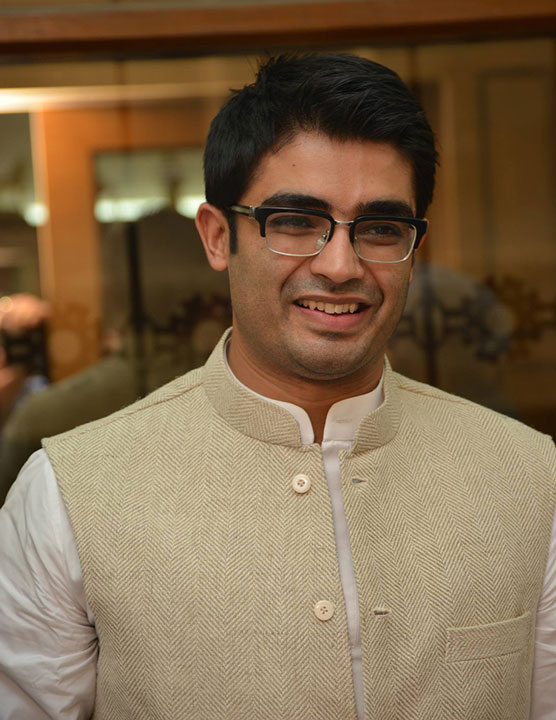
    Dhruv Suri graduated from Guru Gobind Singh Indraprastha University, New Delhi in 2009. While in college he co-founded a student organization called United Students which initiated the Jessica Lall and Priyadarshini Mattoo campaigns. He was invited by the then President, A.P.J. Abdul Kalam to discuss problems of OBC reservations after receiving his memorandum on the same. He has interned with AZB & Partners and Valeo, Paris. He received a PPO while interning at PSA Legal Counsellors where he was an Associate for four years before opting for an LL.M from Columbia University, New York. He has joined PSA after coming back from Columbia. He is currently a Principal Associate at PSA Legal Counsellors. In this interview he talks about:

    • Studying law at GGSIPU, New Delhi
    • Recruitment and work experience at PSA Legal Counsellors
    • Masters from Columbia University, New York


    As an introduction, please tell us about your schooling and how you decided to pursue law.

    I was born and brought up in Delhi and did my schooling from Delhi Public School, Vasant Kunj. I graduated from school in 2003 and was unsure of what I wanted to do. So much so that my family registered me for one of the law entrance exams and I ran away to Mumbai with a friend for a holiday. Of course, that did not go down too well with my family after I came back. When I came back, I took admission in Delhi University where I studied English Hons. for one year. However, for that entire year, all I did was theatre and learn dance. My attendance at college was abysmal! In 2004, I was emotionally blackmailed by my mother to register for the law entrance exams once again on the pretext that I would be given a Maruti 800 to travel to law school and an increment in my pocket money. I fell for it and got an option to study at Amity Law School. Back then, Amity Law School was a building in south Delhi and did not have the atmosphere of a “campus” that I grown accustomed to in my one year at DU. So, I opted for the main Guru Gobind Singh Indraprastha University law school which seemed like a better option. Rest assured, I got no car and travelled 40kms a day in local Delhi buses. So, this is how my journey with law started- as a “victim” of emotional blackmail from my mother! J


    You completed your law degree from Guru Gobind Singh Indraprastha University, New Delhi in 2009. What activities were you involved in there? Looking back, is there anything you wish you had done differently?

    The first few years just went by in trying to understand what law is really about. I loved courses like Legal Reasoning, Jurisprudence, History, and Contract law. I also loved mooting and showed up at any and every audition, whether I was prepared or not. I was also very active in the debating society and ensured that I participated in as many competitions as possible. Since our campus was fairly big and had lots of engineering and management colleges as well, there was always some event or the other taking place. By the time I was in my 4th year, debating became a source of extra pocket money.  However, amidst all this, I was also focussed on getting good internships and a job. In fact, if there is any regret that I have, it is that all through my final year I worked after college hours, whereas all my friends were enjoying themselves, going for lunches, movies and ensuring that their last year as a “student” was memorable. When I look back, I could have probably worried less about my career and instead made the most of my final year at law school. Eventually we all had to work but I do feel that I missed out on some fun times with my friends.


    You started a student organization called United Students. You contested the Delhi University elections and initiated the Jessica Lall and Priyadarshani Mattoo campaigns. Please tell us more about it.

    United Students happened by pure accident. I was in the latter part of my 2nd year at law school when I met the other founder members of United Students at a coffee shop in central Delhi. I had always been someone who liked to initiate and take the lead in everything I did. The trial court verdict in the Jessica Lall case was out and I was having discussions and debates with people from all quarters about the merits of case, legal arguments advanced, etc. Some common friends connected me to like Aditya Raj Kaul, a young 17 year old (now a popular Times Now reporter), who had started an online campaign in connection with the Priyadarshani Mattoo case. Aditya and I realised how similar we both were and he introduced me to the other founder members. We were all passionate about bringing about a change and decided to collaborate. I think that really was the key reason for launching United Students. We wanted the organization to encourage young Indians, particularly students, to think and debate in a cohesive manner and take up issues of governance. The idea was to engage in discussions and debates, take an informed stand and then take steps on ground to the best of our abilities. I think the legal profession is somewhat similar. Discussions and debates are synonymous with research, which is very important to take a stand and advise the client. As I got busier with law and internships and all other members got more absorbed in their lives, the organization had a natural death. However, the entire experience played a big role in how I evolved as a person and it is something that I will always cherish.


    Why didn’t you pursue a career in politics? Do you think you will enter the field again in the future?

    I remember I was doing a shoot for a big news channel during the Delhi University elections and the spokesperson of one of the bigger political parties came to me and asked me to formally join them. I wonder how different life would have been had I actually done that! But on a serious note, I did consider pursuing politics more seriously but was equally eager to graduate and practice law. Who knows, one day I may actually be able to balance a legal and political career!

     

    dhruv-suri-3

    During your time at law school, you interned at AZB & Partners, New Delhi and Valeo, Paris. Please describe your experiences.

    All my internship experiences were very rich. At AZB I did my first all-nighter and got a real sense of how corporate law firms work. The lawyers were extremely kind and I am still in touch with some of them. Valeo was great because I got to work in-house and attend lots of business meetings. I realised how a “business lawyer” (whether in-house or external) cannot give pragmatic advice if he/she does not have a sound understanding of the business. This was the biggest take-away from this internship and till date, I try and adopt the same approach while advising clients at PSA. Of course, I got to spend a little less than 3 months in Paris which was fantastic and the first time I stayed by myself. I made sure I saw every bridge, every museum and (almost) ever cafe and bar there.


    You also interned at PSA Legal Counsellors and then received a PPO from them. What do the recruiters at PSA look for in potential candidates? How did you secure a PPO?

    One of the most preferred modes of recruiting at PSA is to give offers to final year law students interning at the firm and then training them internally as they grow. The firm encourages building in-house talent.

    In terms of how PSA approaches recruitments of potential candidates, I think it is more or less assumed that a first year associate will not know much about the law. However, she/he should be eager to learn and work hard, and also interact and work well in a team. PSA also believes that before becoming a specialist, it is important to be a good generalist. So, if there is a student who only wishes to work in the area of, say, capital markets or intellectual property or competition, PSA would not be the best place to work. Whereas if someone is keen to do everything and gradually pick areas of interest and focus on them, PSA would be an ideal place for them.

    In my specific instance, I interned with PSA all through my final year at law school. While I was still an intern, I got actively involved in a big PE transaction. The deal was still ongoing when I graduated so I just continued working on it and did not stop. Slowly I got drawn in on a lot of other matters and before I realised, I had spent almost 5 years at the firm!

     

    dhruv-suri-4

    Upon graduating, you started working at PSA as an Associate. What was your work profile like?

    Like I mentioned, at PSA, you do everything in your first year. So, my work profile was nothing different. I was actively working on a PE deal, but also assisting the senior lawyers in day-to-day corporate advisory, researching for litigation matters, working on intellectual property queries and even drafting board minutes and incorporating companies. Gradually the work becomes more sophisticated and challenging but the basic training I got in my first year continues to be invaluable and (I’d like to believe) set a strong foundation. Before I left for my LL.M in 2013, I was working on sophisticated M&A transactions, advising large conglomerates on complex legal queries pertaining to contracts, IP, tax, employment etc. and arguing matters before the Competition Commission of India.
     

    dhruv-suri-2

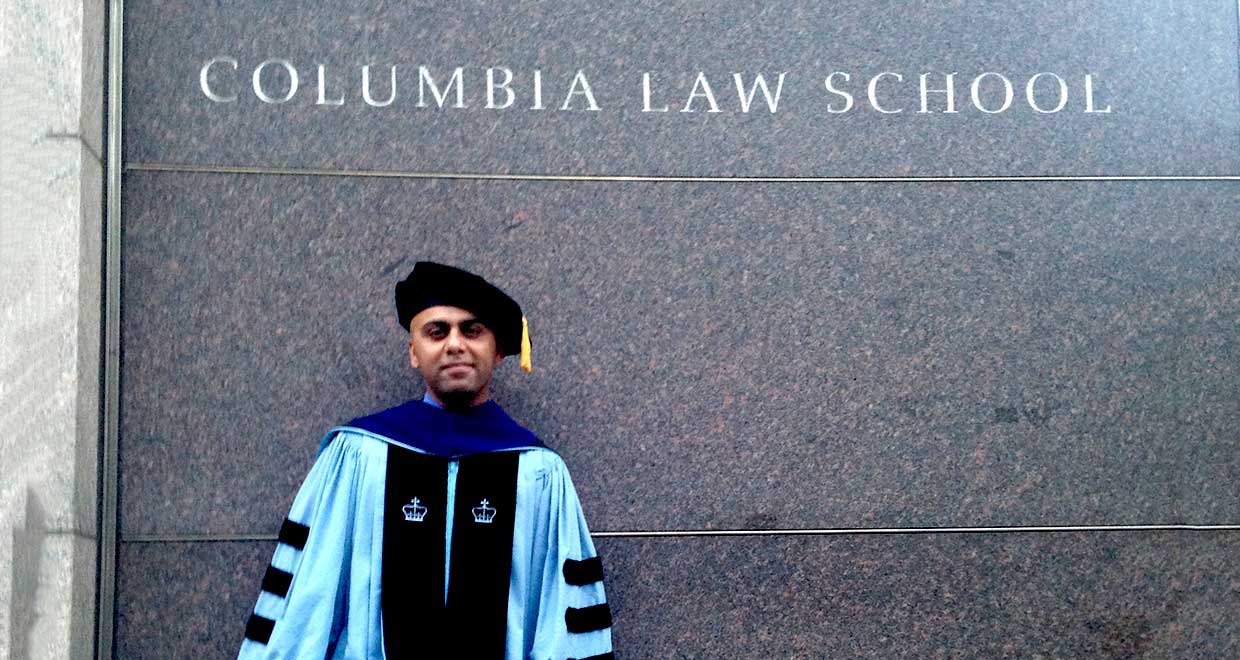
    After four years at PSA, you opted for an LL.M from Columbia University, New York. How did you secure your admission at Columbia? What was your specialisation?

    So, Columbia and Harvard are two schools that I know do not offer a specialised LL.M. In fact, even as a matter of personal preference, I did not want to do a super specialised LL.M. The application process was exhausting and almost impossible to manage with long work hours. I took 10 days off in October 2012 to work on my applications and finalized as many as I could. Even the 10 days were not enough and I spent a lot of weekends on my personal statement and other school-specific essays that were required. Now when I look back, I am so glad I put in that effort because Columbia really is one of the best things that ever happened to me! Plus I got to live in New York which just takes the LL.M experience to a whole new level.

    With respect to courses, there was a fair bit of flexibility so I made sure I had a variety on my plate. Some of my courses were “Strategic International Commercial Transactions,” “Financial Statement Analysis,” “Intellectual Property Drafting,” “Negotiations,” “Corporations,” etc. All of them were taught by top-notch professors who made studying such a pleasure, an area where, in my opinion, Indian law schools have a lot of catching up to do.


    You also worked as a Research Assistant for Professor Anu Bradford in the field of antitrust laws. On what basis were you chosen for the project? How was the experience?

    I have always been very interested in competition/antitrust law. During my first month at Columbia, we received an e-mail that Professor Anu Bradford was looking for LL.M research assistants to work in the field of antitrust law. I think I drafted a short cover e-mail and sent my CV within 5 minutes of receiving the e-mail. Professor Bradford called me for an interview and soon I started working for her. The experience was so enriching because the work she asked me to do involved coding antitrust laws of multiple countries (including India) and understanding key differences in how statutes are drafted across those jurisdictions with respect to restrictive agreements, cartels, abuse of dominance, etc.. The work gave me a deep and detailed understanding of antitrust laws. Plus, she is one of the most wonderful people I know and mentored me throughout the time I was at Columbia. I am just glad I got to work with her.


    Is it better to pursue an LL.M right after college or after working for a few years?

    This is a question that a lot of people aspiring to do an LL.M ask. Honestly, I don’t think it has a right answer. A lot of my friends went for their LL.M immediately after completing law school but I chose to go after gathering some work experience. Specifically for Columbia, which has an extremely competitive curriculum, it is rare for them to admit anybody with less than 2 years of work experience. Of course, there are exceptions. Based on my experience, I do think that work experience comes in very handy, especially when you are learning about a different legal system. You are definitely wiser and more mature to gauge concepts by linking them to your practical experience. Plus, you also tend to make a lot more of your degree by networking professionally, which, I think, can be challenging if you have never worked before.


    Do you think the LL.M has improved your career prospects? Do you have larger responsibilities at PSA now?

    The LL.M has definitely helped me a lot. If I had to point out one thing, it has made me surer of my work and more confident in my interactions with clients, both Indians and foreigners. In terms of my profile, I am now a Principal Associate at the firm and manage PSA’s start-up/PE/VC practice which is extremely exciting because I interact and work with dynamic start-ups and very passionate entrepreneurs.  While I continue to do legal work, a lot of my time and energy is also spent on business development, which I thoroughly enjoy. So clearly, the responsibilities have increased and the concept of weekends has dissolved. I have to be on top of whatever I am working on all 7 days a week and I actually prefer it like that.


    Lastly, what advice would you give to law students wishing to pursue a career in corporate law and considering doing an LL.M?

    I would say that, make sure you do internships in law firms in your 4th and 5th year and be proactive when working. I enjoy working with interns who are eager to learn, proactively follow-up with me and don’t hesitate to take responsibility of their work. It is a good opportunity for you to demonstrate your attitude towards work. Also, be prepared to do any and all kinds of work. You will realise much later how the most minuscule things you worked on as an intern or first year associate come in handy during negotiations or drafting contracts. So, approach work with an open mind. Finally, if you plan to do a LL.M, my advice usually is to work for 2-3 years. It will really change your perspective and you will be able to make the most out of your academic courses and the overall LL.M experience.

    In the end, I would just say that work hard but make sure you enjoy your student life as well. That time (unless you do your LL.M) will not return. Good luck!


     

  • Sirsanya Bandopadhyay, Advocate, Calcutta High Court, on building a career in litigation and experience in Politics

    Sirsanya Bandopadhyay, Advocate, Calcutta High Court, on building a career in litigation and experience in Politics

    Sirsanya Bandopadhyay is a practising Advocate at the Calcutta High Court. He graduated from Jogesh Chandra Choudhuri College of Law (Calcutta University) in 2010.While in college, he was an active participant in the student political body of the University and gradually grew along with it. He became the General Secretary and subsequently President of the Students’ Union. He is also the youngest member to have been inducted into the Trinamul Congress’ Party Core Committee. Currently he practices at the Calcutta High Court.

    In this interview he talks about:

    • Studying law at JCCCL, Kolkata
    • Students’ union and joining politics
    • Building a career in litigation


    How would you say your parents or close family members inspired you in taking up law?

    Though my father is an Advocate by profession and several others, from his maternal side, are in the same profession, the decision to pursue law was entirely my own. The same was taken while I was in the 3rd Standard. When I was in my third standard, one fine morning, the first thing that caught my attention was a huge picture of my father in his robes on the front page of the Bengal daily, Ananda Bazar Patrika. And I suppose that impression lived with me throughout my life and each day thereafter I imagined myself in those robes and in that corridor of the High Court at Calcutta. In fact, there have also been times when I wore his robes at home, when he wasn’t around as that gave me profound happiness.


    Please tell us a bit about your father, Mr. Kalyan Bandopadhyay’s practice. As a mentor, how did he influence your career? Did you get to hear a lot of legal discussions right from your childhood?

    My father was into business before various events led him to his senior, Late Mahitosh Mazumdar, J., under whom he practised till his senior’s elevation on 17th February 1986. As I have heard from my father, his life as a young advocate was not very easy but he worked really hard to climb up the ladder, gathering and embracing every bit of work that came his way. In his initial days he stayed in a mess with others and after his marriage he and my mother started a family in a one-room rented shelter on the terrace of a house in Dhakuria. From there his hard work has taken him to where he is today. His dedication, diligence and love towards his work has fetched him respect and repute in legal and political fields as well.

    Such stories of hard work are an inspiration in itself and surely they have inspired me to work hard and remain dedicated and grounded always. But my father never dictated what I should do in life, apart from regular reminders that I need to study hard. I must also mention that while nurturing the thought of becoming an Advocate, the stories and works of Late Siddhartha Shankar Ray had influenced me all the more.

    Legal discussions were mostly restricted to his chamber. My sister and I did eavesdrop on his telephonic conversations at home, talking about some matter or some interesting point of law, but they cannot be termed as hearing proper legal discussions.


    sirsanya-bandopadhyay-2

    Your father is also a  Lok Sabha MP and  a member of  All India Trinamul Congress Party. Did you ever think of joining politics after him?

    I joined politics even before I could realise that I had done the same. When I was fourteen years old, my father contested his first Assembly Elections from Asansol in 2001. I took a month off from school and stayed back in Asansol with him to manage his office work. Whenever I used to feel bored I used to go out with him and be a part of the campaigning. After he won in 2001, I made regular visits to Asansol from time to time and in the process got acquainted with many party workers from that area. While joining JCCLC in 2005 the only advice that came from my father was not to join the Students’ Union. But situations in college had led to factions and I happened to become a voice in the anti-incumbent faction. The students’ election in 2005 was shady and that gave fuel to the anti-incumbent motives. But I tried to abide by my father’s advice by not contesting the elections and not going to political meetings till the year 2006. But gradually the state of affairs worsened in college and it somehow demanded my active participation. I was too scared to tell my father that I was not being able to act upon his advice and contested the 2006 college elections without his consent. However, the same was brought to his knowledge by a so-called leader of the other faction during one of his morning walks. But surprisingly he didn’t tell me anything, probably because he also heard that I too had voluntarily associated myself with Trinamul Congress’s Students’ Wing.

    Stories of our anti-incumbent movement started spreading like forest fire and other colleges started inviting us for public meetings and rallies against SFI, which back then had a strong hold in most of the colleges in Bengal so much so that at one point of time, I had covered almost all the colleges in South Bengal in order to speak against SFI. The factions in rightist wings in college led to the growth of SFI/AISB in my college as well and hence the fight became a full-time job both inside and outside college. After handling matters in college till 12 noon or 1 pm, sometimes I along with my friends or at times I alone used to travel to remote locations and distant colleges in order to carry on our fight against the communist parties. In 2007, during the Singur agitation I was asked by Ms. Mamata Banerjee to speak in a public meeting at Singur to be held on 28th August 2007. The previous night I was at the southern tip of South 24 Parganas but the offer was too lucrative to be turned down and hence there I was, at my first public gathering at Singur in front of lakhs and lakhs of workers and general people who had gathered on the National Highway during Ms. Banerjee’s historic fast. After a string of such meetings I was inducted as a member of the Party’s Core Committee and I was the youngest among all the members. In the meantime, my friends and juniors in my college elected me as the General Secretary and thereafter President of the Students’ Union. The period between the year 2008 and May 2011 was spent in a state of madness. Family, friends and social life took a back seat while I and my friends/associates strived together towards the sole goal of toppling the Communist Government.


    Tell us about your years in Jogesh Chandra Choudhuri Law College (Calcutta University). What made your journey at JCCLC worth it?

    My studentship in JCCLC had started off like any other student freshly out of school. The 1st year of college was mostly consumed by fun & frolic. But the shady elections of 2005 planted the seeds of anti-incumbency in me and my friends. From then onwards, a lot of time used to be spent behind political activities. Such political activities continued till my final year in college in the year 2010. When my father came to learn about my active participation in Students’ Union, he didn’t tell me anything probably because a latent rider of good results at the end of each session played in my favour. Thus, studying hard became a ticket to an unlimited time in Students’ politics. But I was never a believer of year-round studies in law courses. Instead I spent some 20-30 days studying before exams and luckily that saw me through with palatable marks. While many of my batch-mates relied upon private tuitions during the five year course, never did I think of any such tuition for myself. What our teachers taught in class and my sister’s notes from Hazra Law College was enough for me. In fact, our Companies Law & Tax teacher Dr. N. Bhattacharya lent his free time and cleared out our doubts in Taxation Laws after college hours in the college library. In the same breath, I would like to say that our Constitution Teacher Mrs. A. Kundu is probably the best in Kolkata. Whatever I have learnt in her Constitution classes still remains a reference point from time to time. The others whom I didn’t specifically name have an equal contribution to the little knowledge I have.

    There is something in the air of JCCLC which is unmatched as compared to any other college. The closed doors between 7-11am breed a feeling of family and camaraderie. The fact that we had nowhere to go once inside the college premises made us dependant on and habituated with each other. I not only give credit to JCCLC, it’s teachers, staffs and students for my legal acumen but also for my much important social knowledge and administrative vis-a-vis leadership skills.


    sirsanya-bandopadhyay-3

    What were your plans after graduation? Did you consider joining the Civil Services ever? Which career options were available to you as a fresh graduate?

    As I said, my plan since childhood was to practise law. I never wavered on that until I actually joined practice in December 2010. In the meantime I did consider every other job/profession/business but honestly the legal profession stood out every single time. In fact, in my Higher Secondary I had opted for Science so that my options post school remain open for every other field, in case I decide not to study law. As far as Civil Service is concerned I never thought I will be able to crack those UPSC or WBCS examinations.

    As a fresh graduate several career options were available like MBA and LL.M as far as higher education is concerned. Management with law is still considered to be a lethal combination. Other job oriented options included Law Firm, LPO, BPO or private practice. While I chose the latter one, several other friends and juniors opted for the other three and are doing well.


    As a fresher just out of college, how did you manage to get a mentor for yourself? How important do you think a mentor still is in the arena of litigation?

    Coming from a legal background, I knew several other Advocates whom I could join. Since I used to go to Court sometimes, during my college days, I had my own favourites as well. But choosing a mentor wasn’t quite planned. In the latter part of Part V, I used to attend my father’s chamber but sometime in July 2010, I was badly reprimanded by my father for some reason and my rage made me decide that I wouldn’t go to his chamber anymore. But since I wanted to practise, attending someone’s chamber was important and necessary. While I was fuming with anger, my current senior’s name came to my mind and I rushed to Mr. Kishore Datta’s chamber at Dhakuria. He used to be my father’s junior since 1991/92 till around 2000. His long standing association with our family makes him a part of my family too. Thus, on 16th July 2010 I landed up in his chamber and said “ কাল থেকে আমি এখানেই আসব ” (I shall join here tomorrow).  In his usual unperturbed way he said, “Why from tomorrow? Take the D. D. Basu (on Constitution) and start today.”

    In our generation, many choose to work without a mentor or without joining someone’s chamber because they must be comfortable that way. But as far as I am concerned I will not be able to manage. Though at times when the matter or situation so demands, I appear before the Courts alone, I am extremely dependant on my senior and will like to continue under him as long as I can. In the past four and a half years of my practice under him I have never been able to satisfy my senior with my work, but I believe my perseverance & endeavour to satisfy him with my work is my path to knowledge and success.


    What were your areas of interest during your graduation? How did you go about developing expertise and knowledge in these areas?

    During graduation there were several favourites. Some because of the teachers who taught the subject while some because of the slim books. Arbitration, Constitution, C.P.C. and Environmental Laws are some favourites I remember from my graduation days. But interest brings with it disinterest. And one subject which totally repelled me was Intellectual Properties. As a matter of fact in one Academic Session I did not attend a single IP class. When my attendance in other six subjects was 80%, I had 0% in IP Classes. But such absenteeism was calculated so that I was not debarred to sit for the final examinations.


    After your graduation in 2010, you started practising at Calcutta High Court. What influenced your decision to work in litigation?

    Since the inception I wanted to be in litigation and not in some legal/government job. I always found a desk-job too monotonous and clerical. This is strictly my personal opinion and not meant to hurt or demean anyone. In an advocate’s career no two cases can be similar, just like finger-prints or human ears. The possibility of waking up to a new challenge or going to sleep with a new thought, a new understanding of law, drives me to work day in and day out. Such possibilities are remote in desk jobs. Law firms may provide such an opportunity if one lands up in a litigation oriented law firm, but being dictated by someone is not my cup of tea. And I have always been a bad employee, since the days of part-time-jobs at an event management company. The day I had quit, was probably the happiest day in the life of my boss, Mr. S. Kamal.


    A lot of law students prefer corporate jobs over a career in litigation. What is your take on this?

    The corporate sector has no relation to litigation as such. Experience in the corporate sector will not lead anyone anywhere in litigation. Litigation is a different ball game altogether. Corporate skills don’t help when the Judges ask you a question of law out of nowhere. Learning to deal with the Seniors and Judges in court needs a different expertise which takes years. Like all roads lead to Rome, all legal matters lead to Courts. I prefer to be at the juncture of certainty than at the point of probability.


    How is the work atmosphere at the Calcutta High Court presently? What have you faced as a fresh graduate?

    Calcutta High Court is like my second home; advocates there my family. No matter how bad the work atmosphere is, I shall always find it rosy. Rather, I believe if 7000-8000 Advocates can come and make a living there, the work atmosphere cannot be that bad. But then again, there is no standard to measure the same. It is as good as your perception and as bad as your negativity. True, that there is room for improvement. Advocates here areunder paid as compared to Mumbai, Delhi, Chennai or Bangalore. There is also a chord of gender-bias. The ratio of male to female advocates is still appalling and the ratio of male to female Judges is not encouraging as well.

    Life as a fresher is still as tough as it was two or four decades back. But back then, a fresh graduate had no option whatsoever to advertise and/or market himself which is readily available these days; courtesy: the social media. The concept of Public Relations was less important back then as compared to this day. Though I myself am quite fresh in litigation, the only advice to the even fresher graduates venturing into the field of litigation will be to be honest and dedicated. It is not about pedigree or clientele. It’s about discipline, dedication and delivery. If one chooses to work in the field of Litigation, one must come to court regularly, whether he/she has work or not. Coming to Court regularly fetches work by itself. Secondly, one must observe. In the field of litigation no one has the time to teach anyone else hands on. One has to learn by himself and for that one has to observe; not only big or high profile matters or Counsels, but everything under the sun. One has to observe the presentation of facts, the law, the other Court-crafts, how one deals with the clients, how one delivers. The domain is so huge that even after five years, I sometimes feel that my learning is worth only of a day. I sometimes feel it was only yesterday that I joined and that leads me to the third most important thing, patience. One has to be patient; patient at every juncture. One has to be patient when there is no work, one has to be patient when there is ample amount of work. One has to be patient in victory as well as in defeat. Lack of patience has driven several fresh graduates out of Court and I do not want the readers of this blog to face the same. Thus, the conclusion I would like to draw is that litigation is not difficult but very time consuming.


    What should be the way forward for legal education in India? Doesn’t legal education need a restructuring?

    I do not agree with such a notion. As per my understanding, two industries shall never face the bear, one is religion and the other is legal. To quote my senior Mr. Datta, “This is one place (to be read as legal industry) which has maximum revenue but zero production”.

    The process of legal education is two-folds. One, which is being imparted to law students and the other, which should be imparted to other citizens, lay men, as we may call them. The first, needs to be fortified by current affairs and up-to-date case laws. Not only the Advocates but also the teachers must be well versed with the recent judgements of the Hon’ble Supreme Court and concerned Hon’ble High Courts. A habit must be inculcated amongst the students to be philosophical about law and not just mechanically memorise the statutes. New understanding, new thoughts, out-of-the-box ideas must be given a channel towards public and/or expert gaze. The second, process must be simplified and made accessible. Spreading legal awareness is of utmost importance and the same must be done, with honesty and sincerity and not for the sake of doing it. It is sad that even today, across the world, people have family physicians but not family-lawyers. Law must be made affordable and accessible to everyone.

    The above is irrespective of my dissent in calling legal profession an industry. The lack of processing raw materials and manufacture of goods disallows the legal profession to be termed as an industry.


    Do you think having a legal background is a great advantage to flourish in this profession?

    It is a myth according to me. Having a legal background is more of a disadvantage than an advantage.

    First of all, when one joins the profession one doesn’t only inherit friends but also foes. For no reason a fresher is thrown into work politics by some seniors who are double the fresher’s age. In our social structure, an Abhishekh is expected to give the same performance like a Amitabh Bachchan in his very first movie and an Arjun is expected to make the Indian Team and score a century in his very first match like a Sachin Tendulkar. The constant comparison, the loads of expectation and the unending attempts to be pulled down is very unnerving. But as I said, patience & hard work is the only cure all these not so pleasant situations.

    At the same time, having access to my father’s library at wee hours of the night or early hours in the morning as per requirement is definitely an advantage. In a place where everyone is for himself, having someone your own whom you can trust and/or rely upon blindly is definitely a psychological advantage if not anything else. It gives one an internal strength to push through the odds.

    Since I have not flourished in the profession yet, I do not know what it takes to flourish, but what I have learned is that being honest and dedicated fetches you work. It is a continual cycle where you have to be honest and dedicated to receive work and to do the work to the best of your ability for the next and thus the cycle goes on.


    What is your workday like? Are there new challenges every day or did work fall into a predictable pattern?

    My workday generally starts at 7.30 in the morning and ends according to the work pressure but definitely not before 12 at night. The hours in between are dotted with little naps, rest and ‘adda’. But in my five years of practice in Court I have not considered my work as “work”. It is more of a hobby than a profession. Even during holidays or days off when I have nothing else to do I go to my chamber and sit down with a journal. My legal profession is my favourite pastime. Everything else seems like work to me. To me, nothing can be more interesting than talking to my clients, drafting new matters, preparing for matters on the day prior to every working day or just reading journals in the vacuum. I reiterate that every matter is different from the other. Every matter requires some other research. Even if two matters are same, the experience gathered from the first makes me research and go to the depth in the second.


    What are the difficulties one may face starting out? How difficult would you say it is to build a reputed practice?

    Since I love every bit of my profession I do not think there have been many difficulties apart from those stated above. I have enjoyed work, as well as the phases without work. I am a learner. When I have work, I learn through the work, when I do not have much work, I learn randomly. When I started, I neither had any expectations of income nor did I have any expectation of work. Everything fell into place with time. But to build a reputation, it takes a lot of hard work. One needs to decide how he wants to be known. Since I could not fathom how much knowledge I would be able to gather, I decided to be known as being honest. And I have built on it each day. I have tried to remain dedicated and deliver work as and when asked for. I do not know for sure how many exact years it takes to build a clientele. It may take 10 years to have one returning client or it may take 1 second to lose 100 clients. All these variables of income, expenditure, clients, etc are actually immaterial at the end of the day. Working with honesty and integrity is of primary importance. I repeat, building a profession, a reputation is not difficult, it’s just time consuming.


    Lastly, what would be your parting message for our readers?

    I do not think I am someone important enough to be interested in. But I have taken this process of interview to remember who I am. Amid a lot of work pressure and various events in life, we often forget who we are. This interview turned out to be a good deal of introspection and was a good way to remember what I knew about myself and learn what I didn’t.

  • Jaiveer Shergill on being a spokesperson for INC, career in politics and practice as an SC Advocate

    Jaiveer Shergill on being a spokesperson for INC, career in politics and practice as an SC Advocate

    jayveer-shergill1Jaiveer Shergill graduated from WBNUJS, Kolkata in 2006. Thereafter he worked as an associate for Economic Laws Practice, in their Corporate Commercial/Indirect Tax Team in Delhi for some time.

    In June, ’12 he made his entry into Politics by joining Indian National Congress and then he was appointed as a spokesperson in January, ’14. He has been the India Representative of Young Lawyers Committee at International Bar Association and presently, he is working as an independent practitioner in Supreme Court of India.

    We asked him a few questions about:

    • Choosing a specific arena and establishing a legal career
    • Being an independent practitioner at Supreme Court
    • Career options for a lawyer in politics
    • and many other questions relevant to a successful legal career


    How should a student structure his internship during law school?


    How to make a conscious career choice – corporate vs. litigation?


    Who are going to be the best teachers in a law firm?


    How far is theoretical knowledge in law schools consistent with the practical arena?


    Which forum will give the best exposure? What are most important skills required for subsistence?


    When is the right time to decide whether to become drafter or pleader?


    What can you expect to learn from a senior counsel?


    When is the right time to consider practicing independently?


    What does going independent really entail?


    How do you measure success? What should be the milestones?


    What are the paybacks of practicing independently?


    Should you choose what kind of matters to take between civil and criminal?


    What are the career options for lawyers in politics?


    What are the options in corporate transactions? Is seat-hopping more beneficial in litigation or corporate?