Tag: principal associates

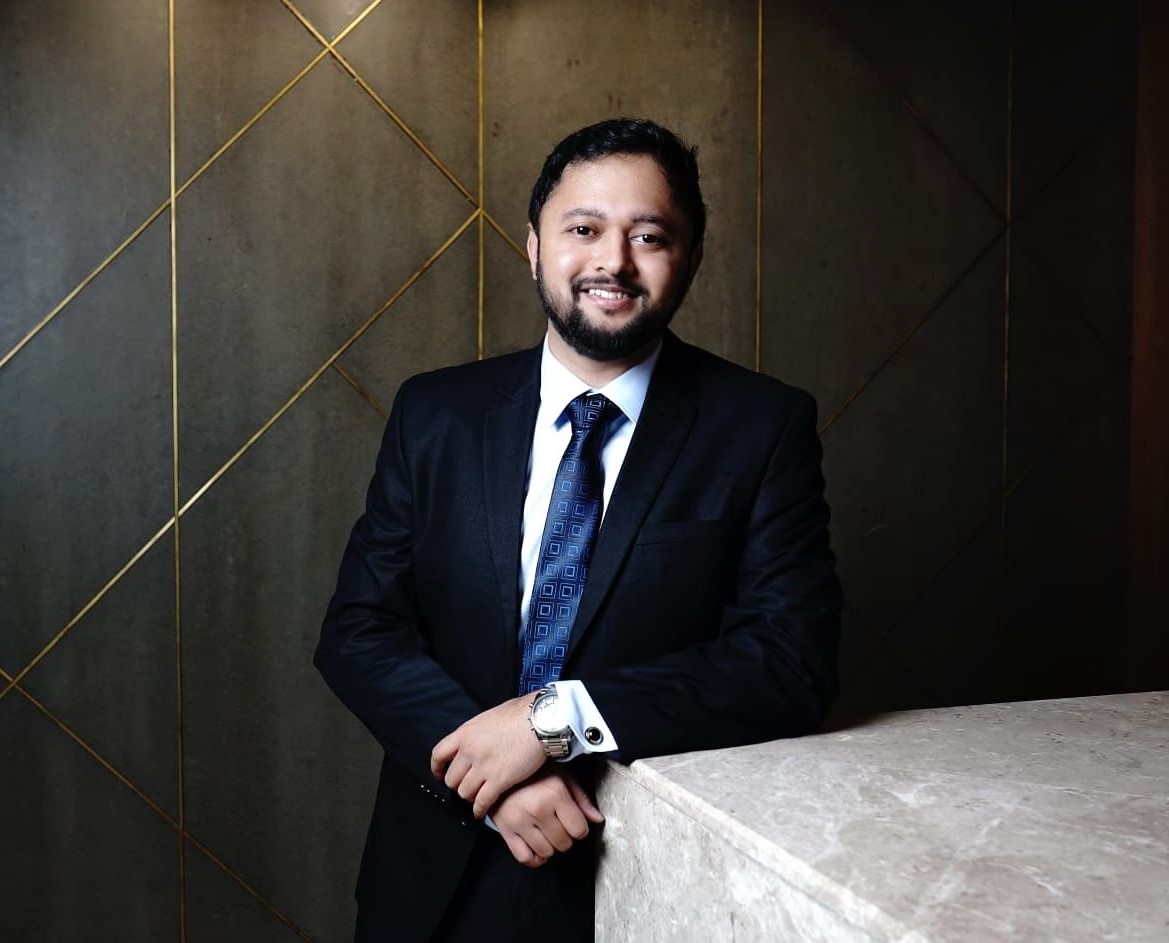
  • “The legal landscape has undergone some of the most significant changes in recent years, due to technological advancements and subject-specific specialization.”- Prashant Kumar, Advocate-on-Record, Supreme Court of India and Principal Associate at Dua Associates

    “The legal landscape has undergone some of the most significant changes in recent years, due to technological advancements and subject-specific specialization.”- Prashant Kumar, Advocate-on-Record, Supreme Court of India and Principal Associate at Dua Associates

    This Interview has been published by Pragya Chandni and The SuperLawyer Team
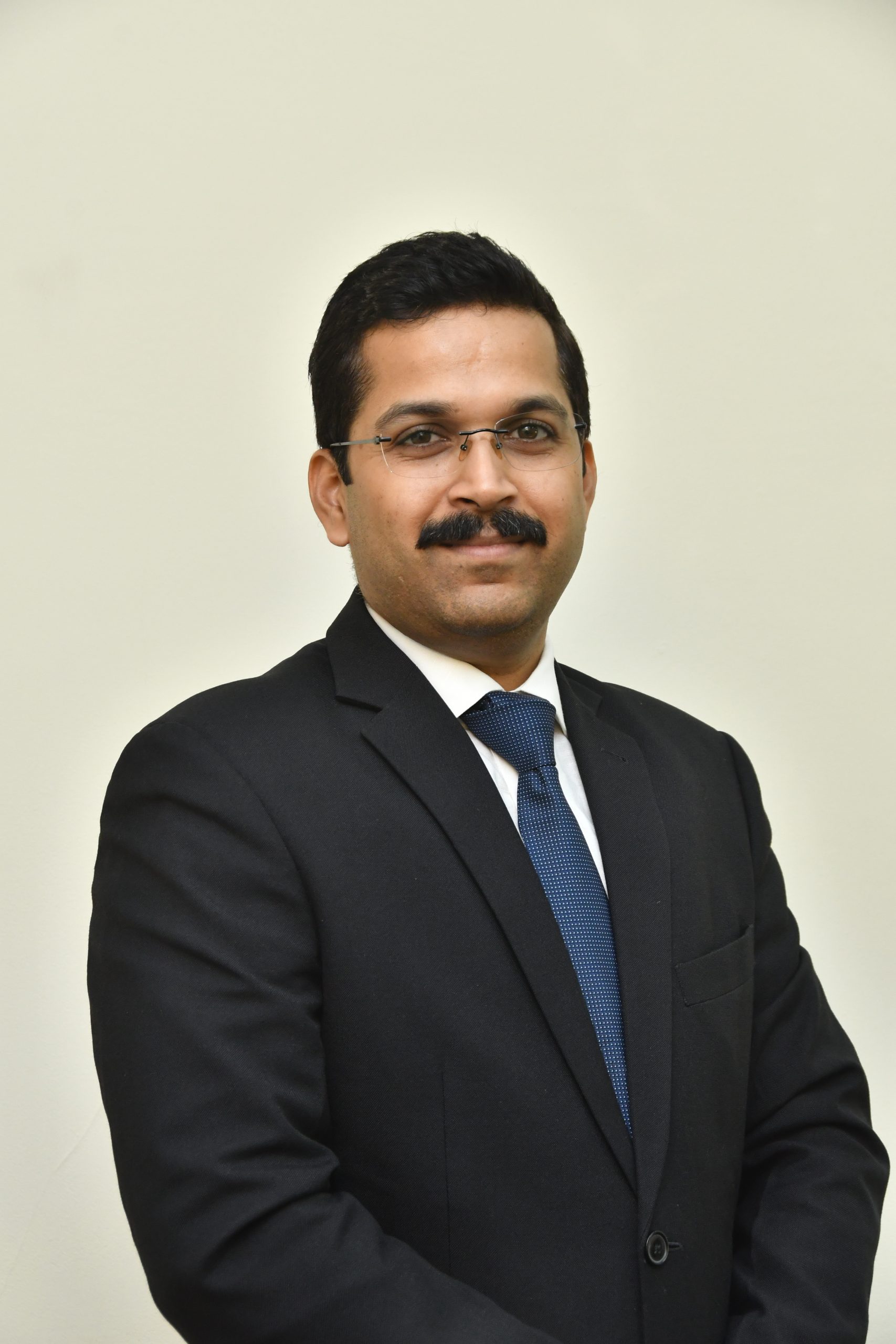
    Sir, could you please share your journey of how you ended up becoming an Advocate-on-Record at the Supreme Court of India and a Principal Associate at Dua Associates? What motivated you to pursue a career in law?

    The starting point of my journey with law was a matter of chance. During my school days I never imagined myself studying law, however, when I look back today, I think that joining law school was one of the best decisions which I took. I got through Gujarat National Law School, Gandhinagar in the year 2005 and started my journey in the profession in the year 2010 under the able guidance of Ratan Kumar Singh, Senior Advocate. Thereafter, I joined Kapil Sapra & Associates in the year 2012 where I dealt with multifarious works. Being a small set up, work was of different kinds, and the exposure there helped me understand the finer nuances of corporate commercial laws. In the year 2016, I joined Lakshmikumaran & Sridharan, where I dealt with high stake arbitration matters amongst others. Therefore, the exposure at this firm was of a completely different nature. In the year 2020, I joined Dua Associates as a principal associate and continue to work in this firm. I firmly believe that one must keep upgrading his skill sets to be relevant in the legal field. This belief led me to write Advocate-on-Record examinations and I cleared the same in my first attempt. I have enjoyed and learned immensely from different stints in the legal profession.

    With a specialization in commercial/civil litigation, insolvency laws, and alternate dispute resolution, can you discuss a particularly challenging or significant case you’ve worked on? What lessons did you learn from that experience?

    Every case presents a different set of challenges. Therefore, as a lawyer one must understand each case of its merits and treat the same accordingly. I started my practice with a strong foundation of civil, commercial and arbitration laws, which has helped me in dealing with other laws as well. With the advent of insolvency laws, the options available with the parties have increased manifold. Therefore, the first challenge which a lawyer faces today is to decide the right course of action in the given facts and circumstances. Whilst I have worked on various cases which have been challenging or significant, I have been recently involved in a matter before the National Company Law Tribunal, where I represented the financial creditor, in an application filed by the homebuyers, seeking to commence insolvency proceedings against a real estate developer, to which the financial creditor had lent money. Whilst the law is fairly settled, and in case the homebuyers meet the threshold and there is a default, insolvency proceedings should be commenced. However, I argued that the tribunal should not act mechanically and should see the financial health of the company, in addition to the intent behind the filing of the application by the homebuyers which can be fraudulent. I also argued that the interest of homebuyers who are not before the tribunal should also be considered before arriving at a final decision. The tribunal is yet to pass an order, however, this is significant because law is all about being creative within the realm of judicial precedents and legal principles. 

    As someone who appears regularly before various courts and tribunals, can you shed light on the dynamics of practicing law in different forums? How does your approach differ when dealing with cases in the Supreme Court compared to other fora?

    Every forum presents a different set of challenges, and a lawyer should be flexible to deal with such challenges in case one intends to practice before a different forum. By flexibility I mean adapting to the situation at hand. A lawyer who regularly appears before a district court has a particular way of dealing with the cases, however, the same may not be applicable with higher forums. Similarly, a lawyer who practices before the higher forums, will find it difficult to practice before the district courts. That’s why a lot of lawyers choose forums and stick to it. My approach is different because I have been associated mostly with chambers and firms. I started with district courts, tribunals and gradually shifted to high courts and supreme courts, and therefore had the benefit of knowing finer nuances of various courts practice. The best approach according to me is to stick to the basics, i.e., mastery over facts, reliefs sought and an understanding of the forum where the matter is listed. 

    Given your extensive experience in handling commercial disputes and arbitration matters, both domestic and international, could you highlight some key trends or changes you’ve observed in the legal landscape over the years?

    The legal landscape has undergone some of the most significant changes in recent years, due to technological advancements and subject-specific specialization. In addition, the legal profession is also moving towards a multidisciplinary approach, where there is an integration of legal services with other disciplines, such as technology, finance, and business. The areas which have seen significant change include information technology related laws, cyber laws, environmental law, arbitration law etc. In order to cater to the evolving laws and changing trends, a legal professional is required to be updated and focus on specialization. 

    Having dealt with cases across diverse sectors such as Oil & Gas, Infrastructure, Telecom & IT, Banking & Finance, etc., how do you stay updated on the intricacies of different industries? How important is industry-specific knowledge in your field?

    It’s very essential for a lawyer to be updated with latest legal developments and changes, especially in the areas in which he/she works. The way in which I stay up to date is by regularly reading legal updates online and offline. These days there are various newsletters being issued by firms, organisation which contains useful industry specific updates. In addition, I also attend to webinars and conferences, whenever the time permits in order to stay updated. Industry-specific knowledge is very essential in my areas of practice since different industries have different styles of operation. For example, a banking and finance industry has a different style of operation if one compares the same with an oil and gas industry. Therefore, it becomes imperative for a legal professional to deal with every industry after understanding and analysing the basic difference. Once there is a clarity on the basics, one can deal with the issue at hand with ease. 

    What role does advisory work play in your practice? Can you share an instance where your advice made a significant impact on a client’s case or decision-making process?

    Advisory assumes a great importance in my practice areas. Advisory does not only mean a written/oral legal advice, but it includes the day to day dealing with clients, and answering the queries, and extending support to them in the usual course as and when required. One of the opinions which according to me made a significant impact on a client’s case or decision-making process, relates to an analysis of attachment orders issued by district collector, pursuant to the recovery certificates issued by National Consumer Disputes Redressal Commission, and suggesting the future course of action. Pursuant to our thorough analysis and opinion, the attachment orders were quashed and the same was a big relief for the clients. 

    With over 13 years of experience in the legal field, what advice would you give to fresh graduates aspiring to pursue a career in law, considering the evolving nature of the legal profession? What qualities or skills do you believe are crucial for success in this field?

    My advice to a fresh graduate aspiring to pursue a career in law is to focus on the basics first. One can excel in the field and do specialization only if the base is strong. Secondly one has to be humble and have a humane approach. The legal profession is a noble profession wherein we have to deal with various human beings on a daily basis, therefore being humble is very essential. In addition, being sincere and meticulous also helps a lawyer in the long run. Also, having a commercial bent of mind is also important for a lawyer, especially for lawyers who deal with commercial disputes, arbitration, insolvency, corporate laws, and others. Constant upgradation of skill set is also required for a lawyer who wants to succeed in the legal profession. Lastly, one must be solution oriented and should have clarity of thought. This can only come through continuous learning and adapting to the situation at hand.  

    Get in touch with Prashant Kumar-

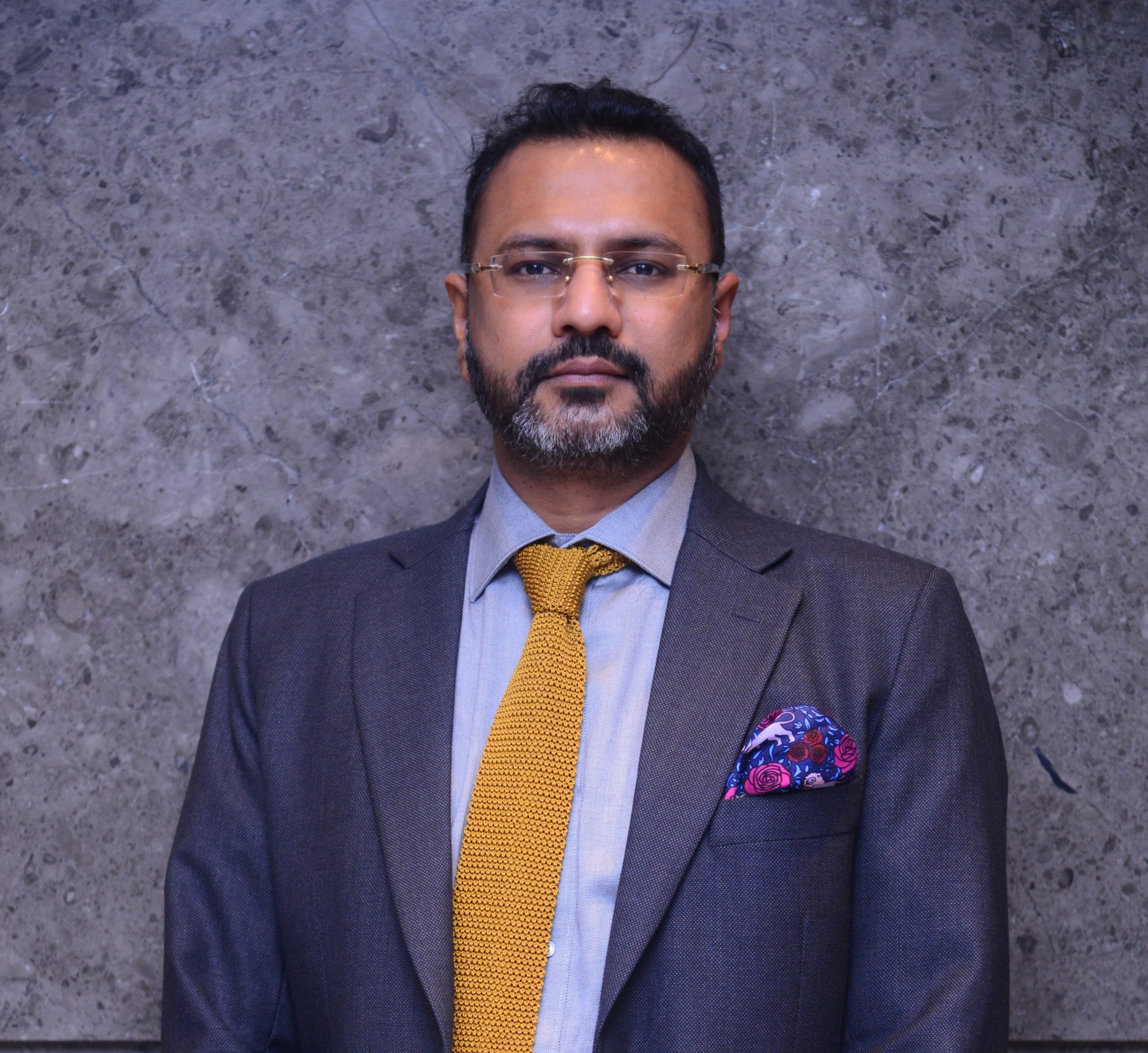
  • “It is extremely important to keep your head down and continue working hard at every stage of your career”- Pratiksha Mishra, Advocate-on-Record, Supreme Court of India

    “It is extremely important to keep your head down and continue working hard at every stage of your career”- Pratiksha Mishra, Advocate-on-Record, Supreme Court of India

    This interview has been published by Namrata Singh and The SuperLawyer Team

    Pratiksha, it’s a pleasure to have you with us. Could you start by introducing yourself to our readers, giving a glimpse into your journey from law school to becoming an Advocate on Record at the Supreme Court of India?

    I graduated from the Army Institute of Law in 2015. I began law school with the idea of venturing into the corporate/transaction side. However, during my early internships I realized that I enjoy litigation and foresee myself practicing in courts. This was largely because of the mentors I came across during the course of internships and, my senior and  very close friend from college, Niyati Kohli who really encouraged me to pursue litigation. 

    I started my career at the chambers of Mr. Balaji Srinivasan, Advocate on Record where I got the opportunity of independently handling matters before the Supreme Court and a variety of other forums such as the TDSAT, NCLAT and the NCDRC. The professional guidance and moral support I got from Mr. Srinivasan helps me with my work even today.  I must also mention that I had a wonderful set of colleagues at the chamber with whom a 7-day work week never felt burdensome. 

    Having worked at an AOR Chamber, appearing for the AOR exam had always been a priority. By the time I became eligible and appeared for the exam, I was at Khaitan & Co. Apart from everything else that goes for any other exam, appearing in the AOR examination also entails handling the pressure of the preparation process, alongside the responsibility of your regular practice. In my case, this entire process was relatively easier because my husband was also appearing for the exam the same year. 

    You’ve had an impressive career at Khaitan & Co. Can you share some pivotal moments or cases that shaped your journey and defined your focus in areas like IBC litigation, commercial and civil litigation, and arbitration?

    I joined the Delhi Office of Khaitan & Co after completing 3 years at Mr. Srinivasan’s chamber. Thanks to the firm and my seniors, Mr. Diwakar Maheshwari and Mr. Karun Mehta, I have had the chance to work on some extremely challenging and nuanced propositions. I got to contribute to several high-stake IBC disputes almost immediately after joining the team. Over five years of working with the firm have given me the opportunity to interact with and represent a variety of clients. One of the most valuable lessons I have learnt is the importance of understanding the commercial objective behind a litigation and coming up with a solution to achieve the same. 

    My expertise in areas of IBC litigation, commercial and civil litigation, and arbitration, essentially came from the work that has come my way during my time at Khaitan and Co. 

    Your practice involves a wide array of legal areas, including IBC litigation, commercial and civil litigation, and arbitration. How do you manage to balance such diverse responsibilities, and do you have a favorite among these areas?

    Irrespective of the subject matter, the way one approaches a case is largely the same.  Having said that, the procedural law followed in an IBC proceeding, an arbitration and a civil suit is very different. The style and structure of the pleadings differ from fora to fora as well. For example, a plaint/arbitration claim is starkly different from a petition under IBC which is largely as per a prescribed form.  

    I work with an extremely competent team of lawyers and support staff from the firm. They make managing the volume and diversity of work much easier. 

    I do not have a particular favorite area of work. I enjoy the pressure that the stakes of an IBC proceeding inevitably brings. At the same time, I find the process of initiating a suit/arbitral claim and seeing it through to its logical end extremely fulfilling. The rush of adrenaline that follows a good cross-examination is unmatched. As I have said earlier, I have been fortunate to have been exposed to a gamut of work. I hope that the same continues in the future. 

    As someone who has represented clients in insolvency proceedings, could you share an interesting or challenging experience that stands out in your career so far?

    IBC as a legislation has been extremely dynamic and fast-paced. There have been numerous cases where amendments to the law have been introduced having completely altered the course of a matter overnight. 

    Another great thing about working on a relatively new subject is that you get to test innovative propositions which have not been examined by the Courts before. I have found it extremely satisfying when arguments based solely on the reading of provisions of the IBC have been canvassed by us and accepted by the Court. The chance to contribute to the development of new jurisprudence in this manner has been both – the most challenging and the most fulfilling experience in my career thus far. 

    Looking ahead, what are your aspirations for the future, both professionally and personally? Are there specific areas of law or causes that you are passionate about and would like to contribute to in the coming years?

    Professionally, I hope to be able to continue doing good work and turn out as a well – rounded and reliable professional for my clients. Having worked on the commercial side for 7 and a half years, I hope to be able to make time for taking up pro-bono assignments in the future and to be able to somehow contribute to society. 

    On the personal front, it has always been an endeavor to maintain the right work-life balance and make time to pursue some hobbies outside work. 

    Beyond your legal pursuits, do you have any personal interests or hobbies that play a role in maintaining a work-life balance? How do you manage the demands of a challenging legal career while nurturing personal well-being?

    I have always enjoyed participating in physical activities such as swimming, running, boxing etc. I believe that taking care of your physical health, in a way, helps you also take care of your mental health. Setting aside, a few hours in the morning before work for exercise helps me decompress and prepare for the day.  

    For aspiring lawyers entering the field, given the competitive environment and long working hours what advice would you offer? 

    There are no shortcuts in this profession. It is extremely important to keep your head down and continue working hard at every stage of your career. Given that we spend most of our time around people we work with, it is essential to be inclusive and have a good equation with colleagues. Like I mentioned earlier, having a good team around you effectively reduces the stress of the long hours one has to put in.

    Get in touch with Pratiksha Mishra-

  • “A Legal Maestro’s Journey from Army Aspirations to Intellectual Property Mastery” – Explore the expansive landscape of legal expertise, ranging from Intellectual Property Rights to general litigation, An In-Depth Conversation with Aditya Dhar, Principal Associate at Vaish Associates

    “A Legal Maestro’s Journey from Army Aspirations to Intellectual Property Mastery” – Explore the expansive landscape of legal expertise, ranging from Intellectual Property Rights to general litigation, An In-Depth Conversation with Aditya Dhar, Principal Associate at Vaish Associates

    This interview has been published by  Priyanka Karwa and The SuperLawyer Team

    Can you share a bit about what inspired you to pursue a career in law and how you ended up specializing in Intellectual Property Rights?

    As an adolescent, I was actually always inclined towards joining the army as I was fascinated with the uniform and the discipline that comes with it. I had plans to go to Rashtriya Indian Military College (RIMC) for schooling but fate had other plans and that took a backseat as I grew up. As time passed, I had a young man’s realisation that I was soft spoken but always wanted to put forth my point. Being a lawyer, I felt, would give me an opportunity to channelize this desire. Being a lawyer at that time, or so I thought, meant being aggressive. I had a different view though. I thought that if I blend two extremes I would rather grow as an individual. So to answer your questions, it was my desire to grow as an individual that inspired me to pursue law. As a first generation lawyer, I did not have anyone to look up to and follow the same path. Since my first day in this profession, I was more than happy to wear different hats and try out different fields of law. Having said that I was always interested in the litigation part of the profession because, as I said, my opportunity to grow as a person would, at least in my mind, come when I was appearing before a judge and thinking on my feet. While I was exploring different fields of law, one of my seniors in my early days, from whom I have learnt a lot, had specialization in IPR and gave me opportunities to explore the field.

    Beyond the courtroom, we hear you’re quite the legal wordsmith. What inspired you to start writing legal articles, and do you have a favorite topic you’ve covered so far?

    I was told in the beginning of my profession that litigation has three basic pillars which are drafting, research and appearance before the courts. Fromday one, I had an inclinationtowards drafting part of the profession and was always interested in writing. My seniors always pushed me to write articles as they always said that articles are the best way to reach people and educate those who are not from legal background. It is also a marketing tool. You can never pick one topic, but my idea of writing articles is focusing on the basic principles of law which are easy to understand from a layman’s point of view.

    Your expertise spans a wide range, from Intellectual Property Rights to general litigation. If you had to choose one area of law that you’re most passionate about, which would it be and why?

    I may get criticized for this but it will be unfair to choose one area of law. My passion lies where the client’s need is. If a client’s need is initiating an arbitration proceeding, I would have to go with that. If the same client wants to file a criminal complaint, it is my duty to pursue that recourse as well. But before going into different domains of law, the most important thing is to gain the trust of the client by giving the client the desired results. Having said that, it impossible to cater to every need of the client and you need to broadly identify your strengths. Since you have put the “passion” question, it would be safe to say that the commercial side of the profession whether it is a commercial suit including IPR or any branch of it like arbitration or white collar crimes interests me the most.

    Being in this profession for the last 10 years and being associated with Vaish Associates since 2018, you’ve seen the legal landscape evolve. What do you find most exciting about the current legal environment, and are there any upcoming changes you’re particularly interested in?

    Needless to say that the legal profession is ever growing. The current legal environment is more commercial driven. The advent of commercial courts act and commercial courts have proved that future is more commerce driven. However, since the world of commerce has economic advantages, the courts do not want to indulge in unnecessary litigations. For this purpose, it has become mandatory before filing a commercial case to try and settle the case by filing a pre litigation mediation application which filters out such unnecessary litigations. The courts have also been reasonable in doing away with such mediation application if the court is convinced that the case in hand is urgent and that such application would hamper justice.

    Since we are talking about the commercial era, one cannot forget about arbitration. Recently, it has been held that by the Apex Court in case of NN Global Mercantile v. Indo Unique Flame that an arbitration agreement cannot be acted upon if the stamp duty on the said agreement is not paid. This has led the parties entering into an arbitration agreement to pay the appropriate stamp duty which was many a times not paid due to N number of agreements with different parties, and if the same is not paid on the existing agreement, courts have the power to impound the agreement. However, a seven judge bench of Supreme Court is reconsidering the said judgment, wherein order is reserved and the same is awaited as on date.

    It is interesting to see that how after covid, the courts are more digital friendly. Lawyers today have the option to appear before a judge sitting in the comfort of their home. Digital courts are established for taking up cheque bouncing cases. Court filings are done digitally. Trademark hearings are conducted through VC. Having said that, one may also argue that the profession has lost its charm by being digital and attending hearings through VC.

    Your educational journey, from Apeejay School to being a first generation lawyer and becoming a Principal Associate at Vaish, is quite impressive. Along the way, were there any mentors or role models who significantly influenced your career choices or approach to law?

    I feel mentors are not just people. Even situations can be mentors to you. As far as people as mentors are concerned, I would say that there are different kinds of mentors. There may be people who unknowingly help you on the way. Sometimes difficult situations are created by difficult people, but the important thing is what you can take from those situations and learn from it and treat that situation as a learning experience. In this profession, if you are a first generation lawyer, you have to be your own mentor.

    Beyond the legal realm, what’s a passion or interest you have that might surprise people? How do you incorporate this into your life, especially during busy periods in your legal career?

    People say that I am a good singer. We had a band in my school days and I was the lead singer in that. But now it is just a hobby and a way to entertain friends and family. Besides this, whenever I get time, I love being in the mountains close to the nature.

    Finally, what advice would you give to recent law graduates who are just starting their legal careers? What lessons have you learned along the way that you believe would be valuable for them as they embark on their own journeys in law?

    Be thorough with whatever task is given to you. Remember devil lies in details. Choose your strength amongst the three pillars of legal research, drafting and court crafting and play with it. Do not take for granted the other pillars. Be soft spoken no matter what people say about how a lawyer should be. Never let anyone guess what is going on in your mind. Sincerity towards your profession and towards the task in hand can take you places. Lastly, it is important to understand that in the present world, unless you can market what you create, your creation may become useless.

    Get in touch with Aditya Dhar-

  • As lawyers we ensure that as the business of our clients grow and as they diversify into different sectors or launch new products, their respective policies, compliances, and agreements in place are revisited and updated as required  to counter the different legal hurdles that they may be  subject to- Raghav Muthanna, Principal Associate at IndusLaw

    As lawyers we ensure that as the business of our clients grow and as they diversify into different sectors or launch new products, their respective policies, compliances, and agreements in place are revisited and updated as required  to counter the different legal hurdles that they may be  subject to- Raghav Muthanna, Principal Associate at IndusLaw

    This interview has been published by  Priyanka Karwa and The SuperLawyer Team


    Can you tell us about your journey into the field of law and what inspired you to specialize in technology, media, and telecommunications (TMT) and financial services regulation?

    There is this common saying that if one can’t do engineering or medicine in India, they end up doing law. While that may not necessarily be true for most people in our industry, to a large extent that does hold true in my case.  I am not going to say that I always dreamt about becoming a lawyer or that I was extremely passionate about the law, because that would be a lie. I was an average student at school, especially when it came to subjects like physics and maths, and so by the time I finished my Class 10th boards, I knew I had to end my misery and opt for commerce over science in Class 11. By opting for commerce, I had automatically ruled out engineering and medicine as career options, both of which till date, but even more so at the time, were considered the most sought after and ever green career prospects one could have. Thus, it was only in Class 12, after little deliberation, did I know that law is it for me, and that’s not because there was a lack of choice in the field of commerce, but it was what interested me the most out of the options I had in hand.

    My encounter with TMT was almost similar to that with law, it didn’t happen voluntarily, but like law, I am extremely happy that it did. I started my legal career as a general corporate lawyer who did anything from drafting and reviewing general commercial contracts to advising on complex regulatory queries, assisting with fund raise, mergers and acquisition and working on technology and employment law related work mandates as well. I spent a considerable time of my career especially my early to mid-years in the profession exclusively working on some very exciting and interesting PE/VC and M&A deals in different industry sectors. While I thoroughly enjoyed working on high value transactional work, after a certain point, for various reasons, I felt the need to explore new opportunities and seek change, which is when I was offered the opportunity to transition full time to the technology and corporate advisory practice group at my firm, where I have since, worked on some very interesting matters in the field of e-commerce, technology (specifically fintech and insure-tech) and data protection related mandates, while continuing to work on a lot of general corporate advisory matters.

    With over 9 years of experience advising clients in different sectors, could you share a specific project or case that had a significant impact on your career and the clients you served?

    It is extremely difficult to pin-point and pick one project or matter that stands out. There have been so many great projects that I have had the good fortune to be a part of. Some where the kind of work itself has been disruptive and cutting edge, while others where the work or business model in itself may not have necessarily been the most exciting, but the scale at which the business grew or the impact it had on the masses or the kind of targets such businesses may have met, despite the several roadblocks and hurdles it faced along the way, is what made such success stories extremely satisfying to watch. What in particular has been extremely gratifying personally is witnessing the meteoric rise and growth of several of the start-up clients I have been fortunate to work with as their external counsel. I have been incredibly privileged to have assisted several clients right from the days of their incorporation and seed investment to this date, where some of them have even gone on to become unicorns in such short spans of time. A few of the clients that I have worked or work with include Upstox, Groww, Google, Makemytrip, Mediassist, Air India, Licious, Big Basket to name a few.

    You have worked on a wide range of topics in the legal field, including data protection, cybersecurity, fintech, and emerging technologies like blockchain and AI. What drew you to these areas, and what do you find most exciting about them?

    It was never going to be easy to not be drawn into the revolution of technology playing out in front of me. Having grown up in a generation that witnessed the birth of laptops and mobile phones in India and the constant transformation of various technology and products, be it storage devices for instance- starting from floppy disks to CDs in the 90s and then to pen drives and hard disks in the first decade of the 21st century to now being almost entirely replaced with online servers and virtual data rooms and cloud storage services, where the need for an external hardware itself has almost been made redundant, technology in its various forms and facets have always peaked my interest. A decade ago, when I was in law school, I hadn’t even heard of the terms ‘Blockchain’ or ‘AI’,  let alone be interested in them, but today, I receive applications from law students across the country expressing their desire in pursuing a career specifically surrounding disruptive technologies like AI, blockchain, Big Data, Metaverse amongst others that were almost unheard of not too long ago. While many of these concepts are relatively new and have come into prominence only over the past few years, the pace at which technology and the legal landscape around it has evolved in such a short span of time, is extremely exciting to witness. The number of initiatives taken by the Indian government in the recent past, has played a major role in creating and supporting so many new age service offerings, which for me as a tech lawyer, consistently keeps me engaged, enthused and optimistic about the tremendous growth opportunity and potential that the tech space has to offer to the large digital consumer base in India, as well as the various stakeholders in the field, which includes tech developers as well as tech lawyers like myself.

    You have been recognized as a recommended lawyer by Legal 500 and a ‘Rising Star’ by IFLR1000 in the field of ‘Financial Services Regulatory’ in India. What do you believe sets you apart in this highly competitive and dynamic field of law?

    I would like to believe that the small recognitions and little success I have been fortunate to have witnessed thus far in my career is down to a lot of luck and hard work. Sometimes you need to be lucky to be at the right place at the right time, under the right circumstances and to be exposed to the right opportunities, for things to work out, and I believe I have been fortunate that way. Luck will however only take you so far without hard work, dedication and ambition. As cliché as it may sound, there really is no substitution to hard work. All of that said, the recognition and success would not have been possible without a strong support system at the back end, whether it’s a team that makes you look better than you are, family and friends who have to put up with you cancelling plans or constantly cribbing, or even clients that have been very supportive and generous with their feedback and wishes over the years. I have also been blessed to have had great mentors along the way, each of whom have in some way or the other played a major part in shaping my career and ensuring where I am today. I have also been fortunate to work with some excellent lawyers both in the organisations that I have worked with as well as counterparts on various matters, most of whom have inspired me in some way or the other.

    Your work includes policy and advocacy initiatives, and you’ve submitted stakeholder comments on consultation papers issued by regulators. Can you talk about the importance of legal professionals engaging in shaping regulations and policies in the technology and financial sectors?

    I cannot stress enough on the importance of engaging with regulators on a regular basis. As a lawyer who advises several big and small companies in different sectors, I often see challenges our clients face when it comes to either launching a new product or taking decisions over some of their existing businesses, specifically in regulated businesses like insurance, finance, healthcare and education among others. This is largely because of the lacuna that remains around the operation of several new age businesses within the existing regulatory framework. This could be down to the regulators not having accounted or envisaged for the kind of business models and businesses that exist today, back when they formulated the law, or it could simply be on account of the rapid evolution of the business landscape outpacing the existing legal framework. Almost every service offering that is either provided in a regulated sector or offered in some way or form in connection with a regulated entity is either already regulated today or is proposed to be regulated in some manner. It thus becomes very important for the government to interact with actual stakeholders of a particular industry and vice versa, before a law can be passed so that each relevant stakeholder that is impacted by such law has expressed their inputs and concerns around the framework proposed to be brought in, before it becomes a law. As a consultant to several impacted clients/businesses and also independently as a lawyer that practices in areas that such law pertains to, we often engage in discussions with regulators either by meeting with them in person or writing to them either where we outline our views and provide our inputs and comments on the relevant bill/subject, while being mindful to ensure that the governments objective behind regulating such a business/subject in a legal and sound manner is not jeopardised in anyway. These discussions with regulators can go a long way in securing the interest of all the impacted parties, whether it is the customer, the business or any third person impacted by such regulations.

    Looking back at your career, can you share a particularly challenging or memorable moment that taught you a valuable lesson or significantly influenced your professional growth?

    You learn something every day in this profession. It could be learnings from mistakes you make at work or it could be adopting and applying something new that you have learnt, heard or come across during interactions with your peers or clients. A big learning on a non-professional front which ends up playing an important part in the long-term sustenance of your professional career would be on how to manage a good work life balance and yet deliver on expectations at work. That is still a work in progress personally for me, but I believe striking that balance becomes key to ensuring that you do not burn out and continue to be motivated in a field that is otherwise often associated with long work hours and a lot of hard work.

    You’ve advised start-ups, venture capital funds, and established companies. What are the key legal considerations that emerging tech companies should keep in mind, and how can they navigate regulatory complexities in India’s evolving legal landscape?

    Most clients I interact with today in the concerned space are extremely knowledgeable and fully ingrained even in the regulatory side of the business, which makes my job as a legal consultant easier as my work is sometimes reduced to validating their understanding of the regulated space. Such is the passion that new age entrepreneurs come with. That said, the law can be too complex for most people, which is why most of the bigger companies that we cater to are ably supported by a large group of advisors both inhouse and external (like us) while the smaller companies often rely on our expertise and advise to navigate through the legal complexities that remain in several industries. The legal landscape like you rightly pointed out is ever evolving with the changing business landscape. Accordingly, as lawyers we ensure that as the business of our clients grow and as they diversify into different sectors or launch new products, their respective policies, compliances, and agreements in place are revisited and updated as required  to counter the different legal hurdles that they may be  subject to.

    Get in touch with Raghav Muthanna-

  • The usage of technology and artificial intelligence to streamline legal processes and improve efficiency is a trend that will continue to grow- Rohan Sharma FCIArb, Principal Associate at Karanjawala & Company and Solicitor (England & Whales)

    The usage of technology and artificial intelligence to streamline legal processes and improve efficiency is a trend that will continue to grow- Rohan Sharma FCIArb, Principal Associate at Karanjawala & Company and Solicitor (England & Whales)

    This interview has been published by  Priyanka Karwa and The SuperLawyer Team

    Can you tell us about your journey into the field of law and what inspired you to pursue a career as an Advocate and Solicitor in both India and England & Wales?
    Coming from a generational family of lawyers, taking up law as a profession was a default option. However, after completing my graduation in Political Science (Hons.) from Delhi University, I initially dabbled in venturing towards doing something Information Technology or Business Administration, but not getting the college of my choice I finally decided to pursue law. By the time I made my decision, the entrance exams for both IP University and Campus Law Center, Delhi University were over, so I took up admission at Mewar Law College, C.C.S University. Looking back I regret that despite the opportunity I never interned with any law firm or Advocate during my studies at the law college. 

    After completing my graduation I read law in the chambers of Sr. Counsel Mr Arun Bhardwaj for almost 6 years and practised both on the Civil and criminal side during which I had secondments with both English and Singapore law firms, and then in 2013 I joined my current law firm Karanjawala & Co, I am very grateful to Mr Raian Karanjawala who gave me the opportunity to sharpen my legal skills in my current firm which I call the “AIIMS” of legal practice, because of the sheer amount of diverse matters one gets to handle ranging from complex commercial disputes, PIL, writs petitions, etc to family disputes and one is exposed to the whole spectrum. My supervising partners, Debmalya Banerjee and Meghna Mishra, also deserve credit for their priceless guidance and mentorship.

    Credit goes to my father who encouraged me to become a Solicitor as after completing of LL.B., we discussed the possibility of doing an LL.M. However, I was not keen to do further studies, so he suggested that I should sit for the Solicitors conversion test and simultaneously work with either English or Singapore law firm for some time abroad to broaden my horizons. I qualified as a Solicitor after taking the erstwhile conversion test known as the Qualified Lawyers Transfer Test (QLTT) in 2010 and my experience working at Clyde & Co, London gave me key insights into the life of an English Solicitor. Following my secondment at Clydes, I had the privilege to join Rajah & Tann in Singapore where I worked under the current Chief Justice of Singapore, Mr. Sundaresh Menon SC, as well as Jainil Bhandari, Partner in Admiralty & Shipping, and Prakash Pillai, Partner in International Arbitration and then later on I continued my professional journey at Herbert Smith Freehills, under Mr. Nicholas Peacock, Partner in Arbitration.

    Just before the Covid 19 pandemic, I submitted my application via The Experienced Practitioner Route (EPR) to become a Fellow with the Chartered Institute of Arbitrators (CIArb) which is the world’s largest community of alternative dispute resolution (ADR) professionals, and in 2020 after review of my application and interview by the main office at London, I was inducted as a Fellow.

    With around 15 years of experience in civil & commercial litigation, arbitration, and corporate matters, could you share some key highlights or memorable cases from your career that have had a significant impact on you?

    Sure, let’s start in a descending timeline, in 2022, it is every lawyer’s aspiration to brief and assist Mr Fali Nariman, Sr. Advocate who had been on hiatus for quite some time, my chance to brief Mr Nariman came during the COVID pandemic in 2022 when Mr Nariman agreed to appear for Surat Parsi Panchayat Board before the Supreme Court who were seeking a traditional burial of Parsi Zoroastrian Covid-19 victims. From the initial preparation of the special leave petition to the final disposal of the matter, Mr Nariman even at the age of 94 is full of energy and spent a great deal of time and energy going through every document. Mr Nariman used to dictate numerous notes, which he used to consistently amend to make them as concise as possible for the Bench. My big takeaway is to consistently think about your case as with the passage of time you are able to articulate the material facts required for the applicable rule in a concise manner. 

    The culmination of a successful arbitration (Government Of NCT Of Delhi. Vs. M/S Shonkh Technologies ) that started from seeking an injunction (Section 9 of A&C Act Petition) against the termination order passed by the Transport Department, Government of NCT in 2013 against our clients- Concessionaires. Due to the sheer volume of documents we had to sift through and collate them in a logical manner in relation to our claims with the various Sr. Advocates that were briefed in the matter starting from Mr Gopal Subramaniam, Dr. Abhishek Manu Singhvi, Mr Sandeep Sethi, Mr Saurabh Kripal and  Mr Chinmoy Sharma, gave me a front row seat the manner in which the said Sr. Advocates muster and applied law to common facts, their legal strategy has been invaluable in my growth as a lawyer. The case is memorable as the client reposed faith in me and referred me to subsequent matters. 

    During my initial days of joining Karanajwala & Co I was marked on an ongoing writ petition against an Insurance Company that had unilaterally deleted rain cover for a cricket match and subsequently repudiated the insurance claim. After two concurrent findings by Delhi High Court that writ petition is not maintainable, we were able to successfully persuade the Supreme Court to set aside the concurrent findings. This case is memorable as we developed the parameters for invoking writ-large jurisdiction concerning insurance policies, rather than resorting to alternative remedies.

    I have had the best time working at Barlow Lyde & Gilbert now known as Clyde & Co and I express deep gratitude to my supervising partners Mr Richard Black, Eurof Lloyd Lewis, Patric McGonigal, Jeb Culow and colleagues Lyall Hickson, Leon Alexander and Kenzia who involved me in their matters, encouraged me and were patient in clarifying my numerous concerns. 

    During my tenure in the Marine Energy & Trade department at Barlows, Mr. Black engaged me in the Elektrim SA v Vivendi Universal SA case, which was a multi-billion-euro dispute ranked by American Lawyer magazine as the 11th largest arbitration in the world in the year 2008. As this matter had only a limited number of associates involved due to its focus on insolvency issues and compliance with EU Regulation No. 44/2001, rather than shipping-related disputes. So Mr Black involved me and I had the chance to undertake various tasks preparing notes for the hearing, from drafting witness statements & procedural applications, bundling & filling, attending conferences with Barristers and Kings Counsels such as Gabriel Moss KC, Richard Millett KC & Julian Kenny KC, court hearing, etc.

    I recall that in one of the hearings before the Commercial Court, Royal Court of Justice, Mr Toby Landu KC who acting for the Vivendi Universal SA during his submissions quoted from the book- EU Regulation on Insolvency Proceedings which was incidentally authored by Gabriel Moss KC who was leading us in the same matter which lead to a series of amusing comedy of errors during the hearing.

    One of the other big matters- Congentra AG v Sixteen Thirteen Marine SA (The “Nicholas M”) in which assisted & acted for the Russian Charterer- Congentra AG against the Greek Shipowners-Sixteen Thirteen Marine SA who had instituted London arbitration proceedings and obtained attachment order in New York in support of their arbitration claim. We counterclaimed that the attachment order was wrongfully obtained and the injunction should be discharged. We were led by Richard Southern KC, Richard Walker KC and Anna Gotts. Leading up to the dispute the emails were exchanged from different parts of the world so to get a real sense of the timeline I remember we had to cross-reference each email with the corresponding UK, Russian and New York time. 

    You are the Director of the Federation of Indian Corporate Lawyers (FICL), a not-for-profit organization. Could you tell us more about FICL’s mission and the role it plays in the Indian corporate legal community?

    Yes, FICL (www.ficl.org.in) was incorporated during the Covid pandemic in 2020 as a not-for-profit company. FICL’s vision and mission are centred around becoming the leading advocate for corporate lawyers in India. We aim to facilitate the sharing of legal expertise among the Indian corporate legal community while promoting the highest professional standards and offering valuable developmental opportunities for in-house lawyers and legal professionals in India to enhance their skills and expertise. To that effect, FICL released “FICL Code of Ethics & Standards of Professional Conduct for In-House Lawyers’ ‘ (“FICL Code”) during its Inaugural “FICL 1st Corporate Lawyers Summit 2022 held in New Delhi. FICL Code aims to provide general guidance on the ethical and professional standards to the In-house corporate lawyers community in India. 

    This year Justice Navin Chawla (Delhi High Court) released the results of India’s first “Survey on Dispute Resolution in India” undertaken by FICL & Centre for Trade and Investment Law (CTIL) during FICL’s annual one-day conference “DELHI DISCOURSE 2023”. FICL signed a Memorandum of Understanding with the Singapore International Arbitration Centre (SIAC), Beihai Asia International Arbitration Centre Pte Ltd (‘BAIAC’) to promote international arbitration as a preferred method for resolving international disputes. FICL also supports seminars of ICC, SIAC, IPBC, ACGC, Singapore Academy of Law, АРАС, etc for wider reach and participation of key stakeholders. 

    In 2022, you were recognized as one of the Forbes Top 100 Individual Lawyers in India and received the Lex-Falcon Global Award for Outstanding Achievements in the Legal Industry. What do these recognitions mean to you, and how have they influenced your career?

    These recognitions hold immense personal and professional significance for me, as they validate the dedication and effort I have invested in my practice. They serve as a powerful motivator and a source of pride, not only for myself but also for my team and my current colleagues Kartik, Nicholas, Anmol and Shreesh who have supported me along the way. Moreover, these accolades have had a substantial impact on my career trajectory. They have enhanced my professional reputation and opened doors to new opportunities. For instance, they have facilitated networking with like-minded professionals, leading to collaborations and partnerships that have further enriched my work.

    Your professional journey has taken you to law firms in India, London, and Singapore. How has working in these diverse legal environments shaped your perspective on the practice of law?

    I consider myself fortunate to have had the opportunity to work in diverse legal environments, which has greatly enriched my legal skill set. For example, in the UK, it is common for English Solicitors to engage in settlement negotiations and discuss the merits of a case without prejudice before it proceeds to a hearing, as the prospect of bearing actual and punitive costs in the event of loss weighs heavily on the parties involved. Likewise, I have observed that the legal practice in Singapore tends to be characterized by its clinical and direct approach. All in all, my experience of working in leading law firms across different parts of the world has provided valuable insights into their approaches and behaviours in different situations. 

    You’ve been involved in a wide range of legal matters, from representing corporations in arbitration to dealing with government regulations. Can you share some strategies or insights you’ve gained for effectively navigating complex legal landscapes?

    Whilst navigating disputes complex or otherwise, what I have learned is to develop a central theme like a tree trunk and then to categorise all the ancillary, supporting points like branches. This is also useful for complex legal issues where you can compartmentalize your key premises by using deductive and inductive reasoning methods as to why the court should rule in your favour. One should use a visual representation of a complex problem/ transaction by way of charts, diagrams or photographs which break down a big issue into bite-size issues which are easy to understand. 

    In drafting with the advent of cut-copy-paste, there is always an inclination to paraphrase and verbosity does not help either your clients or the judges so keep it concise. If you represent the Plaintiff- use active voice and vice versa for the Defendant. As mundane and time-consuming as it may be, make it a point to peruse through all the correspondence, documents, etc yourself and not solely rely on the client’s inputs.

    It’s prevalent for English solicitors to maintain a case diary/logbook, which basically is a notebook in which they pen down their case notes, client conferences, conferences with Barristers, coordination, etc which serves as a time capsule and it can be referred back for clarification, itemising memos, etc. This practice I believe one should inculcate.

    Can you discuss any trends or developments in the legal industry that you find particularly interesting or noteworthy, especially in the context of India and international practice?

    Technology Adoption: The Indian legal industry has increasingly adopted technology solutions for tasks such as e-filling, document review, research, case management, VC hearings, etc in the aftermath of the confinement during the COVID-19 pandemic. The usage of technology and artificial intelligence to streamline legal processes and improve efficiency is a trend that will continue to grow.

    Entry of foreign law firms in India: The much-awaited entry of foreign law firms this year by BCI is a big development that has happened this year. As these foreign firms establish a presence in India, a demand for local legal expertise in areas such as transactional and corporate law, JV, M&A, intellectual property, contract drafting, etc would emerge. The inclusion of foreign law firms in active participation in arbitration cases in India in form of either venue or seat will contribute to India’s potential to become a prominent international arbitration centre akin to London and Singapore. Simultaneously, this would open doors for Indian legal professionals to engage in arbitration activities abroad, presenting substantial prospects for them.  

    Alternative Dispute Resolution (ADR): India is ranked the fifth-largest economy in the world which is fuelled by mega infrastructure projects, Services, IT, manufacturing, etc. Consequently, the momentum of this booming economy often translates into an increase in commercial disputes. Resolutions of commercial disputes through arbitration and the newly enacted The Mediation Act are popular ADR methods. Furthermore, making India the hub of International Arbitration has been one of the pioneering initiatives of Prime Minister Shri Narendra Modi. So I do see a huge potential in this area.

    Finally, as someone with a wealth of experience and achievements in the legal field, what advice would you like to give to fresh graduates who are just starting their legal careers and are eager to make their mark in the profession?

    I am reminded of what a KC said to me when I was delivering hearing bundles at his chambers he asked “What is the similarity between mushroom and trainee solicitor” after a few moments he replied, “Both are kept in the dark and fed shit”. My advice to recent graduates is to prioritize the finer details, such as organizing paperwork in accordance with court records and staying in regular communication with your seniors regarding case progress or when things go south. These are the qualities that will make you stand out and your Seniors will entrust you with greater responsibility. Make a habit of writing legal articles periodically. The rest is about embracing your legal journey with a touch of humour and paying attention to your mental health. 

    Get in touch with Rohan Sharma-

  • In law, never comes a day, when you can say ‘I know it all’ – and so is probably in every field, so keep learning everyday and keep updating yourselves- Vidya Sunderam, Principal Associate at Cyril Amarchand Mangaldas

    In law, never comes a day, when you can say ‘I know it all’ – and so is probably in every field, so keep learning everyday and keep updating yourselves- Vidya Sunderam, Principal Associate at Cyril Amarchand Mangaldas

    This interview has been published by  Priyanka Karwa and The SuperLawyer Team

    Ma’am, please tell us about your journey and how you ended up pursuing a career in law? What motivated you to choose this profession?

    I come from a non-lawyer background. After finishing school, I was almost about to join Delhi University for a degree in economics when my mother suggested me to attempt giving entrance for law. I went ahead, gave a few entrance exams (no CLAT back then), got admission in a couple of law schools and joined Amity Law School (GGSIP University) as it was in my hometown Delhi. It took a few semesters to know ‘law’ as a subject and then internships to know how it is practiced. Back in law school my subjects of interest were company law and IP, and when I started writing blogs while in law school, I started enjoying these subjects so much so I pursued corporate laws since then, with an inclination towards commercial contracts. 

    Your field of practice includes general corporate, M&A, and corporate advisory. Can you explain your role and core practice areas in more detail? What kind of work do you typically handle within these areas?

    General corporate as a practice area is vast. My core practice areas are handling acquisition transactions, domestic as well as cross border, both from sell side and buy side – this would include conducting due diligence (on the target or a vendor diligence), handling transaction documentation; handling disinvestment transactions; advisory and structuring foreign investments; advisory on a wide range of corporate and commercial law matters for listed and private companies, including company law and SEBI regulations with core focus on regulations on listing, insider trading, and takeovers.

    Transaction structuring and drafting transaction documentation seem to be a significant part of your expertise. Could you elaborate on the types of agreements and documents you typically deal with?

    Each transaction involves detailed structuring, which depends on a lot of factors such as the objective of the transaction, funding methodology, residency status of parties, legal restrictions including permits from regulatory authorities, tax implications etc. Once the transaction framework is finalised, parties proceed to execute the transaction documents (commonly referred as definitive agreements). It is preferable to first negotiate and execute a term sheet wherein the parties agree broadly on the terms and conditions, and follow up the same with detailed definitive agreements. The type of definitive agreements to be executed depends on the transaction – whether a share transfer, share subscription, asset transfer, business transfer, merger, demerger etc. I primarily handle transaction documentation for acquisitions and restructuring, for listed and private companies, and have also handled prominent disinvestment deals involving public sector companies. Transaction documents I usually draft include share purchase agreements, share subscription agreements, asset purchase agreements, business transfer agreements, joint venture agreements, business cooperation agreements, framework agreements etc., along with several ancillary documentation. The drafting style varies based on who you are representing, the objective, facts and circumstances of the matter, and seek protective provisions accordingly. 

     Due diligence is an essential task when evaluating a transaction. Which sectors have you conducted due diligence reviews for, and what are the key aspects you look for during the process?

    Yes, due diligence is an essential part of an M&A transaction and is highly recommended. It is only when a due diligence review is conducted, that an investor gets to know the target closely and can help negotiate the deal and include protective measures in the transaction documents. I have conducted diligence review on several companies engaged in sectors such as manufacturing, power, healthcare, FMCG; services; hospitality; IT etc. A legal diligence report is an encyclopaedia on the target’s legal compliance status, and typically involves a review of the target’s corporate compliance, contracts, licenses, employees, properties, intellectual property, litigations etc. Transaction document negotiations depend a lot on the outcome of the diligence. In a diligence, one highlights to the client any risks they may face if they into the transaction. It is very important to highlight solutions/ mitigation for each risk highlighted in the report without which the report is certainly incomplete. It is also necessary to ensure that diligence is completed in a time bound manner so that the definitive agreements are negotiated and executed taking into account any risks. 

    What advice would you give to fresh law graduates who are just starting their careers? What are some key qualities or skills they should focus on developing?

    Fresh law graduates must remember that first and foremost it is important to be and remain focused. Spend the initial years of your career in developing a deep understanding of your practice area and the laws relating to it. I know that in the initial few years, there are many lawyers who get confused on which practice area to choose. Now here comes the role of your seniors and also your patience. Be willing to explore, but be patient to learn and put in 100% effort. If you still think you need a change, do that, provided you again put in 100% effort. In law, never comes a day, when you can say ‘I know it all’ – and so is probably in every field, so keep learning everyday and keep updating yourselves. What is also important is to never get disappointed. It is a long journey and there is space for all. Some key qualities or skills if you ask me are: discipline, willingness to learn, updating yourself every day, hard work (also smartwork), being a team player, and time management. To all the fresh law graduates – keep up the enthusiasm and yes, you have chosen a great profession and you are going to get into a great professional journey.

  • Road Less Travelled: Journey of Advocate Lalit Suryavansi in the IPR domain

    Road Less Travelled: Journey of Advocate Lalit Suryavansi in the IPR domain

    This interview has been published by Priyanka Karwa and The SuperLawyer Team

    Being a science student, and then choosing law, what was the idea behind?

    Great Question. Though I am used to this question and answering this question every other day. Actually, this science and law cocktail was not planned. In fact, Law was something I never imagined I would be pursuing. I did my graduation and post-graduation in technological streams and happily started working as an Engineer.

    Barring a few things, I was satiate with my carrier. As destiny had other plans for me, one fine day, I felt something is not right about my job and the kind of work I was doing back then. I started looking for other options and got to know about Intellectual Property Rights and prior art searching. The domain looked different and exciting, so I decided to switch my path and get into Intellectual Property. So, this is how I get into Legal domain, and in this journey, I qualified the Patent Agent examination. Later, I felt like having formal qualification in law, which led me to pursue LL.B.

    Please enlighten our audience about the initial struggles in your career and how you managed to overcome them?

    I’d rather start with initial anxieties. As I started my career as an RF engineer, and I was letting go my 3-4 years of job experience for something new called Intellectual Property, which, at that point in time, people thought to be some sort of real-estate business related endeavor, I had lot of disquiet in my mind, and I was in dilemma about the decision I was going to make. Plus, the baggage of what people would say if I failed. But my heart had already accepted it, so it pushed to me to make a bold decision and take that plunge, which I did, and I am elated to say that I made the right decision at that point.

    Of course, there were struggles, but I was very passionate about what I was doing and loved it so much that struggles never felt struggles, they felt like challenges, for which I was determined to go any lengths.

    What are the most important considerations to keep in mind when dealing with IPR and registering patent issues?

    Over the years, I have realized that inventors are mostly concerned about the outcome, i.e., the grant of a patent, not about the events that come along the way of patent grant. I have experienced that most inventors, if not all, are interested in getting their patent granted, and they are either ignorant about the very-very important milestones that starts with patent application filing and end with patent grant/refusal.

    Let me give you a little more perspective, I believe prior art searching to be the most important thing in the patent proceedings, but inventors hardly show any enthusiasm to get it done. And those who consider prior art searching, they fail to understand why a prior art search is done at all, how it can contribute in shaping his/her patent application. Similarly, patent application or claims drafting is merely considered to be the patent agent job. Of course, it is as you are paying him/her, but I’d like advise that please do not recklessly depend on your Patent Agent and be actively involved in the events/proceedings—-Afterall inventions are inventors’ child, not Agents’. My intention is to make the inventors more inquisitive and interactive so that they know what is actually being done by their patent attorney, how the attorney is giving shape to claims, application, arguments, etc.

    IPR and other corporate sectors are evolving like never before, would you like to throw some light on the same? And according to you Lalit, what exciting opportunities it can create for our young lawyers?

    With government initiatives such as “Make in India”, “Self-reliant India”, push for innovations, and programmes like “Start-up India”, protection of innovations is seen as a necessity to compete in the market. With this patenting activities has increased many folds, and patent filing in India is rising at an unprecedented rate.

    As per the Economic Survey 2021-22, the number of patents filed in India has gone up from 39,400 in 2010-11 to 58,502 in 2020-21 and the patents granted in India have gone up from 7,509 to 28,391 during the same time. With so many numbers of patent filings, Patent Prosecution is rising, so is the Patent Litigation. Therefore, one can easily infer the prospects for young professionals.

    Lalit, as per your experience in the legal field, how do you see the legal industry coming up with new concepts and creating exciting opportunities?

    With the constant push for digitization, arrival of faster telecommunication technologies like 4G/5G, invent of communication platforms such as Zoom, Teams, etc., alike every other domain, Legal industry is also witnessing rapid transformation. Everyone is now aware how virtual courts have started, how virtual hearings has transformed the way hearings were taken. If I specifically talk about the Indian Patent paradigm, Indian Patent Office (IPO) too has segued from offline system to online system. With conversion of physical hearings into into virtual-call-based hearings, paperless patent application filings, mandatory online filings for Patent Agents, and many other such initiatives, IPO has put in place a lot of new concepts/systems. So, newer opportunities are coming along, we just need the right approach and right temperament to grab said opportunities.

    What can be some of the toughest considerations while someone from a non-legal background has to see before opting law as a career?

    For someone from a non-legal background, the toughest consideration would be the time window for success. To make a mark in this industry, one must possess the tenacity to climb every rung of the ladder that leads to the success. As they say, there is no shortcut to be successful—legal domain is no different or alien to this saying.

    Lalit, what is a typical day like for you?

    Well, a typical day is typically typical for me. I get up around 6 AM. Do my daily chores by 8 AM and leave for office by 8.30 AM. Commute to office, reach there by 9.30 AM, and get lost in the pool of matters waiting my arrival. Leave office at 6.30 PM, reach home around 8.30 PM where my son and my daughter (twins) remain armored to welcome me with the showers of anecdotes, complaints, happenings, and everything in between from their typical day.

    Could you highlight some of your success habits that enable you to meet your goal?

    Never say no attitude’ and ‘to remain grounded’ at all the times are some of the attributes which I think play pivotal roles in anybody’s success.

    Lastly, what advice would you give to someone starting out?

    Keep your mind, eyes, and ears open for anyone and everyone—you never know who might give you the piece of information that can change your life forever. One more thing, everything progresses at its own pace, so never feel frustrated/agitated if something is not happening at your whims/desires—time and destiny will certainly make it happen for you if you are honest and keen about it.

    Get in touch with Lalit Suryavansi-

  • Kalpit Khandelwal, Principal Associate at Vaish Associates on venturing into law from a business background, the value of mentorship, and focusing on the present 

    Kalpit Khandelwal, Principal Associate at Vaish Associates on venturing into law from a business background, the value of mentorship, and focusing on the present 

    This interview has been published by Sonali Parashar and the SuperLawyer Team


    Coming from a business background, how did you gravitate towards the law? What other career would you have chosen, if not law? 

    From my early days, I was intrigued by the corporate world and wanted to be a professional instead of continuing my family business. As part of career counselling, law was identified as one of the professions’ I had the skill set for, maybe, due to my problem solving and persuasion skills. My parents always encouraged me and gave me full freedom to pursue any career of my interest. They supported me in all ways when I decided to pursue law as my career. Since my childhood, I was inclined towards computer games and also had an imaginative mind. So, if not law, I would have enrolled myself in a game designing course.

    It is said that getting a mentor is the first step towards attaining success. How true do you think the saying is? Do you think a mentor plays a crucial role in the growth of a person? What type of mentor would you suggest for a law student?

    I completely concur with the above saying, indeed I was lucky enough to get mentors in my life who had seen more talent and ability in me than I myself would have seen and helped in bringing out the same. They gave me an opportunity to work and assist them on big-ticket and complex transactions at a very early stage. I was made part of each and every phase of the transaction from the very beginning of my career so that I could learn in its entirety. I truly believe a saying that mentoring is a brain to pick, an ear to listen and a push in the right direction. In my view, every law student should have a mentor who is approachable, non-rigid, a good listener, non-judgemental, eager to invest in others, able to give honest and direct feedback. I am also fortunate enough to become a mentor for other law students now by becoming a mentor at Mentorology.     

    Litigation is notoriously time consuming and unpredictable. What changes according to you should the litigation sector imbibe to truly turn into the fundamental learning place for an advocate? Is struggling in the litigation sector worthy of effort? 

    In my view, one of the perennial reasons for excessive delay in delivering judgements is the ease of adjournments. Although Supreme Court had advised and Civil Procedure Code has enough provision for the imposition of realistic costs for every adjournment, costs are rarely imposed and therefore, litigants and their counsel think nothing before asking for an adjournment. Further, the registries of the courts are tasked with the judiciary’s administrative functions. Administrative support functions needed by the judiciary, identification of process-related inefficiencies and advisory on legal reforms, should be delegated to a specialised professional agency that has administrative expertise, specialisation, modern management practices and technologies. Also, a massive house-cleaning exercise in every single court to identify cases that are infructuous or not worth pursuing will surely reduce the pendency of legal cases. Indian legal system is also required to adopt technology and artificial intelligence in every phase of functioning. 

    Most of us struggle with pursuing different courses at a time but you pursued the Company Secretary course and Master in Business Laws while you were pursuing your law graduation. How did you manage to pull it off? Can you tell us a bit about your study pattern, and would you like to share a few tricks to ease the learning?

    The mantra I always used to sing while studying is to read as much as possible and re-read it at regular intervals. Always remember, play when you play and study when you study. Being focused in every moment is very important and challenging at the same time in today’s age of cell phones and tablets. Underlining keywords with different colours and complementing the study notes with mind maps will surely reduce the time in memorising the legal concepts. One should also inculcate a habit of reading bare acts, being the holy water of law, and judgements from college time itself. 

    You worked for almost 9 months as a Paralegal at ARA LAW, a boutique law firm and later you were handed a PPO. Can you share about your job responsibilities of both while you were a Paralegal and later on when you landed the job?

    I was never a morning person until I joined ARA LAW and used to reach the office an hour early. Every day before office hours began, I used to read the latest updates to existing laws, important judgements, legal news, etc. and used to discuss the same with my seniors, as keeping abreast with the rapidly changing corporate legal environment is essential for any lawyer. As a paralegal, I also used to research, attend and take notes of the calls/meetings, proofread agreements and make summaries of agreements/documents provided by the target entity for due diligence purposes. I have always believed in doing work diligently and sincerely without thinking much of the outcome. My work spoke for me and as a result, I was offered PPO by ARA LAW. As a lawyer, I used to assist my seniors in drafting and revising the transaction documents, preparing the due diligence reports, drafting legal opinions, etc.   

    Can you tell us a bit about your current job role and responsibilities? 

    As a transactional lawyer, I wear several hats in the process of working through a deal i.e. an advisor, mediator, negotiator and drafter. I provide advice on matters relating to M&A, strategic alliances, regulatory aspects, etc, prepare reports and opinions on diverse corporate matters relating to Companies Act, FEMA, SEBI regulations, stamp duty, etc., handle legal due diligence exercise, negotiate the transactional documents, drafting, vetting and execution of all the transactional documents. One of the biggest challenges and at the same time, most exciting aspect of M&A practice is that your schedule is exceptionally uncertain and highly variable in terms of intensity. I am fortunate enough to lead a team of associates who are extremely capable and flexible enough which makes my life easy when we are faced with an accelerated deadline. 

    You have led several acquisition deals like Patanjali’s acquisition of Ruchi Soya, acquisition of Innov8 by OYO, Lemon Tree’s acquisition of Keys Hotel and more. What were your key experiences/takeaways from these acquisitions?

    The sound understanding of commercial and business complexities besides the legal intricacies of a long-drawn M&A transaction and precisely communicating the same to the client as well as the other side while negotiating the deal is a bedrock skill that cannot be dispensed with. Further, a corporate lawyer is expected to think and reach with the same sense of adventure as that of his client as in the corporate world, there is no decision making without an element of risk. At times, in M&A transactions, you are faced with seemingly insurmountable obstacles wherein you have to train yourself to not merely focus on the specific issue at hand but also you have to consider every possibility, never being dismissive of anything and think out of the box to steer your client through the M&A deal. Further, we need to be highly responsive to clients and comfortable with interweaving work and personal life because of the technology we have today.

    What will be your parting message to our young lawyers?

    I have heard several times from young lawyers that they ‘do not understand’ their seniors or ‘have no idea what is going on’. Bizarrely on the same knot, they also shared that they do not address their queries and issues with their seniors. Establishing an open channel of communication with seniors would certainly help you in setting the work environment straight. These seniors can also show you the ropes and take you under their wings. As young lawyers, we are often driven to learn as much as we can and as fast as we can. Blinded by the thirst to improve, often we find ourselves volunteering to take on voluminous tasks which we may not be able to execute effectively. In case you find yourself in such a position, speak to your superior in advance, instead of attempting to move mountains in a short span of time. At the same time, remember always that the grind in the early years will pay off in the long years ahead in your practice. Focus all your energy on working hard. Attention to detail is also indispensable for any corporate lawyer as small mistakes could significantly cost a lot to your clients (and your organisation) and therefore, it is an absolute must for you to work on this quality from the start. 


    Get in touch with Kalpit Khandelwal: