Tag: PU

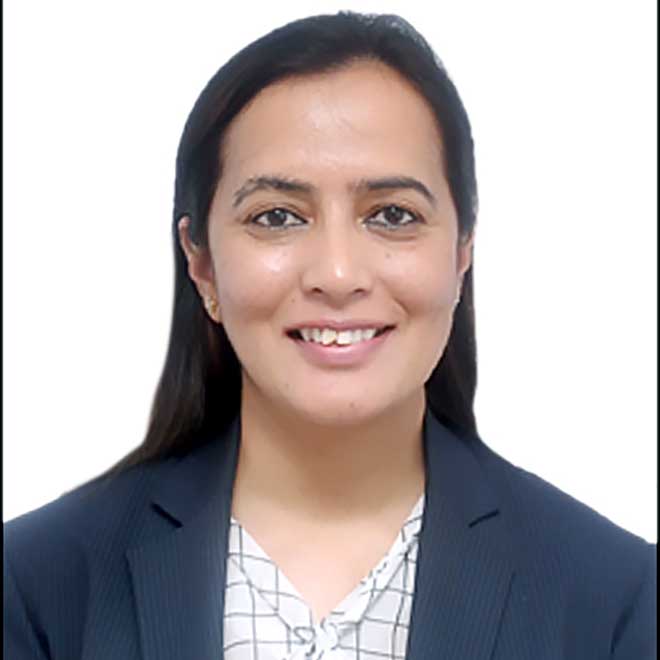
  • Roop Loomba, Co-founder and Managing Partner, Loomba Legal Services, on being General Counsel and her diverse experience

    Roop Loomba, Co-founder and Managing Partner, Loomba Legal Services, on being General Counsel and her diverse experience

    Roop graduated in law from Punjab University Campus Law School in 1999. She has over seventeen years of experience in Legal Operations encompassing Legal Strategy Planning, Litigation, Business Partnering, Compliances, Business Divestment, Integration, Demergers, Factory Compliances, etc. She is well versed with Civil, Criminal & Commercial Laws, Corporate Laws, Food Laws and Constitutional Law of India, Legal Metrology Laws, Labour Laws, Sales tax Laws, Competition Law etc. She holds the distinction of administering legal operations across the Indian sub-continent including South Asian countries Like Sri Lanka, Bangladesh, Nepal, and Bhutan.

    In this interview we speak to her about:

    • Her time at Castrol India Limited, HUL, and Philips Electronics.
    • Her role as General Counsel
    • Her experience thus far

    Given that most of our readers are law students, how would you introduce yourself to them?

    Hello, I am lawyer by passion and I was just like any other student in college or University having stars in the eyes and dreams to fulfill. I always dreamt of becoming a successful and a respected lawyer. If you have a dream you will automatically work to fulfill it. So dream big and work hard to redeem it.


    What motivated you to pursue a career in the legal field? Do you come from a family of lawyers?

    I found Law as the most enabling, liberating and powerful profession. I always wanted to pursue a degree which enabled me professionally and  which empowered me not to depend upon a job to fulfill my professional desires.This is the one of the few careers which enables you to become an entrepreneur in your field. This profession also empowers you to secure other’s rights and do justice to the society which is very satisfying. I belong to the family of first generation lawyers, so have been a self starter and self driven.
     

    Can you share some memorable experiences from you time at law school?

    In our time, unlike these days, we did not have any structured internships. Hence, this deprived us of true mentorship. I participated in moot courts as I liked to prepare legal  propositions and argue the case. After passing out of Department of Law, Panjab University, I joined a chamber of a criminal lawyer in Chandigarh. I learnt some basics of court procedure from him.


    What was your first job out of law school? 

    I started as a practising lawyer and I quickly became a standing counsel of four Government corporations. I thought that a successful practice is a combination of Government litigation as well as your private clients. However even though I came up on panel of four Government corporations I was given meager work as nobody reposed trust in me as a youngster, I was constantly denied opportunities. The more struggle I faced more determined I became. I represented some private clients at the High Court level and my arguments were appreciated. I started teaching the Police officers on IT laws and IPR Laws in Bureau of Police research and development. This made me learn a lot. This also enabled me to develop a never say die attitude. My biggest learning in the profession has been dream big, work hard towards your dream and never lose hope. On the professional side the learning is give the best even in a weak case. If your opposite lawyer is a seasoned lawyer without being arrogant never get over -awed by his presence and use your presence of mind, that really works in courts.


    Can you recall your first time appearing in court, or a time you have argued a significantly important matter? 

    I recall many such events. The first time I appeared in a court was before the Hon’ble High Court of Punjab and Haryana. It was my senior’s matter and a bail matter under NDPS Act. The moment I faced the Judge I got very nervous even though I had prepared the brief I got blank. It was only after two to three minutes that I regained my composure and my flow of words and started addressing the queries of the Hon’ble High court. The bail was granted and I was extremely happy.

    I remember two writ petitions that I argued. One was under article 14 of Constitution of India where I argued the concept of equity and good conscience before Hon’ble Mr. Justice JL Gupta. I also argued a matter under Representation of People’s Act, for lowering the voting age in local bodu elections from 21 years (it had still not been lowered) to eighteen years. The matter was listed before the Hon’ble first bench and since the election process had already started, the Hon’ble court declined to interfere, this is when I used my presence of mind and argued that the Hon’ble court may interfere prospectively and not retrospectively. There was a packed courtroom. The Hon’ble first bench very graciously agreed and issued a notice instead of dismissing the same. They also had a word of praise for me which propelled my courage and morale. When I stepped out of the courtroom many of my seniors and seasoned colleagues complimented me for displaying good advocacy and saving the case from dismissal.


    How did you secure an appointment with Castrol? 

    During my practice days I had also ventured successfully into IP practice as one of the verticals of my Law practice. It was during this time that my Delhi based cousin sent me an advertisement for an IP Lawyer in Castrol. The advertisement had been published in Ascent of Times of India. Initially I declined as I was very passionate about my own legal practice. However, I still decided to appear in the interview and I cleared it. There were close to eight rounds of interview in Delhi and Mumbai as I was the first woman who was being hired for this role which was considered as a challenging role as I was responsible for driving the anti counterfeit strategy in the North region. There are organized counterfeit gangs. It was not an easy role however I would like to highlight a strong support from my seniors which was instrumental in performing my role successfully. One more thing worth highlighting here is a strong support from the family. Both my parents gave me rock solid support during challenging times and my extended family in Delhi which consisted of my cousins never let my morale dip. During testing times one has a tendency to quit and go back as I was putting up alone in Delhi and my family was in Chandigarh. However I decided to hang in and after some time I saw a smooth road ahead.

     

    How did your appointment at Hindustan Unilever happen?

    My name was referred in HUL as a very informal conversation that happened between two erstwhile colleagues at the airport. Apparently HUL wanted to appoint a lawyer in IP for head office in Mumbai, and one of my colleagues in Castrol referred my name stating that here is a lady who is good in IP. I think my name was referred on Tuesday and I was called to HUL office in Gurgaon for an interview on Thursday of the same week. My interview was conducted by none other than Mr. Saswata Dhar. However unfortunately somehow even though I was liked by the interview panel and was about to be selected the position went on a hold for some time. I was really excited about joining HUL and had also informed my family of my decision of shifting to Mumbai. I got very demoralized and disillusioned. However sometimes things happen only at the time they are destined to happen. In October of the same year (2007) I again got a call from HUL and I was interviewed by the Regional Legal manager and the Executive director Legal and the offer letter was rolled out.

    Joining HUL was like going back to the University as the learning curve was very steep. My job involved assisting the Regional Legal Manager, overseeing close to nine factories for their compliances and litigation, support to the regional leadership team.

    I think working on few issues with Mr. Rajesh Bagga, Mr. Saswata Dhar, Shantanu Sinha was a great learning experience. I owe my knowledge in Labour Laws to Shantanu, my overall approach to work to Mr. Rajesh Bagga (I still remember his advice, “Do whatever you do to the best of your ability and leave your mark in your work, you will be proud of yourself when you work hard and gain knowledge and success.”). I owe my learning in marketing claims cases to Mr. Saswata Dhar. Working with these people was inspiring and which further lead me to try to adhere to their advice as far as possible. The big organisations have many complexities in work and equal challenges for an in-house counsel, you are expected to ensure enablement of business and at the same time compliance with Laws. Also you need to work with speed and accuracy, hence you need to be on top of things. You are also expected to lead the external lawyers and not to be lead by external lawyers. My aspiration to grow and gain exposure in different industries made me take a decision to move from HUL. However I am still in touch with my erstwhile seniors.


    How did you secure a position at Phillips?

    During your professional career you make a lot of friends. This can only happen if you mean well for others and have clear intentions. Also if you are good in your job, your reputation spreads. I got only one job in my career through a job consultant. All my other jobs have been through a word of mouth for my work and domain knowledge. I was referred by a friend in Philips. Joining Philips in 2011 was a liberating experience. I was responsible for giving support to their Consumer Lifestyle vertical of business. I was responsible for giving overall Legal advice to the sector, for their compliances, for integration of the newly acquired company down south. I was also introduced into making Government representations for amendment of Laws by my senior. I owe  lot to my senior who was heading legal department Mr. Rajiv Wani, for polishing my performance as a senior counsel.

     

    You were involved in a demerger of a major company. Can you describe this process and the challenges you faced?

    Demerger of business was a learning experience and it was highly complex. The entire exercise involved separation of close to ten thousand contracts, obtaining various licenses timely across states and ensuring the continuity of business. I was involved in Demerger along with other responsibilities and was handling other projects, negotiations also. It was a high pressure job. However the management was very generous in appreciating and recognizing my work.


    Can you tell our readers about the general nature of work and responsibilities of a general counsel? 

    (Roop has been listed in the Powerlist of top 100 General Counsel list by Legal 500 for India.)

    In today’s world a General Counsel is expected to wear different hats at different times. You are expected to play a diverse and vital strategic role as opposed to some years back where a General counsel was expected to play only a role of a Legal advisor. Apart from being a key legal advisor for the company, today a General counsel is expected to have a keen business knowledge and is expected to play a role of business enabler along with being strictly responsible for over compliances. A General Counsel is also a member of many corporate committees and is expected to drive many other business strategies apart from just being a legal person.

    To be a successful General counsel one needs to have a very good domain knowledge because if you have domain knowledge then you can speak with depth. You can have a good domain knowledge only if you read a lot . You need to be practical and have logic. You need to be a strong individual and not a people pleaser. A General Counsel should always have the ability to stand up for things. A good GC always thinks out of box and does not toe the line. Above all a good GC should not often be falling back for advice from external counsels but should have adequate domain knowledge to lead things himself/herself. Last but not the least a GC should be upright, ethical and a person of words.

    My advice to young lawyers is to develop good domain knowledge, have curiosity of mind, be strong in approach , upright, and have a clarity of thought and a fearless approach.


    What made you decide to take the path of being a general counsel as opposed to working in a law office? 

    I was more inclined towards a legal practice than taking up a job because I am a fiercely independent person. However, as in my initial days, I was struggling to get business in practice, I had to switch to jobs. However I do not regret the decision even once. I have learnt a lot from all the orgaisations that I worked for. I met some very wonderful people who had a very positive impact in shaping me into an good individual and a professional.

    When you do your own practice you need to be on top of things as there is never a second chance. In a job you may still get a third or fourth chance of survival. In a job you are driven by a company’s strategy. In your own practice you are more entrepreneurial in your approach and way more creative. As an in-house counsel you think more diversely and dynamically than external lawyers to enable business. You clearly know where the business standpoint is coming from and you tend to understand business more.


    Did you ever consider pursuing higher education?

    If I was not employed with Castrol I was going to Glasgow for higher education. I think higher studies helps you to gain more knowledge. However, in my opinion, nothing can replace your learning on the job. Your professional career is steered to the extent of 80% by your on-the-job learning and only twenty percent by your higher education.

    However, each individual should exercise his free will in doing what he wants to do. No decision is bad, it is upon you to make your decision work. Only indecision is bad both for your health and for your career’s health. Always take a decision, own it and make it work.


    How do you remain updated with all the new developments in your fields of interest and practice?

    I have a very curious mind and unless I get into the root of a thing I just keep reading. For a lawyer curiosity of mind and reading habit keeps him updated. 


    Can you give our readers some advice on how they can improve the quality of their articles and generally increase their chances of getting published?

    I think one should be very structured in one’s thought when one starts writing. You can be structured in your thoughts if you have clarity of mind and thoughts. Hence, if you pick up any subject in law to write about, draw up a structure in your mind or a notebook, to ensure that one para logically flows from the other and there is no disconnect. Be objective and precise. It is all about clarity of expression and the rest is magic. Lastly, you must enjoy writing.


    What advice do you have for our readers who are primarily college students?

    I was also a student some years back, who came from Chandigarh without any formal experience, but I still made it. Key takeaways from my experience in life are be fearless in approach, clear in intentions with a good heart, never give up, there is always a smooth road after a road bump. Help others as always positive energy comes back to support you.
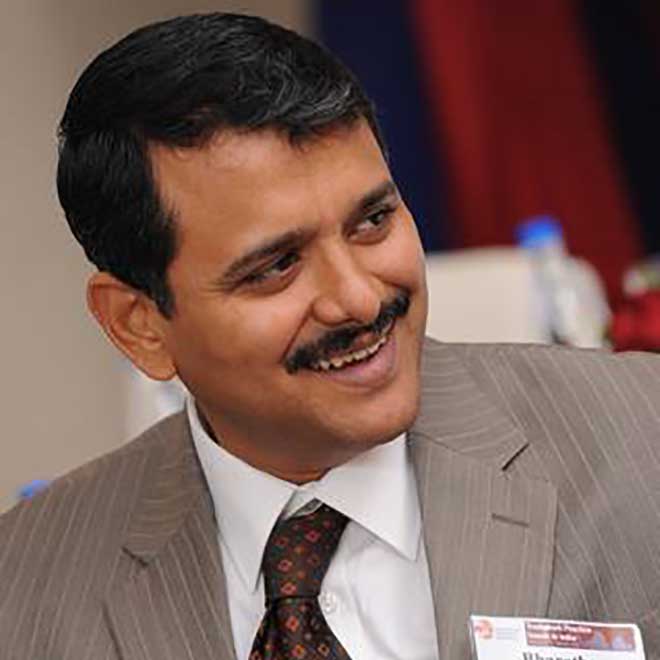
  • M.S. Bharath, Senior Partner, Anand and Anand, on the Indian IPR regime, and his diverse experience

    M.S. Bharath, Senior Partner, Anand and Anand, on the Indian IPR regime, and his diverse experience

    M.S. Bharath graduated in law from Pune University, batch of 2001. Bharath is a Senior Partner at Anand and Anand, India leads the Chennai City Office practice since June 2009. His practice includes Intellectual Property litigation before Indian High Courts, opposition, cancellation and other related proceedings before the Trademark Office, Intellectual Property Appellate Board (IPAB), Copyright Board and Geographical Indications Office. He has been the lead counsel in numerous appeals, rectification and original proceedings before the High Courts of New Delhi, Chennai and IPAB with several reported decisions to his credentials.

    In this interview, we speak to him about:

    • His time at law school
    • His role at Anand and Anand
    • His experience in IPR

    How would you like to introduce yourself to our readers?

    I am an intellectual property lawyer and a Senior Partner in Anand and Anand based in Chennai.


    Tell us a little about your days in law school.

    The days in law school (in Pune) gave me a hands on experience and exposure to diversity in culture, inclusiveness, collaboration and leadership. For want of hostels, we had to fend for ourselves including arranging for accommodation (which were in the 1990’s either homestays or apartments shared by at least eight to ten individuals), food (either by hiring a common cook or eat out from dhabas) transport and working on budgets. The absence of a structured placement cell compelled us to be innovative to raise monies, collate resumes of those who were interested, design and print a brochure, visit firms across the country to brand the institution and seek placements of the students as well.  Spearheading this initiative helped me gain operational skills but also with much needed exposure to the legal market and understanding of the differences in expectations and work cultures in cities such Bombay, Delhi, Madras, Calcutta and Bangalore as they were known back then.


    How important are grades, in your opinion?

    While grades are important they are definitely not critical. Most lawyers and firms seek law graduates who are committed, hardworking and above all uncompromising on integrity while grades as GPA’s are incidental.  I sincerely hope that students aspiring for a legal career do not seek out only for chances of landing jobs in top firms, as any firm one joins or sets up may soon be one.


    What subjects did you take particular interest in during your law school days?

    As a law student, Jurisprudence and Procedure Codes were quite appealing to me. While these subjects were not decisive in my career choice, they are  indeed the Grund Norm for daily practice.


    Who was your mentor, or main source of inspiration who motivated you all along the way?

    Personally speaking, there can never be just one mentor for an individual for it is likely to take away one’s individuality. I have had many individuals who have inspired me over the years including my father Mr. Subramanian, my late grand uncle Mr. Raghavan, both lawyers and my grandfather Ananthasubramanian who sowed the seeds of grit, independence, integrity, contentment, honesty; my wife Kavita who brought out the extrovert in me; Mr. Anand our Managing partner who continues to share his “Never say die” and “Never say never” attitudes, client handling abilities and vast wealth of IP knowledge; a dear friend and colleague Shamnad Basheer for getting me on board the IP world through Anand and Anand and inspiring many including me to care and share with initiatives such as IDIA (Increasing Diversity by Increasing Access). In fact I find inspirations even from interns and colleagues who bring new ideas and ideologies to the working table.


    What kind of internships did you engage in during your student years which you feel were invaluable to you in reaching your current position?

    It is important that as a student, one identifies their favourite subject and aspirational senior / firm / organisation early on to seek and undertake an internship. This helps both the student and the employer know each other on many levels. I was lucky to undertake an internship in Anand and Anand in the penultimate summer of my law degree. The month long program led to a pre-placement offer and next sixteen wonderful years here.


    How did you develop this keen interest in Intellectual Property Rights Law?

    The zeal to learn new subject and remain a multi disciplinarian drew me towards intellectual property laws. The profession of IP attorney is possibly the only one which touches upon varied subjects of law, arts, science and commerce and in some rare cases all at once. The graduation in commerce prior to law helped me blend in easier.


    What kind of activities did you undertake in law school that helped you nurture this interest in IPR law?

    It was the internship at Anand and Anand which gave me an insight into the world of IPR which am still discovering and exploring after sixteen years. Back in the day we hardly had exciting activities on campus unlike now to nurture interests in IPR.


    Would attending IPR conferences hold any CV value, or would you recommend them anyway for their academic value?

    It is easy to get lost in the host of conferences, which are being organised on IPR related subjects. Of late there are so many, that even practitioners find it difficult to pick the right one or to let go. It is best to seek guidance from seasoned practitioners on which ones are relevant to attend as a student or young practitioner. In any case, while attendance at these conferences may be of academic value it would not have much impact on CV!


    Please give our readers some insights on the leading Indian firms dealing in IPR law, and your recommendations for where and how to secure internships.

    There are quite a number of top quality IPR law firms in India currently, with most based in the cities of New Delhi, Mumbai, Chennai and Bangalore. It would be inappropriate to name only some.

    While most of these firms over the years have gained reputation on one or few verticals within the IPR regime, say trademarks or patents drafting or prosecution or IP Enforcement, there are only a few which are quite interestingly known as “Full service IP firm” excelling in all forms of IP and all forms of prosecution and enforcement. Choosing a firm to intern with is critical and ought not to be done for the sake of merely adding on to resume. Depending on one’s leaning and flair for a subject, firms have to be identified and applications for internship are to be sent in early on.

    In the recent past I increasingly notice students sending requests for being connected on social media such as Linked In and immediately follow up with requests for internship. Such tools are not only easier for students to better understand the organisation and the individual with whom they seek internship but also build a rapport even prior to the internship program.

    Despite all these initiatives, one needs to be lucky, and being lucky according to me is meeting of Preparedness and Opportunity. A person would not be lucky if despite being having an opportunity is not prepared to take it further ahead.


    Tell us about your work experience at Anand & Anand where you currently are a Senior Partner.

    Starting as an intern in 2000, last year I was invited to be a part of our firm’s Council of Senior partners. Early on as a trademarks attorney, I assisted in setting up the firm’s practice before the IP Appeal Board. After several appearances before the Trademark office and Appeal Board, I turned to be a litigator as well. Ever since moving to Chennai in 2009, the city office practice has blossomed well with a current strength of over fifteen members.


    What do leading firms that specialise in IPR such as Anand & Anand look for in prospective candidates for internships, retainerships or recruitment?

    While the love and flair for the subject is a given requisite, we look for candidates who innately put clients’ interests above all and work with high commitment, vigour, and ownership without compromise on integrity. As internship programs help us identify prospects, it is easy to differentiate those who come in only for adding claims on their CV and those who have the IP fire in the belly and eagerness to join us.


    Do you believe in the conception that there is manifest reluctance among law graduates to take up IPR law as there is a scarcity of job opportunities in this area of practice?

    Quite the contrary! With the boom in innovation, manufacturing and consumption in India, the need for IP attorney has gained significant importance and their need is sure to increase in the times to come. The IP field and as an industry has been steadily growing if not exploding in India recently. While there are quite a few IPR boutique firms which have blossomed recently, the Indian and multi-national corporations have also been busy setting up in house IP cells and departments, resulting in need for many IP hands at work.


    Do you feel that there are shortcomings in Indian IPR law that make the practice itself difficult? 

    Every country legislates laws suitable to its own historic, social, economic background each of which undergo change with passage of time. Indian IPR Laws are no different and are quite unique to the land. Practice of these laws and succeeding in it would directly depend on one’s ability to identify practical solutions to clients’ problems within the limits of these laws. There are no short-comings in either the Indian IPR laws or their practice. Innovation is key especially in practice of IPR law. We at Anand and Anand take pride in always staying ahead of the curve to come out innovative solutions to clients. For example one of the largest brewing companies was facing severe waste of resources, as they were one of the few players in the industry to introduce fresh bottles into the commercial stream. As beer bottles are a commodity which are recycled, other players were reaping the benefit of sourcing such bottles from recyclers without having to invest in fresh ones. A simple solution suggested by us of introducing distinctive bottle designs with the brand names embossed on it gave a two layered protection both under designs and trademarks, saving large sums of monies to the client.


    Is it necessary to have a background in General Sciences in order to pursue IPR studies?

    Not at all, though having a science background is indeed a great advantage. Science and Commerce are the Yin and Yang of IP. It is a rarity to find those who understand both the streams well but it is in the intersection of these two subjects where the hearts of IP and its practice reside.


    What moots would you recommend for an IPR law enthusiast to further their interest and what journals would you recommend for someone who’s hoping to get their work published?

    India’s first and most prestigious moot court competition on IPR is Raj Anand Intellectual Property Moot Court, which has had fifteen editions. It is considered the epitome of IPR moots and is a must attend to get a flavour of India’s best competitors mooting on the best IPR problems before the best judges, who are India’s leading IP practitioners and sitting judges of Indian Courts. More information on this can be found at http://ipmoot.org. I would encourage students to publish their work firstly in their own college journals and thereafter reach out to other prominent journals such as PTC (Patent and Trademarks Cases) MIPR (Manupatra IP Reports) which encourage and receive submissions from laws students and scholars. Spicy IP, the popular IP Blog founded by Shamnad also encourages students to be part of their eco system and community to present views and publish works as well.

    What general advice would you give our readers who aspire to stay at the top of their IP game?

    An IP lawyer advising clients on a variety of IP subjects has to necessarily understand their client’s business and commercial standing for each of the subject matters. While standing in their client’s shoes an IP attorney needs to have a perspective of subjects including accounting, statistics, finance, marketing, and advertising. Even if one is not a commerce or a science student there is a much needed foundation for an IP attorney to understand the panorama of how a business is run. To stay ahead of the curve think like a lawyer, science student, commerce student all at once while acting like a business woman / man!

  • Rajiv Kumar Jain, Legal Advisor, on corporate law, independent practice, and his experience

    Rajiv Kumar Jain, Legal Advisor, on corporate law, independent practice, and his experience

    Rajiv Kumar Jain graduated from Pune University, in 2009. Since then he has worked with Dhir & Dhir Associates in the capacity of Associate, with Sarthak Advocates & Solicitors in the capacity of Senior Associate, and with Poenix Legal as Corporate Lawyer. He is currently engaged in independent practice.

    In this interview we speak to him about:

    • Starting out on his own
    • His diverse experience
    • The corporate law scenario in Jharkhand

    How would you like to introduce yourself to our readers?

    I am a corporate lawyer currently based in Jharkhand. I have worked with and for/against various top notch law firms in India and abroad. At present, I shuffle between Delhi and Jharkhand and mainly focus in the state of Jharkhand to build a robust practice of corporate law and assist a young state with its strategic development.


    What motivated you to pursue law?

    Well, I am a first generation lawyer. I am the first person in the entire family to enter this profession. I belong to a hard core business family where people are born businessmen/businesswomen. Honestly, taking up law happened to me by chance. As a matter of fact it was my elder brother, Rahul Jain, who lured me to take this professional course by offering me a five year prepaid holiday against the condition that my results should not be compromised.


    Tell us a bit about your time studying law at Pune University.

    Pune is a relaxed place to live in where you have the feel of a metropolitan city and comfort of a smart city. Life in Pune University was filled with lots of fun, friends, bike rides and frequent trips to nearby places. Pune University offers rich culture, history and a variety of courses where you end up having friends from all streams. I had the privilege to be among a group of future lawyers, doctors, engineers, actors, and sportsmen. During my stay at a hostel in Pune with students from various backgrounds and courses, I had lot of opportunities in public speaking where addressing a gathering of 500 students was very frequent. This helped me a lot in developing my oration skills which I think is an important pillar of being a lawyer.


    Could you tell us about the internships you took up, and what you learnt from those experiences?

    I was blessed with a couple of grilling internships. During those days I used to think that interns are given menial odd jobs. But now, after being in the profession, I know how important they are. During my first internship in Kolkata, the first thing I was assigned was to stitch a file (the High Court of Calcutta still has the practice of stitching the file before submitting it to court) and at that time I wondered whether this even was required for a lawyer. Today, I know how important it was for me learning that also. Therefore I strongly advise all law students to go for internships seriously and take up each and every task assigned by the lawyers with an open mind. A law student should try and get as much internship as possible and should undertake them very seriously.


    What advice would you give students in avoiding a decision paralysis?

    Personally, I think a lot depends upon the student’s background. If a law graduate is from a law background, his/her parents are aware of hardships of the profession and therefore the burden of expectation or being able to take care of one self is reduced drastically. While litigation is a slow start, the corporate side of practice is much more lucrative in terms of pay. An average law student should always analyse (a) his/her family background (in terms of financial stability) and (b) his/her interest towards the side of practice he/she is inclined after undertaking four to five internships and then decide what he/she wants to do.

    As far as studying further is concerned, I would always recommend law students to be in the profession first for a couple of years and then decide whether studying further is required or not.


    Tell us about your early professional experiences at Dhir & Dhir.

    Well, I belong to the batch when there was almost negligible recruitment and more news of “pink slips”. This was the global economic slowdown period. While I was among the lucky ones to get campus placement, the formal offer letter never reached. While, the wait was long, I never stopped trying during the waiting period. It was not long before I had a couple of offers and after discussing with people in the profession, I decided to take up Dhir & Dhir under the then corporate litigation partner. I was happy with the role as it included both litigation as well as corporate exposure. This was the only reason I chose Dhir & Dhir among others, apart from Dhir & Dhir being a well-known law firm.


    How did you come to work with Sarthak Advocates & Solicitors?

    While I was working at Dhir & Dhir, I got to know that an ex-Luthra employee is setting up his own practice and looking for fresh talents. I thought there was no harm in meeting him and after meeting Abhishek Nath Tripathi, a thorough gentleman and an institution unto himself, it clicked and I started working with him. When I had joined Abhishek, we were working under the banner of Abhishek Nath Tripathi & Associates and Sarthak was formed in front of us. I have participated in every aspect of Sarthak, right from choosing logo of the firm, to the color of the wall, to the desktops, business card tone and texture, etc. Sarthak is and will always remain close to my heart. Every minute spent there is memorable and I have learnt a lot by working in Sarthak with the people who have worked and still working in Sarthak.

    On what parameters do you choose the projects you work on?

    I like working on challenging assignments, but I take work as it comes. I give importance to all work and give my best to each and every work.


    What prompted you move to Phoenix Legal?

    Sarthak is a small size law firm and Phoenix Legal is much more established as compared to Sarthak. Before joining Phoenix Legal, I was very clear that working with Phoenix Legal would give me exposure to complex and big ticket transactions and would require much more hard work. I was lucky to work with Mr. Saket Shukla whose expertise lies in working around complex and big ticket transactions.


    What are the challenges and learning opportunities that you encounter as an independent advocate?

    Being a corporate lawyer (which is still a new concept in most of Jharkhand and most of the developing states of the country) is very challenging to convince corporate houses and enthusiast individuals in Jharkhand about its usefulness. Most of the work of a corporate lawyer is catered by established Chartered Accountants in this part of the country. Established corporates find it difficult to understand the use of a corporate lawyer when they have their Chartered Accountants handy. However, things are changing and after a lot of convincing and explaining the advantages of a corporate lawyer, and how it is different from Chartered Accountancy.


    What are the areas of law that you are looking at as part of your independent practice?

    As part of independent practice, I am taking up everything that is coming my way (as long as the quality is not compromised). I am keen on setting up robust corporate law practice in the state of Jharkhand.


    What are the key attributes that one must develop in order to excel in this industry?

    Read, read and read and discuss. This is a profession where reading and updating yourself never stops and should not be supplemented. One should also take part in constructive discussions and be patient while hearing. As a lawyer one should learn to listen more and speak less.

    How do you manage your time between your professional and personal interests?

    Having a balanced life is very important. As a lawyer some days may require round the clock dedicated to clients and then there are days which are relaxing. A lawyer should be happy with both the situations and take life as it comes.

    Outside law, I like spending time with my family, watching movies, going out with friends, indulge in adventure sports, going out for vacations or long drives.


    How do you keep yourself updated about the latest developments in the law?

    I keep on reading legal journals, business newspapers, blogs, official websites and legal updates to keep myself abreast with the legal as well as political developments. All thanks to the technology, a smart phone is enough to be updated.


    What advice would you like to give our readers, who are mostly law students and young lawyers?

    Enjoy the profession and be prepared for few bad days and few good ones. Always remember this is a benevolent profession and please be careful with what you speak and write.


  • Sahil Ahuja, Legal Manager, Flipkart, on IP Law, the need for innovation, and his experience

    Sahil Ahuja, Legal Manager, Flipkart, on IP Law, the need for innovation, and his experience

    Sahil Ahuja graduated in law from Pune University, batch of 2010. He currently works as an in-house Legal Counsel with Flipkart and his core practice areas include IP, litigation and software contracts. Prior to taking up his current role with Flipkart in 2015, he has worked with R.K. Dewan & Co. for over four years and Krislaw for about an year.

    In this interview we speak to him about:

    • Being engaged with IP Law
    • Choosing between litigation and corporate law
    • His past experiences

    Have you always been keen on pursuing law?

    With some of my family being reputed members of the legal fraternity, I always found law intriguing. However, joining the armed forces and taking up music professionally were other career choices I had pondered over. I am fortunate to have liberal and supportive parents, who, right since my formative years, encouraged me to find my passion and pursue it professionally. After giving it a lot of thought and receiving valuable counsel (and watching a lot of Boston Legal!), I decided that law was the profession for me.


    Tell us a bit about your time as an undergraduate student.

    Law College was a long five year journey and at times the abundance of subjects made it seem longer. Like most law students, there were some subjects that I really found gripping and others that made me want to hit the sack and doze off! I enjoyed spending time researching on subjects that caught my fancy and the rest on either sports or music. Examination preparation was always limited to the eleventh hour.

    Did you take part in co-curricular activities while in college?

    Well, you know what they say about all work and no play. Situational awareness, problem solving abilities and an open minded approach are pre-requisites to being a good and effective lawyer today. These are best achieved through being involved in a competitive sport and pursuing other co-curricular activities. I can’t emphasis enough on the importance of overall personality development for someone interested in practicing law.

    I played the lead guitar for my college band and was a winger in the football team.

    In fact I’d like to share an interesting experience that taught me one of life’s crucial lessons. Initially, whenever I tried to master a really fast paced guitar solo, I’d find myself trying too hard, which would result into my fingers tensing up and I’d end up falling short on speed. I remedied this by consciously calming my mind down and letting go of muscle tension and after that speed and accuracy were never an issue. Sometimes you end up not getting the desired results because you’re trying too hard and are hell bent on getting things perfect. In, such a situation, it is important to relax, withdraw yourself from the situation and rethink your approach.


    What were your areas of interest during your legal education? 

    IP, contract law and jurisprudence were among my favourite subjects. I found criminal law and criminology gripping as well. Always having been fascinated by the value of intangible assets and the importance of protecting innovation, I found myself inclined to pursue IP as my core area of expertise.


    How did you make the decision between Litigation and Corporate practice?

    Choosing between the two is a common dilemma for a lot of law students, but I strongly believe you cannot sever litigation from corporate practice or vice versa. Litigation is the essence of law and every lawyer should experience it, whether under a senior counsel or in a corporate environment. On the other hand, understanding business is as important for effective application of legal education.

    I wanted to hit the ground running and owing to my love for IP, I decided to join an IP law firm straight after graduation.

    What are the causes you feel strongly about? 

    I strongly believe innovation is the key to improving the quality of life and the surest way to encourage innovation is by strategically securing rights therein for effective monetization. It has always been my endeavour to formulate strategies to protect creativity, whether in the form of novel technology or marketable brands. Through my expertise and experience in the field, I have helped safeguard innovation and ward off infringement which has hopefully incentivized innovators I have worked with.

    Law graduates are faced with having to choose from several career options and the choice of studying further. What advice would you give students in avoiding a decision paralysis? What are the parameters that must be considered in deciding what the next step should be after graduation?

    Career options for law graduates nowadays are plentiful and being unsure about what path to take is absolutely normal. While at law school, students are exposed to a plethora of subjects and it is essential to identify one or two practice areas that appeal to you the most. To arrive at this decision, it is advisable to get a taste of the practical aspects of all subjects by participating in moots, debates and attending the Courts.

    I think deciding between studying further or commencing practice is a very personal choice and the key here is to follow your heart and avoid being swayed by convention. It is crucial to spend some time organizing your thoughts about the direction you would like your professional life to take.

    When making an overall decision, ask yourself two questions:-

    1. “What practice area do I want to deep dive into?”
    2. “How can I create the maximum impact in that area?”

    And remember, there is no wrong answer. Once you’ve narrowed it down, your self-belief should set you on your track.


    How did you come to take up a position with R.K Dewan Co.? 

    I started my career with Krislaw, a Pune based IP firm right after graduation. Here I got introduced to working on the practical aspects of IP. However, I soon felt the need to deep dive into the subject and deal with its intricacies. Consequently, I joined R.K Dewan & Co., one of the earliest and better known IP boutiques in the country. After just a couple of months at the firm, I knew I was at the right place to grow as a professional and a subject matter expert. At R.K Dewan, I was exposed to a wide array of matters involving identification of IP, formulation of IP strategies, strategic brand protection and effective enforcement mechanisms to name a few. I was extensively involved in litigation and commercial contracts and also got a taste of driving anti-counterfeiting actions for an automobile giant.


    What does your role entail as an Associate at R.K Dewan Co.?

    R.K Dewan & Co. offers an extremely rich and conducive environment to grow professionally. The absence of rigid water tight compartments ensures the opportunity to work on a wide array of matters, making it ideal for young professionals. My proactive and result oriented approach was always appreciated here and due to the firm’s high repute, I got the chance to work extensively on matters for several high profile clients. Title clearance searches, attending to office actions, drafting cease and desists, IP due diligence, technology licensing and brand protection were areas I had to attend to on a daily basis. Another skill I acquired here was advising clients on identification, selective registration, monetization and effective enforcement of IP. I also got my first taste of appearing in Court and arguing before a Judge.

    I focussed quite a lot on developing drafting and negotiation skills, in so far as commercial contracts are concerned. I tried to keep myself abreast with landmark precedents and latest judgements. Another activity I enjoyed was writing articles for the firm’s monthly newsletter.

    What has the experience been like representing R.K Dewan Co. at international conferences?

    I was fortunate and am grateful to the firm for sending me for various conferences and seminars. The most memorable and noteworthy was the INTA Annual meet which took place in Hong Kong. It was exhilarating interacting with IP professionals from all over the world and learning about what course the law had taken in their respective nations. Apart from sharpening my networking skills, the conference offered the chance to be a part of committees that addressed global aspects of IP like cybersquatting, trans-border reputation and counterfeiting to name a few.


    Can you please share with the readers your work profile so far at Flipkart?

    Having gained a lot of exposure in a little over four years at R.K. Dewan, I wanted to experience things from the other side of the spectrum and in 2015, I decided to take up the role of an in-house counsel with Flipkart. After a promotion in less than an year of joining, I am currently at the position of Legal Manager in the IP and litigation team here. Apart from managing the entire IP portfolio of Flipkart worldwide, I have broadened my horizon to include handling recovery, competition and warranty related contentious matters. Flipkart, being one of the most valued brands requires constant proactive measures to curb rampant infringement. My strong focus on the most effective, timely and cost efficient mechanisms for brand protection has led to me adopting unorthodox strategies to resolve issues on several occasions. I work on negotiating and vetting several technology and cloud services procurement contracts at Flipkart. A lot of my time goes in working on cybersquatting and domain disputes. Intermediary liability is another aspect I work on extensively. Working at Flipkart has been an insightful journey so far which has taught me the essence of balancing business and law.


    Did you have a mentor or guide during the formative years of your career?

    I was fortunate to receive the guidance of Dr. Mohan Dewan from an early stage in my career. Apart from his unmatched knowledge in IP and law in general, he knows a lot about almost everything under the sun! I found this very inspiring and always looked up to him. His ability to expeditiously understand a client’s exact requirement, better than the client himself was something I always admired and strived to inculcate. He has and continues giving me valuable counsel about various aspects of life, far beyond merely my profession.

    Aneesh Garg, who heads the litigation team in Flipkart is another person I look up to as my mentor. Having been a Judge for a decade, Aneesh’s assessment of proposed litigation strategies is second to none. He has motivated the team to achieve newfound success.


    How do you manage your time between your professional and personal interests?

    Being a professional, the only way you can pursue personal interests is by consciously making time for them. My undying love for music has ensured I don’t give up playing the guitar and I try to keep challenging myself. Football is now restricted to the weekends and I try to squeeze in a few frames of snooker every now and then. I make it a point to devote time for fitness on a regular basis.


    Given the dynamic nature of the field you practice in, how do you keep yourself updated about the latest developments in the law?

    I keep myself updated by regularly reading a couple of quality blogs and through knowledge sharing sessions at work.


    What advice would you like to give our readers, who are mostly law students and young lawyers?

    Have faith in your ability, stick to your beliefs and constantly work on yourself, not just your knowledge base.


  • Yuvraj Narvankar, Advocate, Bombay High Court,on cyber law, cyber forensics, and his experience

    Yuvraj Narvankar, Advocate, Bombay High Court,on cyber law, cyber forensics, and his experience

    yuvraj-narvankar-2Yuvraj Narvankar graduated from ILS, Pune in 2010. He has already set up a reputed practice at the Bombay High Court. His expertise in Cyber Law and Cyber Forensics has led the Mumbai Police to consult him in various matters from time to time.

    In this interview we speak to him about:

    • The role of a mentor in the first few years of graduation,
    • Importance of grades
    • Working on important cases


    Tell us about how you decided to study law.

    My father is an advocate practising in District Court. It was possibly those interesting discussions in my home about court life and clients which made me choose this profession.

    I was always fascinated by people who have the gift of the gab and I always thought of this profession as noble and very influential. I always liked to speak and convince people on some topic and my participation and accolades in several elocution and debating competitions were out of my desire to talk to people than any urge to win.

    The fascinating thing which I liked most about the law was its nature. I always felt that law is not alien to our life but every part of it is a law. Law is nothing but a codified common sense. If you think that something should be this way and if your logic is correct, you would inevitably find law or case-law to that effect. So the power of thinking on your own legs is something which makes this faculty most interesting field to study and explore.


    Have you even been motivated by the desire to revolutionize the legal regime in the country?

    I was very active in the field of Legal Aid and was given an award for my contribution in Legal Aid. When I interacted with people from rural areas, I realized the gross ignorance of laws and exploitation of this very ignorance by a few prominent people. And when I entered the profession, fortunately, I was able to espouse several social causes and they also turned out to be milestones in my career.


    What are the tips and strategies you would like to share with our readers who are currently law students?

    (Yuvraj has been among the top rankers in LL.B from Pune University and LL.M from University of Mumbai.)

    For me every subject of law was interesting. In my college days, I was fascinated by books by Lord Denning and writings of other authors like Bryan Garner, Blackstone. It’s interesting to study the genesis of concepts which have shaped legal regimes over centuries. I always wondered about the sophistication of faculty of law in the countries like UK and USA. Just for example for us drafting is all about the precedents and forms but that that is a craft in itself and has to be treated like one. Even oral submission and persuasion are amazing arts and can’t be left to be learnt at an advanced stage of your career. In fact law college is such a platform where you can test all your skills without fear of any professional blunder or injuring your clients’ interests. It’s like the more you sweat in the practice, less you will bleed in the war. I think the best strategy or tip to study law is to study it out of interest and not because it’s in your syllabus. For example, if you are reading a section, put yourself in the role of the client who would be in the trouble which the section seeks to redress and then read the Section again. The section in statute/Article is like key and the problem/case is like a lock. The problem with our educational system is that we are taught to use the key without lock and when you have to actually open the lock (A case in your professional life) you would have forgotten about the key.

    So the best way out is to apply every section practically or look for a situation in your life where you can apply any proposition of law you have learnt. This way you would imbibe law in your thinking and law would be no more in black and white but would be a an amazing colourful spectrum and a panacea for all your problems.

    And I firmly believe that any rank and Gold Medal is a mere by-product of your studies. It may follow or it may not but the actual capital you gain is your habit of hard working, knowledge and thinking process. The knowledge of law does not mean knowing a law by heart but to know how to interpret the law.


    Do you think top notch grades have given you an advantage over others in your arena of litigation?

    Possibly. As Steve Jobs says, it’s all about connecting the dots. Today standing in a court of law while arguing a matter, no one bothers about my rank or medal. But to get here I had to find some mentor, and the ranks helped me to get good mentor and seniors. So it won’t be wrong to say that the ranks did help me to get along with the right persons and at the right time which paved my way to a career in litigation. Because, though unfortunate, rank or marks is the symbol of your capability which can testify about your capacity to some stranger. And once you get a good launch pad, your performance will speak for itself and you have to put your medals and certificates in the cold storage. Gold medal, certificate, or law degree is like a driving license which allows you to drive the Car. Once you get behind the wheel, its your performance that matters and gets you to the destination and not your License. Because when you drive a car, what helps you is the knowledge you gained for obtaining the license and not the license.


    How difficult would you say the first few years after graduation was for you?

    The first few years after graduation are really tough and I won’t describe them as we all know about them. Particularly the starters in litigation know this feeling. In fact, since I always aspired to work in Litigation, I didn’t go for campus placement as I was looking for some hands-on experience in litigation. After my graduation I could make it in one Litigation Firm so I could sustain in Mumbai. This was the time when I did all kinds of matters and appeared extensively in all forums. In fact, all the senior members of the Bar are your mentors and teach you something. Even some Judges teach you law very well. The Court Room is the best class room a law student can get but unfortunately he gets it after he graduates.

    After my stint in the law firm, I took a bold decision of resigning and joined the chambers of Mr. Rafique Dada, former Addnl. Solicitor General of India. It’s only after you move out of your comfort zone and take a plunge into uncertainty that you can achieve something. You must have the guts to move out when you know the ‘cheese’ is turning ‘stale’ though the journey to the unknown is scary.

    It’s because you have to manage without any fixed source of income and what is more deadly is to be without any work. I could learn a great deal of court craft with my senior who is one of the living legends of Bombay Bar.

    My bolder decision came when I decided to even leave his chamber and start on my own without having any place to operate and firm client base. But I always had strong sense of urgency and strong urge to see this world of Litigation without any shelter of firm or senior over my head. Soon I found myself struggling with all odds.

    But I always kept moving ahead somehow and it would not be fair to boast that all my efforts were directed to achieve some goal or aim. Frankly speaking those were only efforts and one must keep walking and one day he would be able to connect the dots. So it would be unfair to other possible modes of walking if I illustrate mine. Only one thing is at the core and that is faith in yourself and in your capability.


    Can you tell us about the law diploma you pursued from NUJS offered by iPleaders?

    Yes. I have taken up several courses like Cyber Law, Housing Law, etc and the latest one being business law course from NUJS. Firstly, any course keeps your learning faculty agile which may otherwise die because soon we get the feeling of contentment. What I liked about the course of business law from NUJS is the curriculum and practical approach of the faculty. I found all the faculty very knowledgeable and very pro active. In fact iPleaders should go ahead and try to make this course part of curriculum in colleges which would benefit students who aspire to become a litigator or a law firm lawyer.


    How difficult would you say it is for a fresh law graduate to get inducted into a litigation firm?

    Yes. It is a challenge for someone like me who doesn’t opt for campus placement because PPOs can make things a lot easier. If you start early and prove your mettle, the law firms would certainly welcome you. Your rank and merit also goes a long way in securing a good position in a law firm. If your basics are good, nothing can stop you.

    The one who wants to make it in litigation, must make it a point to work in a trial court, howsoever uncomfortable it seems at the outset. Because, that is the first step of ladder and it gives you an edge over others when you argue in High Court and Supreme Court.


    How helpful has been mooting in litigation?

    Tremendously helpful. Moot Court is like training on simulator. You learn without any casualty. I did several national and state level moots and I really learnt a lot from them. Only make it a point to learn from every moot. No academic/moot performance should be the same as the previous one. It’s a race with yourself and not with anyone else. And you have to come out of this ‘illusion of competition’. I think one must focus on making oneself better every day and small daily professional improvements will pile up and take one to the Zenith.


    How did your first hearing as an independent practitioner go?

    First thing which I would like to share is about the cases a junior gets to handle. One must remember that you can’t get open and shut cases in the beginning and rather you would get hopeless cases to argue and the briefs which others have said no to. But make it a point to sweat on the small stuff and get into details and try to make something out of those cases. It may seem very hard at first,but once you are master of these ‘messy causes’, you would enjoy working on good briefs.

    For an arguing lawyer every case is close to his heart but to mention a few:

    To begin, within a month of joining the Bar, I had an opportunity to argue a very interesting case on a preliminary issue of Jurisdiction (S.9A of CPC) against one giant at the Bar. It was a very interesting case to argue as there was one Apex Court Judgment against us and issue was narrow and no more res integra. But after hearing me for a  whole day, the court dismissed the opponents’ application for framing preliminary issue. To my interest, this was the case which reaffirmed my faith that law is all about your own thinking and you can turn the case if you think a little outside the box and genuinely convey your emotions to the judge without hurting the ego of the senior advocate for the opponent.

    In fact this case in the first week itself, gave tremendous boost to my confidence and went a long way in shaping my career.

    Later, I appeared in the much spoken about Air India employees case on behalf of the Cabin Crew members and it was a great learning experience.

    When I was working with my senior, I had an occasion to work on BCCI/IPL matter, Coal scam matter and Goa mining case in Supreme Court.

    Then, I had an occasion to conduct some good criminal trials and conducted cross examinations of the witnesses leading to acquittals of my clients. The well conducted cross examination is sheer joy and great learning experience and gives insight into human mind and interplay of emotions.

    Then, I had an interesting case of bogus multiple Development Rights Certificates (TDRs) obtained on the same piece of land and the same was done very cleverly by the concerned revenue officers in connivance with developers. As most of the TDR/DRCs were sold in the open market and already purchased and consumed by the builders, several Senior Counsels were roped in to defend the case. I had to study a truckload of documents to exactly know, where the things went wrong and put in equal amount of efforts to convince the High Court about it, as the High Court is never willing to go into factual details in Writ Jurisdiction.

    Finally, I succeeded and irrespective of huge financial stakes, the High Court set aside all the TDRs/DRCs. This case received very wide media coverage and acted as deterrent to Land Mafias.

    The next interesting matter I argued was of ‘Collection of Toll’ issue in Western Maharashtra. In fact, this issue was very sensitive due to widespread opposition and local violence. As the project was on the verge of completion and the builder had already invested thousands of crores of rupees there was tremendous opposition in the Court of law and the courts were very reluctant to give any interim relief as this was a financial matter. Due to vital constitutional issues, even Advocate General of Maharashtra was issued notice and he appeared and argued extensively. I had to give all my devotion to this case to understand several technical and financial intricacies of PPP. I argued the matter for three consecutive days and the counsels for respondents also took equal time to respond.

    Finally the Judgment was in my favour and first time the unconditional stay was given to the collection of Toll.

    I also represented the students of engineering where we challenged the vires of the one arbitrary provision of the regulations framed under the parent legislation and finally succeeded to the big relief for the students.

    Recently, I appeared in the illegal hoarding matters wherein substantive directions were issued by the High Court, on the lines of Vishakha Judgment, for immediate removal of the illegal hoardings and political banners in Maharashtra and Goa.

    One interesting criminal case I argued was on the illegal detention of the person where after taking the court through the historical meaning of the term custody and concepts related thereto, I could drive home my point and succeed.

    Recently four of my judgements were reported in Arbitration Law, Port Trust laws and Civil procedure law wherein some trend setting judgments were passed by the High Court.


    What is your workday like?

    When you are working in a firm the chances are great that work may fall in predictable pattern. But if you pursue an independent practice, every moment is new and challenging. My day begins at around 8 a.m. and my office remains open till 11/11.30 p.m. Unlike a firm, you have to set your own deadlines and it’s entirely upto you to have your work-life balance. Fortunately my staff is competent and the same is very necessary to operate an independent law office.

    The day in court is always full of challenges and you never know what may come from the bench and also from the Counsel appearing against you. Full preparation and mastery over facts is the best assistant you can ever have in the Court; rest of the things fall in place. This is the world of ‘No-Excuses’.


    What prompted you to leave a firm and start independent practice?

    I would say it was my own gut feeling which prompted me to leave a firm and the same turned out to be the big decision for me. Today when anyone comes to me to join my office, my advice is to learn the basics of drafting and pleading from a litigation firm because unfortunately, though seniors in Bar are very competent, tremendous workload makes it impossible for them to take some time out and teach the junior. Whereas in the Firm you are made to work and you realize the importance of Discipline. Sometimes to maintain a proper file may matter more than arguing the matter.

    But working with an independent practitioner has its own advantages and if you can keep your eyes open, that is the most fertile ground to learn and excel. Start appearing as early as possible.

    And finally you can’t swim by watching others swimming so get into the water, although it may seem rough.


    How is your experience presenting lectures on subjects like Cyber Law and Cyber Forensics?

    (The Mumbai Police Dept. consults Yuvraj on Cyber Law issues from time to time.)

    Yes. I have delivered several lectures across Maharashtra in Bar Associations, Rotary Clubs etc. My subjects vary from Cyber Laws, Succession among Muslim laws, Euthanasia etc. I have completed my advanced course in Cyber laws and Forensics with 1st rank. I have represented the police department in several matters involving cyber law issues and forensic investigation. In one of the recent cases, the accused was refusing to cooperate and refused to give access to his laptops and approached High Court espousing his right of privacy. We contested the case on merits and we succeeded. Maybe it’s the faith you gain in course of time which makes people come to you and entrust their cases.


    Many notable jurists have stated that it is important to know the judge more than the case. How much truth do you find in this?

    So true, but not more than your case. You have to read the Judge and give what he wants and not what you want to give. Don’t suppress anything and be absolutely fair to the Judge.

    I would go a step further. You have to know every person you are dealing with and should be able to express yourself accordingly. At one moment you may be talking to some Law Firms’ partner you are briefed by and the next moment you may find yourself advising a client from distant rural area. You must be able to connect with and adapt yourself to the person you are dealing with.


    How difficult would you say it is to build a reputed practice?

    It depends on what kind of matters you have argued and how much you are known within and outside your circle. Fortunately, I had an occasion to argue some good matters which went a long way and also got me firm clientele. Hard work is something I would not comment on as it is something which is not some special quality for a lawyer but has to be a part of his nature.


    What would be your parting message to law students who want to litigate just after graduation?

    Keep your eyes open and you will see abundant opportunities floating around you. Work hard and read beyond the books as a lawyer cannot sit in an ivory tower and operate. Litigation is fun and a way of life. Focus on your strengths and work on your weaknesses and excel. You must not restrict yourself and build walls around you. Only one word of caution, in the early days of success, many unscrupulous people (Which are many in this profession) may try to use your knowledge or expertise to get something which is unfair or unethical etc. So a junior lawyer must have the guts to say no to such briefs and be always loyal to the court and dignity of this noble profession. Delayed success is always better than the tainted one.

    Best of luck !

  • Manveen Singh, Research Associate, JGLS, on pursuing a PhD in Patents, and a career in academia

    Manveen Singh, Research Associate, JGLS, on pursuing a PhD in Patents, and a career in academia

    Manveen Singh graduated from UILS, Panjab University, Chandigarh, in 2012. He then went on to pursue his Masters from UCL in Intellectual Property Law. He is currently working as a Research Associate at Jindal Global Law School, Sonepat . He enjoys teaching and plans to pursue a PhD in Patent Law (Intellectual Property) this fall.With six international participations, nine internships, five research papers, one book chapter, sixteen national conferences, he was an extremely hard working, consistent and brilliant law student.

    In this interview we speak to him about:

    • Studying abroad
    • The legal education regime in India
    • Pursuing a future in academia

    Tell us something about yourself.

    Well, I am someone who is very honest, emotional and passionate about everything I do. I am a firm believer of destiny and I also believe that if you have your heart set out on achieving something there is absolutely nothing that can hold you back.
    What truly unwinds me is football. Manchester United is well, the love of my life. Besides that I love travelling, reading and listening to music. One thing that has always given me peace is photography.


    When and how did you decide to pursue law?

    Before joining law, I was basically a science student. However, my shifting from science stream to humanities was purely co-incidental with my father’s taking up a prestigious assignment as the founder Vice-Chancellor of one of the reputed National Law Schools of the country. Though my father never wanted me to study directly under his supervision and stewardship, lest it could affect my independence and academic blossoming, his constant hammerings for my understanding of the basic concepts of law and for an in-depth study and critical analysis of some of the legal doctrines nevertheless inculcated in me the strong and never ending desire for taking up legal studies as a means to embrace the ever challenging and exciting career in the field of law, the decision that I feel proud of having taken when I sit back and reflect pensively


    Tell us something from your days at UILS!

    I have very fond memories from my time at UILS and Panjab University. My graduation from such a reputed university, rather the best Indian university in the world (as we may call it now, based on the latest rankings) and my five year long and close association with some of the most committed and dedicated teachers showing paternalistic interests in me inculcated in me the never ending quest for more and more knowledge. I was always an active participant in all the legal as well as other academic events that took place at UILS and the University and not to forget, good in studies too.

    Besides that, college life gave me friends, friendships and more that shall stay with me for the rest of my life.


    What made you pursue your LL.M in the UK?

    I always wanted to go abroad for my post-graduation; the only dilemma being whether to go straight after law school or work for a year or two and then go. It was not until I entered into the final year of my undergraduate degree that I made up my mind and applied to all the top universities in the UK. My parents and teachers were unanimous in their advice to the effect of my going in for my masters straightaway.

    For me it was always going to be the UK over the US. Also, my father did his PhD. from the UK so there was always that connection and motivation towards handpicking UK over other countries.
    I applied to a number of UK universities including University College London, King’s College London, London School of Economics, Queen Mary University of London, School of Oriental and African Studies (SOAS) as well as University of Oxford. I got through to all of them with the exception of Oxford. I had my heart set on UCL and as destiny would have it, UCL it was.


    How should one zero in on the law schools? Should consideration be paid to living expenses in that particular place?

    There are multiple factors that you need to take into consideration while zeroing in on the right law school. Ranking, of course plays its part but besides that you have to be sure of the area you wish to specialize in, whether that university offers you that specialization and lastly, the concerned faculty. As far as the living expenses are concerned, when you pick a country there is not too much difference in terms of the living expenses within the different cities. On that front you would rather adhere to the overall profile of a university and then come to the advantages of being in a particular city.


    Tell us about the course structure and specialization of Master of Laws at University College London?

    Well, UCL offers you the chance to specialize in a whole lot of areas of law. I personally, have always been very fascinated by Intellectual Property Laws so one of the reasons behind my choosing UCL for specializing in IPR was the fact that the Faculty of Laws at UCL has arguably the best IP faculty in the UK.


    How diversified was your batch at UCL?

    Well, my batch at UCL was one of the most diverse ones out there. The quest for learning bringing together all these people from different parts of the world to brainstorm and share their ideas and expertise in the various fields.

    Most of them are now back in their own countries plying their trade while some of them stayed back in the UK as they were hired by some of the Magic Circle law firms. Some even made it to the UN.


    Do you think that nowadays, some students do an LL.M because it seems the “right thing to do” and not because they know what they want to study or why they want to?

    Well, to be honest, I don’t really subscribe to that view of it being the “right thing to do” or not. At the end of the day, it’s a matter of choice whether or not one wants to go in for his/her masters. If you’re up for it, just go for it. There’s no looking back.

    I would like to add a quote here, “If you force yourself to go outside, something wonderful always happens”.


    What do most foreign universities look for among candidates?

    Most foreign universities require a well drafted SOP and a couple of LORs besides good grades.


    What is the key ingredient of a well written SOP?

    A well written SOP is one which truly reflects your thoughts and intentions behind pursuing a master’s degree and how it is going to be beneficial for your career interests. You can, of course make it personal but the language must be formal. One thing that is highly appreciated by foreign universities is community work. Surely, that has got to be one of the key ingredients of an SOP.

    An honest tip to those making their SOPs would be to be as honest as possible and not cook up things or achievements. That’s the most common mistake people tend to make which has more chances of landing one in trouble than not.


    Do you think that having your recommendation letters written from distant acquaintances with influential position may backfire against you while making your application?

    Essentially, every foreign university requires two academic LORs, preferably from the professors who have taught you during your undergraduate degree. In addition to that any other LOR is considered as a supplementary document and the role it would tend to play in the success of one’s application is very subjective and depends from university to university. So there is not too much you can do with the standard established protocol.


    How do you think one should go about their chances of securing a scholarship for an LL.M program?

    Securing a scholarship at a foreign university is one of the first and foremost things that every Indian student tends to look at and with the cut-throat competition out there, it has become more of an uphill task in recent times. Good grades coupled with practical internships and community work is the key to securing a scholarship for an LL.M. program.
    UCL has quite a few categories of scholarships available to students all over the world. If we talk about the scholarships for Indian students at UCL, there are two awards; one being the Master of Rolls Scholarship for Commonwealth Students (one award for a student from the commonwealth nations) and the Chief Justice Scholarship. I was a proud recipient of the former for my LL.M. studies at UCL.


    What are the criteria for an LL.M graduate to enter the teaching profession in India?

    The minimum basic requirement for entering into academia is a master’s degree. Most of the universities require you to be NET qualified while at the same time there are some that allow you clear it while in service.


    How are you going ahead with the PhD application procedures?

    Yes, I wish to start off with my Ph.D. as soon as possible and shall put forward my candidature at various universities as soon as the applications open this fall.


    Describe your teaching style.

    I would say it comes to me naturally since it runs in the genes. My father is an academician and so was my grandmother. Now that I look back and try to find the inspiration behind my joining academia, I would have to give a major chunk of the credit to my friends since I taught a few of them during my university days and they would always encourage me by  telling me how good I was at it.
    One thing I still can’t forget is the fact that I taught a friend of mine and he outscored me in one of the semesters. I think that did it for me.

    Well, I am someone who tries to give his 100% in every lecture while at the same time try to get the best out of the students. Not every student is the same so my endeavor always is to reach out to every student and make them comfortable with the subject that I’m teaching.

    I try to use as much of practical and real life examples as possible besides the conventional theoretical methodology in order to make every lecture as interesting as possible. Although I give my students PowerPoint slides for every lecture but while teaching I want them to listen to what is being taught for I think that is the only way for them to master the concepts.


    What do you like best about teaching at JGLS?

    There are a couple of things that I like about JGLS. Firstly, I feel that the academic freedom you possess as a teacher and more so as a young faculty member is something that is very important. JGLS gives you that freedom and so much so that the only way you can repay it is by doing full justice to your job. That is something I cherish day in and day out.

    Secondly, it’s the students. They just get the best out of you as a teacher. Every day is like a new challenge for me. There are so many things that you as a layman would not be inspired to read or write on but the ideas that flow from classroom teaching are unparalleled. If the students are smart and intellectual, it will inevitably push you to give your best as a teacher and I think that is one thing I like the most about the students at JGLS. The sense of satisfaction that you derive out of standing in front of 60 students and delivering a good lecture is absolutely priceless

    I have been teaching for close to ten months now; all of those at JGLS.


    Which subject(s) do you teach?

    I have only taught a couple of subjects as yet; Labour Law being one of them. I am mostly interested in commercial and criminal law subjects. The one subject that interests me the most is of course, Intellectual Property Law (IPR) since that is the only subject that keeps me connected with science while at the same time being a commercial law subject. I shall be teaching Law of Evidence next semester and I am already looking forward to it.


    After your experience abroad, why do you think LL.M in India is a little less sought after?

    I think it flows from the fact that the two systems are quite different. Firstly, the biggest reason for students preferring to go abroad for LL.M. was in India being a 2-year degree. Secondly, the overall structure, the breaking down of the modules, the style of teaching and the tutorial system are so different from that in India that it is quite difficult to compare the two.


    Do you think legal education in the country needs an overhaul?

    I don’t think there are any drastic changes that need to be made in the existing system but something that can surely be done is to change the conventional orthodox system of legal education and adopt a more practical approach or rather strike a fine balance between the two and enable the students in competing with their contemporaries from around the world.

    Do you opine that law schools have become largely expensive?

    Yes, I do think some of the new law schools are relatively expensive as compared to the traditional universities but at the same time, I strongly believe that the kind of exposure and the opportunities that one would get at some of these privately funded or national law schools is incomparable to that being offered by the traditional universities.


    What would be your message to our readers?

    For those of you who are really keen to pursue an LL.M from abroad, remember what I earlier wrote: ‘If you force yourself to go outside, something wonderful will always happen.’ It’s a new and different exposure to behold. I wish all the very best to others in their endeavours.

  • Navneet Brar, Masters candidate, University of Bristol, on scholarships, SOPs and higher studies

    Navneet Brar, Masters candidate, University of Bristol, on scholarships, SOPs and higher studies

    Navneet Brar graduated from University Institute of Legal Studies (UILS), Panjab University, Chandigarh, in 2012. She holds an LL.M in International Law from University of Bristol. She was also awarded a scholarship to pursue International Winter Course on Human Rights and Asia, at the Seoul National University. She is keen to pursue further research in “International Human Rights law or International Criminal law” this fall.

    In this interview we speak to her about:

    • Studying in Bristol
    • The Indian legal education regime
    • Plans for the future

    Tell us something about yourself.

    Well, I would describe myself as someone with a sanguine disposition and one who is always striving to materialize her dreams. I believe in maintaining an open mind with an unprejudiced attitude.
    In my spare time, I love to try my hands at photography. Besides that, what truly unwinds me is traveling and reading about new places and diverse cultures. In terms of my strengths, I think my independence and will power have always been the biggest boon to me. But I have a tendency to get stuck up on trivial details and loose time.


    Tell us about your childhood and family.

    Sports! That’s the first thing that strikes my mind. I have been a National level skater, State Volleyball player and also tried my hands at fencing, basketball, cross country racing. I was always into extra-curricular activities. So, quite evidently I was the kid seldom found in the classroom.
    Regarding my parents, my father is a PCS officer working in the Punjab Co-operatives Department and my mother is a subject expert with the State Council of Educational Research and Training, Punjab. Thankfully, both of them have always been very open and supportive of whatever I wanted to pursue.


    What made you pursue law?

    Honestly, growing up, the legal field never crossed my mind. I have no one in my distant relatives involved in the legal profession. In fact after 12th grade, I had started undergraduate studies with Geography and History as my major. However, when I was towards the completion of my first year, I started feeling very dissatisfied with what I was doing. I discussed my concerns with my parents. A very good friend of mine, who was pursuing law at Symbiosis, Pune at that time hatched this idea to try the legal field. It sounded quite appealing and I took the plunge. So, here I am! Still very content with my decision.


    How would you describe your five years of law school?

    I started studying in UILS in 2007 and graduated in 2012. I must say I had a lot of fun during these five years. In fact, Panjab University was like a second home for me.

    When I joined UILS, it was very new, as the first batch was still to graduate. In spite of that, the institution had made quite a good name for itself. As I look back now, it has come quite a long way in a very short while. With the new students bringing laurels to the institute each day, I expect to see UILS as one of the top law schools in the coming years.


    Tell us about few legal luminaries or other persons that you highly admire.

    I greatly admire Justice J.S. Verma. He truly was the face of judicial activism in India. Though he has always been the champion for the expansion of fundamental rights and women empowerment but I gained the utmost respect for his thought and ideas while I was working on my LL.M dissertation on criminalization of marital rape in India. The content of the comprehensive report which was submitted under his supervision is commendable!


    When and how did you decide to do your LL.M?

    Frankly, it wasn’t an instant decision. Over the law school years, I got a small taste of the litigation world while doing my internships. I had decided there on that I would instead like to go into academics and legal research. Even so, I always wanted to have an experience of studying in a foreign university.


    How did you choose University of Bristol? What was the application procedure?

    Well, firstly I was certain that I wanted to apply for UK only and secondly that I didn’t want to spend my masters living in London. The London part might confuse some people (it usually does!) but having lived in both London and Bristol, I would still never choose London!

    Besides, University of Bristol is one of the top 30 universities in the world and Bristol Law School is also amongst the best law schools in UK. The application procedure is the standard as any of the UK universities. Applicants are required to have a minimum 2:1 degree and need to submit a Statement of Purpose along with two reference letters.
    Image: Wills Memorial Building, University of Bristol, United Kingdom


    How did it interest you to learn the nuances of International Law and Legal Studies?

    During my days at UILS, Human Rights Law was one of my favorite subjects. Besides, I never studied public international law ‘formally’ as a subject during my undergrad but developed quite an interest through non-curriculum readings. So, I opted to do my specialization in it.


    university-of-bristolTell us about the course structure and specialization of LL.M program at the University of Bristol.

    Well, my study modules included International and European Immigration and Refugee Law, International Law and Human Rights, International Law and Armed Conflict and General Principles of International Law. Teaching includes tutorials and interactive small group seminars which are carried out each week. Marking was done on the basis of a written annual examination as well as written coursework, each depending upon the subjects of choice.


    Was the academic year very taxing and rigorous? Was there ample time for extracurricular activities?

    I think the best part about foreign universities is that they put fewer burdens on the students and instead encourage independent thought and self-motivated research. So, yes the academic year isn’t too intense and instead provides students ample time for independent research as well as extra-curricular activities.


    Give us an insight into the extracurricular activities. Are there any clubs or societies?

    Oh there are tons!! Usually in the fresher’s week, the universities organize fresher’s fairs where the freshers can approach the heads and members of societies and clubs available at the university. They all put up their respective stalls. These range from law, sports, cultural clubs to debate clubs; they are endless!


    How diversified was your batch at University of Bristol?

    It was quite multifarious. Apart from local British students, there were many from Greece, France, Cyprus, Kenya, Nigeria, Germany, Spain, St. Vincent, Sri Lanka, Vietnam, Mongolia, Thailand, etc. Currently, most of my colleagues are either working in international law firms or practicing in their respective countries, while some of them have opted for further studies and research.


    Tell us about your work experience.

    During my undergrad, I was involved in various legal internships under established senior lawyers at Punjab & Haryana High Court. Besides that, I have also been a National Service Scheme volunteer for two years and also delivered lectures on drug de-addiction and HIV/AIDS. Thereafter, when I was doing the LL.M course I also tried my hands on part time work with River Island in Bristol.

    After, finishing my LL.M I moved to London for a few months and worked as a fundraising officer at Pell & Bales. Through Pell & Bales, I got the chance to work on behalf of various organizations such as UNICEF, RSPCA, Cancer Research, British Red Cross, WWF, etc. It was the most humbling experience for me.


    Did you have any Indians in your batch?

    Contrary to the Indian students’ ratio in UK universities, we were just three Indians in the entire LL.M batch! However, there are different societies at UOB such as the ACS which bring together all the Indian students at the university for various cultural and religious celebrations. So, one doesn’t really feel too far away from home with all the festivities.


    What is the status of placement and recruitment available for overseas students?

    Placements! This is something that I have been asked by a lot of juniors. I hate to break it to them but ‘placements drives’ in the sense of what we have in India are not the same in UK. Yes, although hundreds of firms do visit the campuses but they do not offer direct placements. Such career conferences and seminars are good platforms for networking. An LL.M does not guarantee you a job in a firm in UK! One may apply for internships and has a fair chance of getting through. But, if one wants to work as a trainee/ solicitor in a firm you have to either undertake a LPC or pass QLTS.


    Best/Worst things about University of Bristol?

    I would only complain about the steep mountainous road called Park Street that one has to climb to get to classes! (Sorry, it’s just a common Bristolian joke!) Drollery apart, I think UOB has tons to offer to everyone. It has a very experienced and highly qualified faculty, with a great infrastructure to cater to everyone’s needs. It’s located in the heart of Bristol with everything just a short walk away. Besides that Bristol was voted as the best city to live in the UK this year!


    How expensive was the degree at UOB?

    Tuition fee for international students is almost three times that of what is charged for UK/EU students. So, yes it’s quite expensive keeping in mind that the tuition fee experiences a significant hike of up to 500 GBP each year. The fee generally ranges from 13,000 GBP to 18,000 GBP per year depending upon the choice of university.


    Should consideration be paid to living expenses in the place where you are going to pursue LL.M?

    Yes, definitely I would advise one to plan their expenses accordingly as the cost of living in UK is quite high, especially the rent.

    But, thankfully there are plenty of part time opportunities available for international students both on campus as well as off campus. If one wishes to work, they must first apply for a National Insurance Number with the HMRC. The kind of part time employment ranges from paid internships in law firms to various on – campus opportunities. The on – campus opportunities generally offer a higher rate of pay from 8-10 GBP/hour. However, if one wishes to work off campus, there are abundant part time job opportunities to explore.


    Tell us about the UOB scholarships program.

    Each year, UOB offers a range of scholarships to international students. These scholarships provide assistance in the form of full/partial fee waivers to covering monthly living costs in the form of annual stipends. One can explore the forms of funding available at UOB by checking the following link: http://www.bristol.ac.uk/studentfunding/financial-help/search/

    Tell us about the International Winter Course on Human Rights and Asia, at the Seoul National University.
    I was awarded a full scholarship for the SNU course which covered the food and accommodation costs. The SNU was an intensive course which aimed at critically addressing Human Rights issues in Asia through various international human rights mechanisms (since there is an absence of a regional body apart from ASEAN).
    The course was taught by an esteemed faculty comprising of UN Independent experts, members of UN Commissions, UN Special Rapporteurs and experienced professors from various universities, who shared their practical knowledge related to the field.
    Besides, I got an opportunity to interact with students and professionals from all parts of the world regarding HR issues in their respective countries. More information can be found here : http://hrc.snu.ac.kr/eng/research/asia.php


    How did you apply for the SNU Course?

    I applied for the course on my own. Candidates were selected and respective scholarships were awarded on the basis of a candidates’ level of education/degree, field of specialization and any previous work/ volunteer experiences related to the theme of the course.


    How are you going ahead with the application procedures for your PhD?

    Yes, I want to pursue further research in International Human Rights law or International Criminal law. So, far I have submitted relative research proposals to various universities. Honestly, the application procedure can be quite taxing with all the writing samples, research proposals, reference letters, motivation letters that are to supplement the applications. And even though studentships are highly competitive, yet I’m being positive for a favorable reply.


    Would you like to tell us about the universities you are targeting for your PhD?

    PhD applications are a whole lot different because one needs to find an institution offering the similar area of research. So far, I have applied to Dublin City University, Ghent University, University of Liverpool, University of Sheffield and there are a couple more which I still have to finish with.


    How do you expect your PhD to influence your further career goals?

    I want to establish myself into academics as an avid legal specialist/researcher. A PhD opportunity would take me a step closer to my goal by giving me a chance to extend my knowledge and specialization in my desired field of law.


    Would you say an LL.M abroad is worth the expenditure?

    Yes, I agree an LL.M abroad quite truly can be a very expensive investment that may or may not rake out the same output in terms of remuneration. Therefore one should always give good thought and weigh all the pros and cons before taking the plunge. But, honestly if one can afford the expenses without any bursaries, it’s very much worth the entire exposure and experience.


    Do you think that nowadays, some students do an LL.M because it seems the “right thing to do” and not because they know what they want to study or why they want to?

    I won’t rule out that statement because it’s the truth in a few cases. I think it’s very important to be aware of the repercussions of such ‘casual’ steps as one might regret ‘wasting’ a considerable amount of time/money on something that they don’t put their heart into. It’s always good practice to have an open discussion with professors, professionals or parents when one is not sure about the next step.


    What do most foreign universities look for among candidates?

    Besides good academic potential, they desire candidates who are proactive and have significant practical experience in the form of internships or who have been involved in significant voluntary work.


    What is the key ingredient of a well written SOP?

    In my opinion, adding a personal touch to the SOP will definitely work in one’s advantage. All universities receive thousands of applications each year and they are always on the look for candidates who strike as different and interesting from rest of the lot. Thus, candidates should try to highlight their potential in a way that sets them apart from the rest.


    Do you think that having your recommendation letters written from distant acquaintances with influential position may backfire against you while making your application?

    It most certainly will backfire! Applicants should refrain from such practice as the universities consider a ‘strong recommendation’ to be from a referee who has known and closely supervised the applicant’s work for at least 12 months. Thus, the best option is to have recommendation letters from university professors or a significant employer.


    After your experience abroad, why do you think LL.M in India is a little less sought after?

    That’s quite a debatable topic actually. In my opinion, comparing both the education systems with each other won’t do justice to any of them. Both of them are incomparable, with each having its pros and cons. I agree however, that foreign universities appreciate and support innovative and individual thought process more.


    Why do you think it is utmost important these days to have a LinkedIn account?

    I think LinkedIn is a great source of networking and keeps users updated about the vast number of employment opportunities available. I think we are way past the newspaper classifieds era as they only cater to limited regions.
    In my opinion, one should most definitely add the LinkedIn account URL in their CV! The reason being that majority of recruiters today use social media and especially LinkedIn to research candidates. However, one should refrain from doing so if their LinkedIn profiles are either not complete or blatantly mention the same things as their CV. In fact some of the foreign universities encourage for applicants to enlist their LinkedIn accounts while making applications. Personally, I remember making an application to one of the European universities and they actually had an option to make the application by connecting my LinkedIn account.


    Do you think legal education in the country needs an overhaul?

    Not an overhaul in the sense, but a few minor changes would be welcome. I think law schools in India should offer more international exposure to students along with introducing a practical course structure.


    Do you think legal education continues to remain relatively inaccessible to several, owing to the fee structure?

    Yes, I agree that many law schools nowadays are comparatively expensive. In my view, this applies more to law schools which are privately funded. But, some of them actually do provide better facilities and have established quite a good reputation amongst students as well as employers.


    Do you think that the country’s law schools have a lack of adequate student representation in the decision making that affects the students?

    Yes, I strongly feel that there is an absence of student legal bodies that have direct participation in decision making and putting forward the larger interests of law students.


    Do you think it can help in improving the quality of law schools across India?

    It most definitely will! I think the students know best about the short comings of their respective institutes or legal education system in India on the whole, as they are the ones at the receiving end of it.


    Could you please share your feedback on SuperLawyer’s initiative?

    I was introduced to this platform by my junior and interviewer. I’d like to say that SuperLawyer certainly has become a lucrative way for those who are in a fix to decide what path they have to choose ahead. From the experience and future expectations shared by others on this portal, it is a great one stop station for law students to have an insight into the academic, professional, scholarships. By sharing their relative experience, professionals are able to render effective career advice. So, it’s a very welcome initiative.