Tag: public law

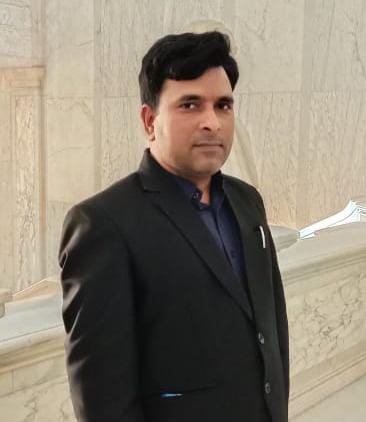
  • “I chose to study the law because I knew with it, I would be empowered, independent and in a position to make a meaningful difference.” – Rajat Gangwar, Advocate, Allahabad High Court.

    “I chose to study the law because I knew with it, I would be empowered, independent and in a position to make a meaningful difference.” – Rajat Gangwar, Advocate, Allahabad High Court.

    This interview has been published by Anshi Mudgal and The SuperLawyer Team

    Coming from a family deeply rooted in public service, what inspired you to chart a different path as a first-generation advocate, and how has your family’s background in public service influenced your perspective as a lawyer?

    Since childhood I had seen my parents being posted at different places in the State of U.P. I soon also realized how demanding their work was. There were times when both parents found it difficult to even make it for school events like parent teacher meetings or the Annual Founder’s Day Programme. As I grew older and came close to choosing a career, I was certain that I did not want to join the administrative services as I found them to be very demanding, unpredictable and not free from external pressures.

    I chose to study the law because I knew with it, I would be empowered, independent and in a position to make a meaningful difference. Initially like most joining an NLU I too had dreams of working in a law firm but that was extremely short lived and after having interned in Courts and seen advocates make submissions, I found litigation quite attractive. I still remember as a young intern having seen Late Mr. Fali Nariman argue a matter before the Supreme Court for an entire day- though I understood little of it then but it left a lasting impact on me which only got further cemented during the course of my subsequent litigation internships.

    My family’s background in public service has significantly influenced my perspective of the law. Having heard accounts from my father of his experiences from the times when he was a City Magistrate in Allahabad (now Prayagraj) till he retired as a Special Secretary, and incidents from the time of my grandfather, who was the first Director General of Police U.P., I expected and continue to expect officers to have high standards in administration and in the discharge of their functions. Often these expectations have not been and are not met. I firmly believe in the separation of powers and the fact that the executive is primarily there to ensure the welfare of the people as per the law of the land and it should never exceed its jurisdiction or arrogate to itself powers which the law otherwise does not confer on it. 

    In the early phases of your career, what were the defining instances that shaped your understanding of the law, and which experiences do you still hold close to your heart today?

    Law as we learn it in the classrooms is very different from how it is applied in Courts. Also, litigation is not just contingent upon the understanding of the law but in my opinion, it also has got to do with understanding of the process of the law or in other words how it unfurls in the courtroom and ultimately applies to real life situations in the  form of an order or a decision. The proverb ‘There’s many a slip ‘twixt the cup and the lip’ applies best to litigation. Often it happens that one comes across a brief and after perusing it thinks that it is simple enough in the sense that the law applicable is clear and there could be only one way it could be decided. However, often to one’s surprise the decision might be the exact opposite. The Court may have proceeded on a consideration which was not only not anticipated by the counsel but perhaps seemed least relevant.

    An interesting incident happened with me early on in my practice. We had filed an application for recalling an ex-parte order of transferring the case from one district to another in favour of the wife. After a long and heated hearing the application for recall was dismissed and to my dismay without dealing with the main argument which I thought was the sheet anchor. However, the Hon’ble Judge was kind enough to tell me later that one can never get an order by fighting with the Court, no matter how meritorious one might think his/her case is, and the secret lay in calmly but repeatedly urging the Court to accept your point of view. What I also realized later was that it was always better to get a rough idea of the Judge’s view on the subject matter before one goes for the hearing, one should be prepared to the hilt and anticipate anything and everything and one should always while putting one’s case across be in a position to provide a plausible solution to the Court. 

    You have been empaneled with the Allahabad High Court Legal Services Sub-Committee. What are the different challenges involved in this role, and what responsibilities does it bring with it?

    My work with the Allahabad High Court Legal Services Sub-Committee has essentially revolved around filing and appearing in matters, mostly criminal appeals and bails, of convicts and under-trials who have not been able to engage a counsel independently by their own means. The fact that this work not only directly affects the life and liberty of the litigants but also requires representation of underprivileged litigants makes it extremely sensitive. I always try to ensure that this work is done on a priority basis and is given equal if not more importance than other regular matters of the chamber. 

    What has been the most memorable or challenging case in your litigation career, and how did it shape your approach to handling complex legal disputes?

    The most memorable case that I have worked on till now was a writ petition that we had filed before the Lucknow bench of the Allahabad High Court at the behest of the informant, in an FIR, challenging the transfer of the investigation from the State Police to the CBI.

    In most cases it is the informant who seeks transfer of the case from the local police to the CBI and approaches the Court for such directions. However, in this case what we wanted was the exact opposite. The informant had lodged an FIR under the prevention of Corruption Act against an extremely high-ranking and resourceful individual involved in the administration of a State University. The State police had made significant progress and was at the verge of filing a chargesheet against the accused, though they had not been able to arrest the primary accused, and all of a sudden notifications were issued by the State and Central Government transferring the investigation to the CBI.

    This transfer was not at the request of the informant.

    The informant then preferred a petition before the Lucknow Bench of the Allahabad High Court praying for quashing of these notifications amongst other reliefs as he wanted the State police to complete the investigation which was anyway at its last leg. The petition, as drafted, addressed questions of Constitutional law ranging from Federalism to exercise of powers by the President and the Governor, the necessity for such action, its procedural and substantive limitations and internal procedures that had to be followed by the Ministries and Departments concerned.

    It was a task to keep the petition getting listed and taken up on different dates because it was a race against time as the investigation had already been transferred to the CBI. This matter not only exposed me to engaging aspects of Constitutional law but also gave a glimpse of ingenious and crucial strategies advocates from both sides employ to anticipate the next move and to finally win. I became aware of several tricks of the profession which otherwise I was unbeknownst of. The petition was ultimately dismissed by the High Court and so was the SLP. Thereafter an interesting event occurred. Some months after the dismissal of the petition, the informant was arrested by a Central Government investigating agency in relation to some offence pertaining to marksheets of students of another State University. I believe the informant is still in jail and the matter in which he is now an accused is sub-judice.

    I would say that in handling complex legal disputes my approach still remains mostly the same. One is required to research thoroughly, draft well, observe the benches and put one’s best foot forward. One however, in high stake matters, has to be weary and mindful, for the purposes of strategy, of what is happening around the matter especially if the matter is of a political nature or concerns important people. In such cases information and the timing of the information is extremely crucial and can make or break situations.

    There is a lot of information and also misinformation and sometimes things seem to be pulling you in all directions and you really don’t know how to plan ahead. What is therefore required is to keep a level head, a fearless and extremely professional attitude towards things and perhaps the guidance of someone trustworthy who has more years than you behind him in the profession. One must always give one’s best with the resources at one’s disposal and not worry about the result.

    The last and most important thing that I took away from this matter was that one should never take things personally and not have an emotional reaction to things. With this particular matter I was extremely fortunate to have the guidance and wisdom of my seniors from the bar at Lucknow and Allahabad. They guided me through what I think was a difficult terrain of dilemmas and decisions.

    In your experience appearing before various courts and tribunals, what strategies or principles have you found most effective in managing high-stakes litigation?

    In my opinion in high stake litigation, one has to be extremely mindful of time. Since these matters are extremely sensitive often due to the imminent threat and irreparable consequences. Even a few hours of delay can have disastrous consequences. Take the demolition of a property for example. There have been instances of petitions being heard while the local administration is already at the doorstep with bulldozers. One should be in a position to multi-task and move with lightning speed and take chances even if the odds don’t seem favourable.

    I recall a matter in which a part of the house of a litigant was being demolished for the operationalization of an airport and the matter had been listed on some other future date. By the time that date would’ve come the authorities would have very easily and conveniently demolished the property. Given the immediate nature of the threat, after a short discussion with a colleague who was also a co-counsel in the matter, we decided to mention the matter before the Court and make a request for the hearing to be advanced to that very day and for it to be taken up.

    We thought that the chances of success were rather slim and the Court would turn down the request but we still wanted to give it a shot. To our surprise the Court accepted the mention and summoned the file. What followed was a quick trip to the office of the Registrar and the section, written intimations to other counsels culminating in a stay order against the demolition.    

    Another important strategy in high stake matters, especially with voluminous paperwork, is to simplify the matter as much as one can for the convenience of the Court. Most Courts are burdened with work and often do not find time to go through hundreds of pages unless the matter is at the stage of final hearing. For the purposes of interim relief, I think it’s best to very succinctly put across the illegality in the impugned action at the start of the submission and then follow up with facts as and when they are needed. The strongest point which hits the core of illegality should be put across earliest, avoiding verbiage. Obviously, what that point is and how it has to be put across is a thing to be learnt over time. Hitting the nail on the head is crucial and arguments have to be honed and distilled for this purpose. I have had seniors tell me that if a petition has too many grounds then it essentially means that there are no grounds worth taking. I think the same applies to submissions.

    I have also found that in some important matters the responding side may want to delay the interim relief on some pretext or the other. Delay often results in denial for all practical purposes. Therefore, one has to be vigilant and tie up as many loose ends as one can. Serving of advance notices wherever possible, getting matters listed early or peremptorily on the board or getting a time fixed for hearing on a given day, making mentions and in the odd event getting proactive directions from superior courts are some measures one can adopt to ensure effective prosecution of one’s case.

    Having appeared before multiple forums, High Courts, Arbitral Tribunals, Consumer Forums, and Industrial Tribunals what strategies do you adopt to adapt your advocacy style depending on the forum?

    Sun Tzu in the Art of War has said that “If you know the enemy and know yourself, you need not fear the result of a hundred battles….”. Court hearings are obviously not like battles and the Judge is never an enemy but it never harms one to know what one is going to be faced with. Therefore, I believe it is imperative to know and understand the turf before one gets onto it. Different forums have different ways of functioning and adopt different procedures of doing the same thing. It is therefore crucial that one understands the procedures of the place where one is appearing. 

    The second aspect would be to understand the manner of functioning of the Judge or what people call reading the judge or reading the bench. Some Judges are more inclined towards equity while some prefer the dead cold letter of the law and apply it as it is. Some prefer long drawn arguments while some prefer that one straightaway comes to the main point. One therefore has to mould the manner of argument as per the nature of the Judge. Understanding the nature of the Judge helps you structure not only the arguments but also the manner in which you would want your case to proceed and avoid possible pitfalls.     

    With over a decade of diverse practice and multiple empanelments, what professional values have guided you throughout your journey, and what advice would you give young aspirants on building a career like yours while balancing professional commitments with personal life?

    I have always endeavoured to maintain my integrity and be honest with the Court. I have always advised litigants to adopt ethical means in the process of adjudication before the Courts and I don’t hesitate from saying that that has cost me work. I believe that at the end of the day it is a person’s integrity and reputation that matters most and as long as his/her conscience is clear nothing else really matters. Apart from joining a good chamber my advice to young aspirants would be to maintain a strong work ethic and to always keep their eyes and ears open as one learns most through observation. One must always keep the company of colleagues and seniors who are similarly aligned in their objectives and hold similar if not the same value system and imbibe not only knowledge and wisdom but also desired professional values. A good part of the initial years should be spent in learning and thereafter the focus should be on procurement of work. Since the journey of a litigating lawyer is long and arduous one should, as a matter of habit, definitely take out time for family, friends and oneself as work never ends. 

    Get in touch with Rajat Gangwar –

  • “The SQE not only enhances one’s grasp of Indian law but also equips practitioners with nuanced legal principles that, although rarely argued in Indian courts, are often favourably applied when effectively presented.” – Abhirath Thakur, Solicitor (England and Wales) and Principal Associate at Economic Laws Practice.

    “The SQE not only enhances one’s grasp of Indian law but also equips practitioners with nuanced legal principles that, although rarely argued in Indian courts, are often favourably applied when effectively presented.” – Abhirath Thakur, Solicitor (England and Wales) and Principal Associate at Economic Laws Practice.

    This interview has been published by Anshi Mudgal and The SuperLawyer Team

    What inspired your decision to pursue law, especially coming from an Army background? Was there a particular experience or influence that sparked your interest in the legal profession and if not how did it develop?

    Being from a Defence family, I grew up observing my father’s unwavering commitment to discipline, integrity, and justice—not just for himself, but for those around him. When I was in Class 12, he was posted in Srinagar, Jammu and Kashmir, where he was entrusted with handling discipline and vigilance matters, including the oversight of legal cases. I often saw him engage with lawyers and Central Government Standing Counsels, and listening to those discussions sparked my initial interest in the legal field.

    Another significant source of inspiration came from our family legacy. My great-grandfather was a barrister trained in England and was considered one of the most affluent and sought-after lawyers of his time. Stories of his work, often narrated by my father, filled me with pride and deepened my fascination with the legal profession. My father’s own experience in the Defence Forces had shown him the transformative power of law in shaping society. His belief in its impact and his encouragement played a crucial role in motivating me to consider a career in law.

    Once in law school, I made it a point to seek practical exposure early on. I interned at various law firms across both corporate and litigation domains to gain a hands-on understanding of the profession. These experiences were eye-opening and shifted my perception of law from a purely academic subject to a dynamic and impactful vocation. I found particular excitement in applying legal principles to real-life situations and was deeply inspired by watching seasoned advocates present arguments in court.

    This exposure transformed my attitude toward the field. I began to genuinely enjoy my studies and took part in moot court competitions, debates, and academic research with renewed enthusiasm. What started as a reluctant compromise gradually evolved into a meaningful and fulfilling calling.

    Looking back, choosing law has been one of the most rewarding decisions of my life. If given the chance to choose again, I wouldn’t hesitate to take the same path.

    You pursued your LL.M. in International Commercial and Corporate Laws at Queen Mary University of London, one of the leading programs in commercial laws and arbitration. How did that academic experience sharpen your legal reasoning, and how do you integrate that international perspective when handling domestic disputes in India?

    Before pursuing an LL.M., I spent four years working in the dispute resolution team at Wadia Ghandy & Co., Delhi. During my tenure, I handled a diverse range of commercial and corporate matters, albeit from a dispute resolution perspective. Working on high-stake and complex cases made me acutely aware of a gap in my understanding of commercial and corporate law—my knowledge, while broad based, lacked the depth I aspired to achieve. This realization prompted my decision to pursue an LL.M., with the aim of gaining a more nuanced and in-depth understanding of this domain.

    My longstanding interest in commercial and corporate law stems from a deep-rooted passion for commerce and business which further motivated me to pursue an LL.M. where I could experience the intersection of law and business, taught by some of the most respected professors in the field. In addition to enhancing my legal understanding, I was also drawn by the opportunity for international exposure and the chance to engage with a truly global legal perspective.

    Undoubtedly, the LL.M. expanded my intellectual horizons and significantly deepened my understanding of international commercial laws. Exposure to an international legal framework offered a broader context and allowed for a more well-rounded grasp of the subject matter. My coursework included modules such as Mergers (a court-approved process in India), Acquisitions and Takeovers, International Commercial Law, Trial Advocacy, Regulation of Financial Markets, Conflict of Laws, and International Commercial Arbitration, among others. I had the privilege of learning from world-renowned professors like Mr. Stavros Brekoulakis and Ms. Rosa Lastra, both recognized authorities in their respective fields, as well as attending guest lectures delivered by distinguished legal luminaries.

    What particularly stood out to me was the pedagogical approach of the LL.M. program. The teaching was rooted in exploring the “why” behind laws—their purpose, evolution, and the jurisprudential rationale—rather than simply focusing on the “what,” which tends to be the predominant style in Indian legal education. This method fosters greater intellectual flexibility and clarity, which I find immensely valuable, even when working on domestic legal matters, as the foundational legal principles often remain consistent.

    To illustrate, consider the field of international arbitration, which has gained significant prominence in recent years and is now considered a cornerstone for lawyers dealing with cross-border disputes. The procedural frameworks of leading arbitral institutions as well as our own Arbitration Act are grounded in the UNCITRAL Model Law. Being taught by professors with direct experience in shaping and applying these frameworks offers invaluable insight—something that an LL.M. program uniquely provides and therefore applying this knowledge in the arbitrations which I am involved in proves to be highly beneficial.

    With 9 years of post-qualification experience in dispute resolution and arbitration, what originally drew you to this field? What have been the most defining moments or lessons that shaped your professional approach within high-stakes litigation environments?

    During law school, I explored a broad spectrum of internships across both corporate and litigation domains. These included stints under senior counsels, litigation lawyers, and prominent law firms. By the end of my academic journey, I found myself increasingly inclined towards litigation. However, I remained cautious about fully committing, having been advised by several mentors about the profession’s slow initial progression and modest early rewards.

    In pursuit of clarity, I joined ASP Advocates—a full-service law firm led by my mentor, Mr. Abhishek Seth. He graciously offered me a legal position where I engaged in a balanced mix of litigation and corporate transactional work. My time at ASP proved instrumental in shaping my professional outlook. I found myself especially drawn to courtroom proceedings, legal drafting, and the application of legal principles to complex factual scenarios. These experiences sharpened my analytical thinking and compelled me to approach problems creatively and critically. After more than a year at ASP, I was certain that litigation was the path I wanted to pursue.

    With a clearer sense of direction, I joined the Delhi office of Wadia Ghandy & Co., where I was exposed to a more demanding and dynamic litigation environment. I worked on a wide range of matters—from high-stakes disputes to those with relatively lower stakes. Interestingly, I came to appreciate that it is often the smaller matters that truly shape a lawyer’s core skills. While high-stake cases typically involve a team of lawyers—where one’s role may be limited—smaller matters offer greater responsibility, hands-on experience, and opportunities to build courtroom confidence. I strongly believe in regularly taking up such cases, along with engaging in pro bono work, both of which are essential for holistic professional growth.

    That said, the value of working in high-stakes litigation cannot be overstated. At Wadia, I was fortunate to be involved in a landmark constitutional matter referred to a nine-judge bench. The case presented intricate questions of constitutional law and involved collaboration with some of the most respected senior advocates before the Hon’ble Supreme Court of India. It demanded intense preparation—multiple strategy conferences, long hours of research, and detailed analysis of extensive judicial precedents. The experience, while intellectually demanding, was equally enriching. I learned through observation—how senior counsels structured their arguments, interpreted precedents, and framed issues strategically to serve the client’s interests. Beyond the legal learning, such work cultivates discipline, resilience, and a deep respect for the value of time—all vital qualities for a successful litigator.

    As my tenure at Wadia progressed, I came to appreciate that every matter—regardless of its perceived importance—requires diligence, precision, and intellectual agility. Growth in litigation is rarely linear; it is the product of sustained effort, patience, and humility. The profession teaches you that it is better to take deliberate steps than to chase quick wins. Success lies in consistent performance, staying focused, and not being swayed by external comparisons. Ultimately, perseverance and commitment—not shortcuts—are the true markers of progress in this field.

    Being dual-qualified as a Solicitor in England & Wales and an Advocate in India is a rare accomplishment. What motivated you to pursue this path, and how has it enhanced your ability to handle cross-border disputes or advise international clients?
    Preparing for the Solicitors Qualifying Examination (SQE) significantly deepened my understanding of the law. The SQE not only enhances one’s grasp of Indian law but also equips practitioners with nuanced legal principles that, although rarely argued in Indian courts, are often favourably applied when effectively presented.

    Following the completion of my LL.M., I was driven by a strong desire to further strengthen my legal acumen, especially in the context of local and general laws of England and Wales—such as criminal, property, and civil law—which have profoundly influenced the Indian legal system. These laws, having been extensively borrowed and embedded into our legal framework, are best understood through a comparative lens.

    After conducting thorough research and engaging with qualified Solicitors, I was convinced that studying for the SQE would provide me with the foundational understanding of English law necessary to gain a richer, more structured comprehension of Indian law. While an LL.M. offers a broad, often international, legal perspective, the SQE is grounded in the practical and substantive law of England and Wales, which a Solicitor is expected to advise on across a wide range of practice areas. This distinction made the SQE particularly appealing as a rigorous yet rewarding route to legal excellence.

    My SQE preparation has already had a tangible impact on my practice. At Economic Laws Practice, where I was involved in a variety of criminal and property cases, my enhanced understanding of legal principles has proven invaluable. Moreover, the knowledge gained has played a significant role in navigating a complex arbitration involving mortgage disputes, stamp duty issues, and interest-related legal principles.

    You’ve advised clients across a wide spectrum, from defamation and regulatory enforcement to complex partnership disputes. Can you share an example of a particularly challenging or meaningful case and how you navigated it?

    One matter I fondly recall – which was handled by me entirely independently – involves an engaging dispute in the realm of Intellectual Property Law, where I had the opportunity to defend a business conglomerate which was sued for alleged trademark infringement relating to the name of a restaurant it had established in India. The opposing party, a restaurant chain based in the United States, had engaged one of India’s leading IP law firms to represent them.

    The crux of the dispute revolved around the use of the restaurant’s name. The opposing party not only sought its immediate discontinuation but also demanded an exorbitant amount in damages and compensation. However, once I presented our defense, it became evident that their claims were unfounded. My argument drew upon a range of statutory and common law principles, including the absence of cross-border reputation, lack of trademark advertisement or market penetration in India, the generic and descriptive nature of the name, and the failure to establish continuous use. These factors collectively undermined the credibility of their claims and formed a strong foundation for our defense.

    Rather than escalating the matter further, the opposing party recognized the weakness of their position and initiated settlement discussions. What followed were protracted negotiations under the aegis of the Delhi High Court. In a rather unexpected outcome, the settlement concluded with my client receiving compensation—rather than paying it. In exchange, my client agreed to slightly modify the restaurant’s name, though the establishment eventually closed due to limited footfall.

    As someone qualified in two legal systems, what are the biggest differences you’ve observed in dispute resolution culture between India and the UK? 

    While the Indian and UK legal systems share a common foundation rooted in common law principles, the administration of justice in the two countries differs significantly. In my experience, litigation in the UK is far more streamlined and structured to promote early resolution. Protracted legal battles, which are relatively common in India, are a rarity in the UK.

    UK courts often actively encourage—and in some instances, require—parties to explore settlement options before proceeding to trial. This emphasis on alternative dispute resolution and various pre-action protocols helps to reduce the burden on the judiciary and results in more efficient case management. Even though pre-litigation mediation in India is mandatory for commercial matters, it is not strictly followed before proceeding for litigation on one ground or the other. 

    To put this into perspective, the Supreme Court of the United Kingdom hears and decides approximately 80 to 120 cases per year. In contrast, the Supreme Court of India handles nearly 600 matters in a single day. Similarly, the lower courts in the UK typically list only two to three cases for hearing each day, allowing for focused and in-depth deliberation. In India, however, the dockets of lower courts are often overcrowded, with judges expected to handle a substantially higher volume of cases daily.

    What guidance would you offer to young lawyers interested in building a career in dispute resolution and arbitration, particularly those exploring international qualifications or LL.M. programs abroad? What key skills or experiences should they prioritize?

    This question has vexed many students in the past and therefore I will strive to answer this in a clear and concise manner. I firmly believe that pursuing an LL.M. can provide invaluable exposure, especially in fields with an international focus. However, it’s essential to approach this decision with clear and realistic expectations. An LL.M. should not be pursued solely as a pathway to employment abroad, as many students may face a harsh reality—the job market in foreign jurisdictions is often limited and highly competitive. The decision to pursue an LL.M. should be guided by a range of considerations—academic interests, professional goals, financial feasibility, and personal fulfilment. There’s no universal path, and what works for one may not suit another. Therefore, it’s important to evaluate all these factors carefully before taking the plunge.

    An LL.M. can be especially beneficial in fields with a strong international focus such as international arbitration, cross-border commercial litigation, international trade law, transnational mergers and acquisitions, and similar areas. In such domains, the specialized knowledge and global perspective offered by an LL.M. can significantly enhance your career prospects.

    In my experience, gaining some work experience before pursuing an LL.M. is highly advisable. There are two key reasons for this: first, with practical experience, you’re better positioned to understand and appreciate the academic content of the program. Second, if you intend to leverage your LL.M. for international job opportunities, prior work experience may place you in a stronger position. That said, I’m not suggesting waiting too long—after all, the energy, enthusiasm, and flexibility you have at 26 may not quite be the same at 36.

    An LL.M. also offers an excellent platform for building a global professional network. It brings together individuals from diverse jurisdictions, offering the chance to forge meaningful connections and broaden your international legal perspective—both of which are valuable assets in today’s interconnected legal landscape.

    While the LL.M. certainly plays a pivotal role in supplementing legal knowledge and providing a strong academic foundation, it is not a substitute for the essential traits of a successful lawyer—hard work, resilience, and sharp analytical skills. Rather, it serves as a powerful catalyst that enhances these qualities and prepares one for the evolving demands of modern legal practice.

    Get in touch with Abhirath Thakur –

  • “By merging the vigour of young professionals with the wisdom of experienced advocates he emphasizes the importance of teamwork, open communication, and technological integration in achieving legal expertise” – Ritesh Ranjan, Head & DGM-Legal at Bihar Industrial Area Development Authority (BIADA), Govt of Bihar

    “By merging the vigour of young professionals with the wisdom of experienced advocates he emphasizes the importance of teamwork, open communication, and technological integration in achieving legal expertise” – Ritesh Ranjan, Head & DGM-Legal at Bihar Industrial Area Development Authority (BIADA), Govt of Bihar

    This interview has been published by Namrata Singh and The SuperLawyer Team

    Could you share with us a bit about yourself and your journey to becoming the Head & DGM-Legal at Bihar Industrial Area Development Authority (BIADA)? What inspired you to pursue a career in law, and what challenges did you encounter along the way?

    I am a first-generation lawyer born and brought up in West Champaran district of Bihar. After my B.A. (Hons.) from Faculty of Arts, BHU, I pursued LL.B. from Law School, B.H.U. and embarked my legal journey with challenges of not having the benefit of a well-trodden path or sage advice. My parents and my younger brother gave me their unwavering support in all my decisions. Guided by serendipity, I found myself at the BHU, Varanasi. I started practicing in Patna High Court and my erstwhile practice area involved a diversified spectrum of legal jurisprudence. After practicing for over three years in Patna, I moved to Mumbai, where I worked as Law officer of Transport Corporation of India Limited, Mumbai for handling all the legal affairs within the state of Maharashtra. Onwards  I worked as Examiner of TradeMarks in the Trade Mark Registry Mumbai. After which I joined Videocon d2h Limited, Mumbai, wherein I was also part of the team for  the  execution of the India’s largest Media Sector merger of Brand Videocon d2h into Dish TV. After merger, I migrated to Dish TV India Limited, Noida and successfully handled litigation and contract management for both brands d2h and dish TV.  

    After years of experience in broadcasting and distribution related to the DTH Industry, I joined Hathway Digital Limited a multisystem operator of Reliance Jio Group as a Senior Manager -Legal in Delhi. In this role I managed Pan India Litigations before TDSAT, Trial Courts, High Courts, Consumer Forums and Supreme Court.  Thereafter, I joined Micromax Group as head of Legal and finally joined as DGM-Legal in BIADA, Patna. During working with different organizations from a practising advocate, corporates and government sectors in different cities, I found that we need to adopt the work culture at earliest and you have to learn something from everyone as once my mentor has said everyone is your client except yourself. You have to create your own brand and for this you need to accept all the challenges with a smile.

    You’ve had a diverse career journey, from practicing law in Patna to working with major corporations in Mumbai and Delhi. What motivated you to transition from the corporate sector to a government role at BIADA, and return to your home state of Bihar and take on a role with BIADA?

    The diverse career journey had its perks but at the same time there was remorse in my mind that having reached the pinnacle of my career. I was never in a position to give it back to the society from where I belonged. Everyone has his or her perspective towards the way of contribution for a better and prosperous society, but from my spectrum of things this endeavour to join this government organization was to achieve a more industrialized and prosperous Bihar by removing the hurdles faced by entrepreneurs and streamlining the legal process attached to it.

    As someone deeply rooted in Bihar’s history and culture, how do you envision the role of BIADA in contributing to the state’s development and economic growth? What initiatives or projects are you most excited about? 

    BIADA has been envisioned to promote and augment industrialization and create awareness about the Industrial Policy of the state as well as creating an environment for consistent growth of Industries in the state. The management finds it highly important to change the way these units operate for a few reasons, such as Changing priorities of units, Enhancing the effectiveness of organizations, initiating new schemes, there is an enormous scope of things which could be improved considering the Industrial growth, Bihar is growing. The role as DGM, Legal is quite dynamic and varied as one has to juggle a lot between Courts and Policy decisions. I endeavour for transparent policy formulation whereby policies are fair, simple and comprehensive. Also, such policies are required to be formulated for instilling faith upon Corporate and at the same time better execution of such for the organization. At present, investors are coming to Bihar and a number of Industrialist and Start up have been seeded there huge investment in State with a vision for development of Bihar. Therefore, by my small contribution I am participating in the development of my state by use of my legal, strategy and advisory skills.  

    With the recent influx of investors and industrialists into Bihar, what are some of the legal challenges and opportunities that BIADA faces in facilitating economic development while ensuring regulatory compliance and transparency? 

    The fragmented land-holding and lack of large pool of land is a reality in Bihar yet by undertaking various persuasions have been in a position to make sufficient land available for the Investors and Industrialists. The biggest huddle which we constantly face is to get back the large chunk of land which was not used for industrialization and to allot the same to the prospective investors. There are innumerable stakeholders and to take everyone on board for the furtherance of development of Bihar is quite a task. At present the government is providing better policies and support for establishment and revival of industries in the state.

    As someone who has worked across different states and industries, what do you find most rewarding about working in the public sector, particularly in Bihar? How does it differ from your experiences in the private sector? 

    To be honest, in the last years or so with BIADA, I have evolved as a person who has made several required changes in the existing system based on prior experiences and current needs of the state. It was an enlightening experience to work within the multi-layered and complex structures learning nuances of executing and facilitating Industrialization in state. The perspective of being an outsider was a blessing in disguise as people believed that I had joined this organisation for a purpose and that it provided me with cooperation from everybody in the organization. 

    In your role as Head & DGM-Legal, what strategies do you employ to foster collaboration and synergy within your team of in-house legal professionals and panel advocates? How do you ensure effective communication and coordination? 

    Coordination between youth professionals and experienced minds to achieve better results is one of the mantras I work with. I am very privileged to have an in-house team consisting of law graduates from National law Universities and other reputed law colleges and as an icing on the cake there are experienced Advocates on our Panel and together we bring a diversified approach to the table for better and fast results.  With such a big team, it becomes very important to have open and transparent communication. It is very important to promote team members irrespective of their position in the hierarchy of the organisation to brainstorm ideas and communicate their opinions in regard to every case. Fortunately, I am blessed with a dedicated team and together we discuss and prepare notes of argument and strategy in each case. I cherished the participative work culture of the organisation wherein everybody gets to contribute something.

    Being from a corporate background, I tend to promote the modern work approach and use of technologies for better collaborations with cluster offices and our Panel Advocates in the High Court as well as in the Supreme Court. 

    With your experience in handling a wide range of legal matters, what are some common misconceptions about the legal profession that you would like to debunk for aspiring lawyers? 

    One of the common misconceptions about the legal profession is that there are limited prospects in the legal sectors. However, in this modern world, everyone needs the application of legal minds which opens a plethora of opportunities before the law students. In the era of globalization, even cross-border opportunities open up for the youths. Another misconception lies that law is not for women but here I would like to take this opportunity and say the legal field is gender neutral and 50% of my team members are female and they demonstrate relicense, time management and good analytical skills. 

    Apart from your professional endeavors, what are some of your personal interests or hobbies that you enjoy outside of work? How do you balance your personal life with the demands of your role at BAIADA? 

    For work life balance, I would like to thank my soul mate Sarika who wholeheartedly takes care of my two lovely daughters and family. The preoccupation in my current role doesn’t allow me to spare much time for personal interests or hobbies limited to watching news and outings beyond my work but quality time with my family instills me with strength, love, affection and peace. 

     Given your experience in both the corporate and government sectors, what advice would you offer to young professionals aspiring to build a successful career in law, especially in the context of navigating different work environments?

    I firmly believe in the famous quote that “there is no substitute for hard work”. Both corporate and public sectors have their own pros and cons, however it is important to set one’s priority straight why making a pick and one should not shy away from giving their best in whichever sector they choose. This brings out best performance helping the individual to excel in his/her career

    Get in touch with Ritesh Ranjan-