Tag: Public Policy

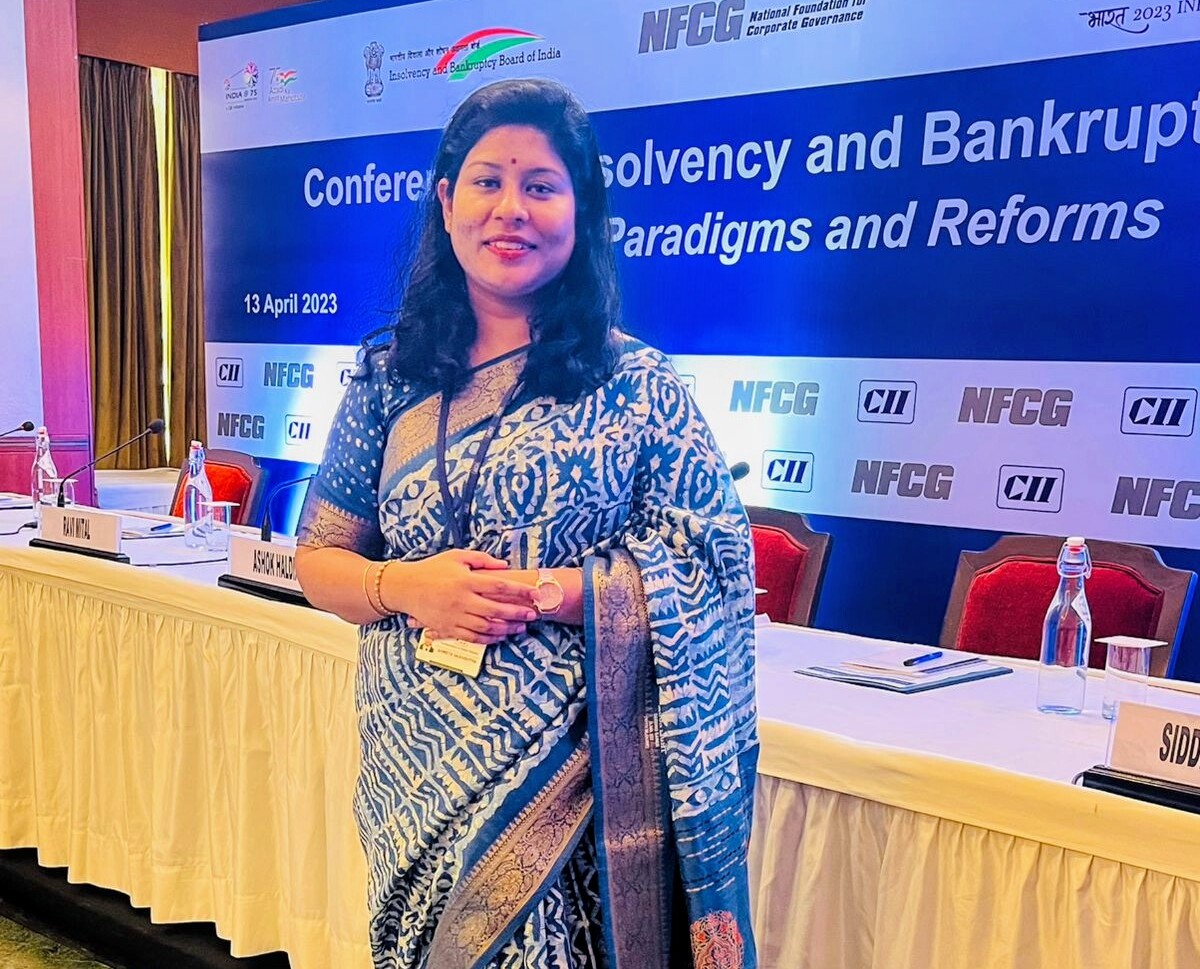
  • “My academic grounding in cyber law proved invaluable as I navigated complex regulatory questions and worked at the intersection of law, technology, and financial innovation.” – Shweta Vashishtha, Executive Officer, Regulatory Affairs at Confederation of Indian Industry (CII).

    “My academic grounding in cyber law proved invaluable as I navigated complex regulatory questions and worked at the intersection of law, technology, and financial innovation.” – Shweta Vashishtha, Executive Officer, Regulatory Affairs at Confederation of Indian Industry (CII).

    This interview has been published by Anshi Mudgal and The SuperLawyer Team
    After completing your B. Com (Hons) from Delhi University and qualifying as a Company Secretary from the Institute of Company Secretaries of India, what inspired you to pursue a career in law? Was there a particular moment or experience that led you in this direction?

    Truly speaking, I always aspired to pursue a career in law. However, instead of enrolling in a 5-year integrated law program, life took me on a different path. My brother, who was then pursuing Chartered Accountancy, encouraged me to join the Company Secretary (CS) course. That decision proved to be a turning point.

    During my undergraduate studies, I found myself particularly drawn to subjects such as Business and Corporate Laws, and Information Technology Laws, quickly becoming my favourites. These disciplines didn’t just pique my interest — they ignited a genuine passion for the legal field. In fact, the CS course deepened my interest in the legal field and broadened my understanding of its practical applications in the corporate world. This growing passion led me to appear for the law entrance examination at the University of Delhi in my final year of graduation. Determined to align my career with my true interests, I appeared for the law entrance examination conducted by the University of Delhi. I was thrilled to clear the exam in 2012 and enrolled in the three-year LL.B. program, becoming a part of the 2012–2015 batch. The moment marked the realization of a long-cherished dream, one that had only grown stronger with time and still motivates me every day.

    In the early phase of your career, you dealt with a wide range of matters from RERA and intellectual property to corporate compliance. What were some of the key skills and insights you gained from working across such diverse areas? How did these shape your understanding of the legal field?

    During my tenure at KNM & Partners, Law Offices, I was fortunate to be entrusted with a wide range of responsibilities, each offering me the opportunity to grow as a legal professional. My role encompassed advising on business setup, drafting and reviewing transaction documents, conducting due diligence, managing secretarial compliances for a diverse clientele, and providing legal advisory on various aspects of general corporate law. The breadth of work not only sharpened my technical skills but also nurtured my ability to approach legal issues from multiple perspectives, the versatility at work provided me with an ability to handle different legal domains. 

    One of the most defining phases of my career was in 2016, when two landmark legislations — the Real Estate (Regulation and Development) Act, 2016 and the Insolvency and Bankruptcy Code, 2016 came into force. At the time, our firm represented several real estate clients, and the enactment of RERA brought with it a surge of queries, concerns, and restructuring needs. I took this as an opportunity to engage deeply with the legislation, dissecting each provision and analysing its impact on ongoing and upcoming real estate projects. It was an intellectually enriching experience to assist clients through this legislative shift, helping them align their operations with the new regulatory framework.

    Simultaneously, the introduction of the Insolvency and Bankruptcy Code opened another complex legal frontier. I undertook a coordinated study of both RERA and IBC, which proved essential in redrafting agreements and project documentation to align with the changing legal landscape. While the full implications of these reforms were difficult to predict at the time, our early analysis proved prescient, especially as high-profile insolvency cases in the real estate sector, like Jaypee and Amrapali, unfolded. I take pride in the fact that we were able to anticipate critical challenges and guide our clients effectively through an evolving and often uncertain terrain.

    In addition, I was actively involved in navigating the changes introduced by the Trademark Rules, 2017, which significantly streamlined the trademark registration process in India. Being part of this period of rapid legal development gave me first-hand insight into how legislation evolves in response to market needs and how practitioners must adapt quickly and thoughtfully to serve their clients’ best interests.

    These diverse experiences have helped me build a strong foundation in corporate and commercial law, instilling a deep appreciation for the interconnectedness of legal domains. Each assignment strengthened not only my analytical skills but also my ability to view the law in its broader business and societal context. I remain grateful to the seniors and mentors at KNM & Partners whose precision, discipline, and attention to detail continue to inspire my approach to legal practice.

    After starting out in a law firm, you transitioned to working with various government establishments over the years. What motivated this shift? How would you compare the working dynamics of a law firm to those of public sector roles, particularly in terms of impact and approach?

    The transition from a flourishing law firm career to government and policy-focused roles was a deliberate and deeply considered decision. Having witnessed the enactment of the Insolvency and Bankruptcy Code (IBC) in 2016, I was eager to move beyond advisory and transactional work to engage directly with the mechanisms of business restructuring. I wanted to be at the forefront of this legal and economic transformation, not just interpreting the law but shaping its implementation.

    I was privileged to be among the first cohort of Research Associates recruited by the Insolvency and Bankruptcy Board of India (IBBI). Working under the visionary leadership of Dr. M.S. Sahoo, along with senior members such as Mr. Navrang Saini, Ms. Mukulita Vijayawargiya, and Ms. Suman Saxena, was both an honour and a turning point in my career. It gave me the rare opportunity to contribute to the institutional framework of a law still in its infancy, and to witness firsthand how regulations are designed, tested, and refined in the real world.

    One of the most meaningful aspects of working in the public sector is the shift in purpose from serving the interests of individual clients to contributing toward broader economic and societal goals. At IBBI, I experienced how law, policy, and economics intersect and how legal reform can influence market behaviour, investor confidence, and systemic integrity.

    Building on my insolvency experience, I later served as a Legal Consultant in the Department of Economic Affairs, Ministry of Finance, where I had the opportunity to work on emerging areas such as the digital economy and fintech regulations. This role further deepened my understanding of how legal frameworks must evolve alongside technology, innovation, and global economic shifts. The work was intellectually demanding but equally fulfilling, as it required a macro-level perspective and a fine balance between enabling innovation and safeguarding systemic stability.

    Subsequently, my engagement with the Confederation of Indian Industry (CII) allowed me to interface closely with both industry stakeholders and government institutions. It reaffirmed the importance of collaborative policymaking, where the voices of regulators, businesses, and civil society come together to shape balanced, forward-looking legal solutions.

    These transitions have not only broadened my subject-matter expertise but also enriched my professional ethos. Moving from a law firm to policy and regulatory roles has equipped me with a multidimensional view of the legal ecosystem, i.e., from ground-level enforcement to high-level strategy and governance. Each step has reaffirmed my belief in the power of law as a tool for structural change.

    You pursued an LL.M. in Cyber laws from IP University. How did this specialized legal education support your work at the Department of Economic Affairs, Ministry of Finance especially while handling complex fintech issues like virtual banking, cryptocurrencies, data protection, and cybersecurity? Could you share a key takeaway from that experience?

    My LL.M. in Cyber Law significantly complemented and enhanced my professional engagement with the Department of Economic Affairs (DEA), Ministry of Finance. In this role, I was entrusted with the critical task of coordinating actions among multiple Ministries and departmental committees involved in implementing the recommendations of the Steering Committee on Fintech-Related Issues.

    This period coincided with a transformative phase in India’s digital economy — UPI was reshaping the payments landscape, emerging technologies were disrupting traditional financial systems, and conversations around cryptocurrencies and blockchain were gaining momentum. The government was actively focused on policy formulation, technology integration, and the development of robust data governance frameworks to promote innovation in fintech while also addressing the challenges posed by rapidly evolving technologies.

    My academic grounding in cyber law proved invaluable as I navigated complex regulatory questions and worked at the intersection of law, technology, and financial innovation. This experience not only deepened my understanding of the legal implications of digital finance but also reaffirmed my commitment to contributing to policy frameworks that are both forward-thinking and resilient.

    In your current role, you are closely involved in policy research and development. Could you share an example of one of the most interesting or impactful policy projects you’ve worked on recently, and what made it stand out to you?

    One of my most recent projects involves stakeholder engagement on the newly enacted Digital Personal Data Protection (DPDP) Act, 2024. Given the Act’s cross-sectoral impact, it is poised to influence not just business operations, but also the daily lives of individuals. Naturally, it has attracted diverse and often divergent viewpoints from industry, civil society, and regulatory bodies.

    Facilitating dialogue in such a dynamic environment requires both sensitivity and strategic clarity. Achieving consensus among varied stakeholders is inherently challenging, but it is essential for shaping effective and inclusive implementation frameworks. What guides my approach is a belief that every concern raised deserves to be addressed thoughtfully and with the best available expertise and resources.

    While the legislation itself marks a critical milestone, I firmly believe that its true evolution will occur over time, as market dynamics, technological advancements, and social expectations come into play. Participating in this ongoing process where law adapts to the real-world context continues to be one of the most intellectually and professionally fulfilling aspects of my work.

    Given your active engagement with regulatory bodies such as MCA, SEBI, CCI, and RBI, has there been an instance where you had to manage conflicting stakeholder interests? How did you navigate the situation? In your view, what are the key elements of drafting an effective and balanced policy?

    When engaging with a diverse group of stakeholders, everyone brings their own unique perspective, shaped by personal and professional experience. In such a setting, especially when actively working with regulatory bodies, managing conflicting interests becomes both an art and a science.

    Articulation of differing viewpoints is essential, but so is the ability to facilitate collaboration, build trust, and guide dialogue toward consensus. Successfully liaising with a broad spectrum of stakeholders requires deep research, a nuanced understanding of varied perspectives, and the ability to clearly and objectively communicate those positions.

    Drafting balanced, effective suggestions to the policies in such an environment demands more than legal or technical expertise; it calls for empathy, strategic thinking, and the capacity to harmonize competing priorities while keeping the broader public interest at the core.

    With such a demanding professional role, how do you manage your time, focus, and energy between work and personal life? What’s your approach to unwinding and maintaining balance?

    Balancing a demanding professional role with personal well-being is both a challenge and a conscious commitment. Over the years, I’ve realized that effective time management is not just about scheduling, it’s about setting clear priorities and boundaries.

    I approach my work with dedication and structure my day with focused time blocks, which allows me to be fully present in what I’m doing, whether it’s working on projects, attending meetings or handling tasks at hand. I believe in working smart, not just long — which means delegating when appropriate and leveraging tools and systems that promote efficiency.

    That said, I also place great value on personal time. To unwind, I turn to reading — especially motivational books that lie outside the legal realm and occasionally journalise and reflect. Quiet evenings with family, walks in nature, and mindfulness practices like meditation help me reset and recharge. These moments of stillness and connection give me the clarity and emotional resilience to bring my best self to work.

    Ultimately, for me, balance doesn’t mean equal time for everything but rather being fully engaged in whatever I’m doing — and knowing when to step back to rest and realign.

    Looking ahead, what advice would you offer to young lawyers who aspire to work in government advisory roles or pursue a career in public policy and research? What skills or experiences should they focus on developing?

    I will be glad if my career path and skills provide a source of guidance to the young fraternity. I would advise to develop a strong foundation in law and gain diverse experience-work in different legal areas and with various organizations, be it-law firms, government bodies, industry associations. Cultivate policy research and advocacy skills early on. The ability to analyse policy issues, conducting research, and articulating positions effectively is crucial. Working with government and regulatory bodies requires strong communication and the ability to collaborate with diverse stakeholders.

    Get in touch with Shweta Vashishtha –

  • “Legal training provides a strong foundation by equipping you with the ability to read and interpret laws critically, understand the legislative process, and navigate regulatory frameworks with nuance.” – Ananta Sharma, Assistant Manager (Public Policy and Advocacy) at InMobi.

    “Legal training provides a strong foundation by equipping you with the ability to read and interpret laws critically, understand the legislative process, and navigate regulatory frameworks with nuance.” – Ananta Sharma, Assistant Manager (Public Policy and Advocacy) at InMobi.

    This interview has been published by Anshi Mudgal and The SuperLawyer Team

    With your extensive background in law, what initially inspired you to pursue a career in the legal field, specifically in technology law? Was there a particular factor that influenced your decision, or did you gradually develop an interest over time?

    My interest in law stemmed from an early fondness for social studies, particularly civics, during school. Recognising that a career in law would allow me to engage more deeply with the Indian Constitution, I chose to pursue it professionally. Although I was initially drawn to subjects like cyber law, I was uncertain about specialising in technology law at the time (2014), given its niche status.

    Significant events such as the network neutrality debate and the landmark Shreya Singhal case in 2015 piqued my interest in the intersection of law and technology, prompting me to explore this emerging field more seriously. My selection for the LAMP Fellowship also proved to be critical. It offered the opportunity to engage with experts and mentors in the field and to work alongside like-minded professionals equally passionate about technology law.

    Building on this foundation, I gained practical experience by working with an international non-profit organisation dedicated to advancing and protecting digital rights. I subsequently pursued a master’s degree with a specialisation in technology law, further deepening my expertise in the field.

    How did your experiences at the University of California, Berkeley School of Law shape your approach to technology law and policy? What were the key takeaways from your time there, and what motivated you to pursue an LL.M. program with a specialization in Technology Laws?

    After gaining practical experience in technology law, I recognised the need to deepen my understanding and adopt a global perspective, as the field was rapidly evolving in India. The University of California, Berkeley School of Law’s LL.M. program, with a specialisation in Technology Laws, stood out as an excellent opportunity to achieve this goal. Berkeley Law’s esteemed faculty and comprehensive curriculum allowed me to explore a wide range of subjects, including Fundamentals of U.S. Law, Intellectual Property Rights, Privacy Law, Silicon Valley Antitrust, and Surveillance Law and Technology. Additionally, serving as an LL.M. representative for the Women in Technology Law initiative and contributing to the Berkeley Technology Law Journal provided valuable opportunities to build networks and gain deeper insights into the field.

    These academic and professional engagements made my time at Berkeley Law truly transformative. It provided a strong foundation in U.S. law and the US court system, while the program’s diverse cohort and international exposure introduced me to a range of perspectives. This broadened my understanding of legal concepts and their complexities, highlighting the importance of developing adaptable, context-sensitive solutions. The program also emphasised interdisciplinary approaches, deepening my appreciation of the interplay between technology, law, and policy, and teaching me the value of collaboration and nuanced thinking in addressing the challenges posed by emerging technologies.

    Overall, the LL.M. program at Berkeley Law significantly strengthened my expertise in technology law and policy and prepared me to engage more thoughtfully and strategically within the field.

    In the early stages of your career, you worked with PRS Legislative Research as a Legislative Assistant to a Member of Parliament (LAMP) Fellow. Could you elaborate on your experience and the challenges you encountered while working as a Legislative Assistant? What experiences during that time were pivotal in honing your understanding of technology laws?

    My experience as a Legislative Assistant to a Member of Parliament (LAMP) Fellow at PRS Legislative Research was nothing short of extraordinary. The fellowship provided a unique opportunity to engage in the legislative process, working closely with my MP (Member of Parliament) on various issues. Key responsibilities included assessing and reviewing government schemes, framing parliamentary questions, preparing bill summaries, drafting private member’s bills, and crafting interventions for parliamentary discussions. I also provided research support on constituency-related issues, focusing on sectors such as Finance, Agriculture, Sports and Electronics and IT. 

    During the fellowship, one of the key challenges I faced was navigating the breadth and complexity of issues, particularly those with significant implications for the constituency. Navigating these complexities required a strong understanding of not just local concerns, but also broader policy developments. Recognising this, my MP encouraged me to go beyond desk research by engaging with experts, participating in multi-stakeholder consultations, and helping to formulate informed policy positions.

    Participating in stakeholder consultations, particularly those organised by the telecom regulator, was instrumental in honing my skills and understanding as a technology policy professional. These experiences provided valuable first-hand exposure to the policymaking process and the complex considerations involved in regulating digital technologies.

    Could you share your insights and experiences from your previous role as a Technology Policy Consultant with the Ministry of Electronics and Information Technology (MeitY), India? How do you perceive India’s AI strategy in comparison to global AI governance frameworks? What distinctions or synergies have you observed between the two?

    As a Technology Policy Consultant working at MeitY, I worked on key mandates such as India’s presidency at the Global Partnership on AI (GPAI) and the IndiaAI Mission. I played a key role in India’s GPAI presidency, spearheading key initiatives and contributing to the strategic planning and execution of the GPAI Summit 2023 and the IndiaAI Summit 2024. In addition, I actively supported the IndiaAI Mission, contributing to its core pillars focused on strengthening India’s AI ecosystem. 

    These experiences provided valuable insights into global AI governance frameworks and India’s evolving approach to technology policy. In contrast to stricter regulatory models, such as that of the European Union which prioritises risk mitigation, transparency, and ethics, India has adopted a more balanced strategy — one that seeks to harness AI for public good, enhance public service delivery, and ensure the equitable distribution of its benefits. This vision is reflected in policy documents such as the National Strategy for AI and the report on AI Governance Guidelines Development. The mission also emphasises upskilling, promoting impactful AI applications across sectors like Agriculture, Healthcare, and Climate Change, and establishing safe and trusted AI practices through comprehensive frameworks and guidelines. While recognising potential risks, India has chosen to prioritise citizen education and foster responsible innovation, rather than imposing stringent controls that might inhibit growth.

    Despite differences in regulatory emphasis, there is strong convergence between India’s approach and global frameworks in promoting human-centric AI, embedding ethical safeguards, and advancing AI for social good. This shared commitment positions India to contribute meaningfully to shaping a global, inclusive, and innovation-driven AI governance ecosystem.

    Having previously worked with the government and civil society organizations, and now working as the Assistant Manager in Public Policy and Advocacy at InMobi, how do you approach your current role? What key differences have you noticed between this position and your previous ones? Additionally, what regulatory challenges do you perceive in India, and how do you envision these evolving over time?

    Having previously worked with the government and civil society organisations, and now serving as an Assistant Manager – Public Policy and Advocacy at InMobi, I approach my current role with a focus on bridging perspectives across stakeholders. My earlier experiences equipped me with strong research skills and a deep understanding of the government’s objectives, particularly its emphasis on public interest and social impact. However, transitioning to a corporate environment required a strategic shift: understanding business priorities, anticipating regulatory risks, and proactively engaging to shape policy outcomes that enable responsible industry growth.

    A key aspect of my current role is balancing regulatory compliance with the need for innovation and business growth. While I am familiar with the workings of government and civil society, I am actively building a deeper understanding of industry challenges to better align public policy objectives with sector-specific needs.

    In terms of regulatory challenges, I see several critical areas emerging in India’s technology policy landscape, including AI regulation and liability frameworks, platform governance and digital competition, cybersecurity and critical infrastructure protection, and the regulation of emerging technologies such as quantum computing and the metaverse. As these sectors evolve, sustained engagement between government, industry, and civil society will be crucial to developing agile, evidence-based regulations that balance public interest with India’s ambition to lead in emerging technologies.

    With your vast expertise, what advice would you offer to aspiring lawyers and law students who wish to build a successful and impactful career in Public Policy and Advocacy? Are there specific resources, mentors, or strategies you would recommend for their professional development in today’s rapidly evolving legal landscape?

    As a lawyer, you already hold a significant advantage when building a career in public policy and advocacy. Legal training provides a strong foundation by equipping you with the ability to read and interpret laws critically, understand the legislative process, and navigate regulatory frameworks with nuance. This inherent understanding positions you well to engage meaningfully with policy issues even before they take final shape as a legally binding statute.

    One piece of advice I would offer is to pick an area of interest early on and start examining it through a policy lens — understanding its broader societal, economic, and regulatory implications. Doing so not only builds a multidisciplinary outlook, which is increasingly essential in public policy work, but also provides a clearer sense of direction for your professional growth. Additionally, start writing about your unique solutions to problems as you explore your area of interest, and hone your research and writing skills. This will help you develop a strong voice and perspective in the field.

    There are numerous resources available today to help build a career in public policy. Platforms such as Public Policy India (PPI) and LinkedIn communities offer valuable guidance and list internship opportunities. I would also recommend signing up for newsletters from leading public policy institutes, consulting firms, and law firms, and listening to relevant podcasts to stay updated on sectoral developments. It is important to stay abreast of developments not only within your chosen sector but also across broader national and global trends, as policy is often shaped by larger socio-political contexts.

    Finally, surround yourself with like-minded individuals and build a strong, supportive network. Being in an environment that encourages discussion, debate, and continuous learning can be just as critical as formal knowledge.

    Maintaining a healthy work-life balance is often a challenge for legal professionals. How do you manage to balance the demands of your legal career with your personal life, ensuring both aspects thrive without one compromising the other?

    Achieving a healthy work-life balance is an ongoing journey, and one I am still navigating. While there is no one-size-fits-all formula, I have found that prioritising tasks and optimising work hours are essential. This approach allows me to carve out time for my family, which I consider just as important as my career. I consciously strive to maintain this balance, recognising that both aspects are interdependent and crucial for overall well-being. It is a continuous effort, but one that’s worth making to ensure neither work nor personal life suffers at the expense of the other. 

    Get in touch with Ananta Sharma –

  • “Without humans, tech is nothing; without tech, our lives can’t be transformed to meet modern challenges. A harmonious interaction between tech and humanity will create a better world for all.” – Majiuzu Daniel Moses, Founder at Africa Tech For Development Initiative

    “Without humans, tech is nothing; without tech, our lives can’t be transformed to meet modern challenges. A harmonious interaction between tech and humanity will create a better world for all.” – Majiuzu Daniel Moses, Founder at Africa Tech For Development Initiative

    This interview has been published by Namrata Singh and The SuperLawyer Team

    Could you share how you first became interested in technology, artificial intelligence, and social good? What inspired you to start your career, and how has your journey evolved over time? 

    My interest in technology, Artificial Intelligence and Social good sprung out of my curiosity to make the world a better place. Growing up I had always imagined how the First World War and the second world wars were fought including the humanitarian casualties. The use of guns, bullets, war planes and bombs were human inventions used to exterminate humanity. My human rights background as a lawyer further advanced knowledge on human rights violations and the perils of crisis and wars occasioned by technology with the ultimate victim being humanity. Hence, I wanted to see how we can channel human innovation on tech and artificial intelligence to advance social good and human coexistence. I believed that without humans, tech is nothing and without tech our lives can’t be transformed to meet modern challenges. A harmonious interaction between tech and humanity will create a better world for all.

    The journey so far in technology and artificial intelligence for social good has been one with a lot of positives. Though while there have been amazing opportunities, success stories but equally there have been setbacks as well. In all it’s been a journey with grit and determination and placing self-belief above every challenge. There have been a lot of lessons learned, experience to pick up and grow with.

    You are an advocate for bridging the inclusion gap for marginalized communities. How do you ensure that underrepresented groups have a voice in the rapidly evolving field of technology and AI? 

    While the issue of inclusion is a global challenge little has been done to bridge this. As an advocate and firm believer of inclusion I have been able to bridge the inclusion gap through several projects and initiatives. I have carried out AI and tech for good advocacy projects in citadels of learning from primary, Secondary and universities.

    To give more persons in education a voice in AI, informed the AI club in these institutions whereby students can belong to and co-create ideas in AI. I also established the AI Journal to encourage research work in the field of AI and tech for good. In addition, I have established two awards for the best graduating student in AI and the best AI Innovator. This is done to encourage scholarship in AI amongst students.

    I created an AI and tech community in marginalized areas to galvanize efforts in AI in rural areas and communities. I organized the first of its kind AI in Slums to give those living in slums a chance to understand AI and have practical hands-on experience. I carried out AI advocacy in local languages in diverse communities.

    Also, through my AI podcast initiative those in marginalized communities have a chance to express their views about AI and learn more on how they can contribute to the growth of AI.

    Africa4dev focuses on leveraging AI for social good. Can you share a specific project or initiative where you successfully applied AI to address societal challenges? What were the outcomes? 

    Through our AI training for Civil Servants in Government Ministries we have been able to achieve sustainable digitalization. Also our AI in Journalism project has trained journalists and reporters to report on unethical practices inherent in technology systems in the global south thereby keeping watch over inhumane tech practices and putting tech companies and developers in check.

    In furtherance of achieving a veritable legal human centered framework for AI, we created an AI Policy for social good to the legislative arm of government in Rivers State as well as train the officials on the rudiments of AI legislation and best global practices. This solved the challenges of lack of legal provisions governing AI and tech development.

    The challenges of insecurity in the state required use of modern technology and AI systems. Our AI training initiative for Security personnels on use of AI surveillance systems helped tackle incessant security challenges.

    Our AI for rural health in communities Project ensures we partnered with different health organizations to bring health solutions to remote communities. This ensured people get quality health care services irrespective of their location.

    As a mentor at platforms like “All Tech is Human” and “Deep Indaba Africa,” what are the key lessons you impart to emerging AI enthusiasts, and how does mentoring contribute to the overall growth of AI in Africa?

    Mentoring in top organizations like the All Tech is Human and Deep Indaba Africa was an opportunity to educate mentees and AI enthusiasts on diverse areas of ethical challenges of AI. Key lessons were centered on how they can become a voice in advocacy for AI for social good, adopting a learning curve to grow in the field of AI, being a willing learner and having a mindset of making an impact in their world. I made them understand that AI has its own shortcomings, and that human oversight is what will make AI serve us not otherwise.

    Mentorship is essential if AI is to thrive in the global south. Africa has a lot of young and vibrant youths, and this is an advantage it possesses over others. However, without proper mentoring of these youth on AI, it is difficult to achieve digitalization. The people must be part of the process and not run away from it.

    Mentorship ensures the youths are guided in diverse AI and tech fields and this enables them to contribute their knowledge to AI and tech growth in Africa. AI is a foreign concept and for it to thrive in Africa in Africa we must localize it through mentorship of Africans to understand its use, limitations, design, development and deployment. Africans need to be more involved in AI conversations.

    During your participation in the Women Techmakers Port Harcourt Conference, you advocated for inclusion and gender equality in tech. How do you believe AI can help bridge the gender gap, and what challenges do we still face in achieving equality in the tech space?

    My participation at the Women Techmakers Port Harcourt Conference was one that centered on inclusion and gender equality and this is because AI has the potential to either widen the already existing inclusion gap or reduce it. AI can help identify existing biases and discriminatory practices in AI systems used in recruitment, training and promotion in the employment sector for instance.

    AI can be used to empower marginalized groups as women through remote learning to obtain digital skills and training especially in regions where women do not have equal access to education and training. Also nursing mothers can continue to work via remote work through AI systems enabling them to keep up with their male counterparts while at same time effectively discharging their home duties.

    AI can also help government and civil society organizations make informed decisions on areas of existential gender inequality towards addressing and curbing this trend.

    Challenges:

    The challenges in achieving equality in the tech space include the prevalence of social and cultural beliefs which places men more preferred in pursuing STEM careers. Also workplace norms can place value more on men in tech than women. In developing countries particularly in Africa, women are at a disadvantage in accessing resources and opportunities needed to thrive in the tech field. Lack of financial, education, and mentorship to embark on tech is far reaching on the female gender.

    Also, the existence of bias in AI algorithms means that most AI systems are already programmed and trained on biased datasets which do not favour women. The results of this is that women are subjected to discriminatory policies and biased outcomes.

    The underrepresentation of women in active tech roles is a major concern and a hindrance to gender equality in tech. Few women are actively involved in the design, development and deployment of tech systems and this results in a one gender sided perspective in technology designs.

    In what ways do you believe your work at Africa4dev is empowering the next generation of leaders and innovators? How do you envision AI shaping the future of education and workforce development in Africa?   

    At the Africa tech for development Initiative-Africa4dev we are advancing responsible technology and Artificial Intelligence for social good through areas of research, innovation, policy development, education and advocacy.

    We believe that the future is now hence our mission to promote ethical tech and collaboration for sustainable development. At Africa4dev our work is significantly empowering the next generation of leaders and innovators through several ways such as promotion of AI literacy accessible to youth through training programs and partnership with Universities and integrating AI into school curriculums. This empowers young Africans with skills and knowledge needed to thrive in a digital economy.

    The introduction of our student awards for innovation fosters competition and creativity amongst students as well as encourages them to practically apply this knowledge thereby nurturing to be able to solve local and global challenges through AI.

    Our work in digital workforce development aims to bridge the skills gap that exists between education and the demands of the current and future job market. This will ensure youths are ready to face the challenges of the future as well as create solutions to future challenges. Also, by empowering marginalized communities, Africa4dev is ensuring that no one is left behind in the digital revolution.

    No doubt Africa’s education and workforce development is undergoing vast transformation and the future is promising. AI would play an integral role in education through personalized learning, easy access to digital tools and education resources making learning more accessible to all, especially those in remote communities.

    African workforce will need to digitally adapt to contemporary global best wishes practices hence the ongoing wave of AI and tech awareness in Africa will position her to compete favourably globally. This is even more possible as Africa has one of the highest populations of youths globally.

    There would be a need for the future workforce to constantly upskill due to the dynamic nature of technology. This would become essential to enable adaptive and sustainable workforce in a future driven by tech.

    Also, there would be more increased collaboration and partnership between academia and the private sector industry in Africa. This will ensure the youths and workforce remain on track to compete both locally and internationally. We also envision a future of inclusive and equitable growth where every youth irrespective of background or geography will have unhindered equal access to technology education and workforce opportunities.

    As a lawyer who has successfully transitioned into Tech and AI, what key strategies would you recommend for other lawyers to remain relevant in the Fourth Industrial Revolution? 

    To remain relevant in the Fourth Industrial Revolution a lawyer must learn, relearn and unlearn. The world is changing rapidly and new ideas are replacing the old order. A lawyer who fails to adapt will be left behind in this revolution. Hence the need to be abreast with developments in tech and see how modern tech and AI trends have aligned with law to improve legal practice. This requires having an open mind to learn the new and embellish the old ways of law practice. In a dynamic tech driven world, a lawyer must understand the role and need for educating himself and upskilling where necessary. A lawyer must embrace innovations in tech and AI that can aid the legal profession while being open to more knowledge outside the law.

    Do you believe lawyers are well-suited for roles in Artificial Intelligence and tech-driven industries? What unique skills do they bring to these fields?

    The law profession is a versatile one and a lawyer is trained to be a willing learner. Hence lawyers are well suited for a plethora of roles in Artificial Intelligence and tech driven industries. Lawyers bring the skills of ethical evaluation of Artificial Intelligence, tech systems and their algorithms and ensure whether they comply or violate ethical guidelines and standards by way of bias, discrimination, privacy issues, inequality and harm by ensuring transparency and accountability.

    Also, lawyers are useful in the field of AI governance and Policy framework. Without the deep legal knowledge of lawyers, it will be difficult to come up with a comprehensive legal framework to guardrail AI development. Lawyers also play prominent roles in ensuring that tech organizations and companies have and comply with their own AI governance mechanism.

    Data privacy is at the heart of many AI-driven applications. Lawyers bring a detailed understanding of data protection laws, such as the GDPR and CCPA, and help ensure that AI systems comply with privacy regulations. They can also advise on cybersecurity regulations, helping to protect the integrity and confidentiality of data of companies and organizations.

    As governments increasingly turn their attention to regulating AI, there’s a growing need for legal professionals who can shape public policy. Lawyers can engage in lobbying, advising on legislation, or working within governmental bodies to advocate for balanced, forward-looking regulations that foster innovation while protecting public interests.

    Protecting innovations through patents, copyrights, and trademarks is a core concern for tech companies, especially in AI, where new algorithms, machine learning models, and software are continually developed. Lawyers with expertise in IP law and tech can help tech firms safeguard their proprietary technology, handle licensing issues, and navigate complex IP disputes.

    Could you share some of the key steps or strategies that helped you successfully transition from traditional law to a career in tech? What were the biggest challenges, and how did you overcome them?

    One key step to transforming from track law to a career in tech is self-belief. If you believe in yourself, dreams and competence you are halfway there. Belief holds about 50% of one’s success in any endeavour. With the belief to upskill and succeed I proceeded to identify areas of tech that align with my deep interest. Which became Artificial Intelligence. Thereafter I underwent rigorous training and learning on Artificial intelligence, obtained certifications, attended several seminars and conferences on AI, offered volunteering in organizations and this earned me vast experience. In addition, I constantly updated my knowledge as the tech field is dynamic. I equally showed up by being visible in the tech space, made research contributions, spoke at local and global conferences and summits, attended seminars and initiated tech projects in my field.

    The biggest challenge I experienced was not having a mentor to guide me into the new field of tech. I had to claw myself from knowing nothing about tech to being where I am today. Also, I faced the challenge of embarking on a novel field that is relatively unknown hence I was dissuaded against upskilling into AI as many feared it wasn’t a profitable area for a lawyer. However, I held my ground and I was able to overcome these challenges through firm self-belief, having a well-structured plan to upskill into a new niche as Artificial Intelligence, then having the willingness to learn every day and show up even if the ovation isn’t there. I’m glad it turned out to be one of the best decisions I have made.

    With such a busy and impactful career, how do you find time to unwind, and what activities help you recharge and maintain a healthy work-life balance?     

    I understand that the mind is the engine that propels great ideas and having a good work-life balance is crucial hence I find time out of my busy schedule to unwind always. I relax by reading novels, seeing movies and taking a walk. I also enjoy good music and watch football or play table tennis over the weekends. In my spare time I visit the gym to keep fit. These help me to be mentally, physically and emotionally ready for the work ahead.

    Get in touch with Majiuzu Daniel Moses-

  • “Interdisciplinary approach is the key. Integrating knowledge from various fields enables you to provide innovative and practical solutions.” – Sahib Chadha, Competition Law officer at Competition Bureau Canada.

    “Interdisciplinary approach is the key. Integrating knowledge from various fields enables you to provide innovative and practical solutions.” – Sahib Chadha, Competition Law officer at Competition Bureau Canada.

    This interview has been published by Namrata Singh and The SuperLawyer Team

    Your educational journey has taken you from doing LLB in India to pursuing a Masters in law and economics from the EU. Could you share the motivation behind taking this diverse educational path and how each experience contributed to your growth as a legal professional?

    Through both chance and persistence I have developed interest in economics, particularly the role it plays in shaping law and policy. The practice of law concerns various legal issues which can only be understood by using economic tools and techniques. With the change in the Indian corporate environment, there is a definite demand for a new breed of lawyers who argue in court on the basis of a multi-disciplinary expertise in law, economics, politics, engineering, management and the social sciences. Post my Law degree and after working as a litigating lawyer under the esteemed tutelage of Mr. A.S. Chandhiok (who was then the Adl. Solicitor General of India,) I knew my next step was to choose an interdisciplinary programme. This made me opt for the European Masters in Law and economics where I took up courses like Competition Economics, Regulatory Impact Analysis and Cost Benefit Analysis. 

    The course turned out to be valuable in my journey as a legal professional as it nudged me in the direction of competition law and policy. The intersection of law and Economics helps in rigorous analysis and a better understanding of  competition issues in the market. Conducting efficiency analysis, assessing market power, impact on consumer welfare and even predictive power are a few areas where applying economic principles are very effective. As a result of my educational experience, I had the opportunity to work with some Law firms in the field of Antitrust in areas such as High technology, Standard essential patents (intersection of IP and competition), Fintech, agriculture ,healthcare amongst others. The academic experience also helped develop my writing skills(contributed to a Book on Comparative Competition Law and developed courses for some online education platforms) and oratory skills (enabled me to speak at public forums and conferences including giving guest lectures).

    Your educational journey didn’t stop here. You ended up doing another course in Policy from National University of Singapore. What was your goal behind this? What sort of opportunities can one think of in the field of policy after a course like yours? 

    While working for law firms, I realised that enforcement of law is just one facet. The way laws are made/developed have a drastic impact on how they are implemented in a society. I realised that there was a definite need for a more concrete understanding on how policies are framed, how stakeholders are dealt with and how to make decisions in the varied political setups. This made me attend the policy programme at National University of Singapore. Studying in Singapore, learning how some great policy decisions contributed to Singapore’s journey to becoming this current economic behemoth was an incredible experience. 

    While most of my cohort ended up joining government consultancies or organisations engaging in social policies, I chose a route that helps me fortify my interest and expertise in the field of digital economy. So, I ended up working as a legal and policy consultant to Asia Internet coalition which is an industry association representing policy interests of several technology companies in Asia. Here my role was to advice on technology regulation and policy related issues, promote stakeholder dialogue and sharing comparative best practices. The areas worked on included regulations around Data Privacy/protection, Cloud computing, intermediary liability, Artificial intelligence, e-commerce amongst others. I was fortunate to have gotten this opportunity to solidify my expertise in technology policy. 

    After your stint at AIC, you moved to Canada and started your current role as a law officer at Competition Bureau Canada. could you shed some light on your day-to-day responsibilities and the most rewarding aspects of your work? How do you see your role contributing to the broader landscape of competition law enforcement, especially in the context of evolving technologies and industries?

    I am extremely honoured to have been given this opportunity to work at the Canadian Competition bureau. Having worked on the private side for the better part of my legal career, the moment I was offered a chance to work on the public side, I pounced on it. I currently work for the Mergers and Monopolistic Practices Branch as a legal officer. Here my role includes conducting investigating steps i.e collect evidence to prove theory of harm. For this we conduct market calls, Document review, analyse all material so collected and make submissions to the competition tribunal. For ease of reference, my work is similar to what the Director General of Competition Commission of India does. This work has been extremely rewarding as it puts me in the centre of some of very interesting, contentious competition issues across diverse industries. Furthermore, Canadian competition law has recently gone through extreme changes via 3 rounds of amendments in the last few years. So this was an opportune time for me to witness and contribute to drastic policy changes in action.

    Across the world big tech has seen an upheaval of enforcement actions by several regulators. The Canadian competition bureau too continues to lay a great amount of emphasis on the conduct in the digital space and hence I have had the privilege of being in the centre of some very exciting proactive law and policy  work in this space. 

    How would you describe the differences between studying and working in the legal field in India and abroad? Are there specific aspects of your work that you found particularly enriching or challenging compared to your experiences in India 

    Based on my personal experience, workplaces in India often reflect a blend of traditional hierarchies, respect for authority, and strong emphasis on personal relationships. This can sometimes lead to a slower decision-making process and conflicts amongst colleagues. Which is not the case in places I’ve witnessed abroad, especially in Canada. Foreign workplaces seem to be more egalitarian with flatter organisational structure, hence is more efficiency enhancing and is result oriented. Here at the competition bureau for example, we officers are bestowed with complete responsibility for tasks assigned with minimal intervention from senior management. This helps me garner my leadership skills and gives a sense of accountability to the task assigned. 

    There is an obvious difference I observed in terms of work hours. In Most Indian workplaces I’ve been to long hours and extended workdays are common. Foreign workplaces however lay a lot of emphasis on clear boundaries between work and personal life. But that could also be attributed to differences in organisational setups.

    Your interests extend to areas like behavioural economics and mental health. How do these interests intersect with your legal work, and do you believe they bring a unique perspective to your role as a Law officer?

    During the early days of my masters programme I was exposed to a new discipline which fascinated me. Understanding behavioural economics helps comprehend how individuals and organisations make decisions. In the recent past regulators across the world have seen this as invaluable in legal context to analyse organisational behaviour, compliance with regulations and even strategize negotiations. Even at the Canadian Competition bureau we have a dedicated unit dealing with behavioural insights and how they aid in enforcement and policy work. So my curiosity back in the day has been helpful in my current career activities. 

    With regard to Mental health, it goes without saying that any job or any role requires an individual to be both physically and mentally fit. This is essential at workplace because it underpins well being, supports effective decision making, teamwork and positive work culture. Looking at the importance in the current era, I try to take every step possible to enhance my knowledge in the area hoping to be a good leader and an even better friend/colleague. It is my endeavour to help foster a culture of compassion and support. 

    On a lighter note, outside of your professional life, your interests include travel, playing table tennis, and playing the tabla. How do these activities contribute to your work-life balance, and do you have a favorite destination you’ve traveled to recently

    Engaging in travel and other co curricular activities all contribute uniquely to my work life balance. Growing up my parents always pushed me to do stuff outside of academics. Playing a music instrument, like tabla, is an amazing creative outlet that helps me relax and unwind mentally. Most of my colleagues, especially in India, complain about routine and mundane life. So channeling focus and discipline in an alternate creative activity seems very helpful. Further, Playing table tennis is a great physical activity that helps me stay active and relieve stress. It’s a great social sport where playing with friends or colleagues fosters camaraderie. 

    I am an extremely passionate traveller, having visited more than 40 countries across the world. Traveling allows me to wind down and gain fresh perspectives. Experiencing different cultures, cuisines, and landscapes broadens my horizons and stimulates creativity. It’s a way for me to recharge and return to work with renewed energy and enthusiasm. As for my favorite destination, I have always enjoyed going to Vienna. Weirdly, Vienna was the first city I visited outside of India for a moot court back in 2011. I ended up doing a semester during my masters later and visited Vienna a couple of times as an arbitrator for the vis moot. Recently I visited again for a good friend’s wedding which was beyond magical. The blend of amazing Austro-Hungarian architecture, scenic alps, delicious coffee and cake make it the perfect place for any traveler.   

    Considering your work across several jurisdictions, what advice do you have for aspiring legal professionals looking to make a mark in the field of law and policy?

    For aspiring legal professionals aiming to make a mark in the field interdisciplinary approach is the key. integrating knowledge from various fields such as economics, sociology, or technology with legal principles enables you to provide innovative and practical solutions. I have observed across all levels especially in regulatory fields economists and lawyers tend to think in Silos. It is essential that they work harmoniously in order to address complex issues in the new age. 

    Another aspect I would pay emphasis on is to find the right mentors. Seeking mentorship from experienced professionals can act as a major anchor when it comes to navigating one’s career. have noticed resistance from young individuals in seeking opinion/guidance. I was fortunate to have some really amazing mentors like Mr. A.S.Chandhiok, Justice Pratibha singh, Jeff paine and Max liu who at different points of life have provided my some sound advice not only professionally but personally too. The guidance so provided has helped me make a meaningful impact on my career but also make me a more wholesome human being. 

    Get in touch with Sahib Chadha-

  • From being the youngest Registrar of a State Private University to leading initiatives that earned accolades, Subramanya’s story unfolds as an inspiration for the next generation – “A Conversation with Subramanya V. Mysore, Deputy Director of Administration at RV University”

    From being the youngest Registrar of a State Private University to leading initiatives that earned accolades, Subramanya’s story unfolds as an inspiration for the next generation – “A Conversation with Subramanya V. Mysore, Deputy Director of Administration at RV University”

    This interview has been published by  Priyanka Karwa and The SuperLawyer Team

    You’ve had a diverse journey, from legal counsel to now being the Deputy Director of Administration at RV University. Managing a team of 50 members and overseeing various departments is undoubtedly challenging. Please tell us about your journey.

    This question seems to be the most asked for me. I started out with legal practice, then to couple of in-house roles in leading MNCs, further in public policy consulting for law makers and finally as of today, in university administration. From the law school days to now, I have found exploring diverse career avenues intriguing and one must feel free to do so. I’m grateful that my law qualification has helped me sail through without any hindrance. There is so much to do in multiple fields and each industry has its own essence which is worth experiencing. In terms of team management, creating responsibility and ownership at each level of team structure ensures effective task dispensation. I would say, managing mindsets of 50/100 odd teammates is the key. 

    You’ve seamlessly transitioned from a Legal Counsel to University Administration. How do you think your legal background influences your approach to running a university, and have you ever found yourself wanting to bring a gavel to a staff meeting?

    Every day at office, I involuntarily end up reasoning the decisions I take from the legal lens. This is most definitely because of my legal training. The policies I make, interactions I have with vendors, collaborations with industry folks etc. are all tied to test of “whether it is legally justifiable or not”. Additionally, it is always fun to bring your colleagues up to speed with the law and to see their startling faces. 

    As someone deeply involved in non-teaching operations, including infrastructure upkeep and ERP implementation, you wear many hats. Can you share a behind-the-scenes moment or a challenge you faced in ensuring a smooth digitization process for the university?

    The National Education Policy of 2020 and UGC’s ODL and OL Regulations of 2020 have emphasized on the fact that varsities shall strive towards automation in their administrative processes and on curriculum delivery while maintaining a world class standard. Implementation of digitization efforts are mostly affected by reluctant acceptance by the end user. Albeit, investment concerns and supporting IT infrastructure remain, the most pressing issue would be the speculative approach to use digitized tools at a varsity. Constant IEC (Information, Education and Communication) efforts coupled with incentives for optimum usage would go a long way towards successful implementation.

    You’ve been a part of the legal departments at HSBC Bank and Ennar Fin-Tech before transitioning to higher education administration. How did your experiences in corporate law shape your approach to managing the non-teaching operations of RV University?

    A University is also a body corporate emanating from an independent statute or from deemed status of the UGC Act of 1956 having its own legal existence. Statutory bodies such as Academic Council, Senate, Board of Management etc. help administer a University and under its common seal university enters into multifarious contracts usually through its Registrar or an authorised representative. Therefore, whether it is policy preparation, drafting commercial contracts, negotiations, handling legal suits and importantly Internal Quality Assurance as per the norms of National Assessment and Accreditation Council require knowledge of the corporate law broadly.

    Beyond your professional accomplishments, we’re curious about your interests outside of work. What’s a hobby or activity you engage in to unwind and recharge when you’re not immersed in the world of education and administration?

    I take immense pleasure in savoring cuisines across the country and abroad while travelling. I like to remain active and choose to mostly to go on hikes on the weekend. Catching up with latest current affairs in order to stay up to date is a habit of mine since law school days. 

    You were a key contributor to Bosch’s BRIDGE program. If you could build a bridge connecting two areas of your life or interests, what would they be, and why do they need a connection?

    I believe that there exists a symbiotic bridge between your personal life and professional life. If the former is malfunctioning, the later tends to get strained. Therefore, knowing one’s limitation and drawing respectable boundaries between these two facets is instrumental. Health is a luxury, youngsters need to ensure that they are physically and mentally intact in order to take on everyday challenges. 

    You’ve studied under the guidance of some influential figures. If you could have dinner with one of your mentors from your legal or academic days, who would it be, and what’s the first question you’d ask them?

     I have had the good fortune of working with a senior Member of Parliament, learned Advocates, corporate leaders in the legal industry. The one experience which stuck on with me was when I discharged my duties as the youngest Registrar for a State Private University in Andhra Pradesh. The Chairman of that University (1985 batch IAS officer) and my mentor Sh Bharat Lal Meena’s influence on me has been immense. To put it in fewer words, I learnt to be fearless when daunting challenges stand against you in the administration realm. I would like to ask him despite being a celebrated bureaucrat in the state of Karnataka with over three decades of rich experience in public administration, what keeps him going every day and what’s the secret of his abundant energy. 

    What’s one thing about you that your colleagues might find surprising or intriguing? What is one piece of advice you’d give to our readers, who are looking for a career in the same profession?

    People around find it surprising that a youngster is in the position once held or in position I’m in. I find it surprising too. Without going into the debate of age versus experience, I would say if I’m chosen to be in a role, I’m sure the fitness required for assumption of such role is the first thing that would be assessed and I would have passed it. For young lawyers and readers looking to transition, I would convey that always push yourself towards exploration and trust me it will be fun and worthwhile. Choose to do and be different.

    Get in touch with Subramanya V M –

  • By fostering open and transparent communication, I strive to establish a collaborative environment that promotes constructive dialogue and a mutual understanding of the parties’ needs- Ashutosh Shekhar Paarcha, Government Counsel, State of Rajasthan

    By fostering open and transparent communication, I strive to establish a collaborative environment that promotes constructive dialogue and a mutual understanding of the parties’ needs- Ashutosh Shekhar Paarcha, Government Counsel, State of Rajasthan

    This interview has been published by Priyanka Karwa and The SuperLawyer Team

    Sir, please tell us about your journey and how you ended up pursuing a career in law after graduating from the National Law School of India University?

    After graduating from the National Law School of India University, my journey in the field of law has been both fulfilling and exciting. I always had a deep interest in understanding legal systems and advocating for justice, which led me to pursue a career in law.

    During my time at the National Law School, I had the opportunity to study under renowned professors and engage in stimulating academic discussions. The rigorous curriculum and practical exposure provided me with a strong foundation in various aspects of law, including constitutional law, criminal law, corporate law, and international law, as well as developing skills like negotiating contracts, legal research, etc.

    During my internships at the Trial Courts and High Court of Delhi, I realized that the law taught to us in college, is different in terms of practice in Courts like procedure, evidence, etc. Therefore, following my graduation, I began my professional journey by joining a boutique litigation law firm, where I started as an associate. This experience allowed me to work on a wide range of legal matters, including litigation, contract drafting, due diligence, and legal research. I had the opportunity to collaborate with seasoned lawyers and gain valuable insights into the intricacies of the legal profession.

    While practicing at the law firm, I developed a particular interest in litigation and advocacy. This passion drove me to transition into a litigation-focused role, where I had the opportunity to represent clients in court, present arguments, and analyze complex legal issues. This phase of my career allowed me to refine my legal skills and develop a deep understanding of courtroom dynamics.

    Over the years, I have had the privilege of working in both litigation and corporate legal, being in-house counsel to various MNCs. I have also had the privilege to work in domestic as well as international markets and with the diversity of not only strictly legal, but also public policy, advocacy, etc.

    In addition to my professional work, I have also been actively involved in pro bono initiatives, providing legal aid to underprivileged individuals and contributing to social justice causes. This aspect of my career has been immensely rewarding, allowing me to use my legal skills to make a positive impact on society.

    Overall, my journey in law has been a result of my passion for justice, a drive to make a positive impact, and a constant commitment to enhancing my legal knowledge and skills. I am grateful for the opportunities I have had and look forward to continuing my journey as a legal professional.

    You have had a diverse range of experiences in both litigation and in-house legal roles. Could you share some key highlights or significant cases that have shaped your career so far?

    Throughout my career, I have had the privilege of working on various significant cases and handling crucial legal matters, which have personally challenged me and were exciting projects. It is difficult to pin-point a couple here. 

    But generally speaking there have been cases in litigation both criminal and civil where you may arrive at a point when you think you have no case or no argument and then one needs to take a step back and think a little outside of the box and develop an argument. I think that is the least we owe to our client, to give more than our 100%. And when the Judge appreciates your argument and the fact you were able to find the point, that feeling is pure ecstatic. And frankly, I think it’s that feeling that pushes us to keep doing better in litigation.

    Similarly, as an in-house counsel, I have been working with commercial transactional agreements, international or domestic, sometimes not only closing the agreement, which itself becomes a task, but also providing other solutions to get the maximum output from the deal. For example, bypassing domestic and international tax laws, corporate structuring of the deal, exposure to the least risk possible, etc. 

    These are just a few highlights from my career so far. Each experience has contributed to my professional growth, deepened my understanding of various legal domains, and reinforced the importance of being up-to-date with the laws, effective advocacy, strategic thinking, and meticulous attention to detail. 

    As the Director of Legal & Business Development at Indian Reprographic Rights Organisation (IRRO), you gained experience with international laws and commercial transactions. How did this role contribute to your professional growth, and what were some of the challenges you faced?

    As Director, at the Indian Reprographic Rights Organisation (IRRO), my role was basically spear-heading the Organization. It involved working on domestic and international laws and commercial transactions, which significantly contributed to my professional growth. It was basically a Non-profit think-tank which worked towards helping shape the IPR policy and provide the government with inputs.

    As it was the first time I was working in this kind of Organisation, the challenges were infinite. It was basically like working in a start-up. The team, initially, was small. I had to be responsible for all the decisions that were taken. Challenges like micro-managing everything, realizing that no one has heard of the Organisation, working with limited funds, government red-tape and diktat, FERA & FEMA regulations, etc. However, once you grasp your way around things, it becomes easy and the experience I gathered was amazing.

    It helped me grow as it provided me with international Exposure. Working on international laws and transactions exposed me to different legal systems, regulations, and business practices. It broadened my understanding of how laws operate in various jurisdictions, enabling me to navigate cross-border legal issues more effectively. It improved my contract negotiation and drafting skills. It provided me with insights regarding compliance with regulations.

    Overall, my role at IRRO provided me with invaluable experience in international laws, commercial transactions, copyright education, and stakeholder management. It enhanced my legal expertise, honed my negotiation skills, and deepened my understanding of the complexities of intellectual property rights. The challenges I faced, such as compliance complexities and managing diverse stakeholders, reinforced the importance of adaptability, strategic thinking, and effective communication in addressing multifaceted legal and business issues.

    In your role as General Manager – Legal for Franchise India Group of Companies, you headed the legal team and dealt with policy and advocacy matters. Can you elaborate on the challenges you encountered and the strategies you implemented to ensure legal compliance while supporting the growth of the conglomerate?

    As the General Manager – Legal for Franchise India Group of Companies, I was basically their Global Legal Head as Franchise India is an MNC with offices in 6 Countries and business almost everywhere in the world. My experience was different as the setup here was quite elaborate vis-a vis my previous Organisation. It had its own perks but its own challenges too. 

    A major challenge that I came across was that I have always been an individual contributor. While I did lead a decent team in my previous Organisation, being completely able to delegate work to someone who you have never worked with before, was tough for me. However, it took me a bit of time but that was the easiest of the challenges. 

    The more difficult challenges were dealing with multi-faceted legal compliance. The conglomerate operated in various industries, each with its own set of regulations and compliance requirements. Ensuring legal compliance across all sectors was a significant challenge. To tackle this, I developed a robust compliance management system that involved conducting regular audits, creating compliance manuals, and implementing training programs to educate employees about legal obligations. I also established strong relationships with regulatory agencies to stay updated on regulatory changes and engage in proactive compliance measures.

    Policy and Advocacy: Dealing with policy and advocacy matters required a comprehensive understanding of the legal and regulatory landscape. I closely monitored legislative developments, engaged with industry associations, and actively participated in policy discussions. I collaborated with internal stakeholders to develop and advocate for favorable policies that supported the conglomerate’s growth objectives while ensuring compliance with applicable laws and regulations.

    Contract Management: Since international agreements were a major part of the organization, it brought along the need to have knowledge of international laws and their domestic laws as well. The conglomerate engaged in a wide range of contracts, including lease and license agreements, strategic partnerships, service agreements, and distribution agreements. Managing and negotiating these contracts while safeguarding the conglomerate’s interests was a critical responsibility. I implemented standardized contract templates, streamlined contract review processes, and provided training to internal teams on contract negotiation and risk assessment. This ensured consistency, minimized legal risks, and expedited contract closures. Many times, there were language barriers too but I feel as long as both parties want to enter into an agreement, in good faith, challenges can be worked upon.

    In summary, my strategies focused on proactive compliance management, policy advocacy, efficient contract management, stakeholder engagement, risk mitigation, and effective dispute resolution. By addressing these challenges, I contributed to the conglomerate’s growth while ensuring legal compliance and minimizing legal risks.

    As the Legal Head for Medicover Group of Hospitals in India, you were involved in various acquisition and merger agreements, as well as corporate structuring. How did you navigate the complexities of these transactions, and what role did you play in ensuring smooth operations for the organization?

    When I joined Medicover, the biggest challenge was COVID-19. I joined the organization at the brink of COVID and the times were tough. The challenges began right away being employee issues as people didn’t want to come to hospitals to work. Although the Organisation was great and swiftly provided all the protective gear and things to employees, it was still difficult for people as no one knew about the virus and the magnitude of it.

    For smooth operations, I relied on the experience I have gathered till date. Before engaging in any acquisition or merger, conducting comprehensive due diligence was crucial. I oversaw the due diligence process, which involved analyzing legal, financial, and operational aspects of the target entities. By identifying potential risks, liabilities, and regulatory compliance issues, I provided valuable insights to the management, enabling them to make informed decisions.

    Secondly, Structuring Transactions. Each acquisition and merger presented unique considerations, such as regulatory compliance, taxation implications, and integration of operations. I worked closely with internal stakeholders, external advisors, and management to develop the most suitable transaction structures. This involved assessing legal and regulatory requirements, drafting and negotiating agreements, and ensuring compliance with applicable laws.

    Thirdly, Contract Negotiation and Drafting. This was comparatively easy as I have been doing this throughout my career and hence played a key role in negotiating and drafting acquisition and merger agreements. I ensured that the terms and conditions were favorable to Medicover Group while protecting its interests. This involved collaborating with the business and finance teams to identify key deal points, conducting negotiations with the counterparty, and drafting agreements that clearly defined rights, obligations, and protections. Throughout the acquisition and merger process, I identified and managed legal and operational risks. This included conducting risk assessments, implementing risk mitigation strategies, and advising the management on potential risks associated with the transactions. By proactively addressing risks, I helped safeguard Medicover Group’s interests and ensured the smooth functioning of the organization.

    Fourthly, Regulatory Compliance. Healthcare is a highly regulated sector, and compliance with various laws and regulations was critical for smooth operations. I worked closely with regulatory authorities, such as state and national governments and healthcare regulatory agencies, to ensure compliance with licensing, permits, and other regulatory requirements. I also advised internal teams on healthcare-specific regulations, including those related to patient privacy, medical ethics, and quality standards.

    Lastly, Integration and Post-Merger Activities. After completing an acquisition or merger, integrating the acquired entities into the Medicover Group was crucial for seamless operations. I collaborated with cross-functional teams to harmonize processes, systems, and policies. This involved managing legal aspects of employee transfers, aligning corporate governance structures, and ensuring compliance with Medicover Group’s policies and procedures.

    Overall, although my stint was short with Medicover, it provided me with immense experience and the Management was amazing. The healthcare industry is quite fast paced and there are multiple issues everyday being compliance issues, litigations, licenses, adherence to govt. notifications (due to COVID), etc. My CEO trusted me with almost everything and relied on my expertise and advice and didn’t micro-manage. Medicover provided me with great exposure into a new industry with both domestic and international issues to be dealt with.

    Throughout your career, you have gained extensive experience in contract drafting, negotiation, and management. What are some key strategies or approaches you employ when dealing with complex contracts or negotiations?

    When dealing with complex contracts or negotiations, I employ several key strategies and approaches to ensure effective outcomes. Here are some of the techniques I use:

    Thorough Understanding of the Subject Matter: Before entering into any contract or negotiation, I make sure to develop a deep understanding of the subject matter. This involves conducting comprehensive research, studying relevant laws and regulations, and familiarizing myself with the industry practices and standards. This enables me to identify key issues, anticipate potential challenges, and negotiate from a position of knowledge and strength.

    Clear Communication and Active Listening: Effective communication is essential during contract negotiations. I focus on clearly articulating my client’s objectives and requirements, while also actively listening to the counterparty’s concerns and interests. By fostering open and transparent communication, I strive to establish a collaborative environment that promotes constructive dialogue and a mutual understanding of the parties’ needs.

    Preparation and Planning: Adequate preparation is crucial for successful contract negotiations. I thoroughly review all relevant documentation, including the contract terms, supporting materials, and any applicable laws or regulations. This enables me to anticipate potential issues, identify potential areas of compromise, and develop a well-rounded negotiation strategy. I also establish clear objectives and priorities, ensuring that my client’s interests are protected while seeking mutually beneficial solutions.

    Building Relationships and Trust: Building trust and rapport with the counterparty is instrumental in reaching favorable outcomes. I strive to establish a professional and respectful relationship based on trust, integrity, and transparency. This can involve engaging in small talk, finding common ground, and demonstrating a genuine interest in understanding the counterparty’s perspective. By fostering a positive rapport, I create a conducive environment for finding common ground and resolving disagreements.

    Flexibility and Creativity: Complex contracts or negotiations often require flexibility and creative problem-solving. I approach negotiations with an open mind, exploring alternative solutions and considering various options. This allows me to think outside the box and propose innovative approaches that meet both parties’ interests. I am willing to consider different perspectives, explore compromise, and find win-win solutions whenever possible.

    Documenting Agreements and Managing Risks: Once an agreement is reached, I ensure that it is clearly documented in a comprehensive and enforceable contract. This involves carefully drafting the contract terms, considering potential future scenarios, and addressing any legal or business risks. I pay close attention to detail, ensuring that all relevant provisions are included and accurately reflect the parties’ intentions. By addressing potential risks in the contract, I help safeguard my client’s interests and mitigate future disputes.

    Continuous Learning and Adaptation: The legal landscape and business environments are constantly evolving. I prioritize continuous learning, staying updated on industry trends, legal developments, and best practices in contract negotiation and management. This enables me to adapt my strategies and approaches to the specific context and leverage new insights and techniques.

    By employing these strategies, I aim to facilitate effective contract negotiations, foster positive relationships, and achieve optimal outcomes for my clients.

    As someone with a successful legal career, what advice would you give to fresh graduates who are starting their journey in the field of law? Are there any particular skills or qualities they should focus on developing?

    Frankly, I don’t think that I am successful enough yet to give advice to other people. However, the few kids I mentor or if someone reaches out to me on LinkedIn for advice and how to proceed in their legal career after college, I just tell them a few things. Firstly, if its clear to you that you want to choose any specific field, that’s great. But if you are not clear, that works fine too. 

    For eg; some students are clear that they want to do only litigation. However, many first-generation lawyers like myself are not sure what to choose and how to go about it and of course there is lack of guidance. My suggestion is to try everything. Being a litigator has its own perks, but being in-house counsel is also great. It is only after trying things one can be sure if they like it or not. 

    The one thing non-negotiable is hard work. You must be willing to put in the hours with dedication. Smart work will only take to a certain level but hard work will always pay off in the long run.

    You have written articles and provided opinions on various legal issues, such as copyright, education policy, and IT rules. How do you balance your professional commitments with your passion for writing and contributing to legal discourse?

    To be fair, it is extremely challenging and hence I haven’t been able to publish more articles. However, I believe that engaging in legal writing and sharing my perspectives on important legal issues allows me to contribute to the broader legal community and promote meaningful discussions.

    I must attribute some credit to NLS for this. The curriculum is so intense, it makes you respect deadlines and provide your best work in the shortest time. To manage this balance, I allocate dedicated time for writing and research outside of my professional commitments. I stay updated on legal developments, both through my work and personal research, which helps me identify relevant topics to write about. By effectively managing my time and prioritizing my commitments, I ensure that I can devote sufficient attention to both my professional work and my passion for writing. It requires discipline and careful planning, but the opportunity to contribute to legal discourse and make a positive impact on the field makes it all worthwhile.

    Lastly, what are your future aspirations and goals within the legal field? Is there a particular area or cause that you are passionate about and would like to focus on in the coming years?

    In the future, I aspire to continue growing and excelling in the legal field while making a positive impact. I am passionate about various areas within the legal field, including intellectual property rights, technology law, E-commerce and corporate governance.

    One of my key goals is to contribute to the development and implementation of legal frameworks that promote innovation, protect intellectual property, and foster a fair and sustainable business environment. I am particularly interested in the intersection of law and technology, and I aim to stay at the forefront of emerging legal issues in areas such as data privacy, artificial intelligence, and digital rights. To keep myself updated with these, I try to take up courses available.

    Additionally, I am committed to advocating for access to justice and promoting legal awareness among marginalized communities. I believe in the power of legal education and empowerment to bring about positive social change. In furtherance of this cause, I volunteer with a couple of NGOs which work towards prevention of Human Rights. I am generally open to other causes as well and people reach out to me on LinkedIn for advice.

    In the coming years, I intend to deepen my expertise and provide my services to the clients. Apart from litigation, I am deeply interested in IPR Licensing, Financial Services & Insurance, Fin-tech, E-Commerce industries. I would love to work in these sectors and collaborate with organizations and stakeholders to drive legal reforms.

  • Rudraneel Chattopadhyay, Project Associate, Quality Council of India, on Young India Fellowship and career as a Public Policy Professional

    Rudraneel Chattopadhyay, Project Associate, Quality Council of India, on Young India Fellowship and career as a Public Policy Professional

    Rudraneel Chattopadhyay graduated from ILS Law College, Pune in 2015. In this interview we trace his story from his time at law school to Young India Fellowship at Ashoka University to working as Project Associate at Quality Council of India.  He is passionate about global governance, multilateralism, and the United Nations, currently engaged in harmonising the Indian sustainability standards ecosystem.

    In this interview we speak to his about:

    • Importance of moots and extra curricular activities in law school
    • Participating in MUNs
    • Young India Fellowship
    • Roles and responsibilities as project associate at QCI


    HOW WOULD YOU LIKE TO INTRODUCE YOURSELF TO OUR READERS?

    A confident hodgepodge. Tangled flat-wired earphones. Learning to swim after taking the jump in deeper waters. Anything that can describe a systematic mess. I am still figuring out myself.

    I am a student – that’s the only thing that will never change. My biggest privileges include being born male (and later to identify as cisgender heterosexual) in an extremely loving, caring and cohesive upper caste Hindu nuclear family, who could, to whatever extent possible, fulfil my desires, my education, my emotional needs, and my upbringing in a manner in which I can never complain that I didn’t receive enough. These, coupled with numerous other privileges and experiences, have shaped me and my identities.

    Cooking is passion-hobby and also therapy – if there’s a clean well-stocked kitchen, you will find me there even after a long day’s work.

    Most of the times I keep forgetting what I have done. So, I list them on LinkedIn, and then safely forget. If you’re a recruiter, or someone interested in that kind of stuff, feel free to read it there.


    PLEASE TELL US SOMETHING ABOUT YOUR COLLEGE LIFE. HOW INSTRUMENTAL HAS YOUR COLLEGE BEEN IN SHAPING YOUR CAREER?

    Again, I am still grappling with the what career means to me. College definitely had no role to play in making me question the idea of a career itself. It was actually pretty straightforward.

    However, my law school life was quite a pleasant accident. I wanted to study law, but not particularly from a national law university. I desired more free time for myself, for an outside-of-campus non-law school social life, and an easy-going curriculum. I wanted to explore different things outside the ambit of just law. ILS gave me that space to grow. It had very limited classroom hours, and numerous scope for other voluntary activities. One could tailor-make their experience, and it could be way beyond just law!

    In all those times, I nurtured my interest in international relations, set up Model UN conferences and trained students in UN procedure, worked with professors on a range of topics, published and helped publish, etc. That way, college was quite instrumental in setting the tone of my life till now.


    YOU WERE INVOLVED IN MANY EXTRA CURRICULAR ACTIVITIES AT COLLEGE. HOW IMPORTANT IS IT FOR A LAW STUDENT TO PARTICIPATE IN MOOTS AND OTHER EXTRA-CURRICULAR ACTIVITIES?

    Very much depends on who you are, what you are passionate about, what drives you, and what do you think you want out of the law education. It depends on where your energies go.

    It’s always good to get out of our comfort zones to try out new things – and all the extra-curricular activities that you have not been part of before fall in that space outside of your comfort zone. Sometimes it’s just a one-time thing – could be fun, could also be terrible. The best feeling is when you try something for the first time and you find yourself resonating with it. That suddenly becomes your thing. You would not have found out had you not tried.

    That said, from an evaluator’s point of view – be it for a job or for higher education, co- and extracurricular activities are sometimes taken note of as reflection of a candidate’s holistic academic experience, and sometimes even of their adaptability and interest in problem-solving.


    YOU ORGANISED THE PUNE MUN CONFERENCE IN 2014. HOW IS PARTICIPATING IN MUNs BENEFICIAL FOR LAW STUDENTS?

    Model UN conferences, when done right (and by right, I mean when the procedure, values of the UN are accurately upheld), can be helpful in inculcating a sense of self-discipline and service to people. That’s applicable for everyone.

    If you are a law student in particular, sincere, dedicated and committed participation in MUNs coupled with good pre-training, can aid in sharpening of your UN-related research skills, your drafting abilities, your understanding of international relations, organisations and protocols, and make your art of negotiation more nuanced.

    The pre-conditions to getting the most out of your Model UN experience are honesty in approach, roleplaying the diplomatic character, painstakingly in-depth research, and refraining from acts unbecoming of a diplomat.


    WERE YOU INCLINED TOWARDS PUBLIC POLICY FROM THE BEGINNING OF YOUR TIME AT LAW SCHOOL? WHAT SPARKED YOUR INTEREST?

    Let’s say that I was inclined to join international civil services (likes of UN). This was from almost seventh grade in school, completely fascinated by the idea of the UN and its purposes. I wanted to serve people of the world through an organisation like that. Back in school, I just knew that there is a subject called international relations which one might pursue in order to join the UN. But there was no IR course in India at the Bachelors level. So I thought, what could prepare me for an education in IR at the Masters level? A lot of IR consisted of political science theories, international law, economics, etc.

    Study of the laws appeared to be the most obvious step in that direction – five years of foundational prep for IR, plus domestic laws that could also help me understand how our country functions.

    When I joined law school, I had the opportunity to engage with various developments in the socio-legal policy-making space – thanks to the various Centres and Cells run by the faculty and students of my college, which acted as the initial nudge for me to read up more on issues that I found interesting. Few of them that I was part of was the Centre for Public Law, Environment Law Cell, Gender Studies Cell, Women Studies Centre, Centre for Mental Health Law and Policy – and so on.

    As I said earlier, I continued doing a lot of Model UN conferences, kept engaging with international laws of all kinds – commercial, trade, economic, public, etc – through various advocacy skills activities. I also started working with the Women Studies Centre and Centre for Mental Health Law and Policy on issues dealing with human rights of women, and that of persons with intellectual and psychosocial disabilities. By then, I had parallely begun freelancing on outsourced jobs for self-represented parties from common law jurisdictions outside India, through a firm that a senior of my college had started. That gave me exposure to contract and investment laws in US, Canada, UK, and Australia. I kept doing whatever came my way. Kept exploring. Did not think of what the next good fit for my career would be.

    With time, I became more and more curious about how law-making and policy-making interact, and how people are involved in these processes, and how this affects foreign policies and international relations – all for one end – to serve the peoples of this world. That’s when, somewhere in my fourth year, I felt like – yes, this is something I can spend a good amount of my life and time doing. Let’s explore the intersection between public policy and international law.


    WHAT FACTORS LED YOU TO APPLY FOR YOUNG INDIA FELLOWSHIP AFTER YOUR GRADUATION AND NOT OPT FOR THE TRADITIONAL ROUTES? WHAT IS THE APPLICATION PROCESS FOR YIF?

    Right from the beginning of the third year in law school, I wanted to do the YIF. The Fellowship had an instant match with my values and curiosity; I was especially intrigued by the variety of subjects and fields that it promised to introduce me to.

    I wanted to learn in a setting like that – where I can just take in a wide array of ideas and information in arts and the sciences, and their interconnections. Play around with concepts which would help me apply them to my life. Put in perspective the stories of people. A whole year where I am not expected to force myself into a unidirectional career path, but just push my limits to keep learning. Keep engaging. I wanted to be a part of this environment.

    For someone who was also playing with the idea of a career in public policy, I felt the need for learning in variety in order to have a multi-dimensional approach for every issue. Hence, YIF.

    The application process for YIF involves a pretty straightforward online application, followed by telephonic and personal interviews. There’s shortlisting done at every stage. The only tip for a YIF application is: be honest and express. There’s no one way to ‘crack’ it.


    PLEASE TELL US ABOUT YOUR TIME AT ASHOKA UNIVERSITY

    For those who may not know, the YIF is a programme of Ashoka University. That one year at Ashoka, doing the YIF, was the fastest and shortest year of my life. As an alumnus, the engagement now has only taken another form.

    YIF was all about exploring, experimenting, and evolving. Coming out of comfort zone. Giving everything a chance. Engaging with whatever came our way. The idea was to learn concepts, think about them, contextualise them, and see if and how they play out in life. Coupled with this was the aspect of peer learning; 190+ young people who are highly accomplished in their own fields and who have their own struggles and stories – all under one roof. Free flow of talent, information, expression and learning.

    The best part about the Ashoka experience is our constant struggle to keep romancing with what should be an ideal university – in midst of all externalities of a socio-political system that looks at ‘ideal’ as a subjective end, than as a standard.

    Ashoka constantly endeavours to be that ideal university space, and on most counts, it flourishes. It has a supremely competent management and administration, crème de la crème faculty, committed founders and leadership, forward-looking infrastructure and most importantly, industrious students and alumni who all believe in upholding the ethos of the University and holding every spoke accountable to the purpose of the larger wheel.


    WHAT ARE YOUR ROLES AND RESPONSIBILITIES AS PROJECT ASSOCIATE AT QCI? DOES A BACKGROUND IN LAW HELP YOU IN YOUR WORK?

    Quality Council of India is an autonomous national accreditation body under the Ministry of Commerce and Industry, responsible for setting up and maintaining the quality infrastructure of the country.

    During my tenure at QCI, I have been part of two major initiatives – one, the Skill Management & AccReditation of Training centres (SMART), a project with India’s National Skill Development Corporation, and the other, India National Platform on Private Sustainability Standards (Indian PSS Platform) – along with several other assignments in the areas of trade, education, healthcare, human rights, good agricultural practices, digitalisation, public policy systems transfers, personnel training, and capacity development where my assistance was sought by the organisation.

    In SMART, I have handled and led workstreams which included establishing the assessment and accreditation criteria, ICT platform, call centre, client interface and parts of execution of the final inspection phase of the project.

    Over the last 20 months, as a member of the Secretariat of the Indian PSS Platform, I am responsible for institutionalising the Platform, stakeholder engagement for understanding and resolving PSS-related issues, organising meetings and presentations for the Platform, interface with partner organisations, initiation of projects that will add to the knowledge on PSS in the country, and related documentation and web presence. I am trying to identify and understand whether sustainability standards have any impact on the Sustainable Development Goals in India, and if they could be achieved through standards compliance by businesses, producers and smallholders.

    Whether a background in law helps at work? I feel that an education in laws helps in anything and everything that you are doing. It just makes you think a certain way. You know what’s the skeletal structure for things that put institutions and policies in motion. You know how they are made. You know what you can do if they malfunction.

    In my work especially, my law background has come to aid in situations where important decisions were to be taken based on contractual offers, honouring of memorandums of understanding, researching legislative and legal positions on policy issues, and drafting appropriately to cater to a wide range of audiences – from national leadership to common persons. The law education helps me design a logically sound and nuanced argument in favour of or against something, which decision-makers often find trustworthy to rely upon.


    YOU HAVE ALSO WORKED WITH PRS LEGISLATIVE RESEARCH. WHAT PROJECTS WERE YOU INVOLVED IN?

    Working with PRS was part of my Experiential Learning Module of the Young India Fellowship, whereby a team of 3 Fellows work with an organisation on a project / set of projects to gain professional insights and experiences into the area of work of that organisation.

    My team’s larger prompt was to design and develop citizen engagement products that would enhance participation of people in legislative affairs at the state and national levels. As part of this, we developed online databases of pan-India legislators and speech videos of MPs, session wraps for summing up proceedings of legislatures’ sessions across 12 states in India, and policy briefs for parliamentarians on State Finance and Union Budget. These have now become scaled digital products which Indian citizens are consuming to enhance their knowledge of and participation in legislatures.


    PLEASE TELL US ABOUT YOUR COURSE AT MGG ACADEMY

    Managing Global Governance (MGG) Academy is a central pillar of the MGG programme of the German Development Institute / Deutsches Institut für Entwicklungspolitik, which is a highly reputed think tank and research institution in Germany. The programme is financially supported by the Federal Ministry for Economic Cooperation and Development / Bundesministerium für wirtschaftliche Zusammenarbeit und Entwicklung.

    The dialogue and advanced training course brings together young professionals from rising powers, such as Brazil, China, India, Indonesia, Mexico and South Africa, and from Germany and Europe.

    The Academy draws on the premise that future change-makers need profound content knowledge and the ability to analyse complex interdependencies as well as personal and social skills. The course blends knowledge components on global governance challenges with the development of the participants’ leadership competencies. In an action-oriented component, participants apply the knowledge and competencies they have acquired and develop a collective change project.

    It also strives to enhance the understanding of policymakers and scholars in Germany and Europe about values, worldviews and policy priorities in rising powers.


    WHAT INTERNSHIPS SHOULD A LAW STUDENT UNDERTAKE IF THEY ARE INTERESTED IN PUBLIC POLICY?

    Any place where one’s energy goes. Honestly, there’s no one set of or type of internships for pubic policy. What is essential is that one spends some time to strengthen their understanding of micro and macro-economics. A lot of what public policy is, is driven by theories of economics. Apart from that, internships can be of any kind.


    WHAT IS THE ONE PROFESSIONAL ACHIEVEMENT THAT YOU ARE PROUD OF?

    I am very grateful for being nominated by QCI and the Ministry of Commerce and Industry to represent the organisation and the country as part of the national delegation at the United Nations Economic and Social Commission for Asia and the Pacific, Bangkok, Thailand for the Asia-Pacific Forum on Sustainable Development. I had the honour of representation and participation across the entire agenda of the forum and I could further India’s contributions in shaping the Asia-Pacific regional road-map for achieving the sustainable development goals. One could also find me delivering a country statement as part of the Indian Delegation under the agenda item on localising the SDGs for their better implementation.


    WHAT WOULD BE YOUR WORD OF ADVICE TO YOUNG LAW STUDENTS ?

    If you have reached reading this till here, I firstly want to thank you for engaging with my thoughts. I also want to tell you that I am in no position to offer you advice without knowing you – your context, your life, your strengths, your struggles, what drives you, what leaves you shocked, what makes you who you are. Would not dare do that.

    I can tell you something that I feel I should have been told when I was a law student through five years, and when the competition and grading system around me made me feel that I am just not made for it.

    (There are a lot of things that I wish I was told about – personal and professional; so, this is only about the legal education and career.)

    And that is, it’s all right to not be the textbook definition of good at everything. It’s okay to not score well. It’s okay to not give that exam that you just don’t have the mental bandwidth to engage with. It’s okay to not win that moot or debate; it’s actually completely okay to not be interested in doing one! It’s okay to feel out of place in college. It’s okay to fail an exam or drop a year. It’s okay to not have a ‘career plan’ ready by end of the course, far so to have it ready in year one. It’s okay to not do internships if you don’t feel like you’re ready for them or they do not drive you.

    I spent a lot of time scared about how I do not have life figured out yet, about what do I tell my parents the next time they want to know what my next step is – especially when the numbers in my marksheet looked like I could use some help.

    I do wish that somebody listened to me and my struggles and told me that it’s completely fine for me to take more time to figure out myself without giving into the atmosphere of competition and peer rush. That it is okay to progress on an uncharted path without knowing what’s the next step. After all, every experience is shaping who you are.


  • Kazim Rizvi, Public-Policy Entrepreneur- The Dialogue, on making change and development a reality through high impact ideas

    Kazim Rizvi, Public-Policy Entrepreneur- The Dialogue, on making change and development a reality through high impact ideas

    Kazim Rizvi graduated in Law from Christ College of Law, Bangalore in 2012. He always has had a deep interest in the government mechanism, social science and politics. Kazim practiced Law for a few months but soon realized that public policy was his true calling in life. He strongly believes that the policy route is the ideal as you understand the gaps in the governance structure hence, helps an effective leader to bring change. Quoting Kazim- “For me, nothing is more important than national service.”

    In 2016, he founded The Dialogue which is a policy institution to drive a dedicated narrative on policy and development in India. Kazim is also the Co-Chair of the public policy division at The Indian National Bar Association.

    In this interview, he talks to us about:

    • His experience at Christ College of Law.
    • His role at The Indian National Bar Association
    • His venture- The Dialogue.
    • The importance of national service.

    How would you like to introduce yourself to our readers?

    Thank you to Superlawyer for reaching out to me. I would like to introduce myself as a policy professional and first-generation entrepreneur based out of New Delhi. Having graduated five years ago from Christ College of Law, I practiced Law for a few months before eventually deciding to move into policy research and advocacy with the objective of making a strong impact to take India forward.


    How did your interest gravitate towards Law?

    Since I was a child, I had a deep interest in politics and social science and was always curious to understand how I could make our country a better place to live. I took commerce in class 11 as I realised that medicine and engineering were not my cup of tea. Law was considered a serious option post class 12 as it was a professional course and the idea of a five-year course made it lucrative to pursue, as opposed to the 3+3 option. For me, the idea of understanding India’s governance structure through the study of Law was more important than finding a job out of Law school, as I had a fair idea that I would eventually move to policy and development. This was re-enforced during my time at Law school, where in the latter stage I started considering policy as a profession.


     How was the experience at Christ University?

    My experience at Christ University was certainly memorable! More importantly, I believe that the decision to go to Bangalore, when I had a couple of options for National Law Schools, was the best decision I have made till now. Moving from Delhi to Bangalore, living on your own, learning new perspectives and throwing yourself at the deep end of intellectual debates shaped my personality and thought process. We had a great set of batch mates who all had a high-level stamina to think through ideas. In my network of friends, we had a great atmosphere of debates, discussions and we were all quite charged up about our opinions. The long drawn political debates at our hostel, outside college, discussions on history, philosophy etc. led to an argumentative and opinionated mind.


    How can a Law student shape up his profile while still in Law school?

    I think learning outside the classroom is as important as the structured learning we go through inside the classroom. Moots and academic writing helped me tremendously, as that laid the basis of conducting proper research. One needs to strike a balance of studies and extra-curricular activities. For someone who has little faith in the rote learning system, extra-curricular activities helped me develop my skills for the real world. And to this day I am reaping the benefits of effective research, asking the right questions, framing the right arguments, analytical skills etc.


    Would you say that Law school prepared you for the real world practice of Law?

    (Soon after graduation Kazim started working at the Law office of Anuj Puri.)

    In my last semester, I gravitated towards litigation as a career option. I am grateful to Mr. Anuj Puri for offering me to work in his office and the few months I spent there gave me a good exposure into the world of litigation. Law school did prepare me for the real world, but only after a few months I realised that whatever I learned in Law school did not matter much as litigation was a different teacher altogether. Once you’re in it, you’re on a very steep learning curve, and after a while, how well you did in Law school matters little.


    How were you associated with the Swaniti Initiative?

    (Swaniti Initiative delivers development solutions to over 90 Parliamentarians across states and party lines on issues of health, education, gender and livelihood.)

    Swaniti was my big break to the world of development and policy. Swaniti started with a development fellowship where they selected fellows to work with an MP to support his/her programmes in the constituency. This was quite innovative back in 2013 and I was fortunate to having being selected and work with Mr. Jay Panda, one of the most dynamic, well-spoken and qualified MPs of our times. The fellowship was challenging as we were tasked with improving the medical infrastructure of his constituency, Kendrapara, off the coast of Odisha. Since there was only one Primary Health Centre at that time, medical access was a major challenge faced by the people of Kendrapada. People had to travel long distances and wait to get health check-ups done and that affected their well-being. To meet this challenge, we devised the idea of “Mobile Health Van”, which would travel across Kendrapada and provide free medical check-ups as well as diagnosis, medicines and basic medical procedures to the people. By the time I left, we had delivered two MHVs that would go from village to village, catering to two hundred people every week. We got the entire programme sponsored externally.


     What are your roles and responsibilities as Co-Chair of the public policy division at the Indian National Bar Association?

    With the Indian National Bar Association, I am involved in planning and executing programmes and public discourses on key policy issues. Right now we are working on data governance and developing programmes to facilitate policy discourse.


    Public policy is your niche; how did you develop an affinity for it?

    As a student of public-policy, I believe that it is too broad a subject to be considered as a niche. However, I do believe those five years after college, I am more of a policy professional than a lawyer, so in that case yes; it is going to be my area of discipline for the rest of my career.

    As I was always interested in politics and development, closer to the end of Law school, I came across the discipline of public-policy, which catered to people who wanted a career in public service and governance issues. I think if you are serious about wanting to make an impact, then the policy route is quite effective, as that provides you with a platform to develop ideas that could solve governance challenges. Even for those who want a political career later in their lives, the policy route is ideal as you understand the gaps in the governance structure and would be an effective leader to bring change. For me, nothing is more important than national service. The opportunity to bring change and development is not just a matter of words, but a reality you see when you work in the policy domain. This gives you the motivation to carry on, and to me, serving the people of India is a matter of great honour.

    One should ideally have a tinge of idealism along with pragmatism to fulfil her/his role as a policy professional. Since I missed out on Civil Services as I never had an inclination to write the exams, working as civil- society to impact policy is what I could do.


    Tell us about your brainchild- The Dialogue.

    The Dialogue is a policy institution to drive a dedicated narrative on policy and development in India. It reports on and analyses development of multiple sectors such as data, education, food security, healthcare, foreign policy, legislations, law reforms, energy and climate change, environment and other relevant development issues. It drives a continuous feed on these issues and simplifies complex policy developments for the reader. We undertake research, monitoring and evaluation, impact assessment, case studies, deliver conferences and communications to drive policy discourse by working closely with our stakeholders and partners.

    We engage with policy and development professionals to publish original and curated content with us. At the same time, we have a team of advisors who are experts in the field of their domain guide the narrative of the website to ensure we publish insightful content. We also have more than twenty knowledge partners in the form of think-tanks and research institutions to drive content and mainstream research briefs and development news by converting them into simple articles.

    Having completed ground level impact studies, research partnerships, and policy campaigns with leading government and non-government stakeholders, The Dialogue consists of a wide array of services aimed at filling the void in the public policy landscape.

    Apart from having a young team of well-qualified and driven public policy professionals, The Dialogue’s work is strongly rooted on the experience of our network consisting of former diplomats, senior military generals, academics, economists, and beyond. This combination is further cemented by a wide array of contributors, each of who are experts in the various sectors that The Dialogue works on.


    You did not opt for the traditional practice in Law. Why?

    I started working in litigation right after college, but by then I was convinced that policy is what I was going to do for the rest of my life. In fact, in my last semester I started looking it up as a serious career option. Back then it was not that popular a stream as it is now, so you did not have much precedence to look up to. I did not know of any seniors or even my contemporaries who were serious about diving into this field. A couple of my friends did touch upon this but it took us a year or two to understand the career path, as it is not as defined as Law. In that case, getting into policy was not straightforward.

    What made me take the road less taken is my passion for serving the country through high-impact ideas. The decision was easy but the path was challenging, as the job market was (and is still not) well defined. So you had to pick and choose carefully, take what comes towards you and build a network of experts. Thankfully, I seem to be going somewhere with The Dialogue, so that is a positive and of course very exciting to look forward.


    How can an interested person contribute to The Dialogue?

    We work with policy professionals, freelancers and researchers for our projects and programmes. Our working model is flexible and gives our people the freedom to work on projects of their liking as and when they want to. We have a core team that looks after the website, research, business development etc. and we bring on board people as and when we feel the need for their expertise for our projects. Anyone who has basic skillset and passion for policy and contribute to The Dialogue in the form of articles and research. We are always open to new research ideas so we welcome those who want to work and deliver projects with us. Those who are interested to conceptualise or work on our existing programmes, please feel free to write to me.


    What would be your parting message to young graduates looking to create an identity in the legal fraternity?

    I believe that we should not rush into any career option after college, rather, take your time to know yourself better and understand where you can make maximum impact professionally. Don’t be afraid to take risks and embrace failures as that will teach you more than success. Things will open up to you gradually and with patience we all get on the right track.

  • Subhodeep Jash, Masters candidate, Hertie School of Governance, on policy analysis, being an ace quizzer, and studying in Europe

    Subhodeep Jash, Masters candidate, Hertie School of Governance, on policy analysis, being an ace quizzer, and studying in Europe

    Subhodeep Jash graduated from Symbiosis Law School, Pune, batch of 2010. He subsequently went on to become a Young India Fellow, and is an alumni of their founding batch. After successful stints with the Department of Commerce, Government of India, and AZB & Partners, he started working with Dua Consulting as Senior Consultant (Regulatory and Public Affairs), where he was responsible for managing and implementing advocacy programs for Google, Cognizant, Harley Davidson, Hershey’s and others. He also drafted position papers, stakeholder maps and policy monitor reports for their government affairs programs. He is currently enrolled at the Master’s program at Hertie School of Governance, Berlin, with a focus on public policy analysis.

    In this interview, we speak to him about:

    • His passion for quizzing and holding a Limca record for the same
    • Studying public policy, and the need for more lawyers to engage in policy reform
    • Studying in Europe, and his plans for the future


    How would you like to introduce yourself to our readers?

    A lawyer by training and a policy wonk by profession, albeit now in a more academic capacity as a Master’s Candidate at the Hertie School of Governance, Berlin. I have a particular interest in policy debates centred around the digital economy.  I also happen to be a huge cinephile (including TV shows), a trivia nerd, and an ardent supporter of Manchester United.


    What motivated you to pursue law?

    I wouldn’t say that I knew with certainty during high school that I wanted to take up law. I guess the most appropriate way to describe this would be that I stumbled into it knowing about law as a career path. Initially, having chosen to pursue science (in the engineering stream) in my 12th grade in school, I didn’t have the benefit of knowing about the wider spectrum of alternate careers such as law and economics. However, I guess the seeds were sown at a very basic level in the general interest I took in current affairs as a quizzer as well in civics during my history lectures for the boards in class 10.

    But once I took the decision, I knew that the profession would be challenging, lucrative, intellectually stimulating, and one which plays a significant role in shaping social and economic relations across the globe. The profession does demand a great deal of analytical ability, good research and interpersonal skills, and teamwork, which to some extent I have acquired in law school and over the course of my professional tenure as a researcher at the Ministry of Commerce and as a Consultant at Dua Consulting.


    Tell us about how you developed a passion for quizzing and how you continue to pursue it as a prominent interest?

    (Subhodeep has won several quizzing accolades, and also holds the national record in the Limca Book of Records for conducting the first ever quiz in the Antarctic Peninsula in March 2016.)

    From an early age, I had developed a habit of random reading and learning outside my curriculum. This led to my interest in quizzing. Quizzing is an endless mind game which helps individuals keep abreast of developments in general and in their area of interest. It is much more than a trivial pursuit and is as much about knowledge as problem solving. I guess the pinnacle of taking quizzing as a passion forward in a really big way occurred while at law school, where I essentially took more of an interest in participating in quiz competitions over moot courts.

    My interest in knowledge-driven initiatives continued post law school in my association with Walnut Knowledge Solutions (WKS). The idea of starting Walnut occurred in 2011, while I was studying in the Young India Fellowship program. Along with three of my friends from law school, who I believe are amongst the most excellent quizzing minds in India, we envisaged WKS as a knowledge delivery firm utilizing quizzing and other similar knowledge based devices as a means of learning, engagement, and development across schools and colleges.  However, since I didn’t wish to deep dive into this in a more full-time capacity, Sachin and Raghav, the two founding partners took this up as a full-time passion project and it gives me great pleasure to see how they’ve grown with this venture. I did wish to remain on board in a more advisory capacity, and hence I do still keep myself engaged with them. When Sachin and Raghav heard that I was heading to the Antarctic for an expedition, they thought that it would be a great platform for me to conduct a quiz surrounding climate change and related issues right in the heart of the Antarctic Peninsula. Just before I was leaving for the expedition, I was telling them how cool would it to be conduct a quiz there and we were wondering on whether something like this has been done on the Antarctic. The rest, as they say, is history!


    Could you tell us what it was like to be a part of the international delegation of young leaders to travel on the expedition to the Antarctic with Robert Swan?  

    I was a part of the India delegation selected for the International Antarctic Expedition 2016 organized by the 2041 Foundation which hosted a leadership program in the Antarctic to debate climate change issues. The Expedition is founded with a mission to inform, engage and inspire the next generation of leaders to take responsibility, be sustainable, and know that now is the time for action in policy development, sustainable business generation and future technologies. This took place for a twelve day period in March 2016 and was led by Robert Swan, OBE, one of the world’s preeminent polar explorers and environmental leaders, who is the first person to have walked both, the North and South Poles.

    At a personal level, the myriad of landscapes, wildlife & elemental forces experienced there is quite indescribable.  Be it the craggy crevasse of a glacier or the sheer expanse of polar ice, whale-spotting or gazing upon a penguin rookery, zodiac cruising or taking a polar plunge. The glacial calving on display there also portends the urgent need for us to introspect on the need for immediate action when it comes to climate change.

    Subhodeep Jash with Robert Swan


    Can you tell us about representing your university at some very prestigious events?

    (He has represented Symbiosis Law School at the TATA Crucible Quiz in 2008.)

    I was fortunate to have found an excellent quizzing partner in the form of my batch mate, Suvajit at Symbiosis Law School. We managed to excel in many of these business quizzes and won several competitions. Winning the Pune regionals of Tata Crucible Business Quiz, a national level business quiz (telecast on CNBC TV18) was definitely a high point, especially at the time, given the fact that we were one of the youngest teams in the fray and also as typically a law school wouldn’t be fancied much at these business quiz competitions.


    What were your areas of interest during your legal education?

    My theoretical interest in public policy comes from my academic training in Symbiosis Law School and the Young India Fellowship (YIF). At law school, courses in international trade law and arbitration helped me grasp the intricate linkages between the international trade system with industrialization, globalization and multinational corporations. Assignments in law school, business quizzes in national forums, moot court exercises and internships have all been instrumental in inculcating teamwork, adaptability and most importantly, opening up to the idea of a more multi-disciplinary breadth in perspective needed to take up public policy as a career path.

    The impetus towards choosing the career path in public policy was shaped largely by the opportunity to pursue a one year stint with the Commerce Ministry, Government of India straight after law school. I was working as a research trainee with the then Joint Secretary, Mr. Rajeev Kher at the Trade Policy Division on international trade policy issues- WTO and bilaterals.  I was involved in preparation of opinions and research papers to examine the scope of liberalization of certain sectors in the country under the GATS regime. During my tenure, I observed the Free Trade Agreement (FTA) negotiations with EU, Canada and Singapore and carried out background work in this regard. Therefore, these experiences were quite formative in shaping my interest in this field.


    Tell us about the post graduate course as part of the Young India Fellowship that you pursued from Ashoka University.

    The Young India Fellowship (YIF) was a holistic learning environment; we had renowned faculty members and mentors and we were exposed to a wide array of practitioners and phenomenal eminent scholars across various disciplines. The courses on economics and public policy taught by leading development economist A. K. Shiva Kumar, international relations by Devesh Kapur (Director, Center for the Advanced Study of India, University of Pennsylvania) and ethics and technology by Kenneth Foster had a deep impact on me, providing the motivation and tools required to look into policy problems from multiple perspectives and not just from the lens of a lawyer. The selection to the YIF was through a highly competitive process. I was among 57 fellows selected for the program, and that too on a full scholarship for the founding batch (of 2012). This post-graduate liberal arts and leadership development program, run by Ashoka University in collaboration with the University of Pennsylvania, was created with the objective of nurturing potential change agents amongst the youth in India. And, this one year experience was quite the tipping point for me in developing the conviction that I don’t really want to take up the more traditional or mainstream career as a lawyer working at a firm or in the sphere of litigation.

    What was the experience like working as a Project Trainee for AZB?

    I was involved in an eight-month Experiential Learning Module (ELM) project with AZB & Partners, dealing with Competition Law and Policy in India. The project demanded an understanding the Indian Jurisprudence of Competition Act, 2002 in relation to the influence carried in the Western philosophy of evolution of anti-trust jurisprudence. I prepared a report that looked into the legal & economic implications on India’s current Anti-trust regime under the aegis of decisions taken by the antitrust regulator, Competition Commission of India (CCI). It was a great learning experience, especially aided by the able guidance of our mentor for the project, Ms. Vinati Kastia.


    What did a typical day of work like for you at your time in Dua?

    I worked as a Senior Consultant (Govt. Affairs) with Dua Consulting, the regulatory and public affairs arm of one of India’s leading law firms (Dua Associates) for a span of four years.  My responsibilities included managing government affairs advocacy programs for clients across verticals such as IT, telecom, pharma, etc. on specific issues pertaining to their business interests.

    Besides the regular clientele work, I also handled the drafting of varied independent submissions to the consultation processes initiated by the telecom regulator- TRAI on issues ranging from spectrum valuation, network neutrality to broadband access and delivery. I believe that this part of my job added an extra dimension to my work expertise and moreover, in developing my interest in the specific area of ICT (information and communication technologies), especially having the privilege of able mentorship from Mr. BK Syngal, a Senior Principal at the firm and the former Chairman and Managing Director of VSNL.


    What motivated you to quit your job at Dua and pursue a Master’s degree?

    I always did harbour a realization that a more theoretical underpinning and greater academic exposure was needed beyond my training as a lawyer at Symbiosis or in liberal arts at the Young India Fellowship. Hence, I’d made up my mind, around 2014, that I would look to take up a Master’s program in Public Policy.


    What was the application process like for the Hertie School of Governance?

    The application process at Hertie, as with most policy school applications require a Letter of Motivation, which is more or less akin to a Statement of Purpose, the CV and a broad application form fulfilling certain basic criteria along with two letters of recommendation (one each from the academic and professional spheres).

    By the time I applied to Hertie last year, I think I’d become seasoned in writing these policy applications. The first program in fact I’d applied to, was the newly initiated Master of Public Policy (MPP) program at National Law School, Bangalore in the summer of ‘14. I did get an offer from NLS but I wasn’t quite convinced about taking up an MPP in India at the point. Hence, I took the GRE and decided to apply for US policy schools initially in 2015. I did receive admission offers from the Walsh School of Foreign Service at Georgetown, Fletcher School of Law and Diplomacy at Tufts and SAIS at Johns Hopkins but none of these schools offered a significant scholarship, which was imperative for me to take up a program in the US.

    Hence, I had to weigh in and take a hard call that I needed to refocus my energies and look at programs in Europe. That’s how I decided to look at the Hertie school, as it seemed to have a great program. A program in Europe also costs significantly lower than the ones in the US, so with the partial scholarship that I received from Hertie, the decision became easier this time around.


    How are you finding the academic environment at the Hertie School of Governance?

    The academic environment at the Hertie School of Governance is indeed rigorous and challenging, but at the same time the work load isn’t that strenuous that wouldn’t let you soak in the cultural vibe of being in a city like Berlin. I have just completed my first semester which primarily covered core foundational courses in Statistics and Economics along with courses in Public Management and a course on Comparative Political Economy. Right now, as I begin my 2nd semester, I’m in fact taking a Law and Governance course that would examine economic ordering through law in a more European context.

    Besides the academic rigor, I’m part of an editorial team of the school’s policy magazine, The Governance Post.  During my spare time, I also work as a volunteer with Cinema Politica, a Canadian non-profit organization that hosts alternative and independent film screenings in Berlin.


    India often looks to the West and their experiences in developing legislations on emerging fields; how important is it to find an Indian approach to policy making that is indigenous and suited to the Indian context as opposed to borrowing from foreign legislations?

    That’s a very good question and quite interesting that you ask me this. I recall that when I was working at the Commerce Ministry and trying to understand the nuts and bolts that comprise policymaking, the process of developing legislations intrigued me especially while examining the discussion paper on FDI in Multi Brand Retail at the time. The process, which is more or less straitjacketed towards floating a consultation paper, seeks stakeholder inputs and these inputs are then clubbed as per the stakeholder responding to it (i.e., industry, civil society, think tanks, etc.)

    What didn’t seem organic in this entire process for me, was the very basic initial step, the basis on which this initial consultation paper is floated. There is indeed a tendency for us to just pick up international best practices and blindly suggest a model policy along those lines. Thereafter, of course, I’ve had varied experiences of dealing with consultation papers, which have been evolving towards a more Indianized approach. Definitely, one of the most effective and transparent policy making processes we have in place in this country is the route adopted by TRAI.

    I believe, going forward, as we deal with regulation-making in the space of innovation and the digital economy, a more sandbox environment needs to be thought about; that is, to bring in a more collaborative approach with multiple stakeholders involved right from the ancillary stage of floating a consultation paper on a particular issue which would usher in a proactive than reactive paradigm to the policy making process.


    Do you feel that law schools have been successful in producing socially relevant lawyers and researchers in the field of policy reform?

    I do believe that with the growing recognition of law as a career path beyond family lines, as was prevalent even to some extent when I entered law school, there has been a steady churn of lawyers doing really exciting work that is of great social value. There is of course, now a lot more national schools out there to present prospective lawyers with more options in terms of range of institutions. I guess students in law schools should very much explore alternate paths when it comes to internships and I personally find organizations such as Vidhi, Internet Freedom Foundation, or even something like PUCL very apt in this regard.

    But I think there’s still more institutional reform needed in the way the legal profession is governed. Liberalizing the legal services sector would be a bold step in this regard; it’s been an issue that’s been delayed for long, as I recall that this was a point of discussion in the WTO services negotiations, back in 2011. While working at the Ministry, I did even draft a submission in this regard as part of the work at the Trade Policy Division.  This would not only be ideal for competition in the traditional legal space but healthy also for opening up new vistas in the more non-conventional paths.


    What are your plans after graduating?

    I would like to see myself working in a multifaceted institution and work on finding solutions to complex global challenges through the use of technology as an enabler and a driver of inclusive growth in developing nations. The Master’s program that I’m pursuing, I hope will contribute towards providing me with that impetus.

    I haven’t really thought about this extensively, but I would prefer working with an international organization in the immediate future.

    What would be your parting message to our readers?

    I’d strongly encourage those who are either in law school or looking to enter law school, that they should do so with an open mind in terms of the breadth of options that exist beyond a career at a law firm or in litigation. Even for those, who do make up their mind in taking up a traditional career in law, I think it is important that when it comes to the learning aspect, to go beyond just the core law courses and explore learning about developments in other field(s) such as economics and social anthropology. The law school in itself might not provide you the breeding ground on this; hence it’s important to take this initiative by yourself. This would especially help you in understanding problems from multiple perspectives.

    And, if anyone does want to explore a career in public policy, post law school, I’d be more than happy to share my thoughts and experiences with them.


  • Teslin Augustine, NUJS grad on interning with MP Naveen Jindal, the LAMP fellowship & life in the public policy sector

    Teslin Augustine, NUJS grad on interning with MP Naveen Jindal, the LAMP fellowship & life in the public policy sector

    Teslin AugustineTeslin an NUJS graduate tells us about her inspiration for joining law and her internship with Naveen Jindal which set her on the course for a career in public policy. She talks about the transition from law school to the real world and how best to have a work life balance.

     

    How will you introduce yourself to our readers?

    My name is Teslin. I graduated from NUJS in 2012, after which I did the Legislative Assistant to Member of Parliament fellowship offered by PRS Legislative Research in association with the Constitution Club of India. I am currently working as a policy consultant in a law firm in Delhi.


    Why did you decide to study law? Tell us about your college life?

    Perry Mason – the oh-so-cool defence attorney who was the star of a series of Erle Stanley Gardener books which I was addicted to as a child, is the single biggest reason why I decided to do law. Of course, I found more logical-sounding reasons when I had to justify my choice of profession to my family but the truth is that I found the long-winding arguments Mason hashed out in Court too hard to resist.

    College made me the person I am today – and for those who don’t know me, I am a pretty awesome person (modesty is probably not one of my traits though). Jokes apart, I made some amazing friends, who gave me the confidence to not be apologetic about myself – my choices, my likes & my dislikes and most of all it gave me the NUJS tag which meant instant “smart-alert” for my future employers.


    What kind of internships did you do while you were a student? Any remarkable experiences during your internships that shaped your career choices later?

    I did the usual run of the mill corporate internships. The only internship that was of any real significance was my 6-week stint at the office of Naveen Jindal, MP. I stumbled upon this internship purely by chance and it was the only internship where I felt like what I did mattered – that I wasn’t just another person helping rich corporations get richer.


    We often hear that more lawyers are getting into “policy work”. What does this actually involve? What is it that policy lawyers do?

    Courts take years, sometimes decades, to correct a legislative mistake. As a lawyer working in the realm of public policy (I wouldn’t call it “policy lawyer”) I do what I can to influence what a piece of law ultimately looks like – be it through making standing committee representations or educating the political class about lesser known concepts. I make sure that our legislators have all the information they should have to make intelligent policy choices which will ultimately decide the trajectory which our country will take. To put it simply, as a policy worker, I try to make sure that the Bill that ultimately becomes a law is in its best possible format.


    What made you interested to get into this area of work?

    Be prepared to roll your eyes, some naive ideology coming your way – I have always believed that at the end of 20 years if I can think of one thing that I did to make things better for this country then I will have deserved my place in this world. To me, policy seemed like the most direct way to make a difference. Even if I don’t make any direct changes, as long as I can keep the dialogues happening I have done my job well.


    When did you start thinking of going into such an offbeat career? What precipitated this decision? How difficult was it for you to make an out of the box career choice?

    I wanted to be happy about the work I did and that’s all that mattered to me. Sure, at the beginning, I was filled with uncertainties and always wondered if I was making a big mistake. But I soon shed all my uncertainties and insecurities about my choice of profession, when I realized I was one of the few people to have a smile on their face at the end of every day.


    How did LAMP Fellowship happen? What are the criteria to apply? How did you go about your application process?

    I first heard about the fellowship during my internship at Naveen Jindal and I had thought to myself at that time that no matter what happens I would definitely give this a shot. The LAMP fellowship is open to everyone who has an undergraduate degree, is below the age of 25 and is an Indian citizen. There is an online application form which asks for a statement of purpose along with your CV and some other details. Once you get shortlisted based on the SOP, there is a telephonic/skype or walk-in interview. The panel who interviews is made of ex-LAMP fellows, PRS analysts and usually a third party policy expert. There is no secret mantra to the interview or the application. The most important thing they try and ascertain during the interview is your reasons for applying and how passionate you are about policy-making. I think, if you truly care, your sincerity shines through.


    How was your typical day over there?  What kind of work were you involved in?

    I spend most of my time preparing questions that my MP could raise in the House, helping him with his Standing Committee responsibilities, doing issue-based research for him, prepping him for debates, preparing special mentions, zero hour submissions and private member bills.


    Is the pay enough to sustain your life in a megacity like Delhi, especially if you are not living with your parents?

    I am a very middle-class person with very middle-class needs. That said, as a LAMP fellow I lived in a constant state of poverty, my current job as a consultant allows me to lead a comfortable life.


    Currently you are involved in policy related work in a law firm. What kind of work do you have to do? How is it different from your previous work profile?

    As a LAMP fellow my work was mostly parliamentary in nature. This means that I helped my MP raise questions in parliament, introduce private member bills, raise special mentions, zero hour submissions and prepared his speeches for parliamentary debates and media appearances. The work I am doing right now uses a lot of the experience and knowledge I have gained over the past year as a fellow. I advise clients on implications of laws and policies passed by the Government, how it is likely to affect them and how to make representations to the Government so as to have a regulatory system in place that is favourable to clients.


    Would you throw some light on your current job profile? Is this an emerging area that law students should keep an eye on?

    I currently work as a Policy consultant in a law firm. We are in the business of providing policy-based advice to corporate clients.


    Any memorable career experience you would like to share?

    The highpoint of my fellowship was when a private member Bill I had drafted was introduced in the Rajya Sabha and was discussed and debated upon for 7-8 hours. There is nothing more rewarding than seeing Parliamentarians discuss, argue for or against a clause that you have yourself drafted.


    Where do you see yourself 5 years down the line?

    I eventually want to work with the Government and do policy making at the most basic level. I want to directly be responsible for what a policy document or a Bill looks like when it is introduced in the Parliament.


    What would be your advice to people interested in policy work? How should they prepare themselves for a career in policy? What are the essential qualities one should cultivate?

    As simple as it sounds, read the newspaper – to begin with. Policy work is a lot about being up-to-date with everything – be it the latest consultation paper that TRAI has released or the Orissa High Court’s judgement about mining. Know what is happening around you and take an interest to keep yourself updated. Do internships with a couple of policy organizations – Rakshak Foundation or Observer Research Foundation for example are excellent organizations to get an idea what policy work is all about. Talk to people who work with policy and leave behind all your fantasies


    How difficult or easy is the transition from being a law student to a lawyer?

    It is difficult. Your first job always feels like an internship. You keep waiting for it to get over and when it finally hits you that there is no getting over and that you have to do this every single day – pay rent, bills, buy groceries, fight with the maid, sit at the same desk everyday – it can get difficult. But once you accept that, life is good. It’s good to not be bound by any rules and finally be an adult, it’s good to be outside the constant scrutiny and judgment that is such an essential part of college life and do what you really want to.


    What’s your take on work- life balance?

    I know plenty of workaholics who are perfectly happy working all day everyday. Fortunately or unfortunately that is not me. I have to have the time to meet my friends, once in a while, come back home before the sun is up and go for a holiday once in a while.  I will probably be “lagging behind” my peers who work day and night but I choose not to measure my success based just on my professional life – it is a success for me if I have the time to explore every nook and corner of Delhi, it is a success for me if I have been able to take a dance class outside work and it is a success for me if I have gorged down 5 kgs of meat in a pigging competition. It is upto every person to decide what they want from life and there are no set rules.


    Last but not the least, what would be your advice to law students?

    I completely understand the glitz and glamour of corporate law and if that is what you really want to do then good for you. But if it is not, then there is no point fooling yourself. There is only so much happiness and satisfaction money and things can give you – true happiness is in finding something that you are truly passionate about and in waking up in the morning and actually being happy about going to work – that’s what matters in the end. Have the confidence to explore and find out what you love doing – don’t settle for anything lesser.