Tag: Pune

  • When faced with a dispute that covers multiple countries, it is best to rely on local expertise and blend it with your own knowledge of the client’s expectations to arrive at a holistic solution- Astha Negi,  Partner at Fidus Law Chambers

    When faced with a dispute that covers multiple countries, it is best to rely on local expertise and blend it with your own knowledge of the client’s expectations to arrive at a holistic solution- Astha Negi, Partner at Fidus Law Chambers

    This interview has been published by  Priyanka Karwa and The SuperLawyer Team

    Can you tell us about your journey in the field of law and how you ended up specializing in intellectual property (IP) law?

    I never originally planned to study law. My parents were very keen on me sitting for the civil services examination, but I was not inclined towards it. After completing my schooling in Pune, ILS Law College seemed like a great option for college and fortunately, I was admitted. It was my father who inspired me to take up IP. We used to discuss his numerous patents that he had filed back in the day when he was a scientist and a professor at IIT. Our conversations revolved around plagiarism and authorship/ownership issues in works created in educational institutes..

    Before joining Fidus Law Chambers, you were part of a large IP firm in India, where you managed international trademark portfolios. How did that experience shape your career and expertise in trademark prosecution and contentious matters?

    At Anand and Anand, I had the opportunity to learn from some of the best brains in the industry. My work involved handling foreign filings and contentious matters outside India, which allowed me to connect with many law firms and foreign counsels. I built long-lasting relationships with them, and we continue to collaborate even today.

    Working on outbound matters taught me a lot. As a representative of my clients and their business, I had to consider costs, efficiency, and timelines for each case. I also had to navigate the challenges unique to each jurisdiction and present viable solutions to clients. This experience helped me gain valuable insights into practice and procedures in different countries, which I would have missed out on if I had continued to focus only on Indian-specific cases.

    As a Partner at Fidus Law Chambers, you supervise global trademark prosecution and contentious portfolios for your clients. Could you share some of the challenges you face in this role and how you tackle them?

    A one-size-fits-all approach never works when dealing with intellectual property (IP) on a global scale. When faced with a dispute that covers multiple countries, it is best to rely on local expertise and blend it with your own knowledge of the client’s expectations to arrive at a holistic solution. Another challenge that often arises is that, from a business perspective, clients prefer brand names that are easy for consumers to relate to, which means they may not make great trademarks. In such cases, the best solution is to conduct a comprehensive risk analysis and provide clients with various options to choose from. As a lawyer, you must always strive to find a middle ground.

    Achieving a 98% success rate in trademark contentious hearings in 2022 is an impressive feat. What strategies do you employ to ensure such remarkable results for your clients?

    It’s fairly simple for us. We spend hours preparing for each hearing, with written submissions that include robust timelines and case law. Credit also goes to our experienced team members, who are skilled in handling contentious hearings. We brainstorm before each hearing to decide on our strategy and argument, which has helped maintain our high success rate.

    You’ve filed trademarks in over 40 countries in 2022, which demonstrates a significant international presence. Can you highlight the importance of global IP strategies for businesses in today’s interconnected world?

    Today, businesses are no longer limited to local markets. Thus, having a robust global IP strategy is extremely important. There have been numerous cases of bad faith filings, where trademark squatters have obtained registrations for clients’ trademarks, and the clients were too late to apply. Businesses can take smart steps to protect their trademark rights. At the preliminary stage of brand checks, one doesn’t even have to engage lawyers. There are multiple databases and websites where any business can quickly check for identical or similar marks.

    Apart from your legal career, you are deeply passionate about promoting more women in the workforce and sports. Could you share some of your initiatives and experiences as a community ambassador, organizing and hosting games for working professionals, especially women, in Delhi/NCR?

    This is something I am deeply passionate about. I have always been interested in sports and fitness, but I struggled to find team members to play with. Fortunately, I discovered Hudle, a platform started by one of my seniors in college. Through Hudle, I was able to find groups and venues to play at. Last year, I started a group called “Sportsweekenders” in Noida. The group targets working professionals who enjoy team sports such as basketball, football, and badminton. The idea is to encourage more women to play team sports. We encourage men in the group to bring their wives, friends, and sisters to join. The biggest challenge I face in hosting games is retaining female players. Gender stereotypes in sports still prevail, and addressing this is a long and difficult fight.

    You have been recognized for your outstanding contributions to the field of IP law, such as being named one of the “Influential Women in IP” and receiving multiple recommendations from prestigious publications. How do you stay at the forefront of the industry and maintain your expertise?

    One has to keep evolving with the times. I have always been interested in emerging technologies and issues, and our opinions and strategies align with emerging trends. I encourage my team to come up with innovative solutions that can help our clients. Ultimately, there is no substitute for hard work and consistency.

    As an active member of INTA and Marques, you attend their annual conferences regularly. How have these memberships and conferences contributed to your professional growth and networking opportunities?

    Conferences are an excellent way to bond with peers, clients, and colleagues globally. Knowledge sessions offered at these conferences can facilitate personal growth and learning. As a member of INTA committees, I regularly attend committee sessions, which I find very helpful. The cultural diversity of these conferences is another plus point, as it can help you step out of your comfort zone.

    Could you share some key lessons or insights you gained from attending the trademark practitioners training course offered by the Japan Patent Office and the summer school in intellectual property laws at Xiamen University in China?

    The JPO training was intense. The group consisted mostly of lawyers from Asian countries. We analyzed IP laws in our respective countries and compared them with those of other countries. The summer school in Xiamen was enjoyable, as I got to experience life as a student in Xiamen. Our days were spent studying cases and going on field trips. Both experiences enriched me culturally.

    With your experience and success in the legal profession, what advice would you like to give to fresh law graduates who are starting their careers today, especially those interested in specializing in intellectual property law?

    Honestly, these days, freshers don’t need advice. They know exactly what they want and when they want it. Just be true and honest with yourself, make mistakes, learn from them, and eventually, you’ll end up doing something you love. For those who desire to get into intellectual property (IP), I suggest reading up a lot and subscribing to publications if you can. Some of the students who intern with us are very well-read, and it’s a pleasure to work with them. We regularly absorb such interns who show merit and hard work.

    IP is fascinating, and with emerging issues and technologies, it’s a whole new world out there, and the legal implications of these emerging laws are wide. We are blessed to be witnessing the future as some of the laws are now taking shape. This is a great time to be an IP lawyer.

    Lastly, looking ahead, what are your future aspirations and goals both professionally and personally, and how do you plan to continue making a positive impact in the legal and broader community?

    Professionally, I want to continue doing what I am doing. I want to lead with purpose and help the younger members of the firm become the best versions of themselves. Specifically, I want to mentor younger lawyers, especially female lawyers, as they navigate the challenging workspace, find balance, and become productive members of society.

    Personally, I want to build a bigger community of sports enthusiasts in my neighborhood, with more female participation from ages 30 and above.

  • I feel that young professionals nowadays are very creative and confident, but along with that, I would say the ability to focus and be diligent with each assignment – however small or big it may be, is extremely important- Jacqueline Aikin, Partner at Solomon & Co.

    I feel that young professionals nowadays are very creative and confident, but along with that, I would say the ability to focus and be diligent with each assignment – however small or big it may be, is extremely important- Jacqueline Aikin, Partner at Solomon & Co.

    This interview has been published by  Priyanka Karwa and The SuperLawyer Team

    Ma’am, can you tell us about your journey and how you ended up pursuing a career in law, particularly in the corporate and commercial sector? 


    I was born and raised in Pune for the most part. Law just happened – I guess I owe it to the great institution in Pune – ILS Law College. I pursued CS and piano from Trinity College, London through school and college.   

    Through college years, I kept hearing that the legal profession is not for Pune, unless you know the local language well and want to pursue real estate law. I had an interest in business laws and had my eyes set on corporate. Bajaj Allianz was my first corporate job and after that, I moved to Suzlon Energy Limited at their corporate headquarters in Pune.  

    In the formative years of my career, I focussed on contracts, business risks and mitigation, and learnt that the key to understanding and working on a transaction is to “join the dots” factually and legally. Being in an in-house role, one can contribute effectively as a lawyer, once you understand the business. I worked extensively with cross functional teams and gained experience across the entire wind and solar industry value chain – right from IPR to supply chain management to project sales and execution, operations and maintenance. I also had the opportunity to work on some great corporate and cross border transactions and worked with some great professionals across the renewable industry as well as law firms. 

    With over 16 years of experience in law firms and in-house roles, what have been the highlights of your career so far? Could you share some key assignments or projects that you have worked on?

    Well, there are many such assignments, but to name a few that come to my mind right now  – once I was negotiating a supply contract with a supplier in Germany. Their lawyer refused to reason on any point, since he came with a “legal rule book”. There was no ability to negotiate with the lawyer at all, and the next round of negotiations happened with their business team – and we had very constructive discussions thereafter. This is why I always feel that we can’t just be lawyers without a business understanding, as it’s not efficient at all. I also enjoyed discussing litigation strategy with international counsels and negotiating settlements for the company. One of my most exciting negotiations was with a Spanish entity who didn’t understand a word of English. I was representing an entity that couldn’t fulfil their contractual obligations due to business constraints. We used a translator and hours of discussions later we settled a 12 Million Euro claim for a small percentage of it! I also enjoy working on renewable energy project contracts, as one has to factor in various dynamics of these vast projects, bearing in mind their long term impacts.

    You have cross-border exposure in various regions such as Europe, USA, UK, Brazil, Middle East, South Africa, Australia, Israel, and Southeast Asia. How has this global exposure influenced your approach to practicing law, and what challenges and opportunities have you encountered while working across different jurisdictions?

    Suzlon gave me a great global exposure, especially in dispute resolution and contract negotiations. It is important to understand the business dynamics, as it helps in negotiating contracts effectively as well as supporting  litigations wearing the business-legal hat. This also helped me to achieve many settlements of cross border disputes amicably.

    2 years into my professional career, I began travelling abroad and worked across Germany, Netherlands, Spain, UK, USA, Dubai and Singapore to negotiate transactions and support litigation, working with law firms across these regions. As a young lawyer this certainly does give you a high! Working with in-house counsels and law firms across the world also helped me improve my standards and quality of drafting and understanding of various cross border laws and their implications in the Indian context. I also really enjoyed traveling so there was overall learning and professional development on many fronts.

    What made you move from an in-house counsel to a law firm in Pune?

    Having worked for over 10 years as an in-house counsel, we would keep approaching laws firms outside of Pune for legal support. There seemed to be a void for good corporate law firms in Pune. Back in 2017, Pune corporates were expanding, the IT business was thriving, manufacturing set up was expanding in and around Pune, many foreign companies were setting up shop in Pune and the foreign investments were certainly boosting Pune’s economy. This is what made me explore opportunities to set up a law firm practice in Pune, and I soon joined Solomon & Co., to set up their Pune practice. 

    What according to you is the difference between an in-house legal role and law firm experience?

    Work wise, we had quite an extensive and in-depth approach to transactions even as an in-house counsel, so transitioning to a law firm wasn’t tough in that sense. What was challenging was developing the practice, in a city like Pune where people were either accustomed to not working with lawyers at all (unless there was a dispute) to only working with Tier A firms for corporate transactions.  

    Persistence paid and our first retainer mandate was a huge celebration indeed. The second biggest success was when we achieved our targets in Pune the first time.! It was indeed recognition for our hard work,  perseverance and the trust our valued clients had instilled in us. It has been over 5 years since we set up the Pune office, and I can say that I have been able to successfully develop a strong corporate and commercial practice in Pune, focusing on corporate advisory, M&A, private equity, joint ventures, collaborations, inbound and outbound investments and commercial contracts. Additionally, as a renewable energy lawyer, I have been supporting several renewable energy companies for Project contracts, procurement and consultancy agreements and technology collaborations for wind and solar energy. So, while we don’t focus on any particular industry as such, being in Pune I have been able to develop a strong practice in the renewable energy and automotive sector, and have been working closely with several renowned corporates in Pune. 

    As a result-driven individual with strong interpersonal skills, communication abilities, and positive work ethics, how do these qualities contribute to your success as a lawyer? How do you leverage these skills to build relationships with clients and achieve their objectives effectively?

    I would say that these qualities are very important to be a sound professional. While building the practice in Pune, as much as I was representing the brand of the law firm, I was also representing myself as a brand. This meant that only did I have to go all out to pitch for work, but follow it up by delivering a good work product. I have been consistently supported by a great team of talented lawyers here in Pune, and have tried to imbibe similar qualities in each of them. After all, if the quality of your work is good, you build credibility with your clients, and build your practice at a consistent pace. I guess this has been the driving force behind our growth story!

    Lastly, based on your experience and insights gained throughout your career, what advice would you give to fresh graduates or aspiring lawyers who are just starting their journey in the legal field, especially in the corporate and commercial sector? 

    I feel that young professionals nowadays are very creative and confident, but along with that, I would say the ability to focus and be diligent with each assignment – however small or big it may be, is extremely important. Additionally, for lawyers, the way to provide sound legal advice to my mind is – reading every contract, case or transaction document in detail along with the law and business requirements. 

    My dad is a retired army officer and he taught me the “never say never attitude”. I learnt from him that hard work and maintaining relationships and goodwill is the key to success! And my mum taught me the important quality of “humility”. These value systems have guided me throughout my career, to tell a tale of perseverance, patience and hard work. My professional stints have been long term and stable, as success to me is beyond the numbers. 

    To the young ones, I’d finally say that the number game is definitely tempting, but it all falls in place at the right time if you have a diligent and persevering outlook. Like they say, “great things come from hard work and perseverance”. There are no shortcuts to success!

    Get in touch with Jacqueline Aikin-

  • Mritunjay Tiwary, Independent Legal Practitioner, on starting out on his own, and his litigation experience

    Mritunjay Tiwary, Independent Legal Practitioner, on starting out on his own, and his litigation experience

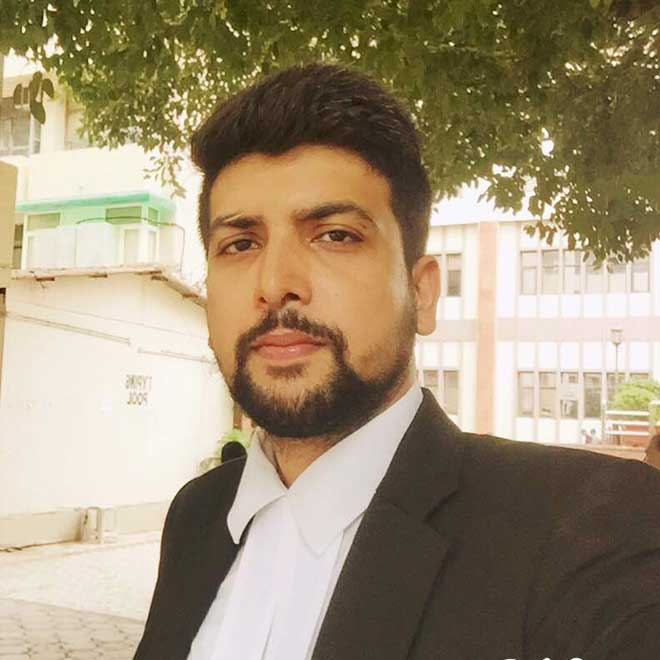
    Mritunjay Kumar Tiwary graduated in law from D.E.S. Law College, Fergusson Campus, Pune University, in 2009. After successful stints with the New Delhi Law Offices and Indus Legal, he ventured into independent practice. In 2013 he co-founded AGM Partners, a  firm that advises various corporate clients on issues relating to infrastructure, non-banking, employment, labour and compliances, etc., including all litigation cases. He later branched out of AGM Partners to establish himself as an independent legal practitioner.

    In this interview we speak to him about:

    • Starting his own firm
    • His experience in litigation
    • Being an independent practitioner

    How would you like to introduce yourself to our readers?

    I am a third generation lawyer. I was born into a family of lawyers in Jamshedpur, Jharkhand, the first planned industrial city of India. I did my schooling from Loyola School, Jamshedpur. My grandfather and father are lawyers based out of Jamshedpur. My family has an established practice in Jamshedpur, especially my grandfather who has been practicing for almost five decades now, and is considered the most reputed lawyer for labour law disputes and compliances in and around Jamshedpur. My grandfather and father have clients ranging from companies, hospitals, schools, restaurants, and more. Being born into a family of lawyers, I was attracted to the uniform and hustle-bustle of the court premises from an early age. My family not only wholeheartedly supported me when I decided to study law but has been a major driving force in encouraging me to practice litigation in this competitive world, when the easier choice was to take up a job. The faith my family reposes on me motivated me to set base in Delhi to build my own identity in the legal field and not opting for easy and comfortable life back in Jamshedpur.
     

    Give us a brief overview of your life at law college.

    After finishing my school, I decided to purse law under the five years B.S.L. LL.B. program. My grandfather first wanted me to pursue graduation from the University of Delhi and then pursue a three year law course from Campus Law Centre, University of Delhi. He did not want me to rush into the decision of pursuing law as career, considering the hardships and challenges on this path. But I could manage to convince my grandfather and thereafter, he not only supported my decision but has always been there as a guiding force along with my father.

    I pursued law from D.E.S. Law College, Fergusson Campus, Pune University. My college was part of the same society as that of the esteemed and renowned Fergusson College and shared the same campus. I was part of the first batch of the college in 2004, which was working towards becoming one of the leading law colleges in the country and also gave me an opportunity to grow with it all throughout my five years. The law college itself being in the initial years of its formation provided more opportunities for individual development. I took an active part in college activities, and was a key member of the Placement Committee. Being the first batch, we had to work hard to secure placements for ourselves. In the year 2009, the world was passing through the phase of recession and there were more pink-slips than job offers. I firmly believe I have blessings of the Almighty and I was the first student from my college to secure placement in a law firm M/s. New Delhi Law Offices (NDLO) at New Delhi. NDLO is a full-service law firm being an offshoot of JB Dadachanji formed in the year 1992, wherein I handled a variety of litigation and advisory matters. NDLO had offered me an opportunity to interface with several clients, domestic and international which helped me to better my legal and commercial understanding.


    How much of a role do GPAs play in shaping one’s career path?

    Personally, I was a student who never studied throughout the semester or had an inclination to work very hard to get good grades. My intention was to work towards getting decent grades for which I studied few days before the semester exams and the result was that I passed my law from the University of Pune with a First Class Degree. University of Pune followed the orthodox way of correcting the papers, wherein it got difficult for students to pass, unlike the deemed universities. And in such a space, I was blessed to secure First Class for the reason that I never allowed pressure of securing good grades affect me.

    I believe your grades don’t define you, but they do still matter in shaping one’s career. This is something every student must remember. In the same breath, I also say that by caring too much about grades, most students are missing the point of education. We should not forget that the idea of education is to not just obtain good grades but strive for overall development, especially in the field of law. I think education is for self-improvement and to figure out a place in the world. With this in mind, I say that grades are a necessary part of the education system but they aren’t necessary part of the strengths of becoming a good lawyer. Forget the pressures of grades and just try to become a hard-working lawyer and everything shall follow.


    What kind of internships did you engage in during your student years?

    Internships provide an opportunity for students to increase their knowledge of substantive areas of law and gain exposure to the real work environment. Internship is a tool which aids in deciding one’s career path. During my college days, I never focused on one branch of law, I tried to experience everything, so as to find my self in an able position to decide my future. 

    I did six internships during my college days, which includes interning with Tier I and Tier II law firms, independent legal practitioners, and corporate,  for a holistic experience. I started interning with my grandfather, Advocate K. M. Tiwary, Jamshedpur on labour matters, which gave me a first-hand experience about the functioning of lower courts and how trials are conducted. It is important for every law student aspiring to be a litigation counsel to undergo the wriggle of the trial court and its working during the initial years. My decision to intern with my grandfather was quite rewarding. He invested a lot of time in me to explain the functioning of the courts, the job of a lawyer, etc. This immensely helped me to gain confidence to appear in a courtroom and gave a detailed insight into the litigation world, while I was still a law student. Thereafter, I interned at Dua Associates, New Delhi with the Arbitration and Litigation Team, Amarchand Mangaldas, New Delhi on IPR matters, Mulla & Mulla & Craigie Blunt & Caroe, Mumbai, on litigation matters. To gain corporate experience I interned in the legal division of Reliance Retail Ltd., Mumbai, and with in-house legal team of Standard Chartered Bank, Mumbai. Having gained such varied experience helped me decide my choice of career, i.e. litigation, non-litigation or corporate. Therefore, internships offer opportunity to experience different spheres of law and in my case I happily chose litigation and advisory.

     

    What are your areas of specialisation, and when/how did you go about choosing these?

    I would like to say that I am a student of law practising in the areas of my interest. And I found my share of interest during my internships in law college in the field of arbitration and litigation. Law is such a vast field that it’s difficult for me to say what I specialise in.

    Over the years, I have gained the experience of representing a large number of Indian and multinational clients in complex and intricate arbitration cases, as also before courts at all levels in India for enforcement of awards/decrees. Some of the major arbitration matters I have handled relate to international procurement contracts, cross-country gas-pipeline laying contracts, supply and procurement of gas exploration and loading equipment, construction of airports and highways in India, building and construction laws, apart from a wide range of other commercial contracts. I have also been representing clients and advising them on litigation matters in relation to civil and commercial litigation, banking, non-banking, employment, labour and compliances, construction and real estate related matters, probate and property rights, in addition to matters of intellectual property rights. With my own experience, I can say that litigation offers unparalleled thrills, the adrenaline rush that accompanies addressing a courtroom packed with audience, the power to shape the outcome of disputes, there is no feeling better than this.

    Right after law school and clearing the bar examination, every student is all set to get started on their legal career. Until now, every student has more of a theoretical knowledge of the working of the legal system. Law school along with internships teaches every student to think like a lawyer, but to gain practical experience and decide on your options, you need to analyse your priorities. Do you want to work that pays more or something that is of your interest even when it offers lower compensation? Are you a workaholic or do you seek to maintain a work-life balance? Only after you analyse your priorities you will be able to make the most of this noble profession.

    However, my advice to every fresher would be, while there is no bar to begin practice (litigation or non-litigation) entirely on your own, the customary route is to work under an established advocate or a law firm. The nature of work would certainly depend on the place you choose to begin your career. I would suggest every fresher to find an advocate / law firm who is able to invest time in you and supervise and guide you through in your initial days of practice. This is the most important aspect of becoming a lawyer.

    Finally, learning clerical work is also important for every fresher, especially for litigation. One should learn the art of maintaining the case diary, to see whether office files are in order, keep a close eye on how the filings in the courts are done, etc. So never take it to be menial work, as it holds an important place in a lawyer’s professional sphere.


    Would you say law school prepared you for the real world practice of law? 

    Your career is probably nothing like your days in law school. Theoretical knowledge of law schools is distinct from the practical world of law. After stepping out of law school, my life had changed. I had to put in more work hours than the others who were already in the profession. The art of drafting, handling a matter independently, advising clients, interpreting statutes, etc. is learnt through years of practice after putting a lot of hard work. Frankly speaking, we cannot be taught how to be a lawyer in a college and the same is attained through years of efforts and hard-work.

    My first stint at NDLO had given a good start to my career with a great learning experience. After leaving NDLO in November 2010, I joined Indus Legal, founded by a former partner of Dua Associates, Mr. Navin Kumar. With the guidance of my senior and assistance of an able support team, I was able to render legal services to various clients of the firm on a vast and varied legal framework. I worked in the areas of civil, commercial, and arbitration laws in the High Court at Delhi, Punjab and Haryana, Mumbai, etc., apart from conducting cases before domestic Arbitral Tribunals, the National Commission and other Tribunals and forums in and outside Delhi. In July 2013, I established my own law firm by the name AGM Partners along with two other partners. The firm progressed well and provided a vital platform to develop a commendable face value in the courts as also with various clients of repute. Litigation and arbitration being the major areas of practice, one had the opportunity to gain considerably in experience and stature. Towards the middle of the year 2016, I branched out of AGM Partners and started working as an independent legal practitioner. I still continue to provide quality legal services to my clients in various disciplines of litigation and arbitration practice. I have also been acting as of-counsel for various law firms.
     

    What are the challenges that one needs to prepare himself/herself for when they step out of the comfort of a law school and into the real working world?

    The field of law today is full of challenges and opportunities. The foremost thing to remember especially for the lawyers trying to make a mark on the litigation side is that there will be very less money in the initial days of work. Fat pay cheques and perks are unheard of unless you are working in Tier I Law Firms. Always keep in mind throughout your initial years, that you are here to learn work and even if you are not paid well and get to do fancy work, take it to be be as tuition fees for learning art and skills to become a lawyer.


    During your developmental years as a lawyer, did you have any mentor(s)?

    I am blessed to be born in a family of lawyers, because I am part of this esteemed fraternity today just because of them. My grandfather Mr. Kapil Muni Tiwary, an Advocate having experience of almost five decades has been a great source of inspiration to me. If I inculcate even ten percent of his hard-work, daily routine and discipline, which he practices even at the age of 87 years, I shall be doing wonderfully as a lawyer. My father, Mr. Anil Kumar Tiwary’s hard work and his sincerity towards his work has been a guiding factor in my work life too. My father is one of the great personalities in the legal field in Jamshedpur who provides free legal aid in today’s world. My father is Secretary of his Bar Association for last eight years because of his good work in the legal fraternity. My grandfather and father have dealt with varied subject matters handling a plethora of cases throughout their career. I derive my confidence, professional ethics, strength and legal acumen from them and my family. Also, my mother’s role in my life has been of great importance and she has always supported my decisions.
     

    You were a Senior Associate at a reputed firm, Indus Legal. Why then did you decide to take a leap of faith and establish your own firm?  

    This question reminds me of my conversation with my father in April 2013. He had also asked me why I wanted to step down from a comfortable position to start my own firm? It made me think twice, when something like this came from my father who has made a mark for himself in Jamshedpur as an independent legal practitioner. But I had immediately realized he was being a father that on how would I cope up professionally in such a city when I go independent, where I had no backing at all and he knew what pain an independent lawyer has to go through.

    Thrill of being independent and working on your own gave me the courage to move out and start my own firm. The idea to start my own firm popped up during conversation with my friends, who also later on became my partners in the firm. I personally always wanted independent practice and even when I was working under someone. After four years of practice with the firm under the guidance of my seniors, I decided to open my own law firm by the name AGM Partners along with two other partners. AGM Partners was always special to me. We had established a decent number of clients who had kept all of us in AGM partners, very busy with the work. The thrill of working on your own in unparalleled.


    What then motivated you to leave your position at the firm and take up independent practice?

    It would not be called motivation, rather circumstances made me decide to part ways with my partners and the firm and take up solo practice. There was a huge imbalance among the roles headed by each Partner, to which I accommodated for two and half years so that the firm’s progress is not interfered with. However, I realized this is not going to change and the disparity in the execution of every Partner’s roles caused a lot of frustration deep within. Towards May 2016, I branched out of AGM Partners and started working as an Independent Legal Practitioner providing quality legal services to all my clients in various disciplines of litigation and arbitration practice. Through what I have experienced I can share with all of you that if you desire to operate a law firm in partnership module, remember to have like minded people on board, otherwise life gets miserable.
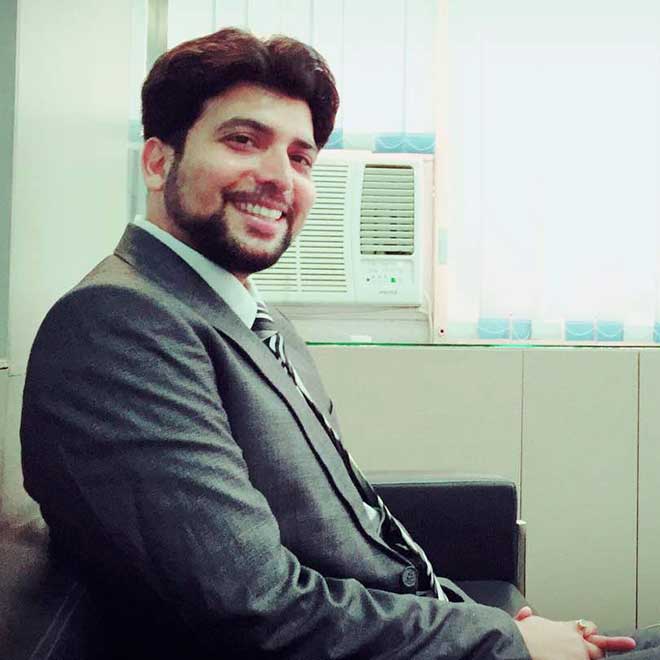
     

    Where do you see yourself ten years from now? What are the avenues that your line of practice opens up for one?

    I never make long term goals. I believe in achieving my set goals at every short interval to keep my enthusiasm alive. As far as my life after ten years is concerned, I would like to see myself working in the same way on a larger scale and always keep getting better as a lawyer. Litigation has a slow growth but one who is sincere and keeps putting in hard work along with patience will grow one day.


    What is your message to our readers?

    Remember, your initial years of work experience will decide the entire course of your legal career. In these initial years, you can grow your skills, enhance your network and build your future. Whatever you choose, make sure you give it your best. Patience, along with continuous hard work is the key to success in this profession. Here is wishing everyone the very best for a great experience ahead.

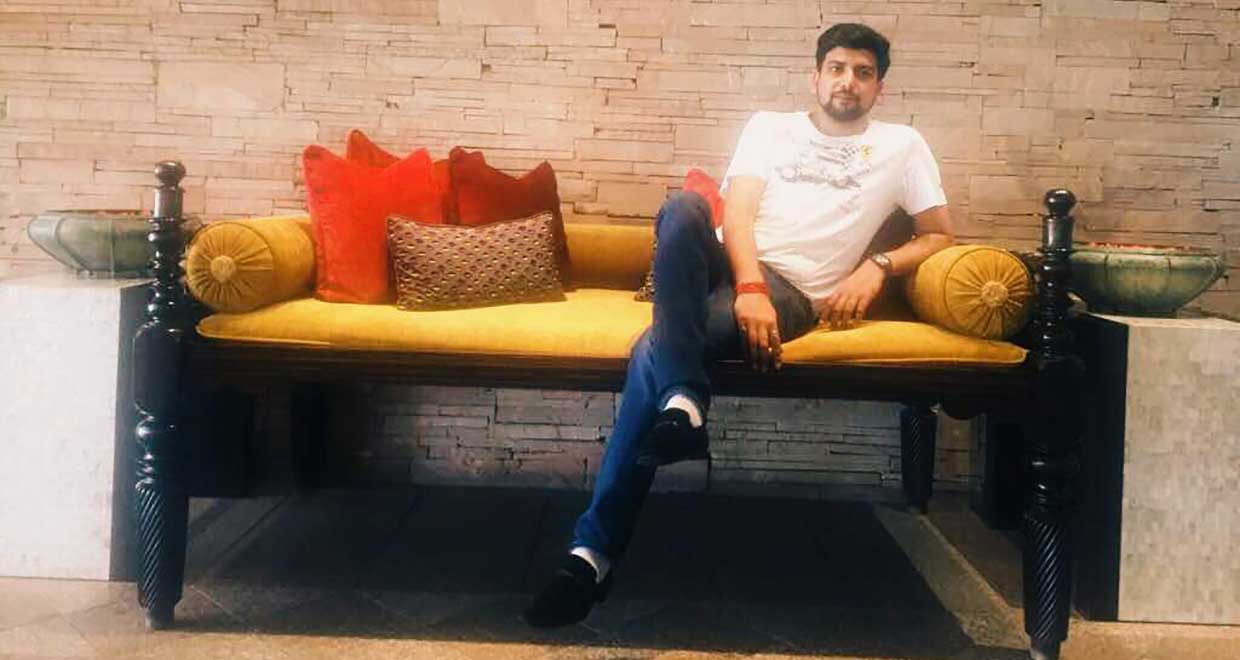


  • Sudhir Reddy, Founder, Reddy & Reddy Advocates & Legal Consultants, on LL.M from Cardiff and Mediation course from Oxford

    Sudhir Reddy, Founder, Reddy & Reddy Advocates & Legal Consultants, on LL.M from Cardiff and Mediation course from Oxford

    Sudhir Reddy graduated in LL.B from DES Law College, Pune University in 2009, after which he pursued his Masters from Cardiff University, United Kingdom. After completing his degree in Masters he worked in a law firm called Thodur Law Associates as an Associate Advocate. He also pursued a course of Civil/Commercial Mediation from Oxford and became an Accredited Mediator in 2014. At present, he operates his own law firm which has a practice of both litigation and corporate work.

    In this interview we talk about –

    • Choosing International Commercial Law as his specialization for LL.M
    • Pursuing a course of Civil/Commercial Mediation from Oxford
    • Becoming an Accredited Mediator by 2014
    • Starting his own law firm “Reddy & Reddy Advocates and Legal Consultants”


    Given that most of our readers belong to legal fraternity, how would you introduce yourself to them?

    To start with I am a practising advocate mainly practising in the Pune courts and the Mumbai high court. I completed my LLB from Pune University and my LLM from Cardiff University, United Kingdom. I am also a certified civil and commercial mediator .I run my own law firm in Pune which deals with litigation as well as corporate work. However before starting the law firm I did work under senior attorneys at different High Courts so that I could earn some practical experience and confidence to start my own firm. My experience in Law is not just confined to the Domestic laws but I have also gained experience in mediation and negotiations in United Kingdom after completion of International civil and commercial Mediation course from Oxford.


    Having done B.Com, what motivated you to choose law as a career? Or did it just happen?

    To tell you guys the truth, my foremost aim was to become a lawyer but being from a business class family I had to learn certain aspects of commerce mainly accounts so that I would be able to put in my efforts in the working of my father’s established business. Also having knowledge in commerce helped me cater to my corporate clients in taking managerial decisions.


    As a law graduate of Pune University, have you faced any comparison with NLUs? What would you say to the future graduates of Pune University regarding this?

    I personally feel that these are all pre conceived notions that only the NLUS can provide the needed exposure to its students. Ultimately the laws are the same it’s up to the student how he/she decides on to shape up his/her life. I personally took the needed effort to attend various seminars and small conferences pertaining to law, held during my period at the law school. It’s the knowledge you imbibe that matters which should be practical as well as theoretical knowledge.


    What were your areas of interest during your graduation? How did you go about developing expertise and knowledge in these areas?

    As a law student I never wanted to confine myself to any particular area of law. My main aim was to absorb and learn everything which was taught to me during my classes and my internships .But I had always enjoyed negotiating and mediating any disputes and I realised I was good at it because I was always successful in solving a dispute. This made me realise that I had an inclination towards solving disputes in a peaceful and non-stressful manner. I did have keen interest in alternate dispute resolution systems and outside court settlement procedures and so I become a mediator.


    What are your thoughts on activities like mooting, debating and publications in journals? What skills do law students acquire by engaging themselves in such activities?

    I have always been of an opinion that in an all-round development of a student activities like mooting, debating play a crucial role. This is where the student develops its confidence and learns legal interpretation .Also these activities will help students in inculcating good research skills. The students also realise what exact field they should be taking up after college after doing these activities.


    Right after graduating, you went for LLM. Why did you decide to go for higher studies?

    Going for LLM right after graduation was my game plan since the time I joined my LLB course .My main intention for pursing LLM was to well equip myself with the international legal scenario.UK being a common law country I was sure that this experience will benefit me in expanding the horizons of my legal knowledge internationally .


    How did you choose Cardiff University over others? How did you go about choosing a university?

    The main reason to choose Cardiff University was that it is one of the royal charter universities and also one of the well ranked universities in UK. Along with that it had a beautiful campus and an apt course that attracted me to choose this university over others.


    Why did you choose International Commercial Law as your specialization for LL.M? What motivated you to pursue your LL.M in International Commercial Law?

    My course comprised of variety of subjects like international banking, competition laws, international corporate governance and World Trade organisation, which were entirely different than the regular curriculum taught to law pursuants in India. Also there was a wide range optional modules we could opt for hence I chose to peruse International Commercial Law.


    What advice would you give to people who are trying to decide which area of law to specialise in?

    Do your internships in all the fields. Participate in moots, debate, paper presentations and client counselling competitions. All this will help you understand your weak points and make you sure on what areas of law you like and what kind of practise you are good at.


    After completing your Masters, you worked at Thodur Law Associates for an year as an Associate Advocate. How did you secure your appointment? Did you apply or got an offer from the law firm?

    After my LLM I wanted to gain practical experience for getting myself acquainted with the procedural part of a legal proceedings, Thodur Law Associates is a law firm based in Mumbai practising at High Court hence there were larger chances of me getting a vast experience.

    I had gone to Mumbai after I was back from United Kingdom to search for prospective law firms where I could actually gain practical experience. Coincidentally I met the senior partner of the firm, I narrated to him my reason for applying in the said firm, he was very impressed seeing my urge to learn and I was told to join right from the next day at their firm.


    How did you overcome your initial jitters in a courtroom full of experienced lawyers and judges? Tell us about the highs and lows.

    I am a supercharged guy since childhood, talking to unknown people, making new friends or being at a new place with new surrounding was never a challenge to me. But I still remember the first time I appeared in front of a judge was at the Bombay High Court. As soon as I stood up to mention the said matter I went blank and stood right in the same position for good one minute without a single word spoken. The judge sort of understood that I have frozen so he sort of covered up for me and told me to come next day.

    And since then till now I have changed tremendously .Now I wait eagerly to appear at the court and to prove my point.


    sudhir-reddy-1

    Thereafter, you have started your own law firm Reddy & Reddy Advocates and Legal Consultants and currently you are the Managing Partner of the firm. What prompted you to make this choice and start your own law firm?

    It’s my father’s confidence in me which gave me the courage to start my own law firm. He has been the backbone of the firm since the day of the inception of Reddy & Reddy, Advocates and Legal Consultants. He has supported me when I needed encouragement and confidence the most. To be frank there were many to discourage but few to encourage. But somehow the voice inside told me to go ahead and prove it that I can do it.


    Please tell us a bit about “Reddy & Reddy Advocates and Legal Consultants”. What is a day at work like? Is it easy to have a work-life balance?

    My day at work starts with my morning prayer and then a quick workout. I am in the office quite early because I need to take quick updates about the distribution of the work to the associates for the day. I then go ahead and start with all my client meeting and if I have an argument for the day I take a quick look at the case and have fun leading the argument at the court. There are times when I spend the whole day in the negotiation for my corporate clients but having a remarkable team keeps me relived that my office functioning at its peak. I end my day at office by taking updates from all my associates along with a nice cup of coffee.


    Tell us about the practice areas of Reddy and Reddy Advocates and Legal Consultants.

    Reddy and Reddy Advocates and Legal is  Based in Pune, it offers a full range of legal services on all aspects of the Indian law to a diversified client base, including well-known multi-national corporations functioning in India. In addition to serving our clients directly, our lawyers serve as experts of Indian law in both transactional and litigation matters. In particular, the firm has a strong practice group that specializes in mediation and negotiation, credit management, real estate, property & land laws. We are dedicated to our clients’ needs and we strive to achieve total satisfaction for our clients by legal excellence.


    Our clients include major Banks, Non-Banking Finance Companies, Real Estate, Multinationals, Industrial Houses, and Software Companies.

    The firm’s lawyers have an average experience of over 5 years in handling complex legal issues touching on almost all aspects of Indian law. We combine a personal approach with high professional standards and aim at providing comprehensive legal services to our individual, corporate, financial and commercial clients.


    In the meantime, you have pursued a course of Civil/Commercial Mediation from Oxford and became an Accredited Mediator in 2014. What prompted you to pursue this course and became a certified Mediator?

    Mediation is the next revolution in the legal field. Since our country is evolving in a very fast pace the people of our country want every issue to be resolved as fast as possible. Being a lawyer I have practically seen how burdened the court is with numerous cases. Before going for the course few of my clients had asked me if I knew any commercial mediator and that is when I decided why not me. I looked for few courses and I found the one in Oxford is what suits my requirements perfectly.

    Meditation is already a very upcoming requirement for the multinational companies because they have clients all over the world and solving disputes outside the court is more convenient for them. Mediation is immensely into existence in the European and the western legal system. So it’s always better to do a course on mediation and negotiations it will surely help them in the future.


    You have a couple of orders to your credit. Do they change one’s recognition?

    (Sudhir has orders to his credit in criminal litigation, consumer disputes, land disputes, family disputes and outside court settlements in labour and industrial disputes)

    It just makes me want to work even harder because I want to keep my clients always satisfied. My only aim is that when the client agrees to take services from us he/she attains the best of the services which my firm can provide.

    Regarding once recognition, yes it does change the recognition as it shows experience a person has and the dedications the person has put in to get the desired results.


    What were the difficulties you faced in the early days of your practice? How difficult would you say it is to build a reputable practice?

    Early days were relaxed and peaceful. I did have work from the day I started my own office but the stress of uncertainty was always there. Although it will be wrong to say that the uncertainty is not present anymore because our firm is still in its growing stage.

    I also want to say that it is quite difficult to build a reputation and then harder to maintain it, one really needs to have lot of patience in order to raise your own organisation from one level to another.  You need to have a good team with you to run the show and thankfully at this point of time I have an awesome team who helps me, guides me and back me up everywhere.


    Do you take interns? What do you look for in a prospective applicant?

    Yes, we do take interns. When we get an application for internship we usually don’t see the scores and credentials of the student because we understand different universities have different ways of marking. We usually see the cover letter and the practical experience the applicant has provided in the application and most importantly the urge of the applicant to work and learn.


    What would be your message to law students who dream of having their own law firm one day?

    Never give up. Enjoy your failure because this is the way you are learning and this is how you grow as a person. According to me there are 4 stages involved if u want to start your own firm. At the first stage you have no work no money ,second stage only work no money at the third stage good work good money and finally the fourth stage less work only money.

    Not necessarily it has to go the same way but that’s what it is like in the holistic picture. Be confident and kick off.


  • Chinmay Bhosale, Advocate, Bombay High Court, on working with reputed Senior Advocates, Criminal Law practice and choosing litigation

    Chinmay Bhosale, Advocate, Bombay High Court, on working with reputed Senior Advocates, Criminal Law practice and choosing litigation

    Chinmay Bhosale is a graduate from ILS, Pune 2010 batch. He has been a consistent topper of his batch at University of Pune, he had also been selected in the final list of Rhodes Scholarship 2010.

    It has been five years since he joined the Bar and he has worked on high profile cases with intense legal issues like the 2G case, Hawala Scam Case, Maval Police Firing Enquiry Commission, Adarsh Commission, etc. Currently, he is pursuing his Ph.D and the topic for his thesis is ‘Malicious Prosecution’.

    Chinmay talks about :

    • His experience interning under Ashok Mundargi, Senior Counsel and Adv. Shreekant Kanetkar, Ex-Chairman, Bar Council of Maharashtra and Goa.
    • Choosing to litigate as against pursuing post graduate studies.
    • Criminal law practice in India.
    • Working on high profile cases.


    Given that most of our readers belong to legal fraternity, how would you introduce yourself to them?

    Chinmay Bhosale, to be brief J. A confident lawyer with an eidetic memory, who eventually wants to contribute to the legal profession, education and jurisprudence in my own maverick way.


    Legal studies are still only a backup option for quite a lot of students. What motivated you to choose law as a career?

    Choosing law as a career came very naturally to me. I come from a family which has acclaimed legal luminaries who have achieved success in varied fields and capacities; be that of a Senior Advocate, Chief Justice, Vice Chancellor or even a Law Minister. So, I have always felt very humbled by my surname and have had a natural awe towards law.


    What were your areas of interest during your graduation? How did you go about developing expertise and knowledge in these areas?

    I had fleeting interest in International Law at once, which led me to pursue and win a National Moot Court relating to the subject. However, my major and “only true love” has been criminal law. Apart from having immense interest in subjects like IPC, Cr.P.C. and Evidence Act, as a student I even tried to cover peripheral sub-areas like human rights, medical jurisprudence and forensic science by way of diploma courses. Also, three out of five years of my law school life I interned with Senior Advocate Ashok Mundargi, one of the giants of the criminal bar at Bombay. The internship gave me great insights into the ‘practicality’ of criminal law and the profession.


    Tell us about your law school journey from the 1st year till your final year at ILS Law College, Pune.

    My 5 year journey at ILS Law College, Pune was quite eventful. I had my share of highs and lows. I entered as an low-on-confidence novice, and emerged as a confident and ‘borderline arrogant’(as some would say J ) advocate. In this transition I tried to do a bit of everything from topping the University thrice in my five years, winning a national moot court, being the Student Representative of my batch for three years, being a part of the Student Council of ILS Law College, Pune, completing four diplomas, interning with Senior Advocates and even being amongst the final 15 students for Rhodes Scholarship, India. However, the most humbling and learning experiences were my failures, which were quite a few J


    Tell us, what kind of work did you do in your internships with Senior Counsels?

    (During his law school Chinmay has interned under Adv. Ashok Mundargi, Senior Counsel and Adv. Shreekant Kanetkar, Ex-Chairman, Bar Council of Maharashtra and Goa.)

    I was almost like a permanent intern with Senior Adv. Ashok Mundargi, as every vacation I used to be working in his chamber. Most of my time at his chamber was spent observing his arguments and interactions at client conferences; and partly trying to contribute to his arguments. My experience with Adv. Shreekant Kanetkar was quite enlightening, more because I understood that I had little or no liking towards civil laws. However, at his chamber I learnt the art of productive and crisp research, as most of my time was spent trying to learn the concepts of civil law.


    What is your advice to budding mooters?

    (Chinmay has participated in various National and Intra-College Moot Court Competitions and he was a part of the winning team of the Technology Law Moot Court Competition, IIT Kharagpur (Rajiv Gandhi School of Intellectual Property Rights), 2008.)

    Well, I never was a great mooter, so it wouldn’t be appropriate for me to give any advice on that. However, I would definitely like to say to all the budding mooters out there that please do not consider moots as the whole and sole of your life at law school. Moot courts are bereft of reality, and there is a lot more to your life at law school than mooting.


    How important do you think are co-curricular activities in shaping the legal career of a law student?

    I think co-curricular activities play a major role in shaping the legal career of any student, especially of those who wish to be a part of the action in the Courts. Quite often, it’s the persona of the Lawyer which stands out than his knowledge of law. Co-curricular activities play a major part in honing that persona. For me, I was an avid trekker, a national level sportsman and had varied interests like playing tabla, learning graphology etc. All these activities have definitely helped me in succeeding at the bar.


    chinmay-s-bhosale-1

    How was your first year after graduation?

    It was quite an internal struggle. As a law student I had an inkling towards pursing my post graduate studies from U.K. and I had admission letters from majority of the elite universities like London School of Economics, University College of London etc. However, I chose to enter the Bar straight away, as that is what I always wanted to do. So I started out in Mumbai, a city which has taught me a lot. I continued as a junior advocate at the chamber of Adv. Ashok Mundargi, where I had already interned for three years. Thereafter, I joined the chamber of Adv. Satish L. Maneshinde.


    What comprised your work at the chambers of Adv. Ashok Mundargi and Adv. Satish L. Maneshinde?

    Working as a junior advocate at the chamber of Adv. Ashok Mundargi came as a natural continuation, as I had worked previously with him. However, at some point I felt the need to learn the nuances of criminal trials. Adv. Satish L. Maneshinde is the biggest personality in Bombay when it comes to criminal trials. I always had a desire to work with him. It was at his chamber that I learnt that a legendary advocate is also a legendary persona. My experience with both of them was quite antithetical, however equally enriching.


    Please give us some highlights of the high profile cases you worked on for the benefit of our readers.

    (Chinmay has worked on high profile cases with intense legal issues like 2G case, Hawala Scam Case, Maval Police Firing Enquiry Commission, Adarsh Commission, etc.)

    I have been very fortunate to have had the pleasure of working with three Senior Advocates viz. Adv. Ashok Mundargi, Adv. Satish L. Maneshinde and my father Adv.Dr. Sureshchandra Bhosale. I got to work on endless high profile and intense cases. In cases like 2G scam and Adarsh Commission I played an assisting role, gaining a world of knowledge. On the other hand, in cases like Maval Police Firing Commission I had a very active role in recording of evidence of numerous witnesses and arguing the matter, where I defended the Maharashtra Police successfully. Apart from the love of law, one also needs to have a healthy affection towards tireless reading in order to succeed in such intense cases.


    You have started your criminal litigation practice. What influenced your decision to start criminal practice after graduation? Why not civil litigation or corporate law practice?

    As I have stated earlier, I have always had a great liking towards criminal law. It is, as they say, in my blood. My father is one of the topmost and famed criminal lawyers of Maharashtra, and that worked as a catalyst for my decision. Also, having interned with a Senior on the civil side had given me a clear idea that I did not have any inkling towards civil or corporate law.


    Please tell us about your experience with regard to your first few years in Court. Has it become more difficult for a fresher to achieve success?

    Your first few years at the bar are majorly spent observing the proceedings, and it wasn’t very different for me either. Almost all the freshers undermine the necessity of this period, and pretend to be observing. However, this is the period which will define the trajectory of the life at the bar. As rewarding and fulfilling your life can be at the bar once you are successful and a known figure, it can be equally tiring and frustrating in the earlier stage. I would advice all the freshers to patiently outlive this difficult phase, without compromising the “observing”.


    Your main area of practice consists of criminal litigation. Please elaborate on the cases you normally deal with.

    My 75% work consists of criminal litigation, rest 25% is criminal consultation what they call “white collar crimes”. Thanks to the repute of my chamber, I have the good fortune of dealing with intense criminal cases day in day out in the Courts. They range from cases of murder, attempt to murder, marital cruelty, cheating and forgery, cases under the TADA, MCOCA, Anti- Corruption etc. Apart from that, there is a heavy inflow of corporate or white collar crime cases which are majorly economic in nature.


    chinmay-s-bhosale-3

    You are also pursuing Ph.D. Your Ph.D. thesis is on ‘’Malicious Prosecution’’. Why did you choose this particular topic in particular?

    Even though there is a plethora of cases that I myself defend every day, the truth is that accusations in 90% of the cases are baseless. In my 5 years at the Bar I had to face a conviction only once as a defence counsel; and that led me to choose my Ph.D. thesis topic. In India criminal prosecutions are handled very irresponsibly, as making allegations is free in our country. At the end of the trial, the accused is only handed over a judgment of acquittal. However, the loss of reputation, business, peace of mind, time, etc. are never accounted for. It is my endeavour to make extensive study of the concept of “Malicious Prosecution” and put forth suggestions for effectively preventing the same in India.


    Indian criminal law is, to a large extent, influenced by its British counterpart. Do you think if Indians would have framed our Penal Code, it would have been better?

    It is not largely influenced, it is entirely prepared and influenced by the British. However, it would be very harsh to say that Indians would have done a better job. I feel the law commissions of 1833 and 1853 have done an exceptional job, which eventually materialised into the Indian Penal Code. Since 1860, it has required far lesser amendments than what our very own Constitution of India has needed since 1950.


    If you were asked to suggest some changes to the present Indian Criminal law, what would they be?

    It would definitely be adding a chapter relating to ‘Malicious Prosecution’ in order to curb the vexatious litigations. Also, to have an effective change in the lives of common people, the fine component of all the crimes should be substantially hiked in order to have a deterrent effect as was intended.


    Tell us about a case that you are particularly proud of. What steps do you take to prepare for a difficult case?

    I am proud of all the cases that I have handled, as I would like to believe that I put in equal amount of hardwork in each and every one of it. In order to succeed at the criminal bar, it is absolutely essential to know each and every nuance of the criminal law, majority of which is now defined by plethora of judgments. Minutest of the aspects can lead to an acquittal or conviction. Hence, I start my preparation the other way round. After reading the chargesheet, I first get well versed with the possible intricacies of criminal law involved and the settled case laws on every such point. Thereafter, accordingly I prepare for my cross examinations. If you successfully follow this approach, arguments remain as a mere formality.


    How is your experience so far? What is your workday like? Are there new challenges every day or did work fall into a predictable pattern?

    It has been a fulfilling journey so far. Eventually, how is your experience at the bar, is totally dependent on your mindset. Even our planet has to go through various seasons, it’s not too different for the lawyers J .


    Beside your professional achievement, you are also active in many other activities. Please tell us about them.

    (Chinmay has been a national level player of Netball and state level player of Basketball. Chinmay is also trained in Graphology (Hand writing analysis) by world renowned graphology expert Mr. Milind Rajore and a certified student of his institute.)

    I always had a penchant for sports, and was very good at it too. This led me to participate at a competitive level both at State and National Level. As far as Graphology is concerned, I am a very curious person. So it was simply out of the curiosity to know more about hand writing analysis that I started learning it from a renowned graphologist. It did help me in quite a few cases involving forgery too.


    You are also engaged in social service activities. Could you enlighten us, in brief, about your role.

    I was briefly involved with MAD(Make a Difference) Organisation wherein I taught English to under privileged and slum children. Also, I am associated with an organisation named CFC (Contribute for Change) where we economically aid people for varied things like medical treatments, education, sanitation, tree plantations etc. I strictly believe that I should be living my life in a way that I can reach a vantage point, from where I could bring about some change in lives of as many people as possible.


    What do you look for in the profiles of the people you collaborate with?

    Confidence is utmost important for me, as the members of my team have to interact in the Court on a daily level. Moreover, the thirst for knowledge should be apparent alongwith the confidence. Either of the two, single handedly, are not of much use.


    What would be your parting message to law students who want to litigate just after graduation?

    Well, choose litigation only if you have tonnes of patience and an unshakeable will power. However, for one who possess both these qualities, life at the Bar will be very rewarding.


  • Harshavardhan Jogdand, Senior Legal Manager, Volkswagen, on being an in-house counsel and pursuing an LL.M while working

    Harshavardhan Jogdand, Senior Legal Manager, Volkswagen, on being an in-house counsel and pursuing an LL.M while working

    Harshavardhan Jogdand graduated from Pune University in 2006. He is currently a Senior Legal Manager at Volkswagen Group. After graduation, he joined Pratap Pardeshi Associates immediately while simultaneously pursuing a regular two-year LL.M from Bharati Vidyapeeth University, Pune. Therafter, he joined Triton Group as Manager-Corporate Legal. He subsequently joined Bata India Ltd. as Legal Manager of the Western Region.

    In this interview he talks about:

    • Pursuing an LL.M while working at Pratap Pardeshi Associates
    • Working at Bata India Ltd.
    • Being Senior Legal Manager at Volkswagen Group


    Given that most of our readers are law students and young lawyers, how will you introduce yourself to them? What motivated you to choose law as a career?

    I’m a passionate, self-motivated and result oriented legal professional working with one of the biggest automobile companies in the world i.e. Volkswagen. Initially, I admitted myself to the three year law course (LL.B) merely as a backup option, while I was preparing for Civil Services Examination (UPSC Exams). However, since the very first lecture of LL.B. I found the legal profession fascinating and it took me very little time to realise that it was my true calling. I never looked back since then and pursued a career in law wholeheartedly.


    Being a science graduate, did you face any difficulties in law school? Can you share with us certain tips to overcome the issues science students face with law?

    That is true to some extent as we Science graduates are not good when it comes to writing long answers. We are tuned to more of 2+2=4 kind of thinking; but on the contrary in the legal field you need to be more elaborative and descriptive. This is the only problem I as science student faced during this change of stream. Apart from this one issue, a science background is in fact a blessing, as Science and Law are both fields which demand logic and analytical skills and Science stream develops these two qualities to their maximum.

    I took help of the technique of creating ‘mind maps’ while studying and preparing notes, which helped me to graphically summarise concepts and laws. It helped me navigate through different concepts and laws, find connections between them and also to comprehend the content from books in a better way. I would also like to say that citing case laws and their Ratio is extremely important and all law students must develop the habit of reading citations and including them while writing answers. This is not only helpful in scoring marks but it is a vital process if you get into litigation as a practising attorney in future.


    Tell us something about your college life. Which activities did you participate in? What were your areas of interest during your graduation? How did you go about developing expertise and knowledge in these areas?

    As we all believe college days are the best days of anyone’s life when it comes to fun, but for me those were also intellectually stimulating days which equipped me to face the professional world after my degree. As a law student one must be open to challenging set ideas and indulge into debates to shape up one’s personality. I participated in moot courts as researcher which helped me to understand the importance of thorough preparation and research. Thankfully I had a bunch of friends who were all very strong individuals and we used to have debates on various topics all days long and I must say all those debates in the classroom and even outside of it over cups of Chai helped us to sharpen our articulation skills.

    Amongst all the areas of law, Criminal law was and is my most favourite area of law till date. I was lucky enough to have eminent practicing lawyers from Pune as my teachers who not only taught me the theory of law, but also dissected the laws and uncovered their actual implementation. Their ‘out of the box’ approach of focusing on ‘application of law in real life situations’ helped me to understand the ‘reality’ beyond books. Once I realised my penchant towards criminal law, I started attending court hearings in Pune on a regular basis. Out of the many trials I attended, I remember Charge Framing in Abdul Karim Telgi’s Case very vividly. Law students must grab every opportunity they get to visit courts during their student years.


    harshavardhan-jogdand-2

    Many lawyers say that the first year after graduation is the most difficult year for young lawyers. How was your first year after graduation? How did you learn the ropes and what were the biggest challenges you faced?

    I agree that the first year is the most difficult year financially if you don’t associate with any law firm which will pay you a remuneration and work with individual attorneys but I would like to assert that the first year is also the most enriching year as far as the learning is concerned. For me, the first year was the most exciting period as I learnt something new about the legal field every day and felt the daily thrill of affixing the logo of attorney on my vehicle; wearing a black coat and appearing before various courts truly fulfilling. One of the biggest challenges for me in this first year was to accept the hard realities of the Court system which largely involved the issue of grass roots corruption and I must say it was not an easy thing for me to accept. I categorically avoided becoming a part of any such transaction and used to walk out of court after my part in court proceedings was over so I somehow managed to avoid the corrupt practices that unfortunately exist at the grass roots level of our judicial system.


    You had started working at Pratap Pardeshi and Associates right after graduation, and thereafter you joined Triton Group as a Manager- Corporate Legal. What led to this shift? Please tell us about your work experience at both these places.

    I joined Pratap Pardeshi and Associates immediately after my graduation. In fact immediately one week after finishing of final year exam as I did not want to miss out on the excitement of attending courts. Funnily enough, I soon found out that it was the vacation time for Court for transfer of various judges, due to which most of the JMFC (Junior Magistrate First Class) and Sessions courts adjourned matters.

    The two years that I worked with Pratap Pardeshi and Associates were very enriching and fulfilling for me as I learnt the ropes of being a practising lawyer. My time with Pratap Pardeshi and Associates still remains the foundation of my career. It is really critical to get a mentor who will give you freedom and also teach you the nuances of the legal field. I will always be thankful to Mr. Pratap Pardeshi who taught me take my first step in the legal field. My two years as a litigation attorney were full of excitement as I got to become part of various trials as defense attorney including one rare Court Martial proceeding wherein I was associate advocate on record along with Mr. Pratap Pardeshi who was the leading Defense Advocate on records of the proceedings.

    After two years I felt that it was time for me to be practical and become financially stable by shifting to an in-house legal job. Opportunity knocked on my doors in the form of a position with Trition which happened to be a multi-million FMCG Multinational which was in the process of setting up its India Operations. It was the first interview of my life and after two thorough rounds I was selected as the first recruit in the Corporate Legal Department of Triton. I was hired as Legal Trainee and rose to level of Manager Legal within a short span of one and half year. My reporting authority Mr. Vincent Fernandez who is the Executive Director of Triton Group not only gave me the freedom to work as per my conviction but also entrusted me with setting up the entire legal department. I was asked not only to consider the legal aspect of work but also the business side of working. Triton provided me exposure to legal work in a corporate which I was completely unaware of as a practicing attorney. In Triton I was instrumental in setting up Contract Management System, litigation management and standardization of various agreements which included Franchisee Agreements, Non-Disclosure agreements, and Employment agreements for locations outside the geographical territories of India more specifically West Africa and Europe. Obviously I had to identify and work with local attorneys which also added invaluable experience of coordinating with foreign attorneys. Considering the growing ambit of work I recruited one Company Secretary and one more legal professional in my team and we effectively handled the Corporate Legal Function for Triton with guidance and effective leadership of Mr. Vincent Fernandez.


    You left Triton Group to join Bata India Ltd. as a Legal Manager of West Region. What motivated this shift? What does it take to a get job at Bata India at that stage?

    After setting up the processes and the entire corporate legal function for Triton Group and working with Triton for more than three years I thought I was ready for a bigger and more challenging position and I was approached for an opportunity with retail giant Bata India, as their Regional Legal Manager (West Region) My two rounds of interviews with Bata were very tough and was a completely different experience from my earlier interview with Triton as the questions were more technical and situation based. I was asked questions based on case studies and it was as they call a “grilling” interview session after which I was selected by then legal and secretarial head of Bata India Mr. A.B. Anand.


    At all the three places you worked, was the work similar or did you have to learn new skills every time you joined a new place?

    Work at all these three places has been completely different. At Pratap Pardeshi and Associates, I was working purely as a litigation attorney wherein I had to undertake court appearance, preparing pleadings, interacting with Police and other agencies.

    Triton was a foray into the corporate sector wherein I had to undertake working within deadlines, drafting/vetting agreements, more of non-lit as we call it, wherein I had to focus more on drafting legal documents, legal research, standardisation of processes etc., which was a completely different experience than the litigation experience I earlier had. I had to increase my reading considerably more to understand the nuances of legal drafting and it proved more than helpful in my growth as a legal professional.

    Working with Bata was extremely challenging as my role in Bata involved more of making strategies in existing litigations and handling legal matters in five states namely Maharashtra, Madhya Pradesh, Gujarat, Chhattisgarh and Goa in the entire region. My profile in Bata involved more of labour laws and rent laws related work which I had never done in my earlier career. I had to revisit all the applicable provisions of relevant Acts applicable to understand the nitty-gritty of these litigations and to define strategies for successfully dealing with them. My profile also had a hint of Industrial relations wherein I was required to communicate and deal with various government authorities including the Hon’ble Labour Minister and secretaries of state etc. However, the most challenging yet interesting part of my tenure in Bata was tactfully handling very aggressive Labour Union representatives and successfully avoiding conflicts with them and conducting a long due domestic enquiry.


    harshavardhan-jogdand-1

    How did you manage to take out time for a regular two-year LL.M. from Bharati Vidyapeeth University, Pune while working at Pratap Pardeshi and Associates? Please share with us.

    I used to visit the University on weekends and meet the lecturers on a regular basis to understand the progress of the syllabus. I relied a lot on self-study, on weekends and also during holidays I would like to mention the role of my mentor Adv. Pratap Pardeshi who was always kind in granting me leaves for attending LL.M. exams. Without his help it would have been very difficult for me to manage practice and LL.M.


    What are the highlights of your career till joining Volkswagen? How did you decide to leave Bata and join Volkswagen?

    As I have mentioned above, participating in the Court Martial proceedings as Associate Advocate on record during my days with Pratap Pardeshi and Associates, setting up the entire Corporate Legal Department in Triton, reducing number of litigations in Bata drastically were few highlights of my career till I joined Volkswagen.

    I have always been very passionate about vehicles/automobiles and Volkswagen is one of largest automobile companies in the world so I couldn’t let the opportunity go and Mr. Vijay Kamath who’s the “Legal Head and Company Secretary” at Volkswagen conducted my interview and after a brief interview I was offered position of Legal Manager at VW.


    You currently work as a Senior Legal Manager at Volkswagen Group. What qualities do you think helped you to achieve this status?

    Being process driven and result oriented has always helped me a lot throughout my career. The same qualities continue to be driving forces for my work. Also being proactive and taking lead in difficult situations gives me an added advantage.

    One must always remember quality of work is more important than the quantity of work. Hence, the quality of work should never be compromised.


    Many lawyers would say that the actual learning takes place in the years of practice. How far would you say it is true? What was the case in your situation?

    It is all about perception and how you look at it. Having exposure to practice is definitely helpful but it is not the only factor that determines the growth of a legal professional. The dynamics of the legal field over the years have changed, the legal field is not only restricted to court room dramas and theatrics therein but it is now also about board rooms and power points. We as legal professionals have to respect both the aspect of our profession. One cannot undermine the importance of other. For me exposure to legal practice is equally important as exposure to in house legal jobs.


    What is a workday like for you? Has work settled into a predictable pattern or are there new challenges every day?

    A typical workday consists of internal meetings with our brand teams (departments) gathering relevant data, information, for preparing pleadings in our litigations as at VW we have a rare practice of preparing pleadings in house which not many in house legal teams follow. It is followed by coordinating with external attorneys and thoughtful and insightful discussions with Mr. Kamath. Work at VW is never short of excitement as the challenges we face keep on changing on a regular basis and hence I would say the feeling of stagnancy has not yet come to surface in last three years.


    How do you manage to strike a balance between your personal and professional life?

    On the days when I’m on leave I do not think about my office or work I enjoy family time thoroughly and when I’m in office I do not let my personal life affect professional choices and decisions. I would like to make a special mention of our Human Resource policies and VW and Mr. Kamath who always encourage us to take our entitled leaves so that we can have a proper personal and professional life balance.


    How important would you say are business development skills at such higher roles?

    Without business development skills it is very difficult to climb up the ladder. Hence, I would say business development skills are equally important as your technical knowledge. Our work as in house legal professionals must serve the business purpose well and we need to be imaginative and creative enough to alter our advice as per the need of the business within the frame work of regulations.


    The question that whether one should specialise in a particular area of law or be more of a general lawyer often comes up before law students. What is your opinion on the same?

    If you see yourself as a practising attorney then it is better to focus on one practice area than focusing on entire legal field. However, if you see yourself as an in-house general counsel you need to be open for doing all the possible work that comes your way.


    Is there anything you would like to have done differently?

    There are many things that come to mind with this question but in particular I would have definitely liked to complete my Master’s Degree from any of the universities in the United Kingdom as it would definitely have increased exposure and knowledge levels.


    What does Volkswagen look for in their prospective employees and interns?

    At the moment Volkswagen Group does not take interns in the legal department. We at VW call ourselves “VW type” which means you need to be technically good, proactive, result oriented and most importantly possess very a strong ethical value system.


    What would be your message to our readers who are budding lawyers and law students?

    Keep your eyes and ears open all the time. Be open to all the new experiences coming your way. Don’t be afraid to challenge set ideas and put forward your opinions strongly irrespective of any amount of criticism you get.