Tag: Rajasthan Judicial Service

  • “My transition from the judiciary to independent practice was guided by a desire to explore broader legal challenges and contribute to precedent-setting cases.” – Aliiza Aeren, Independent Counsel at Supreme Court of India.

    “My transition from the judiciary to independent practice was guided by a desire to explore broader legal challenges and contribute to precedent-setting cases.” – Aliiza Aeren, Independent Counsel at Supreme Court of India.

    This interview has been published by Anshi Mudgal and The SuperLawyer Team
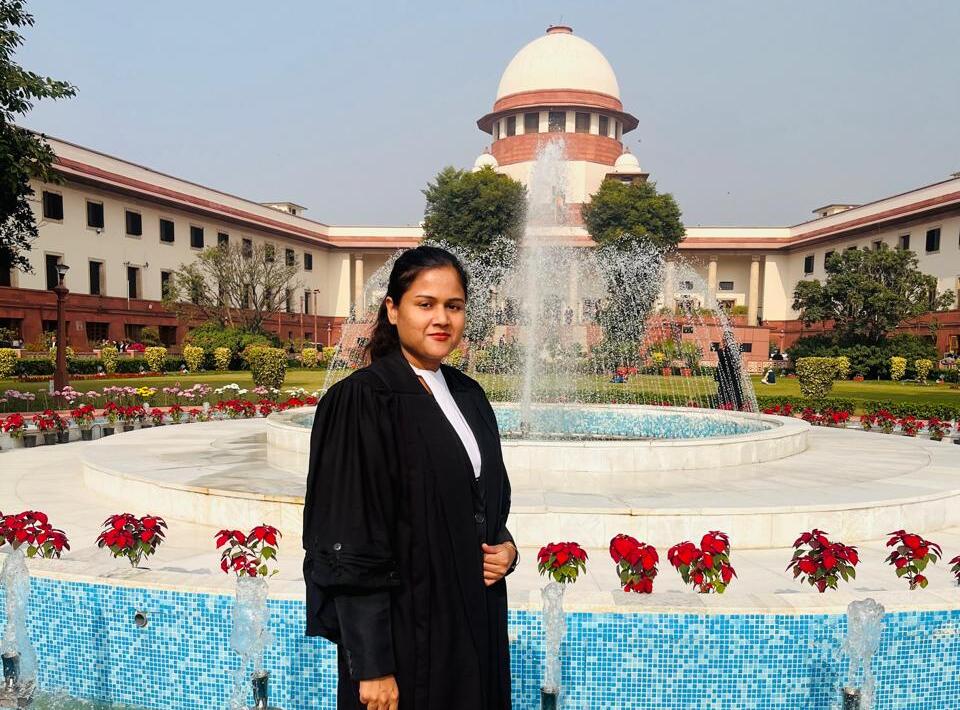
    You have a varied educational background, beginning with a B.A. from Delhi University and later pursuing a law degree at Law College Dehradun. What prompted you to transition to a career in law?

    My journey from Delhi University to Law College Dehradun was driven by a deep-seated desire to make a meaningful impact on society. While pursuing my B.A., I was captivated by the dynamics of governance, human rights, and justice systems. Law became the natural path to combine my academic interests with my aspiration to serve. It’s a profession that allows you to challenge societal injustices while empowering others—a responsibility I have always embraced with great passion.

    You have worked as an Advocate and Legal Researcher in various courts in Delhi and Haryana, as well as with the Human Rights Commission, Tribunals, and Consumer Forums during your initial years of practice. What were the key learning experiences that shaped your career?

    Those early years were transformative. Working across courts, commissions, and tribunals taught me the power of resilience, precision, and empathy in legal practice. I learned that every case, no matter how small, represents a life impacted by law. From drafting intricate arguments to navigating complex human rights cases, each experience honed my ability to analyze issues critically and offer pragmatic solutions. These formative years also reinforced my commitment to justice as more than a principle—it became my purpose.

    You served as the Court Manager and CPIO at the National Green Tribunal (NGT) for six years. Could you share with our readers how you obtained that role and what your experiences were like working for a government organisation like the NGT?

    My role at the NGT was a significant milestone. I was selected based on my judicial experience and my proficiency in legal administration. At the NGT, I had the privilege of streamlining court operations, managing Right to Information (RTI) requests, and contributing to the Tribunal’s mission of ensuring environmental justice. Working in a government organization taught me the value of efficiency, collaboration, and innovation in addressing urgent environmental issues. It was a rare opportunity to be at the intersection of law, governance, and sustainability.

    With 14 years of diverse experience across various fields, you have also worked as a Teaching Associate (Law) at LBSNAA in Mussoorie, Uttarakhand. What inspired you to pursue a career in academia, and do you have plans to return to teaching in the future?

    Academia is where knowledge meets inspiration. My tenure at LBSNAA allowed me to shape the legal perspective of future civil servants, which was immensely rewarding. Teaching is a two-way process—you give, but you also learn. It inspired me to think deeply about the evolution of law and its practical application. While my current focus is legal practice, I remain passionate about academia and hope to return to teaching, as empowering young minds is one of the most impactful ways to contribute to society.

    Could you share your preparation strategies that helped you crack the Rajasthan Judicial Services Exam and become a Civil Judge and Metropolitan Magistrate?

    Success in judicial services exams is not about rote memorization but mastering the art of analysis. I approached my preparation with a structured plan, focusing on understanding core legal concepts, landmark judgments, and procedural nuances. Consistent revisions, daily answer writing, and solving previous years’ papers were my pillars of preparation. I also cultivated a habit of staying updated with contemporary legal developments, as awareness of real-world issues is crucial for anyone aspiring to the judiciary.

    Serving as a Judicial Officer in the Rajasthan Judicial Services must have been a challenging role, dealing with various court-related matters. What was the most challenging experience in that position of authority that you’d like to share with our readers?

    One of the most profound challenges I faced was adjudicating emotionally charged family disputes. These cases are not just about applying laws; they require a delicate balance of empathy, fairness, and legal reasoning. As a Judicial Officer, every decision carries immense weight, impacting lives and shaping perceptions of justice. Those moments taught me the true meaning of responsibility and the need to approach every case with integrity and compassion.

    After working as a Judicial Officer for three years, what led you to leave the Judicial Services to establish your own practice at the Supreme Court, handling civil, criminal, and service matters?

    My transition from the judiciary to independent practice was guided by a desire to explore broader legal challenges and contribute to precedent-setting cases. The judiciary taught me the importance of impartiality and due process, which I now bring to my practice at the Supreme Court. Handling civil, criminal, and service matters allows me to address complex legal issues while advocating for justice on behalf of individuals and institutions alike. This shift has been deeply fulfilling, as it allows me to combine my judicial insights with advocacy.

    What advice would you give to young aspirants who wish to pursue a successful career in law and Judicial Services?

    To all aspiring lawyers and judicial officers: Stay curious, stay committed, and never lose sight of your purpose. Master the fundamentals of law, but also nurture qualities like resilience, empathy, and adaptability. For judicial aspirants, focus on clarity of concepts, regular practice, and an unwavering belief in yourself. Remember, this profession demands hard work, but it also offers unparalleled opportunities to make a difference. Always strive to serve justice with integrity, and success will follow.

    Get in touch with Aliiza Aeren –

  • Monika Choudhary, on securing 3rd Rank in Rajasthan Judicial Services, preparing for judicial services, and being a Company Secretary

    Monika Choudhary, on securing 3rd Rank in Rajasthan Judicial Services, preparing for judicial services, and being a Company Secretary

    Monika Choudhary graduated from ILS Law College, Pune in 2017. Soon thereafter, she started preparing for the Judicial Services exam. She secured the third rank in the Rajasthan Judicial Services Examination, 2017. Her academic feats also include successfully completing her Company Secretary Course while simultaneously reading the law.

    In this interview, we speak to her about:

    • The process and strategy followed to crack the Judicial Services Examination
    • Tips for facing the nerve-wracking interview
    • The syllabus and books referred to in order to crack the exam
    • Advice to budding lawyers looking at attempting the judiciary exams


    CONGRATS ON YOUR SUCCESS, MONIKA! PLEASE INTRODUCE YOURSELF TO OUR READERS.

    Thank you! And thanks for providing me with this opportunity to connect with your readers 🙂

    Hello everyone. I am Monika Choudhary from Bharatpur, Rajasthan. I have secured Rank 3 in Rajasthan Judicial Services Examination 2017 in my first attempt. I studied law at ILS Law College, Pune and graduated in 2017. Meanwhile, I also undertook Company Secretaries course, which I completed in 2016. I began preparing for Judicial Services examination right after finishing the college.


    WHAT MADE YOU CHOOSE JUDICIARY AS A CAREER OPTION? WHEN DID THE IDEA OF TAKING UP A CAREER IN JUDICIAL SERVICES PROP UP?

    I always knew what I wanted to do but I never knew how. Hence, during my time at law school, I kept myself open for experience and seized every opportunity I got, be it internships or competitions. The more I explored the more I figured that judiciary was the answer to my how.

    I desperately wanted to be instrumental to the change I wanted to see in the world, being part of Judiciary would allow me to do just that. Toward the end of the final year of law school, I had made up mind to prepare for judicial exams.


    WHAT IS THE PATTERN OF THE RJS EXAM?

    Like most judicial services exam, RJS exam comprises of three levels- objective type Preliminary Examination, Written Mains Examination and Interview. The preliminary exam is a hundred marks paper without any negative marking. Out of which seventy per cent weightage is given to law subjects and remaining comprises Hindi and English grammar.

    Mains consists of four papers; Law paper I and Law paper II (each three-hour duration) and English and Hindi essay papers (each two-hour duration).


    TELL US ABOUT YOUR OVERALL STRATEGY FOR RJS PRELIMS.

    There were four pillars to my preparation: Bare Acts, Textbooks, previous year papers and mock test papers.

    Syllabus for mains and pre is quite similar, hence I did not prepare for them separately. However, my mindset and approach for each level were very different.

    I made sure I was thorough with the bare Act before I delved into other sources, but some rather intricate subjects like Evidence and Transfer of Property Act, Contracts law required a simultaneous reading of bare Act and textbooks. I prepared notes from textbooks for most of these subjects and maintained a list of case laws that I needed to remember.

    It’s important to understand that for certain subjects like Juvenile Justice Act, POCSO, Probation Act etc. only reading bare act may be sufficient. But for other major laws such as Evidence, Constitution etc., doing the same would not meet the requirements of the exam.

    For updating myself with current happening in the legal world and latest judgments I relied upon sites such as- Live Law, IndianKanoon, SCC online blog etc.

    For whole one month before the prelims exam I restricted myself to bare Acts and self-notes and followed a simple mantra- Revise, Revise and Revise. During this period I diligently attended as many mock tests as possible to get the understanding and feel of the exam.


    TELL US ABOUT YOUR OVERALL STRATEGY FOR RJS MAINS.

    As I mentioned earlier prelims and mains don’t require separate preparation, I would only mention additional things that I did for the mains.

    Firstly, I did not try to prepare perfect notes at once (Rome wasn’t built in a day! :-)), I kept on updating my notes and revised them regularly.

    Secondly, mains being a written type paper I practised solving as many previous year question papers as I could lay my hands on. It not only helped me understand areas that needed more attention but also equipped me to manage my time well in the examination hall.

    Moreover certain portions such as judgement writing, essay writing only form part of mains syllabus. For preparing essays, topics can be divided into categories such as Rajasthan and its culture, Legal Topics, Contemporary socio-economic issues etc. I prepared model essays for probable topics and practised writing three to four essays per week.

    In retrospect, I feel this should ideally be done before prelims itself.

    Since this year, the paper pattern of RJS has undergone sea changes. Now, problem or case law based questions are asked more than ever. It means that a rote learning of bare act and case laws won’t suffice. One needs to develop the ability to apply the law to any set of given facts. Reading judgements and solving problem-based questions will prepare one to think like a judge and enhance the application of judicial mind.


    HOW DID YOU PREPARE FOR YOUR INTERVIEW?

    My family and friends were my guiding stars during interview preparation. Based on the feedback I received from them, I worked on the areas that needed improvement. In addition to that, mock interviews proved to be of great help as they alleviated my doubts and fear of actual interview.

    A typical interview involves questions based on the following – personal and academic background; current and general knowledge; and Legal knowledge. For all these, I prepared a list of FAQs with precise answers. I also watched the UPSC mock interview on Youtube to get further insights.

    To sum up, since an interview is an assessment of your overall personality, the key to a successful interview is to understand your strengths and weakness and work over it. Don’t be afraid to state your opinion, DON’T give generic answers and be spontaneous.


    CAN YOU SHARE YOUR BOOK LIST FOR ALL SUBJECTS/PARTS (PRELIMS AND MAINS?)

    I referred to following standard books-

    Constitution: M.P. Singh

    Contracts/Partnership/Specific Relief: Avatar Singh and R.K. Bangia

    Torts: R.K. Bangia

    Transfer of Property Act: R.K. Sinha

    Family law: Poonam Pradhan

    IPC: P.S.A Pillai

    Evidence: Batuk Lal

    CPC: C.K. Takwani

    CrPC: R.V. Kelkar

    Hindi Essays (Raj): Rajasthan Adhyayan, R.B.S.E

    Hindi Grammar: Vyakaran Rachna, R.B.S.E

    Previous year papers: Universal’s Guide to Judicial Service Examination

    Other books that I referred to include – law guide for Judicial Service Exam by A.K. Jain, Universal’s DJS Examination by Shailainder Malik.

    I would like to issue a caveat here- reading these books cover to cover is very time consuming and unnecessary, instead a selective approach should be adopted.


    WHEN DID YOU START PREPARING FOR THE JUDICIAL SERVICES? FOR HOW LONG DID YOU PREPARE AND HOW MANY HOURS DID YOU PUT IN?

    I started preparing for the judiciary in September 2017 and appeared for mains in September 2018, so roughly it involved twelve months.

    Initially, I tried to put in a fixed number of hours every day. However, it was hard to put six hours on days like Diwali but easier to put eleven hours on a regular Wednesday. So, I divided syllabus in modules and set up weekly and monthly targets instead.


    WHAT WERE SOME CHALLENGES YOU FACED AND HOW DID YOU OVERCOME THEM?

    I dreaded writing Hindi essay, I was out of practice and writing a full-length essay on a topic is already hard enough. I overcame this challenge by reading Hindi newspaper and practising writing a few pages daily.


    WHAT WERE THE MOST IMPORTANT ‘RIGHT THINGS/STRATEGIES’ YOU IMPLEMENTED?

    What really worked for me was the cliché’ stuff that I read in the interviews of people who had cracked competitive exams. Such as- keeping things simple. Sticking to a schedule. Regular revisions. Staying positive etc. I figure it is cliché because it really works. It did for me.


    HOW WAS YOUR INTERVIEW AND WHAT SORT OF QUESTIONS WERE ASKED?

    My interview was a really good experience. It lasted for about 25 minutes and I was asked approximately 15 questions. A wide variety of questions were put to me, some general question such as –Why did you pursue CS; Why RJS?

    A few opinion based questions such as- What is your opinion on the Sabrimala Temple issue and Triple Talaq Judgement? They further made me draw an analogy between the two.

    Others were purely legal questions like – Differentiate between “Due process” and “procedure established by law”; What are exceptions to Section 300, IPC?; What is the most important ingredient in an offence of conspiracy? State two judgements related to conspiracy.

    Contrary to general perception the atmosphere in the interview room was not intimidating. I was greeted with a smile and the panel even cracked a few jokes in between.


    DID YOU TARGET ONLY ONE STATE’S EXAMINATION OR MULTIPLE STATES’? IN CASE OF MULTIPLE STATES, HOW DID YOU CHANGE YOUR STRATEGIES FOR EACH STATE?

    As my primary aim was to be a judge, I did not restrict myself to any particular state. I appeared for Delhi judicial services, 2017 and Madhya Pradesh Judicial Services, 2018. I qualified for mains in both the exam, but did not write for MP as the final result of RJS had already been declared by then.

    The core subjects for all judiciary are pretty much the same, with the difference of local law, general knowledge and a few subjects here and there. Two to three weeks prior to sitting for the examination, I studied subjects peculiar to those judiciaries and revised the core law subjects.


    WHAT ROLE DID ILS LAW COLLEGE HAVE IN SHAPING YOUR INTEREST TOWARDS THE JUDICIARY?

    ILS has been pivotal in shaping my views and understanding of life. It helped me understand the legal world by providing a platform to learn from and interact with the best of the professors. The invigorating atmosphere of debate and discussions at ILS opened my mind to different ideas and perspectives. The peer learning kept me on my toes while at the same time prepared me well to fight any competition.

    All this played a great role in shaping my personality and developing the confidence to pursue what I wanted.


    DID YOU OPT FOR CAMPUS PLACEMENT?

    No. Towards the end of law school it had become very clear that working in law firms and companies did not appeal to me.


    WHERE DO YOU SEE YOURSELF IN THE FUTURE (IN TEN YEARS OR SO)?

    Giving another interview to you guys! 🙂 Jokes apart, I haven’t planned so far in future. I intend to keep learning and giving my best in every opportunity that comes my way.


    WOULD YOU LIKE TO GIVE ANY TIPS OR ADVICE TO THE STUDENTS ASPIRING FOR JUDICIAL EXAMINATIONS?

    A popular saying goes, well begun is half done. Start strong from the beginning and don’t slack off till you have achieved your goal. Set plausible time limits for clear targets and challenge yourself to stick to it. With a positive attitude, right strategy and hard work, success will be yours.


    ANYTHING ELSE YOU’D LIKE TO TELL OUR READERS?

    NEVER LOSE IT.

    Whatever you want to call it; Maina. Ambition. Hope. Faith. Conviction. There might be times when there is not enough of it. There might be times when you hit the rock bottom.

    Do not hesitate in asking for a helping hand. Whoever lifts you up. Friends. Family. Yourself.
