Tag: Rajasthan

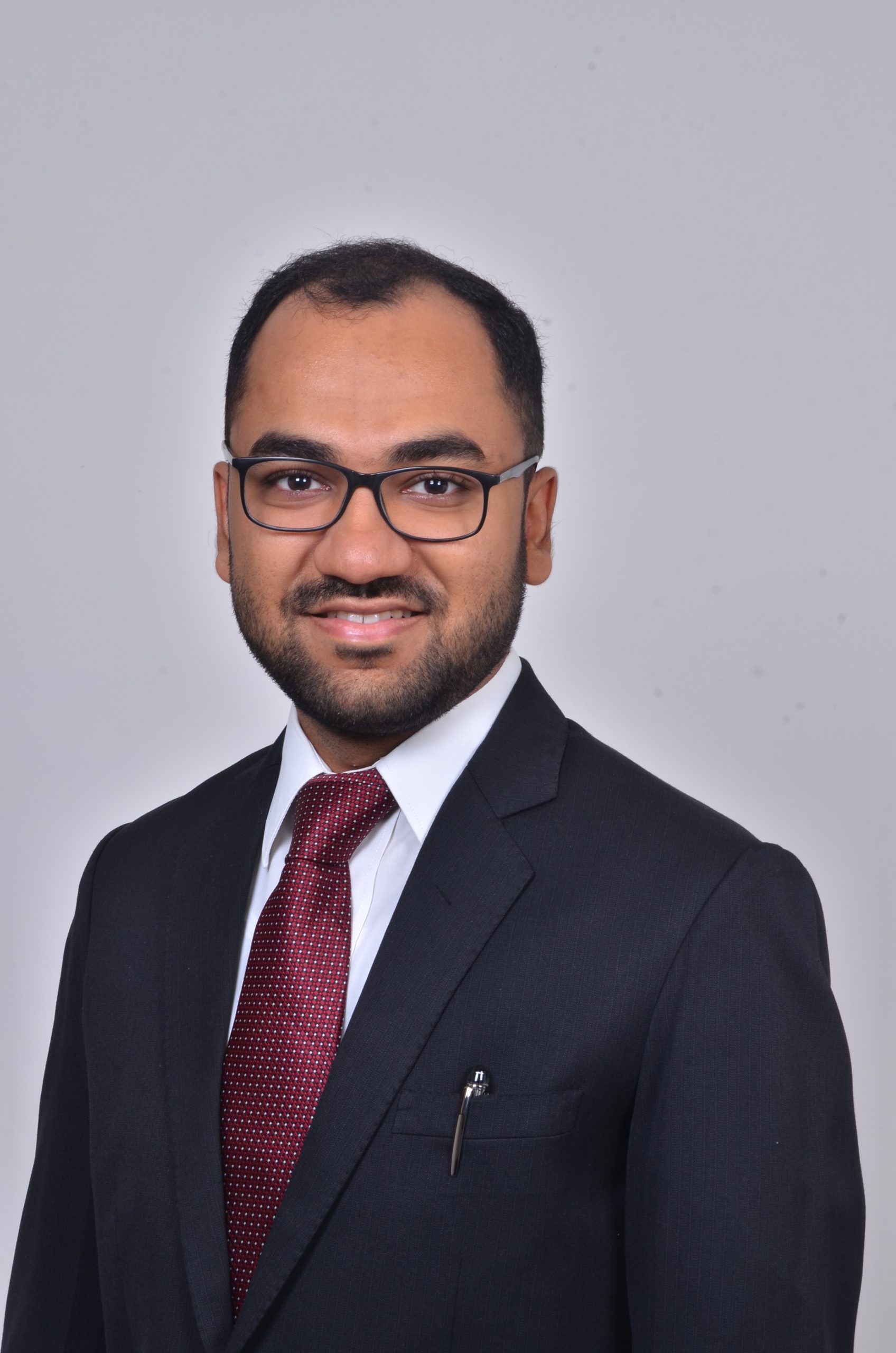
  • “As a transactional lawyer, one has to comprehend all the future eventualities while drafting agreements and documents between parties”- Hemant Kothari, Advocate and Legal Consultant

    “As a transactional lawyer, one has to comprehend all the future eventualities while drafting agreements and documents between parties”- Hemant Kothari, Advocate and Legal Consultant

    This Interview has been published by Pragya Chandni and and The SuperLawyer Team
    Sir, can you share a bit about your journey in the field of law, from your early days to establishing your own chambers? What inspired you to pursue a career in law?

    I come from a small town in Rajasthan called Merta, where we stayed for the major part of my childhood before moving to Jodhpur where I completed my schooling. In Merta, my Nanaji (Maternal Grand Father) was practicing as a Sales Tax Attorney and had established a small but niche and respectable practice advising the businesses in and around Merta, on their Sales Tax compliances. Even though he was not a traditional court going lawyer and mostly did departmental practice, he was fondly referred by everyone in the town as ‘Vakil Sahab’, which I used to consider a title of respect. 

    Also, despite coming from a predominantly business family, I had keen interest in social sciences while growing up. 

    Therefore, with the benefit of hindsight, I think my choice to pursue law was the fortunate amalgam of having grown up looking up to a tall and respectable figure in my Nanaji and the opportunity to explore my interests in social sciences when I got to know about NLUs after moving to Jodhpur.

    Coming from a small town, the opportunity to study law at NLU Delhi was a privileged experience, which for me was not only a place to train as a lawyer but opened the world to me in a manner that I had not envisioned. I am what I am today because of the five years spent in the company of the dearest friends and peers, apart from some of the most exceptional faculties at NLU Delhi.

    After completing college, I joined Khaitan & Co (KCO) in Mumbai. In my first year at KCO, I rotated and worked with the Banking & Finance team, Indirect Tax team and the Investment Funds team, before finally joining the Banking & Finance team. I had a great mentor and guide in my partner at KCO, Mr Kumar Saurabh Singh from whom I have tried to imbibe the ability to think holistically as a lawyer, instead of a tunnel view, on any given issue. 

    During my time at KCO, the Insolvency and Bankruptcy Code, 2016 (IBC) had just been introduced and top 12 defaulting companies then were referred to the process under IBC. With the team at KCO, I was involved in the CIRP proceedings of three (3) companies, being Essar Steel India Limited, Alok Industries Limited, and Electrosteel Steels Limited, apart from other assignments under IBC. Invariably, all the processes went into litigation, which gave me the opportunity to work on both transactional and litigation aspects in the aforesaid matters and to closely interact with the leading Senior Advocates in the country.

    The exposure to handle litigation in high stakes matters re-affirmed my interest in litigation but at the same time, I did not want to completely forego working on the transactional side. 

    From a long term perspective, I always wanted to settle in my home state, i.e. Rajasthan.

    Accordingly, after a stint of around three and half years with KCO, I moved to Jaipur and for the first few years, I wanted to just learn as much as possible in terms of managing court practice, advocacy and understanding the intricacies of litigation. In Jaipur, I initially worked with Chir Amrit Legal LLP as a Senior Associate, where I was fortunate to learn under Mr Sanjay Jhanwar (Sr. Advocate) and Mr Prakul Khurana.

    In 2020, I joined the Chambers of Major RP Singh, Sr Advocate and the then Additional Advocate General (AAG), as Assistant to AAG and continue to work under his guidance even today. Under his guidance, I received intensive training in court craft and advocacy, which has certainly helped me improve immensely as a lawyer. He graciously allowed me the flexibility to take up my own matters and to gradually build an independent practice. 

    With the support and blessing of my Seniors, I was fortunate to set up my independent Chamber in August, 2022 after extensive training of more than six (6) years.

    Your experience includes representing the Government of Rajasthan in key disputes. Can you highlight some of the challenges and highlights from your time handling matters related to finance, revenue, indirect taxes, and other departments?

    The experience of representing government departments does help one to gain a deeper strategic understanding of matters from the perspective of the government; in understanding how the institutional machinery works on policy matters; and generally in terms of how the decisions are taken. 

    Now practicing on the private side, the learnings from my experience in representing and advising government does help me in having a better perspective in matters where the government is on the opposite side. 

    Also, governments are the biggest litigators in our legal system and in representing it, one gets to work on a diverse range of matters and really fast forwards the pace of learning.

    In your current chamber practice, you cater to both transaction advisory and dispute resolution mandates. How do you balance these two aspects of legal practice, and what unique challenges do you face in each?

    As I said, during my time at KCO, I had the unique opportunity to work on transactional and litigation aspects simultaneously, for matters under IBC. While traditionally there is a clear segregation between transactional work and litigation work, but in my experience I have realised that one is a better transactional lawyer with the experience of litigation and similarly, one is a better litigation lawyer, with the experience of transactional work.

    As a transactional lawyer, one has to comprehend all the future eventualities while drafting agreements and documents between parties. Having a perspective that how the document so drafted will be construed in arbitration or courts, if it goes in dispute, helps one to give better advise at the transaction stage. The reverse is also true for litigation lawyers, particularly for those practicing in commercial laws. 

    I have experienced so while representing and handling complex commercial arbitrations or court matters involving large volumes of contracts such as Concession Agreements, Financing Agreements, Shareholders Agreement, EPC contracts, Service Contracts, etc. 

    In terms of managing a practice to advise on both transactional and litigation aspects, I have separate teams in my Chamber which work exclusively on transactional and litigation matters, respectively and the final advise or work product is reviewed by me. The chamber also focuses on training the associates to have multi-disciplinary understanding such that they are also trained to deliver a holistic solution to the client. 

    Obviously, with my litigation practice when I am in Courts for a good part of the day, it may at times be difficult for me to singularly manage the transactional practice which requires more desk work. Therefore, I have focused on retaining and nurturing experienced associates dedicatedly working on transactional matters to be able to deliver holistic work products in a timely manner in a Chamber set up, where the end responsibility remains mine.

    Could you share an anecdote or case that was particularly challenging and how you approached it?

    There are various interesting and challenging matters which I cannot talk about since they are still sub-judice in appellate forums. 

    One of the challenging matters I did was a road construction arbitration during the COVID-19 pandemic. I found it challenging since (a) I was the only Counsel responsible for preparing, drafting, researching, coordinating with the Government Officers and also to brief the Senior Counsel on behalf of the Government to defend a claim of more than Rs. 250 Cr.; and (b) barring last one hearing in the arbitration, the entire arbitration was held virtually including for cross-examination.

    The work on this arbitration went on for around one and a half year and I had to really burn the midnight oil on many nights to prepare and be ahead of the opposite side, which was represented by a Tier-1 law firm. 

    Generally as a lawyer one is only trained to look at legal principles, but the added interesting work involved in the matter was to understand the intricacies of road construction and engineering to be able to do proper synthesis of technical matters. I cannot say I became an expert in road construction after this matter, but it certainly tells you that as a lawyer, one gets to work on a variety of matters that keeps the urge to learn alive on each day.

    While we succeeded only partly in the matter, I was humbled to have received the kind appreciation from the Presiding Arbitrator, upon conclusion of the final hearings, as also from my Senior.

    As retained advisor to large Indian business and startups, you describe your role as an external general counsel. What does this role entail, and how do you oversee both transactional and dispute mandates for your clients?

    I do not have any title as External General Counsel but in order to summarise the range of services that I deliver to my clients, I use the term in an informal manner and also because most of the clients may have in-house legal team for general compliances but not to advise and coordinate with the management / business teams on complex legal-commercial issues. 

    As I have already explained, my chamber caters to both transactional and litigation services, which has fortunately been appreciated by a number of large businesses, who have retained me for overseeing and helping them with all their transactional and litigation matters with the expectation that I understand their business and commercial needs while advising them holistically. 

    Increasingly, I have felt that the upcoming businesses or for that matter even established businesses require steady and continued legal support from a lawyer, who is in active practice interacting with other clients and not in their in-house system, to be able to have a better outsider or on-field view on various issues, as early as possible before they rake up. This is possible only based on continued association with the clients to be able to understand and appreciate the needs of the client from a broader perspective while advising on specific issues.

    In this capacity, it is not necessary that we undertake the entire work but sometimes depending on commercial requirements of the client, I advise my client to engage services of other professionals/law firms with whom my chamber works in coordination. The underlying principle being that my role is not only to provide legal services but to keep the best commercial and legal interests of my client to help them navigate their requirements. 

    Thankfully, I have been receiving positive feedbacks from my clients so far on this working model and hope to grow this area of practice more.

    Your advisory work spans restructuring, insolvency transactions, GST matters, investment fund advisory, and more. Can you share a specific transaction or advisory mandate that you found especially interesting or complex?

    The earliest and cherished experience for me was to work on a large multi-jurisdictional financing transactions during my time at KCO. Apart from the long night calls due to the difference in time zones, I learned how one has to apply the prevailing laws and regulations to tailor make an agreement by incorporating the commercial wishes of the parties in the best manner possible. Being a multi-jurisdictional financing transactions, we dealt with the rules under FEMA and the RBI directions to accommodate the terms of the transaction between parties. The entire process of negotiating on the commercial aspects with the legal interpretation of the applicable laws was something that I found really interesting and complex, as it then helped me build an understanding that as a lawyer when one negotiates or takes a position, it has to be backed by sound legal reasoning else the other side can simply roll you over.

    There are many such experiences and learnings but the core principle that I have come to understand is that as a lawyer, one must not stop thinking or prematurely jump to assumptions or conclusions and one  must keep exploring and reinterpreting the bare texts of law as much as possible.

    Considering your diverse experience and success in both private practice and government representation, what advice would you give to law graduates entering the field today? Are there specific skills or mindsets they should cultivate for a successful legal career?

    From my experience so far, I can only say that give your best at your work place. Whatever assignment or work comes your way, take responsibility for it like you have to be personally answerable to the Court or the client, for your work. If you start inculcating such an attitude, your work will speak for you.

    In terms of skill set, the fresh graduates should focus on developing a multi-disciplinary understanding and keep themselves abreast with all the new legal developments to gain knowledge about other areas of law, in which they may not be working. Law evolves and develops every day and as new entrants into the profession, you have the benefit of looking at everything from a fresh perspective to contribute to better development of law.

    Get in touch with Hemant Kothari-

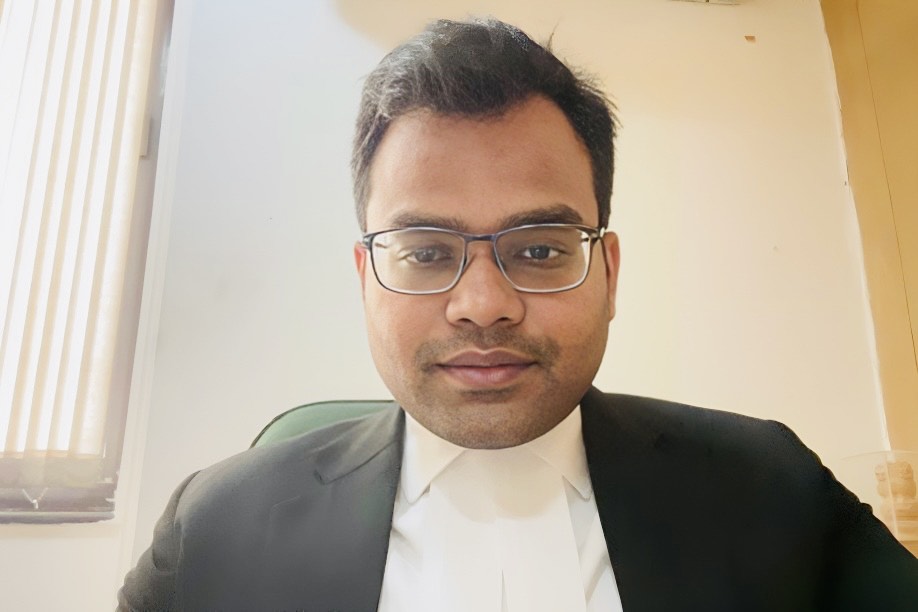
  • After spending reasonable time on all the preparation, it is equally important to sleep peacefully within time and appear with a calm mind without trying to attach any emotions to your client/matter-Divanshu Gupta, Advocate, Rajasthan High Court

    After spending reasonable time on all the preparation, it is equally important to sleep peacefully within time and appear with a calm mind without trying to attach any emotions to your client/matter-Divanshu Gupta, Advocate, Rajasthan High Court

    This interview has been published by  Priyanka Karwa and The SuperLawyer Team

    Can you tell us about your journey into the field of law? What inspired you to pursue a career in this field?

    I am a first generation lawyer with no lawyer in the immediate or distant family. I appeared for my 12th standard examination and parallel competitive entrance exams in 2009. I belong to a generation where the traditional career choices of medicine/engineering had just begun to phase out and emerging career choices like law, arts, actuarial science etc. had begun to phase in. Like many others, I was preparing for engineering entrance exams and used to study law/law entrance during my free time or just as a back up. Incidentally, all the law entrance exams were scheduled after all the engineering entrance exams. I could take out time and focus on the same. The one thing which intrigued me the most about law entrance was – how the overall subject was technical on one hand and yet so narrative like a story book on the other hand. I could relate very well to this unique sort of intersection.  

    You’ve had a diverse career, starting with working for a prominent law firm and now running your own law chambers in Jaipur. How did you decide to transition into independent practice?

    At and around the time I graduated, GNLU was one of the (and continues to be) most sought after institution for recruitment by top tier law firms from India and abroad. I too was one of the many candidates who wanted to be a part of this ‘to be hired bunch’. A position with a top tier transactional law firm brought much required and sought after financial comfort, peace and stability. However, the work was far away from how one traditionally perceives the practice of law, be it a layman or a lawyer. It was away from reading and understanding latest case laws, working on matters before the courts or even going to courts. Everytime I had an opportunity to visit any court or do anything related, it would bring in some natural excitement and eagerness. Untill I transitioned to independent practice, I realized that this was my calling which I had been ignoring forever due to different reasons. I first transitioned by shifting from transactional law practice to litigation practice within the same firm. Since I was already more than 4 years old in Bombay, I then considered where did I want to be in the long run. At the same time, I could see Jaipur (my hometown) continuing to grow as an emerging metro city. Many of my knowns/seniors were satisfied with litigation and overall career opportunities over here in the legal field. I did a detailed survey of lawyers and opportunities in the city and luckily some of them were kind enough to give me a holistic and unbiased picture of what law-life here is going to be like. I found this platform to be more full of opportunities without any compromise in scope of learning and exposure. After quitting my job at CAM in January 2019, I started with my practice in Jaipur in April 2019.      

    During your time with Cyril Amarchand Mangaldas, you worked on project finance and later diversified into dispute resolution. How did this experience shape your legal perspective and approach?

    For all transactional law lawyers, they say that one should have working knowledge of litigation. And I feel the same other way round for litigation lawyers as well. Since the time I shifted untill now, my overall understanding of finance/transactional law continues to aid me day in and day out in ways more than one. So many litigation/legal issues these days stem from some or the other kind of emerging and complicated financial structure. In such a situation, one needs to be very adaptive to first understand the complex arrangement himself and then being able to break it down in a manner before the concerned forum that it becomes inclined to grant your client the desired relief within reasonable time.     

    It’s impressive to see the range of entities you currently represent as their empaneled advocate in Rajasthan. Can you share some of the highlights of your work with these organizations?

    A lot of the entitles of which I am a panel lawyer, are government bodies/corporations. In my limited experience and exposure, the case of such entities is often strong on paper but usually not properly represented. Many such cases relate to projects of public importance involving public money. Given the opportunity, I always try my best to deep dive into the entire case bunch/file such that false/frivolous claims, if any, are not allowed and what should remain for adjudication is the actual genuine claim. The work usually involves arbitration matters arising out commercial contracts, writ jurisdiction work arising out of service law issues, matters before the consumer forum etc.

    Dealing with complex legal issues to find simple solutions is an intriguing approach. Could you share an example of a particularly challenging case you worked on and how you managed to simplify the legal complexities for your client?

    As part of project finance practice, one works on lot of financing documents like – loan, guarantee, mortgage, pledge etc. many of which find their roots in the Indian Contract Act, 1872. I had drafted and negotiated these documents extensively for almost 4 years. Cut to 2022, I was dealing with a case of a widow lady ousted from her home by the lender bank on account of being a defaulting guarantor in a loan arrangement. While under general principles of contract law, it possibly appeared to be the right thing to do by the bank, however, her legal arrangement fell within the purview of the Rajasthan Cooperative Societies Act, 2001 which created an exception to the general rule of subrogation/co-extensive liability (Section 128 of the Contract Act) – i.e. recovery from the guarantor could only have been done after exhausting recovery mechanisms against the borrower. This is how my overall experience at a law firm doing financing documents day in and day out came in handy and based on this one point itself, we could secure back the possession of the house of our client.

    Apart from your legal practice, you also provide training for law students in various areas. What motivates you to engage in academic activities, and how do you balance them with your legal practice?

    As a law student and even before that in school, I always faced issues with respect to proper practical guidance – especially on things not available in any books or the internet. What motivates me to engage in academic activities is to eliminate fear and anxiety within then student/graduate community to take up new challenges/roles. Law for everyone including students should be a tool and not a mystery. Whenever I feel saturated or worked up with my regular legal work, it is actually the work of legal training which keeps me motivated and going.

    As a successful advocate, you have valuable experience appearing before different courts and tribunals. What advice would you give to young law graduates who aspire to excel in litigation and advocacy?

    Thoroughness in everything in my view matters a lot in litigation and advocacy. However, you cannot allow the perfect to be the enemy of good (something which I also recently learned from my father). One will never feel prepared enough to appear for any kind of matter. After spending reasonable time on all the preparation, it is equally important to sleep peacefully within time and appear with a calm mind without trying to attach any emotions to your client/matter (easier said than done). The more objective your approach would be, the more you’ll be at peace leading to overall positive legal consequences.

    Your journey seems to have taken you to various cities and law firms through internships. How did these internships contribute to your growth as a lawyer, and what key lessons did you learn from these experiences?

    My internships formed the backbone of what I should be like an actual lawyer – whether it was dressing, appearance, the way I spoke, ate, walked, responded, client dealing, file management, email writing and any and everything. All of these internships were a lot about observing minutely and learning how to keep calm at the time of legal chaos, urgencies and short deadlines. Everything which an intern does or is asked to do, should not be treated as unimportant or miniscule. Every single piece of such delegated work matters to the core and can have positive/negative irreversible consequences on any matter.

    Could you share some insights into the legal landscape in Rajasthan and the unique challenges and opportunities it presents for legal practitioners?

    One unique thing about legal practice in Rajasthan which I personally like dealing with is that the practice is not dominated by one particular kind of matters/lawyers – lets say banking, service law, electricity, start ups etc. and at the same time does not allow you to maintain that kind of approach. There is available work and clientele of diverse fields which one needs to tap, be it out of choice or compulsion. Similarly, there are both young as well as experienced senior lawyers in the market, contributing to the system at large in their own unique manner. Rajasthan, being at the pinnacle of renewable energy in the country continues to offer plenty of opportunities in the area of electricity law. In terms of challenges, there are many fora which continue to work in hindi pleadings, ordersheets and arguments. While it is not a challenge for seasoned lawyers, but could possibly be a challenge for lawyers fresh out of university.

    Running your law chambers must have its own set of challenges and rewards. What are some of the most fulfilling aspects of having your own practice, and how do you navigate the complexities of managing a legal firm?

    Being your own boss is the most fulfilling as well the most challenging aspect at the threshold. There is no office/firm if you are not there in the first place either by being physically present or in form of conducting daily review meetings/discussions. As a chamber practitioner, work flows down the in the hierarchy only from a single point of contact, i.e. myself. In such times, you ought to be constantly available for resolving queries of interns and associates, queries posed by a judge in court and kept for the next day, meeting and closing deals with new clients for upcoming legal work, focusing on your own legal and overall growth, taking out time to finish complicated drafting exercises, ensuring that the same gets filed without exceeding the limitation period and so on. Ultimately, the chain of command flows from you and everything which goes wrong, the buck stops at you. This is both challenging and yet enjoyable at the same time. It keeps you on your toes always, tires you out but doesn’t ever make you feel redundant – and that in my view is the silver lining. You only grow and every bad or unfortunate incident is a learning experience. This becomes most challenging when suddenly you have to deal with a legal issue you have never dealt before. The issue is not that much with legal skill but rather with the short span of time in which you have to resolve it out. In such a scenario, all your previous experiences of being a cucumber in chaos come in handy, you spoil some and you learn from some.  

    In your experience, what are some of the critical skills or qualities that young lawyers should focus on developing to build a successful legal career?

    Patience, is not a new answer to this question. Additionally, irrespective of whether someone is in litigation, transaction or anywhere else, being well read, thorough, being able to listen more and speak less (or only when it is required), not allowing a situation to overpower your senses, demeanor, being able to manage your temper, being slightly overprepared and most importantly – being responsive and not reactive to people as well as situations are the critical skills that young lawyers should focus on developing.

    Finally, considering your journey from a young law graduate to an established advocate and legal consultant, what advice would you like to give to fresh graduates who are about to step into the legal profession?

    I would tell them and rather clarify – I continue to establish myself and we all are sailing in the same boat. It’s just that our journeys began at different points of time. The moment one starts feeling that he/she has established himself at any point of time is the moment that you have slipped into some or the other kind of comfort zone. Don’t let that happen to you. As they say, if you are the smartest in your class, you are in the wrong class. One should try to be in company of people or lawyers where there is always something new to learn. There is no dearth of legal opportunities in the market. There are so many people literally craving for the right legal advice, don’t disappoint or misguide or play around with them. I am not telling you to work for free, after all we all have to first feed ourselves and then only we can feed the law. But, don’t take up a particular legal assignment or case only for the money and at the same time don’t abandon one because of money. There will always be some or the other kind of compromise. So, see accordingly where your sense of judgment takes you as everything you’d do as part of your daily work – drafting, research, arguing, filing, marketing yourself, you’ll always find yourself amidst a set of choices or options. Exercise your choices carefully but don’t be hesitant in doing that. Lastly, if you have 60% positive inclination towards doing a particular thing or making a choice and 40% negative, do go for it as not every time one can have 100% clarity or instinct with respect to everything.   

    Get in touch with Divanshu Gupta-