You have built a distinguished career as a Financial Crimes & Corporate Governance Lawyer. What initially drew you to this specialisation, and how did your academic background shape the perspective you bring to your practice today?
I grew up around conversations on business and decision-making, so questions of accountability and systems were never abstract for me; they were part of daily life. That naturally drew me toward financial crimes and governance, because I could see how one weak link could impact an entire organization. My academic journey from JGLS to experiences at LSE and Augsburg University gave me the global perspective I needed. It taught me to look at compliance and governance not just as rules to follow, but as tools to build trust and resilience. That mix of early exposure and academic grounding still defines the way I practice today.
In your experience across developed and emerging markets, what are the most striking differences in investigative and compliance strategies? Which international best practices could be effectively localised for India’s evolving landscape?
I would challenge the notion that the differences in compliance approaches lie solely between developed and emerging markets. In my experience, the real distinction is not geographical; it stems from the ethics, priorities, and compliance mindset of an organisation’s leadership. When leadership is genuinely committed to integrity and transparency, even jurisdictions with evolving regulations can foster proactive and effective compliance. Conversely, where leadership is indifferent or evasive, even the most advanced regulatory systems can be rendered ineffective.
That said, India can certainly benefit from selectively adopting global best practices, such as strengthening internal controls, conducting sharper and more independent compliance audits, and leveraging technology-driven tools for real-time monitoring. However, these mechanisms only achieve their purpose when reinforced by strong leadership and a well-equipped legal and compliance ecosystem that recognizes compliance not merely as a shield against penalties, but as a foundation for building sustainable trust.
Looking toward the next decade, how do you envision the fusion of technology, governance, and cross-border regulation reshaping compliance practice, especially with the rise of AI and digital investigation tools?
AI is certainly going to play an important role in compliance and investigations, but I don’t see it as something that will completely take over. The human element, the judgment, experience, and ethical grounding that specialists in this field bring, remains irreplaceable. Complex financial crime matters often involve nuance, intent, and context that no algorithm can yet fully grasp. It will take AI time to reach that stage.
That said, I view AI as an additional strength in the lawyer’s toolkit. It can help sift through vast volumes of data, spot unusual patterns, and accelerate processes that once took weeks. But at the end of the day, AI is a supporting hand, not the lead investigator. The control, the strategy, and the interpretation still rest with the human professional.
Right now, there is a tendency to overstate AI’s capabilities, almost treating it as magic. But in reality, it is just another tool, powerful, yes, but still a tool. I compare it to how Microsoft Office transformed law practice in the 1990s. Back then, it didn’t replace lawyers, but it fundamentally changed how we worked and made us more efficient. I believe AI will do the same; it will make us sharper and faster, but it won’t replace the human expertise at the core of the legal practice.
The surge in online fraud, cyber-enabled financial crimes, and digital payment scams has created new challenges for regulators, corporates, and law enforcement alike. From your perspective, what gaps still exist in India’s current framework to address these threats, and how can legal practitioners play a proactive role in combating them?
Online fraud is one of the fastest-growing risks, not just for individuals but for corporates and financial institutions. The sheer speed and cross-border nature of these crimes often outpaces traditional investigative and regulatory tools. While India has made strides with measures like the RBI’s fraud monitoring systems and the CERT-In framework, the ecosystem still faces gaps in coordination, reporting, and accountability.
One of the biggest gaps is siloed response—banks, fintechs, law enforcement, and regulators often act reactively and in isolation. A more integrated framework, with real-time intelligence sharing, is urgently needed. Another issue is underreporting; many organisations hesitate to disclose fraud incidents out of fear of reputational damage, which only perpetuates vulnerabilities.
Lawyers in white-collar practice can contribute significantly here: by advising corporates on robust fraud-prevention policies, ensuring compliance with reporting obligations, and guiding internal investigations that meet both legal and regulatory standards. Beyond that, we can help bridge the gap between technology and law—working with forensic experts, fintech players, and regulators to shape practical frameworks that keep pace with evolving digital threats.
As an established lawyer in governance, investigations, and white-collar matters, how do you mentor the next generation? What skills or tools do you recommend for them to thrive in today’s rapidly shifting regulatory and technological terrain?
Mentorship, to me, is first and foremost about giving young lawyers the confidence to keep going and ensuring they don’t give up when the work feels overwhelming. This is a demanding field, and in the early years, it’s easy to doubt yourself. Sometimes the best role a mentor can play is simply to reassure them that discipline, consistency, and patience will carry them through.
Beyond that, I see mentorship as preparing young lawyers not just for today’s challenges but for tomorrow’s uncertainties. I encourage them to cultivate adaptability, strategic thinking, and clear communication, because in white-collar practice, clients look to you as a trusted advisor, not just a lawyer. I also urge them to embrace technology – mastering data analytics, digital forensics, and regulatory tech platforms is no longer optional.
Most importantly, I remind them that tools and trends will keep changing, but ethics, resilience, and statutory grounding never go out of fashion. Regulatory landscapes will shift, but if you stay curious, disciplined, and grounded in the law, you’ll be equipped to thrive at the intersection of law, business, and technology.
Finally, what is your long-term vision for your practice as a Financial Crimes & Corporate Governance Lawyer? And how do you manage the demands and pressures of such an intense field while maintaining personal well-being?
For me, discipline always tops the list. Without discipline, nothing else really sustains. Over time, discipline creates habits, and those habits make it easier to do the workday in and day out. In the early stages of your career, when you’re putting in long hours and truly immersing yourself, that consistency shapes you into a stronger professional. It’s like practice in any field—the more you repeat, the sharper you get.
I also believe the right mindset matters just as much. Keeping the outlook of a leader, taking ownership, thinking ahead, and combining it with the endurance of an athlete helps you enjoy the journey rather than just endure it. This is not an easy profession, but when you bring discipline, habits, leadership, and endurance together, the work becomes something you grow with, not something you burn out from. That’s what keeps me motivated and makes the practice rewarding.
With over a decade of experience in corporate legal affairs, what initially drew you to the legal profession? Was it a planned pursuit, or did your interest in law evolve over time?
To be candid, I never planned for my career to shape the way it eventually did. I’ve always believed in the power of timing and going with the flow, and in many ways, the legal profession found me rather than the other way around. Initially, law was more of a functional career choice. However, my interest in the profession evolved significantly during the early years of my corporate tenure.
One of the key turning points was the mentorship I received. I was fortunate to work under a senior who not only trusted me but gave me a free hand to deal with matters independently—whether it was navigating compliance, handling regulatory inquiries, or representing the company before statutory bodies. This autonomy instilled a sense of responsibility and curiosity in me.
I found myself increasingly drawn to the strategic aspect of legal work—how sound legal advice can influence business decisions, mitigate risks, and protect long-term interests. Over time, I began to view the legal function not merely as support but as a value driver within the organization. That shift in perspective was what truly cemented my commitment to the legal profession.
Looking back, what started as a role gradually transformed into a passion. Today, whether it’s regulatory strategy, dispute resolution, or guiding startups through complex compliance landscapes, I find immense satisfaction in the challenges and the continuous learning the field offers.
You’re currently building a specialized platform for startups in the food sector. What are some of the most frequent compliance challenges these businesses face, and how does the platform help them navigate these hurdles in a practical way?
Yes, this has been an idea in the making for quite some time. Having closely observed the food and beverage (F&B) sector, particularly by attending various industry exhibitions and trade fairs, I realized there’s a significant gap in legal awareness and compliance readiness among startups in this space. The food industry in India is evolving rapidly. In fact, according to Invest India, the Indian F&B sector is expected to reach USD 535 billion by 2025, driven by changing consumer preferences, innovation, and a rising number of food startups entering the market each year.
The most frequent compliance challenges startups face are quite fundamental yet critical:
Understanding Regulatory Applicability – Startups often struggle to determine which specific licenses or approvals apply to their product. For example, a plant-based dairy alternative cannot simply replicate the compliance of traditional dairy—its classification and labeling requirements are entirely different.
Knowing Whom to Approach – Navigating through authorities like FSSAI, Legal Metrology, State FDAs, and Pollution Control Boards is overwhelming. Startups don’t know where to begin, especially when their business model spans multiple states or channels (offline, D2C, exports).
Copying Industry Leaders Blindly – Many new entrants simply mimic compliance templates of large FMCG companies, not realizing that their own product category or manufacturing model requires a tailored approach.
This is exactly where our upcoming platform aims to make a difference. It’s being developed as a one-stop ecosystem that not only offers end-to-end compliance support—from FSSAI licensing, label reviews, and legal metrology filings to EPR and state-wise registrations—but also provides legal representation when issues escalate into litigation or adjudication.
The idea is to simplify legal compliance through practical tools, updated regulatory content, and access to on-demand legal professionals who specialize in this domain. The platform is currently in development, and while I can’t share all the details just yet, I can say that it’s being built to bridge a very real and very critical gap in the F&B startup ecosystem.
In the early stages of your career, were there any specific experiences or turning points that deepened your understanding of food laws and regulatory compliance, ultimately guiding you to specialize in this domain?
Yes, there were many such moments. In fact, I often say that having someone place their trust in you early on can completely shape your professional path. I was fortunate to work under mentors who gave me the autonomy to explore, question, and resolve matters independently. That freedom helped me develop a deep, ground-level understanding of how regulations intersect with real business challenges.
One of the turning points was dealing with a product recall that originated from a minor labeling non-compliance. It seemed procedural at first, but the impact was operational, reputational, and financial. That experience taught me that in food law, every word and symbol on a label carries legal weight—and the smallest error can have disproportionate consequences. It was in those moments that my interest in regulatory compliance truly deepened.
Even during my corporate tenure, I made it a point to work across functions—marketing, manufacturing, supply chain—not just to advise them legally, but to understand how decisions were being made on the ground. I always tell the juniors and interns who work with me: don’t wait for permission to get curious. Even if you’re a legal person and your idea in a marketing meeting feels like the dimmest one—speak up. You’ll be surprised how often the “outsider’s perspective” helps, and how much it sharpens your understanding of your own role.
And then, after I transitioned from the corporate setup into independent practice, my learning curve accelerated even more. When you’re working closely with startups and entrepreneurs, especially in the food sector, you begin to see firsthand the complexities and creativity that go into new product development. The challenges are dynamic—whether it’s decoding novel ingredients, managing multi-state compliances, or responding to evolving FSSAI regulations.
Just take a step back and look at the food landscape today. Think about it—five years ago, how many pre-packed food products did we really see in our daily lives? Comparatively few. Today, nearly everything we consume—snacks, beverages, condiments, ready-to-cook meals—is pre-packaged. It’s no longer occasional; it’s integral to our routine. The scope of this sector in the next five to ten years is massive, not just in terms of business growth but also from a regulatory standpoint. It’s an exciting space to be in, and being part of this transformation—while ensuring that safety and compliance go hand-in-hand with innovation—continues to drive my work every day.
Your work spans labour laws, dispute resolution, and policy development. Could you share an experience where you handled a complex labour law issue? How do you stay agile and adapt to the evolving legal landscape in this domain?
Absolutely. One of the most complex and insightful matters I’ve dealt with involved assessing the legal validity of a widespread retainership model adopted by a leading cosmetics brand that operated across various retail formats—including exclusive brand outlets, modern trade counters, and general trade counters.
The company had deployed over 2,000 personnel—primarily as “Beauty Consultants”—engaged on fixed-term retainership contracts. On paper, these individuals were termed as ‘Consultants’ with monthly invoices raised for services rendered. However, upon closer scrutiny, it became evident that the structure did not hold up to the legal tests used to determine the existence of an employer-employee relationship.
We undertook a detailed legal review, mapping the operational realities against judicial benchmarks laid down by the Hon’ble Supreme Court in Balwant Rai Saluja v. Air India Ltd.—specifically focusing on elements like who appoints, who supervises, who pays, who disciplines, and whether continuity of service exists. Our findings revealed that despite the nomenclature of “retainer” or “consultant,” these individuals were under direct control, supervision, and functional command of the management. They were hired, transferred, granted leave, and even disciplined by company supervisors. In other words, the arrangement was more of an employment model disguised as consultancy.
The risk exposure was significant—both under the Contract Labour (Regulation & Abolition) Act, and under core labour laws like the Payment of Gratuity Act, ESI Act, and Maternity Benefit Act. Moreover, since there was no contractor involved, the management couldn’t take shelter under the principal-employer framework either. We advised a comprehensive review and reclassification of roles, alongside a phased transition towards compliant staffing structures, to mitigate future litigation and regulatory risk.
This matter underscored the importance of not just legal drafting, but understanding how the structure plays out on the ground. Labour laws in India are heavily precedent-based and interpretive—courts tend to prioritize substance over form. So, staying agile means continuously aligning HR practices with legal reality, adapting to new judgments, and anticipating regulatory scrutiny—not reacting to it.
Matters like this also highlight why I’ve always believed in being proactive rather than reactive. Labour compliance isn’t about ticking boxes—it’s about ensuring that your internal structures can stand up to judicial and regulatory scrutiny when tested. That’s the mindset I bring to every assignment in this domain.
You’ve overseen compliance across diverse marketing channels, including traditional advertising and influencer-led campaigns. What are some of the major legal challenges in this space, and how do you help brands align creative strategies with regulations such as ASCI guidelines and emerging digital marketing norms?
This is an area where legal, regulatory, and creative disciplines intersect in very real and often challenging ways. Over the past few years, marketing strategies have evolved rapidly—from traditional print and television ads to influencer-driven digital content and real-time engagement campaigns. And while the mediums have changed, the legal obligations have only become more layered.
One of the core challenges is balancing creative freedom with regulatory compliance. Whether it’s the Food Safety and Standards Act (FSSA), the Drugs and Cosmetics Rules, or ASCI’s Code for Self-Regulation in Advertising—every product category, particularly in the FMCG and food space, comes with defined boundaries for advertising claims, disclosures, and substantiation.
For instance, brands often want to use superlatives like “best,” “purest,” or “clinically proven,” but may lack the documentary evidence or test reports to substantiate such claims. In such cases, I advise internal marketing and product teams right from the conceptualization stage—ensuring that claims are backed by appropriate documentation, lab tests, or consumer studies, and that disclaimers are clear, visible, and compliant with ASCI standards.
With influencer marketing, the challenges are different—but equally significant. The ASCI Guidelines for Influencer Advertising in Digital Media, coupled with recent enforcement advisories from the Department of Consumer Affairs, have made it mandatory for influencers to clearly disclose paid partnerships, sponsored content, or brand affiliations through unambiguous tags like #Ad or #Sponsored. Many influencers—and even brand teams—are unaware that simply gifting a product or offering a barter collaboration also qualifies as a material connection requiring disclosure.
In my experience, one of the key gaps is the lack of structured compliance protocols for influencer campaigns. To address this, I’ve helped several brands develop standard influencer contracts, compliance checklists, and pre-approval workflows. These documents cover not just disclosure requirements, but also ensure that influencers do not make unauthorized or misleading claims—especially in regulated sectors like health supplements, beauty, and food products. For example, using a phrase like “immunity booster” or “approved by FSSAI” without factual basis or regulatory clearance could expose the brand to penal action.
Another area that requires careful navigation is comparative advertising—where brands position themselves as superior to competitors. While permitted in principle, comparative ads must be truthful, fair, and not disparaging. This line can be thin, and I’ve often had to work closely with creative agencies to ensure that the tone, visuals, and language don’t cross into unlawful denigration, which could trigger litigation under trademark law or consumer protection statutes.
Moreover, platform-specific policies—like ad restrictions on Meta, Google, and YouTube—add another layer of compliance. Certain product categories, such as tobacco, alcohol, or even baby food, face restrictions not just under Indian laws but also under global content moderation guidelines. It becomes essential to harmonize regulatory approvals with platform rules and ensure that every campaign is vetted through both lenses.
To manage all of this in real time, I advocate a cross-functional compliance model—where marketing, legal, product, and digital teams work in collaboration. I also conduct periodic training and workshops to keep teams updated on evolving norms, such as influencer disclosures, the Digital Personal Data Protection Act, and amendments under the Consumer Protection (E-Commerce) Rules.
In conclusion, marketing compliance isn’t just about saying “no” to risky ideas—it’s about helping brands communicate creatively within a legally sustainable framework. My role has always been to enable campaigns, not obstruct them—by anticipating risk, offering alternatives, and ensuring that creativity and compliance coexist seamlessly.
In managing compliance under the Cigarettes and Other Tobacco Products Act (COTPA), what were the biggest challenges, and how did you ensure consistent compliance and legal challenges? Oh my God—what a question to ask!
When it comes to managing compliance under the Cigarettes and Other Tobacco Products Act (COTPA), you’re stepping into one of the most tightly regulated spaces in Indian law. This isn’t just about compliance—it’s about navigating a minefield of statutory restrictions that govern everything from advertising and packaging to distribution and point-of-sale visibility.
The biggest challenge? Communication. Since both direct and surrogate advertising are prohibited, the question becomes: How do you inform a consumer about something new—without actually telling them? You’re managing a brand that legally can’t raise its voice.
And here’s the beauty of it: when an entire company is working on launching a product, figuring out how to communicate it to the world becomes a massive, complex challenge. This is where great marketing minds meet great legal minds, united by two shared missions: to communicate, and to protect. It’s chess, not checkers.
I won’t reveal the specific tools or tactics—that’s confidential—but working in such a constrained environment forces innovation like few other sectors. Legal and commercial teams must operate not just with creativity, but with precision. You need real-time awareness of law, razor-sharp risk judgment, and a deep understanding of regulatory nuances.
And remember, compliance here isn’t a one-time checkbox—it’s a full-time business philosophy. From pictorial warnings that occupy 85% of the pack, to ensuring the retail shelf doesn’t accidentally violate visibility norms, every pixel and placement matters. One slip, and you’re looking at fines, seizures, or even criminal prosecution.
Ultimately, the art lies in keeping the business alive and thriving—without crossing the legal line. That’s the real thrill of COTPA compliance. You’re not just managing law—you’re helping the business whisper where others shout.
After a successful corporate career, what motivated you to establish your own independent practice? What were some of the initial challenges you faced during the transition, and how did your in-house experience shape the way you now deliver client-focused legal solutions?
To be very honest, when you work in a corporate environment for years and start doing the same set of tasks repeatedly, you eventually hit a point where you feel like you’ve plateaued. The ideas don’t flow like they used to, the work starts to feel cyclical, and somewhere along the way, you stop growing. That’s when I knew — I needed to shake things up.
I’ve always believed in the power of timing. I didn’t leave my in-house role because I was unprepared — in fact, I had long dreamt of building something of my own. But as life would have it, it was a mix of circumstance, instinct, and courage that eventually pushed me over the edge. And I’ve never looked back. I firmly believe that situations never remain constant, and if you don’t evolve with them, you’re choosing stagnation. I chose the challenge.
Starting an independent practice isn’t easy — far from it. The first and biggest question is: Where do you begin? You no longer have structured teams, support systems, or a fixed agenda. In fact, there were days — and weeks — where I didn’t have a full calendar. But I kept showing up. I’d read, draft, network, and build systems because this was a path I chose, and failure wasn’t an option. Especially when others start relying on you — clients, juniors, peers — it becomes more than just your own dream.
Luckily, I had unknowingly been preparing for this for years. During my in-house career, I was fortunate to work with mentors who encouraged us to take ownership of everything end-to-end — be it compliance audits, litigation strategy, contract vetting, or regulatory filings. There was no outsourcing mindset; everything was handled in-house. That exposure helped me develop a problem-solving mindset — not just legally, but strategically.
Of course, transitioning to the client side required a different skill: visibility. You can be the best lawyer, but if people don’t know you exist, it doesn’t matter. So I had to put myself out there — make calls, write emails, meet people, follow up, and tell my story. My interpersonal skills and relationship-building approach really helped in that phase. I didn’t chase big-ticket clients; instead, I focused on building long-term retainers — even if modest at first — because they provide continuity, predictability, and a chance to grow with the client.
In fact, cracking a few retainers with early-stage startups was a turning point. Working with startups taught me how to simplify complex legal frameworks into actionable advice, and how to be more accessible, responsive, and solution-oriented. These experiences reinforced a client-first mindset — something I deeply value in my current practice.
Today, I run a growing independent practice, and I can say with confidence that my corporate background gave me a solid foundation — but the real learning came when I stepped into the unknown. It taught me resilience, humility, and the sheer joy of building something of your own, one client and one challenge at a time.
Looking ahead, how do you envision the growth of your practice and your role within it? Additionally, what advice would you offer to students aspiring to build a career in your area of specialization?
To be honest — and I’ve said this before too — I’ve never been someone who envisions too far ahead. I firmly believe in time. As the Bhagavad Gita says, “Kaalasya chalanam anivarya hai” — time never stops, and you never really know what tomorrow holds. I just keep my head steady and walk the path in front of me. One step at a time.
I didn’t start with a 5-year plan or a vision board. Life pushed, and I moved — that’s always been my way. You adapt, stay honest with your effort, and trust that the path you’ve chosen will unfold as it should.
Over the years, I’ve had the chance to work with some incredible interns — all unique in their own way. Some were quiet, in their shell. Others were confident and unfiltered. But all of them, truly, were just awesome to work with. And honestly, I’ve learned a lot more from them than they probably learned from me.
One thing I always tell my interns: you have to teach me five things before you leave. It can be anything — a new productivity tool, a Gen Z slang like “no cap”, “it’s giving”, or “let’s soft launch this idea”, or even something random like a new music genre or their favorite YouTube rabbit hole. One of my interns was so passionate about reviewing movies, he actually created a rating matrix — acting: 8/10, story: 6.5, background score: 9, cinematography: 7.2 — I mean, it was serious business for him! And I loved it. That kind of passion — whatever the field — is what matters.
So if I have any advice for students, it’s this: please don’t follow a path just because it looks safe or conventional. Follow your curiosity. You don’t have to know everything today. And even if you choose law — you don’t need to pick a specialization on Day 1. Initially, you’ll do a bit of everything — contracts, compliance, litigation, drafting, maybe even filing! Let it all come. It’ll take shape with time.
Whatever you do, just stay open. Learn from everyone — juniors, seniors, clients, even strangers. And don’t be afraid of uncertainty. Sometimes not knowing what comes next is the best part of the journey.
Looking back at your career and the successful practice you’ve built today, what were the key experiences that initially led you toward pursuing law? What moments or influences made you choose law as a career? Additionally, how did your time at NLU Gujarat shape and deepen your passion for the field?
I was drawn to law after witnessing how legal complexities often overwhelmed individuals and businesses, creating unnecessary barriers to their goals. A defining moment came during my undergraduate years when I saw a family dispute escalate simply due to lack of proper legal guidance. This showed me that law isn’t just about statutes, but about people and relationships.
NLU Gujarat was transformative. The practical learning approach, diverse legal exposure through moot courts and internships, and exceptional faculty mentorship developed the critical thinking skills that guide my practice today. The institution’s emphasis on real-world application deepened my understanding of law’s potential to create positive change.
In the early years of your practice, what experiences helped you build a stronger understanding of the law and laid the foundation for your career? Could you share some key lessons from that period that would benefit our young readers?
Working across different practice areas initially provided invaluable insights into how various legal disciplines intersect. A pivotal experience was advising a struggling startup on restructuring, which required understanding corporate law, employment regulations, and tax implications simultaneously teaching me that modern legal practice demands interdisciplinary expertise.
Key lessons for young practitioners: embrace every learning opportunity regardless of how mundane it seems; develop strong communication skills to translate complex legal concepts into actionable business advice; build relationships based on trust and transparency; and stay curious; the law evolves constantly, and successful practitioners evolve with it.
What inspired you to establish your own practice? What were some of the challenges you faced in the beginning, and how did you navigate those obstacles?
I wanted to create a practice that delivered personalized, innovative legal solutions while maintaining the highest ethical standards combining the expertise of larger firms with the agility and client focus of boutique practices.
Initial challenges included building credibility, establishing a client base, and managing financial constraints while maintaining service quality.
I navigated these through strategic relationship building, delivering exceptional results on smaller matters to build credibility, and focusing on becoming specialists in chosen practice areas rather than trying to be everything to everyone. We never compromised on quality to win business – a principle that ultimately distinguished us in the market.
Cross-border transactions often involve navigating multiple legal frameworks and jurisdictions. How do you manage the complexities of these deals? What are the critical legal considerations businesses must keep in mind when engaging in cross-border transactions, and how do you ensure compliance with international legal standards while advising clients?
We manage complexity through systematic due diligence across all relevant jurisdictions, collaborating with trusted local counsel worldwide. Our framework maps regulatory requirements, tax implications, and compliance obligations for each jurisdiction involved.
Critical considerations include foreign investment regulations, tax treaty implications, currency exchange controls, sector-specific restrictions, dispute resolution mechanisms, and enforcement challenges across different legal systems.
We ensure compliance through jurisdiction-specific checklists, regular regulatory updates, and maintaining relationships with qualified local counsel. Our approach emphasizes early identification of potential conflicts between legal systems and structuring transactions to minimize regulatory friction while ensuring comprehensive documentation that anticipates cross-jurisdictional enforcement challenges.
With the evolving landscape of CSR compliance, what trends do you foresee emerging in the near future? Additionally, could you share how you guide clients in aligning their CSR strategies with both domestic and international laws?
Emerging trends include mandatory climate disclosures, supply chain responsibility requirements, and stakeholder-centric reporting. We’re seeing convergence between ESG standards and domestic CSR requirements, with increased focus on measurable impact assessment and integration with business strategy.
We guide clients by conducting comprehensive assessments of applicable domestic and international obligations, then developing CSR strategies that exceed minimum compliance while creating genuine business value. Our approach emphasizes robust documentation, impact measurement systems, regular compliance audits, and integration of CSR considerations into business decision-making processes.
Start-ups face several challenges when it comes to establishing their legal foundations. What are the most common legal hurdles that start-ups should address early on? How do you assist them with crucial aspects like intellectual property rights, employee agreements, and business structuring?
Common hurdles include inadequate business structuring, insufficient IP protection, poorly drafted founder and employee agreements, and underestimating regulatory compliance requirements.
Our approach begins with comprehensive business structure analysis considering investment plans, tax efficiency, and regulatory requirements. For IP, we conduct thorough audits and establish protection strategies including trademark registrations and robust confidentiality frameworks. Employee agreements require balancing company protection with talent attraction—we draft comprehensive contracts and establish equity participation frameworks.
We emphasize establishing good governance practices early, including board structures, decision-making processes, and compliance systems that become crucial as startups scale.
Given your expertise in handling family estate disputes, what aspects of family law do you feel need more focus or reform? How do you approach succession planning for high-net-worth families, especially when dealing with complex cross-border elements?
Family law needs greater focus on alternative dispute resolution and preventive legal structures. The current system often exacerbates conflicts rather than resolving them constructively.
For high-net-worth succession planning, we begin with comprehensive family and asset mapping, then develop flexible structures adaptable to changing circumstances. Cross-border elements require careful jurisdiction selection, appropriate trust structures, and documentation that anticipates enforcement issues across different legal systems.
Our methodology emphasizes family governance frameworks including family constitutions, communication protocols, and dispute resolution mechanisms, with regular plan updates to reflect changing family circumstances and regulatory environments.
Trust formation is often a delicate issue, especially for business families. Could you elaborate on your approach to setting up trusts and advising clients on succession planning? What are some common misconceptions businesses or individuals might have about trust formation, and how do you address these?
Our approach begins with thorough understanding of family dynamics, business structures, and long-term goals, then designing flexible trust structures that serve multiple purposes while maintaining adaptability.
Common misconceptions include believing trusts provide absolute asset protection, assuming trust formation means loss of control, and underestimating ongoing compliance requirements. Many don’t understand differences between trust types and their specific applications.
We address these through comprehensive education about trust mechanics, clear explanation of rights and obligations, and realistic assessment of benefits and limitations. For business families, we focus on structures facilitating business continuity while providing appropriate family financial security, often involving multiple trust vehicles and governance frameworks for family participation in business decisions.
Your commitment to fostering diversity in the legal profession is commendable. How do you ensure aspiring lawyers have the mentorship and opportunities they need within your firm? What qualities do you look for when mentoring young lawyers, and what advice do you offer them as they navigate the legal profession?
We ensure opportunities through inclusive hiring practices, structured mentorship programs pairing senior and junior lawyers across practice areas, meaningful work assignments, and regular professional development workshops.
In mentoring, I look for intellectual curiosity, ethical grounding, strong communication skills, and resilience. Technical skills can be taught, but these fundamental qualities determine long-term success.
My advice focuses on building strong foundational skills, maintaining ethical standards regardless of pressure, developing business acumen alongside legal expertise, and understanding that successful careers are built on relationships and reputation. Most importantly, find meaning in your work – legal practice provides unique opportunities to make positive differences in people’s lives.
With your demanding career and leadership role, how do you personally manage work-life balance? Additionally, how do you encourage your team to maintain a healthy balance while excelling in their roles?
I maintain balance through disciplined time management, prioritizing high-impact activities, delegating effectively, and protecting family time. Sustainable success comes from managing energy, not just time.
For the team, we’ve implemented realistic project timelines, adequate staffing, flexible work arrangements where possible, and measure success by results and client satisfaction, not hours worked. We encourage time off and maintain open communication about workload concerns.
Most importantly, I model healthy balance myself. Teams take cues from leadership, so demonstrating that it’s possible to excel professionally while maintaining personal well-being encourages others to do the same. We celebrate achievements and recognize that sustainable careers require attention to both professional and personal development.
After completing your B. Com (Hons) from Delhi University and qualifying as a Company Secretary from the Institute of Company Secretaries of India, what inspired you to pursue a career in law? Was there a particular moment or experience that led you in this direction?
Truly speaking, I always aspired to pursue a career in law. However, instead of enrolling in a 5-year integrated law program, life took me on a different path. My brother, who was then pursuing Chartered Accountancy, encouraged me to join the Company Secretary (CS) course. That decision proved to be a turning point.
During my undergraduate studies, I found myself particularly drawn to subjects such as Business and Corporate Laws, and Information Technology Laws, quickly becoming my favourites. These disciplines didn’t just pique my interest — they ignited a genuine passion for the legal field. In fact, the CS course deepened my interest in the legal field and broadened my understanding of its practical applications in the corporate world. This growing passion led me to appear for the law entrance examination at the University of Delhi in my final year of graduation. Determined to align my career with my true interests, I appeared for the law entrance examination conducted by the University of Delhi. I was thrilled to clear the exam in 2012 and enrolled in the three-year LL.B. program, becoming a part of the 2012–2015 batch. The moment marked the realization of a long-cherished dream, one that had only grown stronger with time and still motivates me every day.
In the early phase of your career, you dealt with a wide range of matters from RERA and intellectual property to corporate compliance. What were some of the key skills and insights you gained from working across such diverse areas? How did these shape your understanding of the legal field?
During my tenure at KNM & Partners, Law Offices, I was fortunate to be entrusted with a wide range of responsibilities, each offering me the opportunity to grow as a legal professional. My role encompassed advising on business setup, drafting and reviewing transaction documents, conducting due diligence, managing secretarial compliances for a diverse clientele, and providing legal advisory on various aspects of general corporate law. The breadth of work not only sharpened my technical skills but also nurtured my ability to approach legal issues from multiple perspectives, the versatility at work provided me with an ability to handle different legal domains.
One of the most defining phases of my career was in 2016, when two landmark legislations — the Real Estate (Regulation and Development) Act, 2016 and the Insolvency and Bankruptcy Code, 2016 came into force. At the time, our firm represented several real estate clients, and the enactment of RERA brought with it a surge of queries, concerns, and restructuring needs. I took this as an opportunity to engage deeply with the legislation, dissecting each provision and analysing its impact on ongoing and upcoming real estate projects. It was an intellectually enriching experience to assist clients through this legislative shift, helping them align their operations with the new regulatory framework.
Simultaneously, the introduction of the Insolvency and Bankruptcy Code opened another complex legal frontier. I undertook a coordinated study of both RERA and IBC, which proved essential in redrafting agreements and project documentation to align with the changing legal landscape. While the full implications of these reforms were difficult to predict at the time, our early analysis proved prescient, especially as high-profile insolvency cases in the real estate sector, like Jaypee and Amrapali, unfolded. I take pride in the fact that we were able to anticipate critical challenges and guide our clients effectively through an evolving and often uncertain terrain.
In addition, I was actively involved in navigating the changes introduced by the Trademark Rules, 2017, which significantly streamlined the trademark registration process in India. Being part of this period of rapid legal development gave me first-hand insight into how legislation evolves in response to market needs and how practitioners must adapt quickly and thoughtfully to serve their clients’ best interests.
These diverse experiences have helped me build a strong foundation in corporate and commercial law, instilling a deep appreciation for the interconnectedness of legal domains. Each assignment strengthened not only my analytical skills but also my ability to view the law in its broader business and societal context. I remain grateful to the seniors and mentors at KNM & Partners whose precision, discipline, and attention to detail continue to inspire my approach to legal practice.
After starting out in a law firm, you transitioned to working with various government establishments over the years. What motivated this shift? How would you compare the working dynamics of a law firm to those of public sector roles, particularly in terms of impact and approach?
The transition from a flourishing law firm career to government and policy-focused roles was a deliberate and deeply considered decision. Having witnessed the enactment of the Insolvency and Bankruptcy Code (IBC) in 2016, I was eager to move beyond advisory and transactional work to engage directly with the mechanisms of business restructuring. I wanted to be at the forefront of this legal and economic transformation, not just interpreting the law but shaping its implementation.
I was privileged to be among the first cohort of Research Associates recruited by the Insolvency and Bankruptcy Board of India (IBBI). Working under the visionary leadership of Dr. M.S. Sahoo, along with senior members such as Mr. Navrang Saini, Ms. Mukulita Vijayawargiya, and Ms. Suman Saxena, was both an honour and a turning point in my career. It gave me the rare opportunity to contribute to the institutional framework of a law still in its infancy, and to witness firsthand how regulations are designed, tested, and refined in the real world.
One of the most meaningful aspects of working in the public sector is the shift in purpose from serving the interests of individual clients to contributing toward broader economic and societal goals. At IBBI, I experienced how law, policy, and economics intersect and how legal reform can influence market behaviour, investor confidence, and systemic integrity.
Building on my insolvency experience, I later served as a Legal Consultant in the Department of Economic Affairs, Ministry of Finance, where I had the opportunity to work on emerging areas such as the digital economy and fintech regulations. This role further deepened my understanding of how legal frameworks must evolve alongside technology, innovation, and global economic shifts. The work was intellectually demanding but equally fulfilling, as it required a macro-level perspective and a fine balance between enabling innovation and safeguarding systemic stability.
Subsequently, my engagement with the Confederation of Indian Industry (CII) allowed me to interface closely with both industry stakeholders and government institutions. It reaffirmed the importance of collaborative policymaking, where the voices of regulators, businesses, and civil society come together to shape balanced, forward-looking legal solutions.
These transitions have not only broadened my subject-matter expertise but also enriched my professional ethos. Moving from a law firm to policy and regulatory roles has equipped me with a multidimensional view of the legal ecosystem, i.e., from ground-level enforcement to high-level strategy and governance. Each step has reaffirmed my belief in the power of law as a tool for structural change.
You pursued an LL.M. in Cyber laws from IP University. How did this specialized legal education support your work at the Department of Economic Affairs, Ministry of Finance especially while handling complex fintech issues like virtual banking, cryptocurrencies, data protection, and cybersecurity? Could you share a key takeaway from that experience?
My LL.M. in Cyber Law significantly complemented and enhanced my professional engagement with the Department of Economic Affairs (DEA), Ministry of Finance. In this role, I was entrusted with the critical task of coordinating actions among multiple Ministries and departmental committees involved in implementing the recommendations of the Steering Committee on Fintech-Related Issues.
This period coincided with a transformative phase in India’s digital economy — UPI was reshaping the payments landscape, emerging technologies were disrupting traditional financial systems, and conversations around cryptocurrencies and blockchain were gaining momentum. The government was actively focused on policy formulation, technology integration, and the development of robust data governance frameworks to promote innovation in fintech while also addressing the challenges posed by rapidly evolving technologies.
My academic grounding in cyber law proved invaluable as I navigated complex regulatory questions and worked at the intersection of law, technology, and financial innovation. This experience not only deepened my understanding of the legal implications of digital finance but also reaffirmed my commitment to contributing to policy frameworks that are both forward-thinking and resilient.
In your current role, you are closely involved in policy research and development. Could you share an example of one of the most interesting or impactful policy projects you’ve worked on recently, and what made it stand out to you?
One of my most recent projects involves stakeholder engagement on the newly enacted Digital Personal Data Protection (DPDP) Act, 2024. Given the Act’s cross-sectoral impact, it is poised to influence not just business operations, but also the daily lives of individuals. Naturally, it has attracted diverse and often divergent viewpoints from industry, civil society, and regulatory bodies.
Facilitating dialogue in such a dynamic environment requires both sensitivity and strategic clarity. Achieving consensus among varied stakeholders is inherently challenging, but it is essential for shaping effective and inclusive implementation frameworks. What guides my approach is a belief that every concern raised deserves to be addressed thoughtfully and with the best available expertise and resources.
While the legislation itself marks a critical milestone, I firmly believe that its true evolution will occur over time, as market dynamics, technological advancements, and social expectations come into play. Participating in this ongoing process where law adapts to the real-world context continues to be one of the most intellectually and professionally fulfilling aspects of my work.
Given your active engagement with regulatory bodies such as MCA, SEBI, CCI, and RBI, has there been an instance where you had to manage conflicting stakeholder interests? How did you navigate the situation? In your view, what are the key elements of drafting an effective and balanced policy?
When engaging with a diverse group of stakeholders, everyone brings their own unique perspective, shaped by personal and professional experience. In such a setting, especially when actively working with regulatory bodies, managing conflicting interests becomes both an art and a science.
Articulation of differing viewpoints is essential, but so is the ability to facilitate collaboration, build trust, and guide dialogue toward consensus. Successfully liaising with a broad spectrum of stakeholders requires deep research, a nuanced understanding of varied perspectives, and the ability to clearly and objectively communicate those positions.
Drafting balanced, effective suggestions to the policies in such an environment demands more than legal or technical expertise; it calls for empathy, strategic thinking, and the capacity to harmonize competing priorities while keeping the broader public interest at the core.
With such a demanding professional role, how do you manage your time, focus, and energy between work and personal life? What’s your approach to unwinding and maintaining balance?
Balancing a demanding professional role with personal well-being is both a challenge and a conscious commitment. Over the years, I’ve realized that effective time management is not just about scheduling, it’s about setting clear priorities and boundaries.
I approach my work with dedication and structure my day with focused time blocks, which allows me to be fully present in what I’m doing, whether it’s working on projects, attending meetings or handling tasks at hand. I believe in working smart, not just long — which means delegating when appropriate and leveraging tools and systems that promote efficiency.
That said, I also place great value on personal time. To unwind, I turn to reading — especially motivational books that lie outside the legal realm and occasionally journalise and reflect. Quiet evenings with family, walks in nature, and mindfulness practices like meditation help me reset and recharge. These moments of stillness and connection give me the clarity and emotional resilience to bring my best self to work.
Ultimately, for me, balance doesn’t mean equal time for everything but rather being fully engaged in whatever I’m doing — and knowing when to step back to rest and realign.
Looking ahead, what advice would you offer to young lawyers who aspire to work in government advisory roles or pursue a career in public policy and research? What skills or experiences should they focus on developing?
I will be glad if my career path and skills provide a source of guidance to the young fraternity. I would advise to develop a strong foundation in law and gain diverse experience-work in different legal areas and with various organizations, be it-law firms, government bodies, industry associations. Cultivate policy research and advocacy skills early on. The ability to analyse policy issues, conducting research, and articulating positions effectively is crucial. Working with government and regulatory bodies requires strong communication and the ability to collaborate with diverse stakeholders.
What inspired you to take up Law? Did you have to deal with any resistance from your family while making that decision?
My father wanted me to pursue CA like the rest of my relatives, since it was considered as a good earning prospect, especially in Kolkata. For him, law meant running around court rooms, which was mostly the case back in 2011. While there were law firms like Khaitan in Kolkata, in-house roles were minimal.
I somehow tried to convince him that I don’t want to pursue litigation, and am willing to work as a corporate lawyer, which I believe will have an enhanced scope in 5 years, by the time I graduate from law school. However, he was so reluctant that he even got me the CPT exam form, which he said would be a backup in case I am unable to clear CLAT.
During that time, NLU Odisha, NLU Delhi and JGLS were just newly launched, and the entrance exams for these institutions were held separately. I was not able to fill up many forms due to the resistance at home, thus, my options were quite limited.
Later, I spoke to a relative staying in Kolkata that I am desirous of moving to Bangalore, and he helped me with the admission process at Bangalore Institute of Legal Studies.
Would you say your law school prepared you for the practical work which you had to do at work?
I think the curriculum at traditional non NLUs do not prepare you for a corporate job. Neither the intricacies of due diligence nor contract drafting are taught; you learn them while at work. When I visited NLSIU for their intra college client counselling competition, on a special invite, I realised that these things are so much helpful and I missed out on so much.
The only advantage I had was of staying in the city of Bangalore- I could intern at some prestigious law firms, and I was able to avail the benefit of the NLSIU library for conducting research work for moot competitions.
In deciding between corporate and litigation practice, what are the parameters that you considered?
My internship experience was a mix of corporate and litigation, however, given the state of courts in India, the number of adjournments; I decided against litigating.
You have interned with former Justice Indu Malhotra, Supreme Court. Can you share the experience with our readers?
When I had applied for an internship with Ms. Malhotra was a Senior Advocate of the Supreme Court. I had procured two internships for the same period; another one being with Mr. K.V. Viswanathan, the then Additional Solicitor General of India (who also was elevated as a Judge of the Hon’ble Supreme Court later). I searched for their email ids on the Supreme Court Bar Association directory, which provides open online access on contact details of all advocates registered with the bar association of the Hon’ble Supreme Court, and followed up my application with calls.
The juniors at the office of Ms. Malhotra were extremely helpful and welcoming, and assigned me work like preparing a list of dates, research work on service matters, etc. In fact Ms. Malhotra also personally assigned me research work on her book on International Commercial Arbitration, which she was editing. I also visited the Apex Court regularly during my internship period, and was lucky to witness other eminent counsels like Kapil Sibal, Pinky Anand, Arvind Datar, etc arguing in court.
How was your time interning at law firms like Krishnamurthy & Co. (K Law), Majmudar and Partners and Tatva Legal?
Most of the law firms do not hire interns until 3rd or 4th year, and therefore, I could only intern with firms at the later part of college life. In Karnataka State Law University, the curriculum is designed in such a way that in a B.A. LL.B. course you are not taught core law subjects until 4th year.
While many of my friends complained that they were not assigned proper work during internship, and were given clerical tasks such as lifting of files or printing, surprisingly, for me, this wasn’t the case; my first internship with a law firm was at Tatva Legal, where I was conducting research on corporate laws, and was also involved in preparation of due diligence report of a company. At K Law also, the associate partners were kind enough, and I was assisting them in preparation of opinions, drafting of agreements and legal notices.
Majmudar & Partners offered me a long term internship during my final year, and therefore, I declined the internship offer at Bharucha & Partners (Delhi), however, later I realised that the decision was misplaced. Majmudar’s Bangalore office was very small, with only 1 partner and 2 junior associates. The partner directly assigned me work relating to review of agreements and drafting of advice, however, no proper feedback was provided on the same. Also, he kept assuring me of a PPO, which never happened.
After your education, you moved back to Kolkata, your hometown. Many stayed back in Bangalore or moved to Mumbai/ Delhi for better opportunities and bigger pay packages. Was this a conscious decision to move back to your hometown? If so, why? How challenging was it?
It was more of a personal decision for me; I had stayed out of home for 5 long years, and I wanted to be close to my parents. In fact I had a job offer from Wipro Legal and Compliance Team, Bangalore, as a Legal Executive, which I declined.
Finding a job which gives you a good exposure and also pays well was difficult. The corporates in Kolkata mostly have real estate work, and there is no departmentalisation (MA, PE, VC, Banking and Finance, and so on) as in most law firms outside Kolkata. I even interviewed for Khaitan, where the work was General Corporate; later, I joined Mr. Vinod Kothari in his financial and resolution services team, which gave me a good exposure both in terms of clientele as well as work. I worked with big corporate houses and NBFCs like Emami, Lux, Motilal Oswal, Poonawalla Finance (erstwhile Magma), Shriram Finance, Srei, amongst others.
You have pursued LLM from Jindal Global Law School. What was your motivation behind pursuing LLM? When did you finally decide that you need to do it? What was your topic of thesis? Why did you choose that subject for research?
I had an inclination towards teaching, and I always wanted to pursue a PhD; the decision to pursue LLM was a just step towards that.
I just didn’t want to leave a full time job to pursue academics, and when JGLS offered the blended LLM program in collaboration with Upgrad, I grabbed the opportunity.
My topic for my thesis was “Lifting of Corporate Veil and Group Insolvency”. I was involved in insolvency related work since its inception, i.e. from 2017, and during my LLM, the Insolvency and Bankruptcy Board of India had constituted a working group to develop draft framework on group insolvency, the Videocon ruling was also recently pronounced during that time, it was a burning topic during that time, therefore, the decision.
You’ve advised on market entry strategies across jurisdictions like Australia, Thailand, Philippines, Vietnam, Indonesia and supported international acquisitions in Singapore. Please share your key experiences?
I worked closely with the global expansion and marketing team of Livspace. My role included the following:
1. to provide a comparative analysis of entry mechanisms abroad;
2. to highlight the risks and restrictions on the marketing approach in various jurisdictions;
3. to engage with foreign lawyers for due diligence of the target company, and to review related agreements.
Laws in common law jurisdictions are mostly similar, and due to the emergence of technology, the relevant statutes are also readily available online, therefore, advisory on Singapore law was manageable. The difficult part was litigation management overseas.
Livspace is into the service industry, and therefore, there were cases filed with the Consumers Association of Singapore and with Small Claims Tribunals every now and then. Since I was not qualified to practice in Singapore, I was unable to personally appear in these matters; but still I managed most of the litigation inhouse, I used to draft replies, assist with filing (which was done online with SingPass), and was also instrumental in training the executives (mostly from operations) to appear in the said matters.
You’ve engaged with regulatory bodies and handled litigation including under IBC and MSME. How do you build legal strategies that balance compliance with business risk, particularly in high-stakes cases?
I am not keen on lengthy litigation and cutting the pocket of my client, I am practical that way and mostly try to conduct a cost benefit analysis for my client, and suggest negotiation or settlement, as the situation demands. However, where the reputation of my client may be at stake for frivolous claims, I would strongly urge for a no settlement policy, and to pursue the matter legally to deter the opposite party and also to set a precedent.
Please share your journey as an adjunct faculty at Neotia University. You have taught a number of legal subjects and the trending ones from alternative dispute resolution, contracts, company law, intellectual property law and international trade law. Tell us about your teaching methodology. What advice do you share with your students on scoring higher grades?
The experience was great. I had complete flexibility on the way I wanted to conduct classes. The teaching methodology varied depending on the subject- for instance, (1) for ADR, my focus was on practical aspects of mediation and negotiation through extensive role play sessions, where students were also provided feedback; (2) ITL is more of a theoretical subject, but I was not very keen on delivering notes, since that makes the class very monotonous, therefore, I used the reverse teaching methodology, where each student was assigned a topic on which he/she had to give a presentation, and then any part left unanswered was addressed by me; I believe that the flipped classroom approach enhances the presentation and speaking skills of students; (3) classes for contracts were a bit theoretical where the emphasis was teaching the essentials of the contract law and the key terms of contracts, with a blend of problem-solving and collaborative assignments.
My advice to law students (esp to non NLU students) would be to study for knowledge, not for exams. Most of the time I hear that the students should mug up sections and case laws to pass the exams; and in some cases, students may not understand any part of what they are writing, but that seemingly does not matter for the exams. I would instead advise students to be inquisitive and ask the most important question “why”.
Our readers will also be curious to know about your love for writing?
My former employee Mr. Vinod Kothari is a renowned author of several books, and I was fortunate enough assist him in his books- 27th Edition of Tannan’s Banking Law and Practice in India (2017) and 6th Edition Lexis Nexis’s Securitisation, Asset Reconstruction and Enforcement of Security Interests (2020). He was the one who encouraged me to write.
When I was working with Mr. Vinod Kothari (who is also an Insolvency Professional), I used to write mostly on practical issues we used to face with the newly launched Insolvency and Bankruptcy Code, and the gaps therein along with my suggestions; later my write ups were quoted by the Hon’ble Supreme Court in Phoenix Arc Private Limited vs. Spade Financial Services Limited & Ors. (February 1, 2021) and by the National Company Law Appellate Tribunal in the case of Jayanta Banerjee vs. Shashi Agarwal & Ors. (June 4, 2021), and my writings have continued ever since; with the most recent one being on the “Co-Lending Arrangements” published by SSRN.
Now, I feel writing for me is more of a way to express my thoughts on any recent amendment/ judicial pronouncement.
Is it easy to have a work-life balance in this profession?
Well I would say that’s a decision you have to make. I have seen people quitting the profession to focus more on personal life, mostly after marriage, or to raise their kids. While I am in favour of having a balanced life, I did not want to take a career break, and continued to work even post maternity, however, with a more flexible work environment in-house.
Looking back at your diverse legal journey, what advice would you give to young legal professionals aiming to transition into in-house roles?
I would say a good mentor plays a pivotal role in shaping one’s life, and in enhancing the thought process. I was fortunate enough to work at places where I was provided complete autonomy in work. I also believe strong interpersonal skills, analytical and problem-solving abilities, research skills, and a keen attention to detail are important not only as an inhouse counsel but for any lawyer.
After completing your law degree in 2012, you decided to pursue a CS qualification. What motivated you to choose law as a career, and how has your CS degree contributed to your professional journey?
I pursued my law and CS degree simultaneously. My father suggested enrolling in CS course alongside law as he had this preconceived notion that students who are academically disinclined, choose law. But as fate would have it, the combination of law and CS turned out to be a powerful skill set for me. During my academic years I began to realise the profound impact of law and how a well-established legal system can be used as a means for promoting social progress and addressing business challenges. After interacting with Company Secretaries, I began to see the role of CS as KMP which puts you in a position to drive and manage the board members/ stakeholders- decision makers and driving force of any corporation. The combination has played an imperative role in my professional journey as it bridges Law and Business. In my shoes of an Inhouse counsel, I can have a broader perspective of business challenges, industry development and how to navigate the business through legal landscape by formulating a strong legal structure for catering to increasing business demands, stakeholders’ investment which comes with potential liability exposure, and compliance requirements.
In the beginning of your career where you assisted clients with secretarial services, corporate structuring, and compliance, what were the key learning experiences that shaped your approach in the early years of your career?
After completing my law and CS degree, I accepted an offer from a corporate consultancy firm Bansal & Co. My initial years in the industry were full of sprits, as I worked with renowned clients with various industries including insurance, pharmaceuticals, food, technology, manufacturing, and education. After a few years I moved to a Fashion TV, Paris (India office) as an assistant legal manager where I spent generous amount of time to learn and understand the complexity and challenges of a foreign entity to establish business in India. In Fashion TV, I was responsible for legal and regulatory compliances associated with business and to safeguard the interests of businesses by being compliant with India’s legal framework.
Early in my career, many of my batchmates joined as fresh graduates in different set ups. But over time, I noticed that only a few of them could survive the harsh reality in the legal profession. The legal field is undeniably demanding and exposes you to its share of challenges. And soon I realized that the only way to address these challenges is by ensuring we stay committed to our respective legal journeys.
My sole motive has been how to align the spirit of law with the business strategic approach to make legal compliance a tool which enables a business to expand and not to be considered as an obstacle. But to implement that It’s also important not to give up, but to keep trying and influencing the business and the leaders and the senior management to bring about the positive and constructive changes which are very good for your organization. Basically, these are some of the learnings and the insights and the trends that I think are extremely important
Having worked at Fashion TV and Bansal & Co. in a Legal Manager & CS role, you transitioned to a law firm later. How did the culture differ between these organisations, and could you share a particularly challenging case you encountered in your time at Gravitas Legal?
Shifting to a Law firm was a life changing decision and was quite a challenging environment to work into. This shift was starkly different from my earlier roles. I have had the privilege of working with exceptional lawyers/ mentors who have been or continue to be part of my journey.
My role at Gravitas Legal proved to be the perfect foundation for the lawyer in me today. They taught me how crucial it is to pay attention to detail in drafting any kind of legal document and application of the law therein. Though it was difficult to manage the demanding nature and expectations of clients, I learned to have a broader and proactive approach to address the complexities of the business propositions which refined my skills. While handling the project finance transactions, I also got an exposure to hard core litigations in insolvency laws and got the opportunity to work on diverse cases which helped me build a strong foundation in corporate laws.
My time in Gravitas was a humbling and eye-opening experience and after spending a few years, began my journey as an in-house counsel, armed with a balanced perspective from both worlds.
In the context of contract management at Meiden T&D, a power transformer manufacturing company, how do you manage dispute resolution and mitigate the risk of litigation through the use of airlock supply contracts, and what strategies are employed to ensure seamless execution while avoiding disputes?
In Meidensha, I am responsible for contract management which includes setting up legal processes and internal policies for all stages of contract including standardisation of all contracts. Being a manufacturing industry, most of our contracts are driven through subcontracting, it leads to many legal complexities and multiple litigations on back-to-back contracts. Such disputes are common in industries like construction, infrastructure, manufacturing, and service contracts where multiple parties are involved in the execution of one project. Hence recognition of legal rights makes it very challenging to litigate and mitigate risk.
I strive to keep a proactive approach while executing the contracts considering the interest of both the parties and allocating the risk equally and fairly between the parties. Our contracts clearly set out terms such as KPI- (Key performance Indicators), clear scope of service, incorporating informal discussions, ADR clauses wherein pre litigation mediation between the parties are encouraged to avoid issues escalating to litigations.
Over the years of my experience in dispute resolution leading to corporate litigation, I have developed an understanding that the fate of any litigation significantly depends on the jurisdiction of the courts that have authority. In India, the judicial process is a long road which is lengthy, costly due to ceiling of counsel’s and court fees. Hence a thorough cost-analysis and financial implications also become part of strategic considerations. Wherever possible, I aim to explore alternative mechanisms for dispute resolution to achieve faster and mutually agreeable outcomes.
However, I strongly pursue litigation cases where the dispute raises an important question of law that requires intervention and adjudication, or where ADR’s method might set an unfavourable precedent, thereby impacting the interests of the company. On the other hand, if the dispute involves a relatively minor contractual issue and resolution is in the best interest of the company, we recommend a settlement route which allows us to mitigate risks, preserve business relationships with our vendors and consumers.
In your current role, how do you maintain operational efficiency and ensure a smooth workflow while preventing burnout within your team?
I believe that an efficient team is an asset and that without collaboration nothing can be achieved at the Lead position where I am today. For optimal efficiency, you have to be able to trust yourself and be extremely energetic while you upskill. I strongly believe It is very important to know your team, their goals, ambitions, strengths and weaknesses and one must really show your team that you love them, and you care for their growth as well. To prevent burn out, I make efforts for effective communication in understanding the personal and professional difficulties my teammates are going through via meetings and get-togethers to build trust and improve relationships.
As the Legal Head and Company Secretary of MEIDEN T&D (INDIA) LIMITED can you elaborate on how you manage your role? How do you stay updated with evolving regulatory requirements?
As a Company Secretary and Legal Head, I am responsible for the overall legal affairs of the company which includes minimising legal risks and to ensure compliances are in order so as for Meidensha to tread along their inspiring journey.
Currently, I am leading a legal and secretarial team of Meidensha Corporation, India, where I oversee both the legal and secretarial functions. I’m responsible for developing the company’s legal strategy, managing risk, and ensuring that our business growth is aligned with legal and regulatory frameworks.
My legal responsibilities are quite broad and include overseeing the legal structure of the Company, mitigating legal risks, managing contracts, and providing guidance on employment law and corporate governance. I also handle regulatory compliance, disputes, and work on arbitrations and litigations. Additionally, I support law enforcement agencies when needed and ensure that compliance management becomes more robust. My role ensures that legal considerations are integrated into decision-making processes, helping drive sustainable growth while managing risks. On the policy front, I’m responsible for drafting, implementing the policies by engaging with regulators and responding to government regulators that affect our business.
For a manufacturing industry, the constant flux of statutory and regulatory regulations makes compliance management quite challenging hence it makes it imperative to be updated and on your toes. I actively pursue to set up a stable legal regulatory framework by being in touch with the industry experts, while preparing the opinion on day-to-day strategic management, by upskilling, by conducting regular audits, by using the compliance management tools etc.
Given the demanding nature of your work environment, how do you manage to balance your professional and personal life? What activities or practices help you unwind and recharge?
It is necessary to complete the work assigned and live up to your professional commitments, but on the other hand you must prioritize your personal life as well. I strongly encourage and maintain a healthy work life balance by setting boundaries at my workplace. I keep an approach to maintain a professional and personal balance by structuring the office work within 9 hours of schedule and not to stress of my work and my professional life in my personal time. When I am not working, I ensure that I spend quality time with my parents, friends, and with my loved ones, when you don’t stress of your work and your professional life.
There are multiple ways to unwind. For me, Unwinding is taking regular mental health breaks by practicing meditation, by indulging in building new skill sets, by regular exercising, by travelling, going on treks, travelling etc.
What advice would you offer to young professionals aspiring to pursue careers in both Company Secretarial and Law, and who are interested in following a path similar to yours?
To all the young minds, please note, pursuing a career in Company Secretarial and Law is a lifelong learning. Law and CS complement each other very well; however, my advice would be to first develop skills and a strong knowledge base, work on your communication/analytical skills and most importantly build a network of mentors for yourself.
Further, I would like to add- Don’t worry about the “How” yet. Don’t get frustrated if you don’t know how, It is not important to know everything at the start. Just take the first step if you have a clear goal in your mind, your path will be shown to you by your perseverance.
Could you share with us the story behind your decision to pursue a career in law? Does anything change for a women post-marriage? Looking back, would you revisit your career path?
Becoming a lawyer was my childhood dream. Unlike an add-on degree, I wanted the legal profession to be my primary career. My father was an accountant while my mom initially was a homemaker and later turned into an entrepreneur. Fortunately, as a child there was no pressure from my parents to choose the career path of their preference or excelling in academics. My choice of electing a legal profession as a career option was welcomed and completely supported by my parents. Relentless support from parents meant a lot to me, which motivated me to achieve a Gold Medal in my bachelor’s degree.
Family support for any lady post marriage undoubtedly helps her to retain her identity whereby she can balance her career aspirations with familial responsibilities. I have been fortunate to receive encouragement from my husband and kids, that I was able to achieve a Gold Medal in my Master’s degree 17 years after I completed my bachelors.
Time files, it has been more than 2 decades. If I look back, I feel it is deeply fulfilling and gratifying. I wholeheartedly thank my mentors, seniors, peers and family who contributed to my professional growth and being part of my life’s journey.
As a legal advisor across various sectors, including IT & ITES, Manufacturing, Real Estate, Pharma and Techlaw, what common challenges do you encounter, and how do you address them while ensuring compliance and legal efficacy?
Every client reposes trust on their advisors, either legal or financial. As a legal counsel I pre-empt and aid our clients navigate through complex situations and challenges and comply with the laws to avoid potential risks and liabilities and seamlessly concentrate on their business goals.
Every organisation requires to comply with a plethora of laws which makes it important for companies to place reliance on subject matter experts. As a legal counsel, we advise on various laws based on the needs of our client, which include data protection, labour & employment laws, consumer protection laws, intellectual property rights, corporate and commercial laws.
Creating awareness and conducting training sessions to the appropriate functions helps us to interact with the teams to explain to them the need for compliance and adverse effects of non-compliance. These sessions instill a value system and is a collaborative work as we share real time experiences and challenges. We advise on legal compliance after assessing each client’s pain points and prepare policy or guidelines to suit their requirement within the legal framework. Periodic supervision, audits and team reviews with clients aid to keep a watch on adherence with ever changing laws. Compliance is not a one-time event but an on-going task. By doing so, organizations ensure they meet legal requirements, uphold ethical standards, and manage risks effectively. This proactive approach not only reduces the likelihood of non-compliance but also enhances overall organizational resilience and reputation.
As a practitioner in Anti-Sexual Harassment Law, how do you approach training and awareness sessions for employees and internal committee members to foster a culture of respect and inclusivity within organizations?
Sexual harassment is a social issue. It has been nearly a decade, that our Government enacted the Prevention of Sexual Harassment of Women at Workplace (Prevention, Prohibition and Redressal) Act, 2013 (POSH Act) yet many establishments remain oblivious to its existence or compliance. Like Consumer awareness this also needs to reach the people. Like the impact created by the ‘Jago Grahak Jago’ awareness program run by the Government, we need a similar movement to sensitize and create awareness of this beneficial legislation.
Regular meetings with IC members is highly recommended, awareness sessions for employees are important likewise orientation to IC members is also equally critical, as they redress the complaints. IC members have to be trained to ensure judicious redressal, as most of IC members are seniors and experts in their field but may not be from legal background hence may need assistance to understand the nuances of law and manner of conducting redressal process in a time bound manner.
Usually, participants /audience are silent for the first 15-20 minutes, some voice their concerns during the session while some wait until we conclude. But there are many queries which can be resolved only by training and interactive sessions. These sessions are to be attended by all, it should not be a women’s day event. Government has enacted the law but its implementation is a collective responsibility.
Could you elaborate on your involvement in Estate & Succession Planning and share insights into the importance of such planning for individuals and families, especially in the context of evolving legal frameworks?
Estate and succession planning are complex processes that require careful consideration of legal, financial, and personal factors. It is a collaborative effort of legal, tax and financial professionals to meet their goals and safeguard their properties. Will is the most sought out option for many as it is easy. Whereas for High Networth Individuals and Ultra High Networth Individuals s structuring, distribution and transfer of assets /wealth to beneficiaries or legal heirs upon death is a complex task. Identifying assets, including real estate, investments, savings, retirals, insurance policies, prized possessions, and personal belongings itself is the first step, which is followed by structuring and so on. Trusts can be useful for minimizing taxes, legal attachments, and providing for minor children or individuals with special needs. Pre-empting pros and cons and advising clients is challenging yet fulfilling once we reach the desired outcome. We partner with reputed financial advisors and family office experts to give our clients holistic solutions.Although we have laws, healthcare/ advance medical directives, such as living wills, outline an individual’s preferences for medical treatment and appoint someone to make healthcare decisions on their behalf if they are unable to do so. This is a very sensitive topic similar to that of a Will. No child can ask his parent to execute a Will to safeguard our assets or have advance medical directive in place to avoid issues in case of incapacity of parent to make a decision.
Justice M S Sonak, who serves on the Goa Bench of the Bombay High Court, became the first person in Goa to register a “living will”, an advance medical directive for his family for when he cannot make his own decisions. Such trailblazers pave the way and pass on a message that nothing is permanent. It is rational to pass on responsibility of taking decisions in case of health in case of an emergency or wealth in case of eventuality.
What inspired you to embark on the journey of founding your own firm, IUSTUS LEGAL, and what specific vision or goals did you aim to achieve through this endeavour? Could you share some of the significant challenges you encountered when establishing IUSTUS LEGAL?
Starting a law firm or independent practice is a logical and common path for any legal professional in practice. I believe a silver lining during pandemic for me was clients both domestic and international realised that corporate legal services can be rendered effectively and efficiently using technology. E-meetings became the go-to venue and virtual data room a repository of documents. Personally, I noticed there were avenues and opportunities which were opened and I wanted to explore the waters as the market dynamics were changing and legal compliance was gaining a foothold due to enormous foreign investments and funding which prompted legal due diligence and paved the way for diversified agreements and mandated compliance under corporate and labour laws.
I truly believed that it was the right time for me to make my deep rooted vision of providing just and fair legal services to clients into a reality. Initially, I was apprehensive, as it could be risky moving out of my comfort zone and setting up a firm from scratch. It meant less to no work and less to no steady income. I took a leap of faith and established IUSTUS Legal. IUSTUS is a name derived from IUSTITIA, the Lady of Justice (Nyaya Devta) and also means righteousness, ‘dharma’, being just and fair which is based on the vision to create value to every client in every entrusted matter. It is fulfilling when a client entrusts a matter to you and feels content when the desired outcome and refers to new clients or more matters.
It has been nearly 3 years since I ventured on this journey and we are expanding. I feel elated when I say it was an all women team (and young mothers) who continue to balance both professional and personal responsibilities effectively. We are expanding with young professional minds joining us. I am grateful to the Almighty for being the guiding light, to our amazing clients, competent team and my wonderful family.
Entrepreneurship comes with its risks and challenges, but if you have conviction in yourself and faith in God, the journey is beautiful.
What challenges did you encounter as a woman along the way that shaped your journey to becoming a seasoned legal professional and Managing Partner at IUSTUS LEGAL?
Conventionally, the representation of women in the legal profession is low. Despite significant advancements, women face challenges and many let go of this profession due to gender discrimination, demanding timelines, constant comparisons, unrealistic expectations, work-life balance, motherhood etc. Support from seniors and family is important for any woman to pursue their career aspirations. I was fortunate that there have been only a few such instances more gender based, but have heard so many experiences from my friends and colleagues to quit the profession and change their career paths.
In fact many women colleagues leave the profession due to familial responsibilities or unsupportive family, post marriage or childbirth. Out of 30 women students in my class of 2000 batch, hardly a handful women are continuing in this profession, which is disheartening.
I truly believe and advise young mothers, who have no support but have legal acumen and skill sets, could take up tasks where they could work from home or work as freelancers.
Earlier, litigation or corporate law were the only options, now the legal profession has further branched out. One can be a legal correspondent, legal analyst, part time lecturer, corporate lawyer, labour law consultant, POSH advisor. Quitting is easy, navigating through odds is a challenge worth trying.
How do you balance your work-life as a legal professional? How do you manage your work day?
Time is the most precious commodity which is non-renewable, but we need to value both time and money. Legal profession is highly demanding. Striking a balance is not an easy task as profession and personal life are equally important. Based on situations, I have prioritized both professional growth and personal life.
In response to your question, I prioritize work every day before I start my work, I read a matter and make hand noting this helps me recollect the matter easily, avoid procrastination, except in case of emergencies and keep a watch on the deadlines, in case work spills beyond expected timeline I ensure apprising clients helps in maintaining a healthy and long standing professional relationship. I believe enriching client relationships and being updated with domain areas is also spending time productively as a lawyer. delegation of work with a team helps in productivity, time management and ability to focus on priority and high risks matters.
Most of all, I believe in spending time with family and taking short breaks/getaways as it rejuvenates me. This helps growth of professional and personal lives
What advice or suggestions would you offer to the next generation of aspiring legal professionals who are entering the field, especially in light of the evolving legal landscape and emerging challenges?
Self-trust is the primary requirement for any aspiring student as comparisons are bound to happen and that should not adversely impact on your growth. Embarking as a lawyer is an exciting yet challenging journey. Understanding the fundamentals of law and research are key skill sets but good communication, time management, team work, dedication, critical thinking and adaptability are also equally important.
Formal education gives aspiring lawyers an overview of law but practical learning under a senior /mentor and gaining insights from experienced professionals enhances the knowledge, legal reasoning and application of the education judiciously. Attending workshops, conferences, networking aids in an impactful way to foster continuous learning. A legal professional must be willing to be a lifelong student to sustain and grow. My motto ‘if you are not updated, you are outdated’. Stay updated to continue and shine in this noble profession and collaborate with colleagues. One may not know everything but everyone will know something.
I am happy to have been part of this pious profession and strongly urge students to consider this as their career option, if it aligns with their skill sets, interests, and career aspirations. Lawyers can positively influence the Country’s law & policy, make key contributions in people’s lives and decisions through their expert legal guidance.
Seher, could you please walk us through your journey from your early days in law to becoming a Partner at Antares Legal? What were some of the challenges you faced when you first started your career in law, and how did you overcome them?
I am a multi-generational lawyer and have been exposed to the legal profession from the time I was born. My grandfather and great-grandfather were both judges of the Supreme Court. It was assumed that I would choose a career in law and endeavour to follow their giant-size footsteps but it wasn’t until after I graduated from LSR, that I found my way to law. While in college, I was certain that I wanted to pursue journalism – I loved to analyse, probe, look for loopholes and write. When that didn’t work out, I shifted focus to law and these interests became strong research, diligence and transactional capabilities.
One of the challenges I faced in my early days as a lawyer was likely a challenge faced by most young aspiring women lawyers at the time – being a young woman lawyer! It has been encouraging to witness the multi-fold increase of women in the legal profession in the last two decades, but when I first started out, being a woman, one had to be twice as patient and work and persevere twice as hard to prove oneself as a serious legal professional – especially in the litigation space, which is where I began. Clients would assume I was either the support staff or prefer to address my male colleagues even if I was the senior most lawyer in the room. I had to resort to creative ways to appear serious and professional which ranged from donning sarees to sporting spectacles at a young age. With the boom in corporate law in the 2000s, perceptions began to change and I couldn’t be happier about it!
After having spent my formative years in litigation at Khaitan & Khaitan (erstwhile KJSV), I traversed to the corporate law practice at Dua Associates and Tatva Legal and gained significant experience in M&A, PE, Real Estate, Debt transactions and litigation.
After having spent over 14 years at law firms, and despite having led teams in large and substantial transactions, I felt needed more challenges, in a new and different setting. This led me to the M&A team at Bharti. This gave me the opportunity of stretching my limits through a gigantic learning curve, with the sheer variety and volume of fantastic transactional work that can only come with working with a world-class global MNC. I realised however that I missed the satisfaction and fulfilment that private practice brought – the variety in client interactions, variations in work and challenges and establishing structure in chaos! Antares Legal happened to me at a time when I has started evaluating my next steps and searching for newer challenges.
Siddharth Bhavnani, Arjun Anand (my partners at Antares Legal) and I had known each other well for almost our entire professional careers, having worked with each other across various law firms. Under the exceptional leadership of Siddharth and Arjun, Antares Legal was in a short span already a name to be reckoned with for delivering quality driven and value based legal services. Collaborating with Arjun & Siddharth in the growth and management of Antares Legal was an opportunity and challenge that I embraced and transitioned back to private practise.
Could you share a bit about your experiences of managing a charitable trust and how it shaped your approach to law and community service?
Alongside my legal career, I also manage a family set-up, public charitable trust in Bihar. The proceeds to the trust are distributed towards various charitable purposes in and around Patna including scholarships to students in the EWS category, medical facilities, establishing and maintaining a legal and literary library, infrastructure for schools etc.
Each lawyer has a moral and professional duty to serve the broader community. Engaging in community service, to whatever extent possible, is a manifestation of this responsibility and an indicator of one’s social consciousness. I endeavour to provide timely guidance and support in community service matters and encourage all young lawyers to find time to contribute positively to society (in addition to their Clients!) through pro bono work and volunteer initiatives.
With your diverse portfolio and responsibilities, could you give us a glimpse into what a typical workday looks like for you? What are some common tasks and challenges you encounter, and how do you navigate through them to ensure smooth operations and client satisfaction?
Timelines that run away from you because of matters that require urgent intervention on account of unanticipated crises at a Client’s end, are commonplace and arise almost every day.
As an old school lawyer – I’m always taking notes and maintaining task sheets and to-do lists for each day. Effective time management, organization and prioritization is key and equally so is picking the low hanging fruits first! Naturally none of this is possible without my meticulous and trail-blazing team who ensure that each client is prioritised and the ball is never dropped!
While it is not possible to generalize a typical workday, I start my day very early by prioritizing the key deliverables, calendarizing calls and meetings and checking my emails/whatsapps for overnight developments. Delegation of tasks and responsibilities at the right time and to the appropriate resource is critical to achieving timely goals. Administrative tasks including timekeeping and billing also need to be attended to in parallel. At the end of the workday, I update my task sheet and set my tasks for the next day.
In your role at Bharti Enterprises, you led numerous high-stakes transactions across the group companies. Can you walk us through one of the most memorable deals you worked on and the challenges you faced?
One of the most intriguing transactions was the demerger of the general insurance business of Bharti Axa to ICICI Lombard. In addition to analysing, reviewing and negotiating the various transaction documents which form part of the regular life cycle of any M&A, this transaction also necessitated applying for and obtaining varied regulatory approvals from CCI, IRDAI, stock exchanges, MCA, RBI and NCLT. The transaction kicked off right in the middle of the Covid lockdown with everyone working remotely. Despite innumerable work-life balance challenges, tech fatigue and childcare and familial responsibilities, each of the stellar teams and departments involved at Bharti, Axa, ICICI Lombard and all of the external firms involved, worked relentlessly, often until the wee hours, to keep up the momentum and ensure closure in record’s time.
You made a transition from an in-house role at Bharti Enterprises to a law firm environment at Antares Legal. How has your experience in corporate legal departments influenced your approach to practicing law in a firm setting?
I had worked in law firms for over 14 years when I made the transition to Bharti. But when I returned to private practice, I carried back with me a wealth of practical experience and commercial insight which I never knew I needed. The importance of understanding not only your Client’s products/service offering/business and relevant industry dynamics, but also anticipating potential risks in a timely manner and advising on practical strategies to mitigate them effectively, cannot be underscored enough.
In-house counsels are typically weighed under with day-to-day assignments and responsibilities and tend to lean upon their external counsels for crisis management and response efforts during emergencies, like significant claims/litigations, criminal proceedings, product recalls, regulatory enforcement actions, and other incidents that could pose significant legal and reputational risks.
The ability of the external counsel to take charge of such situations including providing strategic oversight, inspiring confidence through inter- personal communication skills and their ability to effectively collaborate across the various departments and functions of the Client is what Client finds most valuable.
One of your notable achievements includes advising on a significant debt market deal recognized at the Asian Legal Business Awards. What were the key strategies behind the success of this transaction?
During my time at Bharti Enterprises, I had advised on the issuance of secured perpetual securities of USD 1Bn by an offshore Bharti Airtel WOS. This transaction was globally acknowledged as one of the leading debt transactions of the time and was felicitated with the Best Debt Market Deal of the Year 2020 at the Asian Legal Business Awards. Another transaction, whereby Bharti Airtel raised USD 3Bn was reportedly the largest ever dual tranche equity and FCCB offering in the Asia-Pacific and largest QIP ever by a private sector issuer in India, was recognised and felicitated by IBLJ as a landmark capital markets deal.
These mammoth transactions necessitated intense engagement and coordination with various internal teams, departments, group companies, external domestic and international law firms, underwriters, BRLMs and other agencies within extremely tight timelines.
As someone who has navigated through various law firms and corporate environments, what do you believe sets Antares Legal apart in terms of its approach to legal practice and client service?
The team at Antares Legal has extensive experience and has recognized achievements in the areas of mergers & acquisitions, private equity, hospitality, real estate, and banking & finance transactions, and general corporate advisory. The firm also strategizes and represents clients on litigation matters before the Supreme Court, various state High Courts, District Courts, Commissions, Tribunals and forums on a pan India basis as well as in arbitrations.
We have tremendously high-quality work with top tier clients and have created long-standing relationships with our clients and other external stakeholders. This serves as testimony to our strong understanding of the legal landscape, and the ability to be resourceful and offer practical, innovative and business conscious solutions.
We prioritise the provision of quality driven and value based legal services to our Clients and which is why, though relatively new to the legal services space (having been established in 2017), Antares Legal has already developed the reputation of being a trusted advisor.
Having worked in both in-house roles and at law firms, you’ve experienced the legal landscape from different perspectives. Could you elaborate on the differences you’ve noticed between these two environments, and how they have shaped your approach to legal practice?
Like most private practitioners, I assumed in-house would entail a slower pace with exposure to cookie cutter contracts and transactions. I couldn’t have been more wrong! I was part of the frenetic yet hugely satisfying M&A team at Bharti. Leading multiple transactions simultaneously – all set in different industries, regulatory regimes and jurisdictions, meeting the demands of numerous internal and external stakeholders, balancing legal and business priorities, crisis management, post-merger integrations and living with the transactions post-closing, are only some of the challenges I faced. It was these challenges however, which have helped hone my approach. The importance of understanding our client’s operations and internal dynamics, industry context and strategic objectives are crucial for providing effective legal advice and support. In addition to providing kosher and strategic legal advice, providing continual guidance on compliance gatekeeping and risk management, changing laws and best practices are vital to clients.
Outside of your legal career, you enjoy reading, volunteer work, and other pursuits. How do you balance your professional commitments with your personal interests?
Outside of my legal career and managing the Trust, I have two young, innately curious and free-spirited children, who keep me on my toes! I try not to miss any events they participate in, whether in school or outside. I also love watching movies with my family, and time permitting will also spend hours reading all types of fiction.
The recent trends in technology and globalization have reshaped the legal landscape. How do you stay updated with these changes, and what advice would you give to aspiring lawyers entering the field today?
The importance of continuous learning cannot be emphasised enough. I endeavour to stay updated on changes in laws, regulations, and precedents by attending seminars, workshops, and conferences and webinars. I love reading, and read all publications, journals, and newsletters about recent developments in my practise areas.
Aspiring lawyers must focus on developing a strong grasp of legal principles, research skills, and analytical thinking. Young lawyers should spend at least a couple of years in litigation practise – the experience they will gain will prove to be invaluable and form the bedrock of their legal careers. Also, begin your career as a generalist and thereafter follow your passion into your niche. If you like what you do, you’ll never tire of it. Young lawyers could also seek out mentors, who are willing to offer guidance and advice as they navigate their careers.
A keen desire to continually learn more, do more and be more with a healthy amount of patience will help position aspiring lawyers for success in the legal profession. Reinventing oneself on a regular basis will ensure one remains relevant. Lastly, surround yourself with people smarter than yourself – I’ve had the good fortune of being part of exceptional teams throughout my career and I attribute my success to them and my association with them.
You’ve had an extensive career spanning over 14 years in the legal field. What inspired you to pursue a career in law, and how has your journey evolved from your early days to your current role as Director – Legal & compliance at Aurionpro?
A deep interest in Humanities since my school days and an unusual career choice are the two prime factors that inspired me to pursue law as a profession. For me, Law as a career was never a substitute, rather it was deeply ingrained in my mind as I find it extremely intellectually challenging. The journey, so far has been quite enriching and fulfilling coupled with highs and lows. There have been some noteworthy remarkable achievements – be it an association with National Payments of India (NPCI) during its inception, which is the Centre of India’s world-acclaimed digital revolution or an association with Micro land where my promptness to business requirements despite time zone difference was widely appreciated by both the external and internal stakeholders. Nonetheless, it is explicitly implied that my achievements so far have been an outcome of all the learnings and experiences that I gained in various organisations with diversified job profiles but with a common goal of business progression. The current role as Director – Legal & Compliance has ushered in a new leadership segment to my journey. The tenure to this point has been quite challenging and satisfying marked with freedom of decision-making and leading the organisation from legal standpoint.
What unique challenges or experiences in your various roles have had the most significant impact on your growth as a legal professional?
Law as a profession is known to be ever challenging irrespective of the years of experience gained. However, for me, one of the common unique challenging experiences across all the organisation has been in the form of adapting and doing deep-dive in understanding the organisation’s business so as to be positioned to provide suitable legal opinion and guidance without hindering the business growth. The opportunity to be associated with NPCI during its inception time, came with an ardent task of managing and setting up the Legal Department solely, which I navigated through every day learning and guidance from an external Legal Consultant from RBI. The journey is a milestone in my career graph as I am extremely proud to be associated with the roll out of some landmark products such as IMPS, RuPay Domestic Card, Aadhar which have made India standout in the financial world across the globe. This has been an extremely satisfying engagement which keeps me inspired in my current role as well.
Beyond your role as a legal professional, you’ve conducted legal awareness sessions and training. What motivated you to take on this role, and how do you believe legal education contributes to a more robust business environment?
Legal awareness and training sessions are equally important in one’s career as they give you a completely different perspective and outlook. It helps in broadening your learning horizon. This also entails first educating yourself from various journals and through deep research from the open domain. The conduct of training sessions gives an opportunity to interact with a variety of audience from various sectors and knowing their perspective and thought process. The questions and queries posed provides you ample in-depth knowledge and broaden your spectrum with solid foundation. The legal awareness and education are essential for robust and healthy business environment as we have seen so many businesses failing due to financial roadblocks and a lack of adherence to legal compliances. The current corporate world has realised the importance and this is visible in the form of a surge in the demand of seasoned legal professionals.
Having managed legal and compliance workflows across continents, how do you ensure that your approach aligns with diverse regulatory landscapes, especially in the APAC, AFRICA, and MIDDLE-EAST regions?
The legal and compliance workflows across continents and geos do require in-depth studies about various regulatory aspects of different countries and devising a solution in alignment with the same without hindering business growth. This also requires engagement with local legal team for any local conflict resolution for business to proceed further without much delay. Promptness and Collaboration are key in handling such diverse regulatory landscape.
As a legal leader, you’ve been involved in setting roadmaps and providing quick assistance to internal stakeholders. How do you balance legal rigor with the need for agile and efficient business operations?
Sound legal knowledge, strong work ethics and practical solutions to any problems have been my forte. I was fortunate to have been engaged in various diverse projects since the inception of my legal journey which has given me the adequate opportunity to play a key role in business decision-making. Besides, being part of the business team in various meetings and discussions has additionally helped me gain a better grasp of the business requirements.
Beyond the legal domain, are there specific activities or hobbies that you engage in to unwind from the demands of your role? How do you strike a balance between your professional and personal life?
I do engage myself in travelling around and exploring new places both in India as well as abroad. I also engage myself with music and reading especially new developments in the industry that I am associated with. I do value time and believe in balancing both my professional and personal commitments and growth.
Looking ahead, what’s a legal or compliance frontier you’re excited to explore or address in the coming years, and how do you see it shaping the industry?
Looking ahead, the legal or compliance frontier that I am excited to explore or address would be either in the Euro Zone or the U.S.A. to further upskill my international exposure.
Having worked with various organizations, you’ve likely encountered emerging legal professionals. If you were to advise the current generation of legal enthusiasts, what crucial skills or knowledge areas do you believe they should focus on to excel in today’s legal landscape?
My advice to the current generation of legal enthusiast would be to have a very strong foundation and knowledge about the core legal subject-matter, develop an agile approach rather than following a set pattern and be open to new learnings at every stage. Learning coupled with application makes a worthy lawyer.




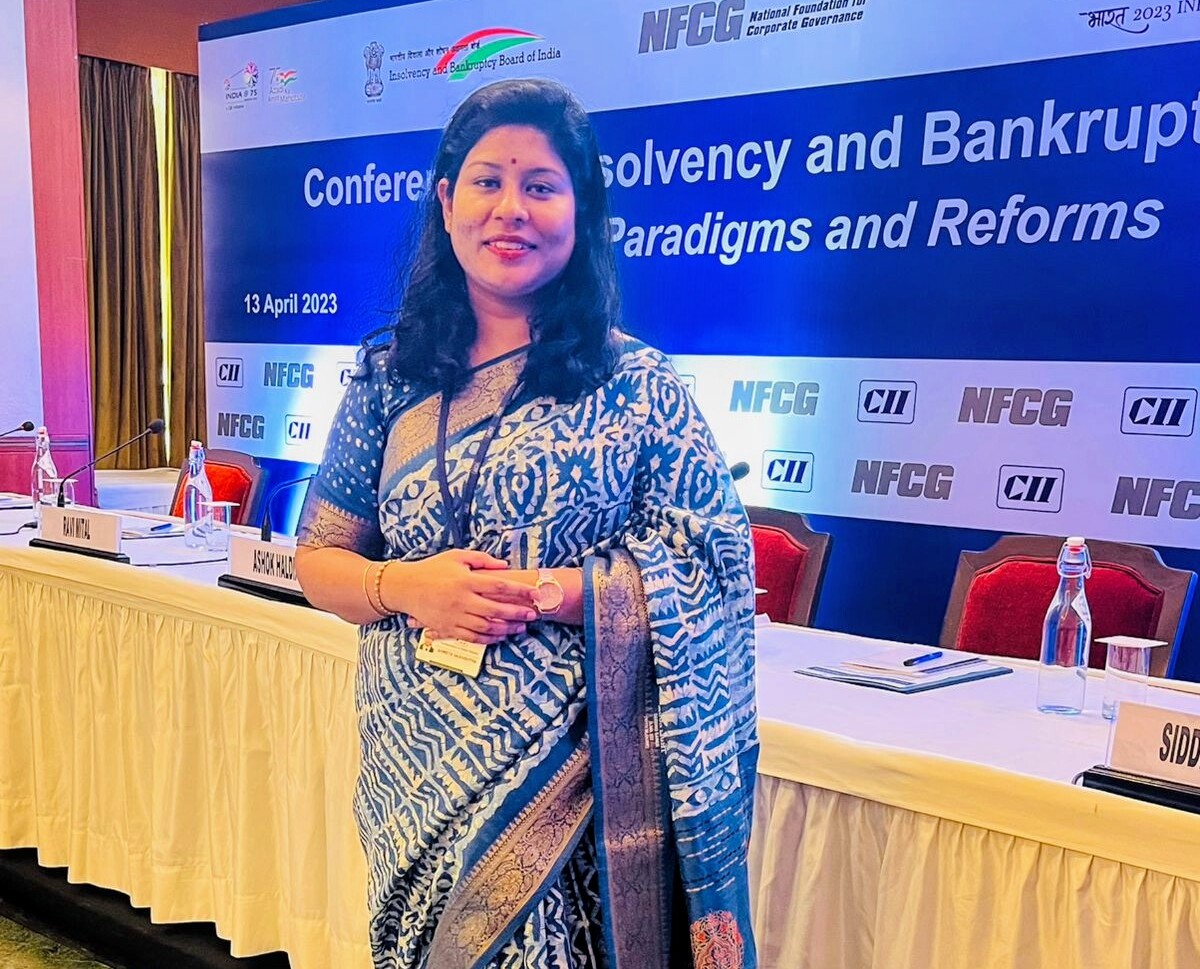










 Allow notifications