Tag: RGNUL(Patiala)

  • “While I entered tax litigation because of its unique mix of corporate and courtroom work, I stayed because of the intellectual challenge, the unpredictability, and the sheer excitement of the practice.” – Deepak Thackur, Advocate on Record, Supreme Court of India and Director at Lumiere Law Partners.

    “While I entered tax litigation because of its unique mix of corporate and courtroom work, I stayed because of the intellectual challenge, the unpredictability, and the sheer excitement of the practice.” – Deepak Thackur, Advocate on Record, Supreme Court of India and Director at Lumiere Law Partners.

    This interview has been published by Anshi Mudgal and The SuperLawyer Team
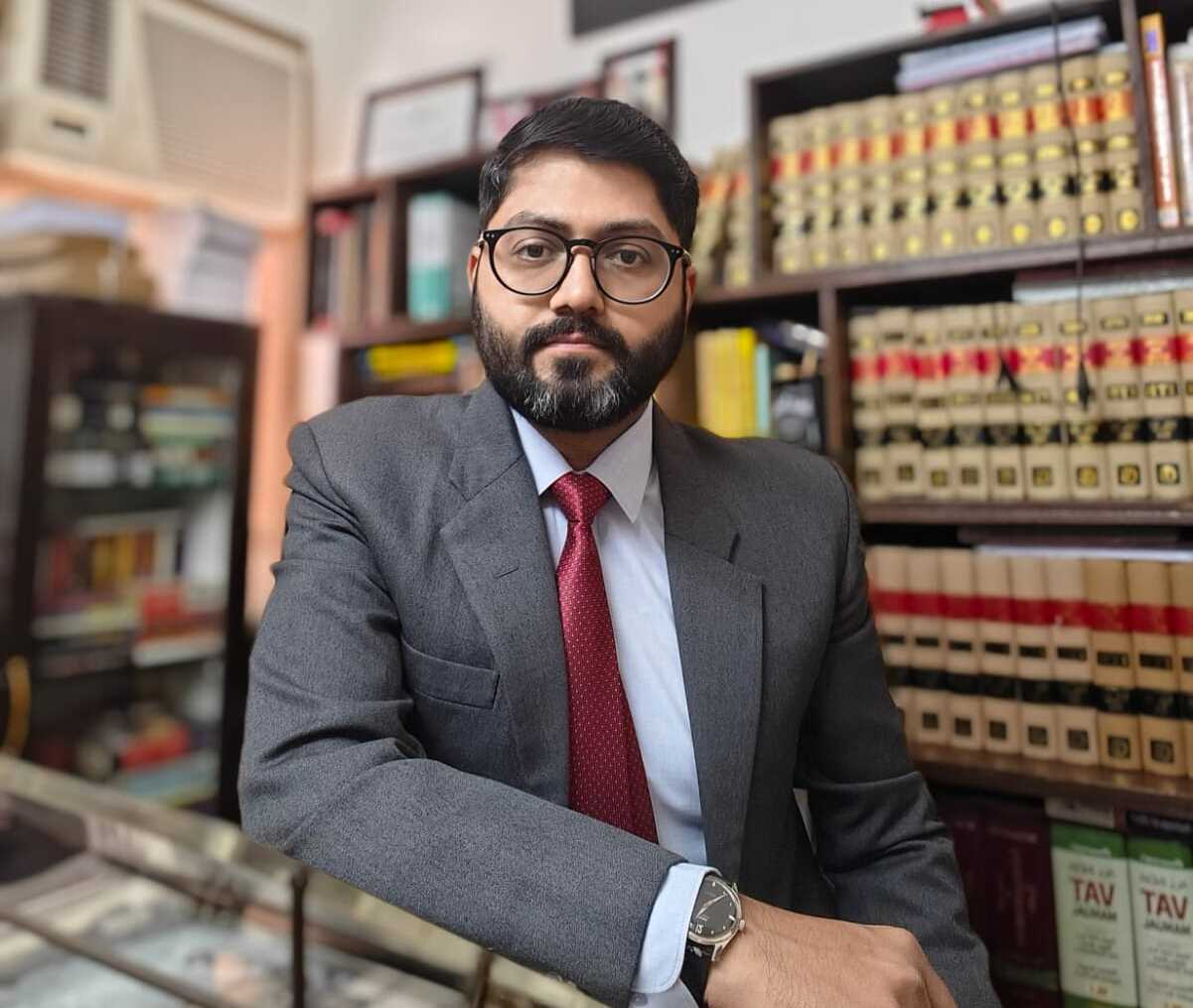
    As an Advocate-on-Record before the Supreme Court of India, with a deep understanding of procedural complexities and a strategic approach to complex tax disputes, what motivated you to pursue a career in law initially? How did your experiences at Rajiv Gandhi National University of Law, Punjab shape your journey?

    Like many first-generation lawyers, my journey into law began more by chance or perhaps, more accurately, by a process of elimination. In school, I took Physics, Chemistry, and Mathematics with the intention of joining the defence forces, particularly the Air Force. However, due to imperfect eyesight, that option was ruled out. The next conventional choice at the time was engineering, but I was certain that it was not for me. Around that time, a family friend who was studying at GNLU introduced me to CLAT. I found the course material interesting and developed an instant liking for law. At that stage, there was no deep-seated motivation but just a practical decision that I had to pursue something meaningful.

    My time at Rajiv Gandhi National University of Law, Punjab, turned out to be an enriching experience. Coming from a small town with a near Hindi-medium schooling background, adjusting to law school, where extroversion is often applauded, was challenging at first. But RGNUL had an intellectually stimulating environment that instilled in me the desire to work on myself. More importantly, I had an amazing group of friends who, in their own ways, taught me valuable lessons. All of this collectively fostered my analytical skills and deepened my appreciation for the law.

    One of the most impactful moments of my time at RGNUL came during our convocation, which was chaired by Justice T.S. Thakur. One of my dearest friend received three gold medals, and just like that scene in “3 Idiots”, I found myself feeling a mix of happiness for my friend and regret for not achieving the same. Then, Justice Thakur delivered a speech that, to this day, remains with me. He acknowledged that while some students had won gold medals, many had not but that did not determine success in the legal profession. He emphasized that success in law comes from following the Five Ps: Patience, Perseverance, Persistence, Passion, and Practice. It felt as if he was speaking directly to me.

    That moment reinforced something I have carried throughout my career. While my initial decision to study law was incidental, my time at RGNUL cemented my passion for the field and gave me the clarity to pursue litigation. Looking back, I can say with confidence that law, whether by chance or choice, turned out to be the right path for me.

    During the early stages of your career as an Associate, what key experiences stood out that deepened your legal understanding and influenced your decision to specialize in tax disputes?

    My interest in tax law started during my internship at a tax litigation firm. Tax litigation has a unique mix; it allows you to work on complex corporate matters while also experiencing the thrill of courtroom advocacy. That combination intrigued me and ultimately led me to choose tax as my area of practice.

    During the early years of my career as an Associate, I had my fair share of lessons, some humbling and others eye-opening. One incident, in particular, stands out. I was working on a case where I advised a client purely from memory. I have always had a strong recall, and in my overconfidence, assumed I knew the provision perfectly. I overlooked the fact that tax laws change frequently. The client later pointed out an amendment that completely changed the position I had advised on. It was a moment of realization that no matter how confident you are, never rely on memory alone. That experience taught me the importance of always verifying the law rather than depending on recollection. From that day on, I made it a habit to double-check and stay updated.

    I was fortunate to start my career under the guidance of Mr. Pramod Kumar Rai and Mr. Puneet Agarwala, both of whom have been incredible mentors. Their approach toward juniors is something I try to imbibe today. They never raised their voices or scolded but always guided with firm yet encouraging clarity. One of the most valuable lessons they taught me was to always stay updated on the law, no matter how busy the day gets. Even today, my mornings begin with reading legal updates because I learned early that in tax law, staying current is non-negotiable.

    Another crucial lesson I learnt was that litigation is unpredictable. You can never be too certain about what will happen in court. Early on, like many young lawyers, I sometimes assumed that a matter would be adjourned and did not prepare as thoroughly as I should have. That assumption was short-lived when, in one of my cases, I almost got a dismissal order. My senior gave me an advice that has stayed with me: “Deepak, always come to court as prepared as if you are arguing Keshavananda Bharati. So that when you ARE arguing a matter that big, you are ready.” That advice changed my mindset. From that day forward, I never walked into a courtroom unprepared, no matter how small or routine the case seemed.

    I remember another incident where my senior asked me to find a judgment on a potential question that might be raised by the judge. The request came late at night, and like any junior, I was frustrated about the timing and wondered why I was working on hypothetical scenarios. Still, I burned the midnight oil and managed to find the answer. The next day in court, the very first question the judge asked was the one my senior had anticipated. Because we had the answer ready, we moved past it smoothly. That experience taught me two things: (1) litigation, at times, is like war. Be a good soldier and follow the command of your seniors, and (2) some things come only with experience. Stay humble and keep working.

    Looking back, those early years were filled with invaluable lessons; some learned the hard way, others through the wisdom of my mentors. I learned that confidence must always be backed by diligence, that preparation is non-negotiable, and that every case, no matter how minor, deserves serious effort. While I entered tax litigation because of its unique mix of corporate and courtroom work, I stayed because of the intellectual challenge, the unpredictability, and the sheer excitement of the practice.

    Having cleared the AOR exam on your first attempt, what challenges did you face during your preparation, and how has earning the AOR title impacted your practice and professional growth?

    When preparing for the AOR exam, the biggest challenge is time management. Most advocates taking this exam are full-time practitioners, managing court appearances, client meetings, and drafting work daily. Finding the time to sit down and study consistently is easier said than done.

    In my view, the AOR exam does not fall into the category of being extremely difficult. The concepts are straightforward, but the real challenge lies in the sheer volume of material that needs to be covered. The questions are not the kind that one encounters in daily practice, so prior experience alone is not enough. There are no shortcuts. You have to go through the prescribed material, cover to cover.

    Another challenge is structuring answers effectively. The questions in the AOR exam are often lengthy, yet the time to answer them is limited. In litigation, we are used to explaining arguments in detail, but in this exam, brevity is the key. Answers need to be crisp, precise, and well-structured, striking a balance between conciseness and completeness.

    But perhaps the most underrated challenge is ‘writing’ the exam itself. We have become so accustomed to typing on laptops and dictating drafts that writing for hours at a stretch feels almost unnatural. The AOR exam requires handwritten answers, and I remember struggling with writing speed and endurance. I even had to practice writing answers just to get my hand used to it again.

    Clearing the AOR exam was a significant milestone. It wasn’t just about earning the title but because of the journey. The process of preparing for it deepened my understanding of procedural law and reinforced the importance of consistency. It has allowed me to take greater responsibility in Supreme Court matters and strengthened my credibility as a litigator. The efforts it took to clear the exam was worth it, and the experience has helped me grow in the profession.

    Given the demanding nature of your profession, what methods do you employ to unwind and strike a healthy balance between your professional duties and personal interests?

    The practice of law, especially in the field of tax litigation, is undoubtedly demanding. My work takes me to the Supreme Court, High Courts, and Tribunals, often involving travel to different cities. The long hours and unpredictable schedules can be exhausting, but I genuinely love what I do. At the same time, I also recognize that longevity in this profession comes from accepting that you are not a machine. Law as a profession requires your undivided attention. No human being can be attentive all the time and if you are burnt out, in a way you are doing disservice to your client. So, learning when to pause and step back is much needed, which is of course easier said than done in our profession.

    Work-life balance is highly subjective. For me, unwinding is not about carving out large chunks of time. It varies from reading to watching a movie or playing on PlayStation or simply just relaxing with the family. Recently, it has been my two-year-old son who eagerly waits for me to come home and play with him. Those moments are priceless, and no matter how hectic the day has been, I make sure to come back home and play with him. Also, the travel, though often work-related, also becomes an opportunity to explore new places, even if just briefly, which helps in breaking the monotony. 

    What are some of the most common tax-related challenges that businesses and entities typically encounter, and what proactive strategies or best practices can they implement to minimize or avoid these issues?

    In my experience I have seen that: department rarely accepts a tax position without questioning it. In most cases, the authorities argue that the company has suppressed facts, misrepresented details, or acted fraudulently, even when the issue is merely a difference in interpretation. This often turns a straightforward tax position into a protracted legal battle.

    At the same time, I’ve also seen companies take tax positions that are legally untenable by relying on interpretations that have already been rejected by courts or positions that are directly contrary to statutory provisions. What’s surprising is that many of these decisions stem from well-meaning but flawed sources such as random internet searches, AI-driven answers, or informal advice from non-experts. While technology has made information more accessible, it has also made misinformation more widespread. A company’s tax strategy should never be based on a ChatGPT response or a Google search alone as it needs professional scrutiny.

    To minimize these challenges, businesses should adopt a proactive approach. Some examples would be: 

    • Regular tax reviews and audits: Companies should periodically review their tax positions with professionals to ensure compliance with evolving laws and precedents. Instead of relying solely on online sources, businesses should consult experienced tax advisors who can provide tailored, legally sound guidance.
    • Document everything: A well-documented tax position, backed by legal provisions, case laws, and expert opinions, strengthens a company’s defense in case of a dispute. Further, intimate the tax position to the Department so that they cannot allege suppression of facts. 
    • Stay updated on legal developments: Tax laws are constantly evolving, and staying informed through professional updates, industry discussions, and expert opinions is crucial.

    Tax disputes are inevitable in business, but a well-informed, strategic approach can significantly reduce litigation risks and ensure compliance while optimizing tax positions effectively.

    With the continuous evolution of tax regulations, how do you see the future of tax law shaping up? What advice would you offer to aspiring lawyers interested in tax litigation, and could you recommend any resources to help them stay updated on the latest developments in the field?

    Tax law is evolving rapidly, and while the Government is making an effort to create business-friendly policies and curb unnecessary litigation, anyone who has dealt with the tax department knows that tax disputes are far from over. The tax department, by its very nature, is litigation driven. No matter how much simplification is introduced, the nature of taxation itself ensures that litigation will always be a part of the system. 

    For anyone looking to build a career in tax litigation, one thing is non-negotiable i.e. you must stay updated. Tax law is not static. It is shaped by frequent amendments, evolving judicial interpretations, and shifting departmental positions. The best way to develop expertise in GST or indirect taxes is to go back to the roots by reading landmark judgments under Excise, Service Tax, VAT, and CST. Many of the key issues under GST today are not entirely new and have their roots in Excise, Service Tax, VAT, and CST because GST is essentially a conglomerate of these laws. A strong foundation in these older tax regimes will give a deeper understanding of GST and help in tackling complex issues that arise today. Understanding how courts ruled on classification disputes, valuation issues, and input tax credits under the old tax laws will provide a strong foundation for handling similar issues under GST.

    For staying updated, there are plenty of sources available online such as Taxscan, Taxsutra, and GSTSutra provide daily updates, case summaries, and expert opinions. It can be overwhelming as the updates are repetitive; to avoid that one can opt for GSTR journals as it captures the most relevant cases and amendments. 

    Get in touch with Deepak Thackur –

  • “Balancing litigation and corporate advisory is a delicate dance, but both complement each other and contribute equally to my growth.” – Charulata Chaudhary, Advocate on Record at the Supreme Court of India

    “Balancing litigation and corporate advisory is a delicate dance, but both complement each other and contribute equally to my growth.” – Charulata Chaudhary, Advocate on Record at the Supreme Court of India

    This interview has been published by Namrata Singh and The SuperLawyer Team

    Can you share what inspired you to pursue law, and how have your early experiences shaped your current practice and how the journey of your legal career began after graduating from Rajiv Gandhi National University of Law?

    I had chosen the Science group in the Higher Secondary education and wanted to become doctor by profession, having inspired by a family friend excelling in Nureo Surgery. Choosing law as a career option was by chance with the constant support and guidance from my father and family who have been my pillar of strength and source for inspiration till date. My father happened to do law but chosen to become a Police officer in State services. Since I have had an immense interest in general knowledge and my family discussions generally revolved around current affairs, politics, history, I guess it had a silent part in helping me preparing for the NLU’s entrance exams. I was introduced to the study material of LST, Universal Publishers and GK books since many familiar acquaintances and seniors were studying in NLU’s and suggested to consider law as a career option. The 5 years B.A. LLB. NLU’s courses entrance examination was conducted separately, I appeared only for a few colleges having a proximity and comfort of my residence.

    By the third year of law, I had decided to appear for the judicial examinations, so the inclination remained towards acquiring in depth knowledge of Civil and Criminal laws. After passing out, on basis of college merit, my profile was shortlisted for interview and led to appointment as Law clerk cum Research Assistant.

    You’ve had an impressive journey from a Law-Clerk- Cum-Research Assistant to becoming an Advocate- On-Record at the Supreme Court of India. Could you share the key moments or decisions that guided your career towards this prestigious role?

    In terms of exposure, the clerkship has opened wide horizons and given an entirely different take to observe, examine and analyse the nuanced approach employed to address the intricacies of law points from the bench side. In terms of the internships I did, they provided me with exposure, varied from a firm’s and/to a senior advocate’s perspective, so these experiences were different and rewarding for me and helped immensely and ignited a yearning in the initial years to pursue law as a profession.

    After working with esteemed law firms and Senior Advocates, you transitioned to independent practice. What challenges did you face during this shift, and how did you overcome them?

    I would say working with the law firm happened to be the best decision in terms of learning various branches of law and access right from trial courts to the Supreme Court of India, that has given a first-hand exposure to argue the matters before various forums and enabled me to brief the senior counsels for the matters.

    While working at senior’s office, the approach was different, and it was predominantly assisting on the case briefs received by senior before the Supreme Court and various High Courts.

    The Advocate-On-Record Examination is known for its rigor. How did you prepare for this exam, and what advice would you give to aspiring advocates aiming to take this path?

    By the time I wanted to take up the AOR Examination, I had already started my practice before the Apex Court. Hence, was having fair amount of exposure towards the practice and procedure of the Supreme Court. Though, at present there is ample literature readily available for clearing the exam, it’s always advisable to undergo 1-year training period seriously with an AOR to gain knowledge and nuances in practice and procedure as this is one amongst the four subjects in the examination. Besides that, the three other papers being drafting, legal ethics and case laws must be prepared meticulously with focus on various intricate details.

    How do you balance your work life between litigation and corporate advisory? Do you find one more fulfilling than the other, or do they complement each other in your practice?

    While working with law firm, I had first-hand experience with drafting notices, due diligence for companies, handling and advising high-profile clients before DRT, BIFR, and CLB helped me in enhancing the skills of corporate advisory practice.

    I would say, a delicate balance must be maintained between the two. I apparently enjoy both fields thoroughly and get a very fulfilling feel while employing the intricacies of one field in terms of execution and implementation in the other.  As per me, a well-drafted advocate will have an upper hand in court crafting and presenting the case. Therefore, I find both complimenting each other.

    As a partner at ABM Chambers, you head the Capital Markets, Compliances & Advisory division. Could you elaborate on the complexities involved in advising corporate clients, especially in dispute resolution?

    Balancing the interest of various stakeholders in the corporate entity is a challenge in itself. For a corporate client, a dispute resolution usually requires taking a multifaceted approach, integrating the legal expertise with the understanding of the business needs. Evaluating the costs of various dispute resolution options and the potential benefits /damages both in terms of cost and time are key in a decision-making process. So, advising a corporate client, is a sum total of various factors before arriving at a decision.

    Considering the diverse areas, you practice in, such as Constitutional Law and Corporate Advisory, did you pursue any specialized courses or training after your formal education to enhance your expertise? How important do you think continued legal education is for a successful legal career?

    It is too individualistic; a different viewpoint always exists and can’t be generic. There is a sub-set, who secure jobs through PPO’s and pursue one field continuously, develop a domain knowledge and commend over that stream out of their extensive experience spanning the years due to exposure through handling a similar set of matters. However, this is solely dependent on individual knowledge, skill set, and extensive experience over discipline.

    For me, it has been about the development of interest in capital market through continuous reading and being exposed to the field through my work with the law firm and my own investments that I had acquired over the years. While working, I have undertaken various assignments as to advising policy drafting for startup companies, MSME’s, advising them regularly with the ever changing legal and regulatory landscape, drafting and reviewing various sorts of agreements and contracts tailored for their need, keeping touch base with them and navigating the compliance aspects on regular basis.

    Serving as a Panel Counsel for Railways and ONGC involves significant responsibility. What are some of the unique legal challenges you’ve encountered in these roles, and how have they contributed to your professional growth?

    The issues that involve vast organization like ONGC and Railways are across the broad spectrum from Labour issues to contractual disputes. At an earlier stage in your career, working as a panel counsel for the PSU, you feel empowered and put to task in some of the complex legal issues. Because of the sheer volume of the work executed by these organizations, they invariably have to go through some legal impediments which from a legal perspective you cannot be exposed in any other organization, that to, at the formative stage of your career.

    You practice before the Supreme Court of India, the High Court of Delhi, and Madras, as well as various tribunals. How do you manage the differences in legal procedures and expectations across these jurisdictions?

    I had a brief work experience with an established decade old law firm based out of Chennai, which has helped in shaping my career and always kept me grounded while balancing my professional needs along with keeping empathy with clients and their requirements. In fact, appearing before different High Courts has helped me in observing the approach of judges while dealing the original and appellate side matters in different light altogether and enabled me to learn the high courts practice and procedure and neck of arguing the matter.

    As a partner at ABM Chambers, you are in a leadership position. How do you mentor young lawyers in your firm, and what qualities do you believe are essential   for   leadership   in   the legal profession?

    I believe in integrity and honesty to undertake and complete the assignment with swiftness in a stipulated period. While dealing with any matter be it litigation or advisory, one should adhere to the laws, rules and regulations operating in the field to provide a holistic shape to it before drafting or presenting. I believe being a part of such a vibrant and dynamic field we grow, learn, unlearn and relearn altogether, depending on the needs and requirement. But what’s more important is to have a positive outlook and constant feedback from your circle is key to achieve the goal. Law as a field is quite extensive and has a luring capacity extending an invitation to all for a level field and fair play. It’s just a combination of hard and smart work any individual ready to put in and the rewards would be unique and manifold.

    Get in touch with Charulata Chaudhary-

  • “As far as the ever evolving legal landscape is concerned, young professionals have wonderful knowledge management resources in the form of legal news portals and online workshops”-Mrinmoi Chatterjee  Advocate on Record

    “As far as the ever evolving legal landscape is concerned, young professionals have wonderful knowledge management resources in the form of legal news portals and online workshops”-Mrinmoi Chatterjee  Advocate on Record

    This interview has been published by Priyanka Karwa and The SuperLawyer Team

    Can you share the story of how you chose to pursue a career in law and specifically how you ended up becoming an Advocate on Record at the Supreme Court of India?

    I was always fascinated with law and the working of courts. My father being a member of Rajasthan Higher Judicial Services also naturally fuelled my inclination towards law. However, as it is with most people, it was not my first choice. I was preparing for engineering entrances and even scored well in some of them. But when I got through in CLAT, I wholeheartedly chose to join National Law University, Patiala, Punjab where I spent the most important five years of my life. 

    During my third year, I was fortunate to intern with Ms. Shobha, a distinguished Advocate on Record at the Supreme Court. This particular internship completely changed my perspective and helped me develop a keen interest in the practice of law, especially, at the Supreme Court. By the time I finished college I couldn’t wait to get my bar license and come to Delhi. 

    I immediately joined the offices of Ms. Aishwarya Bhati in 2014. I was fortunate enough to get invaluable opportunities to work on important legal matters, appear with and assist Seniors in the Supreme Court. Subsequently, I transitioned to the Delhi High Court where I learnt the ropes of original side work under the mentorship of Ms. Mrinalini Sen. The comprehensive exposure to various judicial fora, including district courts and tribunals, during my juniorship, significantly enriched my professional acumen. 

    With the blessings of my mentors and a couple of briefs in my repertoire, I went into independent practice in 2017 and set up my own office. As soon I became eligible to write the AOR examination, I diligently started preparing for it. However, on account of Covid-19 pandemic, AOR exams were rescheduled twice and came to be scheduled in December. It was extremely challenging to prepare and sit for the exams while also maintaining a running practice. However, all the hard work paid off and I was able to fulfil the dream I had since my third year of college. 

    With over nine years of experience in handling multifarious litigation, could you highlight a pivotal moment or case that significantly shaped your career as an advocate?

    I was fortunate to receive a number of opportunities wherein my seniors and mentors gave me a lot of freedom to independently draft, file and argue matters. The trust reposed by my mentors helped me develop the confidence to venture out on my own. I started taking on independent briefs from the beginning of my practice and achieved several wins, but one matter which will be close to my heart was a pro bono matrimonial matter for maintenance under Section 125CrPC. My client had been suffering from cancer but was extremely diligent in providing inputs and following up with her case. It was one of the first matters I did as an independent counsel where I conducted the entire trial by myself and eventually was able to get maintenance not only for her but even her major but dependent son. 

    Recently I was able to secure notice in a pension matter of a retired government officer from the Supreme Court. Another pivotal moment has been very recent wherein I was able to secure quashing of criminal proceedings as well as divorce under Article 142 from the Supreme Court for my client. 

    Your practice spans across various forums, including the High Court of Delhi and the Supreme Court of India. How do you navigate the unique challenges posed by different legal environments and what strategies do you employ to ensure success across these diverse platforms?

    Throughout my extensive legal practice across various courts in Delhi, I’ve come to realize that while the fundamental values of the judicial system and an Advocate’s preparation remain constant, the strategies employed must adapt to the distinct practices and procedures of each court. For instance, when dealing with the Supreme Court in a Special Leave Petition under Article 136, the focus lies in crafting a precise synopsis that highlights relevant legal points due to the limited scope. Miscellaneous days demand a quick-witted approach, as benches pose pointed questions, necessitating a thorough understanding of the case. Conversely, in Writ Petitions, where more time is allotted for arguments, a different presentation strategy is required. In trial courts, adherence to statutory timelines, rules of evidence, cross-examination, and knowing the procedural law thoroughly is imperative. My diverse experience has enabled me to tailor strategies on a case-by-case basis, involving clients in the decision-making process. Recognizing the importance of client inputs, particularly in matters of equity, underscores the necessity for effective communication. Staying updated with relevant cases, understanding the court dynamics, and maintaining a positive mindset are integral to my approach.

    Given your specialization in Commercial Litigation, Debt Recovery, and Litigation Management, can you elaborate on your approach to handling complex cases involving corporates and companies, especially with a focus on debt recovery?

    In handling complex cases involving corporates and companies, particularly with a focus on debt recovery, my approach centres on meticulous case analysis, client consultations to align legal strategies with business objectives and strategic planning tailored to each case’s unique aspects. I prioritize alternative dispute resolution (ADR) mechanisms to expedite resolutions and maintain effective client communication. Staying abreast of industry regulations and providing timely and relevant inputs to devise precise legal strategy is also key. Ultimately, my goal is to secure favourable outcomes for clients while upholding the highest standards of professionalism.

    You mentioned taking up pro-bono cases and providing legal consultation to those in need. How do you balance your commercial practice with pro-bono work, and what drives your commitment to providing legal assistance to those who may not afford it?

    Managing the balance involves meticulous time management and a strategic approach to workload allocation. I prioritize pro-bono cases that align with my expertise and can make a significant difference in someone’s life. While commercial cases may demand substantial attention, I allocate dedicated time and resources to pro-bono work, treating it with the same level of professionalism and commitment.

    As an aspiring speaker and mentor, you’ve presented at webinars attended by law students and legal professionals. What topics do you find most important to discuss with aspiring lawyers, and what advice do you typically offer to those entering the legal profession?

    I implore young professionals who are keen to learn the ropes to first conquer good drafting skills, which is the most important aspect of litigation which sets you apart from the competition. Sadly, university education hardly focuses on practical aspects of drafting. Second most important would be to maintain strong work and legal ethics without which it is difficult to build credibility with clients as well as mentors. Third would be to remain reasonably updated about the working of practice and procedure of different courts which builds confidence and independent thinking; and lastly to make lots of friends, develop strong relationships and have fun while you are at it. 

    Expanding your practice to the Rajasthan High Court at Jaipur indicates a dynamic multi-state approach. Could you share the challenges and opportunities you anticipate in creating and sustaining a multi-state practice?

    I have had the opportunity to appear before the courts at Rajasthan and collaborate with like-minded advocates which inspired me to expand my practice across jurisdictions. While there are inherent challenges, including adapting to divergent legal procedures, different client needs and logistical challenges, however, this expansion also brings forth significant opportunities for growth and networking. During the past years I have developed strong professional relationships which will help me overcome these challenges significantly. Additionally, key to growing any practice is meticulous planning and organizational efficiency. I am sure it would be an amazing opportunity for personal and professional advancement. 

    Lastly, drawing on your extensive experience, what advice would you give to fresh law graduates aspiring to build successful careers in law, especially considering the evolving landscape of legal practice in India?

    Every person who enters practice understands litigation differently based on their personal experiences, ambitions and capabilities. Strong work ethic and continuous learning are the basics, while, the more you work on upgrading your knowledge and skill, the more it will help you flourish. 

    However, it is indeed a very tough profession, a very long and arduous journey. I learnt really late that one should prioritize their mental and physical health to be able to survive and thrive in this profession. Fresh law graduates should learn to manage stress in positive ways and must aim for personal growth besides just professional growth. 

    As far as the ever evolving legal landscape is concerned, young professionals have wonderful knowledge management resources in the form of legal news portals and online workshops. Moreover, virtual courts, live streaming of constitution bench matters and open access to supreme court judgments are some of the recent welcome steps which can ensure easy access to learning. Fresh law graduates should not feel overwhelmed by the constant information overload by making reading and writing on legal issues a part of their daily or weekly schedule.

    Get in touch with Mrinmoi Chatterjee-

  • The ever-changing regime of arbitration has become a major challenge for all of us. Every day the Courts are coming with different judgments with reference to interpretation of the Arbitration act provisions-Vaibhav Choudhary, Advocate, Supreme Court of India

    The ever-changing regime of arbitration has become a major challenge for all of us. Every day the Courts are coming with different judgments with reference to interpretation of the Arbitration act provisions-Vaibhav Choudhary, Advocate, Supreme Court of India

    This interview has been published by  Priyanka Karwa and The SuperLawyer Team

    Can you please share the story of how you embarked on your journey in law, from your days at National Law University to opening your own law firm, ‘YHprum Legal’ and establishing your practice in Delhi being a first-generation lawyer?

    To start with, I come from a family of engineers and pursuing law was never a consideration during my school time.  However, on advice of a family friend, I visited NLU Jodhpur and from there I was intrigued in law (as a probable career option), in the year 2006. I was enthralled by the environment & culture of NLU and after contemplating possible future opportunities in the field of law, decided to appear in the law entrance examination. 

    At that time, in the pre-CLAT era, each NLUs conducted their own entrance examination. Hence, I appeared for the entrance exams and got selected in the Rajiv Gandhi National University of Law (RGNUL), Punjab in the year 2007 for a five-year integrated B.A., LLB course.

    Speaking of initial days at Law school, I must say that it was a whole roller-coaster, from studying different branches of law to participating in Moot court competitions, to preparing research projects and multiple seminar presentations to then applying for internships! With so much to do and learn, those five years went by in a flash and shaped my personality in a way that changed my perspective towards life. 

    After completing the Law in 2012, I was selected for a prestigious Judicial clerkship in the Supreme Court of India, wherein, I was assigned to the office of HMJ Dipak Mishra (Former Chief Justice of India). While working for the Bench at the highest level for a considerable time-period, later on, I decided to join the litigation and joined the Chamber of Mr. Gopal Jain, Sr. Advocate, Supreme Court of India, as litigation associate thus embarking on my journey in the field of litigation in Delhi. 

    Being a first-generation advocate and an outsider for Delhi legal circles, I was also inclined to join a Tier-I dispute resolution firm in Delhi for financial stability and professional growth, just like every second lawyer. 

    The thought of going independent, establishing my own law firm was intimidating and a distant dream at that time. But destiny had different plans and the path was already chosen for me! 

    After learning some basics of law & litigation at the Chamber of Mr. Jain, I started my independent practice before the Supreme Court, Delhi High Court, and various other tribunals for a few months with limited financial resources, zero clientele at hand and without any support or mentors. As a first-generation advocate, had his own share of struggles and difficulties, and it takes a whole lot of perseverance to survive the initial turbulent years of independent litigation practice.

    The only strength that kept me going through that period was the consistent support of my colleagues from the Bar and my law school batch mates and friends, who were practising before different courts across the country and referred briefs to me in Delhi. 

    I was well aware that starting and running a law firm is not without its challenges, including competition, financial considerations, administrative responsibilities, and the need for marketing and business development.

    After gaining some experience as an independent litigator, I, along with my colleague, Akanksha, decided to launch our Law firm, ‘YHprum Legal’, which means “Everything that can work will work”, it is ‘Murphy’ spelled backwards.  The motive behind this move was to provide personalized, client-centric legal services, wherein, we can have client-focused practice that prioritizes individual needs and attention, with our expertise.  

    You’ve had a diverse legal career, working with prominent legal professionals and in various areas of practice. Could you highlight a few pivotal moments or experiences that significantly shaped your legal career?

    I must admit that I did not choose the brief/case or court, they were referred to me and I accepted them all with a challenge to perform to the best of my ability.

    All the briefs/cases that came my way were from different branches of law. As an independent litigator, you don’t really have an option of choosing the briefs or the area of practice. Fortunately or unfortunately, since the beginning of my litigation career, I had the opportunity to appear before different courts and forums, i.e., Supreme Court, Delhi High Court, and district courts, NCDRC, TDSAT, APTEL, CERC, NGT, NCLAT, NCLT, Arbitral Tribunals etc. 

    Appearing before a specialised Tribunal, such as APTEL, TDSAT, NCLAT & NGT, helped in expanding my horizon and understanding of the subject matter.

    Highlighting a few cases that played a significant role in shaping my diverse legal career, naming a few of those, are as follows: 

    • One of the intense legal battles that I was part of, TDSAT, was hearing AGR dues case wherein all the telecom companies challenged the validity of levy of license fee by TRAI, which was ultimately decided and settled in the Supreme Court. This intense legal battle has made me understand the nuances of telecom law.
    • Another case pertained to cancellation of AIPMT due to large scale irregularities in which a historical judgement was delivered by the Supreme Court by cancelling the examination on our plea. 
    • Then, a large-scale irrigation project in the state of Telangana was also challenged by us due to violation of various environmental norms before the National Green Tribunal and subsequent to the Supreme Court;
    • I had the opportunity to work on the Ansal brothers (Uphar cinema fire) case, on quantum of sentence before the Supreme Court along with legal tycoon, Late Sh. Ram Jethmalani, the case preparation had forced me into sleepless nights.  
    • In the Supreme Court the national newspaper were faced with contempt proceedings for non-implementation of Majithia wage board recommendation, wherein, we had to justify the non-action by the client and difficulties to implement to the committee report ;
    • I had been part of numerous mining lessees matters under the MMDR Act arising out of the state of Goa, wherein, the State Govt. had terminated the lease deed of various mining lessees due to non-compliance of Supreme Court direction in the landmark Goa foundation judgement.
    • Post cancellation of Coal blocks by the Supreme Court, various mining lessees had to fight hard for deemed renewal under Section 8A of the MMDR Act in various High Courts i.e. Delhi, Odisha and Jharkhand. 
    • Recently, we were representing home buyers before the Supreme Court on application of MOFA Act and RERA in relation to deemed or blanket consent for additional structure to be constructed by the Builder.
    • One of the highly contested litigation is the effective implementation of All India Quota in PG courses for AIPMT/NEET aspirants, which we keep doing as and when the situation arises. 

    The above list is just an indication, wherein, the dispute or the judgment had made significant impact by laying down legal principles of constitutional importance.

    As the founder and managing partner of ‘YHprum Legal’, you handle a wide range of cases, including arbitration, civil and criminal litigation, and commercial disputes. Can you tell us about a particularly challenging case that you’ve worked on and the lessons you learned from it, especially during COVID time?

    The firm was founded in the most turbulent times that the world was seeing at that time, the COVID Pandemic. Due to the national lockdown wherein the courts were also shut, we were facing a complicated and unimaginable situation, the Indian Courts were embarking a new tech-era through virtual hearings and e-courts across the country.  

    Our advisory work during lockdown increased exponentially, wherein, we were answering numerous legal queries regarding the effect of lockdown on the clients’ cases and business. The notifications issued by RBI for moratorium and by local governments in relation to rental payments and employee payments required interpretation by the Courts. All pending arbitration were made virtual or adjourned indefinitely. The limitation period was extended by the Supreme Court. There was a sudden death in regular appearances due to adjournments and sudden fall in fresh matters filing. 

    It became difficult to get relief in regular pending matters due to non-listing. We had multiple arbitration proceedings pending at various levels in different courts or arbitral tribunals and clients were getting restless due to decline of urgent hearing or relief by the Courts. It took a while for us to settle down and make peace with the lockdown and its aftermath. 

    The Supreme Court passed an order for the release of under trials which created havoc across the country for the execution. We had to approach the Supreme Court through IA for implementation of the order in favour of our clients due to reluctance shown by the local authorities and Courts. Due to a sudden health emergency, we had to approach different Courts for regular and anticipatory bails for our clients, which at that time was a herculean task. Our existing clients were seeking legal opinion on application of force majeure on a daily basis. All physical meetings shifted to virtual meetings, which now have become a norm in our office. 

    The ever-changing regime of arbitration has become a major challenge for all of us. Every day the Courts are coming with different judgments with reference to interpretation of the Arbitration act provisions. The recent Constitution bench judgment on the stamping of the arbitration agreement and followed by a detailed judgement of Delhi High Court in the NHAI case had changed the scenario overnight. The IBC, 2016 being a new law is getting a makeover on a daily basis, which has become a different game altogether.  

    Representing homebuyers, post the enactment of the RERA, IBC and new Consumer Protection Act, 2019 had caused unwarranted confusion among the homebuyers about their status and forum hunt for appropriate relief. The Supreme Court judgments on anticipatory bail have no universal application and each bench has their own set of rules and consideration, which put the advocates in a perplexing situation to make clients understand if bails are getting rejected by the SC. A new phenomenon of putting strange bail conditions in matrimonial matters is making our work harder to get relief for our clients. 

    Each case has its own merits and demerits, and we are learning with each brief that is coming to us. In my more than eleven years of journey into litigation in Delhi, every appearance has been a learning experience, though sometimes we won our battle and sometimes lost it. But each brief leaves memory and is an experience, which motivates us to work harder, smarter and faster making survival possible in this continual race of successful litigators with client satisfaction. 

    In addition to your legal practice, you also serve as a judge for international moot court competitions. How has this experience influenced your perspective on legal education and advocacy?

    During my law school, I had participated in a few moot competitions in which I played the role of a speaker as well as a researcher. I then realised that being a speaker in the moot competitions is not really my cup of tea and I was more comfortable in research & drafting. However, as an advocate, although initially I was hesitant to judge the moot competitions but eventually started enjoying the whole process of interacting with the participants and guiding them further. I had the honour to judge the international rounds and national rounds of the Jessup moot competition multiple times. I have now participated almost in every international moot court competition either as an arbitrator or judge viz., Willem C. Vis Moot (Vienna & Hong Kong), ICC trial, Frankfurt Moot, FDI Moot, Cross Examination Moot and various pre moots across continents. 

    During my journey as a judge for various international moot court competitions I had learnt various aspects of international law, commercial arbitration, investment law, international criminal law etc. Due to my extensive representation in different international moots, I am receiving multiple requests for support and assistance as a coach by different law (domestic and international) schools regularly, thereby complying to most of the requests.

    I firmly believe that participation in such competitions is necessary for the law students during their law school because it would eventually help them in preparing for the art & craft of advocacy.

    I think Indian legal education needs a revamp to realise the current reality and the same cannot be restricted or limited to bookish knowledge. The new emergent legal regime such as crypto currency, bitcoins, data protection, sports law, privacy law, AI, online ADR and emerging new technology needs to be taught in law school as part of their curriculum. The legal regime is changing with the speed of light and therefore, the law schools also need to catch up with the same to be at par with the real-time advocacy.

    Your practice covers a wide array of areas, including constitution, arbitration, commercial disputes, and more. Is there a specific area of law that you find particularly fascinating or challenging, and why?

    As you rightly mentioned, I have a whole diaspora of practice while appearing for my clients before various courts and forums. As I stated earlier, I had not selected my cases or had the privilege to select my clientele, therefore, it is very difficult to now admit or say which branch or specific area of law I find fascinating. But I can now confess, my most favourite part is appearing before the Supreme Court.

    In the Supreme Court, the advocates are like all-rounder players who draft a wide range of petitions i.e., special leave petitions, writ petition, transfer petition, arbitration petition, civil and criminal appeals and sometimes contempt petition and review petitions. 

    To answer the question, commercial litigation before any Court or Tribunal fascinates me as I find it exhilarating. Now after spending a good number of years in litigation, I had realised that arbitration matters, IBC related matters and disputes arising out of special laws i.e. RERA, Electricity Act, Telecom Law, and Consumer Protection are always challenging. 

    You’ve represented clients in various high-profile cases, including matters related to home buyers, sexual assault victims, and constitutional validity. Could you share some insights into the strategies and approaches you employ in handling such sensitive cases?

    The term ‘high-profile’ cases has no meaning in actual litigation. Every case is high profile for us. Our work strategy or approach is not different due to involvement of a high-profile individual or big amount. I had recently, represented a victim of gang rape before the Supreme by filing cancellation of bail application. The details of the case had shocked our conscience. We were shocked to see that the identity of the victim is disclosed everywhere by the local authorities, Trial Court and the High Court. We had to seek specific direction from the Supreme Court to redact her name from all court records.  

    Introduction of RERA and IBC has changed the legal scenario. While appearing in RERA, we had a different strategy in place if a case needs to be filed in UPRERA or HRERA. We prepared a ‘to do’ chart from filing till final grant of relief. The orders of RERA are paper decree and need special litigation strategy for enforcement, sometimes by approaching the High Court. We are representing home buyers under IBC, at different stages of the Insolvency before various NCLTs. The Supreme Court, post Judgement in Amrapali and post constitutional validity of the IBC, had settled law to certain crucial issues in favour of the home buyers, which eventually led to multiple litigation also. The challenge to constitutional validity of CAA is still pending in the Court, therefore, it would be difficult to divulge into that in more details. 

    There is no specific strategy or approach while handling sensitive cases. The facts speak for themselves, we make sure all facts are verified through documents and correctly represented in our drafts before filing. Our work is very client centric, wherein, we update our client about regular court proceedings as well our line of action. We believe that the client is first & foremost and it is ensured that the client is heard properly and advised as per law, to the best of our ability. 

    As a writer and columnist for legal publications, you have a keen interest in legal commentary. Are there any current legal issues or trends in India that you find particularly noteworthy and would like to share your perspective on?

    I am quite inquisitive about the Supreme Court Judgements and make sure that in my free time I read them and if possible, share my views through social networking or by writing articles or commentary. 

    The recent development in the arbitration law is worrisome and will work against our country’s official position of being an arbitration friendly nation. The judicial interference or intervention in arbitration matters especially in Section 34 and 37 proceedings needs a revisit by the legislature. 

    At times, the Supreme Court judgements/orders are contrary to already settled legal positions and passed by ignoring the previous precedents which is a dangerous proposition. 

    The decision of the Constitution bench in the demonization case had set a wrong precedent by going against the settled legal position in relation to RBI’s power and involvement of the Central Government by announcing the same in hurry without any application of mind.  

    The Maharashtra CB Judgement had failed to lay down any legal position and indirectly supported and gave a stamp of approval for dethroning an elected government by money power.

    I firmly believe that the State should not enter into the personal space of an individual and privacy must be respected as per the scheme of the Constitution. 

    The Supreme Court refusal to hear cases of individual liberty and matters of national importance has created a doubt on authority of the Court. I feel that the Supreme Court cannot be a CJI centric Court and the administrative side also needs to be run through a consultation process of the senior most judges. The ‘Master of the Roaster’ power given to the CJI must be reviewed and individuals cannot be given an absolute power, which can compromise integrity of the Institution. 

    I must laud the various measures taken by the current CJI DYC for making the court more litigant centric and approachable for a common man. The virtual hearing needs to be made permanent and not optional on behest of the Court. The litigant and advocate must be given the right to choose how they want to appear in the Court.  

    The enactment of the Mediation Act and Digital Protection Act and establishment of different arbitration centres across the country is a welcome step in the field of law. 

    Given your extensive experience in the legal field, what advice would you offer to recent law graduates who are starting their legal careers, especially those interested in litigation and dispute resolution?

    I consider myself as a student and try to learn everyday through different modes. Despite spending a considerable time in litigation and dispute resolution, I still go to the Court just to hear the arguments of the Counsel, whenever some important matter of national or constitutional importance is going on. I had also enrolled myself for various mentor mentee programs offered by multiple platforms. I interact with law students and share my experience with them by telling do’s and don’ts before entering litigation with my little experience. 

    In today’s AI centric world, the legal profession is also not immune from its impact. Adoption of technology and usage of social networking is a key to survival for a better future to all those who are planning to enter this profession. Young lawyer’s must do networking and interact with their seniors and colleagues in the profession for guidance.   

    All those who are planning to enter litigation as a first-generation lawyer or an outsider, start networking from college days itself and try to get internships from those places wherein you seek future opportunity post law school. Get accustomed to technology and AI and try to be updated with the latest legal news around you. If you are curious and patient, you will surely survive in this profession. 

    I feel that Delhi as a place for advocates is full of opportunities and there is work for everyone, even though the competition is tough, the best will survive and grow gradually. Patience, perseverance, optimism and inquisitiveness are the key factors for survival in the litigation. 

    Lastly, considering your diverse legal background, what are your future aspirations or goals in the field of law, and how do you plan to continue making an impact in the legal profession in India?

    We are growing gradually with help and assistance from all our well-wishers. Our aim is to continue making a difference in people’s lives through our legal work and assist all our clients to get them appropriate relief effectively.  

    I am planning to continue my contribution to legal education and advocacy by teaching law students in law schools and writing on legal issues to advance knowledge and promote legal research and writing. 

    I will continue to promote alternative dispute resolution (ADR) as an alternative to resolving issues through mediation and arbitration which can help reduce the burden on courts and promote quicker, cost-effective resolution of disputes for everyone.  

    I am a firm believer of sharing legal knowledge by teaching and mentoring law students and young lawyers which will ultimately help shaping the future of the legal profession.

    Get in touch with Vaibhav Choudhary-

  • Tenacity and a strong work ethic are crucial attributes that can never be replaced- Varun Dev Mishra, Advocate-On-Record, Supreme Court of India

    Tenacity and a strong work ethic are crucial attributes that can never be replaced- Varun Dev Mishra, Advocate-On-Record, Supreme Court of India

    This interview has been published by Priyanka Karwa and The SuperLawyer Team

    Sir, could you please share with our readers how you ended up pursuing a career in law? What inspired you to choose this path?

    My journey into the field of law was a combination of serendipity and destiny. After completing my 10th board exams, the only apparent option seemed to be pursuing a subject that would lead to engineering. However, fate had a different plan for me. During the summer vacation, I had the opportunity to witness a moot court competition organized by NLU Bhopal near the city auditorium. The atmosphere in the room was electric, as the final rounds were judged by esteemed judges from the Hon’ble Supreme Court and High Courts. The participants’ relentless efforts to unravel the epistemological intricacies of the law struck me. It was at that moment that I realized my true passion lay in the realm of law.

    As a first-generation lawyer, what were some of the challenges you faced during your journey to becoming an Advocate on Record at the Hon’ble Supreme Court of India and the Hon’ble High Court of Delhi?

    Regardless of whether you come from a long line of lawyers or you are the first in your family to enter the legal profession, the challenges faced by lawyers are often similar. Tenacity and a strong work ethic are crucial attributes that can never be replaced. However, as a first-generation lawyer, the need to work harder may be more pronounced, as you may not have the same network or familial guidance in navigating the legal landscape.

    In my personal journey, I was fortunate to have friends and mentors who provided invaluable guidance and support at every step. As an alumnus of a prestigious National Law University (NLU), I had the advantage of knowing fellow lawyers practicing in various states across the country. Within a year or two of starting my independent practice, I began receiving work related to Hon’ble Supreme Court. It is worth mentioning that being an Advocate-on-Record (AOR) can significantly contribute to establishing oneself as a Supreme Court counsel.

    Could you tell us more about your specialization in criminal law practice? What drew you to these particular areas of law?

    I was always clear that to have a good litigation practice I need to start with the basics. With that in mind, I started my practice as a trial court advocate. The trial of Criminal law is very interesting. Every day you are representing someone whose dignity to life and property is at stake. Although all cases hold equal value, but in criminal matters, the exigencies are much higher. In trial court, the case revolves around hard facts and circumstances. It is in this spectrum of criminal jurisprudence the value of argumentative skills, research and legal strategy is put to real test.

    With over nine years of experience in handling litigation at the Supreme Court and various courts and tribunals in Delhi, could you share some memorable cases or achievements that stand out in your career so far?

    Throughout my nine-year career as a lawyer (which is relatively young), I have had the privilege of working on some captivating cases that have left a lasting impact on me. One particular case from my early years stands out, where I had the opportunity to represent a client who, as a woman, filed a domestic violence case against another woman. This presented an intriguing legal question: Could a woman file a domestic violence case against another woman? The courts in Delhi took notice of this matter and graciously decided to delve into the issue. Eventually, the High Court settled the matter, providing much-needed clarity on this aspect of the law. It was a significant moment, and I am grateful to have been a part of it, contributing to the understanding of domestic violence laws in such cases.

    At present, I find myself involved in a matter before the esteemed Delhi High Court that necessitates the interpretation of Section 143A of the Negotiable Instruments Act. This specific issue revolves around whether directors should fall under the purview of this section. It is a thought-provoking legal debate, given the absence of clear precedents or extensive jurisprudence on this particular matter. The court’s forthcoming decision will not only provide guidance on this issue but will also contribute to the evolving body of law in this domain.

    Additionally, I am currently engaged in another case where the Delhi High Court is carefully considering the scope and applicability of Sections 219 and 220 of the Criminal Procedure Code. The crux of the matter lies in determining whether multiple cases can be consolidated. This presents a captivating legal challenge, as it requires a meticulous interpretation of these provisions and an understanding of their practical implications. The court’s eventual ruling in this case has the potential to establish a noteworthy precedent and guide future proceedings involving the consolidation of cases

    As a panel counsel for many PSU and MNC clients, what are the key responsibilities and challenges that come with representing such diverse clients?

    Every client, regardless of their background or case, has similar expectations from their legal counsel. As an independent counsel in the legal service industry, it is essential to approach each case with honesty, dedication, and a genuine commitment to the work at hand. Maintaining a high level of professionalism and adhering to the client’s brief is paramount in providing quality legal services.

    Being an independent advocate also comes with the challenge of staying updated with the evolving landscape of the law, particularly when dealing with a mixed practice. However, I am grateful for my colleagues with whom I share my practice, as they provide a valuable network for knowledge-sharing and staying abreast of legal developments. Additionally, my associates contribute to the endeavors of each day, collectively working towards providing the best possible legal assistance to our clients.

    By fostering a culture of collaboration and continuous learning is necessary in current times. It is through this collective effort and dedication that I am able to navigate the complexities of the legal profession and meet the expectations placed upon by my clients. Further maintaining the highest standards of integrity, sincerity, and commitment in my practice is not only a professional obligation but also a privilege.

    In your experience, what are the crucial factors that contribute to a successful settlement in litigation, especially when dealing with matters of recovery, contractual disputes, and consumer laws?

    As I embarked on my legal career, I witnessed the increasing prominence of mediation and conciliation processes as essential components of the legal system. Recognizing the mounting burden on the judicial system, courts have established mediation centers within their premises, and certain statutes now mandate pre and post-litigation mediation. Embracing and respecting the process of mediation/conciliation has proven to be crucial in achieving successful settlements.

    As an advocate, my role is to guide clients towards settlement options and set aside personal interests during mediation. By actively participating in the process and facilitating negotiations, we can strive for amicable resolutions. Embracing mediation not only avoids lengthy and costly court battles but also empowers clients to actively shape the outcomes of their disputes.

    You have presided over a bench and been appointed as an arbitrator, Could you share any insights or lessons you’ve learned from these experiences?

    I have had the privilege of serving as a legal member from the bar in the National Lok Adalat, where I presided over cases. Additionally, I have been appointed as an arbitrator by parties to resolve their disputes. The role of an arbitrator or presiding member differs from that of an advocate. In India’s adversarial system, the presiding person is expected to maintain a non-interventionist stance. This means that as an arbitrator, I am obligated to be non-partisan and impartial, basing decisions solely on the submissions made by the parties and the records presented. It is not my role to act as a devil’s advocate in search of equitable justice.

    Maintaining neutrality as a non-partisan individual can be challenging, particularly given the overwhelming number of pending disputes that require resolution within a single day. However, it is important to remember that we are dealing with people and not just statistics. Striving for equanimity and impartiality is paramount, despite the difficulties. Each case before me represents real individuals and their concerns, and I always made sure that it is my duty to approach each matter with the utmost fairness and objectivity.

    As a pro bono advocate, how does it feel to provide legal representation to underprivileged sections of society? Could you share a significant pro bono case that made a positive impact on your career or personal life?

    As a panel counsel of DHCLS (Delhi High Court Legal Aid Service) and Delhi District Legal Aid, I have had the privilege of providing legal assistance to undertrial prisoners and underprivileged sections of society. In the pursuit of justice, it is essential to pay attention to the marginalized segments of Indian society, even amidst the economic growth the country is experiencing.

    In the realm of criminal law practice, there is often a focus on representing clients involved in white-collar crimes, where the potential sentences are relatively low. However, there are many instances where young adults are falsely implicated in cases such as mobile phone robberies, which carry significantly higher sentences. It becomes challenging for these individuals to secure legal representation throughout the trial, which typically lasts 2-3 years. In such scenarios, the availability of free legal aid and pro bono services becomes crucial. Advocates should consider it their commitment beyond their profession to provide pro bono service.

    During the COVID-19 pandemic, I had the opportunity to interact with an undertrial inmate in Tihar Jail. Despite having already served the maximum punishment of three years, the inmate was still languishing in jail due to delays in obtaining a release order caused by the limited functioning of the courts. Moved by the situation, I took immediate action and filed a bail application on a court holiday, presenting it before a duty magistrate. Through this effort, I was able to secure a release order on the same day, providing relief to the individual.

    These experiences highlight the importance of dedicated legal aid services and the commitment of advocates to serve society. By extending our support to underprivileged individuals and fighting for their rights, we contribute to a more just and equitable legal system.

    Finally, what advice would you like to give to fresh graduates who are aspiring to pursue a career in law? What qualities or skills should they focus on developing to succeed in this profession?

    Law is an intriguing field that has been evolving alongside the changing times. It is important to recognize that there are numerous career options in law available after graduation, beyond traditional paths like litigation or corporate law practice.

    For a litigating lawyer, certain skills are essential. Firstly, honesty is paramount. It must extend to the client and to the honorable court. Upholding honesty and integrity in all aspects of legal practice is crucial for maintaining the trust of clients and the integrity of the judicial process.

    Secondly, perseverance and hard work are key.  Contrary to the portrayal in John Grisham novels, the reality of a successful legal career necessitates ongoing dedication and consistent effort. One significant case does not negate the facet of continuous hard work. It is through sustained perseverance that an advocate can navigate the complexities of the legal profession and further it is important to recognize that success is not achieved overnight. It is a culmination of integrity, diligence, and an unwavering commitment to the ethos which you promised to yourself before entering the profession.

  • In Conversation With: Sanjay Vashishtha, an Advocate and a prominent Academician, who is also a Bar Council of India Trust – Awardee and a St Cross Scholar

    In Conversation With: Sanjay Vashishtha, an Advocate and a prominent Academician, who is also a Bar Council of India Trust – Awardee and a St Cross Scholar

    This interview has been published by Sonali ParasharOjuswi Sahay, and the SuperLawyer Team


    How would you describe your journey as a legal professional so far? What part of it do you enjoy the most- teaching law or practising law?

    To begin with, my journey as a legal professional cannot be described as anything short of a “privilege” – where not only do I get several opportunities to learn from the vicarious experiences of my seniors, friends, and colleagues, but also from the clients we represent. My journey is an amalgamation of academic endeavours and practice as the question aptly puts it. I cannot help but highlight that I was lucky enough to embark and act upon opportunities as and when they came my way with utmost hard work and professionalism.

    In my professional journey, now close to a decade, I have had the privilege to represent global MNCs to individual clients – from Padma Vibhushan to Padma Bhushan Awardees to individuals who I looked up to during my days at law school. I have also had the privilege of representing a conspicuous bar association of Delhi comprising of 12000 lawyers, NLU’s, Municipal Corporation of Delhi, Law enforcement agency (Delhi Police) etc. as a lead counsel and take pride in appearing pro-bono for various bodies/litigants and have been appointed as amicus to assist litigants by the Hon’ble High Court of Delhi.

    It’s a very enriching experience which enabled me to find an extended family within the legal fraternity on both the practice and the academic side. I have had the privilege of teaching / delivering lectures from Delhi Police Academy / Specialised Training Centre to several NLUs including NLUD, RGNUL, RMLNLU etc. to Delhi University, Hindu College, University of Oxford, Indian Police Institute, to several other esteemed private institutions such as Lloyd Law College, Symbiosis etc. 

    In terms of enjoying the academic side over practice or vice versa to separate my passions that overlap. Theory and practice are not only inseparable but essential in pursuing both effectively. Theory/teaching exposes me to the academic side which effectively equips me to deliver better on the practice side of the legal world. I think legal professionals should enrol/undertake teaching assignments at law schools so as to provide law students with a multidisciplinary/ practical insight into the legal world. I would conclude by saying that both teaching and practice are an indispensable part of my legal personality (on a lighter note). I enjoy them both equally! 

    As a Counsel for various commercial matters, representing clients at forums including Supreme Court, High Court and Tribunals, what do you believe has been the reason for your drive towards Litigation?

    As a litigation counsel, I witness an opportunity to grow and learn on a daily basis – the reason for my proclivity towards litigation since inception. Litigation – though equally challenging has been a mentally enriching and soul-satisfying experience. My proclivity towards litigation is mainly because of the work satisfaction that I derive out of every matter – both personal and for those we represent. Every case has its legal and factual quests that make the research and arguments worth its toil. 

    Another incentive is being able to network. Even a lunch table at a court premise is nothing less than a crash course on certain legal topics and current affairs. The ability to meet diverse clients with multi-disciplinary needs and wants makes the work even more interesting.

    Some of your esteemed clientele include the Delhi Police, RGNUL(Patiala), NLU Delhi,  South Delhi Municipal Corporation etc., to name a few. What are a few essential skills one must possess to establish and retain clients in litigation?

    The clients as highlighted by you are mostly government bodies, of course as esteemed they are. Office management is pivotal when it comes to managing multiple government clients alongside our esteemed private clients which include MNCs of various kinds, individuals, foreign nationals and other bodies. It’s imperative that there is a working system in the office to ensure timely drafting/filing of pleadings, follow-ups with clients and timely filings. Needless to highlight, every client deserves time and attention irrespective of the financial stakes. Therefore, time and resource management become equally necessary. 

    Also, building a strong team is more important than ever. A law office is never a one-person show. From peon/clerk, interns to associates everyone has an indispensable role – provided there is an effective oversight at all times. Accountability is yet another fundamental principle I would like to highlight.

    Accountability towards the client and their hardships can be equated to responsibility. Therefore both accountability and responsibility coupled with the right tools for office management are a few of the fundamental essential skills paramount to being a litigation counsel. Research and promptness along with keeping the clients informed is an added incentive in my opinion which goes a long way in client satisfaction. 

    With a Bachelor’s in law from Jamia Millia Islamia, an LLM  in Comparative Law from McGill University Canada and an MSc in Criminology & Criminal Justice from the University of Oxford, you have esteemed degrees to your name. How important do you believe academic excellence is in one’s legal career?

    Academic excellence may not be the correct label. Nor do I claim to be academically excellent. I may rather re-label this as an academic proclivity – which does go a long way in shaping the lens with which I view the legal world. In terms of academic institutions, they really give an insight into global/legal realms and highlight how legal systems/traditions of the world overlap. It also enables us to bring a trans systemic/multi-disciplinary tune to our practice which, in my opinion, enables me to better assist the Court than I could have otherwise without my LLM and MSc in criminology. Of course, besides that, you make great friends and these institutions and their affiliations equip me with several academic and other opportunities which I would have otherwise been deprived of. 

    I always, therefore, encourage my interns/associates to pursue higher studies when possible from an institution that promotes multidisciplinary education at a global level in the area of their interest and not merely a master for the sake of a label at their office.

    You have been a recipient of the National Scholarship by the Bar Council of India Trust. Please tell us more about that and how can law students target achieving the same in their careers?

    I think it’s a combination of luck with some passion for legal studies. Keep up at both! The latter you control, the former only works with the latter!

    You also hold experience in teaching law as a guest faculty at renowned institutions. You have delivered guest lectures to IPS Officers on evidence-based policing. Tell us more about your work in legal academia. What are some of the emerging trends in legal education and what are your views on these changes that you have witnessed in your career?

    I’ve had the privilege as highlighted earlier to be a guest faculty/ lecturer in various academic institutions including RGNUL, Delhi Police, RMLNLU, NLUD, Delhi University, Lloyd Law College, etc. I’ve also delivered seminars at Oxford and other international platforms and have publications in various national and international journals. My blogs are accessible at SCC, Bar and Bench and Livelaw alike on several social-legal topics. This academic interest is towards giving what I learn back to society, the legal community and the upcoming members of the bar at law schools across India. 

    As the question aptly puts it, the trends in legal education are gradually changing. Physical books are being replaced by virtual worlds – and physical lectures by virtual classrooms. Knowledge is ever-flowing. Digital platforms are disseminating knowledge / legal awareness 24 x 7 and the desire to know it all is ever-increasing. But one has to maintain a balance while adopting the emerging trends in the legal educational world. 

    There is a famous saying by Donald Rumsfeld, “There are known knowns, things we know that we know; and there are known unknowns, things that we know we don’t know. But there are also unknown unknowns, things we do not know we don’t know.”

    Therefore, it is important to read and apply our senses in a global context and assess every piece of knowledge as if there has to be a second side to the coin. The times to come are going to revolutionise how we study and interpret law and facts.

    You have publications to your credit as well and have published in reputed journals including the University of Oxford, London Redress, and other reputed journals, and also blogs at Live Law and Bar & Bench. What are 5 major skills a budding lawyer must possess to make them better researchers and writers?

    In no order:-

    1. Academic interest
    2. Endeavour to write – One has to simply write. Good or bad. It gradually improves.
    3. Readability – Make it comprehensive, coherent and easily decipherable. 
    4. Accessibility – Write on accessible platforms which are mostly free to access/read so as to provide access to legal education.
    5. Commitment & Research – Original research, commitment to collection of data and analysis. Originality in ideas is pertinent.

    Finally, a word of advice to our readers who are on their journey to establish themselves as litigation lawyers?

    Don’t give up! There are ups and downs – but thereafter – only ups and ups with fewer downs. Good luck & Thank you for your time.


    Get in touch with Sanjay Vashishtha –