Tag: SAM

  • Prateek Lala, Senior Associate, Shardul Amarchand Mangaldas, on building his career in Corporate Law and his gainful experience as a Paralegal

    Prateek Lala, Senior Associate, Shardul Amarchand Mangaldas, on building his career in Corporate Law and his gainful experience as a Paralegal

    Prateek Lala graduated in Law from CMR Law School in 2010. Coming from a family of scientists and being a first generation lawyer, Prateek used every opportunities and challenges thrown at him to develop as a professional. He started working as a paralegal at Universal League while still in college and then as an associate at Lexygen where he was directly involved in several multifaceted and highly challenging mergers & acquisitions and private equity transactions undertaken by globally reputable private equity funds and multinational companies.

    Currently, he is a senior associate at Shardul Amarchand Mangaldas & Co, one of the biggest and most reputed law firms in the country

    In this interview, we talk to him about:

    • His decision to pursue Law as a profession.
    • How can extra activities bring out the competitive edge in you which is very useful in the profession?
    • How to manage the discrepancies between what you study and what you do?
    • The qualities and skills that make a good intern.


     How would you introduce yourself to our readers?

    You can call me a ‘Bangalore boy’ although my roots lie in a small town called Santiniketan in West Bengal. I did my schooling in Clarence High School, Bangalore and law school from CMR Law School (now School of Law, CMR University).

    I really enjoy what I do today so I don’t really mind (and actually relish) the challenges that this profession throws. When I get some downtime, I like to travel, play sport, or spend time with family and friends.

    I actually come from a family of scientists, so while my parents were slightly apprehensive about me taking up Law (largely because of the misconceptions about lawyers existing in the 20th century), they were always very supportive. I am (fortunately or unfortunately) the first lawyer in my family although I have an uncle who practices Law in Gujarat.


    What motivated you to pursue Law? How was your experience at law school?

    Being abysmal at physics and chemistry motivated me to pursue Law! No, but seriously, I wanted to focus on my strengths and not pursue something that I didn’t enjoy (read: science). My father is a Ph.D. in organic chemistry and my brother is a chemical engineer, and there I was barely managing to pass in chemistry (imagine the embarrassment). But honestly, science subjects did not appeal to me and I realised I should focus on something else (which I would at least pass in) which resulted in me choosing commerce as my preferred stream in I.S.C. Thereafter, I thoroughly enjoyed studying economics, political science, accountancy, etc. and my grades improved drastically. During my 11th standard, I read about corporate law being a viable career option and its uptick in recent times. It seemed like an interesting option and something that I would enjoy so I went ahead and today I am glad, I did.

    Studying law was something that I thoroughly enjoyed. It really helped that I had some good lecturers who encouraged analytical thinking than just mugging up from some (in)famous ‘guidebooks’. I participated in various moot courts, cultural events, debates, all of which helped me develop as a professional. I interned after college hours at various firms and companies which gave me some great insight into the legal profession and the challenges underlying this profession. At the same time I didn’t forget to have some fun at college (some of my best years).


    Did you take up activities such as moots, debates and sports in law school?

    Yes, like I said, I participated in moots, debates, and sports all through college. These were integral in my development as a professional. Mooting teaches you a myriad set of skills such as research, mannerisms, oration, etc. Public speaking, per se, instils a lot of confidence in you which does keep you in good stead when you start practicing (be it litigation or corporate). Sports, obviously, bring out that competitive edge in you which, again, is very useful in this profession.


    You worked as a paralegal during your time in college. What motivated you to do so?

    Being a ‘non-NLS’ student, realised that I may have to think out of the box to secure a job. Mr. Partha Mandal, partner at Universal Legal gave me an opportunity to intern with UL after college hours and I worked there for two years. I became a fairly integral part of that set up (and I also got some stipend so it took care of ‘college expenses’). My seniors would take me to the courts, the ROC’s office, sub-registrar’s office, etc. which gave me an understanding of what happens practically. I also worked with Praxair India Private Limited, in my fourth year, under the guidance of Mr. Sthanu Singh which also gave me an in-depth understanding of labour laws and government contracts.

    Unfortunately, there is a huge dichotomy in what we study and what we actually do (reminds me of those memes) and being a paralegal helped me learn what matters. Of course, reading the Law (coupled with understanding the practical aspect) during work, helped when I was studying a subject at college and some stuff made much more sense than it would, normally, have.


    What piqued your interest in the field of corporate law?

    Initially, I joined internship because I wanted to figure out which area of Law interested me the most. But within a month of my internship with UL, their corporate practice sparked that interest in corporate law which I later pursued. All my internships have been in the field of corporate-commercial laws so I have never really deviated and explored other avenues. However, I experienced the real thrill of private equity and M&A during my time as a paralegal with Lexygen, where I decided this is what I want to do.


    What was your first job after law school and how did you secure it?

    During my fifth year at law school, Ms. Smita Thomas, a senior who I had worked with at Universal Legal (now a dear friend) referred me to Lexygen, a boutique transactional law firm (where she was working then). I was interviewed by Mr. Roshan Thomas (a principal associate then) for an internship and it was a colossal failure. However, given that they had a free slot that month, they decided to try me out. I worked under the guidance of Roshan and Mr. Vijay Sambamurthi (managing partner). Given that I had messed up my interview, expectations from me were very low, but the firm (rather benevolently) gave me enough work to keep me busy. Luckily, during a discussion on the Takeover Code, I managed to gather some courage and answer a question which the transactional team was deliberating (I had read about this subject at hand in some blog immediately prior to this discussion) and that answer helped them in the transaction and, voila, I was called back to work after college hours. As a paralegal with Lexygen, I assisted with research, proof-reading, restating articles, and (at times) due diligence. I can’t stress enough on how important research and proof reading is for an intern because if you give a well-researched document or catch a critical error in an agreement, it does really impress seniors at work.

    Lexygen gave me a PPO in my 9th semester and worked there for three years. It was a great learning experience and I have mad respect for that firm for having worked on some marquee deals. I learnt that it is critical to be thorough, meticulous, and well prepared for any task (whether drafting, negotiating, or conducting due diligences). I also learnt that lawyers could work hard and party harder!


    How did your appointment at BMR Legal happen? Can you tell us about the nature of your work and professional growth there?

    Post Lexygen, Roshan and I moved to the transactional practice at Themis Associates which was led by Mr. Siddharth Nair then. I worked on numerous multi-faceted and complex deals at Themis under the guidance of Roshan and Siddharth. My learning curve at Themis took a serious upswing thanks to the partners there. The transaction practice at Themis moved to BMR Legal the year I joined Themis. BMR Legal gave us exposure to several large and complex transactions which often gave rise to various stressful and challenging situations. But that was the thrill when we closed large and complex transactions, it gave us immense satisfaction.

    I was given much more responsibilities at BMR Legal; I became a senior associate and started leading transactions with minimal partner supervision. Initially, it was stressful but I guess I adapted fairly quick. Roshan and Siddharth continued to guide me during transactions and I picked up a lot of skill sets from them. Merely attending negotiations with them was a learning experience. I tried to replicate what I learnt from them in my deals and that paid rich dividends


    Can you describe the work environment and your job description at SAM?

    The transaction practice of BMR Legal was acquired by SAM. I work with Roshan at SAM, and I am grateful because he has been a mentor, guide, and friend from the Lexygen days and one can learn immensely while working with him.

    We have a wonderful set-up at SAM and the team I work with is incredibly talented, dedicated, and hard-working so it is a pleasure to work with them. The long/all nights don’t feel cumbersome since you are working with a wonderful set of people. Of course SAM, being one of the biggest and most reputed law firms in the country, opens up a lot of opportunities from a work perspective. We are still new to the SAM system but are settling-in fairly nicely.


    Have you ever considered pursuing higher education? What are your views on the importance of higher education?

    I am of the view that higher education in Law has very little or no utility if you are intending to practice corporate law. While you are gaining theoretical knowledge, it may not serve much utility from a practical experience perspective. In my experience, candidates with a higher PQE have an advantage over candidates with an LL.M. degree. I, personally, would choose to get the hands-on experience. However, I am told that higher education at reputed foreign universities is a great experience.


    How do you maintain a work-life balance?

    I think it is important to use your free time judiciously. Indulge in your hobbies, take holidays and spend time with your loved ones so that when the work is at full tilt you don’t feel burnt –out and are ready to put in the long hours. I personally mix music, play sport, travel, and spend time with my family and friends at every given opportunity. Also, I feel working-out and meditation is a great outlet for the stress that builds-up during high stress situations at work. Given the sedentary lifestyle we corporate lawyers lead, it is all the more important that you choose a healthy lifestyle.


    How do you keep yourself updated with legal developments in the numerous areas of law you deal with?

    SAM has a great research team that issues regulatory and market updates regularly. Apart from that RSS feeds and subscription to various legal newsletters and primers help immensely.


    Have you had any experience dealing with interns? What are the qualities and skills that make a good intern?

    I used to interview and hire interns for the longest time. The key qualities that make a good intern are as follows:

    • Never be complacent about (or underestimate) the work given to you.
    • Be meticulous and thorough in whatever you are doing. It may be a simple proof-read or a simple research.
    • Give it your best shot, and make sure you try to add as much value as possible. Remember you will be judged on these simple skills.
    • Never sit idle. If you are free, go up and ask a senior for work.
    • Don’t hesitate to ask for clarifications. Remember, you are trying to add value and reduce the work-load of your senior. You can do so only if you have understood the subject matter yourself.
    • Do not blindly copy matter that you see online into your work product. Make your work product as original as it can get.
    • Try to adapt to the firm’s culture and values.


    What are the qualities required to succeed in the field of corporate law and in major law firms?

    I’m still figuring out the qualities myself. But till now what I have figured is that hard-work, passion, commitment, and meticulousness cannot be compromised. Also, good people management skills are priceless in this profession.


    What advice do you have for our readers who are primarily college students?

    Pursue corporate law only if you think you might enjoy it (after having read about it). It looks glamorous from the outside but it is real hard work consisting of innumerable sleepless nights, sometimes unrealistic expectations, and minimal work life balance. However, the thrill and excitement is something that very few other professions have to offer. You need to be (i) updated about legal and financial developments, (ii) meticulous, (iii) willing to work very hard, (iv) focussed, and (v) willing to adapt and learn.

    Also, don’t get trapped in the seriousness of it all. Have some fun whenever you can!

  • Shreenivas Raju, Associate, Shardul Amarchand Mangaldas, on corporate and commercial law as a field of profession

    Shreenivas Raju, Associate, Shardul Amarchand Mangaldas, on corporate and commercial law as a field of profession

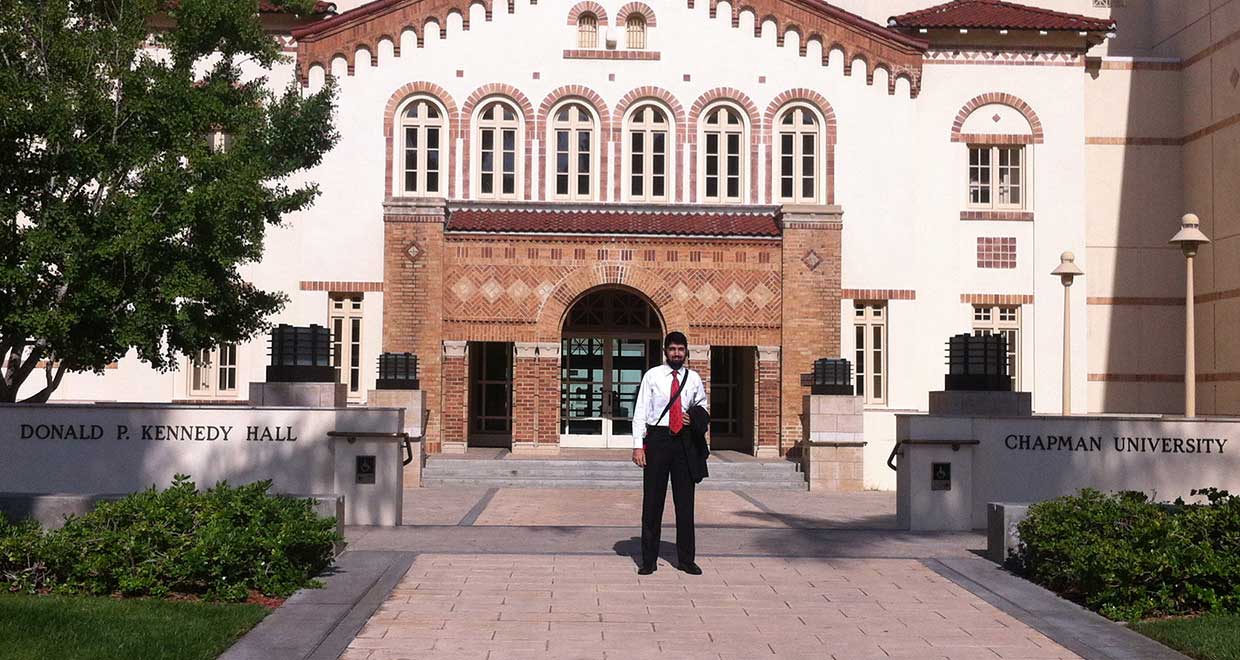
    Shreenivas graduated from Loyola College, Chennai with a degree in B.Com (Hons.) and went on to pursue law from the Cardiff Law School, UK. Currently working as an Associate at the Chennai office of Shardul Amarchand Mangaldas and Co, he specializes in Corporate and Commercial Laws which according to him is also the field he aims to excel in as a lawyer. He has worked at reputed firms like Dua Associates, OSC Services Private Limited and Global Law Alliance, Singapore.

    In this interview he shares his views about –

    • Working in Indian Law firms
    • How different is Indian education system from other education systems
    • His life at Cardiff Law School
    • About His inspiration in his father
    • How Cardiff was his formative time
    • Lessons law students keep in mind before doing internships


    How would you introduce yourself, given that most of our readers are law aspirants, lawyers-in-the-making & young lawyers?

    I am Shreenivas, and I currently work as an Associate at Shardul Amarchand Mangaldas and Co.’s Chennai office. Yes, I am a Lawyer, but since you say that most of your readers are lawyers, friends of lawyers or law students, I’d frankly say that I’m not that well connected with the legal circle here, since I’m a non-Chennai boy; although I would also add that I have been working in Chennai for the past 3 and a half years and am getting to know my colleagues and fellow legal professionals from other firms / practices in Chennai better, and I don’t consider that to be a disadvantage / obstacle that will hinder my aspirations to become a great lawyer someday.


    What interest or influence propelled you to pursue law as a career? What other options were you considering apart from law and how did you make the final decision?

    When I completed my schooling, i.e., after my Std. XII board exams in May 2000, I was discussing my academic future with my father, and at that time, to be very honest with you, I was very passionate about Economics. In fact, I still am, and I guess I always will be. It is a fire inside me that will never die. So, at that time, since I had scored excellent marks in Economics in my board exams, my aim was to study and thereafter pursue Economics as a career, which, to this day, remains an unattained dream of mine. I even applied to Shri Ram College of Commerce in New Delhi, St. Xavier’s College in Mumbai, and other prestigious institutions across India, all for the B.A. Economics degree, but my father was of the opinion that a career in Economics wasn’t worth much – he felt that the only thing one could possibly achieve by studying economics is probably aim for the Nobel prize, and then basically live off research grants for the rest of his / her life in order to carry out research and compile theses. So he was not very supportive of my choice, and told me that the only option I had was to pursue a strong commerce or accountancy undergraduate degree, i.e., a Bachelor of Commerce (B.Com) degree from a reputed institution that would provide me with a thorough understanding of and exposure to the fundamental principles of commerce, business and accountancy, which would thereafter give me more clarity and focus in deciding the relevant field in which I wanted to forge a career in. He said that I could keep in touch with economics as a passion on the side if I wanted to, but that was that, and I had to stick to the aforesaid course of action. Initially, I was adamant about pursuing economics since I had offers from the afore named institutions and others, but my father never relented (even going to the extent of saying that it was either his way or the highway, since he would be the one paying for my education…!).

    So I was left with no choice but to take up the B. Com (with Honours) degree at Loyola College, Chennai. Luckily, the modules that I studies across my three years at Loyola included a module in Economics, as well as the usual modules in Financial Accounting and other fields of accounting – so, I was able to keep in touch with economics for a while during my B.Com degree. Before I knew it, three years had almost come to pass, and my father then wanted me to become a Chartered Accountant just like him. He had been a practicing Chartered Accountant for almost 23 years at that time, and his idea was that his firm / practice was already there, ready to be taken over and run by me. What he didn’t know was that I had realized very early into my B. Com degree, that I did not possess the passion and the flair for accountancy that he had. I knew that I could never do justice to this profession if I chose to become a Chartered Accountant because I didn’t have the drive. In my opinion, passion for whatever it is that one does in life is paramount in order to excel in that field– for me, there was no better example for this at that time than my father himself, a man born into a rural, agricultural family in the Badaga tribal community, who fled to erstwhile Bombay in order to pursue his dream of higher education, and ended up becoming the first ever Chartered Accountant from the his tribal community. He is a completely self-made man whose real-life rags-to-riches story would require an entirely separate interview from me to explain, and, I completely dedicate everything I have accomplished in my life today to him.  So I made this very clear to him towards the end of my B. Com degree, and told him that I wished to pursue something that I was passionate about. My father agreed to me pursuing anything I wanted but for economics and that was when I expressed an interest in pursuing a career in law. That piqued his interest as well and we sat down to discuss the options available. During the course of our discussion, he expressed a view that while the traditional law career involved qualifying and enrolling as a Barrister / Advocate with the Bar Council of India and then practicing in a court of law of one’s choosing he wanted me to explore the option of specializing in commercial or corporate law which, he thought was a fast-developing field of law with tremendous potential. One of his personal quotes which comes to my mind – “a chartered accountant is practically three-fourths a lawyer at most times…”, and being a voracious reader of the Economic Times and other business publications and magazines, made me honestly  believe that he was genuinely onto something, and so we decided that I should pursue a career in commercial / corporate law. This also seemed to make sense to me at that time since I already had a fundamental understanding of the accounting because of my undergraduate program, which I could tie in with a law degree (with specialization in commercial / corporate law modules) and thereby forge a successful career in commercial / corporate law. Even today, when I look back, I believe it was the right decision – a small example to emphasize this would be some of the transactions that I work on in my career today which involve dealing with or scrutinizing financial statements of a corporate entity – to me, these are not just accounting numbers or data, because I am aware of the underlying accounting principles behind such statements, and how the observations from a scrutiny of such statements, can be incorporated or highlighted, as and when required, in a due diligence report or a key transaction document.


    Tell us about your childhood and pre-college life? Was it always a dream to be in legal profession? If not what did you want to be? Who was your role-model?

    I have very fond memories of my childhood; it was a wonderful childhood spent mostly in Ooty and Coimbatore, where I studied at the best schools and my parents made sure that I never lacked anything. In terms of what I wanted to be when I grew up, the list is a long one – I wanted to be a police officer, a soldier in the Army…I even wanted to be Jackie Chan…!!! Till today, I’m a huge martial arts fan, and I still love and revere Jackie Chan. By the time I reached eighth / ninth grade at school though, I was completely smitten by Cricket…by the way; I’m a born cricket fanatic. I was born on June 25, 1983, the day India won the Prudential World Cup at the Lords Cricket Ground in London. My father kept a picture of me as a newborn baby alongside a picture of Kapil Dev holding aloft the famous trophy at Lords in our house.


    So yes, I was completely besotted by the game and I was playing for my School and really wanted to become a cricketer. But then again, that was a completely no-go with my father, and so was never ever possible. As I had mentioned earlier, thereafter, it was only about economics and I never contemplated the idea of becoming a lawyer while at school. In terms of role models, my cricketing inspirations were Kapil Dev, Sachin Tendulkar and Anil Kumble, and in terms of academics and a career professional, my inspiration was, is and always will be my father.


    You did your schooling, senior secondary and bachelors degree in india. Why did you select Cardiff Law School among others?

    Once my father and I had decided that law was the destination, we discussed the possible options where I could study law, and surprisingly my father and I were on the same page that to get the best possible education in law, the most appropriate place would be the place where the law was created, the country of the Magna Carta, which is the United Kingdom.

    So, why Cardiff?  Well, I did apply to other universities including Oxford, London School of Economics, and Kings College, London, as well as Cardiff. I did get through to the aforesaid institutions and   got offer letters from all of them. However, we realized that studying at the  these institutions would be an extremely costly affair – furthermore, despite being a top student in my school  and  college days (I was a gold medalist in Business Mathematics and Income Tax Law & Practice at Loyola College), scholarship offers weren’t easy to procure at all. Around the same time, we met one of our family friends whose son had studied at Cardiff and went on to procure LL.M degree from Oxford and qualified as a Solicitor after doing the Legal Practice Course (LPC) from Nottingham. He subsequently joined as an Associate in Freshfields Bruckhaus Deringer (one of the famed Magic Circle Law Firms based in London).. We also came to know that Cardiff University was a part of the Russell’s Group (i.e., the top twenty Universities in the United Kingdom) and that Cardiff Law School was not only amongst the top ten law schools of the United Kingdom but Cardiff itself was a very vibrant and a student friendly city providing great and economic education. So, we settled on Cardiff.


    Tell us about your experience at cardiff law school, Cardiff University? How would you describe your academic life at Cardiff? What curricular and extracurricular activities did you participate while in university?

    In my opinion, although the B. Com (Hons.) degree that I did at Loyola was my first undergraduate degree, the six and a half years that I spent in Cardiff (completing both my LL.B. Law (Hons.) degree and my LL.M in International Commercial Law (Masters) degree) were the true formative years of my life. I believe that, during that time, I truly discovered who I was as an individual and the extent of my capabilities and skills for which I have to thank my father for that opportunity. When you study abroad, you will notice that the differences in attitude, culture, the system of education, the system of assessment, etc. For example, the relationship between the teacher and the student – it is a relationship built on informality and trust – to this day, I cannot recall a single instance where I’ve addressed my professors / tutors as “Sir” or “Ma’am”…it was always on a first name basis, and for a new international student like me, it was as instant ice-breaker, which allowed us to be more open and frank in our interactions with our teachers, unlike in India, where certain boundaries are established immediately between the teacher and student, which, in my opinion, hamper the scope for an honest, inclusive and objective relationship during college life.

    The LL.B course was very rigorous and was delivered to students by way of lectures and tutorials (similar to group discussions). Lectures ran for five days a week between 8:00am and 3:00pm, sometimes extending later into the evenings as well, with tutorials happening everyday wherein the topics taught at the specific day’s lectures would be discussed and studied in further detail. This was a refreshing change for me from the lectures-only model that I came from in India, since the tutorial sessions were aimed at improving our understanding and consequently our application of the law. The tutorial sessions also formed a great method to revise that day’s lessons on that day itself. However, we were also required to spend quality time in the law library everyday carrying out our own independent research and supplementing the lecture study material with our own notes. All this was very different from what I had experienced in India where I would go back home after college and just complete any assignments / work given for the next day by the teachers, and when the time came to prepare for class tests or exams, all I had to do was to ensure that I committed the entire syllabus to memory (i.e., ‘mugging up’ or ‘ratta maarofy’ in Indian college lingo). Another aspect of the tutorial sessions that I enjoyed was the fact that we learned the law and developed our understanding of the law based on discussions where no one would be openly declared right or wrong – it was through interaction and open deliberations with classmates, which enabled us to develop perspective on different opinions, and to apply that perspective in our understanding of the law. In terms of assessment, we were examined by way of a mixture of exams and coursework / essays to assess your understanding, your analytical abilities, and most importantly, your understanding of the law, rather than just the strength of your memory.

    One of the most important aspects of education in the United Kingdom (and by extension, the western world) is the concept of the prevention of Plagiarism, which forms an integral part of the educational system here. This is again a very unique concept that any and every Indian student, who wishes to pursue his / her education in the UK, would do well to familiarize themselves with. The significance of plagiarism is extremely critical for every student to know, because plagiarism will not only make you liable to be failed in your degree as a whole or to be expelled from university, but it is a civil and criminal offence under the laws of the United Kingdom. The software that is used across the top universities in the United Kingdom is practically foolproof and there is no way of bypassing it. Luckily though, the top universities in the United Kingdom offer mandatory sessions on Plagiarism during their student induction sessions for international students at the start of the academic year, and so we were well-informed of its implications at the very outset.

    From a social and extra-curricular activities perspective, I was involved in various student community and local community initiatives from the Second year of my LL.B degree. During that time, I set up an Indian students’ society called YUVA – Youth of India, which went on to become the biggest Indian/ Asian student community in Cardiff and in Wales. The circumstances which led me to create the society were varied – (a) I, and many of my fellow students, had a very tough first year at Cardiff with nobody to assist or offer any support (the Indian students who had already been there for a while would never come forward to help the newbies and we were always left to fend for ourselves even at times when we needed help); (b) the Indian students studying at Cardiff University was the only student community which did not have any kind of representation through which they could present their grievances / issues to the University authorities; (c) there was no one to initiate the new students and help them to adapt to the change in culture, educational system, etc.; and (d) there was no scope for the organization of any social activities to help Indian students meet and to help them overcome homesickness, etc. I wanted to ensure that no Indian student coming to Cardiff would ever have to ever go through what I went through in my first year, which is why I approached the Cardiff University Students’ Union and created YUVA. It started out as more of a liaison between the University and its Indian students, both current and potential students. From there, YUVA began organizing events / parties for popular Indian festivals such as Diwali and Holi, which included parties, temple trips and Hindi movie-screenings at discounted rates in the local multiplexes for Indian students. Membership of the society was not restricted to Indians alone – our aim was to give the entire student community at Cardiff University a taste of Indian culture, and so we had many students of other nationalities, including Americans, Greek, English / Welsh, and Europeans. After a point in time, our events were considered “must-go-to” and during my time as President from 2004-2009, we hosted some of the biggest events in the student calendar, including our Diwali Bash in 2008, which was covered in the University’s newspaper “Gair Rhydd”, and also covered live on radio by BBC Radio Asia. Another highlight was the annual cricket match that we would organize between Indian Students and Pakistani Students during the summer every year – this cricket fixture became an annual favourite and always generated tremendous banter and camaraderie between Indian and Pakistani students, and generated a lot of buzz in the student community as a whole. All of the above led to YUVA Youth of India being declared one of the best student societies at Cardiff University, and I was voted the Best Student Society President in 2008 for my efforts.

    Other than the above. I also had the chance to pursue my greatest passion in life, i.e., Cricket, to the fullest, during my time at Cardiff. I was part of the University Cricket Team from 2004-2008, and even had the distinction of being the Captain of the team for a couple of seasons. In addition, I was also playing for a local city-based team named Cardiff Gymkhana Cricket Club in the Welsh Club Conference League, where I was also initially vice-captain and thereafter captain of the team. I also made it possible for Indian students coming to Cardiff to be able to join the aforesaid cricket league and play cricket in the summer during their time at Cardiff.

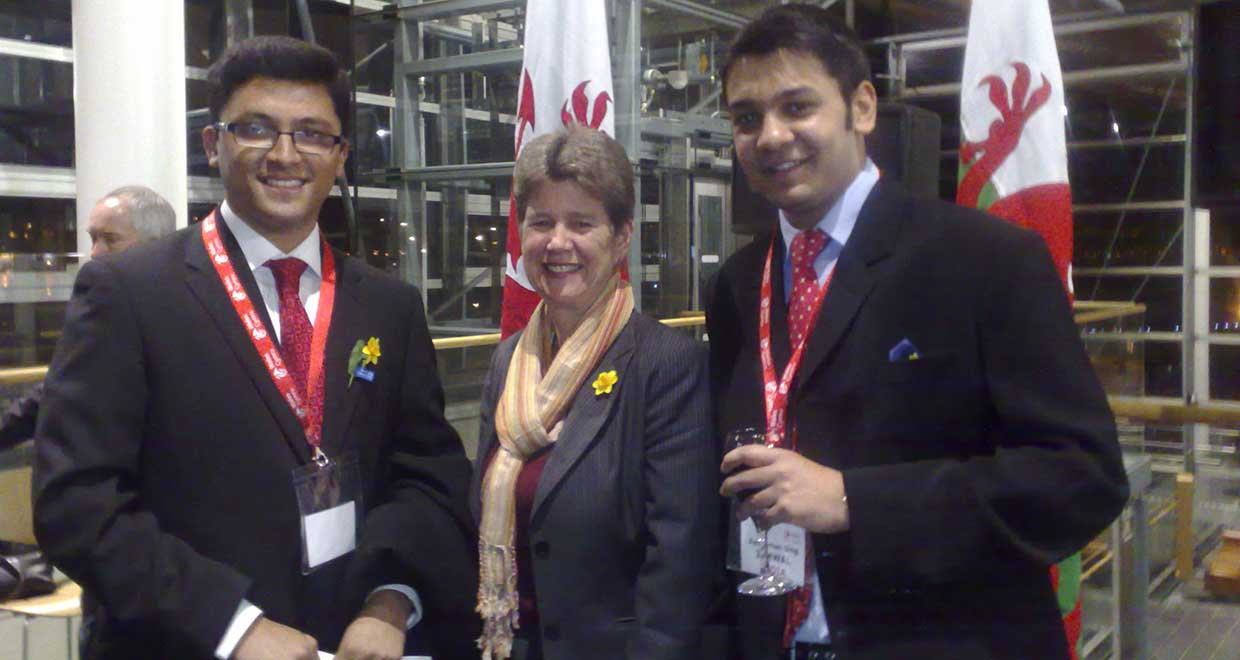
    In light of all the above, I was awarded the “Honour Roll” award by the University in 2007 – the first Indian student to receive the award in the University’s 127-year history, which subsequently led to me being chosen to represent the University at a Royal Garden Tea Party held at Buckingham Palace in July 2007, and at a State Assembly Dinner hosted by the First Minister, Rhodri Morgan AM, at the Welsh Senate – It is for these reasons why I consider my time at Cardiff University the absolute zenith of my academic and personal life so far.



    What all differences did you notice between the Indian form of education and that of abroad?

    Like I explained, I believe that, today, the Indian educational system has come a long way from its earlier avatar – this I have gleaned from my interactions with my fellow colleagues, peers and juniors. From these interactions, I understand that law courses in India are more analytical today in top institutions such as NALSAR and the National Law Schools / Universities, and as rigorous as courses in the UK and the West. At the time when I was a college student in India, as I’ve mentioned before, one major aspect of education in India was that education here was practically a test of memory power. In contrast, during my days at Cardiff, I would say 95% of the modules that I studied during the course of my LL.B and LL.M degrees had only one ‘essay’ question which was probably worth ten or twenty marks at the max – the rest were all problem questions designed to test your analytical abilities and application of the law that you have studies .This was the biggest difference, along with the plagiarism aspect that I had discussed earlier. I understand that prevention of Plagiarism is also being enforced strictly in many colleges and universities in India today.


    What internships and voluntary practical training did you take while in law school? What value addition did they provide to you in your career?

    In UK, there were many autumn and summer placement / internships that were available to students, but initially I did not partake any of them because of the rigorous nature of my LL.B course. During the course of my three year LL.B, I did not attend even a single internship or summer workshop for the first two years because of the course and the preparatory course work for the next years. The only internship that I did during that time was  in the summer break at the end of my first year when I returned to India  at M/s. Udwadia and Udeshi in Mumbai for a month. During the course of that internship, I was just accompanying the senior lawyers to the court carrying files, taking dictations, typing out affidavits, case notes, etc., carrying out case law research and offering assistance in any other manner requested. So in terms of value addition, it wasn’t a huge takeaway but it did give me a feel of what it would be like to be a part of a law firm.  . And if not anything else, I definitely felt the buzz of being around senior lawyers and associates.

    When I came to Chennai for the first time, I approached Dua Associates for a job, but instead they offered me an internship as I was yet to be enrolled with the Bar on an understanding that they will offer me the post of Associate based on my performance during the internship and once the enrolment has been accomplished. The internship was intense and lasted for almost three months and was probably the only meaningful internship that I had taken up  because, during that time, even though I was an intern, I was doing all the jobs a junior associate was supposed to do including working on legal opinions, case law research,  corporate and title due diligence exercises.  In the firm, I started under the supervision of the Corporate partner, Mr. R. Senthil Kumar, and thereafter the supervision of the Real Estate Partner, Mr. P.V. Sajiv Kumar.w I am grateful for that experience because it gave me the first real taste of corporate law and real estate law, and what it feels like to be a  part of a reputed corporate law firm, and helped me in  preparing myself for what I hope will turn out be a fruitful and meaningful legal career.


    What kind of internships would you recommend law students opt for to start building the sort of versatility and widened range of law that you are well versed with today?

    Probably the wrong question for me to be asked, as I’ve already pointed out that I have very limited legal internship experience in India. But from my interactions with peers, colleagues and juniors, I believe that one must not have a fixed mindset when they start fresh out of law school – at that time, generally, in the name of being focused, law graduated are already intent on specializing in a particular field of law and try to obtain internships that will satisfy that aim. In this regard, I would like to quote a senior partner for whom I’ve had the privilege to work with and to learn from – at the start of my career and at many instances subsequently, he told me that as an aspiring lawyer fresh out of law school, you must start with an internship in litigation. Being a corporate lawyer myself, to be honest, I know that people will be surprised by me saying this, but I do believe that the best way to start off is with litigation, because that’s the only way one will get a feeling for how law and the justice system in our country actually works. Transaction work can be learnt at the office from senior associates or by even attending training sessions, but what really happens in a court of law, the associated protocols, the application of the laws and statutes of the land, can only be understood and assimilated when you go to court, while interning under a practicing lawyer / advocate or barrister. It doesn’t matter whether it is a higher court or a lower court, start wherever you can and then go from there. Once you start going to all the big firms, there also the longer internship you get, the better. It is not in your hands.  It is pointless to have an internship for name sake rather the progression in every internship should be carried to the next one. You are going for the internship to get something out of it, right, make sure it counts. Don’t just go for an internship for that you can put a list of internships on your CV to make it look impressive. Try to have some continuity in your internship learning, even though they might be at different firms.


    Could you please tell us the role you played there and the challenges did you face during your initial days of practice?

     (Shreenivas was an integral part at Clifford Chance LLP, where he was involved in the leading acquisition of Kraft Food’s acquisition of Cadbury and several other international transactions between HSBC, Barclays and Standard Chartered Bank etc.)

    This was during my time as a Senior Consultant with OSC Services Private Limited, which is the captive Legal Process Outsourcing (LPO) unit of Clifford Chance LLP, located in Gurgaon, where, at the time of my employment, they had a team of, approximately 40 qualified Indian lawyers, whose role was assist lawyers and associates working for Clifford Chance LLP, a British law firm with a international presence cross border they do, with day-to-day transactional work. It is the world’s largest law firm which operates in about 60 countries right now. So, our job was to offer transactional assistance to lawyers across all the countries in their offices located in cities such as London, New York, Dubai, Singapore, Brussels, etc. There was hardly any challenge for me during my time there, as I had to work on British law aspects, and I was already competent in British law. The challenge was getting to learn all these transactional support work such as proofing of documents (for context and sanity), defined-terms checks, cross-reference checks, etc., which were primarily secretarial / clerical in nature. So the challenge at that time was in bringing me to do such kind of work, knowing fully well that I was a qualified lawyer and yet, I had to do work of a clerical nature, which had nothing to do with legal analysis and reasoning most of the time.

    For most of my time at OSC, as a Senior Consultant, I was called upon to be part of the diligence or drafting teams on most transactions. The acquisition of Cadbury was probably the biggest transaction that I’ve worked on so far for the obvious reason that it was the biggest deal of its kind in the industry at that time. We had different teams from multiple Clifford Chance offices across the world working on it simultaneously. My role was being part of the team that carried out diligence reviews of certain assets owned by Cadbury and creating a database that would list the said assets and the related details, which would subsequently be used as a key reference during the transaction documentation stage. The other transactions that I worked on were primarily in the Debt Capital Markets space for clients such as HSBC, Barclays, UBS, etc., who were all legacy clients of Clifford Chance LLP who were regularly involved in deals involving the issue of global definitive notes, and other instruments frequently used in debt capital market transactions.


    You have witnessed the operational style of law firms of different nations. What is your review on the working style of Indian law firms?

    While working in a foreign law firm, again, the firm culture and the work ethic are completely different. From my limited knowledge and experience, as well as from personal interactions with many foreign legal professionals during my time at Clifford Chance and Global Law Alliance LLC, I have noticed that there is a culture of accountability and responsibility – from the Partner to a Junior Associate, every person is held accountable and responsible for their actions, from the start of a transaction to its end. Associates are nurtured and made to feel a part of the transaction team from the very beginning, where they are sometimes taken along with the lead partner and the principal associates to a meeting where the firm is pitching to a potential client, and the Associate is encouraged to make a part of the pitch and thereby contribute – this goes a long way in boosting the confidence of associates and also takes them on a valuable learning curve where their perspective of the transaction starts at its very inception and ends when the transaction closes.


    Could you please tell us about your experience in the Global Law Alliance LLC, Singapore ?

    (Sreenivas was associated as a para legal at Global Law Alliance LLC, Singapore)

    Global Law Alliance in Singapore, I think, was a five to six month stint. It was different from my prior experiences because it was an absolute litigation firm primarily dealing with small as well as large litigation cases relating to tort law, accident liability, insurance claims, etc. For me, the take away from GLA was limited as I practically had no experience whatsoever in the kind of work they were pursuing, and because I had to hit the ground running and make good on deliverables with absolutely no prior training whatsoever. Additionally, I felt burnt out on many occasions during my time at GLA, because the deadlines were too intense and also because of the hectic work schedule in Singapore (which has a general six day working week, and in my case, which became a seven day week for the entirety of my stint there, and therefore meant absolutely no work-life balance). It was definitely not my cup of tea although I did enjoy occasionally going to court and observing the proceedings in some of the cases there. And, to be honest, I left it because I didn’t learn much in those six months and I felt that I was only going backward in my legal career.
     

    Tell us about your experience at Dua Associates Chennai and Cyril Amarchand Mangaldas Chennai and the work profile you were entrusted with.

    Dua Associates was my first official law-firm / associate role – as I mentioned earlier. I started there with the General Corporate practice headed by Mr. R. Senthil Kumar and was there for a period of three to four months, before moving to the Real Estate Practice headed by Mr. P.V. Sajiv Kumar, where I worked for the remainder of my time with the firm, i.e. around one year and three months. Again, as mentioned earlier, I believe that my time with Dua Associates was a steep learning curve for me and it was there that I really cut my teeth as a lawyer.  Today, my primary field is Real Estate / Real Estate Financing at SAMCO, and was my primary field at CAM as well. The foundation for this was laid at Dua Associates. It was quite an intimidating time for me since Dua Associates had, and continues to have till this day, a very well respected Chennai practice headed by the afore named senior lawyers which retains the confidence and trust of a formidable clientele.

    From there, I moved to CAM, where my work profile again involved a mixture of general corporate, real estate / real estate financing and a little bit of capital markets work. The general corporate aspect involved working primarily on corporate due diligence reviews and preparing legal opinions on various regulatory aspect, whereas the real estate component involved carrying out of detailed title due diligence reviews and the drafting / preparation of transaction documentation for real-estate financing transactions (in most cases, for the issuance of non-convertible / optionally convertible debentures).


    What prompted you to shift to the elite Indian law firms? How did your experience there differ from your earlier experiences?

    Well, what prompted my move to the elite Indian law firms is that I realized that I always wanted to be a lawyer and an associate working for a proper law firm. And when I returned from Singapore in 2013, I was already 30 and I realized that I had to move ahead to something. I joined Dua and the difference between the previous thing was that it was an LPO, the work experience is discounted wherever I go and LPO is different from a corporate kind of thing and it is more of corporate experience because of my own specific skill set, I was exposed to the legal side of things and it was a glorified back office. You’re a processor and not a lawyer and this is the biggest difference. I am a lawyer now and I was a processor then.


    Why the special interest in corporate laws and commercial laws with a special focus on commercial contracts, real estate & real-estate, financing, corporate governance, due diligence, regulatory & compliance?

    As I had mentioned earlier, that had been my idea all along. I did my B.Com (Hons.) and my law degrees (with my Masters being in Commercial Law) with a view to specializing in corporate / commercial law. However, I must admit that, when I started my education at Cardiff, I wasn’t aware of the true breadth of fields and practice areas under the ambit of corporate law / commercial law. It was only after I completed my LL.M. and during my subsequent stint at OSC Services that I realized that there was so many practice areas which one could be involved in. Subsequently, from my work experience with various firms, I have learnt, and continue to learn to this day, the nuances of the Corporate and the commercial field. in which I retain a special interest and wish to excel as a lawyer in this fields.


    What were the challenges you faced in shaping up your career as it stands today and where do you see yourself ten years from now?

    One of the biggest challenges I faced currently is keeping the fire burning inside me consistently. There are times when I get bogged down due to external and internal factors, and this is something that I am working on. Sometimes, I slip into a line of thinking that I am not where I should be right now in terms of what I have achieved in my career. I feel that I am probably three or four years behind from where I should actually be. Other than that, for me, keeping up with the ever-evolving nature of the corporate space in India and the related acts / statutes / laws, and learning how to customize the advice that we render to our clients in the current volatility of Indian markets is a key challenge. In the legal profession, it is imperative to stay at the top of your game at all times, and this means servicing the clients’ needs in the most efficient and proficient manner. For this, it is necessary to go above and beyond the call of duty and herein lays the challenge – of challenging yourself to be the best at what you do and to continually grow. Although, I also believe (as my father once told me) that the day you think you’re the best at something is the day you make the biggest mistake of your life. It is very important to acknowledge that we work in a profession where the learning never stops, and that there is always someone who is better than you and it is even more important to aspire to be as knowledgeable and as good as that person. So, therein lays the challenge- To continually learn with the same level of enthusiasm and the same level of commitment that you displayed in your younger years and not let money and any / all other internal and external factors come in the way of you becoming the best lawyer that you can be.

    Where do I see myself ten years from now? Well, I’m not the type who plans that far ahead to be honest. But I will say one thing in this regard the place where I’d ideally want to be in ten years is the following situation – at that time, if a client (on a transaction that I may be assisting the said client with) wakes up in the middle of the night or has been breaking his head all night over some legality or issue that may adversely affect the said transaction, and the said client is at their wit’s end as to how this can be resolved, then they should pick up the phone and call my number first. I want be that good a lawyer and should have earned the trust of my client to the extent that they should believe that I am the only person who can help them –  I want to be the first point of contact, the first resort for every client of mine, rather than the last resort, If I get to that place in ten years’ time, I’ll say-Mission Accomplished!


    What do you want to say to the next generation lawyers? What is your parting message to our readers?

    My message to young, aspiring lawyers (as well as aspiring law students) is that nothing comes easy in life…you have to put in the hard yards….especially in this profession.

    As a wizened legal eagle once told me, the legal profession is not a sprint, it’s a marathon. In a marathon, the eventual winner will be the one who conserves his energy, learns about his opponents, sees how they are running and sees the mistakes they are making, formulates a plan for the long run ahead, puts his head down and executes the plan with dedication and commitment, and then unleashes himself down the home stretch and leaves all his opponents behind. Similarly, the legal profession is like a marathon where you cannot expect to be successful overnight. It takes years of learning, practice and efforts to make it big as a lawyer and there’s no second way about it…!!!

    The Legal industry in India today is a burgeoning and cutthroat world where, if you’re not in for the long haul, then you’re on your way out before you know it…!!! The amount of law graduates being churned out of the law schools every year is increasing and there are hundreds of quality law graduates out there, and you are in competition with every single one of them. So, the stakes couldn’t be any higher.

    Be patient and willing to put into the hard yards…and never think that you are entitled to anything. In this profession you have to earn your stripes through dedication, learning and hard work, while also not compromising on your personal and professional integrity. And the most important thing to remember when you start as a lawyer is that your journey has just begun…be willing to learn first and then apply that learning…don’t worry about the money…give yourself a solid 2-3 years to build a good foundation  based on learning and application…be your best and the money will come automatically.


    Good Luck and God Bless!

  • Harshita Khurana, Associate at SAM on what can you do to land job at top law firms

    Harshita Khurana, Associate at SAM on what can you do to land job at top law firms

    IMG-20160310-WA0000

    Harshita Khurana graduated from University of Petroleum and Energy Studies (UPES), Dehradun in 2015. She has been the University’s scholarship holder. She holds a medal for being the top scorer of her batch. She has represented UPES both nationally and internationally. She has also represented India in World Business Forum, New York. Her best achievements include winning Moot Courts, University Medal, Academic Scholarships, best speaker award at the various national level debate. She has worked with Wadia Ghandy & Co., Mumbai in their Banking and Finance team. Harshita is currently working with Shardul Amarchand Mangaldas, Mumbai.

    In this interview, Harshita talks about:

    • Her experience at the Law School and what incidents from college days contributed to shaping her career as a Lawyer
    • Her internship experience. How one should go about internships and how it can benefit in the career ahead.
    • Her thoughts about activities like Mooting, Debating and Publications
    • What were the biggest hurdles in the first few months of the start of her career
    • How one should about framing their C.V.

    What prompted you to think of law as a career? If not law, what other options would you have considered for your career?

    I am a first-generation lawyer, so yes the choice was challenging. But to start off, it was my family and teachers who saw my grit in oration, topical debates and liberating discussions. Later, I started realising my inclination towards law and policy, and …here I am. As a Corporate Lawyer, when you represent your client in a deal wherein all that he has earned for his entire lifetime is at stake, the trust they place in you brings a lot of responsibility, and that’s where the true satisfaction of being a lawyer comes from. However, had I not been a Lawyer, I might have considered journalism as one of the possible avenues. Again, for the similar reasons.

    Tell us about your law school experience. Share some highlights from your college days that shaped you as a lawyer.

    It has been tremendous. The experiences have been instrumental in shaping me, both professionally and as a person. Those five years have taught me that doing law is not just a chase for money and recognition, it taught me to have a voice of your own but at the same time be tolerant to the contrary opinions.  I was fairly good in academics but at the same time, I always had a flair for extracurricular activities. Be it moots, quiz contests, debating, or even sports. I did it all.

    Did you do any internship during your studies? How should a law student have a structured pattern for internships and what is its importance in shaping the career ahead?

    Absolutely. The best part of being a law student is being exposed to numerous internships and legal training at various organisations. I have personally done approximately ten internships before graduating, and this helped me verify my areas of interest.

    If you are not a part of the so-called ‘NLU-Hype’, you might have to face problems. In all my internships/external assignments, the first thing I was asked was that which college I am from, even before my name. And that’s how people may judge the quality of work they can expect from you. Prove otherwise and show your worth. After graduation, despite being a non-NLU candidate, I had offers from Wadia Ghandy and Hewlett-Packard. And now, it’s Amarchand. So, if you are good enough you don’t need a big name to add stars to your candidature, you will create your stamp.

    And yes, I would take this opportunity to address all those who come from a complete non-legal background as me. We know how things work these days, and when you don’t have a direct contact to call a law firm’s senior associate or a partner for fixing your internship in your preferred slot, you will face difficulties. But don’t loose hope, keep following up and keep trying. This way, I’ve had a good fortune of working with the reputed law firms, corporate houses, the best advocates. You must make a choice only after trying your hands at all possible options. What we read as a law student and what we get to practice as a full-time lawyer is very different. So, before going for a final promenade, we should experience all that’s in the lane.  FB_IMG_1457586860238

    What are your thoughts on activities like mooting, debating and publications in journals? What skills do law students acquire by engaging themselves in such activities?

    I put them first on my priority list. I have myself been an avid mooter. As a law student, mooting is the most enriching exercise that gives us a firsthand experience of being an advocate. It’s a platform for the law students to hone their oratory and research skills. Publications are again, critical. Especially when done in the areas one wants to explore. Research in your probable areas of interest can help you verify your interest and guide you in deciding the best pick.

    What helped you shape your current professional profile within the field?

    I graduated with Hons. in Corporate Laws. So, though I always had a knack for corporate and commercial laws, I was unsure about the area of specialization to be chosen within this domain. Developing expertise comes through practice and expediency. I am still a learner and an explorer. Landing in the niche field of banking and finance was by chance, but continuing this would be my choice. A long way to go from here.

    What were the biggest hurdles and challenges in the first few months? How did you deal with them?

    It takes a while to learn the ropes. The legal profession is demanding, the stakes are high, and it can be harsh on the one making mistakes. But mistakes are bound to happen if you are new, so take the onus and fix it. Apart from that long working hours, heaps of paperwork and research requires a lot of whip-smartness. But the zeal you see around in your colleagues, seniors, and the enthusiasm they carry even after working for 15-20 hours at a stretch brings a lot of motivation from within. One needs to be flexible to adjust to a law firm’s environment.

    How is your experience so far? How’s your workday like?

    Truly amazing. Every day there’s a new task in hand to look forward to. Law firms are very quick and swift in their working as compared to any other place. When I joined, on the first day I was briefly given an insight of the work and the nature of transactions and from the very next day I was made to handle the transactions, complete documentation, attend the clients, etc. Now, that’s where the direct market exposure and learning comes from.

    The day is usually hectic; we work for almost 10-12 hours a day on an average. However, it’s very important to balance work and life. Juggling the demands for each can be difficult in the beginning, but don’t let one invade the other.

    Any tips on how one should go about framing a C.V. and prepare for an interview?

    For the CV, the most important thing is a clear depiction of your areas of interest. This can be done through the diverse range of internships, moots, publications, etc. Now coming to CGPA. The saddest part of our education system is that we focus on making a student more marketable by quantifying academics. So no matter how much I disagree, a piece of advice would be to have a decent CGPA. For an interview, just study the organisation well and be yourself. Do not settle for anything that’s not your forte or not a part of your plan.

    What would be your parting message to law students?

    I am learning this, and I definitely want to share..no matter how lucrative an opportunity in hand looks, you must always have the courage to say ‘NO’ if it’s not in tune with your long term goals.

    Be a ‘self-made’ person, chase your dreams, and once you’ve done that… you can proudly call yourself a ‘superlawyer’.  

  • Akshath Goyal, Assistant Legal Manager, PayU Payments on work experience in IPR, mooting and legal career

    Akshath Goyal, Assistant Legal Manager, PayU Payments on work experience in IPR, mooting and legal career

    Akshath Goyal graduated from the National University of Juridical Sciences in 2012. Just after graduating he worked at the Intellectual Property firm Anand & Anand, and thereafter at Shardul Amarchand Mangaldas and Co. He is passionate about Intellectual Property and has interned and worked in IP related matters since qualification. He is currently the Assistant Legal Manager at a PayU Payments Pvt. Ltd.

    In this interview, he talks to us about:

    • His experience at WBNUJS
    • The importance of clarity, networking, and hard-work
    • The experience of working in big firms and start-ups
    • How to prepare yourself for the profession beyond the first placement


    How would you introduce yourself, given that most of our readers are law aspirants, lawyers-in-the-making & young lawyers?

    I am a first generation lawyer and I graduated from WBNUJS. Post-graduation, I have worked with IP boutique firms, full service firms, and now as a counsel for a fin-tech start up company. Over the course of my relatively short career so far, though it feels like a lifetime of work, I have had the privilege of working on subjects/ areas that I enjoy with some of the smartest people in the fraternity.


    What interest or influence propelled you to pursue Law as a career? What other options were you considering apart from Law and how did you make the final decision?

    Growing up in a family of Army doctors, I was neither exposed to law nor did I grow up with any innate disposition towards the same. Prompted by my nervousness with the onset of college admissions, I spoke to my parents, teachers, counsellors, etc. most of whom, surprisingly, suggested that I try law.

    I assume one of the major reasons for that was the Law School Entrance being the only exam that tested General Knowledge and Logic for under grad admissions, and being in my school’s quiz team, they assumed that I would have an edge. I then spoke to a few seniors of mine from school, who were doing their legal studies from Bangalore and Hyderabad, and they were very encouraging. So I took the entrance exam for NUJS, which used to be held in January back then, and even before my board exams started I had gotten an admission result. That pretty much sealed it and I was off to Calcutta.

    I did think of medicine as a career option, primarily because my father is a Doctor, but once I realised that the Medical entrance exam involved extensive rote learning of facts I realised it wasn’t my cup of tea and that law just seemed to be a more appealing option for me.


    You pursued your Law from the WBNUJS. How would you describe the experience? Would you like to do anything differently if given the chance?

    My time spent at Law school was, without doubt, the happiest 5 years of my life. Calcutta was an excellent city to study in and NUJS had a lot of extremely smart and interesting people. Being a tiny campus with a small student body, you invariably ended up knowing almost everyone and befriending people not just from your batch but from batches above and below yours, which provided for a rich and diverse learning experience.

    I essentially used law school as a platform to explore my interests in law. I mooted, debated, wrote papers, joined societies and committees, conducted events and even played football for my batch team (I still think that’s my greatest achievement in college). I tried my hand at everything law school had to offer and loved every bit of it.

    The one thing that I wish had done differently was maybe focus on my grades a bit more. Unfortunately, despite being one of the best law schools in India, NUJS did not have the best faculty and the entire teaching system was geared towards rewarding rote learning rather than actual legal knowledge and acumen and I think that was one of the reasons why I just never did well academically. Looking back, I probably should have been less stubborn and made the best out of the system that was available. I also regret taking Elective courses simply based on what would appeal to potential recruiters, I now wish that I had taken those that I had genuine interest in and wanted to learn about.


    akshath-goyal-2

    How did you perform on a purely academic scale? Which disciplines did you find especially engaging and challenging? What was the reason for the same?

    On a purely academic scale, I don’t think I did all that well. I could have definitely done better, but I was left extremely disappointed with the teaching system there. We, of course, had some fantastic professors such as M.P. Singh, Ruchira Goswami, Shamnad Basheer and Anirban Mazumdar, all of whom who made a lot of effort in their lectures, but overall the system left much to be desired leaving a lot of us feeling a bit disappointed.

    I enjoyed my IP and Legal history lessons the most. In fact it was because of the fantastic set of IP professors at NUJS during my time there that I ended up choosing the field as my career.

    Having said that, grades obviously are an indicator of performance but beyond my first college arranged recruitment interview my grades haven’t really been a factor in my legal journey so far. Once you’re in an organisation and in the industry in general, your work and skills count for more than your grades. Yes, getting good grades makes it easy to get that first job or get you that first interview but beyond that it’s your knowledge, handwork and passion for the subject counts.


    How did you build a CV which could offset your academic performance?

    Grades only form a part of your application. The CGPA system unfortunately is a very unforgiving one. Abad semester and the math goes against you. Even though I started progressively improving my academic performance after my second year, overcoming the deficit created due my prior performances turned out to be extremely difficult. I would assume that’s where my extensive participation in extra-curricular activates and rigorously pursuing internships helped me off set my academic performance. The fact that I had mooted, wrote and presented papers in India and abroad and organised legal seminars and talks probably tilted the decision in my favour. Having said this, I would also like to advise law students, who are in the same boat as I was, to not underestimate the power of networking. Talk to your seniors, your professors, your friends in other law schools, actively seek advice and recommendations, etc. Most of my internships came because I wrote to people and spoke about my interests and why I wanted to work with them.

    Everyone sends a CV and a generic two liner when applying, what will separate you is the fact that your letter should be able to effectively convey why you want to work with the firm or a particular partner, something that you will only get if you invest time and effort into researching an organisation and then choosing to work with them rather than just applying to the big names.

    By all means, apply to the big 6 but know why you want to work with them, which practise area of theirs fascinates you and why. Once you do the basic leg work and convey the same effectively, I don’t see any reasons why firms will not be glad to have you on board.


    Please share with us your experience of participating in in the Surana and Surana Corporate Moot. Did the same help you find your area of interest?

    (Akshath’s team won the runners-up position at the Surana and Surana Corporate Moot)

    I believe that I owe whatever success I had as a mooter to my seniors and team mates from college. I was extremely fortunate that I had a supportive team who never lost faith in me and we ended up working well together and reached the finals of the competition. Since I hadn’t really studied corporate law before the moot, the experience helped me gain confidence in my research skills and ability to understand and solve complex problems without any formal training in the subject.

    Since I did the moot in my first year, it really was too early for it to have an impact on my choice of corporate law as a career. I did, however, enjoy researching the problem.


    What interest led you to write research papers? What research techniques did you adopt and what focal questions did you ask in order to write such a paper?

    (Akshath co-authored a paper titled ‘Freedom of Modern Media & Privacy’ which was published by the University of Thailand.)

    Technology and its interplay with law was always something that fascinated me. Which is why when an opportunity to contribute to an international journal came up, I grabbed it with both hands. The fact that I was then invited to Thailand to present the paper was just a fantastic experience. Besides this, I have also co-authored papers on Sustainable Tourism and the Impact of International Trade and its impact on the environment.

    I really didn’t follow a particular theme with my articles, I simply worked on issues that fascinated me at different points of time.


    Could you tell the readers about your internships, how you searched and applied for them, the experience and diversity of work you received a chance to engage in, the development it led to?

    Internships were something that I was very careful about. Having decided that I wanted to practise IP laws, I worked in firms with extensive IP work. Even when I did intern in full service firms like Amarchand or Karanjawala, I ensured that I worked on IP disputes and transactions.


    You worked as an Associate at Anand&Anand in Noida. What was your work profile like and how did you secure that job?

    Since I wanted to be an IP lawyer, Anand and Anand was an obvious choice. I spoke to my professor, Mr. Basher, who had previously worked at Anand and he had only good things to say about the firm- its culture and practise. Once I had a general sense of the firm, then it was all a matter of applying and interviewing with the firm. Luckily, the firm liked my previous work experiences in the field and took me in.

    Being the biggest IP firm in the country, Anand provided me with an opportunity to work on some fantastic matters for some high profile clients. Being surrounded by some of the best IP practitioners in the country was an insanely enriching experience and ensured that I built a solid foundation.


    You then went on to work as an Associate at Shardul Amarchand Mangaldas & Co, Delhi. (SAM & Co.) What prompted this shift and what was the nature of your work?

    While Anand was a great place to learn, as with all boutique firms, your role tends to get highly specific and specialised. I personally felt that it was too early for me to specialise in one part of IP. I wanted to not just work on the contentious side of IP but also on the transactional side of it. That’s where SAM & Co. with its massive corporate practise and international clientele was the best choice. At the firm, I was exposed to the various aspects of IP practise such as technology transfer agreements, comprehensive IP Protections mechanisms, Patent litigation, Regulations governing Technology and IP valuation etc. all which prepared me for my next role as counsel for fin-tech start up.


    What qualities do you think a lawyer needs to possess beyond pure numbers on paper? What advice can you provide for a more holistic learning process to attain goals?

    Look don’t get me wrong, numbers help, having great grades gives the employers the confidence that at least you have the basics sorted and that they’re not wasting their time interviewing you. However, having said that, I think one of the biggest qualities a lawyer can possess is having an insatiable hunger for knowledge and information. Don’t just stick to the course material, read things that interest you, talk to people who have been in organisations that you see yourself in.

    I think one of the best things about having a five year college life is that it gives you ample time to figure out what your interests are.  Honestly, my only recommendations to the current bunch of students would be to use this time to understand what you want to do and not where you want to be. Moot, debate, travel, network, and use all the tools available to understand what you want to do and why you want to do it.

    Don’t follow the herd if you know you’re not like them. Understand your strengths and leverage them in your favour, figure out your weaknesses and work on them. Take courses not because they are scoring, but because they interest you (if they happen to be both, then it’s a jackpot). Pursue internships not because they will look good on your CV but because you genuinely want to work in those organisations. When I was interning in Amarchand, I was initially placed in the Projects team but I knew that I wasn’t something I liked. I enjoyed IP and so I spoke to the HR department and they were more than happy to accommodate me and because I had already worked with the Partner at AMSS before, getting the shift from Anand to AMSS was extremely smooth.


    In 2015, you left SAM and Co, to work as an Assistant Legal Manager for PayU Payments. Could you tell us a bit about PayU and the nature of your work? What prompted the shift?

    Like I mentioned before, the interplay of law and technology was always something that fascinated me and there is no better industry to watch this relationship unfold than the fin-tech industry.A law firm just cannot provide you with the kind of exposure that a start up can. To be able to sit with the Product Team and conceive and tweak consumer products, to help market the same to your customers, to be part of business strategies of a young company was something that really got me excited.

    At PayU, my work is more than that of a traditional lawyer. At a firm, your job is mostly restricted to legal and regulatory advisory work, but in a company your mandate is so much more. Not only do you have to ensure the product is compliant with the existing legal and regulatory framework, but you also need to figure out how to tweak it in cases where it is not. Plus, by joining a start up, you get to be a part of something from the very beginning and gain a sense of ownership unlike any firm experience.


    Could you describe your journey from your first job to the present one and how they’ve contributed to your knowledge and skill set? What has been absolutely memorable through this period?

    Well as mentioned before, each of my jobs focussed on developing a certain skill set which I felt was necessary for me to develop as a lawyer. Since my first job was a boutique firm, it helped me strengthen my basics in the field. My job in a full service firm helped me use those basics to further expand my knowledge base. Finally at my in house job, I’ve been finally able to use my acquired skills and knowledge to work in an industry that fascinates me and challenges me on aspects of not just law but business as well.

    The fact that I have worked at some of the best firms in the country, under some of the smartest people in the industry, and had the opportunity to work in a field that I wanted to has been the best part. I have always tried to work in places that have fascinated me and so far its going well.


    Which area of law do you think, personally, has the maximum capacity to develop over the coming years and why do you think so?

    At the risk of sounding biased, I think that IP is the most fascinating field of law. It’s still developing in the country and with all the technological revolution that’s going on around us, IP will start becoming more valuable to companies than traditional tangible assets and that’s when good IP counsels will be extremely sought after. In fact, in the mature jurisdictions of US and EU, patent litigation is one of the most lucrative areas of practise and I see no reason why India will not follow suit.


    What is a typical day of work like for you? What interests do you possess outside of the sphere of the workplace?

    Again, the good thing about working in a start-up is that there is no such thing as a typical work day or work profile. Your day can range from working on internal policies for the company, to sitting with the product team and brainstorming on new ideas, or even to negotiating agreements with your business partners, vendors, auditors or your outside counsels. So there’s always a lot going on and it’s always exciting and engaging.


    What is your advice to students in order to strike the right balance in law school life?

    My advice to law students would be to use their time to figure out their interests and passions. After that, everything becomes a lot clearer and achievable. Study hard but college should also be about stepping outside your comfort zone. So, join societies, organise events, moot, debate, quiz, dance, etc., because these things play an extremely important role in shaping who you are as an individual, and while grades will help you get your first interview, the rest will help you succeed in life.


    Lastly, what makes you believe that you are not a one-shot wonder, or just a lucked out by chance lawyer? What message do you have for our readers?

    Quite honestly, I don’t think I am a one-shot wonder. I say this because I refuse to believe that only the top 10 students in a class can make good lawyers. I went to a college where only 100 kids out of the 25,000 who apply are selected. Almost all of those who end up there are extremely intelligent and motivated individuals with their own inherent strengths and weaknesses, and almost everybody from the college is doing well. So career success isn’t a monopoly for those 10 rank holders. Sure, it makes life easier to get that first job, but after that it’s all a level playing field. That’s where your passion, work ethic, knowledge and networking skills come into play. The simple fact is that the harder you work the luckier you get.

    So just because you didn’t get the grades doesn’t mean that your career is over, because 6 months down the line nobody cares about your grades. What they do care about is your work ethic and dedication, and once you have that there’s nothing that’s going to stop you from achieving your goals.


  • Malek Shipchandler, Associate, Shardul Amarchand, on partaking in negotiation competitions and vacation scheme at Clifford Chance

    Malek Shipchandler, Associate, Shardul Amarchand, on partaking in negotiation competitions and vacation scheme at Clifford Chance

    Malek-ul-Ashtar Shipchandler, a 2014 batch graduate of ILS, Pune, is currently an Associate of Securities, Financial Regulatory, Corporate Law at Shardul Amarchand Mangaldas, having already worked with Economic Laws Practice (ELP) for a year.

    In this interview, he speaks to us about:

    • The significance of the Company Secretary (CS) course;
    • The experience of a Vacation Scheme at Clifford Chance;
    • The relevance of certification courses; and
    • The ability to continue with legal writing even after joining a law firm.


    Would you say that high school experiences led you to choose law?

    (Malek was part of the Student Council at school and participated in Model United Nations (MUNs) simulations, both as a delegate and Secretary General, and attended the Global Young Leaders Conference (GYLC) in Washington D.C and New York.)

    These experiences were definitely instrumental, coupled with encouragement from my family and teachers who saw in me an aptitude for oration and argumentation. I chose to be a commerce student in my penultimate and final year at school, perhaps because I was not exceptional at science related subjects but did fairly well in commerce related subjects such as economics and business administration studies; towards the end of my final year at school, the choice for me was either finance or law.


    Please share with our readers your experience at law school. What kind of activities did you participate in? How did you develop an interest for moot courts?

    Studying at ILS Law College was an excellent experience for someone who thrives in an atmosphere wherein you are not given a map of how to go about grooming yourself as a budding lawyer; except for the compulsory lectures, one is absolutely free to pursue other diplomas/courses, peruse books and journals in one of the best law libraries in India, participate in advocacy competitions, get involved in organizational activities, articulate views for publication in law journals, contribute to academic discussions post lecture in various “cells”, work with a law firm or a counsel, or simply do nothing and enjoy the cold coffee at the ILS Canteen! It has been an inspiring and humbling experience being taught by some luminaries in their own subjects, interacting with and being guided by seniors who have achieved milestones in their careers, and studying along with some stellar students who are currently not only doing well in law, but other fields as well.

    I primarily participated at intra-college and national moot courts and contributed to discussions at post-college “cells”. As a fresher and sophomore, I remember watching some brilliant seniors argue at moot courts and parliamentary debates – this sparked the keenness in me to participate in moot courts myself. Watching seniors argue at moot courts also helped me to not only understand the basics of fundamental laws like contract, torts and constitution but also gave me a chance to learn and imbibe in myself moot crafting skills such as presentation of facts, articulation of arguments, modulation of voice, rapport building with, and responding to, questions raised by the judges and rebutting contentions put forth by the opponent team.


    How did you decide to pursue the CS course? In the long run, do you think that this degree gives one an edge over other law school graduates?

    (During Malek’s second year at law school he started pursuing the Company Secretary (CS) course.)

    Pursuing CS came as a natural decision due to my inclination towards finance as well as corporate law, coupled with the fact that I had time on hand after attending lectures. Having studied for and attempting CS examinations, I am of the opinion that apart from giving you a flavour of basic concepts in company law, securities law, banking-finance law and taxation law, the way the ICSI frames its exam papers is far more objective, and challenges your legal cognitive, as compared to mere rote-writing. The CS course helps one to understand the inter-play between different corporate laws, apart from teaching how to read and interpret basic company financials – a skill very useful for corporate lawyers who interact with Promoters, CFOs and GCs, conduct diligences and draft commercial agreements.


    Do you believe ADR competitions are important, but are shadowed by the more popular moot courts in law schools? How do you think this could be changed?

    (Malek has also extensively participated in negotiation and client counselling competitions, nationally and internationally, and thereafter even judged such competitions.)

    There is no question of one advocacy activity “shadowing” the other. Moot courts and ADR related activities, I believe, are complimentary to each other in holistically grooming a budding law student. Most traditional law schools in India prefer the modus of teaching only by lecturing (rather an encouraging participative discussions or simulation learning), and that too on aspects necessary for examination purposes.

    While lectures on CPC and CrPC, and sessions on moot courts, allow students to imbibe the skill of argumentation, cross-examining and drafting, it unfortunately does not hone the art of personal communication, explaining the law to laymen in simple terms, understanding and syncing the clients’ expectations with legal modalities, and devising commercially viable solutions. These skills, I believe are indispensable for any lawyer, be it a litigator or a transactional lawyer.

    Most law students associate advocacy competitions as synonymous with moots courts and mock trials, perhaps because the number of negotiation or client counselling competitions that happen in India are far lesser in comparison to the number of moot courts. Law schools and law firms need to collaborate together and initiate more of such ADR related activities and competition. From my experience of founding the first ever negotiation competition at ILS Law College, I can say that the inputs of practicing lawyers or GCs (as compared to professors) to such activities/competitions is crucial for the quality of the activity/competition.


    You interned primarily at corporate law firms. Where did this inclination towards corporate law start from?

    John Grisham may have had a role to play! On a more serious note, I actually started my internships learning at places known for litigation. My first internship was with Hariani & Co, followed by the chambers of the then Attorney General, the late Mr. Goolam Vahanvati. Being in the second and third year of law school, more than learning the law or the procedure, it was through these litigation related experiences that I understood research methodologies, articulation of thought on paper i.e. how to draft legal notes/memos and documents management – skills which eventually helped during my corporate law internships. I believe as a law student, for the initial years at least, one must try everything and not wear blinkers concentrating on either just “litigation” or “corporate”.

    My inclination towards corporate law was sparked when I participated at the NLIU Juris Corp Moot Court Competition which gave me a chance, while researching on the moot problem, to identify and understand certain transactional nuances in securities and competition law which ultimately led to a dispute in court. I must admit that certain facets of litigation, such as argument drafting and strategy, really interest me; I am grateful that so far in my career, along with corporate-transactional work, I have been getting to do some work focussed on the Securities Appellate Tribunal and appearances before the Securities and Exchange Board of India.


    You experienced a vacation scheme at Clifford Chance. Was it different from Indian law firm internships?

    The experience can be comparable to internships offered by certain Indian law firms. Global firms such as Clifford Chance have very structured work experience schemes, almost like a course by itself, which involves learning and development of the Schemer through work assignments, attending in-house lectures, insights into the workings of different teams handling different practice areas and networking opportunities with the professionals at the firm. Firms such as Clifford Chance are driven by a philosophy of investing in their lawyers, right from the time one begins a training contract with them.

    I would encourage the readers, that given a choice between doing a LL.M and taking up a training contract, the latter should be considered hands down; there is no better teacher of practicing law than actual work experience, given the fact that law we read while studying is often very different from how it operates/is applied in the real world.


    You have scored a remarkable 99/100 in the FICCI’s certification course on Competition Laws and IP Rights. How far do you think these certification courses help a law student?

    Most traditional law schools often do not have specialized laws as part of their curriculum and are therefore not taught, at least as a core subject. Certification courses facilitate the learning of specialized laws, and are generally designed in such a manner, that it can be undertaken simultaneously while continuing your regular college activities. While there is a culture among law students of enrolling in parallel courses early on, it might make more sense to wait until the 4th or 5th year (or 3rd year in case of a three-year program) to assess where exactly one’s inclination lies – this is possible after participating in advocacy competitions, doing internships or writing papers – avenues through which one can understand what it is like to “practice” the specialized law, and not merely “read” it. From a CV building point of view during law school, especially if you have applied to intern under a particular practice group, certification courses would be a plus.


    Did you face difficulties in the beginning of your work at ELP? When did the transformation from a law student to a lawyer take place?

    (After graduating from law school, Malek joined Economic Laws Practice (ELP) and worked there for over a year.)

    It is only natural to feel challenged (not, “difficult”) when one moves from one life chapter to another viz. the academic chapter a.k.a “fun phase” to the professional a.k.a “real world phase”! That said, having interned previously at law firms and being a part of a great team headed by Mr. Suhail Nathani, made the transition for me as a student to a lawyer not only easy, but also memorable. Believe it or not, your perspective about practicing law is greatly impacted by your first job, team and senior.


    Do you believe that drafting contracts, legal opinions and other legal documents is an essential skill that most law schools in India omit to teach their students?

    I believe most law schools lay emphasis on teaching the principles of contract law as compared to actually teaching a student how to draft a contract. That said, law schools such as ILS Law College not only has a contract drafting competition but also has a subject on drafting which is taught by a renowned lawyer, Mr. Ajit Kulkarni – I still remember, his lectures were attended by non-ILS students as well as lawyers! Most traditional law schools, instead of asking students to take hand written notes of contract templates (which are otherwise available online), could consider equipping students with, and evaluating them on basic skills of drafting such as formatting, cross referencing and even proof-reading, and impart knowledge on aspects of stamp duty and registration – these are essential for drafting most contracts.


    You are now an Associate at Shardul Amarchand Mangaldas, Mumbai. What is your work profile there? Could you share your experience at the firm so far?

    A usual day for me at SAM involves team meetings, tending to client queries over phone call or email, preparation of memos/notes and drafting and reviewing of transaction related documents. We also advise on securities litigation matters, and as such, whenever required, we draft submissions to be made to the concerned authorities. Some transactions require me to work with other specialist teams in the firm, allowing me to benefit from their domain knowledge and experience. Besides encouraging regular interaction with the partners who have a plethora of experience and knowledge in their respective practice areas, the firm underscores the need for overall development of its lawyers and has implemented programs/policies where SAM lawyers share their opinions and experiences relating to a particular legislation and/or matter – this allows one to be up to date on contemporary legal developments and bake an opinion on certain contentious aspects – a must for any lawyer!


    Do you think it is important for legal professionals and law students to make their presence felt online?

    I believe, as will most people, that visibility is the key for growth in any profession. It would no doubt be helpful to reduce one’s time on social networking websites, and invest that time on professional networking websites such as LinkedIn.


    malek-shipchandler-2

    How do you find the time to research and write legal articles? Could you share a few tips with our readers on how to go about legal writing?

    Let me answer the question this way: I generally find time to write during early hours of the morning before work, or on a weekend, because writing helps me analyze cogently, organize logically, distil accurately, argue persuasively, cite knowledgeably, punctuate skilfully, and phrase smoothly, among other things. Some coveted blogs and forums also elicit the comments of experienced professionals and luminaries (either concurring or differing from the views expressed in the article) on the article, which is enlightening to read. I believe everyone has their own way of building their knowledge of the law and expressing their interpretation and application of it – legal writing is one such way which quite a few law graduates appear to adopt.

    To the readers, I can share that, while writing, I tend to implement certain guidelines which appear in a publication of the American Bar Association: “…you must struggle to achieve simplicity—and learn to achieve it without oversimplifying. That’s a tall order in an intellectually challenging discipline like the law.

    And it’s especially tall when you think of the overwhelming attraction that legalese presents to the average mind. With “pursuant to” and “assuming arguendo” and “hereinafter” and “inter alia”, you have ready-made shortcuts for feeling lawyerly. They’re like secret handshakes. They seem to make you a member of the club. Without them, you’ll feel like your pre–law-school self at a time when you may really want to feel a difference. Never mind that they typify low-grade legal writing.”


    What is your message to young law students?

    “Work until you no longer have to introduce yourself” is a mantra I endeavour to live by – try it!

  • Namrata Chatterjee, Associate, Shardul Amarchand Mangaldas, on leaving law firm for FIFA masters, studying law at NLU Jodhpur and cracking job interview

    Namrata Chatterjee, Associate, Shardul Amarchand Mangaldas, on leaving law firm for FIFA masters, studying law at NLU Jodhpur and cracking job interview

    Namrata Chatterjee is a graduate from National Law University, Jodhpur (2013 batch). She worked with Amarchand Mangaldas & Suresh Shroff & Co, Delhi (now Shardul Amarchand Mangaldas) for around two years and has just left the organization to pursue the FIFA Master Program; a masters in humanities, management and law of sports, on a full tuition fee waiver. We asked her to share her law school and work experiences, and reasons for leaving one of the best jobs in the country.

    In this interview, she talks about:

    • Law school experience at NLU Jodhpur and all about balancing Academics with co-curricular
    • Cracking AMSS interview, work experience at AMSS and the first year of graduation
    • Applying for the FIFA Masters programmer and qualifying for full tuition waiver


    How would you introduce yourself? Could you please share a little bit of what motivated you to pursue law as a career?

    Hi, I am Namrata Chatterjee, a graduate of the 2013 batch of National Law University, Jodhpur. I worked with Amarchand Mangaldas & Suresh Shroff & Co, Delhi (now Shardul Amarchand Mangaldas) for around two years and have just left the organisation to pursue the FIFA Master Program; a master in humanities, management and law of sports, on a full scholarship (full tuition fee waiver).

    To be honest, Law was never my first choice career option. I had taken up the science stream and was preparing for the engineering entrance exams during my XIth and XIIth standard. Though a lack of passion in the subjects I was pursuing made me realize it would be a mistake to keep continuing down a path which wouldn’t give me work satisfaction. Hence, I then decided to pursue law. The fact that my father, who is in the Civil Services also has a law degree and my mother is also a lawyer, though she left practice a long while back had me interested in the legal profession. Though ultimately, the decision to take up law came after my elder sister, Amrita Chatterjee commenced her legal studies at NUJS, Kolkata. Therefore, while giving CLAT, my first choice was NUJS so that I could study in the same college as my sister, after studying in the same school, D.P.S R.K. Puram together.

    However, as luck would have it, I did not get through NUJS and made it to NLU, Jodhpur instead. Initially I was unhappy about the same, but in hindsight I feel it was a great thing to have happened to me as studying in a different college than my sister gave me a lot of different exposure and surely made me much more independent in life.


    How did you make the initial shift from a science background to law? Would you say it was difficult settling in?

    I had taken up the science stream as that was the most encouraged field to be taken up after securing over 90% in my class Xth Board exams. Though once I did take up science, I began to realize that a career in engineering wasn’t my real calling. Though when I made the shift to law, there again I got the option of taking up B.A/B.BA/B.SC (LL.B) in NLU, Jodhpur. However, this time around I decided to go with the pure social sciences and opted for B.A LL.B (Hons). Though there was one thing about the science stream that helped me in my legal studies and that was the enhanced logical reasoning skills and the propensity to question. So, I would say, it was never difficult for me to settle into legal studies.


    Tell us about your college life at NLUJ. What all activities did you partake in?

    In a sentence, College life at NLU, Jodhpur has given me memories of a lifetime. Though, I took a little time to settle down in Jodhpur initially having lived in Delhi for most part of my life. However, soon I became used to the quaint environment of Jodhpur. NLU, Jodhpur not only stressed on academics, wherein we had continuous assessments throughout the semester along with presentations and compulsory court room exercises in the law subjects, it also gave ample opportunities for interested students to take up mooting, debates, MUN’s, cultural activities and sports among other things. In fact, if likeminded students got together, they had the independence to start a lot of interesting activities etc. I participated in MUN’s and paper presentations and that helped us to travel along with getting a good exposure.


    Please tell us about the manner in which you approached academics while in college. Please share some highlights from your college days that shaped you as a lawyer.

    I always took academics seriously. I maintained a good CGPA throughout the five years. Though I’ll be honest, I did not pay attention to everything that was taught in class always and rarely ever took notes. Rather, only subjects of my interest and especially the classes taught by some of the teachers who made the classes rather engaging caught my full attention. However, to prepare for the continuous tests and exams, I always studied in groups and studied from the notes taken by my friends and generally always fared well in the exams. I would not have specific highlights that shaped me as a lawyer, but it was more of a gradual process, being aware of your rights and trying to reason with the teachers and administration to convince them, debates and discussions with my friends and finding evidence to back my points amongst other things shaped me as a lawyer.


    A lot of law students in their first and second year of law school plan to change the legal regime of India. Many of them promise themselves to work pro-bono on social issues, curb menaces and threats to the society. Have you ever felt that kind of thought crossing you?

    Yes, I wouldn’t deny these thoughts having crossed my mind at several occasions. Not just during college but even when I worked at Amarchand. Sometimes a cab driver while dropping me to the High Court would seek my legal advice or my house maid would approach me with a legal dispute and at those moments, I kept feeling the need to give back to the society and help the under-privileged with whatever legal knowledge I have. However, to be able to do some pro-bono work, firstly I think it is important to gain more knowledge, work experience and the resources to truly be in a position to help others and yes, if possible someday if not full time, I would hope to assist in some way in taking up pro-bono matters in whatever field I am pursuing.


    How did you fare in your academics at NLUJ? Would you say a great CGPA is a necessity to kickstart a good career in the legal profession?

    I maintained a consistent CGPA in college and stood within the top ten percent of my batch. A good CGPA is not the only measure to secure a good career in the legal profession. Interest in what you pursue and working hard in internships and other extra-curricular activities help as well. However, as the recruitment scenario of the big law firms go, if you have a good CGPA, it helps you to get shortlisted for the interview comparatively easily. Though maintaining a good CGPA is hard work in itself. However, that gives you the leeway from the stress of securing a PPO through the internships. Further, moot courts, publications and such activities does help in building a good CV, but as I can say from my own example, these things are not necessary to secure a good job. I only participated in one moot late into my 4th year that too since it was a moot in IPR, a subject of my interest and I did not have any publications during law school. So, it is not necessary to participate in a lot of moots etc. However, if you are interested in them, taking them up would be an added benefit. However, a good CGPA and a good interview helped me to secure a job at Amarchand.


    Which subjects did you enjoy during your qualifying degree? How did you go about developing expertise and knowledge in these areas?

    I particularly enjoyed the Intellectual Property Rights and related law subjects the most in law school. I even took up IPR as my specialisation or honours subject. Though, even more than IPR, I was passionate about sports law. From my childhood, I have loved sports and this field of sports law gave me a chance to explore the interplay of sports and law. However, sports law as a subject was not taught in my college. Therefore, to pursue my interest in the field, I constantly kept reading websites like lawinsport and pursued internships in the field. I even mentored some of my juniors in sports law under the academic mentorship program initiated by some of the students in my college. In furtherance of this interest, I even took up sports law as my seminar paper in my final semester. Even in IPR, I was more interested in copyright and trademarks as opposed to patents and I constantly kept reading, writing and researching on the congruence of IPR and sports law. Even for the research paper/projects we had to develop in most of the subjects taught in college, I would try to write them on sports related topics.


    namrata-chatterjee-2

    How did you plan your internships? How relevant did you find your law school education with the kind of work you were required to do at law firms?

    I actively planned to take up at least one internship in a year. I never over burdened myself with internships as I always wanted to keep some time off to spend with my family and friends at home. However, I pursued internships keeping my interests in mind. In my first year, I interned at NHRC, subsequently I pursued litigation internships with advocates and law firms like Luthra & Luthra and Parekh & Co. Though from my third year onwards, I started streamlining my internships even further to explore and gain experience in areas I was most interested in, being IPR and sports law. Therefore, I interned at Law Offices of Nandan Kamath, a boutique sports law firm in Bangalore and Copyright Integrity International. I even interned with Retd. Justice Mukul Mudgal and gained firsthand experience of interesting work in sports law.

    Law school education is the foundation to develop how you interpret the laws and the approach towards legal thinking. Though from experience, I would say that we learn more on the job than we learn in law school.


    Did you find that your law school education had prepared you sufficiently for the many tasks you were required to execute during your internships and later at your job?

    As I just said, law school education helps you to develop a legal thinking and good researching skills. Further, the subjects that one takes interest in law school, those subjects and certain landmark cases therein stays with us always. However, we learn most subjects and topics on the job when we are faced with a practical situation regarding the same. In a way, the curriculum at NLU, Jodhpur and the continuous tests, mid-terms, vivas, projects, presentations, moots throughout the semester prepared us to work late into the night when required and meet deadlines in any manner and these things surely help us to be prepared with the work life and expectations at your job.


    Soon after graduation, you joined AMSS as an Associate. How did your appointment take place? What worked for you in securing the job?

    I got placed at AMSS at day zero of our placements that year. I had never interned at AMSS before so did not know what to really expect there. However, I was shortlisted for the interview based on my CV and my good CGPA I believe. I think my interview happened very comfortably and I was confident throughout the interview and that helped me secure the job. As also, as I have previously mentioned, a good CGPA, some varied and good internship experiences and participation in paper presentations and such activities helped my case.


    How was the job interview? Do you remember any of the questions asked to you? Please give our readers some tips to nail a law firm interview.

    The first round of my job interview was the group discussion round and we got to discuss and debate on the Indian Premier League, since I am very passionate about sports, the topic put me at complete ease. Post the GD, we had a personal interview round which was a mix of HR and technical questions. Though, I would really like to mention that staying calm and comfortable in an interview really helps. Even if you are unsure about a particular question, put it across to them that this is what you think and tell them that on this particular point you may not be completely sure. However, the subjects you are interested in and things mentioned in your CV about projects or internships, those things one should be aware of while preparing for the interview. Know your CV well and what you tell them you are interested in and at least show that you have taken some steps towards your interest. Further, for the HR questions don’t make up answers or take long to think and answer rather use your wit and give appropriate answers, it would surely help.


    How was your first year after graduation? What do you think were the biggest hurdles and challenges in the early days of your career? How did you deal with them?

    The first year, more so the first six months in your job are the most difficult. If one can mentally survive through the challenges that come up in the initial phase of your job, it becomes easier to handle pressure further. Since, in AMSS they had a policy of rotation for the fresh graduates who joined them; I was placed in a corporate team for the first phase post joining AMSS before being ultimately placed in the litigation/dispute resolution department. However, since I was always interested in pursuing litigation in AMSS and having never really interned in a corporate law team in any of my previous internships, I was not very comfortable in starting my career doing corporate law. Therefore, initially I took time to settle down, took more time to complete assignments, though some of the seniors understanding my position really guided me well. So, it is very important to get good seniors to guide you initially and one should not hesitate to ask questions and soon one figures out the expectations of their seniors and how to handle timelines without compromising quality.


    What kind of work and responsibilities does an Associate at AMSS deal with?

    In the first year of my time at AMSS, being in the corporate department, my work responsibilities included research, assisting in drafting responses and opinions and assisting in drafting due diligence reports, though once I shifted to the litigation department, my work responsibilities increased due to shorter deadlines before court hearings. Most of my work responsibilities included research, drafting the first draft of some of the pleadings and counsel briefing notes as well as providing assistance in counsel briefings and court hearings. Also, we are expected to know the files well and be adept at paper management in briefings and hearings to aptly assist our seniors. Due to large number of matters across various judicial forums, in a lot of matters I got the chance to go to courts by myself for filing as well as minor appearances.


    Tell us about a case that you are particularly proud of. What steps do you take to prepare for a difficult case?

    There have been one or two high profile cases I have been involved in and due to the high stakes of those matters, it has been very interesting to work in them. The biggest advantage I felt of working in Amarchand was the diversity of matters and especially the big matters that we got involved in. These matters involved various complex questions of law and gave us a chance to closely work with senior counsels and adopt their good practices as well.

    Difficult cases require extensive research and thinking out of the box. One should always keep thinking of innovative arguments and put forth their views to their seniors.


    namrata-chatterjee-3

    What has been your strategy to deal with errors and mistakes?

    It is only human to err. Even I have made some errors and mistakes in my time at the firm, but dealing with them and finding quick fixes is one more thing this job has taught me. In fact, I would say along with work experience, this job has taught me more of life experiences. In terms of mistakes, I can give an example, say, if at all I would forget to bring copies of an important case law to the court, I would go to the court library and secure copies of the same before the damage is done. Therefore, it is important to reach for conferences and court a little before time and know your bags and papers well, so that these kinds of errors can be fixed within time. However, if you have made mistakes which you cannot easily fix, always bring it to the notice of your seniors so that they can use their experience for crisis management rather than hiding it from your seniors.


    How do you keep yourself abreast with latest industry news and trends?

    It is indeed important to be abreast with latest news in our profession. Reading the newspaper daily helps in this regard. So many times while researching for a case, I can remember reading about similar cases in the newspaper and then that helps with finding relevant and recent cases. It is also important to keep reading articles and SCC Online etc for the latest cases especially the landmark ones that come up. It is also very important to check the current position of law regarding every proposition one has to argue for their case.


    There is a considerable attrition rate at the top law firms, what do you think contributes to this? What has been your personal experience?

    The attrition rate is considerably high at the top law firms because the work pressure is surely a lot. Also, it more so depends on the reason one enters the law firm. Some people come to gain some good work experience before proceeding for their masters, which is somewhat my own case as well. While some people cannot deal with the daily demands and stringent deadlines, some people after joining realize this is not their interest area and move towards what they are really interested in. However, this is true that if one wants a less hectic life and most of their weekends free and finds it difficult to maintain the quality of work in extremely short deadlines, then it is difficult to continue in a big law firm.

    Personally also, after working here for around two years, I am now moving on to pursue my masters in a field which I have always been keenly interested in, i.e sports law. I applied to colleges and courses specifically providing for masters in IPR or sports law and applied and secured admission to University of Zurich, ISDE Madrid, George Washington University and the FIFA Master program and even secured a scholarship everywhere. So once I received the full scholarship (full tuition fee waiver) at the FIFA Master program, I knew it was time for me to pursue a field I am more interested in and the experience at Amarchand would definitely help me everywhere ahead. So, my reason for leaving the organisation was that though I was doing good litigation work, it did not involve a lot of sports related disputes and I wanted to always pursue my masters post getting a couple of years work experience.


    Life for lawfirmites can be very hectic at times. What is your take on work-life balance? How do you unwind?

    Yes, life at a law firm is hectic but during court vacations, things are less hectic and most people take their leaves at that time. I feel it is very important to have a work life balance; otherwise one tends to lose interest in their work and is busy dealing with deadlines and stress rather than enjoying what they do. So, as much as possible one should relax as well as go out with their family and friends on the weekends and try and avoid getting work back home, unless the situation really demands for it. Even in office, one should take small breaks to interact with their friends and walk around a bit to avoid sitting at their desk at a stretch for long hours.


    How did you decide to leave a cushy law firm job for the FIFA Masters programme? Please tell us about the programme and how you got gravitated towards it.

    I agree, it isn`t an easy decision to make when it comes to leaving a secured and well paying job for an uncertain path. However, I did what I feel will give me the right platform to pursue my field of interest.

    I have been a sports buff since my childhood. My father always found a partner in me to watch matches with him and then engage in endless discussions about various players and game strategies! Therefore, once I took law, it was only natural that sports law caught my attention the most. Now, to try and succeed in a sports related field, it is important that I obtain the right exposure and specialised knowledge. In that regard, the FIFA master fit my requirements perfectly.

    The FIFA master program is an international M.A teaching three different aspects which form the core of working in a sports related field, being humanities of sports, management of sports and law in sports.

    The first module is the humanities module which takes place in DeMontfort University, Leicester and covers aspects relating to the history and development of sports and sports organizations. The second module is the management module and is held at SDA Bocconi school of Management, Milan and the last module of the 10 months program is the law module dealing with the legal aspects of sports, dispute resolution, ethical issues in sports etc, to be held at University of Neuchatel, Switzerland. The final degree is awarded by all the three partner universities in association with CIES and FIFA.

    Along with the classroom teaching and guest lectures, the program also includes field visits to various sports clubs and organizations like FIFA, UEFA etc in order to learn about their fuctioning, marketing, governing regulations etc from the relevant experts.

    I have decided to undertake this program as along with sports law, this also widens my arena to cover management of sports which are upcoming fields in India and post completion of this masters, hopefully I would be able to contribute to further developments in these fields.


    How did you manage to get a full tuition fee waiver? Could you please detail the procedure in details?

    The option to apply for the scholarship is present in the main application itself and the selection procedure for the course takes place in two stages. If one is shortlisted based on the application, they then have to give an interview to be finally selected. So, during my interview I was told that they generally do not give the full tuition fee waiver scholarship to one person rather look towards dividing it amongst a few students. However, post the interview which wasn`t really a technical one, when I was finally informed of my selection, I was also informed that I have been awarded the full tuition fee waiver. The scholarship is given on the basis of need as well as merit.


    The question that whether one should specialise in a particular area of law or be more of a general lawyer often comes up before law students. What is your opinion on the same?

    I am going to pursue the FIFA Master program which in itself is a very specialised and unique course. This is a program organised by CIES and FIFA and taught by three partner universities being De Montfort University, SDA Bocconi School of Management and University of Neuchatel across England, Italy and Switzerland respectively. This program teaches the most relevant inter-disciplinary fields related to sports-humanities, management and law of sports. This program would surely enhance my knowledge and interest of sports law and along with it would also open the ambit of sports management if I choose to pursue the same. I agree, leaving a secure job and going to do something so niche might be a bit of a risk. However, I believe one should at least try to pursue what they love rather than keep regrets in life. So, particularly I feel if one has figured that they are interested in a specific field over the others and performs their best while dealing with work in that area then they would always enjoy what they do and get appropriate outcomes too. Working on laws that one does not find interesting, like I never enjoyed corporate laws doesn’t help in one’s growth and development as a lawyer. So, it is important to start as a general lawyer but if you feel there are some areas you enjoy more than the others, I would suggest and encourage one to pursue them further.


    What would be your parting message to law students?

    Work hard, enjoy what you do and don’t be afraid to take risks and explore options.


  • Tanvi Dubey, Associate, SAM & Co., on her internship experience with legends like Ram Jethmalani, J. Dipak Mishra and Mohan Parasaran and on bagging a job

    Tanvi Dubey, Associate, SAM & Co., on her internship experience with legends like Ram Jethmalani, J. Dipak Mishra and Mohan Parasaran and on bagging a job

    Tanvi Dubey is a recent graduate (2015) from Department of Legal Studies and Research, Barkatullah University. She has secured a job at Shardul Amarchand Mangaldas & Co. During her time in law school, she focused on co-curricular activities, and had consistently been a great performer. She has spent considerable time in writing and presenting research papers and in securing good and diverse internships, etc.

    She has interned with legends such as Ram Jethmalani, Justice Dipak Mishra and Mohan Parasaran. She had also interned twice at AMSS and worked on issues of Corporate Fraud and Buy back of shares.

    This interview shall serve as an anecdote of tenacity and diligence and the fact that no matter where you study law, there will be opportunities always and you have to make the best of them to succeed.

    In this interview she talks about:

    • Her experience from the internships with Ram Jethmalani, Justice Dipak Mishra and Mohan Parasaran;
    • Certificate courses that she did in her law school on Consumer Rights, Human Rights, Course on Law and the Entrepreneur, etc;
    • Importance of enhancing your CV for jobs in law firms and tips regarding the same; and
    • Things one must do at law school.


    Tell us a bit about yourself. How would you like to introduce yourself?

    The Story of my life – I was born and brought up in Bhopal (M.P.). I did my schooling from St. Joseph Sr. Secondary School, Bhopal. I belong from a family of lawyers. My Grandfather is a retired D.S.P. Officer and a renowned layer in Bhopal. My mother is Post Graduate in Home Science. She has always inspired me never to stop and move forward towards my goal. Finally and perhaps most crucially the person who inspires me the most is my father. He is a Legal Practitioner and Legal Advisor to various companies. Pursuing Law looked like a destined path. From the first impression of my grandfather’s library to desperately wanting to be my father’s daughter, I grew up romanticizing the legal profession.

    Five years ago, when I entered the law school challenges were many. But my genuine fondness for law made me excel in this beautiful law school journey. I have been keen to use my legal ability for the unempowered and the youth. I am associated with many Youth Foundations, like the Esteem Youth Foundation to help young minds to be the Changemakers for the future generations. My association with Indian Classical Music has contributed immensely towards my self-discipline, presence of mind and concentration. I have performed nearly 50 Vocal Concerts. Despite these commitments, I have been maintaining my academic standards and I have mostly been a high scorer. I should mention that I learned to prioritise, manage time and work under pressure from these exercises. I also got the opportunity to record two music album covers with Radio Mirchi and My FM which are uploaded on Youtube.


    Legal studies are still only a backup option for quite a lot of students. What motivated you to choose law as a career?

    I have always been inclined towards the purpose the law serves, i.e. justice and hence was forced by myself to study law. Not denying the requirement of an observant and analytical approach which the profession mandates for a person to have, I strongly believe myself possessing the same to fair extent and hence most suitable for the profession. Also, since the profession requires hard work and I have no hesitation in so, I thought it to be the profession made for me.


    tanvi-dubey-4

    As a law student which activities did you participate in? Did you have any guidance on how to go about your academics, co-curricular activities and internships?

    Every moment spent in law school was a long chapter added to the personal history of happiness, joy, anguish and secret sorrows. I loved each day of this journey. I loved the place and the people for what they made of me. I fought my insecurities and struggled for my identity. Law school was not about academic record hopping from grades to grades. Although it took a while to realise that the little revolutionaries in our heart were always restless. We too were restless till we put across our ideas, created some noise and drew attention to what matters the most. There were zillion lectures that I deliberately lived through.  Each mile in this journey transformed me beyond what anyone could have ever imagined. That was the Law School for me.

    To be specific about what I did –

    • Got my Paper published in the national and International Law Journal.
    • Got the brilliant opportunity to intern with the legends like the revered Mr. Ram Jethmalani, Hon’ble Justice Dipak Mishra, Judge Supreme Court of India, Mohan Parasaran, Revered Solicitor General of India. I also tried my internships with the trial court and the District Consumer Forum, which gave a much experience about drafting in the lower courts. I also got the opportunity to intern twice with the litigation Department of AMSS.
    • I am associated with Esteem Youth Foundation, which is involved in organising regular programmes to encourage youth like the Yuvashaktikaran programme, The Changemakers Confluence and many other symposiums.
    • I did many Certification Courses to boost up my CV. These were on various areas of law covering Human Rights, IPR, Consumer Rights and also Business Laws.


    tanvi-dubey-6

    What do you feel about the perception that students of certain ‘elite’ NLU’s have a much easier time in kick-starting their career as compared to law students from other colleges? Is this true at all?

    Well, I think that at the end of the day, it is one’s determined effort that matters. Make your effort count for something. Keep going and don’t slow down until you’re well past the goal. If a student is determined from the very first year of law school to do something great and he/she moves forward towards his goal then I don’t think there is a huge difference between a student graduating from a traditional University or an NLU.

    My advice to the students from traditional universities is:-

    • To focus on good internships and to do additional course as only studying law and getting a degree is not going to be enough.
    • Make the most out of time. Try and do whatever you can by the end of fourth year to be well placed.


    What were your reasons for taking up so many certificate courses?

    (Tanvi did a couple of Certification Courses on Consumer Rights, Human Rights, Course on Law and the Entrepreneur and also attended a Summer Course organized by The Indian Society for International Law.)

    These courses help a student to develop valuable personal and professional skills. The Certification Courses are designed to give junior law students an understanding of the major areas in law, so that they can get a head start in their future careers in corporate law by excelling at their internships and interviews and gaining an understanding of real-world legal practice. I did most the courses to boost up my CV and to get detailed knowledge about the subject matter.


    You have published legal articles in multiple journals when in law school. Do you feel this activity just contributes to building a polished CV or has relevance beyond that?

    There is nothing more important in the practice of law than your ability to put together quality written work. It is important not only for boosting up your CV but also increasing your knowledge in a particular area. Researching skills are incredibly important throughout one’s legal career.

    Firstly, researching skills prove to be a great asset during one’s internships and plays a pivotal role in getting a call back.

    Secondly, you get to keep yourself updated of legal aspects of contemporary issues as most of the research papers are on the contemporary issues.

    Thirdly, publication plays the most important role if one desires to go abroad for his LLM. Most applications for the masters are successful on the basis of the quality of research work he/she did.

    Editing, writing and presenting papers instilled a great amount of confidence in me and improved my research and speaking skills which are very important for any and every law student. I still remember the joy I had when I presented my first paper at the auspicious occasion of completion of 25 Years of Consumer Protection Act at National Law School, Bangalore.


    Our readers would be quite curious to know how you went about securing your law school internships.

    (Tanvi’s internships at law school have all been at different places like AMSS, Chamber of Ram Jethmalani, two Judicial Internships, M.P. State Consumer Dispute Redressal Forum, Directorate of Women and Child Development of Madhya Pradesh and JurisConsultus, a Law firm in Bhopal.)

    I have always applied for my internships well in advance and followed up regularly. It’s also important to keep your CV updated. If a student from the very beginning is interested in Corporate then he must try and intern with the top notch firms. One must also try for an extension and a call back internship. For a call back one must be particular about finer details like formatting, good presentation etc. These are things which can set you apart from the other interns. Diligence as well as intelligence plays the most important role in getting a call back internship. Deliver work on time and once you’re done you should be able to go and brief the person who allocated the work to you in the best manner. My heart was set at Amarchand from the very beginning. I realised that rather than get more ‘names’ on my CV, I intern at the same place again, because that allowed me to get better work, and learn a lot more, as then they trust your capabilities.


    tanvi-dubey-1

    How did you go about securing your internship at the Chamber of Shri Ram Jethmalani? What was the nature of your work at Jethmalani’s chamber?

    I applied at the Chambers of Mr. Ram Jethmalani well in advance by the regular process by sending my Resume as well as my covering letter to his email address. I found myself introduced to a new world of law – better than one I romanticized and more dominant than what I read about in college – when I got the brilliant opportunity to intern under the Legend of Indian Bar, Mr. Ram Jethmalani. His words are constant source of inspiration to me. He always praise that “success comes with lots of hard work and knowledge” that inspires me to work hard and achieve my goal. Ram sir’s way of reading each case, questions asked by him in the conferences amazed me every time. At the age of 92 he is more active than anyone else in his office. Hearing Ram sir taking cross-examination was an enriching experience. I can still not forget the fear on the face of the witness being cross-examined by the undoubted champion of cross-examination.


    Share your experience working with Justice Dipak Mishra, and also with the ‘Solicitor General of India Mr. Mohan Parasaran. What kind of work did they assign you during your internship?

    When you work under a judge of apex court, you feel distinguished from others. Sitting with His Lordship was quite an experience. You have to go through cases and make a detailed analysis on each law interpreting it with your assumptions and comparing with the present law. The work culture was too strict as it was the decorum of the court which was to be maintained. His Lordship is very friendly and down to earth. As he is a well-wisher and also a regular visitor to our University, we had a lot of time talking over many different issues. Office staffs were also very cooperative. Task was allotted to us by His Lordship himself or by his personal secretary or by the permanent JCs working at the office. It basically included creating briefs about all the cases happening in Judge’s court, ranging from civil, criminal, corporate, bail matters, WPs, etc.

    The best part was the keen interest of His Lordship in teaching the interns about the intricacies of court procedure, court manners, judgment writing and delivering, and clarifying the question of law, whenever and wherever we were stuck.


    tanvi-dubey-2

    What do you have to say about the law students pursuing only law firms?

    Well, one must start out with a Trial Court internship in my opinion. If you intern at a firm in the early years, it won’t really be a mutually beneficial experience, that is to say that the firm might not really gain from your contribution, but it is indisputable that you will. If one is determined for corporate than he must to get an internship in the top notch firms and try for a call back. To get a call back, I’d say there is nothing like a good dose of curiosity! Don’t shy away from asking the lawyer the background that they want the research in, it’ll give you a deeper understanding of the way things work. If one is inclined towards judiciary then firm internships do not really matter. He can rather intern under the National Judicial Academy or try for Judicial Clerkship.


    tanvi-dubey-7

    You have interned twice with the Litigation Team of Shardul Amarchand Mangaldas & Co. What do you think contributed towards your appointment for the 2nd time as an intern?

    I had the finest internship experience at AMSS mostly because of the people I worked with and the quality of work I got during internship. I was constantly guided by my team, which allowed me to learn immensely.  I have interned twice in AMSS. During both of these internships, I did my assignments sincerely. I sticked to the deadlines and never hesitated to ask my team members any doubts that I had while doing the research work. Soft skills are very important. In my second internship, I prepared a corporate law PowerPoint presentation. In AMSS, the presentation holds a lot of weightage when it comes to recruitment. Therefore, it’s important to prepare it with diligently. I primarily worked on Corporate Frauds and Buy back of Shares. I also had to submit a detailed report on the various corporate law scandals. For the interview stage, I brushed up my CV and basic concepts of corporate law, contracts etc.


    Did you plan your internships throughout law school did it happen just by chance? How relevant did you find your law school education with the kind of work you were required to do at law firms?

    I was initially inclined towards judiciary. I have been preparing for the Judicial Services from the very first year. The pattern of teaching followed by my college is truly made for judiciary. But, destiny played its role at this place. During my first Supreme Court internship with the Revered Solicitor General of India, I was introduced to a new world of law. Internship under Ram Sir was again an unforgettable experience. Finally and most crucially my internship experience at AMSS changed my mindset and I was very much influenced to work with the brilliant legal minds around. I was looking for varied and challenging work and AMSS provides the best platform to experience the cream of legal work in the country.

    In this journey, I would especially thank SuperLawyer for sharing the profiles of brilliant law students, who have always encouraged me to work hard and instilled the much required confidence in me that I am no less than an NLU student. This had immensely helped me to secure some brilliant internships and prepare for interview.


    Did you learn any skills while interning? What are these skills and how did you acquire them?

    I learned to be focused. I always submitted my work before deadline and this helped me to manage and priorities, time and work. I can assure myself at this moment that joining the firm will grant me contentment in every sense meaning thereby, work culture and experience, exposure, as well as financial security.


    You have also secured a job offer from SAM & Co. Tell us how did your recruitment happen?

    It was a long recruitment process. It started with the questionnaire that I was required to fill up followed by a Legal problem on Arbitration on which I had to give my Legal opinion. After few days I was called for Interview Rounds which started with a Group Discussion, followed by Technical Interview. And the guys who were shortlisted in the technical rounds had to give a final interview that is HR Interview. For the interview, you should not miss out on reading up even a single topic which you have mentioned in your CV. You should also be able to readily answer any question regarding the field of law you would like to specialize in, which should be supported by your CV (you should have written papers/articles or participated in moot courts/conference relating to that field of law). These would significantly help you in preparing for an interview.


    Did you have to undergo an interview before securing your recruitment at SAM & Co.? Any tips on how one should go about framing a C.V. and prepare for an interview?

    Honestly, one mustn’t frame their opinion about interviews based on what others tell them. The reason is that every interview is unique. However, be thorough with your CV, and basics of corporate law, contracts, property law, banking etc. Customize your CV according to the firm/company/lawyer you are applying for, and stress on those parts of your work experience which hold value for them. If your CV is heavily loaded with co-curricular activities, you can cut down on the section of extra-curricular activities in your CV. I was asked questions based on my CV, general corporate law and a couple of HR questions as well. My advice to all reading this is that there’s one thing you constantly need to question- “Why me”. Why should they pick you out of the hordes of applicants?


    How did you manage to keep up your grades?

    Sincerity and dedication are one of the most essential factors to be considered. One need not entirely focus on reading the course material. It might even be tedious at times. A rather interesting approach, which worked well for me, is to read latest judgments on the subject. I tried to make every subject interesting by adopting some different approach towards it like for example I read the comparative analysis in a tabular form of the Companies Act 1956 and Companies Act 2013, which helped me to learn and remember things in a better way. I think regular studies play a very important role in maintaining grades in college.


    There is a phenomenal obsession amongst law students with maintaining a very high CGPA. How important according to you is this in securing a job?

    Grades are extremely important in getting good placements. However, a number of other factors like internships, Certification Courses, Moot Experience co-curricular and extra-curricular activities also add up. Therefore, one must try to be an all-rounder rather than just focusing on grades.


    tanvi-dubey-5

    What should one law student aspiring for a job at top law firms do? How would you recommend they prepare in their last 2 years at law school?

    From the very beginning a student must be very well focused. He must to the additional Courses, do some brilliant internships and MAKE THE BEST OUT OF TIME. He must have an excellent CV by the end of fourth year in order to get a job at a top Law Firm. There is no substitute to hard work. A student must know the right websites to keep him updated and I think everyone will have the right concoction. Try everything that you possibly can, in these five years – participate in competitions, write research papers, volunteer for events, go for fests, and try bring out the real you at the end of this law school journey.


    Lastly, what would be your message to our readers?

    To be able to work with devotion at something one likes can be the greatest and most enduring source of human happiness.”, said Justice M.C. Chagla,

    You must make the most out of your vacations. Intern with a lawyer/firm whenever you get an opportunity to do so, for you will learn the practical aspects of what you read in law school, which will give you an edge over others.

    Strive to have an all round CV. Intern with different courts, companies, law firms and do it early so that when you make a final decision, you are sure about it. Represent your university in at least one moot, be part of at least one committee for 2 years, present at least one paper at a conference and have at least one publication. Also, manage your time wisely and do take out time for your hobbies/sports, so that you enjoy your time while in law school.