Tag: SHARDUL AMARCHAND

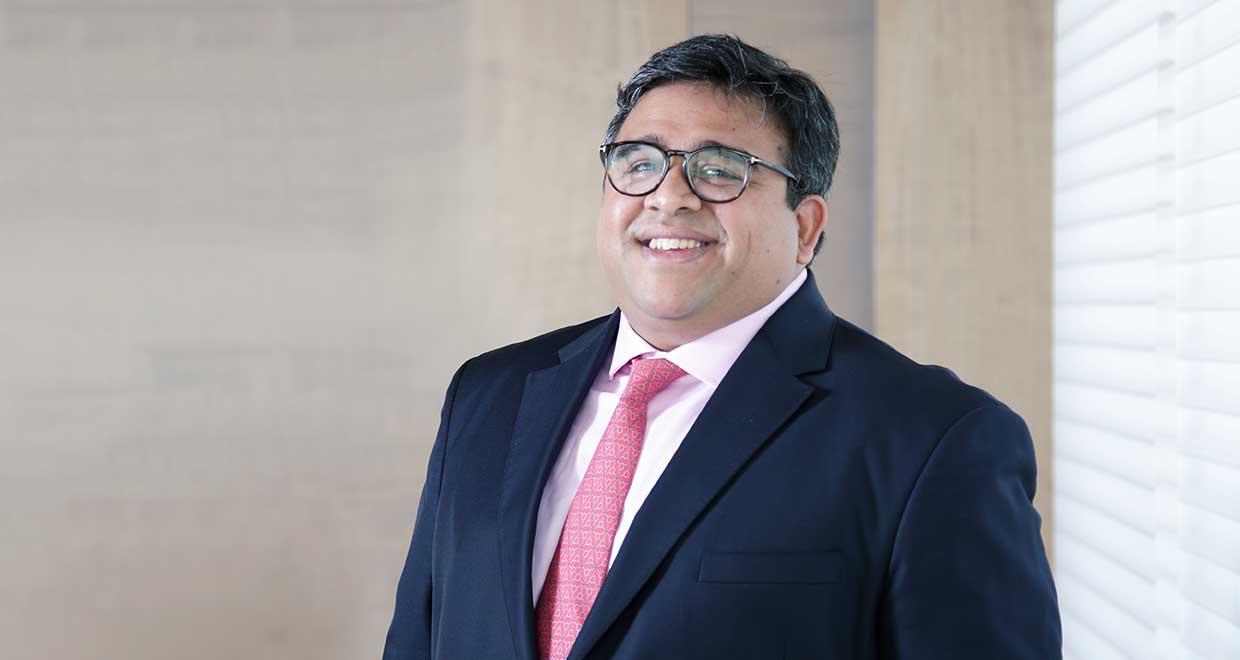
  • “One of the unique challenges of balancing litigation and transactional work is managing priorities and deadlines, while maintaining the highest standards of quality and client service”- JV Abhay, Partner at Shardul Amarchand Mangaldas & Co.

    “One of the unique challenges of balancing litigation and transactional work is managing priorities and deadlines, while maintaining the highest standards of quality and client service”- JV Abhay, Partner at Shardul Amarchand Mangaldas & Co.

    This Interview has been published by Pragya Chandni and The SuperLawyer Team

    Can you walk us through your journey into the field of law, particularly specializing in intellectual property rights? What drew you to this area of practice?

    My initial interest in law began during my school days when I had an interaction with one of my close family friends, who was a well-known lawyer, practicing at the Supreme Court. After high school, I wrote the entrance exams of the first five-year L.LB. (Hons.) course offered by the Guru Gobind Singh Indraprastha University in Delhi. I cleared the exams and joined Amity Law School to pursue the L.LB. (Hons.) course. My plan was to join my relatives after graduation. Unfortunately, this was not to be, as my relative passed away before I graduated in 2004. Unlike the present times, job opportunities were few and far (at least for first generation lawyers) during that time but with a little assistance from one of my batchmates, I was fortunate to get an interview at the Indian Red Cross. I joined the Indian Red Cross as a law officer and worked for almost 2 years. At that time, IP was an upcoming field of law and I wanted to explore it. Incidentally, I came across an opportunity at Remfry & Sagar, an IP Boutique Firm, sometime in 2006. I was interviewed for the Trade Marks (Litigation) practice and was selected. This was the beginning of my journey as an IP lawyer. As a part of my first assignment, I was required to work on a large litigation that was transferred from another Firm. As destiny would have it, I ended up handling this litigation, which over time grew manifoldly, till I was with Remfry & Sagar. Working with a boutique IP firm for more than a decade, helped me learn the intricacies of IP law and practice. Additionally, the firm also taught me the significance of time management and discipline at the workplace, which I value to date. While I was a part of the Trade Marks (Litigation) team, I used to work closely with other teams as well. The dynamic nature of IP law, coupled with its intersection with technology, business, and culture, also led me to specialize in this area of practice.

    Your work experience showcases a significant trajectory from being a Law Officer at the Indian Red Cross Society to now being a Partner at Shardul Amarchand Mangaldas & Co. How did your early experiences shape your career path and your approach to practicing law? 

    My early experiences as a Law Officer at the Indian Red Cross Society provided me with a solid foundation in legal practice. Working in a multifaceted organization like the Red Cross exposed me to diverse legal issues ranging from civil cases, review of complex agreements, international humanitarian law issues and advocacy. I was also involved in organizing IP awareness programs at the Red Cross. The experience taught me the importance of being focused, adaptable, and thinking strategically in navigating complex legal matters. 

    As I progressed in my career, each role I undertook further shaped my approach to the practice of law. All throughout my career, I have always strived to leverage my expertise to achieve best outcomes for clients, while upholding the highest ethical standards. My early experiences taught me the value of diligence, discipline, perseverance, and continuous learning in the profession, traits that I have always tried to hold onto till date. 

    Throughout your career, you’ve handled a variety of cases ranging from civil and criminal cases to IP litigation. Could you share with us a particularly challenging case you’ve encountered and how you navigated through it?

    One particularly challenging case that I encountered involved a high-stakes trade mark dispute between a well-known foreign newspaper and a big Indian publishing house. The case involved complex legal issues pertaining to violation of trademarks and newspaper titles. The case, which started as a singular lawsuit, quickly spread across multiple jurisdictions and forums. Additionally, the case had significant commercial implications for both parties, including potential damage to their respective brand reputations and market share. While dealing with the case, I conducted thorough research, gathered extensive evidence, and assisted in formulating a robust legal strategy tailored to the unique facts of the case. This ensured that we were able to safeguard our client’s interests. This experience underscored the value of diligence, thorough research and strategic thinking and decision making in achieving successful outcomes in litigation.

    As a Partner at Shardul Amarchand Mangaldas & Co., you’re deeply involved in both the litigation and transactional aspects of intellectual property law. How do you balance these different aspects of your practice, and what unique challenges do each present?

    Balancing the litigation and transactional aspects of Intellectual Property Law requires a versatile approach that combines expertise with strategic foresight and commercial acumen to understand clients’ specific business needs. 

    In my present role at Shardul Amarchand Mangaldas & Co., I assist and advise clients in IP litigation, prosecution and transactional IP issues such as licensing, franchising, and technology transfer. To effectively balance these different aspects of the practice, I rely on a combination of strategic delegation, collaboration with colleagues from other practice areas and effective case management. One of the unique challenges of balancing litigation and transactional work is managing priorities and deadlines, while maintaining the highest standards of quality and client service. To address this, I emphasize on strategic planning, and proactive assessment to anticipate potential issues and risks. The goal always is to provide holistic legal solutions while keeping clients’ business needs in mind. 

    In addition to your legal practice, you’ve been actively engaged in speaking opportunities and publications, both nationally and internationally. How do these activities complement your work as a lawyer, and what motivates you to participate in them?

    Speaking opportunities and publications complement my work as a lawyer by allowing me to share insights, expertise, and thought leadership on key legal and industry issues. These activities enhance a person’s professional visibility and credibility and also leads to knowledge sharing with other legal professionals and clients. It also fosters strategic partnerships with industry stakeholders. These activities provide a valuable opportunity for professional development, personal growth, and continuous learning. They challenge me to stay informed, think critically, and push the boundaries of my expertise, thereby enhancing my skills as a lawyer and enriching my overall professional experience. I am of the view that sharing knowledge, experience, and perspectives with others, is the best means for updating oneself with the latest developments in law and strategy.

    Your involvement in administrative decision-making and resource management within the IP practice at your firm indicates a leadership role. What strategies do you employ to effectively manage and empower your team?

    For effective management and empowerment of the team, I have always adopted the “people first” approach. The emphasis is also on proactiveness, leadership, mentorship of other colleagues, and professional development. 

    The approach adopted by me is to foster a culture of client excellence, innovation, and accountability for work. I encourage open communication, mutual respect, and constructive feedback to create a supportive and inclusive work environment, where team members feel valued, motivated, and empowered to excel. Team members are also encouraged to enhance their skills, expand their knowledge, and achieve their career goals. I strive to provide guidance, support, and opportunities for growth that enable team members to realize their full potential and contribute to the success of the IP practice. By investing in the development and well-being of my team members, I believe I have been able to create a team which has achieved sustainable growth and success.

    You’ve been recognized as a top IP lawyer in India and have received awards for your contributions to IP litigation. What do you attribute your success to in this highly competitive field?

    In one word “determination”. My success can be attributed to my determination to be able achieve what I set-out to do at various stages of my career. I have always tried to stay ahead of the curve in terms of legal knowledge, skills, and expertise. Additionally, my ability to build strong relationships, both within the Firm and with clients has contributed to this success. I have been able to forge long-lasting partnerships that have fuelled my professional growth and contributed to my reputation as a trusted advisor to clients in the field of Intellectual Property Law. The support and mentorship of seniors throughout my career has also been instrumental in me being what I am today. 

    Lastly, considering your wealth of experience, what advice would you give to fresh graduates or aspiring lawyers looking to specialize in intellectual property rights or law in general?

    For fresh graduates or aspiring lawyers looking to specialize in Intellectual Property Rights or law in general, my advice would be to cultivate a habit of continuous learning. Also, as cliché as it may sound, there is no shortcut to success, especially for a lawyer. So be ready to put in the hard work; be patient; adhere to your values; build a strong foundation in legal theory, research, writing and develop the ability for critical thinking. All these skills are required, especially for someone wanting to specialize in Intellectual Property Law, as it is a dynamic field that requires a deep understanding of legal principles, industry dynamics, and emerging trends. Also, I would advise aspiring lawyers to stay curious, adaptable, and open-minded, as the legal landscape, especially in the present times where technology and market dynamics have come to play a vital role, is constantly evolving. 

    Get in touch with JV Abhay-

  • “It’s essential to grasp the intricacies of a client’s business, their specific needs and to accordingly offer tailored solutions”- Dhruv Grover,IP Litigation Attorney at Shardul Amarchand Mangaldas & Co.

    “It’s essential to grasp the intricacies of a client’s business, their specific needs and to accordingly offer tailored solutions”- Dhruv Grover,IP Litigation Attorney at Shardul Amarchand Mangaldas & Co.

    This Interview has been published by Pragya Chandni and and The SuperLawyer Team

    Could you please walk us through how you initially decided to pursue a career in law, and what motivated you to specialize in Intellectual Property (IP) Litigation?

    As a first-generation lawyer, I leaned heavily on mentors to guide my path. Initially, my academic inclination was towards science during my 11th and 12th standards. However, an unexpected meeting with a seasoned lawyer (who turned out to be my first mentor in the field) at a family gathering shifted my perspective. He illuminated me on the vast horizons and multifaceted opportunities that were offered by the legal profession (beyond its cliché portrayal in popular media).

    While law school introduced me to a plethora of intriguing subjects, it was Intellectual Property (IP) that resonated the most with me. A defining moment came during an internship when a senior partner posed a thought-provoking question: “Why specialize in IP?” My response: “If it is not new or novel, it is not IP and if something is new or novel on every turn, it is always interesting and worth specializing in”.

    Further fuelling my interest were dedicated professors, particularly in IP and CPC, who recognized and nurtured my enthusiasm. Their encouragement and insights solidified my decision to specialize in IP Litigation.

    Your career has taken you through notable firms like Remfry & Sagar, Khurana & Khurana, and now Shardul Amarchand Mangaldas. Could you share the pivotal moments and experiences that shaped your journey in the field of IP law?

    Every step in my career, from drafting my first legal notice to my first court appearance, has been a significant learning opportunity. One particularly memorable matter involved a client alerting us about an imminent shipment of counterfeit goods destined for India within just two days. The urgency of the situation warranted immediate actions: identifying the shipment, liaising with Indian Customs offices, and swiftly filing a lawsuit seeking injunctive relief in Court. Those intense 48 hours, while challenging, imparted invaluable lessons in handling time-sensitive IP matters.

    Working at a full-service law firm like Shardul Amarchand Mangaldas has further enriched my professional journey by providing me an opportunity to work and interact with experts from diverse legal domains. This experience has further honed my ability to perceive and cater to client’s expectations from a holistic standpoint.

    Having handled diverse aspects of IP, from drafting pleadings to appearing before various courts and tribunals, what aspects of your work do you find most challenging and rewarding in the realm of IP litigation?

    Legal profession is a continuous journey filled with multiple learning opportunities. Reflecting on my early internship days, I recall discovering quicker methods to navigate court files during time-sensitive situations. Drafting intricate pleadings in complex cases was initially daunting during my early professional years. I vividly remember the apprehension of my first solo court appearance; the nerves were palpable. However, with each challenge encountered, I recognized them as important learning milestones that made me the lawyer I am.

    In the realm of litigation, the most rewarding moment is undoubtedly when a favourable order is pronounced. All the hard work and preparation culminating in a successful result is profoundly gratifying.

    Your profile mentions engagement in business development activities, including client meetings and conferences. How do these activities contribute to your professional growth, and what role do they play in enhancing your practice in IP litigation?

    Engaging directly with clients through meetings and conferences is fundamental in any client-centric profession. It’s essential to grasp the intricacies of a client’s business, their specific needs and to accordingly offer tailored solutions. Through these interactions, one can gain deeper insights into the challenges clients face, especially in IP disputes.

    For example, while some clients might prefer a more diplomatic approach to resolve IP disputes through legal notices or mediations, others might seek immediate legal action to safeguard their IP, perhaps on account of the potential impact on their business. By actively participating in such engagements, one can better align their strategies and advisory to suit the unique requirements and preferences of each client, ensuring a more effective and personalized approach to IP disputes.

    You’ve conducted training sessions for clients on IP laws. Could you elaborate on the importance of client education in the field of IP and share any specific challenges you’ve encountered in helping clients navigate intellectual property issues?

    Often, the primary focus of clients is on business growth and revenue generation, sometimes overlooking the critical aspects of IP protection. For instance, we have often seen clients approach us to enforce their design registration, only to later discover that they’ve been using the design for years prior to filing the design application. In such cases, we have to inform them that their design registration might be vulnerable for cancellation due to prior self-disclosure. In these situations, design registration certificates may be nothing more than a toothless paper.

    This underscores the vital role of client education. By proactively educating clients about the nuances of IP and the associated timelines, one can prevent potential pitfalls. It’s essential for businesses to recognize that robust IP protection is integral to their long-term success.

    You’ve appeared before various specialized tribunals and high courts in India. How does your approach differ when dealing with IP matters in these forums compared to more traditional court settings, and what skills do you consider crucial for success in such specialized areas?

    In specialized IP forums, there’s a heightened awareness and appreciation for the technicalities revolving around the field of IP, which often results in more streamlined communication and understanding of complex issues. This environment is conducive for IP practitioners, making it important for them to remain updated with the latest developments in the IP landscape. Unlike traditional court settings, specialized forums demand a deep understanding and familiarity with both domestic and international IP trends. Therefore, staying abreast of advancements in IP not only enhances an IP lawyer’s credibility but also equips them to leverage the unique opportunities presented by these specialized forums.

    Your academic achievements include gold medals, debate/moot wins, and publications. How has your academic background contributed to your success in the legal profession, particularly in the specialized field of IP law?

    During my time in law school, every academic experience was crucial for learning skills that are requisite for becoming a successful lawyer. Participating in debates and challenging moot court sessions didn’t just help me in honing my oratory skills but also taught me how to work in a team. On the other hand, writing research papers on interesting IP topics deepened my understanding of the subject at a jurisprudential level. 

    While I didn’t realise it then, each activity wasn’t just an academic exercise or an assignment, it was a step towards understanding the legal world that was awaiting after 5 years of law school.

    Drawing from your experiences, what advice would you like to share with law graduates who are just beginning their careers, especially those interested in pursuing a specialization in IP law? Are there any lessons or insights you wish you had known when you started your journey?

    Of late, IP practice has become more lucrative and is attracting numerous law graduates to specialize in this domain. While the rewards of this practice are undeniable, I believe it is important for law students and young professionals to determine if the subject truly resonates with them. Engaging in IP internships or dedicating time to study and write about IP can offer some clarity in this regard.

    Reflecting on my early days in the IP practice, I recall focusing all my energy in understanding the developments in and around the field of IP. While this approach enhanced my understanding of the subject, I inadvertently overlooked developments in fields outside of IP. Over time, I realized the value of maintaining a balanced perspective, acknowledging that while specialization requires depth, a holistic understanding of law across domains is invaluable. 

    Get in touch with Dhruv Grover-

  • In law, never comes a day, when you can say ‘I know it all’ – and so is probably in every field, so keep learning everyday and keep updating yourselves- Vidya Sunderam, Principal Associate at Cyril Amarchand Mangaldas

    In law, never comes a day, when you can say ‘I know it all’ – and so is probably in every field, so keep learning everyday and keep updating yourselves- Vidya Sunderam, Principal Associate at Cyril Amarchand Mangaldas

    This interview has been published by  Priyanka Karwa and The SuperLawyer Team

    Ma’am, please tell us about your journey and how you ended up pursuing a career in law? What motivated you to choose this profession?

    I come from a non-lawyer background. After finishing school, I was almost about to join Delhi University for a degree in economics when my mother suggested me to attempt giving entrance for law. I went ahead, gave a few entrance exams (no CLAT back then), got admission in a couple of law schools and joined Amity Law School (GGSIP University) as it was in my hometown Delhi. It took a few semesters to know ‘law’ as a subject and then internships to know how it is practiced. Back in law school my subjects of interest were company law and IP, and when I started writing blogs while in law school, I started enjoying these subjects so much so I pursued corporate laws since then, with an inclination towards commercial contracts. 

    Your field of practice includes general corporate, M&A, and corporate advisory. Can you explain your role and core practice areas in more detail? What kind of work do you typically handle within these areas?

    General corporate as a practice area is vast. My core practice areas are handling acquisition transactions, domestic as well as cross border, both from sell side and buy side – this would include conducting due diligence (on the target or a vendor diligence), handling transaction documentation; handling disinvestment transactions; advisory and structuring foreign investments; advisory on a wide range of corporate and commercial law matters for listed and private companies, including company law and SEBI regulations with core focus on regulations on listing, insider trading, and takeovers.

    Transaction structuring and drafting transaction documentation seem to be a significant part of your expertise. Could you elaborate on the types of agreements and documents you typically deal with?

    Each transaction involves detailed structuring, which depends on a lot of factors such as the objective of the transaction, funding methodology, residency status of parties, legal restrictions including permits from regulatory authorities, tax implications etc. Once the transaction framework is finalised, parties proceed to execute the transaction documents (commonly referred as definitive agreements). It is preferable to first negotiate and execute a term sheet wherein the parties agree broadly on the terms and conditions, and follow up the same with detailed definitive agreements. The type of definitive agreements to be executed depends on the transaction – whether a share transfer, share subscription, asset transfer, business transfer, merger, demerger etc. I primarily handle transaction documentation for acquisitions and restructuring, for listed and private companies, and have also handled prominent disinvestment deals involving public sector companies. Transaction documents I usually draft include share purchase agreements, share subscription agreements, asset purchase agreements, business transfer agreements, joint venture agreements, business cooperation agreements, framework agreements etc., along with several ancillary documentation. The drafting style varies based on who you are representing, the objective, facts and circumstances of the matter, and seek protective provisions accordingly. 

     Due diligence is an essential task when evaluating a transaction. Which sectors have you conducted due diligence reviews for, and what are the key aspects you look for during the process?

    Yes, due diligence is an essential part of an M&A transaction and is highly recommended. It is only when a due diligence review is conducted, that an investor gets to know the target closely and can help negotiate the deal and include protective measures in the transaction documents. I have conducted diligence review on several companies engaged in sectors such as manufacturing, power, healthcare, FMCG; services; hospitality; IT etc. A legal diligence report is an encyclopaedia on the target’s legal compliance status, and typically involves a review of the target’s corporate compliance, contracts, licenses, employees, properties, intellectual property, litigations etc. Transaction document negotiations depend a lot on the outcome of the diligence. In a diligence, one highlights to the client any risks they may face if they into the transaction. It is very important to highlight solutions/ mitigation for each risk highlighted in the report without which the report is certainly incomplete. It is also necessary to ensure that diligence is completed in a time bound manner so that the definitive agreements are negotiated and executed taking into account any risks. 

    What advice would you give to fresh law graduates who are just starting their careers? What are some key qualities or skills they should focus on developing?

    Fresh law graduates must remember that first and foremost it is important to be and remain focused. Spend the initial years of your career in developing a deep understanding of your practice area and the laws relating to it. I know that in the initial few years, there are many lawyers who get confused on which practice area to choose. Now here comes the role of your seniors and also your patience. Be willing to explore, but be patient to learn and put in 100% effort. If you still think you need a change, do that, provided you again put in 100% effort. In law, never comes a day, when you can say ‘I know it all’ – and so is probably in every field, so keep learning everyday and keep updating yourselves. What is also important is to never get disappointed. It is a long journey and there is space for all. Some key qualities or skills if you ask me are: discipline, willingness to learn, updating yourself every day, hard work (also smartwork), being a team player, and time management. To all the fresh law graduates – keep up the enthusiasm and yes, you have chosen a great profession and you are going to get into a great professional journey.

  • Debarupa Agarwala, Senior Associate, HSA Advocates, on studying in NALSAR, and working at Tier-I firms

    Debarupa Agarwala, Senior Associate, HSA Advocates, on studying in NALSAR, and working at Tier-I firms

    Debarupa Agarwala graduated in law from NALSAR, Hyderabad, in 2007. Debarupa is a dual qualified lawyer (UK and India) and has worked with leading law firms in Tokyo, London, Hong Kong and Singapore. She has extensive experience in general corporate and commercial advisory, M&A, banking and finance and capital markets transactions. She has been involved in advising various Indian as well as international companies on commercial law aspects, including drafting, structuring and negotiating various share purchase agreements, shareholders agreements, and other related legal advisory work. She also advises on joint venture investments, foreign direct investments into India, outbound investments from India, commercial contracts, employment law and compliance related matters.

    In this interview we speak to her about:

    • Her time at NALSAR
    • Having worked all over the globe
    • Striking a work-life balance

    How would you like to introduce yourself to our readers?

    I am a dual qualified lawyer (UK and India) with experience in corporate and corporate finance transactions.


    Give us a brief overview of your NALSAR experience for our readers.

    My time at NALSAR was an eye opener in many ways. Being from a small city (Guwahati), the first couple of years for me were spent in just adjusting to the curriculum and soaking up the cosmopolitan culture. My batch mates were from various parts of India and very intelligent. It was, honestly, a bit overwhelming for me in the beginning. But with each semester, I gained confidence and by the time I graduated from law school in 2007 with a job offer from Luthra & Luthra in hand, I knew I had made it.

    One mistake I made in law school was to focus entirely on classroom curriculum and grades in my initial years there. Luckily, I quickly realised that there was more to being a good lawyer than just one’s grades. I started getting interested in research and publications and that was the beginning of a very fulfilling time at law school. I also attended quite a few space law conferences in India and abroad and the exposure really helped me hone my speaking and soft skills.

    NLUs do have many advantages over other institutions. Providing legal education and access, exposure and infrastructure are the three things that immediately come to my mind. NLUs let you access good faculty, a robust alumni network to help with recruitments as well as access important events such as conferences and moot court competitions. They provide excellent exposure in grooming your lawyering skills. The emphasis on physical infrastructure such as buildings, access to internet and a well-stocked library is also typical of NLUs.

    Life as a law student in an NLU is easier than that in a regular institution because many things are handed to you on a platter. Without this kind of privilege, students from regular institutions have to work extra hard to be noticed.  


    What kind of internships did you undertake during your student years?

    Unlike most of my batch mates, the majority of my internships were with NGOs and academicians. Back when I was a student, I wanted to become a professor of law and I had structured all my internships that way. Believe it or not, I took my all my internships very seriously and each of them taught me something useful to take forward. My NGO internships in Guwahati and Delhi taught me empathy and to respect others. My research internships taught me the art of logical thinking. In my fourth year, one of my professors helped me secure an internship in a renowned IP boutique law firm in Tokyo. It was my first and only law firm internship and needless to say, the experience was worth it. I had to pick up spoken Japanese on the job and even managed to make about half of my leaving speech in Japanese on my last day at the firm.

    In your opinion, what are the law school centric activities that you would recommend as necessary experiences for every law student?

    I would definitely encourage students to engage in extracurricular activities such as mooting, debating or research. They are necessary not only because they equip you with the skills that are necessary to be a good lawyer but also give a big boost to your confidence.

    In the long run, I do not think anyone will judge your advocacy skills on the basis of whether you had mooted or undertaken paper publications in law school or not. But if you want your advocacy skills to stand out, this is what you have to do.


    What are your areas of practice and how did you go about choosing these fields?

    I always like to think that my areas of practice chose me instead of the other way around. I enjoyed practising corporate law and that is what I started my career with. In between, I worked in financial litigation, regulatory (funds), structured finance and capital markets. A lot of these were practice areas that I had to mandatorily experience as part of my solicitor’s training contract with Simmons & Simmons in London. I am back to practising corporate law now and enjoy it to the hilt. My training in finance is a complementary strength.  


    Tell us about your experience with Simmons & Simmons. 

    I have very fond memories of working at Simmons & Simmons. It was a very big deal to be accepted by an international law firm in those days and I was one of the first students from NALSAR to qualify as a solicitor of England and Wales.

    The London office of Simmons & Simmons was a very friendly place to work in and I had the fortune of working with some very good supervisors (partners) and senior associates. Apart from exposure to UK laws and cross-border transactions, I got solid legal training and work manners that I still carry with me.

    As a trainee solicitor, I was rotated through four practice areas, each lasting for six months for a total of two years. The rotation concept helped me get a flavour of different practice areas and based on personal experience, I strongly believe that junior lawyers should try and take on a variety of assignments in their initial years.

    Within my first year at the London office, I was selected for an international secondment to the Hong Kong office of Simmons & Simmons. I was suddenly in a new office in a new country but it was an amazing learning experience. I was given lessons in Cantonese and Mandarin so that I could communicate locally and with clients. Unfortunately, all the clients I interacted with in Hong Kong spoke English and my local language skills were never put to the test!

    You have work experience in Tokyo, London, Hong Kong and Singapore. Why then, did you choose India over all of these places? 

    Indeed, I have worked in all of these cities, sometimes by choice and sometimes by chance. The work culture in all the three Asian cities is quite the same. Lawyers there are hardworking and sincere and spend long hours at work. However, they are socially very active and no matter how busy they are, they always take long lunch breaks to bond with clients, colleagues, and friends. I have even had experiences where we have gone out for dinner with clients and come back to work in the office after that.

    London has the work culture I admire the most. Like in Asia, lawyers there are hardworking too but they are out of the office on time and spend most of their spare time socialising over drinks or spending time with family. I also saw very little hierarchy in law firms there.

    We moved back to India because we wanted to start a family and my husband wanted to set up his start-up on social polling. Our son is almost four now.


    How difficult is it to manage the pressure of working in a law firm with a young child?

    To be honest, it is very difficult. Lawyering and mothering are about as complementary as chalk and cheese! Finding the ideal work life balance becomes that much more complicated when you have a kid in the picture. Living in a nuclear family without continuous family support also puts me on the back foot.

    Luckily, I have made my peace with the fact that it is beyond my capabilities to attempt to be a supermom and a superlawyer at the same time. On some days, I am a slightly bad mother and on some days I am a slightly bad lawyer. But it all adds up to balance at the end of the day!


    What does it take to make the cut and land a Tier-I job?

    (Debarupa has worked at two Tier-I firms, Luthra & Luthra Law Offices and Shardul Amarchand Mangaldas in India.)

    The first thing is to start with a CV that stands out. Decent grades, coupled with extracurricular activities and interesting pursuits are what catch the attention of all law firms including Tier-I law firms. In order to ace your recruitment interview, you will have to demonstrate that you have all the qualities that they are looking for and will fit in well with the practice area. A lawyer who is confident, hardworking, committed and driven is a lawyer no law firm will refuse.


    What is the level of importance given to a student’s Grade Point Average with respect to recruitments at Tier-I firms?

    Some importance is definitely given to Grade Point Average but Tier-I firms generally prefer all-rounders who can demonstrate above average grades as well as extracurricular activities. Previous internships also matter a lot.


    How do you say interns should go about their work at firms like these, so as to get noticed in a positive way in the limited time they have?

    For an intern, the key to be noticed is to be confident in a law firm setting. As a senior lawyer, I look out for interns whose body language conveys to me that they are fine with taking assignments without getting overwhelmed. Diffidence is a big no-no. The second thing is your work product. Be diligent, do your assignment well, ask the right questions and stick to the deadline. I have seen many interns disappearing without notice when they were due to hand in their assignments, especially on matters with tight deadlines. One has to be responsible and avoid doing that.


    When and why did you decide to move to HSA Advocates?

    I moved to HSA Advocates in September 2017. Like most other moves in my profession, this was based on the desire to work more independently and to further my career growth. I was also tempted by the prospect of work life balance that a slightly smaller firm can afford you.


    Give us a peek into what a regular working day looks like for you. How many hours in a day do you spend at work?

    I start my day at work with going through my emails and noting down the to-do list of matters for the day. I also sneak a quick look at the Economic Times online. I discuss the list with my team partner and we prioritise the matters based on our discussion. After that, the list takes over! On a typical day, I could be researching and drafting legal opinions, reviewing documents, drafting agreements, speaking to or meeting clients and making calls to various government departments.

    Typically, my workdays range between eight to ten hours. I carry home whatever work I cannot complete in the office and finish it late in the night or early next morning while my son is asleep.


    Where do you see yourself ten years from now? 

    I see myself happy, wherever I am, and whatever I am doing. I live one day at a time and ten years is a long time to predict where life will take me. In an ideal situation, I would like to complete an LL.M. and Ph.D. and become an academician.

    Generally speaking, avenues for my line of practice include moving in-house or starting your own law firm.


    What is your message to our readers?

    Good lawyering comes with hard work and experience. Let no one ever tell you that you are not good enough or not meant to be a lawyer. There is a lawyer in every one of us – work hard and bring the lawyer out in you!


  • Chaitanya Ramachandran, Legal Counsel-India, Twitter, on technology and law, and his experience

    Chaitanya Ramachandran, Legal Counsel-India, Twitter, on technology and law, and his experience

    Chaitanya graduated from NLSIU in 2009. After a successful stint at Clifford Chance LLP, he went on to pursue his Masters at Stanford Law School, with a specialisation in Law, Science and Technology. He is currently Legal Counsel (India) at Twitter, where his role entails managing litigation in courts throughout India, drafting and negotiating commercial agreements for all Twitter products, services and partnerships, advising on Intellectual Property, Privacy and Data Protection law, developing and enforcing robust corporate governance policies, and developing and delivering training programs on Twitter policies and processes for both internal and external audiences.

    In this interview we speak to him about:

    • His time at NLSIU
    • Marrying law with technology
    • His experience at Twitter

    What would you like to say to our readers in the manner of an introduction of yourself?

    I’m a technology lawyer and work for Twitter, where I lead the Legal function in India.


    What inspired you to take up law?

    I was always interested in computers and technology, so as a senior school student I did briefly consider engineering. But I noticed that hardly anyone I saw studying engineering in India actually ended up becoming an engineer; the “engineers” all seemed to end up in finance, consulting, management, or pretty much anything other than actual engineering. So I quickly realized that it wasn’t for me. Around the same time (this would have been around the 10th standard), I started to become interested in law, largely owing to interesting and vigorous debates in the media about the controversial laws of the time (the Prevention of Terrorism Act being a notable one). I also knew a few seniors who had been admitted to the five-year law programs, and their accounts of law school life sounded very appealing to me! I’m not a first-generation lawyer, but my family was quite supportive.


    Tell us a bit about your time studying law at NLSIU.

    I have fond memories of my five years at NLSIU. I wasn’t particularly fixated on academics to be honest; it was the non-academic pursuits that captured my imagination. Quizzing was foremost – I have always been a quizzer, and NLSIU has a very rich tradition of quizzing. It was an honour to have been part of that tradition, and to have been part of Bangalore’s quizzing scene, which is India’s finest. Another interest that developed at NLSIU was writing – I wrote a few articles on technology law, and was involved with the publication of the Indian Journal of Law and Technology (IJLT) in its formative years. I also spent a LOT of time listening to music and discovering new artists and genres! Looking back, it was a fun, relaxed time when I was mostly free to explore whatever interested me.


    Could you tell us about the internships you took up, and what you learnt from those experiences?

    I don’t think I was very serious about my internships. I did one per year, which was the minimum amount required. Three of those were litigation internships in Delhi, where I experienced every level of practice from trial up to the Supreme Court. While I worked with some truly accomplished and supportive seniors, I realized that litigation as a career wasn’t for me. I didn’t enjoy the chaos and wastage of time that are an inescapable part of the day-to-day practice of litigation in India, nor did I see myself thriving in the increasingly aggressive milieu of the Bar. So more than anything else, my internship experiences steered me away from a potential career path – not that that’s necessarily a bad thing!


    What advice would you give students in avoiding a decision paralysis?

    Go with your gut. If you are reasonably engaged with what’s happening at law school, you should find your inclinations emerging naturally during the five years. As you learn what interests you, seek out more research, writing or internship opportunities in that field, and if you can, reach out to people in the field to learn more about what they do. Perhaps most importantly – don’t do something just because other people are doing it. That’s probably the single worst reason to do anything.


    Tell us about your early professional experiences at Clifford Chance LLP. 

    The transition was difficult. In addition to the transition from student life to working life, I also had to contend with the transition from India to a completely new culture. But my main motivation in signing on with Clifford Chance was to experience living and working overseas, so I met the challenge willingly. What appealed most to me about the big London law firms was that all trainees are required to rotate through three or four practice areas in the first two years, which gives you a pretty comprehensive overview of legal practice when you’re fresh out of law school. I also got the chance to spend half a year in Brazil on secondment, which was a fantastic experience. These experiences built my confidence in being able to do business across borders and cultures, which is central to what I do today. In retrospect, another thing I appreciate about these early experiences is that one tends to develop good working habits in the type of demanding work environment that firms like Clifford Chance offer, and these stay with you later, even if you eventually choose to move on to something different.


    Did you have a mentor or guide during the formative years of your career?

    I didn’t have a mentor, which I suppose isn’t surprising because I became interested in technology law when it was a brand-new, mostly unknown field, and nobody was making a career out of it, at least in India. It really took off in India only about five years ago, and today there’s no shortage of people in the field whom law students can seek out for guidance. Based on my experiences, I don’t think it’s necessary to have a mentor. What’s important is getting to know yourself and what makes you tick, and creating opportunities for yourself. A strong drive and quality work product will help you get noticed. I’ll also add that I’ve been very fortunate to have had some extremely supportive bosses at every stage of my career – at Clifford Chance, Amarchand Mangaldas, and now at Twitter – who have encouraged me to follow my chosen path and provided sound advice when I needed it.


    What motivated you to pursue an LL.M?

    Two things. The first was that I knew relatively early in my law school career that I wanted to make a career out of technology law, and a specialized degree seemed like a good way of embarking on that path. The second was that I wanted to experience a foreign academic culture and learn from the world’s leading minds.


    How did you keep up with the challenging academic rigor at Stanford?

    I think attending Stanford has been the single most important decision that I’ve taken in my career to date. “Rigor” is the right word – the LL.M. was a very demanding course for me. But staying motivated was never a problem; US law schools allow you to design your own LL.M. program, so I was only taking courses that I was genuinely interested in. “All killer, no filler!” In fact, the real problem at Stanford was that I was interested in more courses than I could realistically take during the LL.M. year, so deciding which courses not to take was a conundrum. Stanford Law School allows you to take courses outside the law school as well, so for the first time in my life I was able to experience a bit of non-legal higher education! Another standout part of the Stanford experience was that my professors were all world-renowned authorities in their field, and my fellow students were an extremely accomplished bunch, so the classroom environment was excellent. That encouraged me to put in the work to be able to come into the classroom and hold my own, day after day.


    How would you compare your LL.M experience with your under grad legal education in India?

    The difference is stark. The pedagogical cultures are fundamentally different. Five-year law schools in India are focused on classroom teaching. The vast majority of your time as a student in a US law school is spent in self-study, and you come into the classroom to both refine and question what you have learned on your own. US law schools make huge demands on your time with respect to reading, and focus much more on primary materials including case law and statutes. This helps greatly with the transition from studying to practice, as knowing your way around a judgment or statute is such a fundamental skill in practice.


    How did you come to work with Amarchand Mangaldas? 

    Having tossed my hat over the wall of technology law, I wanted to work with a practice that would allow me to specialize in this field. The team at Shardul Amarchand Mangaldas (which was still AMSS at the time I joined) was in the process of building out their technology practice (which was then housed within the policy and regulatory practice), and I saw this as a good opportunity to start the next phase of my career. Over two years at SAM, I got to do some very interesting work with a client base that included some of the world’s leading tech companies, and was also exposed to industry bodies and Internet institutions like ICANN and ISOC, which I remain engaged with today. I also had two incredibly supportive bosses in Mr. Shardul Shroff and Mr. Sandip Beri, who encouraged me to pursue my chosen path and gave me the opportunity to prove myself.


    How do you deal with the massive challenges of representing one of the most important social networking sites world over?

    (Chaitanya is Twitter’s first Counsel in India.)

    It never gets boring, that’s for sure! Twitter is a unique place, and I never cease to be amazed by the ways in which our users are constantly reinventing how they use our platform; to joke, to speak up (or speak out), to connect with like minded strangers, to share information at the speed of light, to stay connected with what’s happening in the world. I often have to deal with difficult legal issues where the law provides little to no guidance and there’s no ready solution, which is precisely the kind of challenge I thrive on. It’s also a privilege to work for a company that shares my own values – that free speech is valuable and worth defending. I always find my work engaging due to the inherent nature of Twitter; the legal issues I encounter are closely connected to current events in India and beyond. When work gets especially demanding, I stay motivated by remembering that what we are doing is giving every person in the world a voice –an idea that has gone from being absolutely unthinkable to indispensable reality within my own lifetime. That’s powerful stuff.


    On what parameters do you choose the projects you work on? 

    These days, as an in-house lawyer, I don’t have much room to choose – I have to deal with whatever crosses my desk! Though as someone who has always wanted to work in tech, I find most issues I come across at Twitter very interesting. In previous roles, I definitely tried to build up a corpus of work in my chosen field, and was fortunate enough to have access to clients that offered exactly the type of work that I wanted to do. I’ve learned that you must proactively seek out the type of work that you want to do – don’t count on it finding you. While fresh-faced graduates may not have a huge amount of choice right off the bat, this becomes easier to do with more experience.


    Could you take us through a typical working day at your office?

    I don’t think I’ve had a single day at Twitter that has gone perfectly according to plan! Nevertheless, to give you a representative example, I typically start work early and catch up on my inbox and the news. I try and reserve technical work like marking up an agreement or reviewing a litigation draft for this time of the day, when I’m at my freshest. I may have a Hangout scheduled for mid-morning with one of my internal business clients, where I’ll bring them up to speed on the current status of their ongoing deals, and learn about other deals that are in the pipeline. I may then move on to reviewing requests from various parts of the company that I need to approve; these could be anything from supplier contracts to press releases to creatives for an upcoming ad campaign on the platform. While my colleagues and I always talk about having a sit-down lunch at one of the many restaurants nearby, this mostly remains a pipe dream, and I usually only have time to grab something from one of my favourite shops or food trucks and catch up on Twitter or The Economist. Post-lunch, I may have a regular Hangout scheduled with one of my international counterparts in the Legal organization, after which I’ll usually try and check off the remainder of my list of goals for the day – perhaps complete a piece of legal research, respond to a customer or internal client, or work on an internal company policy or process that’s being updated. I’ll then try and beat the notorious NCR traffic on my way back home, where I’ll resume attacking my list and catch up on my inbox. Later that night, I may have a cross-time zone call with our headquarters team and outside counsel to set our strategy and prepare for an upcoming court hearing. I’ll hopefully end the day feeling that, while not everything may have gone to plan (there are always surprises and emergencies that you can’t account for), I made meaningful progress on my goals for the week.


    What books, judgements that you have read would you say have played an integral role in shaping your legal philosophy?

    I’d say my philosophy has been strongly influenced by the writings of three lawyer-statesmen: Thomas Jefferson, for his conception of individual liberties and their central role in society as well as his mastery of the written word; Jawaharlal Nehru, whose idealism and clarity of purpose shone through vividly in his writings; and Lee Kuan Yew, whose warnings about the essential fragility of civilization and the dangers of populism seem especially prescient in 2017.

    With respect to my day-to-day work, a book that has influenced me greatly is High Performance with High Integrity by Ben Heineman, which I was introduced to as a student at Stanford. It is essential reading for in-house counsel, and I strongly recommend it to anyone who is interested in this line of work.


    What are the key attributes that one must develop in order to excel in this industry?

    I think the key skill for in-house lawyers is being a good listener. The outcome that we are always pursuing is helping our business colleagues achieve their goals while simultaneously protecting the interests of the company. Listening well helps you identify potential risks and ask the right questions. An added benefit is that it helps you learn something new every day, especially at a large, diverse company where you’re surrounded by colleagues working on amazing stuff that’s well outside your comfort zone as a lawyer. The only way to develop this skill is to practice it everyday.


    How do you manage your time between your professional and personal interests? 

    I’ve learned that you have to make the time for the things you value in life – no one’s going to hand it to you. Music is my first love; when I’m not at work you’ll probably find me playing or tinkering with one of my guitars.


    How do you keep yourself updated about the latest developments in law?

    On Twitter!


    What advice would you like to give our readers, who are mostly law students and young lawyers?

    I don’t know how qualified I am to give advice, but since you’ve given me a soapbox, I’d encourage anyone reading this to be original and follow their own interests within (or outside) the law, wherever they may lead. I often turn to a great quote by Phil Knight that has pride of place outside the Stanford Graduate School of Business: “There comes a time in every life when the past recedes and the future opens. It’s that moment when you turn to face the unknown. Some will turn back to what they already know. Some will walk straight ahead into uncertainty. I can’t tell you which one is right. But I can tell you which one is more fun.”


  • Iqbal Khan, Partner, Shardul Amarchand Mangaldas, on his time in LSE, his diverse experience, and plans for the future

    Iqbal Khan, Partner, Shardul Amarchand Mangaldas, on his time in LSE, his diverse experience, and plans for the future

    Iqbal Khan graduated in law From London School of Economics and Political Science in 2006. Prior to that he had attended DePaul University, where he pursued his Bachelor’s Degree in Computer Science. Following his graduation in law, he went on to pursue his JD from Columbia School of Law as a GradeHarlan Fiske Stone Scholar. He is currently Partner at Shardul Amarchand Mangaldas, where he is member of the Private Equity and Mergers & Acquisitions Practice Group. He advises some of the largest sovereign wealth funds, global private equity funds and strategic corporates, and specializes in private equity investments, mergers and acquisitions (both domestic and cross-border), joint ventures, advisory on foreign investment laws and corporate and commercial laws. His experience also includes advising on franchising and restructuring laws.

    In this interview we talk to him about:

    • Transitioning from science to law
    • Working for international and Indian firms
    • Striking a work-life balance

    How would you like to introduce yourself to our readers?

    I can best describe myself as an M&A / PE deal junkie with a passion for cricket, food and Bollywood films. I am currently an equity partner at Shardul Amarchand Mangaldas. My work primarily focuses on M&A and PE investments.


    What motivated you to switch from science to law?

    (Iqbal transitioned to law after completing his B.Sc. in Computer Science from DePaul University.)

    At DePaul, which then had one of the best computer sciences programmes in the U.S., I completed my four year degree in less than three years and then started consulting for Cambridge Technology Partners and Microsoft, respectively. While on a flight to a client’s office, I found a book, Barbarians at the Gate – The Fall of RJR Nabisco in my seat cover. This book changed my life. Barbarians at the Gate details the story of the leveraged buy-out of RJR Nabisco (a must read for every aspiring M&A / PE lawyer).  This book was a turning point in my career and inspired me to change direction, and pursue a career in law with a focus on mergers and acquisitions and private equity investments.

    In fact for all their many differences, law and computer science are surprisingly similar disciplines. They both train you to make decisions and to articulate a framework for managing exceptions. My background in computer sciences had given me solid analytical skills and these were indispensable in my study of the law. Hence, my biggest challenge, as we lawyers like to say, was not substantive, but procedural.

    Pursuing a law degree also meant placing on hold other opportunities for career development.  So I declined several promising roles with start-ups and consulting firms; and in retrospect I am happy with the decisions I made. Law school also meant a significant financial commitment and at the time this was challenging though I was fortunate to have a great deal of moral support in pursuing the degree in spite of the fact that it seemed more attractive to continue working at the time.


    Tell us a bit about your time studying law at LSE. 

    The LSE, in my opinion, is one of the best educational institutions in the world.  If we ever have kids and if they ever decide to study abroad, I would recommend that they go to the LSE.  Its teaching philosophy is modelled after its moto — rerum cognoscere causas, a line taken from Virgil’s Georgics meaning “to know the causes of things.”  I have fostered relationships at the LSE, both with academics and students, each of which I value deeply, and hopefully, when I am even more established and successful, I would like to give back to the LSE – both financially and with my time.

    In terms of activities, while I was a student at the LSE, I was on a very tight budget because I was self-funding my education then. So I enjoyed London – a colloquial for I walked everywhere and ate what I could afford.  And this helped me, at in my view, become a more humble man.  And therefore, I believe the LSE gave me a great education in law, and life at the LSE, gave me a great education in life!


    What are the parameters that must be considered in deciding what the next step should be after graduation?

    I place a great deal of value on work experience at a law firm and I would consider this to be the best step to pursue after graduation.  Joining a law firm helps young graduates develop and refine their own logical framework of addressing legal issues and this is critical in the practice of law.

    As a young associate, students also have the opportunity to work with multiple Partners and across a range of complex transactions. This builds important skill sets, including the ability to manage clients, your immediate boss and to prioritize competing deadlines.  As a young associate you’ll learn a great deal from each transaction, and each experience is an important building block in informing your strategy for your next deal. Law firms also tend to be less bureaucratic for young associates. If you’re willing to work hard, you can navigate your way across different types of transactions so you make the most of your experience.


    Do you try to consciously build a specific body of work?

    Over the past few years the role of senior lawyers has changed.  We are no longer called on only to execute an agreed upon term sheet.  Instead we are seen as critical collaborators for our clients when the deal is in its most nascent stage.  Clients frequently bring me in to advise on the strategy for the transaction and not just its execution.

    For me, my transactions give me an opportunity to extend the firm’s relationship with the client; new or vintage. This is a business where reputation matters, and it is always a moment of pride for us at SAM when our existing clients bring in new clients to the firm.  It’s a testament of how much they value the advice, expertise and trustworthy relationship that we bring to the table. I have a clinical approach to choosing transactions. I tend to work on deals where I can best leverage my expertise in advising on strategy for complex transactions. I also enjoy working on deals, which allow me to draw on my international experience to find new and creative ways to structure a transaction. This has been my approach to building my practice.


    Tell us about your early professional experiences at Paul, Weiss, Rifkind, Wharton & Garrison LLP and Kirkland & Ellis LLP?

    My wife used to call Paul, Weiss my first love, because I spent more time at work, then at home with her.  Both Paul, Weiss and Kirkland are exceptional legal institutions, and instilled in me the work ethic and the commitment to clients; both of which are essential to a successful legal career.  Beyond the deals (and both firms have been at the helm of major transactions) and the 2 am sushi dinners at work, both firms introduced me to a formidable set of mentors and collaborators, and I am privileged to count them among my most trusted friends and colleagues.

    The sheer breadth of experience and diversity of transactions at both firms was a key strength for me in my early years as a lawyer.  While at Paul, Weiss, I was part of the team that represented Apollo in what has been designated as one of the key material adverse change cases – Huntsman v. Hexion.  At Kirkland, I what part of the team that did the largest leverage buy-out transaction in India – Apax’s PIPE in iGate for acquisition of Patni.

    All in all, I have been very fortunate for these opportunities, and my own practice in India is modelled after the ethical values I learned at these institutions – that of respect and of immaculate client service.


    How did you come to work with Khaitan & Co.? 

    I moved to India in 2013 on account of family reasons.  When I left Kirkland in New York, I had just worked on the Apax-iGate-Patni transaction with Khaitan, as the Indian counsel on the transaction.  Therefore, even though I had offers from some of the top Indian law firms then, I decided to move with Khaitan because of my comfort level with the team there.

    At Khaitan, I fostered some very good relationships, but the ones which I value the most are with RBJ, Sid, Bijal, Bhatta, Moin, Niren, Jean, Chemburkar and Vaishali (now at Agram, and my rakhi sister) – all very good lawyers (except for Jean and Chemburkar – they are exceptional BD professionals) in addition to being wonderful friends. Also, a special shout out to Shankar – the cafeteria manager – for amazing unda pav and missal pav!


    How did you make the transition from working at international law firms to an Indian one? 

    There is great deal of a difference between international law firms and Indian ones, and then among Indian law firms.  I can probably write a book on this topic, so let me talk about one or two key difference.  International law firms, at least the ones I have worked for, are very particular about the kind of transactions / cases they choose from and they do not shy away from declining a matter for any number of reasons, including when it comes to fees.  In addition, lawyers at international firms – from a first level associate to the senior most of partners – are always accessible 24×7 to their clients.  Also, I remember my Paul, Weiss induction course till this date where every member of the incoming class was taught by the senior leadership to never compromise on your ethical value systems and to never disrespect your colleagues – ever!  Finally, another element that I miss the most are the support services at some of these firms.  For e.g., from subsidized gourmet cafeterias and gym memberships to 24×7 word processing services.

    SAM is modeled after a top-tier international firm (minus the gourmet cafeteria and free gym memberships).  For e.g., even when I travel, I am always reachable thanks to SAM’s technology and infrastructure team.  Further, neither do we encourage nor do we tolerate disrespectful behaviour at the firm.  Finally, Shardul sir, Pallavi ma’am and Akshay have been very clear regarding maintaining the integrity of the firm and regarding never diluting the value of our letter head.


    As Partner at Shardul Amarchand Mangaldas & Co, what does a typical working day look like for you? 

    Law is a demanding career, and the long hours are a common feature irrespective of seniority. Regardless of how busy my days are I try and keep a balanced schedule, which includes an hour of meditation at 4:30 am and a late night walk on marine drive. Irrespective of my schedule these two components add stability (and sanity) to my days and are an indispensable source of strength and peace of mind.

    I am an early bird, and I like to get into work by 7:30-8:30 AM before the calls and the meetings start, as I do most of my drafting and reviewing work in the morning.

    Between noon and early evenings on most of my day, I am either on calls or in meetings – with my team on various matters or client meetings. My days usually end at 10:30 PM on average though hours are deal sensitive and when we have a signing / closing, there really isn’t a hard stop to my day.  I am not a believer in face time, so unless there is a live deal, my teams don’t work crazy hours and can work from home late at night depending on the pace of each transaction. I have seen a number of associates burn out early in their career, so it’s important for me, and I also encourage my team, to retain a balance and sense of perspective.


    What advice would you give to lawyers who aspire to develop a proficiency in Corporate and Commercial Laws?

    Just one – read, read and read, and when you are tired of reading, read some more.  Reading case laws, transaction documents, statutes and scholarly articles will help you grow your repertoire, and then will come a time, when this will become second nature!


    Did you have a mentor or guide during the formative years of your career?

    Mentors have a formative role across careers, and law is no exception. I have been fortunate to have benefited from the guidance of a formidable set of mentors, including professors at the LSE and at Columbia, senior partners at Paul, Weiss and Kirkland and of course Shardul sir and Pallavi ma’am at SAM.  My own view is that while there is a lot of attention devoted to finding mentors, there is much less attention focused on making yourself mentor-worthy.  Mentors are great sources of collaboration and advice, but engaging and retaining a mentor is hard work and requires discipline, focus and a commitment to excellence in your field.  If you bring this to the table, you will find mentors happy to encourage, advise and even collaborate with you.

    At the LSE, Professor Martin Loughlin played a very important role in my development as a law student.  Followed by Igor Kirkman and Tervor Norwiz (both partners at Watchell) at Columbia who taught me how to dissect an M&A agreement at lightning speed and how to negotiate – a key skill set for every M&A lawyer.

    I am also very grateful for the mentorship and friendship of Ariel Deckelbaum at Paul Weiss.  The same credit extends to Sri Kaushik at Kirkland.  In addition, a special shout out to Bob Schumer, Tarun Stewart and Justin Hamill at Paul, Weiss for teaching me, by example, the qualities of an exceptional lawyer, and to Leo Greenberg for the same at Kirkland.

    I honestly believe that as lawyers we continue to learn from our mentors, and even today at Shardul Amarchand, I am floored by the humility and the legal acumen of Shardul sir and Pallavi ma’am. I consider them both as my mentors as well.


    What are the key attributes that one must develop in order to excel in this industry?

    There are two types of attributes: those based on aptitude and another set, based on attitude. So all lawyers need to check off the boxes in terms of knowledge of the law and adherence to the cardinal principle of attorney-client privilege. But these are simply the attributes of a good lawyer.

    Good lawyers are defined by knowledge. Great lawyers are measured by the trust their clients have in them; and trust is a function of excellence and personal integrity. These two attributes define success in law (as they do in most other fields as well).

    As a lawyer, it is also critical to appreciate your client’s requirements while addressing complex and challenging issues and to build your relationship with each client. At the end of the day clients need to know that their case has your individual and personal attention. In terms of my own practice, I have built it on both depth and breadth, i.e., working on new matters with existing clients as well as taking on new matters from new clients. Both in my view are critical to building out a Michelin 3-star type practice.


    How do you manage your time between your professional and personal interests? 

    I am a very religious man – if you, like me, designate cricket as a religion.  Besides watching cricket (and doing the Govinda dance every time Virat slams the ball across the boundary) and tennis (go Federer!), I enjoy watching Bollywood movies.  I have deep affinity for everything Indian – from the Indian Cricket team to my favourite cuisine – Indian; and much of this is based on the fact that I have spent a better part of my life outside India. So the connect to all things Indian has been strong.

    I also have an interest in cars (vintage rules), art (both Renaissance and modern) and architecture. Volunteering is a passion and both my wife and I are actively involved in voluntary capacity with the institutions and agencies of the Aga Khan Development Network.


    Where would you like your career to take you five years down the line?

    At the end of the day, career trajectories are all about excellence. The notion that you’ve “arrived” or “made it” is misleading because when you reach what used to be your milestone, another one appears over the horizon. I would say simply this that I wish to build my career in pursuit of excellence and that means continuing to have one of the best M&A / PE practices in the country and ensuring that SAM continues to be one of the most well respected firms in the field.

    Given the dynamic nature of the field you practice in, how do you keep yourself updated about the latest developments in the law?

    Law and perhaps medicine are two fields where continuing education is critical to survival. Because law doesn’t function in a vacuum (and depends on political, social and economic context, among other factors), advising clients on structure and interpretation can be complex in a rapidly changing environment. SAM is fortunate to benefit from an amazing CLE team that provides daily deal and regulatory updates.

    Within my team we are also required to write articles (which therefore means we need to stay updated) and discuss key issues each week.

    For e.g., we’ve discussed everything from arbitration provisions (and the issues involved from a private equity investor point of view) to various transaction structures and their implications.  To attend and to be part of the CLE curriculum – at a firm level and at a team level – is an absolute requirement for all my team members.


    What advice would you like to give our readers, who are mostly law students and young lawyers?

    My advice would be to twofold: the first that students invest in quality education and target only the best possible schools for their law degree.  

    The second that they invest in continuing education as well. Law is a complex and rapidly evolving field and frequent changes both in substance and interpretation require that students invest in continuing education throughout the course of their career.

    Overall, neither of these are possible unless you love the field of law. Good lawyers are defined by knowledge but great lawyers have a passion for the law. Pursuits based on passion bring success!

  • Anandh Venkataramani, Associate, Shardul Amarchand Mangaldas, on competition law, studying in the US, and his teaching experience

    Anandh Venkataramani, Associate, Shardul Amarchand Mangaldas, on competition law, studying in the US, and his teaching experience

    Anandh Venkataramani graduated from Symbiosis Law School in 2011. After a successful stint at LakshmiKumaran and Sridharan, he went on to pursue his Masters at New York University School of Law, with a specialization in antitrust, litigation, and corporate law. He has been admitted to the Bar in the Republic of India, and the State of New York, USA. He is currently Associate at Shardul Amarchand Mangaldas, with a focus on competition law.

    In this interview we speak to him about:

    • Qualifying the NY Bar and studying in the US
    • His diverse experience
    • His interest in teaching

    How would you like to introduce yourself to our readers?

    As someone who is curious and always looks forward to new experiences and and new opportunities for learning. I’d say I’m the same professionally as well.


    How did you go about choosing law as your career?

    I was bent on preparing for SATs in my 12th standard with an aim to study biotechnology. Zoology interested me a lot. My father, also in the legal profession, encouraged me to study biotechnology, and he just happened to give me some basic readings on political philosophy and legal essays, generally. While the not so subtle encouragement I received from people in the legal profession made me consider pursuing law, it was the readings that appealed to my love for debates and tipped me towards applying to law schools.


    Tell us about your experience as a student of Symbiosis Law School.

    In two words, colourful and enriching. The time spent during those five years were formative for all of us. I surely learnt a lot, both in and outside the classroom while at Symbiosis Law School. My batch at Symbi was the last to have a relatively un-demanding curriculum, with no internal assessment or other curricular activities. This gave us freedom, and incentive to engage in a number of co-curricular and extra-curricular activities and competitions in Symbi and other colleges. Many of the now established cells, and student activities were being created by our seniors, and some of us as well, and being part of that process was a great learning experience. It’s heartening to see how students have grown these student cells and activities well beyond what we had foreseen or even hoped. These activities aroused a sense of kinship amongst students, creating bonds as strong as those of the dear friends we made for life during these years. Symbi, in essence, was a sanctuary for every kind of student – if you sought it, you would find it. If pure academics was your interest, you’d find support. If championing human rights was your calling, it would be nurtured. If not (purely) law, but music or sports was your passion, you’d find cheering encouragement. My peers and I are all testament to this.


    Having been a consistently good student in your college days, how important is doing well in academics?

    I’ll be adding no new insights in saying that it’s fairly important, and at the same time, I cannot take the truth away from that. It shows to someone assessing you that you have caliber – that you’re intelligent, and / or  you’re focussed, and /r you’re hard-working. While it may help in securing job interviews, doing well in the legal profession barely has any connection to academic performance. Once you find your focus and passion, you’re bound to do well, regardless of what you did or scored during law school.

    How have your roles in positions of leadership shaped you as a lawyer?

    (Anandh has held several leadership positions during his time at college and served as the Editor of his student law review.)

    In college, and the “real world” after that, you brush your shoulders and work with a number of people. The positions I held during law school (for instance in the cabinet of the Student Council, editor of the student law review and the newsletter, or heading committees in the college festival) taught me how to work in a team and head them. They also taught me empathy and respect for others, which we all could use more of. Individually, each of these positions also honed other skills that have held me in good stead during my time in New York and San Francisco, and continue to aid me now.


    Working as an Associate at Shardul Amarchand Mangaldas & Co., what does a working day look like? 

    Shardul Amarchand Mangaldas is a highly competitive Tier 1 firm in India. Big law firms (with significant numbers of attorneys) usually attract large clients, who have work that can only be handled by well resourced teams. That’s the nature of the beast. The Competition team at SAM, which I’m a part of, is no exception. Both, on the merger control, and antitrust (behavioral) aspects of competition law, the team is usually grappling with some of the largest transactions and complex cases in India. With jurisprudence slowly developing in the law, it’s an exciting time to be a part of the practice. This excitement and the endless opportunity to learn with these cases and transactions, is what keeps one ticking through the pressures of the tight deadlines and long work hours. The range of tasks in my practice, would include drafting written submissions and pleadings before the Competition Commission of India, the Appellate Tribunal, the High Courts and the Supreme Court, corresponding and liaising with the Commission on ongoing cases, preparing notification forms for merger approvals, providing advice to clients (oral and written), drafting opinions, among other things. There’s always enough to keep you on your toes.


    Tell us about your other interests and how you manage to maintain a work-life balance?

    My interests are as varied as they can be – among other things, I love riding motorcycles and meddling with them, reading, experimenting with my DSLR, playing music, building and listening to my record collection, watching gigs/concerts, and the outdoors generally.

    Honestly, I’m still figuring out what an ideal work-life balance would be in law practice. Many at the top of the legal profession have told me that the balance has to be foregone in the favour of work, and I find that happening during the phases when I’m driven and focused on my goals. But pursuing my other interests is critical, as they help me unwind and settle myself. Whatever windows of time I get, I try to fit these things in. As important, of course, is spending time loved ones and friends – who will always be an essential support system in our often demanding world.


    What advice would you give budding lawyers on choosing the right internships?

    (Anandh has an impressive array of internships at top law firms and judicial clerkships including Lakshmi Kumaran & Sridharan, J. Sagar Associates, Anand & Anand etc.)

    There are a lucky few who, from the first couple years of law school, are focused about what they intend to do professionally. For the rest of us, I think it is best to have varied experiences through varied internships to be able to make a more informed choice about the professional life after college. Whether you get the internships through dogged persistence, through winning moots and competitions, through connections, or just random luck, what’s most important is that you make the most of what that organisation and the people in it have to offer. You learn very little law during these short one-month stints, but it’s your ability to learn and absorb working skills, and engage with people in a professional environment that are the real take-aways. As an associate, I find myself well more impressed by an intern’s ability to understand, apply herself, and complete the task, than by mere knowledge of the subject matter.

    Like having a good academic record, having the “right” internships too may help getting a law school student noticed, but I can confidently say that more than simply the name of the law firm, company or advocate, it’s your ability to articulate what you’ve learnt in those internships that matters.


    As a former intern who then took up the position of an Associate at LKS, what would your suggestion be to law students aspiring to receive a PPO? 

    Students usually give their best during internships – often because of the pressure to get a job at/with a “prestigious” law firm / company / advocate, but not as often because they have a true or deep interest in the subject area. If you have that passion or deep interest, or even curiosity about an area of law, you’re amicable to work with, and you’re hard working, you’ll get noticed by the organisation you’re interning with. Students should be driven by their interest, and not by the tag of an Amarchand, AZB, or an LKS, however appealing it may be.

    I enjoyed my internship at LKS in the Customs team, as I found the law to be at the intersection of regulation, fiscal and economic (and sometimes social) policy, and interpretation of statutes – all things I had, and continue to have a keen interest in. I had interned with a partner in the Customs team, Mr. Amit Jain, and after applying and securing an interview, I joined as an Associate under the same partner, working primarily with excise laws. My time at LKS laid an extremely well nurtured and strong foundation for me in the legal profession, under the guidance of Mr. Amit Jain, Mr. B.L. Narasimhan, and of course, Mr. Lakshmi Kumaran, who is an utter perfectionist.


    What motivated you to pursue an LLM?

    I had spoken to people who had completed their LL.M.s abroad, and the academic and cultural experience they described fascinated me – enough that I applied to and got through a couple of London Universities in my final year at Symbi without much of an idea about why or what area I wanted to pursue my LL.M. in. I dropped the idea then, but over the next year or so, the reasons crystallized – I wanted a world-class academic atmosphere, a window to get some work experience abroad, and focus on subjects I had interests in. A mentor told me that the curriculum in the U.S. is well more demanding, and I saw that as a good opportunity to push myself. I picked New York University in the end because of its location and the variety of courses it offered.

    It is important to be clear about why you want to pursue your masters, i.e., what you seek to achieve from it, because after all, it’s a huge investment in time and money. Whilst the LL.M. opens large windows of opportunities, mismatched expectations may demoralise or frustrate you. The question of at what stage one should pursue an LL.M. is one of the most important considerations. If it’s only an academic experience you seek, to satiate interest and curiosity in certain areas, there’s no right or wrong time. But if you’re looking to use the LL.M. to find work abroad, having a minimum of three to four years of post qualification experience (PQE) by the time you join the program is critical. When employers (including law firms) look at LL.M. students, they look for candidates with substantial work experience in a certain area. I noticed that Indians pursuing LL.Ms abroad usually the youngest, with under two years PQE, often putting us in a disadvantaged position – too inexperienced for a masters candidate, and not exactly a fresh graduate either. Also, finding a job after switching practice areas through the LL.M. is always a gamble, especially if your previous work experience does not give you demonstrably transferable knowledge or skill sets.

    But regardless of the above, I would always encourage people to pursue an LL.M. from a good global university, because of the intangible benefits you gain – forging a wide network of professional and personal connections; a chance to really open your world-view, and to learn about other jurisdictions, i.e., a cross-border legal and cultural learning; an impressive tag on your resume (which demonstrates your commitment and focus to a certain practice area), and a brilliant conversation starter. And in our profession, networking and conversations can make all the difference.  


    Was the academic environment at NYU very rigorous?

    I would say, it certainly was. Even if you want to be a passive observer (which is unlikely), you’ll have to finish your readings in advance of the class, else you’d not follow anything. That’s the minimum that’s expected. Whilst in the US, you’d primarily be taking your classes along with 2nd and 3rd year J.D. (LL.B.) students, it doesn’t take away from the fact that readings are slightly advanced (or at least different from what we’re used to) or are voluminous. Unlike the UK (and maybe other countries), you will be taking more than four modules / courses in an American LL.M. through the year, translating to two to three classes each day. If you’re really trying to absorb the material, that’s a lot to read. More often than not, I was in the library or in the dorm till the wee hours of the morning, finishing the readings.

    The position of teaching assistant was after I had completed the LL.M. and given the New York Bar examination, so it, thankfully, didn’t affect my academic year. But one can take up a position of research assistant, which, depending on the professor, can also be a demanding task. On the up-side, these positions pay a decent pocket money – enough to sustain some material or culinary indulgences.


    What are the things you enjoyed the most about studying at NYU?

    Three things come to mind. First, the academic challenge – learning and grappling with new or complex ideas, in what was usually a socratic class, gave me a rush. Second, – the access to a wide network of professionals and academics – given its location in New York, I had access, through professors and guest lectures, to academics and professionals engaged in important legal developments as they occurred. Some of these people were living legends. Third, the excellent cross-cultural experience – I got a chance to learn about so many languages, legal systems and political views, food and beverages from different parts of the world, and have made friends and connections worth a lifetime.


    How did you prepare for the New York Bar Examination?

    You begin preparing for the Bar almost immediately after you finish graduation – meaning, two whole months of preparations. Almost all students who take (and pass) the bar exams in the US enroll with private tutorials (similar to LST that we have for law school entrances) such Kaplan, or Barbri. These tutorials provide the study material, have live or pre-recorded classes, have excellent online test-taking software, and practically have the entire two months planned for you, including the daily study routines.

    While this makes it sound easy, it wasn’t. A candidate has to learn thirteen new sets of laws within the short span of two months, and be able to not only answer reasonably tough multiple choice questions, but be able to apply the law in fact-pattern based essays. Specially for someone from a common law jurisdiction, memorising contract and tort law principles was confusing – I had some vague recollection of Indian and British contract and tort law principles in my head. I then had to forget all this, and substitute it with the US federal as well as New York state principles on these subjects. Four sets of rules all jumbled up in the head. The schedule set out by the tutorials required over ten hour work-days (including weekends), with all of it as voluntary self-study. The exam itself is a bombardment of six hours of writing / testing over two consecutive days. The Bar exam is, then, more a test of commitment and discipline, than intelligence or aptitude. If you have that resolve, you’ll pass. I managed to muster some up resolve, and was able to enjoy every other weekend as well, to keep my sanity.  


    Being eligible to practice in both India and US after clearing the bar exams in India and New York, how do see your career path a few years ahead? 

    While in the US, I was very keen on getting work experience there. I found the working style, the court and regulatory systems extremely structured and fascinating, and was very keen on engaging with it and learning from it. There was a lot to imbibe and internalise. I was looking to work in Europe as well. But even then, I always had a plan to come back to India. Though I was looking forward to the challenge of setting up my legal career in a new jurisdiction, I always knew that I could do my best with home-ground advantage – with readier access to professional networks.


    How did you go about securing internships in the US?

    (Anandh has been a judicial intern at various courts like the New York Supreme Court and the California Court of Appeal.)

    My first internship with Justice Saliann Scarpulla of the New York Supreme Court, was indirectly through Ms. Shashikala Gurpur, Director of Symbi. She had introduced me to Judge Fern Fisher (Deputy Chief Administrative Judge, New York Supreme Court) and Fred Rooney (associated with City University of New York) – both amazing people who guided me through my time in the US. Judge Fisher and Fred Rooney have visited Symbi on multiple ocassions. They in turn put me in touch with Judge Scarpulla. I am deeply grateful to all of them. The second internship with Justice Stuart Pollak of the California Court of Appeal, was one through one of the 50+ applications I had sent out to judges across the east and west coasts of the US.

    The internship with Justice Scarpulla was during my second semester at NYU, and the one with Justice Pollak was after the LL.M., in San Francisco. In these internships, I had the opportunity observe the workings of two of the most sophisticated and largest state court systems in the US. I researched on some novel propositions of law, and even wrote opinions (judgments). Four words to describe the court proceedings and systems there – structured, purposeful, ordered, and efficient. The appellate court oral arguments were very similar to moot court competitions! The courts have administrative wings that publish guides prescribing standards of review for every kind of question of law or fact that may be brought in appeal. It was an absolute pleasure to work in these courts, under the guidance of two excellent judges and supporting attorneys and secretaries.  


    As someone who has taken lectures on competition law, taxation and political theory at SLS, would you consider a shift into full-time academia in the future?

    There’s a part of me that loves to share what I have learnt – to share knowledge, and to try understand something completely. So, I do enjoy the odd chance I get to teach. At this stage, I am not sure whether I would like to shift full-time to academia, but I would surely love to be continually involved with law schools, especially my alma mater, whether in Pune, Noida or in Hyderabad. I strongly believe in alumni giving back to their alma mater. We owe it to them, at some level. More importantly, this is the way we can bridge the gap between current legal practice and the law schools, a gap that students complain about.

    Finally, what would you like to say to our readers who are mostly budding lawyers, as a parting note?

    Justice Therese Stewart, a fascinating person, gave me some advice based on her own life, and I think it’s very relevant for young lawyers and law students. She told me it was all right for a young lawyer not to be working in the practice area that is connected to her ultimate goal or passion from the very beginning of her career. What’s more important, she said, is to work hard in the first few years in environments and organisations that hone your skills and make you a great lawyer. This would enable you to be effective when you do move toward your goal, through your legal career. I would only add that it’s very important to find the thing that deeply interests you – whether strictly connected to law practice or not – and not just follow or stray into career paths because “that’s what people do”.

  • Abhishek Sinha, Associate Partner at Khaitan & Co., on how to gain expertise in Corporate Law

    Abhishek Sinha, Associate Partner at Khaitan & Co., on how to gain expertise in Corporate Law

    Abhishek Sinha is a dual qualified (England & Wales and India) corporate lawyer with a post-qualification experience of more than ten years. Prior to joining Khaitan, he was working as a ‘Partner’ at Shardul Amarchand, Mumbai. He started his career at a leading law firm in Mumbai (DSK Legal) and later joined the Mumbai office of AZB & Partners. In the year 2012, he was seconded to Morrison & Foerster, Tokyo as an ‘International Visiting Attorney’.    

    Abhishek has been leading transactions involving corporate and commercial laws. Abhishek has wide-ranging experience in advising on private equity matters, as well as structures requiring India entry strategies. He has been involved in various acquisition matters (both domestic and cross-border), contract negotiations, and has regularly advised his clients on investment strategies, joint ventures, strategic alliances, regulatory compliances, exit options and general corporate matters.

    To satisfy his academic inclination, in addition to his legal practice, Abhishek has been a visiting lecturer at ILS Law College (Pune), KC Law College (Mumbai) and Government Law College (Mumbai). He has also handled various academic assignments at several law colleges, including HR College (Mumbai) and the National University of Advanced Legal Studies (Cochin). He has on numerous occasions spoken at several seminars and conferences, including the Institute of Company Secretaries of India and the Institute of Advanced Legal Studies, Pune on issues pertaining to foreign direct investments, due diligence, companies act, the law relating to contracts and related subjects.

    In this interview he talks to us about:

    • Life, law and the choices he made while pursuing it.
    • The work entailed in his position, and the field of corporate law dealt with.
    • The importance of grades at the law school.
    • Importance of socializing in career progression.

    Tell us something about yourself. Where did you grow up and attend school?


    Hi! This is the much-dreaded classic question: “Tell me about yourself”! It reminds me of a quote from ‘The Office’ (I think season 5): “Sometimes I’ll start a sentence, and I don’t even know where it’s going. I just hope I find it along the way.

    I’m a dual qualified (England & Wales and India) corporate lawyer with a post-qualification experience of more than ten years. I graduated from ILS Law College, Pune in 2006 with dual bachelor degrees. Presently, I am working in the Mumbai office of Khaitan & Co, as an associate partner, primarily focusing on private equity transactions. Prior to re-joining Khaitan, last year, I was a corporate partner at Shardul Amarchand, Mumbai. For me, my first office will always remain special, and it must find a mention in this “know me” segment. I started my career at a leading law firm in Mumbai (DSK Legal) and later joined the Mumbai office of AZB & Partners. After a stint of approximately two and a half years at AZB, I joined Khaitan. I have also spent a fair amount of time at the Tokyo office of Morrison & Foerster as an ‘International Visiting Attorney’.

    I grew up in a small town, Ranchi (yes, the same place as Dhoni!) and completed my schooling from DAV Shyamli (yes, the same place as Dhoni!!). Just for my SoBo friends, Ranchi is the capital of Jharkhand (and yes you can google for Jharkhand).

    What brought you into studying law as your profession?


    Law, happened to me, just by chance and not the choice. I was a science student and didn’t score well in the entrance test to grab an MBBS seat. My rank in the CBSE PMT was just enough to get me through BDS, and I never wanted to spend my entire life looking inside someone’s mouth. My dad wanted me to join the BDS, and I was just looking for a way out. India Today magazine came to my rescue; ILS was ranked 2nd in the law colleges ranking that year, and I applied because that was the only college where the admission was based on class 12th marks. Mine was the last name in the 1st merit list. But the real motivation to pursue my law degree seriously happened in the 3rd year of my college. The only good thing about myself (I am just being modest, there are a lot of good things about me), is that once I take things seriously, I take it seriously. I worked hard and topped the Pune University in my 3rd and 4th year of college (that’s a different thing that both the years, after re-evaluation results, I was ranked 2nd). Haha!

    After joining the profession, I had the benefit of having some amazing mentors, and I think my ‘student mode’ will continue for a long time as there’s a lot to learn and I have just started.

    What were the activities you were a part of?


    I was a very active student in college. Name the ‘cell’ or the ‘committee’, and I was there in it. Apart from all the college activities, I was associated with several NGOs and experimental leadership training groups. I used to enroll for every other diploma/certificate course, thinking it may help me in getting a job. Today, the students have a lot of avenues to get information and then decide what is right for them. For me, it has always been the harder way of “hit and trial method”, but I am not complaining at all.

    Apart from the above, I used to teach in a school in Pune over the weekends and go for my long mountaineering trips by cutting down on my internship period by 10 days (well every internship), sell newspaper subscriptions and insurance products (yes I was an insurance agent from 2nd year to 5th year of college and surrendered my license, right after getting placed).

    If today, I am asked to give a list of top 3 things which is essential apart from attending regular classes, the list will look like this: (i) participating in moot courts, (ii) self-reading and writing articles or research papers; and (iii) internships.

    Tell us about the nature of work you are entrusted with and what’s a typical day like?


    Apart from merely leading transactions, involving corporate and commercial laws, I advise on private equity matters, as well as structures requiring India entry strategies. Just to give a quick flavor, my work profile includes advising on various acquisition matters (both domestic and cross-border), contract negotiations, financial investment strategies, joint ventures, strategic alliances, exit options and general corporate matters.

    A typical day at work is the same as any corporate lawyer- attending to client meetings and conference calls; internal meetings, reviewing the documents, responding to emails, etc. However, I make sure that I take out the “me time” for reading the legal updates, chatting with seniors and taking my coffee (and stamina-sticks) breaks.

    To satisfy my academic inclination, I teach at ILS Law College, KC Law College and Government Law College, Securities Law Course, the Institute of Company Secretaries of India (seminars) on issues pertaining to foreign direct investments, due diligence; companies act, the law relating to contracts and related subjects.

    How do you say one can gain expertise in corporate law? What does it take to be a good corporate lawyer?


    There’s no strategy or science behind becoming an expert in any area. If you like the subject, half the work is already done.

    I will digress a little bit, but it’s important. Most of the interviews, students are able to answer (to perfection), the questions, which are out of their regular curriculum (like questions on FDI Policy, FEMA). However, a simple question on contract act, sale of goods act, companies act, will make them scratch their ear.

    The short point is, the basics of law need to be absolutely clear. This cannot be compromised if you want to excel (I am not talking about being an average corporate lawyer). All the other fancy laws can be learnt while working. Always remember, Indian Contract Act 1872 is the “mother of all laws”, and you must know it and know it all.

    Having said all this, please make a note that just by knowing the law (or so called being an expert) will not make you a good corporate lawyer. You need to be a team player, learn to logically articulate your point/ position and never be disrespectful in an argument (unless the other person is a bully). Everything else will fall in place.

    How do you maintain a work-life balance? Are there any specific time management tips you would like to share?


    Though this is tricky, it’s critical for me. Life of a corporate lawyer is very demanding, so one has to make a conscious effort to maintain this balance. For last several years, this has worked for me (not saying that it has worked all the time):

    • maintaining an effective to-do list (and prioritize matters)
    • effectively delegating and keeping the working team on the same page, up-to-date with the matter so the person next in line can take charge whenever required
    • Learning the art of saying “no.” Sometimes this is the key (Caution: use with care).  

    Most of my friends wake up, shower, and go straight to work. They all complain about having no time to do anything. I make sure that I get at least 3 hours for myself in the morning.This makes me more productive and helps in having a peaceful workday.

    Tell us about your journey from being a student to a partner. Whether life changes after being a partner?


    For me, this journey was a natural process. I kept my focus on doing good work and left all other things to my mentors (who never disappointed me). My agenda was to complain only when I wasn’t getting challenging work

    (but that never happened).

    Life doesn’t change if you like your work and have the same vision as the firm. Just be prepared for the responsibility.

    Tell us about your international secondments. How important are these secondments?


    The six months I spent in Tokyo with Morrison & Foerster, provided me with a very different kind of exposure. Japan as a jurisdiction is a unique, distinct and process oriented. I sincerely believe that such secondments are very important for everyone who is on track for a leadership role.

    How to excel in what you do? How to become the star of the firm?


    There’s no rocket science in excelling in anything you do. You:


      • have to be passionate about what you do. If you aren’t, change
      • should keep your focus on quality work
      • shouldn’t get bothered about what people say behind your back (just remember, they are either jealous or simply jealous and that means you are doing good)  
      • Interact with your seniors. You will get to learn a lot, even in a mere 2 min conversation
      • teach a subject at some law school. You will be amazed to see how this will change things in your work life

    select a stream/ segment and be the champion in that enjoy your life.

    • If you keep taking the stress and working all days, weeks and months- what’s the fun in being a star.   

    What is the difference between a hard worker and a smart worker?


    A hard worker is a like a horse with blinkers, just running in one direction without a long-term goal. A smart worker will have a 360-degree vision, will prioritize things and effectively manage his time. No one wants to be in office over the weekends!

    Please note that there’s a difference between ‘shirking away responsibility’ and the ‘art of delegation’. As you go up the ladder, you have to be a smart worker, taking the team together towards the collective vision through effective delegation, prioritizing things and being responsible for team’s action.

    How important are the grades at a law school?


    If a survey is done, this question will top the list of every law student. We should remember one simple point, anything that reflects on ‘what all and how’ have you done things in your five years (or 3 years) of college life- is relevant, very relevant. I am not in any way looking away from the known concerns on curriculum, a pattern of examination and marking strategy. I am just trying to say things are relative, isn’t it the same for every student taking the exam? So you have to be relatively the best! Period.

    Having said this, I don’t believe that just a good grade is an indication of strong fundamental knowledge of the law, but it’s enough to bring you to the other side of the table for an interview. Isn’t that the first hurdle, which you want to cross anyway.

    Is it important to be people’s person for career progression?


    Well, this is a very tricky question. Let me answer this little differently.

    You cannot give importance to a bi-product. However, sometimes, certain bi-products are equally valuable, just like the final product itself. Therefore, the entire process force has to be directed towards the final product, and all other things will fall into place.

    I won’t say that being a people’s person is a critical criterion. But everyone likes to work in a team, which is aligned towards one goal.

    What is the importance of socializing on career progression?


    We need to understand that ‘socialization’ as a construct is not a skill-set, which needs to be developed. We are born with it. The entire premise of civilization and society is based on socialization. Ross (well…not Mike Ross!) defined socialization as “the development of the we feeling in associates and their growth in capacity and will to act together.” Gone are those days where a star corporate lawyer used to steal the show! It’s the era of “we & all” and only collective effort of the team makes an individual and the firm successful.

    Please note that socialization in this context doesn’t mean eating, drinking, smoking, partying and/or gossiping together. It means more than this! Having a meaningful conversation with everyone, greeting them, and being there when they need you (work or otherwise) is the construct, which helps you attain that maturity and stability in the system. Having said this, you shouldn’t confuse this with ‘acting in a manner to please others’.

    I feel that today, a firm may be ready to lose a star lawyer who is not a team player rather than a perfect team player. Productivity and effectiveness are directly proportionate to the collective efforts. The standards these days are so high that every other lawyer has same or similar skill-sets as far as the technical/legal skills are concerned. What will differentiate a good lawyer from the rest are the leadership skill and the ability to make team members a part of transaction/ matter they are working on. In my experience, productivity and learning agility of an associate increases exponentially when he/ she gets a feeling of “my matter” rather than “partners’ matter”.

    What message would you like to leave to our readers?


    Especially for the young corporate lawyers, it’s important that they:

    • learn to write/ draft in simple English;
    • understand and appreciate the commercial construct of transactions, and
    • understand, the client wants a solution-oriented approach.  

    I am not highlighting the obvious that they need to know the law and keeping abreast with the latest developments/transactions.

    I genuinely believe that I am a risk taker. I know that if I don’t take any chances in this short life, I will have a dull and boring life.Who wants a boring life anyway? Having said that, it doesn’t mean you will succeed every time. In fact, you will fail most of the times, but the good part is the experience you get and the fact that you will never regret “not doing it”. Regretting about things ‘that you never tried’ is worst than trying and failing.

    The short point is that you should do whatever you want to do in life if you feel it’s the right thing for you. Period. Whatever you do in life (good or bad), people around you will speak about you. It’s fine, because, at the end of the day, you are here for the experience and not to just please people around you.

    Also, if you’re good at what you do, there’s no reason you can’t brag about it.

    Always remember, we all ‘work to live’ and not ‘live to work’. Being dedicated is one thing and being in office 24/7 is another. Go out, meet with friends, travel, do something for yourself, and patiently hear everyone but listen to just yourself.

    Fitness is not just an important aspect; it’s essential if you want to enjoy your work as well as your personal life. You just can’t ignore it. I don’t need to explain what needs to be done. Everyone knows it, so don’t be lazy, go out and sweat.