Tag: SLCU

  • Kazim Rizvi, Public-Policy Entrepreneur- The Dialogue, on making change and development a reality through high impact ideas

    Kazim Rizvi, Public-Policy Entrepreneur- The Dialogue, on making change and development a reality through high impact ideas

    Kazim Rizvi graduated in Law from Christ College of Law, Bangalore in 2012. He always has had a deep interest in the government mechanism, social science and politics. Kazim practiced Law for a few months but soon realized that public policy was his true calling in life. He strongly believes that the policy route is the ideal as you understand the gaps in the governance structure hence, helps an effective leader to bring change. Quoting Kazim- “For me, nothing is more important than national service.”

    In 2016, he founded The Dialogue which is a policy institution to drive a dedicated narrative on policy and development in India. Kazim is also the Co-Chair of the public policy division at The Indian National Bar Association.

    In this interview, he talks to us about:

    • His experience at Christ College of Law.
    • His role at The Indian National Bar Association
    • His venture- The Dialogue.
    • The importance of national service.

    How would you like to introduce yourself to our readers?

    Thank you to Superlawyer for reaching out to me. I would like to introduce myself as a policy professional and first-generation entrepreneur based out of New Delhi. Having graduated five years ago from Christ College of Law, I practiced Law for a few months before eventually deciding to move into policy research and advocacy with the objective of making a strong impact to take India forward.


    How did your interest gravitate towards Law?

    Since I was a child, I had a deep interest in politics and social science and was always curious to understand how I could make our country a better place to live. I took commerce in class 11 as I realised that medicine and engineering were not my cup of tea. Law was considered a serious option post class 12 as it was a professional course and the idea of a five-year course made it lucrative to pursue, as opposed to the 3+3 option. For me, the idea of understanding India’s governance structure through the study of Law was more important than finding a job out of Law school, as I had a fair idea that I would eventually move to policy and development. This was re-enforced during my time at Law school, where in the latter stage I started considering policy as a profession.
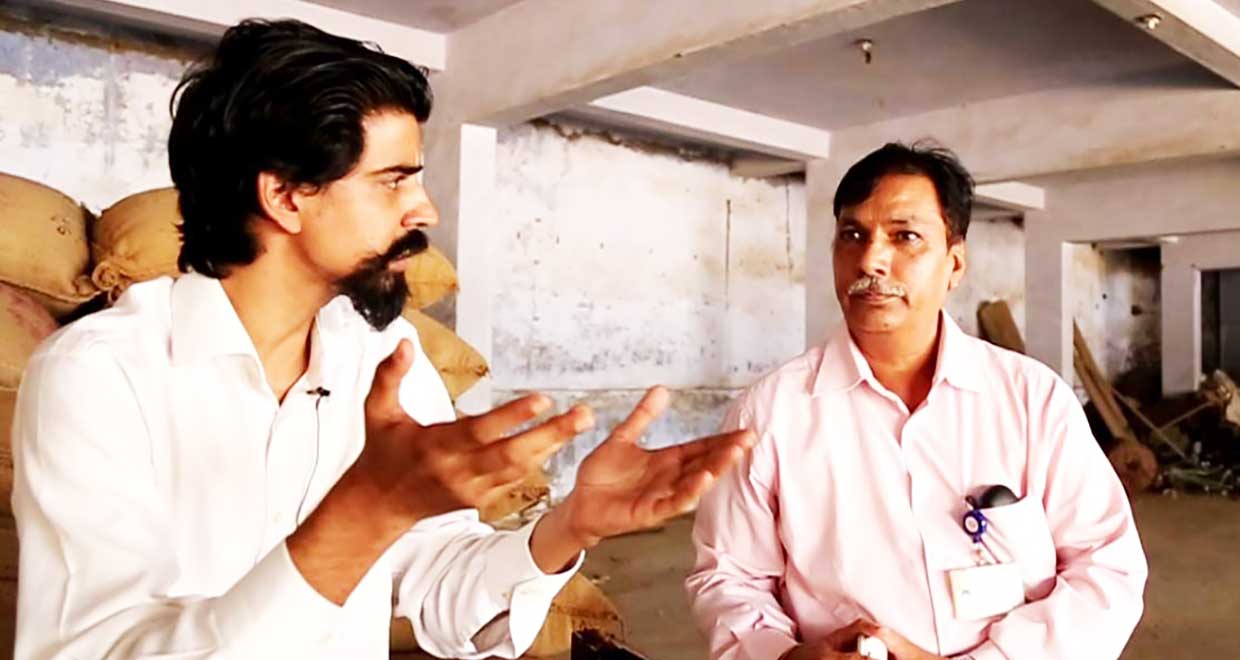
     

     How was the experience at Christ University?

    My experience at Christ University was certainly memorable! More importantly, I believe that the decision to go to Bangalore, when I had a couple of options for National Law Schools, was the best decision I have made till now. Moving from Delhi to Bangalore, living on your own, learning new perspectives and throwing yourself at the deep end of intellectual debates shaped my personality and thought process. We had a great set of batch mates who all had a high-level stamina to think through ideas. In my network of friends, we had a great atmosphere of debates, discussions and we were all quite charged up about our opinions. The long drawn political debates at our hostel, outside college, discussions on history, philosophy etc. led to an argumentative and opinionated mind.


    How can a Law student shape up his profile while still in Law school?

    I think learning outside the classroom is as important as the structured learning we go through inside the classroom. Moots and academic writing helped me tremendously, as that laid the basis of conducting proper research. One needs to strike a balance of studies and extra-curricular activities. For someone who has little faith in the rote learning system, extra-curricular activities helped me develop my skills for the real world. And to this day I am reaping the benefits of effective research, asking the right questions, framing the right arguments, analytical skills etc.


    Would you say that Law school prepared you for the real world practice of Law?

    (Soon after graduation Kazim started working at the Law office of Anuj Puri.)

    In my last semester, I gravitated towards litigation as a career option. I am grateful to Mr. Anuj Puri for offering me to work in his office and the few months I spent there gave me a good exposure into the world of litigation. Law school did prepare me for the real world, but only after a few months I realised that whatever I learned in Law school did not matter much as litigation was a different teacher altogether. Once you’re in it, you’re on a very steep learning curve, and after a while, how well you did in Law school matters little.


    How were you associated with the Swaniti Initiative?

    (Swaniti Initiative delivers development solutions to over 90 Parliamentarians across states and party lines on issues of health, education, gender and livelihood.)

    Swaniti was my big break to the world of development and policy. Swaniti started with a development fellowship where they selected fellows to work with an MP to support his/her programmes in the constituency. This was quite innovative back in 2013 and I was fortunate to having being selected and work with Mr. Jay Panda, one of the most dynamic, well-spoken and qualified MPs of our times. The fellowship was challenging as we were tasked with improving the medical infrastructure of his constituency, Kendrapara, off the coast of Odisha. Since there was only one Primary Health Centre at that time, medical access was a major challenge faced by the people of Kendrapada. People had to travel long distances and wait to get health check-ups done and that affected their well-being. To meet this challenge, we devised the idea of “Mobile Health Van”, which would travel across Kendrapada and provide free medical check-ups as well as diagnosis, medicines and basic medical procedures to the people. By the time I left, we had delivered two MHVs that would go from village to village, catering to two hundred people every week. We got the entire programme sponsored externally.
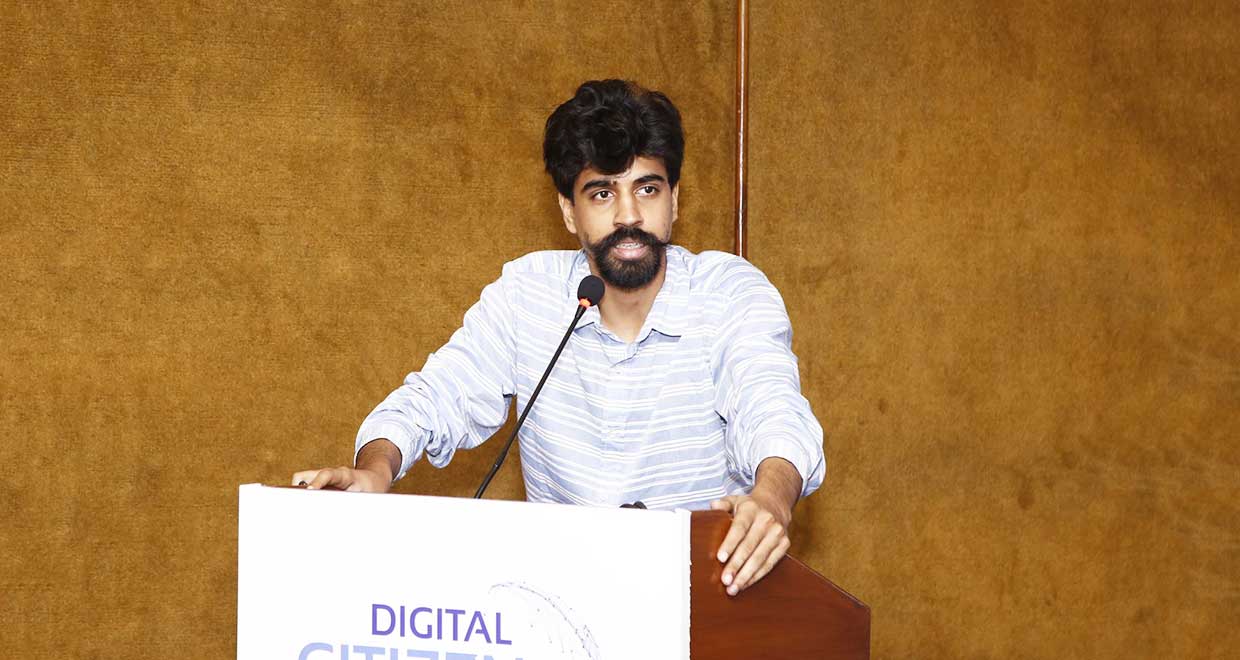
     

     What are your roles and responsibilities as Co-Chair of the public policy division at the Indian National Bar Association?

    With the Indian National Bar Association, I am involved in planning and executing programmes and public discourses on key policy issues. Right now we are working on data governance and developing programmes to facilitate policy discourse.


    Public policy is your niche; how did you develop an affinity for it?

    As a student of public-policy, I believe that it is too broad a subject to be considered as a niche. However, I do believe those five years after college, I am more of a policy professional than a lawyer, so in that case yes; it is going to be my area of discipline for the rest of my career.

    As I was always interested in politics and development, closer to the end of Law school, I came across the discipline of public-policy, which catered to people who wanted a career in public service and governance issues. I think if you are serious about wanting to make an impact, then the policy route is quite effective, as that provides you with a platform to develop ideas that could solve governance challenges. Even for those who want a political career later in their lives, the policy route is ideal as you understand the gaps in the governance structure and would be an effective leader to bring change. For me, nothing is more important than national service. The opportunity to bring change and development is not just a matter of words, but a reality you see when you work in the policy domain. This gives you the motivation to carry on, and to me, serving the people of India is a matter of great honour.

    One should ideally have a tinge of idealism along with pragmatism to fulfil her/his role as a policy professional. Since I missed out on Civil Services as I never had an inclination to write the exams, working as civil- society to impact policy is what I could do.


    Tell us about your brainchild- The Dialogue.
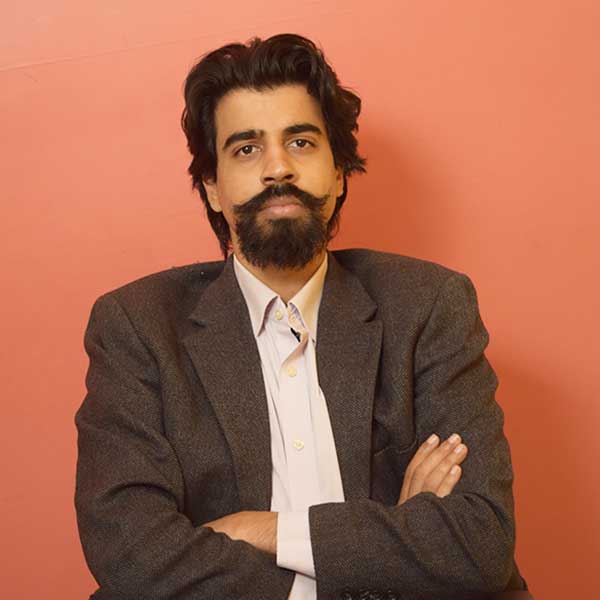
    The Dialogue is a policy institution to drive a dedicated narrative on policy and development in India. It reports on and analyses development of multiple sectors such as data, education, food security, healthcare, foreign policy, legislations, law reforms, energy and climate change, environment and other relevant development issues. It drives a continuous feed on these issues and simplifies complex policy developments for the reader. We undertake research, monitoring and evaluation, impact assessment, case studies, deliver conferences and communications to drive policy discourse by working closely with our stakeholders and partners.

    We engage with policy and development professionals to publish original and curated content with us. At the same time, we have a team of advisors who are experts in the field of their domain guide the narrative of the website to ensure we publish insightful content. We also have more than twenty knowledge partners in the form of think-tanks and research institutions to drive content and mainstream research briefs and development news by converting them into simple articles.

    Having completed ground level impact studies, research partnerships, and policy campaigns with leading government and non-government stakeholders, The Dialogue consists of a wide array of services aimed at filling the void in the public policy landscape.

    Apart from having a young team of well-qualified and driven public policy professionals, The Dialogue’s work is strongly rooted on the experience of our network consisting of former diplomats, senior military generals, academics, economists, and beyond. This combination is further cemented by a wide array of contributors, each of who are experts in the various sectors that The Dialogue works on.


    You did not opt for the traditional practice in Law. Why?

    I started working in litigation right after college, but by then I was convinced that policy is what I was going to do for the rest of my life. In fact, in my last semester I started looking it up as a serious career option. Back then it was not that popular a stream as it is now, so you did not have much precedence to look up to. I did not know of any seniors or even my contemporaries who were serious about diving into this field. A couple of my friends did touch upon this but it took us a year or two to understand the career path, as it is not as defined as Law. In that case, getting into policy was not straightforward.

    What made me take the road less taken is my passion for serving the country through high-impact ideas. The decision was easy but the path was challenging, as the job market was (and is still not) well defined. So you had to pick and choose carefully, take what comes towards you and build a network of experts. Thankfully, I seem to be going somewhere with The Dialogue, so that is a positive and of course very exciting to look forward.


    How can an interested person contribute to The Dialogue?

    We work with policy professionals, freelancers and researchers for our projects and programmes. Our working model is flexible and gives our people the freedom to work on projects of their liking as and when they want to. We have a core team that looks after the website, research, business development etc. and we bring on board people as and when we feel the need for their expertise for our projects. Anyone who has basic skillset and passion for policy and contribute to The Dialogue in the form of articles and research. We are always open to new research ideas so we welcome those who want to work and deliver projects with us. Those who are interested to conceptualise or work on our existing programmes, please feel free to write to me.


    What would be your parting message to young graduates looking to create an identity in the legal fraternity?

    I believe that we should not rush into any career option after college, rather, take your time to know yourself better and understand where you can make maximum impact professionally. Don’t be afraid to take risks and embrace failures as that will teach you more than success. Things will open up to you gradually and with patience we all get on the right track.


  • Saptarshi Banerjee, counsel at Calcutta High Court on litigation after graduation

    Saptarshi Banerjee, counsel at Calcutta High Court on litigation after graduation

    saptarshi_pic-1


    Saptarshi Banerjee is an alumnus of School of Law, Christ University, Bengaluru who graduated in the year 2013. During his college days he was interested in many things, few of them being Chess, Politics of India. Like a Bengali,he is quite fond of the trademark and Quintessential Bengali “Adda” and is a connoisseur of food, especially anything that is deep fried. Unlike many others, he was part of various cells and committees of his college in order to satisfy his interest in multiple law subjects. From an early stage of his career he has had an intention of joining litigation. Starting under the tutelage and watchful eyes of Advocate Ratnanko Banerjee, currently he can be described as a practicing counsel based out of Kolkata.

    In this interview he talks about –

    • His career in litigation
    • His work experience
    • His take on litigation and life
    • His future career plan

    HELLO SAPTARSHI, BEING A LAWYER, I GUESS YOU ARE NOT ALIEN TO THE CONCEPT OF THE SUPERLAWYER AND ITS READERS. HOW WOULD YOU LIKE TO INTRODUCE YOURSELF?

    For the purposes of this interview, let me introduce myself as an extremely surprised (pleasantly though) person as well as extremely humbled on being asked for this interview.


    TELL US SOMETHING ABOUT YOUR CHILDHOOD, SCHOOL AND COLLEGE DAYS.

    Oh! As a child I was someone whose guardians have been called innumerable number of times. The kind of child whose pranks and mischief are renowned subjects in the neighbourhood. Often, I was regarded as a rebel for my affinity with logic.


    DID YOU TAKE PART IN THE MOOT COURT ACTIVITIES?

    Yes I did. My first year was horrible and from second to my fifth year I have always been within the top five teams in our internals but believe it or not I could not go to any of the moots. I did get the runners up trophy in the Rizvi college moot in my second year but I had not been able to go for that either. It was my team that went and I researched. It’s most unfortunate and possibly one of the rare things in my life I would change, if I could live it again.


    13950848_10153911596963831_1640181886_o

    TODAY EVERYONE WANTS TO SEE THEMSELVES IN THE OFFICE OF RENOWNED LAW OFFICES AND MNC’S, WHAT MADE YOU CHOOSE LITIGATION? DID YOU GET ANY MOTIVATION FROM SOMEONE TO JOIN THE LITIGATION?

    Too many questions there! Yes I did have motivation. My maternal side of the family always wanted me to take up the mantle from my grandfather. They had tried it with my uncle, my mother, my elder brother and the result was never quite to their liking. I was their fourth attempt and I too had passed on the idea quite early. I like the profession but hated the big fat books from an early age. It was rather in the final year of school when my school counselor impressed with my analysis and my keenness at debating prompted the idea. And it was at this time that the idea stuck around with me. I too had my moments of wanting to repeat a Sachin Tendulkar or take up flying kind of ambitions but then law happened and I am very happy about it. In fact another major factor that drove me towards a career in litigation is my intent to join politics at a latter part of my life. I believe a successful career in law is an ideal stepping stone to a second innings in politics. Well the job thing was never really a factor; I did not even take my placements seriously. The one interview I sat for, I had clarified to them that I was not interested to continue unless they were involving me in real time litigation. In fact ever since the first day at law school, or rather from the first moment I decided to settle for law school, I knew I wanted to see myself arguing in that black robe before a judge. And also knowing full well that every word I speak can either make or break someone’s life, someone’s fortune.


    IF COMING TO LITIGATION WAS A PRE-DECIDED CAREER OPTION, HOW DID YOU PREPARE YOURSELF FOR THE SAME? WHAT ARE THE SKILLS THAT YOU LEARN BEFORE JOINING LITIGATION? WHAT ACCORDING TO YOU ARE THE ESSENTIAL SKILLS THAT ARE REQUIRED TO BECOME A LITIGATOR?

    There is no standard rule for litigation. No thumb rule at all. To me it’s a lifestyle and you better figure out your own set of lock and keys to that lifestyle. Fali Nariman in Before Memory Fades, gives a sound piece of advice for juniors at the bar. He advises one to think more on a matter than he reads up on it. Litigation is actually dealing with people and words. And every matter, every argument is slightly different from the others. It’s really who thinks of it differently and with more clarity. One cannot have a set rule for that.

    KINDLY TELL US ABOUT YOUR ENCOUNTER WITH THE BAR EXAM.

    That’s one exam I wouldn’t mind appearing for another time as long as time is not a consideration. It can be described as absolute circus, pure entertainment, invigilators quite insecure in front of the invigilated. It’s a classic example of how to waste time and public money because the people at the helm have to once in a while create the illusion of them being at work. Whether such work achieves the purpose or not is the least of their consideration.


    HOW IS YOUR WORK EXPERIENCE SO FAR IN LITIGATION? HOW ARE THE SCOPES OF LITIGATION AT THE PRESENT SITUATION?

    It is humbling, satisfying, intellectually stimulating but at the same time very grueling and at times ruthlessly heartbreaking. The scopes are as broad as they can get in a recession free industry, but one has to have the gut for it or should have parents to be able to pay for all the hardships. Whether you are successful here or not does not depend on the industry. It depends on how industrious one is and broadly speaking three other things.

    1) The senior you chose and if he/she believes that you are one of his/her responsibility

    2) The family you come from. Not because without one you are destined to fail but exactly because of the opposite. With one you are destined to be safe and sound for the rest of your life.

    3) Your own ability to fall back and get up on your feet. I don’t mean it in the romantic way that it sounds but more in the brute way that it is.

     14012582_10153911596898831_1492130915_o

    HOW WILL YOU DESCRIBE YOUR ASSOCIATION WITH THE CHAMBER OF ADVOCATE RATNANKO BANERJEE?

    I am very proud of my association with his chambers. He has been extremely kind to me and I find myself privileged to work under him. I have no hesitation in accepting how much I owe to him. Very honestly, he is a strict mentor, sometimes extremely scary. But during the few lighter moments that we share as a chamber I see that he does it mostly with a feeling of affection. He will make me feel like terrible news and sometimes I will actually in the heart of my hearts hate him for that. But I know that tomorrow if I do well and if I have it in me to do well at the bar, he will be proud.

    CONSIDERING THE HUGE PENDENCY OF CASES IN COURTS, HOW DO YOU THINK THE PROBLEM CAN BE MITIGATED, IF NOT SOLVED?

    I think it’s a downward slope, especially under the current political disposition. After the emergency this is the first time we hear so much clamor in the judiciary as well as in the media. It’s high time to speed up appointments throughout the judicial structure and encourage the use of technology in all departments. If this does not happen soon we will be at a point of no return. I am a firm believer of the fact that this country has gone through many upheavals and one of the few institutions that have held it up from breaking away is the Judiciary. No point in blaming certain individual judges. They come from within the collective that we are, and they are as good or as bad as we get. Sometimes slow, sometimes arrogant, sometimes even ignorant. But there has always been the will and the bar too has played a responsible part so to speak. But nowadays no one is paying attention to the need of speedy appointments. I say the bar associations have a responsibility and must bring the government down to its knee unless all courts have 95% of vacancies filled. Off course I am not advising that bar should influence appointments but the bar should indeed act as a pressure group to ensure that the courts are optimally functional. It’s not the battle of the judiciary alone.


    WHAT ARE THE CHALLENGES YOU FEEL IN WORKING AS A JUNIOR LAWYER IN KOLKATA HIGH COURT?

    Honestly money. And I think there is a strong contingent of old school believers who don’t expect a junior to do well unless he is five to seven years into the bar. So the first five years are a struggle.

    WHAT IS YOUR AVERAGE DAILY WORK-TIME LIKE?

    I am not as diligent as many. I survive. But when I am in full swing I am easily working fourteen to sixteen hours in a day. First, court then the chambers and finally your own research or your own drafting. You cannot neglect your independent work. In fact you hope that the independent work increases because that is what you are ultimately going to ride on.

    CAN YOU PLEASE SHARE WITH OUR READERS THE INTERNSHIPS YOU HAVE UNDERTAKEN DURING YOUR COLLEGE LIFE? HOW BENEFICIAL DO YOU FIND INTERNSHIPS UNDERTAKEN IN YOUR COLLEGE LIFE IN YOUR LITIGATION CAREER?

    I knew I would be in litigation and I knew I would start from Kolkata. Most people do not know of it so early and it makes sense for them to go out and try variety. But with my conviction in the things I wanted to do, I interned in Kolkata all through and all of them litigation based. I never sent out a single CV to any law firm. Much later in my life I have kind of toyed with the idea of trying something different but I could not give up on litigation. Let’s see what follows next. Because now I am also kind of open to the idea of trying at Delhi but I guess I will focus on building something in Kolkata first. But that too has to be a good lit based offer that can make me leave Kolkata.

    DO YOU HAVE ANY SPECIALITY IN YOUR PRACTICE? OR IS IT GENERAL PRACTICE?

    As a junior counsel you don’t have any expertise and you should not have a speciality. You must do everything. I certainly do. But yes more often you will find yourself more exposed to the branch your senior is an expert of and hence I do end up doing more commercial litigation than any other.


    FROM A LAW STUDENT TO LAWYER, HOW WILL YOU DESCRIBE THE TRANSITION?

    A lawyer is as much a law student just that he starts to learn the art of teaching himself.

    14010084_10153911596893831_923435706_n

    RAPID FIRE QUESTIONS –


    ANY RED-LETTER DAY IN YOUR CAREER SO FAR –

    Yes when I took up this matter pro bono for a govt employee who had superannuated under suspension and had a stiff situation at home. He himself was a heart patient and had a specially abled son and his medical expenses to take care off. The family of four was living out of an income of eight thousand rupees a month along with all the hostilities life had to offer them. His daughter had approached me through Facebook. With the help of a senior I did get him all his arrears which amounted to something around Rupees fifteen lakhs and that was huge for him. A month later he visits me with five thousand rupees and a box of sweets. Initially I declined the payment but later realised that it means a lot for him to be able to pay me that money and so I humbly accepted. Till now one of the best moments of my life.


    IS THERE ANY CASE THAT MADE YOU CHANGE YOUR PERCEPTION ABOUT LITIGATION AND ALSO ABOUT JUDICIARY?

    Yes the Hok Kolorob case. Having organised the students and having shared in their expectations it was most unfortunate to see and be a part of it the way the entire thing transpired. However I shall not say anymore on this because it involves a lot many other issues too.

    MOST CHALLENGING SITUATION OR CASE FACED –

    A case is not challenging as such based on the merits. At least for me as a lawyer, I believe that my case is my case and my client is my client. I have to do the best I can do with that. But the challenge is often in situations inside the courtroom and your ability to muster enough presence of mind to see the situation through. For example when you are supposed to be led by a senior and he gets caught up in another court. I have faced that challenge a couple of times and have fared decently. In fact on both occasions I got the orders my client was looking for.
    But yes the Hok Kolorob case and the ongoing Writ Petition of Calcutta Stock Exchange against SEBI are two matters that have given me insights I will treasure.


    ANY UNPLEASANT SITUATION –

    Many but not fair to float them in public space. Either I will have to blame an individual or I will have to end up explaining my own actions. Neither of which I enjoy. So I shall pass.


    DO YOU HAVE ANY PLAN OF PURSUING HIGHER STUDIES IN NEAR FUTURE?

    I always wanted to study in JNU may be get a masters in Political Science. But that’s more for the experience. I think student life in Delhi is worth the years that it takes.


    WHERE DO YOU WANT TO SEE YOURSELF 5 – 10 YEARS FROM TODAY?

    I don’t know. Honestly don’t want to think about it. I just want financial stability, a few opportunities to be able to contribute to the society and do cases that leave one with a sense of satisfaction and feeling of content. If I can do the above I am sure riches, glamour and luxury will follow in due course.

    ANY ADVICE YOU WOULD LIKE TO SHARE WITH THE READERS?

    If by readers you mean law students then I would really not want you to read this expecting to gain unforeseen insights. May be the trick is to understand that life as a lawyer is full of reality and chances. It’s not as funny as Vinny’s cousin but it surely is a lot of fun. It will disappoint you immensely if you take up this life expecting to consistently close like Alan Shore or Harvey Spectre. But if you let this life dawn upon you with a feeling that you do know a bit and there is still much more to know, you will enjoy the ride.


  • Manas Agarwal, Scale-1 Officer, Karnataka Bank on cracking the Institute of Banking Personnel Selection (IBPS) and the interview rounds

    Manas Agarwal, Scale-1 Officer, Karnataka Bank on cracking the Institute of Banking Personnel Selection (IBPS) and the interview rounds

    Manas Agarwal graduated in the year 2014 from School of Law, Christ University, Bangalore. Immediately upon graduation, he joined Accenture Pvt. Ltd. as a Contract Associate, before appearing for the Institute of Banking Personnel Selection (IBPS) and being selected as a Scale-1 Officer (Law) for Karnataka Bank.

    He holds a Diploma in Business and Legal Studies, apart from having completed a general course on IPR laws conducted by WIPO. He has to his credit many awards ranging from debating to moot courts. In this interview he discusses:

    • The benefit he accrued from studying in a private university with many departments.
    • The IBPS examination and how he cleared it
    • His tips to ace the interview rounds after a selection process
    • The importance of a helpful mentor in a lawyer’s formative years.


    How would you like to introduce yourself to our readers?

    Hey! This is Manas Agarwal. I prefer to introduce myself as a lawyer falling under the ‘Non-Nerd’ category. I graduated from School of Law, Christ University, Bangalore. I am currently working as Scale-1 Officer (Law) for Karnataka Bank.

    Was studying law your dream career? What motivated you to take up this field?

    In all honesty, it was a dream career which I started dreaming of after class 10th. I remember that day when I was sitting on the stairs of my boarding school (Wynberg-Allen School, Mussoorie), staring at the lush green hills under the monsoon clouds and thinking aboutwhat to do with my life. That is when I asked Mr. Tindale (the Principal) who was standing next to me– “Is it a cool thing to be a lawyer?” His ‘Whoa! Attaboy’ expressions followed by a detailed explanation motivated me to take up this field with the never ending support of my parents.


    Tell us a little about your time at School of Law, Christ University, Bangalore. What extra-curricular activities did you participate in and how did it enrich your law school experience?

    Christ University was a good platform for me not only to grow as a budding lawyer but also to grow as an individual as I was being exposed to different multicultural and departmental benefits which a deemed private university could offer. I was an average student academically. I was that guy who enters the class with a basketball in his hand in the morning. Every class has that one guy. I was mostly active outside the classroom being immensely involved in the extra-curricular and co-curricular activities such Client Consultation Competitions, Negotiation Competitions, Moot Court Competitions etc. I was a part of the college’s basketball team and a ‘C’ cert. NCC cadet. I used to have basketball team practice before the class hours and NCC drills on Saturdays post classes. I made a lot of good friends who are not just restricted to the legal industry but belong to different departments such as management, computers, engineering, commerce, arts etc. which again is one of the perks of a private university having different departments under one roof.


    You have won many moots, debates, client counselling and negotiation events during your years at law school. What do you have to say about excelling at such events?

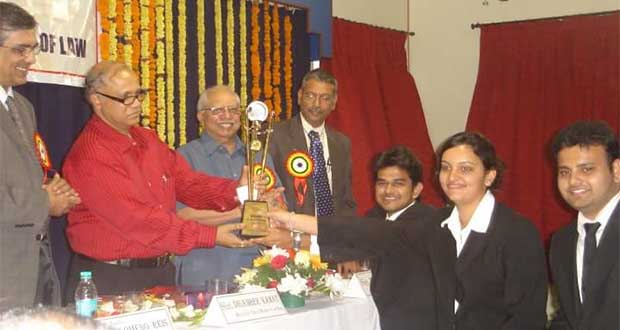
    manas-agarwal-2As we prepare for a competition, we spend hours researching about the problem/topic in the process of preparing the contentions/agenda. In this process of intensive research, many a times, students get deeply engrossed in the problem and reach the advanced level of the research but forget to prepare on the basic or elementary knowledge of the problem in hand which is mostly questioned by the judges in any competition. My advice to students who wish to excel at such competitions would be to start from scratch. Try to understand the problem first and then ask yourself- Did you understand the subject matter? Can you narrate the problem to your friend without looking at it? If not read again. Before turning into an insomniac and shifting to the advanced research levels reached through spending late nights at the library, a student should work on the root questions. If a student is thorough with the basics, half the battle is won.

     

    You hold a diploma in business laws and have also completed a certificate course on IPR laws offered by WIPO. What is the value addition of such external courses?

    As a student of law, when I took up these courses the thought which hit me first, as it mostly does for the students of that age, was it’ll reflect good on my CV. What I have realised after completing these courses was that more than the CV, the knowledge delivered by these courses which helps in the long run. A decorated CV can only get you an interview call but the knowledge you gained will help you jump rest of the hurdles, both before and after joining.


    You have been selected as Scale-1 Officer (law officer) at Karnataka Bank conducted by IBPS. Would you like to tell our readers a bit about the examination and the process of preparing for it?

    Sure! So IBPS conducted this exam for Karnataka Bank. Firstly, the candidates were shortlisted based on the exam, which was conducted online similar to other bank PO exams. The exam was a 200 mark multiple choice question paper with 5 options. The paper was divided into 5 sections including Quant Aptitude Test (Mathematics, which was the biggest challenge for me being away from the subject for quite a time). There was 1/4th negative marking allotted for each wrong answer. Result of the test was communicated after a few days on the official website of the bank. The selected candidates were given the interview call letters and were accordingly called for the interview at the bank’s head office located in Mangaluru. This year they have selected 73 candidates in total including all categories – General Probationary Officer (PO), Agriculture Science and Law.


    What advice would you give to the candidates short listed for the interview?

    My advice to the aspirants is just to be real. Do not try to fake it or make up stuff. Respect the expertise which the panel possesses. They will easily catch you if you happen to make up stuff. Prepare well and if you do not know a thing then tell them clearly. Remember they want a genuine and honest employee.


    What are the responsibilities of a Law Officer in a bank?

    A Law Officer in a bank deals with the cases related to the bank and acts as an advisor to the bank whenever a question of law is involved. The statutes which a law officer deals with are Acts such as the SARFAESI Act, Indian Contract Act, Banking Regulation Act and various other statues related to the banking industry.


    You worked at Accenture Pvt. Ltd.  prior to this. How was your experience as a contract Associate?

    Accenture was a great place to work. I really enjoyed working there. Starting your career with an MNC such as Accenture teaches you a lot of things, professionalism being top on of that list. It helped me grow as a team player under the guidance of highly qualified managers who were always ready to connect and help me during and post work hours.


    You have interned at different places having different lines of business including Holla and Holla, Bangalore and ICIC Lombard, Bangalore. What were the greatest takeaways from these?

    As a law student, I had planned to design my CV in the most diversified way possible. Where Holla and Holla taught me the research work on property laws, ICICI Lombard extended my knowledge on the applicability of the motor vehicle insurance laws. When a law student enters a law firm or a legal department of a company in his initial years, he expects it to be like the TV series Suits. However,  right after the initial week, he gets his reality check. That’s when he is ready to adopt the new culture of the firm/company and tries to learn their way. This is the time when he actually needs some additional support from the lawyer he is working under or the supervisor. I was fortunate enough to have wonderful leaderships in both of these places which helped me learn the importance of management.


    What would be your message to law students and your fellow colleagues?

    Law school is a wonderful phase of your life. Make the most of it in all possible way. Once you are out of the law school you’ll find yourself in a swimwear on a beach. You’ll be desperate to enter the sea in order to beat the heat but you’ll be wondering from where to enter.  I have gone a bit philosophical on this one but I am sure you’ll relate to it one day. Stop worrying about the packages and CTCs. That should be your last concern (trust me!). It’s the knowledge and experience which matters the most in long run. Don’t forget you are a lawyer now. Do what interests you the most. Always remember what my elder brother (Manav) always told me- ‘First job picks you whereas you pick the second one.’ Don’t panic, you have time. Just focus on the direction you are in and not how much you are earning at the moment. ‘You don’t get a second chance and all’ is utter nonsense. Life never stops giving you chances provided you work and ask for them. Most importantly never ever stop enjoying (chilling- as we like to call it) no matter what you do or how busy you are. We are born to live and not just to work. Good Luck!


  • Vishy Vincent, Associate, D.H. Law Associates, on induction and work at a law firm

    Vishy Vincent, Associate, D.H. Law Associates, on induction and work at a law firm

    Vishy Vincent graduated from School of Law, Christ University, Bangalore in 2014. During college, he was always focused on academics and co-curricular activities including moot court and debate competitions. He has also penned down a number of article during college. He was also the winner of 2nd Gurcharan Singh Tulsi Memorial Legal Essay Writing Competition 2012 organised by HNLU, Raipur. Soon after graduation, he joined DH Law Associates and is currently working as an Associate there.

    In this interview he talks about:

    • Law school experience at Christ University
    • Importance of academics, co-curricular activities and internships
    • Induction and work at DH Law Associates


    What motivated you to choose law as a career? How did you get through to School of law, Christ University, Bangalore?

    I wouldn’t say I always wanted to be a lawyer. I was born and brought up in Patna, and as is the case with most people raised in small towns, being an Engineer or a Doctor or an Officer from the Civil Services are the only career alternatives that you are made to see, anything else is a strict “NO-NO”. I too pursued Science till class 12th under the influence of my neighbours. I had always been a good student and I wasn’t too bad at Science either but I didn’t enjoy it. Three to four months before the Board Exams, I made up my mind that I wasn’t going to sacrifice my life just to hear a “Waah Beta” from my neighbours. I had always had an extra liking for the social and political science subjects throughout my school days, I had good command over language, I was into debating, and yet I had no clue where these things would count, which is when I met Mrs. Ragini Singh from Law School Tutorials (LST)-Patna. My understanding of law was totally different back then, I would never have done law if I hadn’t met her. She opened my eyes into the realm and extent of an unbelievably exciting and enthusing challenge called Law. The funny part is, this wasn’t a planned meeting, this one evening I just happened to accompany a friend of mine to LST, which is where I came across Mrs. Singh. Legal studies for me, wasn’t a back-up option but like I said it wasn’t something that I wanted to do right from my early days in school either. I was fortunate enough to meet the right people at the right time but sadly the kind of information/career advice that is required at that age isn’t available to most youngsters in our country, which is why a lot of people end up doing things they utterly despise.

    As for School of Law, Christ University (SLCU) (Bangalore), it was a big chance I had taken back then. The institution was only three years old. I hadn’t performed well in CLAT and I knew it would be foolish to expect admission in the top NLUs. I had cleared the entrance tests of a few Universities that had their own entrance procedures but of the lot that I had in hand, I was most convinced about SLCU, Bangalore. SLCU certainly wasn’t my first preference, but in hindsight, it turned out to be one of the best things that happened to me. I am really proud of, and grateful to my alma mater.


    How did you fare in your academics at Christ University? Would you say a great CGPA is a necessity to kickstart a good career in the legal profession?

    I had always been a good student and it continued to be the same for me in college. I know a lot of people downplay the importance of academics, but I have a completely different take on the subject. I personally think it’s very important. When I say academics is important, I am not necessarily referring to a great CGPA, it is the approach to academics that matters. The effort one puts into read and learn as much as possible during the student years is what counts. A good CGPA may or may not land you with a great job, but if you have worked hard to increase your knowledge base in your student years, you are bound to do well at the start of your career.


    Your internships at law school have all been with top tier firms. Our readers would be quite curious to know how you went about securing these internships.

    Credit for most of my internships goes to the Internships and Placements Committee at School of Law, Christ University, particularly to Ms. Sarah Thomas, the then faculty co-ordinator of the Committee. She would take personal interest in each of our applications. In fact, she never limited her role to overseeing the application process, she would sit with us and discuss how and where our careers were headed, the DOs, the DON’Ts, everything.

    My internships in the first two years were self-arranged. I had prepared a list of contacts and I’d pester those in that list to give me an internship. However, please note that I never spammed anyone on that list. I used to dedicate a week at the beginning of a semester and a week in the last part of the semester to mail/call the concerned persons. It is also important to develop a pool of people who can give you a good reference when required. The people you work with during an internship, your professors, seniors from college, friends/relatives working at senior positions at important organisations etc. can all help you. If you have such people around you already, make use of them. If not, start networking today. Also, I use LinkedIn like an addict, I think it is one of the most useful websites ever made. If you are not comfortable networking in the real world, make the most of LinkedIn.


    How relevant did you find your law school education with the kind of work you were required to do at law firms?

    A good law school primarily teaches you

    • what to look for where (research) and
    • what means what (interpretation).

    Statutes may come, statutes may go and specific law subjects based on such statutes may not mean much over a period of time, but the aforementioned skills of research and interpretation will always stand the test of time. When you start working, all that changes is the approach. Understanding the scheme of things and certain specific requirements becomes all the more important. It is easy to mould into the office environment and grasp the required approach if the aforementioned skill sets are honed in your law school days.


    Did you learn any skills while interning? What are these skills and how did you acquire them?

    Like I said, once you start working, there is a difference in approach. You probably find and read the same things as a law student, but what you take out from what you have read changes. It takes time to grasp that ability to perfection. In hindsight I feel every internship that I did was a step taken towards attaining such skill and capability, and the learning continues even today.


    You have published quite a few papers in various journals. Can you give us a few tips to ace the art of paper writing?

    Clarity of thought matters most. If you are not sure about what you are writing it is unlikely that anyone else would understand or even give your article a complete reading ever. Most people who read the legal articles/papers that we write, read it to find certain answers or to form a certain view on a given subject, irrespective of whether it is a student, academician, professional or whoever. Nobody ever reads an article to appreciate the complex English words or Latin phrases used in such articles. Using big words or inserting a million citations just for the heck of it does not help. The steps are simple, do some background reading, develop a view on the moot question of whatever you propose to write on and then start writing and continue with the research and consolidate your writing with the additional ideas you find or read about whilst writing. Once you start writing and you come across something that changes your view on the whole scheme of things, just ignore whatever you’ve written until then and start from scratch again. Also, I truly believe that the simpler and easier it is for the reader to comprehend your idea, language wise and in terms of how the article is structured, the better it is.


    Amongst other competitions, you were the winner of 2ndGurcharan Singh Tulsi Memorial Legal Essay Writing Competition, 2012 organised by HNLU, Raipur. What does it take to win an essay writing competition?

    Very honestly, I don’t know. It was the first and only legal essay competition I ever participated in. From what I remember, I tried to keep the essay as structured as possible. The flow of thoughts should be smooth I believe. Each paragraph should lead from one idea to another connected/related idea. Like I said before, for any writing clarity is key. Catch hold of people around you, ask them to read your article/essay and try to figure out whether they are able to grasp the key ideas from your writing and whether they are able to appreciate the connectivity in the many ideas that you present. If not, one must rework on the structure of the piece.


    How has your mooting experience been?

    I haven’t done a lot of moots. My first mooting experience was in the university’s own primer for the first year students. I would have barely spoken for 2-4 minutes and I was asked to stop and leave the court-room. It totally disheartened me and I didn’t moot until the third year. In the third year, my teams’ university rank was 18 out of 30 odd teams, which wasn’t great but it was a consolation for me in terms of the disaster I had in my first experience. Our team qualified for a moot organised by S.D.M. Law College, Mangalore and we fared pretty well in that competition. It was a morale booster for me personally. In our next university rounds, my team managed to secure rank 1. It was a big mental victory for me and it gave me an unbelievable sense of confidence. The top rank gave us the good fortune of representing the university at the Jessup National Rounds 2013.  Jessup was an unbelievably incredible experience. Though, we couldn’t make it to the Washington Rounds, the feeling and experience of being there and competing with the best was unreal.


    After graduation, you joined D.H.Law Associates. How did you go about bagging this job?

    I was an intern at D.H. Law Associates, Mumbai and so it wasn’t that difficult. They were familiar with me and my work. I on my part ensured that I was in constant touch with most of associates (senior or junior) and partners I had worked with. After my final year, I pushed in an application for recruitment and I’m sure the associates and concerned partners gave a positive feedback and responded in the affirmative when a call on me was to be taken.


    How tough were the first six months at your workplace?

    It wasn’t tough at all. D.H. Law has a very welcoming environment. We all bonded very soon, and it’s not just the associates I’m talking about, the Partners are equally friendly and encouraging.


    What are your day-to-day responsibilities? How is the experience so far?

    At D. H. Law, each associate is linked to two teams. I am primarily associated with the Banking and Finance Team but also report to the General Corporate and Commercial Team on certain matters. The experience has been very satisfying until now. An important aspect is that D.H. Law exposes you to the business realities of the profession as well. I am also actively involved in the Business Development Programme of the Banking and Finance Team, which in itself has been a big learning experience for me until now.


    How do you manage the workload and your personal life?

    I don’t know if I handle this aspect particularly well but I would say I never think about my work life and personal life simultaneously. When I am working, I am working and when I am with family or with friends, I am with them in body and in mind. I am never half here half there.


    How do you keep yourself abreast with latest industry news and trends?

    I handle the Resources section of the D.H. Law website, so that keeps me aware of what’s happening where. Also, I have subscribed to and read almost all the newsletters released by the major law firms and legal knowledge portals in the country.

    As for the Banking and Finance practice particularly, checking the RBI website once a day has become a habit.


    What are the primary professional ethics you follow while at work? What has been your strategy to deal with errors and mistakes?

    I haven’t really thought through the professional ethics that I will or do follow at work. I just do my work with honesty and love. As for mistakes and errors, the best strategy is to accept it. Some mistakes if revealed on time can help the organisation make amends. Individual cover-ups could turn out to be very expensive for the clients as well as for the firm.


    What do you feel makes an intern stand out and is very important for him to do to have a chance of getting a call back or even a PPO?

    As for what makes an intern stand out, good work is definitely the primary criteria, but good work alone will not help you land a job. Your interpersonal skills matter a lot. Since the time I have been here, there have been some interns who work well but do not communicate and get along with the team well enough, there have been some with whom we get along but the quality of their work is not up to the mark, there have been very few who do good work and give us the confidence that he or she could or should be a part of us.


    The question that whether one should specialise in a particular area of law or be more of a general lawyer often comes up before law students. What is your opinion on the same?

    It is a difficult question. I know people who have tried different things at the start of their career and have figured out where their interest lies and continue from there and have evolved successfully. Alternatively, there are some who’ve tried everything and now find themselves in a mess. Likewise, there are some who’ve stuck to a particular line of practice and have loved it so far and propose to continue with the same, whilst there are few who regret their decision and find it very difficult to move out of the line they picked a few years ago.

    It is too early in my career to pass a judgment on the same, but if I were to pick between the two, I believe one should specialise in a particular area of law, which is what I’m planning to do as well. The reason for me is simple, I love what I’m doing and I don’t see myself wanting to move to a different practice area.


    Lastly, what would be your parting message for our readers?

    ‘Take it easy’ is all I’d like to say. Everyone, everywhere has his/her own set of pressures and tensions, but live each day to its worth, don’t overthink. Definitely plan your career and set targets for yourself but do not lose yourself under the pressure of such targets. A lot of people may disagree, but I live in the present and stay happy. The past is past and nobody knows the future so live each day to its worth and stay happy.

  • Prerna Singh, Consultant, PwC, on shifting from Law Firm to Accounting Firm and law school experience

    Prerna Singh, Consultant, PwC, on shifting from Law Firm to Accounting Firm and law school experience

    Prerna Singh is a graduate from School of Law, Christ University (Batch of 2011). Her internship experiences were quite diverse. She has interned with various prestigious law firms including Trilegal, Dua Associates & LKS. While in law school, she participated in various co-curricular activities and has multiple publications to her name. She was a proactive mooter and has both participated and won a few moot court competitions in law school. Soon after graduation, she started working at SRGR Law Office and thereafter shifter to Archer and Angel, Advocates and Legal Consultants as an Associate. Currently, she works as a Consultant at PricewaterhouseCoopers in Risk Advisory.

    In this interview we talk about:

    • Her days at Christ College, Bangalore and at various internships
    • Her work experience at SRGR Law Offices.
    • Her professional shift to Archer and Angel, Advocates and Legal Consultants.
    • Working as a Legal Consultant at PricewaterhouseCooper, India.


    How would you introduce yourself to our readers? Tell us what motivated you to pursue law as a career.

    Well I was born in Bihar and brought up in Jaipur. I did my schooling at The Nest Children Secondary School and India International School in Jaipur, after which I moved to Bangalore to pursue law from Christ College. I am currently working with PricewaterhouseCoopers India at their Mumbai Office as a ‘Consultant’ in their Risk Advisory LoS, prior to which I was working with law firms in Delhi and Mumbai.

    That question is particularly of significance in my case because I am the first one and by far the only one to have pursued law as profession in my family. I am not sure if there is this one thing that I could point at as my reason for pursuing law but it wasn’t accidentally for sure. I had taken up science and maths as my core subjects after 10thgrade and was preparing to write engineering entrances and it was in the later part of my 12th grade that I got consciously inclined towards law.

    As philosophical as it may sound, I use the term ‘consciously’ because I believe that it must have been there subconsciously long before it came to realisation. I am an avid reader and back in those days used to be majorly hooked on to novels. I used to love reading John Grisham books. Also, it so happened that I would end up spotting a lot of articles in the newspapers every other day on law as a career option, its prospects, on law schools in India and so on. Around the same time, I also ended up meeting my father’s friend, who had interestingly studied multiple subjects including law and so my obvious question to him as someone who was considering law as a career option but was not absolutely certain about it was – “Having studied subjects from almost every stream, which is your favourite?” and his instant response to that was something to this effect “Law, hands down” and post that answer, I was sure that I wanted to give it a serious shot. Looking back, it feels like all these were ‘omen’ in Paulo Coelho’s terms guiding me towards pursuing law. Today, when I think of it, I cannot place myself in any other profession but law and I cannot thank my parents enough for supporting me in my delayed decision of pursuing law and understanding where I was coming from despite being a science maths student.


    Tell us a bit about your days at Christ College, Bangalore?

    The five years spent in Bangalore during law school days continue to be my favourite. These five years were crucial being the foundation years of my life and it could not have gotten better than Christ College and Bangalore. I owe hugely to my days in Bangalore for who I am today as a person and feel extremely privileged to have studied at Christ.

    Our curriculum in law school was quite hectic and packed back in 2006-2011. We had regular classes from 9 am to 4pm on most days with additional certificate courses and maintaining 85% attendance was mandatory, failing which disciplinary actions, including barring from writing exams were taken. Further, we had multiple assignment submission with stringent deadlines for every subject in each semester, which meant spending time in the library almost every other day post classes, researching and reading up on various subjects. Add to that the weekly presentations for certain subjects and readings for everyday class.

    After having this as your regular routine, if you are someone who is active in co-curricular and extracurricular activities such as mooting, debating, writing papers, sports and cultural activities in law school, which I was, one had to stretch even further. Having said that, most classes were made so interesting and interactive that there were days when you could find us in classrooms continuing the discussion with the batch mates and faculty members even post the classes. I for one had started loving that routine, for it was so enriching in more ways than one. Every day spent in law school was a learning that helped me grow both personally and professionally. I can easily and confidently say that my batch (Batch of 2011) was the most privileged one to have been taught by some of the best faculty members across law schools in India.


    How were you various internship experiences when in law school?

    My internship experiences were quite diverse and inspiring. I used to intern every semester, in fact most of us used to, as a certain number of internships were also mandatory in law school. We used to break after every semester for close to five to six weeks and I preferred utilising every such break by interning. By the end of 5 years, I had 13 internships in total starting from State Human Rights Commission, NGO, company to law firms like Trilegal, Lakshmi Kumaran &Shridharan, Dua Associates, Holla & Holla Advocates and so on.


    prerna-singh-3

    In your opinion, how important are extra-curricular activities are for a law student? Do you feel these are activities that should left to the discretion of students or be partaken mandatorily?

    I personally think co-curricular and extra-curricular activities are quite important and play a huge role in developing a person’s personality and outlook irrespective of whether the person is a law student or not. Having said that, from my personal experience, it is particularly beneficial for a law student to participate in co-curricular activities such as mooting, different styles of debating, writing and presenting papers at various forums for various reasons including improving and enhancing your research, drafting and oratory skills, which are quite important in a lawyer’s life, irrespective of whether you choose to be a corporate lawyer or litigating lawyer. Also, participating and doing well in these activities alongside academics gives you the much needed exposure, increases confidence, adds to your personality and reflects well in your resume. Some of these activities also prepare you for your professional life ahead to a certain extent.

    So far as your question on whether these activities should be taken up mandatorily is concerned, I think everyone is grown up enough in law school to know what is good for them and what is not and hence to each their own. However, I would personally recommend everyone to be active in law school and at least take up one such co-curricular/extra-curricular activity that you really like or have always wanted to take up…it could be anything-sports, music, debating, theatre, mooting, publishing papers. Not only for the reasons that I have cited above, but also because this is the ideal time to pursue anything that you are passionate about. Also, I believe one needs some sort of recreation constantly and pursuing extra-curricular/co-curricular activities does not only take care of that but also channelizes your energy in the right direction. For me that activity was mooting and I think I evolved with every moot that I participated in, both, personally and professionally. Also each time I represented my law school and won moot court competitions, it gave me an unmatchable high.


    Soon after graduation you joined SRGR Law Offices as an Associate. How did your appointment take place? How would you describe your experience?

    By the time I was in my fifth year of law school, I was certain that I wanted to start my career with a law firm- thanks to the multiple internships I had undertaken by then. So I applied to a few law firms in Delhi, SRGR Law Offices being one of them. Subsequently I was called for an interview and soon after that I got an offer to join them.

    My first job was at SRGR Law Offices and it was a wonderful experience working there. The partners of the firm are not just extremely knowledgeable but also grounded and approachable. I worked in their general corporate law team and did a lot of work relating to power and infrastructure laws, FDI, FEMA and so on. I also got to do a lot of drafting and reviewing of various commercial agreements. It was a great learning place for me as a fresher.


    Generally the first year after graduation is the most defining time of a fresh law graduate. What would you suggest a fresh law graduate should do to hold spirit and utilise the opportunities available?

    No matter how well and how many subjects you are taught in law school, your professional life as a lawyer is drastically different from that of law school. As a fresher, it takes time to sink that in. It is important to have an open and positive mind in your first job so as to make your learning optimum. Also, one needs to be patient and treat every job assigned no matter how big or small equally important and give it their best. Being a fresher, one should be particularly dedicated towards work so as to learn extensively and gain the trust of seniors to handle bigger transactions and responsibilities.


    Thereafter you left SRGR to join Archer & Angel, Advocates and Legal Consultants. What led to this shift in your professional portfolio?

    I was planning on doing my masters in law from the US in early 2012 but decided to defer it by a few years. In the interim, I got an interview call from Archer & Angel, Advocates and Legal Consultants for a position in their Mumbai Office. I was not actively looking to move out but decided to take the interview nevertheless and ended up liking the profile offered to me during my interview. Also, I always wanted to work in Mumbai (it being the financial capital of India and the hub for corporate lawyers) so I decided to take up the opportunity and it was absolutely worth it.


    You have published a lot of papers in various prestigious journals. How should one go about writing papers and getting the same published?

    The first step towards publishing papers is to identify the broad topics/subjects of your interest and then look for journals that publish papers on those particular subjects. Once you have identified a reputed journal that covers your area of interest, peruse the guidelines and the instructions including the format, style of citation, eligibility and structure well and ensure that you understand and abide by all of it while writing the paper.

    It is important to research extensively, narrow down your topic and get the structure and flow of the paper right in your mind so as to execute it. Further, ensure that the content including your view comes out clearly and does not contradict or confuse the reader. It goes without saying that the ideas will flow better and there may be several changes in your draft structure once you start penning down your thoughts and incorporating it in your paper/article. Nevertheless, it’s always good to have a basic draft structure in place before you start, no matter how many revisions it may have to go through eventually.

    So far as getting your work published is concerned, different journals/publications have different criteria for selection. Some journals may require you to submit an abstract of your paper first, review the same and then decide whether they would like you to work on the complete paper. The word limit of these abstracts could vary anywhere from 200 to 500 words for different journals. Then, there are journals, which would straight away want to review your paper on the topic and decide whether they would want to publish it or revert with their comments and suggest revising the paper or discard it outright.


    How did paper publishing and other co-curricular activities help you in acquiring skills that are important for a successful legal career?

    Mooting, publishing papers and presenting papers at various national and international conferences have helped me tremendously in my legal career. I would like to reiterate that research, drafting and oratory skills are extremely important in the legal profession and my active participation in these co-curricular activities have most definitely helped me in enhancing these skills and my knowledge base. Also, participating in these activities makes you a more confident person and lets confess it one certainly enjoys the laurels and recognition that comes along with it. Last but not the least, in hindsight I realise that having these credentials in your resume leave an impact on the recruiters as one can gauge a lot about you as a person, your skills, your strength, motivation, personality, interests, efforts and characteristics through the activities that interest you. Separately, for those who are planning on doing their LL.M from abroad, having these credentials in your application certainly makes a difference and gives you an edge over others.


    Currently you work as a Legal Consultant at PricewaterhouseCoopers, India. What made you choose this particular avenue? How did your appointment at PwC take place?

    Having worked for close to three years with law firms, I was keen on exploring the work culture and work profile offered to lawyers at consultancy firms. Last year, I decided to make a shift from law firm and sent my application to a few consultancy firms. I was fortunate enough to receive a call for interview from PwC, Mumbai where I had three rounds of interview within two weeks, out of which the last round was with the partner, post which I was made an offer to join PwC.


    prerna-singh-2

    We would love to hear about your work profile. What is a normal workday like?

    I am a part of the Risk Advisory team at PwC. My work profile includes setting up of compliance framework for clients from different sectors, drafting of governance level policies for different clients, reviewing agreements for clients across sectors, identification of risks (legal and commercial) and advising on risk mitigation and so on. My work profile constitutes a good mix of research and drafting. It also includes meeting and interacting with clients, understanding their business needs, models and operations in order to add value and deliver well.

    Every day at work is unpredictable which is what makes it both challenging and interesting. There is a lot of multitasking required on a daily basis as you may be working on multiple projects/assignments at a time. Therefore, time management is crucial as there are stringent deadlines to be met more often than not and you have to be on your feet constantly.


    Are you allowed to interact with clients?

    Yes, as stated earlier I am allowed to interact with clients. In fact meeting and interacting with clients, understanding their business needs, models and operations is a part of my work profile.


    Tell us about a pinnacle case which you were a part of. What steps do you take to prepare for a difficult case?

    I cannot discuss a specific case for more reasons than one, including confidentiality of course. However, there are multiple challenging instances that you are faced with on a regular basis and it feels good to look back and know that you handled it well and tactfully.

    I personally think that no matter how hard you try, you cannot really prepare in advance for a difficult case (except may be begin your research in advance) unless it is a repeat and if it is a repeat then it is no longer difficult! Different assignments may pose different challenges and not all challenges can be apprehended in advance, so more often than not you are required to think on your feet when faced with an assignment specific challenge.


    How do you keep yourself abreast with latest industry news and trends?

    I try and spend at least half an hour every day browsing through legal blogs and news websites etc. to keep myself abreast with latest industry news and updates. Also, being a part of the industry, you end up having a lot of friends, peers and batch mates working in different sectors, law firms etc. and end up knowing important updates from each other, which is quite helpful. Being a lawyer, the nature of your work also demands a lot of reading for different assignments and you inadvertently end up knowing things.


    What were the biggest hurdles and challenges in the first few months? How did you deal with them?

    Once you have worked for a couple of years, the challenge is not so much in understanding your work and deliverables but in understanding how the organisation that you work for, functions. Therefore, just like in any other organisation, a substantial amount of time was spent in understanding the protocols at PwC in the first few months. This exercise is also important as things at work become easy and smooth after that.


    What is the procedure to apply for recruitment at PwC?

    You could visit the career section on the website, look out for the relevant vacancy and apply online by creating an account and filling in your details. If shortlisted, the Human Capital team of PwC will revert to you after screening your application.


    Is there any other tip you would like to give to our budding professionals?

    Once you have chosen law as your career, be certain of the line of practice that you would want to pursue after graduating (be it litigation, academia, law firm, in-house counsel, LPO or anything else). Internships and frequent interactions with your seniors and professors will help you identify your area of interest. Therefore, it is important to take internships seriously in law school and try and explore as much during the tenure.

    Once you have identified your area of interest (which you may in all probability by the end of fourth year in law school), you should then try and work towards it by streamlining your remaining internships. Also, every fresher entering the profession should avoid having preconceived notions and give it some time to get acclimatised to the work life. It is important to have an open mind to enhance learning and treat every work equally important, no matter how big or small. Reading regularly and keeping yourself abreast with latest amendments and change in law is extremely crucial for a lawyer and so inculcating the habit of reading in early days of your career will be useful. As learning is a continuous journey, it is important to take your profession seriously and work continuously towards increasing your knowledge base.

  • Ankit Sinha, Associate, Juris Corp, on LL.M from QMUL, and work experience in Banking and Finance Laws

    Ankit Sinha, Associate, Juris Corp, on LL.M from QMUL, and work experience in Banking and Finance Laws

    Ankit Sinha is one of the most diligent and illustrious scholars of the 2012 batch of School of Law, Christ University. He has a noteworthy academic record as he ranked in the top 5% of his batch during his college years. He had always planned to pursue Masters since his days in law school and therefore soon after graduation, he went on to pursue Masters in Banking and Finance Law from Queen Mary, University of London. After coming back to India, he started working at Juris Corp and is currently working as an Associate there.

    In this interview, he talks about:

    • Law school experience at School of Law, Christ University
    • LL.M experience at Queen Mary
    • Induction and work at Juris Corp


    How will you introduce yourself to our readers?

    The first question and I find myself lost for words. As human beings, it’s always so much more difficult to talk about yourself. Nonetheless, I’ll try. I come from a family of lawyers, tracing back to my great grandfather. I have lawyers on both my paternal and maternal side. Safe to say it didn’t take me long to fit into the scheme of things and the offerings of this profession. Outside the field of law, I’m like any other mid twenty year old- I love playing sports. I am a diehard Manchester United fan. In my spare time I love listening to music and am also an amateur photographer. I also sing and play the bass guitar.


    How did you gravitate towards law? Why law and not engineering or medical studies?

    Law wasn’t my first choice. Surprisingly, neither was engineering or medical. I loved Economics as a subject whilst I was in school. Unfortunately, as much as I loved Economics, I had an aversion towards Mathematics. Post my 12th board examinations, and once my results were announced, given that my result in Mathematics wasn’t good enough to secure a place in any Delhi University College, I decided to pursue law for a year. My father wasn’t okay with me dropping a year. My sister was pursuing law at the time, and hence I decided to follow suit.

    I appeared for a few entrance examinations, and landed up at Christ College. Within the first few years at law school, I had, during various internships, worked briefly in the field of Banking and Finance. I saw glimpses of Economics in banking and that’s where I developed my love for the subject. So much so that I went on to do my Masters in it as well. Was quite a journey from not wanting to do law, to ending up with a Masters in it.


    Tell us about your law school experience. Share some highlights from your college days that shaped you as a lawyer.

    Five years is a long time. I made some of the best friends and have some of the best memories of my life attached to law school. Like most teenagers, going to law school away from home meant freedom for the first time. Living alone and fending for yourself. In this profession, somewhere down the long winding path, you’ll find yourself stranded and alone. My five year stint at Bangalore made me independent. It made think on my feet. It made me realise that knowing that a problem exists isn’t good enough. Finding solutions was the key. Even today, the fact that I spent those years away from home, away from my parents, made me stand up on my feet. It made me see the world from a different viewpoint. I honestly believe one cannot learn the law, one can only prove to be prudent enough to find it. I developed my research abilities throughout my five years at law school and during my internships.


    How did you fare in your academics at Christ University? Would you say a great CGPA is a necessity to kickstart a good career in the legal profession?

    I ranked in the top 5% of my batch during my years at Christ College and subsequently ended up with a merit during my Masters. So safe to say I was good at studies. If it matters to kick-start your legal career, well, it does to some extent. Most law firms prefer students who excel in studies as it depicts sincerity. It’s not the only criteria, but it may help you land at interview with a prominent law firm. Once there, if you’re good enough, consider the battle won.


    Which subjects did you enjoy during your qualifying degree? What about co-curricular activities?

    Economics and Banking law! I didn’t so much so as have an iota of doubt in my mind that I wanted to pursue a career in Banking. I wasn’t interested in mooting to be honest. I spent a lot of my time playing cricket and football for the College team. In my 4th year I was appointed the convenor of the sports committee and I’m proud to say that under my stewardship, Christ College won its first ever law school sports fest when we visited NUJS, Kolkata that year. I was also an avid counter-strike fan and had the opportunity of being a part of the gaming team at Christ College as well.


    What was your motivation behind pursuing LL.M. right after your under-grad? How did you finally decide that you need to do masters?

    In my 2nd year itself I had made up my mind that I wanted to pursue my Masters in Banking and Finance. I had done my homework on the best Universities in UK for an LL.M. in Banking and Finance and had already sent across my applications by mid 4th year. Throughout law school I worked towards the requirements that each of the 5 colleges I had narrowed down on, stipulated, for an entry into their Banking and Finance programme.


    How did you choose Queen Mary, University of London over others? How did you go about choosing a university?

    I applied to five Colleges. Four of them were Colleges affiliated to the University of London. Queen Mary seemed to have the most concrete Banking and Finance programme and it fit my needs perfectly, making the final decision relatively easy.

    As a heads up to those who wish to pursue higher studies, make sure you do your homework. Rankings are attractive, but there’s a lot more to a Master’s abroad than just that. Don’t blindly follow the herd. Some colleges have better programmes than others. It’s important to narrow down the best Colleges as per your specific needs, the programme you wish to pursue and the professors conducting the relevant modules you intend to take up.


    How did you go about writing your SOP? Are there any key factors which one should keep in mind before writing the SOP?

    A statement of purpose is the driving force behind why you wish to undertake a specific programme at a specific College. It’s not meant to be a glorified version of your curriculum vitae. Keep it short and simple. Avoid flowery language. No one is judging your creative ability. Most College websites abroad specify the length of an ideal statement of purpose. Stick to the word limit. Also, and most importantly, if you intend to apply to more than one College, avoid writing a common statement of purpose. Each statement has to be specific to the College it is intended to be addressed to, keeping in mind the programme they are offering.


    How about recommendation letters? Who all recommended you to pursue LL.M?

    Two professors that I always admired at law school were more than willing to write a letter recommending me. Needless to say, one of them had taught me Banking law. If you’re planning to do a Masters, make sure at least two of your professors admire you.


    Tell us something about your LLM year at Queen Mary, London? How did this influence your career?

    It’s a different ball game altogether. In India the education system mandates that one learns the law instead of learning how to find and apply it. At Queen Mary you’re not expected to know the law, you’re expected to find answers to queries and apply the law as per the given situation at hand. This helped me immensely when I joined Juris Corp. I may not always know the law, but I know where to find it on most occasions and how to apply it appropriately.


    ankit-sinha-2

    What was your topic of research for LL.M? Why did you choose that subject for research?

    My dissertation was titled “Electronic Banking: Boon or Bane?”. During my stay at the United Kingdom I noticed how everyone would just book products online. No one really took the pain to go to a Sainsbury’s or a Tesco’s. Not during the winters at least! That’s how I ended up with a dissertation on electronic banking. My topic was a comparative analysis of the usage of electronic modes of banking by people in India and in the United Kingdom.


    After returning to India, you started working at Juris Corp as an Associate. How did you go about bagging this job?

    Juris Corp, as most know, has a very prominent banking practice. So the decision wasn’t very difficult. I sent in my resume and within a few weeks got a call from the HR department. That was followed by a series of interviews, some telephonic, some personal. The questions were primarily based on my LL.M. modules and my past internship experiences. Within two weeks I had landed myself a job at the firm, well before completing my LL.M.


    How was the job interview? Do you remember any of the questions asked to you? Please give our readers some tips to nail a law firm interview.

    I don’t remember exactly what was asked, but I do remember that a lot was asked from what I had mentioned in my curriculum vitae. Knowing your curriculum vitae inside out is of utmost importance! I was also asked specific questions on my LL.M. modules and my dissertation. The interviewer, who now happens to be the Partner I work under, kept taking lead from my answers while asking her next line of questions.


    How tough were the first six months at your workplace?

    Not at all! I am very lucky in that sense. I had a very welcoming and warm team. My Partner, who heads the Banking and Finance practice at the firm, is one of the most understanding and calmest people to work under. She has, from the inception ensured that I am at par with my peers. She along with a lot of others helped me during the initial few months. Within the first 3 months I was already in the thick of things. Tough is not a situation I experienced. It was challenging, but definitely not tough!


    What are your day-to-day responsibilities? What is the most challenging aspect of your job? How is the experience so far?

    There’s no set day-to-day responsibility. The only responsibility entrusted upon all of us is to ensure that we keep learning every day, widening our scope in the field of Banking and Finance and delivering to our client’s expectations.


    Your main practice area covers Banking and Finance Law. What prompted you to choose these practice areas? Please share with our readers.

    As monotonous as it may sound, I knew I wanted to pursue a career in Banking and Finance as early as 2008. Since then it’s been my dream and today I’m living that dream.


    How do you manage the workload and your personal life?

    That’s not always easy. Some days the workload is a lot more than on others. When you’re still new in the profession, the aim is to strive to be better and work hard. Having said that, once in a while your mind needs to take a break. We get Sundays and alternative Saturdays off. On those days I meet friends or go on road trips. That helps. Week days are all about work! On those few days when I leave office early, I prefer going home and watching television or listening to music.


    How do you keep yourself abreast with latest industry news and trends?

    We have internal FYI’s and bulletins circulated by all teams to help us keep at pace with the industry news and trends. In addition, on a weekly basis one or two associates make an internal presentation on the latest developments in their respective fields. All this helps keep at pace with the latest developments. I also track the Reserve Bank of India website on a daily basis. This further helps augment my knowledge in the field of Banking and Finance.


    What are the primary professional ethics you follow while at work? What has been your strategy to deal with errors and mistakes?

    There’s no replacement to sincerity. I make sure that I’m putting my 100% in every assignment entrusted upon me. I ensure I take up every task and perform it to the best of my ability. Errors and mistakes are inevitable. It makes us learn. It improves the way we think. Unless you really make a blunder, you’ll never end up really learning. Once I make a mistake, the next time round, while drafting that particular clause or opining on that particular aspect of law, I pay that much more attention to the finer details.


    Do you feel that higher education helps a person to have a successful legal career? What would be your word of advice to students who wish to go for higher studies?

    To each his own! There’s no sure shot formula to a successful career. Every individual has his or her own strengths, weaknesses and limitations. It’s best to abide by those because you know yourself best. As for me, yes the 18 month stint abroad did help me. Not just as a lawyer, but also as an individual. It made me a stronger person. More humble to my own shortcomings and towards life in general. So my advice would be, do what you think is best for you. Don’t follow the crowd. Be different, be unique, be yourself.


    What do you feel makes an intern stand out and is very important for him to do to have a chance of getting a call back or even a PPO?

    If I assign work to an intern, on most occasions I don’t expect him or her to find me the answer to my query. It’s not always a simple straightforward answer. For me what counts is the effort. If I’m convinced that a particular intern has the ability to learn and improve if nurtured, I always give him or her a positive feedback.


    The question that whether one should specialise in a particular area of law or be more of a general lawyer often comes up before law students. What is your opinion on the same?

    You must have heard the saying- jack of all trades, master of none! In this field and in my honest opinion, specialism is of vital importance. 10 years into the profession one will recognize you for the area of law you have a strong hold in. Having a forte is essential. The earlier you start, the better off you will be.


    What do you cherish most about the experience you’ve had over the past two years?

    I wouldn’t be able to pick one specific experience or moment. Every day has had its share of glimpses that are etched in my memory.


    Last but not least, what’s next for you?

    I’ve just started. It’s a long winding road ahead. Every day is a challenge. Every day is an opportunity to better yourself. The past is the past and the future is too far. I hope my present and every single day of it I have a new memory to cherish. I intend to take each day as it comes and strive to be the best at what I do. As once said by Steve Jobs- Stay hungry stay foolish!

  • Prashanth Potluri on being a LAMP fellow, career in policy work and taking time out for football

    Prashanth Potluri on being a LAMP fellow, career in policy work and taking time out for football

    Prashanth Potluri is a graduate of 2011 batch from School of Law, Christ University. He has been a LAMP fellow and till recently he worked as a Senior Specialist in Public Affairs and Advocacy at Genesis Burson-Marsteller. He is famous among his colleagues as a passionate footballer and most amazingly he could take time out from a busy schedule for football as a law student and even after joining work. In this interview he talks about:

    • Taking time out for football from a busy schedule
    • Working as a legislative and research assistant for HRD Ministry and being a LAMP fellow
    • A career in Policy
    • Work experience at Genesis Burston-Marsteller and ThoughtWorks


    Given that most of our readers are law students and young lawyers, how will you introduce yourself to them?

    I am a graduate from the 2006 – 2011 batch of the School of Law, Christ University (SLCU), Bangalore. I went on to pursue the LAMP fellowship after graduating, shortly after which I completed a course in Leadership Development at the Indian School of Business, Hyderabad. I am an avid football fan and the game of football has been my biggest teacher.  I have always been very clear since my initial days at law school, that I would want to make a career in a field that isn’t directly related to the law and the two things that I have always loved were football and politics.


    Amongst the various career options, what motivated you to choose law?

    Frankly speaking, I didn’t have too many options. I was a mediocre student in school and I was in the commerce stream. I only did well for myself in the Social Sciences. This gave me an indication as to where my interests lie. I have been fascinated with politics since a young age and a law degree felt like a useful tool for me to have to pursue a career in politics and its allied fields such as policy studies, public affairs and administration etc. I have never wanted to be a lawyer during my time at law school and after graduating either. I chose law as a means to my political ends and also because I knew it would enhance my ability to think in a different and more holistic manner.


    How was your law school experience? What did you do to keep the monotony off the law school?

    I had a very rough start to my law school experience. I was frustrated that I did not get into any of the top 3 national law schools, which I believed I deserved at that time I made up my mind that I would take the entrance exams the second time. Having failed to get through the top 3 schools again, I realized that I would spend the next 5 years here and that’s when I decided to embrace my fate. In retrospect, it’s the best thing I have done because, I ended up having the best 5 years of my life from 2006-2011 and I had the fortune of meeting some of the best people there and building relationships that I know will last a lifetime. I realized that a law school experience is only as good as the people you are surrounded by and we had some very intelligent and fun-loving people at SLCU. I made sure I took part in quite a few extracurricular activities such as football, quizzes, debates and music and this made sure my mind was active and constantly challenged and there was no room for monotony. I was never much of a mooter and the few times I did moot, it was because I had no other choice or because a friend’s team could have used a researcher. If I sensed any kind of monotony kicking in, I would make sure I start doing something new and fun to keep me entertained and living in a fantastic city like Bangalore definitely helped my cause!


    How did you manage time to pursue your passion for football while pursuing a law course?

    I made it very evident to my family, faculty and peers that football was, is and always will be my first love and passion and I wouldn’t treat it as an ‘extra activity’. This didn’t go down too well with my faculty and college staff, but this was a decision that I was entitled to make. The manner in which I managed football and the pressures of a law school was not done in the best way possible, but I managed nonetheless. The classroom chatter included football talk, match analysis and sometimes even sneaking in the occasional YouTube clips during class hours. Once the exam dates were announced, I’d go back to my books and ensure I put in enough hours to get good score. I never missed a football game even during exam time though. In the words of a very wise boy (Calvin), last minute panic served as the best kind of motivation to make sure I did well for myself academically in law school.


    Do you still play for or manage football clubs? Please share some tips on time management.

    I don’t play football as often as I would like (everyday) due to commitments at work, but I make sure I play once a week. I was recently offered a trial with Histon F.C., an English club that play at the Ryman Premier Level and I have decided not to pursue that as it didn’t seem pragmatic in many ways. I currently don’t manage any teams although I did so for 5 years at law school with the college team and this experience has taught me critical life skills such as leadership, managing people, identifying talent and nurturing it, managing deadlines etc. and I am truly grateful for that experience. I couldn’t have managed a football team so well without the efforts of the team itself. We were a self managing unit of sorts and I was just leading the way, but on a day to day basis, everyone did what they were expected to. I clearly laid out the expectations I had from them and they always delivered. Everybody played a critical role in making sure there was a sense of camaraderie and family in the team. This ensured on-the-field success and off-the-field friendships. My tip on time management would be to have a clear agenda for your day, allocate specific time for each activity and make sure you are well rested so as to be physically capable of doing what you have planned. Sound sleep, nourishment and clarity of thought in managing your time is very important.


    You worked as a Legislative and Research Assistant for the HRD Ministry in your fifth year. How did this happen? What was the application procedure?

    This was a classic case of being at the right place at the right time. I had not formally applied to it and there was no opening per se. I was very interested in education and public policy at that time and thought it would be a good idea to work at the HRD ministry. I later met a family friend who helped me get the opportunity to work in the ministry.


    You became a LAMP fellow just after graduation. What are the criteria to apply? How did you go about your application process?

    The LAMP fellowship requires you to be a graduate and within 25 years of age, – from a relevant academic background and expects you to commit yourself for a period of one year. I received an e-mail regarding this fellowship through the college and I looked it up, it was very compatible and accurate with regards to what I wanted to do in my career, which was politics. The LAMP fellowship was a very tangible step I took to ensure I built myself a career in politics and public policy.


    What was your work profile as a LAMP fellow? How did it help build your career in Policy?

    I worked with Mr. Tiruchi Siva from the DMK who was a Rajya Sabha MP and the Chairman of the Parliamentary Standing Committee on Industry and a Member of the Joint Parliamentary Committee on the 2G Spectrum Allocation.My daily tasks consisted of intensive research that facilitated his day to day parliamentary duties and ensure that he was well equipped for his parliamentary debates, standing committee meetings etc with the best possible research.

    Working closely with an MP gives you the kind of insight into policy making that no other job does. You get to witness a policy from an idea to an actual policy that gets implemented. This is very useful in pursuing a career in public policy in the long run.


    We often hear that more lawyers are getting into ‘policy work’. What does this actually involve? What is it that policy lawyers do?

    Public Policy professionals are a bit different from lawyers with regards to what they do on a daily basis. Policy work relates to the study, understanding, drafting and interpreting of rules pertaining to a very specific subject unlike a statute/legislation which is meant for a broader and more generic set of circumstances. This is why lawyers do well for themselves in this field. Every organization has a set of internal policies, every ministry in the government have a set of internal policies that facilitate the working of the larger statutes that come under their purview and lawyers are equipped with a foresight and thought process that lets them know what a comprehensive policy should entail, better than people from other academic backgrounds. Public policy professionals spend a lot of time researching on policies of other countries and organizations and get a comprehensive understanding on what the most suitable policy would be for their specific need. It does have a lot of overlapping with what lawyers do which is why lawyers are most preferred in this field. We get to research, draft and interpret policies on a gamete of issues minus the task of going to courts and presenting our case. We let the lawyers do that for us 🙂


    You also worked with Genesis Burson-Marsteller. What was your job profile there? What was a normal workday like?

    I worked as a Senior Specialist in Public Affairs and Advocacy at Genesis Burson-Marsteller and I was based at Delhi/Gurgaon. It was the best experience I had as a working professional dealing with a variety of corporate and political clients. Normal work days varied depending on whether I was working on a corporate or political client. With regards to corporate clients, my job entailed me to map out a comprehensive list of stakeholders, profile them and prepare an outreach and advocacy strategy for the clients. We also had meetings and calls with our clients which ensured we constantly had something to do. Political clients were a completely different ball game and this was the part of my job that I cherished the most. I got to work on a few election campaigns including the recently concluded general elections and my tasks included constant research on various talking points, drafting speeches, articles, talking points for the client, undertaking surveys to assess how much we have progressed, prepare a comprehensive strategy on how to best utilize the resources in hand etc.


    You completed a course from Indian School of Business on Leadership Development. Please tell us a little about it. How did you decide to take it up? How effective was the course for your career?

    The leadership development course at ISB was a part of our LAMP fellowship. PRS, the organization that undertakes the LAMP fellowship tied up with ISB that year to undertake a course in Leadership Development so as to supplement and enhance the skill set we had already developed on the job. I had a fantastic time doing this course and it has definitely been a huge value addition with regards to my career options. It taught me to clearly articulate my thoughts and carefully execute a vision and motivate my colleagues during testing times which has proven to be very useful while working with different organizations.


    You had worked with ThoughtWorks for some time. What was your job profile there?

    It was a research centric job which taught me a lot on market research and fine tuned my ability to make and give presentations. It was not a conventional policy job but it was fun working there as it provided me with a lot of insight on various business verticals and business trends. I worked with some amazing people there and it gave me a more global perspective on a lot of issues and taught me how to manage expectations with the people I work with.


    What would be your message to our readers who would want to take up a career in Policy?

    To put it quite simply, do it. It is a very rewarding and viable career option for lawyers and non-lawyers alike. I hope law students stop looking at this as an ‘alternative career path’ and look at it as a conventional career choice in the future. From my experiences in this field I can vouch for the fact that it is a challenging area to work in and it requires a lot of dedication and an ability to think in a holistic manner with proper foresight. The ability to think and articulate yourself is very important in the field of public policy and its allied areas. There are tons of career options and if anyone is interested in taking it up, I would be glad to provide any kind of clarity they may require.