Tag: Social Activism

  • “If you understand that you follow the reporting protocols and are clear about when you need to accelerate a matter to a more senior person or when to take a matter off the table of a senior person and put it into junior hands, you help yourself a lot”- Roma Bhagat, Founder, Roma Bhagat Associates

    “If you understand that you follow the reporting protocols and are clear about when you need to accelerate a matter to a more senior person or when to take a matter off the table of a senior person and put it into junior hands, you help yourself a lot”- Roma Bhagat, Founder, Roma Bhagat Associates

    This Interview has been published by Pragya Chandni and The SuperLawyer Team

    Can you share with us your journey into the field of law? What inspired you to pursue a career in this domain, particularly focusing on such diverse areas as civil and criminal law, intellectual property, disability rights, and more?

    As a child, I visited a lot of courtrooms with my father and it seemed like a natural progression to find my way there as a qualified Lawyer. My journey, thereafter, in the legal field was just an accident. As I grew older one thing I realized was that law is a profession that didn’t offer me only diversity but also Independence, and I liked it. I joined an Intellectual Property Law Firm in order to gain experience in the field that my father did not practice in. After a point when I realized that it would take me very long to become independent in this field of law, I shifted to Civil Law practice. Along the way, I became associated with an office that was dealing in matters relating to customs, excise, para, and the like. I think I have a very low threshold of boredom and enjoy diversity. So I have done almost any and every matter that has come my way. I recognized as a very junior lawyer that law is nothing but knowing where to find what you need and the old-added seek and ye shall find actually works.  

    I was essentially a civil lawyer till one of my clients got arrested in a customs matter. For some reason, he declared that he would stay in jail rather than be represented by anyone else even though I didn’t practice criminal law. This weight of responsibility made me dive into criminal Law and after that, I didn’t look back. Falling into sports law was also an accident. I had a client who was very passionate about sports and was suffering greatly. I took some matters to Court for him. Before I knew it, I was handling a lot of sports matters. I think my journey in sports law was also helped by the fact that I was a trustee in the Special Olympics for 7 years and as a litigation lawyer I had a distinct advantage in knowing both sides of the system.

    You’ve been deeply involved in advocating for persons with disabilities, working on legal aid, policy advocacy, and training programs. What initially drew you to this cause, and what are some key challenges you’ve encountered in this area of practice?

    Disability is very close to my heart. I have severely impaired vision myself. And I understand disability up close in person, as they say. I think the twin challenges of disability are attitude and awareness. When I was in 9th standard and opted for humanities, my school wanted to know why I wasn’t taking science because I was “a good student”. When my parents informed them that my eyesight precluded me from taking science subjects because I wouldn’t be able to do the required experiments, my school started talking about careers in basket weaving and pottery. In my case, I consider myself lucky that their attitude didn’t influence me or my parents. But in my interactions with disabled persons and the mainstream world, I find this attitude is a two-way street that diminishes the person with a disability and impacts their ability to negotiate their environment.  

    I believe that only concentrating on macro-level cases in disability is problematic. Class action writs, or individual writs for that matter, are necessary to access rights. Stopping short at that is discriminating, in itself. I believe that a disabled person cannot be identified only by their disability. They therefore should have proper representation for cases relating to mainstream law such as property, inheritance, contract, criminal justice, and family. Hence, the legal aid. 

    The importance of training is something that I cannot emphasize enough. And it was for that reason that I will always try and make time for them. One small but telling incident comes to mind. An autistic boy was being questioned by the police and it was a frustrating experience for both. I observed that the police officer would start his questioning by saying “I am going to ask you one to two questions”. The autistic boy would respond to two questions and then wonder. I explained to the police officer that when this “one or two questions” is stated to a non-autistic person, the understanding would be that it would translate to a “few questions”. However, the autistic person would take it as a specific number

    and after two questions will think that the questioning was over. By simply modifying the statement to say that I have some questions to ask, we managed to get the necessary information. This incident, though funny, is also revealing of the fact that if we are able to modify the environment keeping in mind the requirement of a disabled person, things move a lot more smoothly.  

    As someone who has worked with a range of clients from domestic to international corporate houses, what do you believe are the essential qualities or skills that make a lawyer successful in navigating such diverse legal landscapes?

    I think the most important ingredient is inspiring confidence in your client that you will do the job to the best of your ability and it will be a “good best”, that is because you will do your homework. Law is such a vast field that no one person can know it all. It’s good to be aware of this fact and be clear with your client that while you will not have the answer, you have the capability to find it and the acumen to know where to look for it. One of my best clients was the person whose first case I lost. Then when he appeared with another matter, I asked why have you come back to me when I lost your case, and then he replied that I followed you in every step of the case. If anyone would have won it, you would have. It was a bad case but it didn’t stop you from fighting. One thing I’ll add is that clients are clients, national or international, rich or poor, the differences between them are personality-based and cross-cutting. Some clients simply unload their troubles on you and others want to micro-manage and that has nothing to do with what they are paying you. As far as corporate clients are concerned, it is necessary to remember that every company has a certain hierarchy and a way of functioning. If you understand that you follow the reporting protocols and are clear about when you need to accelerate a matter to a more senior person or when to take a matter off the table of a senior person and put it into junior hands, you help yourself a lot.

    Your involvement with organizations like the National Human Rights Commission and the National Trust reflects a commitment to broader social issues beyond legal practice. How do you balance your legal career with your advocacy work and community engagement?

    I believe if you learn to balance your priorities, you can always find time for things you really want to do. Effective time management and assistance of able juniors has always helped me sail through these commitments.  

    You’ve been part of various committees and expert groups focusing on legal reforms and housing policies. Could you shed some light on the role of legal professionals in shaping legislative frameworks and policy decisions, particularly in areas like land reforms and housing?

    When it comes to drafting Bills that eventually translate into Acts, or Policies for that matter, Lawyers have a mind that is already trained to read legal statutes and decode them. Furthermore, people come to the Lawyers with their problems, looking for solutions/effective remedies that would “solve” their problem[s]. Over time, a Lawyer’s mind is trained to analyze a set of facts so as to conceptualize the actual problem, look for the root cause and then offer an effective and efficient solution. This analytical bent of mind, coupled with domain specific expertise, goes a long way in assisting in formulating or shaping Legislative Reforms/frameworks (to cure any mischief) and policy decisions. Furthermore, Lawyers, particularly those who practice in diverse fields, have the capability to assess and understand domain-specific facts in so far as they are material to the matter in hand and be able to use it in that fashion. In my case, my past experience in the domains such as Disability Law and Social Housing and related Land Reforms etc came to my assistance and we were able to bring in targeted reforms.  

    Given your experience in arbitration proceedings, both as an arbitrator and counsel, could you discuss the unique challenges and advantages of alternative dispute resolution methods, especially in international work contracts?

    If conducted properly, arbitration is an extremely efficient way of dealing with dispute resolution. I think the key for me has been due process. If due process is followed then arbitrations move on a fast track. It saves time, stress, and in the long run, opportunity cost. Another advantage of the Arbitration process is having Domain/technical experts as Arbitrators, specifically in the cases of competitive and technical work contracts. I can particularly think of quite many instances where the Arbitrators, being qualified domain experts, understood the

    technicalities of the matter immediately and the proceedings were concluded in record time, with most effective resolutions to the disputes. In the matters relating to International Work Contract[s] sometimes u have conflicting jurisdictions, and in such circumstances, accessing the Domestic Courts and obtaining an Executable Decree can be a challenge. Arbitration overcomes that hurdle. 

    Some of the challenges of Arbitration Proceedings relate to the question of Interim Relief[s] and the enforceability of Awards. I have personally never encountered a situation where an award wasn’t honored, but should that be the case I would imagine there could be issues arising out of the complex nature of the interactions between different sets of, perhaps clashing, domestic Laws .

    Finally, what advice would you offer to law graduates who aspire to build a successful and impactful career in the legal field, considering your wealth of experience and expertise?

    The first piece of advice I have to offer is to recognize and grab every opportunity. The second is to do your homework and be prepared. Thirdly, be organized. You have one shot at the Arguments, be prepared. Fourthly, mistakes will happen. A good lawyer looks for a way to rectify those mistakes, so damage limitation is very important. If you are a civil lawyer then cultivating the ability to think laterally is extremely important, because in civil law there are no straightforward answers. There could be multiple solutions to the same problem. Lastly, seek and ye shall find. Keep working hard and smart. 

    Get in touch with Roma Bhagat-

  • “It’s not just about legal knowledge; it’s about fostering a sense of dignity, self-worth, and the belief that they deserve justice” – From Courtroom to Community: The Inspirational Journey of Advocate Trishla Malik, Director, AmicusLegal Consultancy

    “It’s not just about legal knowledge; it’s about fostering a sense of dignity, self-worth, and the belief that they deserve justice” – From Courtroom to Community: The Inspirational Journey of Advocate Trishla Malik, Director, AmicusLegal Consultancy

    This interview has been published by Namrata Singh and The SuperLawyer Team

    Your journey reflects a unique blend of legal excellence and entrepreneurship. As a first-generation advocate, how did you decide to carry forward the legacy of your late grandfather, an Honorable District Judge, and establish Amicus Legal Firm and Consultancy LLP?

    I am a follower of law and so was my Nanaji, but with a prolonged illness of dementia and then his demise, my Grandfather left me to forego my legal career as my journey. To which I took it as a challenge and A will to serve the nation through the law. This gave me a vision to enact and carry forward the legacy of law through a different medium which included both entrepreneurship and Advocacy. My entrepreneurial spirit craved innovation, a desire to bridge the gap between legal acumen and real-world solutions. It was then that Amicus Legal Firm & Consultancy LLP took shape in 2019, with my Partner Amol Chitravanshi AOR– a firm built on the unwavering principles of legal excellence, infused with the dynamism and client-centricity of a modern consultancy. We registered our offices in Delhi NCR and commenced our journey of Advocacy in Supreme Court litigation and other country courts. Things come up as challenges when you become a First Generation Advocate, but at the same time makes us proud to be going strong at this young age of not even 30 yrs. Each challenge makes us stronger and much more learned than before, so now we become some of the few law firms in the country delivering legal services beyond the courtrooms. AmicusLegal Consultancy LLP isn’t just about winning cases; it’s about forging partnerships with clients, understanding their needs, and crafting custom-tailored solutions. We go beyond legal counsel, offering strategic guidance, risk management expertise, and proactive solutions to navigate the complexities of the legal landscape. 

    Beyond your legal practice, you’re the Co-Founder and Managing Director of Amicus Legal Firm and Consultancy LLP. What led you to venture into entrepreneurship, and how do you balance your roles as an advocate and a business leader?

    It is not wrong to say that the legal profession is not easy for females. There is a hustle every day. During the initial years, I faced a lot of bias from my seniors who through different means let my motivation down. Especially in States like Uttarakhand, UP and Delhi, the mindset of Seniors is not very progressive for Women lawyers, especially those with no background from the same industry. But this did not stop me, this gave me the motivation to have an enterprise of my own. While advocating for clients in a court filled me with purpose, a part of me craved the challenge of building something, of shaping a space where legal expertise could transcend the confines of traditional practice and truly empower clients. This dream came true, when I and my firm’s Co-Founder Amol Chitravanshi Advocate -on- Record (AOR), who was my batch mate in law school, decided to have a law firm of our own. This was a very challenging journey for both of us, as we both do not belong to the family of advocates in fact both-of us were first-generation lawyers but together came up with a goal of a new-generation law firm in India, which was not just stick to court works but aimed in delivering all kind of legal services to the society. In a short span of 4 years we could achieve, make our presence in elite cases across the High Courts and the honorable Supreme Court. 

    My motivation is my will to deliver the society through law which helps me keep creating a balance in practical approach and legalities in the society. My journey of becoming woman entrepreneur and balancing roles as an Entrepreneur and Advocate could not have been possible without the support of family, close friends, efforts of my Team at the workplace and especially My Partner Adv Amol Chitravanshi, as we worked towards a common goal of uplifting the society and a positive and a constant vision of uplifting the legal industry and giving it a new face. AmicusLegal allows me to extend my impact beyond individual cases, shaping a legal landscape where accessibility, innovation, and client empowerment take centre stage. And that, for me, is the true reward – the satisfaction of building a legacy that extends far beyond the walls of the courtroom.

    Being a certified and recognized woman entrepreneur, you’ve achieved certifications from IIM Bangalore and the National Commission for Women. How has your entrepreneurial spirit influenced your approach to practising law, and what challenges have you encountered as a woman entrepreneur in the legal industry?

    It was challenging to understand the essentials of growth for women at a workspace, due to a patriarchal society.  women, though being talented, have been somehow suppressed over the years. But It was in 2021, luckily I got an opportunity to enrich my expertise when the very first time Indian Institute of Management, Bangalore in collaboration with the National women commission of India conducted A Women’s entrepreneurship Course, in which I was selected on merit and was offered a fully funded course after which I was entitled with the tag of woman entrepreneur by IIMBx. The impact of this course from the Indian Institute of Management Bangalore was crucial for me as a female entrepreneur, I was able to recognise the importance of women entrepreneurs in India not only on the social front but also on the economic front for the country. I was inspired by all the women who were actively participating in different fields which also helped me have a vision of a clear progressive career ahead in life and face different challenges that women go through in their daily lives, but the course helped me enrich my self-belief and confidence. The legal industry, like many others, is not devoid of its gendered challenges. Being a woman entrepreneur in this space has meant navigating. After this, not only did I train women for their entrepreneurship journey but I also awarded them with certification which was of utmost importance to them and their career ahead.

    The journey hasn’t been easy, but it has been deeply rewarding. I’ve learned to navigate the intricate dance between advocating for my clients in the courtroom and leading a dynamic legal firm. Through it all, I’ve remained committed to empowering other women entrepreneurs and redefining what it means to be a successful woman in the legal field. This educational qualification also helped me to understand the challenges as a women entrepreneur in India especially in the legal industry where even today there is a lack of professionalism and gender bias when it comes to female advocates, but evolving each day helped me achieve the desired goals over the time and the journey is still on.

    Apart from your legal pursuits, you are a national medalist in pistol shooting and a certified mountaineer. How do sports and outdoor activities contribute to your personal and professional life? How has this experience influenced your approach to challenges, both in your professional and personal life?

    I have been a believer and promoter of sports all my life. The world of sports and outdoor activities offers me a different terrain for challenge, growth, and a unique perspective on overcoming obstacles. My national medal in pistol shooting and experiences as a certified mountaineer has instilled in me qualities that extend far beyond the physical feats, shaping both my personal and professional life in profound ways. They equip me with the resilience, adaptability, focus, and leadership skills that empower me to navigate the challenges of the legal world with greater confidence and a sharper perspective. They remind me to celebrate the journey, find solace in the stillness, and approach every obstacle with the unwavering spirit of a mountain climber, always aiming for the summit, be it in the courtroom or on the next personal Everest. And in this ongoing journey, the lessons learned on the shooting range and the slopes of the mountains or in any field will forever remain my compass, guiding me towards a future of success, fulfilment, and, most importantly, a relentless pursuit of the next peak, both in the courtroom and in life.
    Your involvement with Apoorvarambh Foundation and various NGOs showcases your commitment to social causes. Could you share a memorable experience or initiative that had a significant impact on the lives of individuals or communities you’ve worked with

    My commitment to social causes finds expression through my collaborations with the Apoorvarambh Foundation and various NGOs, allowing me to use my legal expertise to make a tangible difference in the lives of individuals and communities. One such experience, etched forever in my memory, resonates with the transformative power of law intertwined with social service. 

    I have been actively involved in Prisoners’ Rights and activism through it. Not just ensuring Mental health and value for life, we also conduct different types of literacy events, entertainment events etc to make them feel connected to life and living. Apart from this, I encountered a community grappling with the aftermath of cybercrime, Child Sexual Offences, Youth Development, and Education etc., Young lives were devastated by both online and offline stalking, financial fraud, and the emotional scars of abuse. Witnessing their despair ignited a fire within me, a determination to utilize my legal knowledge to empower them. We identified cases where individuals had been physically or emotionally traumatized. Under my NGO we undergo various disciplines of education and provide wholesome education for living eg. Mental health precautions, financial security, Hygiene, Adolescent Development, Art and Culture awareness, Career guidance etc. I took the cases pro bono, navigating the complexities of crime legislation and fighting for compensation and accountability against perpetrators. We also conducted awareness sessions and literacy sessions in Rural India, helping them give some value addition to life and empowering individuals to navigate the complexities of the world around them. 

    One of my such experiences was when a minor girl was sexually assaulted and her Miss-fortune was that her mother was not able to support and fight with her for her justice. It was then that we stood and fought to the best of the US and provided justice to that family and that minor girl. To which, I under Apoorvarambh Foundation NGO have made a short film on Child Sexual Offences which is around the corner to be telecasted soon. 

    As a legal educationist and awareness trainer, specializing in POCSO and Juvenile Justice, how do you approach educating underprivileged women and children on legal matters, and what motivates you to contribute to their empowerment?

    It’s not just about legal knowledge; it’s about fostering a sense of dignity, self-worth, and the belief that they deserve justice. Through education and awareness, I hope to contribute to a society where underprivileged women and children are not just protected by the law, but empowered to claim their rightful place and live lives free from abuse and injustice. As a legal educationist and awareness trainer specializing in POCSO and Juvenile Justice, my approach to educating underprivileged women and children on legal matters is built on understanding and empowerment.  I try and simplify complex concepts using local languages, everyday examples, and interactive activities. Storytelling, role-playing, and visuals become powerful tools to demystify laws and empower individuals to recognize their rights. I work closely with NGOs, community leaders, and local authorities to raise awareness, create referral networks, and ensure access to essential legal and psychosocial support services. 

    My motivation? Witnessing the spark of understanding in a child’s eyes, the newfound confidence in a woman’s voice, or the courage of a survivor seeking justice – these are my rewards. Knowing that my work empowers individuals to navigate complex legal systems, access their rights, and seek redressal fuels my passion to keep doing more. 

    Your media presence is notable, with appearances on national platforms, national media and news channels.” How do you use these platforms to bring attention to important social issues, and what topics do you find most crucial for public discourse, through being in the legal industry? 

    The legal industry isn’t just about interpreting statutes and winning cases. It’s a powerful platform for advocating for societal change and championing vulnerable communities. My national media presence has become a valuable tool in this mission, allowing me to amplify crucial social issues and spark actionable conversations. Not just my episodes of “Reality check with Adv Trishla Malik” on Facebook, but my inputs on National Media like Times of India, News18, Amar Ujala, Sahara Samay, Bharat Express etc, gravitate towards areas where access to justice is skewed and public awareness can bridge the gap. I use these platforms to demystify the legal system, making it more approachable and empowering for the public.

    Championing ethical practices in the society. The legal profession isn’t immune to ethical lapses. I use my media voice to hold the legal system accountable, highlight issues like corruption or judicial bias, and advocate for reforms that uphold the integrity of the justice system. This is what drives me to keep using my platform as a lawyer and media figure – to ensure that the law doesn’t just serve the privileged few, but becomes a tool for empowerment and a catalyst for positive change for all.

    You’ve been recognized with numerous awards, including the Professional Excellence Award by FICCI Ladies Organisation. What achievements are you particularly proud of, and how do these accolades motivate you in your multifaceted career?

    Ans. I have been an achiever since a very young age not just in academics but I have been a national medalist in sports and have won multiple awards in all aspects of life. In a profession as demanding and competitive as the legal field, recognition isn’t just an honor; it’s a vital source of fuel for the long journey towards justice. While I’m humbled to receive multiple accolades like the prestigious Uttarakhand State Achiever award, the Women Influence Award by multiple organisations, International Medals, the Professional Excellence Award by FICCI Ladies Organisation etc., true pride lies in the tangible impact my work has on communities and individuals. But foremost, Witnessing the relief and empowerment in the eyes of a client who finally found justice after years of fighting against abuse is a feeling and accolade unmatched. My professional fulfilment doesn’t stem from awards, but from the privilege of witnessing lives transformed and justice served. Every case taken and every case won, every policy reform achieved, every community empowered through legal awareness – these are the real treasures, the true markers of success in a multifaceted legal career.

    Having received national recognition and awards for your socio-legal awareness training, what advice do you have for young lawyers aspiring to make a positive impact on society beyond their legal practice? 

    My national recognition for socio-legal awareness training highlights a crucial truth: a lawyer’s impact can extend far beyond the courtroom. For young lawyers passionate about making a positive change, here are some nuggets of wisdom gleaned from my journey:

    1. Champion a Cause: Find a cause close to your heart, something that ignites your passion and compels you to act. Immerse yourself in the issue, connect with grassroots organizations, and understand the legal landscape surrounding it.
    • Advocate Beyond the Courtroom: Public education is key to driving societal change. Organize workshops, participate in panel discussions, or write articles raising awareness about your chosen cause. Use your legal knowledge to break down complex issues into digestible chunks for the public, empowering them to advocate for themselves and their communities.
    • Practice Self-Care: Advocacy can be a demanding journey. Prioritise your well-being by setting boundaries, managing stress, and seeking support from your network. Remember, a burnt-out advocate cannot create sustainable change.
    • Celebrate Small Wins: Don’t wait for landmark victories to celebrate. Acknowledge the incremental progress, the lives touched, and the voices amplified. Every step you take, every positive change you achieve, is a testament to your commitment to making a difference.

    Get in touch with Advocate Trishla Malik-

  • In Conversation With: Meenu Padha- an Advocate, an Activist, and also the President (Jammu and Kashmir) of the National Child and Women Development Council, India & the Vice President (Women Empowerment and Child Rights Movement) of the National Council of News and Broadcasting, India

    In Conversation With: Meenu Padha- an Advocate, an Activist, and also the President (Jammu and Kashmir) of the National Child and Women Development Council, India & the Vice President (Women Empowerment and Child Rights Movement) of the National Council of News and Broadcasting, India

    This interview has been published by Sonali ParasharOjuswi Sahay, and the SuperLawyer Team


    You chose law as a profession. Do you believe that the legal profession has the power to shape society?

    I strongly believe that Law is the only profession which has the power to shape society. Being a lawyer is a noble and honourable profession that requires a manner of conduct to be carefully followed.
    Apart from fighting cases, lawyers provide their skills and knowledge to society by doing pro-bono cases and lending legal services to the poor and needy who cannot afford the services of the lawyer for the conduct of a case or legal proceedings in any court, tribunal or before any authority.

    Lawyers can deal with all the fields of society including science, social values, human rights, banking, intellectual property etc. So I think only the law profession has the power to shape society.

    You graduated from the University of Jammu, considering the prevalent situation there, how challenging was it for you to complete your studies. What is the current scenario in Jammu and Kashmir on this educational front?

    Frankly speaking, there were challenges and still are there. But we should know how to overcome the challenges.
    Law has been my passion since my school days. I always wanted to do law. But I am from a middle-class family so the first challenge was of course the fee for law school. When I cleared the entrance of the University of Jammu and got a seat in The Law School my parents got me admitted to The Law School despite all the financial problems they were facing.

    As I am a first-generation lawyer, I know that there is always a fear among first-generation lawyers that it will take a lot of time to settle. But yes, later I realised that nothing is difficult when you give your best.

    Indeed, students of Jammu and Kashmir do not have the same opportunities as the students who are from other parts of the country. Because of this reason, most J&K students go to other parts of the country to pursue their studies. And it is also true that everyone cannot afford to study outside J&K.

    But yes I strongly believe that God helps those who help themselves. No obstacle can stop you if you have faith and you give your best on your goals.

    You are an independent practitioner in Jammu & Kashmir and Ladakh High Court and Legal Representative of IRCON, a PSU of the Ministry of Railways Government of India. Would you like to share your daily rundown with the readers?

    Yes I am an Independent Practitioner and my main area of practice is Criminal Law. Besides I am also the Legal Representative of IRCON before the Jammu & Kashmir and Ladakh High Court. To represent IRCON before the High Court is one of the best things. I feel delighted to represent IRCON International Ltd, a PSU of the Ministry of Railways Government of India.

    And so far as my criminal practice is concerned, I generally represent the rape survivors before Court. Despite being a first-generation lawyer, I never joined any senior and starting my own practice, as an Independent Practitioner is a bit challenging. But with the blessings of Lord Krishna and my parents, I will overcome it as well.

    Raising women and child rights matters accompanies appreciation and criticism too. How do you deal with the hurdles in the way of your goals?

    Yes Working for the rights of children and women has always been my interest since my law school days. Women in J&K are not so aware of their rights. To create awareness to them about their rights and then help them through litigation to get justice is quite a satisfying thing for me. As I said, I usually represent rape survivors before the court and all the vulnerable sections of society like women, children, SCs, and STs. This is the most satisfying thing for me. That’s the reason I love my work.

    You are appointed as the President (Jammu and Kashmir) of the National Child and Women Development Council, India; the Vice President (Women Empowerment and Child Rights Movement) of the National Council of News and Broadcasting, India. What responsibilities do you get in your respective capacities? Is the situation any better in J&K after your initiatives?

    Working for the rights of children and women has been my dream since the days I was doing my law. As women in J&K are not much aware of their rights. So to create awareness about their rights and help them through litigation as well is a really satisfying thing for me.

    I usually represent rape survivors & vulnerable sections of society like women and children before court. After being appointed as President of J&K, I conducted a number of awareness campaigns, workshops, webinars, seminars, and sessions for women and children in the outskirts of J&K. A number of women approach me because of the violation of their rights by their husbands, family members, people and sometimes by authorities. I try my best to help them to provide justice and to help every woman and child out there to get justice through Administration or Legally. Recently, I have also filed a Public Interest Litigation before J&K High Court because of rising cases of child abuse during COVID.

    Recently, I have also met with the Hon’ble Lieutenant Governor of Jammu & Kashmir Shri Manoj Sinha Ji and submitted a memorandum on women and child rights issues. Hon’ble LG has taken immediate action on the main points of the memorandum like he has ordered for the fresh reconstitution of Child Welfare Committees in every district of J&K. And giving approval for the Women Commission for J&K which was abrogated after Article 360 in J&K.

    What made you focus only on women and child rights? How close are we to ending the era of feminism?

    The rights of women and those of children have been promoted in isolation from one another.

    See women’s rights and child’s rights are human rights. These include the right to live free from violence and discrimination; to enjoy the highest attainable standard of physical and mental health; to be educated, to vote, and to earn equal wages in the case of women.

    Feminism is a movement that fights for women who are facing monumental odds. But it is also paving the way for gender inclusivity and equality that benefit society as a whole.

    Feminism is about supporting and empowering people which is something that is still needed even in 2022.

    Education is the most powerful weapon in the world”. How true are these words according to you?

    As Nelson Mandela says, “Education is the most powerful weapon which you can use to change the world.” Education is the key to eliminating gender inequality, reducing poverty, creating a sustainable planet, preventing needless deaths and illness, and fostering peace. I am also running a school for underprivileged children here in Jammu namely Masti Ki Pathshala a school for underprivileged children. It’s an evening informal School were out-of-school children who are mostly involved in some kind of child labour come during the evening time to get a basic education. So I believe education can change the shape of society. Children are our future. The right to education is their fundamental basic right, which should be implemented properly.

    Would you like to share a few tips on how even a student can uplift the marginalised?

    I want to tell the students that if you are doing law, then use your knowledge. Because what a law-knowing person can do, no one else can.


    Get in touch with Meenu Padha –

  • Gulika Reddy, Advocate, Madras High Court, and IBJ fellow, on work in the social sector

    Gulika Reddy, Advocate, Madras High Court, and IBJ fellow, on work in the social sector

    Gulika Reddy is a lawyer in the High Court of Madras, a consultant at the Centre for Child and Law at National Law School of India University, an International Bridges to Justice Fellow and the founder of Schools of Equality. She graduated from ILS Law College in 2011 and since then has worked extensively in the field of human rights, crusading for the rights of women, children, climate refugees and various other victims of discrimination and injustice.

    In this interview, she tells us about:

    • Human rights law – the areas she works in and why.
    • The International Bridges to Justice Fellowship
    • Schools of Equality
    • Advice for law students wishing to pursue Human Rights Law.


    Which areas of human rights interest you most and which human rights abuses are you most interested in working to address in your career, and why?

    Social groups have been divided on the basis of various facets of identity including race, gender, sexuality, class, caste and religion, resulting in violations of individual or group rights merely due to one or more aspect of one’s identity. Growing up in India, I felt anger at the normalization of this form of social injustice. Since my life experience is closely tied to my gender, related issues were those that resonated most strongly with me. Compounding this was the social acceptance and general sense of apathy towards gender-based violence in India. My untested belief that knowledge of law was empowering and a powerful instrument for social change motivated me to go to law school.

    After I graduated, I began practicing in the High Court of Madras and soon realized that in India legal responses have neither reduced its occurrence nor have they improved access to justice for victims. In spite of protective legislations, millions are unaware of their rights, conviction rates are abysmal and attitudes within the judiciary prevent rather than promote justice. Examples of judges telling victims of abuse to “adjust” to their circumstances and suggesting rape victims mediate with or marry their rapist as a form of compromise expose inadequacies in the current system and make evident the need for a change. I have been working towards facilitating this change through interventions in the legal and education system.


    gulika-reddy-1

    You are the recipient of two fellowships the International Bridges to Justice fellowship. Describe the kind of work you’ve done as a part of the fellowship.

    While practicing in the High Court of Madras, it became apparent that several other challenges exist which lie outside the ambit of litigation.These relate to lack of rights awareness, inadequate access to affordable and sensitized counsel and ineffective implementation of the law. To address these issues, I began to advise non-profits that work in the field of human rights alongside my litigation practice. In recognition of my work, I was awarded a Fellowship by International Bridges to Justice, which allowed me to scale up my efforts.

    Using the fellowship, I set up a collaborative program that brought together non-governmental organizations (NGOs) andacademic institutions and to organize periodic rights awareness programs and dispense free legal aid forindigent and marginalized women. I also set up a pro bono network of lawyers to provide free legal aid for these women in prison, most of whom were sex workers who had been coerced into the sex trade and then abandoned by their families due to the “shame” associated with the trade.


    gulika-reddy-2

    What motivated you to start Schools of Equality? How would you describe the work that it does?

    Despite receiving free legal assistance, women at the awareness workshops expressed reluctance to approach the legal system, as they felt further victimized by the judicial process and functionaries under the law. To encourage functionaries to act with sensitivity and a sense of urgency, I conducted training and sensitization programs with human rights lawyer, Ms. Geeta Ramaseshan.In spite of our efforts I observed that attendees were unable to shift deeply entrenched attitudes towards women. It became apparent that the insensitivity present within the Court system was symptomatic of widely held beliefs about women and gender roles in society.

    Recognizing that gender socialization begins early and is reinforced by societal institutions, culture and media, I started Schools of Equality, an organization that runs activity-based programs which aim to shift social attitudes that perpetuate gender-based violence. The program encourages students to question notions of power related to gender and its intersectionalities like caste, class, religion and sexuality; to understand the right of choice; and to respect each other’s rights.As a part of the curriculum, they learn about their rights; interact with social justice movements, lawyers, artists, writers, photographers, musicians, performance artists, and therapists; frame their own opinions; learn creative modes of self-expression; and take action to build communities of respect.


    What is the format of the program?

    Our year-long programme has been incorporated within the mainstream school curriculum. We organize one session a week conducted by a trained facilitator, who exposes the students to a variety of approaches to equality, allowing them to frame their own opinions. Our team of facilitators come from a variety of backgrounds including law, film, journalism, art, education, psychology and theatre. This year, the sessions in the first term focussed on examining issues of identity and stereotypes. Sessions in the second term will focus on creating rights awareness and discussing the impact of media and popular culture on equality and social justice and the final term will see students draft their school constitution, plan campaigns and organise events within their local community.


    gulika-reddy-3

    How have schools responded to the programme? Can you include quotes or testimonials from schools?

    Although it was challenging to introduce this curriculum within the existing conservative school system, transformation amongst the students and action taken by them within their communities captured the attention of other schools, the national media and the local government. The local government in Chennai and Kadapa district in Andhra Pradesh appreciated this approach to addressing social justice issues and have now introduced the program in government schools at the city and village level.

    We have received extremely positive feedback from teachers, parents and students we work with. Here are some of the responses:

    Teachers: “Schools of Equality provides a safe and empathetic platform for students to talk about the most essential yet sensitive, so-called forbidden topics in society…helping students become resilient and global citizens, aware of their rights”

    “It’s so nice to see the space you have created for them (the students) where they feel comfortable to speak. They’ve opened up and seemed more confident in their own skin. For some of them, the transformation has been so positive that it’s difficult to even recognize them anymore.”

    Parent: “I have been hearing about Schools of Equality from my son. I feel you have made him feel empowered and I see him empathize as well.”

    Students:

    “I liked all of us interacting and talking about each other’s problems and also realising what empathy is and how much it matters.”

    “The questions asked in this class were thought-provoking and intriguing. This class was very useful to us.”

    “Schools of Equality has changed the way I view everything.”


    gulika-reddy-4

    What is your vision for the role human rights law and lawyers should play in promoting social justice?

    My vision is a human rights framework that provides a robust mechanism to bring national government responses closer to their international commitments. While it is important to carefully assess and arrive at a human rights framework that sufficiently represents all stakeholders, what is even more critical is ensuring states’ compliance with the same.

    We have multiple actors and agencies, working on the global issue of social injustice in different locations, at different paces, and none free from partisan politics. Rights on paper are insufficient in the absence of genuine participation in what needs to be a collective effort to deal with issues of social justice internationally. Therefore, while framing law, equal emphasis must be laid on creating fundamental enabling conditions that will aid effective implementation. This will involve building collaborative networks, facilitating coordination between state and non-state actors and conducting training and capacity building to prevent and respond to social justice violations.

    Also, lawyers must look beyond formal legal structures and be innovative and creative in developing interventions along with experts in other disciplines. These interventions must appreciate the embededdness of social injustice issues within the larger socio-cultural context, and must involve community engagement to address it at the interface of law and society. Only a multi-pronged approach that is designed with a clear understanding of this systemic problem, the factors that have contributed to it and the societal and institutional roadblocks that contribute to its perpetuation will help address issues of social injustice.


    What advice would you give law students wishing to pursue a career in Human Rights Law?

    A lot of the advice I have for a law student interested in a career in Human Rights Law is captured in the “Letter to a law student interested in social justice” by William P. Quigley: https://law.duke.edu/curriculum/pdf/interested_social_justice.pdf


  • Kanan Dhru, Founder, RFGI, LawToons, LawForMe, on being a Social Entrepreneur and work experience in Policy Research

    Kanan Dhru, Founder, RFGI, LawToons, LawForMe, on being a Social Entrepreneur and work experience in Policy Research

    Kanan Dhru graduated in B.Com from Gujarat University in 2003, thereafter she pursued Bachelor of Laws from the prestigious London School of Economics and graduated by 2006.

    With her qualification in law, she started her versatile work life full of enviable achievements like being a member of a Prime Minister’s advisory body, consultant for Members of Parliament, and, interestingly, practising advocate at the Gujarat High Court.

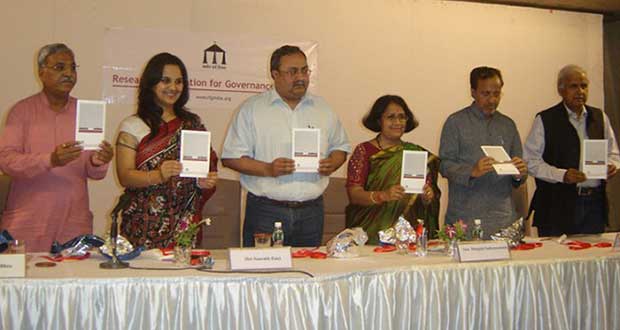
    Finally, the social entrepreneur in her motivated her to found the Research Foundation for Governance in India (RFGI) in 2009. RFGI is a think-tank that is working on legal and political reforms in India. Kanan is dealing with issues like backlog of cases, education for lawyers as well as engaging youth in governance through her work in RFGI.

    Recently, she has founded LawForMe (an app that guides people to the answers to their legal queries with the help of flowcharts) and Lawtoons (a cartoon series on the basic laws of India). LawForMe has won the Innovating Justice award of the Hague Institute for the Internationalisation of Laws, 2014.

    A successful woman social entrepreneur with a string of achievements at a very young age, Kanan talks about her thoughts, ideas, experiences and advice to young social entrepreneurs and law students.


    Please introduce yourself to the readers telling us a little bit about your childhood and your background.

    I come from a traditional Gujarati family. Our family is one of the old families of Ahmedabad. My grandmother’s grandfather has been instrumental in starting the Gujarat Law Society. The importance of arts and culture has been instilled in me since my childhood. My parents made a conscious decision to put me in C N Vidyalaya, a Gujarati-medium Gandhian school which stressed on simplicity, self-reliance and authenticity as the way of life. Children are taught to spin the wheel (and make Khadi cloth by themselves), agriculture, carpentry. In fact, our uniform was also made of Khadi!

    A certain percentage of students came from nearby villages and their parents were farmers, daily labourers and the like. At the same time, there were students who came from well-to-do families and I grew up seeing inequalities all around me.


    You studied Law after B.Com from Gujarat University. Was studying law an event of chance or an effect of a deliberate plan? What inclined you to choose law?

    I always wanted to be a lawyer. Since I grew up questioning our unequal society, I wondered where did the answers lie and where does the buck stop? I saw that all our leaders were lawyers and that by getting the education in justice delivery, I can help create a fairer society.


    You have completed your Bachelor of Laws from the prestigious London School of Economics. How different is the style of teaching at LSE? Do they focus more on the practical aspects of law as compared to the NLUs?

    My exposure to the education system at NLUs has come from my younger sister, who studied at one of them. At LSE, the teaching methodology is highly analytical. Emphasis is put on the nature and need of law in the society and the ingredients of rule of law. The black letter law becomes the focus only after graduation – just before the graduate decides to take up the path of becoming a solicitor or a barrister.


    Why did you choose a foreign university to pursue Law instead of an Indian law school?

    While I was very clear about pursuing law, my parents wanted me to study law from a good university. I did apply for NLUs after my 12th standard, but at that time, the application system was different. Every university had a different application system. I only applied to NLSIU and NALSAR and frankly, did not make it to either.


    Tell us about your time at LSE. How was the academic pressure? Tell us about campus life at LSE. How difficult was it for you to adjust to a U.K. based education system?

    My time at LSE was fabulous – my horizons were expanded manifolds. Of course, the delivery of lectures and communication during the classes was very different and I had to adjust to the change in the teaching methodology.

    Along with studies, I slowly started involving myself in the extra-curricular activities on campus. I became the editor of the law society’s legal journal, started SPICE (Society for the Promotion of Indian Culture and Ethos) and also founded India Week – one of the prominent celebrations on the LSE campus – where we hosted Professor Amartya Sen and involved the Indian Embassy in the founding year. I was awarded the ‘Honorary Studentship’ by the LSE Student Union – which is awarded to 20 students in the graduating batch every year.


    What kind of internships did you do while you were an LSE student? Are there any remarkable experiences during your internships that shaped your career choices later?

    In the first year, I interned at Nishith Desai Associates in India and in the second year, I interned with the World Health Organisation (WHO) in Geneva.

    Honestly, the WHO experience was quite significant since I was able to meet and interact with a very different set of people, mainly health professionals, and I was able to have very in-depth conversations with them. There were many people from the USA, whom I found really open and friendly.

    At WHO, I was able to see how an international organisation functions and how it is able to create dialogue across stakeholders. I also saw how different countries could get themselves represented at the international platforms. This fascinated me and made me start thinking about policy work in India.


    How did you secure your appointment at the NKC? What was the nature of your work at the NKC?

    (After graduating from LSE, Kanan came back to India and worked at the National Knowledge Commission for a year. The NKC is one of the Prime Minister’s Advisory body.)

    After coming back to India, I was still looking at different options. My father encouraged me to apply for the National Knowledge Commission. However, I wondered how could I secure a place at such a prestigious institution? I wrote an email directly to Sam Pitroda (then head of the NKC) with my CV and to my surprise, he replied positively the very next day!

    Working at the NKC was an extremely enriching experience. I was able to travel across the country and work with a team of highly accomplished individuals driven towards the development of the nation. I worked on issues such as library development, entrepreneurship and traditional knowledge. It was at the NKC that I realised that in order to create a sustainable impact through any policy, law played a crucial role. I decided to start practicing law then.


    You left NKC and started your independent practice as an Advocate at the Gujarat High Court. Do you think that was the perfect time for you to go independent?

    Practicing law fascinated me. I believed that by gaining exposure to litigation, I would be able to see how law was actually implemented in the society. This became clearer after my NKC stint.

    I did not strategise the timing. It just felt like the right thing to do!


    How did you overcome your initial jitters in a courtroom full of experienced lawyers and judges? Tell us about the highs and the lows.

    The atmosphere in the court is indeed quite overwhelming and intimidating for any youngster. However, people around me constantly kept on asking me why I joined litigation after a law degree from LSE! There were also those who asked me whether I was actually serious about litigation or whether I was there to find a suitable partner for marriage.

    As a junior, I was lifting files and running around the courtrooms, keeping time for my senior lawyers lest their case comes up. I was quite disappointed at the fact tht this was how I had to start gaining the exposure.

    I was even more disappointed to see that ‘justice’ was so slow to attain – the entire machinery to deliver justice seemed quite inefficient and I saw how so many people had to wait for years to obtain justice. It was a question of their lives and they were going from pillar to post, and still they did not know what their rights were!

    There were so many different kinds of lawyers! I met lawyers who were part-time tailors or rickshaw-drivers and then there were those who owned a Mercedes or a BMW and had really fancy offices. Were their clients equally represented?

    I kept wondering why things were not moving faster. Did we really need all these difficult jargons and procedures for fairness to prevail?

    My experience in the court made me realise that something drastic had to be done to change the way the legal machinery operated and that’s how RFGI was born.


    Please tell us about your experience with your first few sessions in court. Has it become more difficult for a fresher to achieve success nowadays?

    How and when you get a chance to appear in the court depends on a lot of things. It depends on who is your senior lawyer – is he/she your relative? – if that’s the case or if you have good relations with your senior, then your chances to appear would be higher. Else, you might have to push the files for quite a while before you are actually entrusted with a matter. Usually the judges are quite encouraging to youngsters.

    The first case I got to argue was a case of the year 1982 where a bus conductor had sued the state bus company, because of whose negligence he had to get his leg amputated. The amount claimed was around Rs. 14,000 plus interest. I put forward my argument and got the judgment in the favour of the bus conductor, but when I tried to inform him about the outcome, I realised that he had passed away a few years ago.

    All these factors led me to start taking my work at RFGI seriously.


    Tell us about your “Management Matters Project’’. What was your role and responsibilities in this Project?

    (Kanan undertook this Project at London School of Economics, McKinsey & Co. [New Delhi] and also at Stanford University)

    When I was at LSE, I got through a project between LSE and McKinsey & Co. to assess the management practices of manufacturing companies across different countries. It was a fascinating project and I learnt a lot about management and what factors contributed to better management practices across geographies. I also saw how the national regulatory and physical infrastructure had an important part to play.

    When McKinsey wanted to roll out this project in India, I got involved and spent time in their Gurgaon office to help set up the initial team. Similarly, even at Stanford, I was invited to help train the first batch of analysts.
     

    kanan-dhru-3

    Tell us about the story behind RFGI. What challenges did you face to establish an institution like RFGI? What does RFGI do and what is your job profile in the think-tank?

    (Kanan went on to establish and head a think-tank called “Research Foundation for Governance In India’’. RFGI today consists of 3000 members, working on legal and political reforms in India.)

    As I mentioned before, it was my experience at the High Court that led me to create a platform to raise a voice about needing a change within the legal systems, which took form in the shape of RFGI.

    However, initially the idea was to bring together youngsters who wanted to create a change within the governance systems in India and the mandate was quite open ended. Youngsters from different backgrounds started getting involved on a variety of issues. We started organising public debates and conducting research studies on issues such as entry barriers to litigation (which was to understand what are the barriers junior lawyers face to establish themselves in litigation), understanding the status and need for inner party democracy in political parties, analysing the status of legal education among others. We started collaborating on projects with Accountability Initiative (at Centre for Policy Research), with some of the professors at IIM-A, Government agencies and also started to work with a large number of young political party representatives across party lines. Along with this, we started hosting interns from different parts of the world.

    RFGI became a hub of different thought processes and discussions on governance in the city of Ahmedabad and we started gaining accolades from various corners. We started going to different schools and interacting with children on laws and rights.

    Our work profile was to work on research, awareness and consultancy on legal and political reforms related areas in India and to involve youngsters in the process of governance. The entire organisation was working in the spirit of volunteerism.


    Besides working on RFGI, you have contributed your knowledge set as a consultant for members of Parliament of India. Please tell us about your time as their consultant.

    Our work at RFGI and our profile as lawyers wanting a change in the society got us to work with a Member of Parliament on drafting of a legislation. In fact, after my work at the NKC, I was involved with the Education Department of Gujarat in drafting of several bills and ordinances. Our work with the Member of Parliament was to draft a couple of private members bills. It was fascinating work and the impact that we could create with drafting of laws was far reaching.


    What prompted you to take an offer of teaching in spite of working full time for RFGI? What was your teaching methodology there?

    (Kanan taught Ethics in Business and Business Law as a Visiting Faculty to final year Business students in Ahmedabad University.)

    When I was approached specifically to teach ‘Ethics’, I was intrigued. The subject sounded fascinating and I thought it might be a great chance to learn something. Teaching Ethics really changed me. As a teacher, I have always believed in encouraging class participation instead of preaching. The boundaries of ‘right’ and ‘wrong’ that Ethics forces us to delve upon makes you start questioning many of your pre-conceived notions. I challenged the thought premises of my students and tried making them better in tune with themselves.


    In between, you have also pursued Masters in Public Administration from IGNOU. What was the reason behind pursuing this course? Tell us about the course structure and the utility of this course.

    Since I was working in the field of governance, I wanted to have knowledge of the theoretical aspects of policy making and administration. Masters in Public Administration felt like the most relevant degree for me.

    Honestly, I was dabbling between an MBA (to understand how to grow a social enterprise) and an MPA. I also got the Fulbright Fellowship to pursue an MBA in USA but could not take up that offer due to unfavourable circumstances.


    Our readers would be keen to know about your recently started websites “LawForMe’’ and ‘’LAWTOONS’’. What led to the foundation of these two websites? What advantage can law students get from these two websites?

    I can’t express it in fewer words. I would request the readers to read: https://www.facebook.com/notes/579275265508546/ and here’s a brief about Lawtoons: http://www.hindustantimes.com/art/lawtoons-a-comic-series-to-teach-children-their-rights/article1-1281611.aspx

     

    kanan-dhru-2

    How does it feel to be well recognised at such an early stage in career? And how has your journey as a Social Entrepreneur and Legal Innovator been so far?

    (Apart from being an Acumen India Fellow, Kanan has won the Innovating Justice Award, (2014) and was also selected as an ‘Indian of Tomorrow’ by India Today (2012))

    Acumen’s India Fellows Program is addressing the country’s most pressing social issues by supporting a new generation of Indian leaders willing to challenge broken systems and develop new, inclusive solutions to create impact. Each year, the India Fellows Program brings together up to 20 emerging leaders from different regions, sectors, and socio-economic backgrounds in India. I am honoured to be selected as one of the 20 fellows this year.

    My journey as a social entrepreneur and legal innovator has been quite fascinating and often introspective. As they say, when you are on a journey to create a better society, it may also be a pathway towards your internal journey and vice versa.


    Starting RFGI and winning the Innovating Justice Prize are some of the milestones in your career. Tell us about your success mantra.

    Perhaps what has worked for me is that I focus on what work is to be done and not what I will get out of it. ‘Focusing on work as an end in itself’ is my mantra.


    Please tell us about your two books and how do you get time to pen for the daily newspapers and blogs?

    (Kanan is a regular blogger and columnist for The Huffington Post, Femina Gujarat, Daily News & Analysis and were a former columnist with Times of India (Gujarat). Kanan has also authored two books ‘Kanan Chan in Japan – Diary of an exchange student’ (2003) and authored a book of poems ‘Amara Manma’.)

    Since childhood, I have always loved reading and writing. Writing is a very introspective process and it makes me really happy when I write. It is easy to find time for something that you love! Plus, Ahmedabad being a less happening city, it leaves one with a lot of time to pursue their hobbies and interests!
     

    kanan-dhru-4

    How do you think knowing law benefits an entrepreneur? What are the prime hurdles that a non-lawyer entrepreneur is likely to come across?

    Being an entrepreneur is all about the will and the aptitude. Being a lawyer or a non-lawyer has little role to play. Of course, a lawyer is more attuned to understanding the regulatory process or has in-built analytical thinking. After that, it is the business acumen and the communication skills that create wonders. Introspection is also an important trait for any self-starter.


    What are your thoughts about raising capital for RFGI? Have you approached any Foundations?

    We believe that our work has potential to make significant impact. While money isn’t really a great motivator, we believe that through social entrepreneurial ideas such as Lawtoons and LawForMe, we will be able to sustain our work.


    When you hire people under you, what kind of skills and profile do you look for? How can law students or marketing students go about developing these skills?

    At RFGI, we usually invite anyone who has his/her heart in the right place. It is a platform to do good work and everyone is welcome! However, over time we have realised that most interns join because they want a certificate, which is such a shame. Now we have become far stricter in looking for the right fit.

    For legal interns, we look for interns who know the law and who respect deadlines. What is fundamentally important is that the person should have a belief about bringing a change in the legal system and creating innovations in law – to have his/her heart in the right place. Rest all can be taken care of.


    What does it take to be a Social Entrepreneur and Legal Innovator? What are the three great skills of an entrepreneur according to you? What differentiates the best from the rest?

    Honestly, I have always followed my heart and did what I thought was the right thing to do. It has not always been easy – but it has been worth it. Three great skills of an entrepreneur according to me are:

    • Knowing one’s self well (knowing what you stand for, your likes and dislikes and the non-negotiables as well as your limitations)
    • Knowing that you can be wrong too (humility)
    • Knowing that your dreams will come true


    How has the journey been for you as a woman entrepreneur?

    Somebody once told me that the value of RFGI is also because it represents the voice of a young female on governance and legal system. I consider this an honour. I think my journey has been exciting and full of interesting ups and downs. Being a woman entrepreneur has been both positive and negative.

    At times, I wonder what my journey would have been if I were a guy? Perhaps I would have been taken more seriously in our society, perhaps I would not have so many social pressures to fit into a specific box, perhaps I would have been a lot more aggressive in my work, perhaps my life would have been easier.

    But then, I feel that it is because I am a woman, I need to do what I do – even with more enthusiasm and self-belief.


    Your main object is to work towards legal reforms in India through Research Foundation for Governance in India, Lawtoons and LawForMe. Where do you want to see yourself five years down the line?

    5 years down the line, I see Lawtoons and LawForMe as flourishing entities, making laws and legal processes simple and easily understood. RFGI would of course be the umbrella organisation facilitating dialogue and discussion on access to justice.

    I also aim to see many more legal start-ups in India and a thriving ecosystem providing access to justice in India.

    I don’t know much about myself but about the legal system in India, I have so many dreams! I want to see a legal culture in India where justice is a primary value, respected and enforced fairly and efficiently. I want to see a culture of legal aid actively provided to those in need and where efforts are being made to make people aware about laws and rights. I visualise the legal climate where with the help of technology, access to justice has become easy, process faster and transparency is taken for granted. I don’t know if 5 years is too short a time for this dream to materialise but my efforts will continue in this direction for sure.


    Is there scope for legal internships in RFGI? If so, what is the process of application?

    We are highly selective about the interns we take. Please email info@rfgindia.org for internship opportunities.


    Tell us a bit about mountaineering. Did you take any hard-core training before climbing? Why have you chosen this hobby which needs maximum tenacity and mental strength?

    (Kanan has scaled Mount Kilimanjaro in 2012 and has travelled over 30 different countries.)

    While I am very passionate about my work, I am also thoroughly interested in traveling, sports (yes, I love playing tennis!) reading, knowing about different cultures and outdoor adventures. Being with nature is so important! Work is important but it is equally important, if not more, to grow as a person. The extra-curricular activities do make you a stronger and more composed person. Over time, I have also grown very curious about understanding human nature and I keep reading about it every now and then.

    I have travelled over 30 countries and have gathered so many interesting experiences. In fact, on my Japan trip alone, I have written a book called ‘Kanan Chan in Japan’! Perhaps Super Lawyer should do another interview with me to capture those insights! J


    What is your message for law students who aspire to be Social Entrepreneurs one day?

    “Follow your heart and take risks. You only live once.”


  • K K Sarachandra Bose, Senior Corporate Lawyer and Civil Rights Activist on the ‘Caste Eradication Bharat Yathra’ and value of social work

    K K Sarachandra Bose, Senior Corporate Lawyer and Civil Rights Activist on the ‘Caste Eradication Bharat Yathra’ and value of social work

    K K Sarachandra Bose is a corporate lawyer with experience in Dubai and various other jurisdictions over the last three decades. A member of the International Bar Association, he studied law from R.L. Law College Belgaum, Karnataka, and graduated in 1976. Currently he is a partner at Dal Al-Adalah Advocates & Legal Consultants at Dubai, and Bose & Bose & Nair at Cochin.

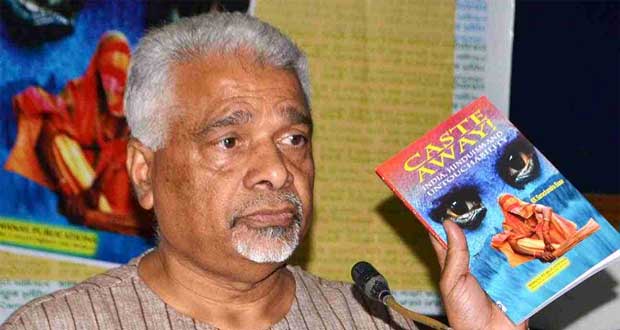
    Between all his commitments of being a lawyer, he has found out time and energy to pursue a very noble mission: Eradication of caste system in India. He plans to achieve this by effecting a paradigm change in Indian law through constitutional reforms. He is the author of the book “Caste Away – India, Hinduism and Untouchability.”

    In this interview he tells us about:

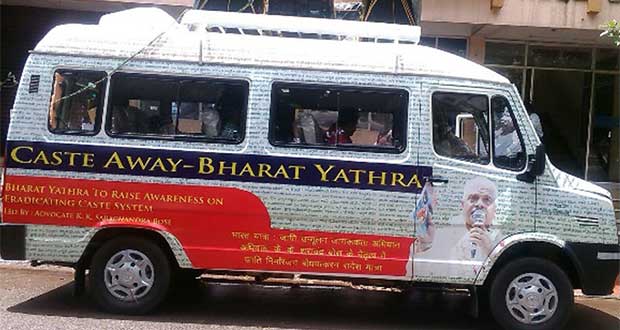
    • What prompted him to spread social awareness in India for 54 days and travel across 18,500 km.
    • Eradication of Caste Discrimination in India.
    • His second Bharat Yathra, i.e. the ‘Caste Eradication Bharat Yathra’ which starts today.


    kk-bose-4

    Our site is directed at law students and lawyers. How would you like to introduce yourself to our readers?

    I am a corporate, commercial and contracts lawyer practicing in Dubai and other jurisdictions for the last over 36 years; a member of the International Bar Association, visiting professor in International Business Law, legal columnist in several publications, addressed over 100 law seminars as a guest speaker; Chairman of Global Dialogue Foundation, and Unity in Diversity under the auspices of the United Nations Alliance of Civilizations since its inception in 2007 till date.


    Tell us about your years before law school. Were there particular childhood incidents that proved to be an inspiration for you?

    My childhood was all thrilling. Being born in a very rich family and my father being a Gandhian politician gave away almost all our wealth for the welfare of the society. We lost almost all our wealth and my mother had to sell her land to pay for my college fee. My father took care of the society but not his family and children. This prompted me to first take care of me and my family and then the society. I witnessed low and high caste among human beings during my childhood in my own house when my father served food to field workers, few workers were in an enclosed place and the rest, the vast majority in the open field in pits dug and leaves inserted. I was really pained to see that my own playmates were ill-treated.


    What inclined you towards legal education?

    I was good in mathematics and got admission for Engineering after passing pre-degree (12 grade) but though the college fee was paid, I left Engineering and got a job and then pursued BA as an external student and then law as an internal student in R.L. Law College Belgaum, Karnataka.


    What would you say were the instrumentalities of law school which helped to frame your career?

    I was a studious student, though a college gunda, in the words of my college principal. When our University Vice Chancellor cancelled the Carry Over Benefit (COB) without giving any prior notice, I took the lead and got his order reversed by the State Governor, Chancellor of the University.


    Our readers would be keen to know any specific incident which has driven you to become a social activist.

    From my childhood, I feel the pain if another person is hurt. While in Dubai during 1977 – 1990 period, I used to visit the labour camps with journalists and highlight to the government the pathetic living conditions of the labourers.


    What prompted you take up social activity and spread awareness for any grave social cause in a full time manner?

    (KK Sarachandra Bose is a corporate lawyer by profession and a partner at Dal Al-Adalah Advocates & Legal Consultants at Dubai and Bose & Bose and Nair at Cochin.)

    In the legal profession, I believe my clients like me so much and my opinion on corporate and contract matters are well sought by corporates of the highest order. But I always say, legal profession is for my bread and butter, my blood is social activism for the benefit of the society as a whole.


    Tell us about your whole journey/social drive in your own words.

    (He travelled across India for 54 days to promote the cause and covered around 18,500km along with his 30 member team and distributed books, free of charge, across the country.)

    My 54 day Jathi Nirmarjana Bodhavatkarana Sandesa Bharat Yatthra – 9 June to 1 August 2014 – was really a thrilling one. I visited the entire Shri Mahabharat including the North Eastern states which people say normally nobody visits. I could see and witness the ill effects of the evil caste system in my country. While in Rajasthan, I was told, by some local people considering themselves as low castes there, not to speak about the caste system as the upper caste people may come and harm me. I increased my volume and told very loudly that this is my country and nobody will dare stop me. Some people told me that they want to make the savarna people avarna and paint the buildings in Delhi with the same brush and paste that they are forced to carry every day to clean lavatories. I enjoyed huge support not only from the so-called lower caste people, but from the upper class who hates the caste system. In Tripura, the Buddhist Sangha there promised full support to eradicate the caste system from India.


    kk-bose-1

    You have authored a book “Caste Away – India, Hinduism and Untouchability”. What message did you intend to give to your readers through your book?

    My book “Caste Away – India, Hinduism and Untouchability” is the result of my 40 years of research, studies, discussions and conviction on the subject, caste system in India. I have gone through our history beyond the Vedic period, or to say, prior to Vamana avatar. I have seen, as if I were there, that we had a great past prior to the Vedic period and that was exactly the Brahmanism – Sathyamvada, Dharmamchara, Athidhi Devobhava. This Brahmanism has been killed and murdered in our country for the past over 5000 years and I am re-introducing it and I am asking everyone to adhere to it.


    How far would you say it is possible to eradicate the caste discrimination among Hindus and other religions from India?

    It is very easy to eradicate the caste discrimination among Hindus and other religions from India. We should understand that there was no caste system before 5000 years, there was no caste system before 300 years. Similarly, there was no Hinduism before 5000 years and there was no Hinduism before 300 years. Caste system which is an offshoot of Hinduism, in the words of our Hon’ble Supreme Court, originated during the British India rule and not before. We had colour system in India, the black skinned Adivasi aborigine people and the fair or white skinned aggressors. When I say, aggressors, please do not get confused as they are also our brothers and sisters from the same grandparents, Manu and Satrupa or Adam and Eve as called in the Western world. The whole issue in the world is the two skin colours, black and white skins. Slavery originated in our country 5000 years ago as the fair skinned aggressors enslaved the black skinned Sri Mahabharatvasis. Slavery went out from our country and spread as an epidemic in the whole world. Once caste system is abolished in the Hinduism which is the breeding ground of slavery, then all those who left and became untouchable Dalit Buddhists, Dalit Jains, Dalit Sikhs, Dalit Christians, Dalit Muslims etc., will all become Brahmins in its sense – Brahmjnane iti Brahmana.


    What type of feedback you were you receving from the people at large?

    Feedback from the people at large is tremendous. No one has ever told me that either he or she wants the caste system to continue. There are several letters of support in my file.


    kk-bose-2

    What are the main social causes in your priority list which you intend to promote through your second Bharat Yatra?

    (He is all set to start his second Bharat Yathra, ie, the ‘Caste Eradication Bharat Yathra’ which is commencing today on 9th May 2015.)

    In the Caste Eradicatin Bharat Yathra commencing on 9 May 2015, I will be conducting mass upanayanas in public in the presence of the five headed creator God Bhramadev representing the five elements of creation by priests well versed in pre-Vedic rites declaring all as Brahmins and thus remove that feeling of lowness in the minds of the people.


    Do you follow the ideologies or philosophy of eminent leaders like Mahatma Gandhi or Raja Ram Mohan Roy in regard to eradicate caste system?

    No, I do not follow ideologies or philosophies of any leader. I follow my heart and I have developed my own ideology. For instance, Shri. Mahatma Gandhi wanted to abolish untouchability by retaining the caste system. While Article 17 of our Constitution abolishes untouchability, several other articles in the Constitution reintroduces untouchability through the caste system. How can I follow such a tricky ideology or philosophy? That is why, I have loudly said, quoting several judgments of our Supreme Court, that our Constitution is tricky and there is fraud in our Constitution and it must be amended.


    Did you get any reply from The Centre or do you think the government will take any serious steps or preventive measures regarding the eradication of caste discrimination from India?

    (He also sent a notice to the Indian Government regarding the abolishment of caste system or to banish the caste system from India.)

    I did not get any direct reply to my notice from the Government. But I received several indirect replies and reactions from the Government such as, Janardan Dwivedi’s comments to stop caste based reservations and introduce economic based reservations and Sonia Gandhi’s rebuttal thereto; Mohan Bhagavat’s call to eradicate the caste system; world religious leaders calling for eradication of the Indian caste system by 2020; International Bar Association supporting me; Supreme Court lawyers supporting me; hurried Ghar Vapasi by some Hindu orgainzations in bringing the escaped people back to their earlier low caste or slave status; etc.


    Do you think you will be successful in complete eradication of poverty and casteism from India?

    I am a doubtless person. I will see the end of the caste system in the very near future. Government, I mean the Indian society, will have no option but to amend the Constitution and abolish the caste system.


    Did you get any positive response from there supporting your cause?

    (He has also organized seminars for Indians who visit Dubai and deliver lectures to help them understand the laws, rules and regulations of the country.)

    I am getting support from all quarters.


    Do you think every lawyer should devote some time towards any social cause and work on it?

    I do think that every lawyer should devote some time towards social causes. The lawyers unlike other professionals or businessmen, have the knowledge of the law and also have interaction with the laws, law makers and the law courts. When a layman is also not exempt from the knowledge of the law as law is considered universal, a lawyer has the privilege not only to know the laws but also to counter the laws if found unsuitable.


    Last but not the least, would you like to leave any message for our readers?

    I wish all your readers understand the basic human values and treat another human being as a human being, not as an animal as in the caste system based on the skin colour of the people.


  • Dhruv Suri, Principal Associate, PSA Legal, on leading a student organisation, LL.M from Columbia University and work at Law Firms

    Dhruv Suri, Principal Associate, PSA Legal, on leading a student organisation, LL.M from Columbia University and work at Law Firms

    Dhruv Suri graduated from Guru Gobind Singh Indraprastha University, New Delhi in 2009. While in college he co-founded a student organization called United Students which initiated the Jessica Lall and Priyadarshini Mattoo campaigns. He was invited by the then President, A.P.J. Abdul Kalam to discuss problems of OBC reservations after receiving his memorandum on the same. He has interned with AZB & Partners and Valeo, Paris. He received a PPO while interning at PSA Legal Counsellors where he was an Associate for four years before opting for an LL.M from Columbia University, New York. He has joined PSA after coming back from Columbia. He is currently a Principal Associate at PSA Legal Counsellors. In this interview he talks about:

    • Studying law at GGSIPU, New Delhi
    • Recruitment and work experience at PSA Legal Counsellors
    • Masters from Columbia University, New York


    As an introduction, please tell us about your schooling and how you decided to pursue law.

    I was born and brought up in Delhi and did my schooling from Delhi Public School, Vasant Kunj. I graduated from school in 2003 and was unsure of what I wanted to do. So much so that my family registered me for one of the law entrance exams and I ran away to Mumbai with a friend for a holiday. Of course, that did not go down too well with my family after I came back. When I came back, I took admission in Delhi University where I studied English Hons. for one year. However, for that entire year, all I did was theatre and learn dance. My attendance at college was abysmal! In 2004, I was emotionally blackmailed by my mother to register for the law entrance exams once again on the pretext that I would be given a Maruti 800 to travel to law school and an increment in my pocket money. I fell for it and got an option to study at Amity Law School. Back then, Amity Law School was a building in south Delhi and did not have the atmosphere of a “campus” that I grown accustomed to in my one year at DU. So, I opted for the main Guru Gobind Singh Indraprastha University law school which seemed like a better option. Rest assured, I got no car and travelled 40kms a day in local Delhi buses. So, this is how my journey with law started- as a “victim” of emotional blackmail from my mother! J


    You completed your law degree from Guru Gobind Singh Indraprastha University, New Delhi in 2009. What activities were you involved in there? Looking back, is there anything you wish you had done differently?

    The first few years just went by in trying to understand what law is really about. I loved courses like Legal Reasoning, Jurisprudence, History, and Contract law. I also loved mooting and showed up at any and every audition, whether I was prepared or not. I was also very active in the debating society and ensured that I participated in as many competitions as possible. Since our campus was fairly big and had lots of engineering and management colleges as well, there was always some event or the other taking place. By the time I was in my 4th year, debating became a source of extra pocket money.  However, amidst all this, I was also focussed on getting good internships and a job. In fact, if there is any regret that I have, it is that all through my final year I worked after college hours, whereas all my friends were enjoying themselves, going for lunches, movies and ensuring that their last year as a “student” was memorable. When I look back, I could have probably worried less about my career and instead made the most of my final year at law school. Eventually we all had to work but I do feel that I missed out on some fun times with my friends.


    You started a student organization called United Students. You contested the Delhi University elections and initiated the Jessica Lall and Priyadarshani Mattoo campaigns. Please tell us more about it.

    United Students happened by pure accident. I was in the latter part of my 2nd year at law school when I met the other founder members of United Students at a coffee shop in central Delhi. I had always been someone who liked to initiate and take the lead in everything I did. The trial court verdict in the Jessica Lall case was out and I was having discussions and debates with people from all quarters about the merits of case, legal arguments advanced, etc. Some common friends connected me to like Aditya Raj Kaul, a young 17 year old (now a popular Times Now reporter), who had started an online campaign in connection with the Priyadarshani Mattoo case. Aditya and I realised how similar we both were and he introduced me to the other founder members. We were all passionate about bringing about a change and decided to collaborate. I think that really was the key reason for launching United Students. We wanted the organization to encourage young Indians, particularly students, to think and debate in a cohesive manner and take up issues of governance. The idea was to engage in discussions and debates, take an informed stand and then take steps on ground to the best of our abilities. I think the legal profession is somewhat similar. Discussions and debates are synonymous with research, which is very important to take a stand and advise the client. As I got busier with law and internships and all other members got more absorbed in their lives, the organization had a natural death. However, the entire experience played a big role in how I evolved as a person and it is something that I will always cherish.


    Why didn’t you pursue a career in politics? Do you think you will enter the field again in the future?

    I remember I was doing a shoot for a big news channel during the Delhi University elections and the spokesperson of one of the bigger political parties came to me and asked me to formally join them. I wonder how different life would have been had I actually done that! But on a serious note, I did consider pursuing politics more seriously but was equally eager to graduate and practice law. Who knows, one day I may actually be able to balance a legal and political career!


    dhruv-suri-3

    During your time at law school, you interned at AZB & Partners, New Delhi and Valeo, Paris. Please describe your experiences.

    All my internship experiences were very rich. At AZB I did my first all-nighter and got a real sense of how corporate law firms work. The lawyers were extremely kind and I am still in touch with some of them. Valeo was great because I got to work in-house and attend lots of business meetings. I realised how a “business lawyer” (whether in-house or external) cannot give pragmatic advice if he/she does not have a sound understanding of the business. This was the biggest take-away from this internship and till date, I try and adopt the same approach while advising clients at PSA. Of course, I got to spend a little less than 3 months in Paris which was fantastic and the first time I stayed by myself. I made sure I saw every bridge, every museum and (almost) ever cafe and bar there.


    You also interned at PSA Legal Counsellors and then received a PPO from them. What do the recruiters at PSA look for in potential candidates? How did you secure a PPO?

    One of the most preferred modes of recruiting at PSA is to give offers to final year law students interning at the firm and then training them internally as they grow. The firm encourages building in-house talent.

    In terms of how PSA approaches recruitments of potential candidates, I think it is more or less assumed that a first year associate will not know much about the law. However, she/he should be eager to learn and work hard, and also interact and work well in a team. PSA also believes that before becoming a specialist, it is important to be a good generalist. So, if there is a student who only wishes to work in the area of, say, capital markets or intellectual property or competition, PSA would not be the best place to work. Whereas if someone is keen to do everything and gradually pick areas of interest and focus on them, PSA would be an ideal place for them.

    In my specific instance, I interned with PSA all through my final year at law school. While I was still an intern, I got actively involved in a big PE transaction. The deal was still ongoing when I graduated so I just continued working on it and did not stop. Slowly I got drawn in on a lot of other matters and before I realised, I had spent almost 5 years at the firm!


    dhruv-suri-4

    Upon graduating, you started working at PSA as an Associate. What was your work profile like?

    Like I mentioned, at PSA, you do everything in your first year. So, my work profile was nothing different. I was actively working on a PE deal, but also assisting the senior lawyers in day-to-day corporate advisory, researching for litigation matters, working on intellectual property queries and even drafting board minutes and incorporating companies. Gradually the work becomes more sophisticated and challenging but the basic training I got in my first year continues to be invaluable and (I’d like to believe) set a strong foundation. Before I left for my LL.M in 2013, I was working on sophisticated M&A transactions, advising large conglomerates on complex legal queries pertaining to contracts, IP, tax, employment etc. and arguing matters before the Competition Commission of India.


    dhruv-suri-2

    After four years at PSA, you opted for an LL.M from Columbia University, New York. How did you secure your admission at Columbia? What was your specialisation?

    So, Columbia and Harvard are two schools that I know do not offer a specialised LL.M. In fact, even as a matter of personal preference, I did not want to do a super specialised LL.M. The application process was exhausting and almost impossible to manage with long work hours. I took 10 days off in October 2012 to work on my applications and finalized as many as I could. Even the 10 days were not enough and I spent a lot of weekends on my personal statement and other school-specific essays that were required. Now when I look back, I am so glad I put in that effort because Columbia really is one of the best things that ever happened to me! Plus I got to live in New York which just takes the LL.M experience to a whole new level.

    With respect to courses, there was a fair bit of flexibility so I made sure I had a variety on my plate. Some of my courses were “Strategic International Commercial Transactions,” “Financial Statement Analysis,” “Intellectual Property Drafting,” “Negotiations,” “Corporations,” etc. All of them were taught by top-notch professors who made studying such a pleasure, an area where, in my opinion, Indian law schools have a lot of catching up to do.


    You also worked as a Research Assistant for Professor Anu Bradford in the field of antitrust laws. On what basis were you chosen for the project? How was the experience?

    I have always been very interested in competition/antitrust law. During my first month at Columbia, we received an e-mail that Professor Anu Bradford was looking for LL.M research assistants to work in the field of antitrust law. I think I drafted a short cover e-mail and sent my CV within 5 minutes of receiving the e-mail. Professor Bradford called me for an interview and soon I started working for her. The experience was so enriching because the work she asked me to do involved coding antitrust laws of multiple countries (including India) and understanding key differences in how statutes are drafted across those jurisdictions with respect to restrictive agreements, cartels, abuse of dominance, etc.. The work gave me a deep and detailed understanding of antitrust laws. Plus, she is one of the most wonderful people I know and mentored me throughout the time I was at Columbia. I am just glad I got to work with her.


    Is it better to pursue an LL.M right after college or after working for a few years?

    This is a question that a lot of people aspiring to do an LL.M ask. Honestly, I don’t think it has a right answer. A lot of my friends went for their LL.M immediately after completing law school but I chose to go after gathering some work experience. Specifically for Columbia, which has an extremely competitive curriculum, it is rare for them to admit anybody with less than 2 years of work experience. Of course, there are exceptions. Based on my experience, I do think that work experience comes in very handy, especially when you are learning about a different legal system. You are definitely wiser and more mature to gauge concepts by linking them to your practical experience. Plus, you also tend to make a lot more of your degree by networking professionally, which, I think, can be challenging if you have never worked before.


    Do you think the LL.M has improved your career prospects? Do you have larger responsibilities at PSA now?

    The LL.M has definitely helped me a lot. If I had to point out one thing, it has made me surer of my work and more confident in my interactions with clients, both Indians and foreigners. In terms of my profile, I am now a Principal Associate at the firm and manage PSA’s start-up/PE/VC practice which is extremely exciting because I interact and work with dynamic start-ups and very passionate entrepreneurs.  While I continue to do legal work, a lot of my time and energy is also spent on business development, which I thoroughly enjoy. So clearly, the responsibilities have increased and the concept of weekends has dissolved. I have to be on top of whatever I am working on all 7 days a week and I actually prefer it like that.


    Lastly, what advice would you give to law students wishing to pursue a career in corporate law and considering doing an LL.M?

    I would say that, make sure you do internships in law firms in your 4th and 5th year and be proactive when working. I enjoy working with interns who are eager to learn, proactively follow-up with me and don’t hesitate to take responsibility of their work. It is a good opportunity for you to demonstrate your attitude towards work. Also, be prepared to do any and all kinds of work. You will realise much later how the most minuscule things you worked on as an intern or first year associate come in handy during negotiations or drafting contracts. So, approach work with an open mind. Finally, if you plan to do a LL.M, my advice usually is to work for 2-3 years. It will really change your perspective and you will be able to make the most out of your academic courses and the overall LL.M experience.

    In the end, I would just say that work hard but make sure you enjoy your student life as well. That time (unless you do your LL.M) will not return. Good luck!


  • Rwitwika Bhattacharya on work at the World Bank, authoring books and founding Swaniti

    Rwitwika Bhattacharya on work at the World Bank, authoring books and founding Swaniti

    rwitwika-bhattacharya-1Ms. Rwitwika Bhattacharya graduated from Harvard University, Kennedy School of Government. She has previously worked as an Associate at the World Bank and is the founder and currently the CEO of the Swaniti Initiative, a non-profit that delivers development solutions to elected officials in India.

    In this interview, we asked her about:

    • working with the World Bank;
    • authoring two books;
    • her work through the Swaniti Initiative; and
    • the involvement of lawyers in her start-up organization.


    Could you please introduce yourself, professionally and academically, to our readers?

    I am the Founder and CEO of Swaniti Initiative, a non profit that delivers development solutions to Members of Parliament in India. Our goal is to provide them with either knowledge insight or implementation support on development issues. Prior to Swaniti, I was working at the World Bank and UNFPA. I have a Master’s in Public Policy from Harvard and Bachelor’s in political science and economics from Wake Forest University.


    You have considerable exposure when it comes to working at the World Bank. How was your experience of working at the World Bank? What was your area of work there? Was there any particular reason for your deciding to leave?

    The World Bank is a phenomenal place to work and I was very fortunate to have gotten this opportunity. The reason that the World Bank is so great because you are surrounded by problem solvers who are academics and practitioners, working on complex issues. To be a part of an environment where you find such driven people, you begin to also focus on understanding potential ways to solve problem. My area of work was labor economics and I ended up doing a lot of research work on job creation. I was lucky enough to co-author two books during my time at the Bank. The reason I left the Bank was because I was passionate about working on governance and polity in India. When I saw there were no such organizations within the World Bank, or even in India, I started one.


    You have co-authored two books during your stint at the World Bank. Can you elaborate on the two books written by you?

    Sure. My first book was on Frontiers in Development Policy where I had written a chapter on political economy and development. Basically the chapter focuses on seeing how politics can be a catalyst in bringing development. We looked in to the Mauritius case study where we saw how a focused political leadership was keen on revamping the economic system and how this completely transformed the economy. My second book was ‘A Primer on Labor Policies’ and this looks in to the complexity of job creation. You see, job creation is not the result of one thing going the right way but of many things working out together: a strong education system, solid infrastructure, access to capital and stable government are few of the many things.


    One of your books ‘Frontiers in Development Policy’ looks to foster discussion amongst policy makers on growth and development. Would you say this is possible and if yes, to what extent? How far do you think the insights provided by you in your book have been incorporated?

    Absolutely! Even the smallest decisions by our policy makers have an exponential effect on development and growth. Let me give you a substative example: on Gandhi Jayanti we saw the Prime Minister pick up a broom. It was a phenomenal example because the ripple effect was almost every single one of my friends also picking up a broom and taking the oath to keep their city clean. Now, this is illustrative of how even the smallest step by senior policy makers can transform communities.


    You are currently the CEO of the Swaniti Initiative, an initiative of which you are the founding member. How did you come about setting-up this Initiative? Why did you feel the need to do so?

    Back in 2009, when elections were taking place in India, my friends are I started thinking about the electoral process. During our conversation we realized that even though so many of us were keen to contribute to strengthening governance in India, there were too few channels of entry for young Indians to work with elected officials in supporting them in supporting them in governance. This was ironic because independently some of us (including myself) had worked with elected officially, specifically MPs and Ministers, to realize that there was a strong demand to have a demand for knowledge and human capital from the side of the elected official. Then it was only natural realizing that there is a demand and there is a supply so why not connect them. Thus Swaniti was founded. We launched our first pilot in 2009 and since then we have continued to grow.


    Could you elaborate on the kind of work you are involved in through this Initiative?

    We are focused on providing two kinds of support to Parliamentarians and elected officials:

    a) knowledge insights on key developmental programs and/or

    b) on the ground implementation support.

    On Knowledge Insight we distribute a series of knowledge products like briefs on government schemes, insights on innovative projects and updates on developmental progress.Additionally we also connect with MPs through one-on-one meetings to provide them with insights on specific knowledge queries they might have (for example we have MPs who are keen to know about specific government programs). ‘On the ground implementation’ consists of programs where we travel to the constituency to study a problem and provide solutions to them. Our goal here is to not just provide solutions but also help implement them.


    Keeping in mind the administrator : people ratio, do you think that the high difference in the ratio is the main problem leading to all the developmental problems or are they other factors that contribute to the problems India is facing?

    If we were to solve any problem we would see if the bottleneck is in terms of financial resources, human capital or lack of ideas. In India’s case, it’s not that we are a poor country (look at the size of India’s budget and the amount provided in grants and aid by international and domestic agencies) and we certainly don’t have a dearth of innovative ideas. The issue comes in implementing these ideas and programs and this is primarily because we have lack of implementors. There are very few government officials and those who are there are overburdened. How do we strengthen the system in this case? We see MPs and elected officials are a rung of government who are keen to bring ground level change, however they lack either the knowledge or the human capital support. Thus, we work on providing both.


    In what manner are the education levels, of elected representatives and people, and poverty factoring in the development process?

    India is in a state of flux. Are citizens are getting more educated and exposed to development, their expectations from elected officials are also increasing. Subsequently the delivery of goods and services from MPs and MLAs is also needing to increase. I think the Modi-wave in the last election is indicative of how people’s voting behavior is changing: very few people would have predicted so many people voting for a focused policy change.


    The Swaniti Initiative provides opportunities to work with MPs and MLAs. Have the people, who have applied, been from a diverse array of vocations or there is some concentration from a few particular fields?

    Yes, we have had people ranging from architecture to business to law work with us. We are particularly excited when we see lawyers because they have a keen understanding of policy issues and a linear way of thinking. Some of our stellars Fellows have been lawyers.


    In your opinion, what is the kind of experience lawyers would be exposed to if associated with the Swaniti Initiative?

    We are currently looking for Fellows and research associates within Swaniti. For lawyers working with us we can assure you an opportunity to work not just from a policy research perspective but also to interact with policy makers and explore how programs get implemented on a ground level. For those looking to work at the nexus of research and program implementation, Swaniti is the place to be!


    What are the different ways in which lawyers can contribute to the Swaniti Initiative? Can the opportunities provided be said to be challenging for lawyers?

    Yes. We have an incredible team and we are proud of our team members. We feel like that the work and the company will be rewarding for incoming lawyers.


    Lastly, what would be your message to law students and young lawyers who want to pursue a career in the entrepreneurship or their own start-up?

    I would say that the hardest decision for any individual seeking to be an entrepreneur is to take the ‘plunge’ and begin something. We are often nervous about prospective failures and therefore vulnerable to steering away from entrepreneurship. However, I can tell you from personal experience that starting something by yourself is one of the most rewarding things you could do! So just take the dive, head first.

  • Prem Ayyathurai and Sahana Mahesh, co-founders, Kranti, on Government inaction, the culture of dissent and bridging inequalities

    Prem Ayyathurai and Sahana Mahesh, co-founders, Kranti, on Government inaction, the culture of dissent and bridging inequalities

    Prem Ayyathurai and Sahana Mahesh are peers and graduates in law from NLSIU, Bangalore. They co-founded Kranti, an initiative that attempts to mobilise politically conscious students from across the country. Sahana is currently working in the chambers of Jawahar Raja and Rajat Kumar and Prem is in the final trimester of 5th year in law school. They trace their path from law school to kick starting this initiative and highlight their experiences along the journey.

    In this interview we speak to them about:

    • The need for an organised, mobilized student movement
    • Government inaction, disillusionment with the system and trying to bridge inequalities
    • Offering political resistance through art, and celebrating the culture of dissent


    How would you introduce yourself to our readers?

    Prem: I have always sucked at introductions, so I’m going to avoid getting into one here.

    Sahana: I am Sahana Manjesh. I’ve recently graduated from the National Law School of India University, Bangalore. Originally from Mysore, I will soon be moving to Delhi to start my litigation practice in the chambers of Jawahar Raja and Rajat Kumar.


    Tell us about your childhood and schooling. Is there any particular childhood incident that has proved to be an inspiration for you?

    Prem: Most of my schooling was done at the erstwhile Dr. Kalmadi Shamarao School in Pune. I then attended BMCC and came to NLSIU. There were far too many inspiring people and moments in my childhood that have shaped me and compelled me to push harder; but if I were to place my finger on one, it would be the humbling realization that one generation before mine, my family lived in a small hamlet – the realization of this growth has never left me and pushes me to challenge myself, continuously.

    Sahana: I studied in St.Joseph’s Central School till 10th grade, after which I studied in the Demonstration Multipurpose School for two years, both in Mysore. Again, many moments of inspiration to name.


    How is life at NLSIU, Bangalore? Have you always wanted to study law?

    Prem: I didn’t really fit into the law school environment for a long time but I’m sure most people find it lovely. The great thing about NLSIU is that it enables a student to do a great many things – if you have the potential and more importantly, the desire to see things through, this place won’t let you down. The administration and, more importantly, the alumni are always there to support something good.

    I didn’t always want to study law. I decided to aim for legal education after noticing how far too many successful organizers of people’s struggles had some background in law. I want to work on social questions later on in life and so it seemed to be a natural choice, in that context.

    Sahana: I have wanted to study law since I was very young. It seemed to combine my love for words and arguments and oration with my interest in rights and politics. My time in NLSIU has been very rewarding. It is a space that exposes you to a world of opportunities if you allow it.


    krantiTell us something about your brainchild ‘Kranti’. 

    Kranti has taken shape, slowly, over the last six months. But it is the culmination of years of wondering about political processes and involvement with student groups. In Pune, I was involved in founding Yugpath about seven years ago. Over the last two years, especially, I have seen with great interest the mobilization of students in different urban spaces across the country (India Against Corruption, and after the rape of Nirbhaya). These were legitimate outbursts of long running disappointments of our generation with the government of this nation. Unfortunately, however, while the mobilization was on an inspiring scale, it was not rooted strongly in ideology. That, amongst many other factors led to the dissipation of these movements once the mass media looked away. Clearly, then, there is frustration in our generation. Enough frustration to step out on the streets (which takes courage) and face police batons. But this expression of frustration needs direction. This was my inspiration for Kranti.

    The aim behind the campaign is to bring together the experiences of veteran organizers of peoples’ struggles along with academics who have been speaking about the failure of the Indian political processes. Having done this, we want the youth across India to engage with these veterans and, together, ponder over what the solutions to India’s future may be.

    Kranti is a festival. It is a festival to discover, celebrate and reclaim the rich culture of dissent in our country. Although Kranti originated in the National Law School of India University in Bangalore early this year, it has since gone on to spread to a few other cities with students from elsewhere joining in. The purpose of Kranti is to introduce college students to the many struggles that are part of India’s story of ‘development’ through the culture of dissent. This, we believe, will go a long way in raising solidarity for these movements and their causes. We do this through street plays, movie screenings, songs of protest and conversations with students.

    Our online content on the culture of dissent is growing. Between July and August we had and continue to have documentary screenings in colleges in Bangalore, Mysore, Pune, Bombay, Hyderabad and Delhi. We have photo exhibitions in Bangalore during August. Through this time, Delhi, Mysore and Kolkata will witness street plays in solidarity with Kranti. Our main events will be in Bangalore during September. On the 7th, activist musicians will perform in our event, “Songs of Protest”. On the 8th, celebrated film makers will present their work. And finally on the 15th, academics and activists will participate in the “Dissent Conference”.

    Kranti is a result of a string of experiences I have had during my time as a law student.  My internships in Rajasthan, Chhattisgarh, Delhi and Bombay exposed me to peoples’ struggles and legal activism both inside and outside the courts. I was associated with the Legal Services Clinic while in college and my activities there sensitized me to various issues of rights. Attempts at legal critique and reform have also led me to discover politics and activism. Kranti to me personally is an effort to share these realisations about India’s inequity with people of my age, for we have the ability to engage in redistributive politics.


    It is indeed a commendable initiative, but what do you think about the sustainability of such a revolutionary idea? What makes Kranti different from other similar campaigns?

    What makes Kranti different is straightforward – we are under no illusion that our attempt to strike conversations across the country will culminate in a campaign which will bring change. Note how Kejriwal was involved in a fast earlier demanding democratic revolution but his latest fast was to facilitate gas and electricity connections. That climb down happens when campaigns are not thinking at least 5 years ahead.

    For us, Kranti is special because we are asking deeply uncomfortable questions – by organizing the screening of Kak’s Red Ant Dream, Patwardhan’s Jai Bhim Comrade, or a performance by Kabir Kala Manch, our statement is clear. There may be other platforms which set up ‘conversations’ between the youth and parliamentarians. Our conversation is amongst the youth itself, to ask ourselves what we understand to be the role of the Indian government in ensuring social security, and whether it is legitimate, for example, for India to call left-wing violence ‘terrorism’ but right-wing violence as ‘an expression of frustration’, and so on.

    Personally, I am constantly amazed at the many incredible people who are doing some amazing work – through their art, through their politics, through their words, through their appreciation of contemporary concerns. Kranti is a small idea, in a large world of possibilities. In the time that we have conceptualized and started executing Kranti, we have made many friends and sought guidance from several mentors. These are relationships and networks which help build solidarity for various causes; these relationships will outlive Kranti. At the core of Kranti is the desire to introduce youngsters to the world of dissent, to enable a moment of revelation which could change the way they look at their choices, their politics. If we achieve this with a handful of friends in different corners, I think our job is well begun.


    How do you think a common man can contribute towards the movement? And, how can anyone join the movement or volunteer?

    The effort at Kranti is to discover and share information about the many brave dissidents in India and we therefore spend considerable energies in curating this information. You can come take a look at our work, follow us on Twitter @KrantiFest and also spread the word about us!

    Also, in order to ensure our independence in the causes we wish to discuss and engage with, we are funding Kranti through crowd-sourcing. We still have quite a bit of money we need to raise. If you think this idea is worth your money, or know anyone who may be able to afford it, please write in to us at kranticonference@gmail.com to find out about the donation process.

    We need students from across the country to reach out and participate – they can do so by organizing film screenings and talks, or by setting up street plays and reclaiming the public spaces like roads and parks for expression of dissent, or by helping us design posters, pamphlets, films, online campaigns and so on.

    As Sahana pointed out, we are also raising funds ourselves – we are cash-strapped and running a tight show. If people are interested in helping us raise funds, or know of institutions/organizations which can contribute, we’d love to hear about these opportunities.


    How supportive have your parents been about this? Were there oppositions from friends and family that you’ve had to face, regarding Kranti?

    My family has always been supportive right from the times of Yugpath, for all the activities I have taken up. There have been times that I called up family and said, “I am filing RTI applications against IAS officers, nobody will employ me after graduation if this thing comes through,” and they’re like, “Haan, thikhai!

    My parents, sister and friends have indulged me in my obsession with this campaign, through moods both blue and orange.

  • Susieben Shah, Founder, Priyadarshini Taxi Services, on being an activist, author and social enterpreneur

    Susieben Shah, Founder, Priyadarshini Taxi Services, on being an activist, author and social enterpreneur

    Susieben Shah pursued her majors in Economics from Sophia College and obtained her degree in Law from GLC, Mumbai, which she followed up with work as an advocate in the Mumbai High Court. She veered towards social work and activism subsequently, focusing on women’s rights and enabling access to justice for women. She has authored books on the subject and has provided opportunities for gainful and ethical employment of women across service sectors.

    In this interview we speak to her about:

    • Her inspiration to pursue law and her time in the Bombay High Court
    • Her views on the current state of women in the country and the changes that need to be brought
    • How she manages her various roles as activist, author and social entrepreneur


    How would you like to introduce yourself to our readers who are young lawyers and law students?

    I would like to be known as a woman committed to women’s empowerment, with special  focus on economic empowerment of women, a social and political activist, not a hardcore feminist but certainly a woman who celebrates womanhood.


    What made you pursue Law from GLC, Mumbai, after your Economics major? How was your experience practicing at Bombay High Court?

    From the very beginning, my father, Shri B.A. Desai, a Senior Advocate and until recently the Additional Solicitor General of India, was a source of inspiration who continues to be my mentor and guide. As a college going young woman I have seen him passionately arguing in the High Court and Supreme Court. Since then, my mind was made to be a lawyer. He was the reason that I decided to join the legal profession.  I did my B.A with major in Economics from Sophia College, an all women’s institution, but we had a great time, created a strong bond and are still friends with most of my colleges colleagues.
    Life in, Sophia college was, in short, was serious studies coupled with fun and frolic. I did my law  from Govt. Law College, Mumbai. In the Government Law College the curriculum was interesting and interactive. I enjoyed participating in moot courts and from my last year I started my Articleship. It was always my desire to pursue Counsel Practice.

    During early days of my counsel practice, I was also assigned to be a Commissioner to record evidence, of a witness who could not attend High Court. As I mentioned earlier my father is a Senior Advocate of the Supreme Court and a Counsel of repute, his pleadings across the Bar inspired me and hence I made a foray into legal practice.


    SusiebenWhat do you think about the current situation on awareness of law, for the common man? How do you think the situation can be improved?

    I believe information is the gateway to knowledge. Unfortunately despite various women friendly legislations enacted by the Government of UPA 1 and UPA 2 the women of India across social and economic backgrounds are not aware of their rights accorded to them in the constitution. With that in mind, I penned the book Legal Awareness amongst Women and published it in four languages. I have once again started writing a book on the latest amendments thereon, focusing on the Criminal Amendment Act and Prevention of Sexual Harassment at the Workplace, which has just been enacted by UPA Government, to protect the safety and dignity of women. It is going to be my sincere effort that these books are available at every bus-stop, railway station and all public places for women to read and make themselves aware of their rights, because it is only when you know your rights, can you enforce them.


    Can you tell our reader about the other initiatives you’ve undertaken?

    (Susieben has actively participated in and organized a number of political and social-community events, such as Priyadarshini Taxi Services, Rakhis for Jawans and Marathons for causes.)

    Priyadarshini Taxi Service was conceptualized and implemented a novel and unique concept by me with a view to economically empower women. It has been very satisfying and exciting journey so far which has been appreciated by one and all.  Rakhis for Jawans was our gratitude towards the war heroes of Kargil on the occasion of the 10th Anniversary of Kargil War. It was our effort to express gratitude towards our brothers in the army.

    The 10km Environment Run was organized to celebrate the 25 years of Priyadarshini Park & Sports Complex, a 22-acre sports complex and community center, of which I am the General Secretary. To know more about the Priyadarshini Park & Sports Complex, kindly visit www.priyadarshinipark.org


    How supportive have your family and friends been towards all this?

    I have always been committed to the economic and social empowerment women and the aam aadmi. I was greatly inspired by the leadership of Smt. Indira Gandhiji, the Iron Lady of the millennium. I must mention that in all my social and  political  endeavors, my family, and specially my husband Mr. Vidyut Shah, who himself is a first generation successful industrialist,  has supported  and guided me in in ever way possible.  He has been my strength and guiding force. I would also like to stress here that for a woman to succeed it would be necessary for the family to support and the men in their lives to support them. It is not that women cannot do it alone – but certainly she can do better with the support of her family and near and dear ones.


    What has been the biggest challenge that you have faced, and how did you overcome that?

    The biggest challenge that I faced was the implementation of Priyadarshini Taxi Service from the Domestic Airport. I had to wage a war with the unions and other vested interests to start our operation under the pre-paid category despite a government notification in our favour. I had to move the Mumbai High Court to have it implemented. The only way to succeed in this man’s world is to believe in yourself, your endeavors and believe that the mission that you sought out to accomplish has to succeed against all odds. In short women entrepreneur has to have a ‘never say die’ attitude.

    For more information on all my endeavours kindly visit www.susiebenshah.in and www.priyadarshinitaxi.com.


    Where do you see yourself in the next five years, and what are the changes you expect to bring about in society till then?

    In the coming five years, I certainly see myself entrenching  in  the political process, of nation building under the leadership of Shri Rahul Gandhi and Shri Milind Deora, M.P. from South Mumbai. I am a firm believer that for us to bring about the change the political system, to weed out the evils of corruption, red-tapism, we have to plunge ourselves in the political process, else you would remain in the periphery and your ideas and aspirations would not go past the drawing board. As Mahatma Gandhi always said, you must be the change that you want to see in the world”.


    We wish you all the very best in your endeavors. What is your message for the youth of the country?

    Let us all together, take concrete steps, in whichever field we are involved, in your own humble manner,  for the upliftment and development of India. Let us also vow and pledge for the safety, security and dignity for the women of India.