This interview has been published by Namrata Singh and The SuperLawyer Team
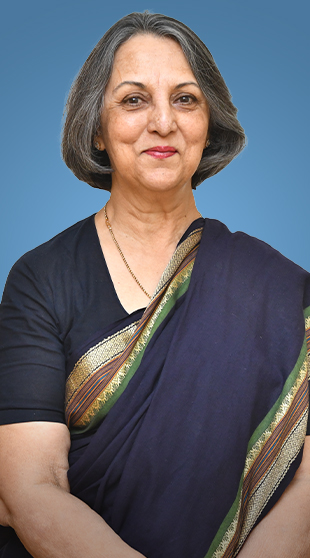
Hello and welcome to SuperLawyer. Today, I’m here with Dr. Ranjana Kaul, who is a partner at Dua Associates with a specialization in the UN International Space Law Treaty regimes and International Air Law treaty regimes as well. Dr. Kaul advises on civil and commercial activities in outer space and on the military usage of outer space.
The advisory includes national space policy and statutes mandated under the International Space Treaty for the national activities, including military, civil, and commercial in outer space. Dr. Kaul has over 40 international and national publications. She has an LLM from the Institute of Air and Space Law from the prestigious McGill University, Canada, and an LLB from Delhi University.
Given your diverse academic journey from studying history to obtaining PhD in constitutional history, could you share what led you from this kind of background in history to specializing in UN international space law treaty regimes, as well as your academic pursuits with space law and air laws?
So, this trajectory isn’t the typical one you might expect. It spans from my completion of a B.A. and an M.A. My M.A. was in history, but my specialization was in constitutional history, and that’s what I focused my dissertation on. Regarding law studies, my parents, particularly my mother, weren’t keen on me pursuing law, despite more than 50 percent of my father’s family being lawyers. She even enlisted the help of an uncle and a cousin, both practicing in Bombay, to dissuade me from pursuing law. However, I wasn’t inclined to rebel at that time. Matters progressed, and after getting married, I pursued law. I completed my LLB much later, as deep down, I always aspired to be a lawyer.
There was an advertisement in the newspaper while my husband and I were walking in Lodhi Garden. He pointed it out and asked if I had seen it. I admitted that I had, but I was hesitant about the entrance exam, as I had never taken one before. He reassured me, saying that the worst-case scenario was failing the exam. Encouraged by his words, I took the entrance exam and passed. Thus, I pursued law alongside other responsibilities, primarily because I had young children at the time, and I wanted to be present for them.
I juggled writing, as I used to be a journalist, and evening law classes while managing my household. Eventually, I started practicing law. I initially joined a firm called Vaish Associates in Delhi, where Mr. O.P. Vaish was my first mentor. It was a fantastic experience, and I’m still in touch with the family. Later, I started my own practice. Unexpectedly, my husband informed me one afternoon, out of the blue, that he was being posted to Montreal for three years. This revelation came as a surprise, considering the short notice and the lengthy duration of his posting.
I said, “But you were not under posting order this morning when we were having breakfast.”
“What happened between then and now?” he said.
“Well, I had a call, and I had to give a reply in half an hour. I knew you would react like this, so I’ve come to tell you,” he explained.
“Yes, but what about all this? You know, all my law books, my files, and this and that,” I questioned.
“I was practicing on my own. Not easy to set up on your own,” he responded.
“Well, that’s up to you,” he remarked, then did an about-turn and went back to the office.
I just froze in my chair. I didn’t know what had happened to my life all of a sudden. Anyway, I thought about it. Five minutes later, there’s a phone call. There were no mobiles then, so it was my daughter calling on the landline.
“Have you heard of a university called Concordia?” she asked. Of course, I hadn’t, so I kept quiet.
“So you haven’t,” she deduced. “Has Papa heard about it?”
“You should ask him,” I replied.
“That means no. And you mean to say that my parents are asking me to join a university in Montreal, neither have heard of and give up the best college in India, which is St. Stephen’s,” she exclaimed.
“Now look here, Mahima, it is what it is, and you just have to pack your bags and go,” I advised.
“I will not go,” she declared.
“No, you don’t have an option here. When am I supposed to go?” I informed her.
“Actually, this weekend,” I told her.
“I’m coming home,” she decided. She was in college. She drove home and asked, “What does this mean?”
“Listen, don’t ask me. I have been informed two hours ago, so you have to go,” I explained.
All this went on, and that poor girl, screaming and kicking, went off to Montreal.
“But I don’t want to study in Concordia; I want to study at McGill,” she protested.
“Now look here, Mahima, since you’re a bright girl, I am sure that you can go to Montreal, sign up in Concordia, walk across to the admin office of McGill, tell them how bright and brilliant you are and what they’re missing, and ask them to take you,” I encouraged her.
She did that, and they said, “All right, we’ll take you, but you have to get a certificate of equivalence.”
She called me from Montreal, saying, “I need this.”
“All right,” I replied. So I went to Stephen, spoke to the principal, got a letter together, and lo and behold, she was at McGill doing international relations, exactly what she wanted to do.
Then I stayed on in Delhi. My husband went in July, my son was reading economics at St. Stephen’s, and he was now headed to Cambridge. So we stayed in Delhi. I mean, I had to sort out things. I left in October, and Ishan sort of peeled off in London, and went off to university. I carried on to Montreal. All of that was fine. But a week after I had sort of recovered from the jet lag, I found myself with nothing to do. I’m a working person. I just couldn’t imagine what it is that could happen to my life for three years more.
I had decided to entrust my practice to a colleague and continue onward. In any case, my husband noticed that I wasn’t entirely content with my current state. So, he arranged for someone to invite me to lunch at the Montreal Club, where I was indeed invited.
During lunch, I met Justice Joseph Nuss, who had previously presided over the Court of Appeals in Quebec. Upon hearing my story, he inquired about my knowledge of air law. Given that air law was unfamiliar territory in India, my expression likely revealed my lack of familiarity. Justice Nuss then broached the topic of space law, to which I also had no background.
He suggested I visit the Institute of Air and Space Law the following morning and meet with Paul, the director. Initially hesitant, given my existing PhD, I eventually relented and enrolled in a certificate course spanning three months.
Upon learning that an LLB was not a prerequisite for the course, I consulted my husband for approval. Following his encouragement, I embarked on the journey, aided by his morning lifts due to inclement weather.
At the conclusion of the 12-week program, I was informed that I had excelled, prompting the director to propose further studies leading to an LLM. Despite my reluctance to undertake another dissertation, I ultimately pursued the LLM in Air and Space Law.
Under the guidance of Professor Ram Jakhu, a leading figure in International Space Law, I specialized in regulating satellite telecommunications in India for my dissertation. Professor Jakhu envisioned my formal training in these laws as being of great benefit to our country in the future.
My stint in India commenced in 2005 after a three-year tenure abroad. At that juncture, my husband’s return to India prompted a call from Mr. Dua, the managing partner, who was acquainted with him. Mr. Dua, upon learning of my return, extended an invitation to join the firm. Agreeing to this proposal, I scheduled my arrival for July after the summer recess and court resumption.
However, a twist of fate altered my plans. In March, I received a call urging me to expedite my return for an international conference on national space laws organized by the International Institute of Space Law in collaboration with the UN and ISRO. Tasked with presenting on India’s national space law, I initially balked, citing my lack of knowledge about Indian laws. Nonetheless, spurred by Professor Jakhu’s encouragement, I dove into research, crafted a presentation, and embarked on the journey back to India.
My presentation at the conference left the space establishment astounded, as it broached topics hitherto unexplored. Back then, private sector involvement in outer space activities was unheard of, rendering my insights groundbreaking. Despite the initial shock, the leadership displayed unwavering support, fostering an environment conducive to exploration and innovation.
Subsequently, my involvement with the International Institute of Space Law in Paris deepened, culminating in my current role as a board director. Over time, India’s space landscape witnessed significant transformations, catalyzed by Prime Minister Modi’s 2020 announcement, which expanded civil space activities to encompass commercial endeavors.
Concurrently, developments post-Kargil underscored the imperative for military space assets to bolster national security. This narrative, which commenced in 2000, culminated in the establishment of a defence space agency. The 2020 reforms further propelled the convergence of defence and commercial space endeavors, heralding a new era of technological synergy.
However, despite these advancements, a glaring gap persists in academia regarding space law education. Unlike traditional legal subjects, space law remains conspicuously absent from law school curricula in India. Yet, with India’s astronomical achievements garnering widespread acclaim, burgeoning interest among students is palpable.
Indeed, the allure of space exploration has sparked enthusiasm among young aspirants, fostering a keen interest in aerospace engineering and related fields. Notably, this burgeoning interest extends to participation in international competitions, such as moot court competitions organized by esteemed institutions like the International Institute of Space Law.
In conclusion, my journey traverses the evolving landscape of space law, underscored by groundbreaking developments and burgeoning interest among students and legal practitioners alike.
So, it’s called the Manfred Lachs Space Moot, World Space Moot. The finals of the Manfred Lachs Space Moot competition are presided over by three sitting judges of the International Court of Justice every year. You can understand the caliber and the importance that the Western world and the rest of the world that are plugged into this domain attribute to space and space activity.
Many of our law school students want to participate because it’s global participation. Many times, our universities have brought back the prize, the trophy, but it doesn’t give them a job here. There is interest. So now, I have seen the trend in universities. At the master’s level, you may have an optional course in Air and space law. Meaning, it is read in one line, Air and Space law, although these are two separate. And there is now the possibility of an LLM in international law.
In our country, LLM is a two-year degree course. So in those two years, there is one semester in which you will study UNCLOS, that is International Convention on the Law of the Sea. You will read the Chicago Convention, which is for International Civil Aviation. And you will read the Outer Space Treaty, which is for Outer Space. And you will read the Moon Agreement. All in one semester. Now, it is not enough, you get some sensitization, for sure. But if you’re dealing with it, to advise somebody, whether it’s the government, it’s the military, it’s a civilian, whoever it is, or it is a commercial, on the nuances of it and how it translates into our domestic national law, of which there presently isn’t for space activities, but all are normative laws.
When you’re doing activities on the ground, of course it is the laws that exist. To be able to explain that needs expertise in understanding the nuances of the treaty. They just sound so wonderful and benign, but they’re anything but that. So that is where it happened and I never planned it.
I think my circumstances took me along this path. And frankly, I don’t think what I could have done without the circumstances and without the series of mentors that I’ve had.
I don’t know what to say. I’m quite surprised at myself sometimes, but there it is.
Ma’am, you’ve achieved so much in your career, and I’d like to delve into your role as a founding member of Spaceport, Sarabhai—India’s first independent think tank dedicated to outer space. Could you share the story behind its founding, the goals and vision you had when you initiated it, and the kind of space-related discourse in India you hope to foster through this think tank?
So really, the idea of Spaceport Sarabhai started with five of us as founders, but the true originators were my colleagues, Susmita Mohanty and Narayan Prasad, whom we call NP. They are both engineers and experienced entrepreneurs who have established their own companies. We felt the need for an independent think tank, free from the constraints of government boundaries or the limitations of individual knowledge, to discuss space-related matters openly.
We also wanted a forum where India’s voice could be heard internationally and where international voices could be brought to India. For example, in one of our early sessions, we invited Professor Stephen Freeland, who is now heading the UN COPUOS working group on the legal aspects of space resources, including lunar resources, along with another expert from Australia, to discuss the various nuances of the Artemis Accords. These accords are a multilateral United States effort involving over 30 countries, aimed at furthering civil activities like mining and long-term human habitation on the moon, Mars, and commercial asteroid mining.
India is a signatory to the Artemis Accords. We explored how this fits into space law, the possibilities it presents, and the concerns it raises. These topics have not been discussed in any university to my knowledge, nor have I been invited to such discussions in any academic setting.
We realized the need to understand these issues, as many people have questions but don’t know whom to ask. For instance, when we had the geospatial policy session, we created a platform for these discussions. Currently, we are planning a forum to invite young space lawyers in India. Many young Indians, like yourself, have pursued advanced studies in space law, earning LLMs from prestigious institutions outside India, such as McGill, universities in the United States, Europe, Leiden University in the Netherlands, and Cologne University in Germany.
There’s a space university in Strasbourg, and many similar institutions exist. We can invite international experts due to our network. We also produce reports independently, without government affiliation, which allows us to present alternate narratives. For example, regarding the early space companies established around 2010, few have reached the stage of operating commercially within India. Many have relocated their operations outside India, though they maintain offices here.
One significant issue is the availability of venture capital and funding rounds, yet no startup has begun commercial operations within India. It will happen in due course, but currently, there are challenges, including the complexity of third-party insurance for space activities. According to the Outer Space Treaty, the state is liable for space assets and those of non-government entities if they cause damage in outer space, in airspace, or on Earth.
Practical aspects need to be addressed for the state and entities to comply with these regulations. This includes determining the extent of third-party liability, identifying vendors, and understanding insurance provisions.
Regarding lunar exploration, some colleagues and I, including NP, were invited to discuss the architecture of a potential moon village. NGOs are already considering the environmental aspects of lunar mining. Given the pollution issues we’ve created on Earth, it’s crucial to establish practical standards for the moon. Additionally, we must consider the prospect of contestation over valuable lunar resources, especially with countries like China and Russia planning to set up an international lunar research station, and other countries, including India and Japan, having their lunar programs.
We need to simulate future scenarios, understand treaty laws, and identify safeguards. These are the questions we wanted the freedom to explore, which motivated Susmita, NP, and others to establish Spaceport Sarabhai. Named after Vikram Sarabhai, the father of the Indian space program and the first chairman of the Department of Space and ISRO, Spaceport Sarabhai (S2) aims to foster open discussion and development in space exploration.
Ma’am, I cannot stop myself but asking you about space travel, which we are planning, then the kind of space debris which we will be facing, space pollution, which we are talking about, the space vacations which we people are now planning that if space colonies will be established, how will we travel the kind of obviously jurisdiction issues. I’m interested in understanding how your think tank aims to support and enhance planning for space travel and space vacations. Additionally, how approachable is your think tank, and how can people get involved? Please share details on how interested individuals can connect with you, and what kind of knowledge or preparation they should have before reaching out.
So, first and foremost, we have a website. Please Google and visit our site to find all the information you need on how to connect with us and what we can do. We are at a very nascent stage, with just the core group working. It’s early days, but we would certainly love to hear your ideas.
We want to see how we can involve more people. For example, we had one young student who approached us, expressing his interest in contributing to our work. He produced a wonderful report on space insurance. So, please involve yourself. What can we do for space lawyers?
As I mentioned, we are now planning a podcast series and a panel of young space lawyers to discuss the issues they are facing, what they think should happen, and how the field can be developed. These are still very early days in figuring out how to establish appropriate national laws for activities in outer space, especially concerning commercial space activities. This task falls to the government, and it’s a complex one to draft a national space activities law.
As I mentioned earlier, when you read the Outer Space Treaty, it seems simple and straightforward, almost like being in a meeting of Girl Guides or Boy Scouts. However, it is anything but that. There isn’t a definitions clause, so the terms are not clearly defined. This requires intensive academic research and work. It’s a very demanding task, and I know this because I do it.
It is consuming, but at the end of it, you know precisely what is required and what it means. Therefore, if I’m going to draft a national space law, I know what I should do and what I must not and cannot do. This is crucial because, in space, you have military space activity.
They have different nuances. The Outer Space Treaties are linked to the UN Charter and to international security. Space, after all, is a physical domain that does not recognize state sovereignty. You cannot extend state sovereignty above 100 kilometers from the surface of the earth, and it’s the laws of physics.
We all remember our basic Kepler’s laws and such. The technology is overcoming the challenges of physics in space, for instance, going against gravity at a very basic, simple level. It is all related to military technology. These military technologies can be used for military activities or for non-military activities like India does, which we call civil space activities. It’s the same technology.
The difference between the government space program and the commercial sector is that the emergence of commercial companies has nothing to do with the government and receives no support from it. Secondly, they are developing their proprietary IPR with the intention that the technology platform they create will offer customized solutions to their customers to earn money, of course. The mental framework in which our young space companies approach the subject is like any other business.
Any other commercial company in India is doing something to achieve a rate of return, which is exactly different from the state, which provides certain services to its citizens as an obligation of the state. The approach to the subject is different, but all are governed under the Outer Space Treaty and the corresponding treaties.
When, for example, damage is caused by your space object or by a state’s space object in outer space, in airspace, and on the earth, you know, debris keeps falling now and then, here and there. We read in the newspaper that a piece of debris fell in northern Maharashtra or wherever it is and did not cause any damage to life and property. Normally, the states do not like to attribute or identify that this piece of debris came from the space object of such and such. They don’t like to because space is geopolitics. Space is high stakes. So you have to tread extremely carefully in what you say and what you don’t say, especially on an official platform.
Basically, you’re walking on eggshells. That is what it is.
Ma’am, how do you see your role as a Partner at Dua Associates contributing to the evolving landscape of the UN International Space Law Treaty? How does your position empower you to drive positive change in such a highly specialized and niche legal domain? Additionally, how do you manage and navigate the complexities involved in this unique area of law?
Look, the starting point is my managing partner. When I joined here, I was practicing in the Delhi High Court and continued to do the bread-and-butter sort of work. On my first day, he came to have a chat with me about what I wanted to do. I said, “Well, apart from the normal work, I’ll go to court and this and that, but also space.” He looked at me with the same sort of expression I must have had when Justice Nuss asked me. I said, “You know, Antariksh…” He said, “Do what you want.” Since then, this firm has been incredibly supportive.
Not in an overt way, but by just being there and letting me pursue it. I was often breezing off to Bangalore for various reasons or taking off suddenly to attend the International Astronautical Congress and IISL International, among other things. They just let me be, and now it has all come together. That’s Dua Associates for me. Without Dua Associates, balancing both these things would not have been possible. My colleagues are equally indulgent; they have a smile on their faces when I’m talking about this.
Now, it’s all coming together, especially as we, including the government, are openly talking about space initiatives. In these contexts, I’m able to provide some assistance. As my professor said, your knowledge will be of assistance someday. To the extent that I can, I certainly try to help. It is not for me to drive these initiatives; I can only assist. The final decision is always the government’s prerogative.
The unraveling and understanding from my perspective are crucial. For example, civil space users already know all the operational details. For military space users, how do you navigate through this amazing treaty? It’s important to understand what military users should or should not do and why they cannot do certain things. There are countless complexities. It’s very difficult to explain it all, but to the extent that I am involved, I am doing my best.
Ma’am, you have also served as counsel for the Union of India at the High Court of Delhi. We would request you, if you are comfortable, to share any professional highlights or significant cases that had an impact on your career or legal perspective. Specifically, we are interested in cases where you thought a particular change would bring a change in society at large or anything that you felt has brought significant change to your life and career.
So, as far as legal practice is concerned, what I valued very much at a personal level is observing the societal changes. Change in society is significant. When I was a member of the Delhi State Women’s Commission, I had to deal with one particular case involving a highly educated lady. She had completed her MPhil in chemistry, and her husband was a doctor. Anyway, the short point is that it was a matrimonial situation where she and her children had been thrown out of the house. It went to court, and she was refused to provide any maintenance. However, she also did not have a house to live in.
The gentleman was still in service but had a DDA flat. She needed a place to stay with her school-going children. In the course of that argument, more than me, it was the presiding judge who made a significant impact. Whenever I think of him, I always wish him well. He said that she has the right to live in that house, to begin with. He expanded the scope of the relief he granted. Plus, he ordered Rs. 4,000 per child. This case went on for years. In the middle of all this, I went off to Montreal and told my colleague about my pro bono work. She volunteered to handle it for me. By the time I came back in 2005, this lady returned.
She used to give tuition in chemistry and mathematics. She used to drive her car to Gurgaon. She was staying in one of the DDA flats in Vasant Kunj so that she could pay for her children. Understandably, those children were impacted by their familial circumstances. But she stuck to her ground, and I have to say, I admire her immensely for her fortitude. Perhaps mothers are like that. She did all this, and her son finally finished his engineering and went to Germany for further study.
Her daughter was deeply impacted by her father’s conduct and used to stammer with anxiety. If you’re a mother, you know what I’m saying. Ultimately, that girl has emerged from her struggles like a chrysalis and a butterfly. She has a wonderful job in a very well-known school, which is a residency. Now and then, they come to meet me, and the children keep in touch with me, exchanging messages. The son is now settled in Berlin. She looks so pretty now.
She’s so confident, and so happy, and the mother is also elated. During COVID, there was naturally no question of tuitions, as one couldn’t go anywhere. However, she started a catering business and arrived here with all sorts of food. I asked, “Why have you brought this for me?
” She replied, “Because I made it myself. This is what I’m doing.” She sustained herself through that. In due course, we were able to find some details about her husband that could have incriminated him in a criminal matter. As a doctor in a government hospital, you know what happens if you lose your job. So, it came to a point of negotiation because the court suggested mediation to settle. He signed off that DDA flat in her favour. I said, “I would not like to, but I just want to tell you that I know about this. I know about these facts. I’ll leave it to you because you’re a brilliant doctor. How would you want to deal with this?” So he signed off the flat, and then we completed the registration process.
Because unless the title is transferred. He can still challenge after he retires. So we went through that whole and connected the dots and created a virtuous cycle to protect her and her children. For me, that was very, very material.
And the other was, the case of this little girl who was around 16 years old and she lived in one of the areas in Delhi. And they had come to the commission. This girl had been sort of waylaid by a constructor who was building around in that locality. And she had been raped. And the father, the old father came, you know, in tears to the chairperson who called me and she said, Ranjana ji yeh. So I said, okay, let me see what can happen.
So now, naturally, this falls under criminal law. I said I would go to Patiala House and informed the judge that I’m representing the Women’s Commission. Have you ever witnessed cross-examination in a rape case? This gentleman arrived with a battery of eight lawyers, bombarding this little 16-year-old girl with questions. It was bewildering. She didn’t grasp what had happened to her.
By the time the case came up, she had recovered, but she was overwhelmed. “Where was his hand?” “How were you feeling then?” I intervened, addressing the judge, “Your Honor, firstly, let there be nobody else in the court. This girl cannot handle these questions. Please, exercise restraint in your questioning.”
In the end, despite the verdict, the father approached me to express his gratitude. He mentioned he intended to arrange his daughter’s marriage. I advised him, “Sadat Sir, it’s unfortunate what happened, but it shouldn’t mar her future. Inform the prospective groom and his family beforehand.”
Six months later, the chairperson contacted me. The Gurdwara Parbandhak Committee had sent a letter expressing gratitude to the commission, specifically mentioning my assistance. They visited with a box of sweets, sharing that the daughter was happily married. They acknowledged her past and reassured her, “It’s not your daughter’s fault.”
Some judgments may shake the earth, but this experience profoundly impacted the lives of these two women. As a father, such meaningful milestones resonate deeply with me, as much as I cherish space exploration.
That’s what is called bringing change to society. How can you say that you have not brought in? You have brought in significant changes. Even if it has touched two lives, it has changed those lives. I really cannot imagine what they have been feeling during that kind of litigation and after following your suggestions and mediation techniques. It’s amazing, ma’am. I am just speechless.
But I’ll tell you one more thing at the time: this girl, the little girl, had been for cross-examination. My daughter, who’s studying in Welham in Dehradun, was home on holiday, and we used to live in Tilak Marg. I don’t know if you’re familiar with Delhi, but Tilak Marg and across the road is Patiala House.
So I told her, I said, “Look, you come with me. This girl is about your age, and it takes time. You have to wait till your case gets called up. I want you to come and sit and chat with her because there’ll be nobody; she’ll be sitting alone.” And these two girls are getting along famously.
And my daughter couldn’t believe it. You know, just to look at Patiala House and all those people and all these things and so forth. I said, “Mahima, this is the world across the road from our house. You live in a very privileged cocoon. Never forget that.”
The Dr. Sarojini Naidu International Award for Working Women, which you received in the year 2023, is absolutely a remarkable achievement, at least from where I come from. Ma’am, I would like to understand from you what this recognition means to you in both personal and professional spheres, and how you see that all these kinds of recognitions help us. Not only do they ground us, but they also help us understand how we can give more to society because, yes, we are a little privileged, and that is the only way of giving back to society, to the roots. How do you see it has changed you?
Look, firstly, that intimation, that email I got, came as a complete surprise to begin with. So I had to find out a little bit more about what this was. Anyway, of course, I was very pleased. Anybody would be. But what is wonderful that Mr. Marwah is doing, the people at Marwah Studios, is that I mean, I’m not talking about myself and Space Law because it’s just such a niche area that there is nothing much that I can say.
But I noticed that all the ladies who were being honored there were not because they were at the very top and they had achieved some extraordinary thing being chairman, CEO, this, that, and the other, but that they were contributing by their participation in the various activities within their radius of life, within the circle of their life. As I quoted you two examples, it’s two individuals whose lives I had the honor to touch.
These ladies, like I said, are not the ones that you see in the newspapers or on TV channels, but it’s a recognition of the contribution those ladies are making within the scope. So as much as, of course, I was very pleased about it, but I was thrilled at this initiative that Mr. Marwah has, Sandeep Marwah, I think is his name. I think that institution and that thought requires a great deal of credit that ladies everywhere, small town, big town, midtown, elitist housing and non-elitist housing, wherever you may be, but within that scope of your activity, whatever it is that your activity, you’re contributing.
That is the real thing about that Sarojini Naidu Award.
But I must tell you that the International Institute of Air Law awarded me a Distinguished Services Award in 2017 for promoting the awareness of outer space and outer space law within the national context. And for my contribution to creating this awareness within my country. And that for me was a true validation that whatever that I may be doing here in India is well worth the while.
Ma’am, I would love to ask you one, not the last, but almost the last question. How do you balance your personal and professional life? And I would ask you from the very start. From where you started your legal journey, and when you established yourself as an individual practitioner, then as a partner, then in Space Law, and in Air Law, how did you balance your personal and professional life?
So, like I told you right in the beginning, I did my law much later. After I got married, I completed my PhD. I was actually involved in running an advertising agency. I used to do a lot of writing for Hindustan Times, Indian Express, and magazines, and do travel writing.
I was with a friend of mine; we were running an advertising agency. All of that allowed me to be at home when my children came back from junior modern school. As they started growing older, then I could stay out of the house because that’s the way I’m temperamentally wired. As it happens, that advertisement my husband was telling me about came at a time when my children had already left for The Doon School and Welham.
So I was able to do that evening. There was nobody at home because my husband was by then posted in the Andamans. So I used to drive down to the University of Delhi and do evening classes. It just, you know, those dots connected. I was able to start practising in Delhi; my children were in school.
By the time I was done practising, they had finished school. Ishan was in Stephens, Mahima turned up, she was in Stephens, then he moved on to Cambridge, and I suddenly found myself with Space Law, but my children were grown up by then. Home-life balance is easy, and it is easier when your husband supports you to understand that you have aspirations.
Ma’am, the thing you just said about partners brings me to a very important question. Nowadays, new entrants to the legal field, whether male or female, often face the challenge of balancing their professional and personal lives. Mental health issues are prevalent. What suggestions or golden nuggets would you offer them?
When I started practising in Delhi High Court, and I used to go to the ladies’ bar room, I would see young women agonizing because their child was not well, and they had to come to court. I was thinking to myself, “I’m so glad I had the luxury of saying that I’m just going to do a lot of writing and potter around with this ad agency. I’m going to be working from home whenever I feel like being at home.”
I had the base for that. These young girls, especially in a profession where you’re working long hours, are drafting and meeting clients every other day after the close of court.
So when I started practising on my own, my children were in college, but they needed a mother when they had something important to tell. Whenever they came to my study and sat on the particular sofa there, I would stop working until we had a discussion, until they had said whatever it was that they wanted to say, however long it took.
But then I used to work late at night and finish what I had to do because I had deadlines to meet. Circumstances are different for different people. It’s very difficult, especially for women, and those who do it and stay with it, I truly admire them because I know that many young ladies are doing it against tremendous odds and adversity.
I know a lot of people personally who have done so well. Some have been elevated to the bar. It’s amazing, and it’s not easy, even with support.
Get in touch with Dr. Ranjana Kaul-



 Allow notifications