Tag: Sports

  • In Conversation With: Dipti Srivastava, Senior Associate at Citadel Law Chambers, a tennis prodigy turned Corporate Lawyer, who is also an ardent researcher and writer

    In Conversation With: Dipti Srivastava, Senior Associate at Citadel Law Chambers, a tennis prodigy turned Corporate Lawyer, who is also an ardent researcher and writer

    This interview has been published by Sonali ParasharOjuswi Sahay, and the SuperLawyer Team


    You were a sportsperson during your higher secondary and secondary school competing at the national and international tennis circuit. You have represented and won medals for your state in all age categories and were top 15 in India at one point in time. How did a tennis prodigy become a lawyer?

    Becoming a lawyer for me happened by chance and enjoying the profession ended up being a blessing. It was due to too many injuries that I had to decide to get back to academics. Luckily for me, my mother being a lawyer herself (although now in the family business) was there to guide me through it. She knew the process and also had an idea as to how much time and effort would be required for me to excel in this field. Further, JGLS (my college) aided in the process as it provided me with the platform to be taught by excellent professors and also gave me access to ample opportunities to learn the nuances of law and hone my skills. 

    I always believe that it is important to strive to be the best at whatever one does. When I knew that this was not going to be possible in my tennis career (unfortunately, due to injuries), I had to make a choice and a very difficult one. It was a difficult transition, however, the never to give up attitude that I learned through my tennis career helped me through the process. I started to spend considerable hours in the library of my college and soon found myself enjoying the same. I had a revelation then that being a sportsperson, I gained and internalised very essential life skills of being disciplined, perseverant and hardworking. All of it aided in the transition process and till date helps me to strive to be a better lawyer each passing day of my life.

    You got a chance to attend Summer School at Somerville College, Oxford University to complete courses in International Law and Global Governance in pursuance of your LLB degree. How were you able to secure that opportunity? Please share the experience. 

    It was an opportunity provided in college and I was able to secure a position in it based on my grades and a Statement of Motivation that I had to write and submit. The Statement of Motivation had to contain my reasons/motivations to pursue these courses at Oxford University. 

    It was a very enriching experience. I must say that the teaching patterns used in such an esteemed institution are worth experiencing once in a lifetime for sure. We used to have the lectures given by subject matter experts in the morning hours and during the late afternoon hours, we used to have tutors teaching us the same matter with extensive classroom exercises making it very interesting. I felt that they made us engage with the subject to an extent that it ignited the motivation to do further research and acquire more knowledge in the said subject. I believe there is nothing more that one can ask as a student. 

    After your education, you moved back to Kolkata, your hometown. Many stayed back in Delhi or Mumbai for better opportunities and bigger pay packages. Was this a conscious decision to move back to your hometown? If so, why? How challenging was it?

    Yes, it was a conscious decision taken by me to move back to Kolkata after my studies. I had stayed out of home for too long due to my training, tennis tournaments and then studies. Therefore, this time around, I wanted to start in Kolkata itself and see where life takes me. Thus, to sum it up, the reason was simple. I wanted to live my life on my own terms and did not want the situation around me to determine the same.

    It was very challenging but with persistent effort, I did secure a position in HSA Advocates. I remember that day and it’s been more than 5 years since then that I continue to work with the same senior and team and it’s been a great learning experience so far. It’s also been very exciting to be a part of the growth story of Citadel Law Chambers where I get the exposure to practice all areas of law and not be limited to one. I truly believe if you are good at something, you will do well wherever you are. Opportunities and money will follow. 

    You have published articles in some reputed journals and forums including IBLJ and Mondaq. How did you get into writing? What are 5 essential practices one should start to become better at research and writing?

    I got into writing extensively when I was in law school. The seeds of it were sowed then and it continues to be a very essential part of my life. 

    The five essential practices to start would be: (1) read and write every single day. Such practice on a continuous basis will 100% show results; (2) gain comprehensive knowledge about all the databases that one needs to refer to for their respective subject matter; (3) learn the skills to know what to look where. This is a very important skill for a lawyer. There is no way around it; (4) technology has now become a very important part of our lives, therefore, to be better researchers, one should stay abreast of all the tools one can use to locate materials for their respective research; and (5) writing well is a skill that comes with time and with well-grounded research, therefore being persistent with the practices mentioned above would be extremely important.

    You cleared the Custom Brokers Examination under the Custom Broker Licensing Regulations. How did it help you in your corporate career? As per your experience, how would you advise someone preparing for this exam?

    My family is into the business of providing end-to-end logistic services (for two generations now) to importers and exporters which includes custom clearance services as well. Such services can only be provided by licensed customs brokers. Since this is a part of my family business I got first-hand experience of it during family discussions. I also gained practical knowledge of it with time. I also got to know that such service could only be provided by people who have sound knowledge about laws governing the logistics industry. Therefore, since I had completed law and the said business was a lot dependent on the laws governing the logistics industry, I decided to give the exam and continue the legacy. It really widened my knowledge base and also provided me with the opportunity to learn about laws governing logistics services in India. 

    Additionally, it helped me in my corporate career to understand the businesses of clients who were providing such services. To pinpoint, it came in very handy when a legal due diligence exercise was being carried out on a company which provided similar services. It made it much easier for me to discern the business-specific licences and consents required for such services. It also helped me while providing advisory services to clients on compliance requirements under food safety regulations for the import of processed goods in India.  

    The examination process was pretty rigorous. I had to sit for a written exam and thereafter an oral round which was taken by three IRS officers. One thing that I would like to mention for the people taking the said exam is that it is very important to solve question papers of past years (as many as possible) while preparing for such competitive examinations. It really helps to understand the type of questions which may be asked and the areas of law that one needs to concentrate upon. Further, the oral rounds are entirely on your confidence. It is important to know Customs Act in its entirety but it’s even more important to be confident and own up when you may not have an answer to a question in particular. Such officers really appreciate honesty rather than giving wrong answers.

    You worked on various corporate commercial, M&A, and banking finance transactions. Can you share some of the nuances in this practice area for law students and professionals who are not exposed to this area of practice? Why should they choose this area of practice?

    The nuances of these practice areas range from conducting legal due diligence for highlighting the red flags to preparing, negotiating and closing the documentation part for any transaction. It also includes providing advisory services which range from structuring a transaction/deal and advising on corporate actions taken by corporate bodies including corporate restructuring. 

    I believe the reasons for any student/lawyer to choose these areas of practice should be their knack for diligence and sound knowledge and interest in commercial laws. 

    Please share any two golden rules that you follow in your career which could be helpful for students and upcoming legal professionals.

    Two golden rules that I follow are (1) there is no substitute for hard work. As we all know “hard work beats talent when talent doesn’t work hard” (Tim Notke). Therefore, one needs to understand and internalise that there is no shortcut to the learning process and being perseverant is the key; (2) once you decide to be a lawyer, you need to understand that you have signed up to be a lifelong student of law, therefore reading and applying the law on an everyday basis is an important rule that one needs to practice. 


    Get in touch with Dipti Srivastava –

  • Gaurav Shukla, Independent Counsel, on Sports, Media and Entertainment Law, and starting out on his own

    Gaurav Shukla, Independent Counsel, on Sports, Media and Entertainment Law, and starting out on his own

    Gaurav Shukla graduated from Nagpur University in 2007. After successful stints at Pancrest Pvt. Ltd., Pangea 3, and Exceed Entertainment Pvt. Ltd., he has started independent practice, where his role entails handling both non-litigation and litigation work assignments for various clients in the field of Entertainment, Media and Sports Industry.

    In this interview we speak to him about:

    • Sports, Media and Entertainment Law
    • Being in-house counsel
    • Starting independent practice

    How would you like to introduce yourself to our readers?

    I would like to introduce myself as a person who at a very young age realised that it is one’s own struggle to deal with everyday challenges, and no matter who stands with you or comes forward to support, you have to overcome these challenges on your own. Therefore, I am a firm believer of the famous quote from the book The Alchemist, “A man is the creator of its own fate”. I have chosen law as my profession with the sheer will and determination to make my name in this profession and endeavour everyday to thrive and excel by taking a positive stride every morning.
    I have worked with various corporates as their in-house counsel. My approach has always been very unconventional in performing all my assignments and pursuing the opportunities that come my way or those that I manage to create for myself.


    Tell us a little about your days in law school.

    I graduated from DACN Law College affiliated with Nagpur University. Though I wanted to study in a law school, I failed to appear for a law school entrance. I was also very sceptical about getting through, being an average student throughout my matriculation. I remember one incident which changed my life. I was not good in spoken or written English during the initial days of law college and I misspelled a very simple word for which my entire friend circle mocked me which was embarrassing for me considering the background I come from.

    What were the activities, academic or otherwise, that you undertook in your law school days which in your opinion have shaped you and your career?

    I am an enthusiastic and an energetic youth but with the kind of college that I come from there was not much scope to engage in many activities. Therefore I thought of becoming independent and started working in the BPO industry in Nagpur speaking to American and English people on sales calls.  When my friends were busy running pillar to post in the court premises working with their seniors, I was developing a skill to convince a complete stranger sitting thousand miles away to buy a product and share their financial and personal details which I believe is a very difficult job. I am not undermining the importance of internships or visitations to court hearings, I am putting across a different approach which not only improved my communication/oratory skills but is also a prerequisite to excel in the legal profession. I was also developing my convincing skills which we need to possess in order to argue matters efficiently. We as individuals have to understand our shortcomings and work towards improving them conventionally or unconventionally.


    How important is mooting in the life of a law student? 

    Mooting has now become an integral part of the curriculum. Mooting is a very important aspect in developing and shaping your advocacy skills. It gives you a platform to undergo a mock experience of how you need to conduct and appear before the real courts. You develop the art of interpretation and how to put forth an argument. I also undertook the moot court competitions and approached it very seriously keeping in mind the benefits and fruits it will yield in longer run. Not choosing moot court competition is one’s own choice or preference, however we get exposure of competing with students in intra college and national moots and getting the opportunity to witness others is an experience in itself, it gives you an edge over others.

    How important are grades, in your opinion? 

    I have graduated from a law college which is not even known to the legal fraternity, but with decent grades. Campus placement or pre-placement offers are not even a probability that I could ever come across or dream off. Whatever position I have attained in my career is purely and solely out of my own efforts and perseverance.

    I do agree that grades are important and we cannot shy away from the fact that your first impression is cast on the basis of your grades before the interviewer or for even getting a chance to get a call from a reputed employer. However, grades are not everything. One may achieve good marks by mugging up the entire book without actually understanding the essence and application of the law. One has to have a very strong base and legal acumen in order to excel at the highest level. Competition is cut throat and with new technologies and modules being introduced in the market, the day is not far when the first level of work shall be done with the help of these tools.  In order to safeguard and strengthen one’s position and demand in the market, one has to have a clear understanding about interpretation and applicability of the law and to the best of the client’s advantage in order to secure the desired results. These days landing up in jobs is not totally dependent on your GPAs. As I mentioned earlier good GPAs may get you a chance to appear for an interview, however your knowledge and interpretation and  application skills along with correct approach shall sail you through the hiring process. I had the opportunity to come across many candidatures, and to be honest not even once have I looked at the table which contains their academic credentials. For me, a person’s other curricular initiatives (internships) and the exposure of different kinds of assignments is what I am most interested in. If a student having excellent GPA cannot answer a simple questions related to contract law or CPC or for that matter any other law, what is the use of that GPA? My humble advice is to understand and have correct interpretation of law as it is purely based on logic. What is not logical can never be upheld in any court of law barring few blunders which we come across.


    Who was your mentor, or main source of inspiration who motivated you all along the way?

    My one and only mentor is my father Mr. Girish Shukla who is also a senior advocate  having experience of almost four decades in the legal profession  as a Judge and as an Advocate. He is a practising counsel in the High Court, Mumbai and other fora. He has dealt with varied subject matters handling a plethora of cases throughout his career. My strength, professional ethics, inspiration, acumen, conduct and every aspect of my being is my father’s gift to me. Also my mother has played a very important role in my life, has supported and motivated me to the extent which I cannot be expressed.


    What are your areas of specialisation in law?

    I wouldn’t project myself to be a specialist in any area of law. However, with utmost humility, I can say that I have gathered knowledge in the field of Entertainment, Media and Sports and deal with clients on subjects like Intellectual Property Rights, Sports Law, Corporate Laws and litigation matters. I have been working in the entertainment, media and sports industry for most part of my legal career and deal with all the relevant laws and related work assignments on a day to day basis. I always had the option of joining my father in his practice and live a smooth and comfortable life. But that is not who I am. I always like to challenge myself and endeavour to achieve things on my own. I always believed that if you have a family backing in the profession that you are pursuing, that option or working with them is always open for you. However, I believed and followed the principles that will enable me to stand out and make my own name. In the legal profession, the initial years of practice are full of struggle and if you join your family in litigation practice then you are more of a liability than an asset. I therefore decided while I was in my final year that I shall pursue my career in the corporate department/non litigation work profiles wherein I get paid from day one and therefore get to avoid financial crunch. I did not have the privilege to land a job in a law firm not being a student from a law school.

    Students have to take into account two main factors/aspects vis-à-vis their financial condition/backing and their interest/strength in legal field while deciding their future steps. If they are financially sound then they can either take up independent litigation (no guarantee of fees) during initial days or work with a senior advocate for less salary. If they are not financially sound, then they need to secure a job in a law firm or in corporates/companies as in-house counsels. Second aspect is indirectly related to the first one and if they have the financial support then they can experiment to work in fields they have inclination towards and if it doesn’t work then may be try something else. It is ultimately a person’s own evaluation as to what suits their situation and what they desire/can sustain.


    How were the first few years after your graduation?

    I was the first person from my batch and entire college to secure a job in Mindcrest India Pvt. Ltd. in Pune. I had appeared for my interview and test even before my final semester exams and was offered a job. You cannot imagine how happy I was to get a job before graduating back in those days when most of my friends and other fellow students had no idea what they will do after the exams. Mindcrest has been one of the best working experiences I ever had. Not because it was my first job, but the culture of Mindcrest had a blend of work and sports, as they strongly believed in ‘all work and no play makes Jack a dull boy’. During my stint with Mindcrest, I have played various corporate tournaments and represented Mindcrest in basketball, badminton, cricket, football, snooker and other sports. I have been a sportsman throughout my childhood and being a state player in basketball and badminton, one cannot ask for more in their work life if you get to participate and represent in different sports, the organisation one is working for. Special mention to Mr. Ameet Gokhale (erstwhile India head) and the founder Mr. Ganesh Natarajan for being sports enthusiasts and ardent supporters of all Mindcrest players/employees. After Mindcrest I have worked with Pangea 3 in Mumbai and then in the sports and entertainment sector. Law college made us realise one fact that we will have to make our own fortune as college did not have the facility or infrastructure to enable us to seek pre placement offers.


    What is it about the corporate sector that kept you in this field and never let you leave for firm practice until recently?

    (Gaurav has worked with several corporate giants such as Mindcrest India Pvt. Ltd., Thomson Reuters, IMG Reliance Limited as well as Exceed Entertainment Pvt. Ltd., and as Senior Manager in the Legal Department at Bajaj Telefilms Ltd. )

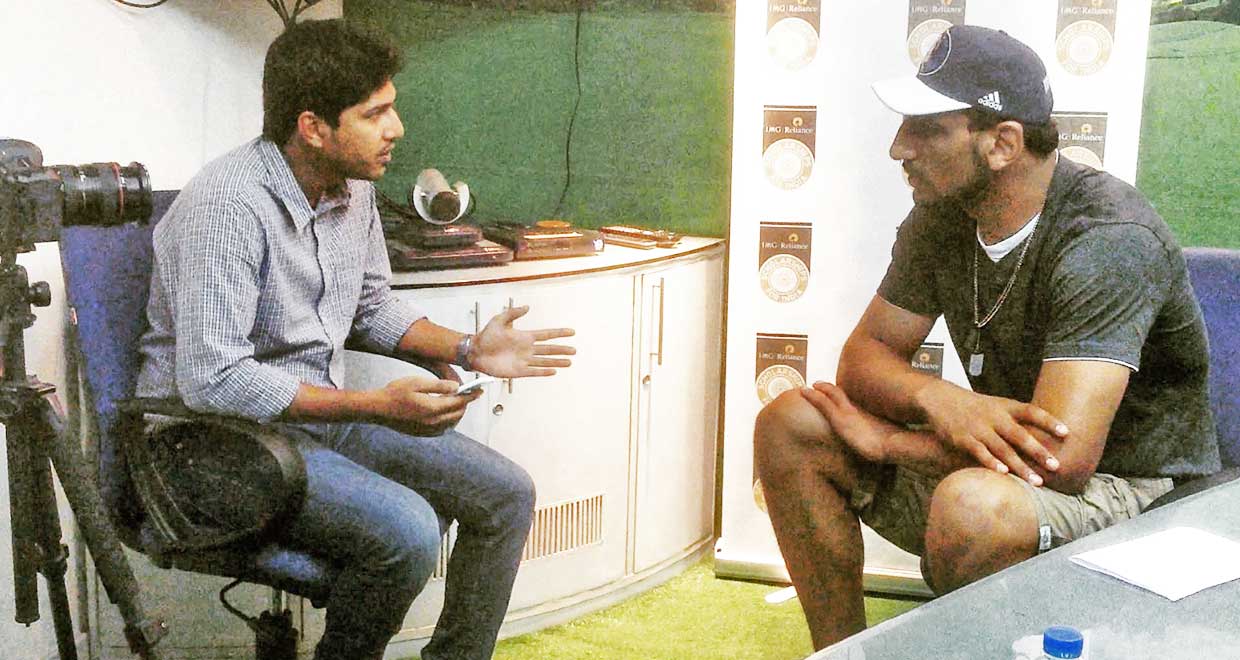
    As I mentioned earlier corporate sector job is more stable financially and also provides opportunity for variety of work. You get to learn the nuances of the respective business carried out by such corporates and also get exposure to litigation and compliance related aspects which enhance your repertoire as a professional. I have worked with corporates for ten years and normally when people try to stabilise their life and try to strike a balance in terms of professional work and personal life, I have again deviated from such standard practice and have now decided to work independently with diverse clientele in distinct industries. Throughout my career, I have worked on Indian Super League (ISL), Indian School College Basketball League (ISBL), Aircel Chennai Open (Tennis), Lakme Fashion Week, Myntra Fashion Weekend, whilst working with IMG. Working on Indian Super League was a very unique experience as I had the opportunity to work with Player Auctions, Regulatory Commission Works, Player Agreements (Both Domestic and International), Sponsor Agreements, Franchise Agreements, Stadium Agreements and all other contracts executed for the League. With Balaji Telefilms Group, I had the opportunity to work and engage myself and supervise team members working on different kinds of Agreements and other litigation work for Television Industry, Films and Digital Media. Broadcasting Deals, commissioning Agreements, Film and television Production and Channel Agreements, Artist, underlying work contributors etc.

    I have recently with  my father’s guidance and mentoring ventured into independent work and started our full service law firm under the name of MGS Advocates. Currently we are catering to clients in Mumbai in various fora for litigation matters and also undertaking mandates for non-litigation work in the field of Entertainment, Media, Sports and Corporate Sector. We have associate partners in all major cities in India with whom we work on regular basis. We are currently operating from three offices located in Mumbai and we have plans to expand our facilities and offices in all major cities of the country.


    How was your experience working as a junior lawyer with a Senior Advocate?

    Due to a family emergency I had to leave the job in Pune and relocate to Nagpur to help the family members in dire situation. During this time I practised and assisted my father is all his cases at the High Court and District Court in Nagpur. I gained valuable experience of litigation, working and procedures of the district court, which is the most important to learn for a litigating lawyer.


    If given an opportunity, what would you do differently in your career journey up to this point?

    If given an opportunity I would go back and study law from a reputed law school in order to seek better opportunities with lesser struggle and commensurate package as per the current market standard. Being from a law college lesser known, I have worked really hard to get where I am and the monetary compensation which is offered to a law school student is something that I could never achieve from the word go, though now I believe, it is at par or even more than the standard packages offered to someone equaling my experience.

    My advice to aspiring lawyers is to stick to one organisation/firm for a longer duration at least two to three years during their initial stages after graduation, as stability these days is a major concern and I am saying this out of my own experience. Also, they should analyse and evaluate and think 1000 times before making any harsh decision of either switching their job or going independent. However, once they have made the decision they should never regret and repent the decision as it will affect them even more than the decision itself.


    Is there any other suggestion you would like to give to our budding lawyers?

    I always had one thing very clear in my mind, that no one was born knowing everything.  Apart from certain personality traits inherited by them from their parents, everything else is and has to be developed on our own. Every person does not have the same grasp, concentration, skill or ability and therefore never ever either compete or compare yourself with others. Winning or losing is not always in your hands, but giving everything to the best of your endeavours is something you should strive for and then stay focused and positive. Have perseverance, be humble, hold on, the initial days are the hardest and do not give up easily. It is your determination and sheer will power that will make you reach places because as often seen, the smart ones are not always the rich ones and the rich ones are not always the smart ones.

    Lastly I shall conclude myself with a very famous quote being an ardent fan of the world’s greatest basketball player, Micheal Jordan:

    “I’ve failed over and over and over again in my life and that is why I succeed. Obstacles don’t have to stop you. If you run into a wall, don’t turn around and give up. Figure out how to climb it, go through it, or work around it. Talent wins games, but teamwork and intelligence wins championships.”


  • Aditya Shamlal, Partner, GameChanger Law Advisors, on career experience in Sports Law

    Aditya Shamlal, Partner, GameChanger Law Advisors, on career experience in Sports Law

    Aditya Shamlal graduated from the National Law School India University in 2008. He has worked as an Associate at Amarchand Mangaldas and thereafter at the Chambers of Raj Panwani. He is at present a Senior Consultant at GameChanger Sports Ventures, a Partner at GameChanger Law Advisors and Managing Editor at gamechangerindia.com. In this interview he shares his insights on:

    • Choosing law as a profession
    • His time at NLSIU
    • Working at GameChanger, India
    • Experience in Sports Law


    How would you like introduce yourself to our readers who are mostly law aspirants, law students and young lawyers?

    I am a graduate of NLSIU, Bangalore, Batch of 2008. I have, during my 7 plus years since graduation, gained experience and worked in various practice areas within the legal industry, such as corporate and commercial law, environmental law, technology law, sports law and dispute resolution. I am an avid sports enthusiast and do regular research and writing within the sports law domain.


    Did you always want to be a lawyer? Did you have lawyers in your family or among relatives who motivated you to pursue law?

    As a child or even till I was 14-15 I never really thought much about a career and I don’t think I was particularly ambitious either. I was quite content with playing sports with my friends, playing video games and studying when required to. The first profession I seriously thought of was law.

    However, I did not have any lawyers in my family or even among distant relatives. No one in my family really knew what being a lawyer meant. I first discussed this with my family in 2001-2002 and their only idea of a lawyer (and consequently mine) was an advocate who practiced in the courts.


    What inclined you towards the field of legal education? Can you recall any specific incident that made you choose law as a career?

    My favourite subjects in school were English and Social Studies. Our civics course had chapters on the Constitution of India and that first got me interested in the ‘law’. By the time I was 14-15 years old, I had displayed a higher aptitude for English, History, Political Science and Economics over Math and Science. My school at that point of time did not offer arts courses as an option for the 12th Board examination. I was left only with the options of commerce or science and chose science to ‘keep my options open’.

    Sometime in 2002, my English teacher, who herself was an LLB graduate from Delhi University, suggested I consider law as a possible career option, as she felt I had an aptitude for it. This got me thinking about law seriously, and after doing a bit of research on the options available and the exams to be written, I decided to go ahead and write the legal entrance exams.


    How would you describe your experience as a student at NLSIU? How instrumental was NLSIU in shaping up your legal career?

    NLSIU was a great place to study law. While NLSIU, like every other institution in India, has its own problems and issues, those 5 years completely changed the direction of my life.

    I believe NLSIU has been extremely instrumental in shaping the legal career of almost all its graduates and the NLSIU alumni community is now understanding that, and consequently are more invested in the institution than before. NLSIU has churned out leaders in advocacy, law firms, companies, public policy institutions, academia, social work and quite recently in entrepreneurship as well. This would not have been possible without the institution providing a conducive atmosphere for learning. In addition, the institution has also provided us with other building blocks (such as exposure to so many different situations, the ability to build powerful networks, development of communication skills etc.) that have stood us in good stead way after our graduation. Therefore, there is much reason to be grateful to NLSIU!


    What were your areas of interest during your graduation? How did you go about developing expertise and knowledge in these areas?

    Economics, Company Law, Intellectual Property Law, International Law were the courses I enjoyed the most during college, I would be lying if I said I went around developing any sort of expertise in these areas during my college days, apart from during internships, which necessitated doing reasonably in-depth research with respect to real world circumstances and scenarios.

    Most of my extra-curricular activities were centred around sports whether it organisationally or in the form of participation. I played basketball briefly for the university team, and otherwise participated yearly in inter-batch sports activities like basketball, football, tennis and table tennis. I was also on the sports committee for a year.


    Tell us about the internships you pursued when at law school. What kind of work did you get to do during internships? Did law school equip you enough for internships?

    I did mostly litigation internships with NLSIU Alums in the Supreme Court and Delhi High Court for my first 3 years in law school. In my 4th and 5th years I did more corporate internships by interning at law firms and at banks. The education at law school, whether relevant or not specifically with respect to subject matter, in general armed me with the tools I needed to tackle any legal problem thrown at me during my internships.


    Right after graduation you joined as an Associate in the New Delhi offices of Amarchand Mangaldas. Tell our readers what was your work profile at this Law firm? What did an average day of work look like?

    I joined the erstwhile AMSS, Delhi in 2008 and worked there for a period of 2 years. As a fresh graduate in a large law firm it is sometimes tough to hit the ground running. Often you were put in a practice area you did not understand and it can be quite a challenge coming to grips with the major legal issues and nuances of a particular practice area.

    As a junior resource you work profile includes doing all of the ground work in the form of research; preparing first drafts of opinions, legal memos and agreements; conducting due diligence exercises; maintaining files, taking minutes at meetings, assisting your immediate reporting senior associate or your partner in whatever way possible. An average day in Amarchand is quite hectic, you are almost always occupied with most of the tasks I have already mentioned.


    Please tell our readers what was the procedure you followed for your applications to the big law firms?

    We had a robust recruitment committee during my years in law school, and the big law firms, both Indian and from the UK, were recruiting actively from NLSIU. We routed our job applications through our recruitment committee and some students had already landed jobs through pre-placement offers on the basis of internships.


    aditya-shamlal-2

    You have further worked in litigation for about 2 years. Kindly in brief share these experiences with our readers.

    After walking into NLSIU in 2003, joining a litigation practice in 2010, was my biggest eye opener. During my time at AMSS, I had the opportunity to work on all kinds of projects, but due to the way large corporate firms are structured, my client or ‘real world’ exposure was fairly limited and junior resources in large firms are generally sheltered and insulated from the big bad world.

    Juniors in Litigation, especially outside of the larger firms, have no such protection afforded to them. You are quite literally thrown into the deep end, whether it is drafting, or filing a suit or petition, sitting in client meetings and gleaning facts from your clients, sitting with senior lawyers and briefing them. In litigation, every one of your skills is tested thoroughly. Whether it is the hard legal skills of drafting or research or soft skills in managing client expectations and dealing with the registry, all your work and life experience will come into play when working in litigation and therefore, to me at least, it was one of the more challenging experiences of my life.


    Take our readers through this wonderful transition and journey you have experienced and kindly share your legal insights in sports issues.

    (Thereafter Aditya joined GameChanger Law Advisors as a Senior Consultant and as the Managing Editor of gamechangerindia.com and finally became Partner of GameChanger Law Advisors.)

    GameChanger Law Advisors (a legal advisory practice) and GameChanger Sports Ventures (a consultancy and online web magazine on the business of sport) was founded by Amrut Joshi (NLSIU, Batch of 2003) in the year 2011. I was always interested in sports law and sports businesses and most of my friends knew of that interest. I was put in touch with Amrut through a common friend and I wound up joining both the law firm and the consultancy in 2012. Initially, it was just the two of us in the law practice.

    GameChanger Sports Ventures was conceptualized as a sports business consulting firm to provide niche consulting services to the sports industry (such as sponsorship consulting, social media marketing, and other advisory services). While Amrut and I were responsible for shaping the content platform i.e. gamechangerindia.com, Prantik Mazumdar (who is a reputed digital marketing consultant in Singapore) was leading the execution of all consulting assignments.

    The idea was to bootstrap the sports consulting venture with revenues earned from a pure play law practice (i.e. from GameChanger Law Advisors) and from a social media consulting practice (in Prantik’s case). We straddled our corporate and commercial law practice with GameChanger Sports Ventures’ work for the first few years. However, due to Amrut’s and my legal experience, the law practice continued to get stronger (as a result of a strong startup ecosystem in both Bangalore and New Delhi), and we eventually pivoted to a model where we were exclusively focusing on pure-play legal services, which included assisting clients on Angel/VC investment transactions, technology licensing transactions, commercial contracting, sports law and employment law advisory All the while, we have continued to retain our focus on servicing clients in the startup and sports industries.


    Please tell our readers about GameChanger Law Advisors, its area of operations, services offered. What was the thought process behind joining GameChanger Law Advisors?

    GameChanger Law Advisors, is a boutique commercial law practice that is focused on servicing clients in the Startup, Sports and SME ecosystem. We currently have full-fledged offices in Bangalore and New Delhi. Our core areas of practice are:

    • Corporate and Commercial Law Advisory;
    • Employment Law Advisory;
    • Angel and Venture Capital Investments;
    • Mergers and Acquisitions;
    • A specialised practice supporting the Technology and Media industries; and
    • A specialised practice supporting the Sports Industry.

    The thought process behind joining GameChanger Law Advisors was that I wanted to work in industry areas in which I am interested. In addition, I had a unique opportunity to build a law practice that is modern, contextual and meritocratic in its outlook. The decision was borne out of that interest, it was an instinctive decision taken after weighing all the pros and cons of leaving an established practice area and attempting to develop and carve out a niche for ourselves.

    Company Law applies equally to any company irrespective of the industry it does business in. Our value addition as corporate and commercial legal counsel stems from the fact that we strive to obtain a deep understanding of our clients’ businesses and their commercial considerations and pinpoints, while rendering our services. The fact that Amrut and I were able to obtain a substantial amount of first-hand non-legal business experience also helps us when we share our experiences with Founders of startups now. As much as it is a cliché, we believe that we will only be successful and relevant to our clients if we provide advice that is practical and not merely by reading to them the plain letter of the law. .


    How did your interest grow towards sports law as this an area less travelled by corporate lawyers?

    I used to watch and play quite a few sports growing up. Watching and reading about sports like Football and Basketball got me thinking about how sports are a reasonably structured business in the West. Sports as a business in India was only unlocked in the early 90’s with lucrative TV deals for cricket broadcast and sky high endorsements for Sachin Tendulkar. Even as recently as the early part of the last decade, sports business in India was equated with just cricket. Since then however, the business of sport in India has evolved gradually. The last few years has seen the advent of leagues in sports such as Football, Kabaddi, Hockey, Badminton and Tennis. These leagues are now spawning a professional ecosystem, which comprises not just the players but also other stakeholders such as sponsors, franchise owners, broadcasters, infrastructure providers, coaches, medical staff, player agents etc.

    The growth of this ecosystem has also gradually increased the demand for specialised legal services to support different stakeholders in the sports industry. Sports Law, in our view, is “applied law”, and is a discipline that requires a good working knowledge of several other bodies of law such as contract law, constitutional law, administrative law, intellectual property law and company law. You cannot be a good sports lawyer unless you are a good lawyer!


    How is the work life at GameChanger Law Advisors and how do you maintain the work and family life balance?

    We strive hard to maintain a work-life balance at GameChanger. However being a young firm, with a growing client base, work-life balance is sometimes a luxury that we cannot afford. Those situations notwithstanding, we try to make sure that we don’t unnecessarily keep long hours. We try and make sure that the entire team gets a complete break on Saturdays and Sundays so that we are fresh and ready to deal with new challenges at the beginning of every week! Being a small team, we are also flexible with leave and holiday requests- the team tries its best to cover up for any person who is on leave/vacation, so that the vacation/leave can be used for its actually intended purpose! Having said that, if there are unavoidable situations at work, which require us to be available for clients at late hours or on weekends, our team members are game to accept such challenges too!


    You have various publications on sports law to your credit. Kindly share your experience with young readers and how your interest was drawn to this field.

    Publications are something which I didn’t really take to seriously in Law School. I didn’t attach to much importance to it at that point of time as I viewed it as an exercise which requires too much effort for no tangible result. Only once I started working did I realise the value in writing. Legal writing truly hones your theoretical skill and grasp over the subject at hand. In addition, it helps you to express your views, strive towards paying attention to detail and reach a target audience that is relevant to your practice. As a firm, GameChanger Law Advisors puts a lot of emphasis on legal writing, not just in the field of sports law, but also other areas of law such as corporate law, administrative law, employment law and contract law.

    If I have any advice for a young law student, it would be to use the opportunities during college life to get published as much as possible. If a subject interests you, write about various topics that are current and relevant to the legal debates of the day. It is an extremely handy skill-set to have and something which in my view will never go to waste.


    Do you have any plans to pursue higher education in the future specially in sports laws?

    No current plans to pursue higher education, in sports law or otherwise, though I would love to do a sports law related LL.M so I would not rule that out for the future if the opportunity ever presents itself.


  • Aahna Mehrotra, Head, Sports Law, TMT Law Practice, on LL.M in sports law from UCLA & ISDE and experience as a sports lawyer

    Aahna Mehrotra, Head, Sports Law, TMT Law Practice, on LL.M in sports law from UCLA & ISDE and experience as a sports lawyer

    Aahna Mehrotra, the head of Sports Law at TMT Law Practice, is a member of the Delhi High Court Bar Association, International Association of Sports Law, and the ASSOCHAM Sports Council.

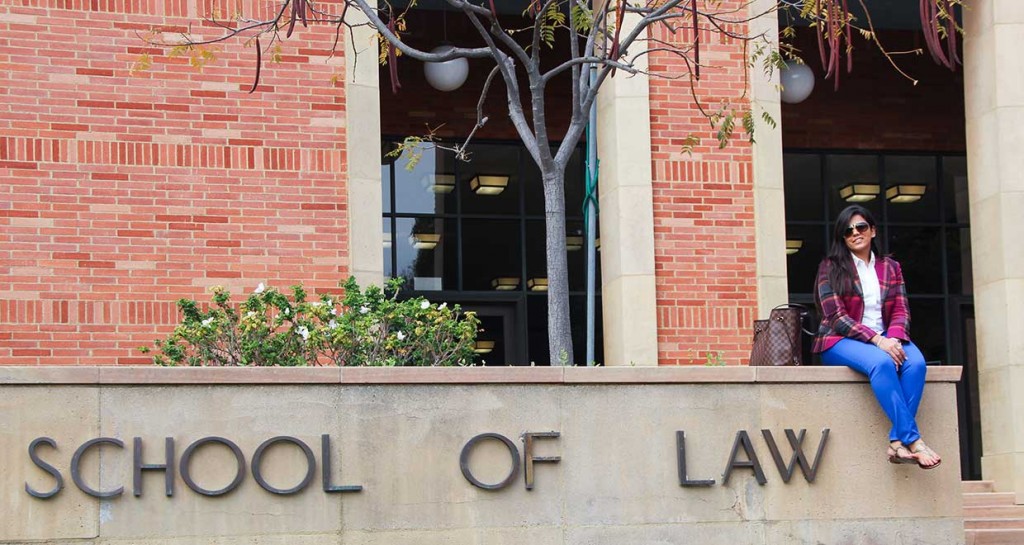
    After graduating from ILS, Pune in 2011, she has attended various prestigious institutions for varying academic laurels from an LL.M in Entertainment, Intellectual Property and Sports Law from UCLA School of Law to a Master’s Degree in Sports Law from ISDE (Instituto Superior de Derecho y Economia), where she received the Economist & Jurist Scholarship for her practical experience and academic qualifications.

    Her many distinguished achievements include having been chosen / selected to represent the country as a part of the National Women’s Under 19 Cricket team and her involvement in multiple sports at the state level.

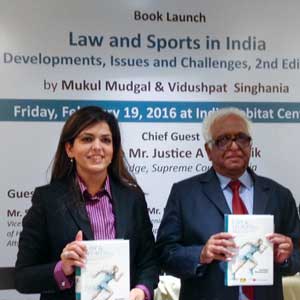
    Academically, she has also co-authored “Law and Sports in India”, the second edition. A work dealing with the position of sports within the constitutional framework and recent events such as the IPL probe report, doping controversies, etc.

    In this interview, Aahna talks about;

    • What influences led her to pursue law as a career
    • Her interests beyond the legal sphere and the impact they had
    • The value addition of higher studies in niche areas of the Law
    • The charm of quotes and simple expression


    How would you like to introduce yourself to our readers?

    Lawyer by choice…Writer by chance… Sports enthusiast… Stricken by wanderlust.


    Tell us about your life before you joined law school. What made you gravitate towards law?

    When I was young, my grandfather quoted John Lennon to me: “When I was five years old, my mother always told me that happiness was the key to life. When I went to school, they asked me what I wanted to be when I grew up. I wrote down ‘happy’. They told me I didn’t understand the assignment, and I told them they didn’t understand life.”

    Seeking happiness and fulfilment in every moment I live is amongst the greatest lessons I learnt from my grandfather. He held a law degree but started his career as a sports journalist, going on to become the director of the National Herald. He then moved into the arena of politics and social causes. Wearing the mantle of a trade union leader, he sought happiness in devoting himself to the cause of improving worker benefits. I particularly remember watching him return home on the shoulders of a jubilant crowd after his success in obtaining a favourable judgment in a case involving illegal termination of employment of 300 men. Young as I was, I realised how empowering it is to know the law.

    Perhaps that’s what drew me, at school, to his dual interests: sports and journalism. I was the editor of the School Annual Magazine – resurrecting it from a two-year oblivion and also pioneered the first School Newsletter, that then became a regular feature. I was appointed Captain of the School Cricket team at a time when the school coach had gone on leave. Coaching taught me patience. I learnt that people grow with praise, that critique works only in an environment of trust and emotional security, and that the joy of seeing others grow and score through the training I had given them was a victory sweeter than my own achievements at the wicket. Not only did I lead my school team to victory, but I was also appointed as the captain of the first ever All India Girls’ School Cricket Team and went on to being selected to play for the India Under-19 Cricket Team. My time at school culminated in a very special moment when I was awarded the trophy for ‘Selfless Service and Helpfulness’.

    Having completed high school, while cricket and writing seemed worthy allies, I made a choice to pursue my dream of becoming a lawyer.


    How was your ILS Law College, Pune experience?

    Having lived in a boarding school for 6 years, I was tired of living the hostel life. Therefore it was a personal choice to go to ILS over a National Law School and I have no regrets over my decision to date.

    At ILS, unlike national law schools, there wasn’t a routine time table that lasted from 9 to 5 or a road map to the kind of internships one must pursue. We were done at school by 11 a.m. on most days and had the choice to then plan our day in whatever manner we pleased, also our holidays which were fairly longer compared to national law schools. Several chose to do internships both during college days and in holidays, others spent time perfecting their skills at Moot Court competitions, I on the other hand spent my time learning about Sports Law, pursuing summer school programs and doing internships both in India and abroad.

    At ILS, no two students at the end of their 5 years, turn out to be exactly the same, which I feel is the case with National Law Schools, where most students do the same kind of internships, and therefore the competition on day zero is much harder. Studying at a National Law School has its own brand value and pros, while studying at ILS makes you more independent and responsible in terms of your choices.


    What were your areas of interest in the law? Did you engage in extra-curricular activities while in college?

    My areas of interest had always been intellectual property, entertainment, media and sports laws which sprung from the kind of activities I was involved in back in school.

    In the first year of law school, I remember walking up to my college university representative responsible for organizing the ‘Legalease’, the annual ILS Festival, and requesting for a spot in our ‘class’ (section rather) cricket team. “I hope you know they would be playing with a leather ball!”, he exclaimed. My immediate response “I was chosen to play on the India under-19 cricket team” amused him a little further. He didn’t give me a chance to play on the boys’ team but he did, in all fairness, organize a cricket match for the girls as a part of Legalease, 2006. I also played a little bit of throw ball and volley ball as and when the opportunity arose.

    Apart from playing sport, I participated in the Harvard Model United Nations and pursued a couple of diploma courses.


    What internships and voluntary practical training did you take while in law school and during your LL.M years? What value addition did they provide?

    Like all other law school students, I experimented with a whole bunch of internships. I worked at an NGO, at the Hon’ble Delhi High Court, with Mr. Mukul Rohatgi at the Hon’ble Supreme Court of India, with a barrister specializing in criminal law in London and also at a law firm in Delhi during my first 3 years of law school.

    I learnt a lot during my law firm internship, as I was given the opportunity to interact with some clients, prepare my first cease and desist notice for a trademark infringement, work on matters involving sports persons, and realised that it was what I enjoyed most and not litigation. It also helped to further develop my interest in intellectual property and related areas. I then just stuck with law firm internships and interned at TMT Law Practice twice, after which they made me a pre-placement offer. It always helps to get a job offer, if you go back to an office for a second time to intern, as they are able to gauge your ability and progress better. Also, I chose to intern at a boutique law firm so that I could make a more marked and personal contribution during my internships, instead of being lost at a large law firm.


    You pursued an LL.M from UCLA in entertainment, IP and Sports Law. Tell us about the LL.M course you took, how did you apply for it and what was life at UCLA like?

    An LL.M application is all about your Statement of Purpose (SOP) and they give little weightage to your grades or C.V., is what I learnt from personal experience.

    I applied for an LL.M while in law school to about 8 law schools in the States. It was a decision taken overnight and I did not think the SOPs through. Having been a creative writer in school, I took it all for granted and drafted my SOPs in one night and sent in my applications in December 2010. I was rejected by all 8 law schools.

    I pondered over the rejection, re-read my SOPs, and realised that they made no sense as they were a bunch of disconnected paras put together to comply with the word limit. I took the same drafts, and re-worked the structuring and choice of words and then re-applied in October, 2011. By the summer of 2012, I was spoilt for choice with an admission to all 8 law schools, some even willing to offer me scholarships.

    I had an admission to Duke University, a T-14 law school, and had even paid up the advance to block a seat and done my visa formalities when I heard from UCLA. It was the toughest decision to make, a ‘T-14 Law School’ versus the top school for entertainment law. I tried to choose the best of both worlds. While I chose to disregard the overall rankings and went with the rankings for subjects of my interest and gave importance to professors like Nimmer in picking UCLA for an LL.M., I pursued a summer school course with Duke Law School, a program run by them at the University of Geneva which gives you the opportunity to do up to 6 credits of course work. I studied sports law at the summer school offered by Duke, and then joined UCLA for my LL.M.

    UCLA gives you the opportunity to do 4 credits worth of practical training as a part of their LL.M. This, in my opinion, is what sets UCLA apart from other law schools and gives its students an edge over the others. Once made aware of this opportunity, I sat for campus placements and secured an internship at Warner Bros. Intellectual Property Dept. If there was the slightest doubt in my head about having left Duke for UCLA, I knew at that point for sure, that UCLA had been the best decision I made.

    As far as leisure activities go, all law schools in the States have a concept called the ‘Bar Review’. It has nothing to do with the American Bar Association, it is a concept wherein on every Thursday night you go review / check out a bar / club in town for drinks. Los Angeles being famous for its night life, I don’t remember ever having to repeat a bar.


    How did your interest in these fields develop?

    I constantly missed playing regular cricket through my years at law school. There weren’t too many opportunities available in Pune for women. In fact, I momentarily contemplated moving to GLC as Mumbai had a lot more to offer in terms of women’s cricket. In fact, women’s cricket only came under the auspices of BCCI in 2006, the year I had left playing cricket and started law school. My juniors from school often called and narrated stories of their experiences at Ranji, from a time when we would fund our own travel to them finally being paid Rs. 5000/- for a match. I felt really happy for them and I knew then that true happiness for me lay in uniting both my vocation (law) and passion (sports and writing). While I had lost my touch on the field due to lack of practice, I made a conscious decision to specialize in Intellectual Property and related fields like Entertainment, Media and Sports Law and in some way remain connected to Sport.

    As a writer, of course, you must always be well-versed with copyright law. I always enjoyed music, it was my only other stress buster apart from sport, so I studied Music Laws at UCLA, apart from entertainment, intellectual property and sports laws. I learnt about the dying music industry and the effects of piracy. In fact, the Intellectual Property heads at Warner Bros. even gave me the opportunity to work at the Anti-Piracy dept. for a few days, which has led to me not downloading a single song or movie illegally in the last 3 years.

    So my interest in the kind of law I practice has pretty much sprung from my hobbies and that’s why I love what I do for a living.


    Could you explain to our readers the interrelation between entertainment, IP and Sports Law?

    What is sports law? It, apart from sports specific laws like anti-doping laws and sport specific regulations, involves all laws that effect a sports person or sports league – be it contract law, labour law or intellectual property for that matter. You cannot take away from sports leagues and sports persons trademark rights, brand value, broadcasting rights and other rights like that of privacy and publicity. For any sports league to be a success, you must get into a broadcasting rights deal with the right network provider, have some good sponsorships on board, have the player assign their image rights to the league and team owners and prevent any form of trademark infringement to protect the brand from getting diluted. Players today are filing for trademarks like the ‘eleven of hearts’ by Gareth Bale or the ‘Lightning Bolt’ pose by Usain Bolt. So sports, intellectual property and entertainment are entwined fields and there exists a constant overlap.


    aahna-mehrotra-3

    What is an executive LL.M and what motivated the decision to pursue one on Sports Law Instituto Superior de Derecho y Economia? Tell us about the experience and what you learnt from it.

    An executive LL.M. is a Master’s program which is pursued as a distance learning course by professionals and does not require you to be present in the same city through the year.

    While I gained a fair amount in areas related to intellectual property from my year at UCLA, unfortunately I did not learn as much about Sports that are relevant to the Indian market. Therefore, I decided to pursue a second LL.M from a school in Europe.

    ISDE gave me the opportunity to interact with some of the best sports lawyers in the world in the form of professors as well as network with sports lawyers from all over the globe in the form of classmates. Sports being an international activity and with the advent of so many leagues in India, more often than not, one lands up with matters that involve athletes from other countries, so it is always advantageous to have a rapport with attorneys in other countries.


    You have taken your interest in the field to the next level by assisting Justice Mukul Mudgal in jointly writing the second edition of the book ‘Law and Sports in India’. Tell us about your experience of working with him on the book.

    Justice Mudgal is by far one of the kindest human beings I have come in contact with in the legal profession. He is forever happy to see those working under him grow and provides constant support in any endeavour you choose to pursue.

    aahna-mehrotra-2Since I did not work on the first edition, it wasn’t easy to immediately start drafting or adopt someone else’s style of writing but Justice Mudgal was patient through the process. At the same time, as most of the developments in Sports law in India have only taken place in the last 5 years, it was as good as writing a new book.

    I worked with him on drafting 8 chapters of the book. These were (i) an overview of the sports scenario today, (ii) gender discrimination, (iii) anti-doping, (iv) sports as a business, (v) labour laws, (vi) violence in sports, (vii) sports dispute resolution and (viii) grey areas. I had a huge support system in the interns who researched untiringly on some of the most unheard of issues related to the sporting scenario in India. I learnt so much from them as well, like I didn’t know there was a concept called flip-throw that existed or that a suggestion to bring an orange card into play was being made in the football arena. I learnt so much about the intricacies of sports law as we drafted chapter after chapter.

    With an LL.M in progress, pressure from the publisher to adhere to the timeline and sometimes technology betraying me with an entire chapter getting wiped out just when I was done drafting it, I often did 5 a.m. mornings and eagerly looked forward to the day we would be done drafting. The end result was worth it all. It has been a privilege to work with Justice Mudgal, who feels so strongly about eradicating the malpractices in the sports industry in India, and a great honour to have worked on what has been termed as a ‘monumental work’ and an ‘encyclopaedia’ by Mr. Soli Sorabjee.


    Which new areas can one expect to explore in Sports Law, apart from player contracts, anti-doping or sponsorship related work? Why is this an area of law more people can choose to specialize in?

    With the advent of several leagues, many international athletes are now looking at the Indian market as an avenue so there is a lot of player transfer related work, especially in football. Apart from that, with image rights becoming a popular concept world-wide, a lot of Indian players are looking to protect their rights relating to both privacy and publicity. Scandals like match-fixing give you the opportunity to work on matters that may fall under criminal law. Things like gender-discrimination and the increase in punishment under the new anti-doping code have given rise to human rights and constitutional issues in sports. A lot of broadcasters are looking to either terminate existing contracts due to the leagues not doing well or vice versa – league owners that feel that they have not made the right choice in terms of broadcasters are looking to terminate their contracts and sign new agreements. Taxation issues and labour laws too are areas that have growing issues related to sports. More and more sports management companies seem to want to hire specialists in sports law to form an integral part of their team. As the sports industry in India continues to grow, so do the issues relating to the field, and so does the legal work.


    A lot of sports leagues are mushrooming in India at the moment. What legal challenges do they face and how viable are these leagues in the long run?

    (Aahna was involved in the Player Transfer Transactions of the Indian Super League and have also been involved at various levels with the Indian Badminton League and the Indian Table Tennis League.)

    Along with Mr. Kaushik Moitra, (Partner, TMT Law Practice) the Indian Badminton League in 2013, was the first sports league I worked on. The league failed due to several reasons like mismanagement at venues, lack of staff, the appointed media agency not being proactive, VIPs demanding free tickets and special treatment, state associations not cooperating with the national associations, travel and accommodation being impractical, no itemised budget and being unprofessionalism on the whole. These are some of the most common challenges that are faced at the time of running a league, especially the first season, so all league owners must learn from the IBL 2013 and not make similar mistakes.

    As for viability, it is something that can only be determined in due course of time. The Masters Champions League held in Dubai recently failed to pick up numbers in its first season even though the concept looks very promising. The MCL organizers are hoping that the current cricketers will look at it as an avenue post retirement, so when a Dhoni joins the league on retirement, automatically the numbers will go up, however this again is mere speculation and the question is whether or not they can sustain the league until a Dhoni joins. The Kabaddi League on the other hand did unexpectedly well in the very first season, the ISL picked up a lot of momentum in the second season, so there is no fixed formula for the success of a league.


    You were an integral part of Ludus Legal, one half of which has now been absorbed by TMT Law Practice. What does the shift mean for you and how does such a shift impact the clients?

    It has always been a very enriching experience to be working under Mr. Abhishek Malhotra (Managing Partner, TMT Law Practice). He is someone who has constantly encouraged me to pursue my academic interests apart from doing just legal work for my clients. In fact I remember when I started out with TMT Law Practice, immediately after law school, we had a concept of internal presentation of papers. Every alternate Saturday, an associate would present a paper on a new topic and we would then sit and discuss the issue. It always helped in learning something, increasing our industry knowledge and growing as a lawyer and that is why I was more than willing to join them back, when the opportunity arose.

    Like I said above, it is very hard for sports to survive without intellectual property and related areas. TMT Law Practice is a boutique Technology, Media and Telecommunication law firm which can better cater to the needs of a client. The clients only benefit from this shift, as they now have a full service law firm that caters not only to their sports law needs but also offers to them specialists in the intellectual property and media industry. At Ludus, we would often use the services of TMT Law Practice, to file Trademarks for our clients and use Mr. Anish Dayal and Mr. Nitin Mishra as counsels to argue our litigation matters. Now it can all be done hassle free under one roof.


    Tell us about the kind of work profile you handle every day. What are the challenges you face and what do you like most about the job.

    On a daily basis, I handle a whole lot of agreements covering different aspects of sports law. I often participate in negotiations between league owners and sports bodies or players and league owners.

    However, what is really challenging is when an athlete comes to me for help in a doping case. On most occasions, the consumption of the banned substance is inadvertent, as the athletes come from humble backgrounds and have not been educated about how a banned substance may enter their body. They start training at an extremely young age hoping to make it to the commonwealth games or Olympics one day and maybe win that one medal, which will not only make the entire country proud but also give them a source of livelihood but just when they are about to make it, they get caught for a doping charge against them. With the new code having increased the punishment to four years, which is as good as resulting in the end of an athlete’s career, there is a lot of pressure to have the punishment of an athlete reduced. You sometimes succeed and you feel on top of the world but there are occasions you fail to get a reduction in the punishment which then tends to take a toll on you as you feel responsible for a sports person’s career coming to an end.


    Finally, what would be your parting advice to our readers?

    “Twenty years from now you will be more disappointed by the things you didn’t do than by the ones you did do. So throw off the bowlines. Sail away from the safe harbor. Catch the trade winds in your sails. Explore. Dream. Discover.”- Mark Twain

    Trust your gut, don’t be a part of the rat-race and its okay to sometimes not go by the book.

  • Vishnu Ravi Shankar, Partner, Ekalavyas on quitting big law to start up, sports management and Basketball

    Vishnu Ravi Shankar, Partner, Ekalavyas on quitting big law to start up, sports management and Basketball

    Vishnu Ravi Shankar graduated from National Law University, Jodhpur in 2011. He worked at corporate law firms, beginning with Tempus Law Associates in Hyderabad for a year and a half, post which he worked in the Hyderabad and Delhi offices of Trilegal till 2014. Thereafter, he quit to join as a Partner at Ekalavyas, a sports media and talent management enterprise that manages and runs ekalavyas.com.

    In this interview, he talks to us about:

    • His background, inspiration and passion leading him to pursue law
    • His experience working at corporate law firms and the decision to leave
    • His decision to work as a Partner at Ekalavayas and the nature of work
    • His views on the scope of sports and entrepreneurship in India and advice to aspirants in this field.


    How would you like to introduce yourself to our readers who are mostly law aspirants, law students and young lawyers?

    Well, essentially, I am a corporate lawyer turned entrepreneur who is truly passionate about sports and the business of sport, and the sport of basketball in particular. I used to be a full time corporate lawyer until last year and now, I undertake the dual role of managing my independent corporate law practice along with being a member of the core team at Ekalavyas, a sports media and talent management enterprise that manages and runs www.ekalavyas.com, India’s first and only basketball news website.


    Tell our readers a bit about your childhood and pre-college life as well as your educational background. Do you have any lawyers in your family who motivated you to pursue a career in the legal field?

    I grew up in a middle-class Telugu family which instilled middle-class values in me. I was born in Chennai, where most of my family is from. The unique aspect of my childhood was that my family lived in a number of places all across the country. I studied in 13 different schools! The good part about all the shifting and moving around was that it  familiarized me with the diversity that India had to offer right from a very young age. I experienced the various different cultures of India and this holds me in good stead even today.

    I was always into sports. I played basketball, football and cricket at an amateur level, but I was really into swimming and achieved some success at the same at the school level. I was a decent, but not an exceptional student. My parents never  pressurized me into choosing any particular career. But the fact that both my father and my grandfather are corporate lawyers did influence me.

    In fact, my grandfather was a lawyer as well as a company secretary. My father has been working as an in-house legal counsel for over thirty years, which has included stints in some of India’s biggest companies. So, the profession of law was not something that was alien to me. I had grown up watching my dad go about his business and law was, sort of, a natural choice for me. I was also keen on the practical aspects of companies and businesses and as a result, I pursued Commerce in Classes 11 and 12.


    Can you recall any specific incident that made you choose law as a career?

    No specific incident as such. As I mentioned earlier, I was inspired by the lawyers in my family. In addition to that, I was quite curious to learn  how the legal system of the country works and I had a general spirit of enquiry towards the laws of the land.


    How would you describe your experience as a student aspiring to be a professional at NLU Jodhpur?

    It was definitely a rewarding experience, but not in the traditional way that you might expect. Obviously, those five years of law school come during a very formative period in your life. From the age of 17 to 22, you  live on a residential campus in a hostel environment. It’s a period that does shape your personality to an extent. What I am most thankful for is the friendships I made during those years. Those bonds will remain with me for the rest of my life.

    The feeling of playing sports and training with a team was another major aspect of my law school life. That’s the beauty of sport, isn’t it? It teaches you so many life lessons. How to be a leader, how to work in a team, the competition, how to accept defeat and learn from it, the spirit of sportsmanship – it’s just so beautiful. Most of all, you learn from the purity of sport – there are no shortcuts. You just have to put your head down and work HARD.

    As regards my legal career, well, having studied in a national law school definitely gave weight to my resume. But academically, the entire law school experience was not ideally what it should have been. Although National Law University, Jodhpur is ranked among the top 5 law schools in India, the reality is that this ranking has very little to do with the quality of teaching there. That ranking and recognition, in my opinion, was mostly built by the students and their own determination to make something of themselves. This was the case with me as well.

    I graduated with average grades. But that did not stop me from reaching a good place in my law firm career. So, obviously, there is no set formula for success or for bagging that coveted job placement. But what is essential, in my opinion, is that you continue to gain knowledge and experience. During your initial college years, instead of pre-deciding the field of law you wish to  specialize in, I would suggest gaining internship experience working in several different fields. This not only helps you decide what your area of interest is, but also helps you develop a holistic way of thinking, when you are working on any matter.  The other factor is to believe in yourself and your ability. Be confident and cut the faff.


    What were your areas of interest during your graduation? Did you engage yourself into some extracurricular activities and how was the campus life?

    To be honest, for the first two years of my law school life, there was very little that interested me on the academic front. There was too much focus on theory and very little focus on the practical aspects of the legal profession. NLU-J offers an honours system in which you can choose a  specialization that ideally would be your calling after you graduate. I chose the field of Business Laws and this is when my interest piqued. Studying the laws that govern businesses, mergers, acquisitions and other corporate transactions was one of the few areas of interest that I had in law school.

    Along with the knowledge gained in law school in this area, I also interned in the corporate teams of some of the best law firms in the country and was fortunate to find work pertaining to some fundamental areas of company law. Then, the real knowledge, of course, was gained during my time spent working in law firms.

    With regards to extracurricular activities in college, I was mostly into sports – I played on the college basketball team in a few tournaments and the college football team in a couple of tournaments. During my last two years of college, basketball took up most of my extracurricular activity space. We had quite a picturesque basketball court on campus and a bunch of fun guys to play with too. Apart from sports, life on campus was great. There was a lot of freedom given to students during my time, which ensured that kids enjoyed college life the way they should.


    Right after graduation, you joined as an Associate at Tempus Law Associates and thereafter Trilegal which  is one of the Top law firms in India. What did an average day of work look like?

    My first job after graduation was as an Associate with Tempus Law Associates, a mid-size law firm in Hyderabad. My parents were living in Hyderabad at that time, which was convenient as I got a chance to stay at home. As the law firm was still a young and growing one, I got a lot of exposure and first-hand experience advising on matters of corporate law and working on corporate transactions. There was a lot of PE activity in the Hyderabad market at that time in the IT/ ITES sector, mostly with domestic mid-size to established companies. I gained precious experience working on these transactions from end-to-end. As a small and understaffed firm, I got to work on transactions right from the term sheet stage to the due diligence up until the definitive agreements and closing. With this experience under my belt in my first one and half years, I was able to land a job in the Hyderabad office of Trilegal.

    When I joined Trilegal, I  realized the vast difference in the quality of legal services and the output expected from you. It took me a couple of months to adjust to the expected pace of delivery and quality of work. But once I gained the confidence of my partner and senior associate there, I worked on a number of good transactions. The most important thing that I learned there was the ability to handle matters independently, no matter what the matter was. At the end of the day, as lawyers, no one knows everything there is to know. What is important is that you learn where to look for information, pay attention to detail, approach matters in a logical and structured manner and also take into consideration the practical aspects.


    Now the most important question, what made you leave one of the leading law firms, Trilegal, and join as a partner in Ekalavyas? What was the thought process behind taking that decision?

    Yes, it was a crucial decision and it did come after a LOT of brainstorming. I was in a good place in my law firm career and the financial incentives were more than adequate. But there is a certain lifestyle that you want to lead and each person has his or her own preferred way of functioning. Although I was happy working on corporate transactions and business laws, the long hours and the way of going about any matter was not to my liking. Besides, sports was my true passion and I realized that I might as well work on something that I was truly passionate about and I had more ownership over. I waited till I had enough savings to last me for a while, and I took the decision to quit and work for Ekalavyas full-time.


    ekalavyas

    What is the motto behind creating Ekalavyas and who are in the core team? What exactly does Ekalavyas do and what is your job role, who are your clients and what are the services offered?

    I think for each of the co-founders, the reason behind starting Ekalavyas would be different. The basic idea was to bring attention to non-mainstream sports and sportspersons in India, who are constantly in the shadow of cricket and therefore, immensely suffer.

    In any field, a monopoly is never good. There should be always be a healthy balance and fair competition. Unfortunately, when it comes to sports in India, cricket is the dominant sport in the minds and hearts of the majority of the public. A lot has to do with media  exposure to a sport. If you really put it in perspective, cricket is played only by a handful of nations and its origins lie in the colonial era. Not that I have anything against cricket. I watch and follow cricket just as much as any other Indian and still continue to do so. But what about people who are passionate about other sports? Do they have to give up their dreams and aspirations of becoming professionals in the sport just because your nation does not pay attention to it? That would be highly unfair and a let down to your fellow countrymen.

    Although anti-competitive practices and monopoly is restricted in other sectors in India by law, in the field of sport, there was no restriction to the growth of cricket. Nor should there be, but at the same time, other sports should be given equal attention. Let’s take a fellow commonwealth nation like Australia for example. They are world-beaters in cricket. But at the same time, they manage to qualify for the football world cup, the basketball world cup, are one of the best  at rugby and so on and so forth. They even have five-six players currently playing in the top professional basketball league in the world, the NBA.

    So the motto behind Ekalavyas is to create an equal and balanced world of sports in India. We aim to bring respect to all sportspersons, irrespective of the sport they choose to excel in. Ekalavyas can be described as a sports media and talent management enterprise. We have started with our focus on Indian basketball, but the plan is to eventually implement this model for other sports as well. On the media front, we are looking to cover as many Indian basketball events and tournaments as possible, as well as major events on the international front. We also provide PR and content creation services for tournament organisers, basketball academies, state basketball associations and other entities.

    On the talent management side, we are currently building a database of players and coaches with the aim of finding the right opportunities for them in India and abroad. We have already been involved with sending a couple of India’s best players to play professionally in Japan. We are also focused on building better infrastructure and facilities for basketball around the country. We have a tie-up with sports infrastructure companies for refurbishment of basketball courts. We have a few other ideas and divisions that we intend to begin in due course of time. As a member of the core team, I do have my hands in almost all aspects of the business at some level or the other. But I’m majorly focused on international content for Ekalavyas and the talent management division.

    In our short period of existence, we have worked with a variety of clients, both in India and abroad. Some of our major clients include the Basketball Federation of India, NBA team Sacramento Kings and the UBA (Universal Basketball Alliance, the company that organized India’s first professional basketball league). We recently provided location scouting services for basketball courts for an advertisement campaign by Nike. So, with our database of information on players, coaches, referees, basketball courts, etc., we continue to get a range of work from different clients. For more information, visit www.ekalavyas.com.


    Vishnu interviewing Satnam Singh (India's 1st NBA Player)
    Vishnu interviewing Satnam Singh (India’s 1st NBA Player)

    Tell our readers whether you had a passion for the game of basketball. Did you actively participate in any basketball tournament? How is the work life at Ekalavyas and how do you maintain the work and family life balance?

    Yes, of course. I am deeply passionate about basketball. I’ve played the sport at an amateur level throughout my life. In fact, I had the classic ‘hoop in my driveway’ as a kid. But I started taking the sport seriously with regular practice and training only during my college years. I made it to the college basketball team and did participate in a few tournaments. I was a part of the winning team at the sports fest held in RMLNLU, Lucknow. I was the captain of the winning team at the same sports fest the next year. Plus, basketball was a way of life for me in college. We used to play pickup games almost everyday – it was probably the most fun part of college life.

    To answer the second part regarding life working at Ekalavyas, it’s obviously good to be your own boss. But this also requires a lot of self-discipline – something that I constantly have to work on! Thing is, I don’t consider this as work. Instead, it’s a way of life. Ekalavyas goes in the direction its founders take it and we only work on those things that interest us. As a business that is still in its initial years, it obviously requires a lot of time and effort. But at the end of day, it’s worth it because we are building something we truly believe in and are passionate about.

    Having said that, of course, I still am servicing clients as an independent corporate lawyer and this is necessary for financial sustenance. But since these are also on my own terms, i.e., according to the processes I think best and my own timelines, work-life balance has not really been an issue.


    You have been a part of Ekalavyas for a period of more than one year. Tell our readers how the journey has been and the challenges / difficulties encountered by you.

    Any startup business faces a number of challenges in its nascent stages. On the personal front, initially, I had to adjust to not receiving a fixed amount of money per month and I had to be careful with the way I spent my money. But as time went on, and money started coming from my legal practice and from Ekalavyas, I gained  a certain level of financial comfort.

    So far, we have run the business without any external financial aid. We work on a self-sustaining model, where we slowly grow through the revenue earned from providing our services. Without major funding, growth has obviously been slow, but the important point is that we do not have any external pressure or influence in the way we function (which is of paramount importance to us). But now, we’ve reached a stage, where are ready to take things to the next level and will be considering investment offers.

    Overall, the journey has been great. I’ve met so many people from literally every state of the country, travelled to so many new places, which I otherwise would have never been able to travel to and I’ve been closely associated with the sport I love. So despite the challenges, I wouldn’t have it any other way.


    vishnu-ravi-shankar-2

    How did your relatives react to the decision of your quitting Trilegal and joining Ekalavyas? Did your family support you and what was their advice to you?

    They were hesitant at first. Understandably, my parents were surprised at my decision to quit Trilegal. They were worried about the financial security I had created for myself. But soon, they realised that I was happy with what I was doing and were very supportive, which was reassuring to me. My parents have always told me to be realistic about anything in life. Their simple advice was that your passion is one thing and it’s great to do something that you’re passionate about. But you have to approach it in a structured manner with long-term vision that yields success. Further, you need to be able to sustain yourself and your lifestyle. I have always kept this advice in mind.


    Do you have any plans to pursue higher education in the future, especially in sports laws?

    No plans right now. I’m not sure whether any higher education course would be as useful to me compared to the practical experience of running a business. Many of the things that you learn in the real world are rarely taught in any educational institution. As of now, I plan to continue to focus on the growth of Ekalavyas and my independent legal practice. But who knows what the future holds.


    Tell our readers what is the growth potential of sports law in India and what suitable measures are needed to promote sports in this country.

    Sports law in India is already sort of established. Thing is, sports law is basically an amalgation of various other areas of practice. It involves contract law, labour and employment laws and other commercial laws. Of course, sports law also entails familiarity with international and domestic sporting guidelines (anti-doping, laws governing sporting bodies, professional league rules, etc.). When I was working in the Hyderabad office of Trilegal, I came across my first brush with the field of sports law. I directly worked on drafting of commercial contracts for two prominent cricketers.

    With the advent of professional leagues in sports other than cricket and the growing interest in other sports in India, the need for lawyers who specialize in sports law will definitely increase. So, that way, it’s another avenue open for law students today. Unfortunately, sports law is not a course offered in many law schools. NLSIU, Bengaluru, recently held a conference on sports law. So, things are moving in the right direction.

    As regards what measures are required to promote sports in the country, well, there is a lot that can be done. Without getting into all that detail, I would simply say that people just need to go out and play! It all starts at home and if people are more sporty and physically active, automatically the respect for various sports and sportspersons will increase. Current facilities and infrastructure should not be used as excuses.


    Lastly, what are your plans for the future? What advice would you give law students wishing to work in the niche sector as you?

    We have some big plans for the future. We are looking to build a sports conglomerate with focus on various divisions that include media and PR, talent management, coaching and training, sports infrastructure and a lot more.

    Look, the advice that I would offer to any student is to focus on living their lives. In college, try and experience as much as you can – don’t hold back, because that time is not going to come back. Apply your own judgment to every situation. Do not just blindly follow people who are senior or higher in command to you. Lastly, try and do something that gives you satisfaction and not something merely for the sake of your bank account.


    Finally tell us in which specific role would you like to see yourself-the role of a lawyer, entrepreneur, a founder or a sports enthusiast?

    All of them, actually- I am a lawyer, who is also an entrepreneur and founder as well as a major sports enthusiast.


  • Nandan Kamath, Founder, LawNK, on building an illustrious career in Sports Law and IPR and being a Rhodes Scholar

    Nandan Kamath, Founder, LawNK, on building an illustrious career in Sports Law and IPR and being a Rhodes Scholar

    Nandan Kamath traded his dream of being a professional cricketer for a life in law, and since then, there has been no looking back for him. A graduate of National Law School of India University (NLSIU) in the year 2000, Nandan has been a recipient of the Rhodes Scholarship. After completing his BCL in Law and M.Sc. in Economic & Social History from Balliol College, University of Oxford in 2002, he went on to pursue his Masters in Harvard Law School.Soon after graduating in 2003, he joined as an Associate with Davis Polk & Wardwell, where he worked for three years. On returning to India, he founded his own law firm, The Law Offices of Nandan Kamath (Law NK), which is one of the leading law firms in the country in the field of Sports, Media, Technology and IPR Laws.

    With this interview, he opens up to students about:

    • The importance of hard work, dedication and discipline in the field of law;
    • His dual Masters in law from Oxford University and Harvard University;
    • His experience of working at an international law firm;
    • Working in close connection to a field close to his heart – Sports


    You are a law graduate from NLSIU, what motivated you to pursue Law, especially from NLSIU?

    I was a law student by chance, rather than by design.  In my teenage years, I was a sportsman first, and a student next.  I had my eyes set on a professional career in cricket, and chose my pre-university college purely on the strength of its cricket team.  The first time I heard of NLSIU was when they sent a volleyball team to participate in our college sports festival, and I remember seeing the players’ jerseys and only thinking, at the time,that N-L-S-I-U was quite an odd jumble of letters put together. The next introduction to the law school was when the college cricket team I was on, ended up playing against (and beating) the NLSIU team. As thoughts of needing a proper college degree began to loom, I heard from a classmate about the NLSIU entrance test. Being interested in word games, puzzles and logic, I thought it would be an interesting experience for its own sake. I looked over a couple of past test papers the night before the exam, took it, and surprised myself by making it through. Although things were certainly not as competitive then as they are now, getting through the entrance exam convinced me that I might have some aptitude for the law. At least the examiners thought so!


    Tell us about your time at NLSIU, what were your career plans after graduation?

    Life at NLSIU didn’t get off to a particularly auspicious start. Dr. Menon made it very clear at my entrance interview that I had to choose to either pursue cricket or law studies (but not both), as the institution only had space for full-time students with strict attendance requirements.  In the pre-IPL days, the odds were stacked against making a career out of cricket, so it wasn’t really much of a choice. Having made that trade-off, I put my head down and took my academics quite seriously for the first time in my life. It seemed like the right thing to do – to make full use of the opportunity if, in order to pursue it, I had given up something I was good at and enjoyed.  I found that the institution was an excellent place to become aware of various national and international issues.The regularity of project work and exams enforced a level of discipline which I was quite happy to adopt. At the same time, it was quite challenging, in various ways, to be at an institution with students from all over the country, each asserting and debating different identities, perspectives and ways of thinking. It gave me a broad and useful platform in the study of law and people in general.  I also met some of the smartest people I know during my five years there. In terms of career plans, I was fortunate to be selected for the Rhodes Scholarship at the beginning of my final year, so my immediate plans were made for me.


    nandan-kamath-5

    After Graduation you went on to pursue BCL from Oxford as a Rhodes Scholar. Please tell us about the course and your time at Oxford.

    The BCL was a very rigorous, jurisprudence oriented course, and the academic standards were very high. I did courses on intellectual property and transnational commercial laws.  The perspective was very different, with the focus being on why laws are the way they are and how they have come to be, rather than the descriptive study of the law I had been used to. It needed a fair bit of adjustment to think more analytically and to have an opinion and a view on the law, rather than being required to know what it was. In my second year at Oxford, I did my Masters in economic and social history with a focus on the history of networks and technologies, and found it very interesting. Overall, my time at Oxford was idyllic with a great mix of sports, social and academic activities.  I met an internationally diverse group of people during my time there, each person with multiple interests and skills.  My time at Oxford broadened my perspective and my horizons, both socially and academically.


    You did not end your academic streak at Oxford, but went further and pursued LL.M from Harvard. What was it like to get into, and study at Harvard Law School?

    I applied to Harvard Law School after having completed my BCL, so that probably strengthened my application. Being at Harvard Law School after two years at Oxford involved moving from a multi-disciplinary social setting, to the company of hundreds of highly-charged law graduates,most of whom had never stood second at anything they had done. It was a very competitive environment and not particularly easy going. Nonetheless, I found the LL.M. was very helpful as preparation for law practice.The weekly reading load was huge, and overall, the courses were intense and challenging (befitting the atmosphere). I found the analytical frameworks used by the teachers quite fascinating and very practically relevant, whether it was the economic analysis of law, legal realism, or anything else. It gave me a new lens to look at the law with, and added nuance and process to my thought process.


    How do your dual Masters in Law help you in your current work profile? Do you plan to go for any further studies?

    I believe that one’s law studies and degrees are only as valuable as the lawyer they produce. My studies have certainly given me a lot in terms of perspective, ways of thinking and analysis, and that is very valuable.Other than that, I don’t think the tags of being from a particular university help me that much in the work I do, other than perhaps leading to a (rebuttable!) presumption that I am not completely inept.  As for further studies, I think the phase of my life involving formal academic study is probably behind me –I can’t really see myself going back to the classroom, exams and dissertations. But I’ll never say never – I may just surprise myself if something really excites me.


    nandan-kamath-4

    Given your academic record, were you ever interested in pursuing an academic career?

    I do enjoy teaching a few classes here and there, alongside my law practice. However, pursuing an academic career was never on my agenda.  I didn’t feel I had either the intellectual firepower, or the patience required to master an area of law sufficiently to teach it repeatedly, consistently and engagingly.


    After your LL.M from Harvard you joined Davis Polk, a global law firm.How did you get recruited there?

    I had met one of the senior partners of the firm during an internship in Mumbai at ICICI Bank,while still in law school, and had managed to stay in touch. A few years later, when I finished at Harvard Law School, I got back in touch, was called for an interview and made it through the process. It wasn’t a very hot job market at the time and I consider myself very lucky to have got the opportunity.


    What is it like to work in a big and global law firm?Please tell us something about the kind of work you did there.

    I worked for three years at the California office of Davis Polk in the intellectual property and global technology group.  The work involved intellectual property and corporate advisory, especially in relation to mergers and acquisitions, and capital markets transactions.  It was the perfect first job for me.  It was challenging both substantively and in terms of work hours and it forced me to up my game, and push my limits. I found a number of mentors among the partners there.  The importance of attention to detail, personal responsibility for (and pride in) work product and client orientation were my main takeaways. I also saw that it is possible to create an open, friendly and informal work environment without compromise on work product and quality standards.


    You left Davis Polk after three years, what were your reasons to do so?

    When I started my studies abroad, I had set myself a target of being back in India in 5-6 years.  The end of this period also coincided with some plateauing in my learning and it was becoming clear that the big law firm trajectory was not the best one for me. I left Davis Polk after a brief stint in Hong Kong and Mumbai,and moved back to my hometown Bangalore, where I wanted to live and work.  I didn’t have a specific work plan but was happy to put down roots and figure things out.


    nandan-kamath-2

    You set up LawNK – The Law Offices of Nandan Kamath after you left Davis Polk, what was the motivation behind going independent?

    My father is a Chartered Accountant who started his own practice from scratch, worked hard, and succeeded off his own steam.  Watching him from close quarters helped me recognise the many advantages of independence.  It also inspired me to chart my own course, without too much fear or doubt coming into the picture.  Having the opportunity to choose what I was going to work on was a big luxury, and I was determined to work in an area I loved – sport.  With a view of working on sports law, I went about meeting a number of athletes, coaches and others working in the nascent sports industry.

    Every one of them made it quite clear that there was little value a lawyer could add at that point, given the lack of structure and professionalism in the field.  That feedback temporarily set back my plans to establish a sports law practice. I involved myself in other ventures in sport and athlete representation, which gave me a ground level view of issues Indian athletes were facing and the state of play overall.  Over time, I started getting requests for legal assistance from others who were making their way in sport business and I began advising them as a sole practitioner.  The game changer came in 2008 with the IPL. The professionalization of sports through the league brought sports contracts into the mainstream in India.  This is when things took flight, and the firm has grown organically since then.


    LawNK – The Law Offices of Nandan Kamath specialises in Sports, Media, Technology and IPR Laws.How did you build your client base, especially since you spent your formative years outside the country?

    Over the years, our clients have found us rather than the other way around. A well-defined focus in terms of practice areas, and a team that is knowledgeable and passionate about the work, are our greatest strengths.The client base has built through word of mouth, and it is not something I have ever actively worried about. We focus on our work, and know that interesting work will find us when the time is ripe and the opportunity is right.


    You are also a Trustee at GoSports Foundation.Tell us a bit about it and your role therein?

    GoSports Foundation (www.gosports.in) is a non-profit that I co-founded in 2008. The organisation’s vision is to empower young athletes and enable them to achieve their Olympic and Paralympic dreams. Being quite aware of the state of Indian sports, we started GoSports Foundation to contribute our bit to the growth of an athlete-centric sports ecosystem in non-cricket sports. Our quest is to bring professionalism and positivity into athletes’ journeys and to ride with them through ups and downs, providing financial support, mentorship, access to expertise and career advice. As Managing Trustee, I play an active role in the administration of the organisation, and support the executive team wherever needed in the programmes. It also provides me the opportunity to work with our Board of Advisors, which comprises of Abhinav Bindra, Rahul Dravid and P. Gopichand, in thinking about Indian sport and making meaningful interventions.  It is work that I love and an organisation I am proud being a part of.  I have met fascinating people along the way, and my work with GoSports Foundation has opened doors to a wide variety of experiences – from hosting a TV sports show, to designing national talent support schemes, working with childhood heroes, being on selection panels and drafting state sports policies. While it is often challenging work and requires lots of self-belief, I have received far more from it than I have given.


    Rahul Dravid on extreme left and Nandan Kamath on extreme right.
    Rahul Dravid on extreme left and Nandan Kamath on extreme right.

    Who form your clientele? Could you please share with us any representation you are particularly proud of having worked on?

    Our sports practice advises a wide range of governing bodies, franchises, players and sports brands.  Cricket and football have been the primary disciplines but we are now seeing more in tennis, badminton and golf, and the new professional leagues are also mushrooming. Other areas of our special focus have been advertising and marketing laws, e-commerce, privacy, food and beverages law, and medical law. I am particularly proud of our team for being empanelled by the ICC as the official law firm for the Cricket World Cup hosted in India, Sri Lanka and Bangladesh in 2011. It was a great honour and privilege, and watching India win the finals was the icing on the cake!


    Do you think playing sports has helped you as a lawyer?

    I have always believed that playing serious sport is excellent preparation for professional life. With the benefit of many years of experience now, I think this is even more so for the law.  Competitive sport provides early exposure to the adversarial process.  It also requires one to make real-time decisions based on dynamic, unstructured data –which is only possible to do competently if you have prepared thoroughly, and practised hard.  All this is not too different from law practice! Also, sport teaches you that although it is primarily your own individual pursuit, you are almost always playing in a context – representing someone or something else (a team, institution or even a country). Similarly, it is a client and/or a cause that makes one an advocate, and that is always good perspective to carry. Finally, you learn from sport that you are only as good as your last innings, but I’m going to ignore that for now because my last one was a duck.


    Many of our readers would be interested in having a career in sports law and representing celebrity sport stars. What would be your advice to them?

    If it is truly a substantive area that you are interested in, it is a field worth investing time and energy into.  The glory and glamour fade away quite quickly, so it is important to have the right motivations – that will help you stick it out through the early days and mature and stay passionate about and interested in the work.  Other than that, the best advice I got as a young lawyer was to become a good lawyer first before attempting to add any prefixes (such as ‘sports’ lawyer), and to focus first on learning the tools of the profession – in transactional law, that includes things like client communication, drafting, time management, multi-tasking,organisation, attention to detail, and finding one’s own methods and practices.  If you have built a strong practice toolkit, adding new substantive areas to the repertoire is actually not that difficult.  Sports law is not rocket science and it is an interest that can be pursued at any point by a skilled lawyer.


    What do you look for when you hire lawyers to work with you?

    We look for self-motivated young lawyers who have also demonstrated their interest in our practice areas.  Our firm has graduates from NLSIU, NALSAR, Symbiosis, ILS, GNLU and NUJS, so it is quite a diverse set.  A few have come through our internship process, which is a good outcome for all concerned.  I am very proud of the lawyers in our firm, and have enjoyed seeing them grow steadily as professionals.  From what I see, today’s young law graduates are better trained and prepared than I was when I finished law school.


    Do you provide for internship opportunities? Where should a law student apply if he/she wants exposure in sports law?

    Yes, we do have an internship programme.  We accept only one or two interns at a time to make the experience meaningful, so spots are limited.  It is a chance to give law students exposure to the types of work we do, and our work environment. There is an online form (http://www.lawnk.com/home/) that interested applicants can complete for more information on the process.


    It is a dream to work in the subject we love for most of us. What do you have to say to those who didn’t end up doing what they love the most?

    As one steadily moves up Maslow’s hierarchy of needs (I told you that NLSIU left a lasting impact!), beyond security and the need for external recognition and validation, I feel that the journey ends up becoming about two things – the pursuit of mastery and the pursuit of engagement.  Mastery brings the joy of excellence; engagement brings the joy of working on things one cares about.  It is only the lucky few whose pursuit of both mastery and engagement unify in their daily work, or even converge on a regular basis for that matter. I feel the rest of us must remain open to tapping different and diverse outlets and sources if we are to simultaneously experience both of these pursuits.  For whatever reason, not everyone might get engagement with things one loves at the workplace. But it is still possible to find an outlet for this, maybe through hobbies, volunteer work or even by innovating within the limitations of the workplace.  Life is too short and you are already very fortunate if you know what you truly love!


    What would be your parting message for our readers?

    Have a clear career plan in mind, but leave enough room for chance to play its part. Also, stay open to being inspired.

  • Namrata Chatterjee, Associate, Shardul Amarchand Mangaldas, on leaving law firm for FIFA masters, studying law at NLU Jodhpur and cracking job interview

    Namrata Chatterjee, Associate, Shardul Amarchand Mangaldas, on leaving law firm for FIFA masters, studying law at NLU Jodhpur and cracking job interview

    Namrata Chatterjee is a graduate from National Law University, Jodhpur (2013 batch). She worked with Amarchand Mangaldas & Suresh Shroff & Co, Delhi (now Shardul Amarchand Mangaldas) for around two years and has just left the organization to pursue the FIFA Master Program; a masters in humanities, management and law of sports, on a full tuition fee waiver. We asked her to share her law school and work experiences, and reasons for leaving one of the best jobs in the country.

    In this interview, she talks about:

    • Law school experience at NLU Jodhpur and all about balancing Academics with co-curricular
    • Cracking AMSS interview, work experience at AMSS and the first year of graduation
    • Applying for the FIFA Masters programmer and qualifying for full tuition waiver


    How would you introduce yourself? Could you please share a little bit of what motivated you to pursue law as a career?

    Hi, I am Namrata Chatterjee, a graduate of the 2013 batch of National Law University, Jodhpur. I worked with Amarchand Mangaldas & Suresh Shroff & Co, Delhi (now Shardul Amarchand Mangaldas) for around two years and have just left the organisation to pursue the FIFA Master Program; a master in humanities, management and law of sports, on a full scholarship (full tuition fee waiver).

    To be honest, Law was never my first choice career option. I had taken up the science stream and was preparing for the engineering entrance exams during my XIth and XIIth standard. Though a lack of passion in the subjects I was pursuing made me realize it would be a mistake to keep continuing down a path which wouldn’t give me work satisfaction. Hence, I then decided to pursue law. The fact that my father, who is in the Civil Services also has a law degree and my mother is also a lawyer, though she left practice a long while back had me interested in the legal profession. Though ultimately, the decision to take up law came after my elder sister, Amrita Chatterjee commenced her legal studies at NUJS, Kolkata. Therefore, while giving CLAT, my first choice was NUJS so that I could study in the same college as my sister, after studying in the same school, D.P.S R.K. Puram together.

    However, as luck would have it, I did not get through NUJS and made it to NLU, Jodhpur instead. Initially I was unhappy about the same, but in hindsight I feel it was a great thing to have happened to me as studying in a different college than my sister gave me a lot of different exposure and surely made me much more independent in life.


    How did you make the initial shift from a science background to law? Would you say it was difficult settling in?

    I had taken up the science stream as that was the most encouraged field to be taken up after securing over 90% in my class Xth Board exams. Though once I did take up science, I began to realize that a career in engineering wasn’t my real calling. Though when I made the shift to law, there again I got the option of taking up B.A/B.BA/B.SC (LL.B) in NLU, Jodhpur. However, this time around I decided to go with the pure social sciences and opted for B.A LL.B (Hons). Though there was one thing about the science stream that helped me in my legal studies and that was the enhanced logical reasoning skills and the propensity to question. So, I would say, it was never difficult for me to settle into legal studies.


    Tell us about your college life at NLUJ. What all activities did you partake in?

    In a sentence, College life at NLU, Jodhpur has given me memories of a lifetime. Though, I took a little time to settle down in Jodhpur initially having lived in Delhi for most part of my life. However, soon I became used to the quaint environment of Jodhpur. NLU, Jodhpur not only stressed on academics, wherein we had continuous assessments throughout the semester along with presentations and compulsory court room exercises in the law subjects, it also gave ample opportunities for interested students to take up mooting, debates, MUN’s, cultural activities and sports among other things. In fact, if likeminded students got together, they had the independence to start a lot of interesting activities etc. I participated in MUN’s and paper presentations and that helped us to travel along with getting a good exposure.


    Please tell us about the manner in which you approached academics while in college. Please share some highlights from your college days that shaped you as a lawyer.

    I always took academics seriously. I maintained a good CGPA throughout the five years. Though I’ll be honest, I did not pay attention to everything that was taught in class always and rarely ever took notes. Rather, only subjects of my interest and especially the classes taught by some of the teachers who made the classes rather engaging caught my full attention. However, to prepare for the continuous tests and exams, I always studied in groups and studied from the notes taken by my friends and generally always fared well in the exams. I would not have specific highlights that shaped me as a lawyer, but it was more of a gradual process, being aware of your rights and trying to reason with the teachers and administration to convince them, debates and discussions with my friends and finding evidence to back my points amongst other things shaped me as a lawyer.


    A lot of law students in their first and second year of law school plan to change the legal regime of India. Many of them promise themselves to work pro-bono on social issues, curb menaces and threats to the society. Have you ever felt that kind of thought crossing you?

    Yes, I wouldn’t deny these thoughts having crossed my mind at several occasions. Not just during college but even when I worked at Amarchand. Sometimes a cab driver while dropping me to the High Court would seek my legal advice or my house maid would approach me with a legal dispute and at those moments, I kept feeling the need to give back to the society and help the under-privileged with whatever legal knowledge I have. However, to be able to do some pro-bono work, firstly I think it is important to gain more knowledge, work experience and the resources to truly be in a position to help others and yes, if possible someday if not full time, I would hope to assist in some way in taking up pro-bono matters in whatever field I am pursuing.


    How did you fare in your academics at NLUJ? Would you say a great CGPA is a necessity to kickstart a good career in the legal profession?

    I maintained a consistent CGPA in college and stood within the top ten percent of my batch. A good CGPA is not the only measure to secure a good career in the legal profession. Interest in what you pursue and working hard in internships and other extra-curricular activities help as well. However, as the recruitment scenario of the big law firms go, if you have a good CGPA, it helps you to get shortlisted for the interview comparatively easily. Though maintaining a good CGPA is hard work in itself. However, that gives you the leeway from the stress of securing a PPO through the internships. Further, moot courts, publications and such activities does help in building a good CV, but as I can say from my own example, these things are not necessary to secure a good job. I only participated in one moot late into my 4th year that too since it was a moot in IPR, a subject of my interest and I did not have any publications during law school. So, it is not necessary to participate in a lot of moots etc. However, if you are interested in them, taking them up would be an added benefit. However, a good CGPA and a good interview helped me to secure a job at Amarchand.


    Which subjects did you enjoy during your qualifying degree? How did you go about developing expertise and knowledge in these areas?

    I particularly enjoyed the Intellectual Property Rights and related law subjects the most in law school. I even took up IPR as my specialisation or honours subject. Though, even more than IPR, I was passionate about sports law. From my childhood, I have loved sports and this field of sports law gave me a chance to explore the interplay of sports and law. However, sports law as a subject was not taught in my college. Therefore, to pursue my interest in the field, I constantly kept reading websites like lawinsport and pursued internships in the field. I even mentored some of my juniors in sports law under the academic mentorship program initiated by some of the students in my college. In furtherance of this interest, I even took up sports law as my seminar paper in my final semester. Even in IPR, I was more interested in copyright and trademarks as opposed to patents and I constantly kept reading, writing and researching on the congruence of IPR and sports law. Even for the research paper/projects we had to develop in most of the subjects taught in college, I would try to write them on sports related topics.


    namrata-chatterjee-2

    How did you plan your internships? How relevant did you find your law school education with the kind of work you were required to do at law firms?

    I actively planned to take up at least one internship in a year. I never over burdened myself with internships as I always wanted to keep some time off to spend with my family and friends at home. However, I pursued internships keeping my interests in mind. In my first year, I interned at NHRC, subsequently I pursued litigation internships with advocates and law firms like Luthra & Luthra and Parekh & Co. Though from my third year onwards, I started streamlining my internships even further to explore and gain experience in areas I was most interested in, being IPR and sports law. Therefore, I interned at Law Offices of Nandan Kamath, a boutique sports law firm in Bangalore and Copyright Integrity International. I even interned with Retd. Justice Mukul Mudgal and gained firsthand experience of interesting work in sports law.

    Law school education is the foundation to develop how you interpret the laws and the approach towards legal thinking. Though from experience, I would say that we learn more on the job than we learn in law school.


    Did you find that your law school education had prepared you sufficiently for the many tasks you were required to execute during your internships and later at your job?

    As I just said, law school education helps you to develop a legal thinking and good researching skills. Further, the subjects that one takes interest in law school, those subjects and certain landmark cases therein stays with us always. However, we learn most subjects and topics on the job when we are faced with a practical situation regarding the same. In a way, the curriculum at NLU, Jodhpur and the continuous tests, mid-terms, vivas, projects, presentations, moots throughout the semester prepared us to work late into the night when required and meet deadlines in any manner and these things surely help us to be prepared with the work life and expectations at your job.


    Soon after graduation, you joined AMSS as an Associate. How did your appointment take place? What worked for you in securing the job?

    I got placed at AMSS at day zero of our placements that year. I had never interned at AMSS before so did not know what to really expect there. However, I was shortlisted for the interview based on my CV and my good CGPA I believe. I think my interview happened very comfortably and I was confident throughout the interview and that helped me secure the job. As also, as I have previously mentioned, a good CGPA, some varied and good internship experiences and participation in paper presentations and such activities helped my case.


    How was the job interview? Do you remember any of the questions asked to you? Please give our readers some tips to nail a law firm interview.

    The first round of my job interview was the group discussion round and we got to discuss and debate on the Indian Premier League, since I am very passionate about sports, the topic put me at complete ease. Post the GD, we had a personal interview round which was a mix of HR and technical questions. Though, I would really like to mention that staying calm and comfortable in an interview really helps. Even if you are unsure about a particular question, put it across to them that this is what you think and tell them that on this particular point you may not be completely sure. However, the subjects you are interested in and things mentioned in your CV about projects or internships, those things one should be aware of while preparing for the interview. Know your CV well and what you tell them you are interested in and at least show that you have taken some steps towards your interest. Further, for the HR questions don’t make up answers or take long to think and answer rather use your wit and give appropriate answers, it would surely help.


    How was your first year after graduation? What do you think were the biggest hurdles and challenges in the early days of your career? How did you deal with them?

    The first year, more so the first six months in your job are the most difficult. If one can mentally survive through the challenges that come up in the initial phase of your job, it becomes easier to handle pressure further. Since, in AMSS they had a policy of rotation for the fresh graduates who joined them; I was placed in a corporate team for the first phase post joining AMSS before being ultimately placed in the litigation/dispute resolution department. However, since I was always interested in pursuing litigation in AMSS and having never really interned in a corporate law team in any of my previous internships, I was not very comfortable in starting my career doing corporate law. Therefore, initially I took time to settle down, took more time to complete assignments, though some of the seniors understanding my position really guided me well. So, it is very important to get good seniors to guide you initially and one should not hesitate to ask questions and soon one figures out the expectations of their seniors and how to handle timelines without compromising quality.


    What kind of work and responsibilities does an Associate at AMSS deal with?

    In the first year of my time at AMSS, being in the corporate department, my work responsibilities included research, assisting in drafting responses and opinions and assisting in drafting due diligence reports, though once I shifted to the litigation department, my work responsibilities increased due to shorter deadlines before court hearings. Most of my work responsibilities included research, drafting the first draft of some of the pleadings and counsel briefing notes as well as providing assistance in counsel briefings and court hearings. Also, we are expected to know the files well and be adept at paper management in briefings and hearings to aptly assist our seniors. Due to large number of matters across various judicial forums, in a lot of matters I got the chance to go to courts by myself for filing as well as minor appearances.


    Tell us about a case that you are particularly proud of. What steps do you take to prepare for a difficult case?

    There have been one or two high profile cases I have been involved in and due to the high stakes of those matters, it has been very interesting to work in them. The biggest advantage I felt of working in Amarchand was the diversity of matters and especially the big matters that we got involved in. These matters involved various complex questions of law and gave us a chance to closely work with senior counsels and adopt their good practices as well.

    Difficult cases require extensive research and thinking out of the box. One should always keep thinking of innovative arguments and put forth their views to their seniors.


    namrata-chatterjee-3

    What has been your strategy to deal with errors and mistakes?

    It is only human to err. Even I have made some errors and mistakes in my time at the firm, but dealing with them and finding quick fixes is one more thing this job has taught me. In fact, I would say along with work experience, this job has taught me more of life experiences. In terms of mistakes, I can give an example, say, if at all I would forget to bring copies of an important case law to the court, I would go to the court library and secure copies of the same before the damage is done. Therefore, it is important to reach for conferences and court a little before time and know your bags and papers well, so that these kinds of errors can be fixed within time. However, if you have made mistakes which you cannot easily fix, always bring it to the notice of your seniors so that they can use their experience for crisis management rather than hiding it from your seniors.


    How do you keep yourself abreast with latest industry news and trends?

    It is indeed important to be abreast with latest news in our profession. Reading the newspaper daily helps in this regard. So many times while researching for a case, I can remember reading about similar cases in the newspaper and then that helps with finding relevant and recent cases. It is also important to keep reading articles and SCC Online etc for the latest cases especially the landmark ones that come up. It is also very important to check the current position of law regarding every proposition one has to argue for their case.


    There is a considerable attrition rate at the top law firms, what do you think contributes to this? What has been your personal experience?

    The attrition rate is considerably high at the top law firms because the work pressure is surely a lot. Also, it more so depends on the reason one enters the law firm. Some people come to gain some good work experience before proceeding for their masters, which is somewhat my own case as well. While some people cannot deal with the daily demands and stringent deadlines, some people after joining realize this is not their interest area and move towards what they are really interested in. However, this is true that if one wants a less hectic life and most of their weekends free and finds it difficult to maintain the quality of work in extremely short deadlines, then it is difficult to continue in a big law firm.

    Personally also, after working here for around two years, I am now moving on to pursue my masters in a field which I have always been keenly interested in, i.e sports law. I applied to colleges and courses specifically providing for masters in IPR or sports law and applied and secured admission to University of Zurich, ISDE Madrid, George Washington University and the FIFA Master program and even secured a scholarship everywhere. So once I received the full scholarship (full tuition fee waiver) at the FIFA Master program, I knew it was time for me to pursue a field I am more interested in and the experience at Amarchand would definitely help me everywhere ahead. So, my reason for leaving the organisation was that though I was doing good litigation work, it did not involve a lot of sports related disputes and I wanted to always pursue my masters post getting a couple of years work experience.


    Life for lawfirmites can be very hectic at times. What is your take on work-life balance? How do you unwind?

    Yes, life at a law firm is hectic but during court vacations, things are less hectic and most people take their leaves at that time. I feel it is very important to have a work life balance; otherwise one tends to lose interest in their work and is busy dealing with deadlines and stress rather than enjoying what they do. So, as much as possible one should relax as well as go out with their family and friends on the weekends and try and avoid getting work back home, unless the situation really demands for it. Even in office, one should take small breaks to interact with their friends and walk around a bit to avoid sitting at their desk at a stretch for long hours.


    How did you decide to leave a cushy law firm job for the FIFA Masters programme? Please tell us about the programme and how you got gravitated towards it.

    I agree, it isn`t an easy decision to make when it comes to leaving a secured and well paying job for an uncertain path. However, I did what I feel will give me the right platform to pursue my field of interest.

    I have been a sports buff since my childhood. My father always found a partner in me to watch matches with him and then engage in endless discussions about various players and game strategies! Therefore, once I took law, it was only natural that sports law caught my attention the most. Now, to try and succeed in a sports related field, it is important that I obtain the right exposure and specialised knowledge. In that regard, the FIFA master fit my requirements perfectly.

    The FIFA master program is an international M.A teaching three different aspects which form the core of working in a sports related field, being humanities of sports, management of sports and law in sports.

    The first module is the humanities module which takes place in DeMontfort University, Leicester and covers aspects relating to the history and development of sports and sports organizations. The second module is the management module and is held at SDA Bocconi school of Management, Milan and the last module of the 10 months program is the law module dealing with the legal aspects of sports, dispute resolution, ethical issues in sports etc, to be held at University of Neuchatel, Switzerland. The final degree is awarded by all the three partner universities in association with CIES and FIFA.

    Along with the classroom teaching and guest lectures, the program also includes field visits to various sports clubs and organizations like FIFA, UEFA etc in order to learn about their fuctioning, marketing, governing regulations etc from the relevant experts.

    I have decided to undertake this program as along with sports law, this also widens my arena to cover management of sports which are upcoming fields in India and post completion of this masters, hopefully I would be able to contribute to further developments in these fields.


    How did you manage to get a full tuition fee waiver? Could you please detail the procedure in details?

    The option to apply for the scholarship is present in the main application itself and the selection procedure for the course takes place in two stages. If one is shortlisted based on the application, they then have to give an interview to be finally selected. So, during my interview I was told that they generally do not give the full tuition fee waiver scholarship to one person rather look towards dividing it amongst a few students. However, post the interview which wasn`t really a technical one, when I was finally informed of my selection, I was also informed that I have been awarded the full tuition fee waiver. The scholarship is given on the basis of need as well as merit.


    The question that whether one should specialise in a particular area of law or be more of a general lawyer often comes up before law students. What is your opinion on the same?

    I am going to pursue the FIFA Master program which in itself is a very specialised and unique course. This is a program organised by CIES and FIFA and taught by three partner universities being De Montfort University, SDA Bocconi School of Management and University of Neuchatel across England, Italy and Switzerland respectively. This program teaches the most relevant inter-disciplinary fields related to sports-humanities, management and law of sports. This program would surely enhance my knowledge and interest of sports law and along with it would also open the ambit of sports management if I choose to pursue the same. I agree, leaving a secure job and going to do something so niche might be a bit of a risk. However, I believe one should at least try to pursue what they love rather than keep regrets in life. So, particularly I feel if one has figured that they are interested in a specific field over the others and performs their best while dealing with work in that area then they would always enjoy what they do and get appropriate outcomes too. Working on laws that one does not find interesting, like I never enjoyed corporate laws doesn’t help in one’s growth and development as a lawyer. So, it is important to start as a general lawyer but if you feel there are some areas you enjoy more than the others, I would suggest and encourage one to pursue them further.


    What would be your parting message to law students?

    Work hard, enjoy what you do and don’t be afraid to take risks and explore options.


  • Roshan Gopalakrishna, Chief Legal Counsel, Copyright Integrity International, on work in sports and entertainment law and law school experience at NLSIU, Bangalore

    Roshan Gopalakrishna, Chief Legal Counsel, Copyright Integrity International, on work in sports and entertainment law and law school experience at NLSIU, Bangalore

    Roshan Gopalakrishna graduated from NLSIU, Bangalore in 2008 with a keen interest in sports and entertainment law. He is currently the Chief Legal Counsel at Copyright Integrity International and Senior Associate at the Law Offices of Nandan Kamath. He has advised the International Cricket Council on rights protection and is also a member of the Taskforce set up by the Karnataka Knowledge Commission to draft a comprehensive Sports Policy for the State. In this interview he talks about:

    • Pursuing sports and entertainment law.
    • Representing India at the Australia-India Youth Dialogue 2015.
    • Working at CII and the Law Offices of Nandan Kamath.


    Our readers consist of law aspirants, law students and young lawyers. How will you introduce yourself to them?

    Hello everyone. I’m a sports and entertainment lawyer with 7 years of experience in advising various stakeholders in sport. I graduated from the National Law School of India University in 2008. A large part of my life revolves around sport, and I hope it continues to stay that way!


    Tell us a bit about your childhood and pre-college life as well as educational background. Do you have lawyers in your family?

    I was born in the coastal town of Karwar, Karnataka. Apart from being a place of great natural beauty, (the Western Ghats, the Kali river and the Arabian Sea all meet here) Karwar is famous for two things (i) Project Seabird – which will develop into the largest naval base east of the Suez Canal (ii) inspiring Rabindranath Tagore to pen Prakritir Pratishodha (Nature’s Revenge). Tagore’s brother Satyendranath was a district judge in Karwar in the 1880s. In Tagore’s words – “The sea beach of Karwar is certainly a fit place in which to realize that the beauty of Nature is not a mirage of the imagination, but reflects the joy of the Infinite and thus draws us to lose ourselves in it. Where the universe is expressing itself in the magic of its laws it may not be strange if we miss its infinitude; but where the heart gets into immediate touch with immensity in the beauty of the meanest of things, is any room left for argument?”

    I was born into a family of doctors on my mother’s side and civil servants on my father’s side. There were absolutely NO lawyers on either side of the immediate family. As my father was a civil servant, we were able to experience life in many districts across Karnataka. As a devout follower of the state syllabus, I completed the SSLC from Sri Ramakrishna Vidyashala Mysore, one of Karnataka’s best residential schools for boys, and II PUC (Science Stream) from the Government PU College, Chikkamagalur.


    In India there is bit of resistance towards legal education even now. What motivated you to choose law as a career?

    I think I realised early on (around 8th standard – I was an early thinker!) that I did not have the aptitude required for a career in medicine or engineering. The larger issue was that it took an additional 2-3 years for me to figure out what exactly it was that I wanted to do. At boarding school in Mysore, the correspondent Rev. Sw. Muktidanandaji and the warden Rev. Sw. Atmashraddhanandaji suggested that a career in law and specifically at NLSIU would be a good option given my inherent qualities.

    My parents were extremely supportive of my decision and it helped that my father was aware of NLSIU’s reputation from his time as the Registrar of Bangalore University in the 90s. After that it was a matter of focussing on the NLSIU entrance and hoping for some divine intervention.


    How did you get through to NLSIU?

    Ah, after two years of trying!

    I attempted the NLSIU entrance exam in 2001 for the first time, and ended up with a rank in the top 100 or so, but missed the cut-off of 115 by about 4-5 marks. It was particularly devastating as I had no back-up option and I knew that some of the haste that I showed in the last 15 minutes of the test had proved to be my undoing. So while my father was posted in Chikkamagalur district, I basically just spent a whole year reading, playing cricket and badminton, and ‘preparing’.

    Wiser, I attempted the NUJS and NLSIU entrance tests in 2002. The result of the NUJS entrance test was shocking to say the least. I ranked second overall! While I was undoubtedly pleased as punch, unfortunately, it also brought out one of my worst qualities – hubris, and I just assumed that I’d waltz through the NLSIU entrance as well. The NLSIU entrance test of 2002 was probably the toughest in the history of the institution. The topper scored 99/200! Yours truly was ranked 62, basically bottom of the waiting list.

    The academic term at NUJS started a month in advance of the term at NLSIU.  As I had already paid the fees, I joined NUJS in June 2002 (Kolkata during the 2002 FIFA World Cup that Brazil won, beat that!). As fate would have, an opening at NLSIU in mid-July meant that I was able to join NLSIU at last, by the skin of my teeth no less.


    Tell us about the places you have interned at. Did you plan your internships throughout law school?

    At NLSIU, the 2-month break internships are largely structured as follows – first year and second year: usually NGOs or non-legal, third year: trial courts, fourth year: appellate courts and fifth year: usually with a law firm or a company.

    I followed this roadmap for the large part. More so since at NLSIU the trial court + appellate court + fifth year internship count towards a grade. Once I realised that my interests were in the sports ecosystem, I pro-actively sought opportunities to work at sports management companies, leading to internships with Mahesh Bhupathi’s Globosport, the Organising Committee of the Sony Ericsson International Bangalore 2007 (a WTA tier 3 tournament) and with Mr. Vinod Naidu – Sachin Tendulkar’s manager. Further, I was also able to convince members of the faculty at NLSIU to include sports related topics in the list of project topics allotted to students (IPR, ADR, Business Contracts, etc.). I guess this was a fun way of getting the most out of your passion and your profession.


    roshan-gk-2

    Currently, you are working at two boutique firms CII and The Law Offices of Nandan Kamath that are now widely regarded as the best firms for IPR protection and sports law in India. Please walk us through your work profile in both of these organizations.

    I joined CII and LawNK on June 1, 2009. On graduation from NLSIU in 2008, I headed to Melbourne to work with a law firm. Changes to the requirements for Indian lawyers to qualify locally in the state of Victoria (studying 11 Australian law subject to qualify, as opposed to 3-4 in 2007-08) meant that I headed back to familiar shores earlier than I had planned. I also managed to gain 2-3 months of experience consulting for an advisory company engaged in the Australia-India space.

    At LawNK, I was the firm’s first associate. At CII I was given the opportunity to build the company’s trademark monitoring practice. The clinching factors were (i) the opportunity to work in Indian sport (ii) a chance to work with Mr. Nandan Kamath, India’s premier sports law practitioner.

    Both choices have been equally rewarding! I currently occupy the role of Chief Legal Counsel at CII and Senior Associate at LawNK. In addition, I also provide pro bono legal assistance to the GoSports Foundation. CII is now one of the world’s premier rights protection agencies, and LawNK has been ranked amongst the 50 best boutique law firms in Asia, the 50 best IP law firms in India and was officially appointed to provide legal advice to the ICC on commercial matters during the CWC 2011.


    You have advised ICC [International Cricket Council] on anti-piracy and rights protection its flagship events (CWC, Champions Trophy, World T20). What has your experience been?

    CII has been the ICC’s Rights Protection Partner since the ICC World Twenty20 2009. Our mandate is simple. We work with the ICC’s legal team in protecting the legal sanctity of the ICC’s 3 major revenue streams – ticketing, broadcast and sponsorship.

    Typically for an event such as the CWC, our work starts about 4-5 months in advance of the event. We dedicate teams of between 2-8 individuals for specific online, off-line and on-ground monitoring roles – monitoring live broadcast, highlight videos, trademark infringement, etc. and look to resolve infringements without the need for litigation. A large part of our efforts are focussed on educating the public on the permissible and impermissible use of the ICC’s IPR. Towards this end, we issue various public advisory documents and articles in newspapers. Personally, I have been able to lead the on-ground efforts at stadia in Bangalore (CWC 2011) and Chittagong (WT20 2014).


    Tell us about your experience, being a part of the Taskforce set up by the Karnataka Knowledge Commission to draft a comprehensive Sports Policy for the state.

    Well, for one, this has made my parents, in-laws and wife (in no particular order!) extremely proud!

    The Karnataka Knowledge Commission is a high powered commission constituted in September 2008 under the Chairmanship of Dr. Kasturirangan with an overarching aim of transforming Karnataka into a vibrant knowledge society. Each state in India now realises the importance of sport, and the taskforce is certainly the first concerted attempt by the GoK to address the lack of a comprehensive policy on the subject. The focus of the policy is to enable citizens to start, stay and succeed in sport, at various levels and support excellence, while using certain parts of Karnataka’s proven strengths (IT, BT, ITes, higher education) to create a strong system to administer and develop sport in the state. We hope to release the sports policy in a few months.


    What contributed to your selection as an Indian delegate for the Australia India Youth Dialogue 2015?

    The AIYD is the pre-eminent track two dialogue between young leaders from Australia and India. It was set up in 2009, around the time that Indian students were falling victim to attacks in Australia, with a view to get young leaders in both countries to interact and, in the long term, to increase cultural exchange and awareness. Each year AIYD brings together 15 Australian and 15 Indian young leaders who are experts in their fields of business, arts, academia, diplomacy, government, science and sport to discuss opportunities and challenges significant to the Australia-India relationship.

    As sport is one of the focus areas for the AIYD, and we have a lot of blue-chip sports clients based in Australia, I was able to indicate consistent engagement in the Australia-India space, and an ability to contribute to mutual co-operation (Australia has released a Sports Diplomacy Strategy 2015-18 which presents huge opportunities to develop sport at various levels in India). My Australian counterpart (on the sport side) was Lisa Sthalekar, arguably the greatest female cricketer of all time!


    You are a regular contributor to SportzLaw Monthly and lawinsport.com on issues relating to law and sport. How do you keep yourself updated of the recent developments in the field of Sports law and Intellectual Property Rights?

    Just to clarify, these are not research papers or academic articles! The articles that the team at LawNK has published are an attempt to capture the present position on the inter-play between Indian law and sport on various issues, and to explain the position in a manner that is easy to read for students, marketers, etc. We’re happy that our articles go some way in bridging the knowledge gap when it comes to law and sport in the Indian context. For those interested, the articles are available at – https://lawnk.wordpress.com.

    Twitter is my favourite source for information on sport, law and business.


    As a concluding message, what would be your suggestions to law students/younger corporate lawyers?

    Thank you for giving me this opportunity. I hope your readers find it informative. The sports, media and entertainment industries in India need good, motivated, knowledgeable and commercially savvy lawyers. To end, I’d like to quote Wayne Gretzky – “you miss 100% of the shots you don’t take”. So got out there, and take your shot!


  • Bishen Jeswant, Sub-editor, ESPNcricinfo, on experience at Trilegal and sports journalism

    Bishen Jeswant, Sub-editor, ESPNcricinfo, on experience at Trilegal and sports journalism

    Bishen Jeswant graduated from National Law Institute University, Bhopal in 2011 and is currently working as sub-editor with ESPNCricinfo. He decided to leave his lucrative career with Trilegal to pursue his passion for cricket. He is also qualified to be a coach at Karnataka State Cricket Academy.

    In this interview, we speak to him about:

    • Balancing academics and extra-curricular activities
    • His experience with Trilegal
    • A typical workday at ESPNcricinfo

    What got you into legal studies?

    The reason I picked law was because I was attracted to public speaking, but you realise soom enough after entering law school that public speaking is but a minor aspect of good lawyering. So, while I may not have decided to pursue law for the right reasons, it was a happy accident because I thoroughly enough the critical reasoning and logical thinking aspects of law over the course of my five years.

    I was part of the last non-CLAT batch and we wrote a whole gamut of exams in the hope of securing admission to at least one of the top law schools. The NLIU-Bhopal entrance paper was leaked that year (2007) and we had to take it twice.


    How would you describe your fresher year at NLIU?

    The term fresher is often associated with ‘ragging’ and I will admit that I was slightly apprehensive when I joined college. However, I strongly feel that the ‘Personality Development Program’, as our seniors called it, was an integral part of settling in, making friends and being able to call NLIU home. There was nothing so untoward that it could not be dealt with by a positive attitude and an open mind.

    Once settled in, the first year is the time to explore and make use of every opportunity that law school provides, and it does provide you with a whole lot. Whether mooting, debating, client counselling, research paper writing or MUNs, the time in the first year was spent in turning every possible stone to assess and determine the type of activities that I wanted to pursue during the five years, and to understand the bigger picture of what I wanted to achieve.


    What is your advice to budding mooters?

    (Bishen has participated in various moot court competitions like Pro Bono Enviro Moot Court Competition, National Corporate Moot Court Competition and NUJS Herbert Smith Moot Court Competition. He has also won Best Speaker awards in few of these competitions.)

    Apart from having strong research, I think the most important aspect of mooting, and even arguing in a real courtroom, is reading the judge. Whether the decision goes your way or not is dependent on whether the adjudicator is adequately satisfied. Within the first few minutes of the oral rounds, it is important to gauge whether the judge is the kind of person who likes to be bombarded with law, or whether he prefers crisp logical arguments, whether he appreciates lawyers being deferential etc. I’ve also felt that a good argument is one that is not only legally and logically sound, but one that is well presented, clearly structured and easily comprehensible. It is very important to modulate your voice, change your pitch, adapt your tone, and vary the pace of speech depending on the significance of the point that you are arguing and the emphasis that you would like to lay.


    Tell us about the 1st All India Moot Court Conveners Conference at NLIU, Bhopal, that you were instrumental in organising as Convener of Moot Court Association.

    During my stint as MCA Convener, I felt that it was imperative to utilize my position for the betterment of mooting, and the growth my University. I became Convenor in my fifth year, and had come across various shortfalls in the country’s mooting structure through the course of my first four years. Issues ranging from the scale of marking, moot formats, fairness in matchups, seeding of teams, etc. I felt that the only way to correct these issues was to bring all those people who matter into one room and pass resolutions to standardize mooting across the board, and this is how the Guidelines for Uniform Moot Practices (GUMP) were formed, with the help of Moot Conveners from around twenty law schools, as well as Surana & Surana, a law firm that organizes around ten moots in a year, including Stetson, Jessup and the like.

    We conducted the 1st NLIU Intra University Client Counselling Competition as well that year, with the intention that this would become a national event in subsequent years, making NLIU the first national law school to have its own client counselling competition.


    bishen-jeswant-2How did you manage the academic pressure along with your extracurricular interests?

    There is plenty of time in college to focus on academics while doing other activities side-by-side, all one needs is the drive. For me, it was important that I undertook as many extra-curricular activities as possible during my five years. I acknowledged that this attitude would not allow me to be at the top my class academically, but I set myself a target to maintain an ‘A’ Grade (or 70%) throughout the five years. I eventually finished with about 71%, with the batch topper scoring about 75%. It is therefore a question of simply setting targets, and having the discipline and focus to achieve them.

    There is so much time that despite devoting the required amounts towards academics and extra-curricular, there is still enough left to play sports, watch movies, TV shows and spend time with friends. This may seem harsh, but those who claim that one cannot excel in extra-curricular activities without compromising on their academics, are simply looking for an easy excuse.


    What skills have you acquired from these internships and how helpful have they been in your legal career?

    Internships serve the limited purpose of exposing you to the professional world. No internship can prepare you for what a corporate lawyer or litigating advocate will have to deal with on a daily basis, but it can certainly provide you with the exposure required to soften your landing. Students in law school spend too much time fretting about internships. While having good internships on your CV will probably help you in landing a job, it is not worth agonizing over. The important thing is to set out your goals and ambitions and focus on carrying out the right processes, the internships and everything else will follow.


    How did you secure your appointment with Trilegal?

    I thoroughly enjoyed working with Trilegal, a big firm with a young culture, professional outlook and some great people. My two year stint with Trilegal taught me a lot about the need for discipline in the professional sphere, the need to pay attention to detail and the need to communicate efficiently with your peers, superiors and subordinates. I worked in the field of employment law and one of challenges was deciding whether I should specialize so early in life. I eventually decided that I would be an expert in one field right from the start rather than be a jack of all trades. It helped that the subject matter itself was quite interesting. Other challenges of the job are around meeting tight deadlines, putting yourself in the client’s shoes, being able to analyze issues from the other party’s standpoint etc., all of which you learn to deal with on the job.


    What prompted you to leave a lucrative legal career and join ESPN?

    The answer to this question is very simple. I have always been extremely passionate about cricket and have dreamt of working in the sporting sphere. I had spent two years working with a firm, and realized that if I would not be able to attempt a career switch few years down the line – for various reasons, beginning with the fact that most organizations would not be willing to hire a 30 year old at an entry-level job and further that I would have become too comfortable in my legal job to experiment too much or make too many compromises. The bottom line is that I would have regretted not giving my passion a chance, and it was therefore a very simple decision to make.


    How did you approach the ESPN for this job?

    I didn’t have any contacts at ESPN, so I had to go about this the hard way. I penned a few articles to create a portfolio of sorts and decided to use this to apply to a few places. I had applied to CricBuzz, ESPNCricinfo and had even written to Anil Kumble, who was the then President of the Karnataka State Cricket Association. I had made these applications in the hope that I would hear back from at least one of them, but somehow, I heard back from all three, and ended up being in a position to choose where I wanted to work. I chose ESPNCricinfo because, apart from being a market leader, this is a site that I have been using for years and was therefore close to my heart. There was an opening in the stats team here, and I was to write some stats based articles to demonstrate my aptitude and statistical bent of mind, all of which thankfully worked out well. The rest is history.


    Tell us about your workplace and what a typical workday in your life looks like?

    A typical workday could be broken up into two types – match days and non-match days. On a match day, I will usually provide continuous live stats for viewers based on the current trends in that particular game. At the end of a game (or a day, in case of a Test match), I will usually publish a statistical report assessing the day’s play. Not everyone in the office will be covering the same match, so all of us have a personal TV as well as a laptop at each of our workstations to enable to us carry out our individual duties. On a non-match day, the nature of the articles that I write will usually be more analytical and not related to a particular match, such as on whether ‘Dhoni is statistically India’s best captain’, or whether ‘Hashim Amla is statistically the best ODI batsman’. Perks of the job include being able to meet the Dravids, Chappells and Laxmans of the world on a regular basis and being able to interact with them.


    You have been an active cricket player and also work as a coach? How did you manage to find time for pursuing these activities?

    I had coached at Jawahar Sports Club in Bangalore and cleared the KSCA State Panel Umpires exam as well as the KSCA Level “O” Coaches Exam. The answer to how I found time is a continuation of a previous answer – the time is there, it was only a question of whether I have the drive and discipline to make use of it. In this case, I was doing something that I love, and therefore, making time did not feel like a chore. I’ve always believed that most things in life are about showing initiative and taking that first step, and once that is done, the rest falls into place slightly easier. To make the effort sweeter, all of these activities that I undertook eventually helped in bagging the ESPN job.


    What would you be your suggestion to law students keen on pursuing a career in sports?

    Whether my decision was right or wrong will depend on how a reader views it, but here are my two cents anyway. At any stage in our life, when we choose to do or not do something, we must ask ourselves whether we are likely to later regret our actions. If the answer is yes, we need to take steps to ensure that there is no regret later.

    Writing a blog is a good way to start building your portfolio while in college. This is something that I didn’t do, and had to therefore write articles at a later point, under a time crunch and significantly more pressure, in order to set out on my mission. Also, students are sometimes under pressure to take up a legal job because they have invested five years and a lot of money on education. However, if you find that you true calling is not law, it is only smart that you don’t waste more time in a legal job. However, if you are not absolutely certain about your career, I would suggest that you undertake a legal job for at least a couple of years so that it becomes that much easier to return to the profession at a later point, should you choose to do so.

  • Gopalakrishnan R, Co-founder, Ekalavyas, on basketball, sports journalism, and founding his startup

    Gopalakrishnan R, Co-founder, Ekalavyas, on basketball, sports journalism, and founding his startup

    Gopalakrishnan R. graduated from NLU, Jodhpur in 2011. He was always keen on journalism, and worked as an Associate Commissioner Editor at LexisNexis for close to two years from May 2011 to February 2013. He later quit it in March 2013 to pursue freelance journalism on a full time basis.

    Gopal’s interest in Basketball led him to work on positive media presence for basketball. That is when he started up with Ekalavyas.com, India’s only website for Basketball news. Ekalavyas’ idea is to use their legal acumen to represent the interests of Indian players, to aid in assisting Indian children in getting athletic scholarships in foreign universities and to work on many other avenues where sports, law and journalism meet. They also plan to work on finding out apathetic government policies in sports and curing them through litigation.

    In this interview we speak to him about:

    • His interest in sports journalism
    • Ekalavyas’ vision and goals
    • His plans for the future

    Tell us about your years in high school.

    I did my high schooling from the Little Rock Indian School which is situated within the district of Udipi, the popular temple town in coastal Karnataka. The decision to study law was made after the 10th standard. Right upto 12th I was a hardcore science student (Physics, Chemistry, Maths and Biology) because even though my school was under the CBSE syllabus, we didn’t have the option of studying humanities after 10th. Anyway, my dad was of the firm view that at least till 12th standard science is a must.

    Even though I liked science, I never seriously considered pursuing the standard options of Engineering or Medicine. I did give the state Common Entrance Test and All India Pre-medical tests, but by then my mind had already been made up that I would study law.

    The decision to study law came about because I had enjoyed taking part in debates in my final few years of school. Also, like most others, I wanted to do meaningful work that can contribute to society as a whole. [Obviously, once you join law school, all these charitable fundas usually get thrown out the window.]

    Plus, being equally interested in multiple areas of knowledge, I felt law was the perfect multi-disciplinary course that demands a fundamentally sound understanding of various streams of knowledge. But even while I was keen on studying law, at the back of my mind I knew that I would eventually club journalism and law. The reason I did law was simple curiosity in the sense that law is something that affects each one of us and which we should all have a basic understanding of. Also, I knew that an integrated BA.LLB incorporates many of the arts courses that a journalism course has. So legal journalism was the intent I had when I started applying to law schools. Also, I am a first generation lawyer.


    Tell us about your time in NLUJ.

    To be honest, this is something I’m still figuring out. I kind of have mixed feelings about it.

    Positives:

    NLUJ degree & internships

    On the positive side, a degree in law was a basic prerequisite for a job as an editor at the legal publishing house LexisNexis Wadhwa. So I wouldn’t have got a job at a leading legal publishing house had I not studied law. Also, what really helped are the internships that one must do in between college semesters. Each internship made me realise what I liked or disliked and helped me eliminate options. From my second year onwards, after interning at litigation and desk type law firms, I realised that my initial hunch that I was meant to be more into journalism was correct and I began doing multiple internships at Bar&Bench, and in an effort to move more from reportage into substantive legal journalism, I interned at LexisNexis during my final year and was offered a job there. I really tried to make every internship count and preferred a quality over quantity approach. Many of my batchmates preferred a quantity over quality approach where they did as many as fifteen to sixteen internships some of which were only two to three weeks long. I found that such a hectic schedule did not work for me as I needed more of a work- non-work balance.

    The residential college experience

    Also, any residential college experience is something you will always cherish. It really exposes you and opens you up to different kinds of people each with their own quirks. You realise soon enough that all those little personality traits back in school which you considered really important don’t really matter. Just to cite an example: when I joined an NLU at the age of sixteen, I thought that people who smoke were bad people. By the time I graduated at the age of 21, I was vociferously arguing that marijuana should be legalised! So that’s quite a maturity leap, all thanks to the wholly unfamiliar college environment (i.e. moving to a different city, different people, cuisine and different academic courses).

    The travel bug

    Also, one unique advantage of studying in a historic city like Jodhpur, Rajasthan was that my friends and I traveled constantly every other weekend to places like Mt Abu, Pushkar, Osian or Jaipur. So my travel bug is all thanks to college. All this travelling is coming very handy now that I’m into sports tournament coverage at different locations. It has taught me the value of packing light and to go with the flow.

    Dealing with failure

    Also, NLU most importantly taught me to deal with failure. I mean this in the most literal sense. Many of us used to easily average above 80 to 85% in school and had never failed at anything before. But in college I had my first experience of flunking two subjects in my third semester. So that way, studying at an elite college in India, where most of your peers are of top quality, naturally helps you deal with repeated failure, grow and adapt.


    Negatives

    Not a multi-disciplinary environment

    On the negative side I found that when I joined NLUJ, it didn’t possess the multi-disciplinary environment that I hoped an elite university in India would have, like most universities in the west do. What I mean by multi-disciplinary is having systems in place where students can also pursue parallel extra-curricular interests outside law. Of course, in due course I realised that when I joined NLUJ, it was still only five years old, unlike western universities that have hundreds of years of heritage behind them. I painfully appreciated that for every institution, it takes time to create diverse extra-curricular environments, which in any case have to be largely student run initiatives. So once I got over all the self-pity and whining and understood that the buck stops with us students, then I took the initiative to bring about a cultural change in the field I was most attached to i.e. sports.

    Not fully equipped to handle first generation learners

    I felt that the current system of legal education presupposes previous legal knowledge. It isn’t fully equipped to handle first generation law students, who approach law not as “lawyers” but mostly as science students who need things to be black and white. For people like us 2+2=4, but in law school, a lawyer is told beforehand that 2+2 can equal four, five, or six, depending on which client you are representing! In other words, there is no right or wrong answer when it comes to law and that really threw me off initially.

    Coming from a non-lawyer, science background family, and especially being from a small town, I naively went into law school fully dependent on the faculty. But I immediately realised that college professors aren’t the same as school teachers. I was very dissatisfied with the classroom atmosphere and the way majority of the faculty handled student queries during their lectures. I firmly believe that learning can only happen in an environment where teachers and students alike are invested in getting to the root of the issue at hand. Unfortunately, I found that many of the questions that were put forward by me or some of my friends in the initial few months were either laughed at, ignored or considered “unrelated to the syllabus”.

    With faculty not really helping, the next option obviously is to turn to books, but I found that even existing Indian legal literature is meant more for practitioners than first or second year law students. So by the end of second year, some of us stopped contributing to classrooms debates altogether and just did the minimum required to get a degree.

    Questionable academic policies (mandatory minimum attendance, marks for attendance and too many project submissions) 

    Apart from the classroom atmosphere, certain academic policies absolutely irritated me, and still do:

    • the minimum attendance requirement;
    • marks for attendance;
    • the mandatory need to submit as many as six projects every semester, for a total of 60 projects over five years!

    I think attendance requirements need to be done away with completely. I’m fully aware that the Bar Council of India Rules mandate a minimum 60% attendance. But if you look at many other elite universities, there is no such requirement to attend classes. If you do away with this rule barely 10% of the students will turn up to class on a regular basis. I think that is a real indicator of the quality of the faculty in some of our law schools. Some of my friends barely scraped past minimum attendance requirements but are happily working in leading law firms. So that obviously shows that students don’t really consider their classroom education to be of any great value. A very close friend of mine even carried a pillow to class and happily snored away and he is now working in a tier I law firm! Secondly, the marks for attendance rule is a clear case of trying to coerce a student into attending class. If the faculty really were qualified then such underhand tactics don’t ever need to be used. Simply giving tests and assignments without any attendance requirements should be more than enough.

    Another practice that I abhorred was how padding was encouraged for all projects, tests and assignments. It was generally accepted that the longer your answers/projects were, the more marks you would get. So what usually happened was that tons of paper were wasted just rewriting the same points over and over again, and written exams became a race on who can fill up more supplementary sheets. Specifically when it came to projects, instead of six lengthy projects every semester (which leads to rampant plagiarism), it makes better sense to just have two projects each semester (one law and one non-law in the first three years), and also have page length and footnoting limits (not more than six pages and not more than two footnotes per page). This will help in cutting down copying, facilitate original research, make writing concise and improve the overall quality of Indian legal research papers.

    Teaches the “what” but not the “why”

    I guess my fundamental issue with my college education is that it did a great job with the “what” but did nothing to explain the more important “why”. They tried to teach too many things shoddily rather than a few things well. All of this is a result of learning to be too compartmentalised and the administration trying to pack a six year programme into a five year ‘integrated’ course. While on paper, the 60 odd courses that are taught across five years are great as they all directly or indirectly relate to the field of law, our faculty and legal literature needs to become more mature in becoming cross-disciplinary within each course.

    For example, in many tests or classroom lectures the teacher would go through the entire semester starting from section 1 of Indian Penal Code, narrate the section in class, follow it up with a bunch of case laws under that point and then repeat the same exercise for two and a half months with the remaining sections/other related legislation. Ideally in a course on Indian Penal Code, a part of the time needs to be spent on understanding criminal psychology/deviant behaviour, forensic tools (on how evidence is gathered) and then the select oft cited sections and caselaw should be incorporated. This will make for much more engaged learning.

    Another example is the course on Company Law, where the first few weeks ideally should be spent on understanding how entrepreneurial or disruptive business ideas develop in the first place. Only with such an understanding (where law students put themselves into the shoes of businessmen) will lawyers be able to advise their corporate clients in a simple, effective and cost saving manner.

    I think all the above issues I have with my legal education stem from a major difference in orientation towards how I viewed law and how it was viewed by some of my peers and most of my faculty. For those who taught me law, they did so as if law is a standalone subject. For me law is usually an ancillary ‘effect’ and never a root ‘cause’; it is ‘procedure’ to the ‘substance’ that is life. Simply put, law is usually always the ‘sidekick’ and never the lead hero (except maybe when it comes to fundamental rights issues).


    Tell us about your relationship with basketball.

    I wasn’t remotely great. In fact, if guys from my team in college read this they will laugh their ass off! But considering that lawyers aren’t really known for their ball handling skills, it was very easy to get onto the university team. So it was definitely a case of being a big fish in a very small pond.

    In fact in my second year, I remember how most other seniors backed out from the team before the NLS sports fest and I happily appointed myself as the captain and took a bunch of guys, many of whom were new to the game, simply because I wanted to play!

    But yes, more than my limited playing abilities, I definitely pride myself on being able to convince many of my batchmates to drop everything else and travel days on end to tournaments across India to places like Bangalore, Kolkata and Lucknow. I felt that if I could convince my fellow lawyers with my arguments to play basketball than it is an incredible achievement! Some of the guys on the team still curse me even today for either being too hard or else too talkative.

    But despite all our problems (low attendance, cash crunch and not enough practise), we did manage to win a few tournaments and shared great camaraderie. My favourite memory will be captaining our NLU team to its first ever basketball tournament win at the RMNLU, Lucknow sports fest in 2010.

    In one particular two to three month phase, I got so much into creating a “basketball culture” at my university, that I used to spend an unhealthy amount of time on the basketball court- as many as ten hours: three hours in the morning coaching the girls team, then seven hours in the evening and night with the boys team and watching countless YouTube training videos! I think I’ve learnt more from Kobe Bryant than I have from Hofeld!

     

    ekalavyas

    Tell us about Ekalavyas’ unique blend of journalism, law and basketball.

    You are correct, Ekalavyas stands at the intersection of diverse streams of knowledge- not just journalism, law and sports (i.e. basketball), but in fact even management (considering that we provide media management and PR services to tournament organisors).

    The broad notion of Ekalavyas came about because as a student of law, basketball and journalism (and to a much lesser extent music), I found that there is a huge gap between what students really need to know to succeed in a professional environment and what they are currently being taught in the classrooms, or during training sessions. This leads to a lot of confusion and self-doubt, not to mention a tremendous loss of time as students have to unlearn the wrong lessons and relearn the right techniques.

    So with this in mind, my co-founder Aravind came up with the Ekalavyas motto “Know Your Game” which is at the core of our attempt to ensure that learning should happen at the right time, in the right way, to the right people and from the right instructors. In the larger sense, just like the mythological Ekalavya figure, we firmly believe that those individuals who learn for the pure joy of learning become successful icons in their chosen field, for others to follow in their footsteps. We want to create a society full of such Ekalavyas, where free thinking individuals rationally choose to live amongst one another for individual and community gain.


    How did you find your co-founder?

    It wasn’t really difficult to find my co-founder considering that he stayed in the room diagonally opposite mine in the same hostel! Ekalavyas was co-founded by my college batchmate Aravind Mokkapati. Both of us immediately became friends because of our shared craze for sports. While I was in-charge of the basketball team, he was part of the university football team. We used to talk for countless hours almost every night to discuss strategies on team building for our respective sports. We would then go and apply these strategies to our respective teams with varying degrees of success. In doing so, we naturally began thinking about the larger picture of sports in India and realised that we would like to apply our tiny NLUJ sports management model to a larger pan-India scale if given the opportunity.

    Regarding long term partnership, in our case, we make it very clear that all partners need to be in this for a long haul. Most importantly, all partners need to truly believe in our credo to free up information from the clutches of select elite institutions or organisations for the equal benefit of all. We insist that all Ekalavyas partners should have parallel jobs that take care of their basic financial needs, so that when we do Ekalavyas related work, we do so not with the stress of having to make money, but because we enjoy it. Of course profitability is important, but simply as an indicator of efficiency and because it allows us to reinvest that back into our venture.

     

    gopalakrishnan-1

    What would you say keeps the majority from starting up?

    I actually think the contrary is true. More lawyers today are willing to take calculated risks much sooner in their career. That being said, of course there will always be a sizeable majority from each law school who will choose to join another law firm or company. There is nothing wrong with taking up a job elsewhere. In fact in many of these cases, law students do so to pay off their students loans and to save up enough to quit later on. Also, work experience under other individuals or institutions immediately after college is crucial as it helps you understand a professional work environment. Such experience is also valued when applying for higher studies.


    Are you hiring associates?

    Just to be clear, Ekalavyas is not a law firm, we are primarily a sports media/management enterprise, so we don’t hire “associates” as is understood in law firm culture. But considering that we have grown from three people last year to thirteen as of today, we are definitely constantly on the lookout for more associates.

    We are very picky when it comes to getting more people on board. Ekalavyas is quite a unique business model, because we don’t have any full time “employees” as such, but are wholly reliant on freelance reporters, photographers and artists. But once we activate our player representation arm, then we will definitely be keen on getting on board law students or young lawyers who are interested in a career in sports law. For now, among lawyers/law students, we are on the lookout for people who can contribute articles on sports law. Those interested can shoot us a mail on info@ekalavyas.com.


    Where do you want to see Ekalavyas five years from now?

    Five years from now, we want Ekalavyas to be the ultimate destination for all Indian basketball related news. We want to percolate our coverage into all school, college and senior basketball events. Simply put we want to be in a position to document each and every time a basketball is bounced anywhere in the country.

    If things go as per plan, we definitely hope to diversify by duplicating our basketball model to other alternate sports in India starting from football; and eventually to other creative professions (like music and arts). We feel that the problems faced by creative persons are common across all fields whether it be sports, music or arts. With our legal background, we would like to be the external support system for talented individuals to freely follow whatever their line of passion is.


    How did you approach your clients in the beginning?

    As of today, all our clients are sports tournament organisors. Our major coup is that we are the official media partner for many of the major national and international events organised by the Basketball Federation of India. We either directly place cold calls to potential clients, or else clients themselves reach out to us via our website (http://ekalavyas.com/) or through our Facebook page (https://www.facebook.com/EkalavyaPosts).


    Does Ekalavyas have scope of internships as well?

    As of now, we are fully relying on freelance contributors. So we definitely welcome those who wish to try their hand at sports writing, action photography, live text commentary, player interviews, sports based comic strips, or else contributing articles on sports law. Interested persons can send in samples to info@ekalavyas.com.


    You also worked as an Associate Commissioning Editor at LexisNexis, Gurgaon for close to two years. Tell us about your experience.

    Experience in legal publishing worked out great especially for someone like me. The decision to join LexisNexis came about by pure chance. In my penultimate semester, during the course on jurisprudence, I first tried reading Salmon and Pound. Obviously, I found that this was very dry reading. A close friend of mine happened to have a book called Lectures on Jurisprudence by NK Jayakumar, where concepts were explained simply and poignantly from an Indian context. In the typical behaviour of most book lovers, I quickly went to the inside front flap for the publication year and details of the publisher. I found out that the LexisNexis office was in Gurgaon and I applied for an internship that very winter semester break. My internship went great and I was offered the job on their commissioning team.

    A commissioning editor’s job is to study and analyse all the new and revised book projects and then make recommendations to the publishing board comprising the heads of other departments like sales, marketing & editorial. During these meetings, we give the other departments the heads up on the key features of the book that concerns them. For the editorial team, we point out how the content is structured and the various elements of the book (chapter break up, common editorial & grammatical idiosyncrasies to watch out for, possible copyright red flags and content additions needed). For the sales & marketing team we intimate them on the readership segments they need to target, as well as how the book should be packaged (i.e. whether hardback or paperback) and priced. Once the board gives its approval then we co-ordinate with the authors (either by personal visits, email or phone calls) to ensure that they send in their revised scripts on time.

    At LexisNexis, I got the chance to work on a whole gamut of legal literature that was in their publication cycle from mid 2011 to early 2013:  from the latest edition of DD Basu’s multi-volume Constitutional hardback tome to the popular Nani Palkhivala’s Courtroom Genius paperback, or even Q&A based textbooks to help students crack the CLAT or judiciary entrance exams. My time at LexisNexis really helped me understand the different contours and branches of law, not to mention a fairly in-depth awareness of the publication industry and the workings of a typical nine to five company.

    One major plus point was that I was incredibly fortunate to get to interact with many of India’s most distinguished judges, senior advocates and academic scholars. In particular I will always cherish my meetings with Justices AP Shah and Muralidhar (who were on the Delhi HC two judge bench that passed the landmark decriminalising homosexuality verdict), Senior Advocates TR Andhyarujina (of Keshavananda Bharti fame) and Mr. Arvind Datar, and retired judge CK Thakker (the famous Takwani behind the Civil Procedure books we all went through during law school).


    Many students after completing law are in the pursuit of entrepreneurship. What is your advice to them?

    It might be premature for us to advise others as we have only just started out. However, that being said, I can only advise that make sure you have a concrete and long term viable plan (at least on paper) before taking the plunge. Do it for the right reasons. Don’t do it to “prove a point to someone” or because it “sounds cool”. Also, I’d advise them to do a lot of varied internships and first try and fit into the existing system. If that “fit” is not possible then go ahead and start something on your own. Entrepreneurship, at least for me and my colleagues, was the last option and not the first.


    You have been shuttling between India and Nepal to document all important basketball tournaments. Are there any episodes you would like to share?

    Well, there are a couple of episodes which are standout memories. Some pleasant and others not so much. One huge incidental benefit is that I get to travel on the job.

    At my first tournament in Mumbai in mid 2013, I remember I was doing a post game interview, when suddenly a 6ft 5 inch international player stormed up to me as he was unhappy with the way I had quoted him the previous day. I definitely felt that this dude could kill me for sure. Thankfully, things settled down pretty quickly.

    The second, and perhaps best memory I have is from earlier this year at an international tournament in Nepal. Considering the financial crunch that most new enterprises have, I didn’t have the funds to fly into Kathmandu. So I decided to travel to Nepal from Bengaluru by the traditional route, which is a complicated three day journey by rail, road, bus and car.  While crossing the border from Gorakhpur into Nepal, unfortunately that was the same day that Gorakhpur went into the national polls. So the whole border was blocked for close to fifteen hours and I was stuck in the 40° heat and dust from 6am to 9pm! But once I got to Kathmandu and covered the tournament, the entire Indian men’s team and their Coaches personally came up, shook my hands and thanked me for documenting the event. That is a memory I will take to my grave. It felt like all that back breaking travel was totally worth it in the end.


    What is your message for your readers who want to start up on their own?

    Anybody wishing to start on their own will face opposition. But however difficult this may sound, it is important to try not to worry about what the other person is doing. Each one of us has a distinct set of interests and we should stick with it rather than falling prey to the perception of what should or shouldn’t be done. So if you wish to start up on your own don’t expect others around you to truly understand and support you. There will come a point when the only person who sees sense in your idea is yourself. So you need to have the courage to back yourself up when no one else around you does. Luckily, in my case, my immediate family and close friends have been insanely supportive.


    Photo credits: Cathy Scholl