Tag: Standing counsel

  • “Practice in Environment law is not set like other fields, it’s evolving. Majority of the litigation is not statute based, but its based on the delegated legislation.” – Aniruddha Kulkarni, Standing Counsel for Environment and Climate Change Department, Government of Maharashtra.

    “Practice in Environment law is not set like other fields, it’s evolving. Majority of the litigation is not statute based, but its based on the delegated legislation.” – Aniruddha Kulkarni, Standing Counsel for Environment and Climate Change Department, Government of Maharashtra.

    This interview has been published by Anshi Mudgal and The SuperLawyer Team
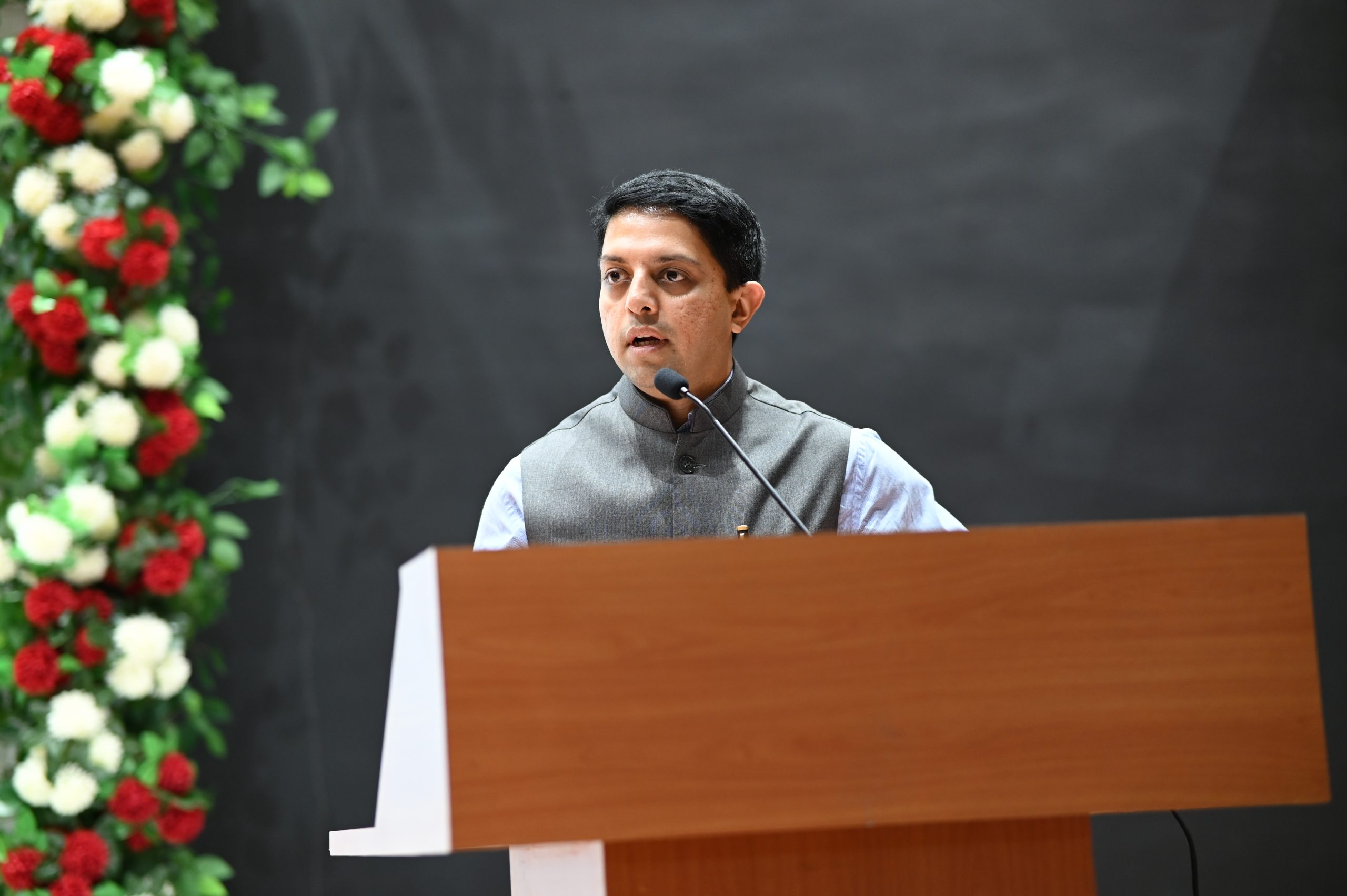
    Coming from a commerce background, what inspired you to transition into the field of law? Were there any pivotal experiences that motivated this shift and shaped your early legal interests?

    I have been interested in nature and ecology since childhood. My grandfather served in the Indian Forest Service and retired as the Principal Chief Conservator of Forests, Head of Forest Force, Maharashtra State. His teachings have played a major role in my upbringing since my childhood. As a child I was used to identifying different types of flora and fauna in our home garden. I experienced wild animals in the wild through various wildlife safaris. I developed a habit of noting down their physical characteristics. 

    My daily jogging route passes through an amazing nature trail, Vetal Tekdi (hill in Marathi) , an urban forest in the city of Pune. As a college youth I started doing amateur photography wherein nature has been my major subject like clouds, sky, sunrise and sunset, trees, animals, birds, waterbodies, landscapes etc.

    In my last year of law, I applied to the Internship and Placement Cell of the college, wherein I gave Arbitration, Environment and IPR as areas of interest. NGT had started their Western Zonal Bench in Pune the same year and hence the Cell forwarded my application to the NGT. Luckily I was selected in the recruitment procedure which took place before a 5 Member interview panel at the NGT Principal Bench and being based in Pune, I was appointed as the first Judicial Intern at the NGT Pune Bench.

    I never aimed to practice environmental laws. Destiny brought me to the NGT.

    You hold degrees in Commerce and Law, along with an LL.M. in Constitutional and Administrative Laws. How has this multidisciplinary academic foundation influenced your approach to legal practice, particularly in the area of environmental law?

    I pursued LLM in Constitutional and Administrative Laws after 4 years of practice at Bar. I believe that a candidate requires psychological maturity to understand what one expects from a masters degree. I always wanted to pursue LLM in Constitutional and Administrative Laws with dedication. I never aimed to stand first in the University, however my dedication along with 100% attendance and consistency gave me a surprise. 

    Although NGT is a Tribunal, it is the only Tribunal in India which adjudicates issues affecting the public at large. It is also the only Tribunal where there is no hierarchy (unlike District Consumer Forum, State Consumer Commission and National Consumer Commission), no appellate Tribunal in between (like DRAT, NCLAT, ITAT, etc.) and appeal from NGT lies directly to the Supreme Court of India. So there are high stakes matters, wherein there is interpretation on the statutes and reliance on the case laws propounded by the Superior Judiciary.

    Moreover, being a Government Counsel, knowledge of Constitutional and Administrative Law is helpful in understanding how the decision making process takes place at various levels in the Government and the Legislature.

    As the Standing Counsel for the Environment and Climate Change Department, Government of Maharashtra, you represent several key departments and agencies. What major challenges do you encounter while advocating for government bodies in environmental and civil matters?

    The decision making process on the Government side is a detailed process which involves many people at many levels. It is not a one person decision process. Courts and litigants expect that the Govt should take decisions at the earliest however they probably are not aware of the steps through which the issues traverse and the reasons for delay in taking the decisions. Convincing this aspect to the courts and litigants is one of the challenges. 

    At times it is also observed that given the expanse of the bureaucracy and number of authorities, departments and  ministries who work in tandem, at times they might be having a different views of the same issue. Getting them together on a consensus and then taking a decision in the larger interest by predicting future consequences, is also a task. It takes time, however because the court expects compliance of their order, a decision is taken by the Govt. 

    Having worked closely with regulatory authorities like the Central Pollution Control Board, Maharashtra Pollution Control Board, and the Airports Authority of India, how do you stay ahead of evolving regulatory frameworks? How do you manage and prioritize high-stakes responsibilities across such diverse institutions?

    Practice in Environment law is not set like other fields, it’s evolving. Majority of the litigation is not statute based, but its based on the delegated legislation. The Ministry of Environment, Forest and Climate Change, Govt. Of India and the CPCB keep issuing amendments to the various notifications and rules through circulars, guidelines and office memorandums. These changes are brought as there are advancements in the science and even changing nature of business and industrial developments. Being a Govt counsel, I have to remain updated about the latest developments. Practising in environmental laws for more than a decade, I can see the law evolving. Being the Standing Counsel and representing the CPCB and MPCB in many cases, whenever there is a case being heard, even if I am not appearing in that case, the Hon’ble Tribunal enquires with me about the latest development about a policy or legal development at the Government level. 

    As and when there is a new development, either the Govt provides me with the same or I do my own research and I document all such changes. I prepare a directory of all such developments in the form of notifications, government resolutions, office memorandums, circulars, guidelines etc. 

    Being a Govt. Counsel I have to give equal priority to all the cases wherein the Govt. is a party. However, at times projects of public importance undertaken by the Govt. are challenged, that time the Govt. as well as me have to take care that no adverse orders are passed because it affects Govt. investment and if any such adverse order is passed, then the public is deprived of the benefits which accrue once the project is put to public use. 

    Your academic research and publications reveal a strong engagement with environmental jurisprudence. In what ways has your scholarly work influenced your litigation strategies and courtroom advocacy and how do you manage both pursuits?

    Research always helps, not just in publication but even in practice. Being Govt counsel I have access to a lot of official material which is otherwise not easily available and accessible. Whenever I work on academic research, such material is helpful for giving practical points. Similarly, if there is a case at hand, wherein I have done publication or if there is an ongoing research work, I can give the latest position of law or policy while advancing my arguments. Academic research and practice always compliment each other. It is not just the resources or knowledge, but even it improves the skills.

    Although finding time for doing academic research along with practice at Bar is difficult because first priority is always work. Research also takes time.

    As a Committee Member of the National Green Tribunal Bar Association (Western Zone), what are the key trends or emerging challenges you observe in the realm of environmental litigation in India?

    A lot of public as well as private infrastructural development is going on in the country. There are emissions of all kinds which are polluting the air and effluents which are polluting the water. Although there are laws for controlling all forms of pollution, enforcement is still a big issue. Issues of urban air pollution are getting chronic. Short term measures are not enough for even giving temporary respite and  Pollution Control Boards and other necessary Authorities, Boards, Ministries are understaffed. Vacancy in regulatory bodies affecting control and abatement of  pollution and penalising the polluter is an urgent need which needs to be addressed by the policy makers. At times the Govt. officers are overwhelmed due to work load and compliance of judicial orders, which can be addressed by creating sufficient posts and filling them with qualified people. 

    Climate Change is affecting everyone and nobody is in isolation and unaffected due to it. As the impacts of climate change intensify, we expect to see a continued rise in climate litigation as communities and environmental advocates demand accountability and justice from the regulators. 

    Environmental Laws is a dynamic law which is ever evolving. The changes are happening due to the policies implemented by the Govt. which gets challenged in the Courts, the courts either struck them down or direct the Govt. to modify. At times the uncertainty is caused due to judicial decisions that affect the industry. I haven’t come across any other prominent fields of law wherein the changes are taking so fast. Keeping ourselves updated with this ever changing field of law is a challenge to everyone, not just the lawyers but even the Govt. and the Judiciary. 

    As an adjunct faculty member teaching Environmental Law and related subjects at leading law schools, how do you incorporate your practical experience into the classroom? What guidance would you offer to students aspiring to build a career in environmental and civil law?

    In Pune city there are around 40 law colleges. The NGT Pune Bar is a small Bar and therefore I know that I am the only lawyer practising in environmental laws who is teaching the subject in two law colleges in the city. I educate my students by giving them practical inputs from the cases which I appear in at the NGT. As said earlier, NGT is probably the only Tribunal in India which deals with matters affecting the public at large. So people as well as students know these issues as they keep getting reported in newspapers and media. Further, I organise visits of students to the NGT wherein they get to see the pending cases which I discuss in class. Teaching and practice compliment each other. Experience from my practice at NGT helps me giving live examples to students and teaching experience gives me confidence to make better submissions in the court room.

    There is cut throat competition in traditional fields of law. Environmental Law is an emerging field where there is less to no competition. Students aim to practice in the corporate field, however they don’t know that practice at NGT is a part of practice in the corporate field as big companies, corporations and industries have to be defended for various alleged environmental non compliances. They need good lawyers to defend their cases. Environmental compliances form a major part of compliances by the companies. There is a dearth of good lawyers practising in environmental laws. Therefore every year I keep urging my students, especially in the final year, to consider environmental laws as a good field to practice once they get into the profession.

    Having said that, I even advise them that after passing out of their college, they shouldn’t directly jump to practice at the NGT or any Tribunal for that matter because Tribunals being quasi judicial authorities are not bound by the strict rigours of Civil Procedure Code and the Evidence Act (now replaced by the Bharatiya Sakshya Adhiniyam). For any lawyer, it is essential that they know the basics of the procedural laws. At the start of their practice, if they directly and exclusively start practice at a Tribunal, there are high chances of them not learning the procedural laws. So starting a practice exclusively in any field of law or Tribunal is advisable after having learnt about the basic procedural laws by appearing before the Trial Courts. Experience of appearing before the civil courts definitely helps and compliments practice in environmental laws because the cases before the NGT are of civil nature.

    Reflecting on the early phase of your career, what experiences most profoundly shaped your legal outlook? How did they contribute to building the foundation of your current practice and professional values?

    Having conceptual clarity on the basics of law is very important for shaping a good legal career. It starts from the law school and not when one enters the profession. Students are getting strayed away from studying through textbooks. Moreover, the majority of the students study from exam point of view rather than understanding the subject from knowledge point of view. They tend to study through readymade notes prepared by someone else rather than making their own notes. This habit is hazardous because it reflects in their professional lives later on. 

    Having a habit of studying through books and making my own notes helped me not only understand the subject but even making a conscious choice of which fields I want to explore and which I want to exclude when I get into the practice. In the age of AI, everyone is losing their ability to use their brains. As far as legal studies and profession is concerned there is a dangerous trend of students and young lawyers using AI for drafting and research. 

    My internship at the NGT in my last year gave me a different view towards litigation. When one undergoes a litigation internship under a practising lawyer, one prepares the case from their client side and anticipate what will be the tricky situations from the other side. However, when one interns under a judge, both the sides are kept before your boss and you have to assist them in decision making. High stakes are involved in many cases. Compensation which is awarded by the NGT goes in crores. Habit of preparing my own notes helped me in assisting the judges during the internship and that habit still helps me in my practice as well as preparing lectures. 

    Get in touch with Aniruddha Kulkarni –

  • “As a first-generation lawyer, I was driven by a desire to make a difference. My passion for justice and service has always been my guiding force.” – Gaurav Sharma, Independent practitioner at the Supreme Court of India & High Court of Delhi 

    “As a first-generation lawyer, I was driven by a desire to make a difference. My passion for justice and service has always been my guiding force.” – Gaurav Sharma, Independent practitioner at the Supreme Court of India & High Court of Delhi 

    This interview has been published by Namrata Singh and The SuperLawyer Team

    What inspired you to pursue a career in law, and how did your journey begin at the National Law Institute University, Bhopal? 

    I was always inspired by a desire to make a difference, always had an interest in justice and fairness, and a passion for resolving issues. It either had to be civil services or advocacy for me! Starting law school at NLIU Bhopal was an exciting experience. I was all set to tackle law and life. However, initially, it is like being hit by a whirlwind of confusion, trying to get a hang of things. Eventually, you get used to the law school life, make friends, and, ironic as it sounds, they end up becoming your partners in crime! By the end of your time at NLIU, you’ll emerge not only as a legal professional but also as a treasure trove of memorable experiences and friendships that will last a lifetime. 

    When you first began your career in litigation, what were some of the key challenges you faced, and how did you overcome them? Additionally, how has your approach to handling complex litigation evolved over the years, given your extensive experience across various legal domains? 

    In the early stages of my litigation career, one of the main challenges was adapting to the high-pressure environment of court proceedings and developing the ability to think quickly and strategically. Building my reputation and gaining trust in such a competitive field also took time and effort. I focused on learning procedural law, improving my courtroom skills, and seeking advice from my seniors and other experienced lawyers. Taking on smaller cases helped me build confidence and experience. Over the years, my approach to handling complex cases has become more strategic. With more experience, I now focus on aligning legal strategies with my client’s long-term goals, managing teams effectively,  and navigating the complexities of challenging cases. My methods have evolved to be more thoughtful and aimed at achieving the best possible outcomes.

    Working with prominent figures like Mr. Sumeet Pushkarna and Ms. Jyoti  Mendiratta must have been enriching. What were some key learnings from these experiences? 

    Working with Mr. Sumeet Pushkarna and Ms. Jyoti Mendiratta was an incredible experience. These experiences were both, the founding and the building stones of my career in litigation. From Mr. Pushkarna, I learnt the importance of time and developed the ability to multitask. Working with him inculcated a sense of discipline and punctuality, which has helped me immensely in my professional life. Ms. Mendiratta, on the other hand, taught me the value of empathy and understanding in legal practice. She showed me how important it is to truly listen to clients and understand their concerns. Both of them emphasized the importance of maintaining integrity and professionalism in all aspects of the job. These lessons have been invaluable for me. 

    You handle a diverse range of cases, from civil and criminal matters to arbitration and consumer disputes. How do you manage such a broad spectrum, and what are the challenges and rewards of this diversity? 

    Juggling such a variety of cases is like running a legal marathon! It keeps my mind constantly engaged, and my days are anything but boring. The key is to stay organized and to keep learning. I make it a point to stay updated with the latest laws and rely on my network and colleagues for advice when things get challenging. The main challenge is balancing the demands of each type of case. Criminal cases can be quite urgent and intense, while arbitration involves more strategic thinking and patience. Despite the challenges, diversity is ultimately rewarding. It keeps me on my toes and allows me to help a wide range of clients, which I find not only satisfying but also fun. Each case teaches me something new and contributes to my growth as a lawyer.

    Could you discuss a few notable cases you have worked on, particularly those involving public interest litigations or significant legal challenges? 

    One notable experience that stands out for me in my litigation career was my first-ever arbitration case, handed over to me by my senior. It was a complex dispute, and I had the opportunity to handle it from start to finish. The arbitration award was in our favor, which was a significant win for our client. What made this case particularly memorable was the recognition I received not just from the arbitrator but also from the opposing counsel, who appreciated my work. 

    What advice would you give to young lawyers entering the profession today?  What key skills and attributes should they focus on developing?

    My advice to young lawyers in a single line would be: Brace yourselves for a wild ride and keep a sense of humour handy. Jokes apart, I would advise young lawyers to never stop learning. The legal field is constantly evolving, so stay curious and keep up with the latest developments. Networking is crucial, too. Build relationships with colleagues and mentors, they’ll be invaluable throughout your career. Additionally, I would advise them to work on their communication and to be respectful, empathetic and resilient. The legal profession can be demanding and unpredictable and it is important to be able to bounce back from setbacks. Finally, keep your passion alive. 

    Outside of law, what are your personal interests or hobbies? How do these activities help you maintain a work-life balance?

    Maintaining a work-life balance is of immense importance to me. I try not to bring my work back home and have a personal life beyond it. I usually turn to music and movies to unwind and enjoy catching up with my friends and family after work. These things help me maintain a work-life balance by providing a healthy distraction and keeping me refreshed. They remind me that there’s more to life than just work, which is essential for staying motivated and avoiding burnout. 

    Can you share your experiences with pro bono work? How do you choose the causes you support, and what impact do you hope to make through these efforts? 

    There’s something remarkably fulfilling about being able to help and give back to society. I would like to think that I try to do it to the best of my capabilities, not only legally but otherwise as well. I typically choose causes that resonate with me or where I feel I can make a positive difference, even if it’s small. 

    You have the unique experience of practicing in various courts, from District  Courts to the High Court and the Supreme Court of India. How do the experience and approach differ when handling cases in these different judicial environments, and what insights can you share about the nuances of working at each level? 

    Practicing in various courts and fora has shown me just how varied the legal process can be at each level and how each level has its own approaches and challenges. It makes you understand the importance of learning both the procedural aspects and the strategic elements of legal practice. In District Courts, the focus is on gathering facts and building the groundwork of a case. In High Courts, you need to be able to present clear and persuasive arguments and dive deep into legal principles. At the Supreme Court, the focus shifts to bigger legal questions. Practicing at each level has taught me to be adaptable and helped me grow as a lawyer. 

    As an experienced advocate, how do you mentor junior lawyers and interns in your chamber? What are the key lessons you emphasize to them? 

    Mentoring junior lawyers and interns is as rewarding as it is demanding. It involves guiding them through the practicalities of legal practice, fostering their professional development, and instilling core values. I’m anyway more of a friendly colleague than a tough taskmaster to them. I give complete freedom to my junior associates to take up independent work. Allowing independence while maintaining a supportive framework helps junior lawyers and interns develop essential skills and confidence, preparing them for more significant responsibilities in their careers.

    Get in touch with Gaurav Sharma-

  • “Every lawyer has their own trajectory, there is no competition. My only contact is God, the rest everyone I meet in the journey is a blessing.” – Esha Mazumdar, Advocate on Record at the Supreme Court of India & Founder of Curare Legal

    “Every lawyer has their own trajectory, there is no competition. My only contact is God, the rest everyone I meet in the journey is a blessing.” – Esha Mazumdar, Advocate on Record at the Supreme Court of India & Founder of Curare Legal

    This interview has been published by Namrata Singh and The SuperLawyer Team

    As a first-generation lawyer, could you walk us through your journey? What was your motivation or inspiration for pursuing a career in law? Additionally, can you share some insights about your childhood and any experiences that shaped your path? What is something unique about you that our readers should know?  

    I think not only for a first-generation lawyer but for every lawyer the journey is very unique in itself. Every lawyer has their own trajectory, there is no competition. The only difference for a first-generation lawyer is the initial years where you build your reputation, where you make a conscious choice regarding your future. The profession no doubt demands a lot of sacrifice especially if you are practising independently. For me personally, discipline and hard work are the most important things. Lot of people advice me that I should build my contacts, my only answer to them is, my only contact is God, rest everyone I meet in the journey is a blessing.

    My father in fact wanted me to become a lawyer, it was he who always encouraged me to start an independent practise. He always taught me that honesty and hard work never go in vain.

    My childhood has played the most important role in shaping my path. I belong to a family of Army and Air Force Officers. The discipline that has been imbibed in me because of my background has stayed with me and discipline in any field takes you a long way. My mother who has been a homemaker has always stressed on the importance of being financially independent.

    Unique I’m not sure but I have come to experience, if I take up a task I do not leave it mid way, I take it to it’s logical conclusion.

    You have acquired your LL.M. in International Business and Commercial Law from the University of Manchester, but as we know, dispute resolution has always been your first love. How has this international LL.M. helped shape your legal perspective and approach to dispute resolution?  

    LL.M. from Manchester has given me immense exposure and on a lighter note, I can proudly say I have friends (who are lawyers) all around the world. That apart, the understanding of different cultures, the idea of seeing things through a wider lens definitely helps in litigation. Litigation is not just about the one case that you are doing, there can be various perspectives, you just have to see which one is best suited for your client.

    Having studied and worked in the UK, what international legal trends do you think could be beneficially adopted in the Indian legal system and What changes or improvements would you like to see in legal education to better prepare future lawyers for the challenges of the profession?

    Legal education should be more practical, industry oriented and should be focussed more on creating independent thinking.

    How do you balance the varied demands of independent practice, being a founder of Curare Legal, and your past role as a Government Counsel? Please share some insights on challenges you faced since you started your firm.

    Well I was a Govt. Counsel for about 4 years, I used to be quite overburdened with Govt. work, not leaving me with much time for private matters. Having said that, I thoroughly enjoyed my work as a Govt. counsel also, I got an opportunity to work with some of the brightest officers. It gave me an opportunity to look at things from a very different perspective. I think every independent practitioner at some point should work on some Government panel. Not to mention I was amazed to see the knowledge that the Section officers or dealing hand had about the matter. It was an amazing experience.

    Independent practise only demands one thing, that is consistency. Consistency is key, be it hard work, be it not giving up after you have had a rough day in Court. The right balance between being open to ideas from your clients and filter when you present your case in Courts.

    The biggest challenge of course was to break even when I started the firm,  and then increase revenue enough to expand the infrastructure and to be able to pay a respectable amount to Associates, paralegals, etc. Even now in fact every month is not the same, so revenue can be a struggle in some months.

    You were the counsel in a landmark case under the new Land Acquisition Act decided by the Delhi High Court. Can you discuss the significance of this case and its impact on land acquisition laws?  

    Yes, that was a case under Section 24(2) of the New Land Act, 2013. Much water has flown since then and the recent Constitution Bench Judgment in Indore Development Authority vs. Manohar Lal & Ors. has brought about some changes in so far as the interpretation of Section 24(2) is concerned. But yes, the impact is that the acquisition under the current regime is much more difficult as it requires social impact assessment etc and even the compensation is much higher that what was provided under the 1894 Act, which was more exploitative in nature.

    What were some of the most challenging and rewarding aspects of your tenure as Additional Standing Counsel for the Government of Delhi?

    Challenging of course the entire work of a Govt. counsel is very challenging. I was handling quite a few matters every day, so waking up at 4 AM in the morning every day, going through the brief thoroughly because as Govt. counsel we mostly defend the interest of the public at large, secondly there’s always a sense of urgency in private clients regarding hearing of their matters, so it’s difficult to get an adjournment as a Govt. counsel.

    Rewarding aspect, of course the grind that I went through has sharpened me to prepare more than 2 briefs for lengthy arguments in about an hour or so. Also I always measure success by the people that we win and my reward is the number of officers and various staff of Departments who are still in touch with me.

    After serving as government counsel, what motivated you to return to private practice in 2021, and how has the transition been for you?   

    So honestly, as a Govt. counsel I was doing only one kind of matters. Since time was still on my side, I wanted to explore a little more and do more variety. As fate had it, I was also blessed with a daughter after I left the panel and I could effectively manage both sides i.e., taking care of my daughter and the independent matters.

    Your first independent matter was a PIL for increasing compensation for rail accident victims. What challenges did you face, and what did you learn from this experience? Being your first case, what was your overall experience, and how did it shape your approach to future cases?

    I have done two PILs, one for increasing compensation for rail accident victims and one for free sanitary pads and education on menstrual hygiene to Govt. School girls, both are very close to my heart. There were no challenges as such but PIL requires a lot of research, so doing all of it at a time when we did not have associates or interns to help with, one of the initial cases being a PIL would mean that we were paying even our office rent from our pocket but as it is said do good and good will come to you, I guess that is what happened with us. The 1996 Rules were amended, the compensation amount payable to rail accident victims was doubled.

    So far as the overall experience is concerned, I think Delhi High Court has this very unique feature of being extremely welcoming towards younger counsels. The warmth, the seriousness with which the Judges take your arguments if you are well prepared, this really helps in boosting your morale. I remember once on the Original Side, we were young, the brief had just come a day before and we were not prepared, in fact we had just gone to seek an adjournment since certain documents were yet to come. So the Judge started recording whatever we would say in the Order sheet including that we are not prepared to argue and all I said was we are very young in the profession, Lordship may kindly remove the observations, just saying that was enough and the observations were removed. So we have the most compassionate and wonderful Judges here, it’s just about having the tact and being honest to yourself and to the Court.

    Given your demanding career, how do you manage work-life balance, and what tips would you offer to other legal professionals?

    Ok I get asked this question a lot and I will not lie here, I have the most wonderful husband who is also a lawyer. He encouraged me to give the Advocate on record exam after we were blessed with a daughter and I qualified it in the first attempt. I think if you are married, having a supportive life partner is a real plus. 

    Secondly, online hearing which is constantly being encouraged by the current CJI, is of great help to women mostly. 

    Tip: I can only say keep the mental state right, as long as you are mentally fine you will sail through one additional hobby, it can be sports, photography, music, movies anything at least once a week, because the profession is very demanding, you cannot limit it to 9-5. It affects you mentally even before you know, so maintain your sanity.

    For young lawyers contemplating a specialization in their legal careers, what factors should they consider, and how did you decide on your focus areas?  Please share some tips for them to excel in their field.

    For younger lawyers, I think firstly please do not focus only on money. You have to know your work first, money will not be a problem thereafter.

    Secondly, one should not just stick to one kind of practise initially, i.e., just criminal or only civil laws. There is a lot of scope and opportunities, give yourself some time. Try different areas before you finally know what you like.

    My focus areas actually just happened to me by the kind of matters that came to me and I am still open to trying different areas. A lawyer never stops learning.

    Lastly for the younger lawyers, just have faith in the process, go through the grind, you will get there gradually.

    Get in touch with Esha Mazumdar-

  • “If matters could be resolved in a time-bound manner, there is always an advantage. If that fails, litigation is always an option. Today mediation is a highly specialized subject.” – Suchishmita Ghosh Chatterjee, Trained Mediator & Independent Counsel.

    “If matters could be resolved in a time-bound manner, there is always an advantage. If that fails, litigation is always an option. Today mediation is a highly specialized subject.” – Suchishmita Ghosh Chatterjee, Trained Mediator & Independent Counsel.

    This interview has been published by Namrata Singh and The SuperLawyer Team

    Your journey in the legal profession is truly remarkable, especially considering the legacy of your family. How did you navigate the challenges of establishing your own identity in a field where family connections can sometimes be both a boon and a burden?

    It was easier for me to get my first break as a Counsel but then to earn my first brief independently took a while longer. Now reflecting I feel family connection for me was both a boon and a burden. I cannot point to a single incident that led to others acknowledging me, shorn of my background, as it was a gradual process. When people saw me assisting my senior single-handedly in very high stake matters regularly and then appearing in matters like the Saradha Chit Fund case for RBI, SST Media- winding up proceedings, Testamentary suit in the estate of Priyamvada Devi Birla, I think I got noticed by others. Today I can safely say I have other law firms and independent Advocates on Records believing in me and giving me work and my background no longer matters. I always wanted to make my independent existence count in my profession and I am walking a step closer every day by the grace of God and the support of everyone who stood by me like a rock!

    Starting your career when there were relatively fewer women in law, how do you perceive the changing landscape for female lawyers today? Have you noticed a shift in attitudes and opportunities over the years?

    Yes, our profession is very demanding and it’s not like a 9-5 job. A conference can be fixed at 9.30 pm or even 10.30 pm in the night and not all women can work in that format. To practice as a counsel, can even involve staying up all night to prepare an urgent draft or prepare for a matter. As a woman, it is certainly not easy unless she gets that support on all fronts. When I joined, women lawyers by number were much less and I greatly admire all those who were practising as Counsel in those days. Their struggle was a telling tale and I am greatly inspired by all of them. I could see the shift in mindset over the years, people starting to take women lawyers seriously and treating them at par with their male counterparts. Today I see the confidence in the eyes of clients as well as solicitors when they interact. It does not matter whether they have a woman counsel defending them as long as they know the gender would not create any difference. Now the ratio has greatly improved even in litigation, which sure is noticeable.

    Starting your career from scratch after college, you faced challenges that many young professionals can relate to. Can you share some of the initial struggles you encountered and how you overcame them to establish a successful legal practice today?

    Well what was a struggle for me was to break the myth that having a solicitor father helped me gain an advantage over my contemporaries. Although it did help me earn my first matter easily, but unless I performed, it wouldn’t have ensured the future briefs coming my way. In fact, I lost a couple of briefs when people learnt about my family background. It was an added pressure for me to conduct myself in a certain way. This made me apprehensive and I never went to anyone asking for a brief, not because I was too proud to ask for it but because I felt my work would be my identity. I believed if I worked honestly and sincerely I would get noticed. So from the end of 1st year in college, I joined the chamber of my senior Mr Hirak K. Mitter, senior barrister and every day after college hours, I used to attend his Chamber, work out briefs, make lists of dates, read judgments, make my own notes and attend conferences in matters where I wasn’t even engaged. That was a huge learning experience. For 5 years even my senior didn’t have much interaction with me. I would return home late in the night and break down at the dinner table. After seeing me attend his chamber every day for 5 years, with not a single break my presence was felt and also acknowledged. I earned my senior’s trust and confidence. At the end of 5 years, with my senior’s recognition, I started assisting him in heavy matters singlehandedly. Then from assisting him to appearing as an arguing counsel, it was a journey in itself that happened over the years. 

    In setting up your chambers, you’ve emphasized creating an environment where everyone can speak their mind. How do you foster such an atmosphere, and why is it important to you?

    I always tell my juniors to read the facts well. Knowing where to find the law and how to apply a proposition of law would all come subsequently once the facts are mastered. Difficult law points are not always there in every matter. So knowing what are the facts on which law has to be applied, reading is important. To understand it better, a discussion and exchange of thoughts are important. In my senior’s chamber, my senior used to invite us to have a one-on-one participation in conference. That helped us think of different outcomes, options, and perspectives to a matter. Logical thinking and reasoning develop only when there is a conducive environment to air one’s views, without fear. If I see my juniors doing well and better than me, it would be a moment of great satisfaction. Knowledge is the only thing that grows with sharing, so I don’t keep anything up my sleeves. Whatever I learn and know, I believe in sharing that. At times I even find my juniors bringing up some fresh ideas on the table, so there are always new things that I even end up learning from them. It is important to give them that confidence since if they can speak freely to me they can address the Court better and fearlessly.

    Having worked on various matters, including some high-profile cases, is there a particular case or experience that stands out as a significant turning point in your career?

    There are about 4 or 5 such cases. Exposure to matters like the Will case of the Late Priyamvada Devi Birla, helped me learn a lot about mutual Wills, and testamentary suits. I was fortunate enough to get an opportunity to address the Hon’ble Division Bench at the request of the then Chief Justice J.N. Patel in this matter as the junior most member on the side of the Birla after all the seniors had finished their arguments. I was asked if I would like to address the Hon’ble Bench on what I understood of Administrator-pendente lite after hearing and assisting my seniors and copiously taking down notes during arguments for so many days. It was too overwhelming for me but I really enjoyed getting to address such a heavy matter for about half an hour. 

    Then addressing on behalf of RBI in the Saradha chitfund case was a great experience. I learnt about goodwill valuation and the company being sold as a going concern from handling the SST Media case which was regarding Kolkata TV. Learnt a lot about Thika Tenancy from the case of Fona Rubber, then came to learn about the Originating Summons suit from Thakurani Sree Sree Durga Mata Jew case where I assisted the late Mr. S.B.Mookerji. I learnt about misfeasance first-hand from the matter of Jamshedpur Cements which was reported in (2011) 4 CNH but my name was not reported. These are some prominent cases that come to my mind. My exposure in arbitration was through Shappoorji Pallonji vs Videsh Sanchar Nigam Limited which was a huge matter with a lot of intricate points. I learnt about liquidated damages and Hudson’s formula on the calculation of loss of profit first from this arbitration. 

    Your approach to technology is interesting, acknowledging its importance while maintaining a preference for traditional methods like reading physical books. How do you strike a balance between embracing technology and preserving traditional legal practices?

    Change is the only constant. So we have to adapt ourselves to the changing times and technology. When we see other High Courts like Delhi and Bombay, most of the counsel prefer going paperless. They have their brief stored in iPads on liquid text, notes, judgments everything in the system. It’s fascinating. I am yet to go paperless that way as now I prefer micro-Xeroxing briefs in big matters but I do appear virtually in matters either for court appearances or conferences. Even arbitrations are being conducted virtually or in hybrid mode. This truly saves time and cost. However, when it comes to reading textbooks on law, I still prefer the touch and smell of the books. I also enjoy writing down points using pen and paper instead of iPad and good notes. But I accept the change with an open mind and also use iPads in courts at times. Research work has become simplified due to online search engines. But once I come across a case online, I take out my journal and read. I feel some things are to be preserved while accepting the changes.

    As a trained classical vocalist and music lover, your interest in sketching with social messages is intriguing. Can you share a bit about your artistic side and how it contributes to your personal expression or advocacy?

    Music is my soul. I have been in training since age 4. Nowadays I don’t get that time for Riyaz but I sing for my daughter now who has a musical inclination. My interest in sketching began only in lockdown when I discovered this new side of me. Whatever I sketch has a social message, starting from acid attack to saving nature. I even write a bit of poetry but that is purely for my own reading. The creative side of me is a gift from God and whenever I am sad or even happy I think I express it through either music or poetry. Creativity helps to channel my emotions and handle pressure better. 

    Looking ahead, you’re pursuing a mediation program. How do you see alternative dispute resolution methods like mediation shaping the future of legal practice, and what motivated you to explore this avenue?

    I always prefer gathering knowledge. Mediation is a well-accepted ADR system in South East Asia, Europe and further West. India is slowly catching up. We have now the Mediation Act in force. There are mediation centers also attached to High Courts where matters are referred for exploring mediation. My interest cropped up when section 12A of the Commercial Courts Act, 2015, which mandates pre-institution mediation in commercial suits. Litigants are wary of mediation and we lawyers need to open up as well in embracing this mediation. Personally, I feel, if matters could be resolved in a time-bound manner, there is always an advantage. If that fails, litigation is always an option. Today mediation is a highly specialised subject and I am the first batch pursuing 60 hours+ program under Indian Institute of Corporate Affairs. Certified Mediators with the right training can facilitate parties resolve their disputes while restoring relationships. 

    How does your involvement with the Robin Hood Army and your dedication to social causes enrich or influence your perspective within the demanding realm of your legal career?

    I associated myself with RHA and signed up as a volunteer during a pandemic. Participating in the drives as a volunteer of RHA and then taking up other blood drive campaigns, and vaccination programs through tie-ups with Institutions helped me grow as a person. Now I do not get that time to act as a volunteer in the demanding realm of legal career but I do my own bit every now and then through Ramakrishna Math and Mission as well as other organisations. Doing pro bono matters for social causes like the Haemophilia Society or handling cases like acquiring land for Palli Mangal where women are trained and earn their own livelihood under Ramakrishna Mission order, are my way of giving it back to society.

    Over the years, you’ve trained numerous law students as interns. Have you noticed any notable differences in the skill sets of students today compared to when you started your career? And in your training programs, what specific advice or guidance do you find yourself consistently offering to the aspiring lawyers of this generation?

    In our formative years we used to work for learning. Now because of the change in society, students are keen on earning from day one. That is a noticeable change for sure. 

    I find today’s generation is quick in research, as they are all tech-savvy. But overall I find they are in a race against time. Quick recognition and quick fame are not lasting and anything of substance requires nurturing, perseverance and time. Whoever is willing to do that, would sure to taste success. This is usually what I keep telling my juniors and interns. There is no magic mantra and anything that is too easily achieved is short-lived, so as my Grandpa used to say- “Hard work first, hard work second and hard work last. If anything is left, it’s hard work again!” I try to live by that and aspire to be a better human being, living on my terms with my head held high and respecting and loving the institution of which I am a part of. 

    Get in touch with Suchishmita Ghosh Chatterjee-