Tag: startup

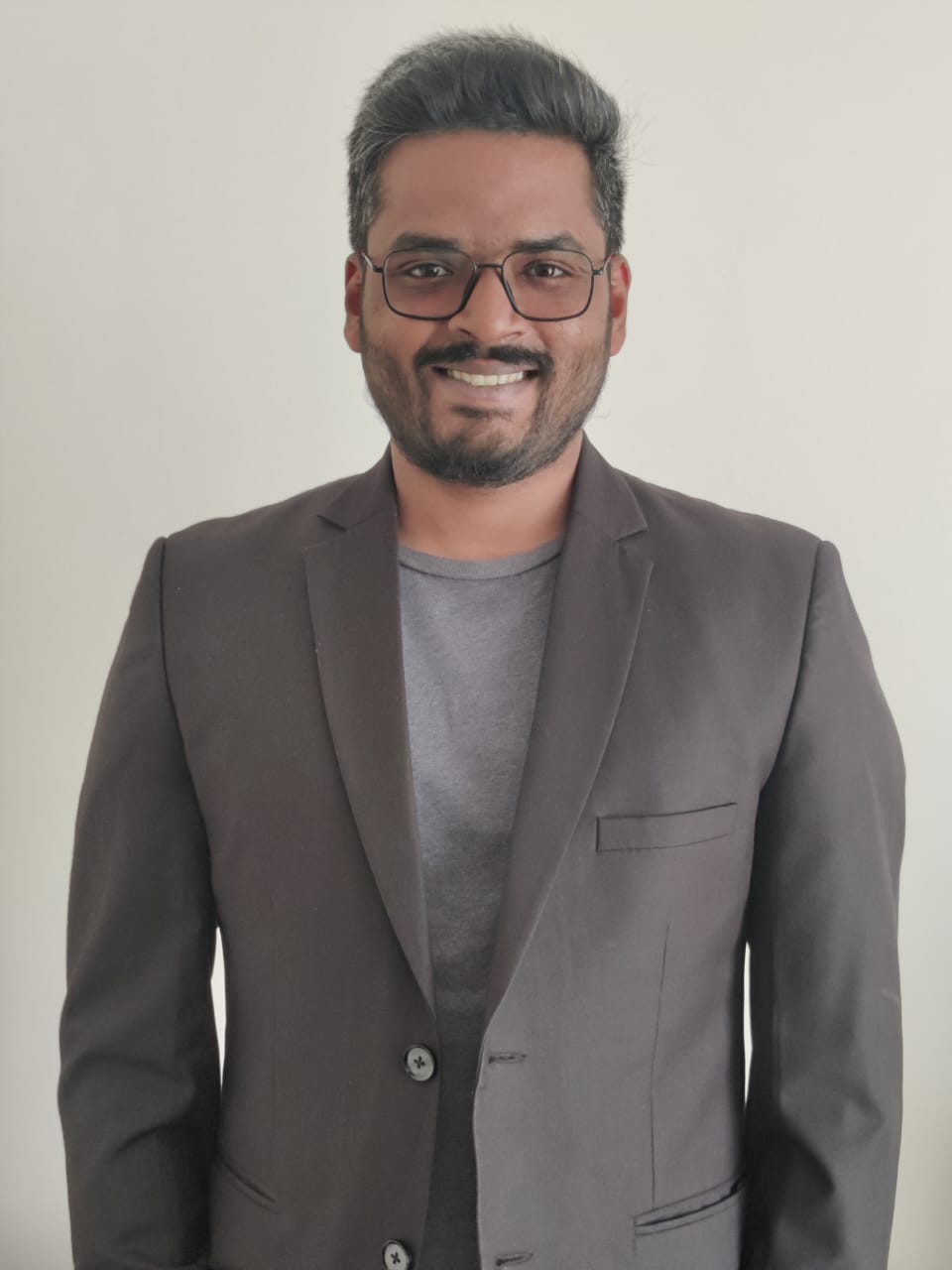
  • Bridging Borders: Making Law Accessible for Startups Worldwide – Priyanka Mandhani, Corporate lawyer, Company Secretary and Founder of Juris Summit.

    Bridging Borders: Making Law Accessible for Startups Worldwide – Priyanka Mandhani, Corporate lawyer, Company Secretary and Founder of Juris Summit.

    This interview has been published by Anshi Mudgal and The SuperLawyer Team

    I will start backwards. I’ll not start with the very first question, why you chose law, but I would request you to answer first why and when you decided to start Juris Summit, what was the reason that you started it so soon? What are your plans? How are you going to work on the cross border business laws, and what do you see and where do you see yourself and Juris Summit in next, let’s say five years and a decade?

    I’m so thankful and grateful for all of the SuperLawyer team for bringing this opportunity to me. And yes, I’m looking forward to collaborating with you people and also to giving guidance to all the newcomers who are wishing and willing to start their career on an international platform.

    So, yeah, you know, there are some things, like we said, we get it out of WhatsApp chat.

    So me and my partner Sohan, we met in a WhatsApp group, like in a freelancer group, and at that time, back after two years, we had started our individual freelancing journey. So, we individually found that startups, they struggle, particularly startups, they struggle a lot because there are two things.

    First thing is, particularly I’m talking about the US startups. The United States law firms charge a lot. I would say 800 dollars per hour, and even beyond that. So I was like, what is this? Why are they charging this much?

    Of course, they provide services and they do everything that needs to be done, but we also are authorized to do that, and we can also do it at a lesser price. So that was the first point. And the second point, startups, they want everything fast. They approach any lawyer or somewhere that gives us a template, we will do it ourselves. And in that template, the alignment of business, the clauses, they’re not properly as per their business. They’re not aligned with their business.

    So these are the two things which I felt that I needed to bridge a gap between this thing. So at that time, I had a talk with Sohan. Sohan, this is the problem, we need to fill it out. So he said, so let’s go, let’s build an agency. Then let’s work together.

    And I said, yeah, let’s do it. Why not? And then without a second thought, it was just like bam! Out of a WhatsApp chat. We set up an agency.

    Amazing journey. Amazing start. So let’s now get back to the basics. How did you become convinced that you have to do law as well as company secretaryship?

    And with this kind of dual qualification, how did you pave your way towards not only being an Indian lawyer, but also a lawyer who’s internationally acclaimed and who has moved to Germany and is working from there?

    So, the thing is, I wanted to become a chartered accountant firstly, so I started my journey back then. I’ve cleared my CPT, and after that I could not understand what was happening, but suddenly in that period of time, my interest was very much into law. Then I thought of the professional course of company secretary, and without second thought, again, I enrolled myself into company secretary and successfully I’ve completed everything in the first attempt. And side by side, as this is a law field, I also enrolled myself for an LLB course, a three years course. So I’ve also completed my LLB, and fortunately in the last year of LLB I topped the university, Swami Ramanand Teerth Marathwada University.

    So, this is how I wanted to prepare myself fully, and after all these things were done, still I felt like something was missing. Then I found courses like US corporate laws, then diploma in international business laws.

    And that thing fascinated me. I said I want to do this. I want to set up a remote practice for myself. I wanted to do this thing. So without a second thought, I enrolled myself. And today I’m here so that I can work from Germany with US law firms, and not only US, all over the world, I can work with every country’s client.

    So, with all these things, which you decide on a first go, what kind of experience do you have of the transition that you have done from traditional legal practice to starting, founding and running a specialized legal agency, which is right now catering mostly to international clients, particularly in US, like you already have explained about startups. How is your experience about the agency and how does it work for you and your partner and the kind of challenges that you see in having Indian laws, having international laws and their comparison? How does that work for you?

    I would start with the traditional law firms in India or wherever we can say. So, at the law firm I had access to a predictable environment, and consistent staff support was there. Then we had a particular library where we can read and where we can update ourselves. But mostly there were domestic clients, and there were Indian timelines, as you must be aware of, then billing expectations. And so all these things were somewhere I feel they’re keeping me down, they’re setting up boundaries for me.

    So, when I started a legal agency, these were not the things. There were, obviously, challenges because time zone and communication are the biggest challenges when we start an agency that is hundred percent remote and which deals with international clients.

    So, we have staff, obviously we have staff, and what we do is someone between us is always awake at US time zone so that we can grab all the opportunities, so that we can reply to all the clients. And even if he’s not there, what do we do, because we use technology, right?

    We have to use technology. We set auto replies to that particular person. In that way, we don’t push the client, we can’t talk right now, and it’s not our time zone. This is how we work.

    So even if there is any urgent matter or something  because we see clients that want something within 24 hours, within a few hours we actually do that. We don’t say we can’t do this. This is not a timeline to deliver everything, nothing like that. We’ll do everything.

    Someone from us will have to do that. And we have set our agency like that only. So these are the challenges: timeline and communication.

    So, talking about communication, recently we had a client from Saudi Arabia, and I personally had to deal with him.

    So, the first time I didn’t understand what he’s talking about, his accent was so difficult to understand. But thanks to the notes we take, whenever we start a meeting, on the other end we start taking notes. So thanks to all these things, thanks to technology, we understand these things.

    So these are the challenges we overcome, and that’s how it works.

     This shows that the kind of work that you are doing is getting more and more  reach, and that is something which is the value addition to your work at Juris Summit.  So the kind of driving force that you, your partners and the people who work with you have, what kind of gaps or insufficiencies or legal issues you have seen in US business laws as compared to Indian business laws? And the kind of observation that has helped you overcome those challenges and help US companies or businesses have their legal work done with you.

    Okay, so, I mentioned this before, that for billing, the US firms charge a lot. So this is the first thing that we wanted to fill the gap  to provide services at a lower price than the US law firms.

    The second thing, obviously, about the DIY route you know, templates from online platforms and Reddit forums they get. So these are the gaps Juris Summit set out to fill. We offer a third party responsive, startup-savvy legal support delivered by us. Like we are experienced, we have an experienced team and at a cost that makes sense for early-stage companies.

    I’m talking particularly here about the early stage because businesses which are already set, normally, they don’t hesitate or they don’t struggle this much. So, we focus on flat fees. Not an hourly basis. There’s no surprising billings and nothing like that. Scope-defined engagements and what we call it legal sprints.

    So, founders know exactly what they are paying for. So for example, what if there is a review document with us, we have to review that document, we make sure we provide another document  that we just don’t review it and tell him that these are the findings and these are the loopholes that we need to fill.

    And these are the liability clauses and everything. Not like that. What we suggest from the very first clause, to try to make him understand in a simple language. We make a document and we write it in a simple language, clause to clause, that you should know what you are signing. So this is our approach  to make him understand everything.

    We speak their language in short, I can say we speak their language. We don’t just recite, deliver code or GDPR clauses, we explain what it means for their product, their fundraising, or any contractor agreement. So this is how we work.

    And Juris Summit is all about delivering clarity, speed, strategy at the point where founders need it most. We don’t just drop documents, we help build legally sound businesses one decision at a time. And that’s the gap we saw and the reason we are here.

     So on that note, how do you guys keep yourself updated with the new changes in laws in different jurisdictions. Not only the US, like you just now said that you dealt with a client from Saudi Arabia, then other jurisdictions also. So what is your way of keeping yourself updated and keeping your team updated as well?

     So, what happens is normally when we start our day, normally, we start our day at 9:00 AM. 

    So for the first half hour, particularly of mine, I look for all the US jurisdictions, the updates and everything.  There are many newsletters which I have subscribed to.  Then I also have many attorneys. Like we have a group with US attorneys to get the updates. Hey, what’s going on? What’s new? We talk normally like that. So  I get updates from them. And on the other hand, Sohan, he handles Indian jurisdiction, all the Indian and Asian. So basically our first hour or half an hour is only to update ourselves with all the knowledge.

    And apart from this, what we do is set a meeting every 15 days or weekly, biweekly. And, we exchange each other’s knowledge. Hey, what’s new? What did you see? What did you see in the last 15 days? Please share with us what’s up? And everything is online, so we keep a very friendly manner, very relaxed atmosphere, everyone shares his or her thoughts. So like that we exchange our thoughts and we keep updated.

    Are there any specific reading materials or any channel which you especially look out for? Because there are so many of them. If you could name a few, it would be very helpful for the learners as well.

    There are many channels, newsletters. See, it depends upon the learner, how they find it, how easy it is to get the knowledge from that particular newsletter or particular journal or everything.

    So it depends upon the learner, there are many. If you Google it, you will find it. And there are many AIs. Research tools or even if you go to LexisNexis or Westlaw websites. These are the websites where you get all the knowledge.

    Even if you type, what’s the update here tonight? If you even Google it, you’ll get an idea. You will get a list thoroughly. So not a particular channel or anything I follow, but it depends upon, what exactly I want to see on that particular day, that’s how I Google it. And there are a number of websites and journals and everything.

     So let’s move ahead and understand how you help the startups and SMEs, especially those that are led by non-US founders,  but they are being navigated by US federal laws or state laws. How do you make sure that you explain those things, especially tax compliance and other overwhelming aspects of law to your client and make sure that it has been taken care while you help their startup being established in us from scratch until the time they need your help.

     Yeah, as you mentioned that US Federal and tax compliance may be overwhelming and to simplify this is our job, so we simplify US federal and state tax compliances for non-US founders by removing the overwhelm and breaking everything into clear and actionable steps. So for example, we begin with a founder friendly roadmap.  We draft a simple PDF, a simple agreement or like an information document and that outlines all the key tax obligations across federal or state levels.  So this includes important filings like the EIN, then form 5472 then franchise tax and sales tax registration with its timeline and responsible parties that is clearly indicated in that particular document. So since we don’t use a client portal, we ensure accessibility and clarity by sharing checklists and guides over email and tools like Google Drive, we use that. So, you know, founders can track their progress step by step.

     We provide all necessary templates where it’s 83 B, election letter or a sales tax exemption certificate with instruction return in plain English. This is how we manage it. And for ongoing compliances as well, we partner with experienced CPAs.

    Like we have many CPAs in our touch and bookkeepers who specialize in cross-border entities. So this is how we provide all the information to them.  And once introduced, we stay in loop to ensure filings are accurate, then deadlines are met. And the startup stays in solid ground.

    So, as I mentioned earlier, our goal is very simple. Remove all the complexities, bring structure to compliances and let non-US founders focus on building and remove that overwhelmingness.

    How do you manage your physical and mental health while you are doing all of this in different timelines?

    Because obviously sitting in one timeline and working. But managing different timelines, having that presence all the time, that all 24 hours we are available for clients. How do you manage that particular aspect of your life where you have to take care of your physical health as well as your mental health?

    Yeah, start your day with meditation. And hitting a gym, that thing keeps me going all day because, as you have also already mentioned, I have to keep aligned with every time zone and everything. So obviously, this is hectic, this is not easy. But if you manage things properly, it’s all about time management.

    We can’t say we don’t have time, we can’t say that. We have to manage the time, and then we’ll have time automatically. And for my mental health, I walk a lot. It gives me clarity when I walk. It clears my mind. Take a walk in nature for, let’s say, 15 to 20, even 20 minutes, just one round or something.

    It’ll help you boost your thinking and give clarity on what you are doing. And after every two hours, take a break of 10 minutes. It’ll boost your productivity, we would say. So we have to manage. I don’t say no to anything.

    I say I can do it. So there is nothing that you can’t do, I feel. You have to do it. If you decide, there will be a way. You will have to find a way and you can do it.

     You can do everything with an amazing understanding and the way you are doing it, may you have all the success that you have planned for yourself. It’s an amazing experience to understand how you have gone so far, just by the sheer willpower of being able to do anything and everything under the sun.

     It’s an overwhelming thought as well that you carry forward yourself with the thought of being able to do it.

     One more thing. It’s not easy to keep motivated and to stay positive all the time. Because there were times in my life as well where  I started this freelancing journey, there were times where I didn’t get clients. I had to struggle. But the thing is we have to keep going without giving up.

    This is the mantra. Don’t give up. Stand back. There will be your time.  You can’t give up. That’s it. You can’t give up. You have to keep putting in the hard work.

    Get in touch with Priyanka Mandhani –

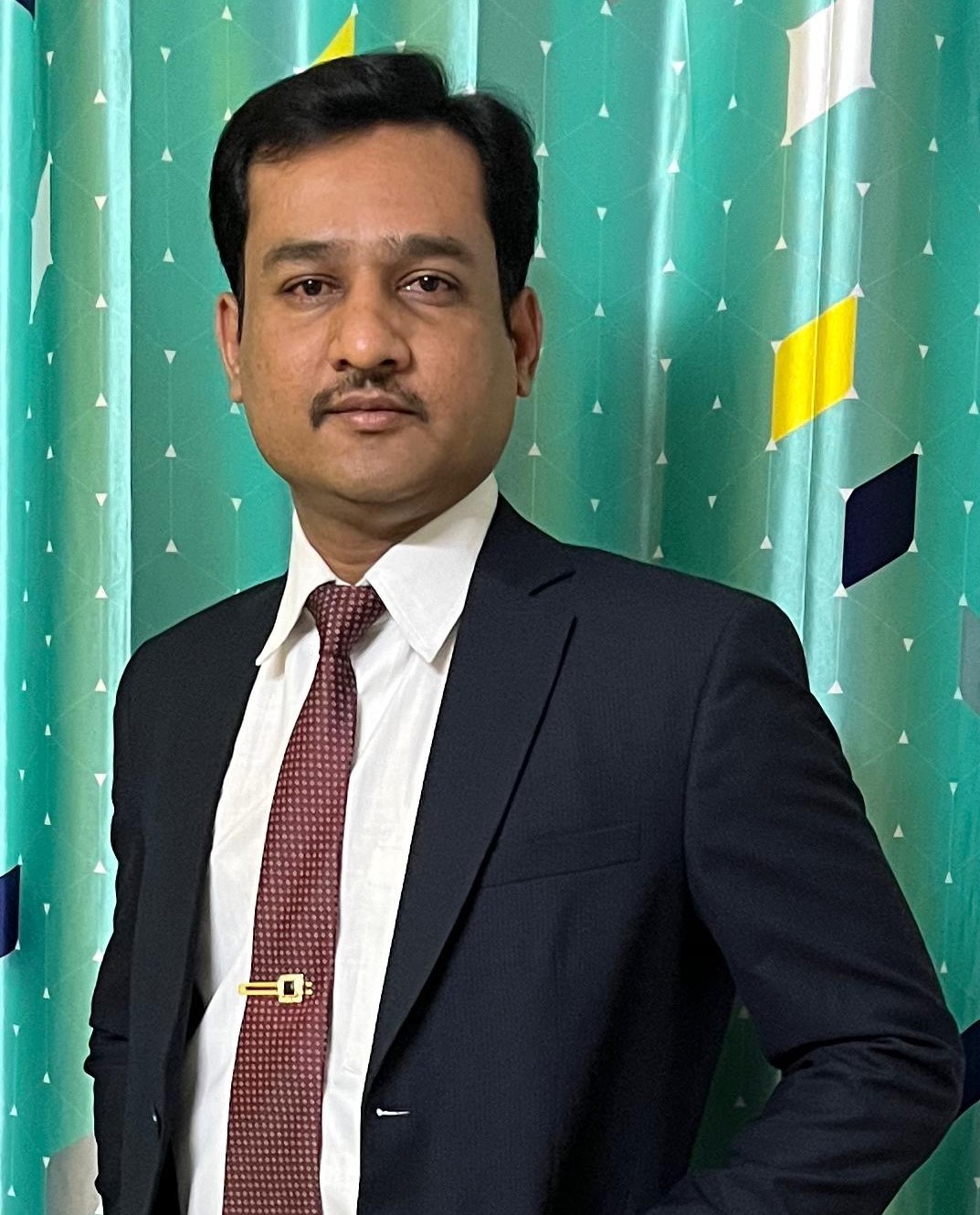
  • “Being an in-house counsel is more than providing legal advice; it’s about shaping business strategies that minimize risks and contribute to the company’s long-term success.” – Yogendra Bhaskar, In house Counsel at DJT Corporation & Investment Pvt. Ltd.

    “Being an in-house counsel is more than providing legal advice; it’s about shaping business strategies that minimize risks and contribute to the company’s long-term success.” – Yogendra Bhaskar, In house Counsel at DJT Corporation & Investment Pvt. Ltd.

    This interview has been published by Namrata Singh and The SuperLawyer Team

    You’ve had an impressive journey in the legal field. Can you share what inspired you to pursue a career in law, and how did you navigate your early years to build a strong foundation in this field?  

    My journey into law was shaped by a unique blend of family expectations and personal discovery. Growing up in a family with a strong tradition of public service, particularly in the Central Government sector, there was an implicit expectation for me to follow a similar path. My father’s distinguished career as a “Government Officer” set a high bar, exemplifying the respect, authority, and satisfaction that came with this role.

    Initially, I ventured into Aeronautical Engineering in 2008, driven by my background in the science stream. However, after a semester, I realized that this field did not ignite the same passion I had observed in my father’s career. I was missing the sense of purpose and impact.

    This realization led me to pivot towards a field of law that I believed could offer the opportunity to make a meaningful difference in society, much like the government service I had grown up admiring. I saw “law” as a path that could lead to either judiciary or advocacy, both of which aligned with my desire to contribute significantly to society.

    My legal education and early career were driven by a passion for understanding and navigating complex legal systems, to create positive change. I laid a strong foundation by immersing myself in litigation, gaining valuable hands-on experience across various courts and tribunals under the guidance of excellent legal professionals practising in Delhi High Court and Supreme Court. This diverse exposure was instrumental in bridging the gap between theoretical knowledge and practical application, providing me with a comprehensive understanding of law that went far beyond what textbooks could offer.

    During your time at LEX JURIS and SKC & Associates, you handled a wide range of cases across various courts and tribunals. What strategies do you find most effective in preparing for and managing high-stakes litigation?

    When it comes to high-stakes litigation, I believe in thorough preparation using tried-and-true methods. My approach starts with diving deep into the core of the case through legal research and understanding the correct facts of the case. I make sure to note down all relevant precedents that could support my case. A crucial part of my preparation involves anticipating what arguments the opposing side might present and observing myself in his shoes.

    Before stepping into the courtroom, I always ensure a few essential elements are in place. First, I develop a solid case theory – this is our roadmap for the entire litigation process. Then, I create a concise summary document “by hand-noting” that helps me remember all the critical points of our case. Still, I always make a diagram of the whole story of the case on the first page of the file, a diagram structure as it helps me to remember the cruciality of the case. It is also fundamental to gather and organize all the key facts from my client, ensuring nothing important is overlooked.

    Furthermore, understanding the framework and operation structure of the Client’s business helps me a lot to represent my case before the Court as it makes it easy to judge/presiding officer, how this person’s business works and why the dispute arose, which the relief I am asking for my client.

    Sometimes, complex cases require additional expertise. In such situations, I do not hesitate to collaborate with senior advocates. Their experience and insights can provide valuable direction to our litigation strategy.

    This comprehensive preparation method, combining detailed research, strategic thinking, and collaborative efforts when needed, forms the backbone of handling a high-stakes litigation.

    You started your career in litigation, representing clients in court, and later transitioned to an in-house counsel role. What motivated this shift, and how did your litigation experience influence your approach to handling legal matters within a corporate environment?

    My time in litigation was incredibly valuable, and I am truly grateful for the guidance and learning opportunities provided by my senior advocates as well as by the Hon’ble Judges. They gave me a solid foundation and the right environment to grow professionally.

    In my early years as a litigation lawyer, I learned crucial skills about how to structure a case. I discovered the importance of presenting arguments in a way that clearly shows why my client deserves the relief they are asking for. This involves carefully organizing facts, legal points, and evidence before presenting them to the court.

    While practising as a litigation lawyer, I also obtained insights into “why disputes often end up in court”. While there can be many reasons, I noticed that “commercial litigation” frequently stems from two main issues:

    1. Unclear or confusing terms in business contracts

    2. Misunderstandings or disagreements between parties involved in a transaction

    Recognizing these common causes of litigation sparked my interest in preventing legal issues before they escalate to court battles. Thereafter, I decided to shift to the corporate sector so I may construct a better foundation and avoid potential disputes as well as financial stability too. 

    Having transitioned from working in law firms to an in-house counsel role, what key differences have you noticed in the approach to legal issues? Please share your experience.

    In-house work requires a more holistic approach compared to law firm practice. In law firms, I primarily dealt with issues after they had escalated into disputes. As an in-house counsel, I now focus more on preventing legal problems before they arise.

    As an in-house counsel, I am much more integrated into the company’s day-to-day operations and strategic planning. This allows me to understand the business context of legal issues better.

    In a law firm, the focus was often on winning cases. In-house, there is a greater emphasis on managing risks and compliances. I now assess potential legal issues in terms of their business impact and help the company make informed decisions about which risks to take or avoid.

    While law firm work often allows for specialization, as an in-house counsel, I deal with a wider range of legal matters. This requires me to have a broader knowledge base and to be more versatile in my approach as well as I may learn more and more in my career.

    In-house work involves more interaction with various departments and levels of management. I need to communicate legal concepts to non-lawyers and miscellaneous department and further balance legal considerations with business objectives.

    Unlike in a law firm where client relationships might be more transactional, as an in-house counsel, I am invested in the company’s long-term success.

    My litigation experience now serves as a foundation for preventive law. I use my knowledge of common dispute causes, like unclear contract terms, to draft better agreements and advise on potential pitfalls in business decisions. My contribution and suggestions may help my organization to grow in an organized manner

    As an in-house counsel, I am often involved in strategic decision-making processes. My role is not just to provide legal advice but to help shape business strategies that minimize legal risks.

    Overall, the transition has shifted my focus from resolving conflicts to preventing them, from specialized legal work to a more holistic business-oriented approach. This in-house role allows me to use my legal skills in a more preventive and strategic manner, directly contributing to the company’s overall success and risk management.

    The shift from working in law firms to becoming an in-house counsel is much like moving from being a mason to becoming the architect of a building. By being the architect, I can now avoid potential risks and build a good foundation for the entire structure.

    As an in-house counsel, you’ve advised management on regulatory compliance issues. What do you see as the biggest challenges for companies in maintaining compliance, and how do you stay updated with changing regulations?

    As an in-house counsel, I have found that advising on regulatory compliance is much like ensuring our building meets all the necessary codes and standards. India is an evolving country day by day and those rapidly changing regulations across various sectors is a significant challenge. Further, many regulations are intricate and can be interpreted in multiple ways, being complicated sometimes. 

    As still in India for any sector, there is no such thing as a “One Window Solution”, where you may find all the compliances at once, so you have to follow several rules and regulations together without executing any contradiction and also following the interest of the Company. Operating a business in India has several major challenges due to the long processes of compliance and obtaining those approvals. 

    For companies operating in multiple regions, complying with different sets of regulations is often too hectic. Ensuring that this compliance does not hinder business operations is also a big challenge.

    I keep myself updated on specific regulations belonging to my company’s business by continuous learning through webinars, seminars, my consultant newsletters. I also subscribe to legal journals accordingly.

    Maintaining a strong network with professional legal associations and collaborating with external consultants and experts in the legal industry also provides help. Further, now in this Digital era, using technology and the internet helps corporate lawyers to track their compliance management and ensure all aspects of such requirements.

    Legal research and writing are critical aspects of your role. How do you approach legal research, and what tools or methods do you find most effective in ensuring thorough and accurate legal analysis?

    For legal research, I rely on a combination of online databases, legal journals, and case laws. Cross-referencing multiple sources ensures accuracy and comprehensiveness. Even, having such great mentors and seniors also guided me from time to time, whenever required, and through their vast experiences in the legal field, I got a better and wider approach to research and writing.

    When it comes to legal research and writing, I think of myself as a student preparing for a really important exam. This mindset helps me stay thorough and focused.

    First, I start by clearly defining what I’m looking for. This helps me stay on track and not waste time. I use a mix of online and traditional resources. Online databases like indian kanoon, scconline etc. are great for finding recent cases and laws. 

    I always cross-check information from multiple sources. This helps make sure I’m getting accurate and up-to-date information. When I find something useful, I take careful notes. I write down where I found the information so I can easily go back to it later.

    I also try to understand the context of the laws or cases I am researching. It is not just about finding a rule, but understanding why it exists and how it has been applied.

    For complex topics, I sometimes use mind maps or flowcharts to organize my thoughts. This visual approach helps me see connections I might have missed.

    I always aim to write clearly and simply, like I am explaining it to a non-lawyer. This helps ensure that anyone reading my work can understand it easily.

    Finally, I always double-check my work and, when possible, get a colleague to review it. Fresh eyes can catch things I might have missed. This approach helps me be thorough in my research and clear in my writing, which are key to providing solid legal analysis.

    Reflecting on your career journey from a Junior Advocate to an In-House Counsel, what advice would you give to young lawyers who aspire to follow a similar path?

    As a young lawyer, your early career should focus on gaining diverse experience, especially in litigation. This courtroom work will prove invaluable, even if you plan to move in-house later. Developing strong research and writing skills is crucial, as is maintaining an unwavering commitment to ethical practice. 

    Don’t underestimate the power of networking and continuous learning for career growth. Two often overlooked but critical skills are observation and active listening.

    By carefully listening to your clients, you’ll build a stronger case and resolve issues more effectively. Meanwhile, keen observation in client meetings and in court will provide you with a broader perspective on your career. There’s much to learn from watching senior advocates in action and paying close attention to judges’ explanations.

    These experiences can reveal new angles to cases you might not have considered before. Remember, the legal profession is as much about constant learning and adapting as it is about applying the law. By staying curious, ethical, and open to new experiences, you’ll set a strong foundation for a successful legal career.

    As a lawyer, it is beneficial to adopt what we call the “T-shaped” approach to your professional development. Picture the letter “T” – the horizontal bar represents a broad, general knowledge, while the vertical bar signifies deep expertise in a specific area.

    This means you should strive to gain a wide-ranging understanding of various sectors and how they operate. Familiarize yourself with different industries, business models, and how companies function in general. This broad knowledge forms the top of the “T” and gives you valuable context for your legal work.

    However, the vertical bar of the “T” represents your core expertise – the law. In this area, you need to excel. Your legal knowledge and skills should be deep, thorough, and constantly refined. This is where you focus most of your energy and become a true expert.

    You’ve done diplomas in Advanced Contract Drafting and International Contract Negotiation. How have these certifications enhanced your ability to negotiate and draft contracts, and what are the key elements you focus on during negotiations?

    I am currently 60% through a Diploma in Advanced Contract Drafting and Negotiation, which has significantly improved my skills. I have also enrolled myself in 4 other Diploma courses in Law Sikho, which have also started simultaneously.  I have learned to focus on clear language, anticipate disputes, and cover all key elements in contracts. The course has changed my perspective on contract drafting for modern entrepreneurs, showing me how to mitigate risks with crystal-clear drafting.

    It has also enhanced my negotiation skills, teaching me to evaluate the purpose, identify specific terms, consider past limitations, stay informed, listen patiently, control my reactions, stand firm on non-negotiable points, avoid suggesting alternatives, and close negotiations effectively. This learning has transformed my approach to both contract drafting and negotiations, equipping me to better serve my company and clients in today’s business environment.

    The legal profession is constantly evolving, especially with the rise of digital technologies and changing regulations. How do you stay adaptable and continuously improve your skill set in such a dynamic environment?

    To stay adaptable and continuously improve my skills in the dynamic legal environment, I employ a multifaceted approach. I prioritize ongoing education through formal courses and diplomas, as evidenced by my current studies in advanced contract drafting and negotiation. I embrace new technologies and understand their impact on legal practice.

    Adopting a ‘T-shaped’ skill set, I maintain broad knowledge across sectors while deepening my legal expertise. I adapt my communication and drafting skills to meet modern clients’ needs, focusing on clarity and efficiency.

    Continuously refining my negotiation techniques, I emphasize understanding business objectives and finding mutually beneficial solutions. I network with peers, attend conferences, and stay open to emerging areas of law. A client-centric approach keeps me attuned to changing industry needs, while I also develop crucial soft skills like emotional intelligence and problem-solving.

    Regular reflection on my experiences, such as my evolved perspective on contract drafting, ensures I am constantly improving and providing relevant, valuable legal services in this ever-changing landscape.

    Law can be a demanding profession. How do you manage the balance between your professional responsibilities and personal life? What strategies do you use to maintain your well-being while handling high-pressure legal work? 

    Balancing professional and personal life is a constant challenge, but it is crucial. To manage this, I employ several strategies. I prioritize effective time management, set clear boundaries, and practice stress-management techniques like meditation. Maintaining a regular exercise routine and a strong support network also helps me navigate the high-pressure nature of legal work. Additionally, I ensure I take regular breaks and vacations to recharge.

    Rather than adhering to a standard corporate culture, I believe in focusing on the desired outcomes for the company. This means I do not feel the need to be bounded by a rigid 9-to-5 framework. Instead, I concentrate on resolving issues and finding a healthy balance between my professional and personal life. Ultimately, maintaining good mental health and a stress-free mindset allows me to better overcome the hurdles faced by the company.

    Get in touch with Yogendra Bhaskar

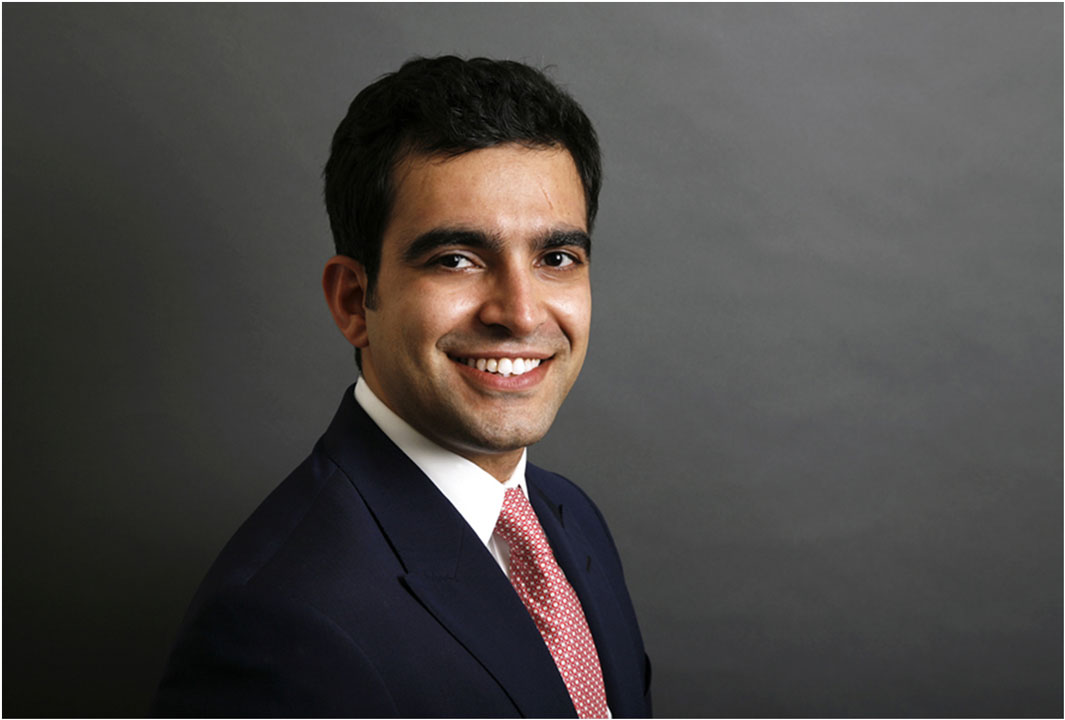
  • “Crafting legal solutions is like composing a symphony – each note, each contract, contributes to the masterpiece. Proud to bridge the gap between music and law.” – K P Sivaramakrishnan, Founder at Sivaramakrishnan Law Offices

    “Crafting legal solutions is like composing a symphony – each note, each contract, contributes to the masterpiece. Proud to bridge the gap between music and law.” – K P Sivaramakrishnan, Founder at Sivaramakrishnan Law Offices

    This interview has been published by Namrata Singh and The SuperLawyer Team

    You made a transition from a career as a musician and music producer to practicing law, specifically specializing in Intellectual Property Rights. Can you share the pivotal moment or realization that led you to shift your focus to law, and how has your background in music influenced your approach to your legal practice?

    Firstly, I did not have a career as a musician. I started playing the keyboard when I was 12 (all thanks to my father), and later taught myself how to play the piano. Eventually, I started writing and composing. I even wrote during my board exams, just letting out my thoughts and experiences on paper. While I wanted to become a musician back then, my parents were clear when they said ‘get a degree’ and then to follow my passion. So, music really did not have anything to do with me pursuing law. Just wanted a degree.

    When I was in college, I started playing in a couple of local concerts and worked on a few documentaries/short films for my friends. The two worlds of music and law came together when I was interning in 2012 in Bangalore, and I read about Entertainment and Media Law. The logic was, law is in everything around us, so why not in music? I started finding case laws, scope of the field and how to make a career as a Media and Entertainment Lawyer. I got support from my then senior I was interning with, Mr. Harikrishna Holla, who without a moment of thought, gave me case laws to begin with. Over the next 3 years of my bachelors, I interned at renowned IP firms, with a specific focus on Media and Entertainment.

    To be honest, the process of writing, composing, producing music, watching my friends direct, edit or write scripts gave me the behind the scenes experience. This really helped in understanding contracts, and how Copyright works. Today, when I am advising an artist, or just talking to them about their music (because why not), I understand it much more than a few of my contemporaries. The Artists also like it when I do not ask them to explain technical terms.

    There’s nothing to complain about, as I am living the best of both worlds and finally I am able to do what I always wanted to do.

    As the founder of SIVARAMAKRISHNAN LAW OFFICES, what principles guide your approach to providing legal solutions, particularly in the realms of Business and Intellectual Property Rights?

    Before starting my own practice in 2021, I had worked with law firms and media companies. I dealt with both Indian and international clients/entities and when I decided to go independent, I found my place in working with start-ups and individual businesses. I figured that there are start-ups/small businesses with less than 5 employees, and have freelancers or consultants on board serving them in their day-to-day activities, so they might not need a law firm with many lawyers on board.

    Thus, I started pitching my services as an IP and Business lawyer, who will not only take care of their IP portfolio or streamline it, and will draft/review contracts for them at a cost which is nominal. Even the businesses understood that there is a lot that can be taken care of with a minimal team and less resources.

    One principle I stand by till date is, giving time to the clients. Working with law firms, I saw that the business decisions in big companies are taken internally, and the work that was sent across was limited. On the other hand, small businesses suffer as they do not have anyone on board, thus, I proposed I will attend internal meetings, conduct negotiations for the clients, and advise them based on their vision and future prospects. Till date there are a few clients who take note of this and want my presence or time as if I am part of their management team.

    Lastly, most businesses run away from the thought of reaching out to a lawyer. It has a lot to do with the costs they will incur, and the stereotype image of a lawyer/advocate. So it’s better to make them comfortable with the thought that lawyers are essential and bring value to the table. I also tell them that if they start their business properly, the likelihood of them running into any kind of problems when they grow or have an exit, reduces.

    All my clients and those who approach me, know how I work. So if anyone is in line with my thoughts, they will stick around. Just give them something extra.

    Your experience covers various industries, including entertainment, packaging, FMCG, healthcare, and finance. Among these diverse sectors, is there a particular type of case or client that stands out as the most memorable or challenging for you, and why?

    One case does stand out for me, and is still very close to my heart. When I was working with a law firm, I worked on a proposition i.e. ‘Registration of geographical marks’. During the registration process of that geographical trade mark, it was challenging to explain to the Trade Marks Examiners that the mark applied for was eligible and entitled to registration. A similar matter was being heard before the IPAB for the similar proposition, and I was working on that too. Unfortunately, the order was unfavourable and we had to file a writ petition before the High Court of Delhi. With little to no experience in handling a litigation matter, I was given the task to draft it, and research for the proposition.

    I still remember I researched the changes in the Indian Trade Marks Law from the 19th Century till then, and also learnt how the common law developed internationally. I struck gold when I found a similar case which was decided by the UK Intellectual Property Office. It felt amazing to have found at least an explanation to the proposition, and then began the process of drafting the Writ. We finally filed the Writ Petition and got a decently favourable order based. That was my first litigation experience.

    My key takeaways from this experience were; 1) that part of being a lawyer/advocate is to think out-of-the-box most of the times, and that’s how the law remains dynamic for the times to come; 2) I learnt how a matter is filed and presented before the Court; 3) gave me confidence in dealing with challenging work. Today, because of that amazing experience, I am advising other Advocates in IP matters as an external counsel, and also helping businesses solve their issues from management structures to business proposals.

    For me, the major credit goes to my seniors who had my back at that time.

    Congratulations on being credited as the legal advisor for the feature film “Chitrakut” (2022). Can you share your experience working on this project and any unique challenges you faced as a legal advisor for the film industry?

    Thank you, I ticked it from my bucket list. The film had already premiered at a film festival, and the Producer/Director of the film reached out when they were editing the film for the big screen. That’s where I worked closely with the production team on their rights and interests in various assets of the Film. We negotiated and entered into various film distribution, music distribution and rights management agreements, among other things.

    The best part was it was the Producer’s debut film, and so was mine (as a lawyer. There were back to back meetings and research that I had to take up, to ensure that the project sails smoothly. It was an amazing experience to see my name up on the big screen, and I still thank them for allowing me to be a part of it. That opened the doors for similar projects.

    I think if I have to pin on something as a challenge, it would be the fact that I worked on it alone, independently. I had only been independent for 2 months before I began with the project, so this was a good boost. I am surely waiting for more projects.

    You’ve worked closely with Bollywood singers, musicians, and publishers. In your experience, what are the current challenges and opportunities for artists in the music industry, especially concerning royalties and benefits?

    It’s unfortunate that the term ‘Royalty’ has been glorified so much that the artists feel that’s the only point of concern for them. They can’t be more wrong, as royalty is only one stream of revenue for them.

    India has thousands, if not lakhs of artists in India, who are day in day out writing, composing, producing music, collaborating with other artists, but I bet majority of them do not think of it as a business. Sadly, many of them are not even registered with the IPRS (Indian Performing Rights Society). I personally believe many of them believe in fame or celebrity status, or want to be signed by a which is not wrong, but only a tip of the iceberg. If history has shown us anything, it all fades away, for most of them.

    How does one resolve this? Artists need to start learning and understanding the concepts of publishing, revenue share and most importantly about their rights. I am pro towards curriculum which teaches artists about the music business, but many of them are still unaware of the insights. I have been working with artists who come from small towns, and they had never dealt with contracts. Some even started using ChatGPT and don’t have any idea about what they are signing.

    Today, there are many YouTube channels, podcasts, articles, etc. which share a lot of information on ways to scale your music career. I even know artists in my peers who have taken up certificate courses in media and entertainment law. Even if someone cannot learn due to their limitations or circumstances, there are lawyers, managers, freelancers, and even senior artists who are ready to assist them with their issues.

    Lastly, there are associations such as MCAI – The Music Composers Association of India, IMI (Indian Music Industry), ISAMRA (Indian Singers And Musicians Rights Association), among many others, who are not only providing information to artists, but they will get access to a community.

    I have coined my 3C’s, 1) Create; 2) Contract; 3) Collect.

    As someone who believes in making an IP conscious India, how do you break down complex legal concepts to make them more accessible, and what steps do you think are crucial for increasing awareness of intellectual property rights in the country?

    Since the time I was introduced to IP in my second year of law school, I saw the world differently. I always say this, ‘IP is in everything’, whether it’s the phone, website, content, chair, to medicines. And how many people would actually know that they have created IP? Do they exploit it effectively?

    In the past 3-4 years I have uploaded and written content on specific topics on social media. I answer questions on Quora, and don’t look at it as a platform for lead generation. There are some very interesting questions that are posted there by people, which shows how aware they have become about their rights. I see a lot of informative content from my contemporaries on social media.

    I never intended to make an IP conscious India on my own. It’s impossible and foolish to think that I could. So it becomes important that the future generation of lawyers know the kind of opportunities that lie in the field. I have taken up opportunities to conduct workshops/seminars in colleges, both offline and online, where the students get a hang of what they can do in the world of IP. Even if I am able to make an effect on 2 out of 100 students, I consider it a job well done. Some of the students who interned with me have gone out and shared knowledge and information to others around them.

    Effective resources and courses for non legal businesses are important. IP Law is already part of many creative education programs, but there needs to be more conversation on them. Conferences, online seminars, interviews, Q/A rounds, etc. are being done and have to be conducted by many more people.

    In addition to your legal practice, you’ve conducted seminars in colleges to provide a unique perspective on IPR. What motivated you to engage with students in this way, and what message do you aim to convey to the next generation of legal minds?

    I learnt and perceived law in a different way. I was not academically strong, and I would give credit to the places I interned and worked for what I have learnt. My approach to law was defined by the practical aspects. I understood music so it became easier to understand the process of creation and distribution of the songs. I focussed on what was happening in the media and entertainment industry, understood the business before I advised a client.

    Most of the students, till date, think that one has to become an Advocate to have a decent career in law, which is so not true. I have hardly done any litigation, and I have found so many avenues to curate my practice today. I am an advisor, consultant to the management, personal manager to artists, and even deal with their royalties. So why not share the way I did?

    Time to time I have spoken at webinars, seminars and workshops for colleges, and I aimed to share information on practices which are not commonly heard of. To keep things interesting, I share cases or instances which the students can easily relate to, which eventually peaks their interest. My advice to young minds has always been to look beyond what they see. Again, law is in everything, so definitely there is something for everyone. You could be an artist manager if you’re into music, or work with production houses if you’re a movie buff, book readers can review scripts (yes, lawyers do that), people with an inclination to managerial positions can be part of a company and fix it from the inside. It’s just a matter of time before they figure out their interest and start working towards it.

    Your journey involves working with renowned law firms and companies, including your tenure at Showbox and 1 Sports. How has your experience working in these different environments shaped your understanding of the legal landscape, especially in the media and entertainment sectors?

    I saw a stark difference between the practices lawyers have to take up when they are at a law firm or at a company. I feel that in the field of IP, the experience in a law firm is dependent on the portfolio that you are alloted  whereas, at a company you’re like the legal part of a brain. At the law firm, I got to work on different kinds of trade mark matters for clients from various industries. But at the company I got to know the internal decisions of brand creation, as I got to work with various departments. It helps a lot and gives one an edge when they work closely with the business. Some are in fact able to achieve it working at law firms.

    At Showbox, I could interact with industry professionals such as A&R (a concept I came across for the first time), and worked on creation of different IPs for the channels. At 1 Sports, I got to work on Distribution deals for the channel along with broadcasting agreements. In short, I not only understood and drafted , but saw most of them practically happen in front of my eyes.

    The icing on the cake was to meet artists.

    Looking ahead, you mentioned working on a model for IP Asset Management. Could you provide a glimpse into how this model aims to benefit individuals and businesses in effectively managing their IP portfolios?

    In the past two years I have come across clients with different sizes, revenue, and approach to business. But there was one thing common in most of them. They don’t understand the difference between ‘registering a trade mark’ and ‘creating a brand’. That’s where I bring my expertise and resources.

    A business might already have an IP attorney on record, but creating a brand is an internal process, and usually a lawyer is not engaged by the company except during coining the trade mark. But, have they determined their IPs? In most cases, no. So, this becomes my chance to become a consultant for the Company, for a short period of time, where I would shortlist their IPs, make sure appropriate applications have been filed, rights and ownerships are in place, and finally, they are streamlined so their regular lawyer can take care of it.

    It’s purely an IP analyst kind of a position, with no intent to solicit clients. I have already done this for 3 clients last year, and that’s how I came across this idea. From what I see, this is beyond the generic IP registrations services. The whole process to build a deck on it is still pending, but the work has already started for my regular clients.

    On a lighter note, outside of your professional life, do you have any hobbies or interests that you find particularly rejuvenating, and how do you balance your work with personal pursuits?

    I have a piano at home, which I would switch on and start playing random songs, latest or old ones. Sometimes good compositions come out of it by accident. I write poems too.

    As a kid I was a bookworm, which I couldn’t keep up when I started working. But for the past two years I have managed to finish around 15 books each year. I know it might not seem like a lot, but I am glad I could catch up on that childhood interest. Past 6 months I have read a few non fiction books, which have really helped in my management, negotiations and people skills too.

    Being a sole practitioner, I have some freedom and control over my time. I can decide the clients I onboard. Sometimes I push the brakes on a random weekday, only to watch a movie and not work. I hope my clients don’t read this!

    But there are consequences of habits too. My family might complain that I sit late at night to work, while I have the day to keep things light. Now, as I am growing older, I have realised that health is important and there has to be a system to keep everything from work to life in check.

    Everything is fine till it’s kept under control.

    I would really like to thank Team Superlawyer, especially Namrata for reaching out. It has been a pleasure answering the interview questions, which have been well crafted. I think I can take this off of my bucket list!

    Get in touch with K P Sivaramakrishnan-

  • “With India experiencing rapid growth, witnessing a surge in startups and companies undergoing transformations, there is a burgeoning demand for M&A and related expertise”- Corporate Lawyer Sandip Patil

    “With India experiencing rapid growth, witnessing a surge in startups and companies undergoing transformations, there is a burgeoning demand for M&A and related expertise”- Corporate Lawyer Sandip Patil

    This Interview has been published by Pragya Chandni and and The SuperLawyer Team

    Can you provide a brief overview of your journey in the field of law, from your educational background to your current role as an in-house Legal Advisor?

    My journey began with a passion for Indian civil services, steering my interest towards law despite an initial background in mechanical engineering. Pursuing a law degree from the University of Pune, I prioritized learning over grades, delving deep into various legal dimensions through diplomas, certifications, and practical experience. Working extensively in real estate law before completing LLB, I continued to expand my expertise in diverse legal areas—Civil, Criminal, Family, Consumer, Cooperative, Commercial, Labour, and Finance. 

    Joining a Pune-based law firm with a broad spectrum of cases but limited manpower allowed me to rapidly acquire extensive knowledge. Transitioning to a corporate role in a Singapore based company, specializing in commercial, legal, and financial advisory for startups, exposed me to a new realm of laws such as Corporate, Intellectual Property Rights (IPR), and Cyber Law. 

    Currently, as a Legal Advisor in a cluster of companies, I handle multifaceted legal responsibilities spanning litigation management, corporate agreements, Real Estate law, IPR, Data Privacy, compliance, and due diligence. 

    In your experience at Bluebox Consulting Pte. Ltd. in Singapore, how did you handle entity creation, management, and dissolution, especially in the context of startup operations?

    During my tenure at Bluebox Consulting Pte. Ltd. in Singapore, I navigated entity creation, management, and dissolution within the startup landscape. Singapore’s legal and corporate procedures are notably straightforward, featuring user-friendly applications and streamlined processes that were quick to grasp and integrate into operations. Compared to India, the procedures are notably simpler and less cumbersome. Working closely with government agencies like ACRA & IRAS was a delight; their support further emphasized Singapore’s business-friendly ecosystem, which I found particularly favourable.

    How have skills such as Legal Research, Due Diligence, and Litigation Management been crucial in your day-to-day Work, and can you share a specific example where these skills were instrumental?

    In my current role, the company faces diverse litigations including SCC under section 138 of NI Act 1881, labor law cases, Special Civil suits, RCAs, among others. An instance that highlights the importance of my legal research skills occurred during a specific litigation where we needed case law to challenge the plaintiff’s authority to file the suit. Despite involving external counsel, my legal research proved pivotal. I uncovered relevant Case Laws that not only addressed the pertinent legal points but also showcased instances where the same individual involved in our case had committed a similar act in different cases across various High Court jurisdictions. This comprehensive research significantly contributed to our case strategy and defence.

    As someone with expertise in Contracts & Negotiation, what advice would you give to professionals entering negotiations for international agreements?

    For professionals entering negotiations regarding international agreements, I would emphasize the critical role of dispute resolution and jurisdiction clauses. Litigation costs in foreign countries such as the US and Singapore can be exceptionally high. Hence, incorporating arbitration clauses can significantly save on expenses and prove to be a more cost-effective solution.

    You have pursued various certifications, including a diploma in “US Corporate Law & Paralegal Studies.” How have these certifications enhanced your legal knowledge and skills in practice?

    These certifications I pursued, particularly the diploma in “US Corporate Law & Paralegal Studies,” have been immensely beneficial both in my current role and in my freelance endeavours. In my job, I frequently handle a diverse range of corporate agreements, many originating from foreign countries, necessitating a deep comprehension of international laws and procedures. This certification has served as a strong theoretical foundation that greatly supports and informs the practical work I undertake on a day-to-day basis.

    Pursuing a Diploma in Mergers & Acquisition is an interesting choice. How do you see this specialization shaping your future roles or contributions to your current position?

    Enrolling in a Diploma in Mergers & Acquisitions is a strategic investment in futuristic skills and opportunities. With India experiencing rapid growth, witnessing a surge in startups and companies undergoing transformations, there is a burgeoning demand for M&A and related expertise. I foresee this specialization playing a pivotal role in future roles or contributions, as M&A, being an extensive domain, already contributes, to some extent, to my current role, and I anticipate it will continue to be an asset as the complexities of M&A transactions become more prevalent in the professional landscape.

    Working at Prof. Vijayrao Kale & Associates, you dealt with a variety of litigation matters. Can you share an experience that significantly impacted your approach to legal advocacy?

    Sometimes, circumstances unexpectedly come to one’s aid. Learning directly from senior lawyers can be challenging, especially for first-generation lawyers like myself. In such situations, one must proactively seek opportunities and glean as much knowledge as possible despite facing repeated denials, frustration, and dissatisfaction.

    Fortunately, during my tenure at Prof. Vijayrao Kale & Associates, I encountered a wealth of diverse litigation cases at various stages. Despite the limited number of Advocates available to handle these cases, this situation placed a substantial burden and responsibility on me as a newcomer in the field. This pressure, however, became a catalyst for my intense learning process, and I embraced it wholeheartedly. Within a remarkably short span, I absorbed an extensive amount of knowledge and procedural insights. I acquired insights that an average lawyer might not gain even after five years in the field, all within a mere 1-2 years.

    While the pay scale was disappointing, the experience and knowledge gained were invaluable. This challenging environment became the breeding ground for exponential growth in my understanding and practical experience within the legal sphere.

    Considering your diverse experience in law, what general advice would you give to fresh graduates entering the legal profession today?

    Considering the diversity of experiences in law, my advice to fresh graduates venturing into the legal profession today revolves around the distinction between theoretical knowledge and its practical application. While understanding substantive law might seem more accessible, grasping procedural laws—often intricate and challenging to remember—poses a hurdle for beginners, especially first-generation lawyers.

    Newcomers commonly struggle in acclimating to law practice due to insufficient revision of procedural laws. In my view, it is crucial for budding legal professionals to focus on memorizing procedural laws—prioritizing the relevant and frequently used ones—right from the outset of their practice. This foundational understanding significantly eases the comprehension of court procedures and accelerates progress towards higher levels of learning within the field.

    Lastly, I would like to quote Roy Bennett for the first-generation lawyers,

     “Your hardest times often lead to the greatest moments of your life. Keep going. Tough situations build strong people in the end.”

    Get in touch with Sandip Patil-

  • Rajesh Sharma, Founder Director of LetsComply.com, on why legal knowledge is necessary for a CFO

    Rajesh Sharma, Founder Director of LetsComply.com, on why legal knowledge is necessary for a CFO

    Rajesh Sharma passed out as a Bachelor of Commerce from Shaheed Bhagat Singh College, the University of Delhi in 1990. After that, he pursued LLB from the University of Delhi and graduated by 1993. Besides LLB, he also pursued Company Secretary from Institute of Company Secretary of India (ICSI) and Cost & Management Accountants from Institute of Cost and Works Accountants of India (ICWAI) and finished these professional courses in 1993.

    With his qualifications in the realm of law, finance and accounting, he started his versatile work life full of enviable achievements. He started his professional career as Manager – Merchant Banking with Category-1 Merchant Banker, collaborated with the manufacturing company and IT companies before joined as the Founder Members of Singhania and Partners LLP. Afterwards, he was the Head of Finance, Accounts & Legal Department of Global Healthline Private Limited – 98.4, one of the best retail pharmacy chains in North India. He played major role at Barista Coffee Company Limited during his long tenure from 2006 to 2012 as a Chief Finance Officer, wherein he was instrumental not only in setting up all systems and processes for nationwide coffee chain, implemented SAP for retail but he was also key member to get Barista acquired by LAVAZZA, Italian Coffee player. Later, he served as a Group CFO at Carnation Auto India Private Limited; wherein he was instrumental for equity and debt fund raising for setting up multi-brand automobile workshops and used car business. He was Partner with Rajani Singhania & Partners, an international Law Firm. Presently he is Director, Fashion TV Hospitality. He founded Juris NextGen LLP and Affari Consulting, Inc. in 2010 and 2011, respectively.

    Finally, being an emerging entrepreneur, he founded LetsComply.com, which is a technology driven platform in India to provide world-class, affordable and convenient professional services relating to legal, finance & taxation at one click under the guidance of an experienced team of professionals, whose knowledge & credentials are proven.

    An independent entrepreneur with a string of achievements at a very young age, Rajesh Sharma talks about his thoughts, ideas, experiences and advice to young entrepreneurs and students of law and CA.

    In this interview, we cover his academic and professional journey, while focusing on:

    • The combination of his qualification in B.Com, LL.B, C.S. and CMA.
    • Varied work experience as a CFO, Founder Members and Director of various companies.
    • Part of Startups, provided Legal, Finance & Taxation support to create systems and processes and helped them to raise funds and now providing mentorship to various startups directly as well as through various incubation centres.

    How would you introduce yourself to our readers? Please tell us about your pre-college days.

    I belong to a very middle class & humble family. In spite of not been able to get the education from Big B-Schools, it is the learning by experience and connectivity with grass-roots for work with qualitative education; I could able to achieve this position.

    What plans did you have for your future? What inspired you to embark on this entrepreneurial journey?

    I feel blessed and fortunate that in spite of limited resources, I find myself at the pinnacle of my career by achieving and delivering good as a Legal & Finance professional. Now, I think this is the time to give back what I have achieved throughout my entire life and career. I got myself associated with a couple of incubation centres, NGOs and other bodies wherein I provide my services as Mentor to the new entrepreneur for their entrepreneurship journey. India is providing an excellent environment for startups, enormous options and opportunities available to the young entrepreneurs, and hence, I am also contributing to my best.

    How important is it for a law firm partner to be good at business development, or are great lawyering skills enough to become a partner? What skills or qualities distinguish the people who become partner from those who don’t?

    Being an entrepreneur, it is not necessary to be a good worker, he/she has to be a good leader at the same point in time. While he/she should be able to understand and manage with expertise, but should be able to manage a good team as well.

    Having done B.Com, what motivated you to choose law along with CS and CMA as a career?

    Though it is obvious, if you want any professional degree beyond graduation. Since I had interest both in Legal & Finance domain, therefore I opted for both courses (also since not having proper guidance, I chose two courses to have backup, if I could not make one)

    What challenges did you face while serving as a CFO at several companies? How did you overcome those challenges?

    Challenges are of multiple kinds, being cost controller and always pushing for implementation of system & process; CFO faces challenges from external as well as internal members of your own organization. No one like to listen no for the money and everybody realizes in the last working hour, therefore, to push your own team members to go to the system and processes, you actually develop negative relationship with your peer group but once you explain and help them to implement these methods, they like and start implementing these processes.

    You’re the Founder Director of LetsComply.com. Please tell us about LetsComply.com.

    LetsComply is the only technology driven platform in India to provide world-class, convenient and affordable professional services relating to legal, finance & taxation at one click.  LetsComply provides services under the guidance of an experienced team of professionals, whose unimpeachable expertise, backed by proven credentials, needs no emphasis.

    In pursuance of our humble resolve to serve, we have always looked for the ways and means to make it easier for the entrepreneurs and corporate establishments to function better, and we realized that since the world is progressing and taking online route to grow and expand, it would go a long way if we could provide Legal, Financial & Taxation services in a structured fashion with the assistance of a team of experts without making it too expensive or inconvenient. That’s how the idea of LetsComply germinated.

    We, at LetsComply, are committed to help entrepreneurs and business owners to start, manage and grow their businesses by taking care of the legal, financial & taxation side of the business so as to allow them to focus on innovation and expansion without having to fret over compliance issues, which certainly matter a great deal and can’t be left unattended.

    We aim to be a partner in the entire business lifecycle at all stages of the entrepreneurship — Startup, Growth, Acceleration & Progression Stage — to make sure that the businesses do not fall back on compliances and grow manifold. In today’s Digital world, we bring you the concept of Virtual Intelligence by way of Virtual CFO (vCFO) and Virtual General Counsel services to enable accelerated growth to your business. We are a team of experienced Chartered Accountants, Company Secretaries, Cost Accountants, Corporate Lawyers, Management Graduates, IP Attorneys and Technologists ready to assist you at all times.

    I believe that today when the world is moving towards a higher technological and economic order, allowing oneself to be bogged down by various mandatory compliances is a waste of precious time and energy. It cannot be ignored that the statutory compliances have a very significant role to play in sustaining the business environment conducive to fair competition and commercial growth. Therefore, it is essential to be cautious about the compliance of various statutes at the initial stage itself to not only avoid later complications and harassment but also to contribute to the sustenance of a healthy business ecosystem. And to keep you comfortable with all the compliances, the professionals at LetsComply are always ready to extend any and every assistance that you might require in this regard.

    How do you plan to expand LetsComply.com regarding operations, infrastructure, as well as attracting more investments? Can we expect a mobile app in forthcoming time?

    We have just started and thrilled with the response we are getting from our users. Therefore, we have preponed our plans for expansion. Operationally, our offerings are quite wide, but we need to create the infrastructure to execute and deliver that. We are working not only to create and set up additional office space but also developing technology team as well. Though for operations, we may not need investments but to expand rapidly and to bring technology and marketing we would need investments. We are not aggressively losing for funding unless we get right partner. Yes, you can certainly expect mobile app.   

    You have a vital role in several companies by providing them a tremendous boost in their business. What are the key areas a Startup needs to focus on?

    The major need for any startup is to focus on execution and have the right partner in place. They should focus on their core activities without losing any attention.

    As you have recently addressed a conference on ESOP in Amity Innovation Incubator, please tell us how does ESOP work as a good tool for startups?

    ESOP is genuinely a very tool to attract & retain the right talent. You can attract talent with entrepreneurship mindset to grow fast.

    How important would you say are business development skills at such higher roles in a corporate law firm?

    Growth is never ending. One should always be hungry for growth so as Business Development skills are. The leader has to lead by examples, and he should always be upfront about facing challenges. Unless the Leader fights from the front, he cannot ask his army to step forward on the battle ground.

    Lastly, what would be your advice to students and young entrepreneurs reading this interview?

    Life moves forward like a “Business Cycle”, wherein phases such as ‘Peak’ and ‘Trough’ are ubiquitous. One needs to establish one’s stand at those stages. If he/she is tangled in the Trough Phase, there is nothing to blame upon. Be focused, there is no shortcut to success. Efforts never go waste. If everything seems to be on his/her side during the Peak Phase, there is nothing to claim upon. Keep your thirst for growth alive and continue to move forward with the same.


  • Hitesh Sablok, Founder, PackandShift.com, on entrepreneurship and quitting BigLaw to start-up

    Hitesh Sablok, Founder, PackandShift.com, on entrepreneurship and quitting BigLaw to start-up

    Hitesh Sablok studied law from Vivekananda Institute of Professional Studies (affiliated to IP University, New Delhi) in the Batch of 2003-08. A corporate lawyer by experience, now turned entrepreneur, he has worked at Vaish Associates and Amarchand & Mangaldas. Recently he has started his own business in logistics: PackandShift.com.

    PackandShift is his new venture, it is an aggregation based platform which renders economical, reliable and hassle free transportation and relocation services.

    In this interview he talks about:

    • His experience in the corporate world, the responsibilities involved.
    • Founding a startup, gathering the initial investment, finding a co-founder and other aspects regarding the same.
    • PackandShift’s main business model and facilities provided.
    • Advice for law students venturing into entrepreneurship.


    Tell us a bit about your childhood and pre-college life as well as educational background. Did you have lawyers in your family?

    I was born in Meerut and brought up in Delhi. My complete education has been from Delhi, so it won’t be wrong to call me a Delhi boy! I have been an average student throughout but always had a knack for connecting everything with logic, related concepts, application, techniques etc. My interests ranged from technology and science to nature to war history to superheroes. Major source of all this back then was the Discovery Channel, which started around the same time and till date is my favourite on TV.

    My dad, who is also a lawyer, played a very vital role in shaping up my career. In fact, it was on his advice and guidance that I entered into a law school. In fact now we have another lawyer in our family – my better half!


    You were till recently working at Vaish Associates as a Principle Associate. What constituted your work profile? What were your daily tasks and responsibilities?

    At Vaish Associates I lead teams on transactional assignments; primarily relating to M&A and PE. I was responsible for every aspect of the deal i.e. from structuring of a transaction from a regulatory perspective, discussing and negotiating the commercial terms of the deal with the opposite party, drafting, reviewing and finalizing the agreements required in accordance with the deal structure and last but not the least – ensuring proper closing the transaction (including some post-closing activities/ filings). The day used to start early and revolved around con-calls, client meetings (be it for discussing an ongoing deal or for business development) and finalizing drafts of agreements/ documents for one or the other on-going transactions.


    Earlier you were working at Amarchand Mangaldas, what was the work that you dealt with?

    At Amarchand Mangaldas I was directly reporting to my Partner and was responsible for any corporate matter that came to our team (be it a transactional matter or an opinion or general corporate advisory); however, even then my work majorly revolved around transactional assignments. It was a short but a beautiful experience working at Amarchand Mangaldas and taught me so many fine things that a professional should practice.


    Share the biggest challenges that you faced in the early days of your career. How did you address them?

    I entered as an intern and gradually became an associate… Ours was a populated team of about 20 people. Each and everyone wanted to outshine the other and get the best work. Every senior wanted the best junior to work with him, which is a very fair need. That was my initial challenge…to prove my worth! To be the best one out of the lot… I knew that the only way was to prove my ability and that’s what I went after; BUT, how do you do that when you do not have any work? I started taking up assignments which no one was probably wanting to take (cause of whatever reasons) and I also started picking up small researches from my seniors and even from my colleagues and used to give more than my 100% to the minutest aspect possible. It was from one of such researches that I got involved in my first major and full time assignment. To my surprise I was the only junior on that matter and then there was no looking back. However, this was not an easy road – there was endless brainstorming (so as to think out of the box and come up with workable, effective and legally tenable solutions), great deal of hard work (in successfully capturing the understanding in the document) and flawless execution (which used to be the icing on the cake).

    The point that I am trying to make here is that till you get an opportunity keep preparing yourself and keep finding ways to generate an opportunity; when you get it – make the best of it.


    What are the skills you banked upon to successfully carve out a niche in the corporate world?

    A focus on three important skills:

    1 – understanding the situation/ facts (UNDERSTAND);

    2 – analysing all the pros and cons and regulatory hurdles revolving around the situation (ANALYZE); and

    3 – following a problem solving approach and providing a solution basis the first two steps (SOLVE). With one’s experience and knowledge increasing every day, the inputs in the above steps shall keep on increasing; however the outcome remain constant – coming out with a best possible solution!

    The above approach coupled with discipline, dedication, hard work and ownership of work will definitely take you a long way!!


    Recently you left your job at Vaish Associates, to co-found a start-up. Do tell us a little more about packandshift.com, the business model and the idea behind it?

    🙂 After around 6 years in the profession and having experienced everything that a transactional lawyer can imagine, I wanted to take on a bigger challenge and also had this feeling of doing something of my own. After discussing with my family and a few close friends I decided to go for it and give it my best short. But this was only one third of the road to the start point.

    The second important thing was to find someone trustworthy to start-up with and on this front I was lucky to have one of my close friends Sougata (my co-founder at www.packandshift.com) to agree on taking this road with me. The last and the most difficult thing for us was to identify the sector. PackandShift’s idea originated from one of our personal experiences wherein my family and I were relocating from Delhi to Gurgaon and it was a pain for us to identify and appoint an economical and a reliable relocation service provider. Very soon we realized that finding both these qualities in one person and that too in this sector was next to impossible. Therefore, we let go of the economical part and moved forward with the reliable part and zeroed in on one of the best relocation companies in India.

    This became the starting point of our research into the completely disorganized sector and after months of research and discussion we finalised on transportation/ logistics as the sector where we would operate in and PackandShift was born.

    Currently we offer three kinds of services:

    1 – Relocation Services – Under this head we arrange for hassle-free, economical and reliable services to the customers so that they can completely sit back and relax throughout the entire relocation process. Being economical and that too along with hassle-free and reliable services is the hardest part of the game as the current players in the market who are reliable and provide hassle-free solutions are definitely not economical from a common man’s perspective.

    2 – Intra-City Transportation Services – Under this head we arrange for small trucks for anyone who requires to transport within Delhi NCR. We provide very attractive and transparent prices and the customer is also saved from the hassle of calling multiple transporters and negotiating to get the best price. This segment is very helpful for distributors, retailers, individuals buying items which can’t be transported in their personal vehicle.

    3 – Inter-City Transportation Services – Under this head we currently arrange for trucks of any size (basis the requirement) for anyone who requires to transport anything from one city to another.


    In how many cities is your business operational?

    It is impossible to start all the above segments in multiple cities at the same time. Its only been around 3 months that we have commenced operations. Currently, the focus of our Relocation Services and Intra-City Transportation Services is Delhi NCR; however, for the Inter-City Transportation Services we are currently focusing on any requirement moving to/ from Delhi NCR.

    We operate on an aggregation model and for all the above services we have identified and verified transportation partners who actually render the services to the client; however, PackandShift monitors and controls the quality and the prices (in the capacity of a third party) so that the customer can get the best possible user experience.


    Is this a new venture and concept in today’s market?

    It would be incorrect if I say that this is a new concept in today’s market; however, the approach and the mindset is different. Being transactional lawyers and being in the service industry since long, both Sougata (my co-founder) and I

    (i) understand and appreciate the importance of customer satisfaction; and

    (ii) are able to understand nuances of any sector quickly and adapt accordingly (as we have been trained to do that while advising our earlier set of clients who were operational in various sectors).

    I personally believe the above skills and approach will make the entire difference in developing an economical and a hassle free experience for any client.


    Was it a big jump from being a corporate lawyer to being an entrepreneur? Could you elaborate on why you opted out of the legal scenario?

    Throughout my legal career I was blessed to have brilliant people around me (which is a luxury today) who taught me and who have guided me always towards the right direction. My seniors always trusted my capabilities and gave me all the room and independence to handle my assignments from a very early stage. Everything was in the right place and I very much enjoyed every bit of it; however, as they say, it lacked soul! There was always an impending feeling of something missing. I always wanted to do something of my own, my own brainchild, and my very own venture! And this feeling became stronger and stronger with every passing day (especially in the last year of my legal career). This feeling coupled with the idea of PackandShift was the time I decided that now was time to take the plunge. It was definitely a very big decision as the switch was from a white collar job and corporate lifestyle (which revolved around AC offices, corner workstation with a beautiful view, client meetings and negotiations, teams and support staff to manage all your requirements etc. etc.) to a blue collar job and complete field job (having no practical office, complete day spends in the field, managing all tasks – from that of a peon to that of a CEO).


    hitesh-sablok-2

    How much market research did you conduct before going ahead with the start up? What were the odds that were not in your favour, what all obstacles did you have to overcome?

    Once we had identified the problem areas, we undertook a mammoth research to understand whether the solution would qualify as a business case or not. After we had satisfied ourselves with the business viability, we discussed and researched for about 5-6 months to understand the prevailing scenario in the sector followed by competition analysis. Once we had a grip on all this information, we started developing our model and eventually it was time to hang our boots! Honestly speaking we never went into discussing the odds in our favour or against us as we believed that the solution and the service which we aim at rendering shall only make life easy for people and therefore, there was no reason for not liking it.

    During all stages of our venture (starting from the conceptualization stage to the operations stage), the greatest obstacle was to understand this highly unorganised sector. Further, acting as an effective medium between the operators/ service providers and the customers also emerged as a herculean task considering that the demands and expectations at both the ends completely differ. However, for every problem we have always had only one solution “Customer Satisfaction” and what differs in every situation is the path to reach that solution.

    Since then it has been a continuous learning process and every day new challenges surprise us & we surprise them back! 🙂


    How did you find a co-founder? Was it an easy task?

    In my case finding a co-founder was easy. Sougata is a very close friend of mine and we have known each other and worked together for around 4 years now. We understand each other’s strengths and weaknesses and are able to make up for each other’s short comings.


    For a start-up, probably the most important factor is investment. In this regard, how did you manage the initial investment in your new business?

    Very true!! Money is a key ingredient for any start-up recipe and same was the case with us. The only thing which differs from case to case is the quantum of the monetary requirement.

    In our case, both Sougata and I have been corporate lawyers and since graduating from college, we have worked with leading law firms of the country. Thanks to our previous jobs and help from our family and friends, we were able to raises the initial investment amount and commence operations of our business.


    You have worked at larger law firms earlier and then after starting your own venture do you feel the work/life balance has changed? Is it more comfortable being your own boss or is the pressure of work almost similar?

    “Being your own boss” does not make a difference for me. If you are responsible and dedicated to your work then it actually does not matter whether you work for yourself or you work for anyone else. In both the cases you will put in your best to deliver timely results. So practically for me there has been no change in terms of work pressure. The bottom line has always and still remains “complete everything within the deadline and move to the next task”.

    Coming to work/ life balance – I definitely feel work/ life balance has changed; work takes more time now 🙂 when you decide to become an entrepreneur, it’s your job to lay down the foundation and set-up the business. At the initial stage one works for the whole office but it’s all futile if you don’t get the desired support from your family. I must say I am lucky and blessed to have a supportive family who always encourage me and stand by me. I try to spend as much time I can with my family…


    What advise will you give to young lawyers who aspire to become entrepreneurs?

    I only have two pieces of advice.

    First – always have a logical reason and a rationale for what you want to do.

    Second – understand what you wish to deliver and only then the path would be clear.

    Following these two steps have helped me throughout both my careers as they bring clarity to the entire situation and one is able to systematically approach towards the required things.


    What skills and qualities do you think have helped you achieve your current position and stature?

    I think the journey has just started for me and it’s a bit early to answer this question 🙂

    However, the basic skill set comprising of dedication, responsibility, timely delivery, result oriented approach, is useful irrespective profession and therefore, one should aim at developing and mastering them; and the only way to do that is by completely imbibing it in your routine.

    Education definitely plays an important role in shaping one’s career, but more importantly, the experience one gathers while working first hand on something, i.e. on the job training, and hard work has NO substitute. One should aim at practical experience as it plays a vital role in developing the overall thought process and the ability to take right decisions. It’s simple – the more you see, the more you understand and better you deliver.

    All of these are very small things and have been very critical in shaping my career…


    What is your long term plan, with regard to the start up? Do you plan on expanding?

    Our current and top most priority is to strengthen and stabilise PackandShift’s operations in the Delhi NCR region and thereafter, we shall plan to expand in different geographies basis the respective market and dynamics.


  • Suveer Bajaj, Co-founder, FoxyMoron, on Digital Marketing, law, and plans for the future

    Suveer Bajaj, Co-founder, FoxyMoron, on Digital Marketing, law, and plans for the future

    suveer-bajaj-3Suveer Bajaj pursued LL.B. from the University of Mumbai, batch of 2012. Prior to that, he had pursued his BMS in Marketing. He is the founding partner of FoxyMoron, a Digital Marketing Company, which is mainly functioning from New Delhi and Mumbai. The company has eminent clients like The L’Oreal Group, Bacardi India, Castrol, Fosters, The Cadbury Group, Asian Paints, The World Wide Media Group, AXN India, VIP Industries, Rajasthan Royals, Quikr and has nine offices between New Delhi and Mumbai.

    In this interview we speak to him about:

    • The switch from law to marketing
    • Essentials for being a successful marketeer.
    • The mechanism behind the rapid growth of FoxyMoron.


    What motivated you to pursue law?

    Law was always the first option for me from an academic perspective right from the time I was old enough to decide what I wanted to study. It definitely wasn’t a virtue of chance. It was a well-educated decision; one I had actually been looking forward to for quite a while before I actually even started studying law.


    How would you describe the chronicles of your college life?

    I always kept myself active and busy through my college days. I started working literally one week after I got out of school. I actively participated in a number of college activities including the Rotaract club, represented my college in almost every inter-collegiate festival and went on to creating a Model UN session for my college which at the time, was the largest college level MUN in Mumbai. I interned actively through my summers and eventually started FoxyMoron in the summer of 2008 after I completed my second year of degree college. This required me to pull odd hours and double up on both my academic and social life, but I was more than happy to make the sacrifice while in college.


    Tell us about your experience as a Space Intern of the renowned newspaper Indian Express.

    I interned with the Indian Express Group in the summer of 2007, which was my first summer in degree college. I worked under the direct mentorship under the (then) General Manager of Space Marketing, also known as ad sales. I learned the ropes of how ad sales were done and actively worked with all teams to understand how the dynamic of print advertising works with various departments. It was my first formal interaction with sales targets, corporate discounts and the IRS. We whiled away our lunch breaks at the art room watching how tediously the art directors created the lovely print ads we see in newspapers today.


    What are the essential ingredients to become a successful marketer?

    There is an age old saying: Sales and Marketing go hand in hand. Neither comes first and neither comes second. In order to understand the ethos of marketing, I think it is important for a good marketer to step out of the grid and start understanding a client’s business objectives as opposed to restricting his horizon to merely a client’s advertising or communication objectives. A good marketer must know how to ad value to his client to extent that he becomes an integral part of the client’s business and thereby becomes indispensable to the business life cycle. Good marketing is always object oriented and resolution led.


    suveer-bajaj-2

    How do you think knowing law benefits an entrepreneur?

    Sound legal knowledge can help any person in any walk of life. Especially whilst doing business. For instance, in the case of FoxyMoron, my legal knowledge assisted me in drafting my initial partnership agreement and leave and license agreement. At a very young age, we were in a position to understand business risk and could therefore account for its protection. An understanding of company law ensured that as an organization, we were compliant with the various different aspects of “business.” By virtue of the industry that we function in, an introduction to Intellectual Property Law helped in ensuring that our creatives were royalty-managed. All in all, from a business structuring and risk assessment perspective, understanding the law has really assist in the speedy growth of our organization. It has ensured that our growth has been rapid and we haven’t been slowed down by heavy law firms. It has ensured that we create an environment in which we are well aware of our rights and responsibilities and can function independently as empowered entrepreneurs.


    How did you choose your co-founder?

    The birth of FoxyMoron was a joint decision that we all made collectively. We were all friends well before we started working together.The best advice I can offer people who are looking forward to collaboration with friends is to learn how to keep your personal and professional lives apart. Remember, that by day, you are colleagues, but by night, you are still friends and will still socialize together. Work must never compromise a friendship and neither must a friendship compromise work.


    What are the prime hurdles that a non-lawyer entrepreneur has to come across?

    One of the prime hurdles that a non-lawyer entrepreneur may have to overcome is insolence due to naivety. It is common with most people that do not know the law to be intimidated by it. It is even more common for people who do not know the law to be taken advantage of, whether commercially or in spirit. Business houses have large legal departments and are often represented by big firms across the company. This by itself can be intimidating. Legal understanding helps put entrepreneurs at par with larger organizations in terms of negotiation. It enables entrepreneurs to understand the extents of their rights and therefore enables them (us) to empower themselves.


    Tell us about your journey with FoxyMoron so far.

    Our journey has been fabulous. We started with just the four of us, with four laptops, with no seed capital, in my bed room. It’s been six long and fun years and we have grown to a family of over 200 with nine offices between Bombay and Delhi. We represent some of the country’s biggest consumer brands and are powered by a young, talented, enthusiastic bunch of twenty-something year olds that are determined to change the digital landscape in India. Our work has gotten us recognition across the world and has received several awards and accolades. Business has grown organically; both in size and scale. It has been a joyous journey, salt and peppered with a lot of ups and downs, a lot of hurdles, sacrifices and compromised.


    What kind of internships would be beneficial for law students who want to pursue entrepreneurship?

    For any students who want to pursue entrepreneurship, the best kind of internships are in start-ups. In a start-up, one is made to do literally everything. The exposure that one gains from working in a startup is unmatched. The experience of watching and contributing to the growth, structure and sustainability of a business is what shapes many vocational choices in life. The fact that you will interact personally with top management, the fact that you will do work that isn’t only limited to data entry, the fact that you might have the opportunity to walk into a meeting with a CEO of your client’s company. The journey of a start-up is un-paralleled.


    How did you get to work with such big brands in just five years of presence?

    (FoxyMoron has served imminent clients like The L’Oreal Group, Bacardi India, Castrol, Fosters, The Cadbury Group, Asian Paints, The World Wide Media Group, AXN India, VIP Industries, Rajasthan Royals, Quikr.)

    In India, most businesses are relationship based. Two things that we have really managed to do right over the last five years is:
    (1) To retain business that we work with year on year. Most of the clients that we work with are happy to have us back renew contracts annually.
    (2) Penetrate large business houses. You may start working with one brand from an organization, but it is important to be able to expand horizontally and vertically inside organization. Working with multiple brands from the same group often assists in sound understanding of the industry and hence helps offer an acute domain specialty.

    And of course, at the end of the day, your work speaks for itself! Good work manages to get around, get noticed and pick up a few awards along the way.


    Do you think Delhi is a better place to start-up in comparison to other metropolitans?

    At present, my work base is still very much Bombay. We have set up shop in Delhi last year and are, in fact, inaugurating our second office in Delhi today, but we are very much head quartered out of Bombay and I very much still operate of Bombay. The capital, however, presents currently, a wonderful diaspora of opportunity. A lot of brands have now shifted head quarters to Gurgoan and hence from a client opportunity stand point, Delhi (Gurgoan) is gold mine from a business perspective.


    What are your thoughts about raising capital for FoxyMoron from investors?

    FoxyMoron has always been a business that has grown organically year on year. Our limited business understanding has ensured that our business has been in the green since year one itself. Services businesses are usually not capital heavy and hence do not require sizable capital to scale. It has never been our intention to raise capital from investors or therefore, offer equity in exchange for the same. One of the best decisions we made while scaling the business was to retain the independence of running the business as flexibly as we wanted. Allow it to naturally take the shape that it has and come through its journey to reach a point of stability.


    When you hire people under you, what kind of skills and profile do you look for?

    When we hire people, we look for people that have a flair for communication and have a zest to learn. In our line of work, we understand that it is hard to come by people that have relevant work experience and are happy to take on freshers and train them. We have a robust training, learning & development program and have recently appointed a Chief Learning Office (CLO) to help up skill our teams and keep them up to speed. Students can help develop skills by consistently reading good literature, following international advertising and interacting with Digital Media themselves.


    Does the knowledge of law help to have any edge in marketing?

    With digital and content marketing, the understanding of Intellectual Property Law is a necessity. The internet is a cess-pool for infringement of IP. The bridge in terms of Law and Digital Marketing definitely lies in understanding IP law and it’s bearings.


    Is there scope of legal internships in FoxyMoron?

    Yes, we do take on legal interns through the year. Applicants can write to us at careers@foxymoron.org


    What is your message for law students who want to pursue entrepreneurship?

    Don’t over think things! As lawyers, we are taught to over think everything five times – often, that is the biggest mistake an entrepreneur can make or can get slowed down by. Entrepreneurship is a virtue of gut and instinct. While it is important to be a little thoughtful and conservative in our approach, they only way the ball rolls is when we stop thinking and start doing. Entrepreneurship is about checking things off the to-do list. Not adding more things on.

  • Nima Heydarian, Founder, Indianlawyers.net, on the need to modernise the legal industry and his passion for technology

    Nima Heydarian, Founder, Indianlawyers.net, on the need to modernise the legal industry and his passion for technology

    Nima Heydarian is a Controls Engineer in the Oil & Gas industry with an electrical engineering bachelor’s degree from Purdue University. He has been developing websites and applications on the side for the past eleven years. In 2010, he started a new business called “Heritage Law Marketing” focused on marketing the services of the attorneys based on their heritage background, international practice areas and languages that they speak. He has been developing an online marketplace through which one can reach out to Indian lawyers worldwide, Indianlawyers.net.

    In this interview, we speak to him abut:

    • His project and its importance
    • The challenges faced by him
    • How lawyers will benefit from Indianlawyers.net


    nima-hHow did you decide to start a project related to the legal industry?

    I am Iranian. About seven years ago when I was in college I built the website, IranianLawyers.net, to list Iranian lawyers and help them connect with the Iranian community. I built the website as a hobby and completely free of charge. At the back of my mind, I also believed that this could one day be a serious business because I would be addressing a very real need in the market. Also lawyers of other ethnicities are a demographic largely overlooked by the larger legal marketing firms.

    From the beginning my goal was to turn Heritage Law Marketing into a large legal marketing firm so I had to build a solid platform and a set of the tools focused on long term growth. That required time and a decent amount of investment neither of which most senior electrical engineering students have. I graduated college in December 2009 and started the business in March 2010.


    To anyone who’s never come across ‘Indianlawyers.net’, how would you describe it?

    It’s a directory of Indian attorneys around the world. We publish legal articles pertaining to the Indian community. We are working on a ranking system to rank Indian non-corporate law firms in India and elsewhere. We also plan to host various “Indian Legal” events around the world.


    Could you explain your business model to our readers in layman terms?

    Attorneys pay to be included in our directory and we help them connect with clients seeking their services. We also sell legal marketing services such as Adwords, SEO, Web Design, etc.


    What have been some of the challenges?

    The biggest challenge so far has been to stand out among the abundance of the legal directory websites that are out there. We are going to be much more than just a directory and need to do a good job of conveying that message to attorneys who get bombarded by ads from different directories every day.


    How did you go about creating the technology behind the product?

    I did as much of the programming myself to save money but for the more complicated and delicate parts of the script I hired the best programmer I knew from around the web. He wasn’t cheap but the results are obvious in how user friendly, fast loading, and solid the website is.


    What kind of growth has ‘Indianlawyers.net’ seen since its launch?

    I spent the first 3 years mostly building the platform so we didn’t have much growth during that time. Right now I am offering the listings to about 100 select attorneys free of charge to test features of the website, so that I can get feedback, and generate word of mouth advertising. I hope to have 100 attorneys listed with us by end of 2013.


    Any major learning you would like to share with our readers?

    Finding the right people and right team is much harder than it seems.

    What kind of lawyers would benefit from joining the portal? Why should they join it?

    Individual lawyers and small law firms would benefit the most because the legal clients we send to lawyer are mostly individuals, families and small businesses.

    How are you marketing Indianlawyers.net to lawyers?

    I am using a host of different methods right now including social media, article marketing, banner advertising, direct mail, print advertising, etc. I am trying to use as many weapons out of the book Guerrilla Marketing Weapons by Jay Conrad Levinson as possible.


    What message would you like to share with our readers?

    The legal industry in India is old and in need of modernization. Let’s work together and make it happen. I am happy to work with anyone else who is looking to leave an impact on the legal industry in India through the use of technology.