Tag: Symbiosis Law School Pune

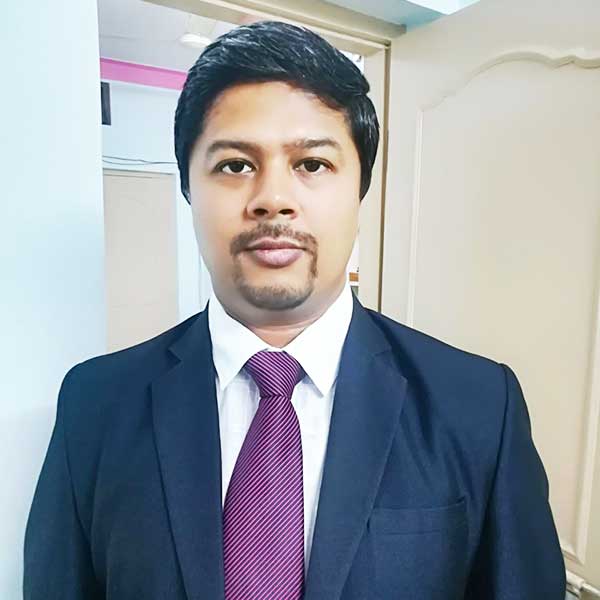
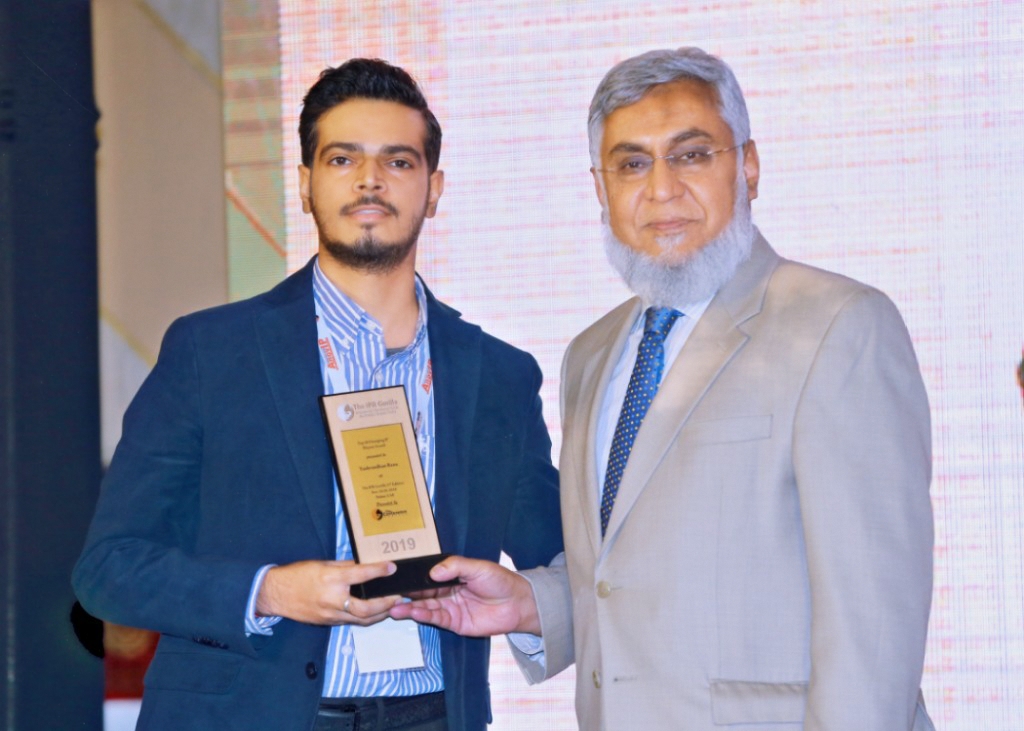
  • Yashvardhan Rana, on building his career in Intellectual Property Law being a top emerging lawyer and his passion for writing

    Yashvardhan Rana, on building his career in Intellectual Property Law being a top emerging lawyer and his passion for writing

    Yashvardhan Rana graduated from Symbiosis Law College, Pune in the year 2013 after which he pursued LLM in IPR from QMUL. He also pursued a certificate course in International Commercial Litigation and Arbitration from London School of Economics and Political Science. He is currently working with Inttl Advocare as an Associate.

    In this interview we speak to him about:

    • His Master’s degree from QMUL, London;
    • Tips on application requirements, procedure and writing SOPs;
    • His role and responsibilities as Associate at Inttl Advocare


    HOW WOULD YOU INTRODUCE YOURSELF TO OUR READERS?

    What matters is what you are from inside not something that can be portrayed by a bunch of adjectives attached to a string of sentences. You would have all witnessed the usual introductory lines till date. By now you must be thinking that I am trying to be different from my peers. But NO. I wouldn’t pull of some set of words out of my hat to describe myself and ask for your indulgence to know about me, but rather I would like to draw your attention to the various experiences that have shaped me as a human being. Human, first. Being myself, later. Being Human, is it? To cut the long story short – a hard worker like everyone else (smart work is the “in” thing – getting there..), believer of karma, football fanatic, adventure sports enthusiast, a law abiding citizen of this country – leaving out the sins committed in college life and the one who manages to show his passion for the world and for exploring it. Above all, what matters is how much you give back to the society (in terms of bringing about social impact and attitudinal change across all sectors), how much name and fame one can accumulate – social status, and the color of money you’ve stacked up for your descendants. Out of all the aforementioned indicators, I stand pretty meek as compared to the visionaries out there.


    WHY DIDN’T YOU OPT FOR THE CONVENTIONAL DEGREES IN ENGINEERING OR MEDICINE?

    “Have you got what it takes to lead in a diverse world?” Well, to start off with I chose law as my undergraduate degree to enrich myself of varied laws governing us and but of course – analytical skills.

    My academic and professional choices were driven by my continuous search for a fulfilling academic and professional life and what better way to take the path of law as opposed to the conventional degrees in Engineering or Medicine – as rightly pointed out. One other major factor was the sight of my father all dressed up as a lawyer and witnessing his gleaming personality – day in and day out since boyhood. My father’s hard labor and his savoir faire as an advocate appealed to my childhood dreams. My perspective on life changed when I closely observed my father, Mr. Mahendra Rana, work as an advocate in his Delhi High Court chambers and the one attached to our house.

    My entrance into this profession began after pursuing B.B.A., LL.B. (five year integrate course) from my Alma meter Symbiosis Law School, Pune in the year 2008. My yearning for specialised legal knowledge persuaded me to attain an LL.M. from Queen Mary, University of London, one of the top universities in the World in the field of Intellectual Property Law.


    ARE THERE ANY MEMORABLE MOMENTS OF LAW SCHOOL, WHICH YOU WOULD LIKE TO SHARE?

    I wish I could travel back in time to be with my friends with whom I cherish fond memories. At the risk of stating the obvious, I would say I had the time of my life at college. Not only because Symbi is a very good academic institution, but especially the diverse culture, unrestricted environment and the open-mindedness to learn which helped us to assimilate over a period of 5 years, was second to none. I was an introvert before college; the place played an important role in shaping my individuality, ethics, and set of values. I particularly savor the amiable camaraderie, especially at display in our apartments and college canteen (also the one at yards length from our college); all of us would bond together with our collaborative efforts through the chaos of assignment submissions and last minute exam preparations. I owe a lot of credit to these beautiful people for what I am today.


    HOW WAS YOUR FIRST YEAR AFTER GRADUATION AND WHAT WERE THE CHALLENGES THAT YOU FACED AS A YOUNG ASSOCIATE?

    In our ever-more inter-disciplinary world, innovations and laws inform and influence each other, ultimately emerging in response to each other. Generally speaking, Law is an ever-evolving subject of expertise and it takes a few months before a fresh graduate is of any use for an experienced lawyer. There is a fair bit of truth in the first half of this reason. The irony however is that the Bar Council of India, which is a body of several accomplished lawyers, regulates law schools. So basically, lawyers decide what/how law will be taught, only to (rightly) claim later that the training imparted by a system they regulate isn’t good enough. To enter this so-called world of uncertainty, I prepared myself for this and approached the IP Law firms I had interned with along with some other notable law firms. I would say that I got lucky with the firm that I had interned with and got through that, in turn becoming a trainee associate over there for a period for 2 years approximately. I got an overview about how to climb the ropes of law and the continuous persistence required to become a successful lawyer. I was involved in matters pertaining to Trade Mark and Copyright Law particularly and from the very start I was given the chance to accustom myself of what lies ahead being thrown in the deep blue sea comprising of big fishes catering to hungry sharks involving high stake matters. I also got to brief the owners of Haldiram’s and an eminent lawyer like Mr. Shanti Bhushan, along with my senior as Mr. Amarjit Singh was unavailable and, which in itself were enriching experiences.

    In the stifling hustle-bustle inside and outside the courtrooms, inspiration from stalwarts, restless clients, and legal professionals, I found my place. In countless other landmark judgments, I found my inspiration. And in the field of IP, I believe I can find the knowledge, and thus the power, to make my cause a reality.


    WHAT MADE YOU GO FOR FURTHER STUDIES?

    After amassing adequate knowledge about the rudiments of law through the various cases I was involved in over the first 2 years as an Associate as part of an Intellectual Property Firm, and having a small taste of how the law shapes its’ citizens, I planned to undertake a much more critical examination of the written words that were crafted to dictate our behaviour by involving myself handling varied contentious and non-contentious matters. Being fortunate enough to acquire the necessary expertise and acclimatising myself through Work experience, Diploma and Certificate courses from various avenues that beckon, I realised that I need to build up a sense of intellectual ability in me and arm myself with the various techniques of analysis and develop a sense of multi-disciplinary approach in a diverse environment that would in turn help me grow and broaden my perspective. That is what I yearned for to happen to me and to become a part of a university wherein I encountered the best minds engaged in immutable discussions whilst intrigued in understanding not just the theoretical foundations of law and society but also its new and emerging trends. This urge led me to search for an edifying journey with a stellar reputation for producing the best minds in the world of Intellectual Property Law. It did not come as much of a surprise that “Queen Mary University of London” fits that criteria, and, in one of the more surreal twists in my life, I decide to take the plunge and thus, applied for further studies.


    SHARE SOME ADVICE ON ACING THE APPLICATION REQUIREMENTS AND PROCEDURE FOR QMUL?

    Applying to an LL.M., whether at QMUL or elsewhere, requires some amount of dedication to craft and connect the dots. The key is just to start early (by early I mean – at the very beginning) in the admission cycle – get the referees to send in their recommendation letters (from a notable professor, judge or your college principal would go a long way) and the universities in India to send in the transcripts etc. After that, it’s about writing a solid statement of purpose. I think the SOP requires painting a vision about your future and how well you are aware on how to tread the path of endless opportunities without blinking your eye. Also, writing an SOP requires demonstration of a certain skill set, aptitude and coherence to be able to delineate and sell what you envision for in about 2-3 pages.


    WHAT LED YOU TO CHOOSE IPR AS YOUR SPECIALISATION?

    The world of brands have always fascinated me since my childhood as I’ve seen my father patronising various well-known brands from multifarious departmental stores in every nook and corner all over the world on his vacations (he does not like to shop in India). This routine was followed on every vacation that he took us to and I accidentally got immersed and it had further captivated me to dwell into the world of brands like never before. On another note, I also used to read his files at night in our house chamber of matters pertaining to high stake trade mark law matters almost twice or thrice a week in my college holidays. Since I also had an inclination to become a lawyer from my boyhood days and Intellectual Property Law was booming in India, I chose IPR as my specialisation and further wanted to create a niche for myself in this ever-intriguing field of law.
     

    TELL US ABOUT YOUR INTERNATIONAL EXPOSURE AND EXPERIENCE.

    In my view, it was an exhilarating experience as it broadened my horizons/perspective to a next level altogether. I met a lot of people from diverse backgrounds and countries. It also gave a deep insight into the workings of different legal regimes in different jurisdictions.

    I have, and shall always maintain unconditionally, that my year as an LL.M. student at QMUL was easily one of the very best years of my life. It gave me a lot more than just a degree: I had arrived to join a year-long course and to earn myself an added qualification with an incredible enlightenment, priceless personal growth, lifelong friends and long lasting memories. Intellectually, it endlessly challenged me to simultaneously learn and unlearn, and amplified my personal growth to help birth a broader view and perception I wouldn’t hitherto have considered myself capable of.


    PLEASE TELL US ABOUT YOUR CERTIFICATE COURSE IN INTERNATIONAL COMMERCIAL LITIGATION AND ARBITRATION FROM LONDON SCHOOL OF ECONOMICS AND POLITICAL SCIENCE. IS IT USEFUL IN YOUR PRACTICE.


    It definitely is! I quote “It takes a distressing incident for us to step back and retrospect. Until then, we relish being one among the herd.” It feels comforting having someone resonate your outlook. It was this moment when I realized the importance of having an all-round approach when it comes to learning. The subject “International Commercial Litigation and Arbitration” per se did not directly cater to my growth as an IP lawyer; however, it invoked a sense of understanding the law in its complete sense. Litigation and Arbitration play a key role in delivering speedy justice and what better way to supplement my knowledge in IP and have an added advantage over my peers. This course offered a concise introduction to the legal challenges relating to the international dimension of litigating commercial disputes, both before state courts and in arbitration. London being one of the most important centres for commercial litigation and arbitration in the world, the course focuses on the relevant English and European Union law, invoking experiences from other jurisdictions where useful.


    PLEASE TELL US HOW DID YOUR APPOINTMENT TAKE PLACE AT INTTL ADVOCARE.

    I joined Inttl Advocare in April 2017 after working at Amarjit & Associates (IP Litigation) and Lall, Lahiri and Salhotra (Trade Mark prosecution department), as an Associate, Trade Mark, Copyright and Design Prosecution, and have been with this stellar firm ever since. I had zeroed down on Inttl when I was applying to the best of IP firms in India and applied without any further delay. The doyens of IP law namely – Mr. Hemant Singh, Managing Partner and Mrs. Preetika Singh, Senior Partner and Head of Trade Mark, Copyright and Design Prosecution, instilled more confidence in me to apply here blindly without taking a second opinion. Thus, I got a call from there after my interview was conducted which comprised of a basic questionnaire, writing a short essay on a contemporary topic in the field of IP Law and 2 hour long face to face interview. I assure you of that this is the best place where one can hone their skills and concepts to the maximum in the field of IP in India, thus enabling you to reach greater heights within that setup in order to deliver results effectively and efficiently in turn making you into a versatile IP Attorney.


    AS AN ASSOCIATE IN INTTL ADVOCARE, WHAT ARE YOUR ROLES AND RESPONSIBILITIES?

    Being an Associate in one of the leading IP firms in the country is obviously very demanding involving challenging tasks on a daily basis that push you to your limit. It, however, encourages you to focus, grow, adapt and respond to new challenges and opportunities every day. I am a part of the Trade Mark, Copyright and Design Prosecution team and contribute religiously to this practice of the firm for multinational corporations based out of abroad and Indian clients across the board. I am currently responsible for conducting availability search for the purpose of registrability of trademarks along with providing legal opinion paving the way for smooth adoption and use of the trade mark by the clients. Also, I advise clients on trademark protection strategies, including drafting and filing reply to objections raised by the Trade Marks Registry, Copyright issues, Rectifications, filing and renewals of trade mark applications, attending hearings, Legal research and specific tasks relating to Design Law, Assignments etc. before the Trade Marks Registry. All this has to be executed in a timely and effective manner & to the satisfaction of our clients.


    HOW WOULD YOU SAY THAT AN INTERN COULD GENERATE A POSITIVE FEEDBACK IN THE LIMITED TIME THEY HAVE?

    Be committed, sincere, trustworthy, reliable and one should have the willingness to learn along with a host of other qualities to be an all round intern. Researching capabilities and thinking on your feet when asked a question are one of the major qualities that an intern should posses. There are no short cuts in life. Please try and get over the CV padding exercise do not end up interning with big firms without learning or contributing much. Before you start, ask as many questions as you want, understand the point well, make notes and do an exhaustive job. Be responsible with the work which has been delegated to you, don’t abandon the counsel uninformed. There are so many times that interns do not count themselves as a vital part of the system and tend to be careless. This often results into double efforts both of the counsel and that of the intern. Do not cut copy paste; rather analyze a point of law and discuss. If you get free time, spend some of it in the library or going through available precedents of past transactions.


    WHAT WOULD BE YOUR PARTING MESSAGE TO OUR READERS?

    You all would have heard about many great examples to follow. However, as a parting message, I would like to borrow a brief excerpt from an article titled as “The Path of the Law” written by Oliver Wendell Holmes, Jr. (was an American jurist who served as an Associate Justice of the Supreme Court of the United States from 1902 to 1932) published by the Harvard Law Review (10 Harvard Law Review 457 (1897)):

    To an imagination of any scope the most far-reaching form of power is not money, it is the command of ideas. If you want great examples, read Mr. Leslie Stephen’s History of English Thought in the Eighteenth Century, and see how a hundred years after his death the abstract speculations of Descartes had become a practical force controlling the conduct of men. Read the works of the great German jurists, and see how much more the world is governed to- day by Kant than by Bonaparte. We cannot all be Descartes or Kant, but we all want happiness. And happiness, I am sure from having known many successful men, cannot be won simply by being counsel for great corporations and having an income of fifty thousand dollars. An intellect great enough to win the prize needs other food besides success. The remoter and more general aspects of the law are those which give it universal interest. It is through them that you not only become a great master in your calling, but connect your subject with the universe and catch an echo of the infinite, a glimpse of its unfathomable process, a hint of the universal law.

    This thought again brings me back to the question that what I am going to do next and voila! The feeling of uncertainty and confusion is back. But just as law says – “Truth and Justice shall find its way through obstacles”, I definitely hope so would I.
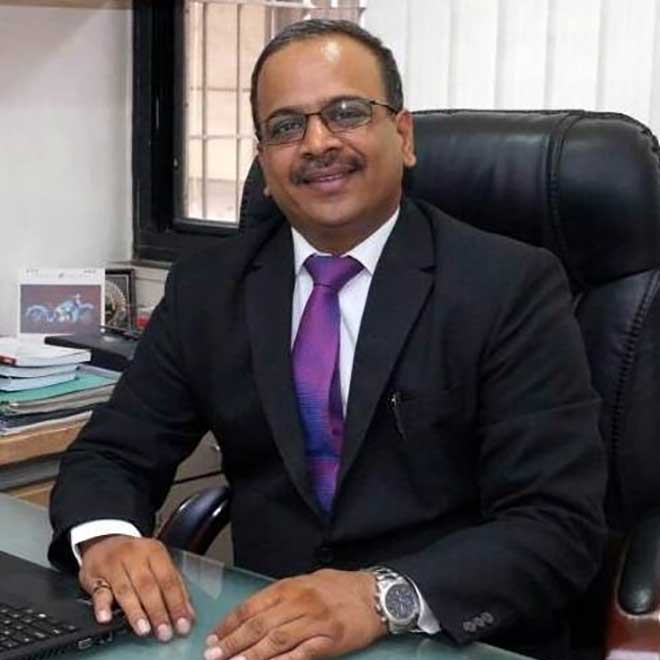
  • Shubneet Panjete, Partner, Lall Lahiri & Salhotra, on a career in Trademark law, choosing specialisation,  and challenges of being a partner

    Shubneet Panjete, Partner, Lall Lahiri & Salhotra, on a career in Trademark law, choosing specialisation, and challenges of being a partner

    Shubneet Panjete completed her graduation from Symbiosis Law College, Pune. She is currently Partner at Lall Lahiri & Salhotra. She heads trademark oppositions at the firm. She has been practicing trademark oppositions and has over ten years of professional experience in the field.

    In this interview, we speak to her about

    • Choosing a specialisation
    • Challenges of being a partner
    • Roles and responsibilities as a partner
    • Importance of grades in law school


    HOW WOULD YOU LIKE TO INTRODUCE YOURSELF TO OUR READERS? PLEASE TELL US SOMETHING ABOUT YOUR PRE-COLLEGE LIFE?

    I am an Intellectual Property Attorney, graduated from Symbiosis Law College and have been working with LLS for over a decade. My specialty is in Trademark Oppositions, where I am now a Partner. Being an Army child, I had the opportunity to study in eleven schools in under fourteen years, pretty much in all corners of our country. I got to live in a lot of different towns & cities, leading a fun & adventurous childhood. This gave me the chance to make many friends and develop my social skills.


    HOW WOULD YOU DESCRIBE YOUR JOURNEY AS A LAWYER?

    Right from class twelveth, I knew I wanted to study & become a lawyer. I joined Symbiosis Law College in 2003 & graduated in the year 2008. As an Associate fresh out of college my knowledge was very limited. I was encouragingly guided by my seniors and Partners especially Mr. Rahul Chaudhry, the ‘Sole Proprietor’ of the firm, Mrs. Anuradha Salhotra and Mrs. Veena Poolakal, in guiding me along the way, both professionally and personally, which helped me to firmly establish myself as an Attorney. I count myself extremely lucky for finding my field of choice in the third year of college itself while doing a one year Diploma course in Intellectual Property Rights, during which I interned at various reputed IP firms. Post college I got the opportunity to join LLS in 2008 & became a Partner after 9 years of hard work. It’s been a fun learning experience providing new challenges and growth opportunities at every step of the way. As Mark Twain said, Find a job you enjoy doing, and you will never have to work a day in your life.”


    WHAT IS YOUR TAKE ON ACADEMICS? HOW IMPORTANT ARE GRADES IN LAW SCHOOL FOR AN ILLUSTRIOUS CAREER?

    Academics play a major role in developing any person in any field. Better grades help you in getting better opportunities faster. Also from a hiring perspective, interviewers do see the mark-sheets as a basis of a performance & consistency in the applicants. However, I am a strict believer of hard work coupled with a growth mindset. Even if in college you weren’t a star or a great student, you can always catch up and push forward your career with dedication and commitment. I personally have seen many friends and colleagues with stellar careers who academically weren’t that good, to begin with.


    HOW FAR DID YOUR INTERNSHIPS DURING LAW SCHOOL HELP YOU IN YOUR CAREER AFTER YOUR GRADUATION? HOW WOULD YOU RECOMMEND THE PRESENT LAW STUDENTS PLAN THEIR INTERNSHIPS?

    As mentioned before my internships helped me find my area of interest. I personally tried interning in different legal fields, before realizing they didn’t appeal to me. My suggestion would be to shortlist your areas of interest, organize them in order of personal preference, and then use the internship opportunities judiciously to focus in on your field of choice. In case you find your calling early, focus on it. In case you don’t find it after a few experiences, keep pressing forward.

    Secondly, internships are extremely important as they help students connect and understand the theory they study with the actual practice of law. Today’s structure of a five-year course offers you the opportunity of at least 10 internships. Even for graduates pursuing a three year LLB, internships can teach and expose the candidate to a lot.


    HOW DID YOU CHOOSE YOUR SPECIALIZATION? HOW DID YOU GO ABOUT ATTAINING EXPERTISE IN THEM?

    Once I’d shortlisted IP as my field of interest, I interned at many reputed IP firms to gain perspective about the field, and the firms as well. I did my internships in Bangalore & Delhi. I’d shortlisted a few firms where I’d ideally like to start my career. Post college I interviewed & got the opportunity to join LLS, which was at the top of my list. Since then I have been a part of the LLS family.

    My expertise in trademark oppositions came with learning while working on matters and more importantly with the clear, structured way in which LLS operates. The workflow is divided as per functional departments & not portfolios. As a result, my expertise in oppositions grew much faster and in a focused manner than it would have in another firm. With Partners and Head of Departments at the helm providing instructions, explanations, guidance, and encouragement, the learning was easy. With their mix of close management and independence, great work output and attention to client satisfaction got implanted in my daily work life. My seniors saw my eagerness & dedication to work, resulting in the Partners guiding me and helping me reach the position of a Partner myself.


    WHAT WOULD BE YOUR ADVICE TO STUDENTS WHO ARE LOOKING TO MAKE A CAREER IN IPR AND MORE SPECIFICALLY IN TRADEMARK?

    Students who have shortlisted IPR as a career choice should definitely intern in a few IP firms to grasp the practical aspects. I can’t stress enough on the gap in the theory and practical aspects of the law that can only be learned while interning. If you have the interest, aptitude but more importantly are willing to work hard you can succeed in any field, including trademarks. Like all legal fields, reading plays a crucial role. Keep updated on case laws related to trademarks, keep a track of impactful judgments, changes and latest developments helps you being sharper than your competition.


    HOW CHALLENGING IS YOUR ROLE AS PARTNER, TRADEMARK OPPOSITIONS? WHAT ARE YOUR ROLES AND RESPONSIBILITIES?

    Being a Partner in one of the best IP firms in the country is obviously a very challenging task, which motivates me to focus, grow, adapt and respond to new challenges and opportunities every day.

    I manage the trademark opposition and rectification practice of the firm for multi-national and Indian clients across all section of the industries. I am responsible for the complete management of all trademark opposition & rectification related work from my team, starting from advising clients on trademark protection strategies, including drafting and filing oppositions, cancellations, preparing evidence in support of proceedings, attending hearings etc. before the Trade Marks Registry and Intellectual Property Appellate Board. All this has to be executed in a timely manner & to the satisfaction of our client. My main job is to guide the team, ensure removal of all bottlenecks that they face in their work, and being responsible for the entire opposition and rectification value chain results.


    WHAT ARE THE SKILLS ONE NEEDS TO DEVELOP TO SUCCEED IN THE LEGAL PROFESSION?

    To put this across in a concise manner, you need to develop strong reading and comprehension skills along with a decent vocabulary. Also, objective analytical skills along with good communication skills will go a long way in enhancing your convincing powers towards resolving matters.


    WHAT IS THE PROCEDURE FOR A LAW STUDENT TO APPLY FOR INTERNSHIP AT YOUR FIRM? HOW DO YOU SUGGEST THE STUDENTS CONVERT THEIR INTERNSHIPS TO PPO?

    Anyone one interested in interning at our firm can simply send their CV’s via email to gpo@lls.in. The concerned persons will review and get back to the selected applicants.

    Converting an internship into a PPO I think has a universal formula. Work hard, show your interest in the field and connect with the required department head on completion of your internship.


    LASTLY, WHAT WOULD BE YOUR PARTING MESSAGE TO OUR READERS?

    Choose your career as early as you can. Thereafter stay focused, do your best, grab opportunities, work hard and enjoy life.


  • Ankit Rajgarhia, Senior Associate, Karanjawala & Co., shares his experience in dispute resolution

    Ankit Rajgarhia, Senior Associate, Karanjawala & Co., shares his experience in dispute resolution

    Ankit Rajgarhia graduated from Symbiosis Law School, Pune, in 2012. He joined Induslaw after his graduation and worked there for three years, he then moved to Karanjawala & Co.,New Delhi, where he works in the capacity of Senior Associate. His primary practice area is dispute resolution-litigation and arbitration.

    In this interview he talks about:

    • His experience at Symbiosis Law College
    • His experience in dispute resolution
    • Difference between working in a firm and with an independent counsel
    • His experience at Karanjawala & Co


    HOW WOULD YOU LIKE INTRODUCE YOURSELF TO OUR READERS WHO ARE MOSTLY LAW ASPIRANTS, LAW STUDENTS AND YOUNG LAWYERS.

    I’m currently associated with Karanjawala & Co., a leading litigation & dispute resolution law firm as a Senior Associate in the Civil and Commercial litigation, Arbitration and Disputes Resolution team, headed by Ms. Meghna Mishra- Partner.

    Prior to joining Karanjawala & Co., I worked under Mr. Amit Kumar, Managing Partner of Indus Law Associates & under Mr. Ranjit Kumar, Senior Advocate (former Solicitor General of India) assisting them in Hon’ble Supreme Court of India and Hon’ble High Court of Delhi. I have also authored articles on ‘Anti Dilution Protection’ and ‘LML-PIAGGIO dispute’ which got published on various online legal portals like JurisOnline.in, Legal Articles Directory, Lawyers Club India. My latest article on ‘Financial Creditor and Operational Creditor’ was published on the Viewpoint section of Bar and Bench.

    I got my B.A. LL.B degree from Symbiosis Law School, Pune in the year 2012 and have since then represented domestic and international clients in many complex commercial litigations and arbitrations.

    Apart from an active litigation practice I have been a cricket enthusiast representing Karanjawala & Co., Supreme Court Bar Association etc. in major cricket tournaments.


    TELL OUR READERS A BIT ABOUT YOUR CHILDHOOD AND PRE-COLLEGE LIFE AS WELL AS EDUCATIONAL BACKGROUND. DO YOU HAVE LAWYERS IN YOUR FAMILY WHO MOTIVATED YOU TO PURSUE A CAREER IN LEGAL FIELD?

    I was born and brought up in Patna. To be honest, I was predisposed to pursue Law since childhood. I hail from a family of lawyers including my grandfather, father and brother. My father was a Tax Lawyer and one of the youngest lawyer in Patna to become a Senior Advocate in his times. I have grown up spending most of my post-school hours in his office full of law books.

    Honestly, I was a very average student throughout my school and college life. However, I took deep interest in sports, debates and social events. Even though I wish I had put in more hours of hard work in studies, I am glad to have honed my skills of communication and networking, which have equal importance in the field of law.


    WHAT WERE YOUR AREAS OF INTEREST DURING YOUR GRADUATION? HOW DID YOU GO ABOUT DEVELOPING EXPERTISE AND KNOWLEDGE IN THESE AREAS?

    During my college days apart from academics I had the opportunity to intern at various organisations, to name a few such as Hon’ble Justice Pradeep Nandrajog, High Court of Delhi; Senior Advocate Jayant Bhushan, Supreme Court of India; Former Additional Solicitor General of India, Mr. Amarjit Singh Chandhiok, High Court of Delhi; Former Additional Solicitor General of India, Mr. P.P. Malhotra, Supreme Court of India; Jyoti Sagar Associates; NGO Pragya etc. While interning at these places the primary responsibilities were working on cases relating to Civil Law, Arbitration, Dispute Resolution, Criminal Law, Administrative Law, Constitution Law and Disputes relating to property apart from visits to Hon’ble Supreme Court of India, High Courts of various Jurisdiction and District Court of Delhi.

    These internship experiences not only groomed my practical legal knowledge but also motivated me towards litigation in India. While interning at above mentioned places I had the privilege to work along with Senior Advocates, Managing Partners and other legal personalities which not only taught me the art of drafting but also groomed my drafting and research skills. In my present employment I have realised that to excel in litigation you need to have a good foundation in drafting and court craft and not only be limited to good command in English language.

    An aspect of Law that has always been of interest to me is that, Law influences almost every facet of our life, and is constantly evolving to keep up with the dynamic changes to which we constantly try to adapt. In particular, I am always drawn towards Dispute Resolution mainly because it consists of constructive legal argument and an analogy of legal reasoning more often than in many other careers. I strongly believe in following one’s passion and a career in Law has always been my calling.


    YOU GRADUATED FROM SYMBIOSIS, LAW SCHOOL IN THE YEAR 2012. HOW WOULD YOU DESCRIBE YOUR EXPERIENCE AS A STUDENT ASPIRING TO BE A PROFESSIONAL THERE? HOW INSTRUMENTAL WAS SYMBIOSIS IN SHAPING UP YOUR LEGAL CAREER? TELL US ABOUT ORGANIZING AND CONCEPTUALISING AND PLANNING THE FIRST EVER SYMBIOSIS PUNE FEST (SYMBHAV IN THE YEAR 2008).

    My life at Symbiosis Law School, Pune was blissful not only in terms of academics but also extra-curricular activities. While I was a mediocre student at college, I also made it a point to focus on mooting, articles and extra-curricular activities such as sports or organising university level events.

    I would give my college full credit for expanding my mental horizon and for encouraging lateral thinking in me through free discussions and healthy debates in classrooms. Apart from having a great faculty structure in college, we have also had the honour of closely interacting with guest faculties such as Mr. Ram Jethmalani, Senior Advocate & HMJ Pradeep Nandrajog. I learnt that more than securing good marks in legal education, it is important to learn and stay updated about latest developments through interactions and discussions with peers and stalwarts in the field of law.

    I was fortunate to be part of organising committee of first ever Symbhav [Symbiosis First ever legal fest, 2008]. In the very first year of college, taking cue from the pattern of other major legal fest in the country, we conceptiualised the idea of Symbhav. My role was to spread awareness about Symbhav. Now in its 10th year, Symbhav is one of the major legal events across Indian Law Colleges. Now in its 10th year Symbhav continues to be a major legal event across Indian Law Colleges not limited to Law Students but other branches of stream in India.


    AS A MEMBER OF THE CIVIL AND COMMERCIAL LITIGATION, ARBITRATION AND DISPUTES RESOLUTION TEAM, TELL US ABOUT YOUR ROLE AND RESPONSIBILITY. WHAT IS A TYPICAL DAY LIKE?

    I had the privilege to join Civil and Commercial litigation, Arbitration and Disputes Resolution at Karanjawala and Company in the year 2015. Over the two years, I have carved out a niche practice for myself at Karanjawala and Company by providing clients with prompt legal assistance and delivering results. I credit my growth over the last two years to my boss and mentor, Ms. Meghna Mishra- Partner, who is a leading name in Dispute Resolution.

    I am an early starter. I have long travel hours between Gurugram (my home) and Delhi. I use this time to plan and coordinate court visits and client meetings. I strongly stand by my principle of doing thorough preparation before entering the the court. Latter part of the day is spent in briefing senior counsels, attending conferences with Senior Advocates, Advocates and General Counsels followed by preparation for upcoming matters including drafting and research. It is very important to stay up to date with the amended laws as well as recent Judgments passed by the Hon’ble Judges of different tribunals. This helps in carving out strategies for the upcoming matters and communicating the same to the clients. According to my father, majority cases are won by thoughtful and out of the box strategies.

    YOU JOINED KARANJAWALA & CO. IN 2015 AND WERE PROMOTED TO SENIOR ASSOCIATE IN 2017. WHAT LEAD TO THIS ALLEVIATION? HOW CAN ONE/ WHAT SHOULD ONE DO TO ACQUIRE THIS POSITION IN A SHORT SPAN OF TIME?

    I was elevated to the position of Senior Associate within two years of working in Karanajawala & Co. and overall of five years in legal practice. I have worked very hard at every step towards this position. Legal practice demands dedication, sincerity and perseverance. Moreover, building a strong foundation of the simplest of legal concepts has kept me on the right track. I have always made sure that the firm and the client are always on the same page and that the client gets full satisfaction from our services. At the same time, time management is quite crucial and I would credit my mother for imbibing this in me at a very early age.


    TELL US THE DIFFERENCE BETWEEN SMALL SCALE BRIEFS AND HIGH STAKE BRIEFS IN INDIA? WHAT IS THE INITIAL ART OF BRIEFING SENIOR COUNSELS?

    According to me no brief is small stake or high stake ; only the quantum mentioned in the brief is high or small. We enter the profession to learn each and every day and learning is a never ending process for lawyers. In the initial years of profession it is very important to work on all kinds of matters and briefs, to be able to learn from all aspects of Law. Having said that it is also very important to work in different Tribunal/District Courts/ High Courts to be familiar with different working culture of different forums.

    The initial art of briefing Senior Counsels is to be thoroughly prepared with the matter as if you have to argue in the court. It is also important to know the latest Judgments or case laws along with respective paragraph numbers, pertaining to the issues involved in your briefs. In order to optimise on the briefing time, it is important to have case note ready to enable you to give quick answers to the queries put forth by Senior Counsels. It is important to be aware of particular styles of working of different Senior Counsels (for example some would start with prayer of the brief and the others would start with brief facts of the case).

    While it is important to assist Senior Counsels through the matter, it is equally necessary to be able to put forth your suggestion with reasoned logic before the Senior Counsel. I personally feel that no reasonable suggestion given is a wrong suggestion.


    YOU HAVE PENNED DOWN QUITE A FEW ARTICLES PUBLISHED BY REPUTABLE WEBSITES IN THE LEGAL WORLD. HOW DO YOU FIND TIME TO WRITE? WERE YOU ALWAYS PASSIONATE ABOUT WRITING?

    Since my college days, more than class room studying I have been more driven towards the practical aspect of law, be it reading the Judgments thoroughly or penning down my opinions either for or against the Judgment. Soon after my third year of my college I started penning down my views in the form of Articles, some of which got published in leading legal websites and journals. Expressing my reasoned views helped me in having a clarity on my research studies.


    PRIOR TO JOINING THE KARANJAWALA, DESCRIBE YOUR TIME AT INDUSLAW. WHAT WAS YOUR WORK PROFILE?

    I was with IndusLaw for a valuable period of three years wherein Mr. Amit Kumar- Managing Partner was like a mentor to me. In Indus Mr. Kumar not only gave me an opportunity to draft for various clients but also gave me an opportunity to brief Senior Counsels as well as appear before different forums. The different things which I learnt at Indus are:

    • Learning professionalism
    • Experiencing Criticism
    • Determining your future
    • Building relationships

    At Indus under the guidance of Mr. Amit Kumar I worked for a number of prominent clients such as- CCIC, Medical Council of India, Pawan Hans, Handlooms And Handicrafts, Ranbaxy, Rail Land Development Authority. Mr. Kumar, not only helped me in drafting but also gave me opportunities to appear before various forums. I have appeared in matters before the Hon’ble Supreme Court of India, Hon’ble Delhi High Court, Hon’ble District Courts, Hon’ble Green Tribunal, Hon’ble Consumer Forum, Hon’ble DRT/DRAT, Hon’ble NCLT, Hon’ble BIFR/AAFIR And Labour Commission and Tribunals such as the National Company Law Tribunal, the National Company Law Appellate Tribunal, National Green Tribunal and Telecom Disputes Settlement and Appellate Tribunal.


    HOW WOULD YOU TELL OUR READERS ABOUT THE DIFFERENCE BETWEEN WORKING IN A FIRM AND WITH AN INDEPENDENT COUNSEL?

    Being an independent litigator or founder of a firm, in the bubble of the bar, is a pretty big deal. Most who start in litigation, often only on nominal remuneration (if any) doled out by well-paid senior lawyers, dream of the day they can finally set up their own shop.

    While it might seem to outsiders like all it may take to become a successful advocate is talent and passion, the skills required lie in the business realm more often than in legal.

    “There’s no way to study this rationally as a business. A business consultant would lose his mind trying to study what the independent (law) practice looks like. It makes no sense financially. It is a completely messy, uncertain area; no two people have anything going on which is alike,”. “(A business consultant) will ask, ‘Where’s the cash flow?’, and you’ll say, ‘Cash flow was there yesterday but then my clerk used it all up on photocopying.”

    Indeed, going independent is often less about business rationale than something more intangible.

    “It’s only about passion “If you love wearing black and white and if you love appearing in courts, you can start up from anything to go up to any level for appearing in courts. I can’t sit one day at home, I want to go to court every day.”

    Yet, despite the passion, not every independent litigator stays the course.


    LASTLY, WHAT BE YOUR MESSAGE TO OUR READERS WHO WANT TO CREATE A NICHE FOR THEMSELVES?

    • Plan before you act.
    • Read a lot but do not just read; understand the law as well and implement it accordingly.
    • There must be clarity in your thought process and the same must be reflected in your drafts and correspondence.
    • Be confident and professional in your approach!
    • Do not be shy or hesitant in seeking help from seniors when in need.
    • Be ready to fail, learn from failures and keep moving forward. If you lose a case, take it as an opportunity to learn and move on.
    • Hard work! [I am a firm believer that hard work pays one day and there is no substitute for hard work]
    • Lastly, Lawyers are made by the society, whatever a person is today is because of society therefore, one must give it back to the society [Always help others, in whatever way you can].
    • Take no short cuts in litigation. Progress to higher level could be slow, but remember to never jump steps.
    • Litigation demands confidence to be able to argue in front of the judge. So work on building confidence by interacting and networking.


  • Pritam Ghosh, Assistant Professor, IFIM Law College, Bangalore on his journey and receiving the Henry Dunant Research Fellowship

    Pritam Ghosh, Assistant Professor, IFIM Law College, Bangalore on his journey and receiving the Henry Dunant Research Fellowship

    Pritam Ghosh graduated from Symbiosis Law School in the year 2008. His deep interest in Political Science and Sociology made him gravitate towards law. Pritam always believed in understanding the nuances of any subject and by thinking beyond the text in a critical and analytical manner which led him to the field of academics. Currently, he is the Assistant Professor of Law (Senior Grade) with IFIM Law College, Bangalore and also a  recipient of the HENRY DUNANT RESEARCH FELLOWSHIP awarded by the INTERNATIONAL COMMITTEE FOR THE RED CROSS (ICRC), South Asian Regional Delegation. With seven years of academic and research experience Pritam has also been the Legal Editor for LexisNexis Butterworths Publications.

    In this Interview, Pritam shares his insights with Rounak Biswas of SLS, Pune on:

    • Henry Dunant Research Fellowship
    • His interest in academia
    • Being a prolific writer


    TELL US A BIT ABOUT YOUR CHILDHOOD AND PRE-COLLEGE LIFE AS WELL AS EDUCATIONAL BACKGROUND.

    Growing up in a nuclear family I was brought up by my parents in a liberal yet traditional manner. They made it a point to inculcate all the basic Indian as well as Bengali traditions, values and intellect in me and above all taught me to be a good human being. I was educated in Calcutta Boys’ School and Sri Aurobindo Institute of Education which happen to be two of the best english medium schools of the city even today. I was also taught how to maintain a balance between academics and personal life which helped me to have my fair share of fun and frolic along with studies as well. My pre-college background in Humanities at the 10+2 level was one of the major reasons that was going to influence my decision to study law later in life.


    HOW DID YOUR INTEREST GRAVITATE TOWARDS LAW?

    It needed a suggestion from my father and his bringing the prospectus of WBNUJS, Kolkata home that sparked my interest towards law and made me deviate from my original choice of studying Psychology (Honours) at the undergraduate level. Also, my interest in Political Science and Sociology in school and orientation from my teachers who told me that these two subjects which I had already done form the basis of law, was another major factor influencing my decision to do law.


    WHICH AREAS OF THE LAW FASCINATED YOU THE MOST AS A LAW STUDENT?

    (Pritam completed his BBA., LL.B (5 years integrated) from Symbiosis Law School, Pune in 2008.)

    During my undergraduate education, I was extremely fascinated with information technology law, international law, criminal law and constitutional law which are areas of teaching and research interest for me even today. I went into the in-depth study of these areas of law by referring to some of the best books and articles written on these subjects including the diploma material on cyber law prepared by the Asian School of Cyber Laws, Pune. Referring to such scholarly materials helped me to understand the nuances of these subjects and also to start thinking beyond the text in a critical and analytical manner.


    DO YOU FEEL THAT THE LEGAL PROFESSION HAS SIGNIFICANTLY CHANGED FROM THE TIME WHEN YOU DECIDED TO STUDY LAW?

    Indeed, the legal profession has changed significantly as compared to my times. The average law student today possesses a sound basic understanding of law right from semester I of the LL.B course and does not take time to find his feet unlike our times. Also, today’s law students are extroverts who realise the importance of networking in the legal industry as well as the positive effect of staying updated on current legal profession. This has changed the way law students study law both inside and outside the classroom. As a result, the boundaries of the teaching-learning process are constantly stretched which requires even teachers to update themselves even more than what was the case fifteen years back during my times.

    Two other positive changes that have come about in the legal profession during the last few years is the use of Information and Communication Technology (ICT) in law teaching and the legal profession generally. Legal information is available these days in digitised format either on the internet or in research databases in a soft format which helps lawyers find instant solutions to their problems online as well as helps teachers like me in making a law teaching session more lively and interesting. The use of ICT has ensured that law teachers can no longer afford to be one-dimensional as apart from teaching what the law is, they also have to teach students the places where the law can be found such as websites, search engines and research databases.

    The other most important change in the recent times in this profession has been the opening up of newer avenues and job profiles such as that of legal editors, legal journalists and startup lawyers who constitute the seemingly off-track branch of the legal profession. This has ensured more job opportunities for fresh pass outs at the entry level as opposed to the conventional practice in the courts of law or law firms that were the only two options during our times.


    BEING THE INTERNSHIP AND PLACEMENT COORDINATOR FOR THE LAST TWO YEARS, HOW RELEVANT ARE INTERNSHIPS FOR A PRESENT LAW STUDENT?

    Internships are extremely important for any law student as they help all law students to get exposed to the practical side of law and also to find out the application of law in real life. However, internships should be planned and executed very carefully by all law students as they help a student to decide about the future options for employment after completion of one’s undergraduate or graduate studies.


    HOW DID YOU DECIDE TO GO INTO ACADEMICS? WHAT WOULD BE YOUR ADVICE TO THOSE LAW STUDENTS WHO WISH TO GO INTO ACADEMIA BUT ARE INSTEAD FORCED TO OPT FOR OTHER FIELDS THAT ARE CONSIDERED MORE LUCRATIVE?

    (Currently, he is the Assistant Professor of Law (Senior Grade) with IFIM Law College, Bangalore.)

    I was oriented and influenced towards making a career in academics during my stint as an LL.M. student at the West Bengal National University of Juridical Sciences (WBNUJS), Kolkata as I discovered that I have the happy knack of discovering new and innovative information in research and also liked delivering presentations and seminars before a large audience which happens to be the basic method and characteristic of law teaching.

    To aspiring law teachers and academicians, my message would be that it is a popular misconception that teaching is not a lucrative profession as long gone are the days of being paid peanuts in academics. Moreover, the 21st century law teacher has several options of earning a fortune by expanding their horizons, acquiring additional skills and knowledge outside one’s basic area of specialisation and trying out new avenues of legal research as well as business such as venturing into online legal education. Academics is a profession which does not leave one exhausted at the end of the day and depending on personal interests, allows law teachers to take up additional employment and business opportunities on a part-time basis as well thereby ensuring good inflow of income as well as substantial contribution to the society.

    However, all law students aspiring to take up academics as a full-time profession need to possess the right kind of attitude and aptitude and also need to realise that teaching is the most difficult profession on this planet earth as this is the only profession where right from day one, teachers have to assess the work of people who are much junior to them in terms of age, experience and maturity. Therefore, this profession is only meant for people who are confident that counselling and orienting is their passion and who have loads of patience to deal with teenagers and adolescents of immature age and understanding. For instance, at times a question asked to a teacher by a student of the first year of an LLB course may seem very childish and foolish, but the teacher should never forget that the question is important for the student as it was posed to clear a doubt and gain knowledge about something.


    HOW DO YOU FIND TIME TO WRITE SO MANY SCHOLARLY ARTICLES?

    (Has also authored a book titled “Prevention of Torture on Detainees by Armed Forces Personnel: Global and Indian Perspectives with Special Reference to the efforts of international organisations” which was released from Germany by LAMBERT ACADEMIC PUBLISHING CO.)

    One of my teachers told me that a teacher who does not publish is no teacher at all. Keeping this important lesson in mind, I always make it a point to read up more and publish my personal opinion on all contemporary issues of law as it helps me to build on the knowledge base and thereafter encourages me to take the additional knowledge gained, to the classroom to be disseminated to students who are always hungry to acquire more knowledge. Personally, I prefer publishing rather than engaging in plain debate and discussion which at times knows no end. So far, I have always used up the time I got during the mid-year semester breaks and vacations at my workplaces to publish at least one research paper on a contemporary issue. Also, this book is a refined and upgraded version of my LL.M dissertation thesis, the publication of which will help me in future to gain more leverage on my work and is also a basic requirement to get international exposure relating to the subject areas involved in the publication. This advise was given to me by a senior colleague of mine for which I am extremely thankful.


    HAVING A  TOTAL OF SEVEN YEARS OF ACADEMIC AND RESEARCH EXPERIENCE INCLUDING LEGAL EDITOR FOR LEXISNEXIS BUTTERWORTHS PUBLICATIONS; PLEASE SHARE SOME OF YOUR EXPERIENCES.

    My experience can be broken up into six years of teaching and one year of corporate experience which has given me exposure to both the theoretical and practical sides of law. Working as a legal editor was particularly beneficial for me as I developed a habit of reading everything with a hawk’s eye and has helped me to take editorial positions with law school journals later on in my life. My professional experiences have taken me across the length and breadth of India into six different cities thereby giving me the opportunity to interact and build on my professional network and a chance to teach students from diverse backgrounds thereby allowing me to gain popularity and make a lot of friends among the student community. I have enjoyed every bit of my career so far and have earned a lot of respect and good wishes of people which has taken me higher in life. I have particularly enjoyed my role as an internship and placement coordinator and career counsellor as this additional responsibility has helped me to discover another side to my personality. I have realized that the more confused students are, the better it is for me as I love to orient and motivate people who are the so called underdogs or the confused lot. I can proudly say that to this point I have successfully oriented and helped many towards making a good CV and choosing the ideal career option.


    WHEN WOULD YOU SAY THAT AN ACADEMICIAN IS SUCCESSFUL?

    The answer to this question has to be given in a different manner. An academician may consider himself successful only when his or her work and contribution to the society as well as to the existing literature is remembered even after his or her death. They may not live to see the effect of their pioneering contribution, but people will always remember them and they will be revered and respected in academic circles. For this, the primary aim of an academician’s career should be to invent or discover something which no academician would have done before and also to constantly get their new scholarly work published for the world to know. Academicians should aim to make pioneering contributions to their areas of expertise so that people remember them as authoritative figures and their scholarly contribution leads to more fruitful research.

    In order to achieve the above objectives, teachers should constantly think about personal development and skill development rather than only restricting their activities within the classroom. A law teacher especially should think about ways in which to get practical exposure and to utilize the knowledge gained through such exposure to enrich the student community as well as to be known as an academician who has the ability to turn academic debate into action.


    WHEN WOULD YOU SAY A LEGAL ACADEMICIAN IS READY TO START WRITING BOOKS?

    A legal academician should not attempt to write books without gaining at least five years of work experience and also sufficient exposure to the theory and practice of law as writing a book involves exercise of one’s intellect at an extremely advanced level, a solid understanding of legal research methodology and the technique of compiling information in hard format by penning down one’s thoughts and personal opinion. Moreover, one needs to possess sufficient amount of critical thinking ability to go beyond the existing literature and formulate new opinion for it to find proper place in a book.


    YOU ALSO APPEARED BEFORE THE HON’BLE KARNATAKA HIGH COURT IN A WRIT PETITION UNDER ARTS.14, 19(1)(G) AND 21 OF THE CONSTITUTION OF INDIA CHALLENGING THE IMPOSITION OF GST BY THE CENTRAL GOVERNMENT ON HIGHER EDUCATIONAL INSTITUTIONS WHO OUTSOURCE THEIR AUXILIARY SERVICES. HOW IMPORTANT WAS THIS MOVE IN THE CURRENT SCENARIO?

    I am extremely thankful to the management at my current workplace for giving me this opportunity to get hands-on experience of the practice of law for a brief period while being on the job. The current result of this petition is that the finance ministry of the Central Government is now thinking about imposing GST on all private educational institutions as a whole without making any sub-categories or discriminating among private higher education institutions only on the basis of who outsources their auxiliary services and who does not. Thus, looking back now, the filing of this petition was an extremely important bold and timely move as well, as it has now got the government thinking and has created awareness among other private higher education institutions. The cause has also been supported by the Education Promotion Society of India (EPSI) which has been pursuing the matter with the Central Government for quite some time now.


    YOU ARE A RECIPIENT OF THE HENRY DUNANT RESEARCH FELLOWSHIP AWARDED BY THE INTERNATIONAL COMMITTEE FOR THE RED CROSS (ICRC), SOUTH ASIAN REGIONAL DELEGATION. PLEASE GIVE US AN INSIGHT TO THIS PRESTIGIOUS MILESTONE.

    I am thankful to my guide Prof. Manoj Kumar Sinha, who is currently working as the director of the Indian Law Institute in New Delhi for encouraging me to apply for the fellowship and also Dr. Sanoj Rajan who is currently working as the director of the School of Law, Ansal University, Gurgaon. He was the then head of the academic division at the ICRC, New Delhi Office and helped me in securing the fellowship. The addition of the fellowship in my CV has helped me to realize my aspiration of specializing in a new and contemporary branch of Public International Law, i.e. International Humanitarian Law and has helped me to publish in the area in combination with the other area of interest I have, i.e. information technology law/internet law.


    WHAT WOULD BE YOUR MESSAGE TO THOSE HARDWORKING LAW STUDENTS WHO DID NOT MAKE IT TO A TOP NLU BUT WANT TO EXCEL IN THE PROFESSION?

    My message to such students would be not to lose hope as all is not lost. Having studied in both the private law school and national law school systems and after having analysed both systems thoroughly as an academician, I have understood that the only criteria that distinguishes national law school and private law school students is exposure and fluency in English. Therefore, all law students studying in private institutions should constantly strive to keep enhancing their CV by participating in more co-curricular and extra-curricular activities, attend seminars and conferences on contemporary issues and most importantly have 2-3 publications during their undergraduate study on various issues of law that they may like to read and research about. They need to identify the areas of law that they like the most and build on those areas with publications and other activities focusing on those areas. Also, these students need to take their internships very seriously and try to repeat their internships in the same organisation, in case if they get through into an organisation that makes students learn the basics of court procedures and the general practice of law.

    Apart from reading the textbooks of law, every student studying in a non-NLU institution should try to improve their fluency in English by completing at least one novel or story book in every semester of the law course which means that they would have read ten good books by the end of the five years integrated LL.B course.


  • Murtaza Chherawala, Partner, CNS Juris, on starting his own firm, working with the differently abled, and his diverse experience

    Murtaza Chherawala, Partner, CNS Juris, on starting his own firm, working with the differently abled, and his diverse experience

    Murtaza Chherawala graduated from Symbiosis Law School, Pune, in 2002. Prior to that, he held a degree in Commerce from Poona College. After successful stints with Supreme Caterers and Manas Resorts, and Surana & Surana Interntional Attorneys, he founded his own firm, CNS Juris.  CNS Juris is a law firm in Pune, practicing in the areas of Court Litigation, Dispute Resolution, Corporate & Commercial Laws, International Laws, Intellectual Property Laws, Property Laws and Land Laws.

    In this interview we speak to him about:

    • His time at law school
    • His experience with CA firms
    • Founding his own firm

    How would you introduce yourself to our readers? 

    I am a simple person and believe that commitment, quality and ethics are at the heart of all success stories. The legal field was not my first choice of career. In fact, I took up law as a back-up plan and to gain supplementary knowledge while I studied for Chartered Accountancy. My true interest and love for Law developed only after I started practicing, first with a law firm and then independently. I realized that there is no other profession which provides such close and diverse exposure to real life situations and people.


    How was your experience at law school? 

    I was trying to balance a full-time job with attending lectures. I was fortunate that Dr. Mrinal Raste and Dr. C J Rawandale, my faculty at Law school, accommodated and supported me. With such a tough schedule, extra-curricular activities were not an option for me. Also, legal education was not as dynamic then and opportunities were limited. Today though, I believe that if circumstances permit, students should participate in as many moots, debates and surely pursue some sport, to develop into well-rounded, confident individuals.


    What are your views on the importance and necessity of higher education? 

    Higher education and more importantly quality higher education gives an edge to new job seekers over graduates. In my opinion, one should pursue higher education after a few years of work. A Masters course should be approached like a research adventure for acquiring higher knowledge, rather than to acquire one more qualification for job prospects.


    What was your first job after law school? What lessons did it teach you?

    My first job after law school was at Surana and Surana International Attorneys, at Chennai. I learnt drafting, court craft, use of legal research software and many aspects of legal practice. I learnt how to find solutions, when none were readily available. I discovered how to handle my colleagues, both junior and senior, in a professional manner. I understood the nature of work in various departments of law and also how a law-firm worked. Most importantly, I developed my own unique vision of establishing a successful and ethical law-firm.

    How did you secure an appointment at Surana & Surana? 

    I was selected by Surana and Surana through campus interviews at Symbiosis. Initially I handled all the banking and consumer cases, in the Court litigation department. After about two years, I moved to Land & Property deals and also did work relating to Corporate laws. Alongside, I did a lot of research relating to many other areas of law and continued to enrich my knowledge base and skills.

    I missed the cosmopolitan and secular environment of Pune. My family, friends and networks were in Pune, I had a vision to fulfill and so, as Paulo Coelho said, When you want something, all the universe conspires in helping you to achieve it.”


    Can you recall the first time you appeared in a significant matter in court? 

    My first major argument is still my most memorable one. I was only 29 years old and was facing a 72 year old designated senior lawyer, in a Rs. 5.5 Cr. case before the Debts Recovery Appellate Tribunal, Chennai. I was representing a borrower against a bank, which is undoubtedly an uphill task. I had clocked about 200 + hours of research for this argument. The final order was a favourable one and the Bank lost the entire amount, which is quite rare in banking cases. After the argument and the order being passed immediately in Court, several Advocates walked up to me and congratulated me in the courtroom itself. The Hon’ble Judge also applauded me in the open court and announced to all the Advocates, “Court wars are fought in libraries, not in courtrooms”. This was also my first reported judgement. Basking in the glory of the moment, I could barely work for the next three days.


    You have worked extensively with firms specialising in chartered accountancy. Can you tell us about this field and the nature of work?

    A lot of what Chartered Accountants do is related to applying the laws set out for accounting, taxation and statutory compliances and reporting the violations thereof. Just like a Lawyer, a Chartered Accountant is also exposed to multiple businesses and develops the acumen to resolve complex business challenges.

    During my Articleship, I enjoyed Systems Audits and Management Audits, since these Audits focus on the macro-level challenges of an organisation. My work experience with Chartered Accountancy firms equipped me to handle legal matters involving intricate financial transactions.


    What motivated you to found CNS Juris? 

    After shifting to Pune in 2005, I wanted to start my own practise, since I had already worked for over fourteen years in different organisations. I had already visualized the kind of organisation I wanted to build and had a concrete plan in place.

    Originally, my firm started as Chherawala and Associates and evolved to become CNS Juris, with the inclusion of one Partner during 2010 and another during 2014. Currently, we practice in the areas of Civil & Criminal Court Litigation, Corporate Laws, Land & Property Laws and Intellectual Property Laws.

    We faced all the challenges of a newly founded legal practise, the biggest one being organising the investment for growth of infrastructure. Every three years, our entire savings were pumped back into the organisation.


    Can you give our readers some tips on how to approach a moot court competition and how to become successful mooters ?

    (Murtaza has been a judge at a number of national and international moot court competitions, including Stetson and Jessup.)

    I am really amazed to see the kind of preparation, research and study done by the students participating in Moot courts. While the research and analytical skills of the participants are good, many a time the candidates lack presentation skills. Rehearsing the arguments with practicing lawyers would help Mooters to improve the language used, organise the flow of arguments and filter out the unnecessary points. Voice modulation, pauses and body language are also very important, not just in Moots but also in real life litigation.


    Do you think law school prepares students for the real world practice?

    Only a few select colleges like Symbiosis and National Law Schools prepare students for real world practice. Co-curricular activities like Mooting, Internships, Research and availability of Legal Technology can enhance the students’ preparedness for the rigours of real world practice.

    You are a founder of a free legal centre for the disabled. What motivated you to set this up? 

    In Chennai, I was associated with two NGOs working for legal awareness and action, in the area of Disability laws. After I came to Pune, I had some time and decided to take the work forward. We started to offer free legal aid to the disabled, under the cell named “Horizon”. The Commissioner of Disabilities for Maharashtra is also based in Pune, which was an additional advantage. We have fought a few Pro-bono cases and created awareness through participation in many Seminars and Conferences. Sensitization of students and practicing lawyers about the legal aspects relating to the differently abled (disabled) could go a long way. As of now, there is a lack of awareness about this area of law.


    What advice do you have for our readers who are primarily college students?

    Apart from the study of law, internships and additional qualifications, students must surely work harder on their soft skills. A decent level of expertise in Word, Excel, Power Point, Legal Research Software (at least two) and management software used by law firms are a must to start with. Your business communication, legal communication and behavioural skills shall finally decide whether you have an edge over others in this competitive environment. Also, if students are able to identify and decide their area of interest for future practice, they shall save a few years of experimentation and get a head-start in their career.


    What advise would you give fresh law graduates?

    It would be advisable for fresh law graduates to concentrate on enhancement of knowledge and quality of work, during their first five years of their career. Working with a mid-sized or large law-firm would be ideal for developing all-round skills and diverse experience, as they deal with a variety of clientele in multiple sectors.

    I sign off with, “When your Best fails to give you the desired results, you need to better your Best”.

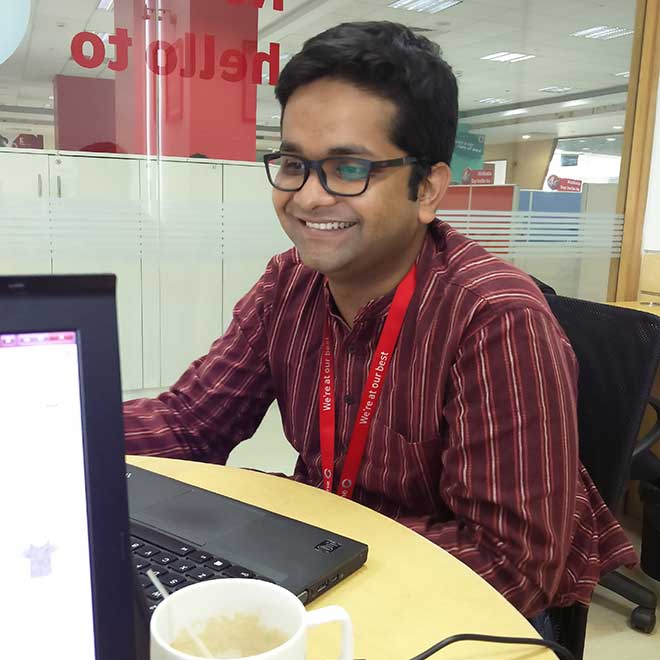
  • Ayon Basu, Manager-Legal, Vodafone Mobile Services Limited, on being in-house counsel, and his experience

    Ayon Basu, Manager-Legal, Vodafone Mobile Services Limited, on being in-house counsel, and his experience

    Ayon Basu graduated in law from Symbiosis Law School, Pune, in 2013. After successful stints with S. Jalan and Company, Advocates & Solicitors, Kolkata, and Pangea3 Thomson Reuters, Mumbai, he is currently Legal Manager at Vodafone Mobile Services Limited, where his role entails looking after the Kolkata and West Bengal Telecom Circles along with Sikkim and Andaman and Nicobar Island. The job involves managing litigation along with supporting and advising business in order to minimize risk and ensure general legal compliance.

    In this interview we speak to him about:

    • His time at Symbiosis Law School
    • His role at Vodafone
    • His experience thus far

    What would you like to say to our readers in the manner of an introduction of yourself?

    I am an in-house counsel (presently designated as Manager – Legal) working with Vodafone in Kolkata. I graduated from Symbiosis Law School, Pune in 2013 and have been in the profession since then.


    What motivated you to take up law as your choice of career? Are you a first generation lawyer?

    I’ll answer the second question first, to provide a background to the first. Yes, I am a first generation lawyer, owing to which, much of what I knew or understood about law prior to law school, was what I got to watch and observe in cinema. We all know how the two are vastly disconnected. So yes, I liked arguing and considered the concept of legality as intellectually intriguing.


    Tell us a bit about your college days at Symbiosis Law School, Pune.

    The key responsibility of a business/corporate lawyer is to first understand the business, thereupon working closely and liaising with necessary stakeholders etc. I graduated with a BBA LLB degree, and the curriculum at SLS, Pune was very friendly to students and gave us the leg space to carve our own niche. Apart from the academic sphere, the five years in Pune were incredible! I strongly feel it is very important for any student to enjoy the social life that college brings as that helps us in various ways in our future. That is one of the strengths of SLS Alumni, the strong bonding and networking that we have today.


    Could you tell us about the internships you took up, and what you learnt from those experiences?

    I have interned with Senior Counsels, firms and PSUs during my academic stint and each of these internships have contributed a good deal to who I am today. Amongst all, I believe that my first internship and my first full time assignment with a law firm had opened me up on how to deal with clients (paradoxical as it may sound, I happen to be one of their clients today!)


    What advice would you give students in avoiding a decision paralysis? 

    This is something I had personally faced, and I graduated in 2013 with a plethora of options with regard to the next step I was to take. I believe the decision must be made on the basis of the exposure one receives while interning and the candidates own aims/interests. At 22/23 one has a career of over 35 years to look forward to and hence, must chart out his/her own path. Two people cannot have identical career paths. Hence, one must thoroughly look into his/ her options and work them out accordingly.  


    What areas of law interested you during your legal education?

    Initially, post my first internship with Sr. Advocate Ranjan Bachawat, I had keen interest in IPR. Personally though, Company Law and procedural laws are of utmost importance.


    Tell us about your early professional experiences at S. Jalan and Company, Advocates & Solicitors.

    S. Jalan and Company, is one of the reknowned old school law firms in Kolkata, and I was fortunate enough to work closely on some big ticket litigations during my brief stint there. This allowed me to understand how to balance business dynamics and present them accordingly before the Learned Court.


    What were the main takeaways for you from your time working with Pangea3 Thomson Reuters?

    I worked on quite a few international engagements, at P3TR and worked with a team spread across three cities in India, with the client sitting in the United States. Working in such a vast team, allowed me to learn how to blend in and satisfy a client’s requirement and negotiate with stakeholders accordingly.


    As an in-house counsel with Vodafone Mobile Services Limited, what does a typical working day look like for you?

    As an in house counsel, with a general legal profile, we are entrusted with looking after all forms of legal work, be it litigation, contracts or even compliance. A daily operational role does not allow us the luxury of fixed hours and billing time accordingly, as in the legal service industry. We are fire fighters and are looked up to by business as professional trouble shooters. I have been in the present role for almost two years and needless to say, I have been facing a plethora of complex problems on a day to day basis, each of which comes with its own novel challenges. The senior legal professionals in Vodafone India’s Legal Leadership Team are great mentors to have and are of great help in providing guidance and advise as and when required. Also, the Telecom industry is going through a rather interesting phase and it has been a great learning curve in adapting to the changes dictated by this phase.


    How do you manage your time between your professional and personal interests?

    I have always been an avid movie buff and watch a lot of cinema. This I feel widens my exposure and restores sanity after a hard day at work! Apart from films, I am also actively involved in playing football video games (Pro-Evolution Soccer and not FIFA) on the Playstation.

    I have also played guitar at an earlier stage in my life, though I barely ever get to play these days.


    Where would you like your career to take you five years down the line?

    My career and academic stint has seen me traveling between home and Maharashtra regularly. I never settle with anything and am always looking for novel steps to take in my career. Planning for the next five years has never been my style. There have been instances where I have had to take calls on opportunities as I have a clear vision in my head of what I seek to do. More than the five year bit, I’m more interested in where I’d be in the last decade of my professional career, and that’s what keeps me going.


    What advice would you like to give our readers, who are mostly law students and young lawyers?

    For students, I’d strongly suggest they enjoy college life with all the social obligations it brings and embrace any academic challenge. It is not possible to put one’s heart and soul in one’s work if one does not enjoy it. It is strongly recommended that they learn how to enjoy their academic or professional pursuits and read up on latest amendments. It goes without saying, that a law student ought to be updated with the news in order to be well versed with all kinds of regulatory changes.


  • Raunaq Kamath, Managing Associate, Anand and Anand, on his time at Symbiosis, and IPR Law

    Raunaq Kamath, Managing Associate, Anand and Anand, on his time at Symbiosis, and IPR Law

    Raunaq Kamath graduated in law from Symbiosis Law School, Pune, in 2010, following which he joined the litigation department at Anand and Anand. He is currently a Managing Associate and handles a large portfolio of matters with a focus on trade mark, copyright and patent law.

    In this interview we speak to him about:

    • His time at Symbiosis Law School
    • His experience in IPR Law
    • The Indian IPR regime

    Please tell us something about your college days.

    College was a fantastic experience. Though I was hardly the best student around, I made it a point to attend every class which was of interest to me. I found intellectual property and civil procedure particularly engaging, which in many ways paved the way to where I am today.


    What all activities did you take part while in law school?

    Sports was a big part of my law school experience because it allowed me many opportunities for close interaction with students who were considerably older than me and were either on the brink of going out into ‘the real world’ or had just done so. Such exposure helped developing a better understanding of what the shift from college to work would entail and prepare accordingly. On the academic side of things, my participation in moot courts and mock trials convinced me that I would in fact be a litigator. A corporate desk job, no matter how comfortable or lucrative, was not for me.


    Do you believe that grades matter a lot in deciding one’s career? What is your opinion on the same?

    Not in the least. A good grade indicates academic proficiency which in turn suggests a solid foundation on which to build a career. That said, I have always felt that what I learnt during my internships and moot courts have served me better than what I picked up in class rooms.


    How did you develop this keen interest in Intellectual Property Rights Law?

    One of my better habits in law school was reading case law. Of all the case law I encountered, nothing was quite as much fun to read and easy to absorb as a good IP case. Over the course of reading hundreds of IP cases I, quite simply, fell in love with the subject.

    How much value do IPR related conferences add to a student’s understanding of the subject?

    It really depends on the content discussed at these conferences. However, one must never include details of a conference in their CV if they do not recall what was discussed. In fact, as a thumb rule, never have anything on your CV which you are not in a position to elaborate on.


    Please give our readers some insights on the leading Indian firms dealing in IPR law, and your recommendations for where and how to secure internships.

    This usually varies from firm to firm and there is no one formula to secure an internship. The best way is to cast a wide net and apply as much and aggressively as possible. However once you secure an internship of your choice, always inform the other firms you have applied to that you are no longer available for that period. You do not want a situation where another firm also gives you an internship subsequently and you are constrained to reject it owing to a prior commitment. The rejected firm may think twice before accept your requests in future.


    Do you believe in the conception that there is manifest reluctance among law graduates to take up IPR law as there is a scarcity of job opportunities in this area of practice? 

    Not really. IP as a practice has tremendous scope which is demonstrated by the number of IP suits filed every year, in particular before High Courts with original jurisdiction. There has also been an exponential increase in the number of firms and individual practices which handle IP cases in such jurisdictions. This in turn has resulted in a corresponding increase in job opportunities.


    Is it necessary to have a background in General Sciences in order to pursue IPR studies?

    Necessary, no; advantageous, certainly. While a science background will not play a part in conventional trade mark, copyright or design cases, it certainly helps in complex patent matters. Most litigators handling high stake patent cases have technical support, however the advantage conferred by a holistic understanding of both the law and the technology involved cannot be understated.


    What co-curricular activities would you recommend for an IPR law enthusiast to further their interest?

    Read, moot, and observe court proceedings! Read as much as possible, not just case law but blogs as well. I cannot stress the importance of moot courts enough and how this can shape your career decisions. And last but least least, please do try and observe as many IP court proceedings, particularly in the High Courts, to develop an understanding of actual proceedings.

    What general advice would you give our readers who aspire to stay at the top of their IP game?

    Read IP cases and blogs voraciously. Same as above


  • Harshita Srivastava, VP-Legal, Nexus Venture Partners, on Corporate Law, internships, and her diverse experience

    Harshita Srivastava, VP-Legal, Nexus Venture Partners, on Corporate Law, internships, and her diverse experience

    Harshita graduated in law from Symbiosis International University, Pune, in 2009. She also holds a Diploma in Intellectual Property Law from World Intellectual Property Organization, and a Diploma in International Business Laws and Corporate Laws in India from Symbiosis. After a successful stint at Nishith Desai Associates, Mumbai, she is currently Vice President-Legal, at Nexus Venture Partners.

    In this interview we speak to her about:

    • Pursuing the BBA-LLB course
    • Working at Nishith Desai Associates
    • Her current role at Nexus Venture Partners

    Given that most of our readers are law students, how would you introduce yourself to them?

    On the professional front, I would like to introduce myself as a transaction lawyer with M&A/ PE/ VC experience of over eight years now. On a more personal front, I am a forward looking person who strongly believes in the motto “Aim high, achieve high”.

    What motivated you to pursue a career in the legal field? How did the BBA LLB combination help you?

    I would say I am a first generation lawyer from my father’s family, though my maternal grandfather was a Judicial Magistrate. I never had the privilege to see him around, but I grew up listening to his stories. His personalised stationery (ink pens with his name embedded on it, note pads, etc.) fascinated me as a child and inspired me to get into the profession (however, I could never own a single piece of personalised stationery even eight years into this profession!). The inspiration soon evaporated into thin air as I was growing up in a family full of engineers around me and my dad’s only vision in life seemed to see me crack the IITs. After getting out of school, I was not left with many choices but to appear for the engineering exams. As obvious as it could be, I did not come out with flying colours in any of those papers and right at that time I happened to learn about the new B.A.LLB course at NLSIU, Bengaluru, from an acquaintance. The curriculum and the course interested me enough and I decided to pursue my childhood passion.  

    I would say the BBA LLB combination gives you a better edge only if you are planning to build a career as a corporate lawyer/ in-house counsel since the curriculum gives you a fair insight into business subjects like accounts, corporate governance, principles of management, etc. apart from the regular law subjects.   


    Have you ever felt the NLU- non NLU divide?

    I personally never felt the divide. In fact, I was fortunate enough to get an opportunity (purely based on merit) to intern with big firms like Nishith Desai Associates, Jyoti Sagar Associates, DSK Legal, Crawford Bayley etc., while I was at law school. Again, in terms of recruitment, I got a pre placement offer from NDA (basis my internship), so I don’t think the NLU- non NLU divide played any role in my career.

    Having said that, I am not discounting the importance of making the right choice of institution. However, it is equally important for students to focus on their deliverables and behaviour during internships because ultimately if your work is good, no firm is going to say ‘no’ to you simply because you do not belong to a NLU.


    Can you share some memorable experiences from you time at law school?

    I think I have had the best time of my life at Symbiosis Law School. Having come for a small town, Pune was a fast pace life. Making friends from different parts of India, adjusting to the new city/ climate/ local culture, everything was a great experience.

    Moots formed an integral part of my law school life. I participated as a speaker/ researcher in various national moot court competitions. I was a speaker at the SS Maniyar National Moot Court Competition, 2007 alongwith batchmates Adab Singh Kapoor and Amir Arsiwala, which incidentally happened to be the first national moot court competition that Symbiosis Law School ever won.

    The moot courts are a great learning experience. They not only give an insight into the real court room proceedings by exposing you to different laws and their application to real life situations, (where you get to build your research capabilities and argumentative/ reasoning skills), they also help you understand and appreciate the importance of a team work.


    You were a part of the Human Rights cell in law school. How did you contribute to the activities of this cell? 

    Being part of the HRC at law school helped me participate in various social welfare initiatives, be it educating street children, rehabilitation of the children of commercial sex workers or visit to old age homes. I think its important both as a student and as a professional that you contribute in some way or the other towards societal welfare and development. You must endeavour to give back to society.

    Quoting my first mentor at work Nishith Desai in this context, he says, “As a professional, one-third your time and effort should be devoted towards generating income for yourself and the family, the other one-third should go into intellectual stimulation and development of your own being and the remaining one-third should be used for societal welfare and improvement.”


    You hold diplomas in International Business Laws and Corporate Laws as well as in Intellectual Property law. Can you tell our readers about the nature and scope of these areas of law?

    Though my diploma in IPR did not particularly help me in my career, primarily because I chose to be a transaction lawyer, my diploma in International Business Laws helped me understand the basics of foreign investment, different investment routes, cross border investment structures, etc. which gave me a good base to start off when I began my stint with NDA. A diploma course in addition to the law degree helps you to gain advanced knowledge in a specialised field of law.


    How did you secure an appointment with Nishith Desai Associates? 

    Basis my internship with NDA, I got a pre-placement offer from the firm. I am not sure how it works now, but during our time, NDA only offered jobs to interns they liked working with. At NDA, they believe in a culture of creativity and discipline. If you are good at your work and they believe you are a culture fit, it is likely that you may get an offer.


    What was the nature of your work at NDA?

    I was a Senior Associate in the PE/ M&A team at NDA, where I largely focused on cross border transactions. NDA is known for its research oriented approach and the KM programme aided their belief in constant knowledge expansion. We used to have CE (Continuing Education) sessions everyday at 9 AM where we discussed and debated over legal developments, case studies, deal dissection (analyzing a deal from a legal, regulatory and tax perspective) etc. At NDA, each member had to contribute towards the KM programme, whether it is by way of writing articles/ research papers, conducting or participating in a CE. As part of the initiative, I co-authored several articles for leading national/international publications, attended and participated in conferences and of course there was no excuse to skip a CE session!


    What caused you to shift from NDA to Nexus Ventures Partners?

    Well, I moved to Nexus Venture Partners (NVP), because I saw an opportunity to get to the other side of the table and experience how the implementation of the law firm advise really works.    

    As VP Legal, I lead the venture capital investment transactions and assist in M&As and strategic partnerships, in India.  I also oversee legal compliances for the portfolio companies and offer counsel to portfolio companies on a wide variety of legal issues ranging from corporate compliance to employment laws.

    As a VP to a VC fund, I am expected to balance both the commercial and the legal aspects of a transaction. I have to manage the deal end to end, sometimes with or without support from external law firms.  It becomes demanding more so when the portfolio companies also look up to you for assistance on day to day issues. As opposed to a law firm where you work for a particular team (be it corporate, IP, dispute resolution) as a fund counsel, you are the go-to person for any of these issues so this is more diversified a role in that sense.

    Unlike a law firm, where you are seen as a revenue generator, as an in house you are more like an overhead expense for the fund house, so you have to constantly be on your toes and prove yourself to the company every day.


    In your opinion, do India law schools prepare students for real world challenges? 

    I do not believe so because the real world of law is a lot different from what you perceive it when you are at law school. I think what really adds value to the laws school degree is your internships. So my advice to students has always been to concentrate on the internships and try to learn as much as you can from there. Please take your internships very seriously and trust me every bit of work that you do at your internship adds on to your knowledge and experience.


    What advice do you have for our readers who are primarily college students?

    I am staunch believer of the fact that your ranking from a top law school is not the best indicator of your success, instead its your passion and perseverance which will take you a long way in your career. And as they say, life is a path of snow, tread carefully because every move will show!

  • Rohit Dangare, Partner, Dangare Sane Associates, on litigation, pro-bono work, and his teaching experience

    Rohit Dangare, Partner, Dangare Sane Associates, on litigation, pro-bono work, and his teaching experience

    Rohit Dangare graduated in law from Symbiosis Law School in 2000. He completed his Masters in Law (LL.M.) from the University of Pune in the year 2004 with specialization in Law of Contract and Criminal law. He has assisted and is associated with legal stalwart Mr. Shrikant Shivade, and has assisted him in high profile cases like ULC Scam, MCOCA, Pen Urban Co-op Bank Scam, among others. He has experience in matters pertaining to Negotiable Instruments Act, Arbitration and criminal cases. He has also assisted such institutions in drafting of various agreements including Non-Disclosure agreements, Barter Agreements and other miscellaneous ones. He has as well worked upon many revisions and appeals in the Hon’ble High Court. He is also a counsel to many accused in the Pen Urban Co-op Bank Scam in Raigad District.

    In this interview we speak to him about:

    • His association with Mr. Shrikant Shivade
    • His independent venture
    • His pro-bono work and teaching experience

    Given that most of our readers are law students, how would you introduce yourself to them? 

    I am a litigation lawyer and we are a rare breed!


    What motivated you to pursue a career in the legal field? 

    I come from a family of doctors. I wanted to pursue Pharmacy but I decided to do law because it would be a better option. To a certain extent my parents also pursued me to take law, but it was honestly an out-of-the-box decision to pursue law.


    Can you share some memorable experiences from you time at law school?

    I completed my law from Symbiosis Law College. At that time, though attendance was not compulsory, I used to attend lectures. We had lecturers by the likes of Nitesh Nawsagary and Prof. Raste, which made my curiosity for the subject grow. Also, the Indian Evidence Act was one subject to which I was attracted due to an eminent practising lawyer Adv. K.M. Irani. During my college days I was into wildlife conservation and was a founding member of an NGO namely Aaranyawak. I also was active in rescue operations and rescued many animals. I used to attend the chamber of Adv. K.V. Damle. Attending courts gave me a basic idea that advocacy is something which is going to take a lot of hard work and persistence and this prompted me to opt for internships in Mumbai. I interned with L. D. Shah & co., Advocates and Solicitors, where I learned the fundamental ground rule of advocacy, “There is no shortcut to success and you should know your brief like the back of your hand.” During my third year of law I joined Hariani and Company, Advocates and Solicitors having their office in Mumbai and Pune and for the same I am still thankful to Mr. Amit Hariani (Sir), for I did not have any recommendation but I suppose that he has seen some spark in me. I continued this internship till my final year. In Hariani and Co, I was taught that when it comes to law and interpretation of law, there is no senior and no junior, all are equal because age does not make a lawyer successful but his abilitity to interpret law defines his success. I can surely say so because a senior and I differed on some provision of law and in a weekly meeting I was praised by Amit Sir for my better interpretation and many more things. The working hours at Hariani and Company were very hectic for I remember leaving office at odd hours in the night. I also certainly cannot afford to forget Adv. Prasanna Darade who used to make me work very hard and was responsible for building my patience.

    The procedure to secure Traineeship was different in 1999/2000 and it is very different now. I think your scores matter and your extra curricular activities are also taken into consideration as a lawyer because a lawyer has to have a multifaceted personality. I would certainly say that your marks really do not matter if you want to be a litigation lawyer.


    What was your first job after college? 

    My first job undoubtedly was going to be with Hariani as I was interning at both their offices in Pune and Mumbai and they had conveyed to me that I should be joining their team, but my parents opposed the concept of me joining Hariani and Company. My parents wanted me to pursue LL.M and hence I was not left with any option but to complete my LL.M. I completed LL.M with specialization in Contract and Crime and I finally decided to work on the Criminal side as I was very much influenced by the theories of Lombroso and especially Bentham. LL.M is necessary for students because it gives you a better and in depth knowledge of law. It is useful to a student if he wishes to pursue his career as a lecturer or professor. Further LL.M would certainly help students who wish to pursue their career in Judiciary.


    You have worked with Mr.Shrikant Shivade. Can you tell us about your experience and the nature of your work?  

    My first job/ juniorship was with Adv. Shrikant Shivade and as far as joining Shrikant Shivade Sir, I had to be very patient but after many rounds to his office he was finally convinced to let me in. I don’t remember him even asking for a CV. My first juniorship taught me many things, few of them were that you have to work hard, be dedicated and focused, and the right time will come for you. One more thing I learned is working for Legal Aid i.e., pro-bono (free work) for under trial prisoners gives you a hands on experience and slowly but surely polishes the qualities as a lawyer in you.

    Lawyers learn at the cost of their clients and hence knowledge and seniority matter the most in this profession. While working with Shivade Sir, I got in depth knowledge of the procedure which is very necessary for the practicing lawyer. We generally end up saying that the super lawyers charge super prices, but they have toiled day in and day out to reach that position and to make a mark and they have those special developed skills which are rare to come by. I learnt that a lawyer should be imaginative, should put his early days of practice in observing the cross examinations and if given an opportunity, polish and or develop the skills of cross examination. In subsequent years of practice what matters are the cross examination and the art of cross examination cannot be imparted upon you but has to be acquired after a long and hard fought battle. The lawyers should especially never indulge in malpractices because if you get into this habit, it becomes difficult for you to conduct matters on merit subsequently when it matters the most.


    You have handled a variety of criminal matters and have an excellent success record. How have you achieved this? 

    As far as the matters that I have handled the list is long one but out of the fifteen session trials I have had a success rate of thirteen acquittals. One of the classic cases which requires mention is the case of Dr. Paranjpe wherein various difficulties and complex questions of law made me rise and shine everyday with a new vigour. This case was given up by few of the erstwhile juniors of Shrikant Shivade. This case raised my standards of delivery for my own self.

    In another case for culpable homicide amounting to murder, the recovery of weapon from accused was successfully challenged by me and I secured acquittal. The point that turned the case was the difference between tree and shrub.

    I have also had a mind blowing experience when one of my accused was convicted for murder and the accused after judgment the accused touched my feet and told me that whatever efforts I put for him was the best and he was obliged that I worked with absolute dedication and sincerity.

    Do you have ethical reservations regarding some kind of criminal cases?

    I have no reservations about criminal cases. I would refer you to the quotes of Ram Jethmalani that it’s not you who feed our families; whatever we do we do it in within the four corners of law. One more thing, that if we have reservations, then would we not be deciding the guilt of the accused before putting him to trial! So reservations are nonsense.


    You are currently a named partner at Dangare Sane associates. How did this happen?

    I had to move on in life at some point of time and hence after working for two years with Mr. Shivade, I decided to practice individually. I still assist my Senior in matters wherever he feels me fit and I work for him, with all dedication. Working as a Partner in Dangare Sane, the role has been a little different. I have to now look into bringing business and I have expanded the scope and horizon as law cannot be static lawyers have to be dynamic.


    What motivated you to take up teaching?In your opinion, do you school prepare students for real world challenges? 

    I have been teaching for the past twelve years. I started with Jedhe College and I still owe it to Prof. Shinde, the Principal of Jedhe College, who gave me the first opportunity. I taught at Bharti Law College, then at DES, then finally at ILS. I hope colleges value good practising lawyers who really try to impart their experience and knowledge to students. Law can be taught best with practical aspect rather than bookish knowledge. I really feel that there is a dearth of good lecturers. I would also like to mention the faith of Mr. Deshmukh in me who first forced me to teach the Indian Evidence Act. Law schools should expose the students to courts and should make teaching interactive, rather that concentrating only on theory. The students should also change their approach and have a more sincere approach when they approach for their internships rather than only having the objective of securing a certificate. Our present education system and examination system needs to be revamped because it is memory based and not understanding based. The examination system and marking system needs radical change. The educational institutions should make the subject interesting so that the students are attracted to come and attend the college and should not be forced to attend. As far as I have understood our system and the students of the college, force does not have that

  • Krishnava Dutt, Managing Partner, Argus Partners, on working at ICICI, AMSS, and his experience

    Krishnava Dutt, Managing Partner, Argus Partners, on working at ICICI, AMSS, and his experience

    Krishnava graduated from Symbiosis International University, batch of 1999, with a degree in BSL LLB. Krishnava started his legal career in the Calcutta High Court where he practiced civil law. After a short stint at the High Court, he joined ICICI Bank in Mumbai where he gained several years of experience in handling transactions in the stressed assets space and international banking sector. He joined Amarchand & Mangaldas & Suresh A. Shroff & Co. in 2005 and became the partner in charge of the eastern operations of the firm in the year 2007. He retired from Amarchand & Mangaldas & Suresh A. Shroff & Co. as a partner in June of 2009. Krishnava is currently the Managing Partner of Argus Partners.

    In this interview we speak to him about:

    • Pursuing a BSL LLB degree
    • His experience spanning time in court, the banking sector, and law firms
    • Being Partner

    How would you like to introduce yourself to our readers?

    I am very fortunate to be a part of this profession and am extremely passionate about the subject of law. I am grateful for having seniors, peers and juniors from whom I have constantly learnt and continue to learn. I feel blessed because even after almost two decades, I absolutely love what I do.


    Do you feel that there is a divide between NLU and Non-NLU students?

    I personally did not find any difference. In my first job at ICICI Limited (as it then was), I had a large number of NLSIU almuni colleagues, some of whom are still my closest friends.

    One’s own career trajectory is based entirely on one’s own capabilities. While law school/college may help you find initial space in the ecosystem, the future and destiny of your career lies entirely in your own hands.


    What is unique about the B.S.L. course that you undertook and how did it contribute to your career in law?

    Law and society are really two sides of the same coin, intertwined and interdependent. One of the subjects I remember fondly is legal history and evolution of law against the backdrop of a dynamic society.


    What, in your opinion, is the level of importance that needs to be attached by a student to GPA? 

    Law school scores are the only objective criterion in a CV. Although a higher CGPA is definitely a significant indicator, co-curricular (publications and articles) or extra-curricular activities also play a significant part in shortlisting candidates.


    What kind of internships did you engage in during your student years?

    In all my years through college, I only interned at a counsel’s chamber – Mr. Abhrajit Mitra in Kolkata. Without a doubt, my learning there has been invaluable, and still holds me in good stead.


    What are your areas of specialisation and how did you go about choosing these fields?

    I straddle largely two practice areas i.e. General Corprate/M&A, as well and Banking & Finance. Having said that, I am also involved with quite a few commercial disputes.


    At what stage in one’s law school life must one pick a specialisation? 

    In law school, one’s career is at a nascent stage. Specialisation at that level is something I don’t really encourage. It’s very important for one to go out and learn and then decide their forte. We must be grateful that our profession offers us a boundless universe of knowledge. The initial years must be spent exploring that universe. Unless one has a very strong reason to choose a specialized area of law, one must navigate this labyrinthine world of law to really and truly appreciate any specialisation.


    What must the CV of one who is aspiring to land an internship/placement with a top notch corporate firm look like?

    Apart from the CGPA, co-curricular engagements such as articles and publications play a vital role while screening the CVs. Another area which is considered, is the extracurricular activities that one is engaged in, to ascertain a well- rounded development.


    Having started off at ICICI Bank, why did you choose to make the transition to a law firm?

    I must mention that the learning I received in ICICI was absolutely unparalleled. However, my transition was purely a personal choice. I wanted to explore areas beyond banking and finance.  Having said that, today, I see extremely bright minds in in-house roles. The last few decades, of course, driven by market dynamics, have created challenging opportunities in the in-house space with an identified trajectory which makes it an attractive career choice.


    Give us some insights on the qualities that Tier-I firms look for in prospective candidates.

    (Krishnava has previously worked at Amarchand & Mangaldas, one of the most sought after firms by law students, as Partner.)

    Broadly, the qualities one should demonstrate in an interview are:

    (a) good technical skills. Remember, it is a technical job which you are applying for after finishing five years of gaining technical knowledge. It takes just a few minutes for the interviewer to assess whether you are speaking from knowledge, or you are merely trying to second guess based on logic;

    (b) an analytical mind with a high level of curiosity on the subject. If you are discussing a paper you have written (or a moot or an internship note you have worked on, do demonstrate the breadth and depth of the research that you have undertaken to write/work on the paper/moot/note.

    (c) an ambitious and confident attitude with  a sense of purpose and meaning in what you want to achieve (while demonstrating this quality one must be careful not to be seen as over confident, brash or disrespectful). A word of caution, while a friendly disposition is always welcome, being overfriendly or casual during the interview may be counterproductive.


    Tell us about your current association with Argus Partners as a Managing Partner. 

    After resigning from Amarchand Mangaldas, I founded Argus Partners in 2009. In the year 2012 we merged with the firm Udwadia & Udeshi, which upon the merger, changed the name to Udwadia Udeshi & Argus Partners. In 2015, the firm Udwadia Udeshi & Argus partners changed its name to Argus Partners.


    Give us a brief capsule of the life of a partner and your average working day experience.

    Because of the young demographic matrix of our country, a partner of a law firm in India also goes through various stages. At a junior partner level, she is the main execution person leading the team and the transaction/matter. The responsibility is not only to the transaction/mater at hand but to also to strengthen the Firm’s relationship with the client. At a senior level the responsibility lies in expansion of the firm’s practice in all areas. This apart, various administrative functions of the firm are also supervised by some partners. At all levels, a partner must be a thought leader with the ability to inspire the next generation. Personally, as a Managing Partner of the firm, my time is divided between client work and various adminstrative matters.


    Is there any other suggestion you would like to give to our budding lawyers?

    In the age of social media where success and happiness of friends and colleagues are proudly displayed on their respective walls and continuously so, I am reminded of an old Chinese proverb which says, “the biggest source of unhappiness is over estimating the happiness of others”.  The future which will befriend artificial intelligence will also pay a hefty premium for cerebral input, for truly an intelligent mind. And the intelligent mind is the one who picks the nuances and expresses her mind from the depths of knowledge. There is no alternative to knowledge.

    Remember, you are the future and nothing can be more powerful than that. Believe in chasing dreams. Remember, winners are not made overnight, and also remember that success is not a destination but the journey, and a beautiful one at that!