Tag: Teacher

  • The single most important trait to have for young legal professionals is self-belief, There is no alternative to self-belief. Starting from his aspirations as a scientist, detouring into management, and eventually finding his true calling in law – “An In-Depth Conversation with Rohan Kusnur, AVP-Legal at Kotak Mahindra Bank”

    The single most important trait to have for young legal professionals is self-belief, There is no alternative to self-belief. Starting from his aspirations as a scientist, detouring into management, and eventually finding his true calling in law – “An In-Depth Conversation with Rohan Kusnur, AVP-Legal at Kotak Mahindra Bank”

    This interview has been published by Priyanka Karwa and The SuperLawyer Team
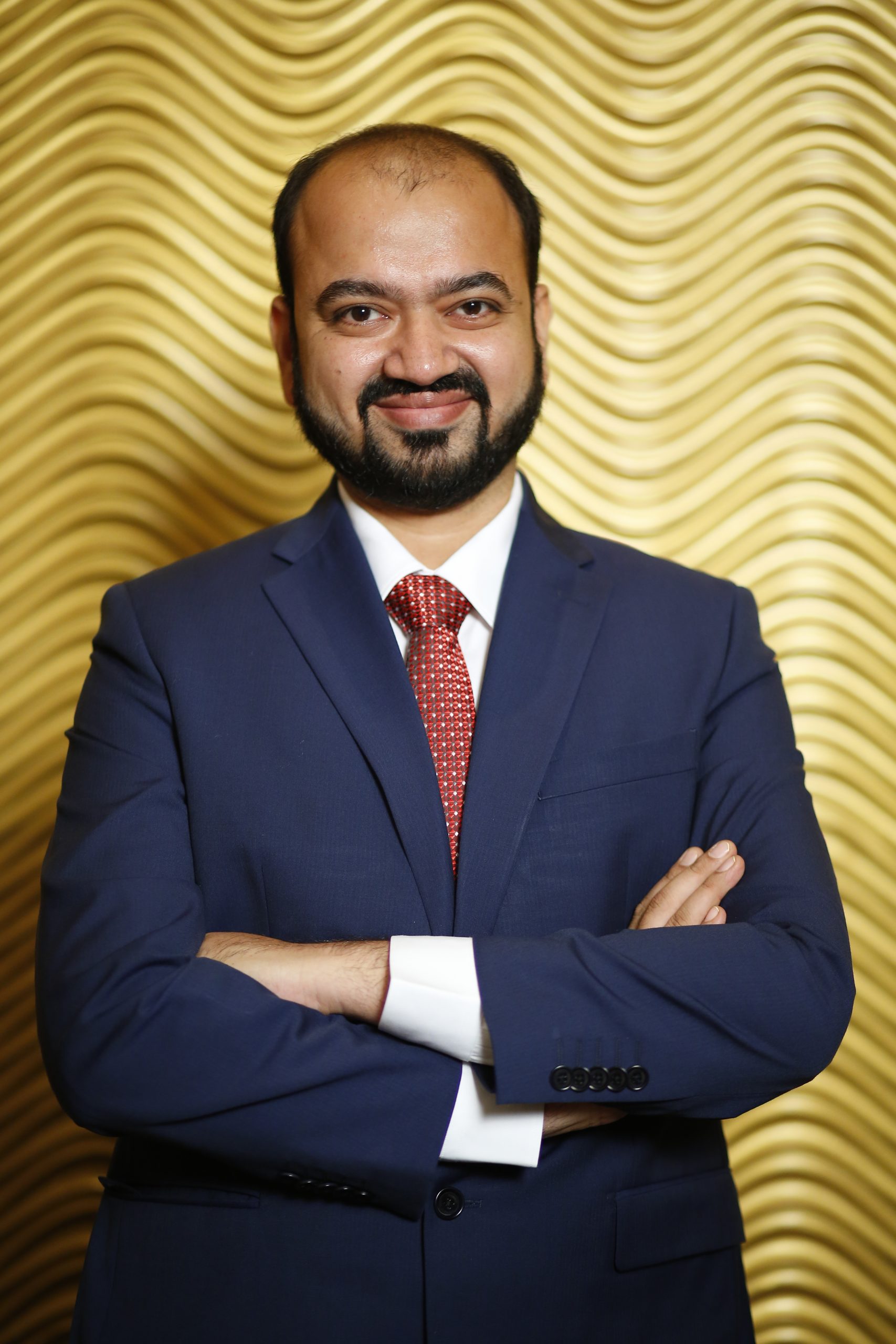
    Rohan, thank you for joining us. To kick things off, could you please introduce yourself to   our readers, highlighting key aspects of your professional journey and areas of expertise?

    Hi! I am Rohan Kusnur. I am currently working as Associate Vice President – Legal at Kotak Mahindra Bank Ltd. My professional journey has been very colorful with diverse experiences across different fields. In school, I wanted to become a scientist. The things that intrigued me about science were understanding natural phenomena and applying that knowledge for the benefit of mankind. After completing my B.Sc. in Biotechnology, I started working with a coaching institute as a branch manager. I also enrolled for my M.Sc. in Biophysics. By the time I completed my masters while doing my coaching institute job, I realized that I have a much better aptitude for management and administration than scientific research. I had considered two options while deciding my future career trajectory namely, MBA and civil services. I decided to go ahead with preparation for civil services as I always had a keen interest in current affairs and wanted to do something in public service. While preparing for civil services, I fell in love with the Constitution of India. After an unsuccessful attempt at the UPSC civil services exam, my love for the Constitution led me to pursue LLB. During my UPSC preparation, I built a good network of seniors who were preparing for the exam or teaching in coaching institutes. One of my seniors recognized my talent and offered me a teaching job. I started teaching at ‘Sankalp IAS’ institute on weekends along with my LLB. 

    During my final year of LLB, I started interning at Bhave & Co. where I eventually joined as an associate after receiving my degree. I could continue at Bhave & Co. only for a few months as my mother was diagnosed with breast cancer. I had to manage her entire treatment protocol. Managing my mother’s treatment was not possible with a full time law firm job. Hence, I quit that job to start my independent practice. I was clueless about how to proceed at that point in time. Being a first-generation lawyer with a very brief experience at a law firm, it was very difficult to start. I just started sitting in the Bombay High Court Law Library hoping to network with other advocates and find some work. Adv. Rachana Chavan was kind enough to guide me in this anxious phase of my career. Soon, I built a good network and started getting small matters. During this phase, I advised a client with a tricky real estate matter, filed two writ petitions, appeared in a criminal matter, worked on a highly technical arbitration matter among other things. Independent practice gave me the time flexibility that I needed to manage my mother’s cancer treatment. By God’s grace, my mother fought hard and survived cancer. Towards the end of my mother’s treatment, I got to know about an opening in the legal team at Capri Global Capital Limited. Taking up this job would mean giving up practice and I was really enjoying my practice. However, since I started my career in law late, I didn’t have a lot of time to struggle in practice. I was already 30 years old when I completed my LLB and my parents were worried about the marriage prospects for their struggling advocate son. So, I decided to interview for the job and luckily, I was hired as a legal manager at Capri Global Capital Limited. That’s how my corporate career started. After 2 years at Capri, I decided to move to Kotak Bank. My current areas of expertise revolve around banking and real estate laws. 

    Your journey from being an Independent Practitioner to the Associate Vice President at Kotak has been diverse. How did your early experiences in independent practice shape your approach to the banking and financial services industry, and what motivated your transition to an in-house counsel role?

    It has been a wonderful journey. Situations in my personal life have prompted certain decisions in my professional life as I have described in reply to the previous question. When I started my independent practice, I was a complete novice. Although I didn’t have expertise at that time, I had the desire to work hard and succeed. You need a lot of self confidence to succeed as an independent practitioner especially in the early days of the career. You are still learning every day but you need to convince prospective clients to trust you with their matter. So, it was a very steep learning curve. This ability to work hard with self-belief helped me to make the transition to an in-house legal role. The transition to an in-house role was initially necessitated by the need for greater financial security but gradually I started enjoying my new role.

    The personality traits required for success in independent practice are different from those required for an inhouse role. However, the fundamental values don’t change. You need good people skills in both roles. Networking is the cornerstone of success in both roles. You need to anticipate situations and prepare. The difference lies in developing the skill of balancing legal risks with business growth. As an in-house counsel, you are helping your company to grow, while minimizing their legal risks. You can’t err either on the side of caution or be too liberal. Striking the right balance between the two aspects is the key to success in an in-house role.

    Having held significant roles at Kotak Mahindra Bank, including Chief Manager and now Associate Vice President, could you share some challenges you’ve encountered in the banking and financial services legal landscape, and how you navigated through them?

    When I started my career in an in-house role, I had very little knowledge about the financial sector. I was lucky to have Adv. Sujata Angadi as my first boss and mentor at Capri Global Capital Ltd. I knew the law but I didn’t know the nuances of the lending business. I observed and I learnt very fast. I was fortunate to have stalwart leaders like Adv. Muneesh Dhawan and Kaushik Chatterjee sir to inspire me. After I moved to Kotak Bank, I realized that the risk appetite of every company is different. My experience at Capri Global helped me greatly to navigate through Kotak. As I have stated earlier, the real skill to develop is understanding the risk appetite of your company and striking the right balance between business growth and legal risk.

    I began my stint at Kotak as a legal manager where I was assessing the title of the properties being offered for mortgage against different types of retail loans like housing finance, loan against property and working capital. Kotak is great at nurturing and developing talent. I was soon promoted through the ranks and given charge of a team for supporting the primary market sales team in housing finance. The primary market sales team builds relationships with different builders and developers for sourcing housing finance business directly from the developers. This reduces the cost of customer acquisition and improves the margins of the company. I was also designated as a legal deviation approval authority for taking informed calls on some legal deviations in the interest of business growth. I was also granted rights to give final legal approval for disbursement of loans in housing finance and loan against property up to a certain loan amount. In each of these roles, I come across various challenges which I navigate with the help of a great team. 

    Let me illustrate the balance of legal risk and business growth with an example. While assessing the title of builders for approving real estate projects, we sometimes come across pending litigations on project land. We need to approve projects in order to help the primary market sales team to source home loan applications from those projects. A practicing advocate will simply highlight the pending litigation in their title report and we know about the doctrine of lis pendens under the Transfer of Property Act. However, as an in-house lawyer, it is our job to assess the real risk of the pending litigation and advise the business leadership accordingly. We cannot theoretically apply the doctrine of lis pendens and reject everything. The skill lies in differentiating between real risk and theoretical risk. Once we highlight the real risk, the business team is in a better position to make an informed decision.

    In Kotak Bank, there is excellent support from the leadership and a wonderful work culture. This helps me in performing more effectively.

    You have a background in biophysics and biotechnology. How has your scientific education shaped your approach to legal problem-solving, and do you find any parallels between the two fields?

    My scientific education has helped me greatly in legal problem-solving. I would like to share one of the famous quotes of Albert Einstein. The great scientist had once said, “Education is training of the mind to think”. Every discipline of learning imparts a unique style of thinking and problem-solving to the learner. My scientific education helped me to develop very strong logic and reasoning skills. This greatly helped me in shaping my legal career. I had to simply apply the same style of thinking to law which I learnt while studying science. Further, scientific education also teaches you the importance of research. Good research skills are very important in both science and law. 

    Your career involves a mix of corporate legal roles and teaching civil service aspirants. What motivated you to engage in coaching, and how does teaching law influence your own understanding and application of legal principles?

    Of all the different things which I have done in my career, I have enjoyed teaching the most. I have loved teaching since the time I was a student. I have always helped my friends in understanding certain concepts which I understood better. I believe that you develop a better understanding of the subject every time you teach. This happens because you think about how to help the students to understand some concept and in the process, delve deeper into the subject yourself. Also, when the students ask you questions, you are prompted to think in a different way about the same subject and thereby your understanding of the various aspects of the subject is enhanced.

    When I was teaching Indian Polity to civil service aspirants, I had a peculiar challenge. I was teaching the Constitution of India and how it is applied in the functioning of Indian democracy. My students came from diverse educational backgrounds like humanities, commerce, management, engineering, medicine, law etc. I had to ensure that the law students don’t get bored and other students are able to understand the concepts. This greatly improved my communication skills and understanding of legal principles.

    Legal practice often involves intense scrutiny and attention to detail, especially in areas like title flow for mortgage creation. How do you manage stress and maintain accuracy in your work, and do you have any unique methods for unwinding after a challenging day?

    I am a family man. There is no greater joy than spending time with family. I have a wonderful 5- year-old daughter. She takes away all my stress every day when I return from the office. I have a very supportive life partner with whom I share all the highs and lows of my day. This helps me to unwind and relax after a challenging day. I love listening to music and watching web series in my free time. Proper relaxation is very important to recharge your batteries and perform your job accurately. 

    On a lighter note, outside of your professional life, do you have any hobbies or interests that you are particularly passionate about? How do you strike a balance between your career and personal life?

    I love food and frequently visit different restaurants and street food joints to explore newer tastes with my family and friends. I love hanging out with friends. I have a keen interest in personal finance. Apart from law, understanding the art of investment in equities is one of my passions. During my civil services exam training, I developed an interest in macroeconomics. I have built upon that knowledge over the years. I like to explore correlation between macroeconomic events and investment opportunities in the stock markets. I read a lot of finance related content and follow many experts in my free time to enhance my knowledge and skills. Investment is an art of predicting the future based on current data. I get great intellectual satisfaction from this activity. It is up to us to strike a balance between career and personal life. One should never forget that a successful career is just a part of a happy life. Happiness should be the ultimate objective

    Considering your journey, what advice would you offer to young legal professionals entering the banking and financial services industry, and what skills do you believe are crucial for success in this field?

    The single most important trait to have for young legal professionals is self-belief. There is no alternative to self-belief. Out there in the professional world, people will believe in your skills only after you have successfully demonstrated your skills. When you start a new journey, you don’t have any track record. You have to back yourself completely to succeed. Once you develop this self-belief, the next step is to have a vision and commitment towards that vision. To succeed in the banking and financial services industry, you need to understand the needs of the industry. There are a wide variety of legal functions that one can perform in an in-house role. Title related due diligence is just one of the functions. Likewise, if you wish to develop yourself as a practicing advocate catering to BFSI, you can perform a wide variety of functions. 

    The most important advice which I can give to young legal professionals is to not be rigid about specific areas of work or practice. Don’t refuse good opportunities just because it is not exactly what you wanted. Just start and learn along the way. Eventually you will find your niche area. Most young lawyers have preferences about areas of practice but nobody knows whether you will find meaningful work in those specific areas at the beginning of your career. Don’t say no to work. Take up the challenge and learn along the way. This brings us back to the most important trait to succeed which is self-belief. If you believe in yourself, nothing is impossible.

    Get in touch with Rohan Kusnur-

  • “Former DJS Officer and Law Specialist, sheds light on his transition from the Delhi Judicial Services to becoming a Law Coach. Explore the motivations behind his shift, the passion for teaching, and insights into effective mentoring for aspiring judicial officers.” – Bhavya Nain, Law Specialist

    “Former DJS Officer and Law Specialist, sheds light on his transition from the Delhi Judicial Services to becoming a Law Coach. Explore the motivations behind his shift, the passion for teaching, and insights into effective mentoring for aspiring judicial officers.” – Bhavya Nain, Law Specialist

    This interview has been published by  Priyanka Karwa and The SuperLawyer Team

    Having served as a former member of Delhi Judicial Services, what motivated your transition from a judicial officer to a Law Coach? Please tell us about your journey.

    Before coming to the question asked, let me introduce myself: I hold a Bachelor of Laws degree from GGSIPU, Delhi, which I obtained in 2009.   I completed my LLM degree at the Indian Law Institute in Delhi in the academic year 2015-2016, having been awarded a scholarship based on my academic achievements. Subsequently, I participated in the Delhi Judicial Service Examination-2018. Thereafter, I was appointed as a Judicial Officer in Delhi. I voluntarily resigned from the esteemed Delhi Judicial Service in September 2023. The primary impetus for transitioning from being a member of the esteemed Delhi Judicial Services to becoming an independent Law Coach in Delhi was my fervour for teaching as a vocation. Prior to my appointment as a Judicial Officer in Delhi, I had already held the position of Assistant Professor of Law at Amity Law School, Noida, UP. Therefore, teaching law is a familiar undertaking for me.   Teaching Law to young students brings me great happiness and a sense of fulfilment as I contribute to the education sector, which plays a vital role in the development of our nation. During my tenure at the esteemed Delhi Judicial Services, I acquired a comprehensive understanding of the intricacies of law, niceties of law and nuances of court practice/procedure. This motivated me to transition into a role as a Law Coach in order to share my extensive legal knowledge and skills with the judicial aspirants in Delhi-NCR. I have accumulated this expertise over a span of around 14 years as a legal professional, including my rigorous training at the esteemed Delhi Judicial Academy and my first-hand experience observing court proceedings as a Trainee Judge in Delhi. The shift from serving as a Judicial Officer in Delhi to working as a Law Coach in Delhi mostly stems from my instinctive desire to impart legal knowledge, driven by my natural inclination to guide and encourage aspiring legal professionals.

    As a Law Coach, you are contributing to the development of future legal professionals. What inspired you to take up coaching, and how do you approach mentoring and tutoring to ensure effective learning for your students?

    After my tenure in the Delhi Judicial Services, I have made the decision to devote my life to the education sector by becoming an independent Law Coach in Delhi. I plan to provide mentorship and coaching to those aspiring to become judges in the Delhi-NCR region. This is because I possess a distinct strong legal background by my unique exposure to academic positions, legal advocacy, judicial services, and legal research responsibilities. I am currently in the process of preparing and upgrading study materials to ensure that I can offer my services as a Law Coach in Delhi in a thorough and efficient manner. In the near future, I intend to officially establish my independent physical centre/office to cater to the needs of aspiring judges in the Delhi-NCR region. This launch is expected to take place within a few months. Meanwhile, I disseminate legal developments online and produce concise law articles for the benefit of online judicial hopefuls. Additionally, I am currently offering mentorship to anyone aspiring to enter the field of judiciary through online platforms. My primary objective is to alleviate the challenges faced by individuals aspiring to become judges and facilitate their transition from being students to becoming judges as seamlessly as feasible.

    You’ve authored and co-edited books on legal topics. Can you tell us about the motivation behind your literary pursuits and how these publications contribute to the legal knowledge landscape?

    I have collaborated in the editing of law books published by prominent law publishers and have also authored academic papers. This is mostly due to my inherent propensity towards academia and my intellectual orientation.   The majority of my detailed articles were released while I was an Assistant Professor of Law at Amity Law School, Noida, UP.   I continue to produce legal content through online platforms due to my strong passion for legal knowledge and my desire to share the knowledge I have obtained.   I have co-edited two law volumes that focus on the subjects of post-colonialism in India and Sports Law in India.   Both of these legal subjects are highly relevant in the present day, and the primary motive behind editing these books was to enhance the existing academic knowledge in India.   I trust that I have adequately fulfilled this objective.   Lately, I have transitioned to composing concise legal articles/notes on subjects of general legal knowledge and recent cases due to their frequent inclusion in Judicial Service Examinations.

    Your profile showcases an impressive balance between academic roles, judicial services, and advocacy. How do you manage to balance these diverse roles, and what insights can you share with professionals looking to diversify their legal careers?

    The shift from being an advocate to being a Law Coach has been a gradual process for me. Consequently, I firmly believe that individuals should always trust their instincts and their gut-feeling. Balancing is a skill that is cultivated when one is completely prepared to engage and is committed to giving their utmost effort towards achieving a specific objective within the constraints of time and available resources. Acquiring the skill of balancing can only be achieved via practical experience in a work environment. Young professionals have the opportunity to expand their expertise into several related industries, as long as they are open to acquiring new skills while working and adapting to the ever-changing circumstances that come with diversifying. It is imperative to consistently enhance one’s skill set in order to remain competitive with others in any professional domain. To make the decision to diversify one’s legal career, it is necessary to possess courage and self-confidence. Having faith and patience in one’s own ability is also an essential prerequisite.  

    Having been a law researcher in the Hon’ble Supreme Court of India, how do you think your passion for research influences your coaching style or philosophy?

    I served as a Law Clerk and Research Assistant in the Hon’ble Supreme Court of India from 2009 to 2010. It was an immense privilege.   As a Law Clerk, one is responsible for creating daily summaries of cases scheduled to be heard by the Court, as well as conducting research and preparing notes for ongoing cases.   Furthermore, much research is necessary on many legal matters that necessitate resolution by the Court. Through engaging in these activities, I significantly refined my research skills. This skill set has proven beneficial in various domains, including advocacy, education/academic roles and judicial services. The skill of legal research is a valuable asset for the position of a Law Coach in Delhi. It is essential to stay updated with current legal issues that are frequently reported in the news. Questions related to this area often appear in judicial service examinations under the category of latest legal general knowledge. Furthermore, the current law has been altered/modified by recent rulings of the Hon’ble Supreme Court of India and numerous Hon’ble High Courts in India. Once again, it is necessary to conduct legal research in order to comprehend and inform the pupils about these legal advancements.  

    With approximately 14 years of experience in teaching, advocacy, and research, you’ve worked on notable cases and served in various legal capacities. Could you share an experience or case that left a lasting impact on you and influenced your approach to the law?

    I can think of one recent instance where I served as a lawyer. In that instance, my contribution brought me great gratification and made a lasting impression on me. The case before the Ld. The Disability Commissioner concerned the terms and conditions of service for a disabled employee working for a PSU. Only tenacity and a lot of work were able to change the life of a disabled person who was being denied both his monthly salary and a transfer to a position close to his home/native place. The disabled person received both reliefs on the first hearing date because the case was structured in a way that the Ld. Commissioner was satisfied with the grounds raised in that particular case. This case has left a lasting impact on me. This instance taught me that there might be some differences between the written law on paper and the actual law in practice. Though they may have many rights in theory, disabled people may not be able to really exercise those rights in real practice for a variety of reasons. A lawyer’s or disability activist’s job is to ensure that the person with the disability may truly use all of the legal rights that have been granted to him in the black letter of the law.

    Beyond your professional endeavors, are there specific personal interests or hobbies that you find rejuvenating, providing a balance to your demanding roles in the legal domain?

    Due to the demands of my work, I have limited opportunities to engage in my other interests. However, I manage to allocate some time each day to browse the Internet and listen to Indian music, which really revitalizes me.   Occasionally, I also keep track of cricket matches taking place in major tournaments, particularly the matches being played by India against other major cricketing nations. I also try to stay updated on current events in India by regularly reading newspapers, both in print and online, during my leisure time.

    Drawing from your experiences, what advice would you give to the next generation of law students and legal professionals, especially those aspiring to join the judiciary?

     My short advice to the next generation of legal professionals aspiring to join the judiciary in India is that one should always follow his passion and should always work in a planned and dedicated manner and only then can one achieve one’s goal. Dedication and hard-work alone help in clearing the Judicial Service Examinations in India and there is no short-cut to success. Proper planning and careful strategic thinking may reduce the degree of effort required, but without hard work, clearing such examinations would not be possible because there are far more applicants for judicial services compared to the limited number of available seats in India.

    Get in touch with Bhavya Nain-

  • Raghav Singh, cracking IBPS and DMRC, on being a Law Officer at State Bank of India and teaching CLAT aspirants

    Raghav Singh, cracking IBPS and DMRC, on being a Law Officer at State Bank of India and teaching CLAT aspirants

    Raghav Singh graduated from Dr. Ram Manohar Lohiya National Law University, Lucknow (2007-2012). At present, he is the Deputy Manager (Law)/Law Officer in State Bank of India posted at Administrative Office.

    In this interview he talks to us about:

    • Academic as well as extra-curricular experiences.
    • How he prepared for SBI and IBPS exams.
    • His experience while teaching CLAT aspirants.
    • Factors students should keep in mind while building their career graphs.

    How would you like to introduce yourself to our readers?

    I would like to introduce myself as a Banker by profession, Lawyer by passion and Teacher at heart. I am also a hopeless optimist who cannot stop himself from laughing at serious moments.

    What was your motivation to study law?

    The motivation mainly came from my father, Sh. Arun Kumar Singh, who is currently posted as a CBI Judge at Rewa(MP). My father was born in a family of farmers and education was a luxury to him, still he worked hard and after a lot of struggle came to stand where he is today. This naturally had a profound effect on me and I developed an interest towards law. Initially I wanted to serve the judiciary but I presume, destiny had a different plan. I learned that a lawyer can contribute in many ways to the institution where he is working thereby impacting his surroundings and it is a great feeling when there is a positive impact as the character of Andrew Beckett has summed up in The Philadelphia, “It’s that every now and again – not often, but occasionally – you get to be a part of justice being done. That really is quite a thrill when that happens.”

    How was your law school journey like- could you share your experiences with us?

    If I am to answer in one word I would call that journey amazing. But law school life deserves much more than one word. As life is much more than just the job you are doing, Law school too is much more than just your academics. It is about the bundle of experiences where everything fits in, be it your success or setback or the journey that you took while reaching there.

    I had a wonderful journey thanks to my teachers, friends, seniors, juniors and everyone who was a part of it. I remember with much fondness how Anshuman hit a four of the last bowl that sealed the Inter batch cricket tournament for us where I was one of the frontline bowlers of the team and at the same time I recall how I bowled 17 times in one over in one of the matches. I remember during the Final year Aditya coming to my room and practicing on guitar for hours and telling me that singing “Smelly Cat” at our Cultural Fest is not a very good idea but I anyway went with it much to the amusement of the capacity crowd in the auditorium where only my Debating committee members were found cheering. At the same time I also remember how everyone appreciated me for the song that I composed and sang on Guitar during our farewell. In addition to the academic life all the trips towards the old city, late night Bun makkhan, watching IPL in the common room, all the Bak*****, etc. are just priceless and I can’t thank God enough for the life that I had in law school.

    Kindly share with us your academic as well as extra-curricular experiences that have helped build your personality? What were your biggest achievements in and outside law school?

    Since we had a semester system so there was lot of time at hand to participate in Extra Curricular. Mooting was one area that caught my fancy, the thrill of arguing your case was enough to make me pursue that interest in the first semester itself. One should keep in mind that Mooting is a team effort; therefore, you need to get the right team. The one thing you should look for before making a team is—Compatibility. Remember, when it comes to moot courts compatibility trumps intelligence. And add hard-work to the equation and result is a brilliant team.

    I was fortunate enough that I had my friends (who stood with me through thick and thin in our mooting journey) as the best team mates anyone can have. So with contributions from Srijan, Akansha Ma’am, Suyash, Mayank, Pallavi, Dhruv and Yash, I was able to win 3 Best Memorials (including 3rd GNLU international Moot court competition) I have also won best mediator in UPES Mediation Competition, 2012 and published few articles, 3 of which with the help of my co-authors Amit Kumar Pathak and Sukriti Guha (Manupatra Competition Law Journal, Company cases, The Practical Lawyer & Environment Law Times).

    Also, I had one of the best times as convener of the Debate & Discussion committee thanks to the members of the committee we were able to organize several debating competitions, helping  streamlining the debating culture at RMLNLU.  After me, the responsibilities of the committee were taken over by talented conveners like Vinayak, Krishna & Aayush.

    In my professional life too, I was lucky enough to have brilliant and hardworking people as my support system especially T K Singh sir, BM Sharma sir, D V Malhotra Sir & Piyush to name a few. While working in Oriental bank of Commerce as a law officer, with the collective effort of the branch managers as well as branch officials, we settled the maximum number of cases in the National Lok Adalats organized throughout 2014.

    Participation in these competitions helped me a lot in building my personality. The more you participate in extra-curricular,the more exposure you get which help you to deal with assignments in your professional life. For instance, in my SBI Deputy Manager(Law) interview, I was privileged to have former Bombay High Court Judge, Justice P D Kode(Famous for his judgment on 1993 Bombay bombings case) as the head of the interview panel and all that I learned in law school did help me to face the board with confidence and score well above 80% in the interview.

    How did you prepare for SBI (Law officer Scale-II) & IBPS (Law Officer Scale-I) exams? What are the subjects one needs to study for its preparation?

    IBPS(Law Officer Scale-1) is conducted for all the public sector banks excluding SBI. So, apart from Law, questions are asked on General Awareness, mostly relating to Banking and current affairs, Reasoning and English. There is a negative marking of 0.25 for every wrong answer. Paper comprises of 200 questions of one mark each. Since I was already preparing for judicial services, I did not face much problem in law and I just went through previous years question papers to know the pattern of the examination and practiced some mock question-papers. I feel reasoning is the deciding factor, since most of the law students just loath anything related to Maths or calculations. So I made a point to practice reasoning. It helped me in clearing Delhi Metro Rail Corporation exam as well.

    Although for SBI, the pattern is somewhat different as there is no General awareness section and other sections like Reasoning and English are merely qualifying in nature, which means that merit list shall only be decided on the basis of the marks scored in law section unlike IBPS. Therefore, the concentration must be on Law. Apart from basic laws such as Contract, Procedures codes, Penal Code one should also focus on the commercial and banking laws like SARFAESI, Banking Regulation Act, Partnership Act etc. Also, the material from Indian Institute of Banking Finance’s on legal and regulatory aspects of banking proved to be very helpful.

    As I was already working with Oriental Bank of Commerce (Allotted through IBPS), I was not having much time to spare on preparation, so I stick to the basics and practiced previous years question papers and IIBF preparatory material.

    For most of the law graduates the syllabus of these exams might appear to be alien where lot of such acts are involved which one might not have even heard before. But one needs to just go through these acts. If somebody is preparing with all seriousness and regular practice even for a short span of 2 months, it can easily be cleared.

    How was your experience teaching CLAT aspirants? What were the challenges you faced? What do you think legal aspirants need to be aware about before they become professionals?

    I immensely enjoyed teaching as it helped me personally to build on my knowledge. As I left my job at Mumbai and was appearing for competitive exams, to do away with boredom and monotony, I thought teaching would be a good experience. Here, I have to thank Bishwajit Sir and Priya Ma’am. They were very understanding and gave me an opportunity to teach the wonderful kids who are now studying in prestigious law universities. The only challenge I faced while teaching, was to simplify the legal concepts for my students. So while teaching, I incorporated this habit of explaining concepts with lots of real life examples, so that it helps them understand the application of these laws in a cogent manner.

    Legal Aspirants needs to be aware of the fact that they belong to the area which is always evolving. Past year CLAT papers have proved to be unpredictable and therefore, one should prepare with an open mind without any preconceived notions on the difficulty level of the paper. Age old formulas like studying regularly, revising timely, practicing lot of mocks and most importantly preparing with the positive mindset should be kept in mind while preparing.

    How far do you see your University as being the contributor in preparing you for what you are right now?

    Whatever I am today, I owe it to my Alma-mater. The opportunities that I got, helped me to understand the difference between and move from ‘good to better’, ‘listening to perceiving’, ‘losing to learning’, ’speaking to arguing’ and most importantly ‘reading to ‘interpreting’.

    Considering the nature and importance of this profession what according to you should be the focus of law students at the law schools? What are the important factors students should keep in mind while building their potential career graphs?

    Building concepts, utilizing the opportunities at hand, improving on research and drafting skills should be the main focus area. Do not get bogged down witnessing someone who is better than you, as 5 Years is a long span of time and one must utilize this to work on their weaknesses. It is okay, if you are not getting an ‘A’ in every subject provided that you understand the subject well you can apply those principles with confidence whenever you have to.

    And most importantly, when it comes to career, one should always be open to new opportunities and ideas.

    Tell our readers about the goals you have set for yourself for the upcoming years?

    Currently, I am striving to serve this prestigious institution, SBI, to the best of my abilities and just like law school, I shall make best use of any opportunity that comes my way. I am satisfied till I am contributing something to this institution, which serves millions of Indians in our country and abroad.

    In the end what would be your three biggest pieces of advices for the students as well as fresh graduates who are all set to begin their professional lives soon?       

    Firstly, do not hesitate to follow your hunch. Even if it says to leave your job which you just got 6 months back and do something which you feel is right.

    Secondly, Life of a lawyer is like a runner in a never ending relay race and not a sprint. So all you can do is try to maintain the advantage, so wherever you are, try to improve.

    Thirdly, it is just the human mentality, that we can never be satisfied where we are, so just stay hopeful, as said beautifully by Andy Dufresne in The Shawshank Redemption, “ Remember Red, hope is a good thing, maybe the best of things, and no good thing ever dies.”

  • Sanjeevi Shanthakumar, Dean, Faculty of Law, SGT University, on establishing three elite law schools, teaching and academics

    Sanjeevi Shanthakumar, Dean, Faculty of Law, SGT University, on establishing three elite law schools, teaching and academics

    Prof. Sanjeevi Shanthakumar is a graduate from Dr. Ambedkar Government Law College, Chennai (Madras University) (Batch of 1989). Thereafter he pursued LL.M. from Madras University with specialization in International Law and Constitutional Law.

    Currently he is Dean, Faculty of Law at SGT University, Gurgaon [NCR]. Earlier, he was Director of ITM Law School, ITM University, Gurgaon, Director of MATS Law School, MATS University, Raipur; Controller of Examinations of Hidayatullah National Law University, Raipur; Associate Professor of Law at Hidayatullah National Law University, Raipur; Senior Lecturer at Government, Law College, Madurai; Senior Lecturer at Government Law College, Chennai. Before joining the legal academia he had practiced at the Madras High Court for seven years as legal practitioner.

    He has an unique experience of establishing three elite law schools on a self financing mode.

    He shares his experiences in this interview.


    Please tell us a bit about your pre-college years, you as a student, your ambitions as a child. Did you have lawyers in your family or among close relatives?

    During my school days, I was a studious and enterprising child. Believed in honesty and hard work. Very cooperative and helpful to teachers and the school administration. One day when my class teacher was asking about the subjects we like the most, each student was naming either maths or science. When my turn came, I stood up and said “civics” and all the students in the class laughed at me. I never knew those days that this interest in civics will lead me to study law. I never had any lawyer in the family or amongst my relatives. Hence, was complexly unaware of legal profession.


    What were your objectives when you thought about law while still in the preliminary years of Law College? What were your goals after graduating? What were the options available to you?

    As I said, I never knew about this profession. My father wanted me to be a Medical Practitioner. Since I could not get a seat in the Medical College, I got admitted in B.Sc. [Chemistry] and started attending classes. One day, my dad came to my college and said that we need to go to the Madras law college and the interview is scheduled for admission to five year integrated law degree program. I walked with him without realizing that this is going to be a turning point in my life. Went to the Law College, faced the interview and later was declared selected. That was the starting point of my law journey.

    At the law college things were much unorganized. Was very scared to study in that environment. Was feeling very sad and was repenting my decision of joining the law college. Fortunately got few friends who cajoled me. Started developing interest in studies after meeting a friend called Gnanasekar. He was too elderly to be called a friend and hence we used to call him as “uncle”. He was the one who motivated me to study law. He used to call us outside the class room and started explaining to us each and every topic. He never used to carry text books like any other student. He used to carry with him volumes of AIR and read to us the full judgments of the Supreme Court. This created interest in me to read law through cases and law as interpreted by the Courts. He got opportunity to work on a part-time basis at a very popular law firm in Chennai, our interaction with him got reduced and I assumed his role in teaching my friends. This is how; I started teaching though informally.

    Instant recognition and appreciations after a good lecture fascinated me and forced me to take up teaching. Those were the days when there was a serious dearth of good law teachers. I went for a coaching class for preparing for the Civil Services Examination. The Teacher who was teaching Indian Polity could not come to classes regularly due to certain personal reasons. One day I tried to fill the gap by teaching a topic in Indian Polity. The overwhelming appreciation and feedback from my fellow students gave me confidence to become a good teacher. Based on the feedback from student the Director of the Centre Prof. M.F. Khan insisted that I should teach Indian Polity regularly and I got in to active teaching.

    My practice at the Madras High Court was a great experience. I was with one of the top ranking law firms M/s. Aiyar & Dolia and had a roaring practice. Received appreciations from my seniors, colleagues, clients and judges. In spite of these, my passion was in teaching and hence went for a full time Masters Degree Program at Madras University with specialization in International Law and Constitutional Law. After my Masters I cleared the UGC JRF and got the Junior Research Fellowship to do PhD in Law wherein as part of the fellowship terms and conditions, I had to deliver lectures for LL.M. students. Teaching Post Graduate Law students started this way and later got appointed as Senior Lecturer at the Government Law College, Chennai, and I happily started to teach at the college where I studied law. Later, on official transfer went to Government Law College, Madurai from where I resigned and joined Hidayatullah National Law University, Raipur. After HNLU, went to establish a new Law School for MATS University at Raipur as its founder Director, later established ITM Law School at ITM University, Gurgaon as its founder Director and now establishing the Faculty of Law at SGT University, Gurgaon as its founder Dean.


    Which subject do you enjoy teaching the most?

    (Sanjeevy has taught a number of both traditional legal subjects and the trending ones from Jurisprudence to Constitutional Law to International Law.)

    Not only the above mentioned conventional law subjects. I have the experience of designing curricula for Honours Courses wherein I had taught courses like “Biotechnology and Law”, “National Regulation of International Trade”, Science Technology and Law, etc. However, I enjoyed teaching Environmental Law the most and other subjects like International Law and Constitutional Law. I would also love to teach and enjoy teaching Environmental Law.


    Tell us about your teaching methodology. Do you encourage students to take notes or do you engage your students in active class participation? What advice do you share with your students on scoring higher grades?

    My teaching was never a one way process. I was one of the fortunate few teachers to get trained to teach under a World Bank Capacity Building Project and also at Cardiff University, U.K. under the British Council Funded Project. Whatever new teaching methods I learnt at these programs, I disseminated the same to many other young law teachers, through various training programs for law teachers on law teaching methods, at different universities across the county.

    I focus more on active learning rather than on teaching. It was always student centric. I actively involve the students in the process of learning the subject. During a semester, I deliver very few lectures. Most of the topics used to be learnt through small group discussions, role plays, field visits, seminars and projects. My question papers to assess my students understanding were always unique and different. Questions will never test their memory. Instead, it will encourage them to apply the acquired knowledge over a given situation and to come out with unique solutions, both legal and non-legal.

    I encouraged students in small groups to visit environmentally affected areas and to talk to various stakeholders to find out the real reasons for the problem and approach the administrators to find out what measures have been taken and finally to come out with their original solutions to resolve the problem. These methods helped every student to get engaged in the learning process. I made certain passionate students’ members of a Public Trust founded by me and named as “TREES” Trust for Research and Education on Environment and Sustainable Development” through which they continue to do some good work for the cause of environment, thereby engaging them in a life long learning process.

    My teaching methods for teaching Environmental Law was recently recognized by the Asian Development Bank, Manila by conferring on me the “Environmental Law Champions Development Award”.


    What role do legal researchers and academics play in the Indian legal system? What positive changes would you recommend on this aspect of the legal system?

    I personally feel by the legal academics have a greater role in producing quality legal professionals. As it was rightly said, the “Quality of the Bar determines the Quality of Justice”. Hence, it is the primary responsibility of legal academic to ensure the quality of the bar though developing the quality of law students who enter the bar.

    The only change I would recommend to all my law teaching fraternity is that, ‘Please take law teaching seriously and don’t take law teaching for granted. Do justice to your profession; else the nation will fail as a consequence of chain reaction.


    When would you say that an academician is successful? What are the career goals legal academicians should set for themselves?

    A Legal Academician’s success is measured in terms of the quality of legal professionals he produces. I feel successful, when I hear news about the success stories of my students, whom I have taught at different points of time. I could not avoid but sharing this news that this year four of my students got admitted to the LLM Degree Program at Harvard Law School. This gives me, as an academic to feel successful.

    The one point career goal for any legal academic is to be a good teacher and to be recognized as such. All the other positions and opportunities will automatically follow as and when time progress.

    Most of the opportunities I have had so far came to me through the recommendations of my students. One of my students even recommended to her peers and teachers at Oxford University to invite me to give a talk on Environmental Law at Oxford, which I did.  My students believed that I can do and I try not to disappoint them.


    You have authored several books and have written various research papers. How did you find time to write so many scholarly articles?

    For writing books, you need to have a compelling reason. I wrote books on Environmental Law only to help my students, as they were suffering for want of good reading materials, at that point of time, when Universities started to teach Environmental Law as a compulsory course. I tried to help them again with the help of a group of students, who dedicated a lot of time and energy to collect all the information and data required to author a book.


    What was the biggest challenge that you had to face while building the law schools?

    (Sanjeevy is the founder Director of MATS Law School as well as of ITM Law School, Gurgaon)

    The biggest challenge was to attract good students because without good students around me, I will not be able to experiment or innovate in legal education.


    Any thoughts on the current system in place to train the Indian judiciary and continuous legal education of lawyers? How can these systems be improved and made more effective?

    I believe in the importance of “Continuous Legal Education” for lawyers and judges especially in the trial courts. 15 years back, I conducted one “CLE Program for Young Lawyers”, while I was teaching at the Government Law College, Chennai. I received tremendous response for the same and appreciations for the initiative. I wanted it to be a regular feature. Due to transfers and relocation, I could not continue the CLEP. As Dean of SGT University Faculty of Law, I have started doing it again, and hope to continue it.


    As the current Dean of Faculty of Law, SGT University, how do you feel SGT can take a greater role in social engineering in India?

    As Dean of the Faculty of Law of SGT University I try to leave no stone unturned to make the law school a clinical law school where students learn through experience. I believe in “justice education” in contrast to “legal education”. I am trying to provide my students, maximum exposure to the legal profession through various clinical activities.

    I constantly remind them to think critically and not to accept anything just because it is there. To help the students feel more socially responsible I facilitate their visits to the communities for interaction very frequently through the legal literacy club. These visits to the communities and interaction with legal luminaries gives them a complete picture of the working of the Indian Legal System. Since they are made to personally feel the pain and sufferings of individuals, I sincerely believe that they will do their level best to mitigate pain and ensure justice.


    How do you say a student can manage to stay ahead of the ‘rat race’?

    Today, I find students quite impatient. My only advice to the young law students is that, keep working, work with dedication, sincerely and honestly maintaining the integrity and dignity of the legal profession. Results will follow as a natural consequence. Remember the phrase that “Rome was not built in a day”.


    What would be your message to those hard working law students who did not make it to a top NLU but want to excel in the profession?

    Many of those who are on top of the legal profession today were never a student of an NLU. In fact the NLUs started existing in public knowledge only 5-10 years ago. If they can do, why not you?

