Tag: Teaching

  • “Championing Justice: A Trailblazer in Supreme Court Advocacy” From a Medical Background to the Apex Court: Unraveling the Remarkable Journey of a Pioneering Criminal Law Advocacy”- Advocate on Record Divya Jyoti Singh

    “Championing Justice: A Trailblazer in Supreme Court Advocacy” From a Medical Background to the Apex Court: Unraveling the Remarkable Journey of a Pioneering Criminal Law Advocacy”- Advocate on Record Divya Jyoti Singh

    This interview has been published by  Priyanka Karwa and The SuperLawyer Team

    Can you share your journey of becoming an Advocate on Record and your motivation to specialize in Criminal Law, as evidenced by your LL.M. in Criminal Law from the Indian Law Institute?

    I am a first generation lawyer, nobody even in my distant family belongs to or is associated with a legal background. After pursuing my B.A.LL. B (5 years integrated course), I wanted to pursue LL.M. to add to my resume; as I come from a medical background and always had an inclination towards higher studies. After clearing a few entrance exams for LL.M., I opted for Indian Law Institute.  There were two branches available for masters one being IPR and the other Criminal Law. As I always had a thing in me for litigation, I chose the latter. I was lucky enough also to have the finest professors teaching us.

    Advocate on record also was something which emerged from the fact that I am a first generation lawyer, as with no assistance or guidance I felt that clearing the AOR exam will help me in establishing myself in the Hon’ble Supreme Court, as the Hon’ble Supreme Court recognizes only two sets of advocates: i). Senior Advocates and II) Advocate on Record; as per the Supreme Court Rules. 

    You’ve written a dissertation on “Pardoning Power of The President Article 72 Of The Constitution Of India.” What led you to choose this topic, and what were some key findings from your research?

    The topic for my dissertation again culminates from the fact that I have keen interest in the sphere of criminal law. It was intriguing to know the development from the death penalty being given very commonly to the rarest of rare cases and thereafter the effect of the Mercy Petitions as we call the power of the president under Article 72 of the constitution of India. Research included the recommendations of the Law Commission Report and study of the death penalty across the globe.

    In addition to your specialization in Criminal Law, you’ve also written research papers on “Juvenile Justice” and “International Law in reference to Right to Food.” How do these areas of study tie into your legal career and advocacy work?

    The best part to pursue masters from the Indian Law Institute was that we had to submit various papers during our course and this apparently helped me to have better research skills which eventually helped me and till date helps me by inculcating the habit of researching some case laws on a daily basis; it also helped me to develop patience to read lengthy judgments and keep myself updated with the latest developments in legal field.

    Your professional experience includes working with Designated Senior Advocate. Could you tell us about your responsibilities and experiences during this period and how they contributed to your legal career?

    During the brief stint of period I was associated with the senior, I was assigned duty to research and prepare statements of cases. I was also given free hand to deal matters before the Registrar Court in the Hon’ble Supreme court. The exposure that I witnessed was essential for me to understand the knitty-gritty of the profession; also it helped me to understand the court craft. I also got an opportunity to listen and observe some of the finest advocates which helped me a lot to learn by observing the Art of advocacy; skill of argument, to learn the importance of body language, etc. and how one should conduct themselves during an argument.

    You’ve represented the Government of India and the State of NCT of Delhi before the Supreme Court. Can you share some memorable cases or experiences from your time as a ‘Panel B’ advocate for the Union of India?

    Being a panel counsel gives one immense exposure, as we get a chance to represent different States, Central Government and various PSU’s. The maximum litigation that occurs in supreme court is wherein the government is a contesting party and thus the government has huge stakes and so do we as we represent the government.

    You’ve filed Public Interest Litigations and intervention applications in the Supreme Court, leading to legislative changes, such as the incorporation of provisions in the Consumer Protection Act. Can you discuss the impact of these legal actions on consumer rights and advocacy?

    The PIL filed by me pertaining the consumer awareness was particularly at the time when there were infiltrations from the Chinese side at the border and as an aware citizen of the country i felt the necessity of the awareness of the consumer before purchasing anything by way of e-commerce as the decision of the consumer should be an informed decision. The data of this year again shows that there is a humongous loss to the Chinese government as the Indians had chosen the local products over the other products.

    You’ve taught various law subjects as a visiting faculty. How has your teaching experience influenced your approach to legal practice and advocacy?

    In our field everything is connected and as the proverb exists Knowledge is the power so would i say that while teaching i used to extensively study and prepare for the classes; this helped me as well to have a grasp upon the subjects. I would like to add here that law is a field where no amount of reading, be it related to legal field or otherwise, goes unused or un utilized. One may never know that when one gets to deal with a particular matter about which you must have read way back; but as there would be little knowledge about the same, that will give confidence to study more about it and take up the case.

    As an accomplished legal professional, what advice would you like to offer to fresh graduates who are embarking on their legal careers or considering a specialization in law?

    To all the aspirants who are keen to take up litigation, my advice would be that do not shy from hard work, develop a habit of reading, this will take you a long way. Develop discipline and patience. The field of litigation is not for the impatient. But I can surely say one thing from my own experience: having Patience and perseverance is of utmost importance in the litigation field. One should also try to have as I call them 3 D’s- Determination, Discipline and Devotion to not only sustain in this profession but these 3-D’s will help one to achieve great heights. 

    Get in touch with Divya Jyoti Singh —

  • Jyoti Singh, Legal Consultant, Ministry of External Affairs, on working for the GoI, and her teaching experience

    Jyoti Singh, Legal Consultant, Ministry of External Affairs, on working for the GoI, and her teaching experience

    Jyoti graduated in law from University of Delhi in 2009. She subsequently went on to earn her LL.M in 2011. She has been working with the Legal & Treaties Division of the Ministry of External Affairs as a Consultant. She is also visiting faculty in University of Delhi and Indian Society of International Law, apart from other Law Schools. In her capacity, she handles the drafting and up-loading of the Treaties on MEA website. She vets the Agreements/Treaties /MoUs signed between the Govt. of India with other countries as well as advice on the court cases coming to the division. Apart from attending Inter ministerial meetings, she also goes to courts to brief the government counsels.

    In this interview we speak to her about:

    • Her internship experience
    • Working for the Ministry of External Affairs
    • Her passion for academia

    What motivated you to pursue a career in law?

    Honestly, I was not particularly keen on pursuing law, as I hail from a family of bureaucrats and doctors. Having said that, I would like to add that once I chose law, I started enjoying the subject thoroughly, as no other field is as dynamic or has such an impetus to excel. In today’s globalized world, the knowledge of law has become more of a requirement than a career choice, and I personally feel that it truly empowers and enriches every individual to deal with any travesty.


    Did you pursue extracurricular activities such as moots and debates in law school? 

    Yes, I was part of debates and extracurricular activities during my budding years. I was also a part of the core committee which organized international conferences in my college. It is necessary as well as interesting for students to excel either in research or debate or any other extracurricular activity apart from studies, if you are in the initial phase of your law school. Law is all about how confident one is to present oneself and make a niche.


    Tell us about your internships. 

    I did my internship at the National Commission for Women along with a few prominent law firms. Internships are very important in assessing your interest in the relevant area. When you intern, you get to know about the practical aspects of your subject, whereas classrooms cover only the the theoretical aspects. Therefore, the right kind of internship makes each student distinctive among their peer group.  Internships provide first-hand experience in the legal profession and a close look at the day-to-day responsibilities that come with being a lawyer.

    Simultaneously the students will gain an insight into what type of law they would want to—or not want to—pursue after graduation from law school. Someone might think about becoming a criminal lawyer, but then intern for a corporate law firm and realize that is what they would prefer to practice instead.

    Interest in the subject, exposure, kind of work given to interns, etc. should be kept in mind while applying for internships. I feel that students should get as much exposure as they can while doing their LL.B. course.


    Have you ever felt the NLU and non- NLU divide? Do you think it is a consideration for employers?

    Absolutely not. When you are capable of proving your worth, I don’t think the NLU, non-NLU divide can prove to be a hindrance. In the end, what the employers want is the maximum output from their employees and not a prominent law school name in their credentials. It therefore is a myth and not a reality.


    What are your areas of interest? How did you discover and pursue them?

    My area of interest primarily has been International Law and Constitutional Law along with Commercial Laws. I have been very focused since my childhood on the latest developments at the national as well as at international level. Reading newspapers and magazines and co-relating them to the contemporary development gave me an unparalleled insight and I traced my interest in International Law during those years of my life.  It was kind of fascinating to read about how the legal system works globally. My interest in Constitution was always there which got a boost in my second year of law. DU Law Faculty stresses on case study mechanism and reading all the historical and land mark cases of Constitution somehow cleared my understanding and developed my fascination towards Constitution of India and Constitutional Law.


    What was the motivation behind pursuing an LLM? 

    LL.M. gives an altogether different perspective to law students. You tend to be specific and more research oriented when you do your Masters. You also get to have many more career options when you do your Masters including academics. This world is becoming increasingly competitive and complex and it is always better to have a specialization along with a better understanding and doing LL.M. gives you that platform.


    How did you secure a position with the Ministry of External Affairs?

    I joined the MEA because of my specialization in International Law. If students wish to join the MEA they should sharpen up their International Law skills and should do more and more internships in International Organizations along with attending summer courses in international law.


    What is your work profile in the capacity as a consultant for the MEA?

    We work on International Law related issues. It involves vigorous research on Treaties and Agreements and its negotiation. Apart from that few domestic law related issues also see the thrust of Legal Division of MEA and overall the experience is great.


    What are the skills one needs to develop in order to work with the MEA?

    One should be energetic, have a far sighted insight into all the aspects of International Law, and be outspoken. Having said that, one should be ready to slog as there is no short cut to success in any field.


    What inspired you to pursue academia?

    Teaching is intellectually stimulating. You read and study in order to make others read. Isn’t it interesting enough? Also when I teach I get to interact with younger lot of students who are always inquisitive and keep throwing a volley of questions, enriching their teachers in turn. I have taught at Delhi University Law Faculty, my Alma matter, apart from the Indian Society of International Law as a visiting faculty.


    How can our readers stay updated about India’s diplomatic ties and relations with other countries? 

    India and its international relations are in the limelight of late. The Ministry of External Affairs is the Government agency responsible for update of the foreign relation between India and other foreign countries. Anyone who has interest in diplomacy should keep themselves abreast by regularly visiting the website of MEA. Also, there are many magazines and newspapers which cover the diplomatic relationships widely.


    What challenges have you faced in building up your career as it stands today?

    Like every other student grappling in the final stage of his studies, I was also very apprehensive of the uncertainties of the field I chose for myself. However, law is a field which never disappoints. There is ample scope for every individual to shine. There are always teething troubles but they can be overcome with sheer determination and will.


    What advice do you have for our readers who are primarily college students?

    My advice to all the burgeoning lawyers is that give your best at the college level as this is where you get a foundation for your upcoming years. Stay positive, work hard, and never mislay your passion while making a career in law. All the best.


  • Prof. Bhavani Prasad Panda, Vice Chancellor, Maharashtra National Law University, on setting up MNLU, research in disaster management & a career in academics

    Prof. Bhavani Prasad Panda, Vice Chancellor, Maharashtra National Law University, on setting up MNLU, research in disaster management & a career in academics

    Prof. Bhavani Prasad Panda is the Vice-Chancellor of Maharashtra National Law University, Mumbai. He graduated in LL.B from Lingaraj Law College, Berhampur, Orissa in 1979. Thereafter he went on to pursue higher studies in different disciplines of law.

    Prior to his present designation Prof. BP Panda has held 16 other educational seats in various law institutes of India. He found his place as the Principal of NBM Law College, Professor of WBNUJS, Principal of Lingaraj Law College, Dean, Faculty of Legal Studies (BU), Chairman, Board of Studies Law, BU among others. He has numerous publications and has been an active member of different academic, executive and financial councils of various institutions till date.

    In this interview we talk about –

    • Studying Physics in his graduating years at SKCG College, Odisha.
    • His journey through Behrampur University, Odisha – as a student and later as an academician
    • Being the Vice-Chancellor of MNLU
    • Case study of “Super-Cyclone”: a major research conducted in the aftermath of the 1999 disastrous cyclone in Odisha.
    • Journey from Assistant Professor to Professor at WBNUJS
    • Advise to the future legal academicians of India


    Tell us about your educational background before college as well your graduation years at SKCG College, Odisha.

    My early childhood education was conducted at the Government school of Paralakhemundi, Gajapati District, Odisha. Later on up to intermediate studies got educated at Visakha Tutorial College and at the very reputed Mrs. AVN College of Visakhapatnam in Andhra Pradesh.

    I studied graduation with physics honours from S K CG College, Paralakhemundi, Gajapati District, Odisha. and remained active in college politics during the emergency period of 1975-76. Failed to get good score at B.Sc (Hons.) consequently, also failed to get a seat in M.Sc Physics at the local University. And due to financial difficulties could not go to other universities to pursue Physics. Under ‘no way out’ situation joined LL.B. at Lingaraj Law College, Berhampur University with a lot of hesitation, reluctance and guilt. Nobody at the house appreciated my joining Law College. My family members expected that I should study science and get into a good job.


    How did your interest gravitate towards law?

    Adding to my ill mood for joining law, the law college was located in a shabby, dilapidated building in a hospital premises, reflecting a nauseate feeling of the surrounding. The college used to function from 7:00AM to 12 Noon with hardly 2 (two) professors on its roll. The whole environment at Law College was far from academics and my previous experience of educational institutions with best of institutional structure. However, in the damp atmosphere after resigning to my fate started attending classes, soon I got involved with legal education and also once again became active in college politics for obtaining better amenities, facilities, environment and making issue for increasing number of teachers to the college.


    You completed your LL.B from Behrampur University, Odisha. Tell us about your law school journey.

    Formerly, being a student of Physics there were many advantages like groomed to be analytical, logical, practical and disciplined. These learning habits when invested on legal education there were encouraging returns. The books of law, literature, political theory inspired me very much for getting seriously involved in legal education. Reading books of literature, and political science at the law college library was a rare opportunity for a physics student. Soon I realised that there is enough world beyond physics and science, and learning law and studying political science is more nearer to understand life, society and the state craft. Within few months at the Law College, it appeared that the Law College Library is a luxurious space that propelled the appetite for knowledge. Thrilled by the first lessons of law, jurisprudence, political theory started reading biographic of legal luminaries and political scientists. Pleasure of reading books doubled with reading of conceptual basis of the state, citizen and the law. This was a sort of self relishing, and purely a voluntary involvement. Developed unconsciously a habit that after reading a book, to search for someone and narrate what has been read, before reading another book. Soon created a circle where the political issues, jurisprudence were debated passionately. So also reported judgments were argued as if things happened there and the impacts can be many.

    The legal education appeared to be the real subject and precisely for which I was meant. I felt tremendously satisfied that I was studying law. Often entered into debate that legal education and legal profession is meant far more responsible persons with flair in social work, statesmanship; and it is holistic scholarship with heritage of literature, politics, sociology, economics, history and skills of advocacy. But unfortunately in India pupil join to law when they find rejected elsewhere. Sometimes I was successful in convincing people with my arguments and sometimes I used to return to study more to logically establish my point.

    To supplement the economic needs, part time tuition to school children up to +2 level were taken up and learned to be independent without bothering parents about finance, as many of the students in Odisha do.


    We know you have been a consistent top scorer in all subjects. Tell us a bit about it.

    At the end of the first year of Law, it came as surprise for scoring highest mark in four subjects out of six and got nominated as the best student of the law college. Teachers became friends and got opportunity to spend more time among teachers’ company. During the second year of LL.B, I started taking interest in teaching the first year students as and when the concerned teacher of the class remained absent. I always waited for the opportunity to teach in the classroom at junior class, and was accepted by friends for the purpose and started training colleagues for moot-court, other academic competitions as well as assisted friends for competitive examinations.

    The inputs of labour to legal studies were hardly anything compared to studying physics at graduation level. From the remote distant of Berhampur, Odisha, the law college made it’s presence feel by bagging prizes in national moot-court competitions. At the end of 3 year LL.B studies, bagged all the gold medals meant for LL.B.

    As a student of LL.B, with a mission to change the stigma to the prevalent legal education that is mired with mass-copy, last-option course, and things like that, I participated actively in college politics and got elected as President of the Students Union and achieved reformation in the examination system made it free from much tainted malpractice at Berhampur University. The State Government and the University Authorities were compelled to construct a new building with holistic infrastructure facilities for the Law College. The foundation stone was laid and accordingly a new building of the Law College was built, as a constituent College of Berhampur University, Odisha.


    After the successful completion of your LLB degree, you obtained numerous other courses as well. Can you tell our readers about your timeline after Behrampur University?

    I joined M.L at Andhra University College of Law in the year 1980, and after completion of the academic period of study, found it difficult to cope up with economic needs. Joined as a Commercial Executive in New Delhi, with M/s. Desein – Indure Group of Companies and got exposed to the industrial and commercial world in the country (1982-87).

    During my period in Delhi, I obtained ‘Diploma on Corporate Laws and Secretarial Practices’, conducted by Indian Law Institute, New Delhi; (1982-83) and also studied M.A. in Politics at Andhra University by private appearance (1983-85). However, there prevailed an inner calling to get back to legal education/profession.

    In the year 1987, with little struggle, I obtained the LL.M degree from Andhra University and decided to join litigations at Visakhapatnam, giving up the alluring job at Delhi, enrolled as an I advocate to practice at Visakhapatnam. More than the practice at the Court, the local Private Law College teaching assignments provided me satisfaction and I soon joined as the Principal of the NBM Law College.


    While you were the Principal of NBM Law College, you had the opportunity of meeting Prof. Madhav Menon. Can you share your experience with our readers?

    During those struggling (1988-94) years of making a quality Law College, I got the opportunity to meet Prof. N R Madhava Menon who practically provided a new orientation to the mission of life and the concern for legal education. In the refreshers course at NLSIU Bangalore, Prof. Menon gave all the participants a forum and provided an opportunity to interact with the legal luminaries of the country like Prof. Upendra Bakshi, Prof. N L Mitra, Prof. Ranbir Singh, Prof. B B Pande, Prof M P Singh, Prof. Chandrsekahran Pillai, Justice Krishna Iyer, Justice Hidayatullah, Justice Venkatachaliah, Advocate Ram Jethmalani, Advocate K K Venugopal, Advocate F S Nariman, Advocate Ranjit Mohanty and many others.

    Professor Menon was perhaps least knowing that he was creating so many future Vice Chancellors like Balraj Chauhan, Gurjit Singh, B L Sharma, S K D Rao, B Nagraj, N K Chakraborty, V Hemalata, L Jaisree, Faizan Mustafa, including me.

    We were all so fortunate to follow Prof. Menon both by letter and spirit. All of us value the learning at NLSIU, Bangalore which was of great help.

    Later you enrolled for Ph.D working for “Adolescent Offenders” in 1990. Tell us about your experience.

    I accomplished my Ph.D work in the year 1994. It was a total involvement for conducting research about adolescent offenders undergoing sentence at Visakhapatnam Borstal schools. I still feel the Borstal school system of reformation of adolescents up to the age of 23 is more mature and better system of institutionalisation and reformation compared with much acclaimed juvenile justice system. The country has not given free and fair opportunity to Borstal School System and is being neglected to perish under the eclipse of JJ Act.


    Amongst your accomplishments in the legal journey, academia has been in the forefront. What were the platforms which contributed to this journey?

    My best years of teaching and academic administration were at NBM Law College, Visakahapatnam, it provided a platform for me to experiment everything what I felt best with legal education including classroom teaching/ lectures. I found some of my school time teachers and schoolmates joined in the evening college, and were all committed to attend my classes. It gave me pride and satisfaction. The college made a record progress and best students of the area joined to enhance the credibility of the law college.

    In 1994 joined as a Senior Lecture in Law at a premier University – Utkal University of Odisha. The M.S. Law College being the first Law College in Odisha manufactured about 90% of Advocates at the Odisha High Court, 80% of the Judges at the High Court and the subordinate Judiciary and also provided law degrees to 70% Legislators in the State of Odisha. But the College remained far behind to contribute any quality legal education. During the days of service struggled hard to change the environment for Faculty Members coaxing them to enrich with greater exposure and wider participations in Law Seminars and Conferences. Also struggled to initiate the All India Bar Council Moot Court Competition, at Cuttack which somehow could conclude in 1996, this to register the college name in the national list.

    In 1996, joined as a Reader in Law at Post-graduate Department of Law, Berhampur University and actively participated in academic activities to modernise the prevalent out-dated courses and syllabus being taught and got occupied with the University System of Administration.

    In the year 2000 joined NUJS Calcutta, as a Founding Teacher along with Professor N R Mahdava Menon to establish the National Law University. It was a great experience to work with Prof. Menon in the founding days of NUJS Calcutta. In 2002 after availing the lien period joined back to Berhampur University and this time worked hard to contribute to the development of the Lingaraj Law College. It was an amount of satisfaction to join as the Principal of the Law College, where I was a student, but there the struggle for quality development was much more. There was a little cooperation from any side. As a student leader achieved more success than as a principal of the law college. Dissatisfied returned back to the Post –Graduate Department of Law, Berhampur University.

    Quickly finding little leisure time, I got engaged in conducting post-doctorial research studies and completed the work in 2006 obtaining LL.D degree from Berhampur University.

    In the year 2008, after a renewed association with Prof. M P Singh, joined NUJS Calcutta, for a second stint after obtaining two years lien from Berhampur University, and actively participated in University activities both academic and administration.

    In 2010 returned back to Berhampur University. Found it hard to contribute to the newer challenges to legal education and corresponding deterioration in educational standards vis-à-vis growing challenges participated actively in University general administration until 2014.

    I took voluntary retirement to assume charge as Vice-Chancellor of MNLU Mumbai on 10.10.2014.


    How did you strategize your work on legal research?

    During the time I enrolled for PhD there were very few research guides available to provide the direction and supervise research work to its logical end.

    Research in law for an academician is a must; we learned the first lessons about research at Professor Menon’s Workshop. Little learnt and much unlearnt but with a great zeal to contribute to society with legal knowledge enrolled for PhD.

    Legal Research by itself a separate discipline and methodology was not fully grown. Every research teacher explained the conduct of research and thesis writing in quite differently, mostly bookish or very confused. The practical implementation of the learning from most of the teachers was very difficult or impossible.

    I spent quite some time in contemplating how to start legal research. I read many books of sociological methods of research as I was planning to do research in criminal law, and I was not getting a clue how to go about – choosing topic, defining the research problem, setting goal and designing the research. I started diving straight into prison studies and later focused on adolescent offenders at Borstal School of Visakhapatnam. Read more and more existing literature on young adult offenders from books of criminology and law. It happened on its own motion that I could identify the research problem and formulated hypothesis and realised the roadmap of the research terrain. Essentially, research is an individual personal scholarship and involvement and there can never be any fixed straight jacket method and finite prescription from any supervisor. I realised why the teachers were so different and incoherent. It has to evolve creatively on one’s own involvement and provide strength of logic and reasoning to defend the thesis that is being advanced.

    I was happy to contribute a unique work on adolescent offender in legal research. My involvement was little bit more than mere legal research work for PhD and emotional involvement with the staff, administration and inmates of Borstal School at Visakhapatnam. I continued to argue for eulogising the working of custodial system where any youth in conflict with law however heinous the crime may be put to reformation model maximum up to the age of 23years and was then allowed to assimilate in the mainstream of the society. The current controversy of 16-18years age group of juvenile stands fully addressed in the system, but unfortunately in India we never explore all the sentencing options before passing an order. Most of the legal fraternity do not know what the Borstal School System is about. The institution is under eclipse of Juvenile Justice System clout. I still hold that the young adults need be reformed in a specially designed institution like that of Borstal School System under Correctional Administration. The prison system cannot be condemned as ‘jail for penal action for hardcore convicts alone’. We need to change our prison into Correctional Houses.


    Please tell our readers about the case study behind the ‘the Super Cyclone’ of 1999 in Odisha. Also tell us about your interest in ‘Disaster management studies’.

    I was disturbed, and developed interest in observing the recovery phase and the human rights aspect of relief operation. The tragedy after super cyclone is more horrible. Crime rate increased. Hunger coupled with poverty loomed large. Funds were mismanaged. There were politics of funding and certification of ‘State v. Natural disaster’. There has been politics of centre and state in relief funding etc.

    In 2000, soon after the Bhuj Earth Quake, Professor Madhava Menon assigned me with the work to make a case study of ‘Super Cyclone’, provided financial support for the project. Over next two years along with the work at NUJS Kolkata and Berhampur University devoted all extra hours to study on Super Cyclone and its various facets of devastation and legal support mechanism; conducted seminars and workshops and finally submitted a comprehensive report on ‘Case Study of Super Cyclone’ to NUJS Kolkata. In 2005, the Disaster Management Act was enacted, where the students and faculty of NUJS have contributed with the inputs of experience from Odisha Super Cyclone and Bhuj Earth Quake.

    In 2005-06, at Berhampur University designed and offered one year Post-Graduate Diploma programme in Disaster Management, and I was surprised to see some of the students got appointed as safety officers in certain establishments.

    ‘Disaster Management Studies’ became my new found hobby. In October 2013, Odisha was struck with another very severe cyclonic storm called as ‘Phailin’. I was eager to serve the state in terms of offering schemes for ‘impact reduction’. And closely followed the state action for pre-emptive measures, Odisha was more matured after Super Cyclone 1999 left no space for disaster to tell upon human life. The preparations were well addressed and the meteorological department predictions were properly used. The disaster was contained to loss of property and loss of human life was only 34 almost negligible compared the size of the disaster spell.


    Later you got associated with Odisha Fire Services Department to write a report on their “Response System”. Tell us about the new route of your life.

    Taking time off from the University, with total commitment I conducted the report and the same was published by the OFS Department as a book. Odisha state government accelerated the process of establishing the Fire Station Offices at every block in whole of Odisha covering all the 335 blocks. The Fire Service Department of Odisha got equipped with all types of disaster rescue and management services; and with their experience they rendered a great service to the State of Andhra Pradesh when it was struck by the cyclonic storm called ‘Hudhud’ and got applauds from the State. Odisha Fire Service Department is one of the robust systems today to encounter disaster, it stays ever prepared. A department not being taken seriously by the states for services and/or for their contribution stands tall in Odisha. My recommendations in the report were to a certain extent useful for the government to strengthen OFS to its current status.


    What were your personal takeaways from this experience?

    I believe disasters provide a very good opportunity for everyone to contribute something to the fellow being. It is a signal to part something. It provides lot many lessons for ‘living and sharing together’. It strikes all the selfish aggrandisement and calls for community participation. It implants a renewed zeal and hope for newer and intelligent tomorrow, with life full of sacrifices. Natural Disasters are good and a challenge to humanity. One need be humane and human with fellow being, that is the way of life. I can speak on disasters for hours together how it can change life for good.


    What is your perception on legal academia as a career? How would you guide the future teachers of India?

    India needs good, committed, honest, hardworking teachers. Teaching is a passion. Teaching provides unlearning along with the students. Teachers need to be humble and skilful. Teacher is made with lot of sacrifices, the compensation is limited to ‘a good rejoicing class’. For a teacher, the best accomplishment the students should grow beyond the teacher and realise their dreams as a good human and responsible citizen of the country. In life everything deserved comes on its own for the person who works for others. And many more values of being a teacher, I have seen in my teachers, I respected them and loved to live like them. I still struggle in my pursuit to live like my teachers. These values chained me into teaching, and I am happy.

    Teaching can be a wonderful career pursuit for it provides the satisfaction of living a life full of giving. Law teaching has to happen in a very refined and bigger way where the legal scholarship will flourish for justice education. Enough is still to happen, where men will learn to have a successful and contented life and pursuit of legal profession. We should be able to logically explain where one is at wrong side and what is due and appropriate. We should learn to respect the adversary. Advocacy has much to offer. Dispute resolution and peace are interconnected, and language of law should have that magic wand. It comes out of the human quality and character of the arbitrator.

    For me a good class with full of students intimately and continuously involved in learning process is the fountain of pleasure. No wonder I am struggling to be a teacher like my teachers.


    bp-panda-6

    You have authored a number of research articles and books. Is there any inspiration which incites to pursue this?

    Writing articles do not happen all the time. Nor writing a book is possible for writing book sake. There has to be a creative streak. One simple idea which allures one can be the matter of writing an article. The appetite should come from within, and the research follows, reading a lot of literature is necessary to understand what is it that one is so fond of and/or that keeps absorbed or disturbs the peace. It takes lot of time to reach to the material of choice, and in the pursuit the idea gets involved with other wonderful writings and scholarship; one need be dispassionate and remain focused from the beauty of other scholarly articles. Once the ideas get concretised and literature seems to be exhaust and one is updated with existing literature, one can venture to enter into substantiating the points of view and when someone is able to provide the logic and reason to establish the postulate, has accomplished a research article. This need be reviewed, and verified with fellow colleagues. Language of presentation should be simple to the core because the author stays miles away from his very important readers.

    Ideally speaking, research articles should happen as often as possible. It provides a window to the world to look at the author and his view point while contributing to knowledge system.

    I could write only very few articles with zeal and self involvement, while bulk were attended with a compulsion for contribution and participation at seminars and conferences; and / or contributing to the request of a fellow teacher. I always enjoyed writing in group, sharing views.


    How important is it to attend seminars, conferences and workshops conducted by various legal luminaries while in law school?

    Seminars, Conferences and Workshops at National Law Universities are really good ones and whereas at many of the state universities and law colleges it appeared ritual and a function of get together. The culture of a good seminar linked with scholarly exchange formally and informally during the time of seminar should emerge. Only serious minded people who have done their homework and are prepared to contribute with ideas can meaningfully participate. One should meaningfully gain from such participation and quantify in a scale of learning. Seminars should be a continuous affair with in the education system. There need be daily seminars and exchange of ideas. More informal seminars need to happen from voluntary groups of students on various issues of the nation, judgments delivered by the courts and newspaper reports. And the views can be published periodically appropriately.

    At NUJS, once I did not feel attracted to a topic of seminar and chose to remain in library during the time. Professor Menon called me to his office and asked the reason for not being present in the seminar. And said “senior teachers have no choice to opt out of university seminars however disinteresting the topic may be’, there is a need to come out from the ‘disinterest’ in the realm of knowledge”. “Seminars are open forum for learning and more unlearning”, is the lesson that I learnt.


    How was your teaching experience at WBNUJS?

    Professor Menon exposed me to cooperative teaching. One of the first experiences to teaching and learning debut at NUJS was to co-teach with Professor Menon. We were addressing class on ‘legal method’, the subject provides the first glimpse of law to students. I made my preparations but in the class room the discussion went in a different paradigm to my preparation and I had little to participate in the partnership. I chose to vehemently oppose the postulates of law and found well attended by Professor Menon. The class went on very successfully. It is the kindness of Professor Menon, he praised me before everybody in the class. Later, he told me the techniques of cooperative teaching. I enjoyed cooperative teaching. Two–three teachers together can take up teaching together, and stage a script of substantial delivery of teaching and learning.

    Case method of teaching is another exercise, which divides the class into groups for considered debate and yet another groups to sum up, while the teacher provides the conceptual finish as conclusion.

    At NUJS we were encouraged all innovative models of teaching and learning process including on-field exercises at court hall, police station and other workstations. We never had any one method, depending on the topic requirement we adapted to different methods, mainly to drive out any monotony among the students. We used visualise and invent surprises for the students in our teaching exercises. We are happy we had great opportunity.


    bp-panda-1

    Do you think MNLU is having an edge over the other NLUs of the nation? What are the advantages which an NLU seated in Mumbai receives?

    First the location advantage, that we are in TISS campus. The whole of campus, library, wi-fi system, the dining hall, the wisdom of the TISS faculty are at our hands reach. It is a unique privilege which no NLU student in India must have got in the very founding year. Thanks to TISS and the Hon’ble Chancellor Mr. Justice FM Ibrahim Kalifulla who have been instrumental in the understanding.

    Secondly, Mumbai provides a unique opportunity with rich resource of very learned lawyers and retired judges who are always ready to assist the law students in their academics. Most of the advocates and other members of legal fraternity are associated with the local law colleges contributing their bit as part-time professors. MNLU Mumbai will be certainly tapping the best of the resources for its students too. There are the best of law firms in Mumbai and the students will be skilful enough to find a good exposure and can participate with them in their vacations. So also the whole field of legal practice and experimentation is open for the students in the corporate climate to look litigation from different perspective including alternative dispute resolution and arbitration experts. The students after five years from MNLU Mumbai will have mine of opportunity in Mumbai alone. For availing the interaction from the lawyers and judges, we are open on Sunday, it shall be our working day, and our weekly holiday will be Wednesday. This arrangement will provide students an opportunity to visit offices on Wednesday to collect material and right their project assignments.

    Thirdly, the education at MNLU Mumbai will have to be geared up to make study a pleasant experience and at the same time competitive to take the challenges of life as a matter of fact. We are fortunate, that we have seasoned faculty from social sciences available at the immediate vicinity from TISS. We also have the support of professional counsellors from TISS, to guide and ease any blues. Apart from the teachers with in the campus, the students will have exposure to the best teachers from other institutions in India. MNLU Mumbai will have to make such arrangement until we develop our own cadre of best teachers. MNLU Mumbai will adopt various methods of teaching and imparting education as are essential and appropriate to a particular course, all option and autonomy will be given to teachers to make best of class work.

    Fourthly, the first batch of the students will get ample opportunity to vent their skills and ideas and contribute to the student forums with facets of self-governance, student-bar council, moot-court bar association, student discipline committee, anti-ragging committee, welfare bodies, cultural club, athletic club, placement cell, and establish a system of student self-administration. Also associated along with the co-curricular activities they will have to design legal aid cell, arbitration house, disaster management cell, drafting committee and things like that.

    MNLU, Mumbai - Jogeshwari Campus
    MNLU, Mumbai – Jogeshwari Campus

    Fifthly, MNLU Mumbai is not in competition with any institution, but it shall create for itself a distinct place in terms of its education skills, student discipline, teaching and learning process. The idea is MNLU Mumbai shall be a forum to provide space and opportunity for every member to enjoy their field of persuasion with a sense of satisfaction and reap rich dividends in legal scholarship. More than competitive achievements, the students will learn to enjoy their contribution to the society and nation, by steadily growing to reach to their set goals. Students will be the maker of the University for tomorrow. The administration shall facilitate the best practices to happen. The students will realise at the end of five years, the time at MNLU has given everything that they cherished in terms of legal scholarship, and they shall have to feel proud to remain connected to lead the institution to greater heights.


    What would you like to share with students who are not from an NLU?

    I feel sad when I look to the bulk of the law colleges, where students just manage to get degree foolishly without any substance and degrade the law degree. Lot many of them enrol as advocates without knowing what they are going to do. Some even manage to become judges of the lower courts and struggle hard to meet the demands of justice. The society suffers a lot out of their ignorance. A lot of measures need be taken to overhaul the traditional law colleges. Bar Council of India is struggling to change the system.

    The above position being disastrous, a fine opportunity also awaits for a serious minded law student to bake his cake. If the studies are taken seriously in those law colleges with scanty of facilities, and goals are fixed to excel in that little sphere, there can still be space for continuing with that spree of perfecting on and on in life. The opportunity is that a sincere student can achieve easily the best among the deprived atmosphere. There is no short cut to success, but one should learn to enjoy harder task. Life should be full of pleasantness, which emanates from knowledge alone. In the world, there is enough for everyone to pick and remain content as long one realises one’s own ability to carry.


  • Umakanth Varottil, Assistant Professor, National University of Singapore, Ex-Amarchand Partner, on choosing academics over corporate practice

    Umakanth Varottil, Assistant Professor, National University of Singapore, Ex-Amarchand Partner, on choosing academics over corporate practice

    Prof. Dr. Umakanth Varottil is an Assistant Professor, Faculty of Law at the National University Singapore (NUS). He is an alumnus of the National Law School of India University, Bangalore, graduating in the year 1995. Soon after graduation, he joined Amarchand & Mangaldas & Suresh A. Shroff & Co. (AMSS), where he soon saw promotion to the post of a Partner. While at AMSS, he was ranked as a leading corporate/mergers & acquisitions lawyer in India by the Chambers global guide. He then went on to complete his Masters from the New York University School of Law (NYU) in 2007, and then his Ph.D. from NUS in 2010. He has since taught on a visiting basis at the Fordham Law School, New York, University of Trento, Italy, and at various law schools in India. He is the recipient of several academic medals and honours. At present, he is an Assistant Professor of Law at National University of Singapore (NUS).

    In this interview, he talks about :

    • His experience and journey from an Associate to a Partner at AMSS;
    • What made him leave AMSS for a life in legal academia;
    • His experience at NUS and NYU;
    • His PhD on the role of the independent directors in corporate governance;
    • Life as a Professor at NUS.


    How did you decide to study law? Were any of your close relatives lawyers?

    Since my late father was a lawyer, I was exposed to the legal profession from an early age. However, it was only after high school that I decided to follow his footsteps and take up law as a career choice for myself.


    How did the opportunity to study at NLSIU, Bangalore feel like? Do you recall your first day at the Halls of Residence? Would you like to share any observation/memory from those days?

    Securing admission into NLSIU Bangalore at that time was an entirely different ballgame from what it is today. At the time that I joined the law school, it was only two years old, with a great amount of uncertainty as to what lay in store for its students and graduates. Nevertheless, we were fortunate to have an eminent legal personality in the form of Dr. Madhava Menon at the helm of affairs, who led an able and dedicated team of law professors, which left no doubt in my mind that our professional future was not only secure, but also promising.

    Some of my early memories relates to my initiation into the study of law, which revolved around analysing various social issues from a legal perspective, and debating them in hope of arriving at a solution to real world problems. As any student would experience in the first year of law school, there are no definitive answers to questions or problems, and each issue is capable of being viewed from multiple points of view. Added to this was the Socratic method of teaching adopted in the law school, which tends to confound problems in the minds of students than to clarify or resolve them. It is much later that I realised that this phenomenon was by design, and not an accident. As I was a resident of Bangalore, I did not stay in the Halls of Residence. Since NLSIU was still in its initial stage of establishment and hostels were yet being constructed, residence on campus was not compulsory. As it turned out, most of us “day scholars” spent long hours on campus, which helped us partake in the community aspects of law school.


    umakanth-varottil-3

    How did you always keep ahead of your batch as a student at NLSIU? What would be your message to those people who never score much but do well at internships and moots?

    In describing academic life in an Indian law school such as NLSIU, I have previously used a metaphor, which is that it is like playing Test cricket. Student life involves sustaining oneself over a five-year period with equal energy and drive, and the ability to handle countless exams, assignments, presentations and other commitments that law school demands, not to mention co-curricular activities such as moot courts, debates, and the like. Hence, it involves a great deal of patience and perseverance. I must add that I have been enlightened about these characteristics more as a matter of hindsight, and it is not as if I designed and implemented any specific plan or strategy while in law school.

    For the lack of any alternative methodology for assessing the competence and capabilities of law students, grades do continue to matter a lot. But it is also important to develop an all-round personality, which can be attained through co-curricular activities. While performance in law school (academic or co-curricular) matters to some extent, it often tends to have a limited bearing on one’s professional progress and success, which might depend on other factors that a graduate may imbibe after law school.


    Have you been in touch with your batchmates? Is it true that all graduates from NLSIU do extremely well in their careers? Do you find differences between graduates of NLSIU, other NLUs and other premier law institutes?

    Apart from imparting legal skills, NLSIU helped me forge very strong relationships with a wonderful group of batchmates (as well as seniors and juniors), which I continue to cherish to date. It is true that the NLSIU alumni network is a tight-knit one. In fact, my batch is celebrating its 20th year reunion at the end of this year, where we will be spending a weekend together along with our families.

    While there could be some differences between the graduates of NLSIU and other premier law institutions in India, I do not believe that they are significant. Ultimately, the top students from all of these institutions form part of the same crop, and have been successful in similar ways. It might be the case that more number of students from some law schools may have demonstrated a higher performance compared to the others. Over the years, I have developed professional relationships with graduates from several law schools around India. In my view, while the institutional quality and background are important, it is the capabilities and determination of individuals that matter more.


    You joined AMSS early on as an Associate. How was your journey from an Associate to Partner? Was it mostly about legal knowledge, or did it include business development as well?

    My early years as an associate at AMSS involved gaining experience in corporate transactions. I was fortunate not only to be working with a leading law firm in India and its managing partner, Mr. Cyril Shroff, but I was also the beneficiary of an unending flow of transactions following India’s economic liberalisation that witnessed several novel legal issues being considered in-depth. Of course, being made a Partner carries along with it, different demands, which include client management as well as human resource management (that takes a great deal of people skills).


    You must have been very young as a partner. As a law student, it’s very difficult to imagine joining the ranks of a partner in just 5-6 years of work. What all does it take to become a partner?

    At the outset, technical skills do matter, i.e. the knowledge of the law within one’s practice domain, which includes both substantive and procedural matters. In addition, skills such as conflict resolution, problem solving and acting as a “trusted” advisor to clients, are a hallmark of a competent partner. Then come other skills such as business development, human resources, and even financial management.


    Is it possible for a person who is not exceedingly well versed with Business Development and is not good at drawing clients to get promoted to the ranks of a partner? Would it take more time?

    It is ironical that while law schools teach the knowledge and skills pertaining to matters of law, the other skills, such as business development, are required to be developed by lawyers on the job. Some lawyers are excellent in technical legal skills, but they either do not have the capabilities, or are uninterested in the managerialaspects. In those scenarios, of course, there could be some constraints when it comes to promotion. Ultimately, this could depend on the policies of individual law firms. But, I do believe that there is always space for lawyers with good technical skills, and law firms and legal practices may ignore them at their own peril.


    umakanth-varottil-2

    When did you actually find yourself getting drawn towards academics?

    This is a question I get asked all the time. When I was at AMSS, Bangalore, during weekends,I used to co-teach a seminar course on Mergers & Acquisitions at NLSIU along with Professor M.P.P. Pillai. The discussions in class,surrounding the theoretical and policy-level issues on areas that I was closely connected with in practice, attracted me towards taking up a full-time career in academia. Although I embarked on an academic career with a view to teaching, I discovered along the way that substantial emphasis is also placed on research and publications. I enjoy this combination of teaching and research in the areas of corporate law, corporate governance, mergers and acquisitions, and related subjects.


    How hard was the decision of leaving a well-established career as a partner of the largest law firm in the country, to take a plunge into academics?

    I was quite determined about embarking on a career in academia. However, given that I was leaving the profession after spending over a decade in it, many of my colleagues and friends felt that I was more likely to flirt with academia for a couple of years, and then promptly re-enter practice. But, that did not occur: I remain committed to the legal academy, and have not felt the urge to return to practice. At the same time, I continue to remain in touch with the profession through various means that helps me stay up to date with developments in practice.


    How did you select New York University School of Law among others? Was it any specific combination of modules that attracted you there?

    I chose the New York University School of Law (NYU) due to its focus on some of the key areas I was interested in, namely corporate, securities, and financial services law. Moreover, located in the heart of New York City, it also has access to professionals from leading law firms, accounting firms, and other financial intermediaries, who would often visit the institution to teach, and also to participate in seminars and conference.


    What was your topic of research for LL.M? Why did you choose that subject for research?

    Although I did an LL.M by coursework, I was required to write research papers on a couple of courses, which I found to be a valuable experience. In a seminar course titled “Topics in Corporate and Securities Law”, I wrote a paper on the role of independent directors in corporate governance. This has been a significant topic of interest world-over, not least in India. This paper also acted as a stepping stone for my PhD thesis on the topic subsequently at the National University of Singapore (NUS). At NYU, in another seminar course titled “Financing Development”, I wrote a paper on the use of the pari passu clause by lenders in sovereign debt documents, to block the debtor countries from making payments as part of a sovereign debt restructuring. This issue, as well, continues to hold sway till date, with litigation pertaining to Argentina under this clause making headlines, especially as they have been considered extensively by the US courts.


    How do you recall the faculty and facilities? Which other universities would you recommend for someone who cannot make it to NYU?

    I learnt considerably from my courses at NYU. Having practised Corporate Law in India for several years, it was a wonderful opportunity for me to compare the Indian law and practice, with those of other jurisdictions studied at NYU, including Delaware. Some of the professors and their teaching methodologies have had a significant impact on me, in that they have helped shape my own teaching philosophy and style.Apart from NYU, there are several other leading law schools in the US, UK, Singapore and Hong Kong, that have strong corporate and financial services law offerings.


    How did you choose NUS for your doctoral research? Tell us about your Ph.D thesis. Why did you choose that subject in particular?

    When I was at NYU, I came to learn a lot about NUS, as there was a collaboration between the two Universities for a joint LL.M programme. This was also consistent with my desire to stay in the Asian region, and closer to India. Hence, after consulting my classmate Arun Thiruvengadam, who was then teaching at NUS, I decided to apply for the doctoral programme there. As mentioned earlier, my PhD thesis dealt with the role of the independent directors in corporate governance, wherein I examined board independence in the context of emerging economies such as India and China, as it had previously been studied in the context of developed markets such as the US and the UK, where the agency problems relating to corporate governance were largely different. I chose that area in particular, as the concept of independent directors has confounded academics for some time now, with incomplete understanding of the utility of that institution in enhancing corporate governance. The concept continues to hold importance in India even now, with extensive codification in the Companies Act, 2013.


    Having taught at many universities in India, how would you compare it with the facilities and environment that NUS provides you? Do you find stark differences in administration between Singapore and India?

    NUS provides an excellent environment for both teaching and research. It has a diverse faculty and student body. While the LL.B students are mostly from Singapore, the LL.M students are from several countries around the world (including from far-flung areas such as Latin America), which makes teaching here truly global. There are indeed perceptible differences in the administration between Singapore and India. For example, the law school at NUS is situated within a larger University, which is over 100 years old and therefore endowed with significant experience and resources. On the other hand, the leading law schools in India are standalone establishments that are relatively younger, with greater flexibility in determining their own destinies.


    Is it possible that you may come back to India to teach? Do you look forward to that in near future? What all could probably could be the impediments, if at all you wished to come back?

    Of course, it is hard to make predictions for the future, but for the present, I offer short courses and guest lectures at various Indian law schools each year, which I thoroughly enjoy. Even though I am currently based in Singapore, I continue to remain closely connected with Indian legal education.


    What subjects are you currently teaching? What are your current research interests? Have you involved your students in your research?

    At NUS, I teach three courses. One is Company Law, a compulsory course for LL.B students, that involves teaching Singapore law, which is similar to Indian company law at a broad level (with both Singapore and Indian having originally inherited English company law), but with significant differences when one drills down into the details. The other two courses I teach are upper-level electives, namely Mergers and Acquisitions (M&A) and Indian Business Law. Elective courses are attended by third and fourth year LL.B students as well as LL.M students.

    My research interests are also on similar lines as my teaching. While my work is comparative in nature, I focus considerably on the laws of India and Singapore. I do involve research students in my work. While most of the research assistants tend to be NUS students (both LL.B and LL.M), I also often avail the services of students across various Indian law schools, particularly when the research material for a project is mostly available in India.


    Having won quite a few awards and honours for academic excellence and teaching, what would be your message to young professors?

    An academic career in law is an exciting one. It provides considerable freedom for young professors to delve into areas of their interest, both in terms of teaching and research. Several professors in India have established themselves as authorities in their respective fields, thereby garnering wide acclaim. They are also sought after by practitioners, policy-makers, and the Government. They have accomplished this through extensive research and publication of their work in leading academic journals, as well as through op-eds in the popular press that ensure a wider reach. My advice to young professors would be to identify their interest areas, and then build up domain expertise in those.


    Students often complain about high-handedness of faculty and administration in India, how do you propose we either find a solution to it, or change our own perspective?

    As I have already mentioned, Indian legal education continues to be moving along a steep learning-curve. The experimentation that began with the establishment of NLSIU, continues in one form or another. Given this trajectory, the path is not likely to be smooth. It would be presumptuous on my part to offer any solution, as the circumstances are rather complex. However, the key would be for the administration, faculty and students to work collectively to address various problems that are currently being faced. To go back to an incident that occurred when I was a law student, a proposal by the administration to raise tuition fees at NLSIU was met with stiff resistance from students, resulting in a deadlock. However, following successive rounds of negotiations between students and the administration, an acceptable solution was found, and the institution marched forward. Constant engagement between various constituencies within the legal education sector would be the key.


    Shifting to moot courts, how does one draft a winning memo? According to you, what is the difference between a great and an average memo?

    A good memo is one that is well-researched and expressed clearly. The grasp of the writer over the subject matter tends to be quite evident from its content and form. A great memo is also one that is very convincing. Ultimately, even in practice, a judge would decide a case based on (among other things) the written submissions of counsel, which must be clear, cogent and persuasive (supported by authorities).


    Do judges actually expect mooters to know everything about the law, or is there something else at play, as well?

    Successful mooting involves a combination of factors. Apart from knowledge of the law relating to the subject matter of the moot, it is necessary to master the facts (which often form the bone of contention). Thereafter, it is necessary to logically structure the arguments, which must be presented clearly. More importantly, mooters must be prepared to wriggle themselves out of a situation when they are caught off-guard by the judges. They must be able to think on their feet. Patience is another virtue that would come in handy in such situations.


    Lastly, what would be your message to people who want to take up a career in teaching?

    According to me, the idiom “Those who can’t do, teach” cannot be farther from the truth. It is no longer true that teaching is the last resort for a graduate in India. The academic world has attracted bright lawyers, and several excellent law students at their very early days, who have indicated their interest in teaching,and followed their single-minded pursuit towards attainment of their goals. Hence, I would encourage law students to consider an academic career. From my own experience, I have found academia to be extremely enriching and fulfilling.

  • Paramita Dasgupta, Policy Analyst and Academician on LL.M in IPR from QMUL and experience in research

    Paramita Dasgupta, Policy Analyst and Academician on LL.M in IPR from QMUL and experience in research

    Paramita Dasgupta graduated from WBNUJS, Kolkata in 2007 and started working in the litigation department of Amarchand & Mangaldas & Suresh A. Shroff, Mumbai. After working there for two years, she felt the need to change her field and completed an LL.M in Intellectual Property Laws from Queen Mary University London. After working abroad for a few years, she came back to India. Currently, she works as a policy analyst at a government think tank and is a faculty member at NUJS.

    In this interview, she talks about:

    • Her work at AMSS and the skills she took away from there
    • How to nail the foreign universities’ admission process
    • Her love for teaching and academia


    Could you please introduce yourself, professionally and academically, to our readers, who are mostly law students and young lawyers?

    A graduate of NUJS Kolkata (Batch of 2007) and an alumna of the University of London (Batch of 2010), – I started off in the profession as a litigator, to very gradually veer into academics, after what can only be called multiple epiphanies. The most truthful description however, would be: a student of law with particular interest in the interface between international human rights and intellectual property laws – an incredibly dynamic area of study, defined and shaped by the continuously evolving political and economic determinants in society.


    What motivated you to gravitate towards law, as a discipline and a career?

    Even though I happen to come from a family where almost everyone has been associated with the legal profession, either as a judge, a barrister or an academic, – pursuing Law, while neither an obvious nor a foregone conclusion for me, – was nevertheless one of the various options to be considered. What served as the proverbial clincher however, was the fact that the West Bengal NUJS was assigned the stewardship of none other than the legend that is Professor N.R. Madhava Menon; ergo, from being a nebulous ‘back-up plan’ at best, it immediately assumed pride of place among my career options. Little did I know then, what a complete U-turn life, as I knew it, was poised to take!


    Please tell us about your time at NUJS. What experiences during these five years would you consider key?

    While it is indeed true that nostalgia tends to lend that added element of sepia-tinted romance to otherwise prosaic facts and details, looking back, those five years do hark back to a whole different time, and certainly, a very different life.

    Academics aside, there were always multiple initiatives / events (ranging from music, dance, dramatics, art, literary oeuvres, debates, moots – all the way to regional and national seminars, workshops and an exhaustive gamut of pro-bono activities) that used to be afoot at NUJS, at any given point in time, – and all were welcome to participate to the extent their existing work-load would allow. Ergo, pitching in and immersing oneself therein served to help discover one’s key aptitudes and strengths, while immeasurably adding to the quality of the overall ‘undergraduate experience’, – and if nothing else, made for priceless memories to take away for keeps.


    Do you feel co-curricular activities played a role in shaping your personality and in forming your subsequent career choices?

    Most certainly.

    One of the biggest contributions of NUJS in the shaping of our academic aptitudes, social conscience, and thus eventual career choices – was the fact that it provided each one of us with a plethora of platforms and avenues to try out for size, as it were. What fit me most snugly, incidentally, were fora with a direct and palpable social connect, if one may call it that, such as the Society for Human Rights & Citizenship Studies, the Society for Gender Justice, the Environmental Law Society, and most prominently, the Legal Aid Society – each of which, in their own way, served to nudge and shape my personal, hence, professional priorities.


    You graduated with a B.Sc.-LL.B. degree. Would you say this confers any sort of an added edge on one?

    One wouldn’t wish to generalise, but I can speak for myself and perhaps also for those who are desirous of embarking on a course which demands a sound grasp over the interface between Science, Technology and the Law, when I say that, I do feel that going forth – be it applying for niche higher education courses, or introducing oneself as a litigator specialising in Intellectual Property Law – it does help in terms of asserting one’s credibility professionally.

    That said though, I would never go so far as to say, that one stands to be in any way handicapped in any of these arenas, should he/she be armed with a BA-LLB degree instead. I am personally acquainted with several extremely promising and successful practitioners who bear testimony to this.

    How did you plan your internships? Were they all meticulously planned or did they just happen to you as you went through law school?

    A bit of both, really. While it is wise to keep oneself as open to various instructive experiences and opportunities as possible, at least during the early years, it would also make sense, particularly as one moves up through law school,- to try and sample as many internships at organisations / firms / chambers as possible, which correspond with one’s core area(s) of interest.


    Right after graduation you got to join the Litigation team of AMSS. How did the appointment take place?

    Along with several of my batch-mates, I too was recruited by way of a PPO based on my performance during previous internships there. But, the one thing that I was always very clear about was what I did not wish to end up as – and that, with all due respect – was the quintessential corporate lawyer. It was this rather dogged adamance on my part, I believe, more than any other reason, – which resulted in the management acquiescing to my demand, and my being assigned to the Litigation & Dispute Resolution team.


    Is it true that it is difficult to make it to the top-tier law firms without being a topper and an all-rounder? Any tips you would like to share with people who want to intern at top-notch firms?

    Well, I would say, it is largely a myth, but with a grain of substance. Allow me to elaborate:

    From the perspective of a large multi-service national-level/high-street law-firm, a student’s CV serves as the only comprehensive ‘snapshot’ of his/her overall candidature. While this may be far from ideal, – it is by far, the most practical and time-effective approach given their peculiar logistical constraints. However, that is not to say that this is a completely opaque mechanism, by any means.

    My suggestion to students therefore, would be, – identify the individual practice areas within these large premier law-firms, that correspond with your personal long-term aspirations, and work to ensure that, if not your overall GPA, – your performance in at least those specific subjects, reflects your preference for the same; try to bolster this wherever possible, with relevant internships or other appropriate scholastic exercises (e.g., taking a course/boosting your qualifications, writing a paper, participating in/presenting at a seminar, etc.). It hardly begs elucidating that, when you present yourself thus, in the ‘best light’, as it were, – making a strong case as to how you would clearly be the best person to be invested in, for the purposes of a particular practice area, – people with such specifically honed profiles would in no way lose out to these aforementioned toppers and/or all-rounders.


    Please share some of your experiences as an Associate in the Litigation & Dispute Resolution team of AMSS.

    I would say that I was hugely fortunate to have been assigned to Mr. Marezban Bharucha, under whose inimitable guidance I cut my teeth in litigation, albeit in the capacity of a lawyer associated with a firm. While it was indeed a rather steep learning curve, as is only to be expected in the early stages – the process was considerably eased by the able mentoring of Mr. Justin Bharucha and Mr. Manvendra Kane – and what’s more, I had the rare privilege of observing a legend at work and to learn from his example, the best I could.

    Further, the firm’s ethos of stringent quality-consciousness and professional integrity, were lessons which, I am happy to say – continue to stand me in firm stead to this day.

    In sum, while my roughly two-year-long tenure at Amarchand & Mangaldas may not have been the longest of stints, it nevertheless, helped ensure crucial professional growth and the inculcation of a core work ethic that I shall always be grateful for.


    What prompted you to leave India’s largest law firm and consider venturing into practice/academia?

    As stated above, while Amarchand & Mangaldas’ contribution to the first few years of my career can never be overrated, it is equally true, that after the first year or so, it became increasingly evident that this was certainly not what I could see myself doing for the rest of my days. I was hungry for a lot more than my capacity as a lawfirm associate would ever allow: I was keenly desirous of functioning as a free agent and hopefully, some day, of contributing in however small a way, at a policy-level where the law is conceived, fashioned and moulded. This, I realised, would be impossible to ever realistically aspire to, with my then-existing level of academic qualifications, and so I decided to remedy that without further ado, which resulted in my leaving the firm for higher studies.


    In your pursuit of higher studies, which universities did you apply to for LL.M? Any pointers for our readers as to how should one go about choosing a university?

    I was quite sure that I wished to earn my Master’s Degree in Intellectual Property Laws from within a Common Law jurisdiction, which automatically put American universities out of the reckoning. The next step was to zero-in on those schools/faculties under individual universities, whose graduate and post-graduate departments boasted of a truly avant garde and demonstrably consistent track record in my specific area of preference. I shortlisted three universities, viz: Edinburgh, London and Cambridge, and ended up accepting the more than generous offer made to me by the Centre for Commercial Law Studies at Queen Mary, University of London.

    When choosing a university, while there can be no blanket formula and my advice would be to first consider the concerned university’s strength in the precise area/department that you wish to enrol yourself in. This can be gauged by looking at just how detailed and niche a curriculum they can afford to offer one, the stature of the scholars who feature among the faculty, the nature of relevant research projects that the university has been engaged in, the impact of such research, etc. Thus, while popular surveys and league tables may provide one with a broad idea, in my considered opinion it would be rather myopic to limit oneself to the overarching ‘brand value’ without scratching the surface in order to ascertain just how compatible the programme(s) may be with one’s personal goals.

    What should one do differently in college if he wants to pursue higher studies after graduation? Would you suggest having a brief work experience before applying for LL.M.?

    That depends entirely on the individual, and the demands of a particular course/programme. For some, like myself it made more sense to work for a while, before heading off for an LL.M, because it allowed me to buy a little more time to be absolutely sure about what I did / did not wish to do, and hence make a perfectly informed decision. It allowed me valuable insight into, and a very real perspective on all the avenues that were open to me on graduation, and this made it that much easier for me to opt for one of those.

    Further, since the subject that I had set my heart on, was something that was as steeped in classical jurisprudence as it was ruthlessly political and dynamic, – a uni-dimensional approach, I feel, would have severely limited my appreciation of the course components and its myriad applications.


    What was the decisive factor that prompted you to choose Queen Mary from the plethora of options available?

    Like I mentioned above, I had gone about short listing and eventually selecting my school in what many would consider a rather roundabout fashion. I had very clear ideas as to what I expected from my course, and set about looking for institutes of repute which could best cater to those. While each of the shortlisted faculties were, in broad strokes, easily a cut above the rest, I was principally concerned about the university’s strength in the precise department that I wished to enrol myself; and this is where Queen Mary College under the University of London (hereinafter ‘QMUL’) stole a march over the others. The sheer depth, detail, extent and variety of specialisations that its curriculum in the International & Comparative Intellectual Property Law LL.M programme offered were nothing short of breathtaking. To gild the lily, the stature of the professors who were slated to teach us, the level of research and allied scholastic initiatives that they had been engaged in was stellar by any standard. That I was additionally offered a complete tuition waiver was, of course, the cherry on the cake.


    You secured a full tuition waiver for your entire course at QMUL. How did you structure your SoP? What according to you is a good profile for securing scholarships & funding?

    A ‘Statement of Purpose’ (hereinafter, ‘SoP’) is one of the key (if not the single most important) document(s) that can, quite literally, make or break one’s application. There have been instances galore, where slightly ropey grades, or a lop-sided résumé, have been more than brilliantly compensated by spectacular SoP.

    While there aren’t any particular dos and don’ts to it, the one thumb-rule that I would nevertheless advise is: to please be as honest as you could possibly be. A generic approach towards all applications would be most counter-productive. Set aside a good chunk of time just for this exercise. Research, not just the university, but the individual school (and if required, key members of the faculty, as well, who are involved in your area of interest), programme curricula, research (and/or relevant pro-bono) initiatives in minute detail, have a good think about just how it is, that this particular programme uniquely responds to your particular academic/professional/personal goals, – and then put it down in writing as sincerely and lucidly as possible.


    Please tell us about your time at QMUL. Please share with our readers, the details about the academic pressure, faculty and campus life.

    I have, and shall always maintain unqualifiedly, that my year as a graduate student at QMUL was easily one of the very best years of my life. It gave me a lot more than just a degree: I had arrived to join a year-long course and to earn myself an added qualification, – but left after almost five years, with an incredible experience, priceless professional growth, lifelong friends and some great memories.

    Academically, it was nothing short of an eye-opener in that it introduced me to a whole new approach to, and take on legal education, than what I had been accustomed to back home. Intellectually, it ceaselessly challenged, pushed, goaded, tantalised, stimulated, forced me to simultaneously learn and unlearn, and stretched my horizons to help birth perspectives and concepts I wouldn’t hitherto have considered myself capable of. Professionally it offered me a glimpse into utterly unknown and uncharted vistas, and provided me with a launch-pad into an entire world of opportunities, which again, I had never believed to be within my reach.

    Now, to answer your question, adjusting to the British system wasn’t really ever an issue. In fact, it happened so organically and seamlessly, that one realised just how well one had fit in to the scheme of things only much later. The credit for this, in my opinion, would be squarely attributable to the superlative teaching and selfless mentoring we received from our professors.

    So, while I would certainly call the experience amazingly intensive, I wouldn’t quite stretch it to “pressure”. Jadedly clichéd as it may sound, rarely before, had learning been such fun! And while I was no stranger to a boarder’s life on campus, this was truly an unrivalled experience and being based in the heart of London, as one can well imagine, only added to it.


    Please share your experience of being a student delegate at WIPO with our readers.

    (During the course of Paramita’s LL.M, she was selected as a student delegate to attend the prestigious Inter-Governmental Conference on Intellectual Property Rights, Traditional Knowledge & Genetic Resources at the WIPO Headquarters in Geneva, Switzerland.)

    That was without question an incredible opportunity and a singularly educative platform.

    I happened to be selected as part of the UK student delegation that year (2009) to the IGC at the WIPO headquarters in Geneva. To the star-struck student that I was then, this was nothing short of a wonderfully surreal experience. It allowed me a peep into international policy-drafting exercises, and brought home in a way that nothing had before – exactly how inextricably inter-dependent we were as a ‘global community’. It also provided an exciting ringside view into the subtle yet razor-sharp machinations of political negotiations, executed with a level of finesse, and at a scale that served to instantly bring to life the years and years of theories and doctrines that one used to be taught in class- and underscored the essential nature, constitution and multi-disciplinary ambit of law.


    Please share with our readers, your experiences of being associated with policy-framing and multi-jurisdictional research exercises at a cutting-edge international level.

    The limited research experience that my LL.M dissertation requirement afforded me with, only served to whet my appetite for more of such experiences. It was merely a well-timed stroke of luck, which placed me in the right place at the right time, I suppose, when I came across an advertisement on the University notice-board inviting young scholars to apply for freelance researcher/policy analyst positions. I put in an application as did many of my peers, and I guess I just got lucky. One thing led to another, and before I realised, I was being summoned for project associations by not just UK-based bodies, but also those further afield, with assignments coming in from various EU nations as well. As expected, this aided invaluably in broadening, layering and enriching my perspective, and allowing me a marvellous opportunity to apply some of the ideas and concepts I had developed in class, in the course of my LL.M lectures.


    You are now back in India, working as an Advocate specialising in IPR. What prompted this decision?

    While it may not sound like a very long stretch of time, the Indian IP law scene has changed palpably during my five-year long absence. While I had not been able to monitor it nearly as closely as I would have wanted to, I had nevertheless, tried to keep abreast of key developments back home. Accordingly, around 2013, the environment seemed optimally receptive to the contributions of people such as myself, in terms of the bulk as well as the variety of IP-related legal services that had begun to be provided. Ergo, I surmised that time was indeed ripe to head back and take that plunge.

    IP Law is a discipline which, like all such niche ‘specialised’ fields, demands just as much in terms of core skills and expertise, as it requires a genuine interest for the same. Thus, having an innate aptitude is a very important attribute for someone looking to make a lifelong career in this sphere. An analytical bent of mind, with a sound grasp over basic scientific and technological concepts also come in handy. The rest, i.e., diligence, sincerity, industriousness, an eye for detail, quick comprehension skills, and an uncompromising personal work ethic, etc are, I would imagine, are common pre-requisites for any practice area.


    You continue to be involved with national-level policy-framing exercises. Could you share some of your experience in this area? How different is this from your prior experiences in the UK and the EU?

    I can only say that this is as much of a singular privilege, as it is an incredibly learning experience, to be even the tiniest of cogs selected to assist this élite  think tank constituted under the aegis of the Department of Industrial Policy & Promotion, Government of India – in their endeavour to conceive and draft a comprehensive National Intellectual Property Law Policy.

    This is a multi-disciplinary exercise, unique unto itself in its scope, ambition and inclusiveness, the very first of its kind for India (at least in this field of law), – and has witnessed the coming together of some of the best minds and the most experienced hands that our nation could boast of.

    While the rigour and the involvement required by all, regardless of hierarchy – is the identical to any similar exercise abroad, – I would say, it is our peculiar domestic reality and consequentially, the stakes and imperatives that drive and underpin the same, – which lend this experience its very own complexion and flavour.


    paramita-dasgupta-2

    You are also currently associated with NUJS Kolkata as a Faculty. How does it feel to be back at your alma mater, but as a teacher?

    It is an indescribably wonderful feeling of homecoming, of revisiting one’s roots, as it were, and what makes it extra-special, is the opportunity to be able to give back a little to the institution that shaped our formative years.

    While teaching is a completely new experience for me, – I must admit that it really is incredibly addictive, rivalled only (and that too, in just some aspects) by practising in court. The feeling of having even the most meagre of roles to play in helping shape some of the brightest and most promising young minds in the country, is tremendously humbling, gratifying, and frankly irreplaceable.


    What prompted you to take the plunge into academics? What are the main essential qualities of an academician? What do you think differentiates between lawyers who chose academics from those of other professions?

    While I had always had what can be called a ‘research bent of mind’, it really was a decision informed by my varied work experience which helped me identify what my basic temperament and ‘core competencies’ really were. This received a further shot in the arm, thanks to the LL.M experience and the years that followed, when it was finally clear, that it was indeed academics where my heart, and my future, lay.

    That is not to say, however, that, the prospect of trying my hand at teaching was anything short of a truly daunting proposition. But here again, my professors, both, at NUJS and abroad, were a lot more confident than I was, and fortunately for me I decided to trust their expertise and took this enormous leap of faith. What followed is something I can only describe as a very happy accident, and one that I am truly grateful to have happened to me.

    In terms of key defining traits, having dabbled in various other capacities before joining academics, I would say that the basic requisites for excelling are the same everywhere. One needs to be deeply in love with what they do, bring with themselves a basic degree of sincerity, responsibility, personal involvement, and an element of curiosity – and these, I would say, suffice to act as the basic fuels that help to keep one striving to grow, to better oneself, and to continue to give the very best of oneself to one’s discipline and of course, one’s students.


    What do you like best about teaching at NUJS? Which subject(s) do you teach? Which one interests you the most? Why?

    My students.

    If principles are what make the soul of an academic institution, students are its very heart; it is they, their keenness and their often very touching response which makes every effort worthwhile.

    Regardless of how uphill or cumbersome it may be to get proposals or initiatives off the ground  once a course is live, the sheer energy of a class can compensate for it all. The quality, enthusiasm and sheer promise that I see, is enough to keep one going ad infinitum, and inspires me to keep improving myself with every passing day, to ensure that I continue to do justice to this responsibility that I have been so fortunate to have been entrusted with.

    Thus far, I have offered papers on Biotechnology Law, Medicine & Public Health Law, and most recently, on IPRs, International Trade & International Human Rights. My area of specialisation, as mentioned earlier, being roughly the sphere of global IP governance, involves the interface of various subjects, which allows me to try out fresh vantage points into often familiar territory, – and the enthusiastic responses I have received thus far have only served to encourage me to come up with more such courses, topics and discussions that live up to the students’ expectations.


    What do you feel about the Indian legal education system? Do you think that the Indian law universities need a change to match up to the standards of foreign universities?

    We are second to none when it comes to human capital and sheer intellectual prowess. The only thing that has held us back in some respects, I believe, is our basic approach to education. Therefore, a fundamental shift in attitude, in my humble opinion, is the only catalyst we require to match up to the established international universities.

    But that said, I am very pleased to report that, since my return to India in 2013, I have noted some very positive changes already taking root in the system. With more and more young scholars taking up teaching, such trends (which, hitherto used to be practised only by a tiny handful of our professors), can and shall, only be more and more reinforced, and it would only be a matter of time before the entire environment will begin to reflect these cumulative changes, and the results too, will be there for all to see.


    What would be your advice for law students who want to take up teaching as a profession?

    I can only speak for myself when I say that it would be a fallacy to treat teaching as a ‘profession’ in the sense most of us law-school products are trained to think, or even as a stereotypical career. It is all of that surely, but a lot, lot more; I would even go so far as to call it a vocation. Ergo, anyone who may be considering moving into academics, would be well advised to make sure it is an utterly informed choice, and should therefore choose to opt for it consciously and for the right reasons; I can personally vouch for the fact that, there exist very few professions indeed, which can prove to be nearly as addictive and as rewarding at every level as this.


    Your parting message for our readers?

    Follow your heart, dream big, do what really makes you come alive. Above all else, – be true to yourself… and the world’s your oyster.

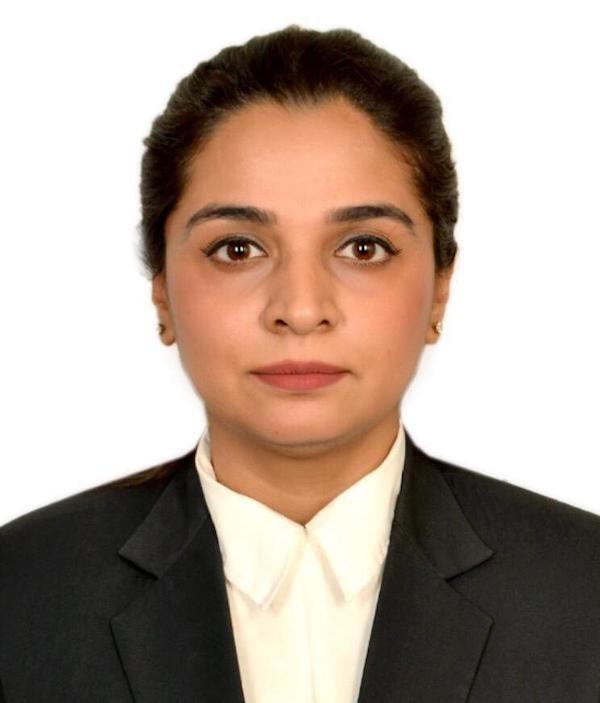
  • Subhradipta Sarkar, Assistant Professor, ITM Law School, on research acumen and being an academician

    Subhradipta Sarkar, Assistant Professor, ITM Law School, on research acumen and being an academician

    Subhradipta Sarkar graduated from Calcutta University with a BA LL.B degree in 2003. He then specialised in Human Rights Law while pursuing his Masters at National Law School of India University, Bangalore. His internships include the National Human Rights Commission as well as the United Nations High Commissioner for Refugees. Before becoming an academician, he worked as a Law Research Officer at People’s Watch, a human rights NGO where he worked for around two and a half years. He also had the opportunity to work as a Lecturer at BILS and as Assistant Professor at MATS Law School.He is currently teaching at ITM Law School, while pursuing a Ph.D from NLSIU on Crisis/Emergency/Disaster Management.

    In this interview he talks about:

    • Specializing in Disaster Management and Human Rights
    • Working at People’s Watch
    • Being a teacher and academician


    Tell us a bit about your childhood and pre-college life as well as educational background.

    I hail from Balurghat, a small town in West Bengal. I am the only child of my parents. Incidentally, my father is a lawyer who has a long experience of practice in the District Court. My mother was a strict disciplinarian and was very concerned about my studies and future. And today whatever I have achieved, I owe a great deal to my mother’s sacrifice and tenacity during my school days. I went to a Bengali medium Government High School. During my school days, my reasonably decent academic achievements might have prompted my mother to dream of me becoming a doctor. To be honest, coming from a small town with no concept of career counselling I am not sure whether I was geared up for a career as a doctor. However peer pressure and family pressure compelled me to go ahead. Fortunately and expectedly, I failed to clear the medical entrance exams. Otherwise I could have never gotten the opportunity to study law.


    How did your interest gravitate towards law?

    I never found interest in the core science subjects even though I continued to score marks. I was more interested in debates and reading newspapers/magazines for enhancing general knowledge. I always wanted to utilise my interest in pursuing my studies. Of course, I never got encouragement from home in pursuing law despite coming from a lawyer’s background. I remember when I first expressed my wish to become a lawyer, my mother started crying. My intuition told me that I would enjoy this course and I went ahead on my chosen path. Since then, I have never regretted for that decision.


    Having graduated from Calcutta University and pursuing LL.M from NLSIU what were your areas of interest? How did you go about developing expertise and knowledge in these areas?

    My graduation from Calcutta University is B.A.LL.B. without any specialisation. However, I found interest in IPR and Corporate Law. After clearing NLSIU Entrance Exam for LL.M., I got myself registered as a Corporate Law student. While doing a book review as an assignment in Research Methodology in the first semester, accidently, I picked up Neera Burra’s book Born to Work: Child Labour in India and that changed my interest and vision altogether. This book prompted me to read more books on Human Rights. My interest in Corporate Law diminished and I wrote to the PG Council to change my specialisation to Human Rights Law. Subsequently, I went on to have invaluable experiences interning at National Human Rights Commission and United Nations High Commissioner for Refugees. Particularly, the UNHCR internship provided me with practical exposure to deal with human rights issues including interviewing Afghan refugees through interpreters. This was something I have always treasured. In fact, my LL.M. dissertation is on refugee law.


    Before becoming an academician, you worked as a Law Research Officer at People’s Watch, a Human Right NGO. How was the experience?

    Excellent. Working at People’s Watch gave me an edge which many of my counter parts in academics never got. While doing my LL.M., I wanted to work with UN agencies and for that I wanted to start in the real world with Human Rights NGOs. Professor Vijayakumar recommended me to People’s Watch. Hence, it was kind of campus placement for me. I ended up in Madurai. I was extremely fortunate to work under the guidance of Mr. Henri Tiphagne, who is the Executive Director of the organisation. He is an extremely good strategist, with superlative oratory and writing skills and one who knows the law very well. I am thankful to him for shaping my early career. I had the opportunity to work with some socio-legal issues like the STF (constituted to nab Veerappan) violence, caste atrocities, custodial violence, post tsunami relief and rehabilitation, etc. Had I not gone for that job, I would never have the opportunity to witness the actually working of law in the real world.


    subhradipta-sarkar-2

    How did you decide to go into academics?

    After working for a couple of years with People’s Watch, a few things were bothering me as I was increasingly getting annoyed at the donor driven agendas of NGOs. Secondly, eulogising hardcore criminals and advocating for their protection of human rights were somewhere pricking my conscience me as I believed that it was a partial view of the entire truth. Furthermore, I was also not visualising long term growth in my career by confining myself to Madurai as I neither had roots nor knew the local language. I was getting suffocated by work with predetermined agendas and wanted to express myself more freely and independently. Those things prompted me to leav Madurai and migrating to Bangalore to join academics. Additionally, I always felt that many teachers cared little for our issues/problems from our perspective rather they imposed theirs on us. They did not travel an extra mile in making studying law easier. I wanted to change this attitude and that is only possible if I take up teaching.


    What do you like best about teaching at ITM Law School? Which subject(s) do you teach? Which one interests you the most? Why?

    ITM is a very professional organisation. There is always a pressure to achieve more as they always push you to go further in enhancing your academic capabilities. There is academic freedom with accountability. I teach Law of Torts and Jurisprudence. This semester I am offering a course, namely, Disasters, Development and Human Rights, to LL.M. I like teaching Jurisprudence.

    This is a subject which law students generally hate and I like the challenge to make an all out effort to make them love the subject. I feel that if one can understand the fundamentals of law then understanding any kind of law will never be a problem. I am glad that every year I have been successful in influencing a bunch of students to study the issues analytically utilizing legal theories of various jurists. I even started a Facebook group called ‘Jurisprudence for Fun’ where I post many legal news and opinions. I encourage students to comment on them. I also have a Whatsapp group with students where I discuss about many legal problems outside the class hours. They help me to stay connected with them.


    You have authored various papers in many reputed Law journals. What role do publications play in the life of an academician?

    I strongly believe in the saying for academicians: ‘Publish or Perish’. This is more appropriate for law teachers and researchers. Unlike our counterparts in engineering or medicine, we do not have labs or equipments for demonstrating our research skills; and therefore, publication is arguably the best method to demonstrate our novel ideas. One example I may provide from my own experience. In 2006, I published a critique of the Disaster Management Act, 2005 in Economic and Political Weekly. This was well-taken by many and brought recognition to me because at that time very few scholars had researched in this emerging area from legal point of view. The article was even cited by the 2nd Administrative Reforms Commission in its report on ‘Crisis Management’. It enhanced my interest in the area too. Subsequently, I was asked to do a book review and write monographs in disaster management. I did my M.Phil. in the area and now I am also pursuing my Ph.D.


    What, in your view, are the few most important skills that law students should strive to acquire in order to write research papers effectively?

    Good oratory and writing skills are sine qua non for a good law student. When you write you tend to think logically in an organized manner and endeavour to make others understand and appreciate your contribution. Keep those things in mind when you write a research paper. You can write in any area of law you have interest. Just don’t write for the sake of writing or to add a line in your CV. The reason is that if you have interest in an area, you tend to undertake elaborate literature review to find the missing links to contribute. Then focus on one problem in the area and go ahead with the same. That’s the way you develop expertise. I have come across academicians who write in numerous areas – from space law to land law. They add up to their publication number list but I don’t find them in contributing meaningfully in any area and they are not considered as ‘experts’ in any of them. So limit your areas of research and expertise because that is actually feasible for most of us.


    In the meantime, you managed to pursue Master of Philosophy in Crisis/Emergency/Disaster Management from NLSIU. When did you realise the importance of an M.Phil. in your professional profile?

    M.Phil. happened to me by accident. I was involved in various field researches in post-tsunami context. At the same time, law and policy regime in India regarding disaster management was in its nascent stages. So, Prof. Vijayakumar of NLSIU advised me to put down all the work I was doing in form of academic work. I went on to comply with his advice. M.Phil. helped me in numerous ways. Besides adding an academic degree, while undertaking the research, I read significantly about various aspects which certainly enhanced my knowledge. It also laid the foundation and encouragement for further research including my Ph.D.


    At present, along with teaching at ITM Law School, you are a Doctoral Candidate at NLSIU. What made you pursue a Ph.D.?

    Most importantly, Ph.D. is essential for promotion in academics as per UGC norms. There is also a demand for good law teachers with Ph.D. Besides career advancement, I wish to make a genuine contribution in disaster management – an area in which I have developed keen interest. Moreover, there is no book available in India from the law and policy perspective. I aspire to become one of the earliest and meaningful contributors in this regard.


    What is your topic of research for Ph.D.? What was your motivation behind the selection of that topic?

    Natural disaster management and implication of international law. As already explained, I have worked in coastal areas of Tamil Nadu after the Tsunami of 2004, wrote research articles and monographs on this issue, and pursued my M.Phil. in this area, so it became an obvious choice.


    How do you manage your research for Ph.D. with your work?

    It was a bit difficult and stressful. I try to utilize the time after a day’s work. Working for few hours every day is helpful. I have certain plans to do some empirical research during the holidays of the university.


    Describe an outstanding teacher. What do you think makes this educator outstanding?

    The most important quality of an outstanding teacher is command over the subject. Essential qualities includes excellent oratory skills, ability to explain very difficult concepts in a lucid manner, approachable, good understanding of students’ psychology, and fiercely impartial in judging students’ affairs. He must be an inspiration for the students to follow in their lives. I have come across few teachers, especially Prof. Vijayakumar, Prof. M K Ramesh (both from NLSIU), Prof. Shanthakumar (my mentor), whom I consider as outstanding. May be each of them did not possess all the qualities that I have mentioned but indeed I learnt a lot of things from them and I have endeavoured to put them in practice in my case.


    Do you think students should behave with the professors like friends, or is it necessary to maintain a disciplined environment to create a good classroom environment?

    Both are important. While friendly relationship is required in facilitating the students in asking questions and clarifying their doubts without any inhibitions, maintaining a disciplined environment is also important. Students have to realize that probably a true teacher is the only person other than their parents who selflessly strive for their successful future. The only thing we look forward to in return is respect.


    What do you think is wrong with public education today?

    Where is public education? Everything has become private. Be it school or college, it has become so expensive that public cannot afford it. Despite being state institutions, even the National Law Universities charge through the roof. I would have expected the State to pump in more money in education so that more and more students from the middle class get an opportunity to get the highest quality of education. Otherwise in a wrong run, we will lose many smart brains only because of enormous educational fees.


    Also do you feel any changes need to be introduced in the current legal education system of our country? What do you, as a law professor feel has scope for improvement?

    More emphasis should be given to the component of clinical legal education in all subjects. Teachers must be given credit hours of teaching for their involvement in such activities and students should be assessed for their part in such activities. As of now, Drafting, Pleading and Conveyance, and Professional Ethics are considered as clinical subjects which essentially become taught courses. Besides, the simulation exercises are included which are not concerned with real cases. Rather, I would prefer students being attached with legal services authorities assisting the courts, consumer forums, government departments, public bodies in dealing with legal problems or even paralegal works in various fields and that would have a social impact. Otherwise, whatever we do in the law schools have no impact outside the boundaries. And if we can formally integrate them in the course curriculum, then it would not be left to few enthusiastic students but the whole student community would be involved.


    Any important things which law school didn’t teach you but ‘teaching’ did?

    Law school helped me to comprehend any legal topic for my own consumption alone but as a teacher, I have to put myself in the shoes of almost all the students including the worst student in the class. Now I have a responsibility for the performance of the entire batch.


    What are your long-term goals? What do you plan to accomplish in the coming five years?

    First of all, I aspire to complete my Ph.D. Then I would prefer to leave academics for a while and go and work in the field for any governmental/non-governmental/UN organizations dealing with disaster management. Subsequently, equipped with considerable practical knowledge, I want to come back to the classes. I guess such amalgamation of theory and practice would make my lecture delivery more meaningful and real.


    What would be your advice for law students who want to take up the profession of teaching?

    Take up teaching only if you have a passion for it. You should be prepared to learn throughout your life and study systematically for that. Well-read teachers are revered the most by the students. No part of the subject which you are going teach can be earmarked as more or less important. Students may ask you anything to quench their thirst of knowledge. Be bold to admit that you don’t have an appropriate explanation for a student’s enquiry. Come out of the class and try to find the answer. Relax, you are not God but a human being after all. Don’t try to trick the students through elusive explanations. They will soon find out the truth and paint a negative picture of yours. Remember, teaching is a unique job where you will primarily be apprised all your life by people who are junior to you in all aspects. You need to be an efficient manager to control a diverse group of students who are in the class for varying reasons. If you fail to manage the class, you will always be a failure despite all the knowledge you may possess. And never hesitate to act in just and fair way, even if it makes you unpopular for time-being, you will always gain in a long run.

  • Ruhi Paul, Associate Professor, NLU Delhi on teaching, academics, research acumen and legal education

    Ruhi Paul, Associate Professor, NLU Delhi on teaching, academics, research acumen and legal education

    Ruhi Paul studied law at Delhi University and graduated in 1999. She practised for four years before choosing to enter the world of academia. She also holds a Master Degree offered by Guru Nanak Dev University and Ph.D. (Mediation law) from NALSAR University of Law, Hyderabad. She has worked as an Assistant Professor at Department of Law, Guru Nanak Dev University, NALSAR and NLU, Delhi. Presently, she teaches Civil Procedure, Law of Limitation and ADR at National Law University, Delhi as an Associate Professor. She was also involved in a training programme on Civil Procedure & Arbitration Laws for Controller Generals of Indian Defence Accounts Services.

    In this interview she talks about:

    • Teaching at National Law University, Delhi
    • Tips on excelling in academics
    • Accessibility and uniformity in NLUs


    How did you decide to opt for the field of law?

    As any other young enthusiastic girl, I wanted to join the field of law to help the masses to get justice. I was very fascinated by the idea that simply studying law is empowering in itself as we get to know of our rights and duties.


    Do you feel that the legal profession has significantly changed from the time when you decided to study law?

    Yes, the legal profession has changed for better. The base of any profession is research and research has become so easy with all the online resources available now. However, sometimes I miss the long periods we used to spend in the libraries.


    You studied law at Delhi University. Which areas of the law fascinated you the most as a law student?

    As a student, I was fascinated by Jurisprudence, Constitutional Law, International Law and Criminal Law. The best strategies according to me was listening very carefully to the lectures in the class, making very good books as base books for the subject and reading the related case laws very minutely.


    Your Ph.D. thesis was on mediation law. Why did you choose mediation law in particular? What factors should a legal academic consider while choosing an area of specialization apart from personal interest?

    I chose mediation as I had developed an interest in Alternative Methods of Dispute Resolution (ADR) well before I decided the topic for my Ph.D. thesis. I was teaching ADR at NALSAR University of Law, Hyderabad and I was fascinated by the idea that some disputes can be resolved in ways other than through courts using amicable methods which have the potential of improving human relations apart from resolving disputes. I also realised that Mediation is one such method which is not being researched and used in India as much it is used and researched upon in foreign Jurisdictions. So I decided to do research in Mediation and how it is being administered in India through courts. My Ph.D. is the first Ph.D. on mediation in India.

    A researcher should consider how his/her research can supplement the knowledge about the topic and how relevant the topic is in the contemporary times.


    You currently work as an Associate Professor of Law at National Law University, Delhi. What prompted you to choose teaching as a career?

    I had a short stint of four years at the Bar before I switched over to academics and pursued higher studies. While I was practising, I felt that I could be more productive if I joined teaching. As in teaching I can help a larger section of society through equipping young students with not only legal acumen but also lots of other life skills like positive thinking, taking responsibilities, team work, sensitivity towards others, leadership qualities, time management, stress management, etc. I feel that these qualities can help a law student to not only become a successful professional but a responsible citizen of India. This can automatically improve not only the Bench and Bar but the entire society.


    Tell us about your teaching methodology. Do you encourage students to take notes or do you engage your students in active class participation?

    I practise an interactive teaching methodology. I do not encourage students to take notes. I want a class which is alive and participative. I never mind my students asking questions. In fact, I feel motivated to teach a class which is fully prepared for the topic beforehand or the students who generally have an inquisitive bent of mind.

    Teaching is something which gives me lot of satisfaction at the end of the day as it is a learning process for me as well. I have to keep myself updated to face the students.


    What subjects are you currently teaching? What are your current research interests? Have you involved your students in your research?

    Currently I am teaching Civil Procedure, Law of Limitation and ADR. My practice at the Bar has really helped me in my teaching of procedural subjects. My current research interest is to delve deeper into the field of mediation. I am planning to write something like Jurisprudence of Procedural Laws to make the learning of procedural subjects interesting for students. Presently, students find it very hard to concentrate in procedural subjects as they try to learn it like any theory subject. I try different interesting ways to teach procedural laws and try to give practical based research projects so that students gets a deeper understanding of procedural laws. Yes, I have involved students in my research and it was a great combined learning experience for all of us.


    Do you think students should treat their professors like friends, or is it necessary to maintain a disciplined environment to create a good classroom environment?

    I think some bit of discipline is always necessary for anything that we do in life. I feel that in the classroom there should be a disciplined environment for a serious learning experience for both the teacher and the taught. Outside the classroom, the Professors should be friendly so that the students can approach them for discussing their study related and other problems. I think that we teachers have a larger role to play in the lives of our students and so we have to playing different roles like that of a strict teacher, parent, friend, guide, mentor, etc.


    Could you give our young readers certain tips on excelling in academics? As a teacher what tips do you give to your students for proper understanding of a subject?

    As a student, I used to make it a point to listen very carefully to whatever was taught in the classes. I think students should read the law (bare Acts, etc) very minutely to understand what the legislator is trying to say and why a particular law is being made. Reading cases related to the subject is also very helpful in understanding how the law is applied to real life situations. Most importantly, students should be very sensitive to what is happening in their surroundings as the understanding and application of law becomes very simple if one has lots of real life experiences.

    I strongly suggest students not to go for cramming or following any other short cuts just to pass in exams. Students should understand that they have a very important role to play in building up of the future generation and so they should choose wisely what they want to do in life and do it vey sincerely.


    You were involved in the training programme on Civil Procedure & Arbitration Laws for Controller Generals of Indian Defence Accounts Services. What were the most intellectually stimulating aspects of this experience?

    The most stimulating aspects of this experience is the fact that I have to offer sessions to people who most of the times are very senior officials and experts in their field. To offer orientations in Legal subjects, one requires a totally different type of methodology than teaching young law students. I really enjoy the practical application based questions from the trainees. I also like the fact that I need to design the course according to the need of the trainees who might not be having any legal background but who require an understanding of these areas of law in their work field.


    When would you say a legal academician is ready to start writing books? Any time management tip for budding legal academicians?

    Research is very essential for academics and it is a continuous process. I think there is no hard and fast rule as to what the right time is for an academician to start writing a book. Whenever an academician thinks s/he has acquired sufficient understanding of a topic/phenomenon/ process, both practically and theoretically, and his/her research will add something to the already existing literature on the topic, s/he can start writing a book. An academician can also refine his/her research while writing the book and so it is perfectly fine if s/he is digressing from the original research plan.

    We always can find time to do what we really want to do in life so I think there is no problem of finding out time for research or for any other work from our regular schedule. I sincerely believe in the saying, “When there is a will, there is a way”.

    For budding legal academicians, I want to say firstly, that they should enjoy life because life is a gift from God that we get only once. Secondly, when they work/ study/research than also they should do that with the same zeal and enjoyment. Your work will give you respect, authority, fame, livelihood and satisfaction.


    A common perception in the student community is that the curriculum in most NLUs is outdated and does not equip the students with the skills that they need to solve real life problems. What are your thoughts about this perception?

    I, humbly, don’t subscribe to this view. All the law schools follow a very flexible approach to curriculum design. The faculty is given a lot of space to design courses and are encouraged to keep updating the syllabi with the changes in the law. Apart from the basic courses, law schools have clinic courses which help a student to understand ADR mechanisms, drafting of pleadings and conveyancing, application of law in courts/tribunals, etc. Law schools also have extensive internship programs to enable students to have an experience of working with various organisations. In NLU, Delhi, we have library internships for first year students, NGO intersnships for second year students, Trial advocacy for third year students, appellate courts internship for fourth year and fifth year students. Law schools also have research centres which provide a forum for the students to get involved in various research projects, most of which are empirical in nature. In NLU, Delhi, presently, students are involved in the Clinic on death row prisoners, legal aid work, construction workers, gender issues, etc.


    Another concern that is often raised is that the NLUs are beyond the reach of hardworking students who lack the economic resources to study in these prestigious institutions. What steps should be taken foster more equality in the NLUs?

    At NLU, Delhi, we offer scholarships to students who lack economic resources. Sometimes, full fee waiver is also granted, if the circumstances require it. Various legal and other institutions can also have schemes of sponsoring the student’s studies. Initiatives like IDIA are good and should be extended to all institutions.

    The students who lack economic resources can also be allowed to do part time work in the libraries, etc to earn their pocket money while they stay in the law school.


    NLUs in India have often been described as islands of excellence amidst a sea of mediocrity. What steps should be taken to usher in greater uniformity in the quality of legal education in the country?

    I think the law schools and the Law universities and colleges should start working together. By working together, uniformity can be brought in legal education. There can be arrangements for exchange of faculty, certificate courses can be offered to students in law schools on subjects of their choice, law schools can have trainings for teachers in course designing and teaching methodology, etc. NLU, Delhi has Academy for Law Teachers which conducts training and workshops on regular basis. Joint research programs can be initiated.


    Any important things which law school didn’t teach you but ‘teaching’ did?

    Teaching has taught me lot of patience, the ability to see things from a wider perspective and self-control. Teaching has taught me to be a student of law for the rest of my life.


    Lastly, what would be your message to people who want to take up a career in teaching?

    Teaching has always been a very respectable profession. Teaching as a career is highly satisfying. Now a days, even the financial aspect is not a concern if you want to join teaching. It is a field which will help you to learn throughout your life by keeping you involved with bright, young and enthusiastic people. Teaching gives you the power to shape the future generation and with it comes the high responsibility to do this with great care and concern for the values of the society, the nation and the world as a whole.


  • Shouvik Kr. Guha on higher grades, winning gold medals, Lexbioxis and teaching

    Shouvik Kr. Guha on higher grades, winning gold medals, Lexbioxis and teaching

    shouvik-guha-3Shouvik Kumar Guha pursued his B.A.LL.B. and LL.M. from West Bengal National University of Juridical Sciences, Kolkata. He has been associated with IDIA since the days of its inception. He has numerous publications in prestigious journals to his name and has authored few books also. He had always planned to pursue a career in academics since his days in law school. Presently, he is working as an Assistant Professor at WBNUJS.

    In this interview, he talks about:

    Getting high grades and winning gold medals
    Co-founding Lexbiosis, Legal Industry Academia Collaboration
    Opting for teaching


    How would you like to introduce yourself? Tell us a bit about your childhood and pre-college life as well as educational background.

    This is a slightly difficult question to answer. Different people in my life know me in different capacities and there is only a handful, who can claim to know me well enough to vouch for what I am saying here. I have no illusion about myself and I guess what I am above all else, is someone who tries to do as much as he can whenever he can of whatever feels the right thing to do –that’s it.

    I have been fortunate enough to have had as wonderful a childhood as one can hope for. I hail from a rather humble family myself and my family has throughout my life done everything it can to support me in all my pursuits. I am immensely grateful to my teachers too for having played a pivotal role in me turning into the person that I am today. I was never all-devoted towards academics, although the passion for reading had been inculcated within me very early in my life.

    Mathematics and languages were what I used to spend all my studying time on. My primary education, which in my opinion is in many ways the most important one in a person’s life, had taken place in a school of vernacular medium, but of great repute. I later shifted to an English medium school, though I still probably identify myself as a product of the former rather than the latter. I was engaged in scores of extra-curricular activities, ranging from sports (cricket, swimming, athletics, martial arts and so on) to debates and quizzes and I enjoyed every bit of it. I had been inflicted with wanderlust at a very early age and have got many opportunities right from the beginning in my life to indulge in that love, all across the country and beyond, on one pretext or another.


    How did your interest gravitate towards law?

    Well, I had often been told that my love for reading and writing and penchant for reasoned arguments might make life easier for me if I opted for this line of work. However, it was more of chance that had brought me down this path. I was studying Economics in the Presidency College, when I happened to give the entrance examination for NUJS as a sort of dare with absolutely no prior preparation. I did not do very badly by playing to my strengths during those two hours and after a lot of debates and discussion, I thought it might be interesting to give law a chance. Once I started studying it earnestly, law was quick to seize my fascination. However, my love for Economics and Mathematics did continue to reflect in my inclination towards financial laws and related disciplines.


    You have done your graduation and post-graduation from WBNUJS. How would you describe your experience as? How does it feel to be an Assistant Professor in the same college from where you graduated?

    I loved my college life with all my being. Still do, as a matter of fact, despite all that have changed since the day I had arrived at this place. It was sort of a Golden Age for NUJS when I had joined back in 2005 as a student rather green behind his ears. From my very first day, I was fortunate enough to be guided and inspired by a superb group of seniors, batchmates and some exceptional teachers. NUJS was undergoing a transformation from my second year onwards, with Prof. M.P. Singh having taken charge as the vice-chancellor. I was therefore lucky to have been taught by many of the experienced teachers from the Menon and Chimni Eras, as well as the younger batch of dynamic faculty members, who had joined during Prof. Singh’s tenure. We lacked a lot of things in terms of infrastructure during the initial years. To access legal databases now deemed commonplace across all NLUs, we had to go across the city to the British Council and American Centre libraries.

    However, there was one thing that had been driven into our minds from the very first semester –our journey had just begun and we had not achieved anything great simply by gaining entry in NUJS. On the contrary, it is what we would do in course of the five years that we spend here, that will define us as law students and subsequently, lawyers fit to join the profession. If there was something almost every NUJS student used to share back then, it was an acute hunger –hunger to be the best at what he or she would do. I take almost inordinate pride in having been a part of this institution from back those days. The sheer level of confidence that an NUJS graduate would have in his or abilities to tackle any possible predicament will always beggar belief –and that is an integral aspect of being a successful legal professional, no matter of which hue.

    My own batch was a maverick one, but insanely cool, yes! We had all sorts, from the studious note-taker, to the happy-go-lucky truant, from the great mooter to the superb debater to the best of sportspersons. Well, if I start reminiscing about them, this interview would be continuing even when the next batch graduates! I have seen a lot of things change since then. We have had our share of ups and downs. The important thing is not to stagnate, but keep going on, preserving the best from the past and tempering it with the curiosity, needs and efforts of the present, so as to forge it into a legacy that would live up to the scrutiny of the future. Through the years, I have come to love this institution and its members as my extended family and I have found that there is no price too high to pay to ensure its continued excellence. That is why I chose to come back from a corporate job to this place.

    While I have always enjoyed challenging research or finding solutions to problems, I only came be love teaching after joining NUJS. Even before my graduation, I had often taught junior batches and when I discovered from the student feedback that I was not doing a total hash of the job and that I am enjoying it a lot too, it was not a matter of if I will come back, but merely when. There is one thing that will always set NUJS apart – its students. If I may be pardoned for mixing metaphors, they have always been the catalyst to shape this institution into what it had been and I consider myself fortunate for being in a position to teach and learn from them in the foreseeable future. Every bit of success that a student achieves, I feel proud for as if it’s been my own, every occasional setback that they face becomes my personal uphill climb. That is what NUJS does –it makes you a part of it and does not let go.


    What do you like best about teaching at NUJS? Which subject(s) do you teach? Which one interests you the most? Why?

    Students, students and students. The life of a teacher, who is keen to do what is best for the students and also advance the university to progressively increasing heights of glory, is not entirely smooth sailing inside NUJS. However, I just forget all the other problems when I am dealing with the students, whether inside or outside the classroom. I think having been on the other side of the podium not too long ago helps me to figure out the problems faced by the students a lot quicker and come up with solutions acceptable to them. Each student has tremendous potential in one form or another. It is part of the teacher’s duty to ensure that he/she lives up to it. No one is happier than me when a student of mine informs me of success achieved by him/her, no one is more concerned when a student confesses about a problem he/she is having. My students are my family and my responsibility, plain and simple, and in several ways, they have taught me more than vice-versa.

    So far, I have tried to offer papers pertaining mostly to financial laws, subjects which are likely to be useful to an NLU graduate intending to etch his/her name in the corporate world. That does not mean I believe that is the only career option available to the students. Just that the number of competent teachers offering similar papers is really less in the legal education sector. Just like most of my batchmates, I too have done my share of griping about such lack and now that I am in a position to do something about it, not doing so would make my earlier actions seem a tad hypocritical.

    I have offered papers like The Law & Practice of Project Finance, International Investment Law, The Principles of Insurance Law, Banking Law & N.I. Act, International Banking Law etc. I would really love the opportunity to offer papers related to Corporate Law and Competition Law sometime, both of which are the subjects closest to my heart. Of the papers I have offered so far, Project Finance would be my foremost choice, since I framed this course out of scratch and offered it in an NLU probably for the first time, seeking to incorporate valuable inputs from industry practitioners about what exactly they would like an NLU intern/graduate to be conversant about when he/she joins their team. So far, the students who have opted for this course have provided considerably favourable feedback – many of them have told me how they have fared well during their internships and been praised because of aspects discussed in these classes. These are really moments that make each and every frustration that one may face in this profession seem worthwhile.  Depending upon the capacity of students to absorb, I would like to increasingly convert my courses to suit industry standards, involving drafting, negotiations, case studies, transactional work etc. – essentially the way high finance usually works in the real world instead of mere theoretical know-how.


    Before joining as an Assistant Prof., you worked as a Research Associate and Guest Lecturer at WBNUJS. How was the experience?

    I have always loved taking up challenges in terms of research and my stint at NUJS has provided a lot of such prospects. From contracts to corporate mergers, from media and entertainment law issues to intellectual property matters, the sheer diversity of research that I have been entrusted with so far vindicates my decision to join academia over and over again. I am and shall always be grateful to Prof. M.P. Singh for giving me this opportunity early on, even though formal rules and practices often require a prior LL.M. degree to join as a Research Associate or Assistant. Prof. Singh, however, has always believed in not letting formalities come in the way of progress and he had allowed me the former position even before I could start with my Masters Programme. The little bit of administrative know-how that I have gained in course of this, including conducting the Common Law Admission Test, 2011 and supervising diploma courses offered at NUJS, has also considerably enriched my experiences.

    When it comes to teaching, I have been doing that since a few years now, first as a Teaching Assistant and then as a Guest Lecturer and finally, as an Assistant Professor. Honestly speaking, the different capacities do not mean anything different for me, apart from perhaps the fact that I can requisition stationaries with impunity now! All I know is that when I take up the responsibility of teaching a subject to my students, I owe it to each and every one of them to give my hundred percent on a 24/7 basis. If there is a shred of doubt left in any of their minds about any aspect of the course after it has been over, then that is my failure as a teacher. The duties of a teacher cannot remain confined within the classroom walls, they will rightly spill over into the students’ lives outside the classes too. I have been taught by some brilliant teachers and I am lucky to have their footsteps to follow in. Discipline without the imposition of irrational rigour, creating an environment wherein different questions and perspectives and free exchange of ideas are positively encouraged, exhorting the students to bring out their best in what they do –these are all that a teacher ought to strive for. Simply put, my students are my life and I would give up everything else over and over again to teach them and learn from them in turn both inside and outside classroom. I strive to be a teacher who makes himself progressively unnecessary and hopefully, one who gives the student something to take home to think about besides homework!


    How did you decide to go into academics? What would be your advice to those law students who wish to go into academia but are instead forced to opt for other fields that are considered more lucrative?

    I never thought I would ever opt for an academic life before I came to NUJS. Once I found out academic and policy-based research, as well as teaching at this level is something I am enjoying and not entirely bad at either, coming back was a foregone conclusion –it was a simply a matter of when. Of course, I chose my alma mater because I am, as I have been rightly accused of from time to time, an “NUJS man through and through!”

    I can completely understand the plight of someone who wants to opt for an academic life, but has been compelled by circumstances, mostly financial, to opt for other fields instead. I myself had been in similar shoes not that long ago. To them I would say, if you are good enough in what you do and have confidence in your abilities, you can earn the living you need pretty easily, irrespective of which career you end up choosing. I myself was burdened with an educational loan, although the burden was fortunately eased to a certain extent by virtue of scholarships. However, I managed to settle that debt quicker than many who were engaged in corporate jobs. Circumstances may prevent you from taking that leap of faith in the very beginning, but if you really would like to be a part of this world, you can perhaps take a small detour, all the while keeping your sight firmly on this place. I will not pretend that it is not a difficult life at times, but I have also found it far more rewarding than any other option I might have chosen in its stead. If you love what you are doing for a living, whether it be the road oft-taken or its more deserted counterpart, it really does make all the difference.


    shouvik-guha-2

    As a law student, you consistently excelled in academics and bagged a Gold Medal in your LL.M. course from WBNUJS. What are the 3 most important tips that you would like to share with law students for consistently excelling in academics?

    Yes, I was sort of dreading this embarrassing moment. I have scrupulously tried avoiding medals of any sort throughout my LL.B. days. Unfortunately, maintaining the resolve turned out to be too much of an effort during my post-graduation phase! See, I have never been the sort of student who would like to prepare for examinations. I never liked them and considered them to be at best unavoidable inconveniences. Even now I do not see many reasons to revise my perspective. I believe there are several more interesting alternatives for gauging a student’s prowess in a discipline. Excellence in academics to me simply means never giving up any opportunity to learn more about the subject that I am studying. If you like reading about a particular subject, then it is your personal decision whether you want to be the best in it. However, as a teacher, I accept nothing less from my students than their complete devotion towards being good in that subject and keep on improving further with the passage of every single day. You do not have to give up everything else in your life; on the contrary, you cannot get so lost among the trees as to be unable to recognize the forest for what it is. Keep calm, prioritize your objectives, manage your time well and never let your sense of propriety or any other sense for that matter, swallow your curiosity –that in essence will mean you can achieve pretty much whatever you want.

    Regarding achievement of success, be it professional or personal, I can give this example. NUJS offers law of torts as a subject in the very first semester of the B.A. LL.B. programme. After the end-semester examinations are over, students are usually anxious about their results, grades etc. This is what I say to them –their official academic training in torts is over. The question is whether they are feeling confident enough to represent a client tomorrow in a tortuous matter and provide him the best legal advice possible, or to teach the next batch law of torts in the semester after next. If the answer is yes, then their grade in law of torts doesn’t really matter. If the answer is no, then also, sadly, their grade in law of torts doesn’t really matter. In other words, if you are good in what you do, then irrespective of everything else, success will always hunt you down; you cannot possibly escape from it!


    You have co-founded Lexbiosis, Legal Industry Academia Collaboration. How did you go about achieving this? What is the overall model of Lexbiosis?

    Actually, Lexbiosis is originally the brainchild of Dr. Shamnad Basheer, who is one of the country’s top experts on Intellectual Property Law and had also been the Ministry of HRD IP Chair Professor at NUJS for several years. I have had the fortune of working with him even before I had graduated and also of having him as one of my mentors. He has always encouraged young law students to engage in meaningful research, reiterating time and again that it is never too early to start.

    We have also found that law firms or companies or practicing advocates or other professionals are always on the lookout for quality legal research and committed, intelligent researchers capable of thinking laterally. Using bright NLU students for this purpose not only helps these students gain invaluable experience and exposure to the real world scenario, but it also helps them to learn several soft skills and professional discipline. These researchers are also graded according to their performance and subsequently, when these firms or companies initiate their recruitment drives, these grades and certificates are made available to them. This provides the recruiter a very good yardstick of judging the capabilities of a potential future employee. The fact that it is also cost-effective to the law firms to get such research done by these students doesn’t harm either! Lexbiosis is, however, a fledging organization, and we hope this model will witness an exponential organic growth in the days to come.


    You have authored various papers in many reputed Law journals. What role do publications play in the life of an academician? What, in your view, are the few most important skills that law students should strive to acquire in order to write research papers effectively?

    Now this is an interesting question. I know of many an academician who treats publications as stepping stones towards glory or merely to score academic points to further their careers. I also know of several who cannot care any less for such factors and simply write about a topic because they feel strongly about it and wish to make their point heard/read. Personally, I feel fortunate to be inclined towards the latter category.

    I do not really think there are any ten commandments for writing a good paper. However, I will try to mention a few things that I have found helpful for myself. First of all, your motive should preferably be not merely to publish in order for enhancing your CV, but because you have a genuine interest in the topic concerned and you would like to express your views on the same. There’s no harm in building CV, but what I am saying is that it should not be the primary objective for writing a paper. Several students have asked me they want to start legal writing and whether I can suggest them a topic to write. I do not really believe that’s how it works! You come across a topic, read about it, get interested, read about it some more, start forming an opinion about it, test your opinion against the existing ones, find pros and cons for both sides and then form your argument and defences against counter-arguments –for me at least, that’s how it has always worked, which is why I ended up writing on a few rather esoteric topics, simply because I was reading something in relation to them and they piqued my interest.

    You also need to read. I mean, a lot! That’s one of the key features to being a good lawyer. And I don’t mean merely law books –read anything and everything that you can lay your hands on! One of the reasons I have chosen academia is because I can still continue pandering to my rather voracious bibliophilic self. Familiarizing yourself with the usual legal research databases helps a lot. Even the ability to do an efficient and expedited internet search is something that can prove to be astonishingly helpful. There are free-to-use websites like SSRN and Academia.edu that contain a treasure-trove of useful research materials. Another important thing is perhaps to remind yourself repeatedly of the needs, as well as the wants of the audience you’re addressing. Different people respond to different forms of writing. The sooner you can figure that out for yourself, the better are your writing skills going to be. The NLU students can get an early edge in terms of academic legal writing because of the projects and assignments that they have to mandatorily write. I remember how several of my early projects had been converted into subsequent papers, once the teachers concerned assured me that reading them had not been a complete waste of their time! Merely reiterating what others have said earlier and embellishing it with ten footnotes per page may seem adequate to get your paper published in some journal, but that sort of thing has never appealed to me. Academic web-blogs are here to stay now and some of their contents, albeit differently posited and presented than, say, a journal article, are not inferior by any means whatsoever. Academic plagiarism is another important issue for consideration, but that is something for another day.


    shouvik-guha

    You have been associated with IDIA from the days of its inception. Please tell us a bit about IDIA and your journey with IDIA.

    The IDIA project is something that is very close to my heart. What can a teacher want more than to ensure that every single deserving person gets the opportunity for a higher education by overcoming all obstacles in his or her path? We, who are part of the IDIA family, do not engage in charity. To say so would be an affront to our scholars. They do not want charity, they simply want to be recognized for what they are and what they can do. When I see an IDIA scholar hailing from the remotest village in the country earning accolades in NLUs and competing with their more privileged fellow batchmates without giving any quarter, the pleasure I derive from that is simply indescribable. I myself have come from a lower-middle-income family and I can identify with most of the problems that our scholars face. That is what makes it seem all the more amazing when they continue displaying courage, tenacity and perseverance in their academic and extra-curricular activities.

    In the short spell of a few years, IDIA has come far and it is also getting increasing support from established legal professionals pledged to its mission. The way student volunteers from NLUs have responded to this movement is without parallel! I do not know of a single other instance wherein students from any professional and hectic course have fought for a worthy cause en mass! Right now, we have more than forty scholars studying across different law schools and almost twenty state chapters and national verticals, all raring to play their own roles in this movement to facilitate inclusiveness and diversity in legal education in India. Several innovative projects are also in the pipeline and we would love every single law student, academic or other professionals to be a part of the IDIA family. For further details on our achievements and activities and how to be a part of IDIA, please refer to our official website (www.idialaw.com).


    What are the main essential qualities of an Academician? What do you think differentiates between lawyers who chose academics from those of other professions?

    Integrity, both towards himself/herself and towards his/her subject, discipline, commitment and an insatiable sense of curiosity. Well, strictly speaking, these are the hallmarks of any successful being and I do not see why an academician would be considered as an exception either. For far too long, legal academics have been treated as left-overs of the profession. When I had shifted to academics myself, a lot of people including even those who were part of this world, were quite surprised at my decision –for in their opinion, this role was for someone without any ambition or other recourse. I strongly disagree. If anything, this role brings along with it a sense of responsibility that many other forms of practice of law may be lacking in.

    Having said that, I truly believe there is little to choose between two people who have devoted themselves towards efficiency and excellence, one a legal academic and the other a legal practitioner, both very much in love with their respective work. Just like there is little to differentiate between two people, who are pursuing the same two careers, but with reluctance and little or no initiative to better themselves, instead allowing their responsibilities to falter and their abilities to stagnate. While sky is the limit for the former, the latter would do themselves and many other people a whole lot of good by bidding their respective professions adieu.


    What would be your advice for law students who want to take up the profession of teaching?

    Not much different from what I would advise their fellow students who intend to pursue other professions –be good in what you like. A teacher has to earn the respect of his/her students just like any other professional has to earn the approval of his/her superiors and colleagues. Students are as intelligent as the teacher and often more so, the latter just has had more time in honing his/her skills and managed to pick up a little bit more experience along the road.

    This does not mean one needs to be all-knowing; simply do your homework with an effort many times than that of the student in doing his own. One must not lose touch with his/her inner student and cross over entirely to the ‘Dark Side’, so to speak! At the same time, one must take care not to get lost within the groves of academe and become agoraphobic with respect to the external world and the industry practices. I try my best to stay in touch with the latest developments in my subject and how it influences the legal dynamic from both theoretical as well as practical perspectives.

    Otherwise, what I say to my students would become with the passage of time a mere fossilized redundancy and would be of no use whatsoever to them. However, all that comes later. As a student, all that you must do is observe, learn, evaluate and file for future use and last but not the least, enjoy these priceless moments that are not going to recur in your life! I consider law students to be (at least for the most part) grown-up individuals, fully capable of making their own decisions in life.

    The key point is making informed decisions. Trying your hand at activities that require public speaking, be it mooting, or debating or simply making presentations, may turn out to be useful for later. You also need to try your best to understand the much-elusive ‘other party’s perspective’. When you enter a classroom full of students, you would have to cater to their individual needs and not take care of a selected sample only.

    As William Ward had said once, “The mediocre teacher tells. The good teacher explains. The superior teacher demonstrates. The great teacher inspires.”

    If you ever start losing the love for learning, well then, run like hell away from this vocation and do not look back, for it is surely not for you anymore! Remember that it is always your choice to be which type of teacher you want to be: the kind that fills the student with so much dry boredom that the latter cannot move, or the kind that just gives the student a little and timely prod that is just right for the latter to jump to the skies.

  • Dr. Panayotis Protopsaltis on expertise in International Investment Law, the legal profession, experience in teaching and interaction with students

    Dr. Panayotis Protopsaltis on expertise in International Investment Law, the legal profession, experience in teaching and interaction with students

    Dr. Panayotis Protopsaltis is a Greek national and he is presently a visiting faculty at the GNLU, Gandhinagar. He is a reputed international scholar having expertise in International Investment, Cross Border Transaction and Dispute Resolution. It has been a great experience meeting him and talking with him at length about the pedagogy of different institutions and universities he has attended.

    Conversing with him has been a great experience and almost a tour through many European Institutes, therefore I took this opportunity to share his insights and experience with our readers.


    First of all, please tell us a bit about yourself. What is your current work profile?

    I studied law at the National and Kapodistirian University of Athens, Greece, at the University of Paris II (Panthéon-Assas) and at the University of Paris I (Panthéon-Sorbonne) from where I hold a doctoral degree in public international law. I have conducted research in the framework of various research centres and delivered lectures at universities in France and in Greece on international investment law. I am also a practicing lawyer, member of the Athens Bar Association. Since the beginning of my career, I was involved in transborder transactions, originally in the introduction of mobile telephony in Greece and subsequently in some major investment projects in Europe and in the Middle East. In the recent years, I have been retained to advise various public and private institutions on international investment law related matters.


    How did you decide to pursue law? In India a lawyer is still looked at with caution and doubt, how is the scenario in Greece?

    [sociallocker] As is the case with many people studying law, when I graduated from school, I did not know exactly what I wanted to do. I graduated in 1987 and information one could obtain at the time was much more limited than information available today. I decided to study law because a law degree offers tremendous opportunities for work in a number of sectors. Civil service or administrative work in international organisations is one solution, career in legal professions, law professor, judge or attorney, is another. I was perhaps also influenced by a number of family friends that had also studied law. When I began my studies I was fascinated by law and tried to improve my knowledge and skills, nothing else mattered.

    I have heard many times and in many countries that lawyers are looked at with caution and doubt. I am also familiar with the various jokes about lawyers. However, so far in my career in Europe I have never experienced caution and doubt. I am therefore not convinced that this assumption is correct.


    From where did you study your undergraduate degree in law? Please tell us about the academic structure of your undergraduate degree.

    I graduated from the National and Kapodistrian University of Athens, the major law school in Greece. Curricula in Greek law schools in the late 1980’s included four years of study and no specialisation. Lectures were delivered to all students, often 250 persons in an amphitheatre, by professors themselves or by their assistants and presence was not compulsory. Professors delivering lectures were rarely asking questions to their audience and vice versa. A free of charge manual was given to every student –usually written by the professor. Of course, there were no moot contests and student exchange programs, some students participated in small working groups and could present their work but this was the exception rather than the rule. Some exams were particularly difficult to pass and students had to sit twice or even more.

    Lectures were delivered in Greek and focused on Greek law but law school libraries have impressive collections of German, French and English books. This is because most professors had studied in Germany (private law), France (public law) and in the UK and the U.S.A. and a number of professors of Greek law schools hold permanent posts also in other European Universities. Greek students were therefore in close contact with European and U.S. bibliography.


    You earned a Masters and Doctorate from University of Paris. How was your experience there?

    I had already completed my vocational training at the Athens Bar Association and I was a full time lawyer in Athens but I was always interested in international law and in research. I therefore decided to enrol at the LLM of international economic law at the University of Paris I, recommended to me by one of my professors. Depending on the subject Germany, France and the UK were the normal destinations for young degree holders wishing to pursue further study.

    I did not know what to expect but found instead the good old continental model but students were now expected to do research on their own and actively participate at lectures. I was admitted for a research degree and so completing a doctoral thesis was ultimate aim. Doctoral research was long and slow, in France students rarely completed their thesis in less the five years and were working as assistants at various universities or managed to obtain posts in international organisations. A limited number of students gained scholarships and I was one of them. Doctoral research was therefore undertaken only by a limited number of passionate students.

    Interestingly enough, the French government at the time gave incentives to students to pursue further studies. This was because France had high unemployment and young people could not be absorbed by the market. Many unemployed chose to pursue further studies. This created a market for academic services, the need for more university professors and a generation of very well educated people.

    I benefited a lot from my stay in France. Along with my work on my doctoral thesis I had the opportunity to meet with some of the most important authorities in international law, participate in research groups and conferences, gain experience in teaching, to be involved in the work of international organisations and to some major international projects. I also benefited from the cultural events, museums and lectures on history and art, so abundant in Paris.


    You speak German, French and Turkish apart from Greek and English. How do languages help in your work and what are the difficulties in learning in a foreign language?

    I learned English and French from a very young age, it was very common -and still is- in Greece to learn two or three foreign languages and master them by the age of 18. I learned German and Turkish later on, as a university student. I made the effort to learn because languages are one of the most useful tools in everyday life and in academic research in Europe. Monolingual academics are usually at a great disadvantage.

    Students should not be afraid of studying abroad in a foreign language. First of all, their presence in the foreign country will allow them to acquire easily the necessary linguistic skills for communication. Then, post-graduate studies will learn all necessary legal terminology but as they have already read law, it will be easy for them to understand the corresponding meaning. Then, they may also seek help from native speakers. Foreigners at the beginning are of course at a disadvantage compared to native speakers but rarely post-graduate students fail solely because of poor linguistic skills.


    Would you recommend your students to pursue Masters and doctorate in continental Europe?

    I think Europe hosts some of the best universities of the world and students have a lot to learn from their presence there. Not only they will benefit from interaction with some of the most renowned academics of the world but they will also see a different way of work and approach to scientific problems.

    Continental universities follow a different system based on students’ responsibility. In that, the university differs from high school, students are given limited guidance, they are required to work on their own. Continental universities still favour theoretical analysis over practice and studies are not job-oriented, this is the essence of European academia. A drawback is perhaps that inter-disciplinary studies are not so common.


    What attracted you to research in international investment law?

    Originally, I took special interest in the problems of regulation of the Multinational Enterprises but I soon moved to examine the problems of international investment law. This shift in interest war normal since the two problems are inter-related. I was also lucky to have two mentors, Prof. Patrick Juillard and the late Prof. ArgyriosFatouros, both authorities in international investment law, who encouraged me to explore international investment law questions.


    panayotis-protopsaltis-2

    How has your experience in India and GNLU been so far?

    I came to India for a short visit two years ago, liked the country and wished to learn more about its institutions and its people. The invitation at the GNLU was a formidable opportunity for me to see Indian academia and meet with Indian academics and students. I delivered two courses, on the law of multinational enterprises and on international investment law and I am very happy with the interest that my audience takes on the topics.


    Students may be indifferent or disinterested in the subject being taught. How do you deal with these and revive interaction among students?

    Your question assumes that professor has to do something for indifferent or disinterested students. Well, I am afraid this is not the case. First, because there are always indifferent or disinterested students at class. Second, because, assuming that students have chosen to study law, they should be interested in the subjects being taught. Third, because students’ duty to learn does not depend on professors’ performance. Students cannot use professor’s poor performance as an excuse for not learning. There are other procedures to sanction professor’s poor performance, if there is one.

    I think that the professor should prepare himself to deliver a lecture and that the lecture is in some respects like a theatre play, the professor being the actor, the students being the audience. Some jokes and stories may help to attract students’ attention, participation of students at the lectures also but the professor must never turn lectures into a discussion forum. Academic conferences and research groups offer many opportunities to students to interact and express their opinion. I also believe that some professors are more inspiring than others but, alas, there is no objective criterion for that. I finally think that we all have to suffer from boring speeches or speakers if we are to learn how to make our lectures interesting.

    As I have already said, students have a duty to themselves, to their parents and to the academic community to learn. Students who are disinterested have again a duty to themselves, to their parents and to the academic community to explain why and in case they realise are generally disinterested in the topic of their study or in studies in general, to have the courage to change the topic or quit studies altogether, immediately. Otherwise, they will spend many unhappy years and will perform poorly at the university. In addition, they will spend valuable resources, their personal time, the money of their parents, the facilities of the university, the time of their professors that could be used more productively elsewhere.


    What would be your advice to students on performing well in academics?

    Performing well at university requires understanding the system of academic study. Method of reading, exercise in legal writing and interaction with other students and professors in the academic community are very important. Now some students obtain better marks than others. This may be due to a number of factors, insufficient preparation, failure to understand, failure to express themselves, to name just a few. Students have to learn from their errors and correct them. Yet, the key to success is, I think, genuine interest. Genuinely interested students are always very successful at university because they do a further effort for the sake of learning and adopt this inquisitive approach to problems which is a prerequisite for academic excellence.

     [/sociallocker]

  • Manveen Singh, Research Associate, JGLS, on pursuing a PhD in Patents, and a career in academia

    Manveen Singh, Research Associate, JGLS, on pursuing a PhD in Patents, and a career in academia

    Manveen Singh graduated from UILS, Panjab University, Chandigarh, in 2012. He then went on to pursue his Masters from UCL in Intellectual Property Law. He is currently working as a Research Associate at Jindal Global Law School, Sonepat . He enjoys teaching and plans to pursue a PhD in Patent Law (Intellectual Property) this fall.With six international participations, nine internships, five research papers, one book chapter, sixteen national conferences, he was an extremely hard working, consistent and brilliant law student.

    In this interview we speak to him about:

    • Studying abroad
    • The legal education regime in India
    • Pursuing a future in academia

    Tell us something about yourself.

    Well, I am someone who is very honest, emotional and passionate about everything I do. I am a firm believer of destiny and I also believe that if you have your heart set out on achieving something there is absolutely nothing that can hold you back.
    What truly unwinds me is football. Manchester United is well, the love of my life. Besides that I love travelling, reading and listening to music. One thing that has always given me peace is photography.


    When and how did you decide to pursue law?

    Before joining law, I was basically a science student. However, my shifting from science stream to humanities was purely co-incidental with my father’s taking up a prestigious assignment as the founder Vice-Chancellor of one of the reputed National Law Schools of the country. Though my father never wanted me to study directly under his supervision and stewardship, lest it could affect my independence and academic blossoming, his constant hammerings for my understanding of the basic concepts of law and for an in-depth study and critical analysis of some of the legal doctrines nevertheless inculcated in me the strong and never ending desire for taking up legal studies as a means to embrace the ever challenging and exciting career in the field of law, the decision that I feel proud of having taken when I sit back and reflect pensively


    Tell us something from your days at UILS!

    I have very fond memories from my time at UILS and Panjab University. My graduation from such a reputed university, rather the best Indian university in the world (as we may call it now, based on the latest rankings) and my five year long and close association with some of the most committed and dedicated teachers showing paternalistic interests in me inculcated in me the never ending quest for more and more knowledge. I was always an active participant in all the legal as well as other academic events that took place at UILS and the University and not to forget, good in studies too.

    Besides that, college life gave me friends, friendships and more that shall stay with me for the rest of my life.


    What made you pursue your LL.M in the UK?

    I always wanted to go abroad for my post-graduation; the only dilemma being whether to go straight after law school or work for a year or two and then go. It was not until I entered into the final year of my undergraduate degree that I made up my mind and applied to all the top universities in the UK. My parents and teachers were unanimous in their advice to the effect of my going in for my masters straightaway.

    For me it was always going to be the UK over the US. Also, my father did his PhD. from the UK so there was always that connection and motivation towards handpicking UK over other countries.
    I applied to a number of UK universities including University College London, King’s College London, London School of Economics, Queen Mary University of London, School of Oriental and African Studies (SOAS) as well as University of Oxford. I got through to all of them with the exception of Oxford. I had my heart set on UCL and as destiny would have it, UCL it was.


    How should one zero in on the law schools? Should consideration be paid to living expenses in that particular place?

    There are multiple factors that you need to take into consideration while zeroing in on the right law school. Ranking, of course plays its part but besides that you have to be sure of the area you wish to specialize in, whether that university offers you that specialization and lastly, the concerned faculty. As far as the living expenses are concerned, when you pick a country there is not too much difference in terms of the living expenses within the different cities. On that front you would rather adhere to the overall profile of a university and then come to the advantages of being in a particular city.


    Tell us about the course structure and specialization of Master of Laws at University College London?

    Well, UCL offers you the chance to specialize in a whole lot of areas of law. I personally, have always been very fascinated by Intellectual Property Laws so one of the reasons behind my choosing UCL for specializing in IPR was the fact that the Faculty of Laws at UCL has arguably the best IP faculty in the UK.


    How diversified was your batch at UCL?

    Well, my batch at UCL was one of the most diverse ones out there. The quest for learning bringing together all these people from different parts of the world to brainstorm and share their ideas and expertise in the various fields.

    Most of them are now back in their own countries plying their trade while some of them stayed back in the UK as they were hired by some of the Magic Circle law firms. Some even made it to the UN.


    Do you think that nowadays, some students do an LL.M because it seems the “right thing to do” and not because they know what they want to study or why they want to?

    Well, to be honest, I don’t really subscribe to that view of it being the “right thing to do” or not. At the end of the day, it’s a matter of choice whether or not one wants to go in for his/her masters. If you’re up for it, just go for it. There’s no looking back.

    I would like to add a quote here, “If you force yourself to go outside, something wonderful always happens”.


    What do most foreign universities look for among candidates?

    Most foreign universities require a well drafted SOP and a couple of LORs besides good grades.


    What is the key ingredient of a well written SOP?

    A well written SOP is one which truly reflects your thoughts and intentions behind pursuing a master’s degree and how it is going to be beneficial for your career interests. You can, of course make it personal but the language must be formal. One thing that is highly appreciated by foreign universities is community work. Surely, that has got to be one of the key ingredients of an SOP.

    An honest tip to those making their SOPs would be to be as honest as possible and not cook up things or achievements. That’s the most common mistake people tend to make which has more chances of landing one in trouble than not.


    Do you think that having your recommendation letters written from distant acquaintances with influential position may backfire against you while making your application?

    Essentially, every foreign university requires two academic LORs, preferably from the professors who have taught you during your undergraduate degree. In addition to that any other LOR is considered as a supplementary document and the role it would tend to play in the success of one’s application is very subjective and depends from university to university. So there is not too much you can do with the standard established protocol.


    How do you think one should go about their chances of securing a scholarship for an LL.M program?

    Securing a scholarship at a foreign university is one of the first and foremost things that every Indian student tends to look at and with the cut-throat competition out there, it has become more of an uphill task in recent times. Good grades coupled with practical internships and community work is the key to securing a scholarship for an LL.M. program.
    UCL has quite a few categories of scholarships available to students all over the world. If we talk about the scholarships for Indian students at UCL, there are two awards; one being the Master of Rolls Scholarship for Commonwealth Students (one award for a student from the commonwealth nations) and the Chief Justice Scholarship. I was a proud recipient of the former for my LL.M. studies at UCL.


    What are the criteria for an LL.M graduate to enter the teaching profession in India?

    The minimum basic requirement for entering into academia is a master’s degree. Most of the universities require you to be NET qualified while at the same time there are some that allow you clear it while in service.


    How are you going ahead with the PhD application procedures?

    Yes, I wish to start off with my Ph.D. as soon as possible and shall put forward my candidature at various universities as soon as the applications open this fall.


    Describe your teaching style.

    I would say it comes to me naturally since it runs in the genes. My father is an academician and so was my grandmother. Now that I look back and try to find the inspiration behind my joining academia, I would have to give a major chunk of the credit to my friends since I taught a few of them during my university days and they would always encourage me by  telling me how good I was at it.
    One thing I still can’t forget is the fact that I taught a friend of mine and he outscored me in one of the semesters. I think that did it for me.

    Well, I am someone who tries to give his 100% in every lecture while at the same time try to get the best out of the students. Not every student is the same so my endeavor always is to reach out to every student and make them comfortable with the subject that I’m teaching.

    I try to use as much of practical and real life examples as possible besides the conventional theoretical methodology in order to make every lecture as interesting as possible. Although I give my students PowerPoint slides for every lecture but while teaching I want them to listen to what is being taught for I think that is the only way for them to master the concepts.


    What do you like best about teaching at JGLS?

    There are a couple of things that I like about JGLS. Firstly, I feel that the academic freedom you possess as a teacher and more so as a young faculty member is something that is very important. JGLS gives you that freedom and so much so that the only way you can repay it is by doing full justice to your job. That is something I cherish day in and day out.

    Secondly, it’s the students. They just get the best out of you as a teacher. Every day is like a new challenge for me. There are so many things that you as a layman would not be inspired to read or write on but the ideas that flow from classroom teaching are unparalleled. If the students are smart and intellectual, it will inevitably push you to give your best as a teacher and I think that is one thing I like the most about the students at JGLS. The sense of satisfaction that you derive out of standing in front of 60 students and delivering a good lecture is absolutely priceless

    I have been teaching for close to ten months now; all of those at JGLS.


    Which subject(s) do you teach?

    I have only taught a couple of subjects as yet; Labour Law being one of them. I am mostly interested in commercial and criminal law subjects. The one subject that interests me the most is of course, Intellectual Property Law (IPR) since that is the only subject that keeps me connected with science while at the same time being a commercial law subject. I shall be teaching Law of Evidence next semester and I am already looking forward to it.


    After your experience abroad, why do you think LL.M in India is a little less sought after?

    I think it flows from the fact that the two systems are quite different. Firstly, the biggest reason for students preferring to go abroad for LL.M. was in India being a 2-year degree. Secondly, the overall structure, the breaking down of the modules, the style of teaching and the tutorial system are so different from that in India that it is quite difficult to compare the two.


    Do you think legal education in the country needs an overhaul?

    I don’t think there are any drastic changes that need to be made in the existing system but something that can surely be done is to change the conventional orthodox system of legal education and adopt a more practical approach or rather strike a fine balance between the two and enable the students in competing with their contemporaries from around the world.

    Do you opine that law schools have become largely expensive?

    Yes, I do think some of the new law schools are relatively expensive as compared to the traditional universities but at the same time, I strongly believe that the kind of exposure and the opportunities that one would get at some of these privately funded or national law schools is incomparable to that being offered by the traditional universities.


    What would be your message to our readers?

    For those of you who are really keen to pursue an LL.M from abroad, remember what I earlier wrote: ‘If you force yourself to go outside, something wonderful will always happen.’ It’s a new and different exposure to behold. I wish all the very best to others in their endeavours.