Tag: Technology law

  • “Be curious; Curiosity doesn’t always kill the cat. It drives you to explore, learn, and innovate, making you a more effective and impactful legal professional” – Senjuti Mallick, Space Law Specialist, Sr. Legal & Compliance Officer, COMSPOC Corp., USA

    “Be curious; Curiosity doesn’t always kill the cat. It drives you to explore, learn, and innovate, making you a more effective and impactful legal professional” – Senjuti Mallick, Space Law Specialist, Sr. Legal & Compliance Officer, COMSPOC Corp., USA

    This interview has been published by Namrata Singh and The SuperLawyer Team
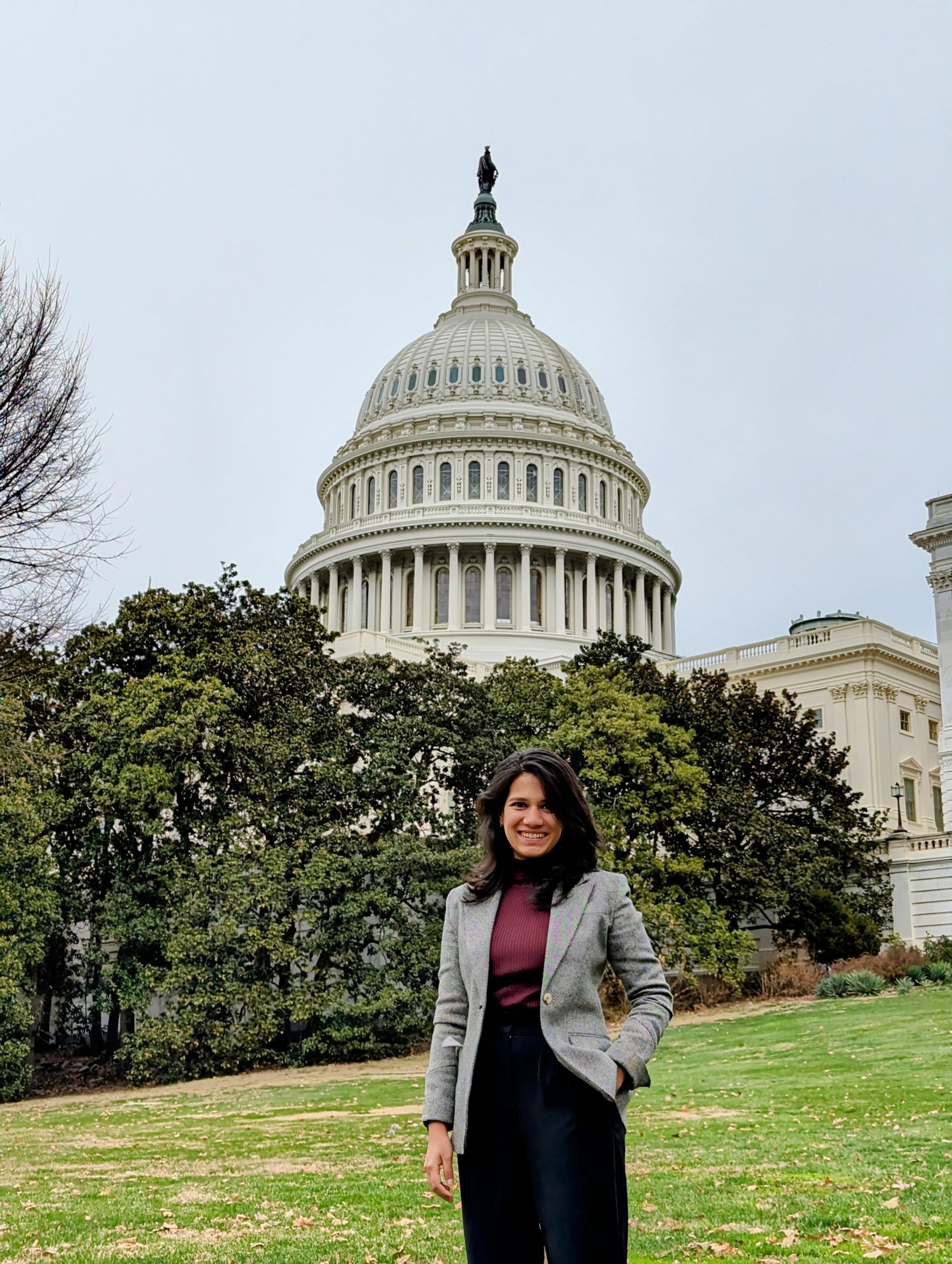
    Senjuti, your journey from ILS Law College in Pune to being a Space Law Specialist is truly fascinating. Could you share a bit about what sparked your interest in space law, and how you found your way into such a unique field?

    My fascination with space law began with a childlike curiosity about the galaxy and a passion for legal intricacies. This unique intersection of cosmic wonder and legal frameworks set me on a path that would ultimately shape my career in a remarkable way. Early on, I embarked on a series of independent research projects focused on various aspects of space law. What made these endeavors particularly intriguing was the dearth of readily available reference material at the time. I soon realized that this field wasn’t merely a collection of regulations governing celestial bodies light-years away. It was, in fact, a gateway to a profound understanding of how we, as a species, interact with our universe. Fueled by this passion, I followed a trajectory of continuous learning through education and specialized training, which eventually opened doors to opportunities where I could translate my knowledge into real-world applications.

    You’ve been recognized as a ‘Next-Gen Space Sustainability Leader’ by the Secure World Foundation and have been on several high-level panels as a subject matter expert. How does it feel to be acknowledged for your contributions, and what advice would you give to aspiring professionals looking to make an impact in the field of space sustainability?

    Being recognized as a next-gen leader and having the privilege of contributing at numerous high-level panels has been an incredibly gratifying and humbling experience. It’s a testament to the collective efforts of individuals and organizations dedicated to preserving the long-term sustainability of outer space, and I’m truly honored to be a part of this community. The recognition serves as a constant reminder of the importance of my work in ensuring the responsible use of space for future generations. As the space industry continues to expand, it is exciting to play a role in shaping the legal frameworks that ensure responsible and sustainable activities in outer space, marking a transformative era for space exploration.

    My humble advice to aspiring professionals in this field would be – stay informed, stay inquisitive, stay connected. Space sustainability is a complex, interdisciplinary arena; seeking diverse perspectives, collaborating across disciplines, and always considering the long-term implications of any space-related actions would be paramount. It’s a field that requires innovative thinking and a commitment to preserving the outer space environment for future generations, so look beyond the conventional and be adaptable.

    Apart from law, you’ve delved into teaching and programming roles at The Fletcher School, Harvard Law School, Space Generation Advisory Council (SGAC) and International Institute of Space Law (IISL). How have these experiences outside traditional legal roles influenced your approach to your profession? 

    Venturing beyond traditional legal roles into teaching and program management at prestigious institutions like The Fletcher School and Harvard Law School, as well as engaging with dynamic organizations like the SGAC and the IISL, has been a journey of immense growth.

    Teaching not only deepens one’s understanding of the law but breaking down complex legal concepts enables one to view these concepts through multiple lenses. On the other hand, project management and programming roles require one to look beyond legal issues and consider broader operational and policy implications. These experiences have allowed me to engage with a diverse array of students, academicians, and professionals from different cultural and professional backgrounds and have broadened my worldview. It has bolstered my belief in the value of diverse perspectives in solving complex global challenges, like those we face in space.  

    Lastly, these experiences have underscored the importance of mentorship and community building, which has inspired me to be not just a legal expert, but also a mentor and advocate for the future generation of space law professionals. They have reinforced the idea that being a space law specialist isn’t just about understanding the law; it’s about understanding people, technology, and the ever-evolving dynamics of space exploration and utilization.

    Your publications cover a wide range of topics, from ‘Artemis Accords’ to ‘Space Debris.’ If you had to pick one issue in space law that you believe deserves more attention or public awareness, what would it be, and why?

    Among the myriad issues in space law, the one I believe urgently warrants greater attention and public awareness is the management and regulation of space traffic. Space traffic management (STM) encompasses how we navigate, operate, and manage the increasing number of satellites and other space objects orbiting the Earth. With the burgeoning growth in satellite launches, the Earth’s orbits are becoming increasingly congested. This congestion poses risks of collisions, which can add significant amounts to the already existing millions of pieces of space debris, further leading to the Kessler Syndrome – a cascading collision chain reaction leading to increased space debris. This in turn poses a threat to functional satellites and, consequently, to crucial services like GPS, weather forecasting, and global communications that we rely on daily. Public awareness about STM is essential because the consequences of neglecting this issue impact everyone. It’s not just about safeguarding assets in space; it’s about maintaining the integrity of vital services that underpin our modern society. 

    My work at COMSPOC Corporation, a leading provider of Space Situational Awareness (SSA) solutions, has given me firsthand insight into the importance of effective space traffic management. COMSPOC’s cutting-edge technologies contribute to the monitoring and tracking of space objects, enhancing the safety and security of space operations. By seamlessly integrating SSA solutions into the broader STM frameworks, we can not only address the immediate challenges but also promote a sustainable and secure environment for future space endeavors.

    Away from the legal arena, you’re a TEDx Speaker and have been featured on podcasts. Can you share a bit about your experience as a speaker and how you connect your passion for space law with broader audiences?

    One of the most exciting aspects of such engagements is the opportunity to ignite curiosity and passion about a niche field, in people who might never have considered it. I find that storytelling is a powerful tool in this regard. By weaving complex legal concepts with narratives about space exploration, the potential future of humanity in space, or the challenges of managing space traffic, I can make these topics relatable and compelling.

    I also focus on the real-world implications of space law and how space improves life on Earth to drive home the fact that these are not abstract concepts; it’s something that affects everyone’s everyday lives. Additionally, these engagements allow me to dispel common misconceptions about space law. Many people think of it as a futuristic field, but when I talk about current issues like space debris or the legal complexities of lunar exploration, it becomes clear that space law is a dynamic and relevant field today. Ultimately, my goal as a speaker is to bridge the gap between the legal and space communities and the general public. I aim to demystify space law, encouraging more people to learn about, engage with, and contribute to this vital area that holds so much potential for our collective future. 

    Given your unique career, you must have had some unforgettable moments. Could you share one experience that felt truly out of this world, whether it’s related to your work or personal life?

    While there have been many unforgettable moments in my career, one of the experiences that stands out as truly ‘out of this world’ was exploring the depths of ice caves in Alaska. Venturing into the heart of these majestic caves, with their ethereal ice exuding hues of blues and greens, and echoing stillness, felt like stepping onto another planet. It seemed as if time had paused, with rocks and boulders suspended in the icy walls, like comets frozen mid-shower. The temperature, a biting -20℃, only added to the sense of being in a completely different world, one far removed from the familiar. It was a surreal reminder of the beauty and mystery that lie in unexplored spaces, whether on Earth or beyond.

    The other was exploring the Biosphere 2 research facility. This offered a glimpse into what sustainable life-support systems on other planets might look like. This experience was a striking example of the delicate balance we must maintain in our exploration and habitation efforts, both on Earth and in space.

    What other hobbies or interests do you pursue to unwind from your busy professional life?

    Gosh, that’s a tough one. I have too many of those. Trekking, hiking, running, dancing, and star gazing are some of my favorites. 

    If you can give one piece of advice to the coming generation who are just starting their legal career, what would it be, and why?

    Be curious; Curiosity doesn’t always kill the cat. It drives you to explore, learn, and innovate, making you a more effective and impactful legal professional. So, ask that extra question, shake that extra hand, give that extra smile, and go that extra mile. In the same breadth, be ready to listen, and accept that you may not have the right answers and that someone else might be more knowledgeable. 

    Get in touch with Senjuti Mallick-

  • Be true to what you do, even if you know that what you are doing is temporary- Padma Sinha, Group Head-Technology Law at Fox Mandal

    Be true to what you do, even if you know that what you are doing is temporary- Padma Sinha, Group Head-Technology Law at Fox Mandal

    This interview has been published by  Priyanka Karwa and The SuperLawyer Team

    Ma’am, in order to start this conversation, please let us know what motivated you to be in the legal profession? 

    Law is a dynamic story for me. I do not come from a family of lawyers but have always revered the profession as a justice-serving device. Fundamental values such as moral conviction and public good (even if that is an unpopular choice) always triggered me. Legal egalitarianism leading to social equality and defending civil rights always triggered me.

    Let’s say Atticus Finch motivated me to be in the legal profession.

    Kindly share your experience of studying LLM at the Queen Mary-university?

    I did my LLB in India in a very different teaching environment. When I started my LL.M, at Queen Mary, it came as a surprise- I mean, a pleasant surprise. The teaching methodology was absolutely distinct in ways I didn’t know existed- always highly interactive. A whole hour in each class would be spent discussing the topic of the day, exchange ideas peer-to-peer; so more often than not, after classes we all will be hanging out somewhere discussing and debating on the day’s topics.

    QMUL also gave me plethora of opportunities to write & edit magazines, participate in legal clinics, visit the UN in Geneva, attend insightful seminars, participate in election & Brexit campaigns and a huge lot of other things which I will treasure forever.

    I value my degree certificate a lot; But what I value more is the one year that opened my mind incredibly.    

    IT law professionals are rare in sight, so what motivated you to take up this very specific field of law? 

    Advancement in technology is inevitable. The pace at which technology is developing is unparalleled. I feel there is a need to ensure that the pace of advancement matches the legal safeguards. This is a non-traditional area of law which I see is burgeoning as new technologies emerge. I wanted to be a part of this- By understanding the new techs and thereafter being part of history creating the legal armour to protect ourselves from not only current issues on digital space but also much complex technology issues, yet to come, that may have profound impact on almost every aspect of our lives.

    How do you analyse the freedom of speech over the internet and the restrictions placed upon the same?

    Freedom of speech and expression is a guaranteed constitutional right and the fundamental premise of democracy. As it has been said, a democratic society stands fundamentally upon unfettered debate, discussion, and open dialogue, as it acts as the sole “corrective of government action” – that’s the genesis of any discussion on it.

    The digital era suddenly opened floodgates of information easily accessible to a large section of the society. The outreach of voices now transcended physical boundaries. It however brought with it new risks and challenges to democracy. Many authoritarian populism across the world used internet to propagate disinformation and hate speech. Problem is that people now do not only have different opinion, they have different facts. Like various sets of information to choose form and as per their convenience deem such information as ‘fact’ on the basis of which they form opinion. Therefore, deciding whether a particular speech is worthy of protection, or not, is a slippery slope.

    The ‘harm principle’ and the ‘offense principle’ are often designated as the guardians of social harmony. Our Constitution also provides for reasonable restrictions. But the irony however is with the judgement of what may form ‘reasonable’ – that has a changing face and sometimes an infectious ‘over-sensitivity’ syndrome, leading to dissident voices punished and the freedom curbed.

    The current IT Rules amendment on fact-check can be an example. With the power as this amendment provides to the government, the checks & balances provided by the media & civil society would be affected adversely. The answer therefore does not lie in government taking more control to censor unpalatable criticism. That’s dangerous for a democratic, civil society.

    Ma’am, please let us know what keeps you motivated to deliver the best in your field?

    Motivation comes in various ways. Amongst other things, I think working in a law firm gives you a diverse scope. Adding to it, technology law is a very dynamic area where there is always a new advancement that needs a legal explaining to the client. Honestly speaking there are always some areas where you need research, interpretation and brain-storming. This constant need to get answers and communicate so to the satisfaction of your clients- keeps me motivated. I feel very motivated each time I explain something to a client and they sound very convinced.

    What qualities do you think an IT law professional must possess?

    • Updated on trends in technology is a must
    • Understanding the client’s needs (including client’s products/ services)
    • Thereafter, legal risk assessment and managing them
    • Not just for IT law professionals, but generally drafting and communication skills are important.

    We would like to know more about the current role in the TMT legal team of Fox Mandal.

    I work as Group Head in the Technology team. My Role includes providing a wide range of advisory to clients in the technology space on data privacy, data breach and security, drafting, advising and negotiating various technology contracts.

    In order to wrap this conversation up, kindly provide us with the piece of advice you would like to give to all the budding legal professionals.

    • Be true to what you do, even if you know that what you are doing is temporary. Do not be impatient. I feel law is an area of learning for the rest of our lives. So be patient.  
    • Also, learning is a very important thing to do, as a legal professional, not just technology lawyer. It’s important to constantly un-learn and re-learn. Every person you interact with, in the profession, senior-junior-peer is our learning tool.

    Get in touch with Padma Sinha-

  • Gaming and Technology Law as an Emerging Career Option: a Discussion with Rachna Shroff, Gaming Lawyer

    Gaming and Technology Law as an Emerging Career Option: a Discussion with Rachna Shroff, Gaming Lawyer

    This interview has been published by Priyanka Karwa and The SuperLawyer Team

    Was pursuing law planned for you, or did it all happen in a flow? Kindly share with our readers.

    It was a “Flow” for me; because I’ve said this earlier as well, I was not somebody who would choose any other stream, and science was not allowed as my elder sibling was already studying that. At this point of time, my parents didn’t allow me to pursue science, as they believed one in the family was enough to study so hard. Hence my approach was “Ok, Fine, then let’s look for something else!”  I was easy with life.

    I gave my exam, cleared it, and I started studying law. Moreso, when I was studying during my 11th standard, my teachers had also suggested the same and thereafter a friend also proposed the same idea, appears as I was destined to and the rest is history. 

    Which specific advice has helped you come thus far in law? What is that one motivation that keeps you going in life?

    My mother. She never allowed us to give up. She had held the fort for us and always told us to keep moving on because of which no situation ever felt like a failure, all it looked like was challenge to be met. My toughest times in life I have crossed with this one thought of that she has instilled in me strongly to “keep moving”

    Kindly tell us about your current role and responsibilities.

    I was lastly working with an e-gaming company, and currently, I have been freelancing – on the tech law and gaming side which involves contracts, conducting workshops, free webinars I have also been conducting expert sessions on technology law for legal edtech platforms. I’m  also mentoring young lawyers for a career in the field of law.

    Rachna, with all these 12 years of experience, according to you academics and skills, what should be considered by a legal professional in their respective fields?

    I think networking, academics and soft skills, all hold an important place. Any factor missing is a concern. But at the same time, I would like to emphasise that this is age when you’re studying, building your career and you are at your prime, please do not miss the fun! Do not forget to socialize, make those bonds, friends and forge lasting relations. I want to advice to all the young lawyers through your platform and state that social media is fine, but move out in the open and get going.

    We are so lucky, that in this era where you have platforms like LinkedIn and others to network with the professionals anytime, It is so easy to reach out today, so, please go out and network. If you want to land up with internship, find that internship, if you want to start working, start working. If you want to upskill by other courses apart from your academics, do it because all these – are going to benefit you in the long run. Don’t be too choosy, each opportunity will teach you something and I can assure you that it will be useful – I promise! Being too picky sometimes is not a great idea.

     I want to tell you don’t worry. Don’t be anxious or don’t think that you’re left behind. You know, everybody has their own trajectory, their own timeline. Everybody reaches their point at some point of time or the other. Give yourself that time and keep moving! There is not much time to be sad, depressed or feeling rejected.

    I highly recommend soft skills, that’s my secret to success, which is no more a secret. It’s not only about your academic skills; soft skills mean how to interact with people, how to understand the emotional quotient, how to increase your confidence, how to not compare yourself with others, how to understand that you are unique. All these together will find that path for you. It will open all the opportunities that you are looking for.

    Please tell us about this emerging career choice, i.e., Gaming and Technology Laws for law professionals!

    When I started in the gaming industry, I was clueless about the exposure and today I am just grateful for the learnings and growth. I am actually covering a huge part of the technology law from Intellectual Property, Data Privacy, the IT Act, cybercrimes, contracts, litigations,  advisory, training and research. It makes such a great profile which can land you to work with different tech industries not being limited to gaming but also fintech, Edu-tech, pharma, e-commerce and so much more in this tech space. You can work as an in-house counsel, as an associate with law firms and also have the option to you can work as a legal advisor to the government.

    There is a great balance to be in this industry at this point of time which has immense scope. There are numerous start-ups, companies into gaming, and every other day I meet some businessmen seeking advice to start a gaming company. It is a booming sector, jump into it right now as it has all the scope to absorb you.

    Our audience is curious to know the use of trademarks and copyrights in the Gaming industry and other IPR-related agreements that are needed for similar purposes.

    It is one of my most favourite area while dealing with technology laws in gaming side. IP is one of the most important parts in gaming because it is an organisations intangible asset. When a company goes into merger or acquisition, or for funding, whatever a gaming company is looking at, the IP portfolio will speak for it and will do a great deal.

    You need to protect your brand. I think I’ve told this so many times in all expert sessions, that if you are studying gaming or if you are a tech lawyer, you have to parallelly study IP. Without that, it’s somewhere halfway. To all who are interested in Tech law, I emphasize again to study IP laws well.

    Rachna, please also enlighten our audience with insights on the “Data Protection Bill, 2022,” and how it can affect the gaming industry.

    The data will affect the entire technology industry, and not only gaming. Anything that is using technology will have to comply by data privacy laws; all will be bounded. The previous Data Privacy bill has been withdrawn, and then a new draft had been issued. We await to see how it shapes up finally. It’s certainly going to be very challenging for all the operators. The one only good part that has happened through this new draft bill is that localization of the servers has been done away with, which is a big relief for MNC’S and for all the gaming operators.

    Please tell us about your role at the “Art of Living” Foundation.

    I am a faculty with the Art of Living and it is founded by Sri Sri Ravi Shankarji where I facilitate – the Happiness Program, which is the basic level program and the core of the program is Sudarshan Kriya Meditation – a rhythmic breathing pattern and results in your overall well- being. Research by the likes of Yale and Harvard University has shown Sudarshan Kriya Meditation immense effect in relieving stress, improving sleep and with better control over the mind and emotions. It has given me my personality and made the human being I am. 17 years with Art of Living has been a beautiful and joyous ride. Every successful person is a meditator. What are you waiting for?  Meditation should now be a part of one’s lifestyle because it’s no more luxury. It has become a necessity. You should just take the leap. If you want to be successful, you should be meditating.

    What are most of the standard sets of doubts that, while mentoring, you come across?

    I usually come across where, young students asking me about their careers -how they should shape their careers? or if they’re interested in gaming, what should they do next? or how they should make their CV’s? when they should make a switch from the current job they’re doing?

    While speaking to these young minds I have noticed a glaring difference between our generation and them and that is the youth today really wants to move very fast. which is fine but I would suggest that while you are on the chase outside, be patient – inside. Allow things to come to you.

    Most young lawyers think that the corporate world has just contracts and agreements to draft and nothing else; please clarify this.

    It’s a big-time myth. Certainly, contracts are a big part of your profile being an in-house counsel I just spoke of the number of opportunities you have from contracts to litigation, to dealing with cybercrimes, to dealing with research, training and advisory and much more.

    You would get the opportunity to train the highest in the management to the youngest person in the organisation; creating – policies for the hr, advising on the new laws, notifications, guidelines and judgements, strategizing with stakeholders, holding conference with the top senior counsels across the country and also lobby your point of view to governmental agencies

    In-house counsel has a lot to contribute, a lot to learn- It’s a challenging job.

    People think there’s a lot of money on the in-house counsel side and, maybe, the work isn’t that much, but it is the opposite. Money can come in any profession you pursue passionately. But I will tell you that it’s not an easy cakewalk job.

    You will have to work very hard, and do multiple things at the same time. be prepared if you’re thinking of being an in-house counsel. It will take a lot of passion, dynamism and enthusiasm. You should be ready for challenges and ad-hoc situations every now and then.

    Any five best pieces of advice for our young law professionals.

    This is my favourite question. The first piece of advice is you got to move, drop your phone and go and meet people physically.

    Secondly, you’ve got to do some yoga, meditation, running, jogging, exercise, playing, trek-king, whatever you like! have to keep your mental and physical fitness at an all-time high and prioritize it.

    Thirdly, listen to music, read books, which are not only your subject books; read a little. If you do not like it, drop it. Read something which you like.

    Fourthly   have that faith and confidence in yourself. That you will make it. Find a mentor or a Guru, however you would like to call it. Take assistance, listen to their advice.

    And fifthly, don’t lose your smile. Life is too short. You are here to achieve and it will work out.

    Get in touch with Rachna Shroff-

  • In Conversation With- Shweta Sahu, Leader, International Dispute Resolution Practice at Nishith Desai Associates

    In Conversation With- Shweta Sahu, Leader, International Dispute Resolution Practice at Nishith Desai Associates

    This interview has been published by Prabhjot Singh, Priyanka Karwa and The SuperLawyer Team

    Was pursuing law planned for you or it all happened in a flow? Kindly share with our readers.

    I always wanted to do something different. Back in 2010, law was yet to be popular choice. I made a conscious decision to pursue law while most of my batchmates were preparing for IIT-JEE or the AIPMT. I was completely ignorant of the career prospects neither did I have anyone to speak to. The decision was indeed laden with risks, but it was worth it.

    How has been your experience thus far dealing with critical arbitration matters, and how do you address this area to young minds in the legal profession?

    As rightly said, most of the arbitrations that we work on are fact-heavy and high stake. So, there is no scope for any mistake. Significant time goes into understanding the technicalities, strategizing and executing. Each step has to be handled with utmost precision. While the entire process is often strenuous, the challenges are extremely enriching and wholesome.

    There is sufficient scope for arbitration in India and the law is constantly evolving. I also witness a lot of interest for arbitration amongst the younger lawyers and even students. However, familiarity with the basic concepts is often lacking.

    What is your take on the scope of technology-related litigation in India?

    Technology-related litigations are expected to surge in India with the introduction of Metaverse, NFTs, cryptocurrency etc. and changes to technology laws (such as Intermediary Guidelines and Digital Media Ethics Code Rules, 2021).

    We are already experiencing a plethora of issues – ranging from regulatory concerns to privacy/data breach and money-laundering. Further, alleged cases of cyber-attacks, online frauds, impersonation, phishing, online defamation, hate speeches etc. have been on a high.

    Lately we have been hearing there are a lot of challenges for women in litigation, be it late working hours or other issues, how do you deal with them? And what would be the same?

    Challenges have always been there. Of late, the discussions surrounding these challenges have begun, which is a good start. Litigation is often perceived as a “men’s club” and it becomes difficult to pierce the stereotypes.

    In several cases women have been forced to or gaslit into completely giving up litigation or making changes to their careers. Reasons are manifold. In certain cases, the compensation is meagre; thus, women are convinced into giving up litigation and be told – “It’s not worth it”. Late working hours and the frequent need to travel are also common reasons. Till date, there are courts which do not have proper toilets for women.

    The unequal representation is even more prominent in courts in smaller towns and districts. In one of my outstation hearings, I had noticed the entire court complex just had two women on that day – the judge and myself.

    I have consistently made efforts to do everything that is expected of a lawyer – to avoid any possibility of being the less preferred one. Be it travelling or working late or appearing in Court. With the able support of my seniors, several barriers have been broken. But there’s a long way to go.

    What are the practices you implement to follow privacy in different legal matters or transactions and how the young generation should prioritize it further in their own careers?

    Given that I work in a technology-driven law firm, there are advance high security systems in place to take care of privacy concerns within the firm. Even the interns are required to enter into non-disclosure agreements to prevent any situation of privacy breach.

    As lawyers, it is our foremost duty to protect client documents and information from undue disclosure and understand the importance of client-attorney privilege. Young lawyers should be educated of the same. To start with, law schools should emphasise on these aspects as a part of the curriculum (Law of Evidence and/or Professional Ethics).

    Above all, the younger generation must careful of the content they share on LinkedIn or other social media platforms.

    Was there any roadmap that helped you thus far in your journey, or any mentor that supported you from the very beginning, please share how was it for you?

    I have had the privilege of receiving unconditional support from my parents throughout my journey. I have also enjoyed the rare privilege of consistent support and encouragement from my seniors at work. While each one of us has the potential to succeed, it is this kind of support which helps in moving ahead. Further, I strongly believe in being genuine and honest to myself and my work.

    I wouldn’t say it is a perfect world but these factors have helped me survive.

    Could you highlight some of your success habits that enable you to meet your goal?

    Most of my lessons are from my own mistakes. I believe, we learn best from our own mistakes. They make us think and hunt for better solutions. That’s what experience is to me.

    I prioritise a healthy lifestyle. Thus, I plan each day in advance. This includes balancing my professional and personal lives and keeping them separate.

    Lastly, what advice would you give to someone starting out?

    There are certain basics for which there are no substitutes – work hard, think smart and be ethical.

    But there is no generic advice which would be applicable to all freshers out there. The legal profession is generally very demanding, so plan each day well.

    “Experience and live through your own journey and lessons. Do not compare yourself with others but compare yourself with your old self – if you’re a better person and a better lawyer than you were earlier.”

    -Shweta Sahu

    Get in touch with Shweta Sahu-

  • Maitreyi Kannur, Senior Associate at JSA In a Discussion With SuperLawyer on Litigation Management and The Role of Legal Tech In Same

    Maitreyi Kannur, Senior Associate at JSA In a Discussion With SuperLawyer on Litigation Management and The Role of Legal Tech In Same

    This interview has been published by Prabhjot Singh, Priyanka Karwa and The SuperLawyer Team

    Was pursuing law planned or did it all happen by chance?

    It was an informed decision. I have had a fondness towards business because my father was from a business background. At a very young age I understood the need and importance of sound legal advice to run a business. My inclination towards law was initially drawn from the need for good and correct legal advice to run a business successfully. I decided I want to study law thereafter and after that there was no looking back! 

    Please enlighten our audience about the initial struggles in your career and how you managed to overcome them?

    Initial struggles obviously is very individualistic in nature. When I think about the initial struggle I can think of three things (i) being able to cope with the time and effort this profession demands ; (ii) court craft and presentation of matters and (iii) ability to find a place of comfort and fit in culturally in an organisation. 

    My take on point (i) is that while you’re are studying law and on your way to become a lawyer you already know what you are getting into!  If you have interned at the right places and I stress ‘right places’ you already know this profession is very demanding. So you are mentally prepared and I have the the hunger to grow so coping with this came naturally to me and yes, it takes what it takes!


    With respect to point (ii) the only way to deal with it is read your file. Confidence is key to a lawyer’s progress and success. In my experience confidence is self built and it doesn’t matter who and what stage of your profession you are at. To exhibit the confidence in court, one needs to fight the fear and that fear vanishes when one is a master of his/ her file. This has always worked for me as I have been able to avoid surprises in court and during hearings.

    Knowing the file a-z gives you a sense of power in court to present your case better by assisting the court better and representing your client better. Once you have mastered your file the clarity helps you present the matter in a structured manner. 


    Despite the above, there has been a situation when I was asked to present a case before the Hon’ble high court of Karnataka at Banagalore and due to my sheer over preparedness I didn’t know where to start from and my first one minute went in silencebefore court.

    The reading and over night preparation came to my rescue when the judge asked me a question on the matter and I was able to quickly pick up from there and Yes, I was able to obtain a favourable order in the matter. 
    The point being it’s okay to be nervous and it’s okay to fumble in court but a non- negotiable is not preparing for a matter.

    The preparation will come to your rescue at the time of need and it has in my experience. 
    With respect to point (iii) it’s a game of chance. The trial and error theory worked for me. I have worked with 3 organisations so far. I started off my career with a pre placement offer from Dua Associates after an internship. Thereafter, I worked under Senior Advocate Mr Udaya Holla and currently I work at JSA.  

    I had interned at all these places during law school. So I was familiar with the work environment which worked in my favour. 
    Although there is no straight jacket formula! I think the only way to cope with struggle is channelising your mind! Mindset is the key! 

    With experience I realized how to prioritize what are the actual issues and what are non- issues that can be ignored. The other key was acceptance! You can’t change everything and everything is not black and white. When you decide you will put in what it takes you’ll learn to deal with situations and when I say deal with situations I mean priorities your issues. 

    Among all the specialisations, i.e. Insolvency & Bankruptcy, Drafting, Arbitration, Debts Recovery, Criminal related, Company law, etc., which one do you find the most interesting and challenging? 

    I am a commercial litigator. I deal with civil commercial litigation and arbitration. I have always been inclined towards arbitration and commercial matters. For me the most interesting and challenging part of litigation is cross examination whether before an arbitrator or a judge. I had the opportunity to cross examine a witness from Greece in an arbitration and even after days and sleepless nights of preparation I realised the art of understanding a witness and strategising and most importantly re- strategising your cross examination plays a primary role. 

    Needless to mention strategising a case can effectively happen only when you have mastered your file and the facts.
    The effort and time put in a matter will always be useful and that is the most challenging and interesting part of litigation. 

    What all does litigation management include, and do you also use legal tech often? How useful its been for you?


    Litigation Management is key. It could be as basic as file management. A litigator is handicapped without his/ her file before any court/ tribunal. This also means organisation and being organised is very essential for a litigator. 
    For instance – As everyone knows litigation /arbitration files are voluminous generally. Therefore, arranging the file is essential. You have limited face time on each matter while representing your case.

    When the judge asks you a question and you start looking for the documents during that time, you can consider half the battle lost. 
    Presentation of a matter is key! Therefore, behind the scene work is time consuming and very necessary. 
    With respect to usage of technology, we are still on a snail pace as on now. 


    How do you stay up to date on the latest legal developments and apply the same in day to day practice?


    I can’t deny this is a challenge. My senior and my former boss being Mr Udaya Holla always stresses on reading and these days everything is digitalised. He always said don’t finish your matter in court and go home. Please sit and read. If I have to pass a message to someone I’ll pass the same. If we aren’t spending time till 10- 11 pm reading and preparing on matters, we are not going to make it.


    Also there are a lot of blogs which are handy these days leaving witnessing day to day court proceedings. I use Daksha legal, SCC online and live law regularly. Leaving that thankfully JSA has a full fledged knowledge management team who tirelessly work to put together the latest updates which I have access to. 
    Also, as a lawyer, one reading of a particular case/ legislation will help you multiple times. You may read that particular case law or legislation for one particular matter but you will end up filing similar petitions for another client and eventually end up using the same material. If anything you’ll build on existing knowledge. 

    Any roadmaps that were followed by you in this journey Maitreyi? 
    Off course, yes.

    Everyone has heard that there is no substitute to hard work but in addition to that there is no place for wrong attitude in this profession. 
    Always remember, there is always someone who can replace you and there are zillion competent people out there with the hunger to provethemself. Being grateful and keeping the right attitude is key. 
    An organisation will be willing to teach you the law and the skill to work on a matter but will not tolerate a wrong attitude. Focus on the right attitude towards work. 

    What strategies work best in dispute(arbitration/ litigation) matters ? 

    Hard work without deliveryon time will have no meaning. 
    In a span of two weeks, I had 2 situations where the client approached us to obtain urgent restraining/ stay orders respectively. I had to not only draft the petitions over night but also file and obtain favourable orders. Hard work is of no use if you cannot deliver within steep deadlines. Yes! We obtained favourable orders in both the matters. 


    The need and hunger to deliver has always been important to me. It is also important to keep it uncomplicated and simple. Let it be drafting, presenting a matter before court and / or cross examination. Keep it simple and clear. Every unintentional ambiguity will cost you the matter. 

    Nowadays, people don’t have that zeal to pursue a career in litigation, what can be the reason for that apart from job security in corporate?

    Well that’s a choice. I don’t fully agree that people don’t have the zeal for litigation. Litigation jobs are equally secure and satisfying and I am a living example of it. 

    Any 3 advices that you would like to share with our audience


    Advice – 
    (i) Get immune to unrealistic timelines. 
    (ii) Execution and delivery is equally important as behind the scene work. 
    (iii) It will atleast take you a year to understand if you like what you are doing or the place you are working at. Don’t change or quit your job as soon as you face a non work related or a work related issue. 


    Get in touch with Maitreyi Kannur-

