Tag: Technology Lawyer

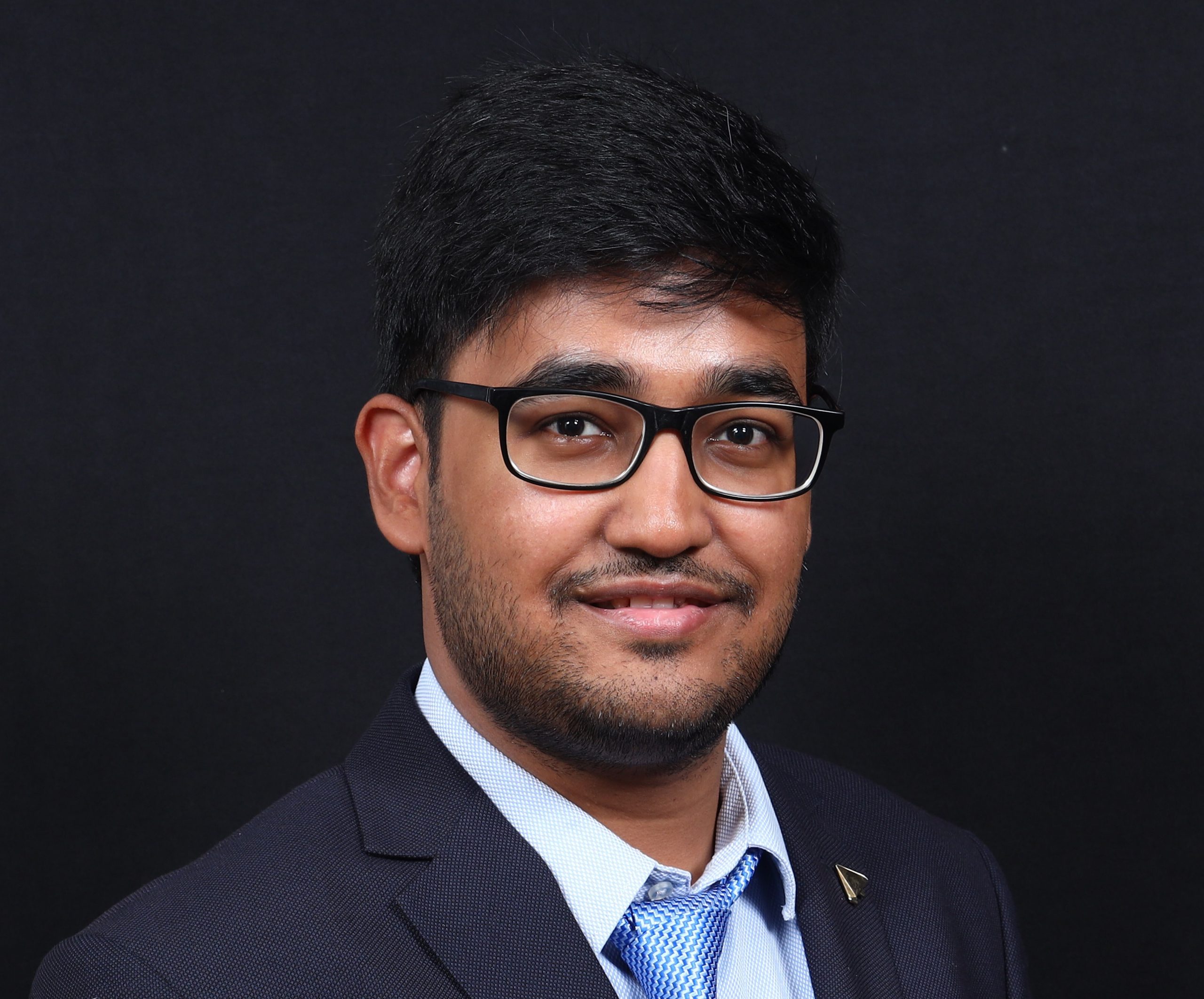
  • “This niche was never planned. It was a series of opportunities seized at the right time and a passionate deep dive into whatever crossed my path.” – Nayona Roy, Commercial, Media, AI and Technology Lawyer.

    “This niche was never planned. It was a series of opportunities seized at the right time and a passionate deep dive into whatever crossed my path.” – Nayona Roy, Commercial, Media, AI and Technology Lawyer.

    This interview has been published by Anshi Mudgal and The SuperLawyer Team

    With over 11 years of experience across commercial law, technology, and AI, what drew you to this unique intersection as your niche? Were there specific moments or projects early on that sparked this direction?

    This niche was never planned. It was a series of opportunities seized at the right time and a passionate deep dive into whatever crossed my path. I have never been one to restrict myself to just scratching the surface. On the contrary, I have always been a business-oriented legal professional. I went down the rabbit hole in any new opportunity, and each one became a moment of evolution. I still can’t say for certain that this is the finishing line. I continue to learn and evolve. In fact, I would take a step further to say that AI itself will not remain a “niche” for too long. It has already started to become mainstream. The world will soon see specialized domains being created within the supposed “niche” of AI. So what part of it I would end up being drawn to is for time to tell. As of now, I am just learning. 

    As for specific moments, there have been many. At the beginning of my career itself, I had a front-row view of the impact of regulatory compliance issues on the overall business and sustenance of a company. I had joined Unilever as an in-house counsel, and my entry coincided with the infamous MSG/ash in instant noodles fiasco, which had hit 3 of the largest FMCG conglomerates in the country. I was posted in UP at the epicenter of it all. While it was an incredible opportunity, the impact on business was palpable. That continued through Covid when I was with Coca-Cola when boilerplate clauses like force majeure became the biggest game-changer for a company, followed by my role in Qyuki coinciding with the TikTok ban, which had shaken the entire creator economy. Qyuki, however, was my first tryst with technology in which my seniors encouraged me to go down the NFT rabbit hole and explore synergies from a legal and business perspective between content and the metaverse. I ended up writing a white paper on it, which was dropped as an NFT at All About Music in a session in which we presented it. As a certification and security mechanism, blockchain is one of the primary drivers of AI. I continued my journey with Qyuki as a consultant while also building a legal technology product powered by AI. From concept to pivot to funding and building the beta version of the product, it was not only a journey down a rabbit hole, but also a massive learning curve for me. But there are darker truths behind the shiny veil of startups, and most startups are not able to make it. So that’s when I considered going back to a job and joined Dentons as a Partner for the AI and technology practice. Yet, a traditional law firm environment is not the right environment for someone who has gained interdisciplinary skills to thrive and grow in. That’s what led to the birth of The AI Lawby. I had already spent enough time in the creator economy and learned to create content. Governance of AI was jumping out as the most pressing issue. While the world kept talking about privacy, I was creating diagrams on a mind map to go to the roots of the product and evaluate it from a multi-lens perspective: Brand building, Compliance, and Technology. 

    From founding a venture-backed legal tech company to shaping AI governance frameworks for global teams, what motivated your shift from traditional legal roles to innovation-driven leadership?

    As I said, it was never by design but always an accident. I grabbed opportunities, thought out of the box, and kept discovering my path as I kept carving it. It’s not over yet. I am always a work in progress, and I would like to be so till my last day. There’s nothing as empowering as discovery and a realization that there is so much more to learn and do. Also, I never liked being placed in a box anyway. Most people believe that an in-house counsel’s role is that of a postman. There could be nothing farther from the truth than that. I chose to become an in-house counsel because that enables you to be entrenched in the business. You are both a lawyer and a client, and you can see the consequences of decisions you take directly on the client’s business. From a bird’s-eye view, it grounds you in reality. So I always used strategy over theory. That was my DNA. So I don’t think I was ever in a traditional legal role. At every stage I have embraced challenges and opportunities at the intersection of law and business. As technology kept invading our lives, the lines of traditional roles kept blurring. I firmly believe that we are in a day and age where interdisciplinary skill sets are the need of the hour while also having a specialization in one field. For instance, in law, I choose to specialize in technology—not just AI, but data privacy, intellectual property, product liability, and so many other aspects of technology—and I would not trade that to dip my fingers into a practice of M&A or banking or ESG, etc. However, at the macro level, beyond law, I am a complete generalist—be it UX, brand building or brand development, content writing, optimizing user journeys and efficiency, strategies in product funnels, etc. So when I work with a client, it is well beyond just legal advice – I am in the trenches with them. 

    You’ve worked closely with creators, artists, and founders to solve cutting-edge legal challenges. Can you share an experience which was the most interesting to you?

    I honestly don’t know where to start—there have been so many. I think the “most” interesting challenge is the one I am solving for and advocating aggressively—AI governance. Most people make the blunder of considering governance as a policy document being created, and the benchmark for them is a privacy policy, which is generally a boilerplate clickwrap agreement. But AI has pushed boundaries in incredible ways, and every use case is a separate one and mandates an extremely curated approach. The type and level of governance is influenced by so many variables—industry/sector, geography, unit economics, whether they are manufacturers or providers or deployers of technology, the specific use case in the industry, and so on. There can never be a one-size-fits-all approach, and unlike most lawyers, I dive extremely deep into product features specifically and entire workflows for every feature. My role does not end with just an assessment of the risk but extends further to providing solutions basis the resources and existing incentive/operational framework of the organization. So each one is honestly a fresh learning altogether for me. 

    You’ve supported businesses with fundraising, IP governance, and workflow automation. What are some of the key legal or ethical blind spots you see in today’s AI adoption and how do you guide clients through them?

    There are two elements to this question. From a pure play compliance point of view, I would say there are three broad issues: data privacy/cybersecurity, intellectual property, and product liability. As I said I not only dive deep into every feature workflow but I interview at least a sample set of the entire value chain of stakeholders (internal and external) and every inquiry, whether for the product or the stakeholder, is curated to the nature of the business. For example, if the client is in fintech, I would explore their ways of protecting customer data as well as an inquiry into the training data set to see if the system can be misused to cull out personal data once deployed. 

    From the ethical blind spots point of view in terms of the consequence of using the tools, I would say that there are issues of bias stemming from the systemic bias of the data set on which the model is trained or even the cognitive bias of the individuals training the system. security is another massive blind spot. And here i dont mean just cyber-security but even the safety of using the product – consider the crashes of autonomous vehicles. So ethical blind spots depend on the nature of the product, the use case, and the industry. 

    You’ve co-authored a first-of-its-kind e-book on art law and worked on complex issues of art estate and provenance. What are some legal challenges unique to the art-tech intersection, and how do you approach them strategically?

    I don’t see any specific challenges unique to the art-tech intersection. The art industry has some unique challenges—provenance, counterfeits, art financing, and royalties from the art estate, such as exclusive merchandise. These problems simply get accelerated with technology and are also countered with technology. For instance, AI has made it easier to detect counterfeits in the market and also create counterfeits seamlessly. Rights management has similarly moved from physical rights of a visual art piece to digital rights management wherein NFTs are created based on the artwork, or prints are sold through e-commerce without a royalty being passed on to the creator and without any licensing arrangement in the first place. So technology has simply added complexity to the existing issues in the art-tech space. However, one issue that personally disturbs me is of Generative AI – take the case of The Next Rembrandt – while it was a scientific experiment to identify how far AI could go, it has paved the way for so many iterations and developments, which I personally believe are unethical for the art ecosystem. The Next Remmbrandt is a new painting completely generated by AI in the style of the legendary artist Rembrandt after training an AI model on the enormous volumes of his original works. Technically, it’s a new piece. But has come into the picture with old pieces having been used as a base. The same thing happened with Ghibli Studio. This is not just personal inspiration. This is a usage of creative intellectual pursuits for commercial gain without a license. Strategy is different for each of these – for instance the Gen-AI problem is very well solved by a licensing arrangement which would propel AI and incentivise artists to continue creating breathtaking work. 

    You’ve held leadership roles in prominent firms and companies. What led you to establish your own independent practice and what were some key experiences from that transition?

    Most importantly, I would clarify that The AI Lawby is not a traditional private legal practice. And that itself is what powered the shift. If I get an opportunity tomorrow to play a part (even temporarily) for a futuristic organization that paves the way for me to leverage my skills appropriately, I would absolutely go for it. The old structures and paradigms are giving way to new ways of working, and progress lies in embracing the new. The present day demands agility, and I would continue to evolve as a multidisciplinary professional. What I offer to my clients through The AI Lawby is not legal practice. It is strategic consultation with an added feather of legal specialisation. 

    You’ve moved seamlessly between domain law firms, media-tech, AI governance, and art law. How has your legal philosophy evolved through these transitions, and what values ground your work at The AI Lawby today?

    The values that ground me are the same ones that I started my career with a decade and some ago: the willingness to be a perpetual student, the one to jump into the trenches with a solution-oriented mindset whenever a problem arises big or small; and resilience to spring back up after every setback. These remain consistent and actually more entrenched with every passing day. 

    With your expertise in legal tech and automation, how do you envision the role of technology transforming legal advisory over the next five years? What advice would you give and what skills should the next generation of lawyers start building now?

    The progress in legal technology is phenomenal but there are limitations inherently to legal tech. I think it’s a futile exercise for legal tech companies to create workflows that provide analyses. That cannot become helpful until we reach significant success in AGI (Artificial general intelligence) and we are far from even an entry into that as of now. However, in terms of document extraction and automating mundane tasks I think legal technology is already revamping the profession. It has multiple implications – TAT for lawyers should come down resulting in the need to focus on volume as the unit revenue from a mandate would be significantly reduced. Further, clients would also come with more awareness and not be at the behest of the lawyer. The change is inevitable. 

    My advice to new lawyers is to start with humility and be on a constant pursuit of new skills and learning. If they don’t develop interdisciplinary skills they will be left behind. However, this works even for those in more advanced stages of their career. The legal profession has always been called “an old boys club” and it’s time for those who continue to remain stringent in their perspectives and models to wake up and smell the coffee. 

    Get in touch with Nayona Roy –

  • “Withstanding pressure, paying close attention to detail, building relationships, staying focussed and the virtue of “giving more than you take”, in the initial years are most important.” – Utsav Mukherjee, Founder of The Law Offices of Utsav Mukherjee.

    “Withstanding pressure, paying close attention to detail, building relationships, staying focussed and the virtue of “giving more than you take”, in the initial years are most important.” – Utsav Mukherjee, Founder of The Law Offices of Utsav Mukherjee.

    This interview has been published by Anshi Mudgal and The SuperLawyer Team

    What motivated you to choose law as your career, and what factors influenced this decision? How did your time in law school further fuel your passion for the field and shape your aspirations moving forward?

    Back when I decided to pursue law, I did not know what exactly my career graph would look like. I just knew that I had some of the characteristics and skills which lawyers require. I was a voracious reader. I was a deep thinker. And I was a good communicator. Writing and speaking well came naturally to me. Law school was an interesting experience. I prioritized building relationships from my early days. Right from my internship days. In fact, some of my good friends and professional connections today are people who I met while interning with different law firms and offices. So my passion for law grew as I interned with different law firms and offices. I enjoy deep research and writing as much as I enjoy public speaking, and therefore, I thoroughly enjoyed my internships, as well as extra curricular activities in law school. My confidence grew further when I represented my university in National Moot Court Competitions, and Model United Nations. 

    In the early stages of your career, as you worked with various lawyers and law firms on landmark cases, what was your experience like? What moments or particular cases helped deepen your understanding of the law and shaped your approach as you were learning the ropes? Is there a particular experience you’d like to share with our readers?

    The early days of my professional journey, working with different chambers and firms, were indeed a grind. In the very beginning, you have to do a lot of grunt work. Yes, you have to understand the nitty gritties of legal procedures and filings. You initially learn to take notes meticulously, manage files, communicate efficiently with senior colleagues, office staff and clients. It’s only after this stage that you start getting more interesting work. I had an advantage in the sense that I worked with very small setups initially, so bigger responsibilities like drafting pleadings, briefing senior counsels and court appearances came to me sooner. In fact, in a little more than a year, I was managing client portfolios and cases myself. One of the chambers that I worked with had an interesting “anchor” system, which meant that every case was assigned to a particular associate, who was the “anchor” on that matter, and was almost entirely responsible for that case. I believe this is the best way for seniors to manage their offices, and younger lawyers to “learn the ropes” quickly. 

    Some of the cases that really broadened my understanding of law, its formation and application were landmark constitutional matters. This included matters like the petition challenging the constitutionality of the “Marital Rape Exception” and the petition seeking recognition of “Same Sex Marriages”. While working on these petitions, I got the opportunity to dive deep into various laws, including the Constitution itself, family laws, criminal laws, civil laws, property laws, public laws, citizenship laws and most importantly interpretation of statutory provisions by courts, and the courts’ take on laws made by the legislature that may otherwise seem to infringe upon fundamental rights, or violate the Constitution. These experiences helped me in handling other civil and commercial matters as well. Later on, when I shifted to Singh & Singh Law Firm LLP, the intellectual property law firm, originally founded by Hon’ble Justice Prathibha M. Singh and the Learned Senior Advocate Mr. Maninder Singh, the base that I had built in civil, commercial and constitutional laws, enabled me to pick up IP practice and its fundamentals rather quickly.  All of this eventually compounded and enabled me to kickstart my own practice in Intellectual Property, Tech, Regulatory & Commercial Laws. 

    At Singh & Singh Law Firm LLP, you worked on a number of significant intellectual property cases, such as those involving counterfeit products and trademark infringement. What challenges did you encounter when dealing with unknown defendants and e-commerce platforms? How did your experience in these cases shape your approach to cases involving intermediary liability and technology laws?

    That’s an interesting question. Acting against unknown defendants, especially counterfeiters, is a real challenge, for both aggrieved companies and the courts. This is because counterfeiters operate in an incredibly stealthy manner. There was one particular case, where we were representing a large pharma company, against unknown counterfeiters, who were listing counterfeits of our clients’ products on Flipkart. We fondly refer to unknown defendants in IP cases as Ashok Kumars, the Indian equivalent of “John Doe”. These Ashok Kumars would use the names and GST numbers of actual businesses, without their consent, to put up listings of counterfeits of our clients’ products. When our client went to the addresses of those businesses, they found out that their names and GST numbers were being misused by nefarious counterfeiters. These counterfeiters operate through a vicious nexus, and it becomes virtually impossible to trace them. So now the question is, what can be done in such cases? 

    When we approached the court, the first defendant in our lawsuit was “Ashok Kumar”. The second was Flipkart itself, and then we impleaded the businesses whose names and GST numbers were being misused. We got an injunction from the court, preventing the unauthorized usage of our client’s trade marks, and uploading of counterfeits on Flipkart. The court directed that whenever our client would inform Flipkart about any counterfeit listings, Flipkart would take down the listings within 24 hours of receiving the information. Further, both our client and Flipkart would file monthly compliance affidavits, with details of the listings reported and taken down. So this order was a step in the right direction, as intermediaries like Flipkart are normally only obligated to take down anything unlawful once they get a court order for each listing. Special orders like the one I’m telling you about are passed when there’s rampant and uncontrolled unlawful activity taking place on a platform, like the counterfeit listings. After this order was passed, we pressed that directions should be issued to Flipkart to take more proactive steps to prevent the listings of counterfeits on its platform, in light of the PUMA judgment. The case is still going on. All this information is available in the court orders available publicly, and articles reporting on them. 

    When handling domain name disputes before WIPO and NIXI, what critical factors should a business consider before pursuing a complaint or defending one? Can you walk us through a recent case you’ve managed in this area?

    There are a couple of factors that need to be seen in such cases. One is regarding registration of the “domain name” as a trade mark. A domain name is also a trade mark. Hence, like other trade mark disputes, the party which has prior adoption and prior registration is at an advantage in such cases. Another factor that is seen is the intent behind the usage. Is it honest? Or is it dishonest usage to come closer to someone else’s brand name, to deceive customers?

    The domain name dispute that I dealt with recently was quite interesting. It was with regard to cyber squatting. Cyber squatting is when someone registers a domain name without any intention of using it. Now why would someone do this? So that they can profit, when someone else who genuinely wants to use that domain name for their website comes forward, and is compelled to buy it from the cyber squatter. So I represented the genuine user against the cyber squatter. And we were able to settle the dispute in favour of our client. We were able to exert significant pressure because of the fact that our client’s trade name, which was the same as this squatter’s registered domain name, was already registered as a trade mark in more than 30 countries. 

    With growing global concerns about privacy, how do you guide clients in the tech and fintech sectors to ensure compliance with GDPR and other data privacy laws? Could you provide an example of a recent case where your team helped a client navigate privacy and regulatory challenges, especially with emerging technologies like blockchain or cryptocurrency?

    Well, we start with the basics. Having a solid privacy policy in place. GDPR compliance is essential. Now that the enforcement of the DPDP Act is also around the corner, we need to make sure that we address that as well. We advise companies to also have privacy compliant agreements with vendors and other stakeholders, to prevent any breaches of sensitive data. We advise them to have responsible data protection officers and effective grievance redressal mechanisms in place that are in compliance with privacy laws. 

    When it comes to Cryptocurrency and Blockchain technology clients, we have advised them extensively on KYC regulations, Anti Money Laundering Regulations and Counter Finance Terrorism Regulations. Since a lot of these exchanges are set up in places like the British Virgin Islands and the Cayman Islands, compliance with the regulations that I’ve mentioned is essential in these jurisdictions. We also tailor their terms and policies accordingly. It really is fascinating. 

    As businesses increasingly operate on an international scale, how do you address cross-border IP and commercial law challenges, particularly for clients in highly regulated sectors like pharmaceuticals or fintech? What strategies do you use to ensure compliance with both Indian and foreign regulations?

    It’s indeed true that businesses are increasingly operating on an international scale. Very recently, a client has approached us for IP filings and enforcement in several countries. One of the best mechanisms that we use for international IP filings is the Madrid Protocol. It allows an applicant to file for trade marks in several countries through a single application. So, one can file for trade marks through this mechanism in all the countries that accept Madrid filings. They just need a registered trade mark in one country as the base application. Although Madrid filing is expensive, it is still much more cost efficient than filing directly at each country’s national IP office, when you’re filing in several countries. Many large product based companies, such as pharmaceutical ones, operate in multiple countries, and such mechanisms are very helpful for them. 

    Although you can file through Madrid in several countries, the applications are eventually forwarded to the national IP offices of each country, where the registries may possibly raise objections, or third parties may file oppositions. To deal with such scenarios, we have a wide network of local IP counsels in several countries. We also utilize this network in case a client wants to file in a country that does not accept Madrid. 

    So that’s just international IP filings. Our network stretches across Asia, the Asia Pacific, Eurasia, Europe, Africa, the Middle East, Latin America and North America. I’ve met many of the fantastic IP counsels and firms in these countries personally, in the course of work and at international IP conferences. As far as contract drafting and advising on compliances for international clients is concerned, we do it ourselves, and rope in our affiliates and international partners across the globe for fine-tuning and on ground requirements. 

    What unique legal challenges do startups face when incorporating companies in India or abroad? How does your firm tailor its legal advisory to meet the specific needs of startups, especially in industries like e-commerce, technology, and fintech?

    Startups, particularly tech startups, have diverse legal needs. One of the key stages where they require counsel is when they’re negotiating contracts with investors. They have to be very careful, not to relinquish control, and having a lawyer carefully draft their contracts and guide them in negotiations is crucial. Of course, having their IP in place is also essential. Many startups actually want us to apply for their IP at the very outset, as it helps them display authenticity and secure investments.  One interesting, recent experience that I had, was drafting the contracts for an ed-tech startup, entering into a collaboration with another education company, to co-brand and offer courses to their customer base jointly. It was interesting as we had to draft the IP related clauses very strategically, to protect the interests of our client, in this co-branding venture. 

    Then, we also help them have appropriate policies in place and contracts, for employees, particularly with regard to confidentiality concerns, remuneration and benefits. If you’re asking me particularly about tech and fintech startups, we also advise them on specific regulations that apply to them, such as RBI regulations, NPCI regulations, the IT Rules, privacy regulations and the like. 

    Given your extensive experience, what advice would you offer to aspiring lawyers and law students who wish to build a rewarding and successful career in law?

    I would say that this line of work requires a lot of patience, persistence, development of a thick hide, and a knack for understanding business as well as you understand the law. Withstanding pressure, paying close attention to detail, building relationships, staying focussed and the virtue of “giving more than you take”, in the initial years are most important. I also developed most of these traits over a passage of time,  and am still growing. So I understand that it’s no cakewalk. One must keep at it. 

    Maintaining a balance between a high-pressure legal career and personal well-being is something many professionals struggle with. How do you manage to keep a healthy work-life balance, ensuring that both your professional commitments and personal life thrive without one overshadowing the other?

    I don’t think this part is as hard as people make it out to be. Legal professionals are busy every day of the week. But as they grow in their careers, they get more control over their time. So it’s for you to make the most of your spare time, and manage your waking hours efficiently. I allot some of my spare time to fun activities that also contribute to my professional growth, such as going to social events, or making episodes for my YouTube Channel, called the “Utsav Mukherjee IP & Tech Law Show”. I also go sightseeing whenever I attend conferences in other cities or countries. I enjoy reading and also watch a nice movie or two over the weekend. 

    Get in touch with Utsav Mukherjee –

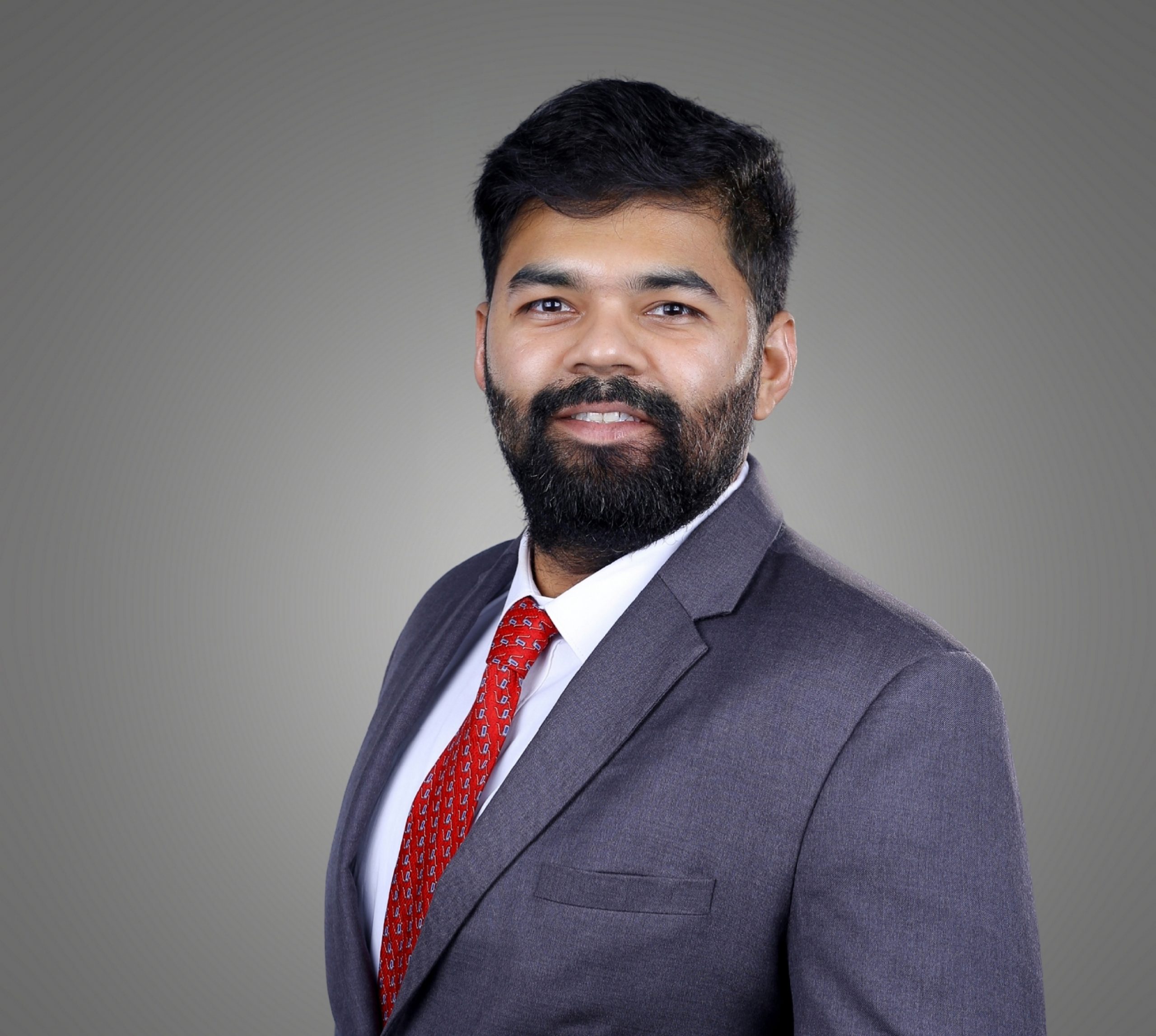
  • “India is at a critical crossroads vis-à-vis intellectual property (IP) as artificial intelligence (AI) and digital technologies reshape global businesses and transactions.” – Anant Prabhuchimulkar, Founding Attorney at Frigg & Snotra.

    “India is at a critical crossroads vis-à-vis intellectual property (IP) as artificial intelligence (AI) and digital technologies reshape global businesses and transactions.” – Anant Prabhuchimulkar, Founding Attorney at Frigg & Snotra.

    This interview has been published by Anshi Mudgal and The SuperLawyer Team

    A legal career can hold different meanings for different people. What inspired you to pursue law as a career, and what was the driving force behind your decision to take this path? How did your journey through law school further ignite your passion for the field and shape your motivations for the future?

    My journey to law began against the backdrop of family tradition pointing elsewhere. Three successive generations of civil engineers in my family (including both my parents), had established a legacy in public service and infrastructure – particularly, water supply,  a cause to which both my father and grandfather had committed a large portion of their lives. While I was tempted to lean into this “flow” state, following them into a set career as an engineer working in infrastructure or environmental sciences, my interests as a student actually leaned towards aerospace engineering and all things space-related. 

    Frankly, it was my grandmother who ultimately inspired my legal path, and acted as a guiding light. It was in the late 1940s that she had graduated with a law degree from Government Law College, Mumbai (then-Bombay) having lost a few years to the Indian freedom movement. She continued to maintain kinships with notable alumni like Soli Sorabjee and Nani Palkhiwala whom she had met in study groups – on occasion she would narrate several anecdotes about them and their time at law college. Soon after graduating however, she chose family life over a demanding legal career – a decision she later expressed regret about before passing in 2024 at age 97. Despite never having practiced law as a member of the Bar, her legal training permeated her daily life. Her sharp wit, articulation and ability to debate confidently at length with eminent personalities and champions of industry left me with profound respect for the legal profession and even fostered a sense of reverence for litigating lawyers. There was something meaningful about pursuing a career she had not been able to follow. 

    Law school quickly dispelled my romantic and innocent notions about legal practice. No number of anecdotes or choice phrases could replace the intellectual rigour and stamina required for law school. Law school demanded a sharpened focus and genuine eagerness to learn, qualities that developed gradually during my studies. What transformed my experience were approachable professors, commercially relevant courses and real-world internships that revealed how legal strategy truly functions in practical application. 

    I became particularly interested in dissecting and analysing business structures and strategies in the form of case studies, similar to investigative journalism. I was taken in, almost jonesing on the access to information that legal training provided me –  corporate filings, audit reports, public disclosures – told compelling stories that captivated me more than fiction. This fascination further accelerated me towards corporate law, built on the fundamental understanding of how legal frameworks shape industries and business strategy. 

    After completing your law degree, you chose to pursue a master’s from Durham University, United Kingdom. Given the number of esteemed institutions offering similar programs, what made Durham stand out as the ideal choice for you? Could you share how your experience there enriched both your academic and professional journey?

    Choosing Durham University for graduate school was an easy decision. As one of the UK’s ancient universities alongside Oxford, Cambridge and St. Andrews – often collectively referred to as “Doxbridge” – Durham offered prestigious academic standing with its #4 UK ranking that year. This was a deciding factor as I was only looking for universities in the UK. Further, having missed application deadlines for Oxbridge, Durham represented excellence within my available options. 

    Another important consideration for me was the collegiate system at Durham that really attracted me – with each college maintaining its distinct history and culture. My acceptance to Castle College, Durham’s founding and oldest college was particularly transformative for me. The “Castleman” culture, shaped by centuries of tradition, encouraged by academic excellence and strong professional camaraderie was an unmatched value addition. Studying within a medieval castle – one that had served as a filming location for Harry Potter was an immersive experience in itself. Formal dinners in historical halls and galleries complete with ceremonial or academic gowns, connected learning to centuries of scholarly tradition. 

    Academically, Durham provided the perfect platform for refining and deepening my skills in commercial law. A key highlight was being taught Mergers & Acquisitions by Shaun Goodman, a Kirkland & Ellis’s London partner – easily one of the sharpest minds I had encountered. His nuanced perspective and practical insight into corporate acquisition strategy, execution modes and financing structures were invaluable. This blend of theoretical depth and real-world commercial application, prepared me for complex high stakes legal transactions that were around the corner for me in law firm life. 

    The Durham experience extended beyond coursework – instilling qualities that continue to shape my professional approach and work ethic: focus on analysis over verbosity or precedent, adaptability in unique situations, collegiality in professional relationships, and a broader sense of purpose and achievement in legal work. These elements remain foundational to my practice today.

    In the early stages of your career, you had the privilege of working with several prestigious law firms, including Cyril Amarchand Mangaldas and Trilegal, as well as co-founding Digi-Smart Technologies. What were the pivotal learning moments during these formative years that not only deepened your understanding of the law but also set you on the path toward excellence in your profession?

    My early years across law firms provided a crucible which forged my practice. At Trilegal, I was immediately thrust into representing a major multinational technology player interested in strategic acquisitions across the Indian tech sector as well as a USD 100 billion+ AUM private equity fund – both deploying approximately USD 8 billion in capital across Indian markets over a spread of deals in distinct sectors within aggressive timelines. This experience, building upon my foundational two years of private equity experience at Desai & Diwanji, revealed that excellence in complex high stakes transactions requires more than technical proficiency; it demands strategic vision that anticipates challenges before they materialize. 

    What proved invaluable to me was navigating these transactions with a lean, efficient, high performing team united by shared principles – rigorous work ethic (read: hard work), unwavering integrity and meticulous attention to detail. It became clear to me that the quality of collaboration often determines transaction success more definitively than individual brilliance. The diversity of perspectives and backgrounds among the exceptional professionals I worked with expanded my own professional toolkit exponentially, teaching me that legal solutions emerge not just from following set precedent but from creative problem solving. Our camaraderie naturally also seeped into our personal lives and I can’t underscore the importance of maintaining strong friendships while working in high stress settings.  

    At Cyril Amarchand Mangaldas, assisting on a private equity buyout of a major education provider across the preschool to K-12 segment while simultaneously handling my first listed acquisition – a control deal in the highly regulated cement sector revealed the multidimensional nature of complex transactions that intersect with governance, policy and public interest. Both these matters inter alia required synchronising national, state, local and international regulatory frameworks while identifying inconsistencies between them. Dissecting legal risks several financial quarters in advance and advising on mitigation strategies and pragmatic solutions and structures. This experience crystalised my understanding that superior deal counsel must operate as regulatory cartographers – mapping jurisdictional and legislative complexities while charting clear paths forward.

    Having worked at prominent law firms, such as Cyril Amarchand Mangaldas and Trilegal, what motivated you to transition into an in-house role with Euronet Worldwide, Inc? How did you perceive the cultural shift between working at a law firm and being part of a corporate in-house team, and how did your responsibilities evolve in this new environment?

    My transition to an in-house role at Euronet was driven by a fundamental desire to participate in business strategy and decision making from inception rather than merely documenting or assisting with decision already made. While law firm practice offered technical depth, I found myself increasingly drawn to the strategic questions that precede formal legal engagement. Having already done a masters’ degree, an MBA seemed excessive and unaffordable and I had often heard inhouse roles being equated to an MBA education.

    The cultural shift from law firm to inhouse was stark and multidimensional. In private practice, client interactions typically begin after commercial parameters are already established – the classic “deal is agreed in principle between principals, now it’s the lawyers job to document it” scenario. At Euronet, I experienced the inverse, legal counsel became integral to opportunity identification, market entry strategy and risk assessment months or even years before external counsel may be engaged or a term sheet even considered. This shift from a reactive to proactive counsel demanded developing “commercial intuition” – the ability to anticipate business or revenue implications beyond legal analysis.

    This perspective aligns with what a senior partner at a previous firm I worked at once described as the evolution from “legal technician to business strategist”. It took a lot of effort to create trust for counsel to be seen as business enablers rather than gatekeepers, but once this trust was established, the rewards to the company and stakeholders were self-generating.

    During my time at Euronet, the Asia-Pacific business presented unique opportunities, requiring legal support for double-digit growth across diverse markets in South East Asia and the Middle East in addition to India. To meet these demand, I worked to innovate our legal function along with leadership by establishing what I saw as a “quasi law firm” within the corporation, treating stakeholders as clients and legal team as service providers. We deliberately recruited attorneys with top-tier law firm experience from AZB, CAM and SAM who could maintain technical excellence of legal practice while developing commercial acumen and who had the necessary temperament and soft skills required to work in a fast paced multi-cultural international environment. 

    While Euronet was a NASDAQ listed US corporation operating in over 100 countries operating for nearly 30 years, I found that negotiating with technology giants such as Google, Amazon, Apple and Microsoft that were significantly larger and well-resourced required a dual perspective that included understanding not just contractual terms, commercial motivations and regulatory landscape but also strategic negotiation and cultivating perseverance. Collaborating with state owned enterprises, government bodies, DISCOMs, utility providers, SMEs and startups conversely required a different brand of lawyering.

    Perhaps most rewarding was leading compliance and product counsel functions under the guidance of senior leadership. This involved direct and close interaction and engagement with regulators, LEAs, industry bodies and policy forums. The work often required pioneering approaches for fintech products with no established regulatory blueprint and involved constantly navigating regulatory grey zones with an informed view.

    Ultimately, the transition taught me that exceptional in-house counsel must balance technical expertise with commercial pragmatism while maintaining integrity at all times.

    What inspired you to establish your own practice, and what vision did you have for Frigg & Snotra? Were there any significant hurdles or obstacles you faced during the establishment of your practice, and how did you overcome them to build it into what it is today?

    The inception of Frigg & Snotra emerged from a vision to create something fundamentally different in India’s legal services offering – a boutique practice that integrates legal expertise with strategic business advisory. Having worked both in prestigious law firms and as in-house counsel, I observed a persistent gap between pure legal advice and practical business implementation, particularly in technology, financial services, media, and emerging sectors. Our mission became building that crucial bridge between legal and commercial.

    The name “Frigg & Snotra” was chosen from Norse mythology, symbolizing wisdom, foresight, and prudence – qualities we believed essential for modern legal practice. This foundation reflected our commitment to delivering counsel that looks beyond immediate legal questions to anticipate future challenges and opportunities.

    Though we are only six months into this journey, the early stages have been both challenging and illuminating. As fundamentally a first-generation lawyer establishing an independent practice, the challenges were immediately apparent. The regulatory framework governing the legal profession in India places significant and legacy hurdles on marketing unlike other mature legal markets such as the United States of America – Bar rules prohibit lawyers from advertising or marketing services in ways that other professionals take for granted. This restriction made traditional client acquisition strategies impossible, requiring creativity in building reputation and visibility through relationship development.

    Financial uncertainty was perhaps the most daunting aspect in the early months. Unlike established firms with predictable revenue streams, we faced the constant challenge of irregular payment cycles, with some clients delaying payments by 60-90 days or more. There is also the running risk of clients utilizing work product – detailed legal opinions or transaction documents – or taking them to other lawyers for execution without paying for the intellectual input. This has necessitated implementing a system of setting up advance payments and developing clear engagement terms that protect our interests while remaining client-friendly.

    Building a client funnel without traditional marketing channels has demanded persistence and ingenuity from day one. We are focusing on creating specialized knowledge capital in emerging domains like fintech regulation, digital businesses, and cross-border transactions. This expertise-first approach is slowly but gradually attracting clients facing complex challenges that commodity legal services can’t adequately address.

    Perhaps most challenging in these initial months has been establishing credibility as a new entity. We’re addressing this by adopting an agile, client-centric approach that emphasizes responsiveness and personalized attention that larger firms can’t match. This is beginning to build the trust that I hope will transform one-off engagements into lasting relationships.

    We’re still at the beginning of our journey, with much growth ahead, but by remaining adaptable to evolving client needs while maintaining unwavering ethical standards, we’re working to transform these early challenges into the distinctive characteristics that will define our firm and practice in years to come.

    Given your extensive experience in advising on complex IP license transactions, how do you foresee the future of intellectual property evolving in India, especially in the context of global transactions, and in light of emerging trends in AI and digital technologies? 

    India is at a critical crossroads vis-à-vis intellectual property (IP) as artificial intelligence (AI) and digital technologies reshape global businesses and transactions. As an advisor to technology companies for over a decade, I see several key developments in the near to mid-term future. India’s traditional IP framework anchored principally by the Patents Act, 1970 and the Copyright Act, 1957 was not designed for the AI era, creating significant gaps in protection, ownership and liability. The question of who owns AI-generated content remains particularly contentious and we are yet to see lasting judicial clarity on the subject (while several matters have already reached Indian courtrooms they are at no level of conclusion). 

    The Indian Patent office currently maintains that purely AI-generated inventions lack patentability. Considering the explosive growth in the use of AI for instance in life sciences, this approach is particularly concerning for AI-based IP inter alia in areas such as diagnostics, disease identification, drug and clinical trials where big data from healthcare providers, medical workers, hospitals, researchers and patients can be used to develop innovation, leaps and bounds quicker than using non-AI methods. A stable IP protection framework in this sector also has to be balanced with public access considerations. There is a general awareness over the critical role algorithms play in a data centric world. However algorithms and software currently face patentability challenges in India unless they demonstrate practical application within specified devices.

    Harmonised IP protection is essential for cross border transactions. Even for emerging tech startups, a strong patent portfolio is one of the first items that provides investor surety that the company or team is working on a unique subject matter or value proposition. India may need to create entirely new IP mechanisms specifically designed for IP innovation – this is in line with recommendations of the parliamentary standing committee on commerce. 

    India has already done significant work on incentivizing startups to formally protect their IP and be an active participant in the patent ecosystem by creating fee exemptions or subsidies as well as providing for expedited processing times for startups as India prepares for an unparalleled wealth creation era. Some work still remains in bridging the legislative or judicial uncertainty in IP on emerging technologies. For businesses navigating this shifting landscape, I recommend ensuring robust contractual protections and safeguards for proprietary information and trade secrets, while parallelly monitoring policy developments. Corporations irrespective of scale may also actively engage (as industry stakeholders) with policymakers and legal experts to problem solve sector specific issues and concerns, with the ultimate goal of optimizing the emerging IP framework and striking a balance between clarity, protection and innovation. 

    Over the course of your distinguished career, what is one key lesson or insight that has stayed with you, and how has it shaped your professional journey? What advice would you give to younger professionals aspiring to build a career like yours, and what resources would you recommend for them to stay ahead of the curve in today’s fast-evolving legal landscape?

    The most effective lawyers are those who position themselves at the intersection of legal expertise and business or commercial strategy. Legal counsel viewed in isolation rarely delivers optimal value. The ability to contextualize legal advice within commercial or existential realities facing clients transform regular counsel to indispensable advisor. 

    To borrow from Mr. Cyril Shroff, “Modern practice requires to be multilingual – fluent not just in law but in the language of business, technology and risk management”. 

    Another valuable habit is cultivating client empathy – the ability to genuinely understand your client’s motivations, constraints and unspoken concerns. This is a dimension of legal practice that cannot be automated or outsourced to artificial intelligence and remains the foundations on which exceptional legal careers are built historically, and will continue to be in the future. 

    If I was a younger legal professional I would embrace the technological transformation that is quickly reshaping legal practice. Tools such as lexum.ai, jurisphere.ai etc are simply the beginning. In terms of resources, I recommend looking beyond legal sources and engaging with trusted publications such as HBR, Mckinsey Quarterly and The Economist. For personal knowledge development, there is a wealth of knowledge based podcasts, and most podcasting platforms have great algorithms that guide self-discovery and often lead to deeper and meatier discussions. I find Business Wars by Wondery a great podcast to follow. Separately, I often use Google Scholar to read academic papers in emerging domains rather than an article and typically find more nuanced takes on issues. I use Notion to track my own learning and development.

    The legal profession is known for its demanding nature, often making it difficult to maintain a work-life balance. As someone who has achieved great success in your field, how do you manage the pressures and responsibilities of your career while also prioritizing your personal well-being?

    Me opining on work-life balance is like the Hindenberg calling someone a “hot mess”. The profession’s reputation for demanding schedules is well earned particularly in transactional practice where client emergencies and deal timelines often dictate rhythms and sleep cycles. However, lawyers maintaining work life balance isn’t an oxymoron like “affordable housing in Mumbai”. It just requires strategies slightly more sophisticated than explaining to your partner why a client call at 4 AM constitutes “quality time”. 

    Early in my career, looking at my seniors, I embraced the conventional wisdom that success required superhuman dedication – that sleep was optional and black coffee was a superfood. My “work life balance” consisted of consolidating closing documents while at a colleague’s wedding, hoping that I could catch his next one without a deliverable. I once found myself lugging a laptop up a mountain, choosing to carry it to review an SSPA offline instead of a camera tripod that I desperately needed to capture a view that I had trekked several hours to photograph. 

    My evolution towards sanity has involved several realizations: First, I have established my personal constitutional rights – non-negotiable elements that even the most demanding clients or matters cant amend. Every persons non-negotiables are different. For some it is morning exercise routines that are non-negotiable, for others it is playtime with their children or partners. A great irony I’ve noticed is that the most creative solutions to complex problems have emerged not during midnight office sessions but while watching terrible reality television or some other mundane activity constituting a break. Taking breaks actually improves critical thinking to the ire of legal purists. 

    The legal profession’s reverence for precedent shouldn’t extend to destructive work habits. Just because generations of lawyers before us sacrificed personal well-being on the altar of professional advancement doesn’t mean successive generations must continue this dubious tradition. Like typewriters and smoke filled cabins, some precedents deserve to be overruled. 

    The verdict? Balance isn’t perfectly achievable, but sanity is possible with boundaries, perspective, and the occasional ability to laugh at our profession’s most absurd demands.

    Get in touch with Anant Prabhuchimulkar –

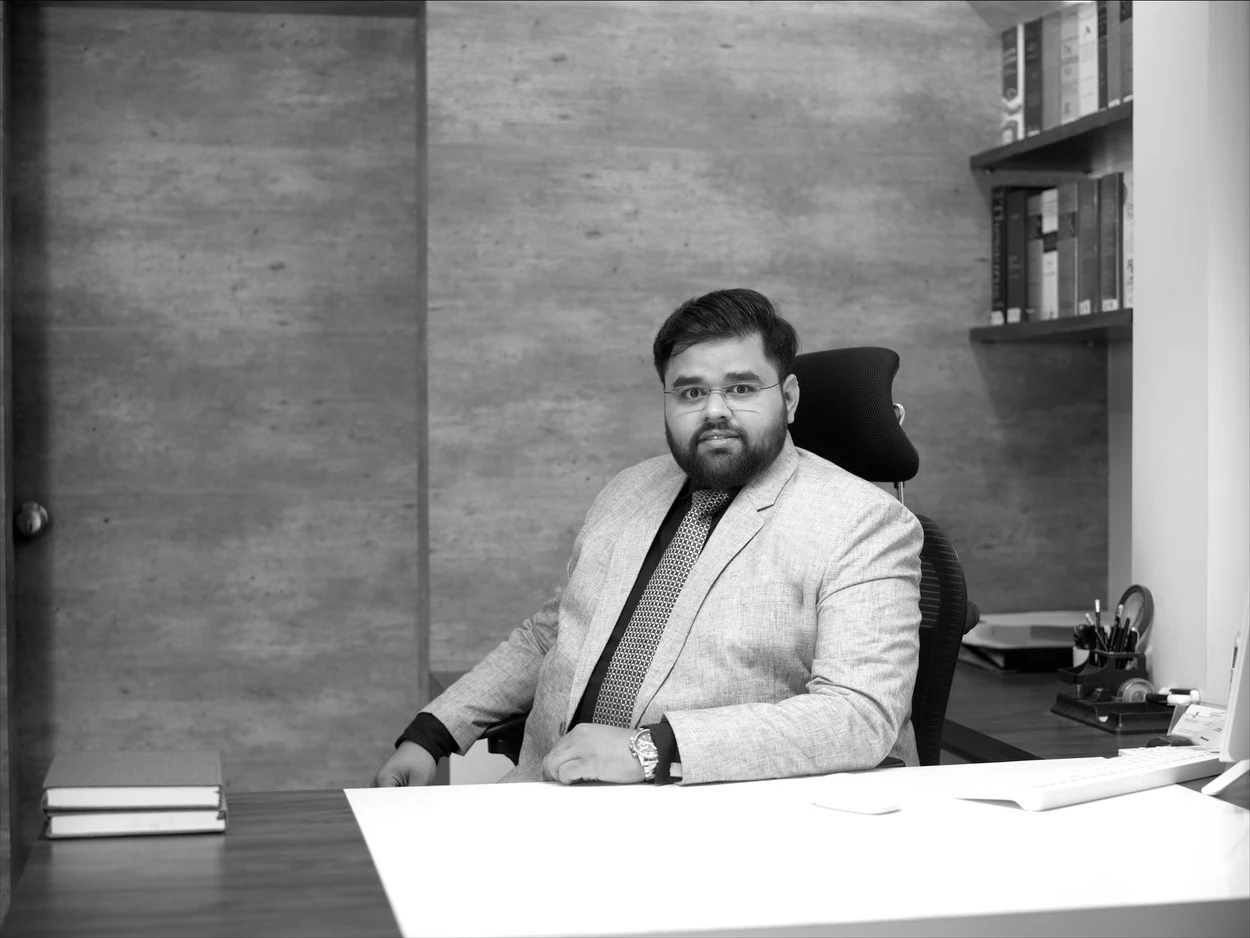
  • “For anyone starting out in this legal profession, my advice would be to choose a mentor, not just a workplace. If the right balance is hit, you get a family, and not mere bosses and colleagues.” – Dhrupad Das, Partner at Panda Law.

    “For anyone starting out in this legal profession, my advice would be to choose a mentor, not just a workplace. If the right balance is hit, you get a family, and not mere bosses and colleagues.” – Dhrupad Das, Partner at Panda Law.

    This interview has been published by Anshi Mudgal and The SuperLawyer Team

    With over 15 years of experience in law, did you always envision a career in this field? How was your experience studying law at Symbiosis Law School, Pune?

    This is one of those questions that comes up in almost every interview—whether I’m answering it or asking it of others. And I think it’s because it goes to the heart of how focused and dedicated a person is when embarking on a career in law. Law, unlike many other professions, requires an immense amount of internal motivation to push through the tough times.

    To answer your question: no, I did not always envision myself as a lawyer. However, I knew from a young age that my strengths lay in words, speaking, reading, and intellectual work. I felt confident in these areas and knew they would guide me toward a suitable profession. But where exactly they would take me remained unclear for a long time.

    The closest I came to consciously choosing a profession was when I dreamed of becoming a marine biologist. I loved the ocean and was enchanted by the idea of swimming with whales and other large sea creatures—probably inspired by watching numerous nature shows. But once I discovered that marine biology required studying sciences after the 10th grade—subjects like physics, chemistry, and biology—that plan was quickly abandoned. I raised my hands in surrender and asked my parents for guidance.

    The second career I considered was becoming an IAS officer, like my father. However, my father dissuaded me for reasons that are beyond the scope of this interview. Eventually, after family meetings and discussions, a consensus emerged: I should become a lawyer. The reasoning was that law is a “platform profession,” offering a wide range of opportunities and avenues. My family believed I had the temperament and acumen for it, and they also felt that if I ever wanted to change directions later, law would provide a solid foundation.

    I’m grateful for the support and wisdom of my family in steering me toward this profession. They made a great call on my behalf because, in hindsight, I’ve never wanted to do anything else. Being a lawyer has not only worked out for me but has also intellectually stimulated, motivated, and nourished me in ways I couldn’t have imagined.

    As for my time at Symbiosis Law School, Pune, I can only speak positively about it. It was a significant learning experience and, in many ways, transformative. It marked the first time I stepped out of the dual bubbles of home and boarding school—I had studied at Mayo College for nine years. Living on my own in Pune, alongside friends (several of us from Mayo landed there at the same time), was an entirely new experience.

    I would describe my time in Pune with words like fun, educational, and maturity-inducing. It made me independent and helped me understand the value of friendships. We used to joke that ‘Symbi taught us law, but Pune taught us life.” I wholeheartedly agree. Spending half a decade in one place gives you the opportunity to discover yourself—how you want to identify, behave, and respond to both pleasant and unpleasant experiences.

    Of course, it wasn’t without its ups and downs. You get into trouble; you get out of trouble. You make mistakes and grow from them. You learn to navigate relationships, conflicts, and emotions. But that’s the beauty of the experience—it’s all-encompassing.

    On the academic side, Symbiosis did its part as well. Classes were organized well, and while the attendance rules were fairly relaxed (which can be both a blessing and a curse), I think they struck a balance. In the end, I believe the institution delivered, as evidenced by the success of its alumni. Pune and Symbiosis shaped us into who we are today, and I’ll always be grateful for those formative years.

    Your time at the Chambers of Sh. Arun Kathpalia must have been formative. How would you describe your overall experience working with a Senior Advocate and what were some key lessons you learned under his mentorship?

    You’re absolutely right—my time with Mr. Arun Kathpalia was immensely formative. Coming out of Symbiosis, I didn’t have a concrete plan for my legal career. I was clear about what I didn’t want to do—I didn’t want to join a firm (ironic in hindsight) or work in-house at a company. Joining a chamber felt like the natural choice, and I was fortunate to have been introduced to Mr. Kathpalia through my school history teacher.

    I interned with him during law school, and the experience was both enlightening and gave me the confidence which I never realized I was lacking. It was after that internship I fully embraced the fact that I was going to be a lawyer. This was probably because he was kind, knowledgeable, and approachable.

    On the professional front, the biggest lessons I learned from him were many, but let me just list the top few:

    1. Be thorough: Always read your files, know the facts, and leave no stone unturned.
    2. Research is key: He emphasized researching through commentaries and books for deeper conceptual clarity. He was always sceptical of the “Ctrl + F” approach.
    3. Know when to speak and when to remain silent: Discretion is the better part of valor, and knowing when to keep quiet can be as important as knowing when to make your argument.
    4. Know thy judge: Understanding the judge is critical for any case.

    Beyond professional skills, he emphasized the importance of balance. He made time to play tennis regularly, regardless of his workload, which inspired me to prioritize my health as well. He also fostered a positive office culture. He was patient, understanding, and always ready to teach. While he is an exceptional lawyer, I often say he is an even better teacher—and that’s saying a lot.

    He also has a phenomenal memory. He could recall case details effortlessly and recite works of literature—like Oscar Wilde’s Lady Windermere’s Fan—from memory. I vividly remember verifying one of his recitations and finding him word-perfect. His love for English literature and language was something we shared, and I think it shaped both his personality and his practice.

    He encouraged intellectual curiosity beyond the law. During my time there, I explored topics like blockchain, climate change, synthetic biology, Austrian economics, etc., and he was always open to engaging in discussions that went beyond the profession. This approach showed me that being a well-rounded human being makes you a better lawyer.

    Some lessons were smaller but equally profound. For example, after my first car accident, he said, “Now you can truly enjoy the car—until the first scratch, you’re always afraid of it.” His advice on fashion was equally memorable: “Don’t dress so well that people look at you twice, and don’t dress so poorly that they look at you twice.”

    In sum, my time with Mr. Kathpalia was about mastering the larger game that is life. He wasn’t just a boss; he was a mentor. For anyone starting out in this profession, my advice would be to choose a mentor, not just a workplace. If the right balance is hit, which in my case it was, you get a family, and not mere bosses and colleagues. The right mentor can shape your career and your character, and for me, Mr. Kathpalia did both.

    After working with a Senior Advocate for nearly a decade, what inspired you to start your own practice? What challenges did you face in the early stages, and how did you manage to overcome them?

    Starting my own practice was both a push and a pull. In Mr. Kathpalia’s chamber, it was always clear that working there wasn’t a permanent arrangement—it was meant to be a stepping stone for growth. I saw my senior colleagues transition out to start their own practices, and I knew I’d have to take that leap eventually. Law, at its core, is an entrepreneurial profession; sooner or later, you have to go out on your own. For me, that realization came naturally over time.

    Web3 was the perfect opportunity to make that leap. Back then, it was mostly referred to as cryptocurrency, and terms like blockchain and distributed ledger technologies (DLT) were just starting to gain traction. I became deeply interested in the space, and that interest eventually led to work referrals from Dubai. These clients needed a firm—not just an individual—to handle their matters, and that’s what pushed my friends and me to come together to form Panda Law. It was a humble beginning, but a meaningful one.

    Of course, starting a practice came with its share of challenges. The first and biggest was finding clients. When you’re in a chamber, your focus is purely on the work—clients and payments are handled for you. But starting from scratch means building everything yourself: finding clients, setting up billing cycles, paying your team before paying yourself, and relying on your savings to get through the lean days. Financial insecurity was a real struggle in the beginning, and the uncertainty weighed heavily on me at times.

    The trust and support of my partners made all the difference. We were friends before we were partners, and that foundation of mutual respect and collaboration helped us navigate the tough times. It’s hard to overstate how valuable friendship and trust are when you’re building something from the ground up.

    Running a firm also meant adapting to roles I wasn’t used to. Apart from delivering high quality legal work, I had to train and retain associates, manage cash flow, ensure clients paid on time, and sometimes even take loans to keep things afloat in the short term. Balancing the operational demands of running a firm with delivering high-quality work was a steep learning curve. And keeping the team motivated while juggling all of this? Definitely not easy.

    Starting your own practice is, above all, a lesson in humility. You face rejection, financial strain, and setbacks, and it forces you to become collaborative and interdependent. Lone-wolf strategies simply don’t work when you’re building a practice from scratch.

    One unique challenge we faced was establishing our firm in Guwahati. There was this persistent belief—often reinforced—that there wasn’t much scope for corporate lawyers or advisory practices there. Ignoring naysayers, especially when they’re people you respect, and carving out your own path is its own kind of challenge.

    That said, the rewards of running your own practice are immense. While the outside world often sees only the successes, the real journey is a test of trust, self-belief, and determination. My advice to anyone considering this path is to speak to someone who’s done it before. I had a conversation with Mr. Kathpalia about what to expect, and his insights and advice have stayed with me ever since.

    With over 15 years of experience in civil-commercial disputes, what has been one of the most complex cases you’ve handled before various judicial and quasi-judicial forums?
    I’ve always found that cases in new jurisdictions or with unfamiliar subject matter tend to be inherently more complex—there’s no well-trodden path to follow. By that measure, one of the most challenging cases I’ve handled was right at the onset of COVID-19.

    We were representing a publicly listed, well-known electronics manufacturer with a factory on the outskirts of Guwahati. The factory was leased, and for commercial reasons, the client decided to terminate the lease and relocate. The landlord, however, was not happy. He claimed to have made significant investments to customize the property for our client and decided to retaliate by physically blocking the removal of their highly valuable manufacturing machinery.

    These machines weren’t just critical to their operations—they were incredibly sensitive. Moving them required specialized cranes provided by the manufacturers to meet strict insurance and warranty requirements. Mishandling them could result in massive financial and operational losses. Understandably, the client was reluctant to take any hasty action and turned to us for help.

    We triggered the arbitration clause in their lease agreement and secured favourable orders from the local court directing the landlord to allow the removal of the machinery. But just as we were gearing up to enforce the order, things took an unexpected turn.

    The landlord continued to resist, so we involved law enforcement. In the middle of all this, the district administration declared the entire factory premises a COVID-19 containment zone. It was converted into a makeshift quarantine centre, and COVID-positive patients started arriving.

    This threw a wrench into everything. Even though we had a court order in our favour, the realities of the pandemic, disaster relief efforts, and public health priorities added layers of complexity. We had to get creative and act fast.

    To resolve the situation, we brought everyone—the landlord, our client, the district administration, and local law enforcement—to the table. The goal was to balance the immediate need for public health safety with our client’s right to retrieve their machinery. After intense negotiations and careful coordination, we reached a settlement that allowed the machinery to be removed without disrupting the quarantine centre’s operations.

    This case stands out for its sheer complexity. It involved multiple stakeholders, high stakes, and a rapidly evolving crisis. It was also one of the first cases I handled in the Northeast, shortly after opening our office in Guwahati. Navigating a new jurisdiction, unfamiliar courts, and a high-profile client under such unprecedented circumstances was a real test. In the end, resolving it successfully was a testament to the power of collaboration, quick thinking, and proactive problem-solving.

    You’ve represented major publicly listed companies such as Tata Steel and Havells India. How do you manage the legal complexities when advising such large-scale corporations on corporate governance and compliance?

    The secret to managing legal complexities for large-scale corporations—whether publicly listed giants or fledgling startups—is the same: a structured approach, clear collaboration, and a deep understanding of what the client truly wants.

    First up is corporate governance. It’s crucial to align all stakeholders—directors, management, investors, shareholders, employees, and even users or community members where applicable—with shared incentives and secure documentation. This alignment minimizes disputes and lays the foundation for the corporation to thrive. The principle applies to both large and small entities, but the stakes and complexity are much higher at scale.

    Compliance comes next. There’s a simple rule here: if you think compliance is expensive, try non-compliance. Compliance is non-negotiable. Larger corporations often have the resources and systems to handle it, but for startups, it can be a challenge—and sometimes a barrier to entry. Regardless, getting compliance right is critical because the consequences of non-compliance are almost always worse than the costs of doing it properly.

    Understanding the client’s business is just as important. To give meaningful advice, you need to deeply understand their goals, align with their vision, and anticipate challenges before they arise. Proactive solutions are always more effective than reactive fixes, and they can save clients from a lot of trouble down the road.

    Teamwork is the final piece of the puzzle. Large corporations like Tata Steel and Havells typically have smart, driven General Counsel teams who know their businesses inside out. Collaborating with these teams is not only productive but also smooth—when our team is in sync with theirs, it solves half the problem right there.

    Ultimately, all legal advice should aim to give clients peace of mind, reduce risks, and drive efficiencies. The goal is to create strategies that minimize disputes and help the business thrive.

    You’ve worked with Web3 companies like Kucoin, Hike Pvt. Ltd., and others. What are the primary legal considerations when advising startups and businesses in the space, particularly around areas like intellectual property, privacy, and data security?

    When advising Web3 and emerging technology clients, our go-to legal strategy is what we call the GRID framework: Governance, Regulation and Compliance, Intellectual Property, and Disputes. It’s a systematic approach that helps us tackle the unique challenges these entities face in an ever-evolving and often ambiguous legal landscape.

    It all starts with governance. The first step is understanding how these entities want to be structured and managed. Who are the key players—the team, the management, the founders? Are there ultimate beneficial owners? Are we dealing with a DAO, a protocol, or an application? How centralized or decentralized are they? Where do they sit on the decentralization spectrum? These are foundational questions that guide how we set up the corporate structure.

    Most Web3 entities aren’t simple setups—they tend to have complex, internationally spread-out corporate structures. Think HoldCos (for IP or other purposes), DevCos, and OpCos, often housed across various jurisdictions. These roles can be fulfilled by a mix of corporate vehicles, from foundations and DAO LLCs to trusts, exempted companies, and more. It’s a balancing act because every jurisdiction has its own legal requirements, and when your operations span multiple countries, things get even trickier.

    In many cases, we also act as the client’s internal GC team, stepping in to provide comprehensive advice until they’re ready to build their own legal team. At that point, we seamlessly hand over the reins to ensure continuity.

    Next up is regulation and compliance. This area is deeply tied to governance and influences how and where the entity should be set up. For instance, if a protocol is issuing tokens and aiming for decentralization, it’s critical to avoid jurisdictions with restrictive laws on token issuance. And it’s not just about tokens—privacy, data protection, data localization, and industry-specific rules (whether gaming, financial services, or art-based) all play a big role. The regulations of each jurisdiction where the entity operates—or plans to operate—must align with its business model.

    Intellectual property is another big focus. Web3 businesses are constantly creating substantial IP—brand names, software, algorithms, copyrights, trademarks, patents, you name it. While open-source practices are a big part of this ecosystem, centralized entities often hold IP close to their chest. It’s our job to craft robust strategies for IP protection and monetization, whether that’s choosing the right jurisdictions, drafting airtight agreements, or setting up effective IP frameworks.

    And then we have disputes. The aim of the GRID framework is to avoid disputes whenever possible. But if disputes do arise, we ensure there’s a clear dispute resolution mechanism in place—usually arbitration—that can be handled efficiently and remotely. For Web3 businesses, disputes often involve balancing the interests of community members with the stability and security of the entity itself.

    What really sets Web3 businesses apart from legacy businesses is how they view their stakeholders. Legacy businesses typically see their customers as users or consumers. Web3 businesses, on the other hand, view them as community members. This shift changes everything—from governance to operations to how disputes are handled. It’s a new way of doing business, and governance mechanisms are evolving to reflect this shift.

    Given your broad experience, from corporate advisory to litigation, how do you foresee the intersection of traditional legal practice and emerging technologies in the next 5 to 10 years?

    This is a fascinating question and one I’ve given a lot of thought to. Over the next 5 to 10 years, I see emerging technologies overhauling legal systems in ways we’re just starting to grasp. Using my GRID framework—Governance, Regulation, Intellectual Property, and Disputes—let me explain.

    Governance is already being disrupted. For over a century, corporations have been the go-to model for organizing economic activity, but now technologies like large language models (LLMs), distributed oracle networks, and blockchains are reshaping how businesses operate. These tools enable real-time collaboration, transparency, and efficiency.

    We’re also seeing the rise of Decentralized Autonomous Organizations (DAOs), which are becoming the digital-age equivalent of corporations. Jurisdictions are starting to recognize DAOs as legal entities, and I believe they’ll play a major role in the future of governance. Lawyers, in turn, will need to adapt to automation in areas like compliance and governance, with technologies like RegTech taking over many traditional tasks.

    Regulation is heading toward automation. Oracle networks and blockchain systems will streamline compliance, flagging issues in real time and easing regulatory burdens. This shift will free lawyers to focus more on advisory roles and shaping new regulations for emerging tech.

    Disputes may see the most dramatic changes. Blockchain’s ability to record immutable truths and execute smart contracts will reduce ambiguity and human error, cutting down on disputes. When conflicts do arise, automated dispute resolution systems will handle many cases before they even reach a human arbitrator.

    LLMs will also transform how lawyers approach disputes, making research, drafting, and other tasks faster and more accessible. For smaller firms and solo practitioners, these tools are game-changers, allowing them to compete on par with larger firms.

    Overall, the legal profession is at a tipping point. Emerging technologies will make it more efficient, automated, and accessible, but they also demand that lawyers stay informed and adaptable. Those who embrace these changes will thrive, focusing on strategy, ethics, and solving complex problems—ensuring lawyers remain indispensable in a tech-driven future

    The legal profession is at a tipping point, with automation and emerging technologies set to redefine how lawyers operate. Tasks that once required large teams may now be handled by fewer individuals with the aid of AI and LLMs. This presents both a challenge and an opportunity. Lawyers must stay informed and adapt to these changes, as those who embrace technology will thrive in this evolving landscape.

    Given the demanding nature of your work environment, how do you manage to balance your professional and personal life? What activities or practices help you unwind and recharge?

    Balancing work and life are essential in this profession. Without it, things can go south quickly—burnout, ill health, and lack of focus don’t help anyone. So, the big question is how to maintain that balance. For me, it comes down to focusing on three things: exercise, sleep, and diet.

    I stay active by mixing strength training, yoga, and occasional runs. I also try to make my daily life more active—taking the stairs, walking while waiting in court, or just being outdoors. It’s less about squeezing in a workout and more about weaving activity into the day.

    On diet, I keep it simple. I follow intermittent fasting, stick to a few healthy meals, and avoid sugar as much as possible. It keeps me sharp and energetic.

    Sleep is the most underrated but critical factor. I stick to a consistent sleep schedule, avoid late-night meals, and prioritize rest. When I get this right, everything else just flows better.

    I also make time for routines that recharge me. Reading before bed is a must—it helps me unwind. Gardening is another favourite; spending time with nature and doing something as simple as pruning plants is surprisingly therapeutic.

    And, of course, friendships are key. Lawyers are naturally social, especially in court, but maintaining a strong personal network outside of work is just as important. It keeps me grounded and connected.

    Lastly, I’m not a fan of the “cult of overwork.” Overwork isn’t a badge of honor—it’s a fast track to burnout. If you’re overwhelmed, talk to your mentors or managers and find the support you need. It’s all about working smarter, not harder, and building a life that works for you.

    What advice would you give to young lawyers interested in specializing in emerging technologies, given your experience working at the intersection of law, technology, and business?

    If you want to specialize in emerging technologies, the first thing I’d say is this: make sure you’re genuinely interested in the subject. Technology is technical—it’s in the name. You need to have some curiosity about how it works, why it works, and where it’s headed. Without that interest, it can feel like a chore.

    The best way to develop an understanding and explore your interests is to get your hands dirty. Use the technology, especially when it’s still rough around the edges—before it’s hyped and polished. The messy, early stages of a technology’s life cycle can teach you so much about its evolution. Watching how it changes and grows over time gives you a deeper, more nuanced perspective than just jumping in after it’s all figured out.

    Next, read. Read everything you can get your hands on—books, papers, articles. Whatever’s out there. Understanding a technology intellectually complements the practical experience you get from using it. Together, they give you a solid foundation to build on.

    Then there’s the community aspect. Every emerging technology has its own community—on Discord, Farcaster, Reddit, or wherever. Join these spaces, participate in discussions, and get involved in projects. Emerging tech projects are usually in early stages and always need extra hands. This is your chance to dive in, take on responsibilities, and grow your reputation within the space. Plus, being part of the community is invaluable—it gives you a front-row seat to the latest developments and a network of like-minded people.

    Get in touch with Dhrupad Das –

  • “Discipline and impeccable work ethics have always been my guiding angels. The journey of entrepreneurship can be very lonely and scary at times and the only thing that has helped me is knowing that I love what I do” – Sohini Mandal, Founder of Nilaya Legal.

    “Discipline and impeccable work ethics have always been my guiding angels. The journey of entrepreneurship can be very lonely and scary at times and the only thing that has helped me is knowing that I love what I do” – Sohini Mandal, Founder of Nilaya Legal.

    This interview has been published by Anshi Mudgal and The SuperLawyer Team

    With over a decade of experience in various areas of the law, looking back, was law a planned career path for you and what inspired you to specialize in Private Equity, Venture Capital, Corporate & Commercial Practices?

    As I am a first-generation lawyer, law was definitely not a planned career path for me. However, at the same time, it did not just happen to me by chance. I remember being very excited seeing the brochure of NUJS for the first time when my father brought it over as something that I could also apply for, alongside preparing for other competitive exams. As I started getting deeper into the preparations for the NUJS entrance examination, I really felt like this was something that I had to pursue, and I really wanted to get through. One may say, it was a bit of a calling, that I was not fully prepared for at the beginning. But then once I got through NUJS, there was no looking back.

    When I started working in the PE/VC space, startups were still not a recognized, well-defined concept back then, and I remember feeling this hunger to learn more and gather more knowledge. I was learning and growing at an exponential pace and  felt pure joy, every day at work. I got exposed to amazing opportunities in terms of being part of deals that were getting reported and working very closely with brilliant founders. I learnt so much from each and every one of them, and I still do, while handholding them through various fund raises. That, for me, has been the biggest inspiration. 

    Your career spans a variety of leadership and managerial roles. How have these experiences influenced your approach to legal practice, and what key lessons continue to guide you today?

    My unique career trajectory, from being an in-house counsel in a public sector undertaking to joining and soaring to senior positions in law firms and then finally taking the plunge to start my own practice, is reflective of my life philosophy of never settling, even when the cost is high.  This journey has also helped me to focus more on being an enabling problem-solver rather than a naysayer, which has shaped how I interact with my clients and try and make doing business easy for them.

    Discipline and impeccable work ethics have always been my guiding angels. However, with age and experience, I have also learnt the importance of building and retaining a strong team. As an entrepreneur now, there have been times, when I have had to step away and let my team run the show and they have never let me down. Ultimately, a leader is always a combination of the strengths and weaknesses of each team member. Hence, I spend a lot of my time and focus in mentoring my team members and making them a part of the growth journey of Nilaya Legal, so that everyone has a sense of belonging and ownership.

    Having worked with a range of legal entities in different capacities, what inspired you to establish Nilaya Legal, and what were some of the early challenges you encountered when starting your own practice?

    Right from the beginning, as I started working closely with early-stage companies and founders, I knew that I had this entrepreneurial bug in me, which helped me build strong foundational relationships with many clients. I am proud to call many of them friends today and some of them really played a crucial role in inspiring, mentoring and influencing me to take the plunge. There has always been a gap between business understanding and practical, workable legal advice, which my clients feel that I can bridge with ease. That gave me the confidence to start a practice with a vision to build a long-stop platform for all commercial-legal needs.

    Since it was just post Covid, finding the right people to start with and building a team was one of the biggest challenges. And then, of course, finding the right mentors was also very crucial. Because when you start on your own, you no longer have senior partners to guide you and rectify your mistakes. So, I had to think really hard about building my own personalized accountability mechanism, which I rely on very strongly.

    You’ve worked with many startups at various stages of growth. What are the most common legal pitfalls or challenges you see young companies encounter, and how can they mitigate those risks early on?

    Co-founder relationships and early-stage compliances are the two most critical aspects where companies need to tread very carefully. Co-founder relationships can make or break businesses, so it is super important for founders who come together to build something to have the same aligned visions and goals. Early conversations around a founders’ agreement go a long way in pre-empting a lot of the challenges that co-founders face, be it in terms of commitment to the company, building value on a long-term basis or even individual roles and responsibilities.

    Business structuring and maintaining a basic regulatory checklist for compliance also become very important for avoiding later penalties and costs.

    You specialize in intellectual property (IP) law within the tech and media sectors. How do you guide your clients in protecting their IP, especially in industries where innovations happen rapidly?

    With new technologies, like we are seeing with AI now, one of the most crucial strategies for IP protection is to move fast. Having said that, law is always playing catch up with innovation, and that’s why we see regulators like RBI and SEBI enabling sandboxing.

    With the demands of running a corporate law practice, how do you manage to balance your professional responsibilities with personal time and well-being?

    Planning and prioritizing is the key. I also believe that one needs to take care of one’s mind and soul to be able to bring the best self at work. Therefore, I give a lot of importance to journalling, meditating and self-analysing. Those are the aspects that keep me grounded and help me plan my next steps.

    What advice would you offer to young lawyers or entrepreneurs who are interested in working in the intersection of law, technology, and venture capital?

    First and foremost, do this only if you love what you do. The journey of entrepreneurship can be very lonely and  scary at times and the only thing that has helped me to deal with those moments is knowing that I love what I do and I will not settle for anything lesser than providing my 100% to my clients, every day. This is also a very demanding field where one needs to constantly be updated and aware of the plethora of changes that take place continuously. Being updated and knowledgeable about your field of work is the only way to be relevant. So do your research, do your homework, and most important of all, never take anything for granted.

    Get in touch with Sohini Mandal-

  • “Patience, combined with a willingness to embrace new challenges, will set apart those who not only succeed but thrive in this evolving landscape.” – Rishabh Gandhi, Founder of Rishabh Gandhi & Advocates.

    “Patience, combined with a willingness to embrace new challenges, will set apart those who not only succeed but thrive in this evolving landscape.” – Rishabh Gandhi, Founder of Rishabh Gandhi & Advocates.

    This interview has been published by Anshi Mudgal and The SuperLawyer Team

    Welcome to SuperLawyer, Mr. Rishabh Gandhi! We’re excited to have you here with us today.

    Thank you so much for having me here! It’s truly a pleasure to be speaking with you, and I’m looking forward to our conversation. 

    We’re going to ask you a few questions about your journey as a lawyer, academician, judge, and your general experiences in life and learning. Shall we begin? 

    Certainly! I’m all yours. I’m looking forward to sharing my experiences and thoughts.

    Your academic journey is truly distinguished, including topping the MPSC interview, being a Gold Medalist, achieving top ranks as a university topper, receiving the Chief Minister’s appreciation, winning in national research, debates, and moot court competitions, presenting and publishing internationally, and now as a PhD research scholar of law and religion with a thriving legal practice. How have these accomplishments shaped your legal practice, and how do you integrate these experiences into your daily work as a lawyer?

    (Smiling after hearing the question)  Ah, now I get why your team was so keen on my CV!

    My academic journey has been truly fulfilling. Coming from a Marathi medium background until the 12th standard, English was my 5th language, so the early years were certainly challenging. I had to work harder, learn faster, and adapt quickly. But once I found my rhythm, I was able to keep pace.

    I wouldn’t say I was the most brilliant or intelligent, but I was certainly the most sincere. Looking back now, these accomplishments don’t seem as significant as they once did, but at the time, each one pushed me to work a little harder and aim a little higher.

    What I truly gained from this journey was a deep appreciation for sincerity and hard work. These values have shaped my approach to everything—whether it’s diving deep into legal research or crafting arguments for arbitration and litigation.

    The discipline of thorough preparation, structuring complex arguments logically, and presenting them persuasively—all stem from the principles that guided me throughout my academic years. 

     And perhaps, more than anything, it’s about maintaining that sense of curiosity—always wanting to learn more, to dig deeper, and to apply that knowledge in ways that can truly make a difference, whether in the courtroom or beyond. 

    Clerking with Hon’ble Justice Dr. D. Y. Chandrachud at the Bombay High Court, interning at Fox Mandal and other law firms, and working with firms like J S Wad & Co. and Karnik and Karnik Advocates must have been highly formative experiences. Could you share any particularly interesting or challenging situation from these roles and what you learned from it? 

    I vividly remember my first day clerking with Justice Chandrachud—it was November 11th, his birthday, and in the evening after court hours. I walked into his ante chamber and introduced myself, and he responded by saying, ‘Hello, I am Dhananjay.’ A senior high court judge introducing himself with his first name—it was remarkable. I was nothing compared to his stature, yet his humility and grace left a lasting impression on me.

    I also recall how Justice Chandrachud would take a bag full of files home with him every day, preparing for the next day’s work. His dedication and commitment to preparation were powerful lessons that have stayed with me throughout my career. I still think about the case we discussed involving Section 295A of the IPC and Section 95 of the CrPC before a full bench. His depth of analysis was inspiring and shaped my approach to complex legal issues. 

    (Pauses, reflecting)  At Karnik and Karnik Advocates, I learned the ABCs of civil procedure. It was the first time I appeared in court, even if it was just for an adjournment. But for me, it was a big opportunity to successfully convince the judge. I also gained my first experience drafting plaints, applications, and written statements. I’ll never forget one incident during the Facebook era—I was in the court chambers during lunch, using the office computer to check Facebook, when suddenly my senior walked in! Panicking, instead of closing the page, I shut off the computer—losing hours of unsaved work. It was a naive mistake, but it taught me two valuable lessons: never mix social media with work and always save your files—Ctrl + S became my best friend after that!  (Chuckles)

    (Pauses, then continues)  At J S Wad & Co., I had the opportunity to handle civil and commercial disputes from start to finish. I was heavily involved in drafting, arguing interim and final matters, and conducting witness examinations and cross-examinations. I even got a taste of the corporate working style. 

    Turning down an MNC offer to pursue litigation must have been a significant decision, especially as a first-generation lawyer practicing away from your hometown. What factors influenced that choice, and how did you navigate the obstacles you faced early in your career? Reflecting on your journey, what advice would you give to others in similar positions who may be considering a similar path?

    The offer from Infosys appeared quite lucrative, but I wasn’t drawn to the job profile. I felt that litigation and dispute resolution were where I truly belonged. Litigation is fascinating—each day brings new challenges, different cases, different people.

    In the beginning, there were financial challenges, but over time, you find your rhythm. I’m happy I chose litigation over that offer, and if I had to make the decision today, I’d still do the same.

    For those starting out, don’t focus on money early on. There will be struggles, but with patience and perseverance, the rewards will come. Patience is the key.

    Your time as a Trial Court Judge must have offered unique insights into the legal process. Can you share an experience that challenged your views or required you to rethink your approach to law?

    (Pauses, reflecting)  As a Civil Judge and Judicial Magistrate, I had the opportunity to handle many complex partition suits relating to agricultural lands, specific performance suits, and injunction cases. These matters required extensive reading and strengthened my understanding of contractual obligations. I particularly recall granting a status quo ante in a case, which required deep thought and careful consideration.

    Apart from that, I also served as a judicial member of the Juvenile Justice Board. Handling juveniles was quite different—it required a more humane and understanding approach. The process and environment were kept less formal to make it less intimidating for the juveniles. It was challenging, but also incredibly rewarding.

    In my time as a Magistrate in criminal cases, I often encountered witnesses turning hostile. Navigating those situations required quick thinking, patience, and adaptability.

    I must also mention the incredible training we received from the Maharashtra Judicial Academy. The training was rigorous and went beyond legal skills—it worked on discipline and integrity as well. The academy instilled a strong ethical foundation in us, which has shaped my approach to every case since. 

    Why did you leave the judiciary? What motivated you to transition from the judiciary back to legal practice, and how has your experience as a judge influenced your work in arbitration and litigation?

    Why did I leave the judiciary? That’s a question I’ve been answering since 2016, and it still follows me! There’s no single reason, but I’ll share some pivotal moments.

    The thought of resigning first crossed my mind just two months into my appointment when my leave application for my pre-planned wedding was rejected by the Principal District Judge.  Fortunately, after escalating the matter to the Bombay High Court, the Principal District Judge was directed to grant me two days of leave.

    However, that wasn’t the reason I ultimately left. After completing my training and taking charge, I enjoyed my work in the judiciary. But over time, there were some health issues and personal reasons. After much reflection, I made the decision to step down. I paid the compensation for the bond to the Government and resigned.

    That said, my experience as a judge continues to shape my work in arbitration and litigation. Sitting on the bench taught me how arguments are perceived, what judges prioritize, and the importance of precision in presenting a case. I apply these lessons in every case I handle, whether it’s arbitration or litigation, giving me a more well-rounded approach to dispute resolution

    You’ve handled high-profile cases, including the defamation case involving Justice P. B. Sawant and the Osho will forgery case. How did you approach these complex cases, and what lessons did they teach you about advocacy?

    The Osho will forgery case was incredibly complex. It involved multiple police statements and a voluminous record, with the media closely watching. The case required detailed preparation, touching on international legal aspects like letters rogatory, multi-country assets, and the accused residing in another country who was never arrested. The police investigation had its flaws, and the case is now sub judice before the appellate court, but it remains one of the most interesting cases I’ve worked on.

    As for Justice P. B. Sawant’s defamation case, I was retained by J. S. Wad & Co. as the advocate on record, alongside Late Adv. Nahar in the trial court. The case involved Times Now mistakenly displaying Justice Sawant’s photo and name in connection with a scam involving another judge, Justice Samanta. The trial was intense, with many witnesses and considerable media attention.

    In the end, the court ruled in our favor, ordering Times Now to pay ₹100 crore in damages, though the case is now under appeal. The judge didn’t just refer to one of my submissions but actually included it in her judgment. I had quoted the Bhagavad Gita, where Lord Krishna tells Arjuna that damage to one’s reputation is worse than death, and she wrote that shloka verbatim in her decision.

    Both of these cases taught me that working on minute details is crucial. As lawyers, we must not only refer to laws and precedents but also draw inspiration from broader sources, like the Gita in this case. It reminded me that advocacy goes beyond legal knowledge; it involves a deeper understanding of context and philosophy as well. 

    With experience in commercial litigation, real estate, and arbitration, how do you manage the demands of these different areas? Are there common challenges across these fields, and how do you address them?

    In commercial litigation, the parties are typically corporate entities, which means communication must be prompt, and clients expect regular updates. Having a strong understanding of contract law and specific reliefs is essential, but it’s also about thinking with a businessperson’s perspective. You need to understand the business context in which the dispute arises to offer strategic legal solutions that align with the client’s goals.

    Real estate, on the other hand, presents its own unique challenges. One of the biggest is untangling complex revenue records and land ownership histories. Real estate disputes often involve intricate, layered documentation, and resolving these disputes requires a meticulous approach to both historical and legal records.

    Arbitration brings a different set of challenges. Domestic arbitration, especially when led by retired judges, has unfortunately become time-consuming, resembling traditional court processes. International arbitration, particularly institutional ones, tends to be more streamlined, although the complexity of cases can be higher due to jurisdictional issues. Arbitration has also become more expensive, and recently, the Government of India has discouraged arbitration for government-related cases below ₹10 crores in value.

    It’s clear that Indian arbitration stakeholders need to reflect on this trend and revisit how the process can be streamlined. Making domestic arbitration more cost-effective and efficient is essential for restoring faith in the system. Across all these fields—whether commercial litigation, real estate, or arbitration—careful preparation, client communication, and strategic thinking are key to managing the demands and challenges effectively. 

    Arbitration is becoming increasingly important in India. What trends do you observe in this area, and how do you see arbitration evolving in the future, particularly in light of recent legal developments?

    The legal profession is undergoing significant transformation due to technological advances, particularly AI. How do you view the role of AI in law, and do you see it as more of an opportunity or a challenge?

    AI is playing an increasingly important role in law, and I see it as more of an opportunity than a challenge. Tools like live streaming, live transcription, and auto-dictation are revolutionizing court proceedings, making them more transparent and efficient. Research has become easier with AI-powered tools that can analyze case law and statutes in seconds. These advancements allow lawyers to focus more on strategy and less on routine tasks. However, it’s vital to remember that while AI can enhance efficiency, it can never replace human judgment, empathy, and ethics in legal practice. So, while AI is a powerful tool, it should complement human expertise rather than replace it. 

    Looking ahead, what do you see as the most significant trends or challenges that will shape the future of the legal profession? What skills and attributes will be most crucial for young lawyers in this evolving landscape?

    (Pauses, reflecting) Looking ahead, the legal profession will be shaped by several transformative trends. Technology, particularly AI, will continue to streamline legal processes, but it will challenge lawyers to balance efficiency with human judgment. Globalization will intensify cross-border disputes, and alternative dispute resolution mechanisms like arbitration will become even more prominent as courts face backlogs.

    For young lawyers, adaptability and technical proficiency will be crucial, but patience will be equally important. This is not a profession that yields instant rewards. You need to give it time—years, even—before it truly bears fruit. It’s essential to build a solid foundation of experience, knowledge, and client trust, which only comes with time. Emotional intelligence, resilience, and a strong ethical foundation will remain indispensable as well.

    Patience, combined with a willingness to embrace new challenges, will set apart those who not only succeed but thrive in this evolving landscape.

    Reflecting on your career, what have been some of the most important lessons you’ve learned? Were there any experiences that particularly shaped your philosophy as a lawyer?

    (Pauses, reflecting) One of the most important lessons I’ve learned throughout my career is that patience and persistence are key. As the Mahabharata says, धैर्यं सर्वत्र साधनम्। ‘Patience is the solution to everything.’ Success in law takes time—years, even—and it’s essential to build a solid foundation before you see the real rewards. Equally important is humility. Be humble; humility helps. As the shloka says: अश्वस्य भूषणं वेगो मत्तस्य भूषणं क्षमा। वश्यस्य भूषणं विद्या विनयः शीलस्य भूषणम्।। ‘The ornament of a horse is its speed, of an elephant, its forgiveness; the ornament of a wise person is knowledge, and of character, humility. You don’t need to exhibit your knowledge or oratory skills to impress the courtroom. Instead, focus on persuading the judge. Argue to convince, not to show off. Don’t play to the gallery—play to the judge. It’s about expressing to persuade, not expressing to impress.”

    This version effectively integrates the shloka with your original thoughts, reinforcing the importance of humility and persuasive advocacy in law.I’ve also learned that every suit has its own fate. You may feel you have a favorable case, or the law is on your side, or you’ve argued brilliantly, but the outcome might still go against you. Likewise, there are times when the facts and law aren’t favorable, and yet you receive a favorable order. Don’t let outcomes—favorable or otherwise—affect your state of mind. Remember, there’s always an appeal in case of an unfavorable judgment.

    Networking is crucial in this profession, as is clear communication with your clients. Always be transparent and never give false hope. Be clear about the realities and complexities of their cases.

    Above all, READ. You must constantly educate yourself. Reading will always be your most powerful tool in law. And finally, respect your peers, whether senior or junior. It’s important to show respect to opposing lawyers, as professional courtesy will always take you further.

    With your extensive experience in trial court practice, what do you believe are the most critical skills or mindsets for young lawyers who want to succeed in litigation?

    (Pauses, reflecting) For young lawyers entering litigation, several critical skills and mindsets are key to success. Preparation is everything—mastering the facts and anticipating courtroom questions is vital. Patience and persistence are equally important, as litigation is a long journey with inevitable setbacks.

    Cross-examination skills are crucial: knowing what to ask, what not to ask, and how to read a witness can make or break a case. Understanding the foundational principles of evidence and a deep knowledge of procedural laws are essential. Minute procedural understanding ensures that you’re not caught off-guard by technicalities.

    Communication is key, both in court and with your client. And finally, humility and respect—towards judges, staff, and opposing counsel—are non-negotiable. Litigation isn’t just about legal knowledge; it’s also about how you conduct yourself professionally. 

    As someone deeply involved in both legal practice and academia, what areas of law do you think need more attention in legal education? How can law schools better prepare students for the practical challenges they will face in the profession?

    There are a few areas in legal education that I believe need more attention. First, there needs to be a greater focus on procedural law and its practical applications. Many young lawyers enter practice without a deep understanding of procedural intricacies, which can be critical in litigation.

    Cross-examination techniques and understanding the nuances of evidence law should also be emphasized more. Law schools should introduce more hands-on training, such as moot courts, mock trials, internships, and regular court visits, to provide practical insights into how the legal system operates and bridge the gap between theory and practice.

    Research skill enhancement is vital, as the ability to conduct thorough legal research underpins strong advocacy. Moot courts and mock trials are invaluable for simulating real-world courtroom experience, while regular court visits provide students with a real-time understanding of courtroom proceedings. Internships allow students to apply what they’ve learned in real-life scenarios, helping them gain practical exposure.

    Moreover, legal education should adopt a multidisciplinary approach, integrating subjects like business, technology, and international law, which are increasingly relevant in today’s legal landscape. Finally, developing skills like client management, ethics, oratory, debating skills, and clear communication—often learned on the job—should be incorporated into curricula to better prepare students for the profession’s demands.

    Your role as an Arbitrator and Mediator offers a unique perspective. What trends do you observe in dispute resolution in India, and how do you see the future of arbitration and mediation evolving?

    In recent years, there’s been a noticeable shift toward arbitration and mediation, with more businesses seeking quicker and less adversarial alternatives to litigation. However, domestic arbitration in India is becoming slower and more expensive as many arbitrators, particularly retired judges, follow procedures resembling court litigation. This is a trend that Indian stakeholders need to revisit to ensure arbitration remains efficient and cost-effective.

    On the other hand, international arbitrations, particularly institutional ones, are more streamlined and efficient, despite the complexity of the cases. The processes are smoother, and parties benefit from a structured framework. One recent development is the government’s decision to discourage arbitration for disputes under ₹10 crores in value for government contracts, which raises questions about the accessibility of arbitration for smaller cases.

    Mediation is also growing in acceptance, particularly in commercial disputes and family matters. Its ability to resolve disputes amicably without prolonged court involvement is being increasingly recognized. I believe mediation will continue to evolve, with a focus on better training for mediators and a more robust framework for implementation.

    A model that I think has great potential in India is Arb-Med-Arb. This hybrid approach allows parties to begin with arbitration, transition to mediation to seek a collaborative solution, and return to arbitration if mediation fails. It combines the best of both processes, reducing the adversarial nature of disputes while ensuring a final, enforceable resolution through arbitration. I see a bright future for Arb-Med-Arb, especially in complex commercial and civil matters.

    You’ve been a visiting professor at many law colleges and frequently give guest lectures. How has your experience been in these academic roles?

    Teaching is, to me, one of the most pious professions. I genuinely enjoy it, and I believe one learns a lot while teaching. The curiosity and enthusiasm of students are always fascinating. I fondly remember giving coffee lectures under the trees at one college—those informal discussions were some of the most memorable. I also cherish moments like when a class at ILS Law College, Pune, choreographed a dance on the last day of my lecture—it was such a sweet gesture, and I’ll treasure it forever.

    One of the most rewarding experiences is seeing my former students standing across from me in court, arguing passionately. It makes me feel incredibly proud to see how far they’ve come and to know that I played a small part in their journey.

    You manage a team of lawyers and paralegals while running a boutique law firm in Pune. What are some of the challenges you face in operating the firm, especially when dealing with high attrition rates? Is it difficult to manage and sustain a law firm in such a competitive environment?

    High attrition rates are a universal challenge for law firms, and the key is to avoid becoming overly reliant on any one individual. You need to operate with the understanding that any employee may submit their notice at any time, which is why strong management and delegation skills are so important.

    Some lawyers struggle with delegation—they prefer to handle everything themselves. However, effective delegation allows you to focus on high-priority work without micromanaging. Trusting your team empowers them and creates an efficient workflow while enabling you to invest time in strategic decisions.

    Balancing client expectations, case management, and team dynamics can be challenging, but with clear leadership, a vision, and consistent professional development, it becomes manageable. Ultimately, running a successful law firm is about nurturing relationships—both with the team and clients—while ensuring everyone is aligned with the firm’s goals.


    With your demanding career, how do you manage to unwind and find balance in your life? Are there any hobbies or activities that help you recharge and stay grounded amidst your busy schedule? 

    Balancing work and life is tricky, but I make it a priority because it’s essential to stay sharp. I wish I could say my hobbies include something fancy like golf or late-night partying! But I’m quite simple—a good book, good food and a solid night’s sleep, and I’m happy. Eating is honestly my hobby! I love trying different vegetarian cuisines, and sleep is my ultimate relaxation.

    I enjoy visiting temples, especially old ones. I find a sense of peace there that helps me reconnect with myself. I also enjoy Family get-togethers, meetings with friends, beach vacations. It’s all about finding balance, and in the end, it’s the little things that keep me grounded and ready for the challenges ahead.

    Reflecting on your diverse career, what advice would you give to aspiring lawyers or young professionals who are just starting their journey in law? What mindset or approach has been most valuable to you, and what would you encourage them to focus on as they build their own path?

    For aspiring lawyers and young professionals, I would say: patience, persistence, and humility are key. The legal profession is a long game—success doesn’t come overnight, and you’ll face your share of challenges and setbacks. Embrace the process, and don’t focus solely on the end result. Learn from every case, whether you win or lose.

    We must always remember the wisdom from Hitopadesha: उद्यमेन हि सिद्ध्यन्ति कार्याणि न मनोरथैः। न हि सुप्तस्य सिंहस्य प्रविशन्ति मुखे मृगाः।। ‘Success is achieved through effort, not by mere dreams. A deer doesn’t enter the mouth of a sleeping lion.’ With this in mind, we must put in all the efforts required.

    Most importantly, maintain integrity. Be ethical in your dealings with clients, colleagues, and the court. Focus on continuous learning—read widely, stay curious, and never stop honing your craft. And remember, law is not just about knowing the law; it’s about understanding people, managing relationships, and balancing the technical with the human side of the profession. If you can do that, you’ll go far.

    Get in touch with Rishabh Gandhi-

  • IPR is the backbone of inventions and brand protection and with the advent of the new age economy  it is becoming all the more impactful for brand protection and the building of India as a country  and nation leading the economy in the times to come- Shivaarti Bajaj, Co-Founding Managing Partner at RSD Bajaj Global Law Firm

    IPR is the backbone of inventions and brand protection and with the advent of the new age economy it is becoming all the more impactful for brand protection and the building of India as a country and nation leading the economy in the times to come- Shivaarti Bajaj, Co-Founding Managing Partner at RSD Bajaj Global Law Firm

    This interview has been published by  Priyanka Karwa and The SuperLawyer Team

    Can you tell us about your journey and how did you end up becoming a lawyer specializing  in intellectual property, data protection, and emerging technologies? 

    As a person with a Masters in Biotechnology and allied Sciences, and coming from an Indian  Air Force (defence) family background, and as a first generational lawyer, pursuing law and to  build our firm has been an experience of immense learning. I have grown with the India growth  story – that if you have merit, it shall prevail with the right kind of hard work to back it.  

    Furthermore, with the guidance and mentorship of Dr. Vidya Sagar, Founding Managing  Partner, Remfry & Sagar and the Father of Intellectual Property Rights in India, being able to  absorb his teachings after being recruited directly by him in the firm, was my watershed  moment. With always a keen interest in the language of law, debates, history and a penchant  for reading, having to progress into becoming a full-fledged lawyer was a natural one post that.  It was at that moment that I realized that I can use this cross-section of knowledge of science  and law that I have generated in the field of IPR’s and technology law and thereby started  contributing to the field of law. 

    With the advent of the digital age, technology has always been at the forefront of our thought  process and while building the firm we follow the vision of being able to be advised through  quality and in-depth knowledge to the clients in the field of technology and emerging tech and  cater to the new age economy.  

    But if I have to summarize my journey till now, in one line, I would quote Robert Frost, “These  woods are lovely, dark and deep, but I have promises to keep, and miles to go before I sleep,  and miles to go before I sleep.” 

    As the Co-Founding Managing Partner at RSD Bajaj Global Law Firm, what motivated  you to establish the firm and what unique services does it offer to clients globally? 

    Our vision of establishing RSD Bajaj Global Law Firm is by way of creating an impact by  advising clients of the new age economy at legal and business strategic level.  

    The firm’s vision is principally based on the important pillars of- being a full service law firm; integrity and professionalism – which is something which we see at the cynosure of our ethics  and functioning the firm, be it within our teams or with the client’s at large; and to take the  firm global from India.  

    Being a full service law firm from India puts us in a position to advise our clients not only on  the advisory fronts on all practice area’s but also on the enforcement end of the law. This unique  ability to be on the full spectrum is something we have always envisioned at the firm and with  the amalgamation of integrity and professionalism we are keen to take it to the global forefront.  

    You have successfully advised and aided in scaling of various digital/tech start-up’s.  What key challenges do these start-up’s often face, and how do you help them overcome  those challenges?

    The firm – RSD Bajaj Global law firm – being a full service firm, from the point of view of the  capability of the firm to advise on Corporate, PE, M&A, IPR, Data privacy and litigation as  well. 

    This makes us- in terms of capability- to be able to provide our clients with an out-an-out 360  degree advisory along with enforcement capabilities within the firm itself. This we see as a  challenge which the firm is able to dwell into and solve at a level which enables us to be present  as an end to end advisory with a strong ability of enforcement.  

    Lawyers in traditional law firms do not understand how the new economy works, how their  leaders think. We have been entrepreneurs and grown with these entrepreneurs and invested  our heart and soul of theirs through process and entrepreneurship mind space. Hence, in contrast  to the traditional law firms, we see that our solutions are more suited and advice is rounded in  terms of the current business needs. At the end of the day, your product has to be good. If you  can solve difficult problem statements for clients, you are the go to person for the client. In  order to be a part of that solution, the ingredients and hence the approach both are different.  

    With your specialization in intellectual property rights and data privacy, how do you  advise clients on the intersection of IPR and business laws- particularly in the Web3.0 space and with Metaverse and NFT’s ; also with regard to the Data Privacy in the India  jurisdiction?  

    Also, since you are one of the few certified qualified patent attorney/agents in India with a  masters in Biotechnology & allied sciences, could you shed some light on the importance of  patents and trademarks in protecting innovations and brands? 

    Intellectual Property Rights as I like to call them are a right which might have not been taken  very seriously by a plethora of businesses in India in the past. However, in the present times the  vast applicability of Intellectual Property rights along with the relevance it brings to businesses  at large is gaining it’s securing place in the legal realm of all deals, innovation and brand  protection.  

    IPR is the backbone of inventions and brand protection and with the advent of the new age economy  it is becoming all the more impactful for brand protection and the building of India as a country  and nation leading the economy in the times to come.  

    In the digital phase, the next juncture will have a heavy influence of IP rights in the digital  world. With the advent of Web3.0 , Metaverse, NFT’s and digital current. In the Indian  jurisdiction, it will be rather interesting to witness and be a part of judgments, findings and  decisions that we are all set to be witnesses to in the realm of practice. For instance, in April,  the Delhi High Court, for the first time, examined NFT digital player cards and the connected  right of personality of cricket celebrities.  

    The Personal Data protection bill is also underway and the legislative bodies are touted to make  it a law anytime soon. This brings with it a more clear view of the law in terms of Data Privacy  in India and what it would mean for Indian tech companies etc. to be operating in and from  India. The right treatment of data is more of a necessity and the nuances if not followed well  can be leading to heavy penalties as by the government. 

    You were recognized as the BW Intellectual Property Lawyer of the year 2023; and the  BW Tech Lawyer of the year 2023. In addition to this you have also been accoladed with the  BW 40 under 40 lawyers in India in 2022. What do these accolades mean to you, and how  do they reflect your accomplishments in the legal field? 

    From the view of an initial reaction, I think this is a great encouragement for young lawyers in general, especially a ‘first-generational lawyer’s’ such as myself towards my contribution in the last 15+ years to the field of IPRs (Intellectual Property Rights) & Data Privacy and TMT (Technology, Media, Telecom) amongst others. As well as for my legal entrepreneurship journey of scaling a law firm, in the capacity of being the Co-Founding Managing Partner, RSD Bajaj Global Law Firm. 

    Accolade’s are always positive and uplifting, however, in this enriching profession of law whilst building a law firm from India, it is a long way to go. In the present times, a lot will be in a dynamic state with respect to the profession of law and from being an active participant and contributor to the same; and witnessing the fast pace of the changing face of the economy there is still a lot to contribute.  

    Here one cannot help but mention the extract from ‘Ulysses’ by Alfred Tennyson. Ulysses is about living life to the fullest and to constantly aim for positive movement. Ulysses’ zest “to follow knowledge like a sinking star” is something that holds great relevance in the practice of law. 

    The iconic closing line of the poem “To strive, to seek, to find, and not to yield” advocates not just the pursuit of knowledge, but also the will to do so. 

    You have also been recognised as the Chair of the Young Members Committee at the  Licensing Executives Society International (LESI), in India. Therefore, as Chair of LESI  India, what initiatives have you undertaken to support young professionals in the legal  industry? 

    As being honoured to be at the Chair of Young Members Committee in India, we along with  the inputs from our President from India, conduct various webinars and aid in knowledge  sharing across all countries to keep abreast with the changing legal landscape at large.  

    With your vast experience and achievements, what advice would you give to fresh  graduates aspiring to pursue a career in law and the legal profession? 

    Albeit the experiences that I hold come from being able to be present in the once in a lifetime change of the age and knowledge being at the centre point of the new age economy. However I always feel in a field such as the Noble profession of practice of law it will always be an uphill journey with diligence, perseverance and tenacity at its very fundamentals. This is what has mattered and will always matter as the most important accomplishment and with the learnings from seniors across all practice areas and constant guidance of senior’s always help in the learning profession such as law.

    Get in touch with Shivaarti Bajaj-

  • Be true to what you do, even if you know that what you are doing is temporary- Padma Sinha, Group Head-Technology Law at Fox Mandal

    Be true to what you do, even if you know that what you are doing is temporary- Padma Sinha, Group Head-Technology Law at Fox Mandal

    This interview has been published by  Priyanka Karwa and The SuperLawyer Team

    Ma’am, in order to start this conversation, please let us know what motivated you to be in the legal profession? 

    Law is a dynamic story for me. I do not come from a family of lawyers but have always revered the profession as a justice-serving device. Fundamental values such as moral conviction and public good (even if that is an unpopular choice) always triggered me. Legal egalitarianism leading to social equality and defending civil rights always triggered me.

    Let’s say Atticus Finch motivated me to be in the legal profession.

    Kindly share your experience of studying LLM at the Queen Mary-university?

    I did my LLB in India in a very different teaching environment. When I started my LL.M, at Queen Mary, it came as a surprise- I mean, a pleasant surprise. The teaching methodology was absolutely distinct in ways I didn’t know existed- always highly interactive. A whole hour in each class would be spent discussing the topic of the day, exchange ideas peer-to-peer; so more often than not, after classes we all will be hanging out somewhere discussing and debating on the day’s topics.

    QMUL also gave me plethora of opportunities to write & edit magazines, participate in legal clinics, visit the UN in Geneva, attend insightful seminars, participate in election & Brexit campaigns and a huge lot of other things which I will treasure forever.

    I value my degree certificate a lot; But what I value more is the one year that opened my mind incredibly.    

    IT law professionals are rare in sight, so what motivated you to take up this very specific field of law? 

    Advancement in technology is inevitable. The pace at which technology is developing is unparalleled. I feel there is a need to ensure that the pace of advancement matches the legal safeguards. This is a non-traditional area of law which I see is burgeoning as new technologies emerge. I wanted to be a part of this- By understanding the new techs and thereafter being part of history creating the legal armour to protect ourselves from not only current issues on digital space but also much complex technology issues, yet to come, that may have profound impact on almost every aspect of our lives.

    How do you analyse the freedom of speech over the internet and the restrictions placed upon the same?

    Freedom of speech and expression is a guaranteed constitutional right and the fundamental premise of democracy. As it has been said, a democratic society stands fundamentally upon unfettered debate, discussion, and open dialogue, as it acts as the sole “corrective of government action” – that’s the genesis of any discussion on it.

    The digital era suddenly opened floodgates of information easily accessible to a large section of the society. The outreach of voices now transcended physical boundaries. It however brought with it new risks and challenges to democracy. Many authoritarian populism across the world used internet to propagate disinformation and hate speech. Problem is that people now do not only have different opinion, they have different facts. Like various sets of information to choose form and as per their convenience deem such information as ‘fact’ on the basis of which they form opinion. Therefore, deciding whether a particular speech is worthy of protection, or not, is a slippery slope.

    The ‘harm principle’ and the ‘offense principle’ are often designated as the guardians of social harmony. Our Constitution also provides for reasonable restrictions. But the irony however is with the judgement of what may form ‘reasonable’ – that has a changing face and sometimes an infectious ‘over-sensitivity’ syndrome, leading to dissident voices punished and the freedom curbed.

    The current IT Rules amendment on fact-check can be an example. With the power as this amendment provides to the government, the checks & balances provided by the media & civil society would be affected adversely. The answer therefore does not lie in government taking more control to censor unpalatable criticism. That’s dangerous for a democratic, civil society.

    Ma’am, please let us know what keeps you motivated to deliver the best in your field?

    Motivation comes in various ways. Amongst other things, I think working in a law firm gives you a diverse scope. Adding to it, technology law is a very dynamic area where there is always a new advancement that needs a legal explaining to the client. Honestly speaking there are always some areas where you need research, interpretation and brain-storming. This constant need to get answers and communicate so to the satisfaction of your clients- keeps me motivated. I feel very motivated each time I explain something to a client and they sound very convinced.

    What qualities do you think an IT law professional must possess?

    • Updated on trends in technology is a must
    • Understanding the client’s needs (including client’s products/ services)
    • Thereafter, legal risk assessment and managing them
    • Not just for IT law professionals, but generally drafting and communication skills are important.

    We would like to know more about the current role in the TMT legal team of Fox Mandal.

    I work as Group Head in the Technology team. My Role includes providing a wide range of advisory to clients in the technology space on data privacy, data breach and security, drafting, advising and negotiating various technology contracts.

    In order to wrap this conversation up, kindly provide us with the piece of advice you would like to give to all the budding legal professionals.

    • Be true to what you do, even if you know that what you are doing is temporary. Do not be impatient. I feel law is an area of learning for the rest of our lives. So be patient.  
    • Also, learning is a very important thing to do, as a legal professional, not just technology lawyer. It’s important to constantly un-learn and re-learn. Every person you interact with, in the profession, senior-junior-peer is our learning tool.

    Get in touch with Padma Sinha-

  • Mahafrin Mehta, Senior Associate at HSA Advocates, In a FireSide Chat With SuperLawyer Sharing Insights On Challenges Faced By Budding Litigators

    Mahafrin Mehta, Senior Associate at HSA Advocates, In a FireSide Chat With SuperLawyer Sharing Insights On Challenges Faced By Budding Litigators

    This interview has been published by Prabhjot Singh, Priyanka Karwa and The SuperLawyer Team

    What was your motivation behind choosing law as a career?

    Whilst growing up, the law always fascinated me. For some reason, there is a lot of misconception surrounding law as a profession. I was discouraged at many points in time by a lot of people from taking up this profession as well. However, I was determined to study law. My parents have been my biggest supporters and were overjoyed with my decision. Initially, I was intimidated by it all but gradually I started enjoying the learning process.

    What are the challenges that are faced by budding litigators at the start of their careers?

    With lakhs of students graduating from law schools/ colleges across the country, every year, the competition for freshers is fierce, to say the least. Not only to get a job, even to get an internship with a reputed firm, it is tough process.

    It is important to gain exposure through internships and identify their ultimate area of interest within the law. In my second year of LLB, I was certain that I wanted to be a litigator and hence started my association with a reputed law firm in Mumbai, first as an intern and then as an articled clerk.

    Freshers and interns are at the bottom of the hierarchy and are taken most advantage of, especially in litigation. In order to gain exposure, many a times, they agree to work for a miniscule amount or at no cost at all. I was blessed and privileged enough to not have any overheads. However, it is tough for a lot of freshers and interns to work without any salary stipend.

    What are your thoughts on “Arbitration” as a mechanism for dispute resolution?

    At the outset, I’d like to say that there is a noticeable shift during the course of the last few years. Contracts/ Agreements have but naturally become more arbitration centric. It is very rare that you would come across a contract/ agreement nowadays which would not contain an arbitration clause. Not only is Arbitration effective but it is also a speedy mechanism for dispute resolution. Having said that, arbitration has also got flack for being a “luxury” litigation i.e. there is a substantial amount of expenditure involved to conduct the same.

    How do you make pleadings/ contracts understandable/ more accessible for your clients?

    I enjoy drafting! It has always been a complete joy and pleasure for me to draft pleadings and other documents. Not all our clients are fellow lawyers and not all of them have any legal knowledge. The key to make you pleadings/ contracts understandable/ accessible to your clients is to keep your drafts as simple and concise as far as possible.

    Talking about work-life balance, there has been ample amount of discussion on health issues as a lawyer, what do you believe are the best practices to maintain the equilibrium?

    The legal profession is a demanding one. Urgent matters and tight deadlines are a common feature. Its only but natural that in such a demanding environment, individuals are exposed to high amounts of stress. In order to maintain balance, its important that one takes time off and undertake any activity(s) which helps them to relax. Mental health issues are often overlooked and not talked about.

    Do not let this go unchecked and seek appropriate help. Nothing is more important than your health. As cliched as it sounds but “health is truly wealth”.

    Lastly, what advice would you give to someone starting out in the field of litigation?

    My advice to freshers and interns who want to be litigators, would be to read up on the various statutes. Sadly, there is a noticeable lack of knowledge of basic provisions of the CPC, in a lot of juniors, which is your foundation. Being in the legal profession, you never stop learning. Its constantly evolving.

    Therefore, I think it is also very important to be abreast with the latest developments and judgments.

    Lastly, hard work is definite key to success in this profession. More the effort you put into it, the more results/ benefits you can reap out of it.

    – MAHAFRIN MEHTA

    Get in touch with Mahafrin Mehta-