Tag: TEDX

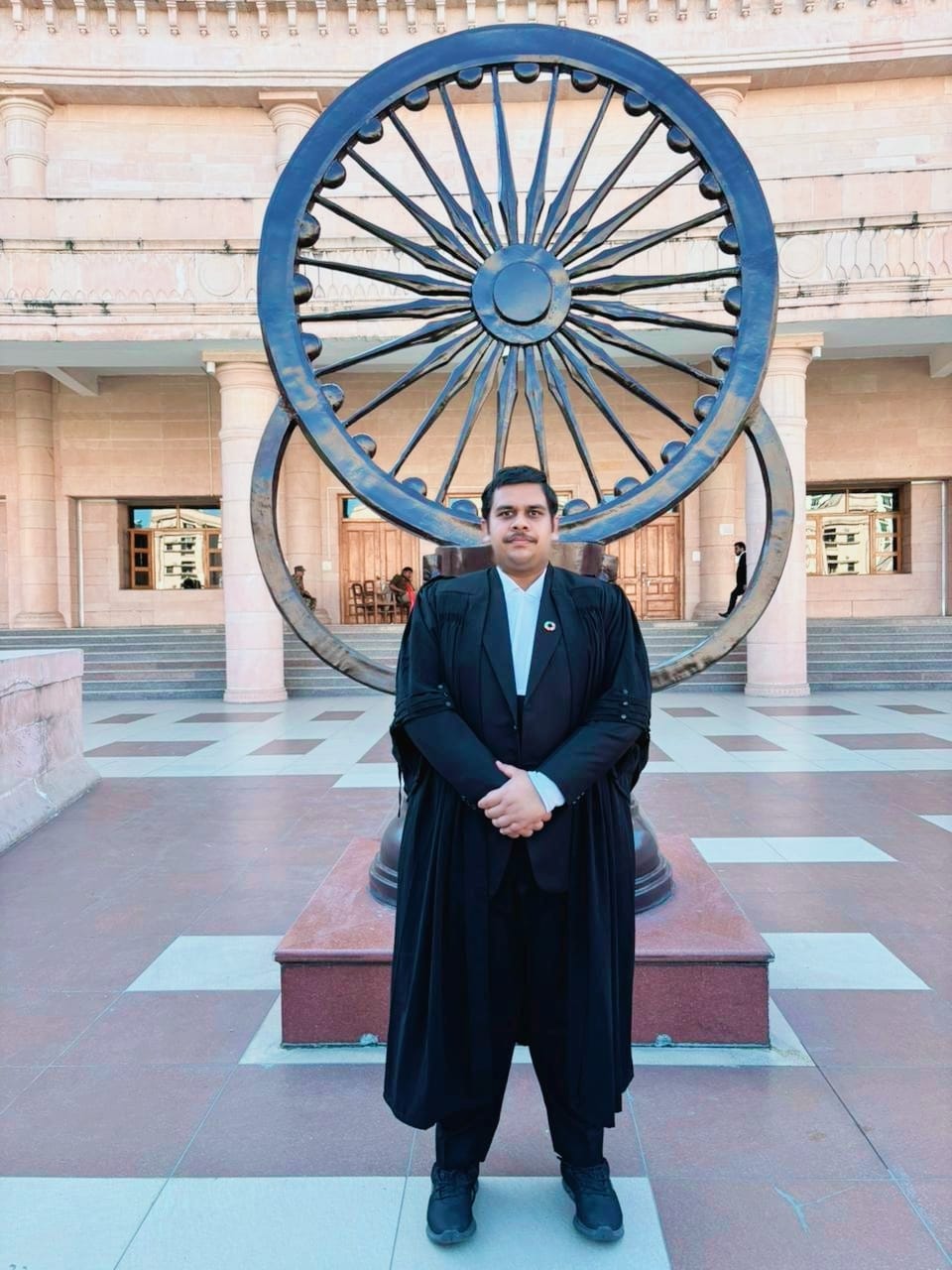
  • “Change starts with individuals who challenge the status quo and advocate for justice. Building alliances and understanding cultural nuances are key to addressing global human rights issues,” – Dr. Anthony Raju, Advocate at Supreme Court of India & Chairman of Indian National Human Rights Protection Council

    “Change starts with individuals who challenge the status quo and advocate for justice. Building alliances and understanding cultural nuances are key to addressing global human rights issues,” – Dr. Anthony Raju, Advocate at Supreme Court of India & Chairman of Indian National Human Rights Protection Council

    This interview has been published by Namrata Singh and The SuperLawyer Team
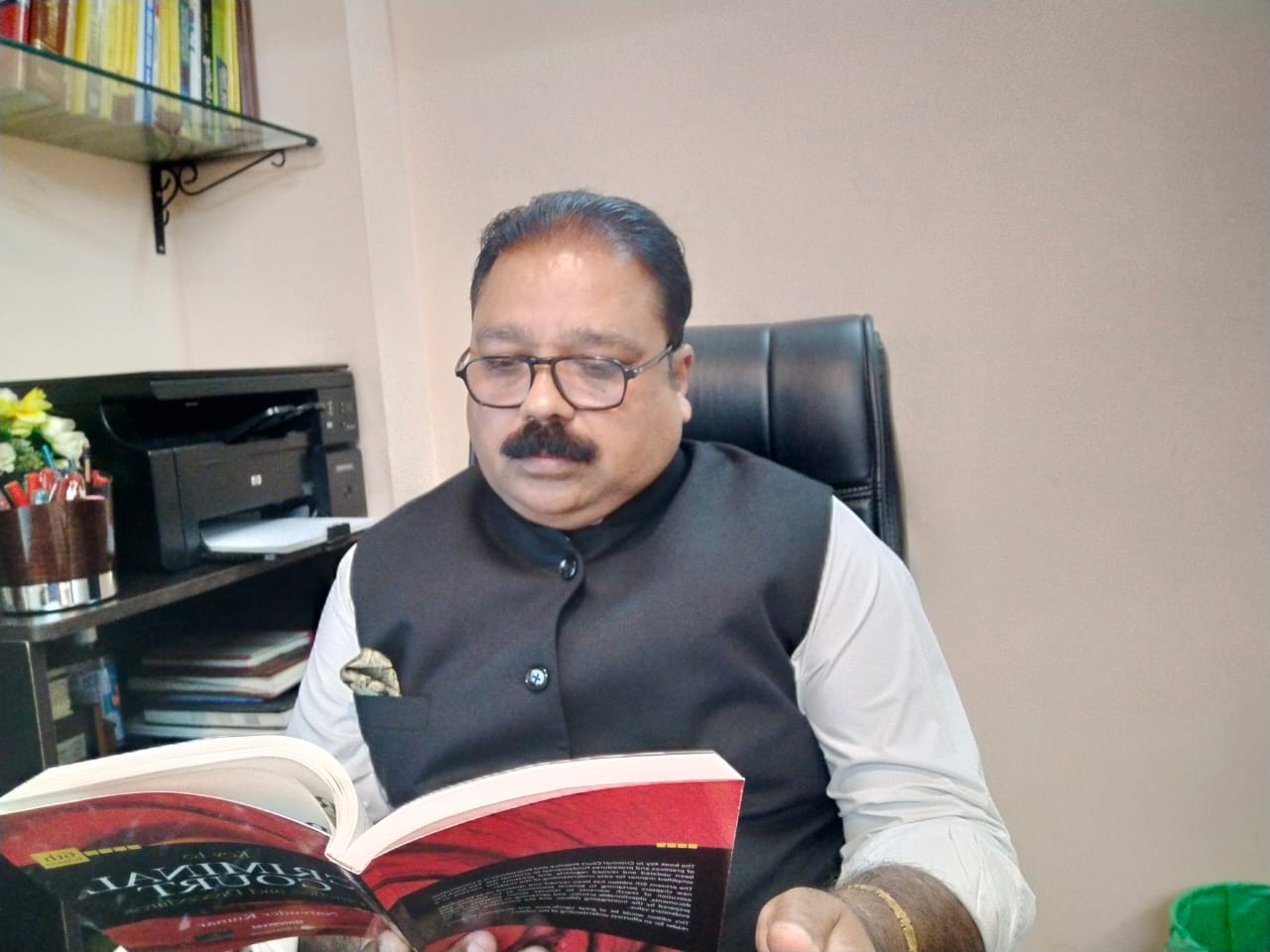
    Dr. Anthony, with such an impressive and diverse list of roles – Advocate, Human Rights Activist, TEDx Speaker, and more – could you share with our readers a bit about the journey that led you to wear so many hats?

    My journey began in a very humble setting in Meerut, Uttar Pradesh. Growing up in a poor family, I had to work from a young age, selling newspapers and working in small shops to support my family while pursuing my education. This early exposure to hardship instilled in me a deep sense of empathy and a desire to fight for justice. My legal education and subsequent practice as an advocate opened up avenues for me to address issues I deeply care about, such as human rights and social justice. Over time, my roles expanded naturally as I found myself addressing these issues in various capacities – be it as a lawyer, activist, or speaker. Each role complements the other, enabling me to make a broader impact.

    Juggling between being a lawyer, human rights activist, and so much more must be quite a feat. How do you maintain a balance between your legal profession and your various social and humanitarian roles?

    It indeed requires a delicate balance, but the key lies in passion and prioritization. My legal profession and humanitarian roles are interconnected, as both strive towards the common goal of justice and human dignity. I allocate specific times for my legal practice, social work, and speaking engagements, ensuring that each receives the attention it deserves. Effective time management and a dedicated team also play crucial roles in helping me manage these diverse responsibilities without compromising on any.

    Your dedication to human rights is evident not only in your professional life but also through your social work in tribal and underprivileged areas. What motivates you to spend a significant amount of your time in these communities, both nationally and internationally?

    The motivation stems from my early life experiences and the realization of the stark inequalities that exist in our society. Spending time in tribal and underprivileged areas allows me to directly engage with and understand the challenges faced by these communities. It’s one thing to advocate for human rights from a distance, but it’s entirely different to be on the ground, witnessing the struggles and triumphs of the people. This direct engagement fuels my passion and commitment to making a tangible difference in their lives.

    As a dynamic criminal advocate and human rights ambassador, you’ve spoken at TEDx. Can you share a moment in your career that you consider a turning point or a particularly proud achievement?

    One significant turning point was when I founded the All India Council of Human Rights, Liberties & Social Justice (AICHLS). This platform has allowed me to channel my efforts more systematically and mobilize support for various human rights causes. Another proud moment was speaking at TEDx, where I could share my journey and inspire others to join the fight for justice and equality. Receiving the “International Human Rights Awards” and honorary doctorates were also affirmations of the impact of my work and further motivated me to continue my advocacy.

    You’ve been recognized with several awards, including honorary doctorates and the “International Human Rights Awards.” How do such accolades fuel your commitment to the causes you champion?

    These accolades serve as important validations of the work being done and the causes being championed. They bring attention to critical human rights issues and inspire others to join the movement. For me, these recognitions are not just honors but also reminders of the responsibilities that come with them. They reinforce my commitment to continue advocating for those who cannot speak for themselves and to push for systemic changes that uphold human dignity and justice.

    In addition to your legal practice, you founded the International Human Rights Advisory Council. Can you tell us more about the council’s mission and some of the key initiatives it has undertaken?

    The International Human Rights Advisory Council aims to promote and protect human rights globally through education, advocacy, and direct intervention. One of our key initiatives is providing free legal aid to marginalized communities, ensuring they have access to justice. We also run awareness campaigns on issues such as child rights, women’s rights, and the right to education. Additionally, we collaborate with other organizations to address human trafficking and violence against women. Our mission is to create a world where every individual can live with dignity and freedom.

    How has your venture, Legal and Legal Associates, made a significant difference in people’s lives by providing free legal aid, intersected with your role as a criminal lawyer, and can you share a challenging or interesting case where your dedication and skills played a crucial role in securing justice?

    Legal and Legal Associates has been instrumental in providing free legal aid to those who cannot afford it, ensuring that justice is accessible to all. One particularly challenging case involved a group of tribal women who were falsely accused of theft. My team and I worked tirelessly to gather evidence, advocate for their rights, and eventually secure their acquittal. This case highlighted the intersection of my roles as a criminal lawyer and human rights activist, demonstrating the impact of dedicated legal advocacy in protecting the vulnerable.

    How does your commitment to fostering understanding through the World Inter-Faith Council for Peace & Human Rights align with your initiatives like “Giving with Compassion,” and how do you envision the intersection of human rights and interfaith dialogue inspiring individuals to contribute to social causes on an individual level for a more peaceful world?

    The World Inter-Faith Council for Peace & Human Rights and “Giving with Compassion” both stem from the belief that understanding and empathy are crucial for social harmony. Interfaith dialogue promotes respect for diverse beliefs and fosters a sense of shared humanity. By encouraging individuals to look beyond their differences and unite for common causes, we can inspire them to contribute to social justice initiatives. The intersection of human rights and interfaith dialogue is powerful because it not only addresses legal and social issues but also nurtures the moral and ethical dimensions of peace and justice.

    How has your journey as a change maker shaped your approach to navigating the complexities of international relations as a diplomat and advocate, all while realizing the profound impact that an individual can have on society?

    My journey has taught me that change starts with individuals who are willing to challenge the status quo and advocate for justice. As a diplomat and advocate, I approach international relations with a focus on collaboration and mutual respect. Understanding cultural nuances and building alliances are key to addressing global human rights issues. Realizing the impact one individual can have inspired me to continue pushing for systemic changes and mobilizing others to join the cause. It’s about creating ripples that lead to broader societal transformations.

    On a more personal note, can you share a hobby or interest that you turn to for relaxation and rejuvenation amidst your busy schedule? How does it complement your work-life balance?

    I find solace in reading and meditation. Reading allows me to explore new perspectives and ideas, which is essential for my work as an advocate and speaker. Meditation helps me maintain mental clarity and emotional balance, enabling me to handle the various demands of my roles effectively. These hobbies provide me with the necessary downtime to recharge and stay focused on my mission.

    Aside from your professional endeavors, we’ve heard that you are involved in teaching and training. What advice do you have for aspiring advocates and human rights activists entering the field today?

    My advice to aspiring advocates and human rights activists is to stay committed to the cause, no matter how challenging it may seem. Dedication, hard work, and perseverance are crucial. Always remain empathetic and understand the struggles of those you are advocating for. Continuous learning and staying informed about legal and social issues will equip you to be effective in your efforts. Lastly, never underestimate the power of collaboration and building networks, as collective action can amplify your impact.

    Ge in touch with Dr. Anthony Raju–

  • “Law is an instrument of socio-economic change for me. Being an Advocate is both a privilege and responsibility.” – Aditya Singh, Founder and Chairman of Alexis Group

    “Law is an instrument of socio-economic change for me. Being an Advocate is both a privilege and responsibility.” – Aditya Singh, Founder and Chairman of Alexis Group

    This interview has been published by Namrata Singh and The SuperLawyer Team

    Aditya, looking back at the start of your career, what were some of the biggest challenges you faced, and how did you overcome them? Could you share a bit about your journey from your early days to where you are now?

    I am a first generation Advocate and lifelong student of law. I transitioned from management consulting to law in my late twenties. At the start of my career, some of the biggest challenges were uncertainty about career direction, lack of social networks within the legal profession, moral and ethical dilemmas, cultural and social barriers, facing rejection from potential clients, getting a fair remuneration, and difficulty in building the personal brand. 

    To overcome these challenges, I started seeking guidance and mentorship from seniors at the Bar, gaining practical experience by assisting them in a variety of matters, exploring different industries, prioritizing time management, viewing rejection as a learning opportunity, engaging in networking activities, pursuing continuous learning, and remaining adaptable to change.

    I believe that by persevering, staying resilient, and embracing opportunities for growth and development, I am navigating through these challenges and progressing in my career. 

    Now, I am working on a wide variety of matters in civil, criminal, commercial, constitutional, corporate, service/employment, and labour & industrial relations domains. My focus is on corporate advisory, dispute resolution, governance and compliances, research and analysis, and legal awareness and education. I also serve as a Legal Advisor or Empanelled Advocate for various companies, firms, and organisations such as the Vodafone Idea Limited, Docland Services Limited, and Uttar Pradesh Kabaddi Association to name a few. 

    You may learn more about me and my journey on www.adityasingh.co

    Could you tell us more about Alexis Law? What kind of work does the law firm undertake, and how do you leverage its resources and network to drive your initiatives in legal practice, public policy, and youth empowerment?

    Alexis Law is a full-service law firm based out of Lucknow. The firm offers wide range of legal services, spanning arbitration and mediation, litigation, corporate advisory, policy advocacy, and more. Leveraging its resources and networks, the firm undertakes pro bono work and community engagement efforts, such as legal clinics, legal awareness camps, and educational seminars. Furthermore, the firm supports youth empowerment initiatives by offering internships, and mentorship programs, thereby promoting diversity in the legal profession. 

    Please tell us about your latest initiative – Alexis Legal? What is your vision for this initiative?

    Alexis Legal is a global alliance of legal and dispute resolution professionals. Our team includes leading advocates, consultants, chartered accountants, company secretaries, cost accountants, and insolvency professionals.

    It is a values driven and membership based organization built on the principles of equity, fairness, and trust. Our core values are Integrity, Excellence, Commitment To Justice, and Continued Innovation.

    This alliance is a one of its kind professional development platform for enhancing the income and impact of legal professionals by improving their discovery and expanding their expertise, practice areas, and jurisdictions.

    As an advocate and consultant, you’ve been involved in various legal matters across different jurisdictions. Can you share a memorable experience or case that has shaped your perspective on the legal profession and advocacy?

    Law is an instrument of socio-economic change for me. Being an Advocate is both a privilege and responsibility. I have joined this noble profession for advancing social justice, protecting human rights, and fostering positive change at both the individual and systemic levels.

    In a recent case argued by me, Hon’ble High Court of Judicature at Allahabad, Lucknow Bench observed that True Love Between Adolescents Can’t Be Controlled Through Rigours of Law or State Action in its reportable judgement.

    It was a case of inter-caste love marriage which turned into an ugly legal battle as the family members of the girl lodged criminal complaints against the boy and his family members. The case was of technical nature due to various stringent sections of IPC and POCSO Acts.

    After dealing the case on technical and maintainability grounds, I presented three crystallised arguments, (a) Love knows no caste boundaries, (b) Romantic relationships between consenting adolescents must not be viewed as criminal acts mechanically, and (c) Happiness and well-being of an innocent couple and their children needs to be protected by the Hon’ble Court using its inherent powers u/s 482 Cr.PC. to uphold rule of law in the society.

    Hon’ble Court graciously allowed the application by accepting our submissions along with relevant judgements and quashed all the criminal proceedings.

    In this case, my team could secure relief for the client and his family in an 11-year-old case. Overall, it was a very fulfilling experience. 

    You’ve been involved in initiatives related to the environment and climate change. How do you see the role of law and advocacy in addressing these pressing global challenges, especially from the perspective of youth engagement?

    Law and advocacy play a vital role in addressing global environmental challenges, with youth engagement serving as a catalyst for positive change. Through policy advocacy, young people can push for the development and implementation of sustainable legislation at various levels of governance. Additionally, they can utilize litigation and legal action to hold governments and corporations accountable for environmental harm, demanding justice for affected communities and action on climate change. By raising public awareness and promoting education, youth-led initiatives can mobilize communities to adopt sustainable practices and advocate for environmental solutions. 

    I firmly believe that innovation and collaboration are fostered through interdisciplinary approaches, technology, and creative solutions, driving systemic change in environmental policy and practices. Furthermore, youth engagement in international forums like the United Nations Climate Change Conferences amplifies their voices on a global scale, fostering solidarity and cooperation in addressing shared environmental challenges. 

    Overall, law and advocacy provide a powerful platform for youth to effect positive change, shaping a more sustainable and resilient future for generations to come. Through strategic engagement in legal and advocacy efforts, young people can play a pivotal role in driving forward the global environmental agenda and promoting a healthier planet for all.

    Your participation in the UN Water Conference in New York and the UN Climate Change Conference in Dubai is quite remarkable. What insights or learnings did you take away from these global platforms, and how do you bring them back to your work in India?

    Last year, I got the opportunity to participate in the UN Water Conference in New York and the UN Climate Change Conference in Dubai as a representative of the Alexis Foundation.

    The 2023 UN Water Conference was held at the UN Headquarters in New York. I led a 7-member delegation and hosted an official side event on the topic – Innovative Solutions for a Sustainable Blue Economy through Water Action, Cooperation and Youth Engagement at the conference. 

    During this conference, I gained a deeper understanding of the global water crisis and the importance of collaborative efforts to address water scarcity, pollution, and access issues. Learning about innovative solutions and best practices from around the world has inspired me to advocate for more sustainable water management practices in India. I have incorporated these insights into my work by promoting water conservation, supporting community-led initiatives, and advocating for policies that prioritize equitable access to clean water for all.

    On the side-lines of this conference, I also met several dignitaries from around the world and Indian leaders and diplomats such as the Hon’ble Minister of Jal Shakti, Government of India, Permanent Representative of India to the United Nations, and Consul General of India, New York.

    The 2023 UN Climate Change Conference was held at the Expo City in Dubai. I led a 5-member delegation to the conference and Alexis Foundation was admitted as an Observer to the United Nations Framework Convention on Climate Change. This conference offered me valuable perspectives on the urgency of addressing climate change and the need for ambitious, collective action at both the global and local levels.

    Witnessing the global dialogue and negotiations first-hand reinforced the importance of interdisciplinary collaboration and stakeholder engagement in tackling climate-related challenges. I have leveraged these insights to advocate for climate resilience measures, renewable energy adoption, and sustainable development policies in India. Additionally, I am working to raise awareness about the impacts of climate change on vulnerable communities and promote climate justice principles in my advocacy efforts.

    Overall, my experiences at these global platforms have deepened my commitment to addressing pressing environmental issues and advancing sustainable development goals in India. By applying the insights and learnings gained from these conferences to my work, I strive to contribute to positive change and empower communities to build a more resilient and equitable future for all.

    Your journey includes several prestigious fellowships and certifications. How have these experiences contributed to your personal and professional growth, and what role do you see continuous learning playing in your career?

    My journey has been instrumental in shaping both my personal and professional growth. These experiences have provided invaluable opportunities for networking, mentorship, and exposure to diverse perspectives, all of which have enriched my understanding of the field of law and expanded my skill set.

    Participating in prestigious fellowships has allowed me to engage with leaders and experts, fostering mentorship relationships that have provided guidance and support in navigating complex professional challenges. These experiences have also exposed me to innovative ideas and approaches, pushing me to think creatively and critically about my work.

    Moreover, earning certifications has demonstrated my commitment to excellence and expertise in specific areas of interest such as Arbitration and Mediation, Constitutional Law, White Collar Crimes, Intellectual Property Law, Technology Law, and Right to Information. These credentials have enhanced my credibility and opened doors to new opportunities for career advancement and impact.

    Continuous learning is essential for staying relevant and effective in any career, but particularly in the ever-evolving field of law. Embracing a mindset of lifelong learning enables me to adapt to changing trends and technologies, deepen my expertise, and remain at the forefront of innovation. Moreover, it allows me to constantly refine my skills, broaden my knowledge base, and drive meaningful progress in my career.

    In essence, my journey through prestigious fellowships and certifications has underscored the importance of continuous learning in my career. By embracing opportunities for growth and development, I have become better equipped to navigate the complexities of the legal field, contribute to meaningful change, and achieve my professional goals.

    Given your background in both law and management, what approach do you employ to drive innovation and strategic thinking within your legal practice and social impact initiatives?

    As someone who has navigated the intersection of law and management, I have integrated Environmental, Social, and Governance (ESG) efforts into the firm’s strategy and operations and recommend the same to my clients and partner organizations.

    In legal practice, innovation means adapting to client needs. Therefore, Alexis Law has embraced technology to streamline processes, and enhance client experiences. Our team members embody the values of empathy, integrity, commitment to justice and continued innovation.

    To sum up, my approach combines legal acumen, management principles, and a commitment to positive change.

    When you’re not immersed in your professional endeavours, how do you like to unwind and recharge? Any hobbies or interests you’d like to share with our readers? 

    I am a firm believer in the philosophy of work-life integration. To unwind and recharge, I take short vacations every quarter and travel around the countryside in India and around the world. As a spiritual and religious person who loves nature, history, art and culture, I prefer to visit ancient temples, forts, palaces, museums and art galleries. My hobbies are photography, numismatics (collecting coins and notes), and philately (collecting stamps).

    What advice would you give to the current generation looking to pursue a career in law or advocacy, considering the evolving landscape of legal practice and social issues?

    For those aspiring to pursue a career in law or advocacy, it’s crucial to stay informed on legal trends, policy changes, and social issues, developing strong communication and critical thinking skills, and embracing technology. I believe that building a professional network, prioritizing ethics, and remaining adaptable and resilient are essential for success in the evolving legal landscape. 

    Furthermore, practical experience through internships and clerkships is invaluable, as is focusing on social impact and contributing positively to the society. Last but not the least, it’s imperative to prioritize self-care and well-being to sustain a fulfilling career amidst the demands of the legal profession. 

    Overall, aspiring legal professionals must strive for a combination of knowledge, skills, ethical integrity, adaptability, resilience and a commitment to making a difference in the society.

    Get in touch of Aditya Singh-

  • “Through open communication, continuous learning, and professional development, I cultivate a culture of collaboration that drives success.” – Purvi Shah Asher, Partner at M/s. Maunsukhlal Hiralal & Co

    “Through open communication, continuous learning, and professional development, I cultivate a culture of collaboration that drives success.” – Purvi Shah Asher, Partner at M/s. Maunsukhlal Hiralal & Co

    This interview has been published by Namrata Singh and The SuperLawyer Team

    Reflecting on your journey from the initial days after college to where you are now, could you share some insights into the challenges or struggles you faced when starting your career, and how you navigated through them to reach your current position as a Partner at Mansukhlal Hiralal & Co.?

    When I look back at my early days, I faced several challenges, the foremost being establishing myself in a competitive legal landscape. I started working at the grassroot level and navigated the system while learning the legal skills. People believe that litigation is about drafting and arguing, but a huge part of litigation is the process that each of the courts implement.  

    In hindsight, starting my career at Mansukhlal Hiralal & Co. felt daunting. Balancing the steep learning curve with client demands was challenging. It was a centenarian firm with an impeccable reputation to vouch for. But I embraced mentorship, built relationships, and developed resilience. Each obstacle became a stepping stone, fuelling my growth and leading to my current role as a Partner. The most challenging part for me was networking. As  lawyers, we are not trained to network. Personally, I had to work hard to come out of my shell to expand my network. =I focused on continuous learning, and sought mentorship from seniors and experts. I worked in different roles to develop new avenues and set a solid base for the years ahead. This act of building a strong network and fostering positive relationships within the legal community also played a pivotal role in my journey. Being able to adapt and never give up was vital. This helped me overcome hurdles and move forward in my career to the position I am in today.

    Congratulations on being named ‘Woman Legal Leader of the Year’ by the Future Digital Summit 2022! Can you share with us what this recognition means to you personally and professionally? Also, given your achievements, including being part of the Asia Super 50 Disputes Lawyers, what motivates you to continue pushing boundaries and excelling in your field?

    Thank you for your kind words. These recognitions are truly an honour and a testament to the hard work of not just myself, but my entire team at M/s. Mansukhlal Hiralal & Co. In fact, it is humbling as well as intimidating since now the bar is set higher and I know I need to do even more than I have been, to stay on these lists.

    It was a pleasant surprise being named the ‘Woman Legal Leader of the Year’ by Future Digital Summit 2022. It is a substantial honour for me, both on a personal and professional level. Personally, it signifies that the determination and effort I have invested in my profession have been recognized and rewarded. Professionally, this accolade serves as a motivation to continue contributing to advancements in the legal sector, reinforce my commitment to diversity and inclusion, and to inspire other women to pursue leadership roles. 

    Furthermore, being part of the Asia Super 50 Disputes Lawyers adds another layer of motivation. It reinforces my dedication to pushing boundaries and excelling in my field and contributing meaningfully to the legal community. It’s a constant reminder that excellence is a journey, not a destination, and one cannot get carried away with it.

    As a TEDx speaker, we’re curious about your experience. What topic did you speak about, and how did sharing your insights on that platform influence your perspective on your legal practice?

    My passion for empowering women extends beyond the courtroom. I recently gave a TEDx Talk titled ‘Equality Begins at Home,’ where I explored how fostering gender equality within families can be a powerful catalyst for broader societal change.

    During my years of practice, I have represented several women who are ill-treated at home, be it mentally, physically, emotionally or financially. While I help them legally, I can say that in this evolving world, the term equality is used very loosely. There are so many facets of equality that need to be looked into. It is easy to understand that if you don’t grow up understanding what equality is, you will have difficulty in implementing it.

    I am sharing the link as well.

    During my talk, I emphasized the importance of looking into people’s mindset. It is a change that is required to bring equality in life. Equality is only spoken about superficially. It’s not just about educating a girl child or her having a successful career. It is how girls and women are treated at home and outside and breaking societal stereotypes to empower women. I shared stories of resilience, determination, and success, highlighting how only a change of mindset can have the transformative impact that empowering women can have on families, communities, and societies at large.

    As a lawyer, my experience speaking on the TEDx platform influenced my perspective on my legal career. It reinforced the important role of the legal system in promoting gender equality and protecting women’s rights. It highlighted the need for lawyers to actively participate in projects that promote women’s empowerment and advocate for policies that address gender inequality.

    On a personal note, my 13-year-old son was the proudest to have his mother be invited to be a TEDx speaker. He also related to the topic and understood its essence. He helped me throughout my preparation. So, for me, that itself was a big win.

    As a leader heading the corporate, real estate, and dispute resolution team, how do you foster a collaborative and innovative work environment among your team members? Can you share an example of a successful collaborative effort that had a positive impact on a project or case?

    As the leader heading the corporate, real estate, and dispute resolution team, fostering a collaborative and innovative work environment is critical to success. One effective way I encourage collaboration is by encouraging open communication and creating a culture where team members feel comfortable sharing their ideas and opinions. I believe in the power of ideas and actively seek opinions from individuals of different backgrounds and expertise. Additionally, I encourage continuous learning and professional development and motivate team members to stay abreast of industry growth and development. We hold in-house update sessions once a month where all the team members educate the other members with critical updates.

    One outstanding example of a successful collaborative effort in our group was during a real estate transaction for the sale of two adjoining plots of land with two separate structures. The interesting part of this land holding and the structure holding was that the ownership belonged to one family, and was divided into several entities being: 

    1. Individuals,
    2. Several HUFs
    3. Private Limited Company
    4. Partnership firm and
    5. Trust

    Along with this, there were several disputes inter-se between the co-owners including testamentary disputes, corporate actions, and partners-inter se, and there were several tenants in both the structures. All these land-holding structures and the disputes led to a very low valuation of the property.

    For the sale of this property, my real estate team, my dispute resolution team and my corporate team not only worked together but put a joint face before the clients and all the adversaries. With such seamless collaboration, all the disputes and challenges were resolved and the client got a substantially high consideration for this property.

    For aspiring lawyers and law students looking to excel in corporate law, real estate, or dispute resolution, what specific skills or areas of knowledge do you believe they should prioritize during their education and early career? Considering your diverse expertise, what types of internships or practical experiences would you recommend for students to gain a well-rounded understanding of the legal field and enhance their employability?

    For aspiring lawyers in corporate law, real estate, or dispute resolution, prioritizing skills such as legal research, negotiation, and communication is crucial. I personally believe that whatever practice area you choose, one should always have hands-on experience in litigation and dispute resolution. One may be brilliant at drafting contracts and commercial documents, but execution of the agreement is not the measure of good drafting. The measure of good drafting is the test of the court. If the document does not speak for your intent in drafting in the Courts, the draft is not good enough. I strongly recommend having hands-on litigation experience early on in your career and then deciding your area of practice.  I also strongly recommend judicial internships.

    Needless to say, staying updated on industry trends, and developing business acumen is essential. Practical experience through internships and networking can provide a holistic understanding of the legal profession and enhance employability. To gain a well-rounded understanding of the legal field, students should pursue internships in diverse areas, including law firms, corporate legal departments, and government organizations. Practical experiences in drafting and research contribute to a comprehensive skill set. Exposure to different legal environments helps students adapt to various scenarios, making them versatile professionals.

    You hold licenses as a Solicitor in the U.K. and Wales as well as in India. How has being a member of both legal communities enriched your professional perspective, and how do you navigate the differences in legal practices between these jurisdictions in your daily work?

    Being a Solicitor in the U.K. and Wales as well as in India has enriched my professional perspective. It allows me to move seamlessly between legal systems, giving clients a global perspective. Having recognized the differences between legal practices, I use the strengths of each jurisdiction to provide comprehensive solutions. It provides me broader understanding of the nuances of international law and enhance the quality of legal services.

    Considering your extensive experience, are there any key changes or developments in the legal landscape of India that you find particularly noteworthy or impactful for the legal community?

    The Indian economy and landscape is changing every day. The laws we have also need to be updated at the same speed. There are several noteworthy changes in the legal sphere as well. As the world takes steps into the world of Artificial Intelligence and constant digital upgradation, the challenges of privacy have increased multifold. To mitigate the same, Digital Personal Data Protection Act, 2023 (DPDPA) is a crucial development in the Indian legal landscape.  It is the very first comprehensive data privacy law in India with focus on individual rights. It empowers individuals with rights like access, correction, and erasure of their personal data, granting them greater control over its use. It also imposes obligations on data fiduciaries i.e. businesses collecting and processing personal data with respect to data security, transparency, and accountability. It also establishes the Data Protection Authority to oversee data protection compliance and investigate potential violations.

    The Indian government is actively working to update and improve its regulatory framework across various sectors. This includes initiatives like the Insolvency and Bankruptcy Code (IBC), the Goods and Services Tax (GST), and the Real Estate (Regulation and Development) Act (RERA)

    The Indian legal system is embracing technology at an accelerating pace. Increasing use of technology in legal practice, including virtual court proceedings, has streamlined processes and increased accessibility. This shift presents both opportunities and challenges, emphasizing the need for legal professionals to adapt to the evolving landscape.

    Initiatives like the eCourts Mission and the introduction of online dispute resolution (ODR) platforms are transforming how cases are filed, managed, and adjudicated.

    Outside of your legal career, what are your favorite ways to unwind and relax? Do you have any hobbies or activities that you find particularly rejuvenating?

    I am a big advocate for work-life balance. Outside of my legal career, spending time with my son and my family are my biggest stress busters. I also find relaxation through various activities. I love reading, it gives me a break and a new perspective. I have re-connected with Bharatnatyam and it is really fulfilling to perform again on the stage. Traveling and exploring different cultures also rejuvenates me, and gives me new perspectives that positively impact my professional life.

    Get in touch with Purvi Shah Asher-

  • “One must dive into the ocean of cases to understand the real intricacies and interpretation involved in Law.” – Pawan Reley, Advocate-on-Record, Supreme Court of India.

    “One must dive into the ocean of cases to understand the real intricacies and interpretation involved in Law.” – Pawan Reley, Advocate-on-Record, Supreme Court of India.

    This interview has been published by Namrata Singh and The SuperLawyer Team

    Reflecting on your journey from law school to becoming an Advocate-on-Record at the Supreme Court, what were the pivotal moments that shaped your career?

    “Qabza dila diya mujhe mere makaan ka

    Mere jo hain vakil adeem-un-nazeer hain

    Poochho jo unki fees, tou ab us makaan mein

    Khud hazrat e vakil rihaaish-pazeer hain.”

    -Anwar Masood

    (English Meaning-

    “My lawyer helped me get possession of my house.

    He is blessed with unmatchable foresight. The fees, however, were so high that it cost me to cover the house itself.”

    The aforesaid lines I came across in my law school days stirred a profound transformation within me, redirecting my aspirations from a corporate job towards the realm of practicing law and aiding those in need as much as possible. I harbored a persistent dream of exerting every effort to alter the public perception of advocates for the better.

    Though my odyssey of the profession of law commencing from law school has not been an easy one but an arduous endeavor. As I was a Hindi Medium Student, even in Law school I encountered myriad problems. I got back in two subjects (English and Economics) in my inaugural semester. My peers hesitated to form a moot team or collaborate on articles with me, exhibiting their professional reservations despite amicable personal relations. In that time some latent sense of inferiority had pervaded my psyche. I don’t blame anyone for this. As humans, everyone wants to be with the best, which I was certainly not in the sight of my colleagues. I decided to fight this and transcend these challenges. I made all possible attempts to hone my linguistic prowess after reading various literature and Judgements. I started writing various articles on different topics. I decided to become the only Speaker in Moot Court competitions to conquer the fear of facing the judges. Colleagues now started trusting me for all kinds of work. Ultimately, I topped my last semester and earned the accolade of Student of Excellence. While I secured a few placements, I opted to practice law in Delhi. I joined the office of my senior with a stipend of Rs. 10,000/- in the Supreme Court of India.  However, this was not enough to survive. I also realized that learning the trial court work for any first-generation lawyer is highly essential. Thus, I used to work in Trial Court from 9 am to 6:30 PM and earn Rs. 10,000/-, take personality development classes from 7:30 PM to 9 PM (Monday to Saturday) and earn Rs. 5,000/-, and then work for the Supreme Court drafting from 10 PM to 2 AM and earn Rs. 10,000/-. These circumstances fortuitously instilled in me resilience to confront challenges with unwavering resolve. I also initiated pro bono law classes for the underprivileged students for the preparation of Judicial Services Preparation from 2016. When people around reposed trust in me, they gave a few really challenging cases to fight. I tried my best and the same resulted in fortifying the trust of people in me.  I decided to write an AOR exam in 2023. My foundational academic expertise, cultivated through instructing judicial services aspirants, facilitated success in the AOR examination. In the legal profession, while supreme intelligence may be optional, mastery of patience remains an indispensable requisite.

    As someone who handles diverse cases, including civil and criminal, could you share an experience that was particularly challenging and how you navigated through it?

    Allow me to recount a pivotal case, which was like a litmus test for my tenacity and devotion to the legal profession. It was my first big case, which I got by god’s grace merely after seven months of my practice. I had a very small office in Pocket -2, Mayur Vihar Phase-I, Delhi. It was the evening of 12th of February 2016, which unfolded a narrative that would indelibly mark my legal journey. A group of around 8 to 10 people entered my office and told me that the Government of Delhi was cutting thousands of trees in the green belt area of Sector 15-16 Trilokpuri in order to build flats for the people whose land had been seized by the Delhi government for the Nizamuddin Metro project. Their plea was urgent, as the matter was slated for final arguments in the High Court on February 14. They implored me to initiate proceedings before the National Green Tribunal (NGT) on February 13 and concurrently file an Impleadment application in the High Court on February 14.

    Those people divulged to me that since they were unable to get other advocates to file the matters in such a short duration for a reasonable amount of fee, which led them to seek my assistance. They further asked me if I would be able to file the case in such a short duration before NGT and in the High Court. Undaunted, I seized this opportunity without a moment’s hesitation and said “Yes”. Despite lacking experience in filing Original Applications before the NGT and possessing no format for such applications, I committed myself to the challenge. They endowed me with three hundred pages of representation and other notices in Hindi. I enquired about the format of Original Application with other friends. My inquiries among legal peers yielded no guidance, as they were unacquainted with NGT proceedings.

    I knew that it was a daunting task to go through the entire file and draft the application in a 12-hour window. I read the file till 5 AM the next day. I thought it was impossible for me to complete the same. I thought of giving up. I was quite broken. Faced with exhaustion and contemplation of capitulation, I discerned a divine test of my dedication to the legal profession. Resilience prevailed, I again started working and completed the draft by 10 AM without any sleep. I filed the matter before NGT after serving the copy of the case to five different counsels on the other side. I mentioned the matter and after fearless arguments secured the stay from NGT on the same day. Next day again I could not sleep because I had to file an impleadment application before the Hon’ble High Court. I filed the application just in time and it was allowed by the Hon’ble High Court. The bench, after giving me a patient hearing, held that it is the duty of the Government to provide home to the aggrieved persons but not at the cost of cutting trees.

    This case not only introduced me to local communities but also attracted independent clients seeking my advocacy. I share this experience as a testament to the crucible moments faced by young advocates. In the face of adversity, it is imperative to rise, sprinting with unwavering determination, for it is the endurance forged in such crucibles that propels young advocates forward in this demanding profession.

    Your book, “Iudexcracy vs Democracy: Revisiting Fourth Judges Cases,” is noteworthy. What motivated you to write it, and what key message do you hope readers take away from it?

    My fervent inclination to contribute to this work predates the NJAC case escalation to the Apex Court.  As a law student, I harbored a profound interest in Constitutional law, initiating my engagement with the field early on. With guidance from seniors in Law school, I started writing articles and presenting papers from my first semester itself. In the beginning of sixth semester, my team participated in a Moot Court competition centered on Judicial Appointments and the National Judicial Appointments Commission (NJAC). Later in my final year, I thought of extending the research on Judicial Appointments and NJAC through my dissertation. When I graduated from law school and started practicing law in Delhi, I found that the 99th Constitutional Amendment Act, 2014 along with NJAC Act had been passed in Parliament and the same had been challenged in the Supreme Court. My co-author (who was interning in the Supreme Court at that time) and I diligently used to observe daily proceedings every day from 10.30 AM to 4 PM captivated by the profound legal minds presenting eloquent submissions. Amidst this intellectual panorama, we envisioned ourselves as solitary islands, fervently desiring to contribute our perspectives to this ongoing debate. Our initial intention evolved into a more concrete idea – encapsulating our insights in the form of a book. Then, we were astonished to see the voluminous judgment consisting of more than 1,000 pages. Undeterred, we scrutinized it meticulously, identifying flaws that spurred our decision to conduct a critical analysis. The book meticulously explored judicial appointment procedures in other nations, drawing comparisons with the Indian context. It articulated arguments both for and against the basic structure doctrine, delving into its genesis. Additionally, the book elucidated arguments supporting the constitutionality of the NJAC with few suggestions. The book lauded the dissenting opinion of HMJ Chelameswar and called him an unsung hero because he was the only judge who fearlessly maintained in his dissenting opinion that there is “nepotism” in the judiciary.

    Winning the Atam Samman and the Udbhav Cultural Award reflects your significant contributions to the legal field. How do you handle the balance between a successful legal practice and your role in academia?

     I am really humbled and honoured to receive these awards. It is my deep interest in academia which has given wings to my legal practice granting me a multifaceted perspective.  When any academician studies any law subject for teaching the student, he studies that from beginning to the end. Thus, whenever I find any case to represent in Court be it Civil or Criminal, where interpretation of any provision is required, I in the dual capacity of academician and practicing lawyer can see various angles which may sometimes be overlooked by few practicing lawyers. As far as I have researched, almost all legendary advocates and Judges have been great academicians. For instance, Shri Nani Palikwala, despite his busy practice, used to devote his time to teaching law to students and was a part-time Lecturer at Government Law College, Bombay. He endeared himself to students by his clear exposition of the subject—always with a dash of humour and eloquence (At that time he was lecturing on the Evidence Act.). 

    I would like to narrate one of my real stories which is connected to academics and legal practice. In the year 2017, when I was waiting for my item to reach before one Single bench in Delhi High Court, one of my colleagues at the Bar was making his submissions before the Court that he sent the representation to the Government. Then the Ld. Judge posed him a question that, “When a Communication of proposal and acceptance is complete and under what provision of law is it provided?”

    Then my colleague at the Bar started referring to some Judgements. The Court specifically pointed out that it does not want judgement but provision of law. When the counsel could not answer, Court posed the same question to the members of the bar present in Court to be answered. Upon receiving the opportunity I raised my hand and answered the question, as at that time I was teaching my students Indian Contract Act, 1872 only.  The court, acknowledging my response, expedited my case, demonstrating the tangible benefits of a robust academic foundation in legal practice. I believe that the marriage of academia and legal practice is indispensable for cultivating a flourishing and enduring legal career.

    Your involvement in guiding judicial services aspirants pro bono is commendable. How important do you believe it is for legal professionals to contribute to legal education and mentorship?

    If you have knowledge, let others light their candle in it.-

    Margaret Fuller

    There is really a dire need in the Society of the “good legal professionals”. I regularly interact with Law students across the country. I feel that they really want to study and aspire to be good advocates but lack proper guidance and mentorship, causing them to veer off course in their pursuit of legal excellence. Problem is many law students are neither given proper practical insights by their law college nor guided by any experienced law professional. One can become a good legal professional only when one gets proper guidance, right mentorship and proper exposure to the law field. Study confined to four walls of law school is not sufficient. One must dive into the ocean of cases to understand the real intricacies and interpretation involved in Law. It is the bounden duty of all experienced legal professionals to extend a guiding hand and to give back to Society whatsoever limited they have.  It is the duty of the Law professionals to instill the sense of honesty, integrity and confidence in the young minds for their future. This noble profession demands a commitment to service rather than a mere quest for financial gain, and imparting these values to aspiring lawyers is pivotal.  I request all law professionals through this platform to treat law students with respect even if they don’t know anything. They don’t know that is why they are students. Don’t neglect or demean them even if they do not have the basic understanding of law. They would be natured and nurtured through your profund guidance.

    You recently spoke at TEDx. Could you share the central theme of your talk and any key takeaways you want the audience to remember?

    My TEDx talk was not related to Law or the legal profession. It ventured beyond the legal sphere. The title of my talk was “Why we need to relearn the art of Crying”. It was related to the perception with which we should see the world. I have discussed why we need to let go of our ego, and why it is required to leave everything on nature when we have already acted and when our true faith and the situation has gone beyond karma. I discussed how this nature gives you everything without even demanding it. My talk emphasized the superpower of crying. It explains why respect and power of this world lies under softness (in Hindi “Komalta”) and not under hardness (in Hindi “Kathorta”), and thus why you need to be soft and gentle. I would to place the Urdu couplet from Habib Jalib which matches my TEDx talk and is apt for the people with ego considering themselves as God specifically in the field of law:

    “tum se pahle vo jo ik shaḳhs yahāñ taḳht-nashīñ thā 

    us ko bhī apne ḳhudā hone pe itnā hī yaqīñ thā”

    “ab vo phirte haiñ isī shahr meñ tanhā liye dil ko 

    ik zamāne meñ mizāj un kā sar-e-arsh-e-barīñ thā”

    Outside of your legal endeavors, what are your personal hobbies or interests that help you unwind and find balance in your busy schedule?

    Beyond the legal realm, I find solace in playing Chess. It is like a booster dose for me. I also love indulging in the rich tapestry of Indian Philosophy (Bharatiya Darshan) from Charvak Darshan to Mimansha Darshan etc. In my free time I also read old Hindi Literature. Nowadays, I have immersed myself in the world of Munshi Premchand as I am reading his novel namely Gaban. It soothes my mind as it takes me to the old lifestyle of the village and makes it dreamy and nostalgic at the same time.

    What advice would you give to aspiring legal professionals, considering your own experiences and the evolving landscape of the legal field?

    I will give the following advice:

    1. Find your right mentor:

    The first and one of the most difficult challenges for any young advocate who wants to dive into law practice is to find his/her right mentor who is not only a good lawyer but also a good human being. A mentor who gives his juniors the opportunity not only to seek adjournments and conduct research but also to argue some small matters in the beginning of his practice. A mentor who does not disrespect his juniors and can show his junior the right path and guide him in case of any need. Thus, the journey of finding the right mentor should start from the first year of law school itself.

    1. Read Judgements consistently:

    Cultivate a practice of reading judgments every day. There should not be even a single day when you have not read any judgement. Take small judgements in the beginning and not the long judgements like “Keshavanada Bharti (1973)” or “K. S. Puttaswamy (2017)”. Completing small judgements will boost your confidence. Keep reading it for 6 months without having any expectation. Reading judgements will improve your drafting skills, court language, legal vocabulary, interpretation of law, knowledge, and communication of law.

    1. Do anything and everything to improve your communication Skills:

    Recognize that effective communication is as vital as legal knowledge, with the ability to express ideas clearly a hallmark of a successful lawyer.

    1. Try to have positive social media presence specially if are first generation lawyer:

    Harness the power of social media specially if you are First generation lawyer, but with caution, ensuring accurate and verified information to avoid negative repercussions.

    1. Try to start your practice from Trial Court or at least learn the work of Trial Court specially if you are First Generation Lawyer:

    There are a very limited number of cases which come to the Supreme Court. Thus, the first-generation lawyers who start practicing in the Supreme Court find it difficult to survive after four to five years of practice as they get very few cases. I have witnessed many first-generation lawyers leaving practice and joining firms or companies with meagre salary because of high instability in their legal practice leading them to depression and anxiety. Thus, as far as my opinion and experience is concerned, for first-generation lawyers, gaining experience in Trial Court work is crucial for survival and growth in the legal profession.

    1. Embrace hard work, dedication, and patience: 

    These virtues are the cornerstone of success in the legal profession, fostering resilience and long-term prosperity.

    Get in touch with Pawan Reley-

  • “Be curious; Curiosity doesn’t always kill the cat. It drives you to explore, learn, and innovate, making you a more effective and impactful legal professional” – Senjuti Mallick, Space Law Specialist, Sr. Legal & Compliance Officer, COMSPOC Corp., USA

    “Be curious; Curiosity doesn’t always kill the cat. It drives you to explore, learn, and innovate, making you a more effective and impactful legal professional” – Senjuti Mallick, Space Law Specialist, Sr. Legal & Compliance Officer, COMSPOC Corp., USA

    This interview has been published by Namrata Singh and The SuperLawyer Team

    Senjuti, your journey from ILS Law College in Pune to being a Space Law Specialist is truly fascinating. Could you share a bit about what sparked your interest in space law, and how you found your way into such a unique field?

    My fascination with space law began with a childlike curiosity about the galaxy and a passion for legal intricacies. This unique intersection of cosmic wonder and legal frameworks set me on a path that would ultimately shape my career in a remarkable way. Early on, I embarked on a series of independent research projects focused on various aspects of space law. What made these endeavors particularly intriguing was the dearth of readily available reference material at the time. I soon realized that this field wasn’t merely a collection of regulations governing celestial bodies light-years away. It was, in fact, a gateway to a profound understanding of how we, as a species, interact with our universe. Fueled by this passion, I followed a trajectory of continuous learning through education and specialized training, which eventually opened doors to opportunities where I could translate my knowledge into real-world applications.

    You’ve been recognized as a ‘Next-Gen Space Sustainability Leader’ by the Secure World Foundation and have been on several high-level panels as a subject matter expert. How does it feel to be acknowledged for your contributions, and what advice would you give to aspiring professionals looking to make an impact in the field of space sustainability?

    Being recognized as a next-gen leader and having the privilege of contributing at numerous high-level panels has been an incredibly gratifying and humbling experience. It’s a testament to the collective efforts of individuals and organizations dedicated to preserving the long-term sustainability of outer space, and I’m truly honored to be a part of this community. The recognition serves as a constant reminder of the importance of my work in ensuring the responsible use of space for future generations. As the space industry continues to expand, it is exciting to play a role in shaping the legal frameworks that ensure responsible and sustainable activities in outer space, marking a transformative era for space exploration.

    My humble advice to aspiring professionals in this field would be – stay informed, stay inquisitive, stay connected. Space sustainability is a complex, interdisciplinary arena; seeking diverse perspectives, collaborating across disciplines, and always considering the long-term implications of any space-related actions would be paramount. It’s a field that requires innovative thinking and a commitment to preserving the outer space environment for future generations, so look beyond the conventional and be adaptable.

    Apart from law, you’ve delved into teaching and programming roles at The Fletcher School, Harvard Law School, Space Generation Advisory Council (SGAC) and International Institute of Space Law (IISL). How have these experiences outside traditional legal roles influenced your approach to your profession? 

    Venturing beyond traditional legal roles into teaching and program management at prestigious institutions like The Fletcher School and Harvard Law School, as well as engaging with dynamic organizations like the SGAC and the IISL, has been a journey of immense growth.

    Teaching not only deepens one’s understanding of the law but breaking down complex legal concepts enables one to view these concepts through multiple lenses. On the other hand, project management and programming roles require one to look beyond legal issues and consider broader operational and policy implications. These experiences have allowed me to engage with a diverse array of students, academicians, and professionals from different cultural and professional backgrounds and have broadened my worldview. It has bolstered my belief in the value of diverse perspectives in solving complex global challenges, like those we face in space.  

    Lastly, these experiences have underscored the importance of mentorship and community building, which has inspired me to be not just a legal expert, but also a mentor and advocate for the future generation of space law professionals. They have reinforced the idea that being a space law specialist isn’t just about understanding the law; it’s about understanding people, technology, and the ever-evolving dynamics of space exploration and utilization.

    Your publications cover a wide range of topics, from ‘Artemis Accords’ to ‘Space Debris.’ If you had to pick one issue in space law that you believe deserves more attention or public awareness, what would it be, and why?

    Among the myriad issues in space law, the one I believe urgently warrants greater attention and public awareness is the management and regulation of space traffic. Space traffic management (STM) encompasses how we navigate, operate, and manage the increasing number of satellites and other space objects orbiting the Earth. With the burgeoning growth in satellite launches, the Earth’s orbits are becoming increasingly congested. This congestion poses risks of collisions, which can add significant amounts to the already existing millions of pieces of space debris, further leading to the Kessler Syndrome – a cascading collision chain reaction leading to increased space debris. This in turn poses a threat to functional satellites and, consequently, to crucial services like GPS, weather forecasting, and global communications that we rely on daily. Public awareness about STM is essential because the consequences of neglecting this issue impact everyone. It’s not just about safeguarding assets in space; it’s about maintaining the integrity of vital services that underpin our modern society. 

    My work at COMSPOC Corporation, a leading provider of Space Situational Awareness (SSA) solutions, has given me firsthand insight into the importance of effective space traffic management. COMSPOC’s cutting-edge technologies contribute to the monitoring and tracking of space objects, enhancing the safety and security of space operations. By seamlessly integrating SSA solutions into the broader STM frameworks, we can not only address the immediate challenges but also promote a sustainable and secure environment for future space endeavors.

    Away from the legal arena, you’re a TEDx Speaker and have been featured on podcasts. Can you share a bit about your experience as a speaker and how you connect your passion for space law with broader audiences?

    One of the most exciting aspects of such engagements is the opportunity to ignite curiosity and passion about a niche field, in people who might never have considered it. I find that storytelling is a powerful tool in this regard. By weaving complex legal concepts with narratives about space exploration, the potential future of humanity in space, or the challenges of managing space traffic, I can make these topics relatable and compelling.

    I also focus on the real-world implications of space law and how space improves life on Earth to drive home the fact that these are not abstract concepts; it’s something that affects everyone’s everyday lives. Additionally, these engagements allow me to dispel common misconceptions about space law. Many people think of it as a futuristic field, but when I talk about current issues like space debris or the legal complexities of lunar exploration, it becomes clear that space law is a dynamic and relevant field today. Ultimately, my goal as a speaker is to bridge the gap between the legal and space communities and the general public. I aim to demystify space law, encouraging more people to learn about, engage with, and contribute to this vital area that holds so much potential for our collective future. 

    Given your unique career, you must have had some unforgettable moments. Could you share one experience that felt truly out of this world, whether it’s related to your work or personal life?

    While there have been many unforgettable moments in my career, one of the experiences that stands out as truly ‘out of this world’ was exploring the depths of ice caves in Alaska. Venturing into the heart of these majestic caves, with their ethereal ice exuding hues of blues and greens, and echoing stillness, felt like stepping onto another planet. It seemed as if time had paused, with rocks and boulders suspended in the icy walls, like comets frozen mid-shower. The temperature, a biting -20℃, only added to the sense of being in a completely different world, one far removed from the familiar. It was a surreal reminder of the beauty and mystery that lie in unexplored spaces, whether on Earth or beyond.

    The other was exploring the Biosphere 2 research facility. This offered a glimpse into what sustainable life-support systems on other planets might look like. This experience was a striking example of the delicate balance we must maintain in our exploration and habitation efforts, both on Earth and in space.

    What other hobbies or interests do you pursue to unwind from your busy professional life?

    Gosh, that’s a tough one. I have too many of those. Trekking, hiking, running, dancing, and star gazing are some of my favorites. 

    If you can give one piece of advice to the coming generation who are just starting their legal career, what would it be, and why?

    Be curious; Curiosity doesn’t always kill the cat. It drives you to explore, learn, and innovate, making you a more effective and impactful legal professional. So, ask that extra question, shake that extra hand, give that extra smile, and go that extra mile. In the same breadth, be ready to listen, and accept that you may not have the right answers and that someone else might be more knowledgeable. 

    Get in touch with Senjuti Mallick-

  • Arguing a matter in court may sound and seem quite glamorous. But behind these glamor filled moments are hours and hours of hard work which of course, is behind the scene and goes unnoticed. It’s with every lawyer- Rajeshwari Hariharan, Arguing counsel, Founder of Rajeshwari & Associates

    Arguing a matter in court may sound and seem quite glamorous. But behind these glamor filled moments are hours and hours of hard work which of course, is behind the scene and goes unnoticed. It’s with every lawyer- Rajeshwari Hariharan, Arguing counsel, Founder of Rajeshwari & Associates

    This interview has been published by  Priyanka Karwa and The SuperLawyer Team

    Please  tell us about your journey and how you ended up pursuing a career in law, particularly in the field of Intellectual Property Rights?

    After college, I wanted to do medicine. But, due to some circumstances, I couldn’t do that and turned to law.  I had seen some of my father’s friends as lawyers and was curious. So I took to law and joined practice at the District court. I had exposure to many common areas of law like conveyancing, land laws, contracts, arbitration, and even medical negligence. The medical negligence case really got me hooked on law. Then I got work on some trademark cases at my senior’s chamber  (Mr Khaladkar) which lured me into the area of intellectual property law. Because IP was not so well known in District Courts, we came to Delhi to explore and understand this area bit better.  

    I realised that there are lawyers who specialise just in intellectual property law. As a green horn I wanted to absorb every bit of work that came my way – be it a trademark matter or any other. Eventually, I joined K&S Partners where I had the good fortune to work on very interesting matters including the Basmati patent revocation, turmeric patent revocation, neem patent revocation, etc. My knowledge in sciences came in handy in patent matters, be it drafting or developing arguments in court. So it was reinforced that IPR was the way to do it. 

    Soon in 2008-09 I set up my own practice. I then had the occasion to work on various important matters including the first ever compulsory licence that was granted in India by the Patent office. I continue to work on patent and other intellectual property matters and with new technologies, I think there will be many more opportunities for us to assist the court and  development of law. It has been a very interesting journey and I really cherish every moment. 

    With a background in biotechnology, what led you to specialize in Intellectual Property Rights? Was there a specific experience or event that sparked your interest in this field?

    As I mentioned, my initial  years of practice were focussed on general law. It was deliberate, as I felt that one should first build a sound fundamental platform and from thereon, one can expand and deep dive into any specific area of your liking. That’s how I did a myriad of matters including cases relating to Urban Land Ceiling Act, banking, arbitration, conveyancing, medical negligence etc. All this made me look at different areas and open up new vistas. But I always wanted to use my science background and was looking for an appropriate area where I could put this to use. My senior’s chamber had some cases on medical negligence which were very interesting. In fact, there was a suit for damages against a doctor which was filed and it was my science background that helped us make comprehensive and incisive arguments that impressed the court and finally led to dismissal of the suit. Then we got a couple of patent matters – where again I had the occasion to assist the court with my technical knowledge. We won that matter also.  All this fortified my belief that IPR is an area where my science background would inevitably be my Ace card and this area is what I should specialise in. Back then in 1995-96, generalisation was the trend and specialisation rarity. But the more I read about Intellectual property, the more I fell in love with the subject. And the love affair continues till date. Even today, I think, all that I know is just a tip of the iceberg. There is an undiscovered ocean and even a lifetime is not enough to master this infinite ocean of knowledge. You may say I was lured into IPR practice. 

    You founded Rajeshwari & Associates, a full-service IPR law firm specializing in various areas. What motivated you to start your own firm, and what were some of the challenges you faced during the initial years?

    I was always taught that law is a service, a profession where one has ample occasions to serve the public at large. And I have experienced it first-hand. We had a case relating to a land dispute (partition dispute) and our client was a farmer from Aurangabad. He would dutifully come on each day of argument, sit at the chamber with folded hands and hope that we would be able to argue and win his case. He knew he has contributing nothing in terms of law- but that was his way of expressing his moral support to us. 

    Eventually, we won the case for him at the District Court. He was so elated, so happy  that tears welled up in his eyes and he fell at the feet of my senior. We were literally “gods” for him!!!

    Our whole chamber of 15 lawyers had worked day and night to research and develop arguments for his case. When we won the case and saw the expression on this man’s face, we as young lawyers felt a deep sense of satisfaction, a sense that we did something that impacted someone’s life positively. I cannot tell you the joy that we felt or express in words the feeling that we had. All our gruelling days of hard labour, the slavery, the torture by my senior just vanished with this one expression. 

    A week later he returned with two sacks full of potatoes and rice. That was the client’s way of paying the fee for the case. My senior also accepted it with grace and did not ask anything at all. Nothing was spoken but both knew what was going on. 

    This again reinforced that we actually did something good and our work was not academic. There were many such instances that had left an indelible mark and resulted in a firm resolve, that one day, I will have my own chamber where I will serve such clients and witness the happiness on their face.  That is why, after serving in a law firm for many years, I started my own practice where I have complete freedom to decide which matters I should take up, when and how. I only wish I had done this much earlier. 

    Over the course of your career, you have achieved significant milestones in the field of IPR, including winning the first ever compulsory license for Natco and litigating the Glivec battle up to the Supreme Court. Can you share some insights into these landmark cases and the impact they had on the Indian patent landscape?

    Both these cases that you mention have had a socio-economic impact. First – the compulsory licence case. That case was one where I and every one in my team had worked for days on end researching, strategizing, going back to the drawing board again and again. And of course, with the firm backing from our client Natco, we could make it. Our client’s mission was to make a life saving drug (sorafenib) available to the common man- to save a liver cancer patient from immediate death and extend his life by several months. It was about a big pharma abrogating to itself the right to choose who would live and who would die. The mission was so huge that we couldn’t help identifying ourselves with it and acting as catalysts. The case had its own share of challenges- like how to prove that the drug sorafenib sold at Rs. 2,80,000 by Bayer is not affordable ? There was no published article that profiles and analyses the income of liver cancer patients. So, we did a survey of such patients. 

    Then, came the simultaneous suit for infringement, and our counter-claim. The court in the infringement suit asked how we could argue that the patent is invalid and at the same time, ask for compulsory licence. The answer lay in the Patents Act itself – which carves out no exception as to who can challenge the validity of a patent and provides that non-challenge clauses in agreements are bad. Case law such as Lear vs Adkins (US) came to our assistance. 

    Then came the arguments before the Controller General – I was opposite a Senior Advocate Sudhir Chandra and he was at his shrillest best. Though I may not have matched the pitch in terms of decibels or stature, me and my team had worked equally hard  to present a compelling case for grant of Compulsory licence which was ultimately upheld by the IPAB, the Bombay High Court and Supreme Court. 

    The Glivec case was also a device of strategy, strong technical arguments and arguments of public interest. Here, Novartis had been granted the first ever Exclusive Marketing Rights (EMR) under the Patents (amendment) Act 2002. Basis this, they were rightly granted injunction by the Madras High Court against certain parties. We challenged the EMR at the Delhi High Court on the ground that it was granted without hearing the affected parties, and without due notice. Novartis immediately filed a suit at the High Court of Bombay, being armed with the Madras High Court order. Our client was naturally jolted. I was told by my colleagues that its no use fighting the suit at the Bombay High court who is bound to grant injunction in view of the Madras High Court order. However, I was hopeful. We argued many issues including public interest. In fact public interest was a very strong argument in the facts of that case – the drug imatinib mesylate was to be given to CML (blood cancer) patients who were in their final stage. The cost of the drug as sold by Novartis was Rs. 1,10,00/- per month as compared to Rs. 6000-8000 of our client. We cited case law from the UK and other countries and argued various aspects of public interest. The court ultimately refused the injunction, and the primary basis is public interest. The judgement is reported as ‘Novartis Vs Meher Pharma’. 

    There was also the opposition to the patent application for polymorphic form of imatinib mesylate which opposition was allowed by the Patent office on the ground that the invention lacked novelty, inventive step and failed on the ground of section 3(d). This was one of the first ever cases where the Patent office had the occasion to explore section 3(d) and due to lack of therapeutic efficacy rejected the application. This was upheld by the High Court and Supreme Court. 

    Both are cases etched in my memory. Both are cases that have actually helped cancer patients. Something I have always wanted to do.    The Glivec case is also important for the reason that it interpreted the scope of section 3(d) and it is that interpretation that we follow till date. The CL case had interpreted the CL related provisions of compulsory licence that were hitherto considered ‘academic’ and near impossible to achieve.

    As an arguing counsel at the High Court of Delhi and the Supreme Court of India, you have represented clients in patent and other litigations. What are some of the unique challenges and opportunities you encounter when arguing before these higher courts?

    It is a very interesting and challenging life as an arguing counsel. Firstly, we argue matters on the basis of instructions from the instructing lawyers and basis their briefs. Sometimes their pleading lacks some of the most basic or crucial points that one may need for arguments. But still, we have to make do, plaster the pleading and make out a good case. Second, many times, the briefing counsel is not up to-date with the latest developments in law – resulting therefore in bad planning or taking incorrect steps or filing unwanted applications which may get rejected by the court. Obviously, the instructing counsel and more so -the client are puzzled as to what happened with the outcome. Third, I find that people just show clients a rosy garden which is bit different from real life. So again when I tell them that their case has certain flaws, they are not very happy. Fourth,  some people feel that once a brief is handed over to a senior, their job is over- it is actually the start of the process. As a result, our team has run the extra mile to make sure we have all the tools and ammunition to do well in the court. 

    Arguing a matter in court may sound and seem quite glamorous. But behind these glamor filled moments are hours and hours of hard work which of course, is behind the scene and goes unnoticed. It’s with every lawyer. 

    But at the end of the day, if we achieve a good outcome, every midnight oil burnt is worth it and we will do it a hundred times over. 

    You have been recognized as a visionary in the domain of Intellectual Property Rights. How do you stay updated with the latest trends and dynamics shaping the intellectual property landscape, especially in developing nations?

    It is very important to stay updated not only with cases of Indian courts but also of courts in other countries as it gives an idea of the trend. It also gives an insight into what was argued and how the argument was received by the court. So I try and keep case-law reading for weekends or anytime that I find free. I don’t like to waste time and I try to utilise in catching up with case law or technology. The only way to stay updated is to allocate time and in disciplined manner keep reading. I also get invited to do podcasts or talks at various places on various subjects – that also keeps me on my feet. Sometimes we have discussions with groups. All this helps. But self-reading and staying updated is indispensable.

    As a TEDx speaker, what was the topic of your talk, and why is it important for you to share your insights and knowledge through platforms like TEDx?

    I am a follower of TED talks and have been greatly inspired by these talks. I was very excited to be invited to give a TEDx talk. 

    So I thought, I should speak on a topic that would be helpful to one and all- courage and conviction, Its about having the courage to pursue your path despite the negative talk around, despite the discouragement. I think in life as well in any profession, there is a need to pursue your objective or goal with all your might, complete perseverance and passion. There will be obstacles but if you are determined, nothing can stop you. But the determination must be strong and unshakable.  

    We have been taught these principles and most of us do apply them in our daily lives and surely do practice them. But it is important to keep reminding ourselves of these principles from time to time so that we stick to the chosen path and don’t deviate. And what better example than our own experiences. 

    With burgeoning information on the internet, today’s youth wants to do something, but is often confused or even discouraged if they do not instant success like instant Maggi. 

    Hence I talked about my experience, about how I had debilitating injuries and despite that, I managed to survive and move on, rather than mourn over what was lost. I felt that if I could inspire at least one person, I can say, it’s a good beginning. 

    You have authored several articles and are a regular speaker at conferences and seminars. Can you share some of the key messages you aim to convey through your writings and speaking engagements?

    I have been writing since a very young age. Most of my speaking assignments at conferences and seminars are IPR or other legal topic oriented. Hence through these sessions, I try to spread knowledge – the knowledge that I have gained so far. I think that people attending any session on any topic should find it a good investment of time and effort- and as trainers or speakers it is our responsibility to ensure that their time is well spent. So I usually prepare and try to ensure that whatever topic I speak on throws some new perspectives and the audience is able to gain knowledge. Knowledge is gained by spreading not by keeping it locked. 

    Recently, I have authored a chapter on Trade Secrets and it is published by Chambers in 2023. You will find the link at https://practiceguides.chambers.com/practice-guides/trade-secrets-2023/india/trends-and-developments. The chapter summarises the position in India regarding trade secrets. It gives an insight into the existing law and the remedies available within the current framework. 

    Surely, with technical progress, everyone would be impacted especially companies and institutions. Its high time we enact a comprehensive law on trade secrets and law should protect confidential information in whatever shape and form. Right now, we have several judicial precedents to protect confidential information. While we are quite successful in protecting breaches of confidentiality by employees, it is always helpful to have a legislation as it imposes confidence in business owners and enables framing of appropriate policies to protect such information. 

    With your vast experience in the field of IPR, what advice would you give to fresh graduates who are aspiring to pursue a career in law, particularly in the domain of Intellectual Property Rights?

    For fresh law graduates, I would advise that they should initially try all kinds of practice areas. Gain knowledge and not look for instant money. This is a profession not a money spinning business where one expects ROI from day one or year one. It’s a profession, a service to the public. Money will come, slowly but surely. Knowledge is king. 

    So one should practice in lower courts, gain experience in courts, tribunals, working or training with solicitors as well as in-house counsels and having gained a general perspective, then, make up your mind whether you want to do litigation or something else. Its each for himself. In this profession, hard work is the only currency that may get you somewhere. There no short-cuts; so one has to have patience and keep working at it. You would attain your gaol sooner or later. If you choose litigation, it is surely a hard life. Even a solicitor’s life is not as simple as you think – every field will have its own twisted path. But one has to enjoy the process, enjoy the profession, satisfy yourself with the happiness and smile that you may bring on someone’s face. That’s the glory and gold coins this profession offers.

    Get in touch with Rajeshwari Hariharan-

  • Aditya Singh, Founder and Chairman, Alexis Group, on founding Alexis Group, Indian Law Conclave and opportunities for law students

    Aditya Singh, Founder and Chairman, Alexis Group, on founding Alexis Group, Indian Law Conclave and opportunities for law students

    Aditya is founder and chairman of the Alexis group. He has completed his Master of Science in International Management with Merit from the Department of Strategy and Organisation, and Gold Level Certificate in Entrepreneurship from the Hunter Centre of Enterprise, Strathclyde Business School, University of Strathclyde, Glasgow. He also served as the President of Bharat Sansthan (India Society) at the university in the year 2014-15.

    He is a Bachelor of Commerce (Honours) majoring in Finance and Marketing from the University of Delhi. He has also served as a Teach for India Fellow to eliminate education inequity in India.

    Aditya has also been recognised as a Global Shaper by the World Economic Forum and as a Changemaker by the Global Action on Poverty. He was selected as a Hesselbein Fellow by the University of Pittsburgh, USA in recognition of his exemplary leadership and civic engagement skills and as a Prerna Fellow by the Indian Institute of Management Lucknow, one of India’s top b-school in recognition of his exemplary leadership and entrepreneurial skills. He was also conferred the Fellow of CMS Award in recognition of his outstanding leadership and community service.

    He has represented India at various International events including prestigious International Youth Forum Seliger organised by Federal Agency on Youth Affairs, Russian Federation and International Youth Forum Mauritius by Konectenu.

    In this interview we speak to him about:

    • Success of Alexis Group
    • His experience representing India at various International Forums
    • His experience as a TEDx speaker
    • Being a recipient of various Fellowships


    HOW WOULD YOU LIKE TO INTRODUCE YOURSELF TO OUR READERS?

    I am an intuitive and inquisitive person with a blend of entrepreneurial mindset. I love to interact with people, discuss ideas, build institutions, and get things done. On professional front, I am a qualified management consultant with specialisation in strategy, marketing, and policy.

    Furthermore, I adore public speaking and speak on wide range of subjects such as Education, Leadership, Civic Engagement, Development, Entrepreneurship, Excellence, Ethics & Values, Right to Information, Research Methodology, Public Accountability, Cross Cultural Communication, Youth Empowerment, Public Policy, Law, and Politics.


    PLEASE TELL US SOMETHING ABOUT YOUR CHILDHOOD AND COLLEGE LIFE?

    I grew up in campuses of NDUAT Kumarganj, Faizabad and IIM Lucknow as my parents are Professors. I studied at DAV Public School in Faizabad and City Montessori School, Aliganj in Lucknow. Both the schools provided me a very strong foundation of ethics and values and emphasised on the importance of human and divine education along with material education. Overall, I had a very eventful childhood filled with wonderful peers and teachers. I participated in various games, sports, activities and events both in school and campus.

    I pursued Bachelor of Commerce (Honours) from Ramanujan College, University of Delhi. My undergraduate academic experience was very enriching and I have enjoyed every part of it. It enabled me to become an independent person, interact with diverse set of people, understand multiple perspectives, think out of box and widen my horizon. Alongside with my studies, I was also involved with the National Service Scheme throughout the three years of college.

    Later, I pursued MSc in International Management from University of Strathclyde, UK. My postgraduate learning experience was more about reflective learning, learning from peers and putting critical thinking into action in different projects taken by me. Studying with peers from 25 nationalities was indeed a great learning experience. International Management also taught me a lot about people, culture, leadership and diversity apart from different functional areas of management such as Finance, Marketing, Human Resource Management, Entrepreneurship, and Strategy with the International component in all of them.


    WHAT MOTIVATED YOU TO START THE ALEXIS GROUP? WHAT WERE THE CHALLENGES YOU FACED AND WHAT IS YET TO BE ACHIEVED?

    I wanted to create a global youth empowerment platform and develop a pool of young leaders who are passionate about inclusive development, sustainability, and giving back to the society by creating new opportunities and disrupting vicious cycle of poverty.

    I believe envisioning and incorporating an organisation was an easy task (though it seemed very difficult at seventeen). However, aligning my personal and organisational goals, recruiting and managing people, sustaining the organisation, staying true to the vision and creating sustainable positive impact are some challenges faced by me in past and present times too.

    Our motto is Passion for Excellence and remaining true to it, our nine year journey has been a roller-coaster ride. I feel that we have made significant progress in various work areas and empowered several young leaders. However, we still have a long way to go in fulfilling our vision. The journey has just started and I look forward to collaborate with young people from around the world to fulfil this shared vision.


    WHAT ARE THE WORK AREAS THAT ALEXIS GROUP FOCUSED ON?

    Broadly, our work can be divided into Advocacy, Awareness, Consultancy, Education, Events, and Research.

    Our focus areas include Agriculture, Economics, Education, Governance, Healthcare, Human Rights, Technology, Law, Management, Public Policy, Rural Development, Strategy, Women and Youth Empowerment.

    PLEASE SHARE YOUR EXPERIENCE REPRESENTING INDIA AT VARIOUS INTERNATIONAL FORUMS.

    I have represented India at International Youth Forum Seliger Russia, International Youth Forum Mauritius, Global Business Studies Programme at School of Oriental and African Studies, University of London, Hesselbein Global Leadership Academy, University of Pittsburgh, USA and Shape South Asia Conference in Dhaka.

    It has truly been an incredible experience. I have always tried to be an energetic ambassador of India by showcasing our rich Culture and Heritage around the world. Travel and experiencing diversity have really widened my thought process and horizon. This has also enabled me to become more conscious about my choices and decisions.


    WHAT IS THE SCOPE OF WORK FOR A LAW STUDENT AT ALEXIS GROUP?

    Historically, our leadership team has had 80% people from law background. However, now we have a diverse mix of people from management, technology and law in our leadership team.

    Throughout the year, we advertise various leadership and internship opportunities in the following work areas: awareness, research, education, and events. Furthermore, around 60% of our interns come from Law schools. Over 1000+ law students have interned with us in past nine years.


    HOW CAN A LAW STUDENT APPLY FOR INTERNSHIP AT ALEXIS GROUP?

    A law student can fill our Common Application Form available on the Careers page of Alexis Group website: www.alexis.in

    Additionally, they can send their CV to careers@alexis.co.in

    If they have already done some preliminary research and wish to work with a particular member organisation, they can mail their CV directly to the respective member organisation on its official email ID.


    PLEASE TELL US ABOUT THE INDIAN LAW CONCLAVE. HOW CAN LAW STUDENTS PARTICIPATE IN THIS?

    Indian Law Conclave is a three day National Conference organised by Adhrit Foundation, INY Foundation and Model Governance Foundation at International Youth Hostel, New Delhi from 29th June – 1st July 2018.

    The Conclave will have delegates from all over India who will engage in three days of rigorous learning, reflection and sharing of knowledge, skills, experiences, and perspectives. Focus areas of the Conclave would be Alternative Dispute Resolution Mechanism, Constitutional Law, Corporate Law, Cyber Law, Intellectual Property Law, International Law, and Maritime Law.

    The Conclave will have both Formal and Informal events. Formal events include Keynote Presentations, Paper Presentation Competition, and Group Discussions. Informal events include Open Forum, Cultural Night and Ethnic Fashion Show, Life Mapping Exercise, Dance and Music performances. Workshops and Mini Bootcamps on Entrepreneurship, Governance, Leadership, Public Policy, Research Methodology, Self-Management, and Social Media will be also conducted during the Conclave.

    Students can participate by applying on the following website: www.indianlawconclave.com/registration.html


    YOU HAVE ALSO FOUNDED INDIA LAW FORUM. PLEASE SHARE YOUR VISION FOR THIS FORUM.

    India Law Forum is a community for lawyers and law students committed to empower people through legal aid, legal awareness, and legal education. A concept mind map is available on www.indialawforum.com

    The forum will be formally launched on 29th June, 2018 at Indian Law Conclave in New Delhi. As of now, I am interviewing the potential candidates for leadership positions at the Forum.


    YOU ARE THE RECIPIENT OF VARIOUS FELLOWSHIPS. COULD YOU SHARE SOME DETAILS FOR OUR READERS?

    I have received four fellowships:

    Hesselbein Fellowship (2013) – This fellowship is awarded by Hesselbein Global Academy for Student Leadership and Civic Engagement at University of Pittsburgh, USA. Every year, it selects 50 top student leaders from across the world and mentors them to be effective, ethical, and innovative leaders at its Annual Summit.

    Prerna Fellowship (2013) – This fellowship is offered by IIM Lucknow to Top 20 Entrepreneurs every year. It includes an award and 3 day mentorship programme by IIML Faculty and Industry experts.

    Fellow of CMS (2013) – This fellowship is awarded to distinguished alumni of City Montessori School Lucknow who have excelled in their respective fields.

    GAP Changemaker (2017) – This fellowship is awarded by Global Action on Poverty to Changemakers for their ideas and initiatives to eradicate poverty.


    RECENTLY YOU SPOKE AT A TEDX EVENT. WHAT WAS YOUR TALK ABOUT?

    My talk was about Demystifying Collaboration. I shared my learning and experiences of working in the development sector for last ten years. Furthermore, I suggested tools and approaches for making the process of collaboration easy and impactful.


    WHAT WOULD BE YOUR MESSAGE TO OUR READERS INTERESTED IN PURSUING A CAREER IN DEVELOPMENT SECTOR?

    A career in the development sector is both challenging and fulfilling. It provides you an opportunity to bring social and cultural shifts, create positive impact in lives of large number of people and work for sustainable and inclusive development.

    You must be both mentally and physically prepared before you take the plunge, but once you start your journey, there should be no looking back. On the journey, be comfortable with uncertainties because you will have to improvise and reinvent yourself again and again.


  • Kunal Sarpal, Founder and CEO, White Collar Legal, on being an entrepreneur, TEDx speaker and a corporate lawyer

    Kunal Sarpal, Founder and CEO, White Collar Legal, on being an entrepreneur, TEDx speaker and a corporate lawyer

    Kunal Sarpal graduated from ILS Law College in 2016. He is the Founder Partner of White Collar Legal LLP. He is also a company secretary. Very passionate about entrepreneurship, he regularly speaks at various seminars and is also a visiting faculty at various institutes including the TISS, MIT College, Pune. Corporate and IP lawyer, Tedx speaker, entrepreneur, author are only few feathers in his cap.

    In this interview we talk to him about:

    • About specialisation in corporate law
    • Pursuing CS along with LLB
    • Being an Entrepreneur
    • Success of White Collar Legal LLP


    HOW WOULD YOU LIKE TO INTRODUCE YOURSELF TO OUR READERS? PLEASE TELL US SOMETHING ABOUT YOUR PRE-COLLEGE LIFE?

    I was once called a renaissance man by a senior colleague and have always tried to live up to that label. The best part, Leonardo Da Vinci is my all-time idol and inspiration, coincidentally after-whom, the Renaissance man term was coined. Hence, very special for me.

    I practice, teach and preach law and entrepreneurship. By qualification, I’m a Commerce and a Law graduate, a qualified Company Secretary, one of the youngest to clear the course in India at 20 and having started practice immediately.

    I am the Founder Partner of White Collar Legal LLP, a multi-state Corporate and Intellectual Property Law firm, started in 2013 now having over 20 employees and 3 branches.

    I love enterprises and entrepreneurs and how law can be an enabler to anyone who wants to start, scale or save his enterprise.

    I absolutely adore public speaking and hence am routinely giving key note speeches everywhere, am a Tedx Speaker (you can find the talk here https://www.youtube.com/watch?v=-cwTyIOPCC0) and very recently, I have also started making small investments into Social Enterprises.

    Just written a book this year on Internships (you can find it here https://www.flipkart.com/intern-ceo-50-practical-tips-ace-internship/p/itmf3ye9tfhqdbaw)

    Given my love for speaking coupled with teaching, I am fortunate to be a faculty (visiting and adjunct) with Flame University, TISS, MIT and many more, wherein I primarily cover law and entrepreneurship.

    I’d love to go on, but for more (visit my linkedinprofile here https://in.linkedin.com/in/adv-kunal-r-sarpal-3b404635)

    Pre College:

    I can be summoned up in 3 words. Creative. Speaker. Organizer.

    I was all over the place. Extra curricular activities were my thing. Hated academics big time. Still do.

    Loved attending school and college and rarely missed a single day, because there was so much to do!

    Did my schooling from J.N. Petit Technical High School, followed by college at Ness Wadia College of Commerce and ILS Law College. CS was done along-side my Commerce degree. Surprisingly, had great grades throughout after clearing school. Into Top 5 always.

    Throughout school and college, you could find my participating in every event that was going on, be it as a participant, as a delegate or as an organizer. Loved the entire concept of learning from doing. Experiential learning is what they call it today. I have this huge trophy chest and a pile of certificates which I am very proud of.

    Very notorious, always getting into trouble. When my school friends look at me today, they say I’ve changed completely. Few hours spent with them, they realize that not much has changed.


    HOW DID YOU DECIDE TO PURSUE LAW AFTER B.COM? MANY PEOPLE HAVE THE OPINION THAT THE THREE YEAR LLB IS NOT ADEQUATE FOR THE STUDY OF LAW. DO YOU AGREE?

    While I was pursuing my CS along with B.COM, my interest in Company Law and other mercantile laws grew. To satiate this curiosity, I had to do law. Now, after practicing for more than four years, I can safely say that it was a great decision.

    On a lighter note, I’m sure, the only folks who say that are five year law students or graduates!

    To put it straight, the study of law cannot be construed through a tenure or a timeline. It is continuing.

    I enjoyed the three year timeline because it was crisp, all-encompassing and gave me the skill of reading the law. To understand and severe the difference between, what the law is, and between, what the law is for.

    And frankly, that’s all you need to know.

    Interacting with a lot of lawyers now, senior and junior, with a three year and five year law education, I can confidently say that it holds little ground in the long run. Especially in practice. Maybe in employment, the 5 year course is preferred.


    WHAT FACTORS INFLUENCED YOUR DECISION TO SPECIALISE IN CORPORATE LAW?

    My prior education as a CS, study of the legal sector from the practise scope and my inclination towards helping entrepreneurs.

    Since I was the first generation lawyer getting into practise, I knew it’s going to be an uphill task to build clients, generate work, to create a brand and so on.

    Internships were key too. When I interned with lawyers, I realised that litigation at the lower level is not for me. And litigation at the higher level won’t accept me right out of college. So, the choice.

    This also opened a beautiful new area to practise in. The Tribunals. Both NCLT and the IPAT.

    Further, my CS internship with Amanora Group (City Corporation Limited) and my Corporate Law Internship with DSK Legal really gave me exposure to Corporate Law, to practise and to really savour the entire consulting approach to law. I love it till date.

    As a natural corollary, we are now into Intellectual Property Law too.

    I’d say, once you’re really into something you like, things develop. Just give it time. And if you don’t like something, please shift. Don’t give it time.


    YOU ARE ALSO A QUALIFIED COMPANY SECRETARY. WOULD YOU RECOMMEND STUDENTS AIMING TO BE CORPORATE LAWYERS TO ALSO PURSUE CS?

    Oh yes. Definitely. A 100%.

    It’ll help both in employment and practise. Will give you a wider scope and your grasp, especially on Company Law and other allied laws will be super.

    CS is a great course in terms of how it’s administered by ICSI. Especially the examination. Gruelling, lengthy and mind boggling. Application of knowledge is rewarded over reproducing information/retention power. It being a competitive course, clearing it with flying colours will also validate your choice and give you the confidence to choose Corporate Law as a long term career path.


    YOU STARTED YOUR OWN FIRM AFTER YOUR GRADUATION. WHAT WERE THE CHALLENGES IN YOUR INITIAL YEARS? HOW DID YOU OVERCOME THEM?

    Oh my my! (He smiles remembering those days..)

    The challenges just didn’t seem to end for the first few months. As mentioned earlier, no clients, no experience, monthly rent, expenses, over confidence of sitting out of placements, family taunts, not meeting classmates to avoid humiliation, loss of social life, was constantly giving me nightmares. You really need to have to be strong emotionally if you’re starting out from scratch like me. Those were testing times.

    The only thing that kept me going was assignments which came now and then and since I was good at speaking with a decent knowledge of the law, I used to moonlight as a visiting faculty with a few coaching institutions. A habit that stayed, even today, I may have moved on from coaching institutions but am not associated with top Indian Institutions. At most times, I’m teaching students who are my age or older. I think it is fitting to mention here that I’ll be 25 this year.

    By one and half year or so, we had our first employee, office renovated and our names on the building wall with a decent per month takeaway.

    After year two, it was beautiful. A quarter on quarter growth of 25% and above. Since then, no looking back.

    Year three onwards, it’s a well-oiled process driven machine now wherein we target to help 100 new entrepreneurs each year.

    What I did well was, lot of article writing on leading portals and magazines, speaking a lot at conferences and events and teaching. Writing gave me clarity and certain fame. Speaking helped me establish my brand. And teaching helped me stay updated. So in a way, what I loved doing helped me, even though it wasn’t strategic.

    Since we can’t market or solicit clients, the above are excellence avenues to organically create your network. Because your network will eventually become your net worth.


    PLEASE TELL US ABOUT YOUR FIRM WHITE COLLAR LEGAL LLP?

    It’s my baby. My brainchild and comes above everything else.

    To start this journey alone but now sharing it with more than 20+ partners and staff and over 350+ clients is truly rewarding.

    We at White Collar Legal LLP, help individuals and businesses, start up, secure themselves, structure themselves and scale up. Corporate and Intellectual Property Law is where our core competence is. We help execute Ideas. Taking Ideas to IPO or Ideas to Impact.

    We help companies establish their entire legal framework so that the entity is driven by systems and processes and not by promoters or people, so it stands the test of time, the investors and the shareholders. A lot of credit goes to our investors and clients whose constant feedback to us helps us compound our learnings and apply them to future projects. Hence, I’m usually quoted at the office saying that the client feedback is the greatest teacher.

    Right from registering one’s entity to drafting all agreements to getting all the IP secure to advising on M & A, we help entrepreneurs deal with the entire legal framework, partnering with him or her.

    From student startups to large clients like Natural Ice Creams, we cater to them all.


    WHAT DOES IT TAKE TO BE A GOOD ENTREPRENEUR?

    Lots and lots of guts. Being laser focused/Master of one. The ability to eat humiliation for breakfast every day. Clairvoyance to see where you’re industry is headed and accordingly adjusting. A tab on international trends. Using Technology to automate everything non-essential/mundane and for MIS. Incessant reading to keep yourself updated. Very strong skill to sell. A strong WHY/ passion behind doing what you’re doing. Service nature by upbringing. Pro-activeness. Ability to do multiple things. People management. Excellent communication skills. Impeachable character/name/brand. And lastly but most importantly, oodles and oodles of humility.


    YOU HAVE BEEN A TEDx SPEAKER. PLEASE SHARE YOUR EXPERIENCE.

    It was fantastic. Truly. To be able to share your story with the world is something else.

    I feel very lucky and blessed to have had the opportunity. In the Tedx talk, I spoke about youth entrepreneurship. Till date, I keep receiving emails from students about the ideas they have and about people who want to support. An ecosystem is getting built and that’s awesomeness!

    TEDx talk led to many new and better opportunities from a practice, teaching and speaking point of view.


    YOUR FIRM HAS WON NUMEROUS AWARDS. WHAT FACTORS WOULD YOU ATTRIBUTE TO THE SUCCESS OF YOUR FIRM?

    Complete focus on client service. Being their partners in growth and not just cold third party service providers.

    Getting things done. Less talk, more action. Always going out of the way.

    Being young and small, it also helps us stay lean and agile and deploy tech to our advantage, to understand and respond to client needs better.

    The Japanese principle of Kaizen (continuous improvement) is what serves us well.

    To mention my Partner Ms. Isha Eklaspur (ex- VRL Logistics) and two of my key members, Mr. Praful Srivastav and Ms. Gemini Rajgor, who were key in setting the culture of excellence in client service and delivery.


    WHAT SUGGESTIONS DO YOU HAVE FOR LAW STUDENTS AS TO HOW TO BE A GOOD ORATOR? HOW DO STUDENTS OVERCOME STAGE FRIGHT?

    Practice. At every given opportunity.

    Speaking is a skill. And just like archery or swimming or driving or any other skill, you will learn it only by doing it. Not by reading about it or watching videos or listening to lectures.

    10,000 hours of doing anything, will make you bloody good at it!

    And yes, join your nearest Toastmasters Club.


    YOU ARE ALSO A VISITING FACULTY AT TISS, MIT PUNE AND FLAME UNIVERSITY. HOW IS YOUR EXPERIENCE AT TEACHING?

    It is pure bliss and very necessary at the same time. It keeps me updated as I have to read to prepare, it helps me keep in touch with current trends through student discussions and it helps me gain wider perspective, as I have students ranging from all ages and all walks of life.

    I chose to do this only when I received feedback that I was great at it.

    As a student, I always enjoyed listening to visiting, guest or outside faculty a lot. Purely because it brought change and also gave industry perspective. I love doing that with my students. Sharing snippets of what I do with them. Notably, my favorite teachers at college were always visiting faculty. To name a few, Mr. Ajit Kulkarni (for Drafting), Mr. Aglawe (For Land laws), Mr. Dangre (For Criminal law), Mr. Ganu (for CPC) and many others were just fantastic at ILS.

    But we also had equally erudite faculty among others in Mr. Jain (For Constitutional Law), Mrs. Bhadbhade (For Contracts), Mrs. Sagade (For Family law), Mrs. Satya Narayan (For Torts) and Mrs. Sonali Jadhav (For IPC). We were lucky as ILS has the best of both worlds!


    WHAT WOULD BE YOUR WORD OF ADVICE TO YOUNG LAWYERS AND LAW STUDENTS LOOKING TO MAKE A CAREER IN CORPORATE LAW?

    Intern for a minimum of two months and see if you like the work. Work at both small and large firms (at least a quarter dozen) and see if you can do it for 50 years and more of your life.

    Ask questions to your seniors at college and at work. The more the better. The weirder the better. To those who have been there and done that. Don’t assume anything. And don’t settle on Corporate Law or Litigation for extraneous factors such as money, fame or feel good factor. Do it only if you really really love it.

    And if you’re planning to practise, make sure you have all the traits of being an entrepreneur.

    All the best! Crush it!

    Share your thoughts with me at : kunal@whitecollarlegal.in

    Link to company website: www.whitecollarlegal.in