Tag: Telecom

  • Ankit Dixit, Circle Legal and Nodal Head, Vodafone, on being in-house counsel, corporate law, and his diverse experience

    Ankit Dixit, Circle Legal and Nodal Head, Vodafone, on being in-house counsel, corporate law, and his diverse experience

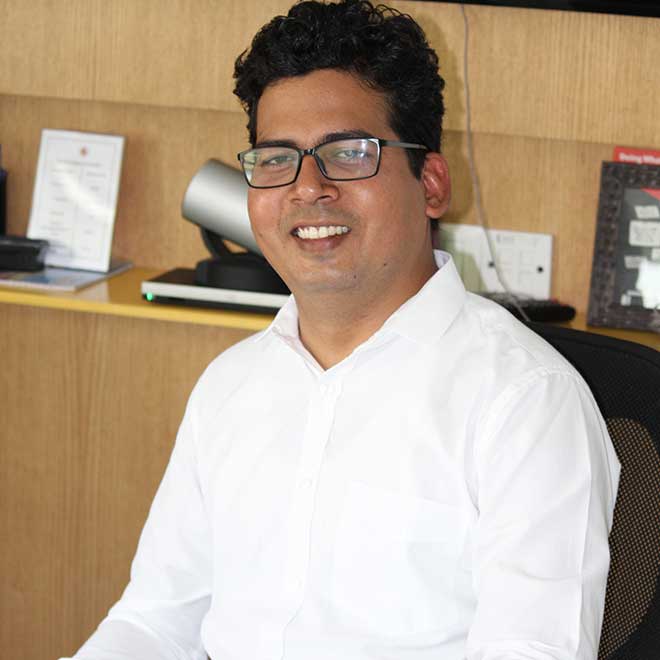
    Ankit Dixit graduated from NLUJ in 2006. Post his graduation he has worked with both law firms and companies. He has spent over a decade working with corporates and law firms. In his current role, he is heading the in-house Circle Legal and Nodal teams of Vodafone.  During his law firm days, he has had the opportunity to advise some of the well-known foreign firms and clients on transactional work. As in-house counsel, he has worked in sectors such as insurance (with Bajaj Allianz), infrastructure (with GMR Airports) and telecom (with Vodafone).

    In this interview we speak to him about:

    • His time at NLUJ
    • His role at Vodafone
    • His diverse experience

    Why did you choose to pursue a degree in law, amidst the many options that you had after school?

    I initially wanted to pursue a career in finance and so wanted to do a M.B.A. in corporate finance. However, getting a law degree was also an obvious choice as I belong to a family of lawyers. When I wrote the law entrance, I was mainly eyeing to get into the integrated course in law and management offered by NLUJ. Although after five years of law school, I realised that I am more inclined towards law than management as a career choice.
    Give us a brief overview of your life at NLUJ.

    I take much pride in the fact that I could witness the formative years of NLUJ, when the foundation of this great institution was built by sheer conviction of a handful people like Prof. Dr. N.L. Mitra, the founder Chancellor of the University. It was first institution of its kind which offered integrated courses combining law with management, humanities and science. Along with the unconventional legal education, the university offered superior infrastructure including campus library, science laboratories and sports facilities for the all-round development of its students. NLUJ was meant to be one of the best institutions for legal education in India and today it is truly living its fate.


    What subjects did you take particular interest in during your law school days? 

    Among the many interesting areas of law, I was always inclined towards corporate laws, which is why I did my honours in Corporate Legal System. The choice of corporate laws as honours course largely benefited me to have an overview of the relevant laws regulating sectors like banking, capital markets, insurance and foreign investment. Although the nuances of any area of law are learnt only when you actually get to experience it, if you are well acquainted with what’s coming ahead it surely helps you in taking an informed career decision. My career choices were also greatly influenced by my academic inclinations and, therefore, I landed up with corporate sector straight after my law school.


    How important are grades, in your opinion?

    Although grades do help you in getting a career head start, I would not like to over emphasise their significance. The grades you secure are not the only deciding factor of your capability to get your dream job. How you impress the recruiters at the interview also plays a significant role. Nonetheless, in the long run, grades have a very limited role to play in shaping your career as it’s more about the experience and knowledge which you gain at your workplace and less about how you performed in law school.

    What kind of internships did you engage in during your student years which you feel were invaluable to you in reaching your current position?

    The NLUJ internship programme was designed to encourage each student to intern with an NGO/Govt. Organisation in the first year, with lawyers in the second year, with law firms in third and with companies in fourth year. In the fifth year, students had the liberty to go for internship of his/her choice. Accordingly, these diverse internships presented me with an opportunity to work in environments ranging from hinterlands to niche law firms. These varied experiences influenced not only my career choices but also my outlook and my choice for the kind of life I wish to lead.


    What motivated your unconventional career choices?

    (Ankit has worked with corporate giants such as GMR and is currently with Vodafone. His career choices differ greatly from the conventional ones of the average Indian law student who walks out of his/her placement year with a job in a multi-service firm.)

    I believe that getting placed with a top law firm is not the only preferred career choice of law students nowadays. Of course, the coveted jobs at law firms can really be financially rewarding but if you are someone who does not want to miss out on life while you work, you may find an in-house role equally lucrative both in terms of money as well as for maintaining the desired work-life balance, which the young lawyers often crave for. With the maturing of Indian corporate space, in-house roles are getting their due place and the legal market is witnessing shuffle of lawyers from law firms to companies and vice-versa. The conventional mind-set that puts law firm associates ahead of in-house counsels is also blurring away and lawyers as well as their employers are increasingly evolving towards a flexible career approach, thereby switching their interest areas and roles more frequently than ever before.


    What does your regular working day at Vodafone look like?

    Vodafone inculcates the best practices of international human resource management, which is why the work environment is extremely employee friendly and informal in its entire approach. As head of the Legal Department, I have to advise various business teams on the routine legal issues that they face in their work space. The issues range from tax demands to regulatory challenges; from handling of customer issues to management of employees; from filing civil recoveries to defending personal liability matters; from drafting of complex business contracts to drafting of court pleadings. You can never expect what advise will the business seek on any given day. Thus, as a legal adviser of the company it is expected that you will not only guide the business about the potential legal challenges of any business decision but you’ll also suggest a way out which is legally feasible and business friendly. Thus, you should be well acquainted with all the laws which affect your workplace and should know the business well too. Also in the present environment of cost optimisation, companies would like you to manage a major share of work in-house rather than hiring expensive external lawyers for a given job. As in-house counsel, your advice is always valued and acted upon by the management and with the evolution of the compliance culture and the ever changing regulatory space, the in-house legal teams are emerging as the most respected and admired among all the functions and are becoming equally rewarding too.

     

    Is there any other suggestion you would like to give to our budding lawyers?

    I would first like to congratulate all those who have taken up law as their profession as it’s a very intellectually fulfilling and rewarding field, which will always keep you thrilled and excited with all its possibilities. The good thing is that future is all the more promising for young lawyers and there is no dearth of opportunities for the right talent. You just need to keep pace with the evolving legal and business environment. Please do experiment and explore various available choices, until you identify your core competencies. Till then, just keep investing yourselves and you’ll surely find your rightful place. All the very best!

  • Aditya Bhandari, Counsel, Reliance Jio, on internships and work experience as a corporate lawyer

    Aditya Bhandari, Counsel, Reliance Jio, on internships and work experience as a corporate lawyer

    Aditya Bhandari graduated from the Institute of Law, Nirma University in the year 2014.  His wisely chosen internships coupled with his interest and market scenario led him to grab a job at Reliance Jio Infocomm Limited which is a part of Reliance Industries Group. He is certainly an inspiration to young corporate law aspirants as he explains in this interview that internships play a vital role in shaping one’s career by exposing one to confront the challenges of practical aspects of that career and are as imperative as an Educational Institution itself. In this interview he tells us about:

    • His satisfactory working experience as an Assistant Manager in the Legal – Litigation team of Reliance Jio Infocomm Limited.
    • His strategy of choosing internships and thereby substantially enriching his practical knowledge.
    • How to choose a career stream and get successful regardless of the so-called NLU tag.

    Please share with us about your life journey so far and graduating from the Law School of Nirma University.

    I am currently working as an Assistant Manager in the Legal – Litigation team of Reliance Jio Infocomm Limited (part of Reliance Industries Group). I have graduated from Institute of Law, Nirma Univeristy (ILNU) in the year 2014. Growing up in Jodhpur (Rajasthan), I was always inclined towards the world of accountancy and since then I made my mind to study Financial Subjects and be a professional Chartered Accountant. However in my school days, I was expressive and had my own opinions about every aspect which was particularly not liked by my teachers (Though I enjoyed it). It was then when I realised that it is a quality of being assertive and argumentative which I could use in the other facets of my life. Though the act of argument leads a student into trouble when he does that with his teacher, or a child when he does that with his parents, but when the same is done by an advocate for his client, with all rigour and vehemence, it takes him to the pinnacle of the profession and that’s what makes one a good and great lawyer. Thus, my journey of being an advocate started from that very moment, and my instinct of being argumentative brought me to Institute of Law, Nirma University where my skills were honed and nurtured to the optimum.

    Why did you choose corporate law as your specialization course and how do you feel a confused law postulant should manoeuvre his/her area of study for a successful career thereafter?

    India, the largest and the youngest economy of the world had open its gate for the MNCs in the year 1991 when Dr. Manmohan Singh, the then Finance Minister of India put forth the LPG in the House. Since then India has become a hub for MNCs and it was then the corporate law came into prominence.

    During my internships, I had an opportunity to intern under the ages of Corporate Stalwarts. It was then when I realised that I wish to dip in the ocean of Corporate law as I could figure out it had immense career opportunities in the coming time. Thus the impact and the nature of work I had done during my internships helped me choosing Corporate Law as my specialization course.  As far as the second part of the question goes, in my opinion it relates back to classroom studies, internships coupled with the interest and market scenario. But one should understand that nothing comes easy in life so the choice of subject should be realistic and not driven by others. In the end, it’s the student who is the George and he should be able to ascertain which avenue is going to be fruitful for his or her life in terms of intellectual and financial outcome. Something which is opted or chosen by an individual on the basis of his/her instincts and interest will, in my opinion, would not lead to any confusion.

    How do you think the curriculum including specially the internships proved to be an indispensible factor in enhancing your knowledge about the practical intricacies of the field of law?

    The purpose and object of internships, which in my opinion is a great boon to the 5 year law students, is to acclimatise an upcoming advocate to the realities and pragmatic aspects of the profession, and to understand the difference between academics and the applicability of academics in the real world of law. It just works as pilot training process for the law students before they step into the real world of law. My internships were very fruitful in terms of exposure, amount of work and working for different areas of law. I did my internships with some reputed law firms and few corporate houses like Mulla & Mulla & Craigie Blunt & Caroe Limited, DSK Legal, Economic Law Practices and Reliance Industries Limited etc.

    My internship with Reliance Industries Limited was timed perfectly when I was in seventh semester of my 5 years law course where I had an opportunity to assist the legal eagles of India, It was a surreal experience seeing your mentors arguing in front of your own eyes for your own matters with your own assistance. This triggered my focus on corporate law and working for a corporate house and that’s where today I am.

    I must say, CHOOSE YOUR INTERNSHIPS WISELY!

    Please share with us your working experience until you decided to settle with Reliance Jio Infocomm Limited (Reliance Industries Limited Group) and how did it help in edifying your career?

    It has been a year since I joined Reliance Jio Infocomm Limited. I have previously worked with Thomson Reuters (TR) where my profile as an Associate in Corporate & Compliance Department was majorly related to Contract Review, Research and Drafting of Agreements. Work at TR offered me great intellectual freedom wherein I got several opportunities to handle projects solely and interact with the top managerial officers of TR’s leading clients globally (Multinational Financial Services Holding Companies International Law Firms).

    During my work at TR, I was awarded as the best employee of the month which motivated me to keep up with my hard work. It helped me in enhancing my way of working in a corporate culture.

    Please tell our readers about your current working experience at the Reliance Jio Infocomm Limited in Mumbai and other prospects of your career ahead.

    Working with a corporate giant which is second to none in the country is itself a matter of pride and satisfaction. You are not only working with the best of the professionals in the country but also you become a part of the system and mechanism which has been adopted by the company to continue to be at the top. Even the Fortune Global has recognized RIL as No.1 Indian Company by profit, which itself gives immense satisfaction to me as I am a part of the same. Reliance Jio Infocomm Limited (RJIL) is a company which provides telecommunication services having the largest infrastructure base.

    Talking about my profile here at RJIL as an Assistant Manager in Legal Department entails various responsibilities coupled with authority as well. I am taking care of Legal issues faced by the company ranging from big time arbitrations and the pettiest litigation matters. In my brief stint at RJIL, I have been fortunate enough to work with a dedicated team of intellectuals working in different fields such as Construction, Finance, Technical, and Marketing & Business Team. Being an advocate helps me to help the other teams with day to day operational issues faced by them. Also it is important to mention that since the company is in its project phase, we at the legal team work as a catalyst in the process of development of the project and bring it to the operational stage which in itself would bring a revolutionary change in the Telecom industry. The present project I am working on is a state of the art project relating to lightning fast internet services (4G) to be provided to the customers at an affordable price making the concept of Digital India a reality.

    What challenges have you faced during all these years of working and how it affected your career?

    Challenges are an integral part of any profession, personally for me, challenges make me strive hard. It makes me work with more proficiency. Talking about my challenges at work, the transition is initially difficult when you have to manage the different teams and have to bring them on a common platform. Every Human being is different in his own sense and dealing with them is a challenge in itself presently I am working in a manner where I have to deal with all the facets of the company be it Technical or Mechanical. One must never doubt his abilities as doubts have killed more dreams then the failure has and hence each and every challenge should be treated as a lesson and to come out winning from those challenges takes a lot of hard work and perseverance.

    Someone has rightly said that the biggest room in the world is a room for improvement and challenges channels your energy to improve yourself. I have always kept faith in my abilities and this is how I tackle challenges and convert them into opportunities.

    What would you like to explain to those aspirants who have been sceptical about working with a corporate entity and look at it as mere 9 to 6 desk job without any independence or additional learning?

    Profession of law is much more and over and above the word ‘job’. In my opinion any person who takes the profession of law merely as a job is not befitting for this profession. Further this is one such profession wherein one should inculcate the habit of leaving the watch behind and to work in the manner of 24*7.

    The only role a watch plays in a lawyer’s life is to show how prosperous a lawyer is and the more prosperous lawyer the more the working hours.

    The main distinction between a job and a profession is that of addition and multiplication. In a job, the emoluments as well as the quantum of work keeps on adding with every passing day. Whereas in a profession, it though remains stagnant for a particular gestation period but thereafter it multiplies and then sky is the limit.

    What would you like to tell to our young law aspirants when it comes to pursuing specialization in corporate law and following the career ahead in that stream?

    There should be a consensus of heart and mind when it comes to choosing any particular stream. If one is zealous and ready to toil hard in whatever field he chooses, he is bound to succeed irrespective of the stream he chooses. I would not deviate from the fact that the specialisation course keeps you focused and gives you an insight of the nitty-gritties of that particular stream.

    With regard to the corporate law, I would like to reiterate that there are immense possibilities, opportunities for young lawyers who are willing to work hard but not otherwise. It’s not a fancy job but requires lot of intellect and zeal and a go-getter attitude. So if you think you have these traits, corporate law is for you.

    Do you feel that not having the so called tag of an NLU ever proved to be a hindrance in your professional career?

    A lawyer is not bound or curtailed by any tags or nomenclature. I would not completely rule out the fact that the better the tag, the better the chances for an initial opening. However the profession of advocacy is a synonym of art of convincing, with the blessings of god and my elders, I never had to face any such difficulty and rather I would state that the tag of NLS proved to be an asset to me.

    In the end, what would you like to communicate to our readers?

    There is no mantra for success but for continuous hard work. One must choose the correct path in a correct way. This is for my reader friends to understand that you have chosen the career which is full of opportunities and learning. All it requires is hard work and fun when you are at it.

    It is very important for legal professionals or students to understand that Litigation or Corporate law are not the only options for their future career. Knowledge and dedication can take you to a level of sky high.

  • Nirupama Jayasimha, Associate, Telecom Media Tech team, Trilegal, on work and LL.M from Stanford Univ

    Nirupama Jayasimha, Associate, Telecom Media Tech team, Trilegal, on work and LL.M from Stanford Univ

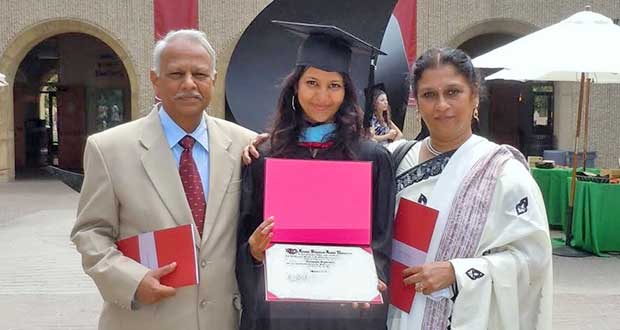
    Nirupama Jayasimha is a graduate from Bangalore University batch 2003-2008. Currently she is an associate at Trilegal, working in the Telecom, Media, Tech team. She has had a brief stint with Infosys and then she worked at Wilson Sonsini Goodrich and Rosati. She has completed her LL.M. from Standford University.  She has also been an Exchange Student at Université Paris X Nanterre. She shares her experience as an Exchange Student and tells us why and how an exchange programme is beneficial for a law student.

    She tells us about JN Tata scholarship application and other procedures for further studies abroad. She also talks about the job opportunities available overseas.


    Though it’s one of the most cliché question, but yet, why law? What were your areas of interest while you were studying law?

    I come from a family of eminent lawyers and engineers. Dinner time conversations were filled with stories from the court or the latest developments in technology. This led to an interest in these fields from a very early age. My father thought I would make a better lawyer and persuaded me to take law. In the meantime, the growth of IT in Bangalore presented a unique opportunity to work at the cusp of law and technology. Most of my internships were in the legal departments of technology companies to help me understand the fundamentals of technology, business and its interaction with law.


    You have been a part of Université Paris X Nanterre as an Exchange Student. How do you think such exchange programmes are beneficial for a law student? Tell us about your experience there.

    When I signed up for the exchange program, apart from getting to live in Paris without paying for it, I couldn’t think of a single way the exchange program would benefit me. If anything, it seemed like opening a Pandora’s box. I had to attend classes and take exams in a language I didn’t understand well, the college administration was not sure if the courses taken in Paris would count towards graduation and I had to live away from home for eight months which I had never done before. Call it adrenaline rush, or the compulsion to be different, I just signed-up for the program. Apart from learning enough French for a lifetime, there were no immediate benefits I saw from the exchange program. It’s only much later that I reaped the benefits. While at Infosys, I worked closely with clients in France and having an idea of civil law and French was an added advantage. It may have influenced my admission to Stanford as I was one of two students in my university to have done the program. Even today, the networks I cultivated have stood me in good stead. So, I guess, my advice to anybody who wants to take up an exchange program is to go for it! Like Steve Jobs said “its only when you look back that you will be able to connect the dots”.


    nirupama-jayasimha-2

    You have studied LL.M from Stanford University, through the J.N Tata Scholarship. Tell us in detail about the application procedure for the JN Tata scholarships and other such scholarships.

    The J.N Tata scholarship requires applicants to submit a personal statement along with their application. Based on the strength of the application, candidates are shortlisted for an interview in Bombay. Candidates are interviewed by a subject-matter expert from their particular background for an hour. A week after the interview, successful applicants are intimated by mail. The final distribution of the scholarships is at a ceremony held at the Bombay House (where you may have a chance to meet Ratan Tata!). The ceremony is also attended by scholarship alumni and distinguished members of the Tata Group.

    The Stanford acceptance letter comes out well past the deadline for most scholarship applications. I just made it in time for the JN Tata scholarship and that’s only because an extension was granted! However, there are a few scholarships that you can apply prior to sending out your college applications. Applying to these will ensure you don’t lose sleep after receiving the acceptance letter.

    In terms of the selection process for the JN Tata Scholarship, it is hard to give a definitive answer of the traits required to bag the scholarship. My advice is that it is good to spend a few days thinking about why you want to do a LL.M, how you would use it to further your career and the interests of the society at large and then present it in your application in a compelling way. This is the most important question any scholarship panel asks and is also a defining part of the application you submit to colleges.


    How was your experience with faculty and academics at Stanford University?

    As a law student, I spent a lot of time reading and thinking about technology law issues like net-neutrality, P2P sharing, patent trolls, dispute resolution in e-commerce. Quite naturally, the opportunity to study at Stanford, at the bleeding edge of all the action, was an exciting prospect. And I was not disappointed at all. The Socratic method of teaching is crafted towards making you evaluate these issues by questioning the fundamentals. In addition, hearing perspectives from competing stakeholders on issues they deal with on a daily basis makes you appreciate and understand the different facets of the issue. For instance, in a panel discussion onP2P sharing, we had the ex-CEO of Napster, Hank Barry on the panel and a lawyer from Viacom. Meeting such stalwarts on a daily basis inspired me to contribute to the evolution of technology law in a meaningful way.


    How is the recruitment/ placement situation for overseas students?

    Well, it’s not easy to find a job. If you are looking to do an LL.M just so you may work in the US, then it may not be a wise decision. To land a job in the US, an extensive network of contacts will take you much further than a LL.M degree. When you interview for jobs after your LL.M, you are competing with JD’s. A law firm will not want to pick you ahead of a JD unless you have something a JD doesn’t. More often than not, that X-factor could be your ability to bring in work from your home country. As a general observation, I found that the network one has built in India is the most effective tool to land a job in the US.


    How did you get a job as a foreign legal specialist in Wilson Sonsini Goodrich and Rosati? What kind of work did you come across?

    My boss during my stint at Infosys, Samuel Mani generously referred me to a partner at Wilson with whom he worked closely. At Wilson, I worked with the Technology Transaction team which primarily worked in representing technology companies in business transactions driven by the development, use, acquisition, or divestiture of intellectual property, including licensing, mergers and acquisitions and public and private offerings. The most interesting piece of work I was involved in was preparing a memorandum for the Demi Moore and Ashton Kutcher foundation on the ethics of web scraping to help prevent child trafficking. Additionally being from India, I helped in cross-border transactions involving Indian clients.


    nirupama-jayasimha-3

    Is it easy to have a work-life balance in this profession?

    I think you need to identify as early as possible, the things important to you in life and then prioritize them accordingly. For me, health, family and work are the top priorities. The most important of course is to maintain a healthy lifestyle, without which one can neither do justice to work (no pun intended!) nor spend quality time with your family. If one is disciplined, it is not hard to set aside an hour everyday for some sort of physical activity. I also don’t let work get in the way of having timely meals. As for prioritizing between family and work, it is very contextual and one cannot blindly prioritize one over the other. There are times when you may need to give up working on an important deal because you have a prior family commitment, and there are times when you have to miss a family event because you are committed to closing a deal. I think planning and being organized helps a lot in navigating this tightrope. It is also important that people at work respect your priorities and that people at home understand. I have been lucky to have a very supportive family, and colleagues at work who understand the importance of striking a work-life balance.


    Is there any success mantra that you follow which you would like to share with our readers?

    Howard Roark, in Fountain Head (which is my favorite book of all time) says,

    “I have, let’s say, sixty years to live. Most of that time will be spent working. I’ve chosen the work I want to do. If I find no joy in it, then I’m only condemning myself to sixty years of torture. And I can find the joy only if I do my work in the best way possible to me.”

    This really sums up what I believe. Any work you choose to do, do it to the best of your ability. The rest will take care of itself!