Tag: Telecommunications

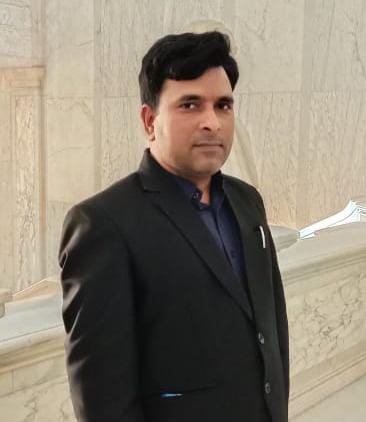
  • “For me, law has always been more than a profession; it’s a way to create meaningful change.” – Pooja Dua, Founder of Law Chambers of Pooja Dua.

    “For me, law has always been more than a profession; it’s a way to create meaningful change.” – Pooja Dua, Founder of Law Chambers of Pooja Dua.

    This interview has been published by Anshi Mudgal and The SuperLawyer Team

    Ma’am, you have extensive experience in litigation, arbitration, and white-collar crime. What initially drew you to law as a career? How has your approach evolved over the years?

    I was drawn to law by a deep interest in how it shapes society and protects rights. From the start, I saw it as more than just statutes, it’s about people, justice, and creating real impact. Over the years, my approach has evolved from simply arguing cases to offering holistic solutions. Handling complex disputes in arbitration, construction, corporate matters, and white-collar crimes has taught me to blend legal strategy with commercial insight and human understanding. Today, I focus on resolving conflicts in a way that is not only legally sound but also practical and aligned with my clients’ broader goals.

    Having completed your law degree, what motivated you to focus on arbitration and alternative dispute resolution, and how did your education shape your career trajectory?

    My interest in arbitration and alternative dispute resolution grew during law school, but it truly took shape during an internship with BHEL, where I was first introduced to the practical side of arbitration. Seeing how complex commercial disputes could be resolved more efficiently and collaboratively outside traditional courts left a deep impression on me. This experience, combined with my Advanced Diploma in ADR from NALSAR, strengthened my resolve to pursue this field. It taught me to view disputes not merely as battles to be fought but as challenges to be resolved strategically, with solutions that balance legal precision and business realities. That foundation has shaped my career path, enabling me to build a strong practice in construction arbitration, commercial disputes, and complex contractual matters, where I focus on delivering outcomes that are both effective and commercially viable.

    You founded your own practice, handling complex and high-stakes matters. Which early experiences laid the foundation for establishing your independent practice, and what challenges did you face in building it?

    My early work in litigation and arbitration, particularly before High Courts, tribunals, and arbitral forums, laid a strong foundation for building my independent practice. A pivotal part of this journey was my longest professional association with H&A Associates, where I had the privilege of working under the guidance of Mr. S.W. Haider, one of the finest mentors one could have. His mentorship and insight shaped my understanding of complex legal strategy and advocacy at a very early stage. During this period, I gained vast experience handling high-stakes disputes, including those involving major government authorities such as Indian Railways, NHAI and CPWD. This experience gave me the confidence and capability to establish Law Chambers of Pooja Dua. Although building an independent practice came with challenges from creating a strong client base to managing multifaceted matters each milestone strengthened the firm’s foundation. Today, it stands as a multi-specialty practice known for handling intricate disputes with legal precision, strategic foresight, and client-centric advocacy.

    Your practice spans both domestic and international arbitration, particularly in infrastructure, construction, and industrial projects. How do you navigate the strategic and procedural differences between domestic and international arbitration?

    Domestic and international arbitrations may share the same foundation, but they demand very different approaches. In domestic matters, especially in infrastructure and construction disputes, the focus is on procedural efficiency and aligning with Indian laws and judicial precedents. International arbitration, on the other hand, brings in added layers different institutional rules, cross-border legal issues, cultural nuances, and enforcement across jurisdictions. My experience in both has taught me to adapt quickly and plan strategy from the outset, ensuring the process is not only legally sound but also practical and commercially effective for my clients.

    Having handled a variety of cases, could you share a particularly challenging dispute or arbitration, and how you approached dealing with such a high stake matter?

    One of the most challenging matters I handled was a multi-crore construction arbitration against a government authority, involving complex technical issues, strict contractual timelines, and significant financial exposure for my client. The stakes were extremely high both commercially and reputationally. My approach was to go beyond pure legal strategy: I collaborated closely with engineers and technical experts, dissected every contractual clause, and built a case theory that combined legal strength with technical clarity. Anticipating and countering the other side’s arguments well in advance proved crucial. Ultimately, our meticulous preparation and strategic advocacy led to a favourable award, reaffirming my belief that success in high-stakes disputes lies in deep preparation, multidisciplinary collaboration, and a solutions-oriented mindset.

    In an era of rapidly evolving commercial, technological, and regulatory landscapes, how do you stay ahead in advising clients on emerging legal challenges, and what trends do you foresee in dispute resolution and commercial law?

    In today’s fast-changing commercial and regulatory environment, staying ahead means thinking beyond the present. I focus on continuous learning tracking legal developments, technological shifts, and global best practices and aligning that knowledge with my clients’ evolving business needs. The future of dispute resolution will be shaped by specialisation, digitisation, and stronger institutional frameworks. We’re moving toward faster, tech-enabled processes, AI-assisted case management, and a more collaborative approach to resolving cross-border disputes. I believe the next decade will redefine how law interacts with business and my goal is to help clients not just adapt to these changes but use them as an advantage, turning legal foresight into strategic strength.

    For young lawyers aspiring to specialize in arbitration and corporate disputes, what key skills or experiences would you recommend prioritizing early in their careers?

    For young lawyers aspiring to build a career in arbitration and corporate disputes, my biggest advice is to focus on the fundamentals, strong research, precise drafting, and clear communication but never lose sight of the bigger picture. This field is about more than just legal knowledge; it’s about strategic thinking, commercial awareness, and the courage to take ownership of complex problems. Seek out every opportunity to observe proceedings, assist in drafting, and work closely with mentors. Those experiences will shape you far more than textbooks. My own journey was deeply influenced by the mentors I learned from, and that guidance was invaluable. Most importantly, stay curious and resilient. Arbitration is a constantly evolving space, and those who keep learning and adapting will find themselves not just practising law, but shaping it.

    Beyond your professional work, you are engaged in advisory roles with foundations, universities, and industry clients. How do you view the role of pro bono work and community engagement in a high-pressure legal career?

    For me, law has always been more than a profession; it’s a way to create meaningful change. My involvement with NGO’s and various universities allows me to use my legal skills beyond the courtroom, whether it’s empowering women, raising awareness about rights, or mentoring young lawyers. I also remain closely connected to Amity Law School, Noida, my alma mater, by engaging with students and contributing to alumni initiatives, something that allows me to give back to the institution that laid the foundation for my career.

    Alongside this, I work closely with real estate developers, industry leaders, and major brands on long-term retainers, advising them on projects that shape urban landscapes and impact lives at scale. Balancing high-stakes commercial mandates with community-focused initiatives keeps me grounded and reminds me why I chose this profession, to serve, to protect, and to make a difference. These diverse experiences not only add purpose and perspective to my work but also make me a more strategic and empathetic lawyer.

    Looking back at your career so far, what key lessons or principles have guided your practice in complex litigation, arbitration, and white-collar crime, and how would you advise the next generation of lawyers to approach similar challenges?

    Looking back, one of the most important lessons my career has taught me is that there are no shortcuts in law,  success is built on unwavering commitment, deep preparation, and continuous learning. Whether dealing with complex litigation, high-stakes arbitration, or white-collar crime matters, I have always approached every case with integrity, precision, and perseverance. Equally crucial is the ability to look beyond statutes — to understand the human, commercial, and strategic dimensions that shape every dispute.

    My journey, from working under the exceptional mentorship of Mr. S.W. Haider at H&A Associates collaborating with legal firms like Panda Law, and ultimately establishing Law Chambers of Pooja Dua, has reinforced the value of resilience, curiosity, and purpose at every stage. Each experience has contributed to the lawyer I am today and strengthened my belief in the transformative power of the law.

    To the next generation of lawyers, my advice is simple: master the fundamentals, seek out mentors who challenge and guide you, stay curious, and always remember that the law’s ultimate purpose is to serve and deliver justice. Embrace challenges as opportunities, not obstacles, and let hard work and integrity be the cornerstones of your practice. If you do that, you won’t just succeed, you’ll help shape the future of the legal profession.

    Get in touch with Pooja Dua –
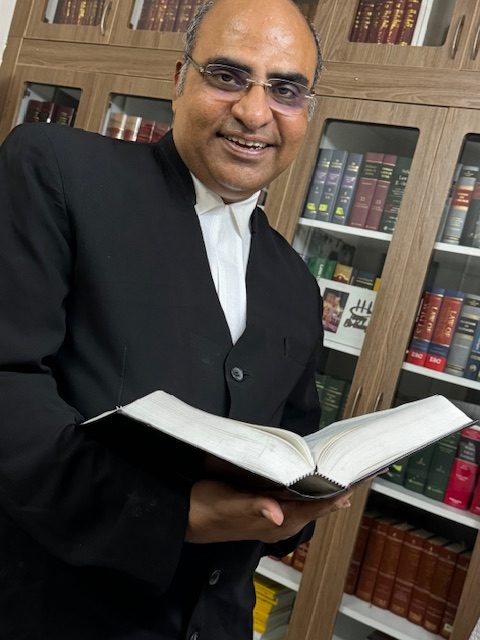
  • “A good cross-examination has the potential to turn litigation in your favor. Every day in a lawyer’s life is an experience and a learning.” – Rajesh Ramanathan, Partner, Factum Law

    “A good cross-examination has the potential to turn litigation in your favor. Every day in a lawyer’s life is an experience and a learning.” – Rajesh Ramanathan, Partner, Factum Law

    This interview has been published by Namrata Singh and The SuperLawyer Team

    What motivated you to pursue a career in law, and could you walk us through your journey from your early days in law school to becoming a partner at Factum Law? Additionally, could you share some of the challenges you encountered during the initial stages of your career and how you overcame them?

    The Question should be ‘Who?’ and not ‘What?”. I owe my professional life to my grandfather Mr. V.V. Ramanatha Iyer who was a prominent Lawyer in the Vellore District. As a school going kid, I used to accompany my grandfather to the Munisiff Court at Ranipet where he predominantly practised. It was his wish that I take after him. I joined Law School much against the wishes of my mother who like many others at that time thought that I would end up a Lier to be a successful lawyer. It took a while to convince her and she reluctantly agreed after I promised her that I will not Lie. It was my grandfather who sowed the seed in me to be a Lawyer and it was he who taught me that a Lawyer can be honest, truthful and successful. Legal education in those days were more theoretical unlike today and we hardly ever stepped into a Court during our Law School days. Of course there were quite a few exceptions to this and a few of my friends started interning quite early. 

    But I was a Reluctant Lawyer, when for the first time I set foot in Court almost 29 years ago.  Growing up, I was very quiet, reserved and had all qualities uncharacteristic of a Litigating  Lawyer. When I started my practise as a junior to my grandfather at Ranipet, I was just happily  going around the corridors of the Subordinate Courts as a privileged grandson but without actually knowing the fundamentals of being a Lawyer. I  felt I was in the middle of a jungle with  my eyes tied shut. I did not know what was happening.  I became a lawyer because of my  Grandfather and also because I did not know what else to do with my life.

    What inspired you to specialize in contentious and non-contentious litigation in areas such as IP, corporate, and commercial laws?

    When we started our careers as lawyers, we had only two options. Either to litigate or go inhouse. Since I followed my grandfather’s footsteps, contentious and non-contentious litigation was the obvious choice. But to sustain and keep up with that choice is a completely different challenge. I would say, Intellectual Property Rights and Commercial Laws chose me rather than me choosing them. A year into practice, my illustrious grandfather advised me to relocate and start afresh with a good Senior Practitioner at the Madras High Court. He felt that the Subordinate Courts were being bifurcated and it would be difficult for me to run around from one Court to the other in the Vellore District of Tamil Nadu. I am glad I took his advice and moved to the High Court where I was given the opportunity to join the chambers of Mr. V. Veeraraghavan, one of the most prominent Lawyers in the field of Intellectual Property Law in Chennai then.  It was more like an institution where we got to learn the practice of IPR and commercial Litigation. Mr. Veeraraghavan was instrumental in tutoring many other stalwarts like Mr. Prabhakara Reddy and Mr. Perumbulavil Radhakrishnan who were also my mentors and still continue to guide me in my journey.  All these mentors inspired me and continue to inspire me to do well. And IPR as a subject is so unique and different from all the other areas of laws, it is but natural to be drawn to this area of specialization.  

    We noticed you’re a senior panel lawyer for ‘The Institute of Chartered Accountants in India.’ How did this collaboration come about, and what does your role entail?

    I have been a Senior Panel lawyer for ICAI  the past few years. The collaboration started after a process of application and selection through an in person interaction. As a Senior panellist, I am entrusted with representing ICAI before the Madras High Court in select matters of complex legal issues. It has been both a learning and a rewarding experience representing one of the premier Statutory Bodies of the Country. 

    Given your extensive experience, what advice would you give to aspiring lawyers looking to specialize in intellectual property law?

    The Legal profession generally is a very noble profession which is also very satisfying and rewarding to all the genuine practitioners. I would most certainly tell all the youngsters who are looking at Law as a career, that honest, sincere hard work would make you very efficient and successful. It is imperative to believe that a lawyer is allowed to interpret a law but not facts. 

    Our profession has spread its wings far and wide now in terms of the avenues for a lawyer to get into. Earlier a lawyer had no other alternative but to either choose litigation or become an inhouse Counsel. But the options that are now available are much more. However,  It is my firm view that every lawyer on their enrolment should litigate in any Court of their Choice and convenience for a minimum of three years before choosing any other option. Because Litigation teaches us everything that one needs in life including Man Management. Right from just seeking an adjournment, to substantial arguments it is just an art. I always believe that the lessons a young lawyer learns from litigation in the first three years, would keep him/her in good stead for the rest of his/her life in whatever they choose to do.  So my first advice, if I may call it, is to gain experience as a litigator for a minimum period of three years before they decide to opt for any other avenues of the profession. 

    As for Intellectual Property Rights, this is the only area of law whose value stems from the public perception of such IPR (except Patents of course) and therefore every case would be different from the other. This is also a subject that just keeps evolving with every new invention and/or creative work. This to me is the unique aspect that makes it even more interesting than any other areas of law. The entry of AI now is taking to  different heights and it would be interesting to see where else it goes. 

    Can you share any insights into the legal landscape in India, particularly in terms of intellectual property rights and brand protection strategies?

    The Legal landscape is pretty promising as I believe that India of all the Major economies of the World has the best IPR protection in terms of Statutory Laws. Having said that, I also believe that we have to improve a lot in its implementation. Our Judiciary has been doing a lot to improve/ fasten the time for delivering Justice which by itself is no mean feat considering the population and the number of Judges we have. 

    As for strategies, I keep thinking that the brand owners take a long time to realise the potential value of their IPR’s and more often than not, the time delay in seeking Statutory protection by way of registering one’s brands or Patenting their new invention results in them losing value. Statutory protection of IPR’s should be the first on the agenda for a brand to be valuable. Registering a brand alone is not enough but maintaining it and protecting it from infringement at the right time is also equally important. In my little experience, I have come across quite a few brands losing their brand value just because they did not take action at the right time. It is also imperative for brand owners to understand that the cost and expenses for protecting and maintaining their brand is more of an investment than just an expense. 

    Looking back at your career journey so far, what are some key milestones or turning points that have shaped your professional growth and approach to law?

    Looking back, It just amazes me that I am able to sustain in this competitive field and quite well. I would like to think that the entire Universe comes to your aid if you just keep working without thinking about the result or the consequences. I take this opportunity to thank all my Seniors who nurtured/ mentored me and who still guide me in my journey. There are quite a few turning points since the day I started my career as a lawyer. I very vividly remember my Grandfather’s loving advice to relocate to the High Court and the day I joined the Chambers of my Senior Mr. V. Veeraraghavan who helped me transition into a High Court Practitioner. 

    The year I spent at the Franklin Pierce Law School in the USA would be the turning point or a milestone in my career. It is not only the Legal Skills I acquired there that made it a milestone, but the people I met there and the multi-cultural life that I was introduced to, changed me as a person. I went in as an Indian and returned as a true International. I still am in touch with most of my friends and teachers and I will always cherish my year at my alma mater. This camaraderie with all these people in a foreign Country for one full year taught me to be affable and friendly to all and guides me in my approach to the Legal Profession even today. Starting our own firm ‘Factum Law’ in the year 2017 was another key turning point in my professional life and with the right people to work with, this has been a very interesting and rewarding journey so far. 

    The International Trademark Association of which I have been a member since 2008, has also shaped my knowledge throughout. The Annual Meeting every year and the opportunity to meet thousands of IP practitioners from around the world in one place is always satisfying. This also helps me and my colleagues in keeping ourselves updated with all the developments of Law around the world. 

    None of this would have been possible if we did not have the right team to depend on. I am eternally grateful to all my team members for being with me through thick and thin. Thanks to them I am certain of many more milestones in my Professional life. 

    Reflecting on your time at UNH Franklin Pierce School of Law, could you share your experience and highlight any notable differences you observed between the educational approach there and the legal education system in India? How do you think these differences have influenced your practice of law?

    The life I spent at Pierce Law is the most memorable and life changing. I would be failing in my duty if I don’t credit Pierce Law for all of my achievements so far in my life and whatever I am destined to do more in this professional life. The Education system is more pragmatic whereas we in India still focus on theory. I am however told that it is changing here as well. There are no lectures in the US education system but only discussion. Which means you have to be prepared to be part of the discussion in every class. And you will be tested in the exams only on the discussion you had in the class. So it is imperative that you are well prepared even before attending the class and you get to participate in the discussion. This I believe is the most pragmatic way of teaching subjects and I hope Law Schools in India follow suit on this kind of pragmatic education. This has greatly influenced my thinking and my preparation for a case. 

    As a faculty member at EBC Learning and an alumnus of the Franklin Pierce Law Centre, do you incorporate your international experience and the teaching methodologies you encountered during your LLM into your approach to teaching? If so, how do you adapt these methods to suit the needs of your students and the legal education landscape in India?

    Whenever I get the opportunity to address  the students on some topic of interest, I make sure I follow the lessons learnt at Pierce Law. That of being pragmatic in my approach. So I try to make it an interactive session rather than just a lecture. This certainly aids in the students improving their thought process and their knowledge. This approach is imperative for Lawyers. I am also of the view that no Law school or college in India produces  Lawyers. They can only produce a good Law Student. It is the legal practice that moulds a student into a lawyer and that takes a minimum of three years. So a pragmatic approach would equip the students better in their transition to a professional lawyer. 

    Could you walk us through what a typical workday looks like for you, and how do you ensure you stay updated on the latest developments in the legal field amidst your busy schedule?

    Life of a lawyer is very demanding and unless we are prepared to sacrifice that ‘me time’, it will be very difficult to succeed. There are times when one feels overburdened but that comes with the territory. A typical day for me starts at 9.30 AM if not earlier. That depends on my Court work. Evenings are spent in preparing for the next day’s work and so on and so forth. Law journals and commentaries accompany me many times even in my travels. There can never be a day where a lawyer can say or feel he knows everything and the day one feels as such, would either be his last day of practice or after his retirement. Since Law is something that keeps evolving and changing with times, we as lawyers have to keep updating all the time. So I would only say ‘keep working’ to keep updated. 

    Do you remember the first time when you fought a case? Please tell us some anecdotes that happened in the courtroom.

    Very Vividly. That was my second day at the Madras High Court. I was asked to appear for a contemnor in a Trademark Infringement case against a formidable and successful lawyer who later became a Senior Counsel. I remember struggling to even mouth ‘May I please your Lordship” and the Judge had to lean forward to hear me. I was so nervous that I didn’t even know how I reacted in a room full of stalwarts. Within a few months, I became better at it and started enjoying my appearances in the High Court. Full credit to my senior who constantly encouraged me. It is those opportunities that I got from my seniors that exposed me to successful litigation early in my life. 

    Could you share with us one of the most interesting and challenging cases from your career that still resonates with you, and walk us through the complexities you encountered and how you navigated them? 

    There are quite a few. Particularly at the beginning of my career where I was assisting a Senior Counsel in a Trademark case. It was an appeal and the Senior Counsel appearing for the Appellant swayed the Bench completely in his favour. It looked as though we wouldn’t even have a chance to argue. 

    When it was our chance, all we did was to pick some errors in the Appellants documents and in no time the Division Bench turned in our favour. It showed me what presence of mind and a thorough knowledge of every single piece of paper filed in Court could do. That was a lesson I carried all through my life and I still make it a point to thoroughly study the files. You never know where the spark would come from. 

    I have also enjoyed my experiences in appearing in trial Courts and conducting cross examinations. One can never be fully prepared to cross examine a witness and a presence of mind is most essential to be a successful trial Lawyer. Conducting trials is an art by itself and every Law Student should expose himself/herself to the art of cross examination. A good cross examination has the potential to turn litigation in your favour. I will end by saying that every day in a Lawyers Life is an experience and a learning. I most certainly love the challenges that this profession throws at me every single minute.

    Thank you 

    Get in touch with Rajesh Ramanathan-

  • “By merging the vigour of young professionals with the wisdom of experienced advocates he emphasizes the importance of teamwork, open communication, and technological integration in achieving legal expertise” – Ritesh Ranjan, Head & DGM-Legal at Bihar Industrial Area Development Authority (BIADA), Govt of Bihar

    “By merging the vigour of young professionals with the wisdom of experienced advocates he emphasizes the importance of teamwork, open communication, and technological integration in achieving legal expertise” – Ritesh Ranjan, Head & DGM-Legal at Bihar Industrial Area Development Authority (BIADA), Govt of Bihar

    This interview has been published by Namrata Singh and The SuperLawyer Team

    Could you share with us a bit about yourself and your journey to becoming the Head & DGM-Legal at Bihar Industrial Area Development Authority (BIADA)? What inspired you to pursue a career in law, and what challenges did you encounter along the way?

    I am a first-generation lawyer born and brought up in West Champaran district of Bihar. After my B.A. (Hons.) from Faculty of Arts, BHU, I pursued LL.B. from Law School, B.H.U. and embarked my legal journey with challenges of not having the benefit of a well-trodden path or sage advice. My parents and my younger brother gave me their unwavering support in all my decisions. Guided by serendipity, I found myself at the BHU, Varanasi. I started practicing in Patna High Court and my erstwhile practice area involved a diversified spectrum of legal jurisprudence. After practicing for over three years in Patna, I moved to Mumbai, where I worked as Law officer of Transport Corporation of India Limited, Mumbai for handling all the legal affairs within the state of Maharashtra. Onwards  I worked as Examiner of TradeMarks in the Trade Mark Registry Mumbai. After which I joined Videocon d2h Limited, Mumbai, wherein I was also part of the team for  the  execution of the India’s largest Media Sector merger of Brand Videocon d2h into Dish TV. After merger, I migrated to Dish TV India Limited, Noida and successfully handled litigation and contract management for both brands d2h and dish TV.  

    After years of experience in broadcasting and distribution related to the DTH Industry, I joined Hathway Digital Limited a multisystem operator of Reliance Jio Group as a Senior Manager -Legal in Delhi. In this role I managed Pan India Litigations before TDSAT, Trial Courts, High Courts, Consumer Forums and Supreme Court.  Thereafter, I joined Micromax Group as head of Legal and finally joined as DGM-Legal in BIADA, Patna. During working with different organizations from a practising advocate, corporates and government sectors in different cities, I found that we need to adopt the work culture at earliest and you have to learn something from everyone as once my mentor has said everyone is your client except yourself. You have to create your own brand and for this you need to accept all the challenges with a smile.

    You’ve had a diverse career journey, from practicing law in Patna to working with major corporations in Mumbai and Delhi. What motivated you to transition from the corporate sector to a government role at BIADA, and return to your home state of Bihar and take on a role with BIADA?

    The diverse career journey had its perks but at the same time there was remorse in my mind that having reached the pinnacle of my career. I was never in a position to give it back to the society from where I belonged. Everyone has his or her perspective towards the way of contribution for a better and prosperous society, but from my spectrum of things this endeavour to join this government organization was to achieve a more industrialized and prosperous Bihar by removing the hurdles faced by entrepreneurs and streamlining the legal process attached to it.

    As someone deeply rooted in Bihar’s history and culture, how do you envision the role of BIADA in contributing to the state’s development and economic growth? What initiatives or projects are you most excited about? 

    BIADA has been envisioned to promote and augment industrialization and create awareness about the Industrial Policy of the state as well as creating an environment for consistent growth of Industries in the state. The management finds it highly important to change the way these units operate for a few reasons, such as Changing priorities of units, Enhancing the effectiveness of organizations, initiating new schemes, there is an enormous scope of things which could be improved considering the Industrial growth, Bihar is growing. The role as DGM, Legal is quite dynamic and varied as one has to juggle a lot between Courts and Policy decisions. I endeavour for transparent policy formulation whereby policies are fair, simple and comprehensive. Also, such policies are required to be formulated for instilling faith upon Corporate and at the same time better execution of such for the organization. At present, investors are coming to Bihar and a number of Industrialist and Start up have been seeded there huge investment in State with a vision for development of Bihar. Therefore, by my small contribution I am participating in the development of my state by use of my legal, strategy and advisory skills.  

    With the recent influx of investors and industrialists into Bihar, what are some of the legal challenges and opportunities that BIADA faces in facilitating economic development while ensuring regulatory compliance and transparency? 

    The fragmented land-holding and lack of large pool of land is a reality in Bihar yet by undertaking various persuasions have been in a position to make sufficient land available for the Investors and Industrialists. The biggest huddle which we constantly face is to get back the large chunk of land which was not used for industrialization and to allot the same to the prospective investors. There are innumerable stakeholders and to take everyone on board for the furtherance of development of Bihar is quite a task. At present the government is providing better policies and support for establishment and revival of industries in the state.

    As someone who has worked across different states and industries, what do you find most rewarding about working in the public sector, particularly in Bihar? How does it differ from your experiences in the private sector? 

    To be honest, in the last years or so with BIADA, I have evolved as a person who has made several required changes in the existing system based on prior experiences and current needs of the state. It was an enlightening experience to work within the multi-layered and complex structures learning nuances of executing and facilitating Industrialization in state. The perspective of being an outsider was a blessing in disguise as people believed that I had joined this organisation for a purpose and that it provided me with cooperation from everybody in the organization. 

    In your role as Head & DGM-Legal, what strategies do you employ to foster collaboration and synergy within your team of in-house legal professionals and panel advocates? How do you ensure effective communication and coordination? 

    Coordination between youth professionals and experienced minds to achieve better results is one of the mantras I work with. I am very privileged to have an in-house team consisting of law graduates from National law Universities and other reputed law colleges and as an icing on the cake there are experienced Advocates on our Panel and together we bring a diversified approach to the table for better and fast results.  With such a big team, it becomes very important to have open and transparent communication. It is very important to promote team members irrespective of their position in the hierarchy of the organisation to brainstorm ideas and communicate their opinions in regard to every case. Fortunately, I am blessed with a dedicated team and together we discuss and prepare notes of argument and strategy in each case. I cherished the participative work culture of the organisation wherein everybody gets to contribute something.

    Being from a corporate background, I tend to promote the modern work approach and use of technologies for better collaborations with cluster offices and our Panel Advocates in the High Court as well as in the Supreme Court. 

    With your experience in handling a wide range of legal matters, what are some common misconceptions about the legal profession that you would like to debunk for aspiring lawyers? 

    One of the common misconceptions about the legal profession is that there are limited prospects in the legal sectors. However, in this modern world, everyone needs the application of legal minds which opens a plethora of opportunities before the law students. In the era of globalization, even cross-border opportunities open up for the youths. Another misconception lies that law is not for women but here I would like to take this opportunity and say the legal field is gender neutral and 50% of my team members are female and they demonstrate relicense, time management and good analytical skills. 

    Apart from your professional endeavors, what are some of your personal interests or hobbies that you enjoy outside of work? How do you balance your personal life with the demands of your role at BAIADA? 

    For work life balance, I would like to thank my soul mate Sarika who wholeheartedly takes care of my two lovely daughters and family. The preoccupation in my current role doesn’t allow me to spare much time for personal interests or hobbies limited to watching news and outings beyond my work but quality time with my family instills me with strength, love, affection and peace. 

     Given your experience in both the corporate and government sectors, what advice would you offer to young professionals aspiring to build a successful career in law, especially in the context of navigating different work environments?

    I firmly believe in the famous quote that “there is no substitute for hard work”. Both corporate and public sectors have their own pros and cons, however it is important to set one’s priority straight why making a pick and one should not shy away from giving their best in whichever sector they choose. This brings out best performance helping the individual to excel in his/her career

    Get in touch with Ritesh Ranjan-

  • Jyotsna Jayaram, Partner (Technology, Media & Telecommunications) At Trilegal In a Quick Chat With SuperLawyer On Importance Of Unconventional Skills For a Lawyer

    Jyotsna Jayaram, Partner (Technology, Media & Telecommunications) At Trilegal In a Quick Chat With SuperLawyer On Importance Of Unconventional Skills For a Lawyer

    This interview has been published by Prabhjot Singh, Priyanka Karwa and The SuperLawyer Team

    What inspired you to choose law as a career? How has been the decision so far?

    I have always been fascinated by the impact that words – verbal or written – can have and when I was in school I was always drawn to the law as a profession, particularly because of the command over language that it requires. Of course as with most children that age, I had romantic notions about becoming a criminal lawyer and being in the thick of high profile cases. However, as I prepared to join law school, I wanted to focus more on gaining a strong knowledge base of all laws before I decided on what to specialise in. I am glad I made the decision to become a lawyer and the constant learning continues to inspire me to become a better lawyer.  

    What were the challenges that you faced in the beginning of your career?

    The primary challenge was to secure a job. I was in the first batch of my law school and at that point we didn’t have established recruitment processes and most firms did not know us. We all had to work doubly hard towards getting our own internships and interviews and making a mark before we were considered for recruitment.

    Then came adapting to a work environment which was very new, highly competitive and incredibly fast paced. While law school helps build the foundation in terms of basic knowledge that is required to start off, a lot of what you need (even at the start of your career) is learned on the job.

    It was a challenge to switch out of a heavily theoretical and academic approach to a more practical style which required you to think on your feet and come up with creative solutions, while being very thorough with the law and its application. It was a also a challenge to adapt to quick timelines, long hours and a much faster pace of life. That said, the environment at work although challenging equipped me to adapt quickly and feel confident about my ability to move from my life as a student to a working professional.  

    What do you consider to be the most challenging and important aspects in this field of IT law?

    The most challenging aspect of the field of technology law is that it is changing and evolving at a very fast pace. From being a field that was subject to very minimal regulation, technology is now at the front and centre of most regulation – either in the form of new laws and regulations, or as a result of amendments and changes being made to existing laws to adapt to the digital revolution. While I believe that it is crucial to regulate the use of technology, it is important for the law to not be overly prescriptive and compliance heavy as that would be counterintuitive to very nature of technology and its ability to evolve.

    As an IT lawyer, it is important to marry the principles that the laws are based on with the functions that various technologies bring with it in such a manner that innovation is not hampered, and the harms that technology brings with it are addressed.

    This often requires us to go back to first principles, be very aware of how technology is being regulated across jurisdictions and actively following the policy initiatives with respect to technology as they most often set the context to new tech regulation.

    Often times, you will find yourself walking into a grey area with no interpretational guidance where you need to take calls based on several factors including your deep understanding of technology, the intent of regulations and regulatory perception.

    Jyotsna, do you remember any exigent experiences while advising clients on all these regulatory aspects, data privacy, etc. ? What suggestion would you give to our young law professionals to tackle the same?

    The field of technology law is very broad and encompasses several areas such as cyber security, data privacy, e-commerce, digital payments, content regulation etc. Very often these areas intersect and it is critical for us as technology lawyers to be able to address the full spectrum of issues that a client is facing without operating in silos. A good example of this is in dealing with cyber security incidents which have become very common. The nature of cyber-attacks that organisations face are highly sophisticated and evolving each day and as a result our assistance as lawyers in advising clients on regulatory and commercial aspects becomes critical.

    Cyber-attacks often come with several considerations including regulatory reporting obligations, an assessment of privacy issues (if personal data is involved), criminal law aspects while examining unauthorised access, ransomwares etc., as well as building strategy around communication to the data subjects, to the public and depending on the sector, sectoral regulators. Most often these attacks are multi-jurisdictional and require understanding and working closely with lawyers in the relevant jurisdiction to develop a common strategy.

    In order to deal with matters like this, and generally on matters related to data, technology and privacy, I would recommend that young law professionals train themselves to be nimble, highly aware of regulatory trends, enforcement and practices across jurisdictions to be able to advice clients in a holistic manner. It is also important to guide the client on an approach that is future proof and based on best practices and this often puts the client in a much better position than others who choose to only do the bare minimum when it comes to compliance.

    Jyotsna, people have started feeling that corporate is a safe option instead of choosing a longer struggling period in law, do you think the same?

    I do sense that in-house as a choice of profession has gained some more traction recently, however I don’t think this is necessarily because it is considered a ‘safe option’ as opposed to a law firm. I think in-house roles have also become an important choice as the demands of the role are similar to a lawyer in a law firm, with companies ramping up and investing in legal departments.

    In fact, the challenge of dealing with legal issues by being a part of the company as opposed to serving as external counsel, is one of the main factors that I think drives people to choose in-house. That said, I think there is generally a push to rethink how one wants to practice the law and there do seem to be several parallel tracks that have come about for professionals to choose from, instead of joining a law firm or sticking to mainstream law.

    How do you balance your work and personal life ?

    My approach to balancing work and personal life has always been to not view one as restricting or impinging on the other. I am conscious of the decisions I make when it comes to work and personal life and at all times I try and ensure that I am honouring each commitment. That said, if I am unable to manage a perfect balance, I make sure I am not hard on myself. It is not doubt easy for work to overwhelm and capture all your mind space but with time and small changes to my routine I have been able to feel like I am in control of both aspects of my life.

    For example, the time I set out for my exercise, or to spend with my child is sacrosanct and I try and schedule it in a way that does not allow work to creep in and reduce the time I set out for this. If it means I start my day an hour later, then that does not faze me and most things can in fact wait. I try and stick to a routine that is simple and flexible so that I am able to respond to the demands at work and home calmly. I also make sure that I take small breaks from work whenever I can so that I don’t feel like it is always catching up to me.

    A lawyer sometimes is expected to do work apart from legal functions as well, what are your views on the same?

    Absolutely, and this is an increasing expectation even from clients. The demand now is not just to provide sound legal advice, but also to be able to identify and balance commercial considerations in arriving at solutions. This may need you to step in to the shoes of the various stakeholders you are dealing with – for e.g. if there is a new technology product that is being launched, you need to be able to understand the objectives and outcomes from a technology, business and legal perspective.

    Further, as a lawyer, it is also important to be aware of and participate in public consultations and policy making as this often shapes the regulation that comes out. Separately, as a lawyer in a law firm, you also have several administrative functions attend to including billing, matter management, knowledge management and building and business development. All of these functions are equally important as being a lawyer and equip you to be a better and more efficient lawyer.

    Jyotsna, was there any roadmap that helped you thus far in your journey, or any mentor that supported you from the very beginning, please share how was it for you?

    I didn’t enter this profession with a specific roadmap. In fact, when I joined Trilegal I wasn’t sure of what I wanted to specialise in. When I joined, we had a rotation system and my first seat was TMT. I have since then only been part of the TMT practice and I couldn’t be happier with how things turned out. While I am not very rigid with how things pan out and often like to play things by ear, I did set various targets for myself in my journey as a lawyer and what I wanted to achieve. Most importantly, I ensure that I am always growing as a lawyer, and learning new things every day. I always kept (and continue to have) an open mind and as a result I have greatly benefited from the perspectives of my juniors, my peers and seniors.

    The partner’s practice who I started off with has always been a mentor for me and has had a huge role to play in my journey as a lawyer at Trilegal. I have learned immensely from him and the focus has always been to develop a high quality practice that focuses on learning, freedom of thought and self-challenge. It is also important to not lose sight of the importance in building out a safe, respectful and encouraging work space and that has been integral to my journey as a lawyer in this firm.

    While being in a law firm is no doubt challenging and competitive and I have had my share of tough times, overall my experience has been nothing but rewarding and enjoyable and that’s what keeps me so invested in this.

    According to you, what networking strategies should be adopted by the first generation lawyers specifically in corporate?

    Jyotsna: Networking in an orchestrated set up is a challenge for most people and at times is not very effective. I think that networking should be woven in to your practice as a lawyer where you ensure that you are meeting and investing in professional relationships in several inorganic ways. For starters, don’t wait for a specific time in your career to start networking.

    It is never too early and the earlier you start the more natural it becomes for you. Take the time out to think of people that you want to meet and engage with, find avenues to meet that person – it could be a conference, it could be a roundtable discussion or perhaps a knowledge session that you conduct, or are a part of. Keep in mind what to be of interest to that individual and if there are relevant developments, find a way to get your thoughts over to them. Don’t be shy of expressing your opinion or taking a stance as that helps the other person understand your approach and views as a lawyer.

    Most importantly, do not network with an expectation to see immediate results. Building professional relationships comes with its own gestation period and it is important to recognise that. You will find that slowly you will make a mark and people will remember you for your expertise and reach out. And for this you do not have to be the loudest voice in the room.

    Lastly, any 3 best pieces of advice for our young lawyers?


    I would just say keep an open mind, stay on top of all regulatory developments and constantly learn. No amount of knowledge is too much. And find a way to truly enjoy what you do.

    – JYOTSNA JAYARAM

    Get in touch with Jyotsna Jayaram-