Tag: The Law Society

  • “At the stage when the invocation is a threat, it becomes imperative to swiftly seek guidance from legal experts well-versed in the intricacies of the field.” – Gunjan Chhabra, Dual Qualified (India-Advocate; England & Wales-Solicitor, Partner at Adwitya Legal LLP

    “At the stage when the invocation is a threat, it becomes imperative to swiftly seek guidance from legal experts well-versed in the intricacies of the field.” – Gunjan Chhabra, Dual Qualified (India-Advocate; England & Wales-Solicitor, Partner at Adwitya Legal LLP

    This interview has been published by Namrata Singh and The SuperLawyer Team

    How did you first become interested in pursuing a career in law, and what challenges you encountered during your formative years in the field, and how did you overcome them to establish yourself as a successful legal professional today? Also what inspired you to specialize in commercial litigation and arbitration?

    • Believe it or not I come from a science background. I was studying to become an engineer, and was doing very well. It was somewhere towards the beginning of my +2 where I realized that, along with a strong need for intellectual stimulation, I also required my sense of justice to be met. It was the marriage of these two that got me interested in pursuing a career in law.
    • The challenges I encountered in my formative years emerged from the point of view of being a first-generation lawyer. I needed to pick up various skills apart from the execution aspect, including working on people skills and the psychology of associates, seniors, juniors, clients, etc. The recruitment aspects for us first-generation lawyers are one of the most cumbersome, especially if we do not have strong financial backing. Building trust and reputation also requires an astounding amount of hard work confluenced with luck.
    • Another challenge that I faced was a complete lack of guidance. However, I can say that I have found some of my best friends philosophers and mentors—in my colleagues and my clients. This definitely helps.
    • It is this journey, filled with ups and downs, that has shaped me into the legal professional that I am today.
    • As far as commercial litigation and arbitration go, I would say again that it was a marriage of chance and my inherent skills. I was called to work with a commercial litigation and arbitration firm after I completed my internship there. After that, I would say there was no looking back.

    As someone who is dual qualified and experienced in both Indian and English legal systems, how do you navigate the nuances and differences between the two jurisdictions in your practice?

    • I would say rather than navigating nuances, it forms a unique blend of expertise, enabling a comprehensive understanding of both legal systems. This comes in handy when navigating cross-border disputes.
    • It also helps provide me with a broad legal perspective to identify issues early on. My specialised knowledge of commercial and infrastructure disputes allows me to provide very tailored advice to clients.
    • Moreover, broadening one’s horizons also makes one appreciative of diversity, inclusion, and global perspectives, which is the only way to be successful in today’s internationally integrated business world.

    You have an expertise in infrastructure and construction arbitration. How would you say these disputes are different from the usual disputes?

    • Infrastructure arbitration disputes are multifaceted in many ways that other cases are not. Most other cases have a single issue or, at most, a cluster of issues surrounding one transaction.
    • However, I would describe infrastructure disputes as “live” disputes. A construction or infrastructure project goes on for several years. During this time, there are several thousand correspondences that are exchanged.
    •  There are usually several hundred, if not thousand, complex issues concerning the interpretation of ten to fifteen clauses of the contract together.
    • A lot of these contracts are based on FIDIC models, sometimes called the “Rainbow” suite, which in itself is a contract that,  at first glance, appears quite complex. This is due to the different coloured covers of the model contracts, for nstance, the FIDIC  White Book for the consultancy model agreement, the Red Book for Construction, Plant & Design-Build & EPC/Turnkey Contracts, etc.
    • Apart from the above, in cross-border infrastructure disputes, there can even be a pinata of parallel proceedings just waiting to explode the moment a proceeding is started.
    • Moreover, a quandary of technical issues would require the engagement of expert witnesses as well as factual witnesses. Expert witnesses are often key to winning disputes. Finding a good expert means that such a person’s technical knowledge on the issue cannot be shaken in any cross-examination. Usually delay and quantum experts are employed, but some issues require more nuanced expertise.
    • This is why I believe it is necessary to pre-empt issues and for clients to be involved with experienced counsels right from the contract correspondence stage.

    With your extensive experience in handling disputes related to bank guarantees, what advice would you give to companies to mitigate such risks effectively?

    • The key to mitigating bank guarantee risks is to understand the ground reality of when an employer threatens to invoke a Bank Guarantee. This threat arises when the employer loses confidence in the contractor’s ability to fulfil contractual obligations, say due to delays, defects, too many disputes, etc.
    • At the stage when the invocation is a threat, it is important to immediately rush to legal experts well versed in the field. From this stage on a meticulous review of the underlying contract and the Bank Guarantee is required. Potential breaches, the existence of disputes, and evidence supporting the client’s position need to be documented to gain a detailed understanding.
    • After this, communication must be opened with the employer with a strong legal background and preparation. A middle ground needs to be found. Ultimately, re-tendering is an expensive proposition for an employer, and if the cost of having the client cure breaches is less than re-tendering and employing a new contractor, middle ground can usually be found.
    • During the communication stage itself, it is imperative to continue the background work of collecting supporting evidence due to the impending next stage.
    • In case mutual ground cannot be found and the employer insists on invocation, it is important to immediately move the court or emergency arbitrator to obtain a stay on invocation.

    As an empaneled arbitrator, what do you believe are the key qualities required to effectively adjudicate disputes and maintain neutrality throughout the process?

    • I would say key qualities include a thorough grasp of the subject matter and legal principles; adept problem-solving abilities; meticulous attention to detail; impartiality and neutrality; strong communication and time management skills; and organisational acumen, all of which are essential for ensuring a seamless arbitration process.
    • In instances of international or domestic arbitration or mediation where significant cultural differences exist among the parties or between the parties and arbitrators, it is crucial for an arbitrator to be sensitive to these differences and remain adaptable. This underscores the importance of diversity and inclusion in arbitration.
    • Furthermore, an arbitrator must possess a comprehensive understanding not only of the technical aspects but also of how to draft an award that can withstand challenges, such as those under Section 34 or Section 37. Achieving this level of proficiency requires extensive training in crafting well-reasoned awards and a solid grasp of the grounds for challenging an award. By continually refining these skills and adapting to the evolving landscape of arbitration, an arbitrator can effectively meet the demands of the role.
    • I would also like to add that for specialised disputes such as construction, maritime, or infrastructure disputes, arbitrators with prior experience in these fields are much needed. Sometimes parties overlook these issues in technical matters, and these mistakes cost clients dearly.

    In the realm of construction disputes, what kind of issues usually arise, what strategies do you find most effective in pre-emptively addressing potential conflicts and mitigating the risk of disputes during project execution?

    • The main problem in construction disputes arises from how tendering is done. The contractor with the lowest price usually wins. The terms of these contracts are quite onerous to the contractors, but they feel the need to make at least some profit.
    • The claims in construction contracts usually find their way in “variations”, “change of scope” and other changes to work. Claims also centre around rectification of Defects, eg. works not being in compliance with technical specifications, extension of time claims, centred around delay events causing critical delays in projects, basically having a ripple effect on time and cost, disruption, and acceleration issues.
    • One key strategy I have found works in construction disputes is the quality of correspondence. When the client notices that the other side has suddenly increased the quantity of correspondence or that the quality or tone of the correspondence has changed, they should expect that the other party has engaged someone like us for a certain impending issue. It is at this stage that the client should pre-empt disputes and address potential conflicts by engaging and developing effective strategies with their counsel early on in the dispute.
    • Often, it is mistaken that only the letters in a dispute are important. However, the multitude of emails exchanged and, of course, the messages exchanged on WhatsApp or chat give away certain key defaults on the part of the client.
    • Therefore, it is very important to have a legal expert on board from the outset.

    With your background in international and domestic arbitration, what do you think are the emerging trends in dispute resolution, and how are they shaping the legal landscape?

    • It goes without saying that one of the key trends is Online Dispute Resolution. It is receiving increasing acceptance and adoption.
    • The legal profession used to be known for its resistance to change and holding on to traditions. The pandemic broke through the resistance of lawyers, judges and arbitrators against being online.
    • In today’s world, once dispute resolvers master the richness of the use of more creative models of dispute resolution, it brings about a lot of flexibility. Clients now have access to the best legal minds across the globe at the click of a few buttons.
    • Additionally, ODR and increased technology adoption are cost-effective and sustainable dispute resolution methods.
    • If these new trends are properly leveraged, it is a win-win for all stakeholders.

    Beyond your professional pursuits, do you have any personal hobbies or interests that you find complement or enrich your legal practice?

    • Personally, I feel there is a need for legal professionals to disconnect from the chaos for some time each day and practice mindfulness exercises.
    • Apart from that, I also advocate some form of movement, such as exercise, which helps lower cortisol levels.
    • I also enjoy activities such as painting or other creative pursuits, which help me relax from the highly problem-solving and compulsive nature of our profession.

    You’ve been recognized for your work in advising startups to Fortune 500 companies. Can you elaborate on the specific challenges and opportunities you encounter when providing legal counsel to such a diverse range of clients?

    • I would say tailoring legal advice to suit the specific needs and resources of each client. Startups often operate on limited budgets and may require more cost-effective solutions, while Fortune 500 companies typically have more complex legal needs and resources to address them.
    • Startups are often at the forefront of innovation, requiring legal counsel to be proactive and creative in addressing novel legal issues. On the other hand, Fortune 500 companies may require in-depth knowledge of specific regulatory frameworks and industry standards, which can be intellectually stimulating and rewarding.
    • Being a chameleon to suit the needs of the client is key.

    lawyers and arbitrators who aim to make a significant impact in the profession? Considering your extensive experience and achievements in the legal field, what advice or tips would you offer to the upcoming generation of aspiring

    • One thing is that the current legal industry, or, I would say, the big guns, remain old-school in their practices.
    • However, today, the traditional methods of working or rainmaking will not stand the test of time. There is a need to recognise that the legal industry is evolving and that the traditional linear path is no longer ideal to settle into and retire from.
    • The upcoming generation needs to understand what drives them and to latch on to that passion. This informed passion should guide their big picture worldview, which does not need to be restricted to the traditional models of legal areas.
    • Aspiring lawyers and arbitrators must appreciate that we each need to embrace our own unique qualities and drive our own course in the legal profession. We no longer need to be limited by inherited models of law practice.

    As a recipient of the “Pioneering Women Leadership Award,” what initiatives or changes would you like to see in the legal profession to promote greater diversity and inclusion?

    • Despite the diversity seen in law schools today, I see that it is not translating to the legal industry as much as one would like. There is a clear disconnect.
    • Structural issues are present with many law firms. There is an urgent need for diversification in the legal profession. Representatives of various communities, having a diverse set of values and experiences, enrich any solution that a legal professional is trying to look for.
    • It would truly be foolish to have all this talent and not utilise it to its fullest potential.
    • Therefore, it is very important that the government, the bar, the bench, and large established firms avoid monolithic defence mechanisms that prevent diversity. Steps need to be taken to promote diversity, not due to an obligation but from the recognition of a compelling business need.

    Get in touch with Gunjan Chhabra-
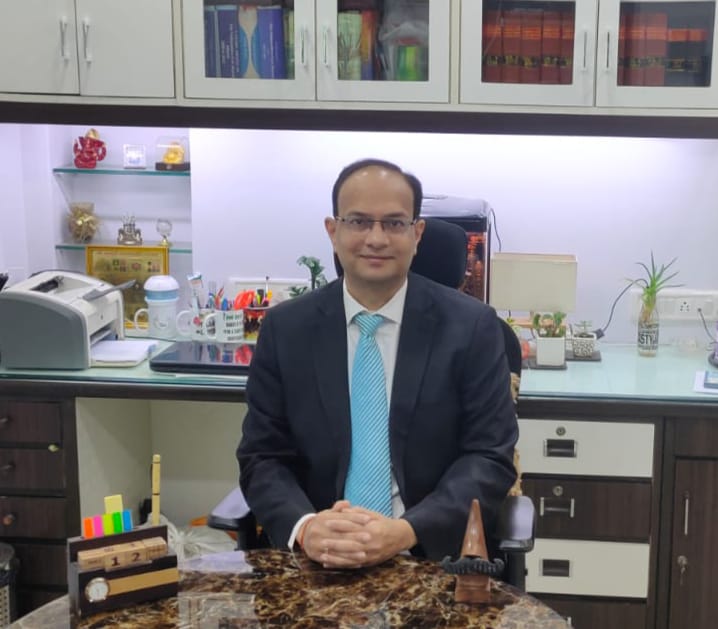
  • “Embracing technology is not just a choice; it’s a necessity in today’s legal landscape. By leveraging technology, we can enhance efficiency and deliver superior outcomes for our clients.” – Kamlesh Kharade, Founding Partner at India Law Alliance

    “Embracing technology is not just a choice; it’s a necessity in today’s legal landscape. By leveraging technology, we can enhance efficiency and deliver superior outcomes for our clients.” – Kamlesh Kharade, Founding Partner at India Law Alliance

    This interview has been published by Namrata Singh and The SuperLawyer Team

    Could you take us through your journey from your college days to where you are now as a Founding Partner at India Law Alliance? What inspired you to choose a career in law, and can you share some memorable moments from your college days and legal education that have shaped your professional trajectory?

    Actually, I took up law as a career due to an accident that took place in December, 1990. Due to which I had to take a break of 2 years from my studies. Due to the bed rest advised by the doctors, I could not give the final exam of my second year of B. Com. However, I completed my Bachelor of Commerce in May 1993 with first class. At that time two of my best friends had already started studying law at New Law College. Hence, I choose to join New Law College instead of joining the Government Law College. The professors at New Law College encouraged me during the initial years to take up law as a career. I joined Hariani & Co.  in January 1996 as a Trainee and thereafter I completed my LL. B. in May 1996. After I completed LL. B degree, I took up further studying and completed the Masters in Law from Bombay university (LL. M) in May 1998.

    I have studied law graduation from New Law College, Matunga, Mumbai. During the free period, I used to discuss with my Seniors about the career in law. During one of the conversations with my friend Veena Mehta, she happened to inform me about the Solicitor’s Articleship with the law firm. Accordingly, I decided to take up the Articleship in a law firm after I finish my law graduation. However, during my 3rd year of law, upon the recommendation from Veena, I joined Hariani and Co. as Articles clerk. I had to sign my article’s agreement with Senior Solicitor P.P. Hariani. I really had a good working experience at Hariani & Co. being one of the best law firms to work in the year 1996. Thereafter, Hariani and co. got merged with DSK Legal and was known as Anderson Legal. While working in Anderson Legal, I had decided to start my own law firm. Anderson Legal in the due course was renamed as DSK Legal. In the year 2004 after completing my Qualified Lawyer’s Transfer Test in London, I had decided to return to India and start working independently in the legal field. Hence, I took a break from work and started studying for my Ph. D in Law. During my studies at Bombay university, I was exploring the options to start a law firm.  I always wanted to become an independent professional instead of working for Company.  I had met Anupam Dighe at DSK Legal and discussed with him about starting the new venture. Accordingly, we both initiated and founded our own law firm under the name India Law Alliance. Anupam had discussed with his family friend Raghu Aiyar for office. Accordingly, we started working from an office opposite Bombay Stock Exchange.  Later on, two junior advocates joined us and our journey in the legal field formally started in October 2004.

    As the founding partner of India Law Alliance, could you share with us the story behind the inception of your firm? What motivated you to establish your own legal practice, and what were some of the challenges you encountered during the initial stages? Moreover, how do you perceive the growth and evolution of your firm over the past 19 years, and what do you envision for its future trajectory?

    India Law Alliance is formed by Anupam Dighe and myself with guidance from our well wisher Mr Raghu Iyer, Managing Partner of K S Iyer & Co., the esteemed Chartered Accountancy Firm. The initial challenge of getting the clients for the law firm was taken away as our acquaintances and family friends recommended their corporate contacts to us and introduced us as Corporate lawyers to take up the legal work. Initially, I took up the litigation work on behalf of Corporates in Bombay High Court and Bombay City Civil Court. We represented them in the injunction suits and obtained favourable orders. We worked professionally and worked with the experienced Counsel to represent our clients and succeeded in representing them in Bombay High Court. This gave lots of confidence and we continued our journey in representing clients in various litigations in Mumbai City as well as in the Hon’ble Supreme Court at New Delhi. We were fortunate to take up the due diligence assignments with Merchant bankers. 

    We are recognised by our existing clients who recommended our firm to their acquaintances which is helping us in growing moderately despite the Corona Epidemic period. The growth of work in the firm is moderate and continuous which motivates us to upgrade ourselves in using the technology and completing tasks in time.

    You have an impressive array of legal expertise spanning various areas such as Dispute Resolution, Intellectual Property, Real Estate, and Banking & Finance. How do you manage to maintain proficiency across such diverse domains?

    During my Articleship time with earlier law firms, I had an opportunity to represent various corporate clients and high net worth individuals. This gave me exposure to work in a variety of fields and represent them in high value real estate transactions. I continue to represent our esteemed clients in completing transactions in real estate, banking and finance besides protecting their intellectual property rights. As a junior advocate, I was always open to learning new corporate avenues which gave me the opportunity to read various commercial documents and applicable laws. Over the period of time, I sharpened my skills to multitask while reading corporate documents and understanding the intrinsic values in it.

    Even today, I like to read the commercial transaction documents in detail. I like to understand the new terminologies and concepts introduced in that transaction. With change of laws and technology it is important to work in diverse domains which keeps you active in professional life.

    Apart from your legal career, what are some of your personal interests or hobbies that you find yourself indulging in during your free time?

    I have been a Rotarian since July 2004 which keeps me busy working with people with a variety of interests. Rotary has various fellowships and I participate in a few interesting fellowships. The recent fellowship in Rotary is known as Rotary means business. This platform actually gives networking opportunities with various Rotarians from different locations and vocations to interact with each other. Networking is the latest keyword for the legal profession as it gives opportunity to meet people with various types of businesses and their needs. Rotarians do refer to our law firm as one of the recommended law firms as many of the Rotarians know me as an active professional. I do enjoy attending musical concerts including jazz nights. I do enjoy practicing golf at home as well as at the club whenever opportunity is available. In my free time, I often read magazines of various subjects. The latest being on the topic of artificial intelligence.

    In your opinion, what are some of the essential skills or qualities that every aspiring lawyer should cultivate to thrive in the legal profession today?

    Every aspiring lawyer must have acumen to read the latest laws with amendments and keep notes for application in practical life. The lawyers must get acquainted themselves with the latest technology available for the legal field and use it for doing the research, be it for court cases or for any particular transaction. With updates of the law as well as relaxations in many government policies, the aspiring advocates must read it from time to time. The latest updates or amendments must be discussed with concerned partners or colleagues from time to time. These discussions on law keeps the lawyer active in mind as well as in profession. Making notes on latest judgments and using them in applicable cases is required for every aspiring lawyer as it helps in growing his or her presence felt during the meeting.

    You’ve been actively involved in representing both multinational companies and large Indian business houses. From your experience, what are some common challenges faced by clients in today’s dynamic business environment, and how do you assist them in overcoming these challenges?

    Nowadays most of the multinational companies and business houses hire Advocates for their legal work. The company’s law team needs to be updated by the law firm about the latest judgments as well as amendments in law. The challenges faced by the company’s advocates need to be understood correctly by the advocates working in the law firm and keep them updated with the latest changes. Changes in the laws need to be understood correctly by the advocates and accordingly inform the clients to take the correct decision and plan for the company’s requirement. The latest applicable stamp duty rates and exemptions available to the companies need to be discussed and informed to the concerned officials from the company to take the correct decision in time. The regular legal update or knowledge sharing needs to be done with the company professionals which helps advocates from the law firm and corporations bond well. This mutual understanding and support helps both the law firm as well as the company.

    You’ve navigated through legal landscapes both domestically and internationally. Could you shed light on the differences you’ve encountered in working within these two contexts, and what approach you believe is essential when dealing with international law or clients compared to domestic ones?

    International clients require our assistance in understanding the applicable Indian laws to the problems or challenges faced by them. Hence to understand the problem at hand and find the correct solution to the problem in the Indian scenario is very important. Most of the international laws are very simple in understanding however the execution of the transaction or its applicability in India need to be understood correctly. International clients often require our opinions on certain clauses in the commercial transaction. However sometimes those clauses are too complex in application due to changes in technology which may not be available in India. Hence, we face a challenge in finding the correct solution in either amending those clauses as per Indian laws or suggest alternate solutions for those issues. Domestic clients handling is not too difficult nowadays due to experience of dealing with corporates for many years and the standard practice and process followed by us. However, understanding the international client’s requirement in the present scenario gives us the opportunity to learn new concepts and its application in the current international scenario.  

    In your opinion, what new dimensions or emerging trends do you foresee in the legal landscape, particularly concerning areas like intellectual property and real estate?

    The protection of intellectual property in India is widely recognised nowadays. Its awareness and protection of intellectual property rights is very important as nowadays many corporates seek prior opinion and guidance from us before using the intellectual property for their business. This advanced planning assists them in avoiding the unnecessary litigation. With new technology being available for legal work it is very important for us to get acquainted with it and support various clients in protecting their intellectual property rights. The new technology in real estate like satellite mapping off location of company properties gives better understanding of the transaction. Accordingly, we can advice the client. Real estate in Mumbai is protected by various laws including RERA which helps in advanced planning in proper title search of the concerned property. With the help of online searches of the property we can do much better work than earlier times.

    Many of us have one area of work and one passion area which we love to immerse ourselves in. Do you have any particular aspect of your legal practice that you’re deeply passionate about, beyond the professional obligations, and if so, what is it? 

    My legal expertise is in corporate real estate transactions which I enjoy the most. However, my new passion since the last few years is Public Interest Litigation. I represent a few individuals who are fighting for public interest in Mumbai city. I do a lot of pro bono work for the individuals who can’t afford to hire counsel or the law firm. I try my best to find the best practical legal solution for them and negotiate accordingly with the concerned developer to avoid unnecessary litigation. It gives a lot of satisfaction and pleasure to work with individuals who are passionate about the common man’s concern. I enjoy working with the local resident’s associations to protect the interest of locals against the wrong policy or work done by the authorities. I enjoy working with locals and representing them before the authorities which gives some pride to me being an advocate.

    Get in touch with Kamlesh Kharade–

