Tag: TNDALU

  • Swapna Sundar, CEO, IP DOME, on Intellectual Property Rights Law, and starting her own firm

    Swapna Sundar, CEO, IP DOME, on Intellectual Property Rights Law, and starting her own firm

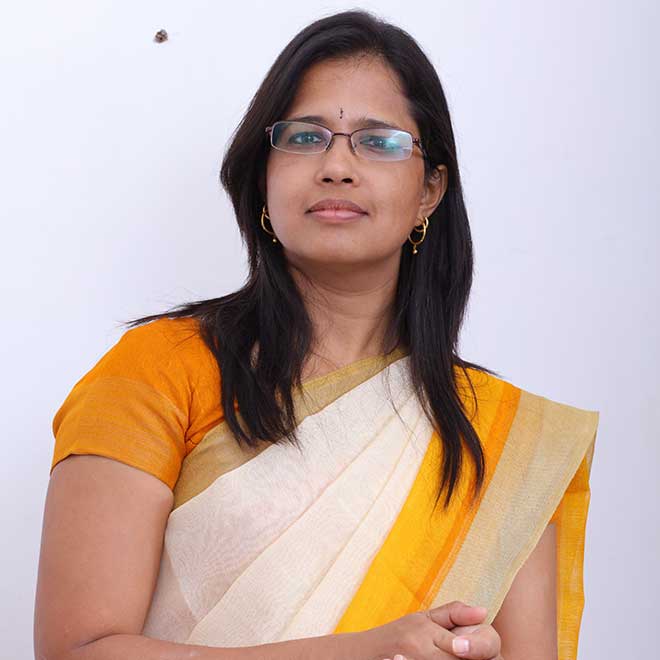
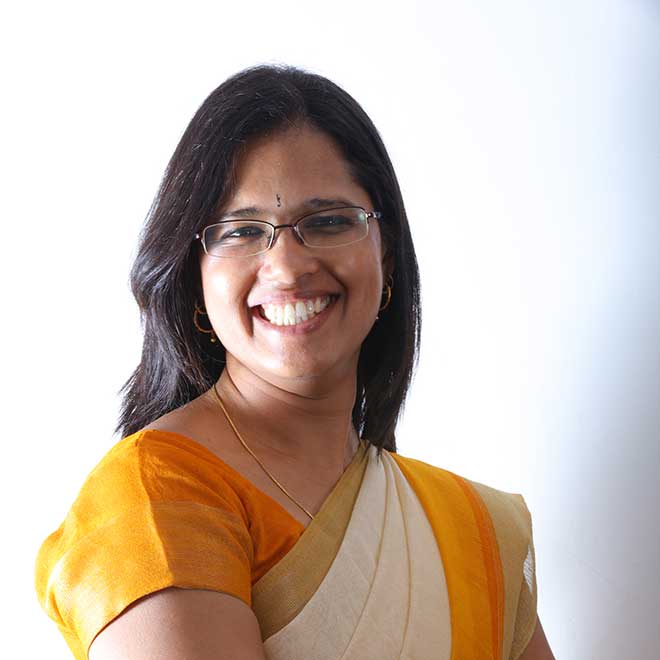
    Swapna graduated from Tamil Nadu Doctor Ambedkar Law University, in 2000. She then went on to pursue her Masters from Brussels School of International Studies, University of Kent, in 2002. She is presently the Principal strategist and CEO at IP DOME – IP Strategy Advisors. She co-founded the company with partner, Mr. Raghavendra Ravi, a CEO coach, consultant and expert at operations and supply chain. She has also been teaching European and US patent law at the NALSAR PG diploma course on Patent Laws, in addition to giving guest lectures at different institutions, including the Asian College of Journalism (ACJ), Symbiosis Law School, Vellore Institute of Technology (VIT), IIT-M and Anna University. She also sits on the IP Advisory Committee of the Tamil Nadu Technology Development and Promotion Centre (TNTDPC), an autonomous not-for-profit society of the Government of Tamil Nadu and Confederation of Indian Industry (CII). The TNTDPC helps formulate policies to guide use and protection of IPR in Tamil Nadu.

    In this interview we speak to her about:

    • Starting her own company
    • Her experience in IPR
    • Her teaching experience

    Can you tell our readers about your firm?

    At IP DOME, we work with corporates, MSMEs, research institutions and individual inventors to take their inventions and creations of the mind – books, illustrations, musical works – to the market. We are a multi-disciplinary team, with Hariprasad – a hardware engineer heading operations, Dhanya – a biotechnologist heading analysis, Karthick handling Business Administration, and Prashant – an electronics engineer spearheading market expansion. In addition to being an excellent supply chain expert, Mr. Raghavendra Ravi is a formidable chemist with more than a cursory interest in perfumes and oil. Clients get to meet experts from their area of interest even at the first meeting, besides meeting me or other lawyers at the firm.  Therefore, my work at IP DOME is extremely interesting and I look forward to rewarding discussions and new challenges every day. In the past ten years, we have also learnt how to leverage the opportunities afforded by the bustling Indian market. I am happy to say that our Toolkit for the UK IP Office ‘The IP Smart Approach to Doing Business in India’ has earned us a place as strategic partners of the UK Institute of Exporters’ Doing Business in India Guide.
     

    What was it that got you interested in the legal field? Do you come from a family of lawyers?

    No, I don’t come from a family of lawyers. My father was a Lieutenant Colonel in the Army. My uncle was a respected public prosecutor at Vellore, but by the time I became a lawyer, he was already semi-retired. I think my interest in law came from my desire to work with people, and I found the logical process of thought required to build arguments fascinating. I do research and teach credit courses on technology law, and then interface between technology and rights.


    Did you participate in extracurricular activities such as moots, debates, etc. in law school?

    I did participate in a couple of moots while at the Madras Law College, but I did not find it very exciting. I have participated in debates while at the Madras Christian College, where I pursued my Bachelor’s degree. I started working in a legal firm from my first year after college hours. I found that very rewarding. I had the opportunity to support a protest by farmers opposing shrimp cultivation, which was destroying the land through inundation of sea water. My task as a (trainee) lawyer was to ensure that the protestors – mostly women and children – were not harmed. Eventually, they were taken to a school where they were made to wait till remand. I took the opportunity to ensure they got water and food, and also taught them a preliminary class on Article 21. Interestingly, the arresting policemen participated avidly in the discussions, pointing out that their human rights were being violated by long hours of ‘bandobast’ duty and unpaid overtime!

    Later, when I was studying for my ML in International Law with International Relations, I worked, as a paralegal, with Monsieur Nicolas Angelet, a lawyer specialising in refugee rights. The cross-cultural work provided me with insights into European governance models, history and notions of nationhood, that I may otherwise not have learnt.


    What was your first job after law school? 

    My first job was that of a junior lawyer, in the very firm where I had interned. I suppose they liked my work and found me competent.


    Can you tell us about being a teaching assistant at the University of Kent where you deliver lectures on British constitutional law and British Human Rights law?

    I studied for my ML at the Brussels School of International Studies (BSIS), which is the European School of the University of Kent at Canterbury. My professor Dr. Wade Mansell, liked my papers on International Relations, where I had explored constitutionalism and colonialism, and how many of the most volatile regions of the earth had been distressed colonies. My papers on the TRIPs agreement were also appreciated. The University of Kent offered me a seat for Ph.D. and a teaching assistantship to help pay the tuition.

    Constitutional law in the books, and Constitutional law on the streets, or in the courts mean different things to different people. UK has no written Constitution; it is derived from many different sources. My background as a lawyer, and my interest in Constitutional law were advantages, since they were looking for someone with practical experience. The British Human Rights Act had been promulgated only in 1998, and not many people were familiar with it. I had an interesting experience giving a lecture on the Act to the Metropolitan Transport Police. They subsequently wrote a very good feedback about my lecture.


    What got you interested in the field of intellectual property?

    Mr. Kamath of Kamath & Kamath strongly recommended that I should register as a Patent attorney and I thank him for that. A patent agent drafts and files the patent application on behalf of the inventor, or the applicant. The role of the patent agent is to capture the invention in its technological brilliance, and fence it with appropriate legal mechanisms. The claims are the most important part of the patent application, although it forms, in general, about 10-15% of the content of the application. Today, my work is largely strategic. I work with our patent engineers and illustrators to communicate a strategic agenda to the application being filed, bringing to it market insights, technology trends and international strategy.

    My exposure to International Economic Law and the macro-economic scene relating to technological advancement, market share, banking and the global development agenda were crucial factors in driving my attention and interest towards IPR. The WIPO course on IP strategy that strengthened my understanding of the connections between Intellectual Property resources, competitive advantage and sustainable growth. It is very interesting to keep track of changes at local and global levels in areas of economics and market, and the volatility keeps us on our toes.


    What caused you to leave teaching and take up a job at a law firm?

    It was always my intention to work. Giving lectures in new and emerging areas is interesting, but I don’t have to grade papers, or guide research. I admire the dedication of law professors, who not only prepare interesting lectures for students, grade papers, and advise on reports, they also find time for their own research and publications, while supporting the institution. I don’t think I could have done it.


    You are currently the CEO of IP Dome Strategy Advisors. What is the nature of your work? 

    As CEO, my job is more administrative than legal. I put out the fires, manage the resources, oversee the operations (without stepping on the toes of competent colleagues), and act as a point of communication between the directors and corporate operations. As a small organisation IP DOME also depends (largely) on me to provide brand visibility, develop markets, reach out to senior associates in India and overseas, and provide expansion plans. As we look to expand into Singapore and USA in the near future, I am also expected to drive the project.

    India is a net importer of technology. I don’t see this changing in the next decade or two. The role of the IP lawyer in India will not remain focused on inventors and research institutions. The IP lawyer or IP firm will have to evolve into market specific entities with wide ranging capabilities, including negotiation, contract management, statistical modelling, data analysis and data management.


    What advice would you give those of our readers who want to pursue a career in the filed of intellectual property?

    It is interesting to note that while young lawyers are interested in IPR, not many are interested in science and technology, or mathematics. I suppose that is why they became lawyers in the first place! We are always looking for whip smart lawyers who are also good in scientific disciplines. Going forward, I foresee a good demand for lawyers with knowledge of science and market or economics and statistics. As the field evolves in India, it would be important to keep track of the changes in IP law and IP regimes across the globe.

    Engineers talk differently from lawyers; biotechnologists and medical professionals use jargon that is incomprehensible to us. Data analysts have a different perspective on an course which we are contemplating. You would be benefited if you learn how to work with people from different scientific disciplines. When contributing your skills or ideas to people from other domains, it helps to be familiar with the jargon or terminology of their discipline. I would also advise learning to read and interpret graphs, trend charts and data models.
     

    What is your opinion about the importance or necessity of higher education?

    ML at BSIS provided me with an understanding of the market as a powerful agency of amorphous actors, which is nevertheless organised and well-structured. This perspective lends me the ability to identify and re-orient tactically to economic transitions. Higher education, according to me, should enhance competency or skills in a chosen area of work or interest. A lawyer who studies for Master’s with basic knowledge of law supplemented with practical experience, stands to gain the ability to define her role more finely, and align herself with market requirements. Higher education must either drive better understanding of the domain of operations, or help the lawyer to reach professional goals. Choose wisely, both on the basis of what you want to study, and where to study.


    You are a part of the Ethics committees of various institutions. What does this position entail and what kind of matters do you have to deal with?

    I am a member (legal) of the Institutional Human Ethics Committee of the National Institute of Epidemiology, an ICMR body, and a member (legal) of the Ethics Committees of IIT-M, SRM Medical College and Hospital, the National Institute of Siddha and the SRM Institute of Medical Sciences. An ethics committee is an independent body consisting of healthcare professionals and non-medical members, whose responsibility is to protect the rights, safety and wellbeing of human subjects involved in a clinical trial and to provide public assurance of that protection. As member (legal) I keep track of whether the research protocol ensures that the rights of the patients are not violated; at the same time, I also see that the rights of the researcher to conduct research on human participants is not unreasonably curtailed. The other members of the committees look to the lawyers on the committee to ensure that laws are not violated, and that institutions, researchers, contract research organisations and sponsors of trials do not avoid their obligations. We study and comment on the trial protocol, suitability of investigators, adequacy of facilities, significance of number of participants, compensation, consent and waivers, reporting on adverse events and termination of trials.


    What are the measure we should be taking to empower women further?

    In general, we can empower women by promoting gender balance in recruitment and promotions, and by driving a culture of diversity. In India, this includes people from different communities, as well as different states. It is important to realise that if Indian companies fail to recruit and retain talented women, they will only exacerbate the acute shortage of competent personnel. It is necessary to support women by encouraging conversations around gender equity and professional goals in a co-working situation. Women feel valued when their self-assessment of technical competencies, and professional relationships meet and align with the organisation’s assessment of them. An organisation that values its women, promotes a culture that encourages openness, accessibility, collaboration and community, allowing women to contribute with greater confidence. Empowerment also means promoting women to positions of leadership and decision-making.

    At IP DOME, we strive to empower all team members by encouraging a focus on health and wellness, both mentally and physically. We aim to create a workspace and culture that empowers and inspires members to achieve professional excellence. Whether men or women, we encourage team members to ‘be yourself’. This promotes a transparent and balanced company culture. Having a family should not deter either men or women from pursuing a fulfilling career; this means we are prepared to enable flexibility in work schedules and help with education expenses. As a woman CEO, I tell women colleagues to develop a stronger political self, questioning the straitjackets that society may insist on. They should be able to think and act as competent professionals and leaders.


    Do you think law school prepares students for real world challenges?

    The purpose of law schools is to prepare students to pass the Bar Exam and to be responsible and ethical members of the legal fraternity. But I would not say that they are sufficiently prepared for a successful career in law, when they graduate. While a graduate from a good school may meet the knowledge and competency criteria, other crucial skills will have to be learnt from school activities that students participate in, or the internships they take up. Important skills include case management, communications, non-electronic research, drafting, analysis of law and facts, strategies for resolution, and a whole host of client management issues including evaluating potential client engagement, maintaining client trust, arriving at budget and terminating client relationship. In addition, account management, interpersonal skills and working collaboratively – challenges in working any industry, will also have to be learnt by the new graduate.  

    I believe that graduates who allocate sufficient time to planning their careers, and understanding their capacities and competencies stand a good chance of succeeding in their chosen profession. The planning should be a combination of vision and intense, detailed planning. There is one quality that appears to differentiate a successful lawyer from the rest – the ability to be tactically flexible in achieving a strategic goal!


    What are the challenges you have faced in building your career as it stands today? 

    IP DOME entered the market with a clear strategy to promote IP Strategy in India. India’s unique ecosystem – high growth coupled with infrastructural inefficiencies and delays in bureaucracy and judiciary, and the large cost of controlling infringement by many small and micro-unites – call for special measures and strategies. In the last 10 years, we have earned a reputation for strategic IP services. In fact, the UK IP Office commissioned us to write a Toolkit: IP Smart approach to doing business in India, which is available for free download on our website, which has received good feedback.

    The challenges have been in terms of maintaining focus on our core expertise, developing and nurturing a strong network and attracting top talent. Yet another challenge is enabling and encouraging visibility and recognition for our subject matter experts, as many fora recognise only me as a resource person! Brand building requires considerable investment in terms of time and resources from the company as well as the team members, and as we provide highly specialised services, we also invest in education and awareness campaigns in colleges, schools, SME and entrepreneurship development institutes, self-help groups and industry bodies. The experience has taught me that deriving value from IP in India requires tactical planning and strategic deployment of resources from the time of conception of an idea to the launching of it in the market.


    How do you maintain a work- life balance?

    Personally, my method is to apply my mind to many different projects simultaneously; my second book on the Marina pro-Jallikattu Protest – Occupy Marina! will be released in September. I believe that in a balanced life, we must accord equal priority to family, career and other interests that make us who we are. There are a few well-recognised means of ensuring a good work-life balance for the team. The following have worked well for us:

    1. We know we are running a marathon, not a sprint. Endurance as a team is more important than a short burst of speed resulting in burn outs, frustration and high stress levels.
    2. We know we are human, and have limitations. Sleep deprivation, high stress levels, no time to decompress, irregular hours – all these result in less than optimum health. We prefer productive hours to long hours.
    3. Delegation and redistribution. In a sense, we communicate that no one team member is indispensable. This helps us to let people off to take care of family or health matters. When work is distributed evenly, the team feels less burdened, and friendlier towards each other.
    4. Take the help of an organisational consultant. Our organisational consultants, Dr. T.T. Srinath and his colleague, Mr. Sadasivan, encourage a balanced outlook to life, and ensure that we are constantly aware of our current state of stress as individuals, and as members of a team.


    What advice do you have for our readers who are primarily college students?

    OK, here goes: Don’t watch TV. There are other ways to keep yourself informed, and a million things happening around you that will provide you with meaningful entertainment, future visions, opportunities and choices. Don’t get hooked to social media. You will only keep hearing what you like; social media channels, use filters to amplify what you respond to, and filter out what you don’t like. Keep track of trends, but don’t be too quick to specialise. If you have interests in areas like science or fine arts, now is the time to explore. After ensuring good grades, spend more time building relationships. Great marks won’t help you in practice, friends and seniors will. Your free time would be excellently spent if you read a few books, among them, 1984 (George Orwell), The Trial (Franz Kafka), The Social Contract (Jean-Jacques Rousseau), The Handmaid’s Tale (Margaret Atwood), History Will Absolve Me (Fidel Castro), My Name is Red (Orhan Pamuk), Serious Men (Manu Joseph), India after Gandhi (Ramachandra Guha), Clarence Darrow for the Defence (Irving Stone), Midnight’s Children (Salman Rushdie) and One Hundred Years of Solitude (Gabriel Garcia Marquez) – in no particular order.
     

  • Aarthi Sivanandh, Partner, J. Sagar Associates, on building a corporate law practice, merging Vichar Parters and LL.M from Tulane

    Aarthi Sivanandh, Partner, J. Sagar Associates, on building a corporate law practice, merging Vichar Parters and LL.M from Tulane

    Aarthi Sivanandh graduated in commerce from Stella Maris College in 1997 before deciding to pursue law from Tamil Nadu Doctor Ambedkar Law University. Thereafter, she attended Tulane University (US) on a scholarship and graduated the masters course in corporate law with distinction. Soon after she worked in California briefly as a foreign legal consultant before returning to India in 2004. On her return to India she was part of the founding partner team for Universal Legal. In 2010, she co-founded ‘Vichar Partners’ which merged into J.Sagar Associates in April 2014.

    In this interview she tells us about:

    • Degree in Law after commerce and subsequent international exposure
    • Building a corporate law practice in Chennai
    • Experiences in founding a law firm and its merger with Jyoti Sagar Associates
    • Role of a partner at one of the largest firms
    • Work life balance and necessary skills of a young lawyer


    You are a B.Com (Hons.) graduate from Stella Maris College. How did you decide to join Tamil Nadu Doctor Ambedkar Law University?

    I never envisioned myself as a lawyer. In my final year of undergrad college at Stella Maris, I had won an advertising competition that awarded me an internship offer at HTA. My mother promptly found me a friend of hers who was a company secretary who persuaded me to join the course lest I am lured by what they believed as the glamorous world of advertising. A short introduction to the intermediate course at the institute and I was captivated by law, thus the road to join the University in Chennai to pursue a degree in law.


    Soon after completing LL.B., you went to pursue Masters from Tulane University Law School. Why did you decide to go for higher studies?

    I was interested in corporate law but there were no law firms in Chennai in the late nineties, the city was flooded with court counsels. Litigation was the only thriving practice area and the city was well known for its stellar attorneys’ bar. I decided to visit Bangalore and Mumbai for an internship and found the firms there unwilling to entertain me except for one. It was a struggle to gain exposure to transactional or corporate practice. It was the time after an undergraduate degree when I was keen to discover the world, find new experiences. I had also won two scholarships to study abroad, so I decided to put them to use and get a Masters in Law degree.


    aarthi-sivanandh-2

    Tell us about your LL.M year at Tulane. How did this influence your career?

    My time at Tulane was rewarding and fun filled, both intellectually and personally. New Orleans is the third most interesting city in the US after New York and San Francisco; this drew me to choose the foreign lawyers LL.M program at Tulane. My class had almost 130 people from more than 25 countries. The historic city that had fought Spanish and French wars, its streetcar and Audubon park still alive from the 1840’s and a milieu of international students was the background in which my mind grew.–

    The enriching dialogues and conversations between professor and student, the Socratic method of teaching, the non-judgmental easy ways that gave every attorney the time to compare how they learnt the law at their home countries and how they articulated themselves, changed my 23 year old mind at very fundamental levels.

    Nothing was unacceptable in the system and there were no wrong answers, there were only ‘different’ answers – This was a huge change from the way I was educated in Chennai.

    I learnt to respect other views, state my own clearly, be financially responsible, manage hard work, independence and be comfortable with strangers. I decided to work in the Valley on graduation and came home after 2 years. And like every person who returns home, I wanted to come back to Chennai and change the way people viewed the firm culture and practice of corporate law.


    You have been a corporate lawyer for most of your career. What prompted you to take up corporate law? Share with us any experience which helped you to shape your career choices.

    My late uncle was a real estate lawyer in the 80’s and my father though retired as a public prosecutor continues to work in dispute resolution on a range of matters. I would ask them where companies and others who ran businesses go for their work and they would both reply that those clients’ litigation needs were taken care of in the city but for ‘other work’ they would go to Mumbai or Bangalore or Delhi. While I enjoyed practising with litigation teams in the US (The Chugh Firm), on my return I began to focus only on corporate and transactions law in India and particularly in Chennai.

    The challenge to marry the various nuances of the law with the intricacies of forward looking business is both an opportunity and challenge to the transactions and corporate law practice.

    Many commercial relationships succeed without the fear of legal enforcement simply by relying on the discipline of the parties’ motivation to be fair, their prospect for future dealing, and the increasing premium they place on reputation.

    A quality legal product or service would therefore be one that fine-tunes incentives by providing for a broader range of contingencies that will in turn dramatically reduce the costs of dispute resolution. The challenge to achieve this intricate balance calls upon several skills. This held great appeal for me as a practice area and catered to my need for cleanliness in human and business interaction.


    aarthi-sivanandh-3

    Considering the fact that you started your career in California, was it easy for you to settle in the work environment of India?

    The style of work communication and managing client expectations were the big differences in the work environments. When I moved to Chennai in 2006 there was still no law firm that was organically grown in Chennai with a true concept of equity or partnership.

    I was a part of Universal Legal in Chennai, India for 4 years that helped me start my career when I moved home. It was an entrepreneurial foray to set up and learn the way forward in term of setting up a practice. However, in many ways there was no ‘senior’ in India whose coat tails I could hold on to, the only choice was to play natural, observe and learn. I settled in easily, it’s a great city and its home. The community places a premium on fair relationships and quality work which were encouraging when I started. Many friendships over the years have given me an insight into the work environment that is unparalleled.


    You co-founded Vichar Partners in September, 2010. How did the idea germinate? Any specific reasons why you chose the name “Vichar Partners”?

    I had not always wanted to set up my own firm but one is an amalgam of everything and everyone they meet. The idea of the firm germinated with the usual impatience some lawyers feel in believing that they could fundamentally change things and grow a firm that can have an impact. The energy it required and the excitement of possibilities fuelled me.

    By 2010, I felt I had enjoyed the city, represented and worked with many clients who were willing to work with a non-branded non-legacy firm and had earned the trust of some of the business leaders in the city. I had sporadically but constantly dreamt of an organically grown firm in Chennai, with all its partners in Chennai catering to everything clients need in Chennai had gained momentum. The timing seemed apt when I met my great colleagues and partners Vinod Kumar and Chitra Narayan. Everything seemed ordained and there just seemed no point in waiting anymore.

    We wanted to institutionalise and build a full service law firm and to create a platform that awarded and energised lawyers on merit. We were keen to grow a fast paced technology based law firm that would deal with clients, timelines and quality in an effective manner.

    Our name was coined by to reflect the first 2 letters of each of our names but also that in Sanskrit. Vichar meant an idea, thought or opinion which was what our firm was. We were bound in our commitment to quality and our common belief in the ethical practice of law and business.


    In April, 2014, Vichar Partners was merged with Jyoti Sagar Associates, Chennai and you currently work as a Partner at JSA, Chennai. What prompted this merger?

    Vichar Partners entered the market with large aspirations on being the “go-to” firm in Chennai for corporate, commercial, transaction and niche litigation work. We grew considerably well in terms of repute, associate strength and the quality of work we were handling but we did see market realities in a comparatively smaller geography. Talented young corporate lawyers were tough to find in Chennai as the city had deep roots based solely in dispute resolution and transactional work was getting outsourced which meant there was no investment in building younger lawyers in this area, or finding administrative paralegal support to handle large transactions.

    In our third year we found ourselves on other sides of the table with JSA several times, while internally we were intrigued and absorbed on the next level of growth for Vichar. A matter of timing and providence, the potential for a combination seemed complimentary to both our firms.

    Somasekhar from our Mumbai office was a significant influence when he first met us with the idea, later interactions with Murali from our Bangalore office, Amit from our Delhi Office and Dina from our Mumbai office confirmed we were on the right path to considering a merger. Of course, the powerful work ethic and integrity of the leadership of Berjis and Jyoti preceded the reputation of JSA and in the end it was almost a natural selection

    While some may try to refute this, I do believe that large law firms attract the best talent, provide superior training and mentoring, and would transform the inexperienced into an exceptionally skilled attorney. This in turn allows such firms to attract sophisticated clients, handle cutting-edge transactions and manage the greatest deal flows. A combination of these ingredients on a consistent basis offers the best opportunity to develop as a lawyer.


    What does a partner at a law firm like JSA do? What falls within the scope of your responsibility? Tell us about a typical work day.

    No day is like another. They are unstructured, sometimes meditative in working through a solution or reactive mode to urgencies or filled with telephone calls. Typically, the day is filled with interactions with potential clients, ongoing work and associates.
    A typical day would start with getting a handle on all the client matters going on, different transactions or other mandates involving opinions or structuring a business, that is either readying itself for a sale or targeting a purchase – the task of managing responses to all of them and understanding if their strategies fit within the walls of the law. I prioritize and coordinate with my colleagues who are working with me based on what stage each transaction or the firm’s involvement is at. Once the background work and schedules are set within the team, active participation in calls or negotiations begin, with each party at the table having multiple commercial requirements and legal must- haves. The forward looking protections that are required in an ever changing commercial background can require one to bring to bear an understanding of economics, commerce, industry and the law.

    Timelines can stretch for various reasons from parties posturing for the right leverage or purely for commercial purposes. The loop repeats and until innovative structuring, alignment of interests and final negotiations find balance– sometimes takes several months.


    What is the most challenging or stressful part of being a Partner at one of the most successful law firms in the country? Is it easy to have a work-life balance?

    Challenges are continuous, no piece of work is alike and the constant commercial and market changes require one to keep pace with it and opine within the four corners of the law The challenge is to use the right proportion of legal logic, commercial reasoning and fair persuasion on behalf of a client. Negotiations too are often like a puzzle, you may know where the piece goes but you also have to time when you place the piece in the puzzle so as to let others help you complete it. Being calm and composed in all kinds of crisis situations and timeline based advice is also a challenging aspect of the practice.

    No, it’s not “easy” to have a work life balance. Having said that, I don’t believe work to life balance should be 50-50, at different points of life the balance scale shifts sometimes 60-40 and at other times say 40-60. I have two kids aged 7 & 3 who like to do the typical things kids of that age do– play constantly, run, go to classes etc. With a good support system I manage to do some of it with them but not all. If you think of it all as a part of leading a “whole life” then it makes sense than try to slot each activity into a bucket of either work or life. A true partner/spouse who understands the nature of work can help immensely in keeping this balance. JSA is an even keeled firm, with a great set of people and that makes the road saner and easier.


    What kind of effort should a young associate put in to work to get it appreciated? What distinguishes an associate from a partner when it comes to work?

    A young associate should have a keen mind that should be somewhat of a sponge – that absorbs everything in and around, taught and not taught and a thirst to learn. The law school rote method won’t let you stay afloat in a law firm but resourcefulness and hard work will. There are no short cuts.

    The outside world and fresh off the boat lawyers are often enamoured by the pay a corporate practice offers but often fail to see the immense hard work that goes into the practice. There must be a very good reason other than money that makes one want to continue to pump in some very crazy hours, bear with challenging transaction requirements, clients who are bound to be low on patience if they are in stressed commercial situations and to sustain it all, for days to end– it’s a time vampire.

    Associates are central to a Partner’s practice. The more they learn and give the more they grow, the more they grow the Partner can expose them to a variety of work. No show is a one man show, the synchronised timing and effort of the associate team in building research knowledge, knowledge management, prompt interactions with clients on status updates or first level drafts and so can assist the Partner to build on the same to have deeper discussions, develop negotiation strategies, understand commercial requirements and enhance the quality of the practice.


    How important would you say are business development skills at such higher roles in a corporate law firm?

    The role of business development is a key component in a law firm. The firm has only one asset – its people. Amongst the people not everyone is required to concentrate on business development but is a requirement on the senior resources. If a senior resource can garner client confidence, provide resourcefulness and deliver as required the firms credibility grows. The larger the pool of senior resources the larger the palette of services the firm can successfully offer. The symbiotic relationship of different partners in the firm are the strong links the firm builds through its people assets in the community. I would say these skills are critical and second to none.


    Having a centralised HR what do you have to say about students writing to partners directly?

    JSA is a national law firm and our internship process, recruitment process – all HR functions are centralised. Applications are usually submitted at the internship or careers link on our website. Sometimes, students write to partners or associates they have met or have a relationship with through some other professional forums, while this affords familiarity with the candidate it still depends on the requirement of the location partners and of the firm at each level.


    When you hire lawyers under you, what specific skills and profile do you look for?

    Law school education is becoming more adept at providing attorneys with transactional skills. Generally, however, it still falls short. When I hire for my team, I look for students who worked extra hard to find some baseline transactional competencies or have devised ways to achieve them through internships, reading, taking courses at the institutes for extra focus on particular areas of law or part timing at corporate law firms.

    Given where things are in terms of corporate/transactional law practice outside of Mumbai and Delhi and given the gap between law school education and the transactional competencies that are required, it is incumbent upon the lawyer to be competent and take whatever steps necessary to educate herself to become so.

    Fresh graduates can build on their ability to understand business associations, basic advice about business structures, and draft documents related to business associations and secondly to investigate and understand facts and research the law in a given context (emphasis on due diligence).

    Working lawyers or lateral hires in addition to the above should be able to draft clearly, have thorough research skills, be able to walk a colleague or client through the process of identifying what the issues are, rules of law in play given the issues, applicability of law to the issues and finally a conclusion. They must be able to also identify and address the ethical implications of practice.


    What would be your advice to students who wish to go for higher studies?

    A degree for the sake of it would serve no end. However, some are geared to appreciating the jurisprudential thought involved and understand nuances better when the learning is organized through curriculum while others are adept to picking it up as they work with counsels or at law firms. A higher education abroad gives an exposure early on in a student’s career to the different styles practices and legal markets in the world. In my personal experience, these courses often help in wide network of friends in different regions and a style in writing and thought that could be unparalleled but I would not unduly overemphasise the need for a practitioner to obtain a master of laws degree.


    What would be your message to our readers who are budding lawyers and law students?

    Clarity in thought and expression is the single most important quality for a practising lawyer today. This assists in honing the ability to identify, evaluate, and understand business risks for clients and in turn offer appropriate legal advice. Invest in yourself constantly, by reading and understanding the rules of law both at home and abroad, this will enable one to compare contrast and therefore learn. The law is known to be a jealous mistress; you will have to give a lot to get some.

  • Smrithi Ramesh on LL.M in ADR from Berkeley and arbitration work at KLRCA

    Smrithi Ramesh on LL.M in ADR from Berkeley and arbitration work at KLRCA

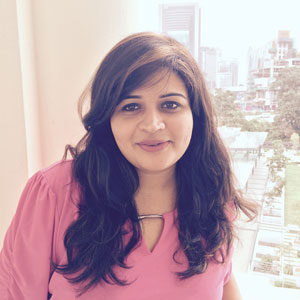
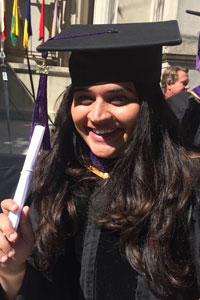
    Smrithi Ramesh graduated from The Tamil Nadu Dr. Ambedkar Law University, Chennai and thereafter went on to pursue an LL.M in Alternate Dispute Resolutions from the University of California, Berkeley. Currently with her assorted skills in arbitration, mediation and negotiations she has joined the Kuala Lumpur Regional Centre for Arbitration.

    She shares with us:

    • Her reasons behind pursuing LL.M
    • Faculty, facilities and course structure at Berkeley
    • Building a career in Alternate Dispute Resolutions
    • Overall journey as a law student and post-law-school career


    smrithi-ramesh-2

    What impressed upon you the idea to study law? Did you have lawyers among your relatives?

    I consider myself a first generation lawyer. Growing up, no one in my immediate family practiced law. However, I did grow up listening to stories about my great grand-father being a lawyer and that had an amazing impact on me. A healthy dose of books like To Kill A Mocking Bird and John Grisham only cemented that desire. All my varied extra curricular activities in school also revolved around my fondness for interpersonal interaction, rationalization and in advocating my beliefs to people. Hence, choosing to study law was a logical consequence of my upbringing.

    Once I started law school, while my reasons to love the law became different and more coherent, the desire to become a lawyer stayed the same.


    How do you recall your law school journey? Did you partake in moots and extra-curricular activities?

    Law school was more of an adventure than a journey. I studied in the School of Excellence in Law and hence access to Courts and work on an everyday basis was a huge advantage. The timing of my college made it conducive for me to intern every day for the 5 years. Luckily for me I joined this leading law firm in Chennai called BFS Legal. The Partners were very encouraging and made sure that I was exposed to all kinds of work. It was lucky for me that I found mentors in my bosses who not only taught me the law but also channelized my interests in the right direction. Being avid mooters themselves, they encouraged me to take part in moots. There began a long relationship between me and mooting. I spent 5 years during various moots.

    Extra curricular activities were a huge part of what moulded my personality.

    A big turning point in all this was when my team won the Henry Durant Memorial Moot Court Competition. We went on to win the Asian Rounds in Bangladesh and then were placed Semi-Finalists in the International Rounds. This was a first for my institution and for us personally too. The exposure we got there meeting students and lawyers all over the world was phenomenal and that also prompted us to do the Willem C Vis Arbitration Moot. It was her that I first developed my interest towards International Arbitration.

    Apart from this, I was also a part of the Moot Court Association of my college. In the final year of college I was made President of the Moot Court Association. I was part of the team that successfully conducted four National Moot Court competitions in one year. We managed to pull off a successful event on a shoestring budget. I believe these experiences were crucial in learning valuable skills that continue to help me everyday at work and outside. In the final year, I also interned with the Ministry of Corporate Affairs.


    How did your appointment at Vichar Partners (now JSA) take place? What all constituted your work profile?

    Vichar Partners was one of the few firms in Chennai that was doing great transactional work. Towards the end of law school, I had begun to take a great interest in Arbitration and also Transactional Law. I applied to Vichar and went through the interview process successfully. My work profile primarily consisted of handling Dispute Resolution cases including Arbitration. I was also able to work on a few deals and was also a part of the team that conducted due diligence. VICHAR partners gave me hands on learning on the various aspects of Corporate Law. They also had a lot of cases relating to arbitration and electricity law. It was very interesting for me to work on this as it was new and challenging. Although I was no stranger to courts, it was here that for the first time I got to represent in various forums including the High Courts, Electricity Tribunal etc. None of the books you read or lawyers you watch prepares you for the sheer thrill you get when you appear before a bench in real life.


    After your work experience at Vichar you joined Mundkur Law Partners. What prompted you to make this shift?

    The shift was primarily owing to my relocation to Bangalore for personal reasons. However, once I joined Mundkur Law Partners, it was almost like a second tenure at law school. All my working life, I have been blessed with amazing bosses and Mr. Mundkur was no exception. My stint at MLP saw my drafting and research skills undergo a sea change. High standards of perfection was the norm at MLP. My exposure at MLP included Corporate Law, Dispute Resolution, Education and Foreign Investment.

    By now I had more or less understood the importance of an LL.M to bolster my CV and help me carve out a niche.


    What was your motivation behind pursuing LL.M.? When did you finally decide that you need to do masters?

    I was first considering doing a Masters immediately after my experience with mooting at an International forum. It made me realize the importance of learning in a multi cultural environment. By the time I was in MLP, I had pretty much decided that to really equip myself, with the skills and knowledge required to further my career, an LL.M was mandatory. It was also essential for me to understand and learn for myself how the different spheres of law worked and functioned.


    How did you choose the university/college? How should one go about choosing a university?

    A lot of research went into the schools I had decided to apply to. The one key thing while choosing an LL.M. is to look at it for the point of view of equipping oneself rather than finding a job out of the country. It is good to do some background research on the faculty and programs offered in your area of interest. I was interested in New Venture Law, Investment and Arbitration. To me California and Berkeley were a perfect fit. I was taught by the best lawyers in Silicon Valley and the arbitration faculty at Berkeley was also great.

    I was very keen on a multi-cultural university. The key thing to identify for yourself before applying for an LL.M is to decide what exactly one wants out of the program. Once those goals are established, applying to schools becomes easy.


    Does Berkeley provide students with scholarships? Are there other institutions which provide scholarships? How difficult was studying abroad in terms of finding accommodation, finances and settling in?

    Berkeley does provide some scholarships. There are also many institutions that provide scholarship both inside and outside of India. People looking to apply for an LL.M should get their research in order as regards scholarship applications. Most times, there is a separate procedure for applying for these scholarships including writing essays. The deadlines for scholarships also vary. So it is good to have a schedule before one even starts to apply to colleges.

    For anyone going from India, living in the USA is an expensive proposition. More so, if it is California or New York. The cost of real estate is fairly high. However thanks to social networking, it is easy to connect with former students and your own future classmates. It’s good to take their advice regarding places to stay, when to look for places etc. Settling in is not just easy but also fun. You make so many wonderful friends from all over the world that the entire process becomes such a joy. The only key here is to go with the flow.


    smrithi-ramesh-3

    Did you undergo a rigorous academic schedule? How was that different from your under-graduate course?

    My academic schedule was radically different from what I was used to in my under graduate course. My under graduate course was more flexible and most of my learning came from actually working. However, at Berkeley the academic schedule is pretty rigorous with some courses having continuous assessment. One is expected to be prepared with the readings before one heads to class. To me the most important thing that stood out was how much importance was given to practical application of concepts. For people who are used to the Indian method of examination, it’s quite a challenge to adapt to the new system. I was never before exposed to the concepts of open book examinations etc. However by the second semester, it became standard practice. The exams and the learning train you to think about application than mere learning by rote.


    Prof. Alexander Coward’s mail inspired thousands of students all over the world. How was your experience with faculty?

    Prof. Alexander Coward’s mail is a wonderful example how Berkeley gives you the freedom to be what you want to be, whether you are a student or a faculty. The faculty is extremely intelligent and it was a sheer delight to be a part of some classes which was interactive and stimulating. Most of the faculty members are also versatile and have a great experience. For eg, my New Venture Finance class was taught by a doyen in the Silicon Valley. Listening to his personal insights just made the class more interesting, relatable and real.


    How is the faculty & academic schedule (your typical day) over at Berkeley? Is there time enough for non-academic pursuits?

    The academic schedule primarily depends on the courses you elect to opt at the beginning of the semester. Some people had classes spread out over a week and for some it was clustered on a few days. Very early on you quickly learn to compromise on sleep for the one year that you are there. This leaves you with enough and more time for non-academic pursuits.

    The classes offered also provide for great variety. I also had the opportunity to audit a few classes in the South Asian Studies Department as I was very interested in those subjects. This gave me the opportunity to meet and interact with stalwarts such as Asma Jehangir, Gurcharan Das, Ramachandra Guha etc. I took a class called Negotiations ( on Saturdays) and this was literally the best decision of my life. I also managed to take a class from the HAAS , the B school at Berkeley called Power and Politics in Organizations. These classes are meant to develop your skills. To say that they changed my life would be an under-statement. There are so many skills that you pick up that aid you in my day to day work as a lawyer. For eg, in Negotiations class, our final grade mostly constituted of a simulated negotiation that was recorded. This helped us analyze and dissect every aspect of the negotiation including body language, effectiveness of skills, strengths and weaknesses of the negotiation tactic etc.

    On the other hand, Berkeley is literally the epitome of fun. Non-academic pursuits are just as integral as academic pursuits. I can safely say that I spent equal amounts of time if not more just having fun and trying or doing the things I loved.


    How did you go about your journey of job-hunting after graduation? How did Kuala Lumpur Regional Centre for Arbitration happen?

    My job hunting process began as early as January. By then, I had decided to focus my entire energy on finding a job in Arbitration or Negotiations. I was warned very early on that to get a break in the field of International Arbitration is nearly impossible. I spoke to a friend and mentor, Abhinav Bhushan who is with the ICC, Paris. His insights and experiences proved extremely useful as it was he who directed me to the possibility of applying to International Institutions. I learnt from his experiences and difficulties faced when applying. I took his advice to heart and set out to write to Institutions from the very beginning of January.

    I was forewarned about the multiple rejections that come your way. Persistence is the key to job hunting in a market like this. It is also important that while making these contacts, you make an effort to stay in touch with them even if they cannot at that moment give you a job.The job hunting process was in itself a learning experience.


    What does your work profile as a Case Counsel at KLRCA consist of?

    The Kuala Lumpur Regional Centre for Arbitration (KLRCA) was established in 1978 under the auspices of the Asian-African Legal Consultative Organisation (AALCO).

    My job at KLRCA primarily consists of case management. This involves from the commencement of an arbitration until the Award is rendered. As an International Case Counsel, I am in charge of monitoring every stage of the proceedings assuring that every step complies with the procedural rules that parties have agreed on. The cases varies in nature of the dispute, type of arbitration and whether it is an international or domestic arbitration. Case management involves many stages of the dispute resolution process, not only arbitration but mediation and recently adjudication as well.

    Apart from this, KLRCA offers Case Counsels the opportunity to lead and be involved in developmental projects both in Malaysia and in the International arena. Developmentally, KLRCA is a young Arbitration Centre. As such there is much room to be creative and come up with proposals to improve our services in arbitration and as a dispute resolution service provider generally. Since the appointment of the current Director, Professor Datuk Sundra Rajoo, KLRCA has increased the number of Cases drastically and has revamped itself as a complete ADR solution provider. KLRCA’s other ongoing projects are in diverse fields including Sports, Medico-Legal, Investment Arbitration, Domain Name Dispute Resolution amongst others. This proves to be not just challenging but also an extraordinary learning experience.


    When did you realise your calling for Arbitration? What would you advice budding arbitration enthusiasts?

    Arbitration is much of a keen interest. It was also not a sudden realization but that something that happened over time. The decision was made easier as I had previously the opportunity to experience various fields of law. From the time I was an intern, I worked on Litigation, Corporate and Transactional Law. Experiencing this first hand made it easier for me to narrow down on what interested me the most. Berkeley and my experience with studying Arbitration was the culminating point of an interest that grew gradually. I strongly believe that the Law is one field which is constantly adapting. After Berkeley and KLRCA, I realized the importance of not just arbitration, but also the necessity to focus on Alternate Dispute Resolution as a field in itself.

    As advice, I would pretty much say the same thing to budding Arbitration enthusiats. It makes the world of a difference when you keep an open mind. I would also suggest that you keep yourself update on the constant developments in the field of Arbitration. Speaking to people who are in the field is a definite advantage and necessary even.


    How do you think your LL.M has benefitted you in your career prospects?

    My LL.M at Berkeley not only equipped me with the knowledge and skills required for a career in Alternate Dispute Resolution, but also opened my mind to avenues I did not know existed before. The Berkeley tag is a definite advantage and a welcome addition to my resume. The contacts that I made in Berkeley break across territories and has already come in handy in my career. I think an LL.M is essential for anyone interested in the field of International Arbitration and this was no different in my case too.

    More importantly, it has given me fresh perspective on everything including the law.


    What would be your parting message to our readers?

    While it is important to plan ahead and work towards a career of your choice, it is just as important to experience every moment of it. The people around you change you and teach you just as much as the curriculum does. It can be very easy to get caught up in this and forget the real reason behind why one chose the law. I am no one to give advice. However, everytime I find that the process overwhelms me, I remember what Atticus ( Finch) says in the book:

    “Delete the adjectives and you will have the facts.”

    It’s that simple.