
This interview has been published by Namrata Singh and The SuperLawyer Team
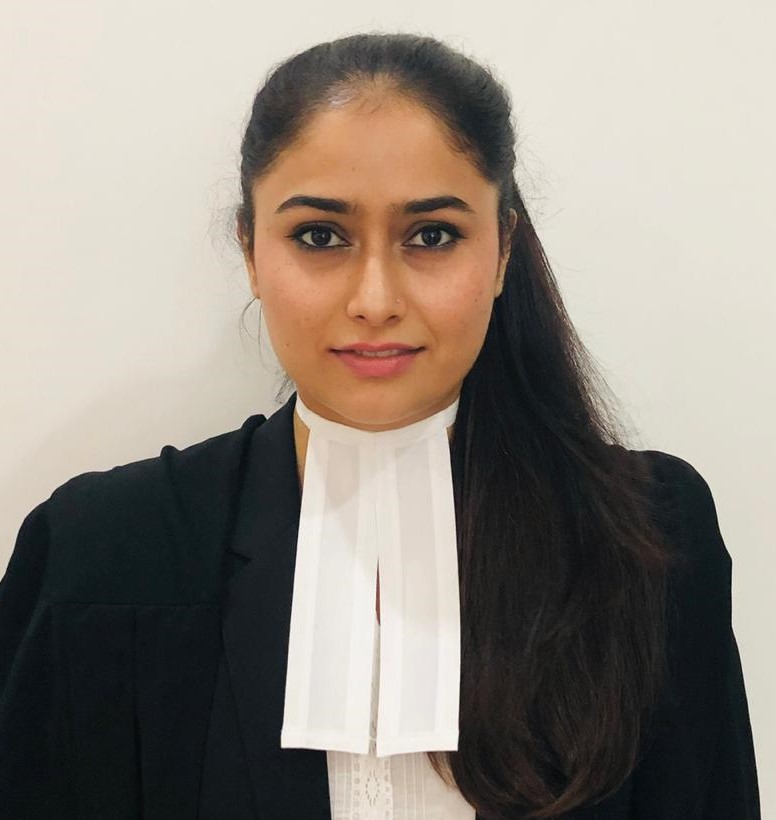
Could you please introduce yourself to our readers and share your journey from your early days in law to becoming an advocate-on-record at the Supreme Court of India? We’d love to hear about the pivotal moments, challenges, and inspirations that have shaped your remarkable career trajectory.
After graduating from Symbiosis Law School, Pune in 2009 I joined the Legal (Tax and Regulatory) Department of PriceWaterhouseCoopers (PwC) where I had a short stint of about a year. My work at PwC mainly included doing due-diligences for various organizations and businesses, opening on labour law and employment law queries from pan-india PwC locations. While my time at PwC gave me a lot of exposure to the regulatory side of work, from the point of view of Indian as well as international clients, I felt that I wasn’t being challenged as much – mentally as well as academically. I started speaking to my law school batchmates who were pursuing litigation and that’s when it became clear that I was missing out on the real deal. Even though the economy was in a recession in the year 2009, I did the unthinkable and put in my papers at PwC and joined Parekh & Company, which is a full-service litigation firm. To be honest, it was very difficult to take a 50% pay-cut and say goodbye to the 9 to 5 job where I had the weekends all to myself. Looking back, it was the best decision ever. Upon joining litigation, I realized that there is no concept of weekends and no fixed timings. Juniors were expected to carry work home and make sure the filings were done in time, seniors were briefed well in advance and the clients got the reliefs they wanted. There were moments where I felt I’d bitten off more than I can chew but I just kept at it and before I knew it, I fell in love with the entire process. At Parekh & Co, I was under the guidance of my “first boss” as I call him to this very day – Mr. Sameer Parekh. At Parekh & Co., I had the privilege of working on matters being argued by some of the most distinguished legal luminaries like Mr. Harish Salve, (Late ) Mr. Ashok Desai, (Late) Mr. Ram Jethmalani, Dr. Abhishek Manu Singhvi, (Late) Mr. Goolam Vahanvati, (Late) Mr. T R Andhyarjuna, Mr. Rohinton Nariman, K K Venugopal, Justice P S Narsimha, (Retd.) Justice U. U Lalit to name a few. After working in Parekh & Co. for about three years, I had a short stint at TMT Law Practice which is a technology, media and telecommunications law firm where I had the opportunity to represent clients across the entire spectrum of the media and entertainment industry, including television, films, radio, music, print and publications. Thereafter, I got married to my batchmate from law college – Diggaj Pathak, who was also pursuing litigation full time. Since we had put in about five years into the profession and got a fairly decent amount of work to pull us through, we decided that it was time now to take the plunge and go independent. That was truly the best decision of our lives. Now we were two like-minded individuals ready to take our love affair with litigation to the next level. People say it is difficult to work with one’s spouse and that one mustn’t mix business with pleasure but that has been far from the truth for us and we have had such a successful partnership where both of us have immensely contributed to each other’s growth in this profession. After spending 7 years in litigation, we became eligible to take the Advocate – on – Record examination and cleared it in the first attempt. There was really no looking back after that.
You have an impressive portfolio of legal representation spanning various tribunals and courts. Could you share a memorable experience from your early days in the legal profession that shaped your career trajectory?
Due to the work ethic I was exposed to at Parekh & Co., I learnt that one must never say no to any kind of work and that litigation encompasses more than just the Supreme Court or the High Court. There are so many tribunals and quasi-judicial bodies in Delhi like National Green Tribunal, Ministry of Mines, Central Information Commissions, National Consumer Fourm, Employees Provident Fund Appellate Tribunal, Debt Recovery Tribunal, Central Electricity Regulatory Commission, Armed Forces Tribunal, Appellate Authority for Revenue cases etc. So there is really no dearth of work. There were times when I wasn’t sure if I could do justice to a matter but I was fortunate enough to be surrounded by such encouraging seniors and mentors who provided me with the necessary push so that I could give my 100% to the cases in question. I had the opportunity to appear very frequently before the Telecommunications Disputes Settlement Appellate Tribunal (TDSAT) when Justice Aftab Alam (Retd.) was the Chairman. Justice Alam was extremely encouraging of women practitioners and would often appoint me as Advocate Commissioner in matters which really helped me build my confidence. Similarly, Justice Shiva Kirti Singh (Retd.) also appointed me as Local Commissioner in several cases for which I had to travel outstation and that again really helped me understand the telecommunications and broadcasting sector from close quarters. Apart from TDSAT, I had the privilege of working with Mr. Krishnendu Datta, Senior Advocate on various company matters before the NCLT. I was greatly inspired by Mr. Datta’s work ethic and the way he completely immerses himself into cases really had an impact on me. I also love to brief Mr. Gopal Sankaranarayanan, Senior Advocate for my Supreme Court matters from whom I get to learn so much. He is truly an exceptional individual. Then I had the good fortune of working with Mr. Meet Malhotra, Senior Advocate on several telecommunications and broadcasting matters. Words cannot describe how much Meet Sir helped me in building my practice in the energy sector. His trust and faith in my work has helped me immensely. I am deeply indebted to these individuals.
With your extensive involvement in telecommunications and energy sectors, what sparked your interest in these particular areas of law?
To be honest I never imagined that I would be practicing so extensively in these sectors but that’s the beauty of being a first-generation litigating lawyer – you never know what you’re going to get and sure enough you never say no to any kind of work! Having said that, I had the opportunity to work in the telecommunications sector early on because my partner was already handling the work in that area for a few clients. So, when we started working together, I had to naturally shoulder the responsibilities with him. Some of the cases before TDSAT were extremely high-stakes and in those matters we would brief Mr. Meet Malhotra, Senior Advocate from whom we got to learn so much. As far as work in the energy sector is concerned, I owe most of what I know in this field to Mr. Buddy Ranganadhan. Buddy Sir is an outstanding lawyer and briefing him is such an enriching experience, every single time.
Balancing a career in law with personal interests is crucial for holistic well-being. Could you share some of your hobbies or interests outside of the legal realm that help you maintain a sense of balance?
To be very frank, it is super hard to maintain a work – life balance being a litigating lawyer and even more so if you’re a female litigating lawyer. And if you are a mother, then you need multi-tasking skills of a different level. Even if you ace this time management, be prepared to pay the ‘motherhood penalty’. Yes, the legal profession is not immune to it. Every day of the week, we are in court and the evenings are spent lamenting on the cases listed for the next day. Sometimes, you’re in multiple courts on a single day and your meal-timings go for a toss. Then Saturdays are for the district court cases and Sundays are for drafting assignments, conferences with senior advocates and client meetings. One has to also take out time for social and professional commitments. In all this chaos, it is very easy to actually lose sight of your own health and the health of your loved ones. So, keeping fit – mentally as well as physically – is of utmost importance. I try to be active and take out time to take my toddler out to the park and ensure that I take at least 4 vacations a year. I carry work with me on those vacations too, much to my partner’s dislike, but that’s another story. I also enjoy judging moots and have had the privilege of judging some moot court competitions like the FDI International Arbitration Moot, the KTS Tulsi Mock Trial Competition etc. I also love to interact with young law students, especially first-generation lawyers who are sometimes overwhelmed by litigation practice and have had the privilege of speaking at the Delhi Faculty of Law on the topic of Career as an Advocate-on-Record. I also try to give my services to those who cannot afford it and have done a few pro-bono matters. The appreciation I receive from my pro-bono clients is really immeasurable.
Starting a legal career can be daunting for many young aspirants. What advice would you offer to the current generation of law students and aspiring lawyers looking to make their mark in the legal profession?
There are a couple of things that one must mentally prepare before joining the legal field. Firstly, always and I mean always remain an “eager beaver”. Everyone will see it – Judges, clients, seniors as well as colleagues – it will help you generate new work. Secondly, never say no to any case even if it is small research – you will learn so much from it and that knowledge is to be treasured. Thirdly, be prepared to sometimes miss out on important personal events like weddings, funerals, birthdays etc. as you may have a deadline or the limitation would be expiring in a particular case. If you have taken up some assignment or matter, you cannot leave it halfway no matter what. Having said that, it is also incumbent upon you to then make it up to that family or friend who’s function you missed. Fourthly, there will be times when you may be reprimanded at – by the Judge or your senior. Do not take it to heart, listen to what they are saying as they have experience which you don’t and experience must be respected at all costs. Fifthly, be kind to your support staff – court clerks, driver, office boy, nanny, cook etc. You will be most effective if you have a strong team backing you up. Sixthly, be grounded and grateful. It is easy to lose sight of where you started from when you’re making a lot of money but one must never take any matter – big or small, for granted. Lastly, be fair to your opposite counsel. There is life outside court also. We are a small fraternity and people talk. Not all cases you get would be very high stakes, but be determined to prove yourself. Slowly but surely, the work will start pouring in from all quarters.
Being a female practitioner in a male dominated profession do you have any specific advice for women who are keen to join litigation?
Let’s face it, the ratio of women-to-men in the legal profession is abysmally low. But the demographics are changing over the past few decades. While it is true that the legal profession demands long hours and constant availability, I want to tell these women who want to join litigation that the fruits of the hard work you will put in will be immense. If you are a working mother, and this holds true for any field, you will be perceived as less committed to your career because it is assumed that you choose to work only because you have financial needs to fulfil. Employers are wary of hiring mothers as it is thought that since they have familial responsibilities, they will be less dedicated to their roles. But this notion is completely wrong, and, if at all, only applies to a very small percentage of working women. We can be as passionate, as driven and as ambitious as our male counterparts. We are currently blessed to have Justice D Y Chandrachud as our CJI who is a staunch supporter of increased participation of women in the legal profession. He values inclusivity of women lawyers and makes a mention of it not just in open court but also at every public platform he speaks at. He was very pleased to see a dramatic increase in the number of women appearing virtually before the courts during and post-covid as it provided them the comfort of appearing from the safety of their homes. In 2024, a committee headed by our CJI designated the highest number of female senior advocates that have ever been designated by the Supreme Court in its entire history since 1966. Just imagine, 12 in 75 years and 11 in just one year! Justice Chandrachud has also encouraged more and more women to come forward, contest elections and hold positions of responsibility in the bar associations and the bar councils. He has further advocated for institutional support (like creches in courts) to ensure more and more female lawyers are inducted and retained in the profession. This augurs really well for us women practitioners. We should take full advantage of this changed scenario. In the coming times, I’m sure there will be more designations and more elevations. Personally speaking, I feel so inspired looking at the women senior advocates practicing today. Few senior advocates whom I have briefed and who had a great impact on me include Mrs. V Mohana, Mrs. Madhavi Divan and Mrs. Haripriya Padmanabhan. I hope to one day have the opportunity of working with (Retd) Justice Indu Malhotra, Mrs. Indira Jaisingh and Mrs. Aishwarya Bhati as well, all of whom are outstanding lawyers. So, my advice to young women aspiring to join litigation would be to perform decently at law school, write legal articles, if possible, take your internships very seriously and once you start a career in litigation, just stick with the grind. The results are inevitable.
As an advocate-on-record and panel counsel for esteemed organizations like TRAI, WBSETCL, Eastern Coalfields Limited and Central Coalfields Limited, what strategies do you employ to effectively represent your clients’ interests while upholding your own ethical standards?
Preparation is key obviously. Secondly, I inform the client of all the eventualities because anything can happen in court so one has to be prepared in advance. If the client has been slightly in the wrong, and is informed in advance of the probable reaction from the court, then it can give suitable instructions to his lawyer about the extent of the concession the lawyer can make on its behalf. Thirdly, if there is a senior counsel being briefed in the matter then he/she has to see how invested you are in the case. It makes it all the more interesting for them. Since some of the matters for these clients are very high stakes, I always get instructions in writing to avoid any miscommunication later on.
Your educational journey includes international exposure during your schooling in the United States. How do you think such cross-cultural experiences contribute to a lawyer’s ability to navigate diverse legal scenarios?
I studied in California for about three years and it was such an enriching experience. Since my father was in a transferable job, I changed almost eleven schools and had the opportunity to stay in many different parts of India too. This gave me so much exposure as I had to get used to adapting to a new place every few years. That helped me tremendously. The legal professional is so multi-faceted. You may be able to impress your client with your legal knowledge but if you’re not able to smooth talk your way in a Bihari or a UP accent with the Court Master or the Alhmad to get a certified copy or a shorter date then what is the point of all the fancy education that you have had?
Becoming an Advocate-on-Record involves rigorous training and examination. What motivated you to pursue this prestigious designation, and how has achieving it impacted your legal career and approach to advocacy?
So, it is very important to understand that one doesn’t magically start getting Supreme Court briefs simply because one has cleared the Advocate-on-Record examination. In order for a steady stream of Supreme Court cases to come your way, you have to have what we refer to as a “parent high court” where the advocates from that particular high court keep sending you matters regularly to be filed in the Supreme Court. But the fact of the matter is that many first-generation advocates like myself do not have any such contacts with any high court so the cases initially will be far and few. One has only to ensure that they give their 100 percent to those cases. Soon enough, your client, your colleagues, your seniors will spread the word which will certainly translate into more matters. Having said that, choosing to practice exclusively in the Supreme Court is a completely personal choice and if that is the path you have chosen as a first-generation lawyer then you must keep reaching out to the lawyers practicing at various High Courts to generate Supreme Court work. But I speak for myself, I consciously did not want to restrict myself to practicing only in one court. I took the exam because I wanted to have this added qualification so that in the event a situation arises where I’m required to approach the highest court of the land, I should be able to do so myself without asking anyone else to be my AoR. I was also able to generate supreme court work by practicing in various forums like the National Company Law Appellate Tribunal, TDSAT, National Green Tribunal, Appellate Tribunal for Electricity etc.
You’ve been associated with the law office of DPSS, which holds a prominent position in the legal landscape. Could you share some insights into the working of your firm?
The Law Offices of DPSS was founded by my husband (Diggaj Pathak) and I about ten years ago. Diggaj was my batchmate at law school and we started out with just a handful of matters. We are soon going to complete 1000 files together. Though we have grown since our founding, we are the same agency at heart. We approach each of our clients with fresh eyes to offer them customized and unique strategies. We are result oriented, in as much as we try and get speedy relief for our clients instead of keeping them embroiled in litigation which can sometimes last for several years in our judicial system. If the circumstances permit, then we actively try to mediate and settle the cases for our clients which can sometimes get better and faster results than adversarial litigation. We feel we owe this to our clients and to our judicial system. Ultimately, as lawyers we must not burden our courts unnecessarily and if there is a way to sit across the table and negotiate terms of a settlement then we always explore that option.
Get in touch with Shweta Sharma-



 Allow notifications