Tag: Trained mediator

  • “Mediation can be one of the quickest, cheapest, effective, and sustainable methods to resolve disputes, saving numerous hours of court’s time.” – “Bridging the Worlds of Accountancy and Law: Keval Sheth, Founder, Konvêrj-Zeûs

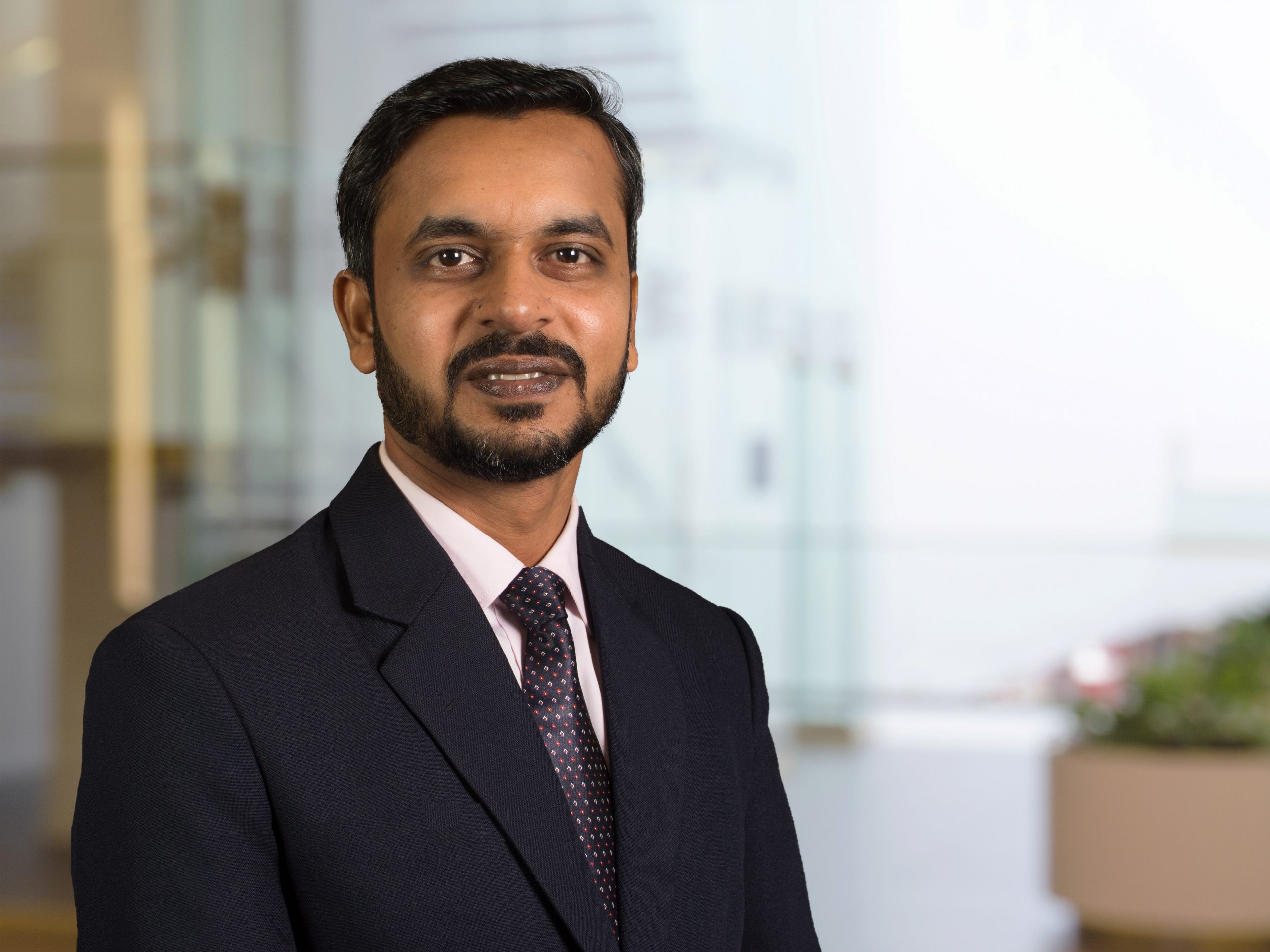
    “Mediation can be one of the quickest, cheapest, effective, and sustainable methods to resolve disputes, saving numerous hours of court’s time.” – “Bridging the Worlds of Accountancy and Law: Keval Sheth, Founder, Konvêrj-Zeûs

    This interview has been published by Namrata Singh and The SuperLawyer Team
    Your educational journey is quite diverse, transitioning from becoming a Chartered Accountant first and then an LL.B. What motivated you to pursue a diverse career in accountancy and law, and how has this multidisciplinary background influenced your approach to risk, forensics, and dispute advisory?

    Though I have qualified as both, I have not practiced as either of them. I have been in consulting for all my professional career, right since my internship days back during 2002-05. I started with a lot of risk advisory and corporate governance work, working with various consulting firms. But it was when I started conducting forensic investigations and when I interacted a lot more with lawyers, I was intrigued enough by their role and wanted to, if not practice as one, but think from their perspective as well.

    What this has done is that while I am conducting the investigations, it helps me wear a lawyer’s hat also and foresee, of course in my limited knowledge and capacity, certain aspects which are distant to someone who is just a forensic accountant. And needless to mention the extra help I get to interpret various documents in my dispute advisory work as well.

    In this context and as an accredited arbitrator and an empanelled mediator, what unique insights do you think you bring to the table to resolve disputes effectively?

    Globally, the arbitration practice as such is led by the legal fraternity and rightfully so. Having said that, in my view, there is good space for technical professionals other than lawyers. Technical experts like accountants, engineers, doctors, architects, etc. can immensely contribute as a neutral to resolve disputes.

    If a technical professional is an appointed neutral on a case, be it as a sole arbitrator or as a co-arbitrator, I think there is a lot of merit in the process. Imagine a complex commercial dispute or a construction dispute, where you have a chartered accountant or an engineer as one of the arbitrators respectively; not to mention if they additionally are qualified lawyers as well. Not only is the arbitrator adept in the legal aspects but also aware of the complex technical aspects of the case, which may lead to a better conclusion on the case. It is also better to understand the prevailing entitlement, causation and quantum of a case.

    With your extensive experience in forensics and dispute advisory, what are some common pitfalls you’ve observed in organizations regarding risk management, and how do you help them navigate these challenges?

    The most common and critical one that I have observed is to not have a risk management framework at all or to have it led by a risk champion who is relatively inexperienced in the role or function.

    Another pitfall is that a lot of corporates have failed miserably in integration of data, systems and people. Multiple fragmented systems and processes lead to inconsistencies and non-standard procedures.

    Over emphasis on financial risks with no or limited attention to operational, reputational and strategic risks are leading corporates to last minute surprises and resort to course corrective actions.

    Policies and procedures are often poorly drafted and hence lead to multiple gaps and loopholes being exploited by the perpetrators.

    In my experience, we are usually brought in largely when there is a crisis in the company and our support is sought to investigate and course correct the situation. However, in a growing number of cases, management does realise that a proactive approach to have a robust fraud risk assessment will be more effective to save money, time and the huge energy that they are drained off of in a reactive approach. So, I would recommend that risk and fraud management frameworks are of utmost importance. These frameworks also help avoid various disputes and compliance issues that may crop up due to identified procedural shortcomings.

    Founding Konvêrj-Zeûs represents a significant milestone in your career. What inspired you to establish your own consulting firm, and what unique approach does Konvêrj-Zeûs bring to the table?

    Yes, it is. Back in September 2021, I thought that the timing was just right. Things were just starting to recoup post the Covid-19.  After working with various well-known accounting / consulting firms of global repute, I thought it made sense to take the plunge and explore new avenues. As a budding professional, you have always dreamt of having something of your own someday. I think the entrepreneurial bug bites you really hard.

    At Konvêrj-Zeûs, we offer multiple consulting services to corporates, banks, other non-banking entities and law firms, which include Risk Advisory, Forensic Investigation, Dispute Advisory, Financial Advisory and Transformation Advisory Services.

    I think being brought up professionally in some of the large consulting firms does develop a professional approach and attitude that is appreciated by clients globally. So, even though Konvêrj-Zeûs is still in its nascent stages of its journey to expand, the kind of work we do is acknowledged to be at par, if not better, with some of the leading consulting firms around.

    I think the ‘attention to detail’ that we pay on each of our projects helps us give our clients exceptional service experience. At the end of the day, we immensely value the trust that our clients place on us.

    Could you elaborate on the intersection between forensic accounting and economic damages assessment, and how this expertise aids in resolving disputes and providing expert witness testimony and also uncovering financial irregularities and providing expert testimony in legal proceedings?

    Forensic accounting is actually a combination of accounting and investigative techniques used to discover financial crimes and as Forensic accountants; we explain the nature of a financial crime to the courts. Many cases, where we are on-boarded, require us to quantify the damages due to certain breaches, for example, or quantify the losses due to fraud or misrepresentation, or value IPs like Trade Secrets / Brands in cases of IP infringements or data theft and so on. So, the investigation does not end at authoring a report and concluding whether a fraud was committed or not, but also goes ahead and quantifies the losses / damages.

    Likewise, in case of disputes, the Tribunal relies more upon and takes into consideration an expert’s report than that from the parties to a dispute, while they decide and award the damages or lost profits as it is from a neutral standpoint. Once the legal tenability is proven, often the question of ‘How Much’ is core to the Tribunal to decide upon, which is where our quantification helps them.

    So apart from the economic analysis, I think the forensic accounting skill set does play a crucial role in setting right the facts and figures of the case and eventually also limiting the assumptions and extrapolations used in the quantum exercise.

    Similarly, in cases where financial irregularities are concerned, we analyse financial data and identify discrepancies that may indicate fraud or other financial crimes. We work closely with law enforcement agencies, attorneys, and other professionals to investigate financial irregularities and provide evidence to support legal proceedings. For doing the same, we use different techniques, tools and technologies to unearth the financial irregularities.

    Your role as a mediator at the High Court of Bombay indicates your involvement in alternative dispute resolution mechanisms. How do you see the role of mediation evolving in the legal landscape, particularly in complex commercial disputes?

    We all know that mediation can be one of the quickest, cheapest, effective and sustainable methods to resolve disputes. It adds advantages to the case, for being informal and of a flexible nature while maintaining confidentiality.

    While a lot of parties do attempt mediation on the first go, a lot of courts have also resorted to mediation before litigation. Also, for a majority of people, the prospect of going to court is daunting both emotionally and in terms of the financial strain it can pose, and it can mean that proceedings take a considerable time.

    When widely accessible, mediation can be a successful way of keeping cases away from the stress and expense of court. This saves numerous hours of court’s time, which can be useful for cases that are not resolvable through mediation.

    Even in complex commercial disputes, it may sometimes be at the parties’ advantage to use mediation as a channel to resolve the dispute. The complex nature of dispute can be simplified by seeking help of technical experts, while the legal aspect can be taken care through mediation. This not only saves the parties huge amounts of effort and money, but it can also give the parties that critical time to decide and make critical decisions after the resolution that they would have lost in a long-standing dispute.

    Given your wealth of experience in the field, what advice or suggestions would you offer to the upcoming generation of professionals aspiring to make a mark in risk management, forensics, and dispute resolution?

    I genuinely believe that there are numerous avenues where one can practice and expertise apart from the traditional fields of professions of a Chartered Accountant and a Lawyer.

    A dual qualification or skill set is always going to be an added advantage, be it of any specialized profession. So, I would always advise one to be on the lookout for opportunities where one can expand the horizon to add the necessary skill set to one’s profile.

    In my case, internal audit led me to risk and corporate governance, which led me to forensics, which led me to expert report & evidence and currently I also support resolving disputes. So, one has to hold on to the leading strings to explore new avenues of consulting.

    Branching out to this particular niche practice area has worked for me until now. For someone else, it can be a different combination. But one has to explore into various formats and see for themselves what suits them. We often are bound to one particular field observing our mentors or seniors or partners around us, but in my view, one has to take some risks in early years to establish a strong foundation.

    For practicing in forensics and dispute resolution, I would finally advise to be qualified or acquire the requisite skill set where one understands the legal and one technical side of things.

    Get in touch with Keval Sheth-

  • “If matters could be resolved in a time-bound manner, there is always an advantage. If that fails, litigation is always an option. Today mediation is a highly specialized subject.” – Suchishmita Ghosh Chatterjee, Trained Mediator & Independent Counsel.

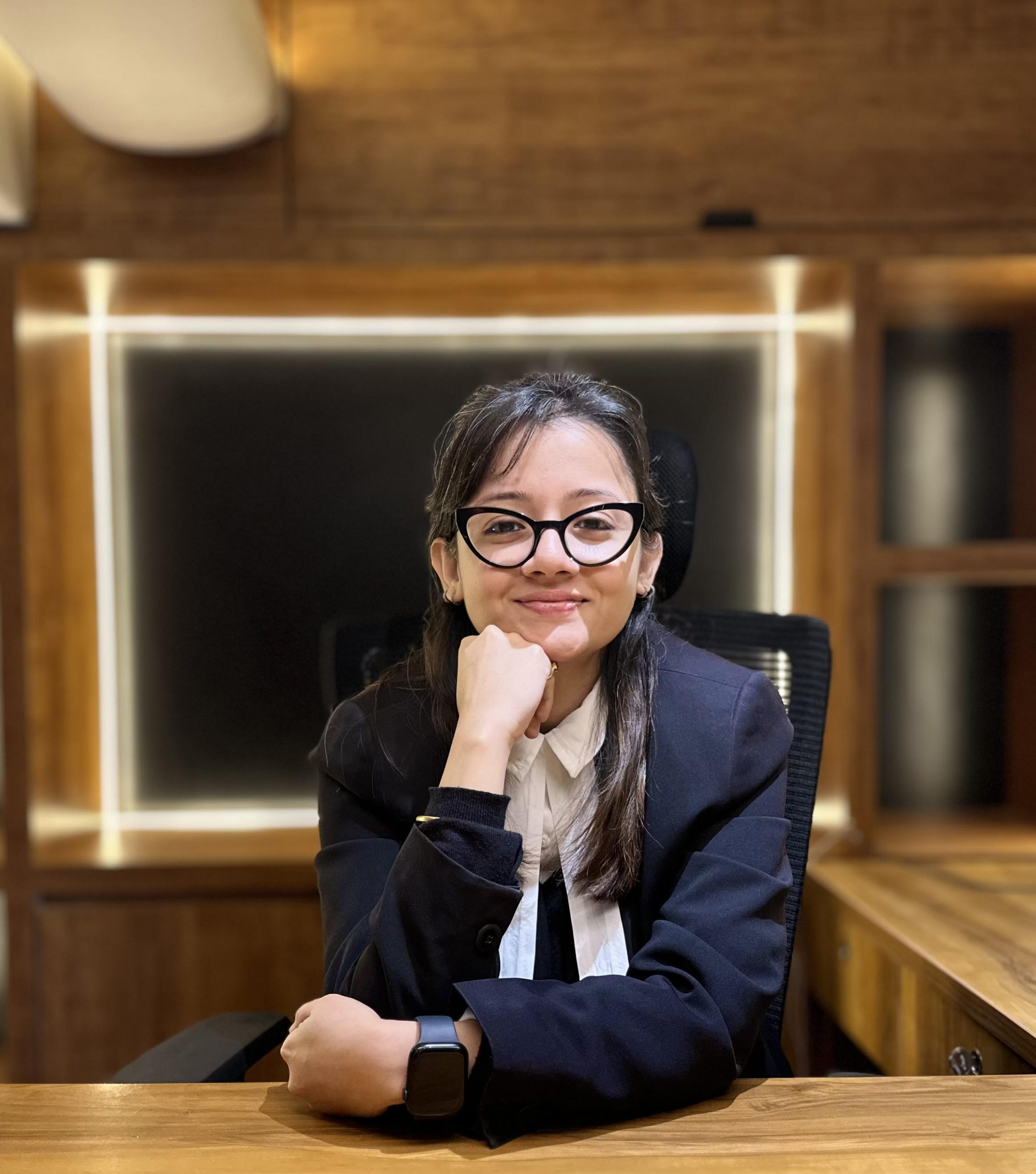
    “If matters could be resolved in a time-bound manner, there is always an advantage. If that fails, litigation is always an option. Today mediation is a highly specialized subject.” – Suchishmita Ghosh Chatterjee, Trained Mediator & Independent Counsel.

    This interview has been published by Namrata Singh and The SuperLawyer Team

    Your journey in the legal profession is truly remarkable, especially considering the legacy of your family. How did you navigate the challenges of establishing your own identity in a field where family connections can sometimes be both a boon and a burden?

    It was easier for me to get my first break as a Counsel but then to earn my first brief independently took a while longer. Now reflecting I feel family connection for me was both a boon and a burden. I cannot point to a single incident that led to others acknowledging me, shorn of my background, as it was a gradual process. When people saw me assisting my senior single-handedly in very high stake matters regularly and then appearing in matters like the Saradha Chit Fund case for RBI, SST Media- winding up proceedings, Testamentary suit in the estate of Priyamvada Devi Birla, I think I got noticed by others. Today I can safely say I have other law firms and independent Advocates on Records believing in me and giving me work and my background no longer matters. I always wanted to make my independent existence count in my profession and I am walking a step closer every day by the grace of God and the support of everyone who stood by me like a rock!

    Starting your career when there were relatively fewer women in law, how do you perceive the changing landscape for female lawyers today? Have you noticed a shift in attitudes and opportunities over the years?

    Yes, our profession is very demanding and it’s not like a 9-5 job. A conference can be fixed at 9.30 pm or even 10.30 pm in the night and not all women can work in that format. To practice as a counsel, can even involve staying up all night to prepare an urgent draft or prepare for a matter. As a woman, it is certainly not easy unless she gets that support on all fronts. When I joined, women lawyers by number were much less and I greatly admire all those who were practising as Counsel in those days. Their struggle was a telling tale and I am greatly inspired by all of them. I could see the shift in mindset over the years, people starting to take women lawyers seriously and treating them at par with their male counterparts. Today I see the confidence in the eyes of clients as well as solicitors when they interact. It does not matter whether they have a woman counsel defending them as long as they know the gender would not create any difference. Now the ratio has greatly improved even in litigation, which sure is noticeable.

    Starting your career from scratch after college, you faced challenges that many young professionals can relate to. Can you share some of the initial struggles you encountered and how you overcame them to establish a successful legal practice today?

    Well what was a struggle for me was to break the myth that having a solicitor father helped me gain an advantage over my contemporaries. Although it did help me earn my first matter easily, but unless I performed, it wouldn’t have ensured the future briefs coming my way. In fact, I lost a couple of briefs when people learnt about my family background. It was an added pressure for me to conduct myself in a certain way. This made me apprehensive and I never went to anyone asking for a brief, not because I was too proud to ask for it but because I felt my work would be my identity. I believed if I worked honestly and sincerely I would get noticed. So from the end of 1st year in college, I joined the chamber of my senior Mr Hirak K. Mitter, senior barrister and every day after college hours, I used to attend his Chamber, work out briefs, make lists of dates, read judgments, make my own notes and attend conferences in matters where I wasn’t even engaged. That was a huge learning experience. For 5 years even my senior didn’t have much interaction with me. I would return home late in the night and break down at the dinner table. After seeing me attend his chamber every day for 5 years, with not a single break my presence was felt and also acknowledged. I earned my senior’s trust and confidence. At the end of 5 years, with my senior’s recognition, I started assisting him in heavy matters singlehandedly. Then from assisting him to appearing as an arguing counsel, it was a journey in itself that happened over the years. 

    In setting up your chambers, you’ve emphasized creating an environment where everyone can speak their mind. How do you foster such an atmosphere, and why is it important to you?

    I always tell my juniors to read the facts well. Knowing where to find the law and how to apply a proposition of law would all come subsequently once the facts are mastered. Difficult law points are not always there in every matter. So knowing what are the facts on which law has to be applied, reading is important. To understand it better, a discussion and exchange of thoughts are important. In my senior’s chamber, my senior used to invite us to have a one-on-one participation in conference. That helped us think of different outcomes, options, and perspectives to a matter. Logical thinking and reasoning develop only when there is a conducive environment to air one’s views, without fear. If I see my juniors doing well and better than me, it would be a moment of great satisfaction. Knowledge is the only thing that grows with sharing, so I don’t keep anything up my sleeves. Whatever I learn and know, I believe in sharing that. At times I even find my juniors bringing up some fresh ideas on the table, so there are always new things that I even end up learning from them. It is important to give them that confidence since if they can speak freely to me they can address the Court better and fearlessly.

    Having worked on various matters, including some high-profile cases, is there a particular case or experience that stands out as a significant turning point in your career?

    There are about 4 or 5 such cases. Exposure to matters like the Will case of the Late Priyamvada Devi Birla, helped me learn a lot about mutual Wills, and testamentary suits. I was fortunate enough to get an opportunity to address the Hon’ble Division Bench at the request of the then Chief Justice J.N. Patel in this matter as the junior most member on the side of the Birla after all the seniors had finished their arguments. I was asked if I would like to address the Hon’ble Bench on what I understood of Administrator-pendente lite after hearing and assisting my seniors and copiously taking down notes during arguments for so many days. It was too overwhelming for me but I really enjoyed getting to address such a heavy matter for about half an hour. 

    Then addressing on behalf of RBI in the Saradha chitfund case was a great experience. I learnt about goodwill valuation and the company being sold as a going concern from handling the SST Media case which was regarding Kolkata TV. Learnt a lot about Thika Tenancy from the case of Fona Rubber, then came to learn about the Originating Summons suit from Thakurani Sree Sree Durga Mata Jew case where I assisted the late Mr. S.B.Mookerji. I learnt about misfeasance first-hand from the matter of Jamshedpur Cements which was reported in (2011) 4 CNH but my name was not reported. These are some prominent cases that come to my mind. My exposure in arbitration was through Shappoorji Pallonji vs Videsh Sanchar Nigam Limited which was a huge matter with a lot of intricate points. I learnt about liquidated damages and Hudson’s formula on the calculation of loss of profit first from this arbitration. 

    Your approach to technology is interesting, acknowledging its importance while maintaining a preference for traditional methods like reading physical books. How do you strike a balance between embracing technology and preserving traditional legal practices?

    Change is the only constant. So we have to adapt ourselves to the changing times and technology. When we see other High Courts like Delhi and Bombay, most of the counsel prefer going paperless. They have their brief stored in iPads on liquid text, notes, judgments everything in the system. It’s fascinating. I am yet to go paperless that way as now I prefer micro-Xeroxing briefs in big matters but I do appear virtually in matters either for court appearances or conferences. Even arbitrations are being conducted virtually or in hybrid mode. This truly saves time and cost. However, when it comes to reading textbooks on law, I still prefer the touch and smell of the books. I also enjoy writing down points using pen and paper instead of iPad and good notes. But I accept the change with an open mind and also use iPads in courts at times. Research work has become simplified due to online search engines. But once I come across a case online, I take out my journal and read. I feel some things are to be preserved while accepting the changes.

    As a trained classical vocalist and music lover, your interest in sketching with social messages is intriguing. Can you share a bit about your artistic side and how it contributes to your personal expression or advocacy?

    Music is my soul. I have been in training since age 4. Nowadays I don’t get that time for Riyaz but I sing for my daughter now who has a musical inclination. My interest in sketching began only in lockdown when I discovered this new side of me. Whatever I sketch has a social message, starting from acid attack to saving nature. I even write a bit of poetry but that is purely for my own reading. The creative side of me is a gift from God and whenever I am sad or even happy I think I express it through either music or poetry. Creativity helps to channel my emotions and handle pressure better. 

    Looking ahead, you’re pursuing a mediation program. How do you see alternative dispute resolution methods like mediation shaping the future of legal practice, and what motivated you to explore this avenue?

    I always prefer gathering knowledge. Mediation is a well-accepted ADR system in South East Asia, Europe and further West. India is slowly catching up. We have now the Mediation Act in force. There are mediation centers also attached to High Courts where matters are referred for exploring mediation. My interest cropped up when section 12A of the Commercial Courts Act, 2015, which mandates pre-institution mediation in commercial suits. Litigants are wary of mediation and we lawyers need to open up as well in embracing this mediation. Personally, I feel, if matters could be resolved in a time-bound manner, there is always an advantage. If that fails, litigation is always an option. Today mediation is a highly specialised subject and I am the first batch pursuing 60 hours+ program under Indian Institute of Corporate Affairs. Certified Mediators with the right training can facilitate parties resolve their disputes while restoring relationships. 

    How does your involvement with the Robin Hood Army and your dedication to social causes enrich or influence your perspective within the demanding realm of your legal career?

    I associated myself with RHA and signed up as a volunteer during a pandemic. Participating in the drives as a volunteer of RHA and then taking up other blood drive campaigns, and vaccination programs through tie-ups with Institutions helped me grow as a person. Now I do not get that time to act as a volunteer in the demanding realm of legal career but I do my own bit every now and then through Ramakrishna Math and Mission as well as other organisations. Doing pro bono matters for social causes like the Haemophilia Society or handling cases like acquiring land for Palli Mangal where women are trained and earn their own livelihood under Ramakrishna Mission order, are my way of giving it back to society.

    Over the years, you’ve trained numerous law students as interns. Have you noticed any notable differences in the skill sets of students today compared to when you started your career? And in your training programs, what specific advice or guidance do you find yourself consistently offering to the aspiring lawyers of this generation?

    In our formative years we used to work for learning. Now because of the change in society, students are keen on earning from day one. That is a noticeable change for sure. 

    I find today’s generation is quick in research, as they are all tech-savvy. But overall I find they are in a race against time. Quick recognition and quick fame are not lasting and anything of substance requires nurturing, perseverance and time. Whoever is willing to do that, would sure to taste success. This is usually what I keep telling my juniors and interns. There is no magic mantra and anything that is too easily achieved is short-lived, so as my Grandpa used to say- “Hard work first, hard work second and hard work last. If anything is left, it’s hard work again!” I try to live by that and aspire to be a better human being, living on my terms with my head held high and respecting and loving the institution of which I am a part of. 

    Get in touch with Suchishmita Ghosh Chatterjee-