Tag: Trial Court

  • “ADR is the present and also the future, and the earlier we understand this, the chances of growth will be faster. ADR is not only efficient but also cost-effective.” – Nivedita Shree, Founding Partner of Shree & Associates

    “ADR is the present and also the future, and the earlier we understand this, the chances of growth will be faster. ADR is not only efficient but also cost-effective.” – Nivedita Shree, Founding Partner of Shree & Associates

    This interview has been published by Namrata Singh and The SuperLawyer Team
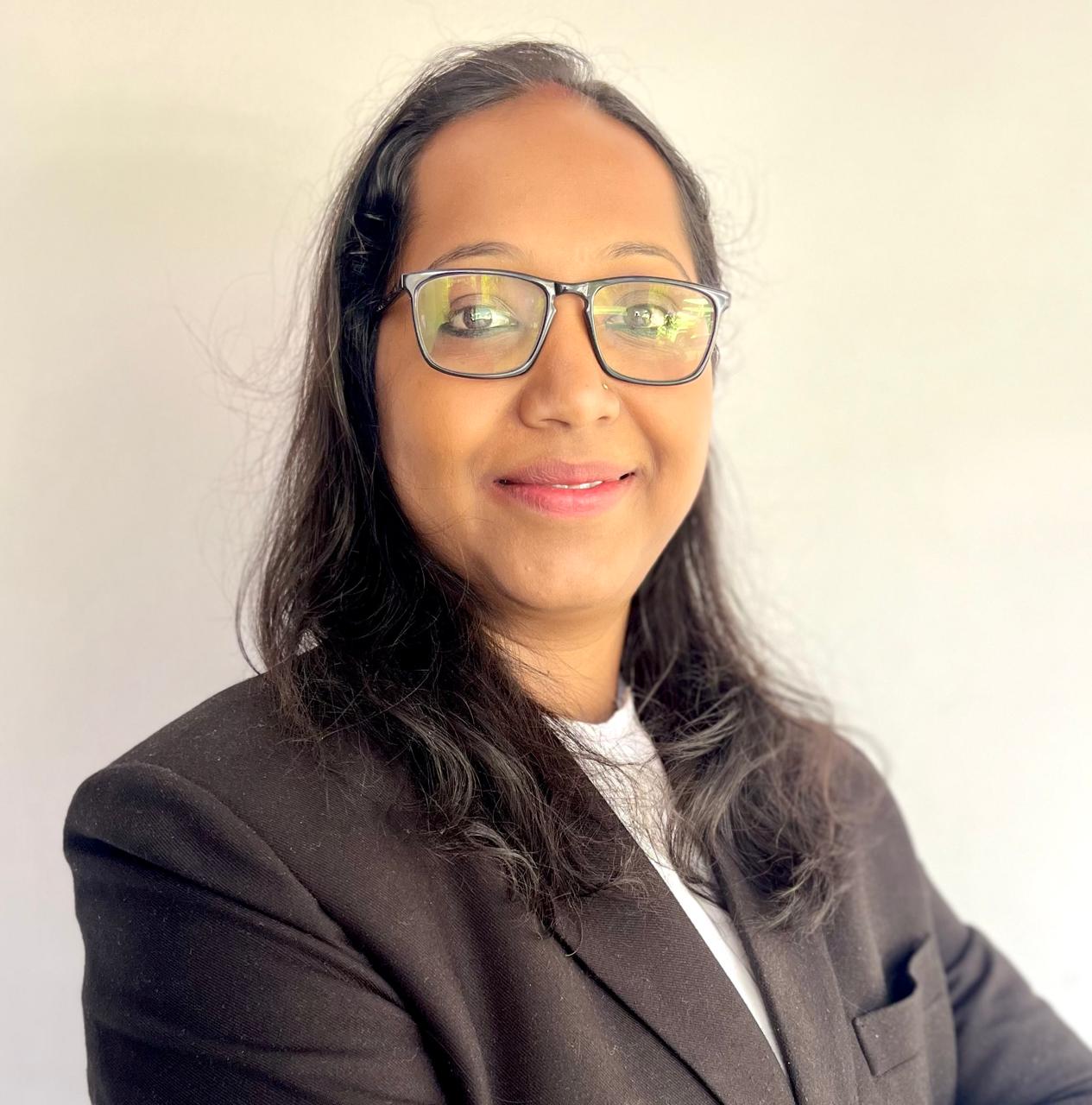
    You’ve had a diverse and extensive career in law. Could you share with us how you ventured into the legal profession and what inspired you to specialize in litigation? Could you please walk us through your journey from your college days to where you are today?

    As I was pursuing my high school in Bhavan’s Gandhi Vidyashram, Kodaikanal, like any other family, I was also asked to pursue my career in engineering. However, I was clear I wanted to be a lawyer and fancied those black gown and the band. Pursued my B.A.LL.B from Bangalore University and LL.M from Hidayatullah National Law University. I was placed in a law firm dealing with international trade. Despite the work being amazing, somehow it did not satisfy my desire for the band and those “My Lord” moments. I later on switched my job but finally I started with my career in litigation and since then there has never been a day that I have regretted my decision.

    Shree & Associates is renowned for its expertise in Civil, Corporate, and Family Law among other areas. What motivated you to establish this boutique law firm, and how do you differentiate your services from larger firms?

    When I started my career in litigation, I was overwhelmed by the work and pay disparity. And then while practicing I realized that only two things work:- Dedication and timely delivery of solutions to the client. Clients need to be satisfied and we being lawyers have to be very good listeners. I remember while dealing with matrimonial disputes, I have even acted and taken up a title as a marriage counselor. Just having knowledge of law will not suffice. One has to be lawyer with empathy and should also be ready to understand the agony of client. It has also taught me to be resilient.

    While practicing in district court, one should be ready to face a high profile client and also a client from village who speaks only the local dialect. The spectrum of clientele is big and so is the paying capacity. Having a fixed fees does not work in lower courts and to start the career, fees should not be priority. Number of cases matters as you get to research and learn and present the best you can at that moment of time.

    When I started practicing the big advantage I had was the knowledge of local language and the local history pertaining to land, So when somebody referred to a particular document I knew what exactly did he want to say. In Jharkhand a lot of old documents pertaining to land is written in “Kaithi” which is in devangiri script but tough to understand and read. So knowledge of that helped to gain a lot of civil matters. It is very surprising that even today in few district courts computer literacy of lawyers is quiet low.

    Client nowadays need speedy disposal of their cases and if we are in a position to convince the parties to go for mediation or arbitration, it is a win win for all.

    Shree & Associates is a boutique firm and the lawyers in the firm are very well versed with the local laws and also updated with technology and ready to work and settle the dispute by alternative methods.

    Your involvement in Corporate Law, particularly with the Real Estate Regulatory Authority and the National Company Law Tribunal, suggests a broad scope of legal expertise. How do you manage to navigate such diverse legal landscapes effectively?

    Firm assists clients in establishing sound corporate governance structures, ensuring compliance with regulations, and fostering ethical business practices. Our team is very closely knitted and takes care of needs and specific details of the client while dealing with the boards of directors and executive teams. We can relentlessly work to create a framework in a company to enhances transparency, accountability, and overall organizational effectiveness. We have been very fortunate to not have lost any matter in NCLT so far. NCLT

    With the growth in Real estate sectors in form of apartments, even  in small town, it has opened new avenues. Before RERA, matters were usually sorted out amicably wherein a lot of time the buyers were not very satisfied with the service provided by builders or the land owners, but with new laws in force, the scenario has changed and the buyers are now more vigilant pertaining to their rights. Real estate litigation is complex and involves multiple parties, extensive discovery, expert testimony, and specialized legal issues. It’s essential for parties involved in real estate disputes to seek experienced legal representation to navigate the complexities of the legal process and protect their rights and interests. We at our firm have specialized team working specifically in this field to provide the best remedy and solutions to the client.

    Our team has been very dedicated team of young energy and expertise of senior lawyers. Despite being a firm working at grassroot level and growing upwards, our sole moto of client satisfaction has also been taken care of.

     In addition to your professional achievements, you’ve presented papers on Corporate Governance and participated in international conferences. How do you balance your legal practice with academic pursuits?

    I am also a Guest Faculty in University Law College, Vinoba Bhave University, Hazaribag, where I (when time permits) take classes on the practical application of procedural laws, usage of evidence act in trial and also in civil matters and the importance of Local land laws for proper understanding of  roots of the civil dispute.

    One must invest in continuing legal education and be updated with current development in laws. This will definitely give a niche above others.

     Your bio indicates a passion for mediation and arbitration. How do you believe alternative dispute resolution methods contribute to the legal landscape, and what advantages do they offer over traditional litigation?

    ADR is the present and also the future and the earlier we understand this, the chances of growth will be faster. ADR is not only efficient but also cost effective. In today’s time, nobody wants to get “tarikh pe tarikh”. One is ready to spend a little higher to get quick, easy and effective solutions to their problem. In such a situation, the best option is that of mediation and arbitration. Best part of ADR is that it can be tailored to the specific needs and preferences of the parties involved.

    Given your vast experience in the legal profession, what do you believe the current generation of aspiring lawyers can do to carve out successful and fulfilling careers in law amidst evolving societal and technological landscapes?

    I have also recently posted on my Linkedin profile regarding the same. There are a lot of  pointers but the few are hard work, professional ethics, managing client expectations, being resilient, being updated with new laws and cases are important for learning and growing. The current generation are technologically way more advanced and this will help them to work smartly. Aspiring lawyers needs to have at least few pointers mentioned above to have a positive trajectory of growth in field of litigation.

    You’ve been actively involved in legal practice across different regions of India. How do you adapt your approach to suit the unique legal environments and cultural contexts of each location?

    I alongwith the team, travel a lot and appear in various courts all over India both physically and virtually. Every court has its own way of working and pace to resolve the cases. One important point is to always have a local team or a lawyer to understand the local scenario of courts and work culture, until we branch out to various places. It has also given our firm cases and matters which would not have been accessible otherwise.

     Apart from your legal expertise, what are some personal hobbies or interests that you enjoy outside of work, and how do they contribute to your overall well-being and professional effectiveness?

    I spend my time exploring new places, spending quality time with my kids and paint when ever I can. I love cooking  as well so when ever I am not loaded with work I try allocating time and enjoy my fullest. It is more like setting a reset button. I love the work I do so there is no “job stress” and thus makes me little more efficient in the work I do.

    Your educational journey has taken you to various parts of India, including Nepal. Could you share how these diverse experiences have shaped your perspective, and what factors led to your decision to settle in Jharkhand, establishing your practice there?

    Well, my father was an employee in State Bank of India. I pursued my primary and middle school education in various small towns in Jharkhand. Later since my father was being transferred every 3 years, I was put in boarding School, Delhi Public School situated in Dharan, Nepal, where I completed my 10th std. While in 10th std. I came to know about Bhavan’s Gandhi Vidyashram located in Kodaikanal, Tamil Nadu through a brochure given by my parents. I was very keen in joining for many reasons but one most important being my love for south Indian cuisine. Pursued my High School in Kodaikanal. Thereafter, since, I wanted to pursue B.A.LL.B, Bangalore was my first preference then. Got my degree from Bangalore Institute of Legal Studies, Bangalore.

    I always had desire to earn a specialization in corporate and also have a masters degree, I applied for few Universities in United Kingdom. I got offer letters from Edinburgh University, Manchester University and also from Cardiff University. However, that was the year when CLAT(PG) had also started for the first time and I like any other law graduate aspiring for masters, appeared in the test. Got AIR 162 and got into Hidayatullah National Law University, Raipur. Since I could not get a scholarship and the fees being high in Universities in U.K., I preferred joining HNLU, Raipur and I think it was a great decision. Got placed before completion of my course and since then I have never looked back.

    While travelling to different places, I learned various languages and I am now proficient in Nepali, Tamil, Kannada and ofcourse my mother tounge, Maghi. Since I have travelled so much in India, it has expanded my horizon. Experiencing different ways of life and witnessing socio-economic disparities has lead to perspective shifts and introspection and these factors affect positively, while we deal with clients in the firm.

    Since, Jharkhand is my home state, I wanted to establish my practice base in Jharkhand. Staying close to family and loving the work I do, is nothing less than bliss and I am filled with gratitude.

    With your extensive experience and expertise, what qualities or characteristics do you typically look for in students who apply for internships or seek training opportunities at Shree & Associates? How do you nurture and mentor aspiring legal professionals to help them thrive in the field?

    Well, the firm has been very open in getting interns every now and then. We have a selection process wherein we look into the academic background and  schedule an interview via meet or if possible personally in the office. The most important aspect that we look is the desire to learn. A person has to have a desire to learn and grow and then ofcourse the mundane questions of reason for joining the firm etc.

    The new members joining us as an associate, are firstly provided with clear objective as to what are motive and vision is and the work ethics and environment in the firm. Emphasis is given on continuous learning and by providing constructive feedback so that they can self assess and learn.

    Beyond your primary areas of legal practice, such as Civil, Corporate, and Family Law, are there any specific niche areas or emerging legal domains that particularly pique your interest or passion? How do you see these areas evolving, and what draws you to explore them further?

    With the advancement in technology and advent of Artificial Intelligence in law, Technology law along with AI  and Robotics law is one evolving area which I would like to explore and have a dedicated team for this.

    Get in touch with Nivedita Shree-

  • Mayank Aggarwal, litigation lawyer, NLSIU, Bangalore on litigation after law school

    Mayank Aggarwal, litigation lawyer, NLSIU, Bangalore on litigation after law school

    Mayank is a graduate of the ’14 batch of the NLSIU. Following his multiple achievements on and off the field, he received the Alyosha Kumar Gold medal for excellence in sports and extra-curricular activities at his convocation ceremony. He went on to work with Adv. Yudhishtir Kahol as an associate/junior advocate and subsequently with RHA Legal as an associate.

    Mayank’s interest in criminal litigation within the country, aided by his experience with pro bono work, gives him an added insight into the career path of any aspiring litigant. His multi layered exposure to evidentiary burdens, witness examinations, and all the other aspects of a complete trial from the grass root level.

    In this interview Mayank talks to us about;

    • His experience at NLSIU, both inside and outside the classroom
    • Taking up litigation right after law school
    • The importance of internships
    • Work experience at RHA Legal


    How would you introduce yourself to our readers? Tell us about life after NLSIU.

    I am a legal practitioner and consultant based out of Delhi, working across forums with special interest in criminal litigation, both legal and non-legal aspects of criminology and pro bono work for people who can’t afford legal representation. I graduated from National Law School of India University, Bangalore and have been litigating ever since. Presently, I am working as an associate in the Litigation & Dispute Resolution vertical of RHA Legal, an emerging law firm at Delhi.


    What motivated your decision to study law. Were there alternate career options you had considered?

    The decision to study law was more a result of a process of elimination than a matter of choice. After studying science for two years in 10+2, I was fairly certain that I did not want to write the IIT-JEE exam, unlike everyone else in my class at School. My father is a practicing lawyer and I had a fair idea about what a lawyer does on a day-to-day basis. Unlike a major chink of the population (fed on a copious diet of dramatic and caricaturised versions of lawyers on-screen), who have seen lawyers as those sneaky people, who, with their underhand tactics, save the guilty and should not be messed with. I was lucky to have greater perspective in this regard.  I believe, more than anything else, this privileged knowledge and insight into a lawyer’s life might be one of the key reasons behind so many second and third generation lawyers entering this amazingly empowering and engaging profession.


    Tell us about your time at NLSIU. Any fond memories or anecdotes you would like to share with us?

    At the risk of belabouring the obvious, I would say I had the time of my life at college. Not only because NLSIU is a very good academic institution but for the people and the work culture the place had and helped all of us imbibe. I was a very shy person before college; the place played an important role in shaping my personality, ideals, and value systems. I particularly relish the wonderful camaraderie, especially at display in hostels; all of us bound together through the chaos of project submissions and last minute exam readings, trying to beat some impossible deadlines and collaborative efforts on research projects for class.

    mayank-aggarwal-2

    While at university, you took a keen interest in sports. How did you manage to balance the academic rigours of the trimester system at NLSIU?

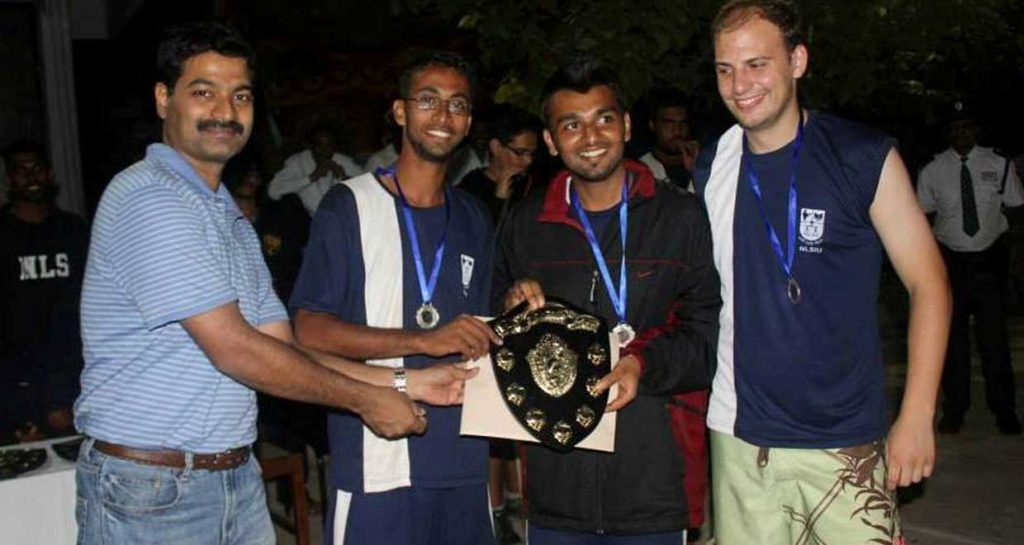
    (Mayank captained the university cricket team, tennis team, squash team, badminton team and helped organize “Spiritus” which is the largest law school sports fest in India)

    Due to my pre-college involvement and background in sports, my interest in organisation as well as participation in various sports came naturally. Moreover, NLS has a thriving sporting culture, and being surrounded by people who are juggling both ECAs (not limited to sports) and academics  is inspiring in itself. Further, the insane effort put in all around the year by the Sports Committee, including the painstaking process of scheduling events around academic commitments of multiple batches, is no simple feat and actually helps ensure enthusiastic participation all year around without really jeopardising academics. I believe they are doing an incredible job in keeping the sporting tradition at NLSIU alive and I feel proud to have been part of it during my brief stay.


    What would you advise a student who wishes to excel at sports too in law school, considering time management or risk of injuries are valid issues most students face at law school?

    I believe that playing any kind of sport helps in acquiring the mental toughness to deal with the unpleasant situations you often face in your professional life, apart from keeping you physically fit, which I would say is critical especially in such a sedentary profession. More than anything else, I think sports reveal character and that’s why some friendships forged on the field during those crunch situations and the respect earned on the ground stay with you for times to come.  As regards the second part, injuries are part of any sportsman’s life and with a variety of sports to choose from, an individual may choose the ones s/he feels comfortable to engage in.

    Tell us about the internships you pursued while at university. How did you choose where to intern? What led you to start practising soon after graduation, considering a lot of your peers would have joined firms?

    I was quite clear from the beginning that I was going to pursue litigation as a career. My internship choices were driven by this. I interned with various lawyers across courts and forums, including a lot of trial court experience. I tried to keep a wide base in the beginning which I later narrowed down to fields of specialisation. I just prefer litigation over corporate firm practice as I feel more comfortable in this role, which might be due to the different skill sets involved in the two.


    mayank-aggarwal-1

    How does one decide which Court to start practising in after graduating if one wishes to litigate. How necessary is it to have a mentor/guide at the start of your practise?

    Frankly, I don’t think there is any right way of going about it. From the interaction I have had with my peers and seniors and my personal experience, I think a lawyer should just make the most of whatever he has to work with. I personally chose to start practising from the district courts right after graduation, which I continue to do till date, as I wanted to develop an understanding of legal procedures from the ground up. Moreover, given that I wanted to specialise in criminal law I didn’t really have a choice as the exposure to evidence and the various stages and facets of criminal trial can’t be obtained at appellate stage directly. I don’t know how important a mentor is but having someone who believes in you can be very helpful, especially when you come straight out of college. This assumes greater importance in a country like ours where practice and procedure can sometimes be so diverse that you tend to question if you were studying the right courses. I think feeling inadequate and lost in the initial phase is a very common phenomenon, so either find someone who helps you go through it or grow thicker skin!


    You have worked extensively on criminal matters while interning and after graduation. What are the various opportunities here and what made you gravitate towards criminal practise?

    After working on a variety of matters during my internships I personally found myself more inclined to work on criminal matters due to some personality traits, including, possibly, a flexible moral fibre. Other contributing factors in this decision were the enabling power of a criminal lawyer, the gravitas and immediate impact a good criminal lawyer has on lives. The cases you deal with are sometimes actually a matter of life and death- how many professions can you say that about?  I also think my internships with Mr. Vikas Pahwa, Sr. Advocate and watching him in action in court had a lasting impact. Furthermore, my work at the chamber of Adv. Yudhishtar Kahol was particularly enriching and fulfilling; observing Kahol sir cross-examine witnesses and interpret evidence was a sublime experience and  cemented my love for criminal litigation. The fact that both these counsels had dealt primarily anti-corruption matters, which generally involve generous volume of paperwork and an equally large number of witnesses to be examined, gave me amazing exposure to the evidentiary aspect of trial in a very short time for which I am indebted to both these offices.


    Soon after graduating, you worked as a junior advocate for a year and then decided to join RHA Legal, who are relatively new. Tell us about RHA Legal, the kind of work they generally deal with and what made you join them.

    RHA Legal is a start-up law firm which focusses on Intellectual Property Rights, Corporate advisory, and Litigation & Dispute Resolution practice. I am primarily attached to the Dispute Resolution vertical branch of the firm headed by partner Ajit Sharma, who does a lot of criminal litigation including white collar crimes apart from a diverse civil practice across various forums viz. Supreme Court, High Courts, NGT and Central Administrative Tribunal.  Rajiv Kr. Choudhry heads the IPR team, which inter alai does some highly technical advisory work on patent law and copyright.

    RHA Legal being a small firm, I have had the opportunity to work with both these teams and my experience here has been extremely fulfilling and enriching. The focus is on the creation of an extremely supportive and enabling work culture that has been built by the partners for everyone who works with them including the associates and the interns.  As compared to a larger setup, I believe a smaller firm gives you ample opportunity to be involved in the problem solving process from the very beginning, and that too at multiple levels including client handling, issue spotting and strategizing. Thus, giving you better perspective, far greater responsibilities and a more hands-on experience, which can prove to be vital for any litigating lawyer.


    What have you been tasked with in your tenure here? What is an average work day like in your life?

    From the very first day of my joining the Firm, I have enjoyed a very broad base role which included sitting through client meetings, researching on legal issues, flagging legal propositions in the case at hand, lot of drafting opportunities and some face time in the Court as well. The level of faith reposed in me, especially with regard to quality of work entrusted to me, is tremendous and I consider myself fortunate to work in such an enabling setting with some very talented and supportive seniors and colleagues. The work hours are manageable and vary according to the volume of work.


    Tell us about the Trial Courts at Delhi and your experience in working there. Why do you think it is an interesting avenue for graduates to pursue? Tell us about your experience with pro bono work.

    Although Trial Court work is very exciting and in fact crucial for a criminal litigator, the biggest obstacle I faced is the massive chasm between the practice and what is taught at Law School.  The one unique opportunity which a litigating lawyer has over all others, is the ability to make a difference at a very early stage. I have had the good fortune of working on some pro bono cases with Vertical Legal, a dispute resolution firm working out of Delhi. The firm has a steady real estate advisory practice, but has a dedicated team taking up pro-bono matters including a Sunday-only Legal Clinic imparting free of cost legal advice to all and sundry. I trust that apart from being a learning opportunity, it is a humbling and a supremely fulfilling experience. I have been involved in this work since my fourth year of law school and I must say I am very proud of what we have been able to accomplish since then. Some of the work we did was also reported recently in the media, including a piece in the reputed Caravan Magazine on a case relating to ill-treatment of migrant labourers in Punjab. This case also made me realise the extremely effective role that the media, and good journalism in general, can play by taking up socially relevant stories and contributing to the solution, which does not always lie in the legal sphere.


    What are your goals for the immediate future?

    I don’t have any elaborate goals for the near future. I would love to continue in my current setup and learn as much as I can in the process. Litigation, they say, requires patience and perseverance; I currently feel that I am stocking up on both.


    mayank-aggarwal-5

    What would be your parting message to our readers, especially those who wish to litigate?

    They say, “Litigation is not a profession, it is a way of life” and with each passing day I am appreciating the aptness of this statement. Although I feel I am not old or wise enough to give advice, I will pass on something which a very wise man once told me- “Litigation involves industry, and lots of it. Don’t do it for the money, there are exponentially easier ways of making money 🙂”.